Skip to content
Sunday

20 December 2009

Dated photos
703
Source pages
1
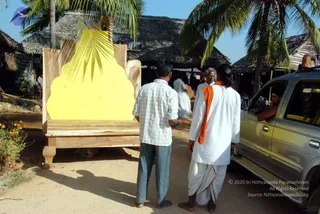
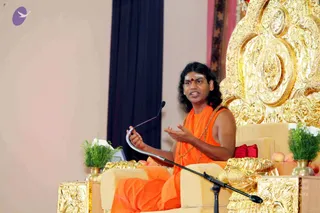
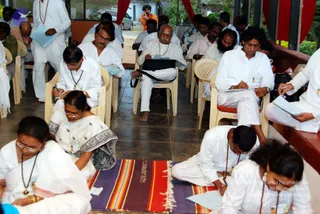
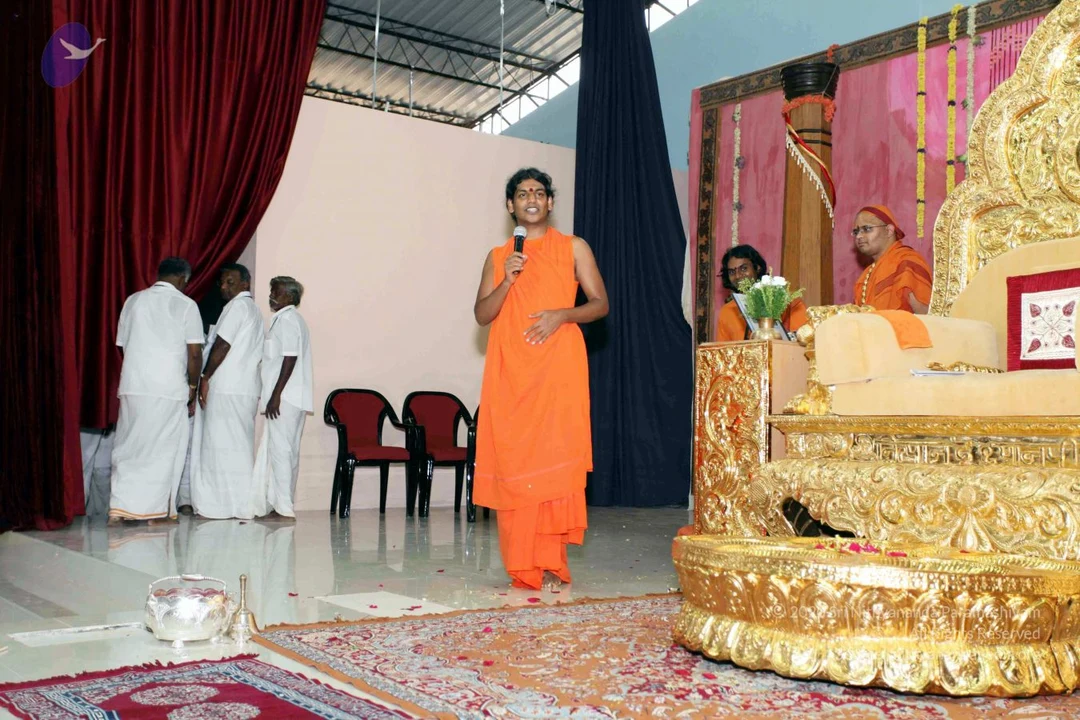
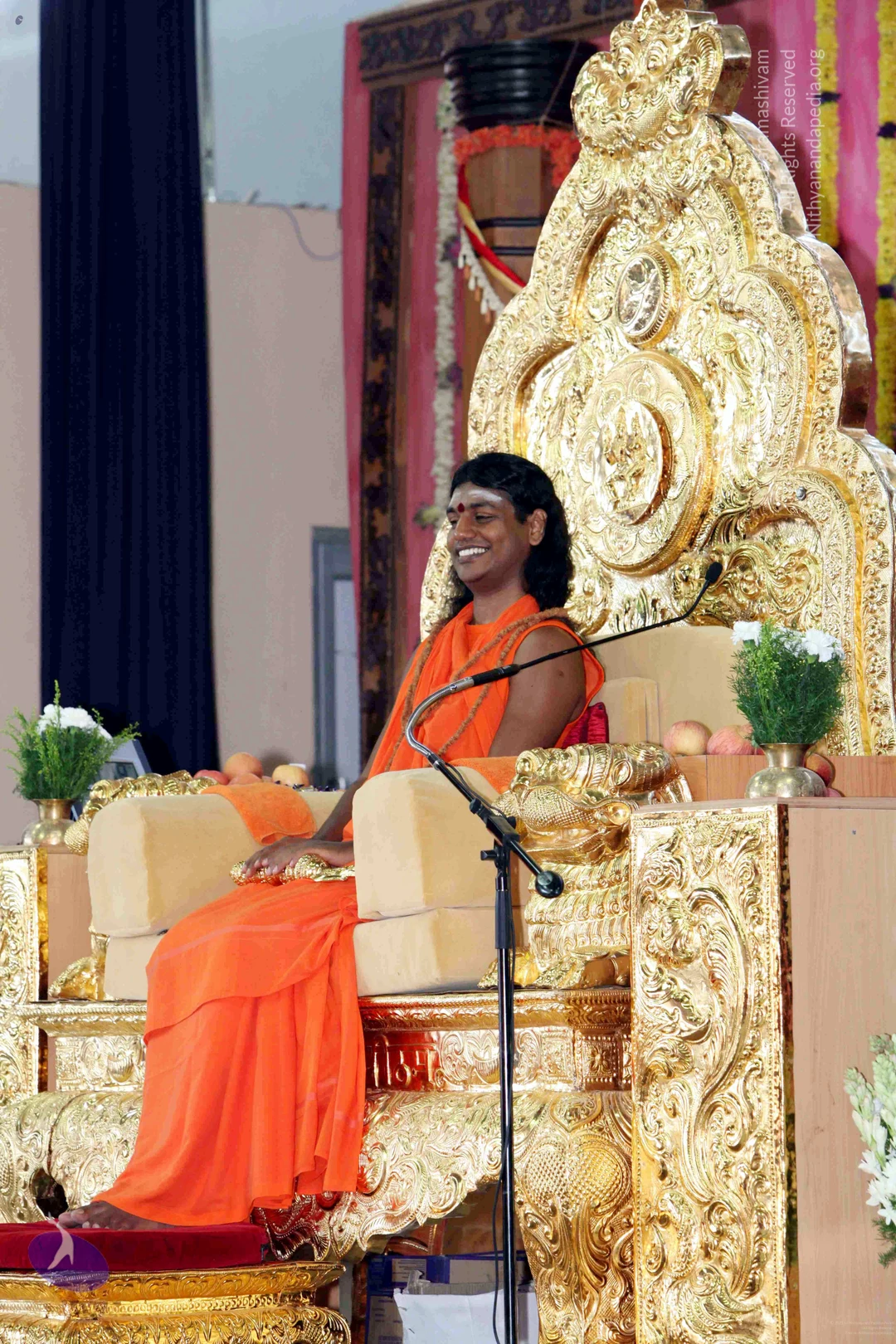
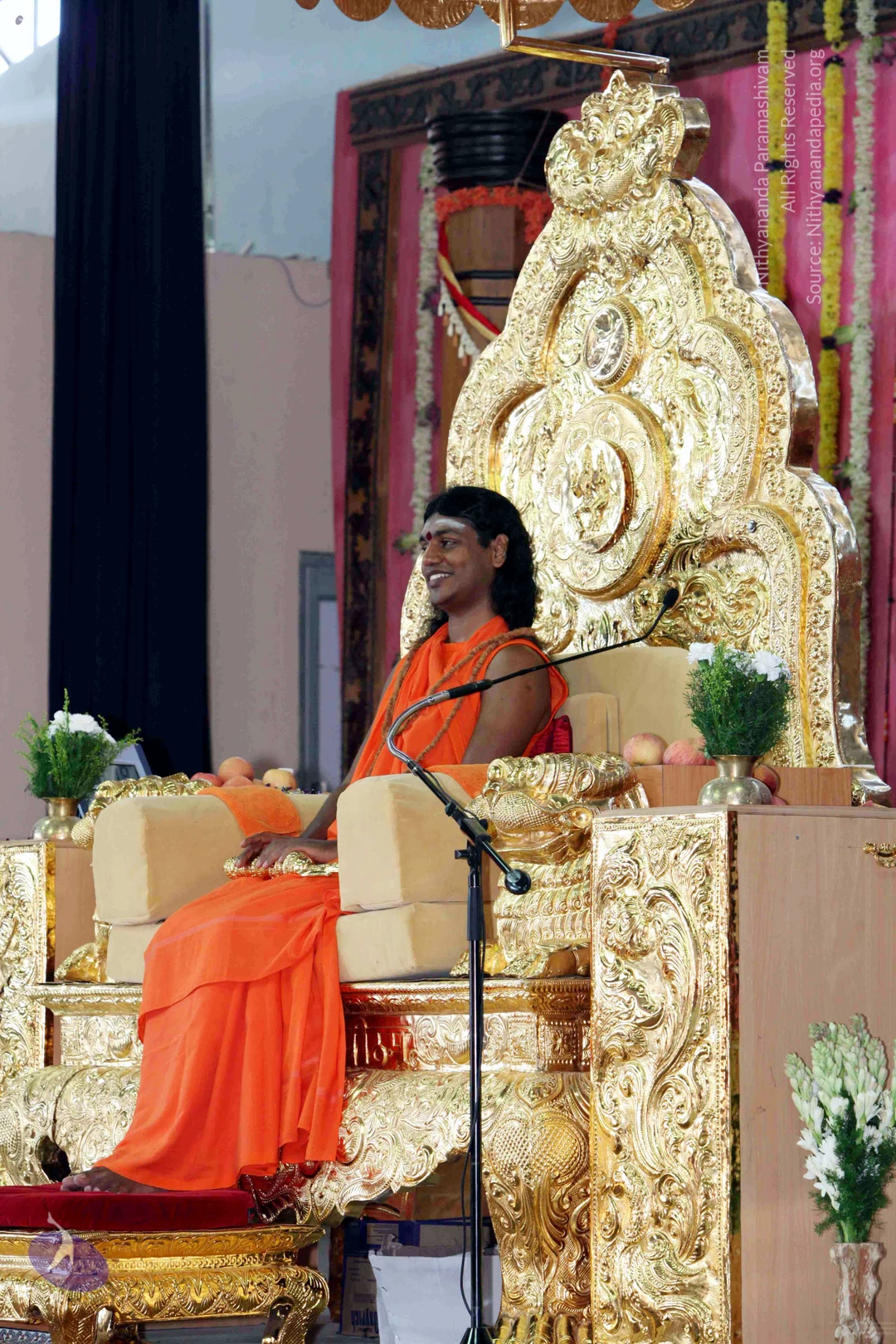
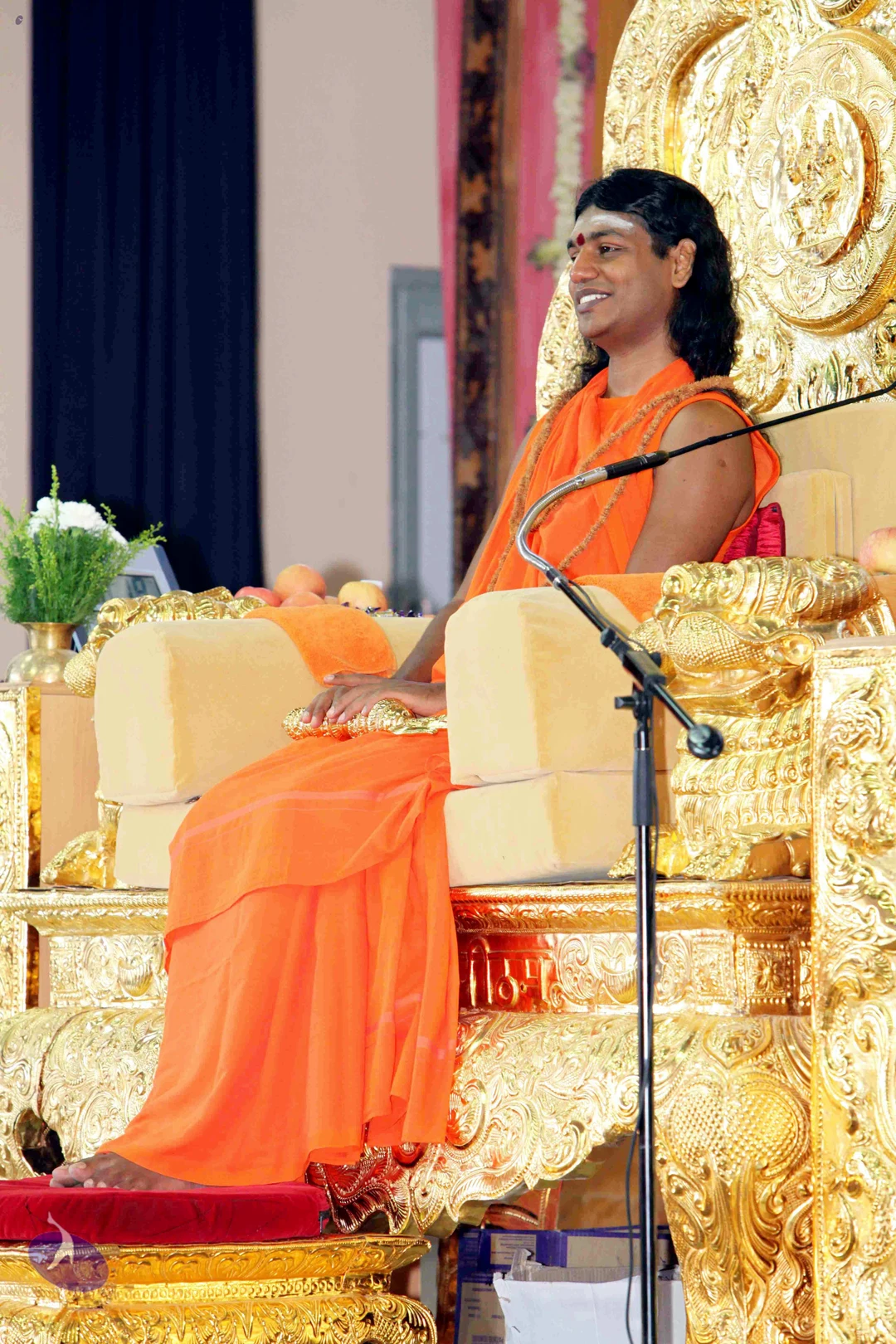
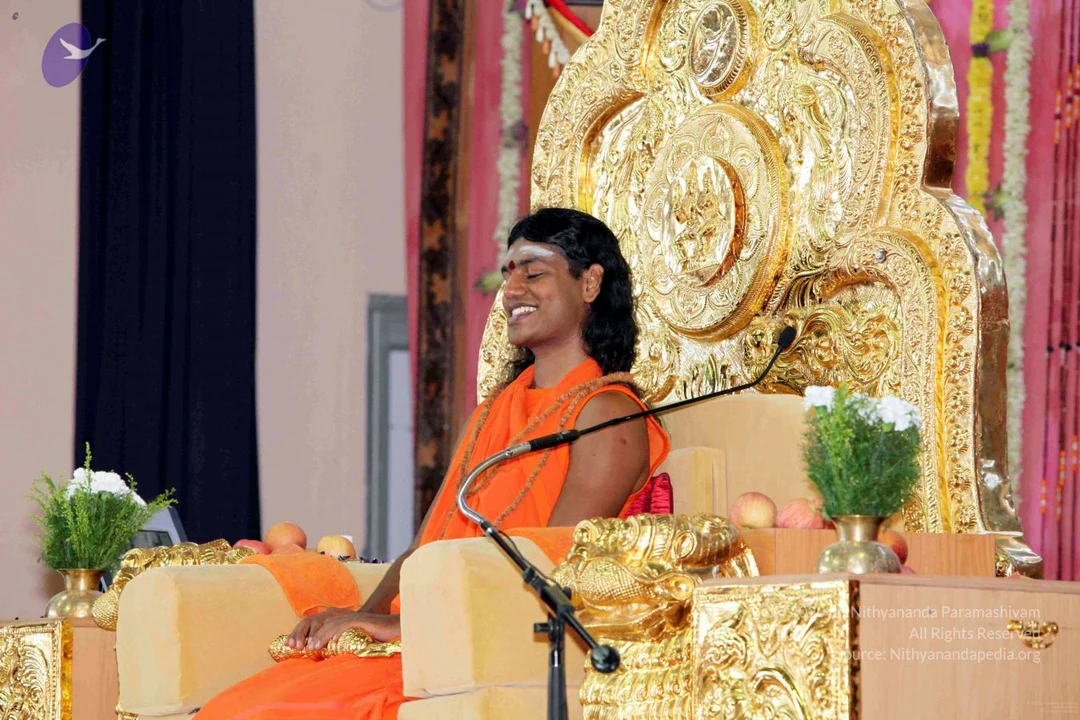
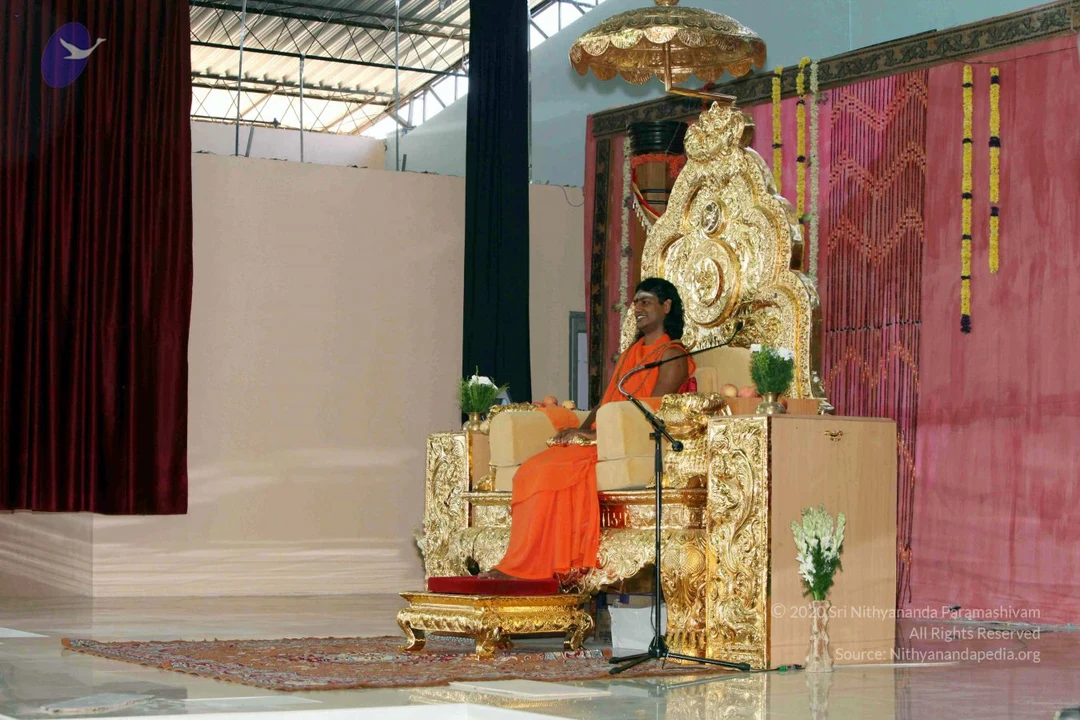
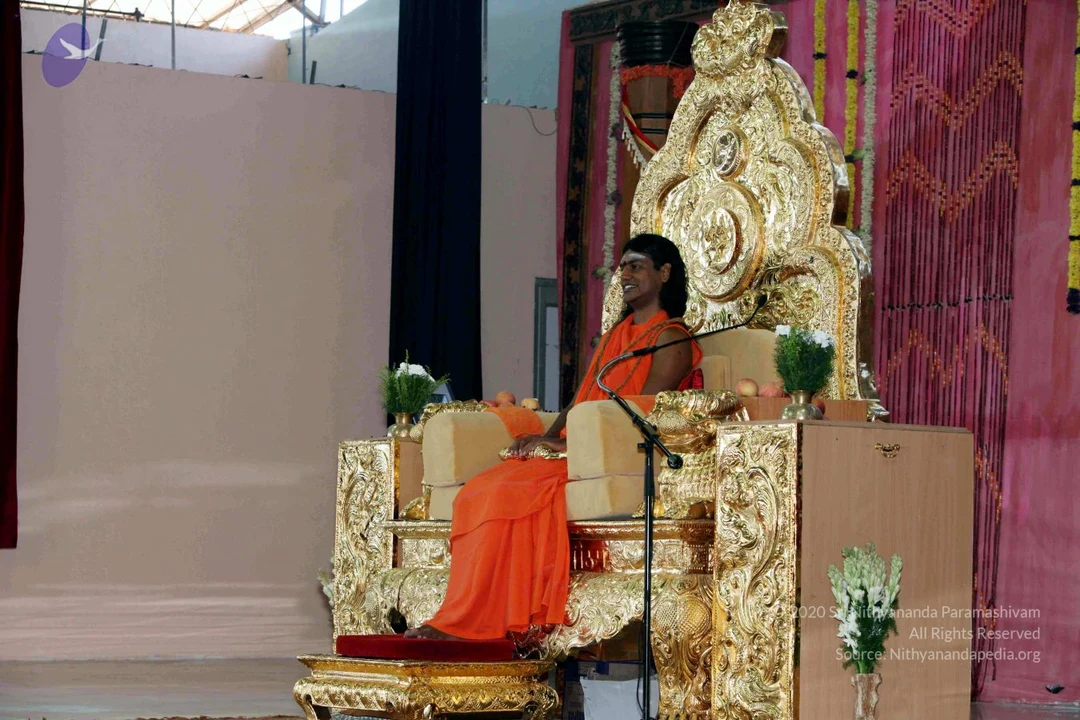
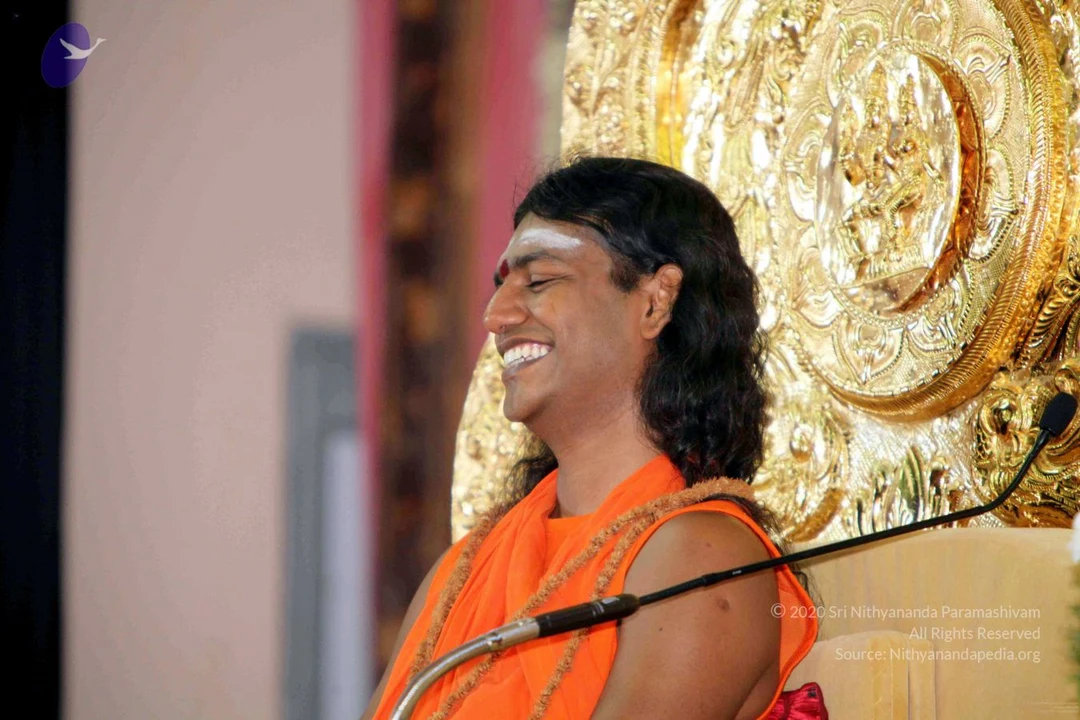
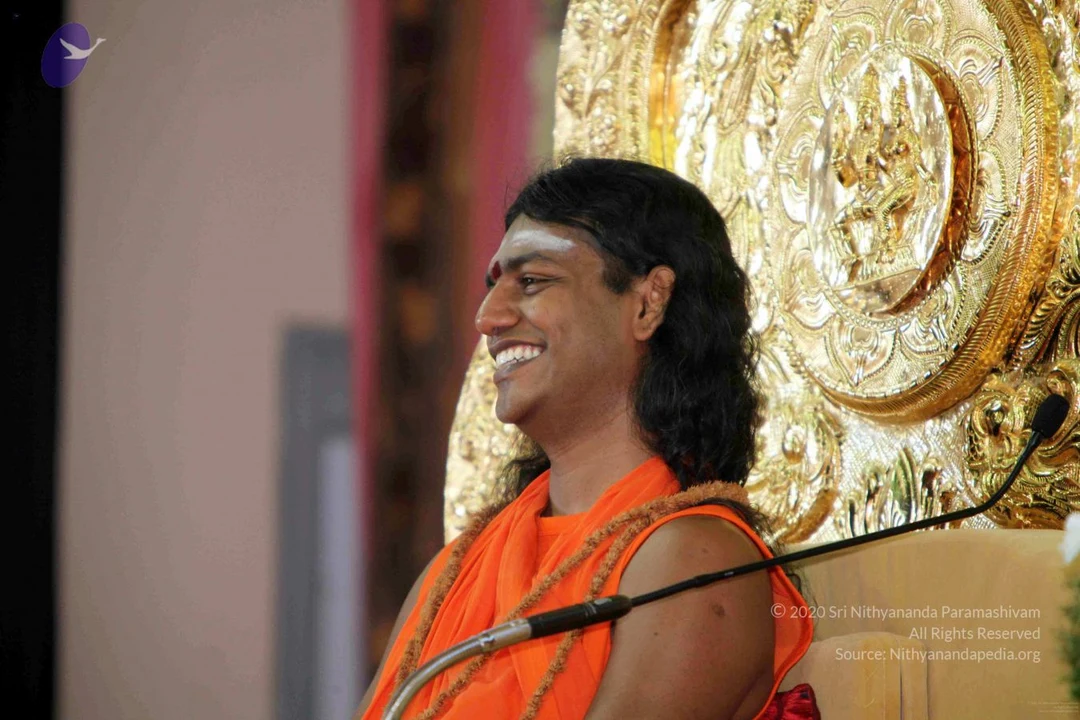
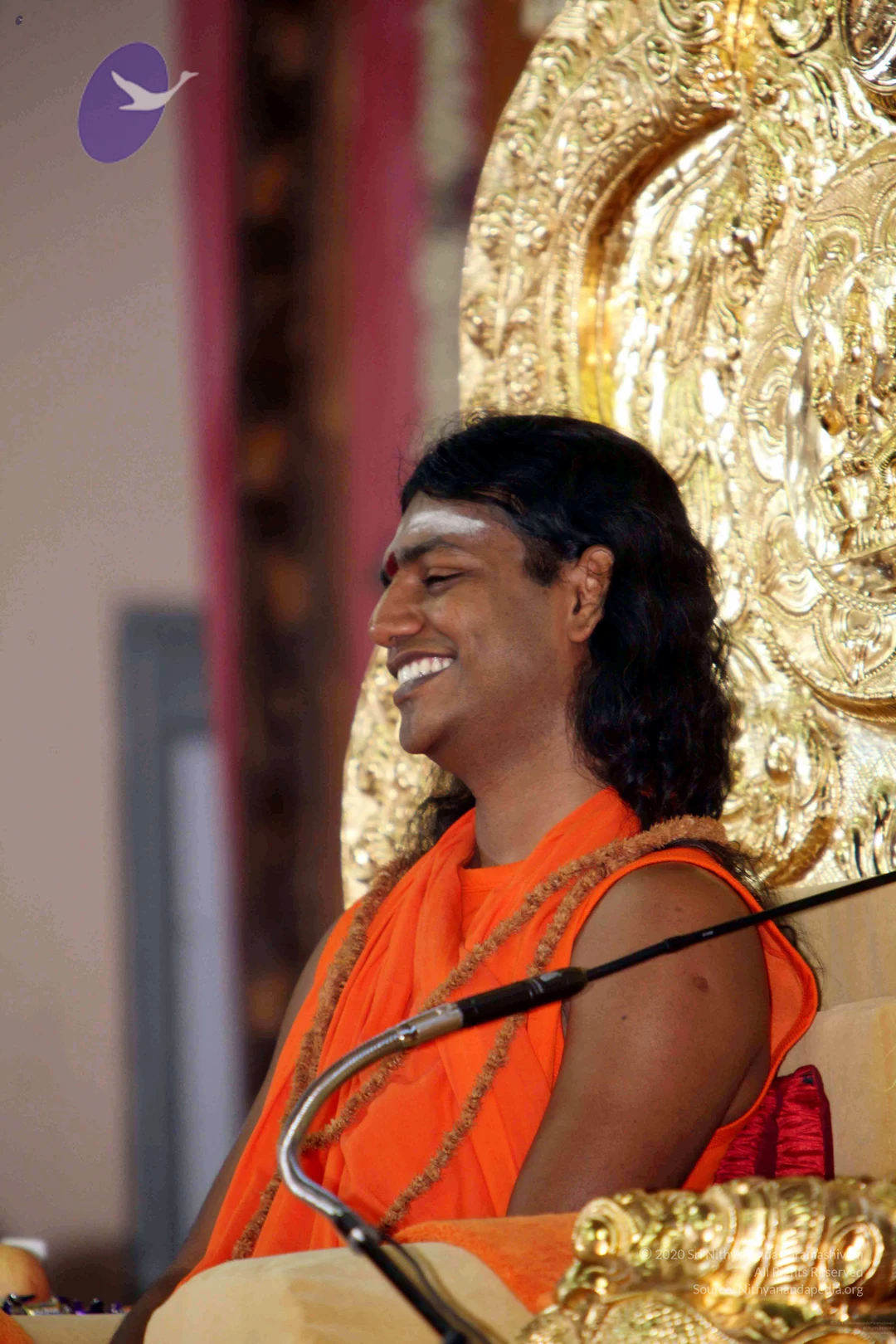
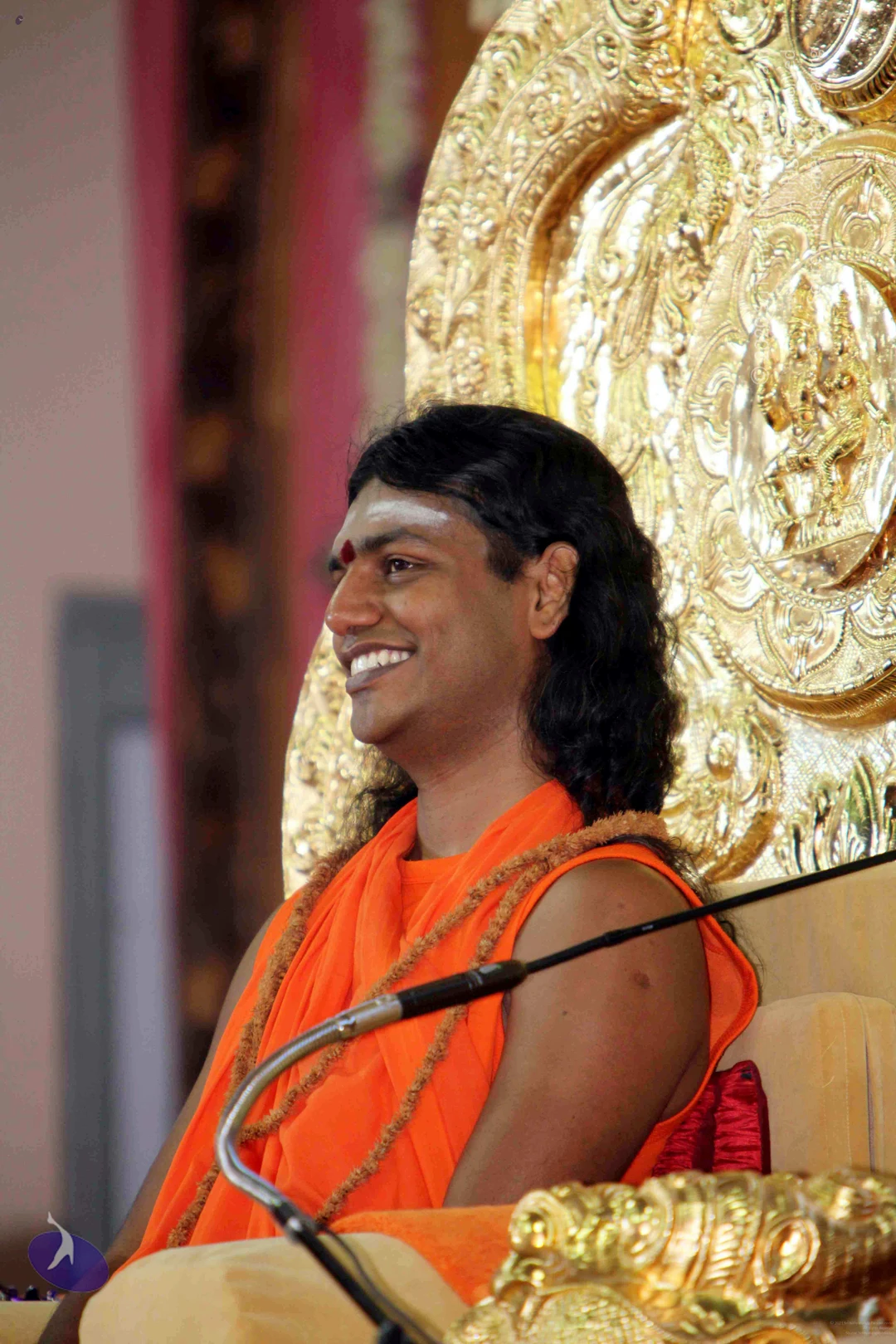
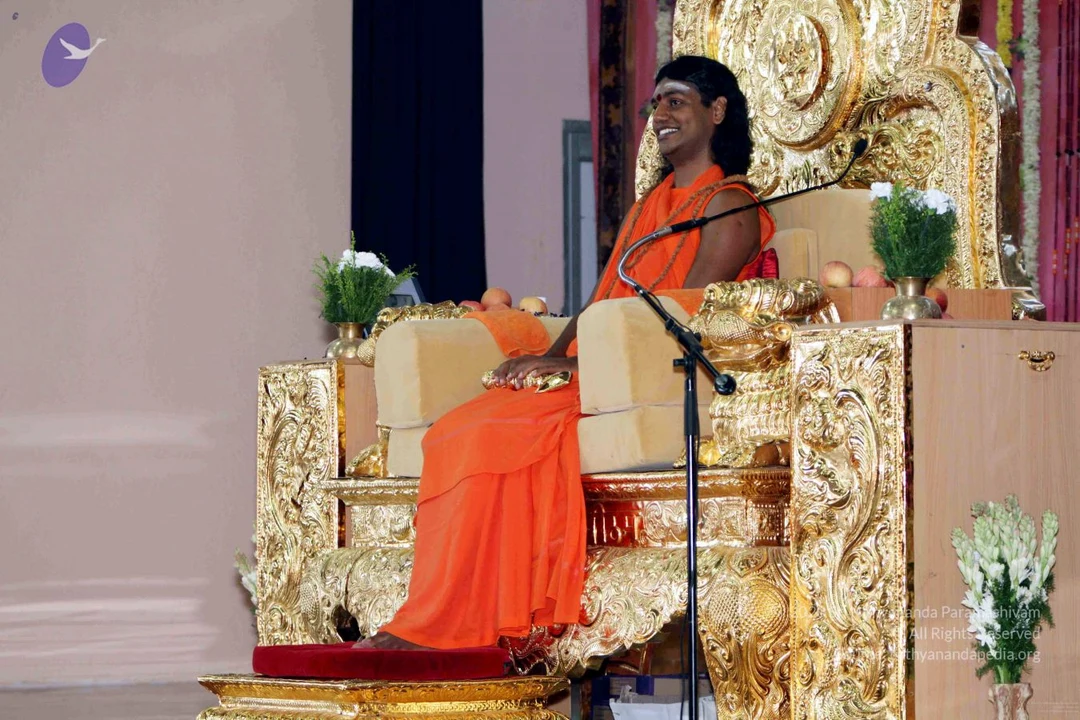
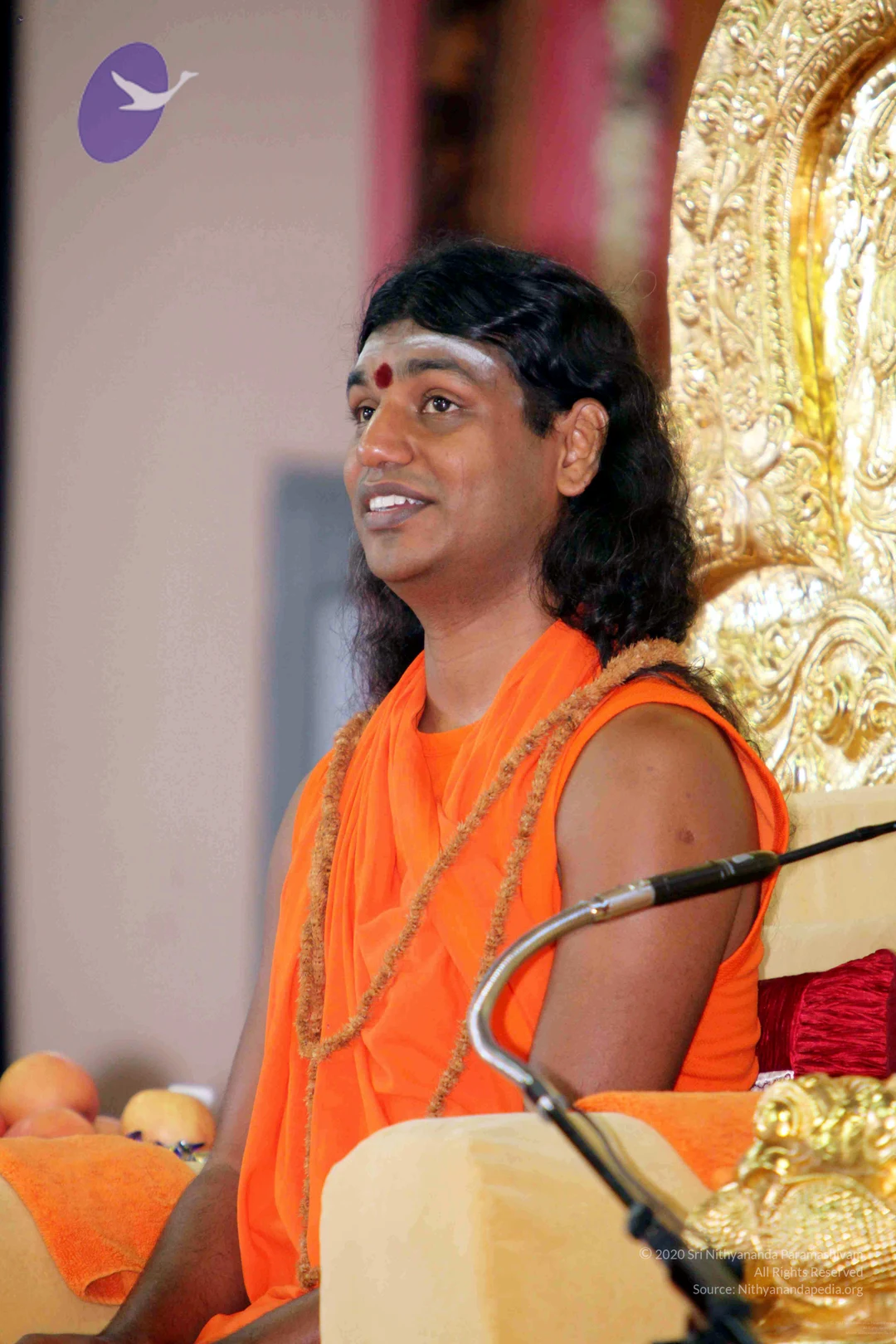
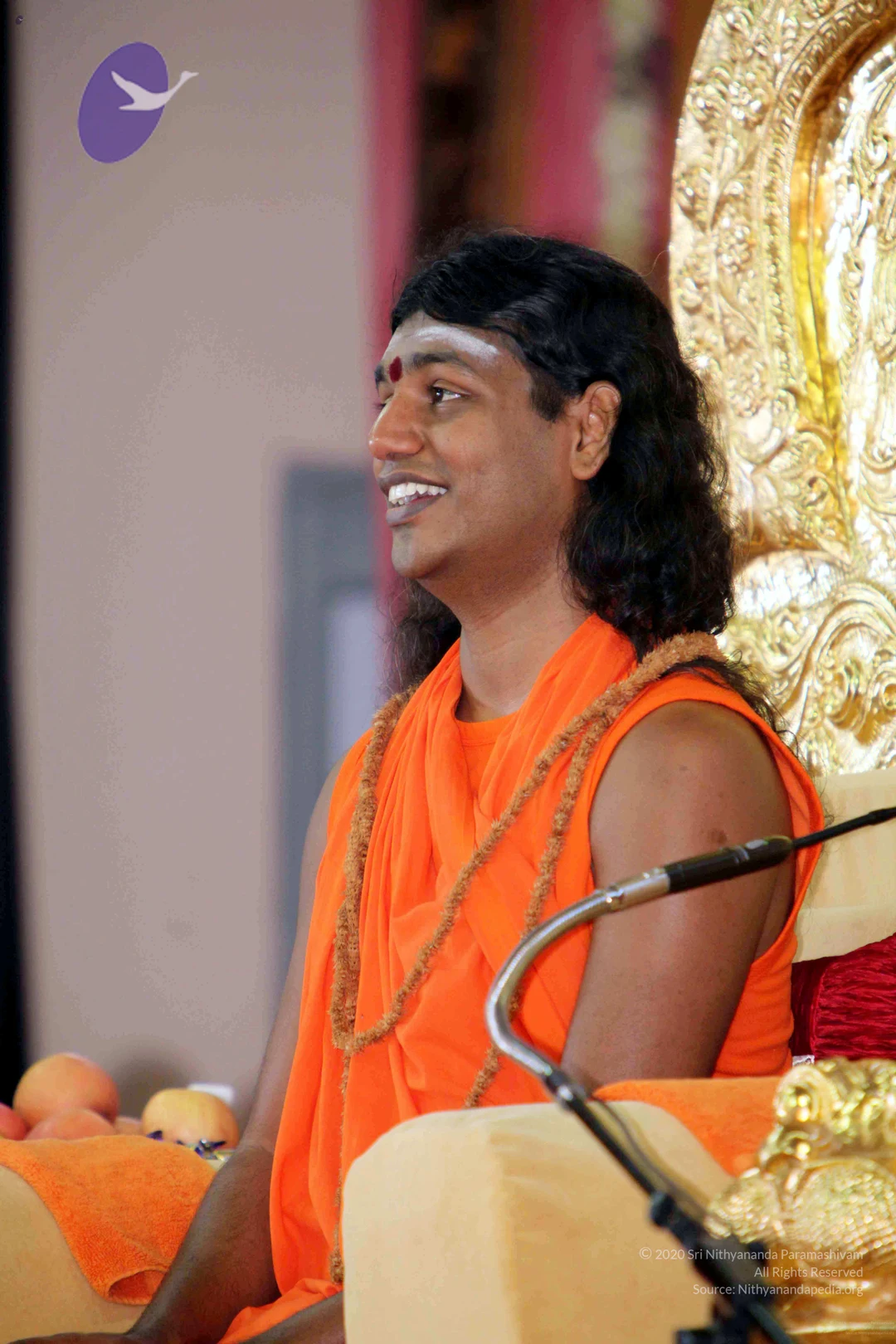
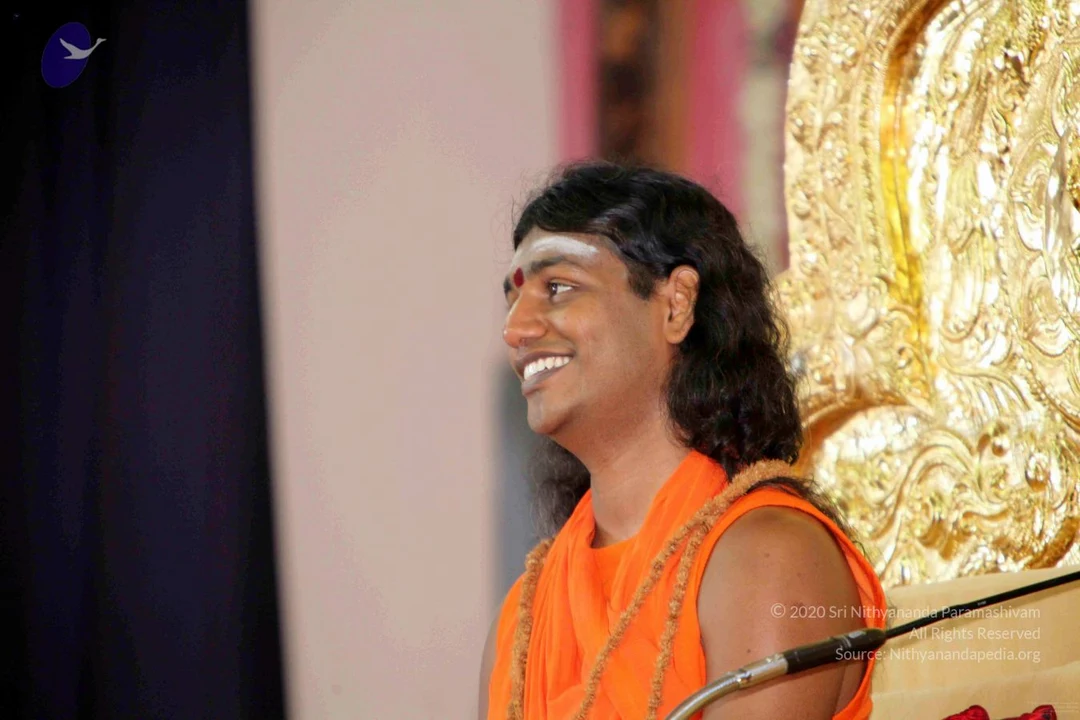
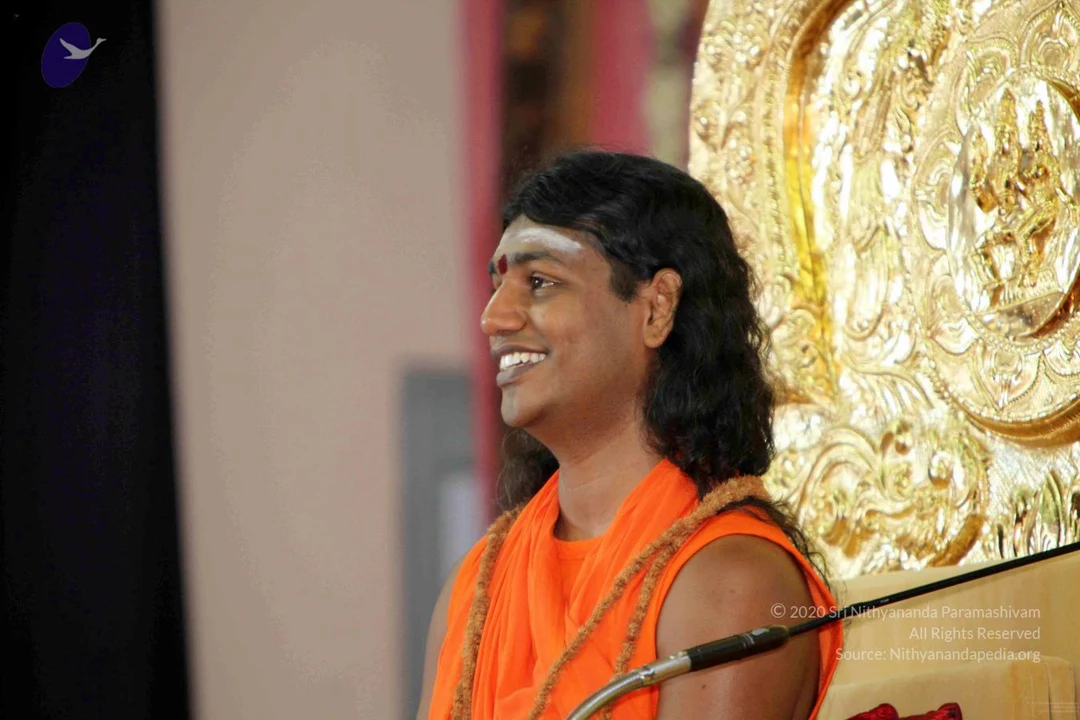
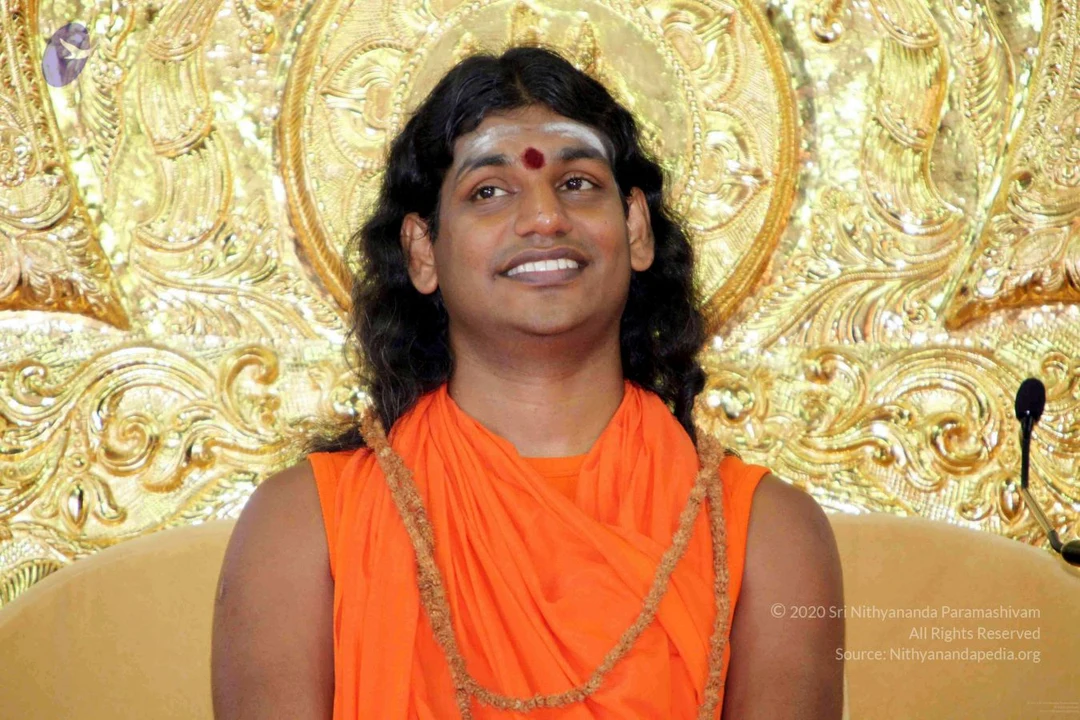
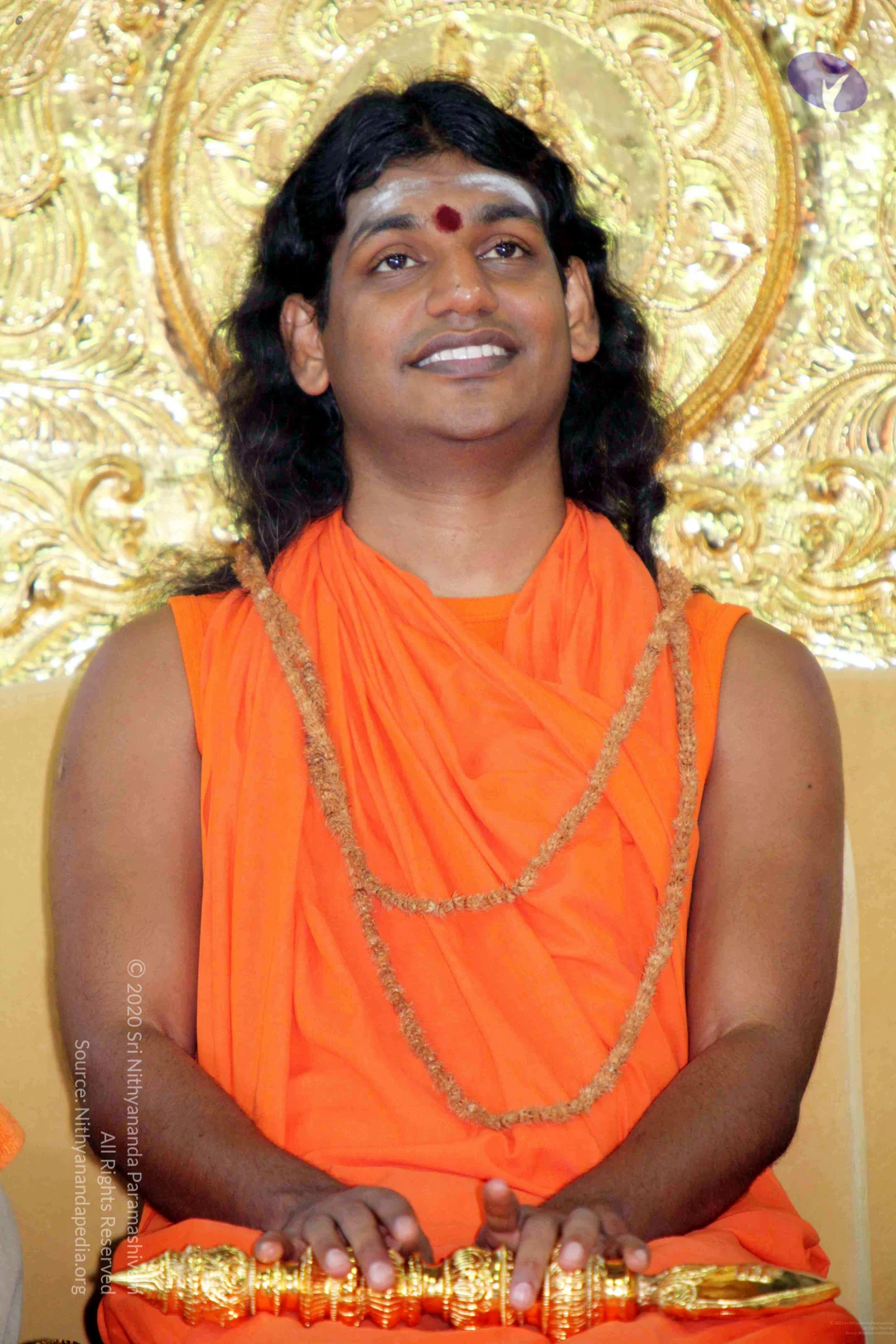
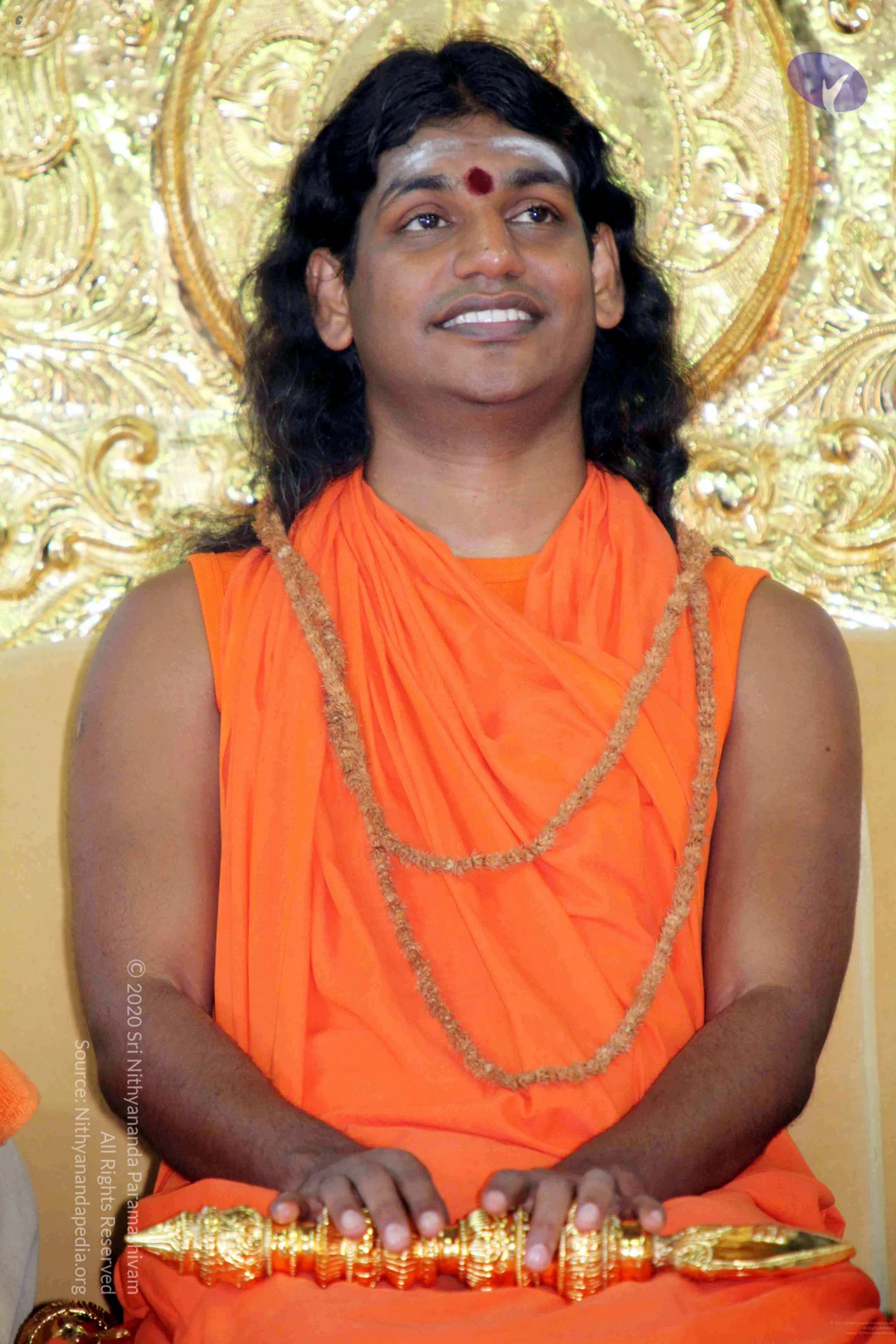
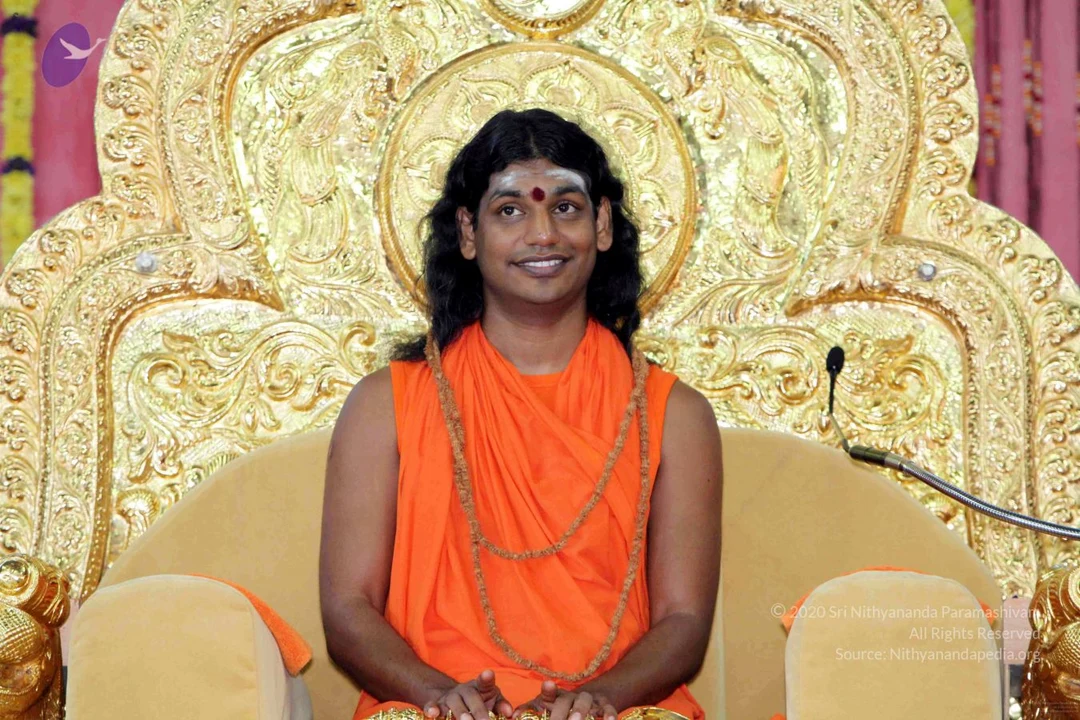
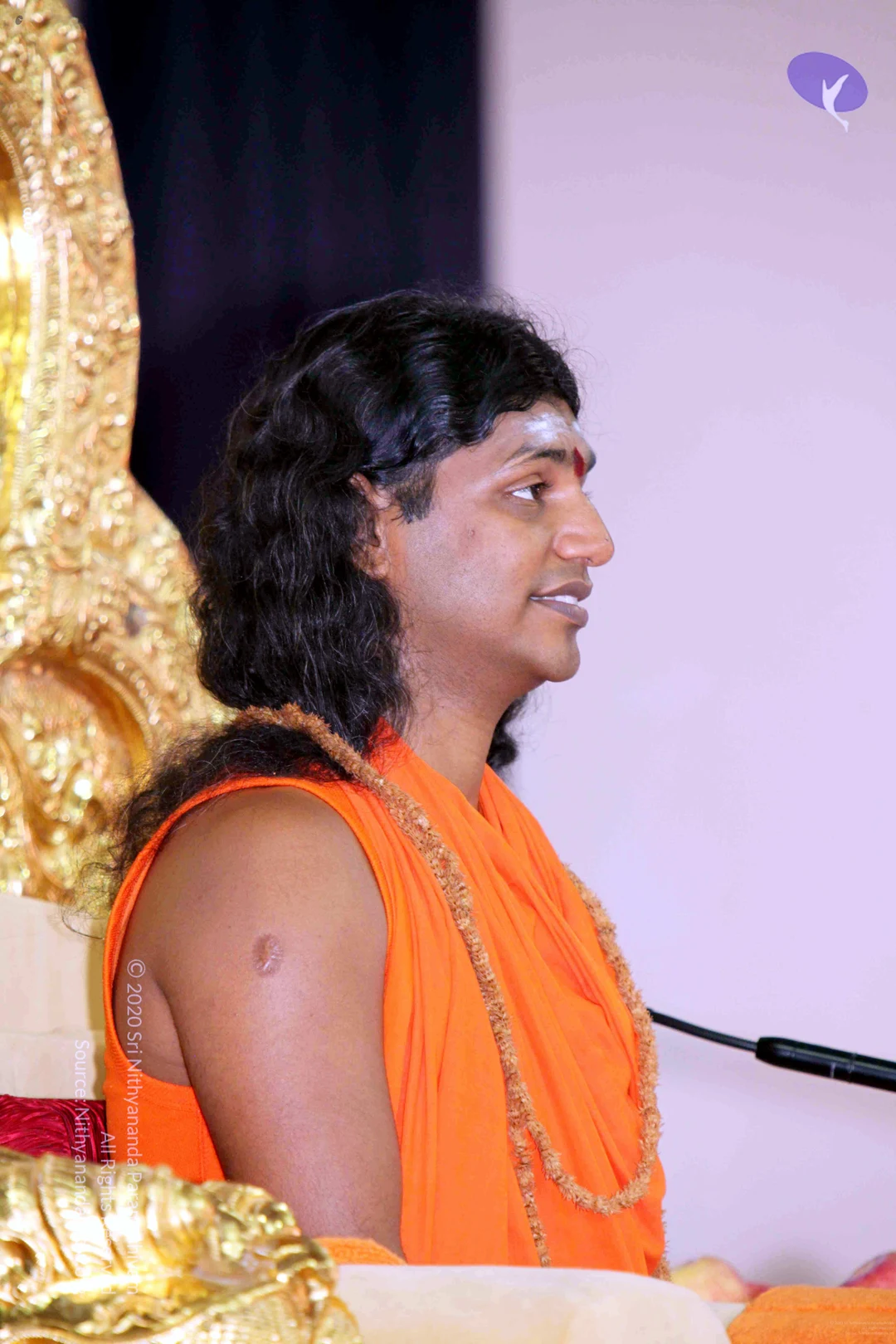
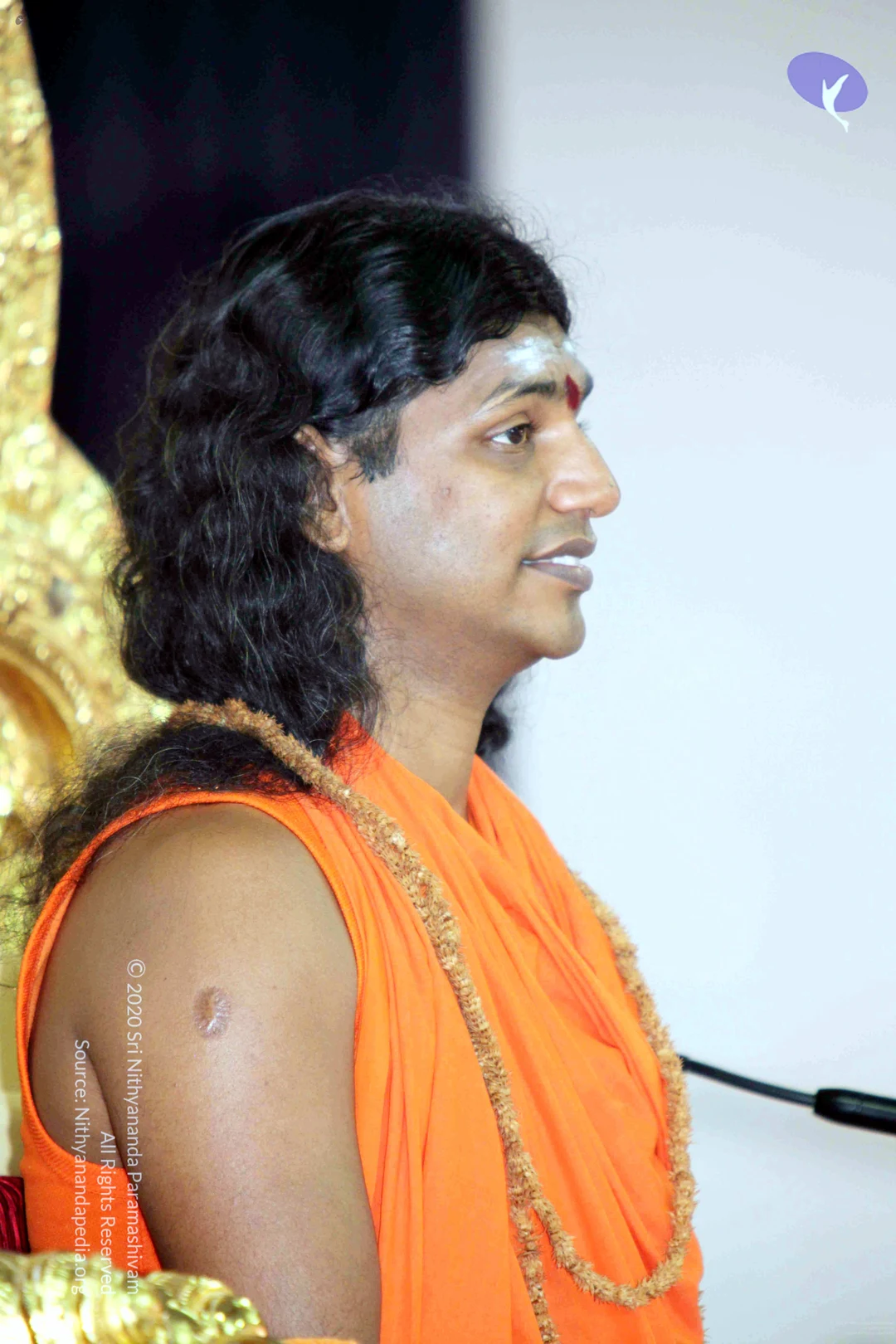
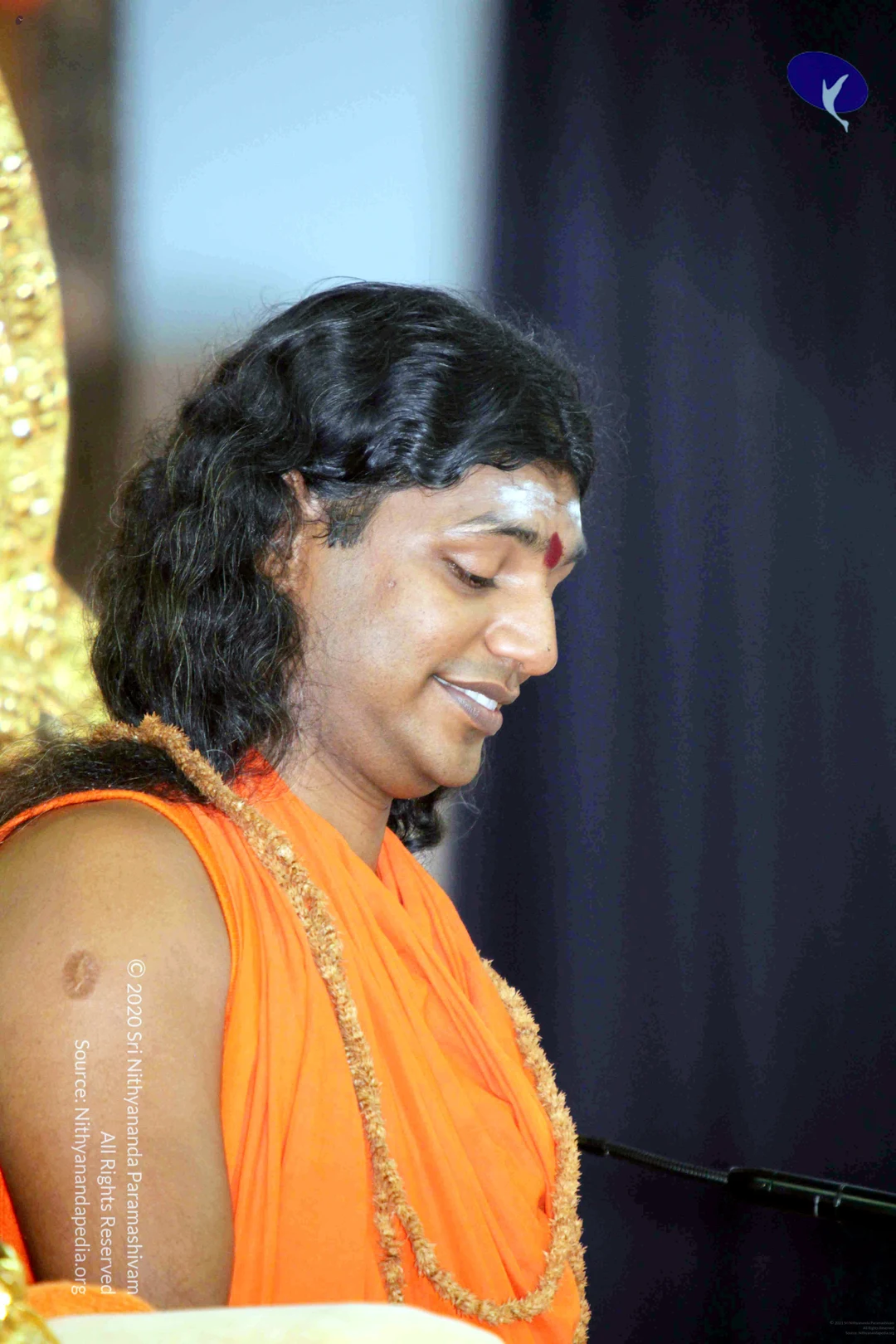
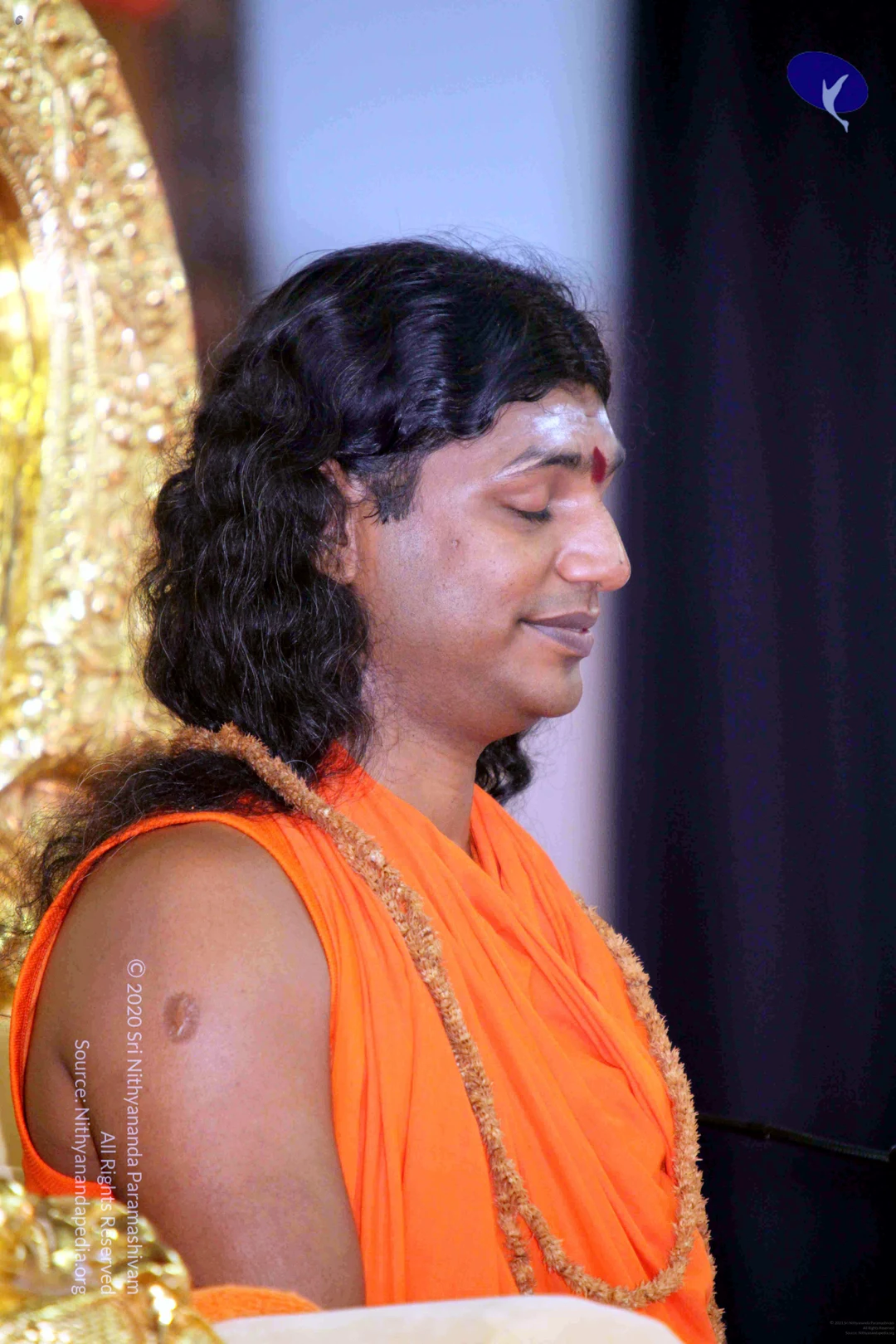
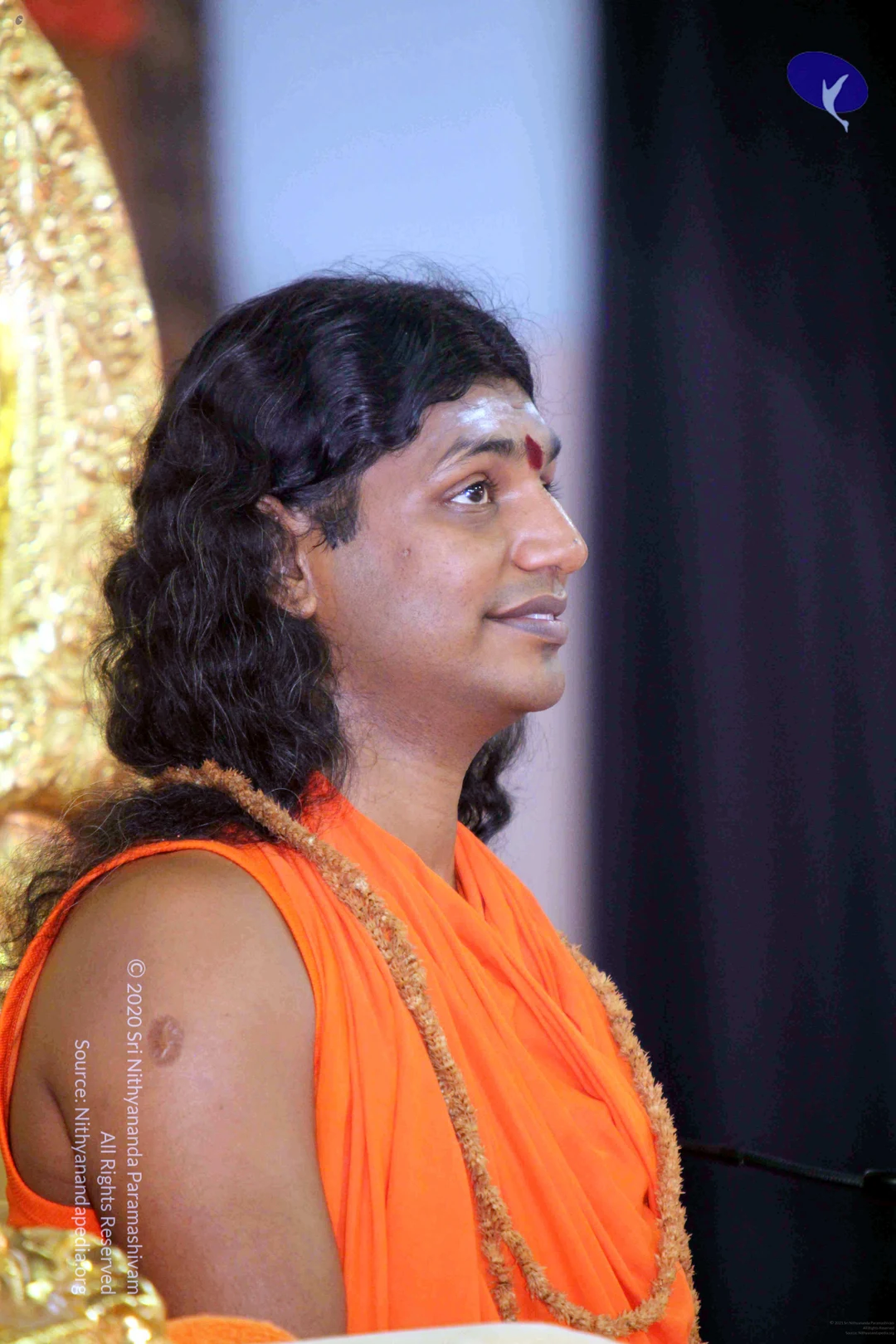
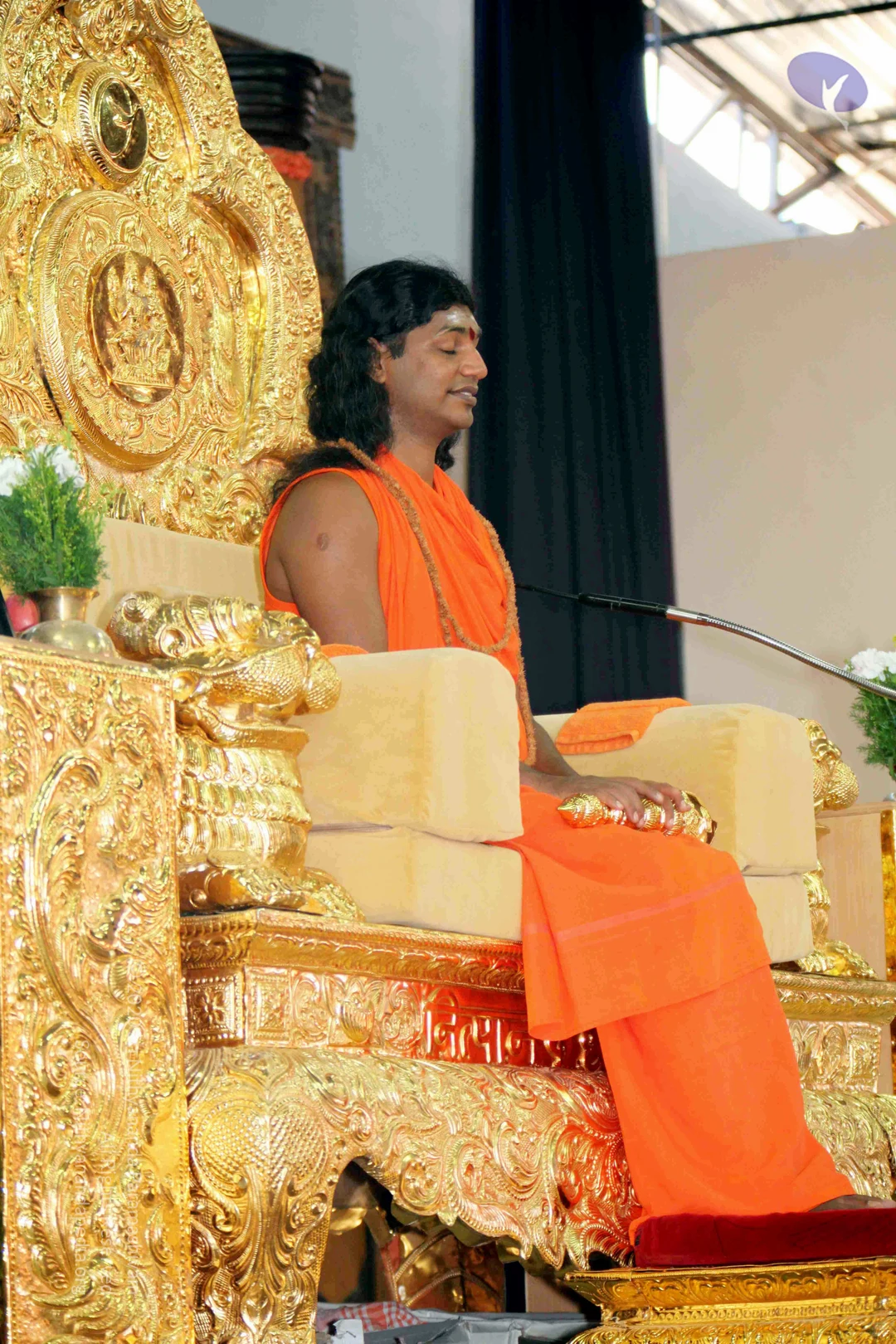
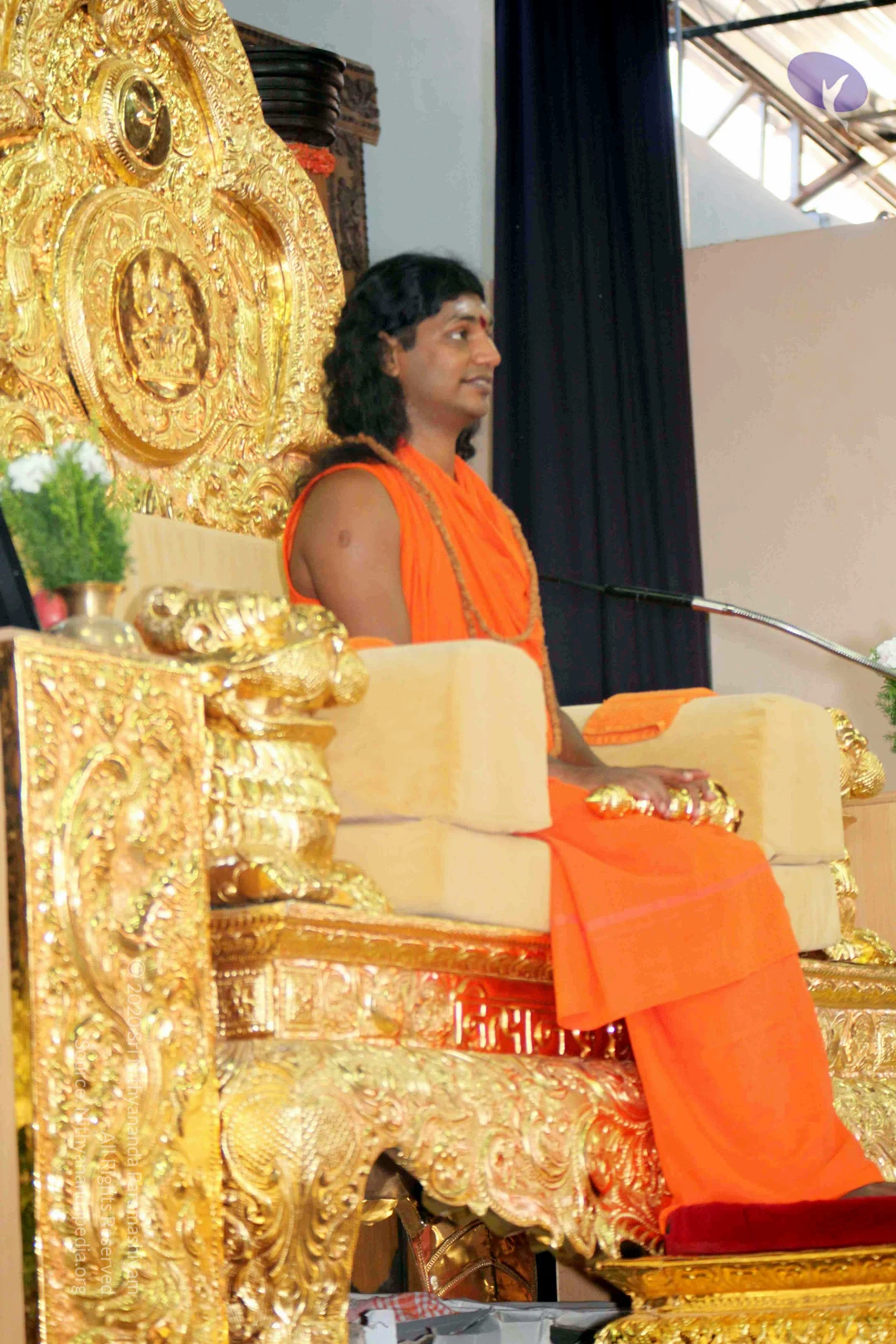
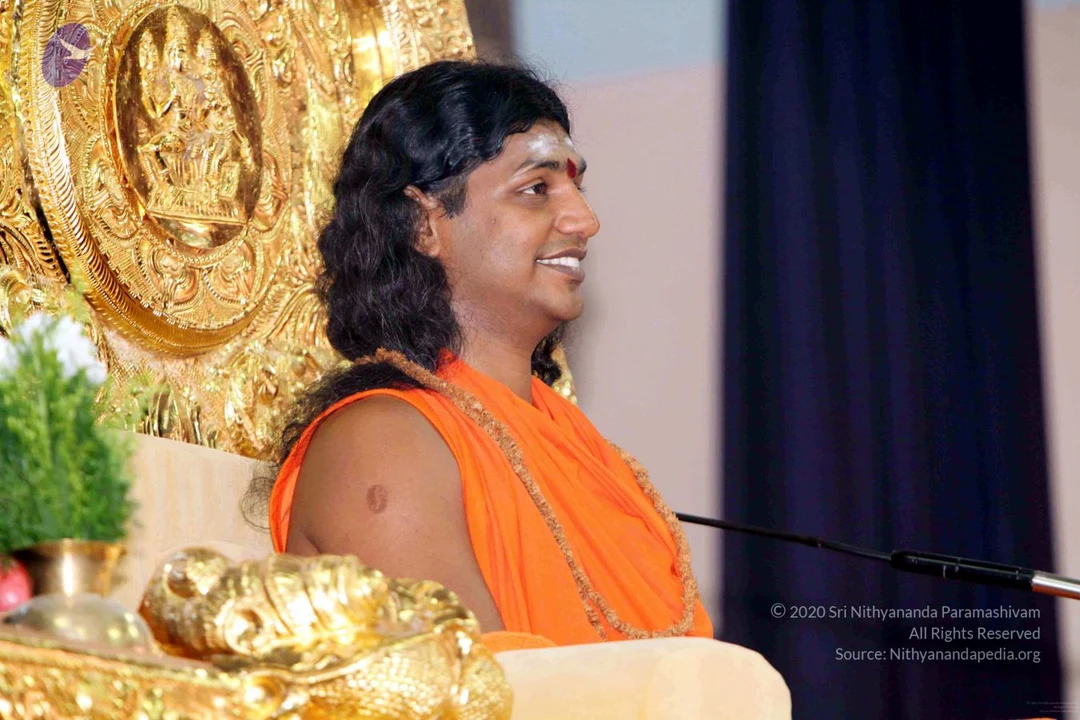
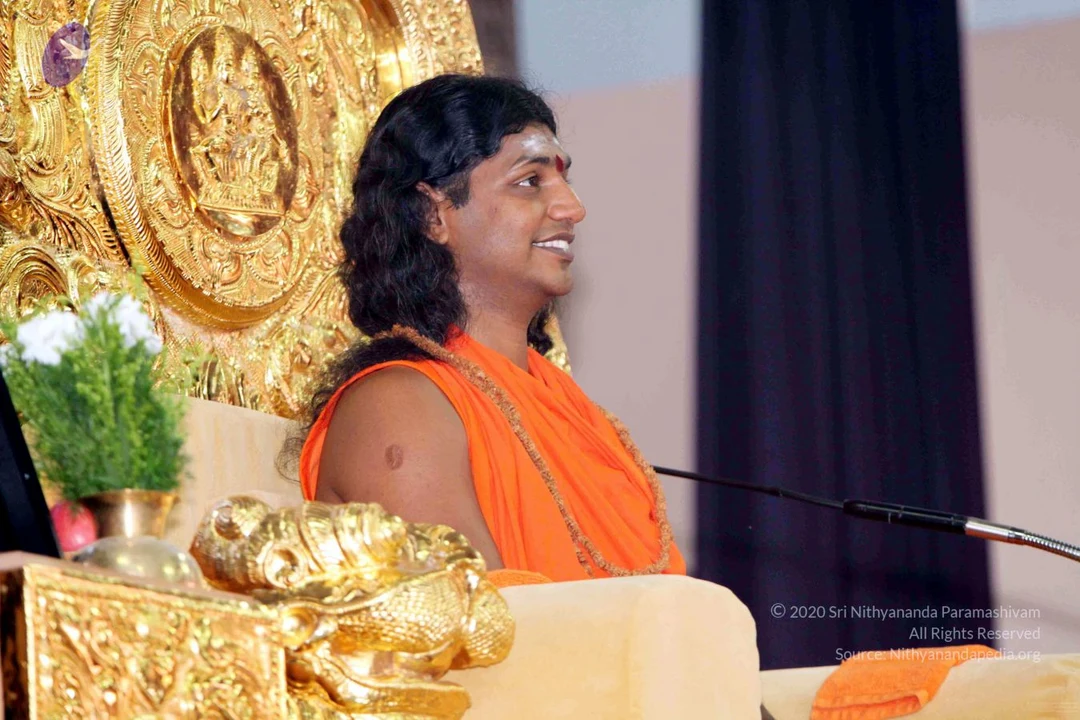
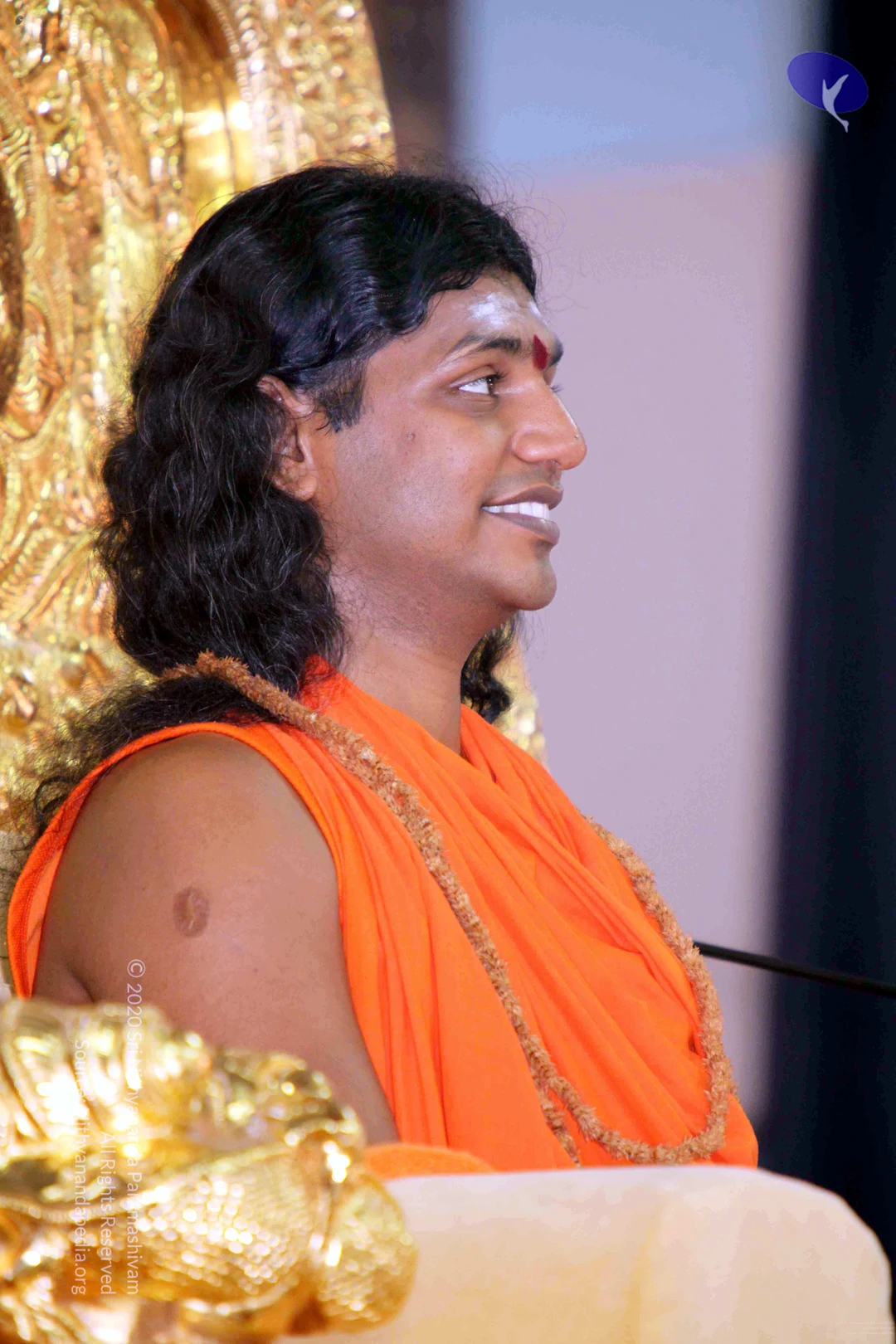
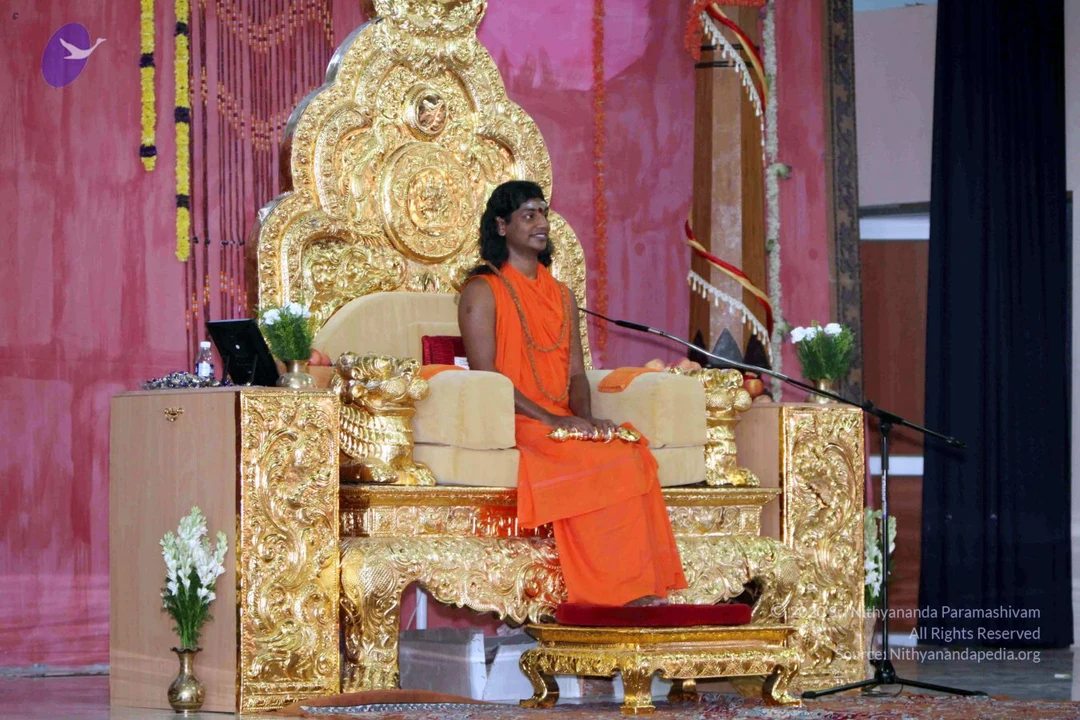
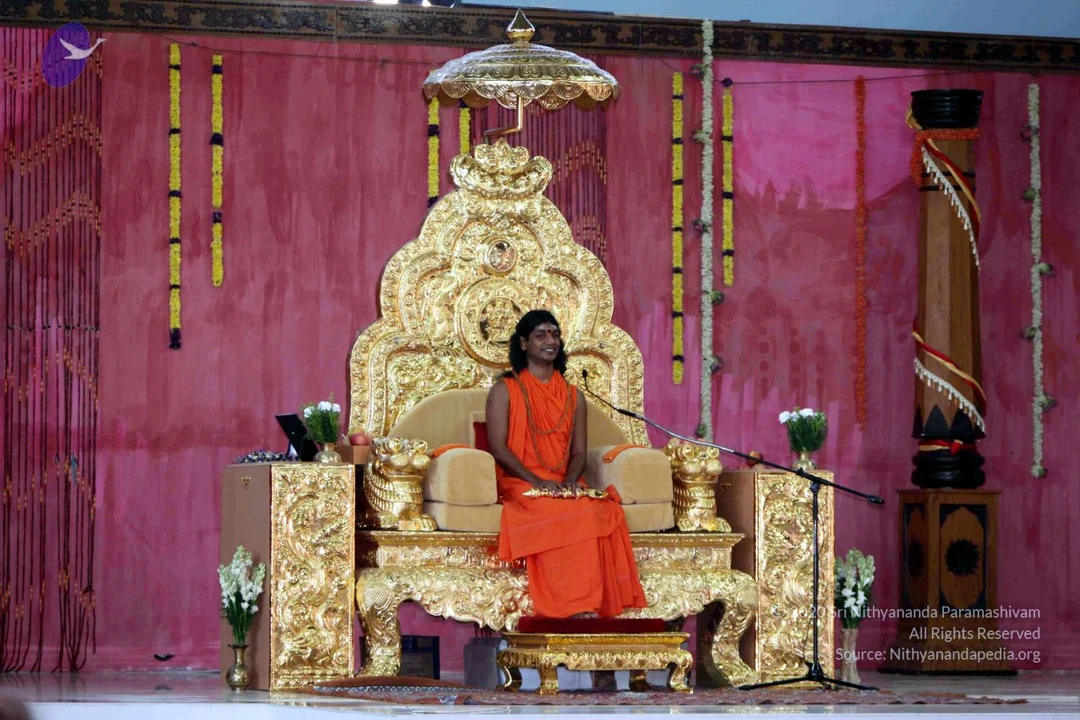
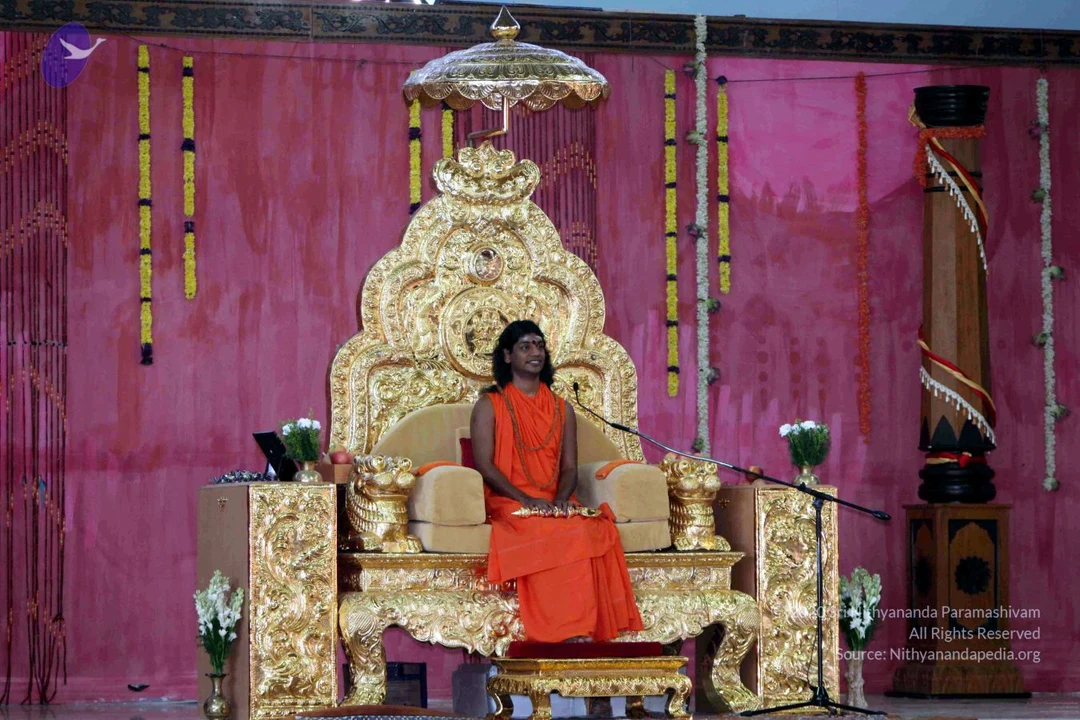
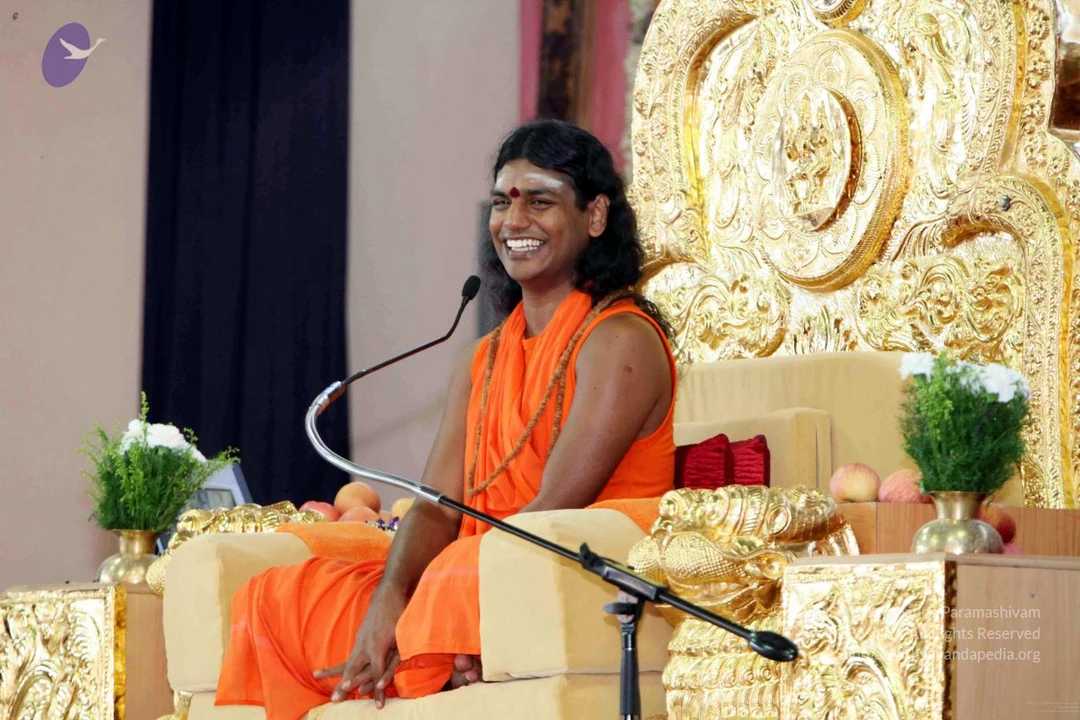
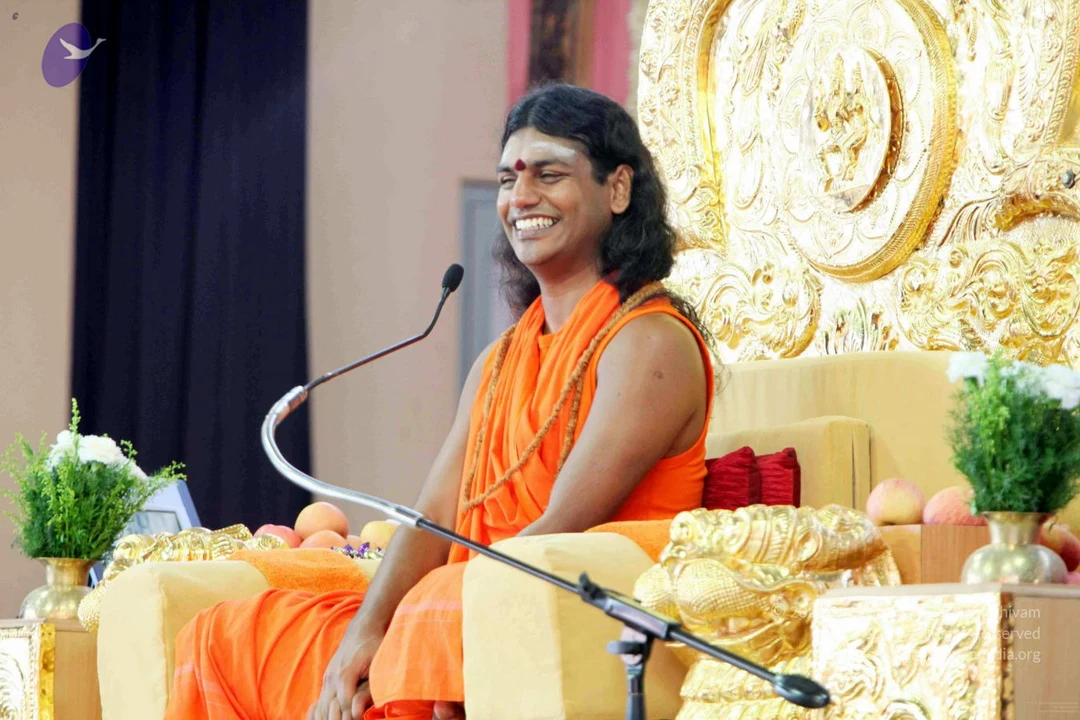
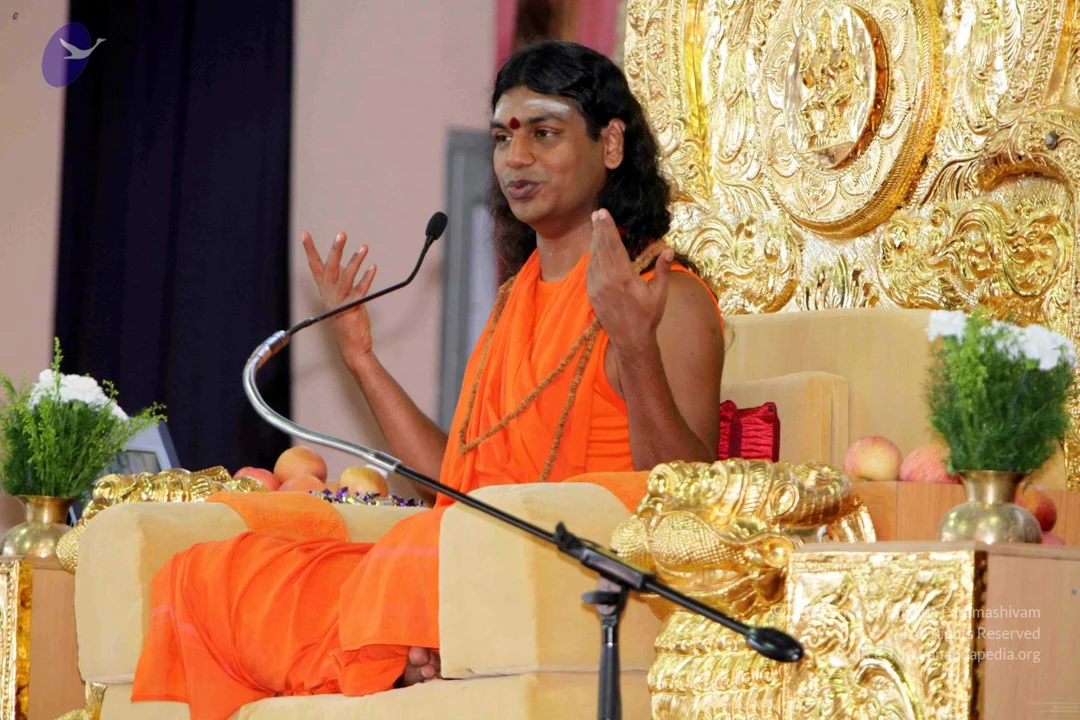
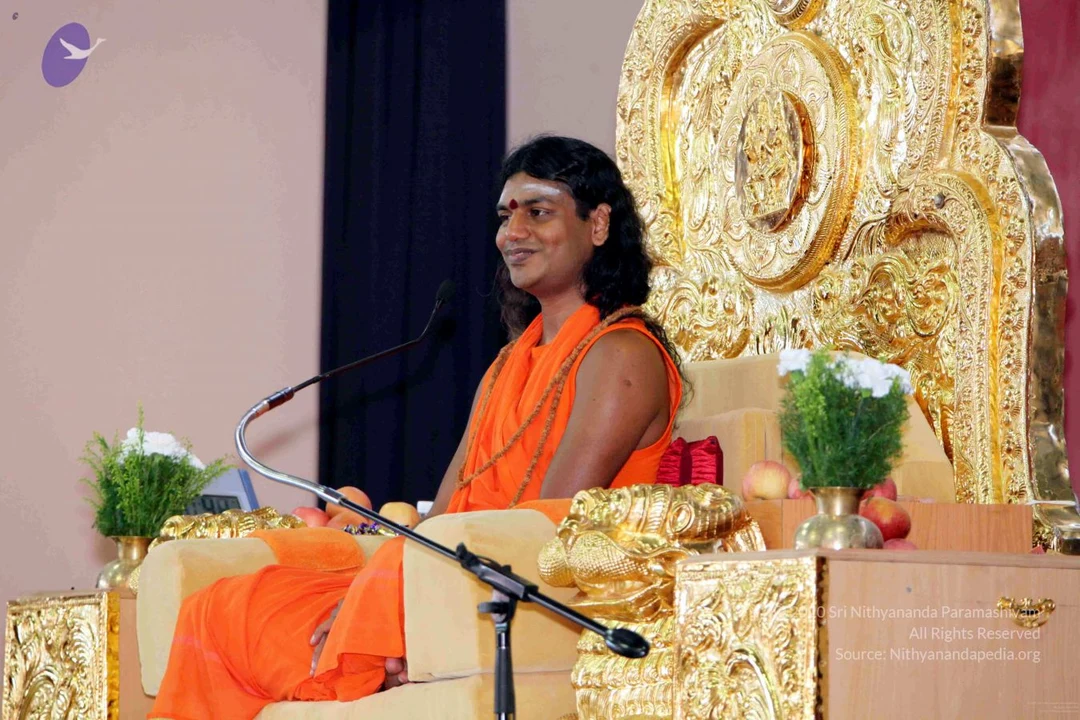
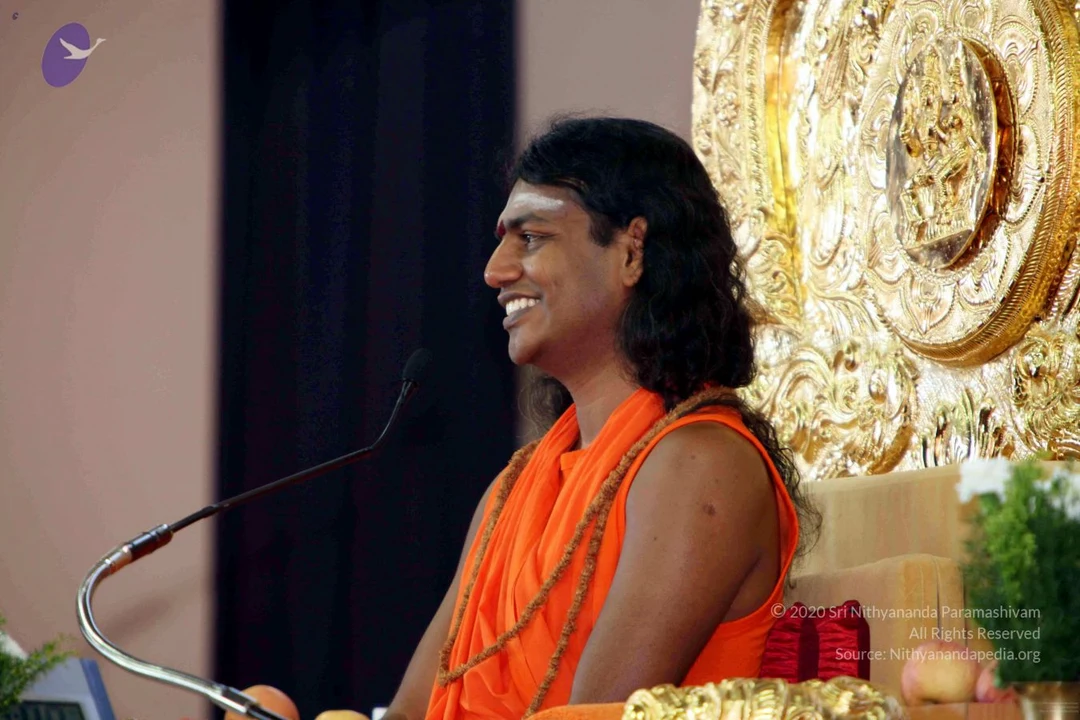
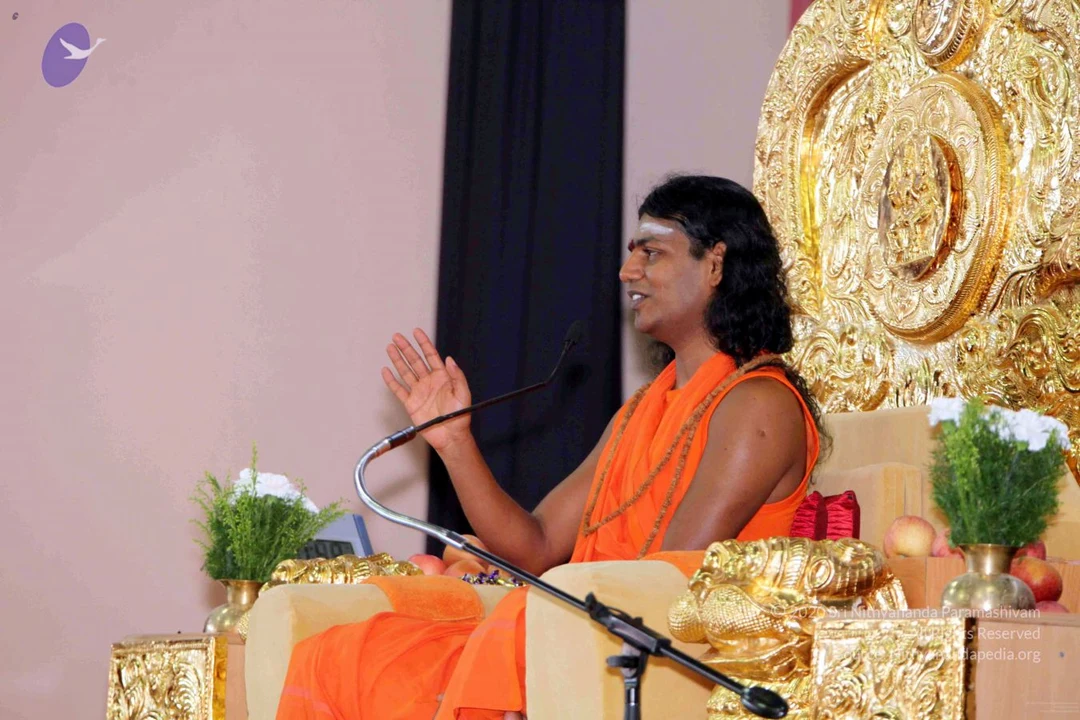
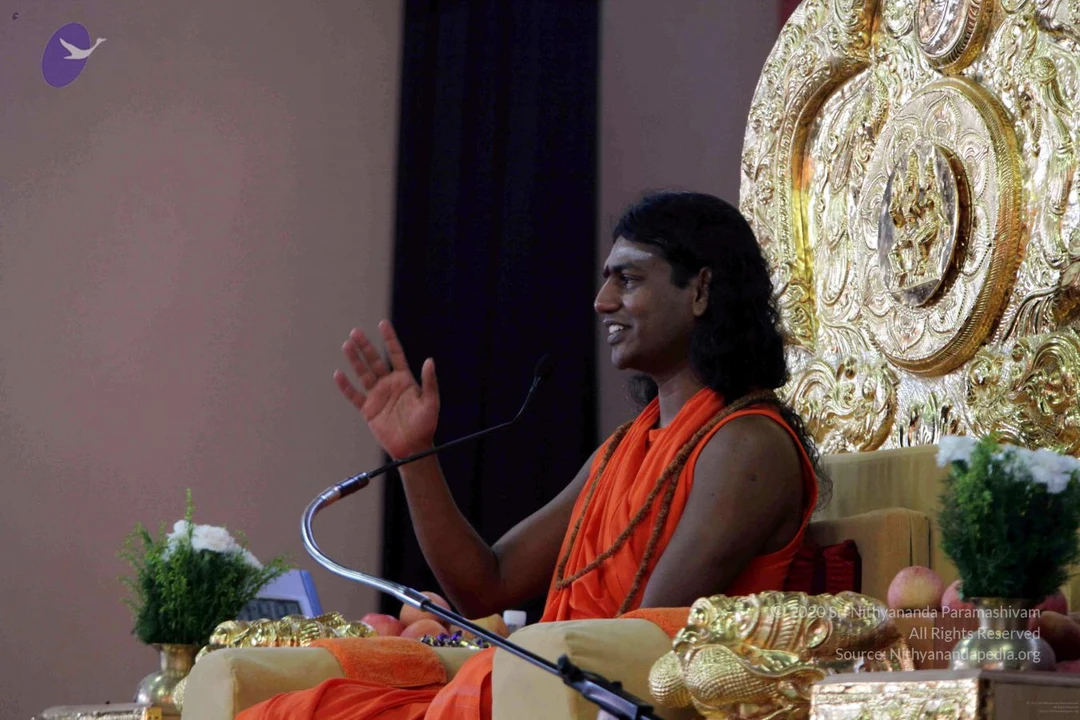
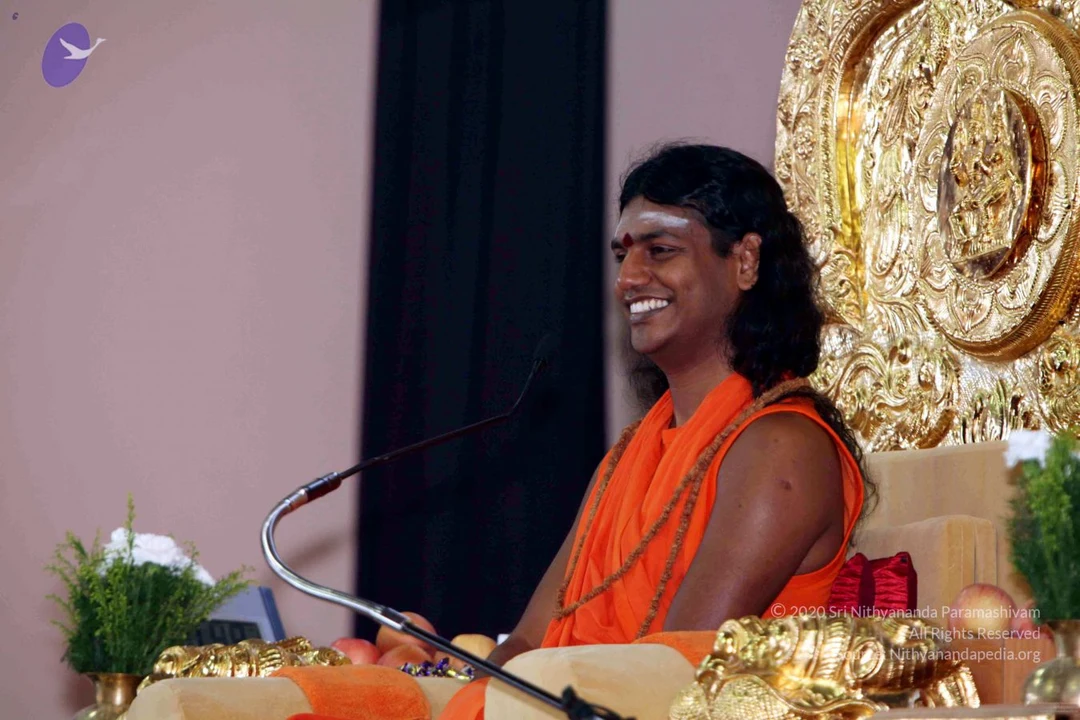
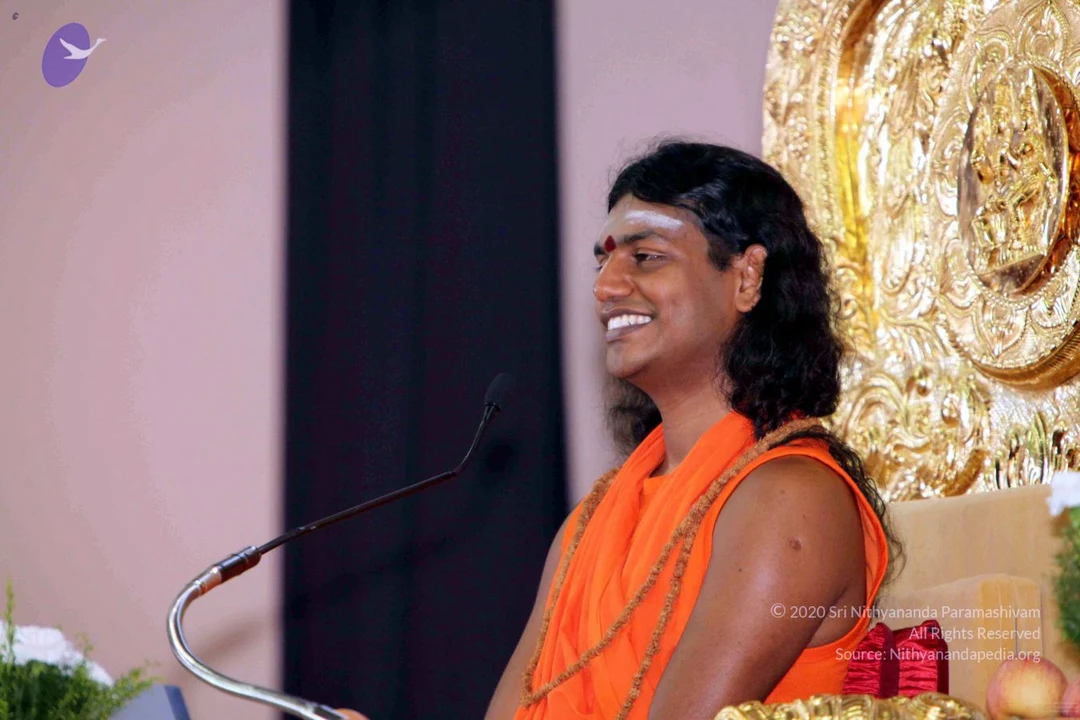
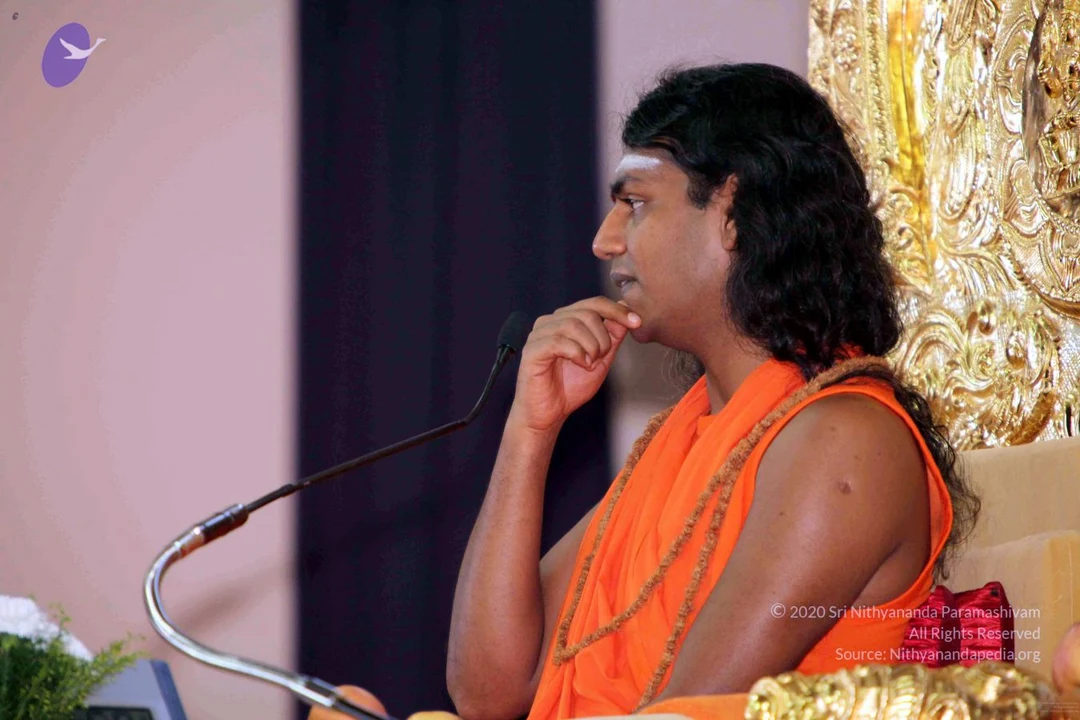
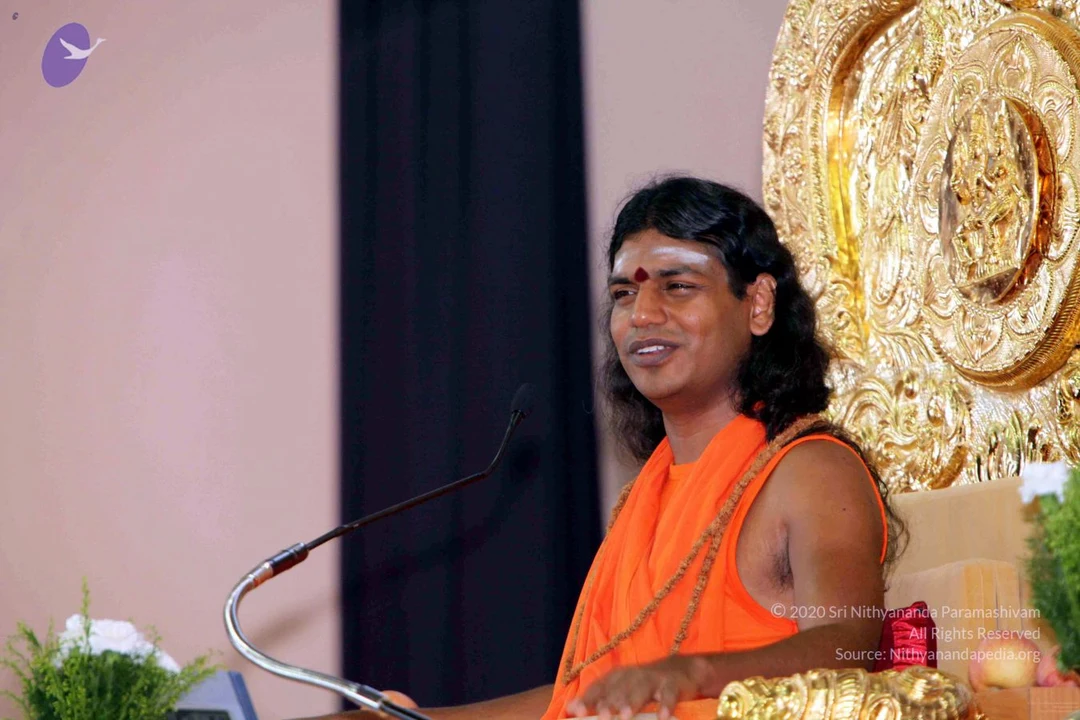
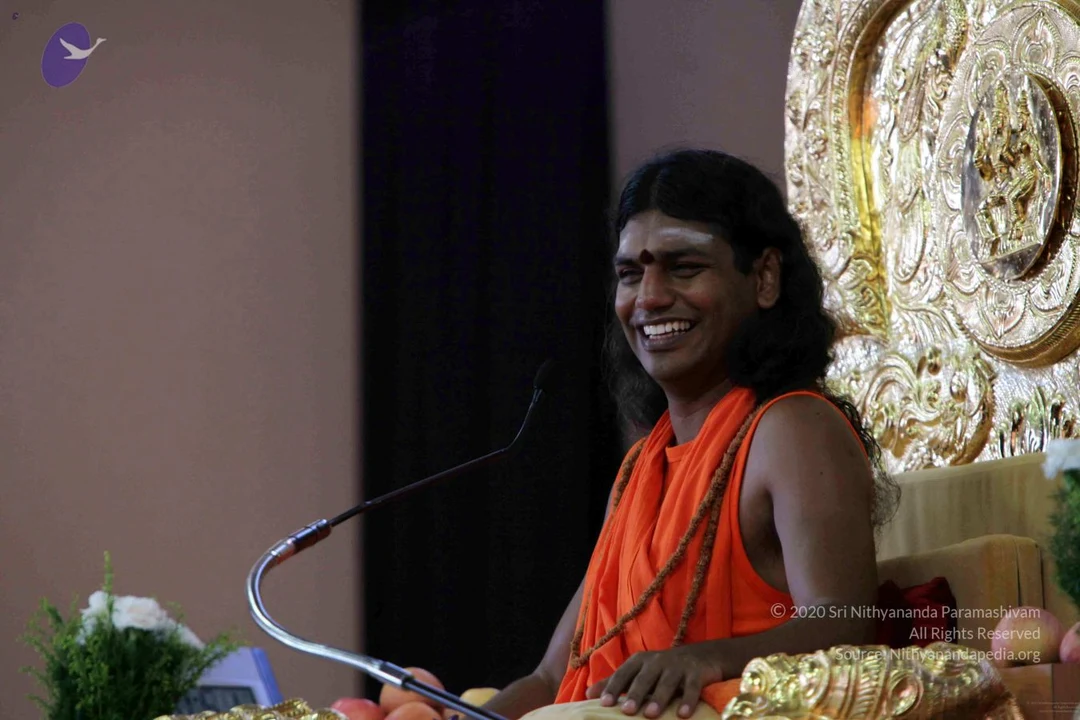
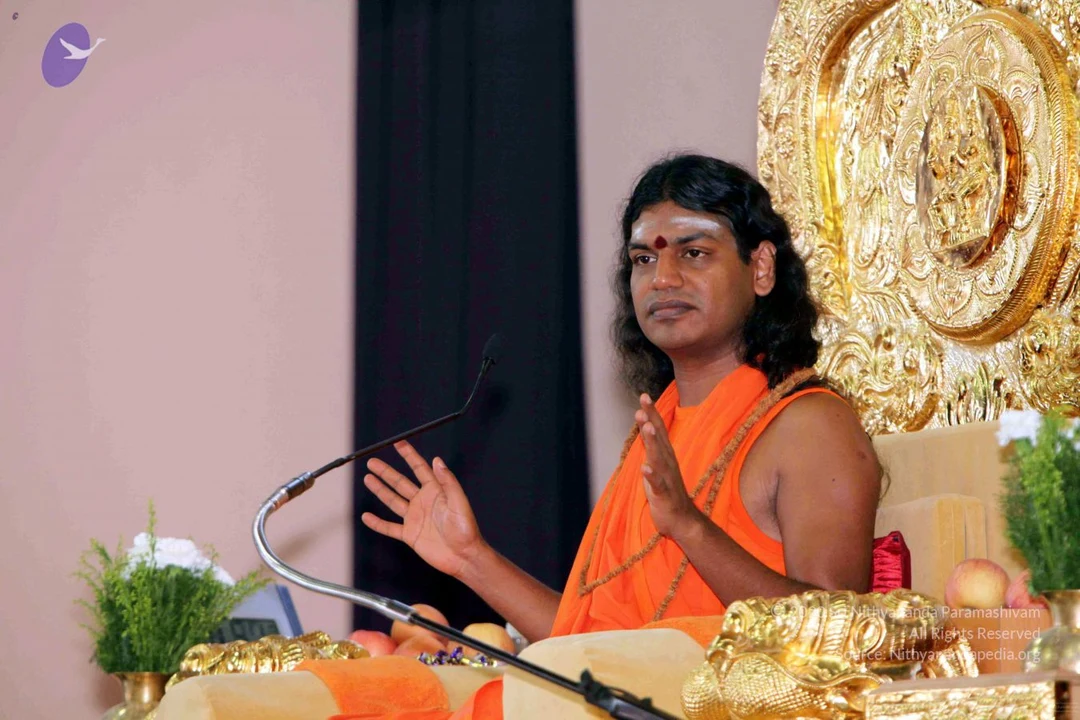
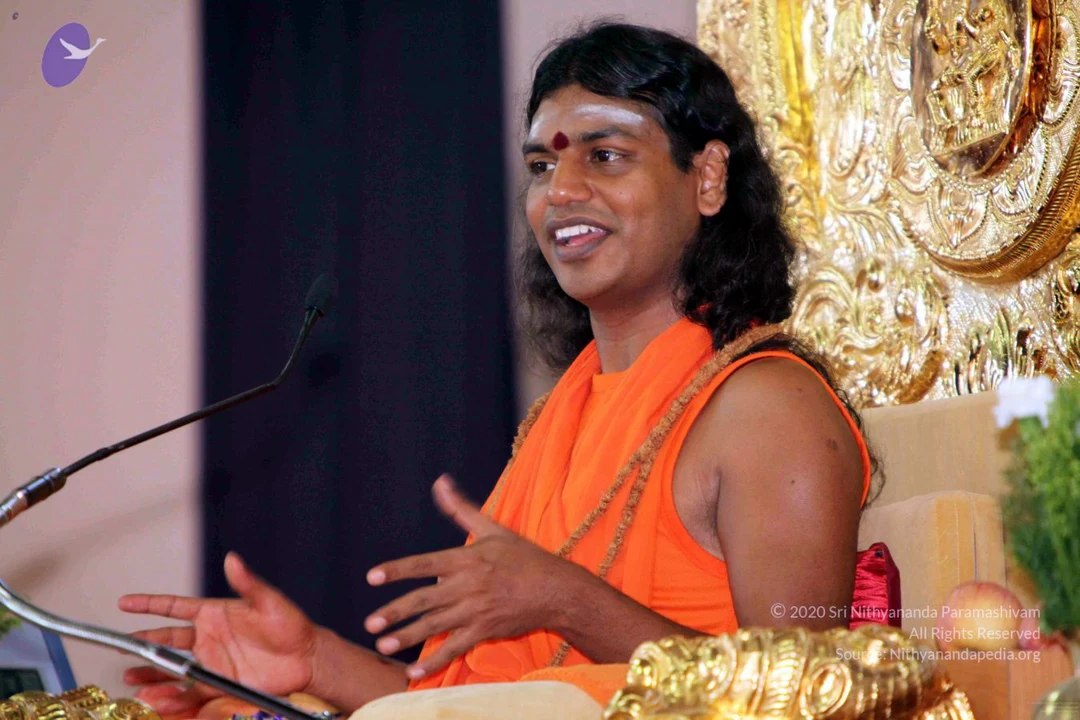
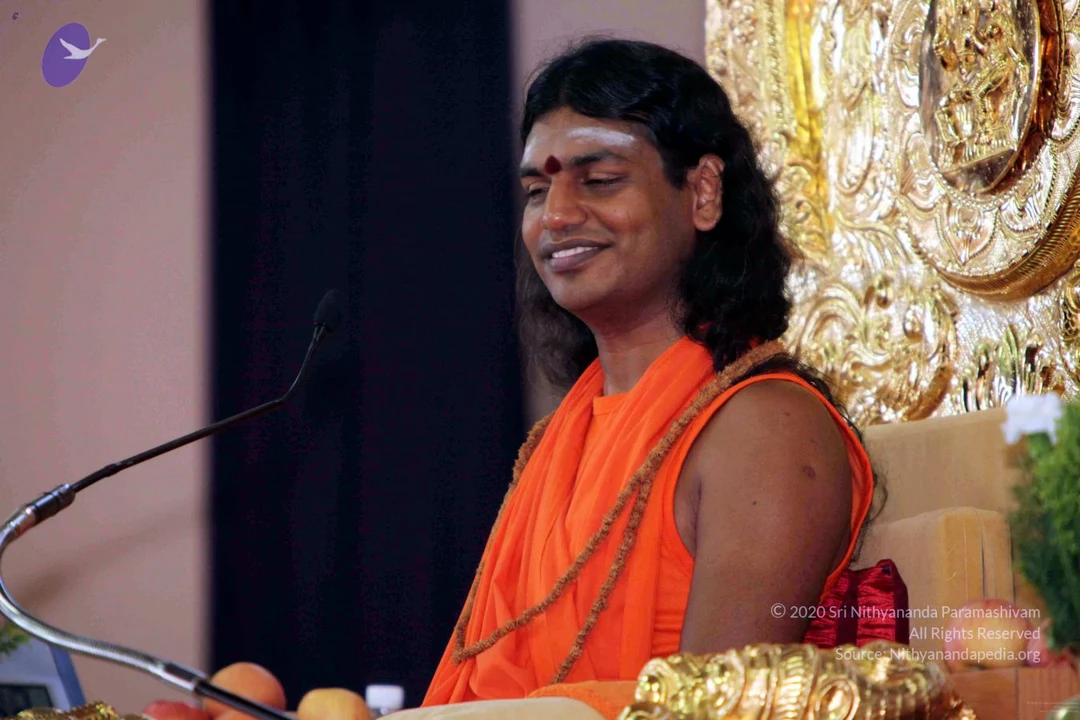
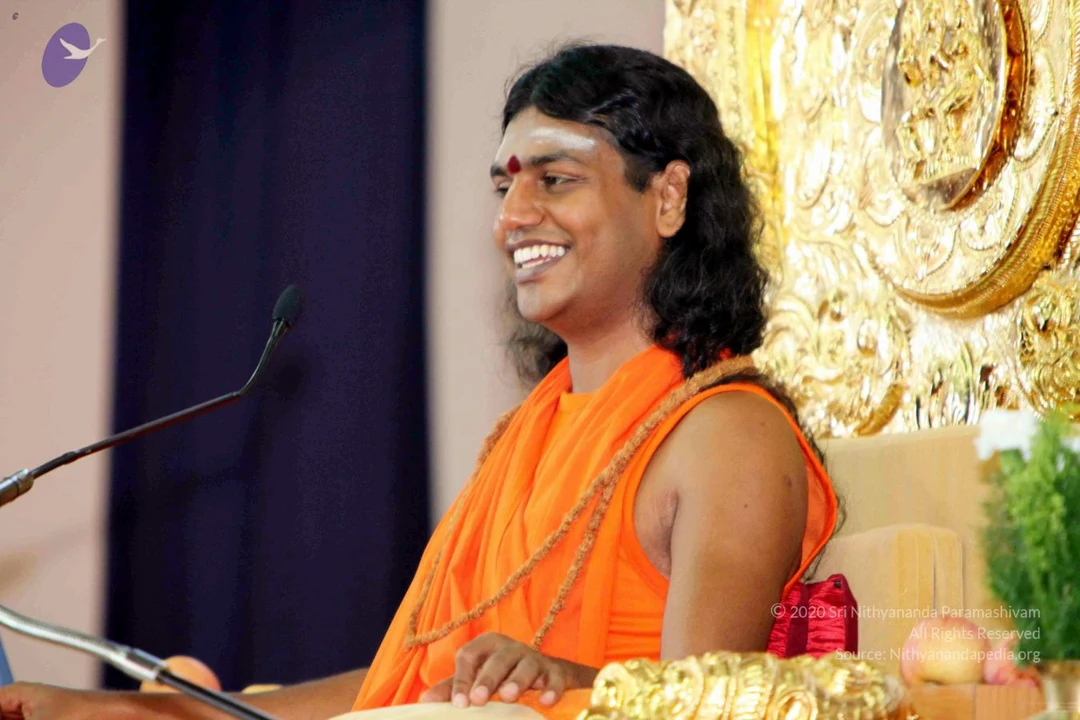
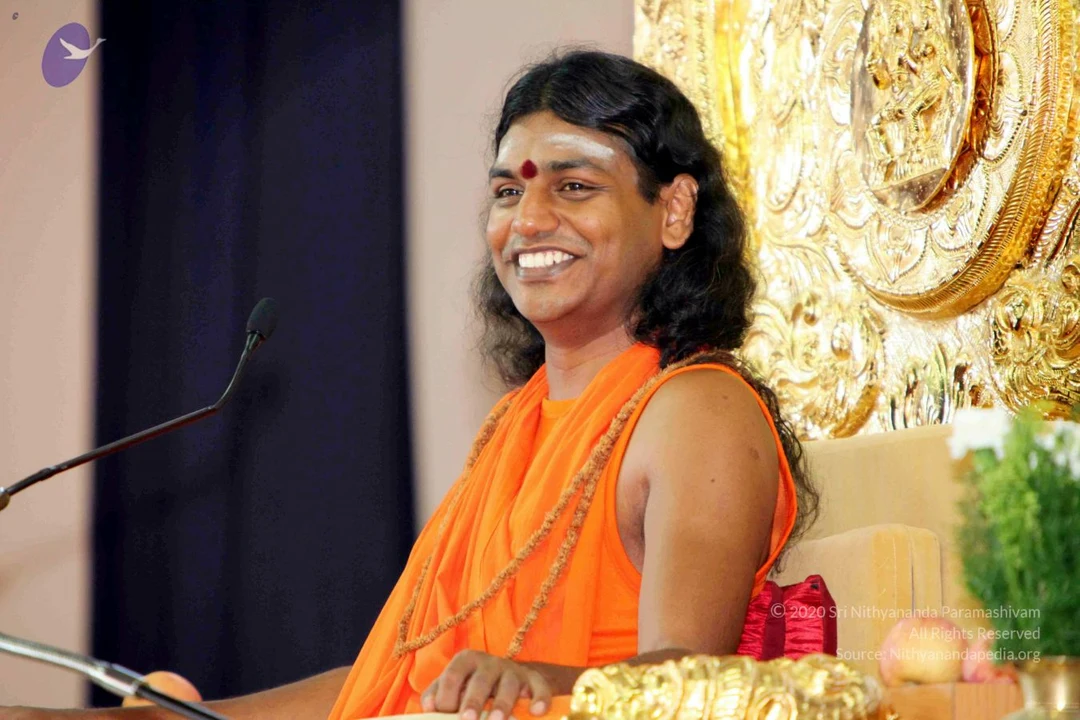
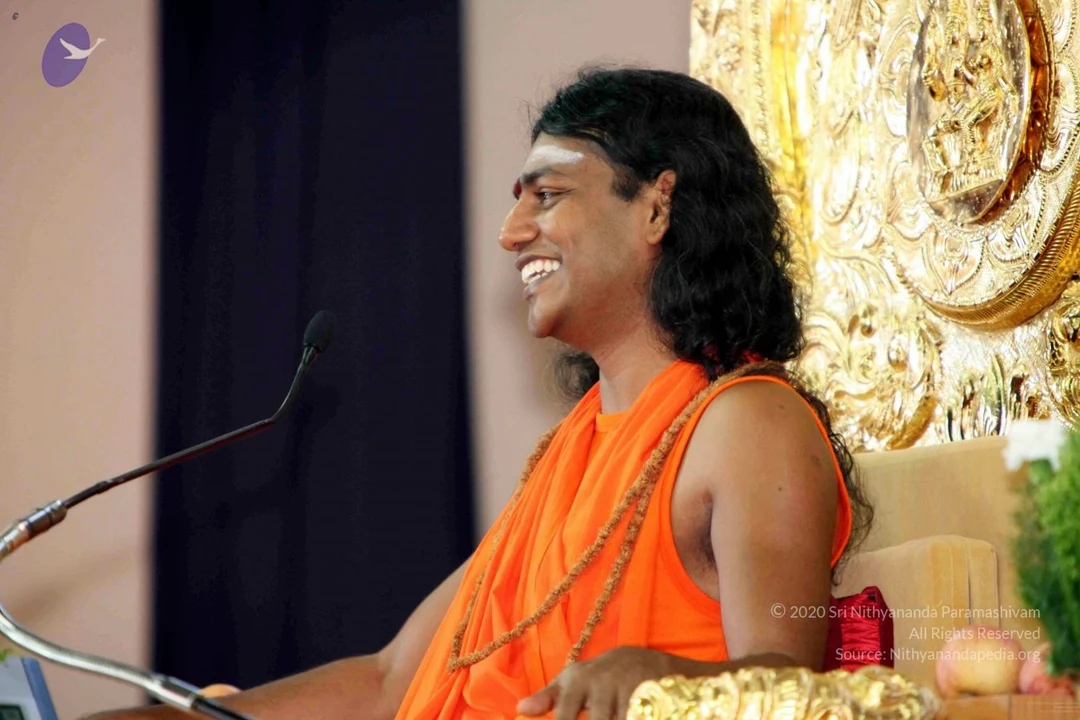
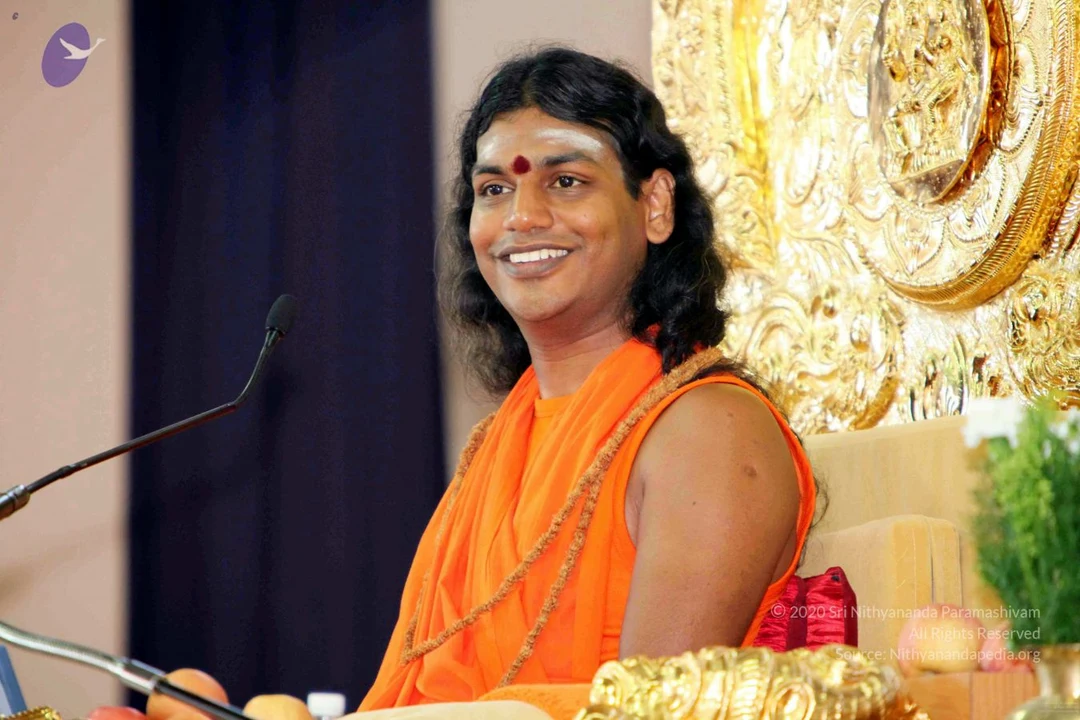
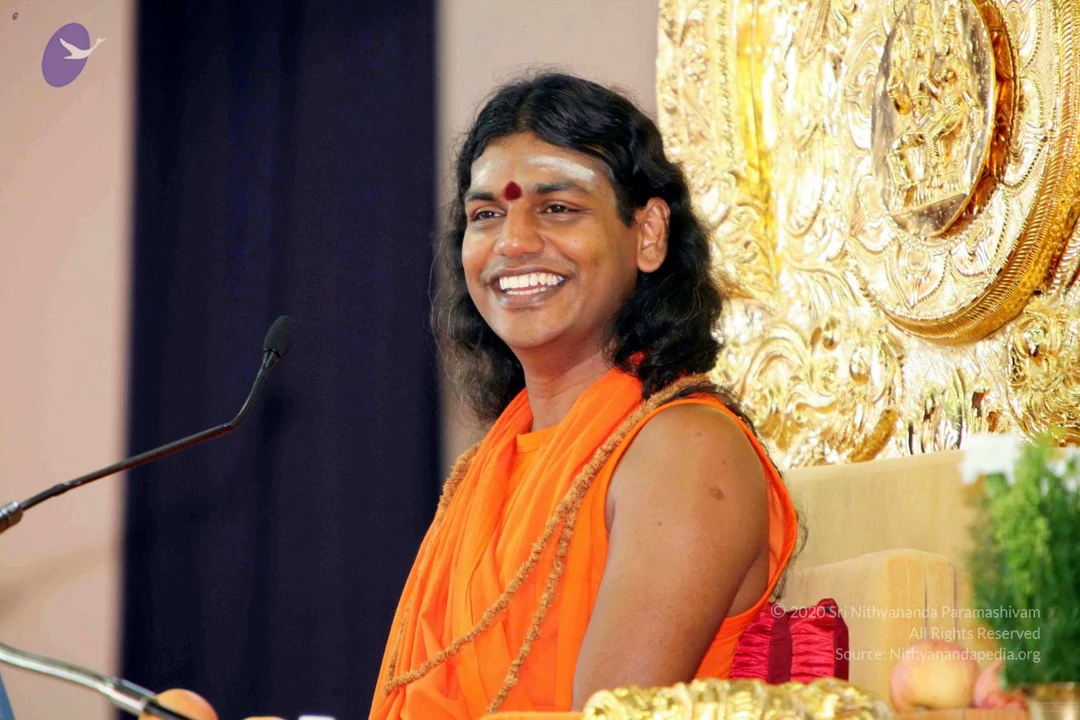
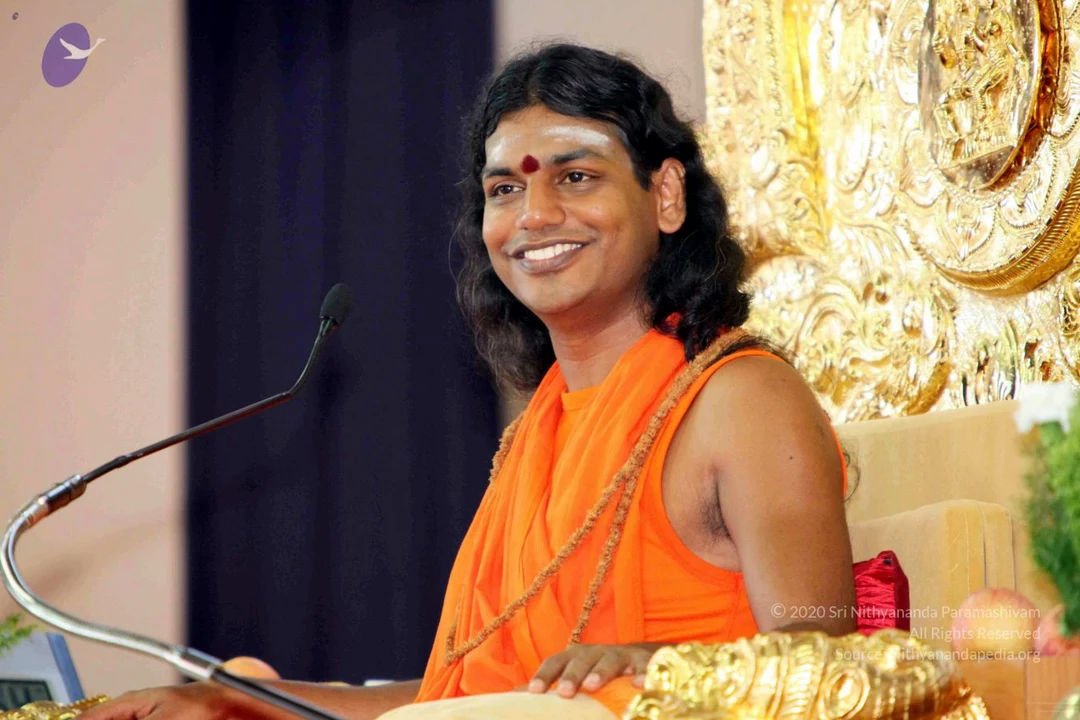
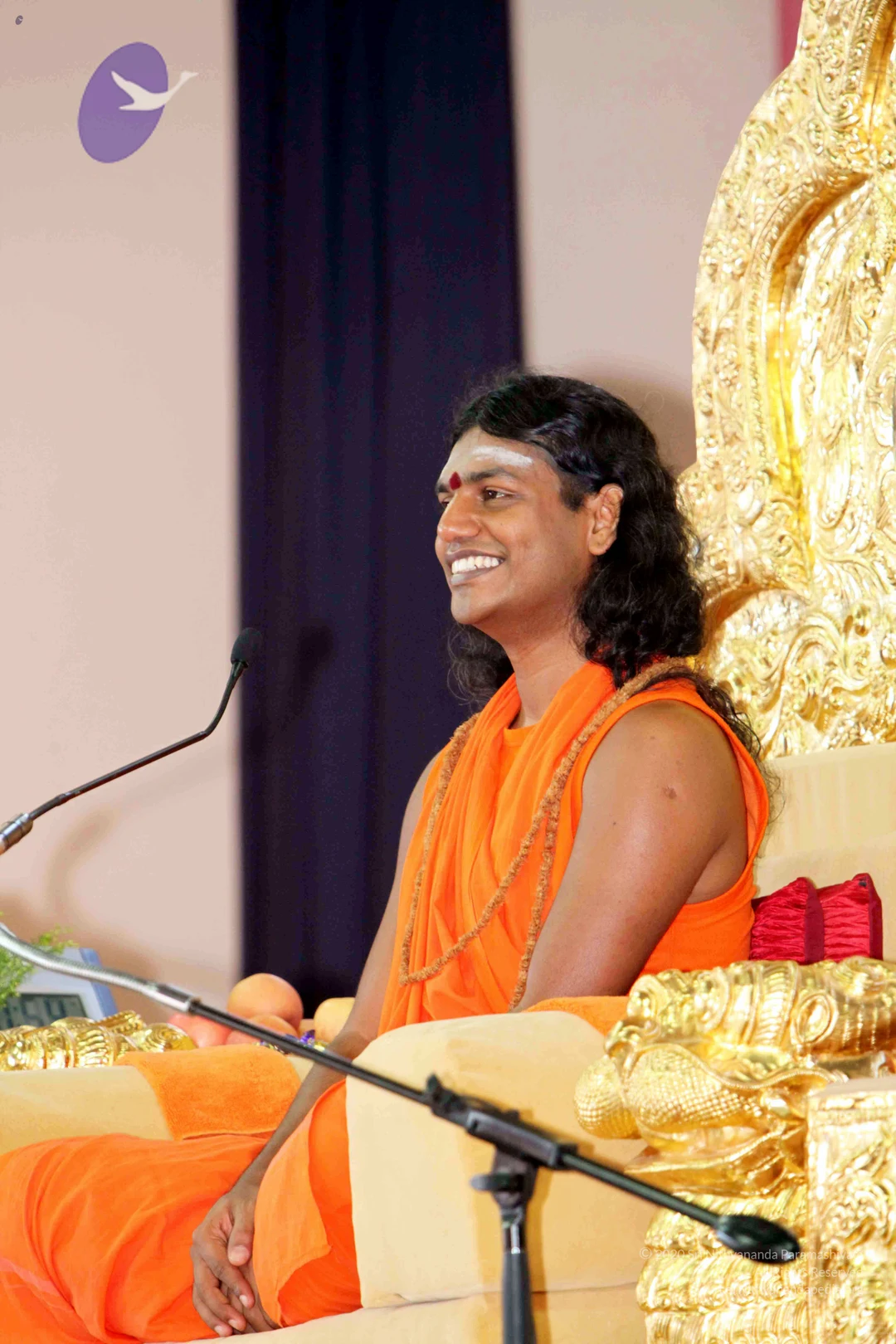
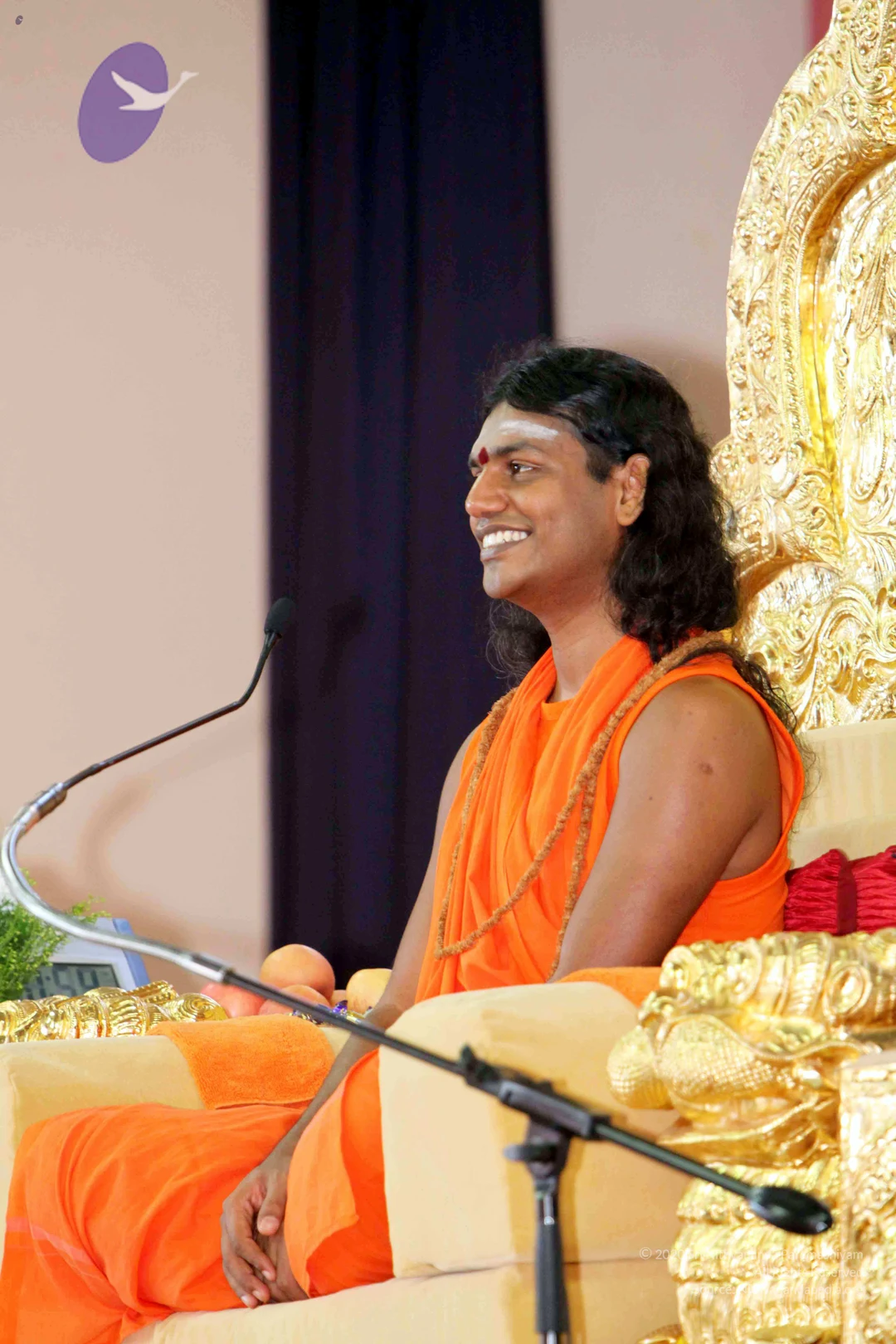
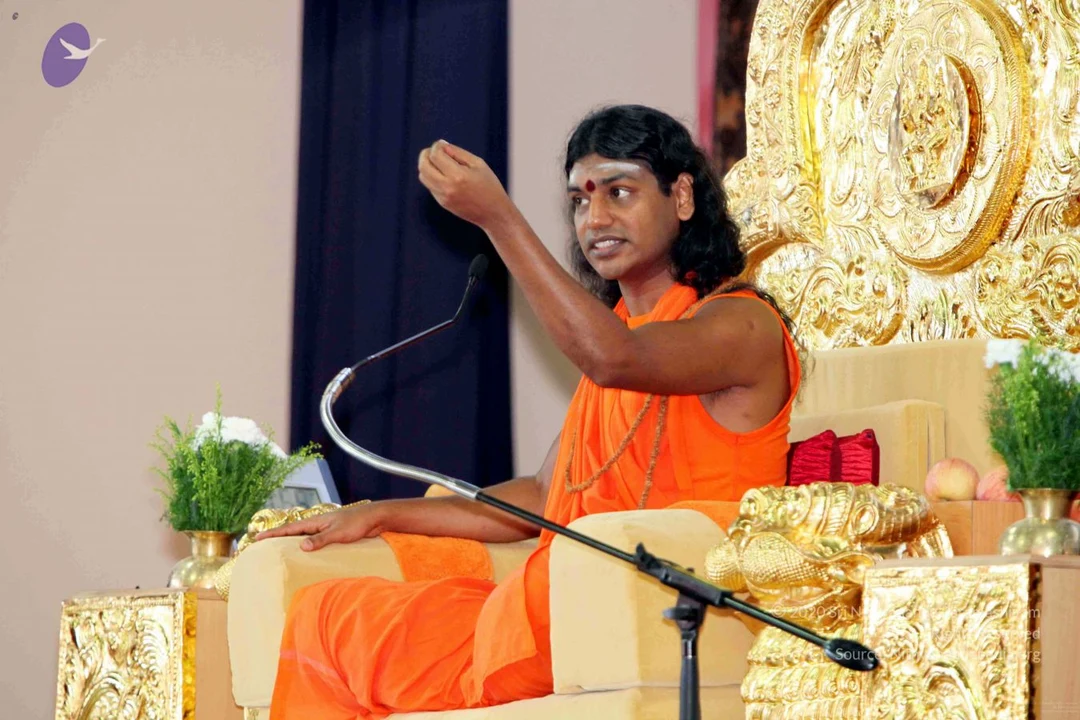
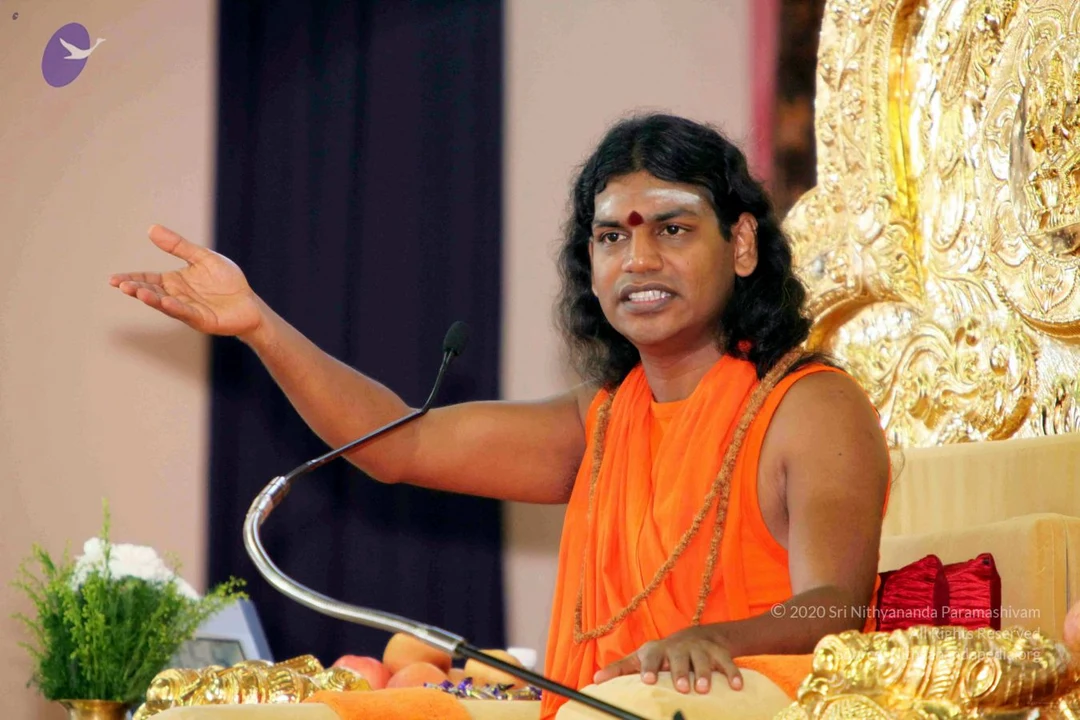
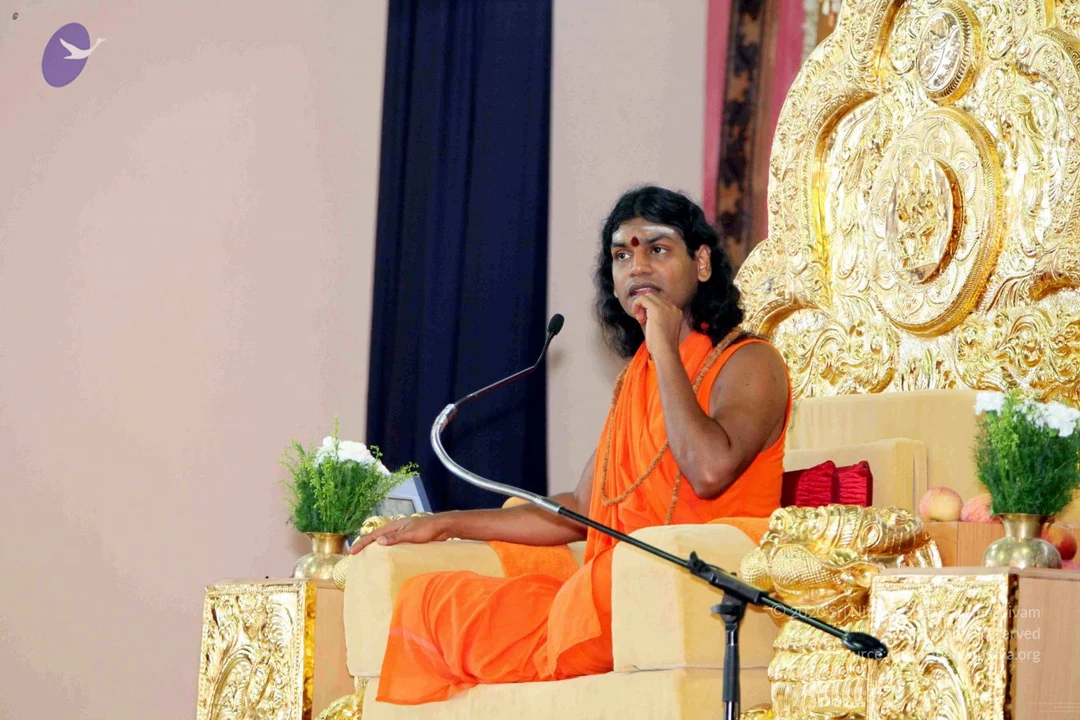
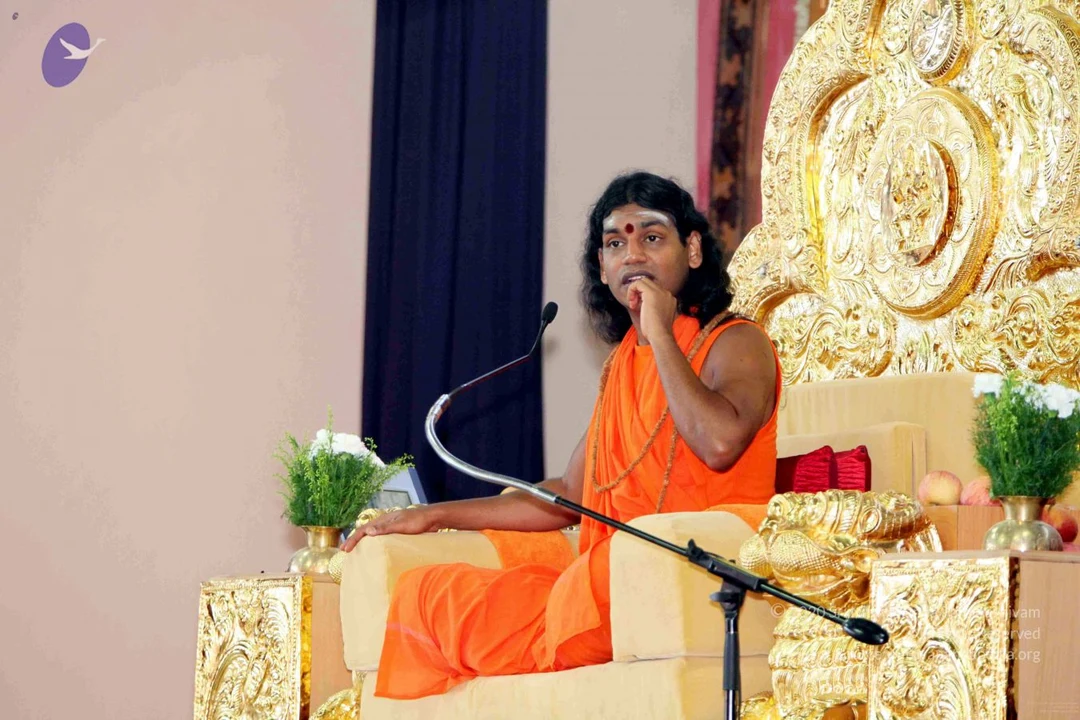
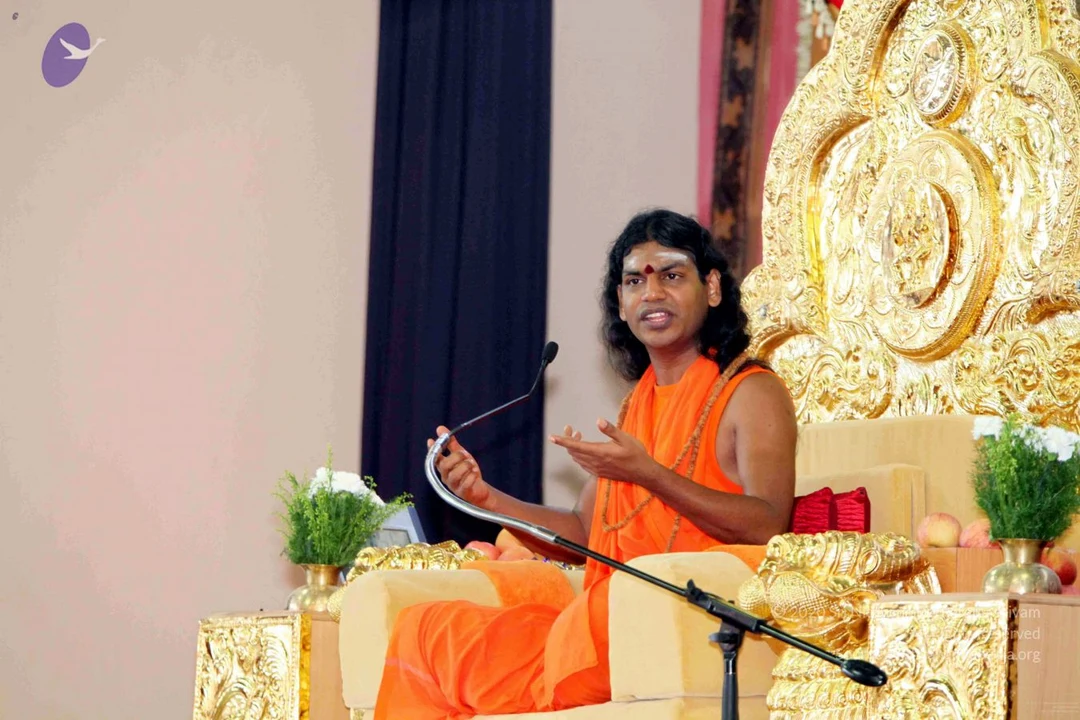
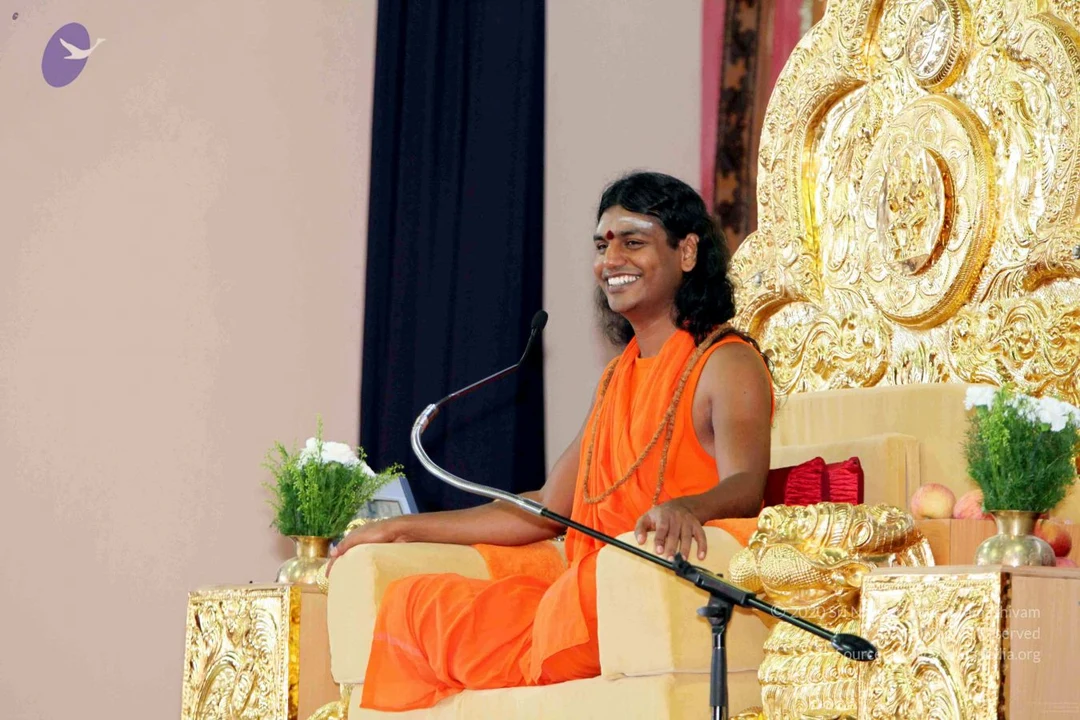
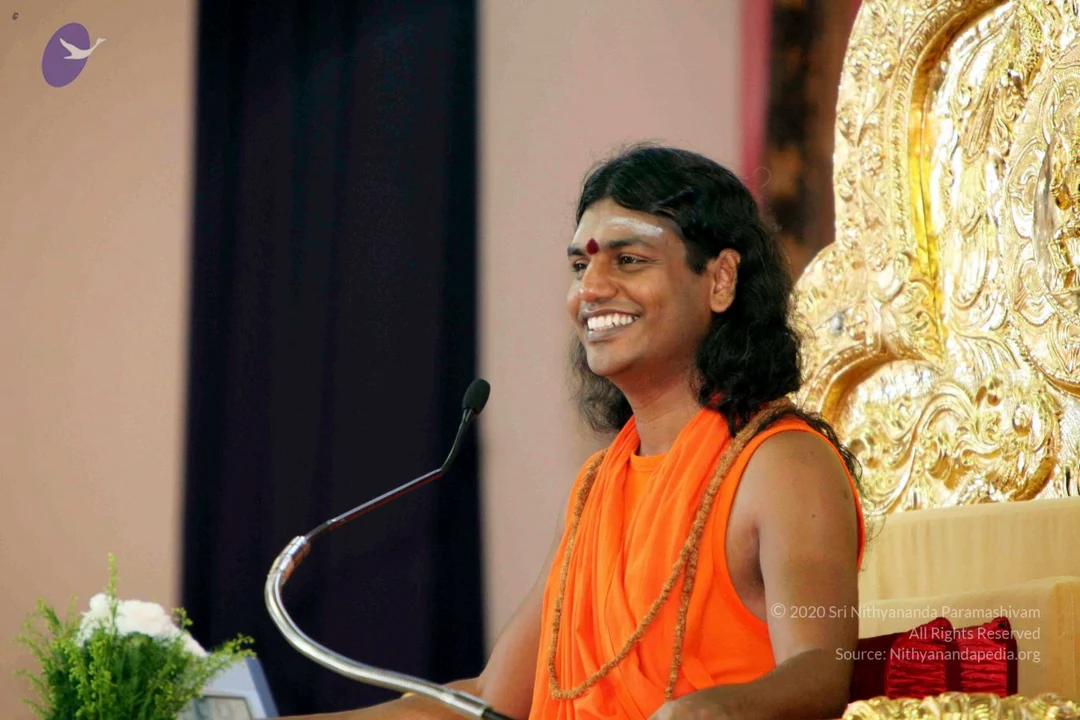
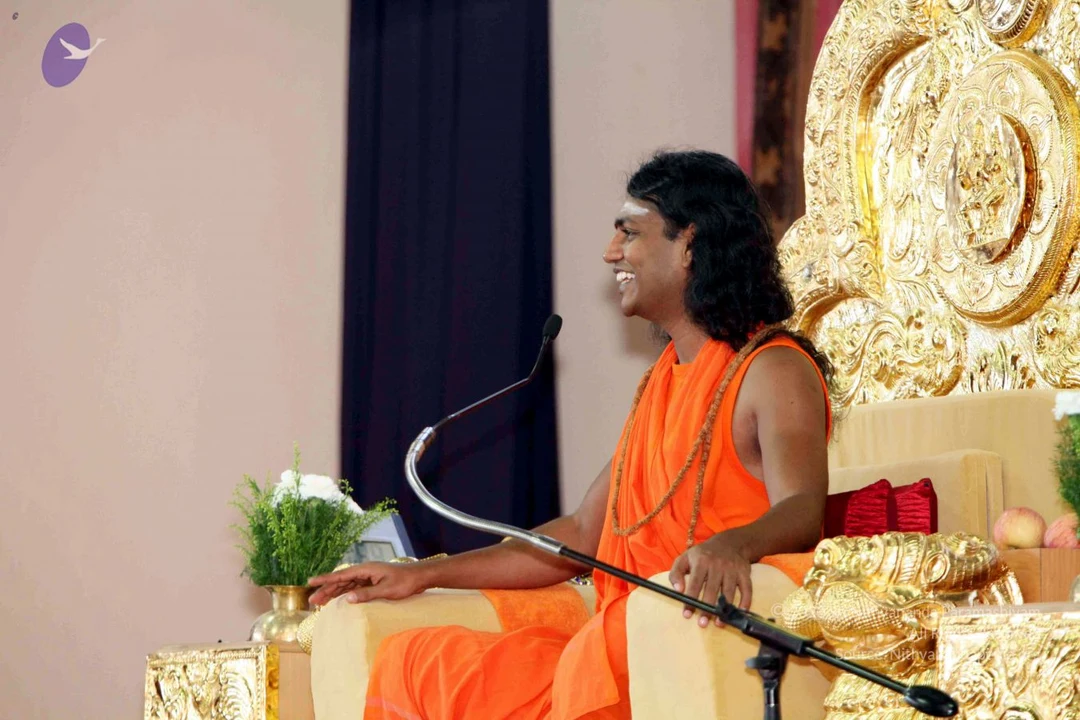
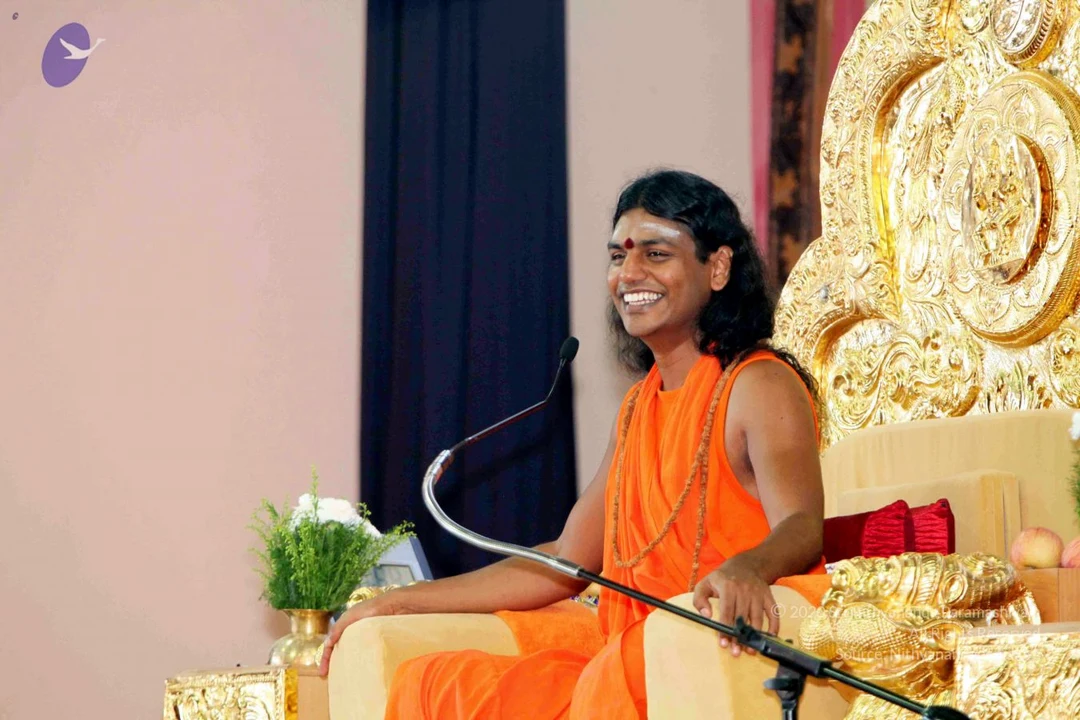
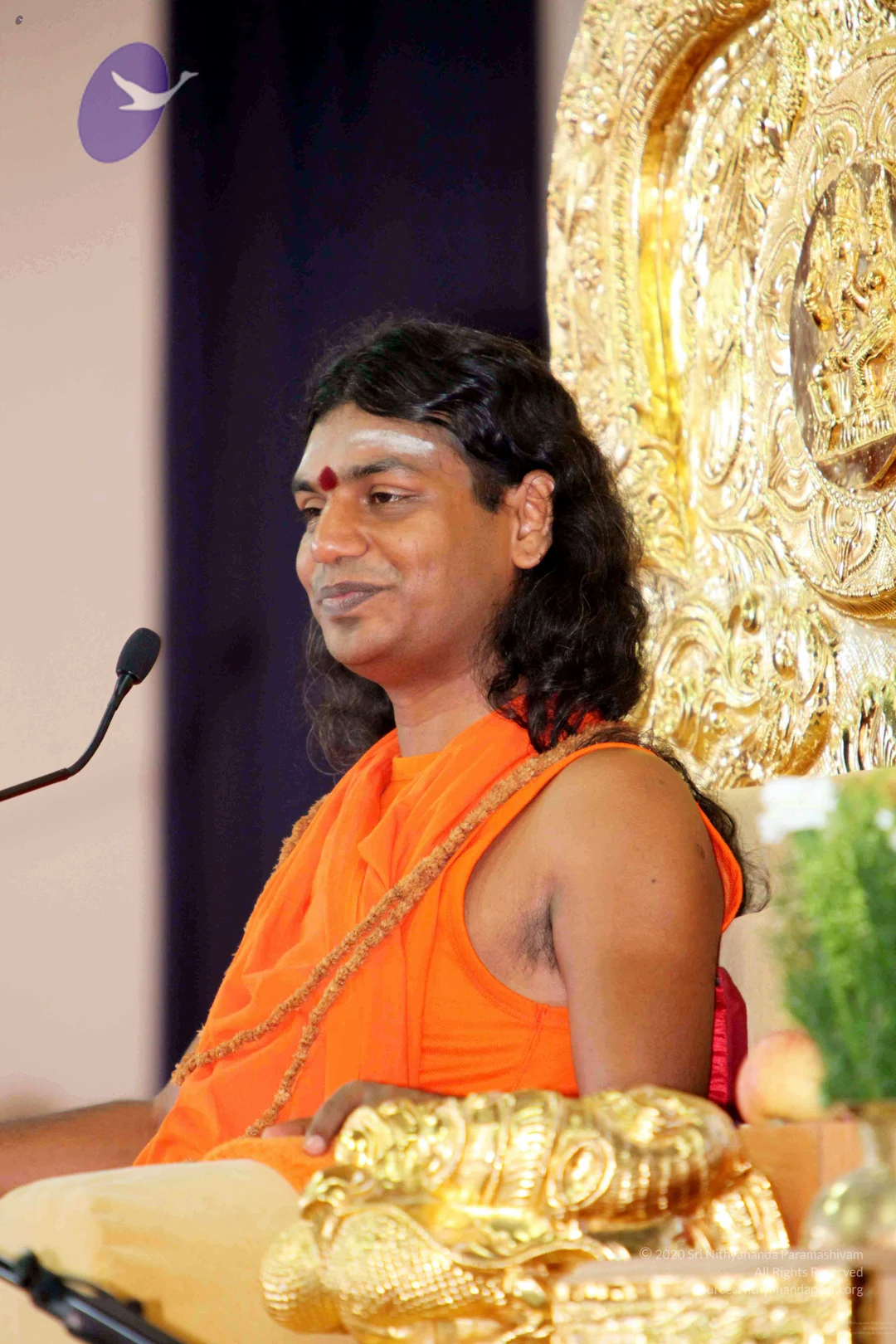
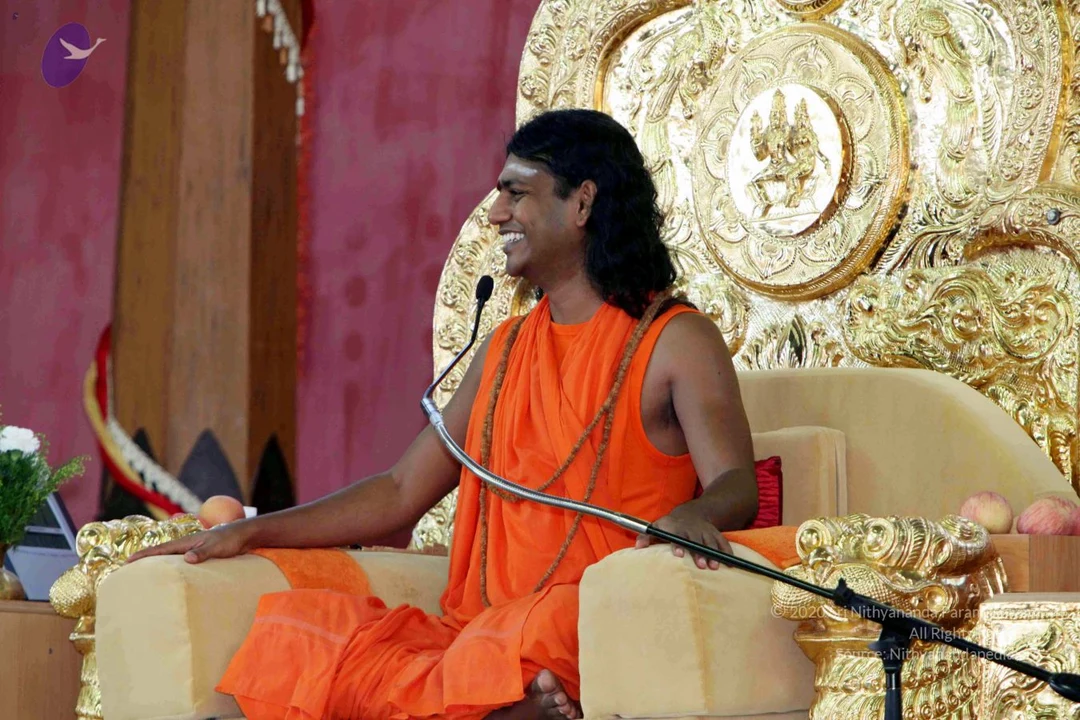
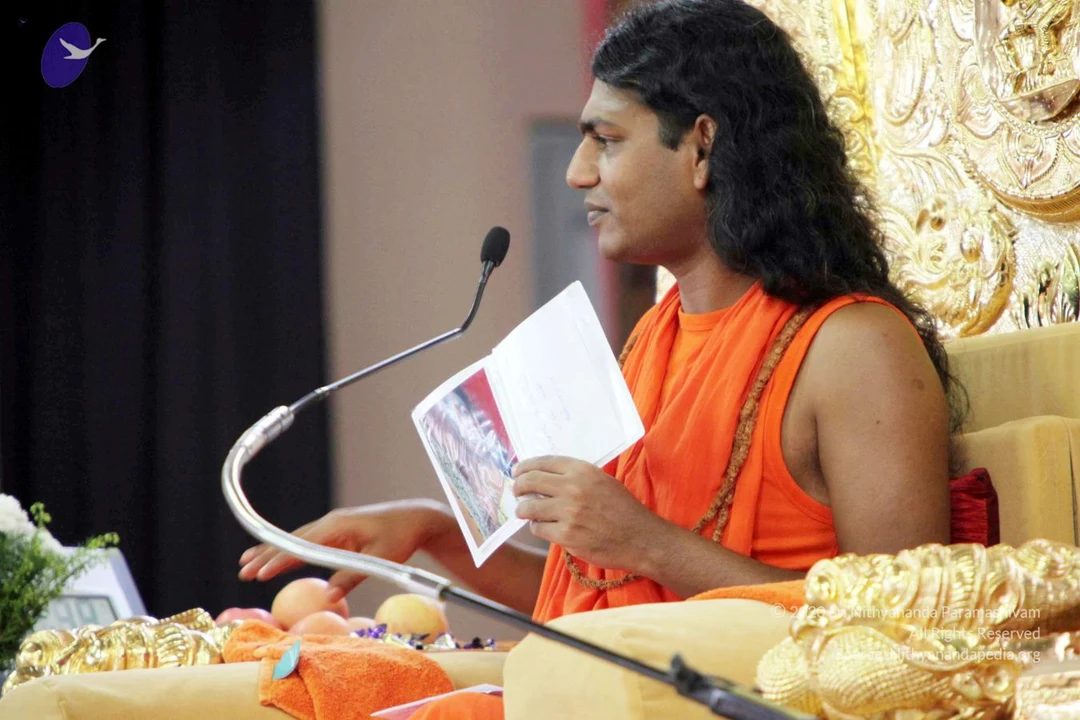
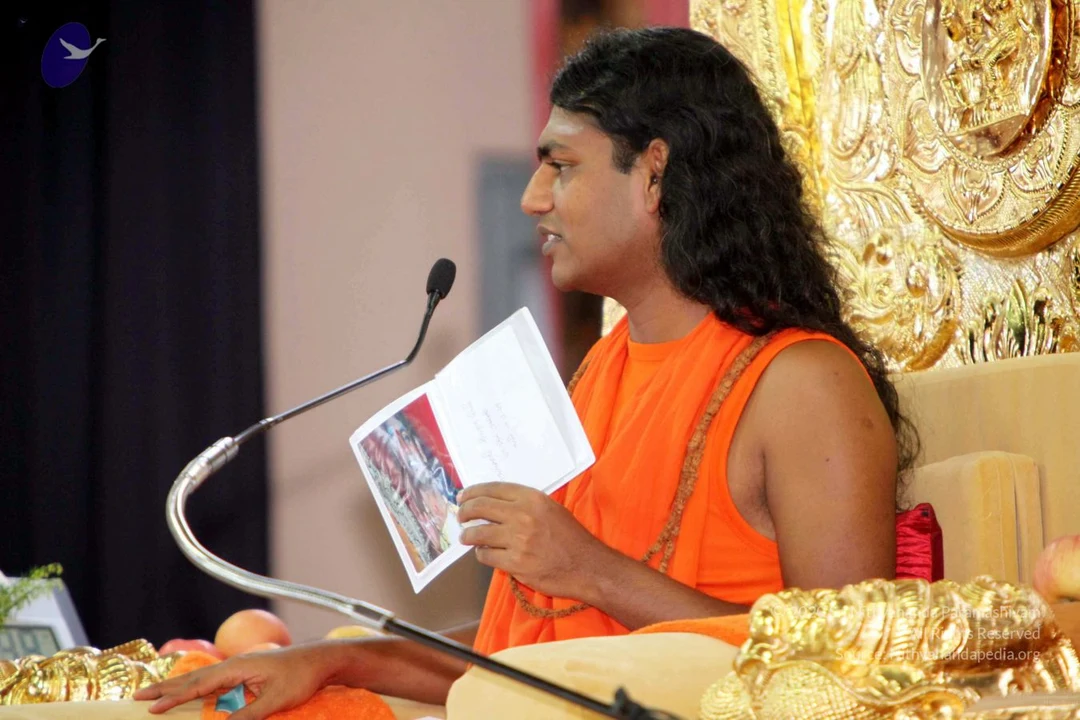
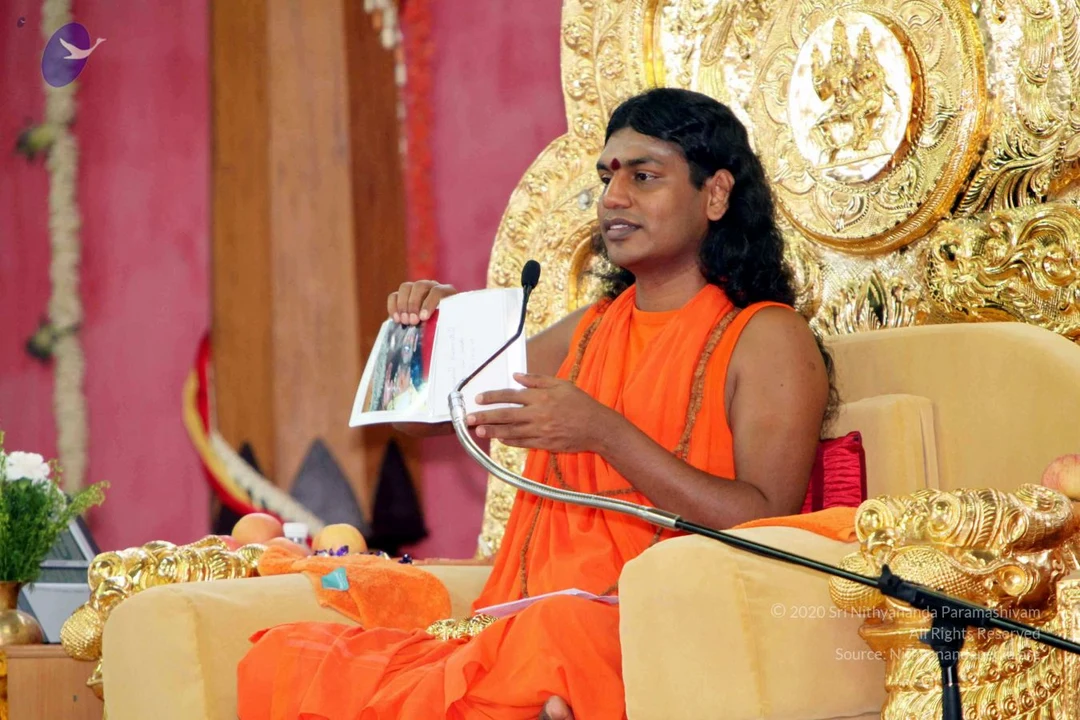
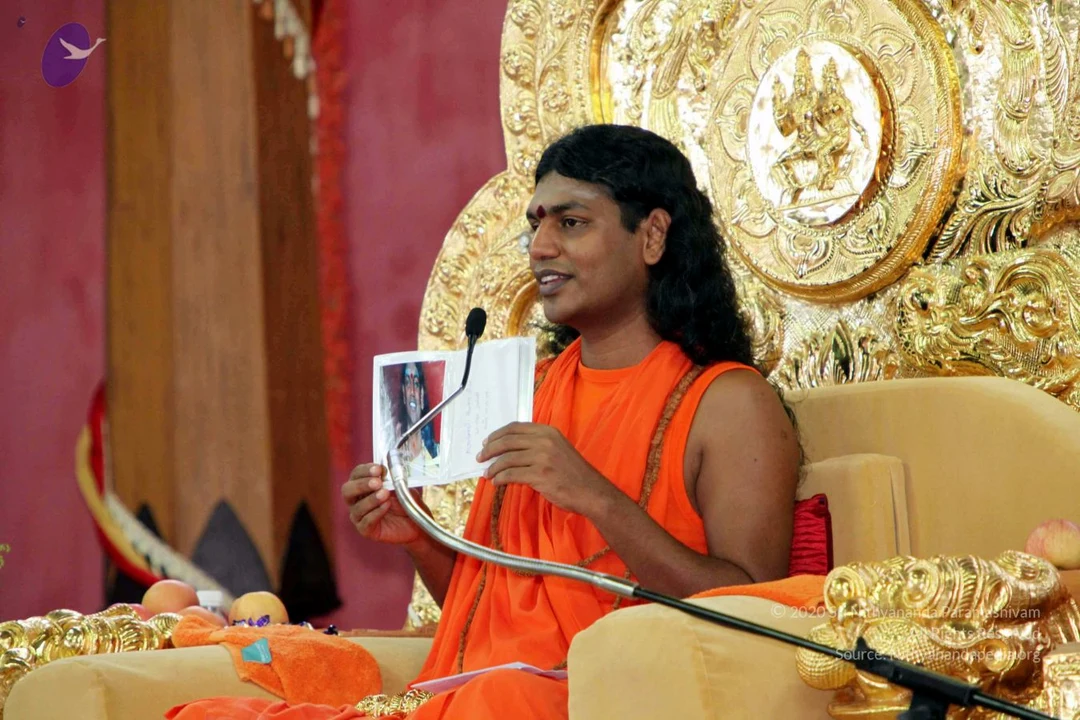
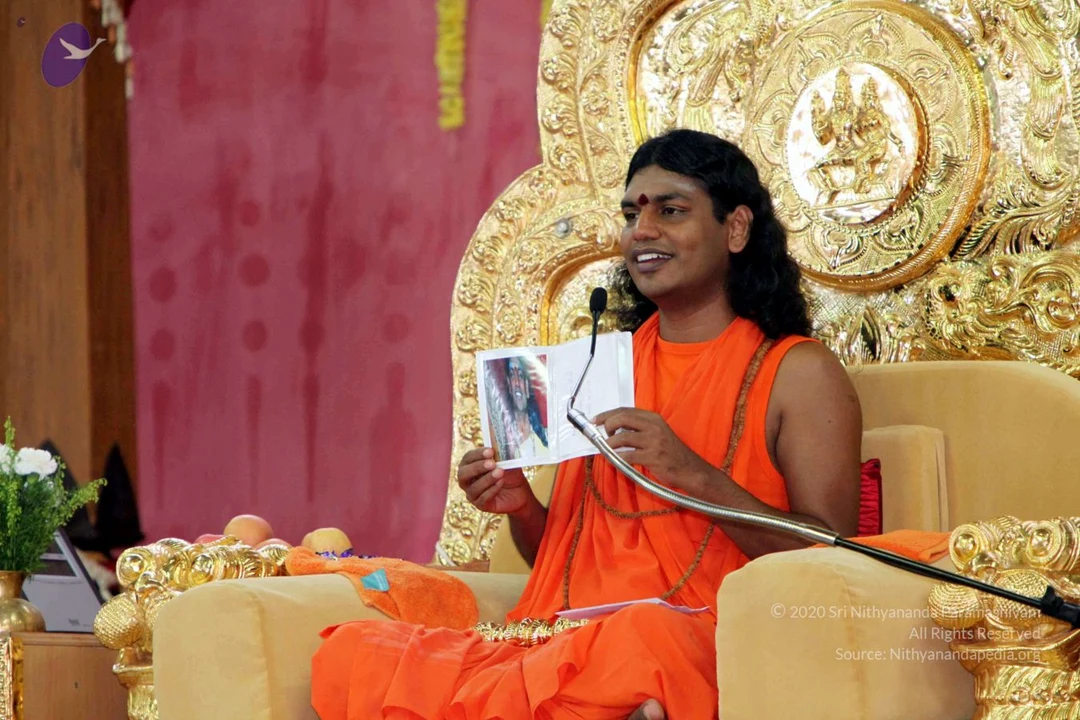
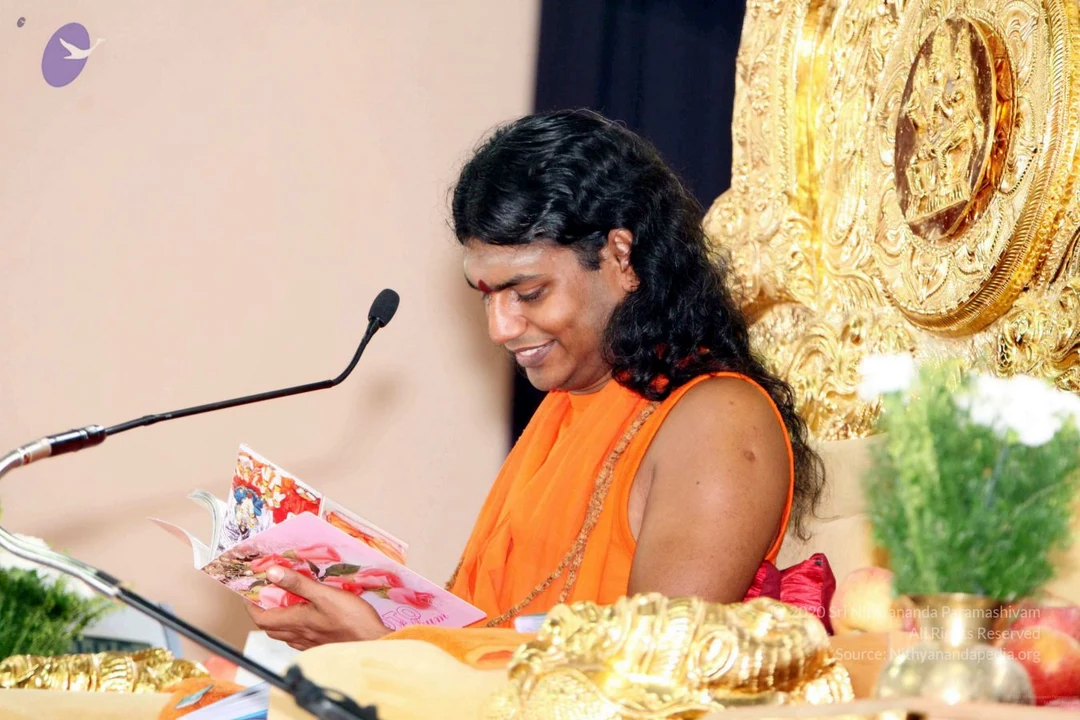
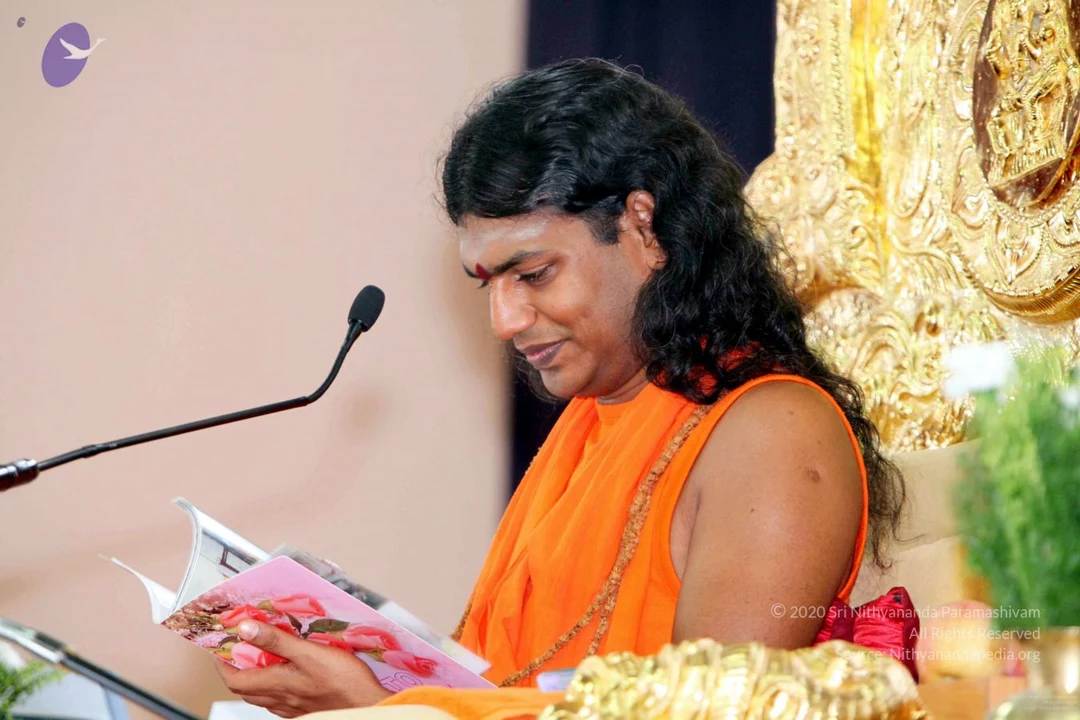
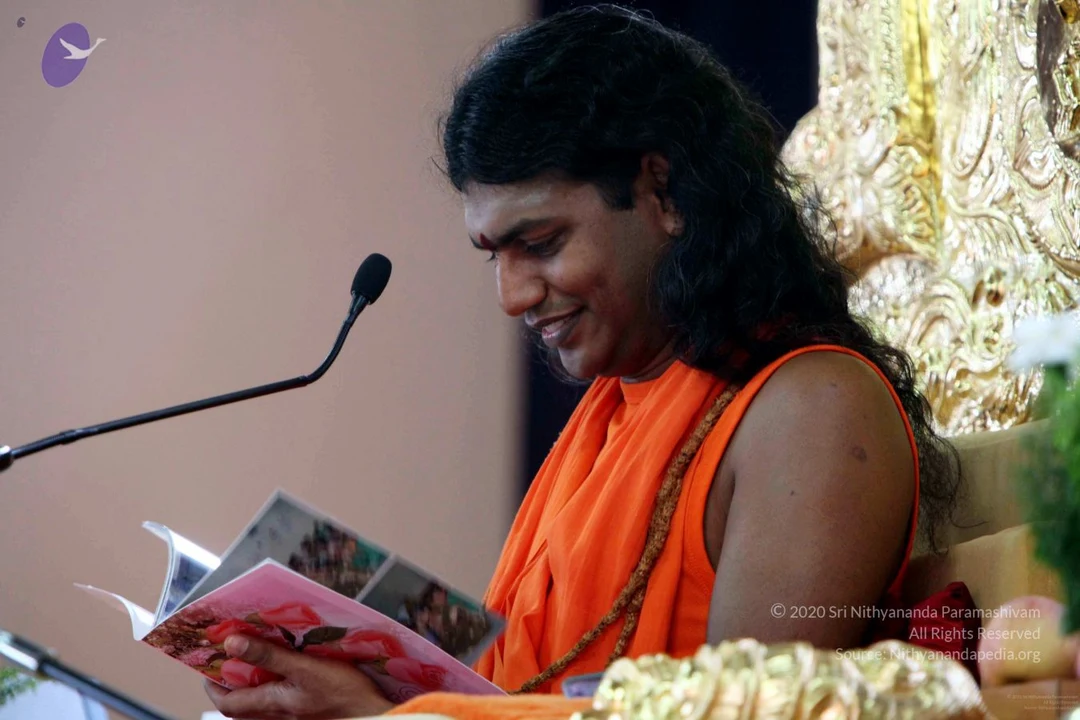
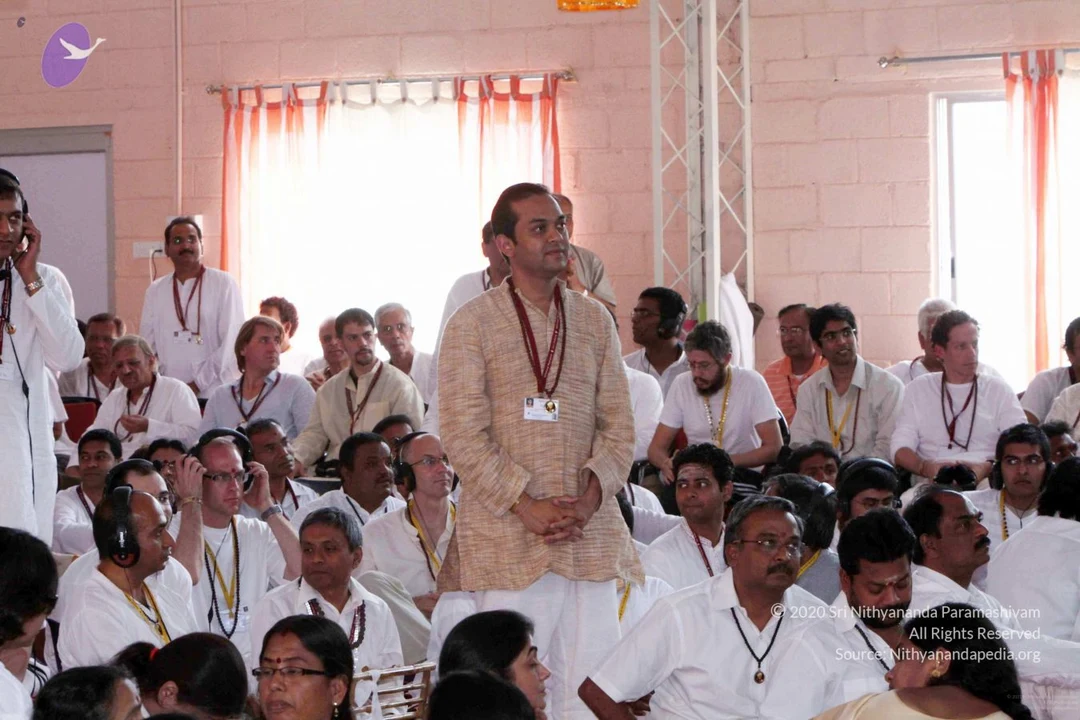
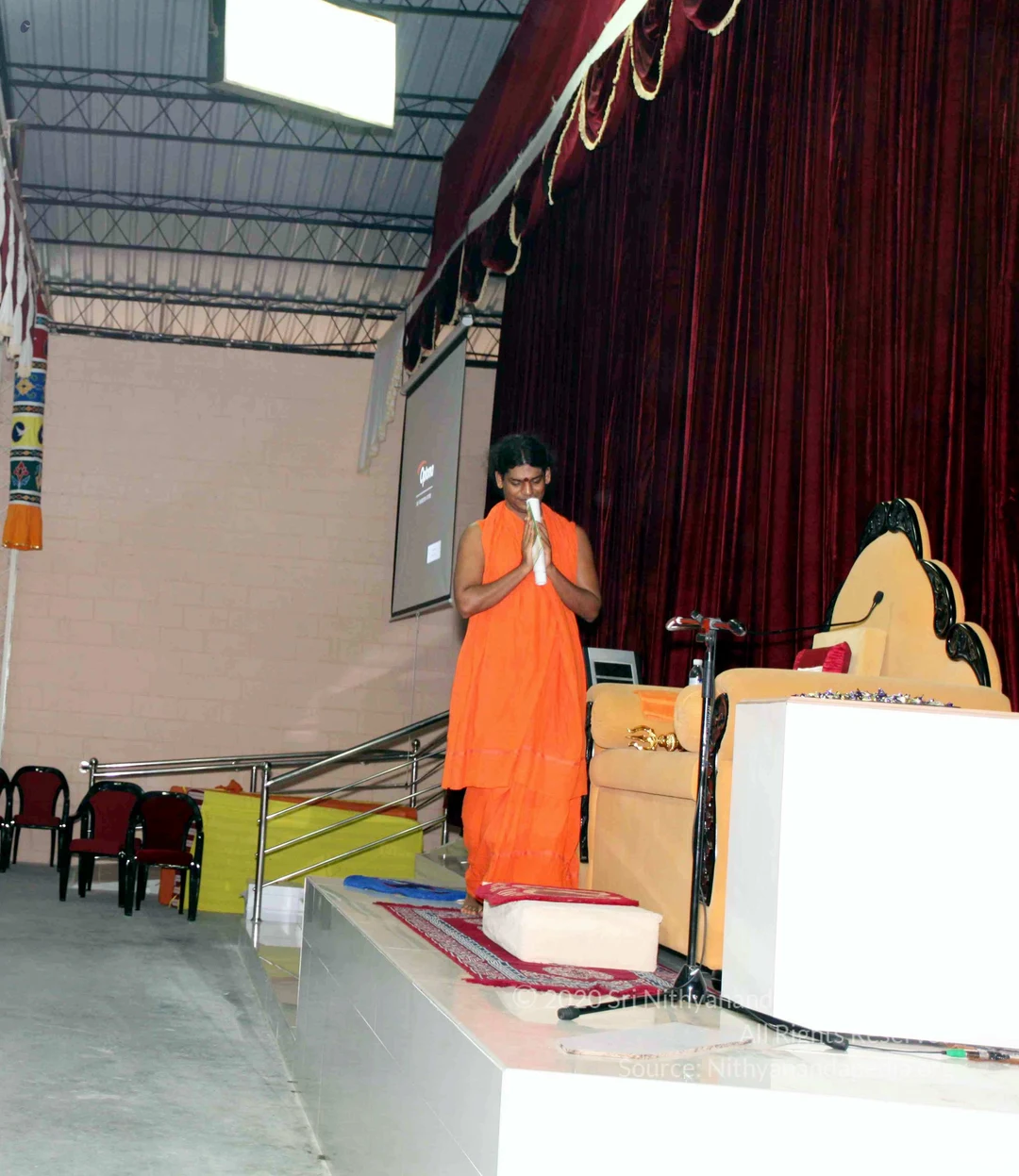
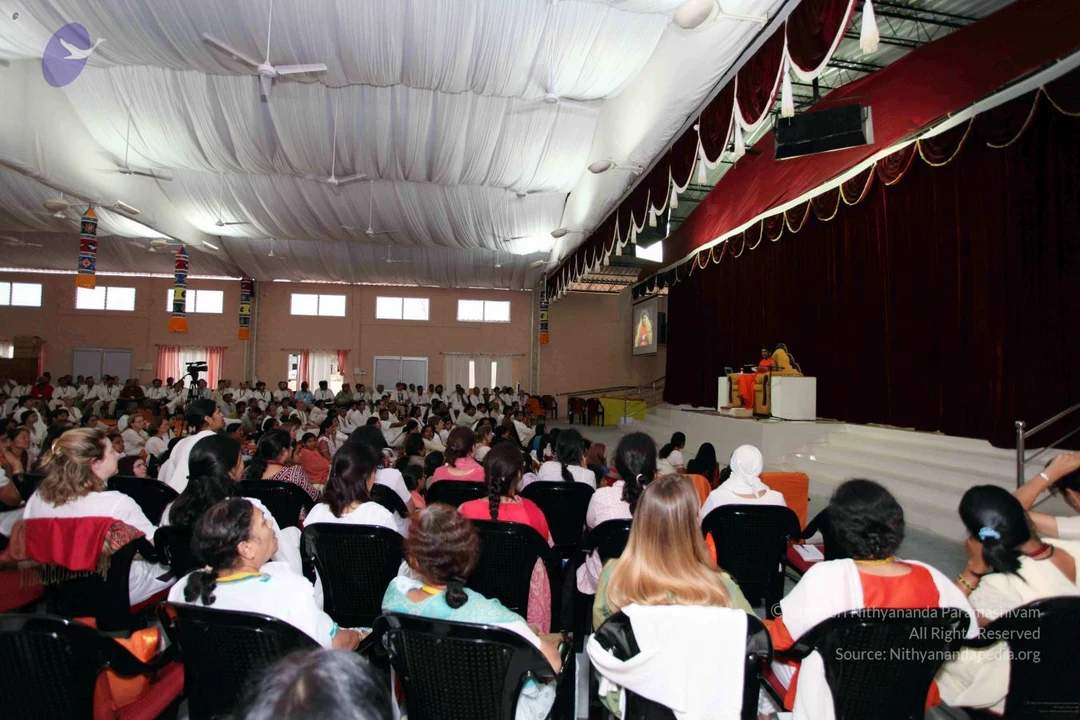
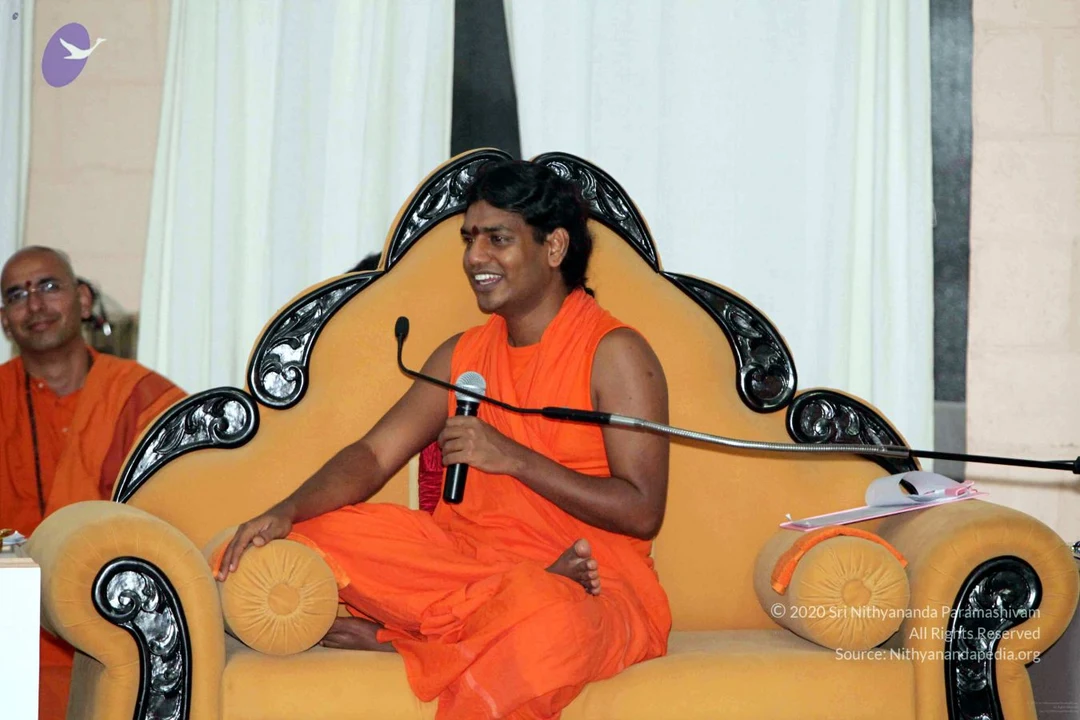
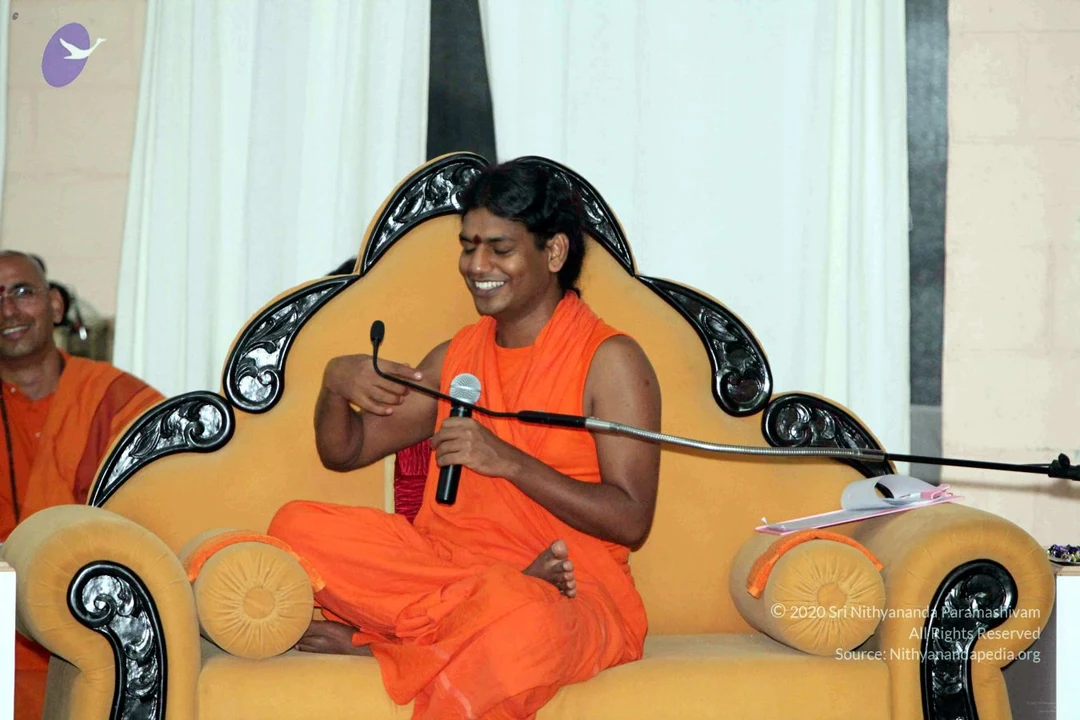
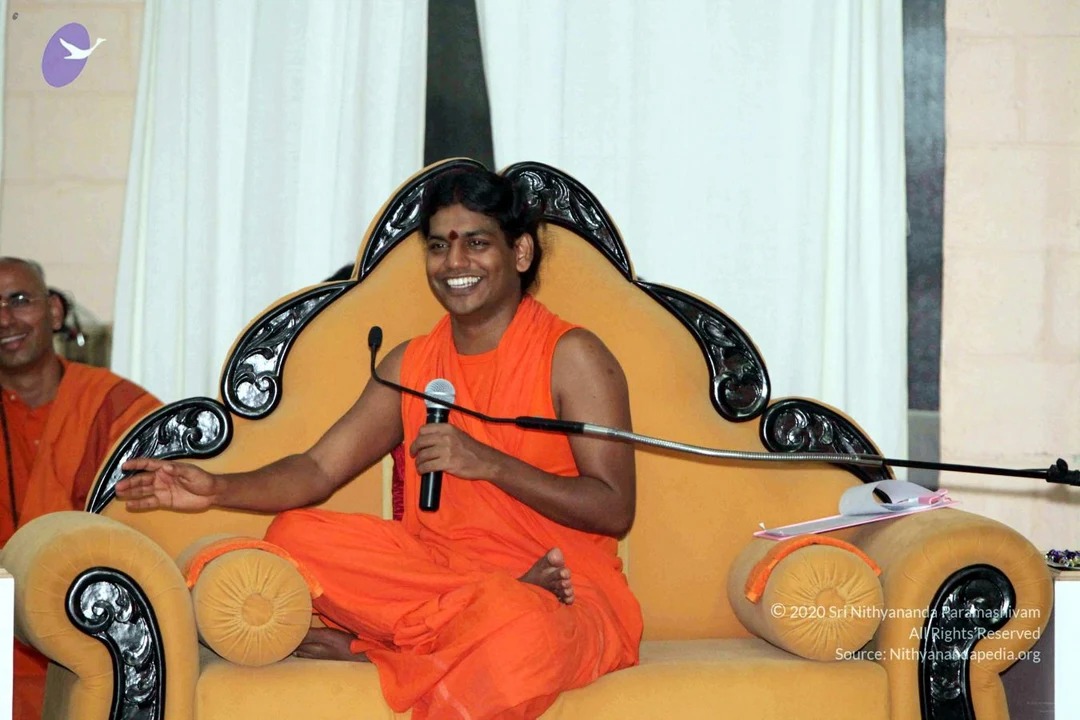
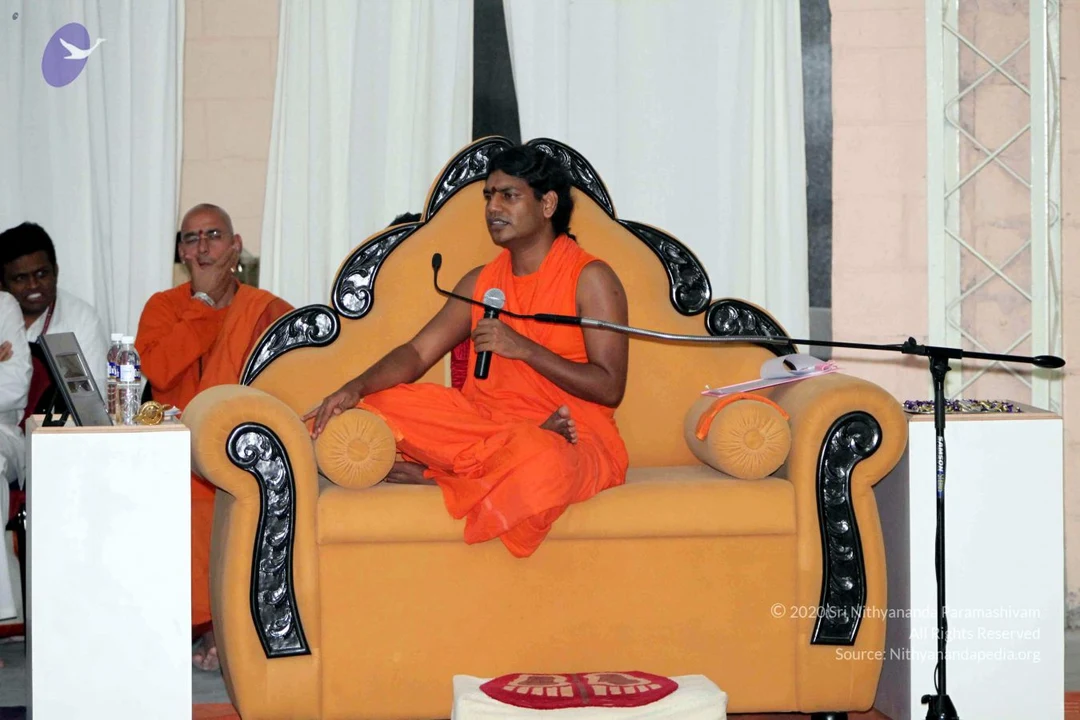
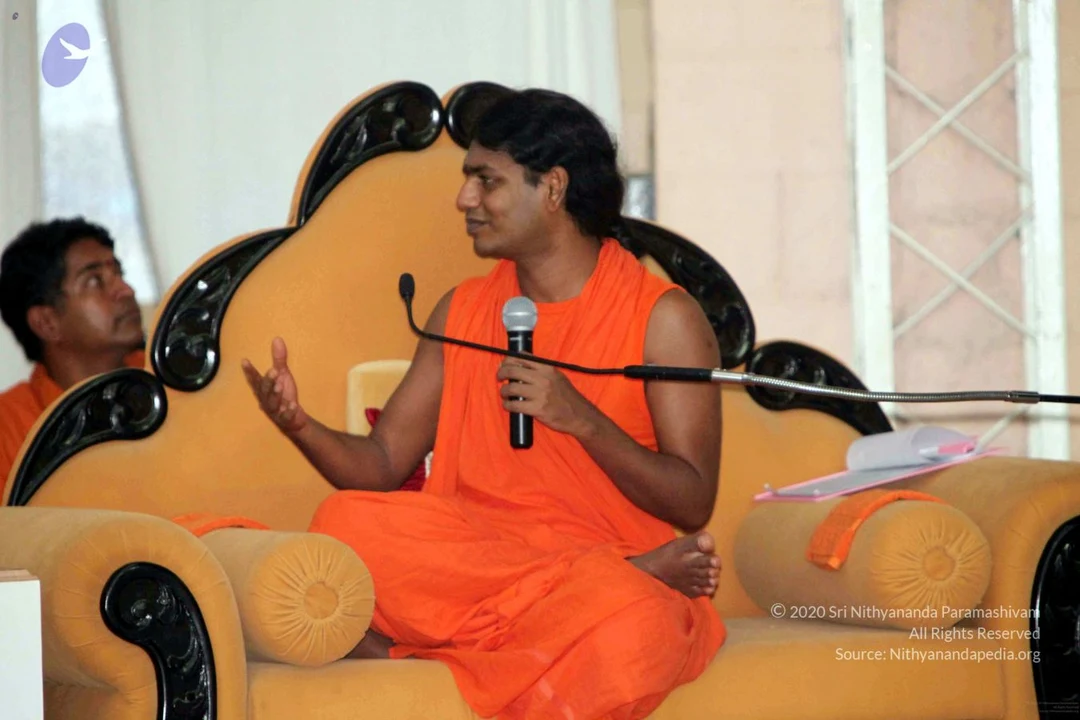
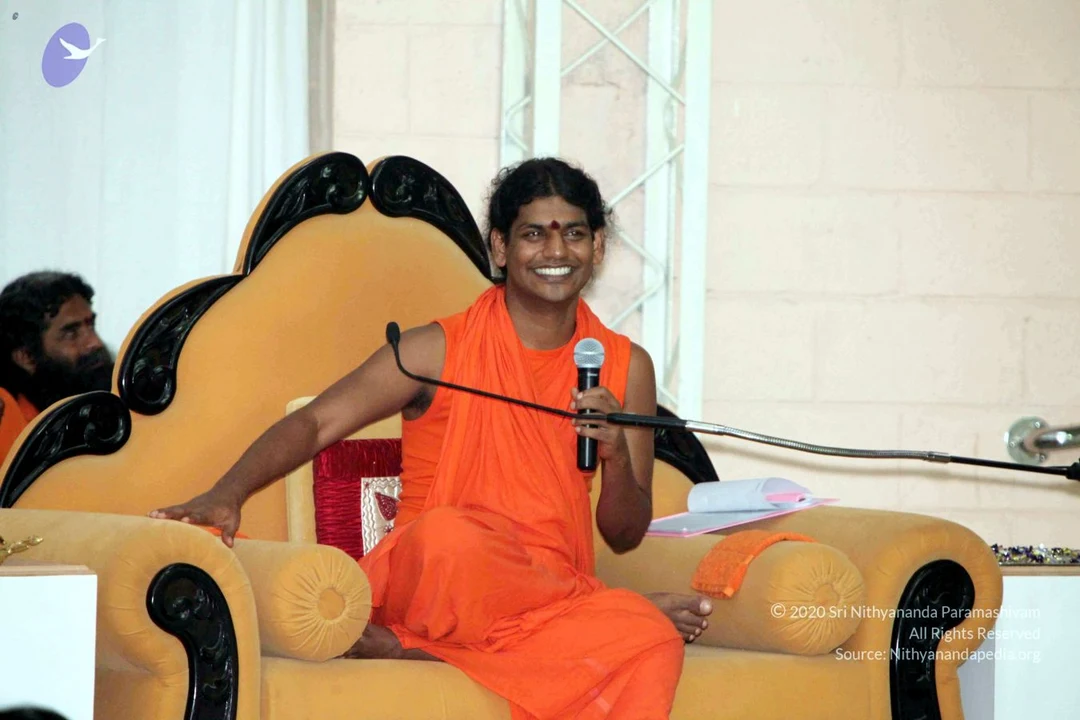
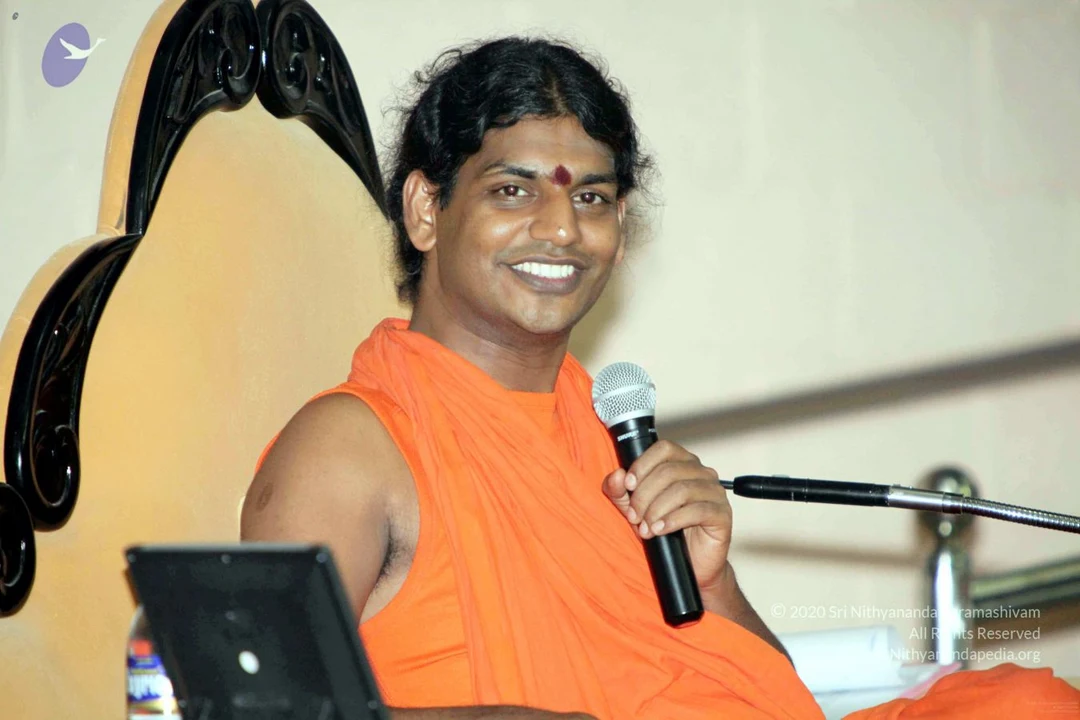
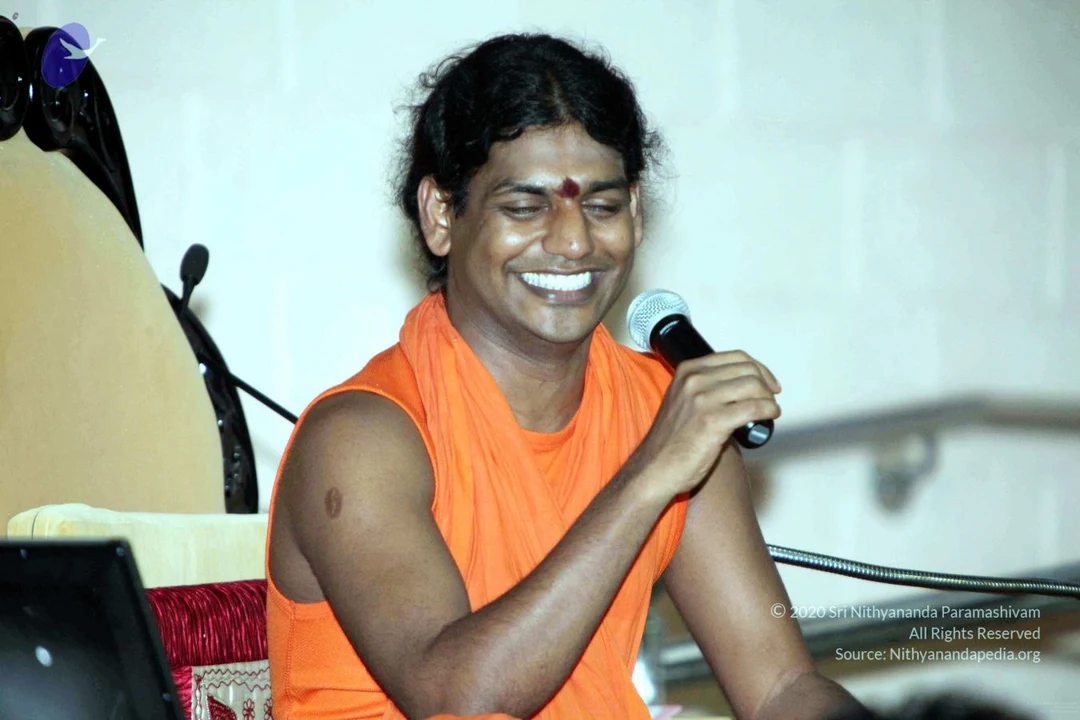
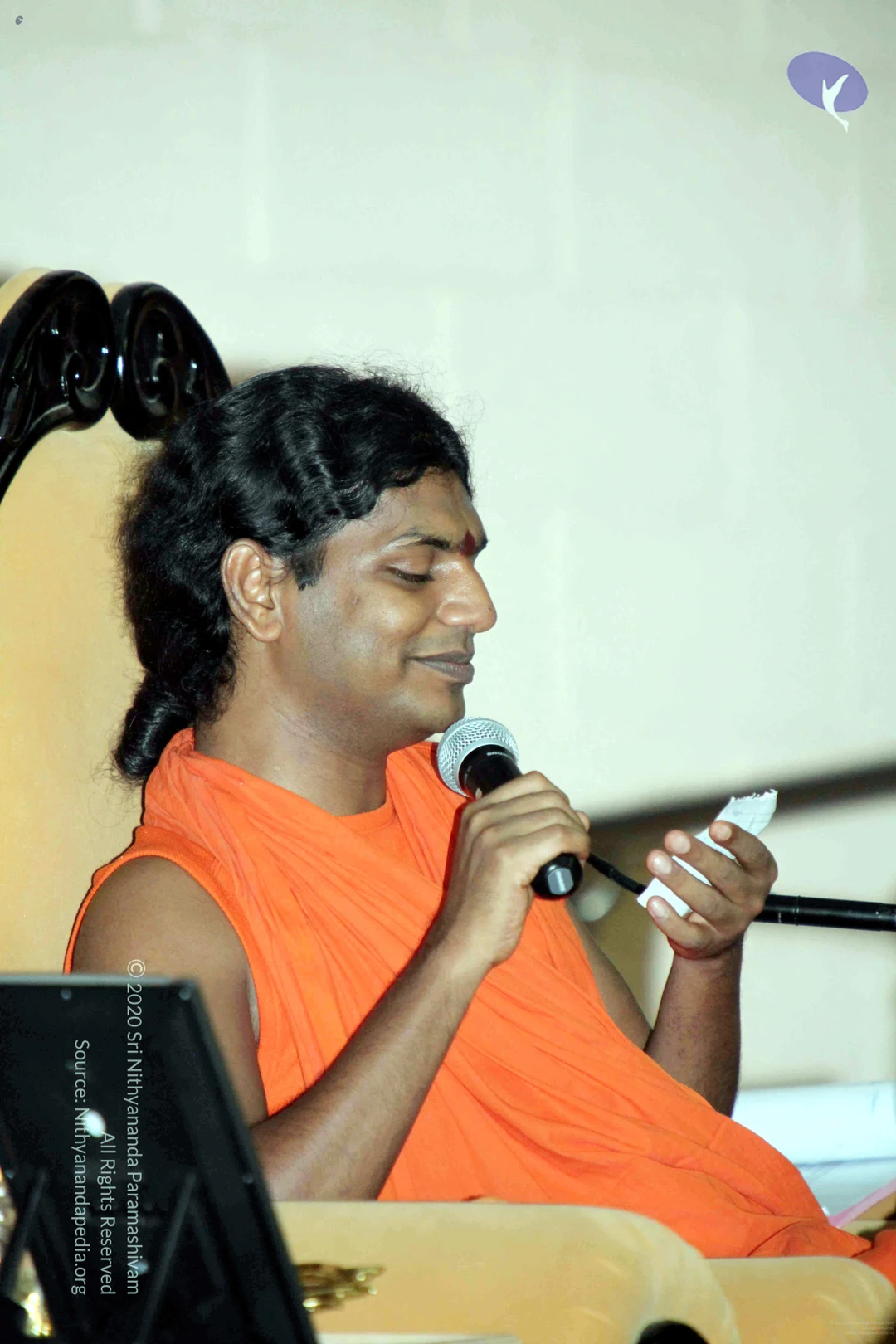
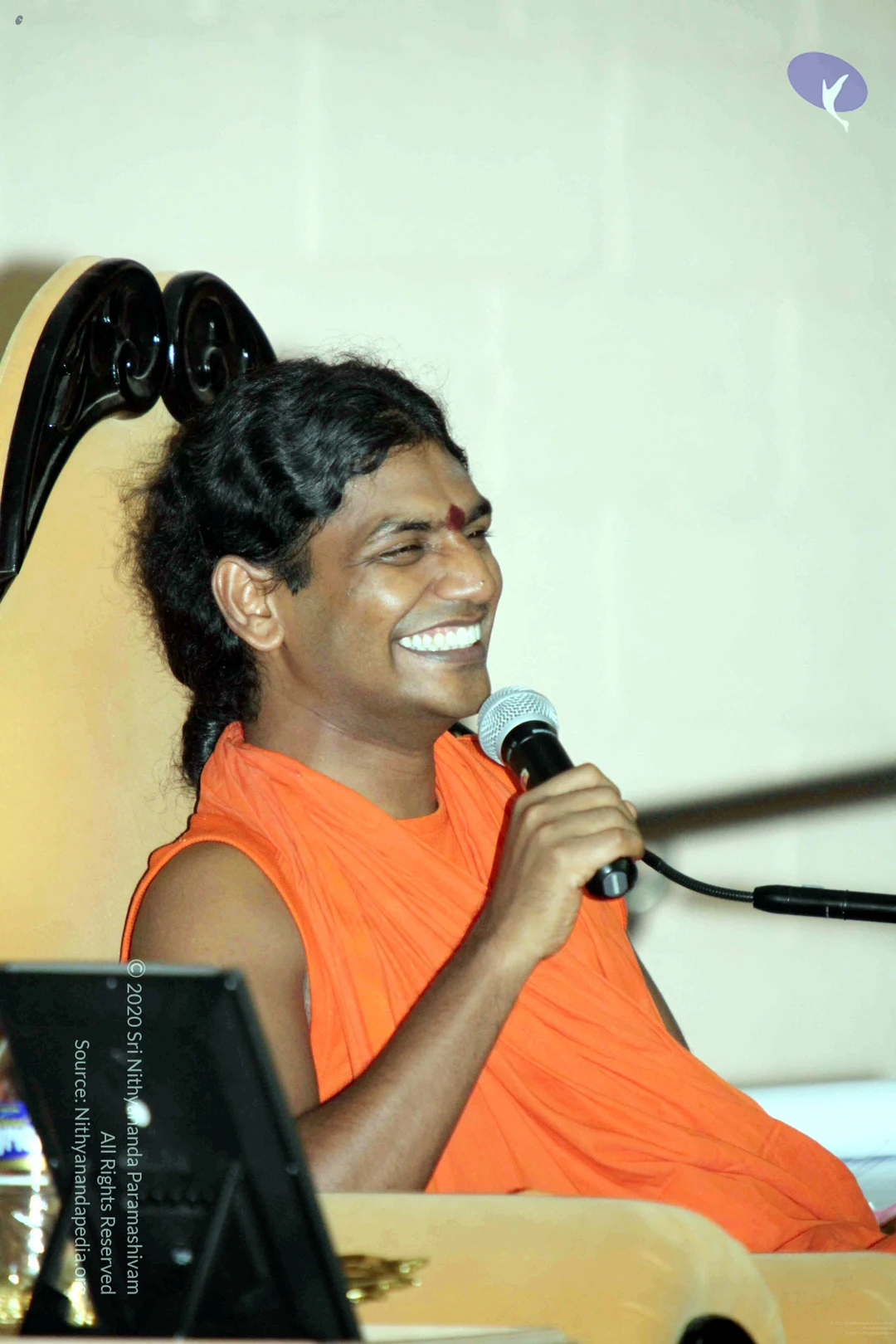
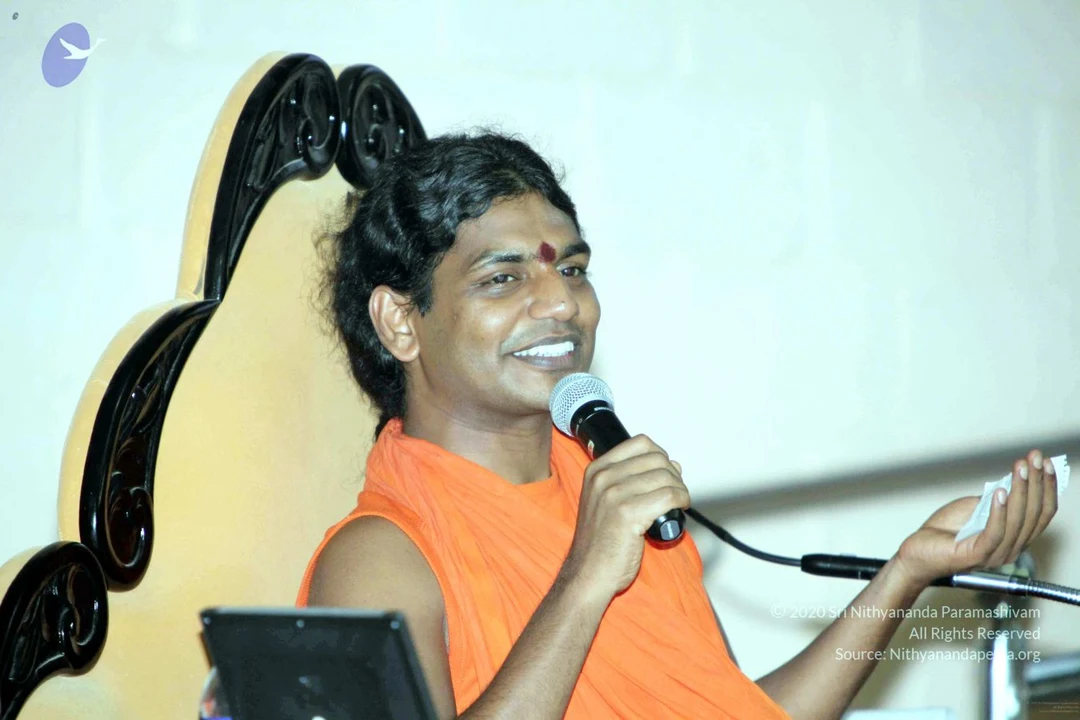
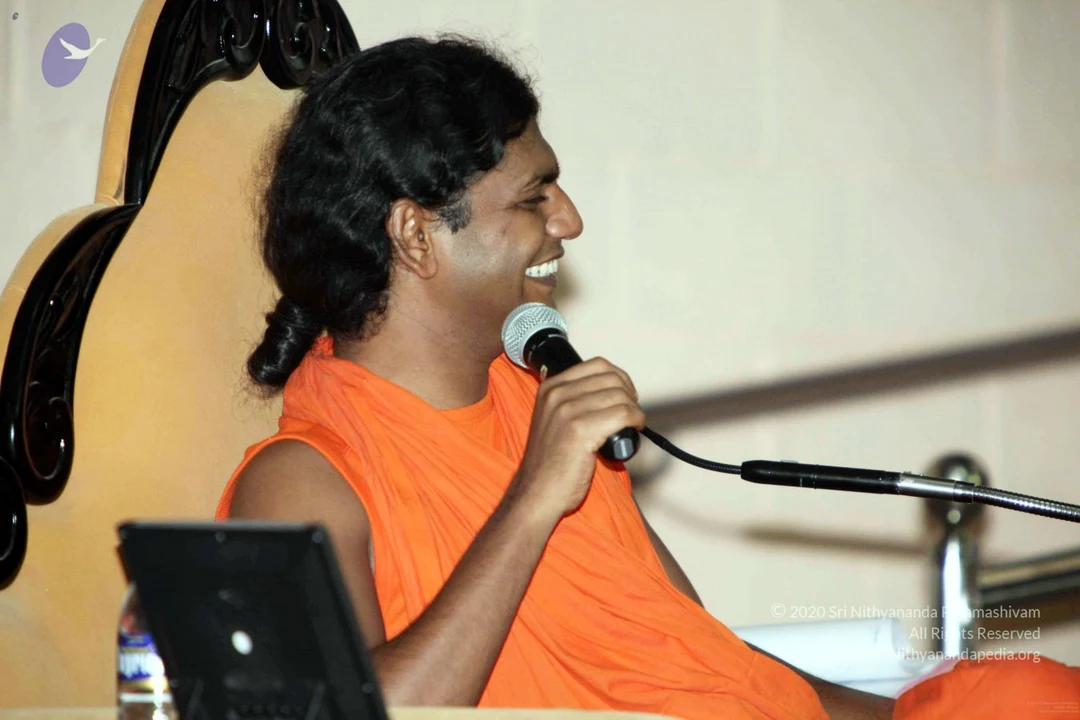
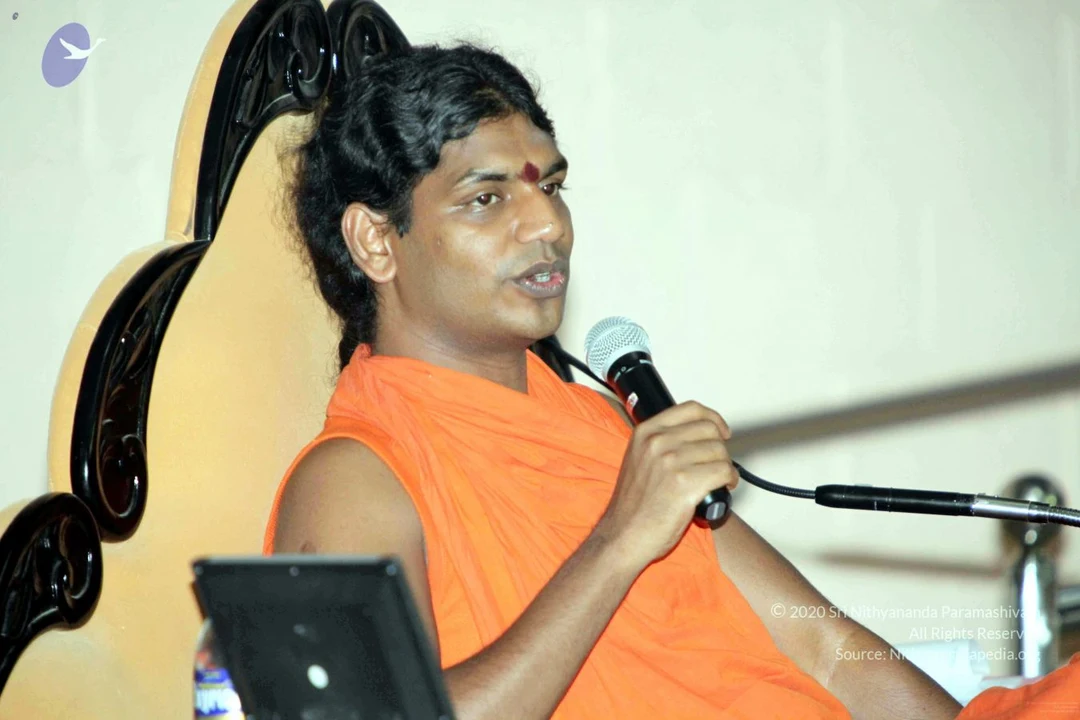
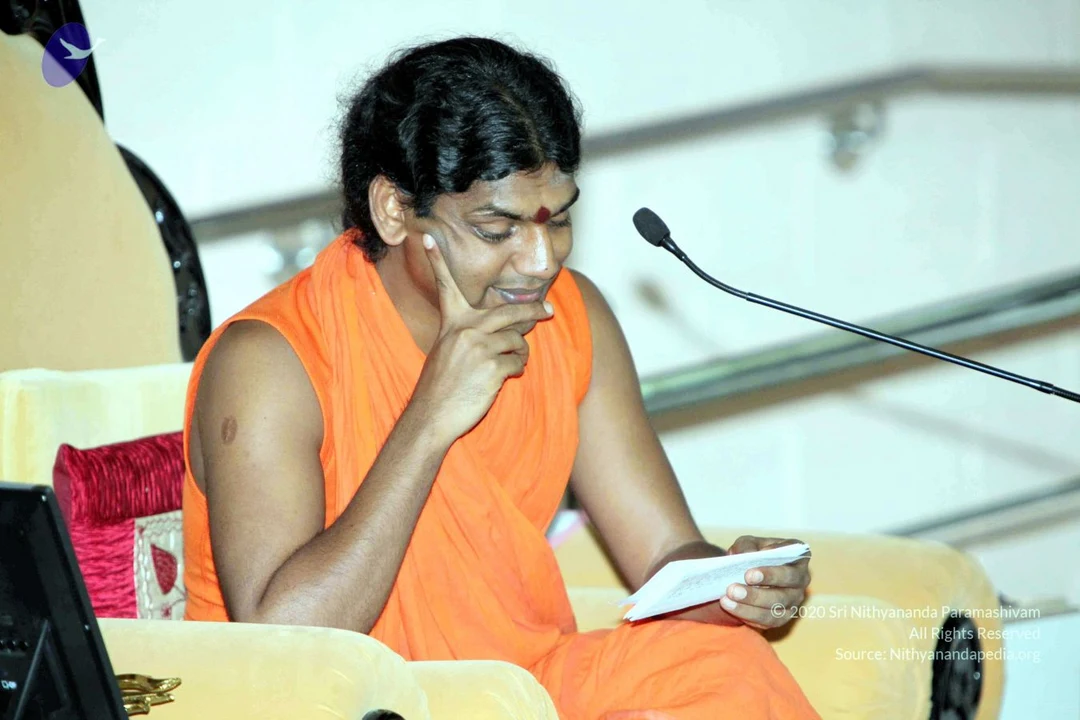
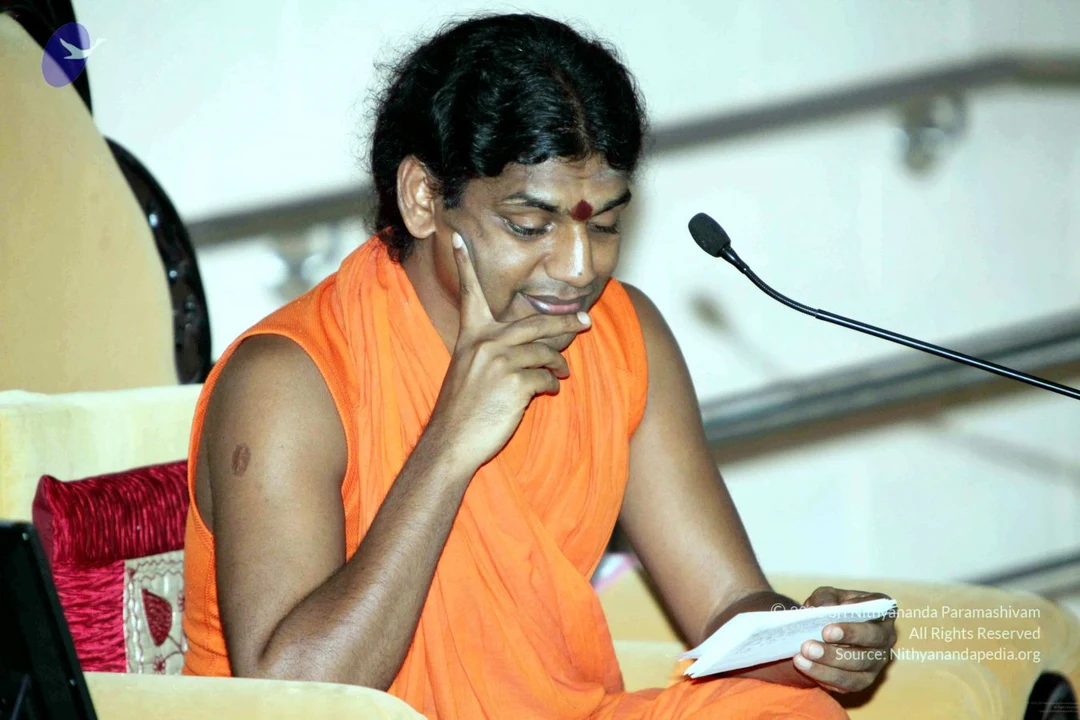
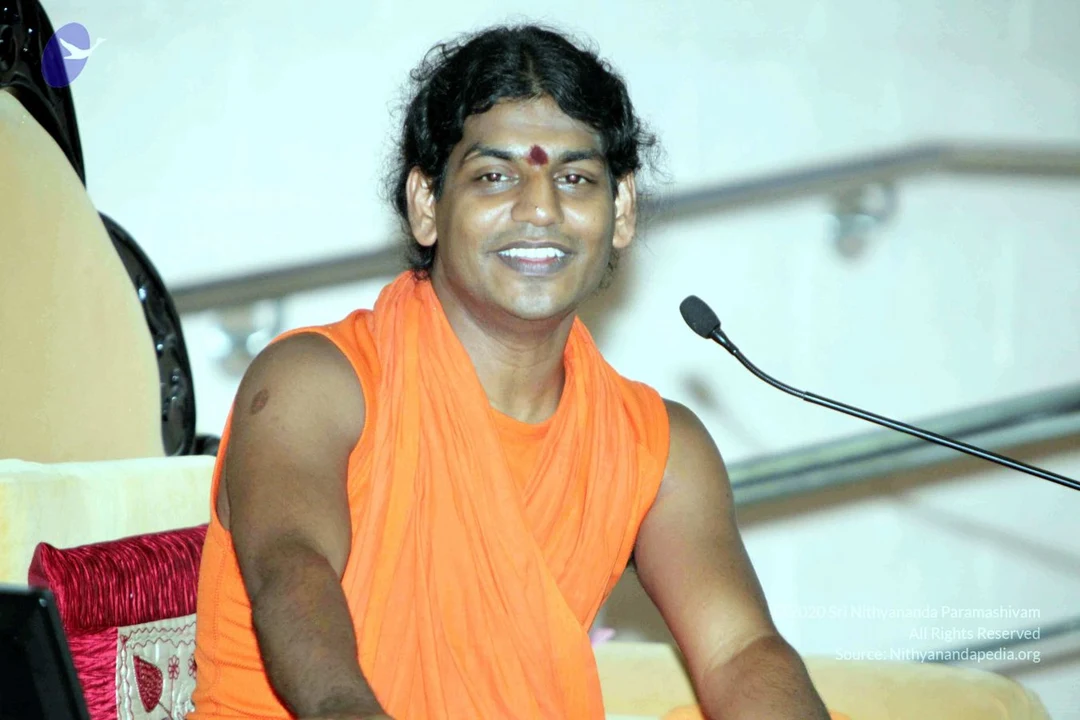
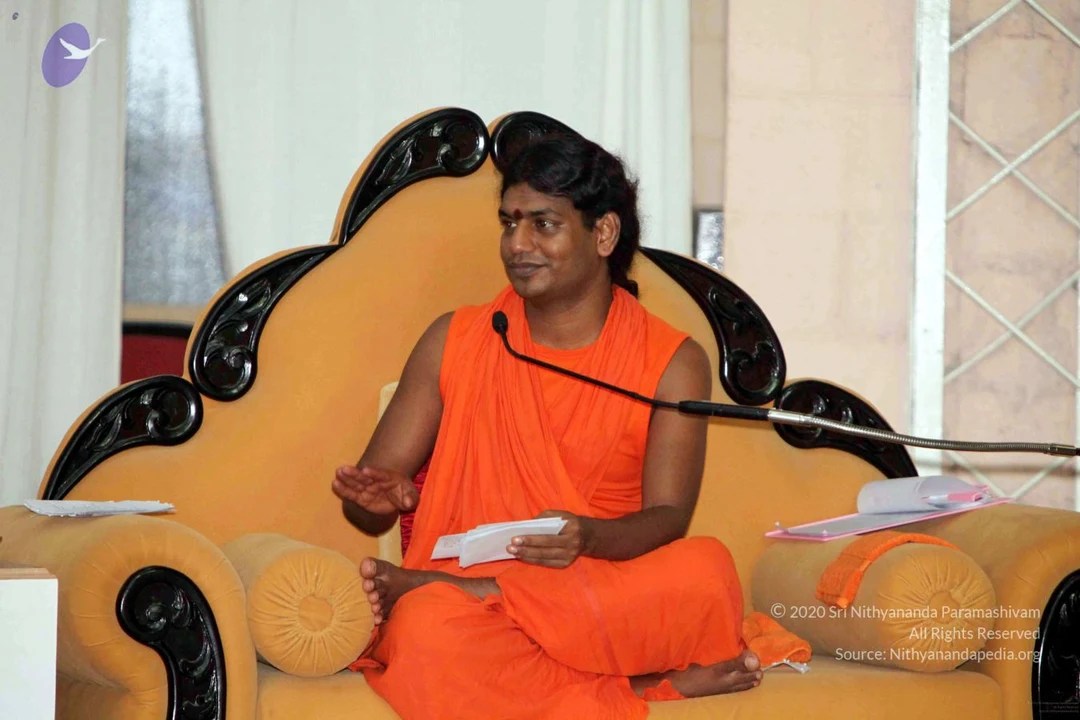
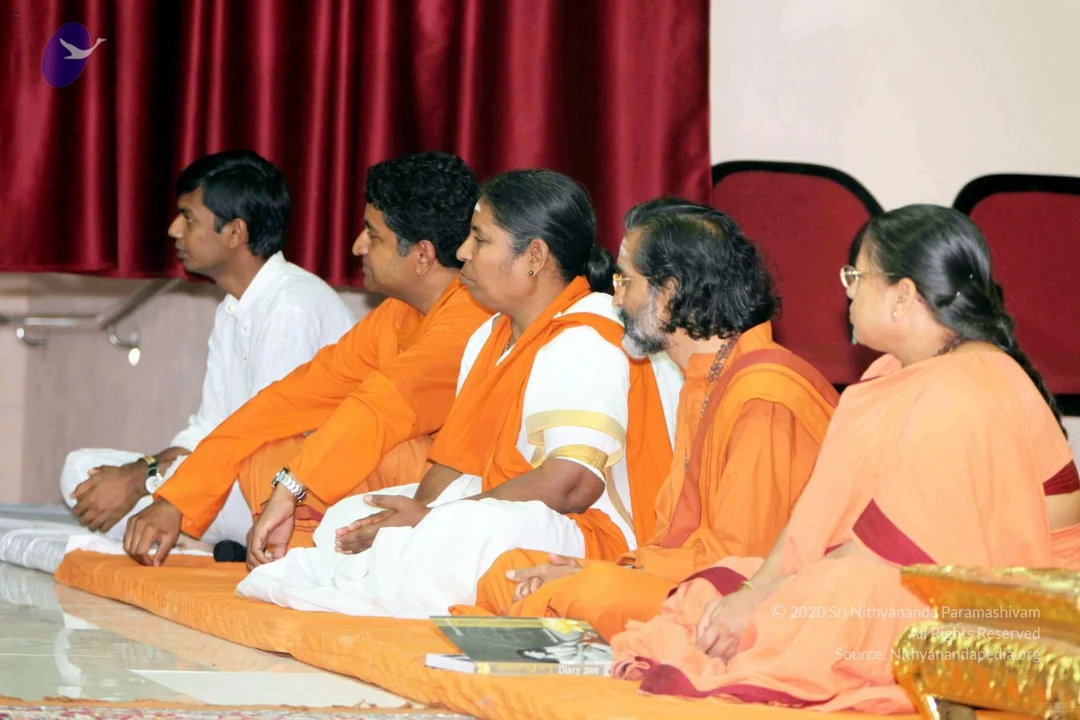
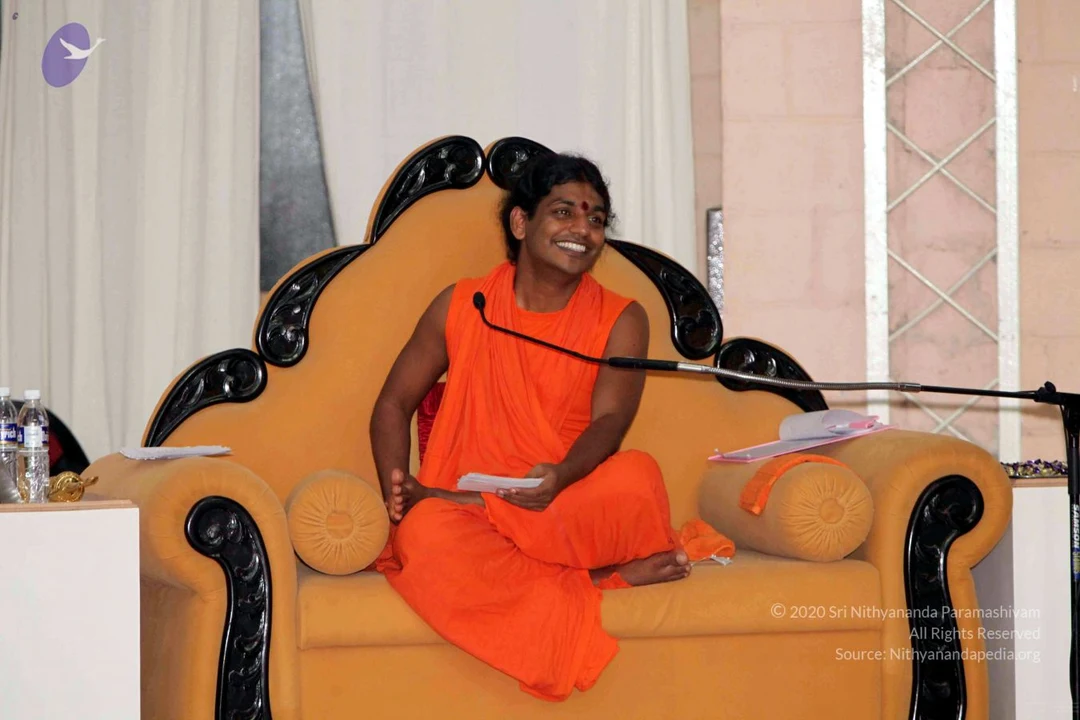
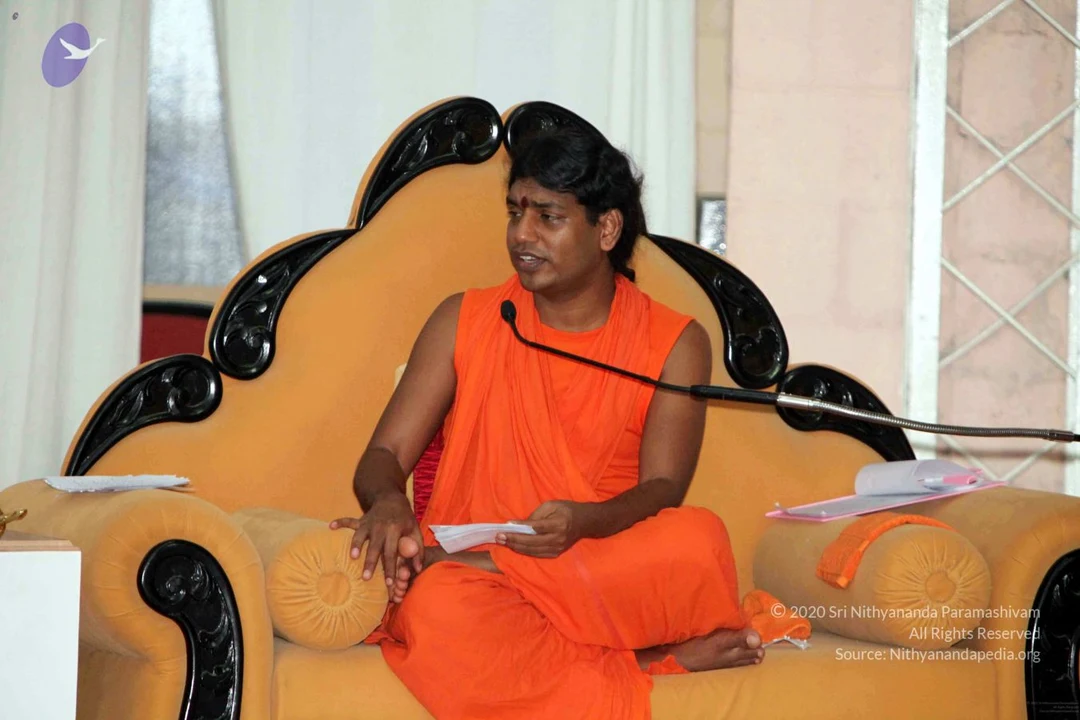
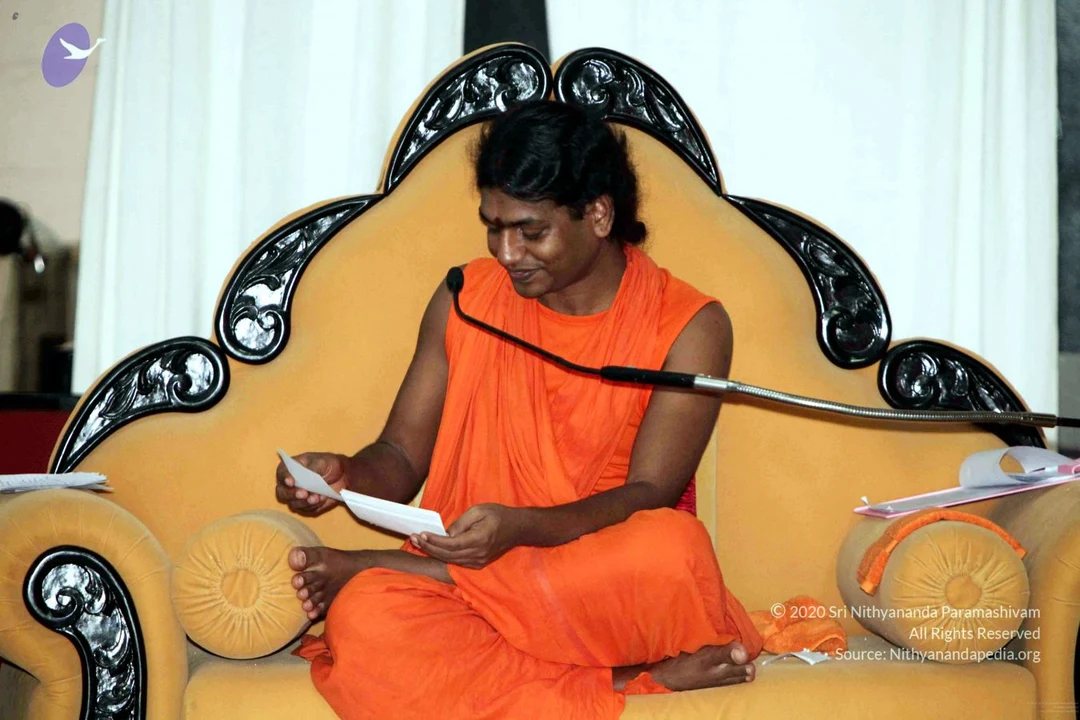
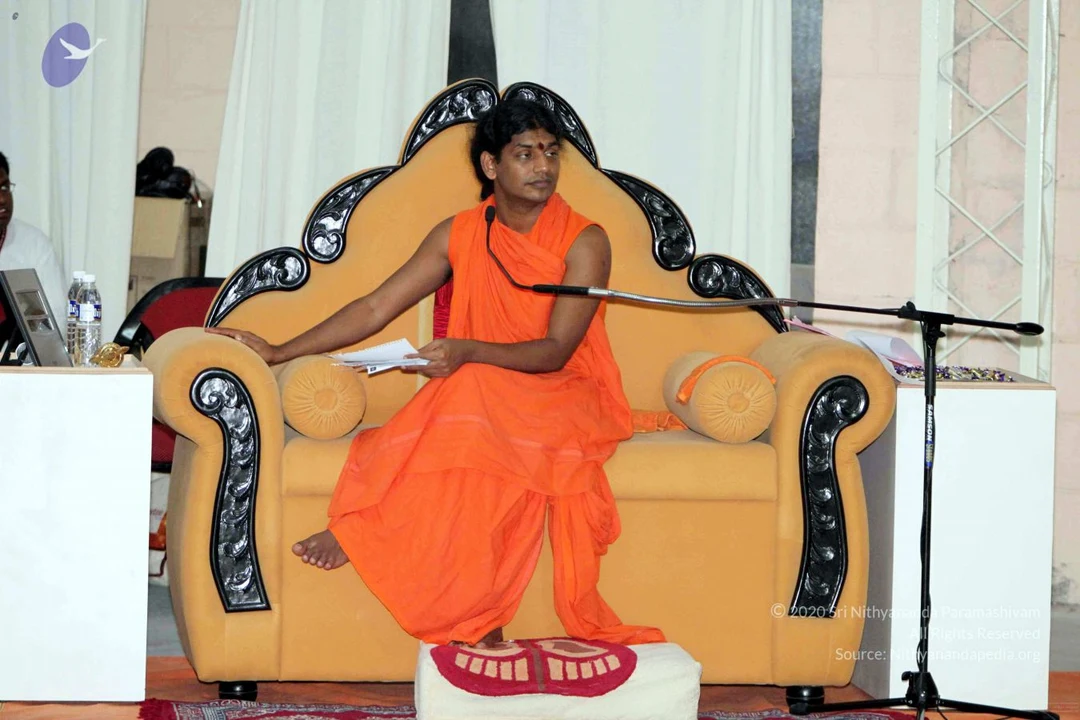
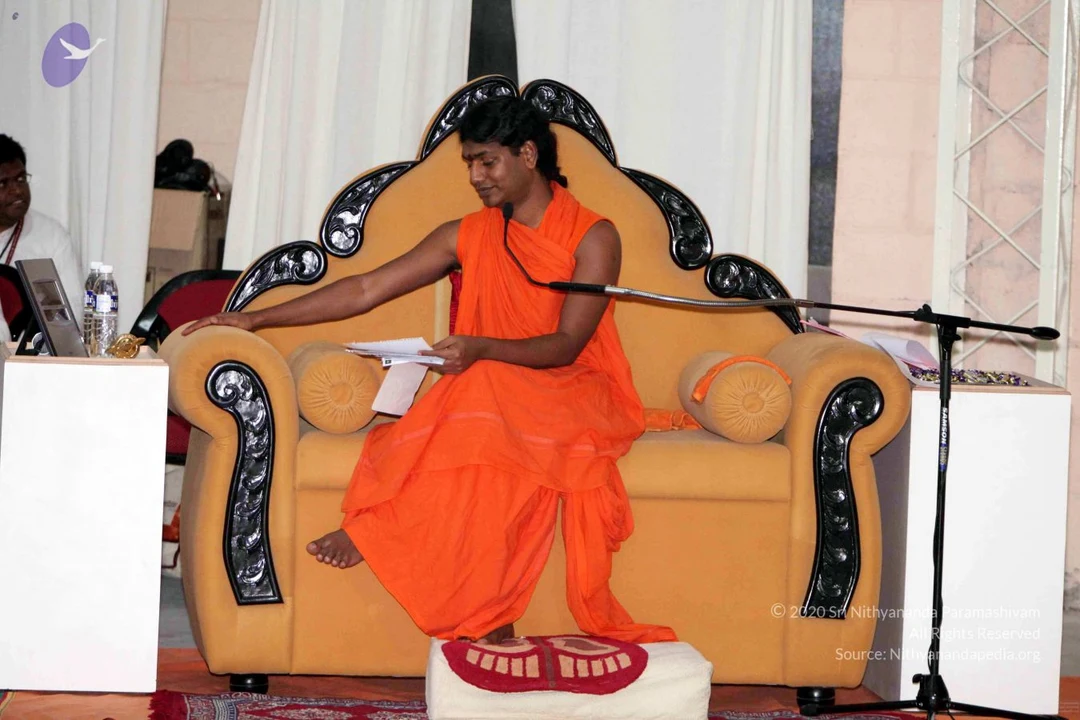
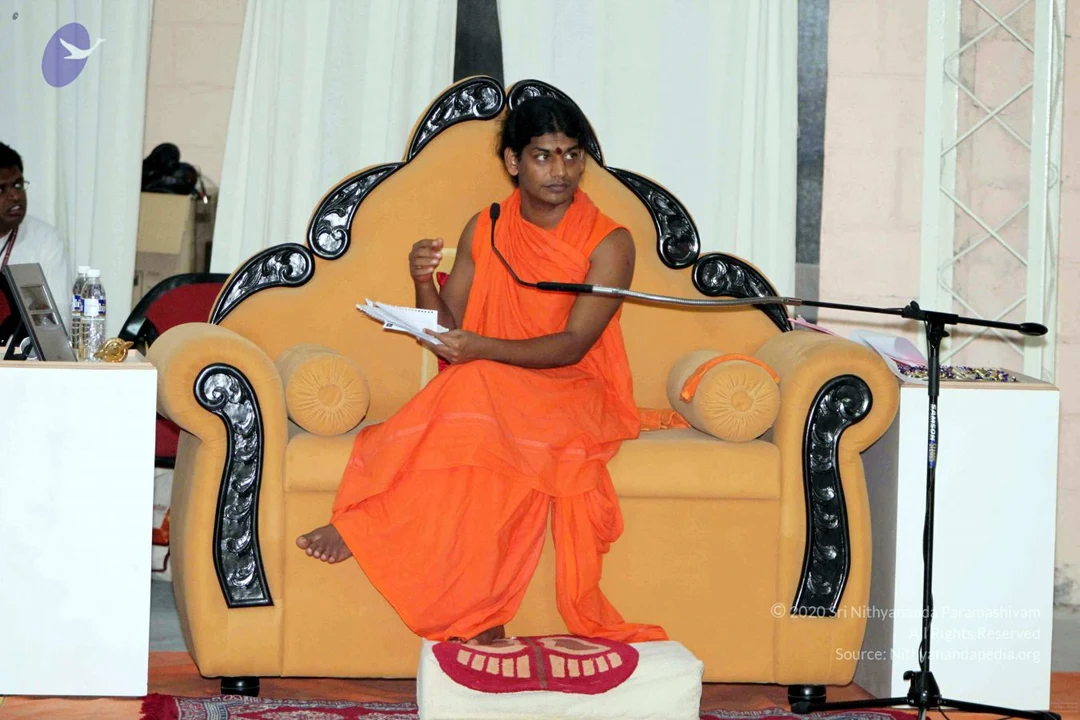
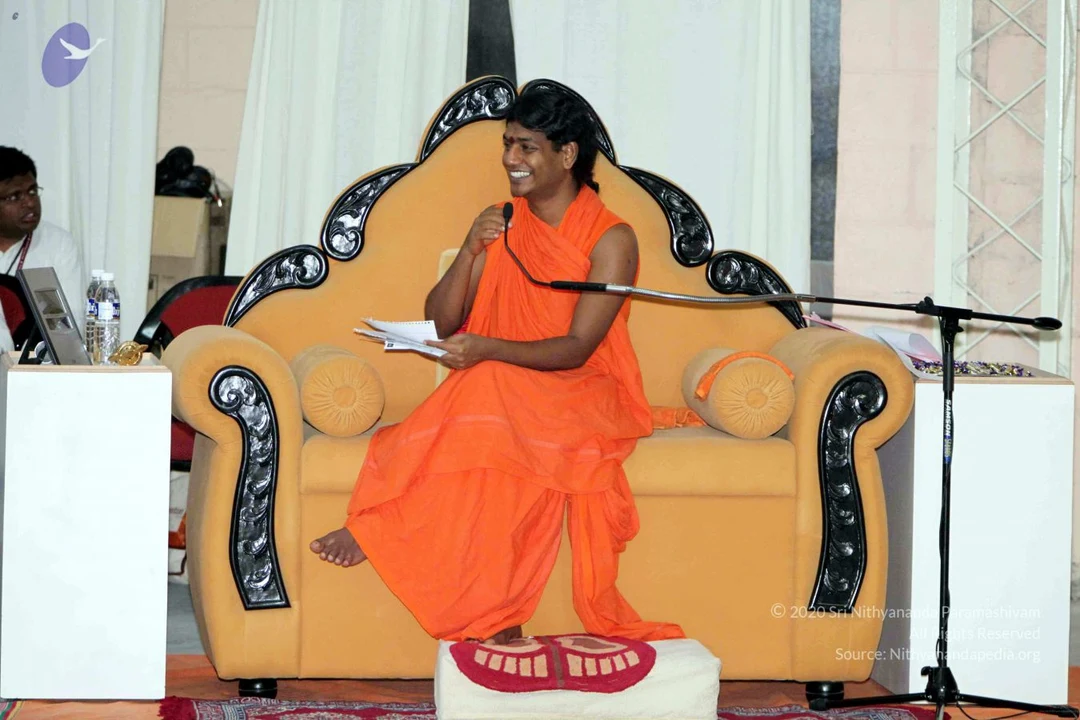
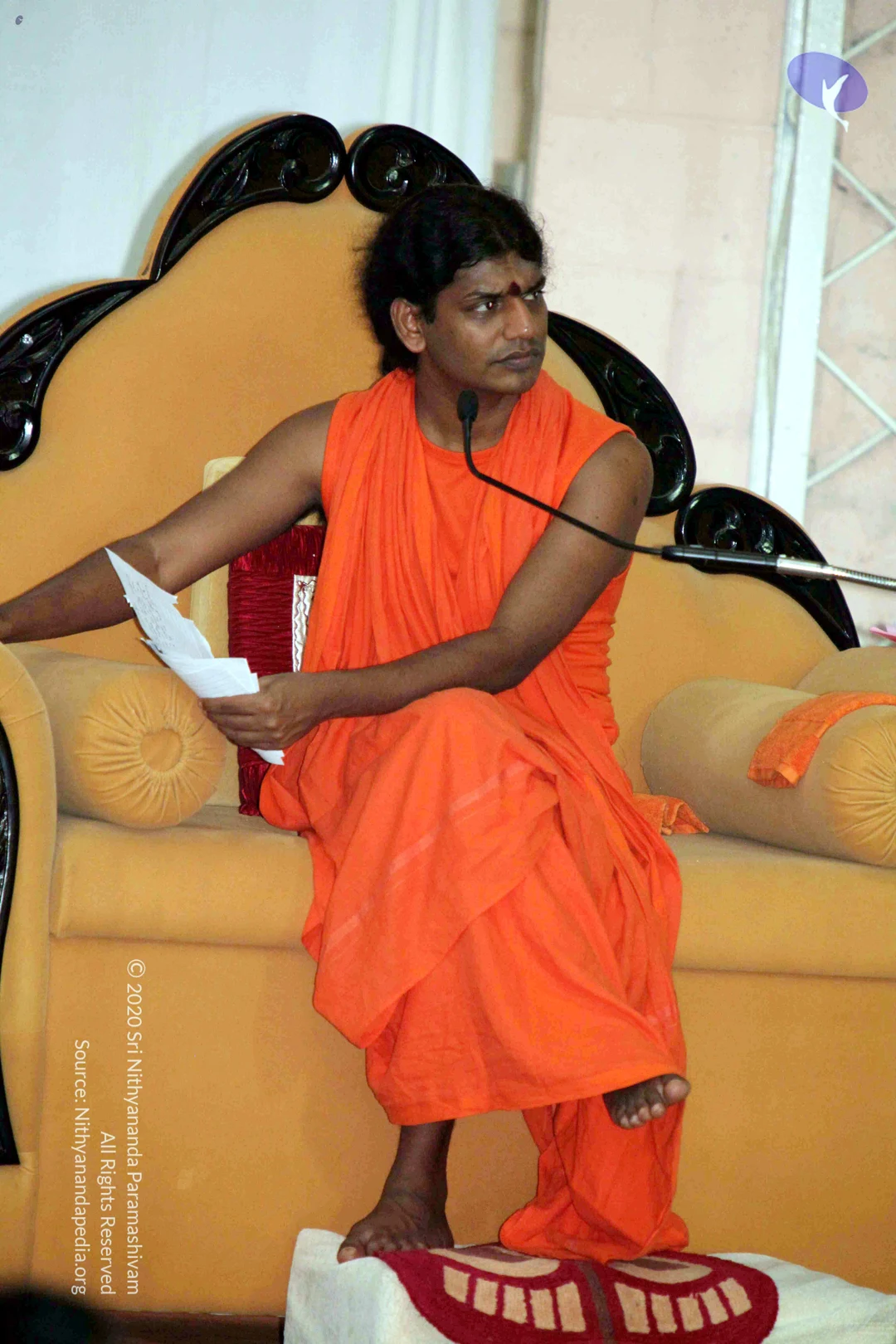
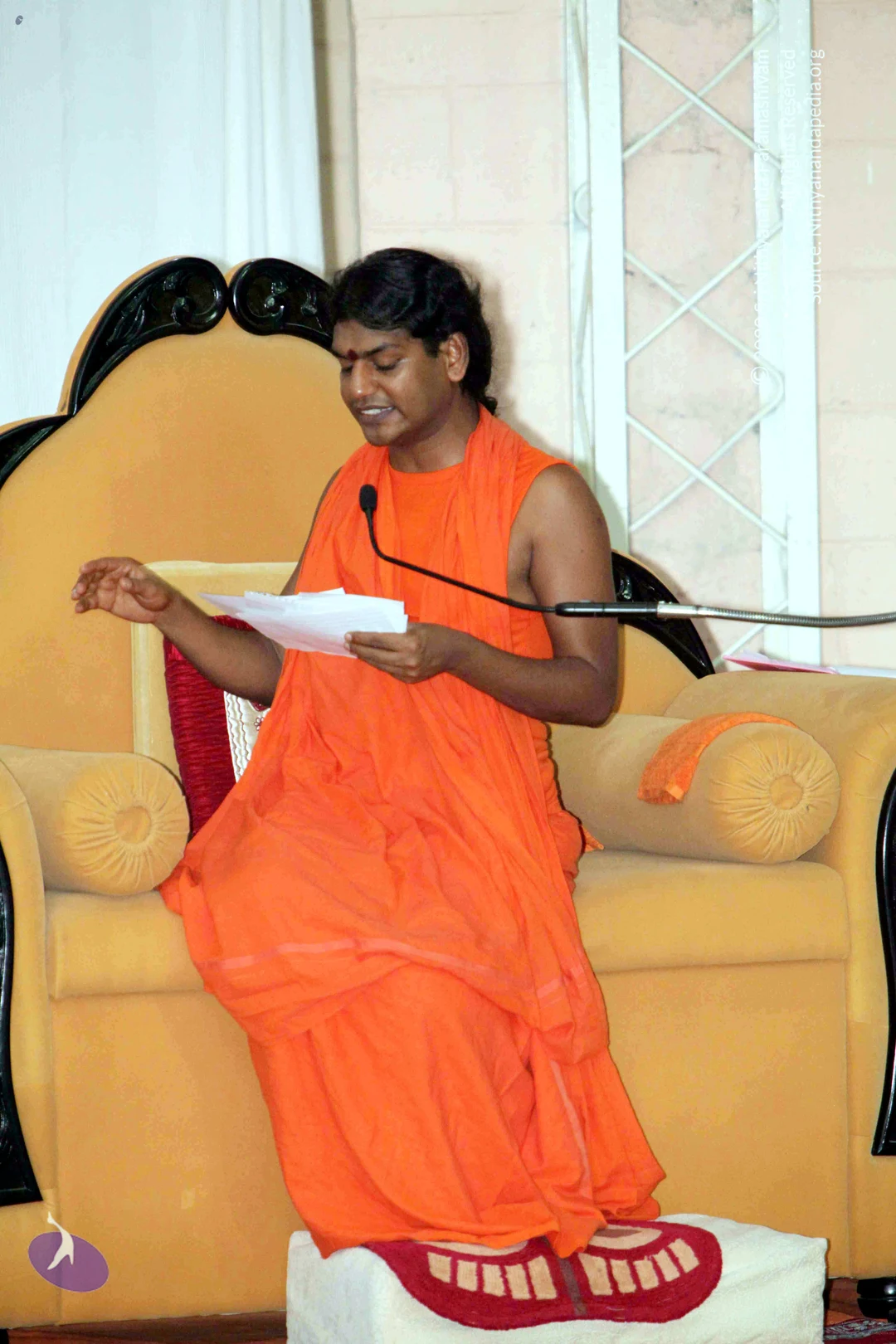
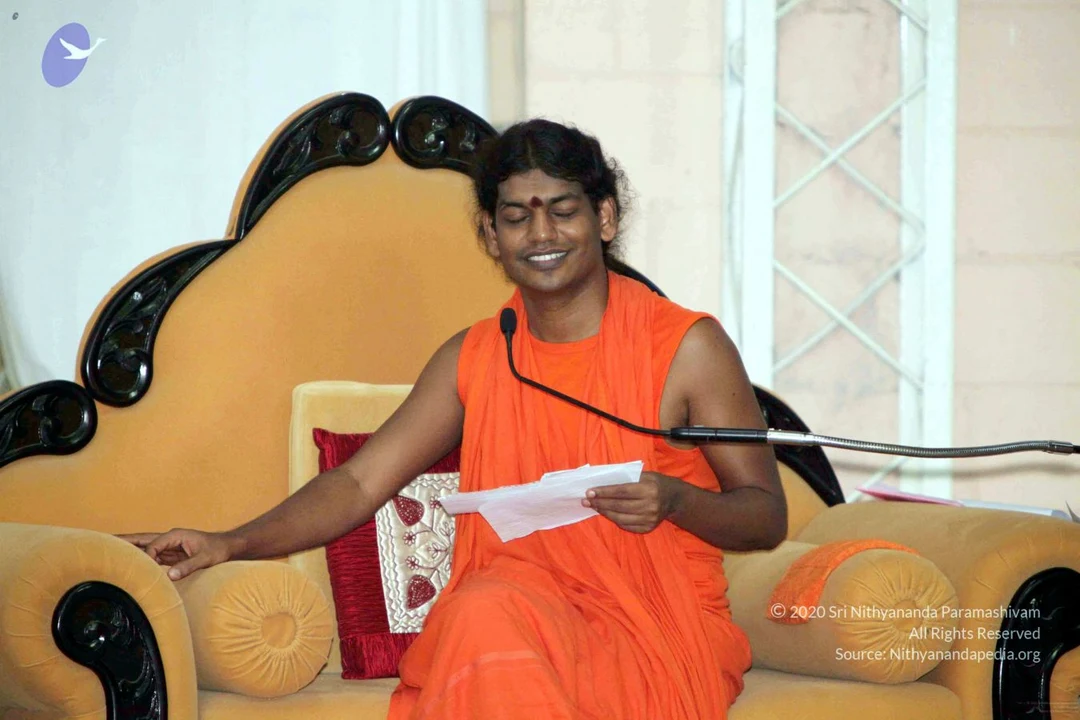
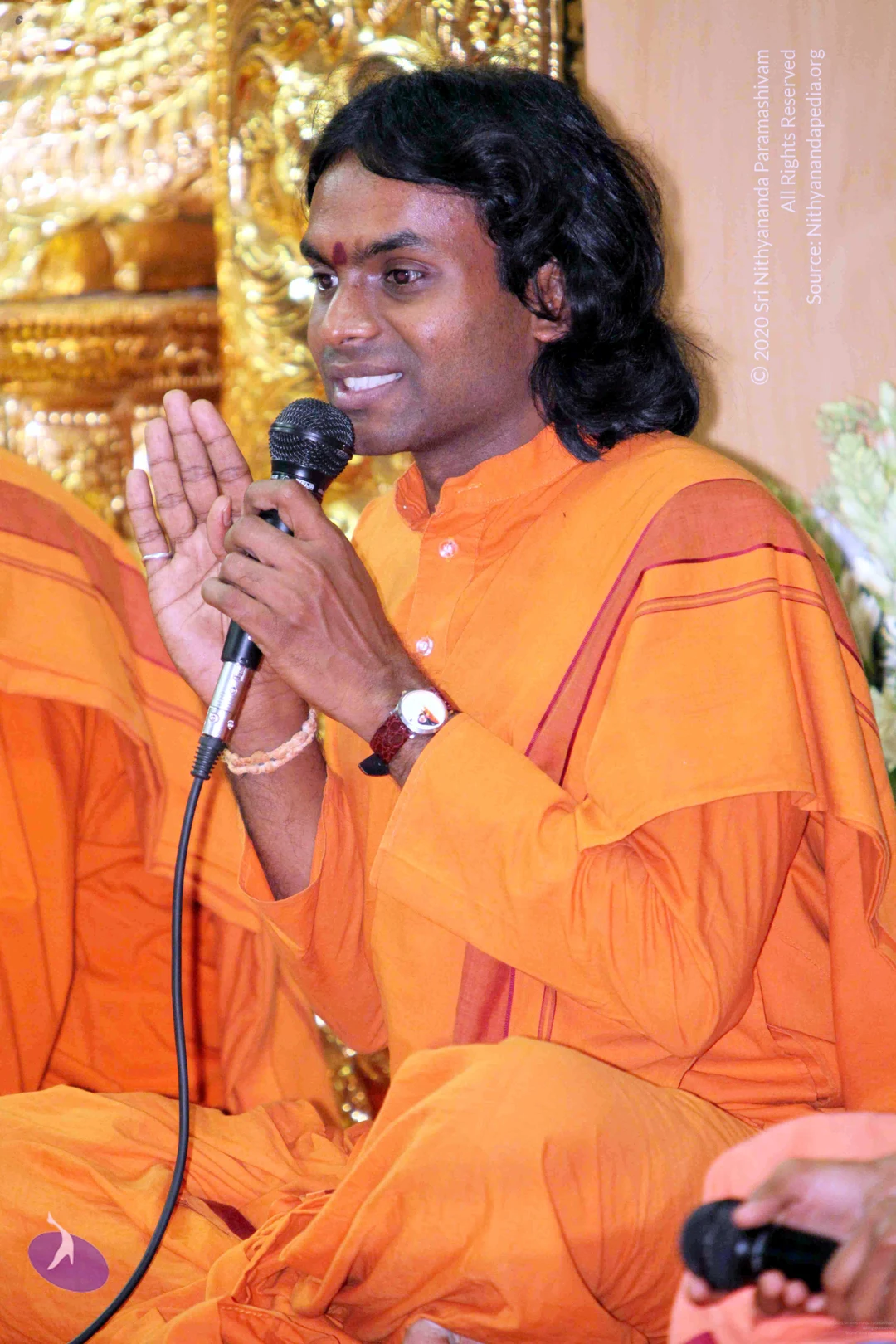
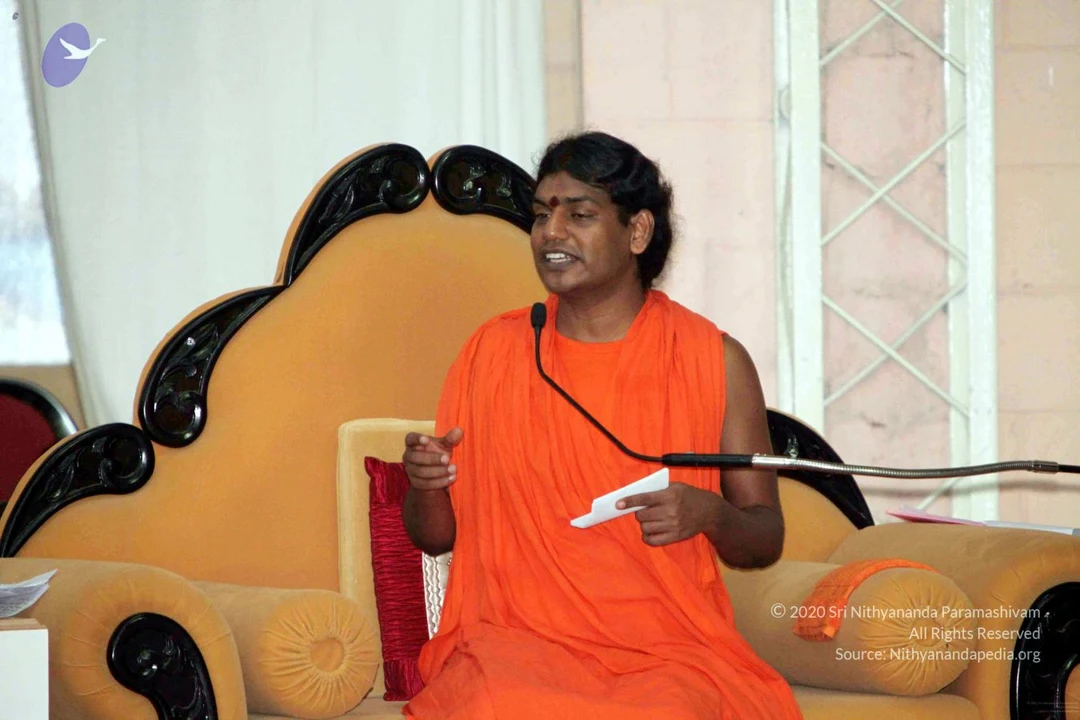
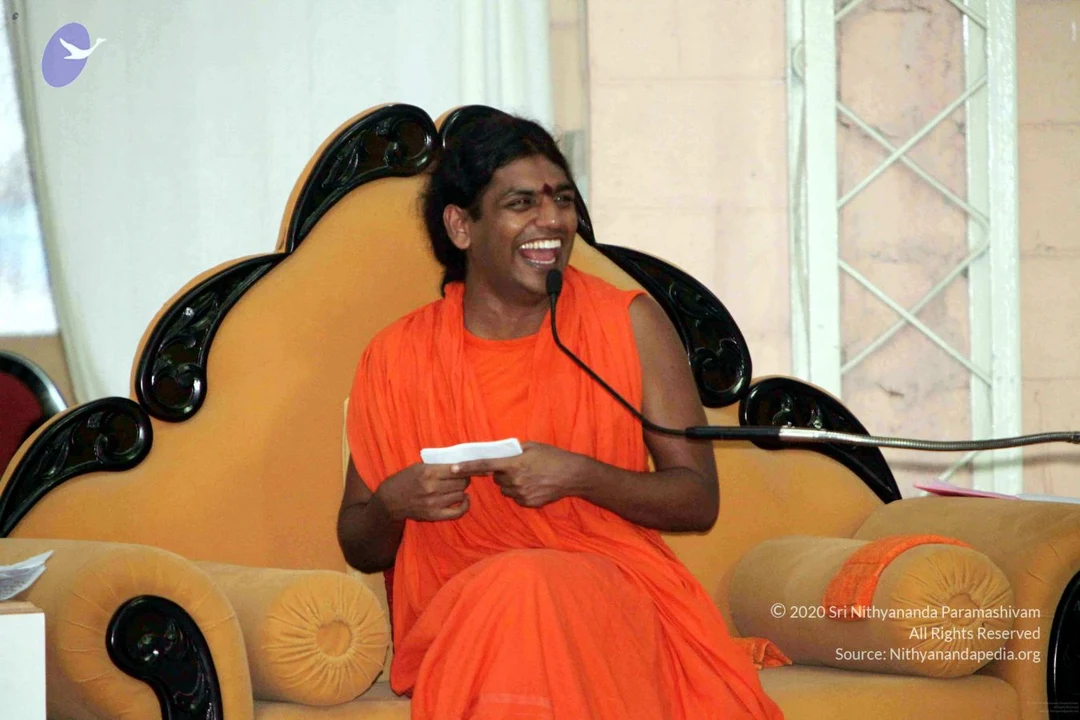
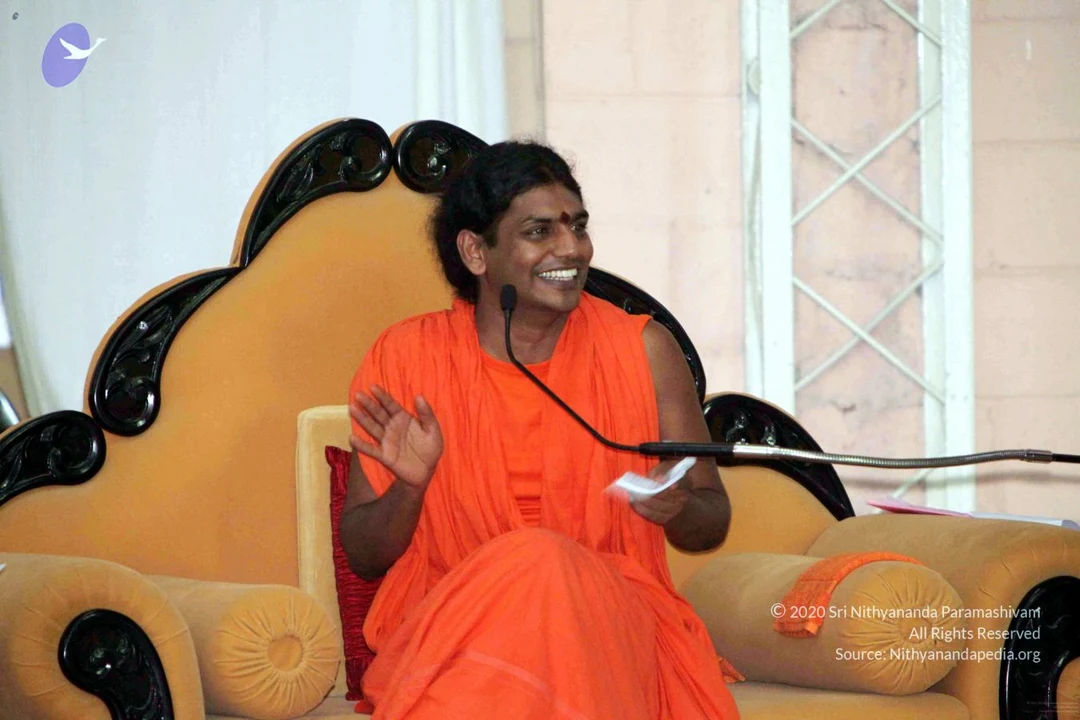
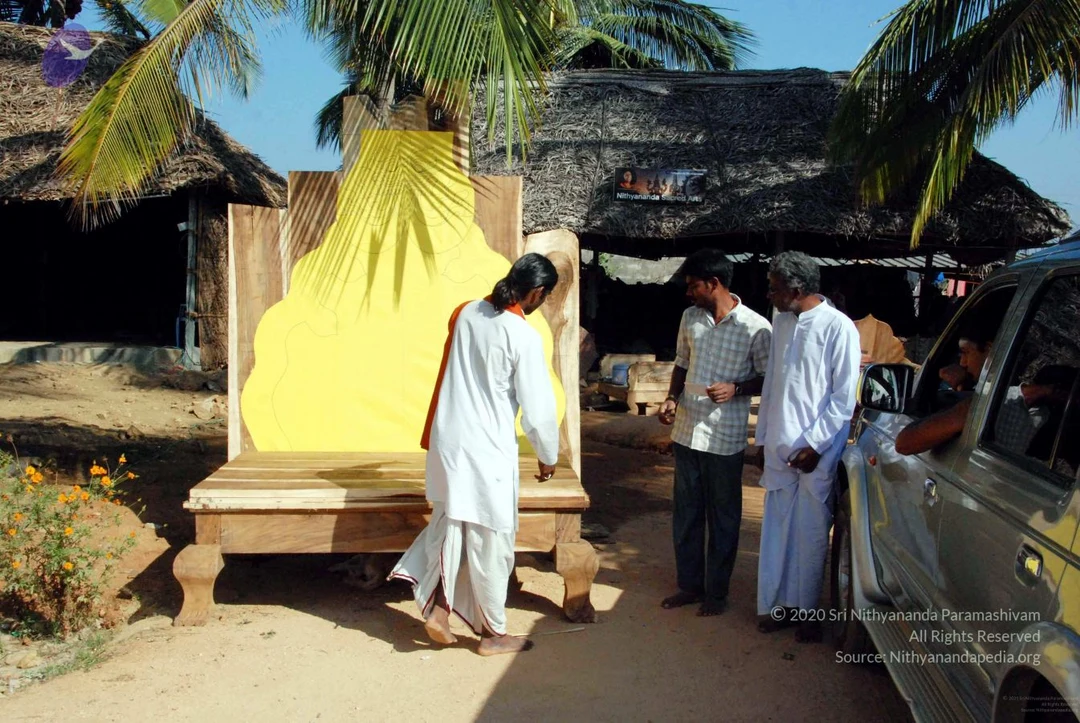
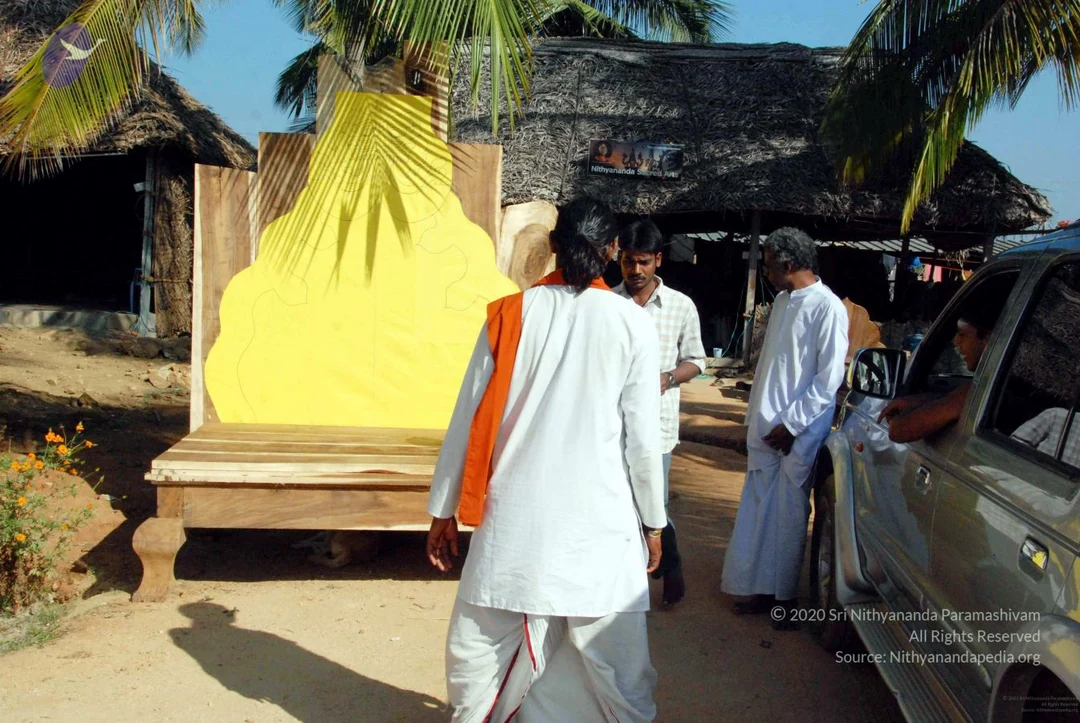
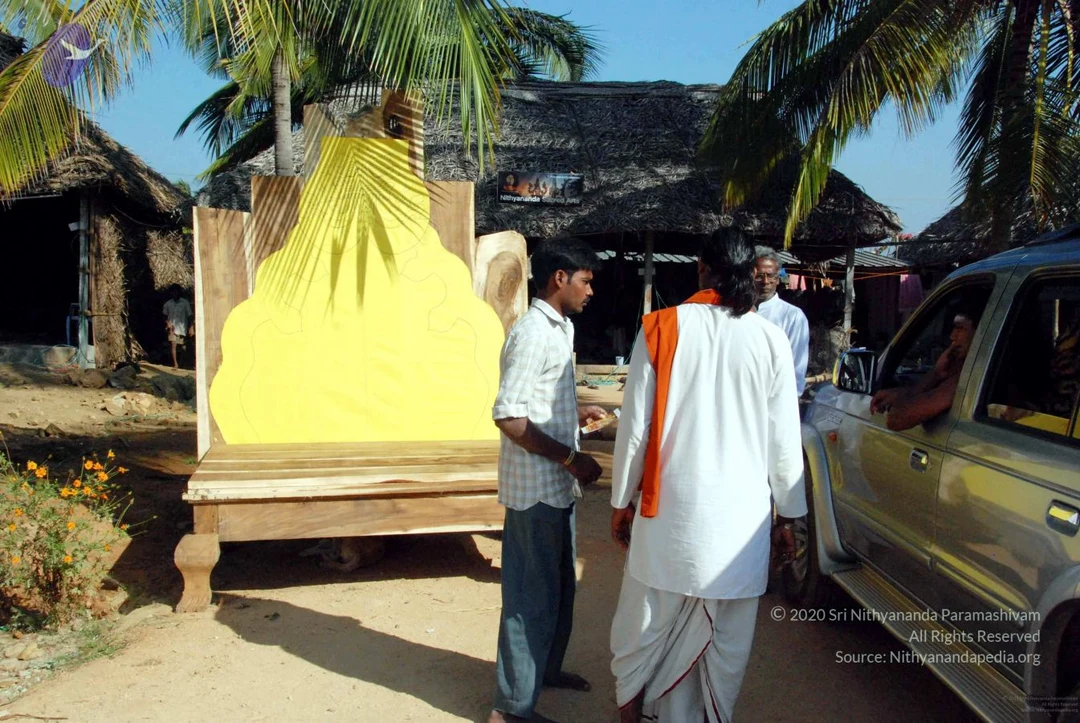
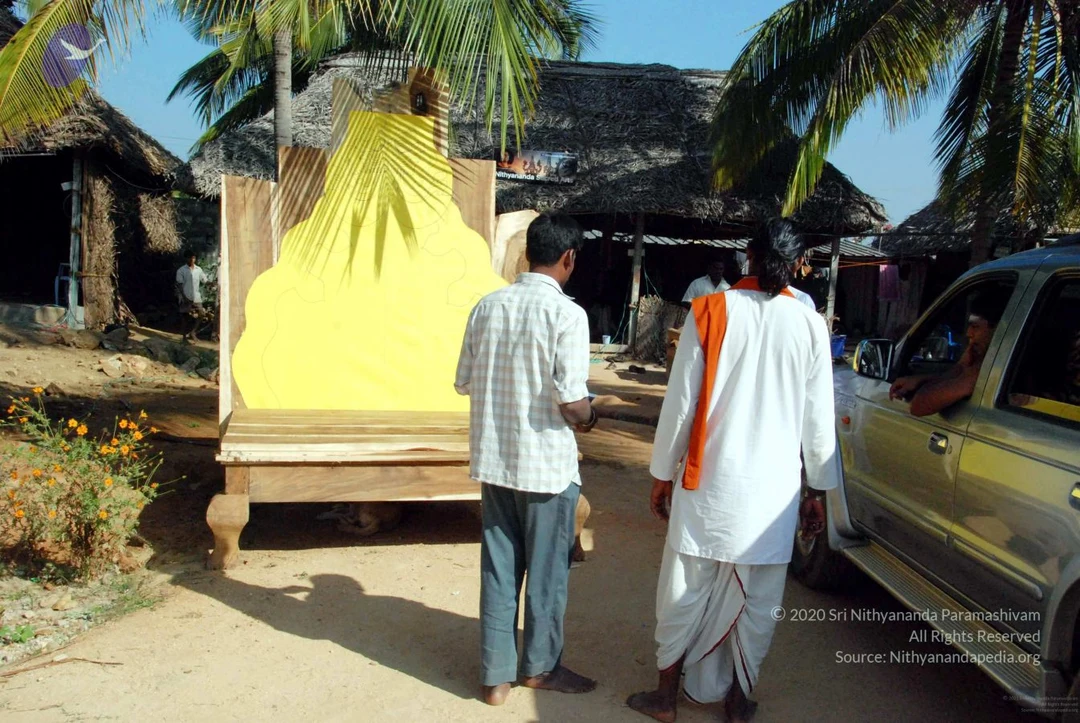
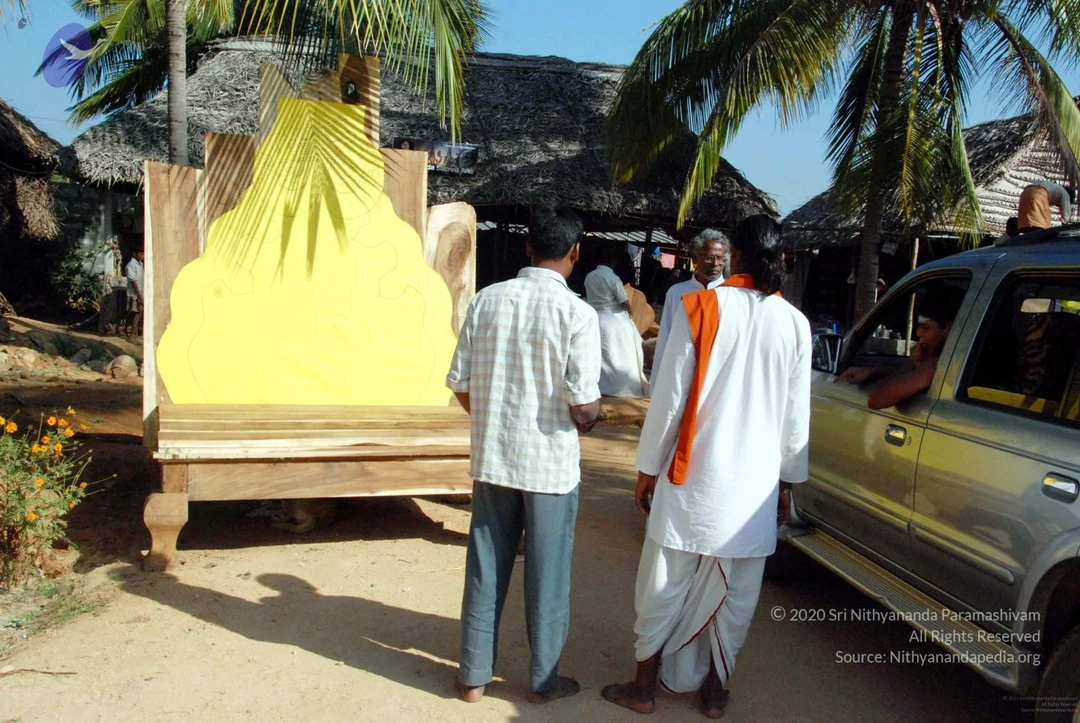
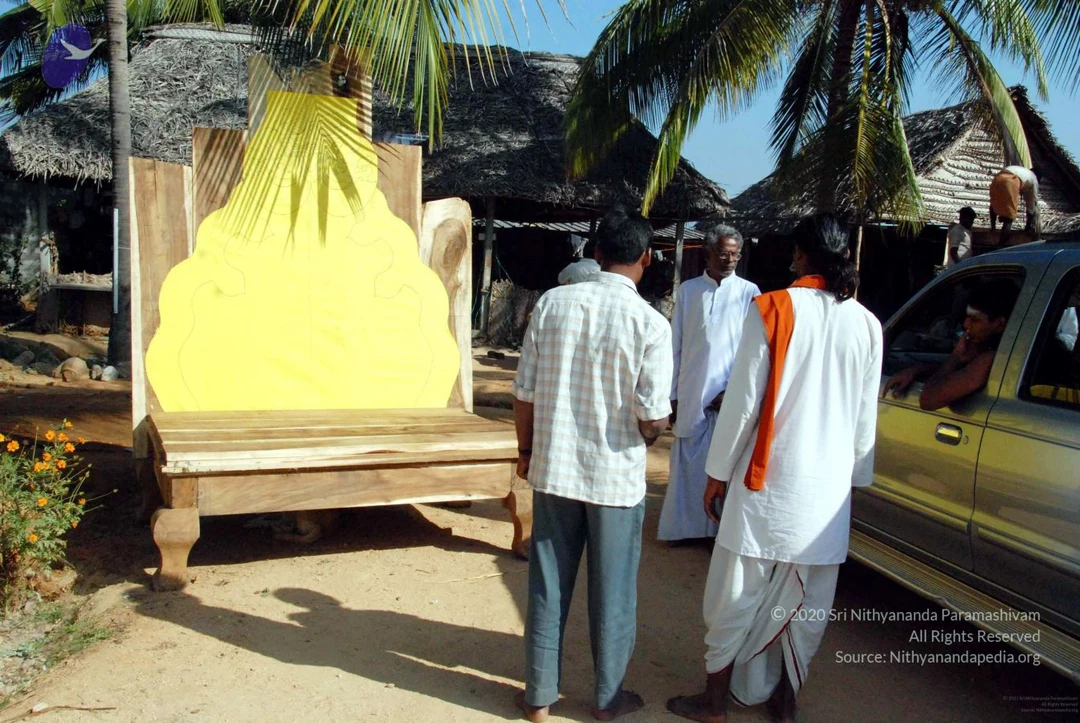
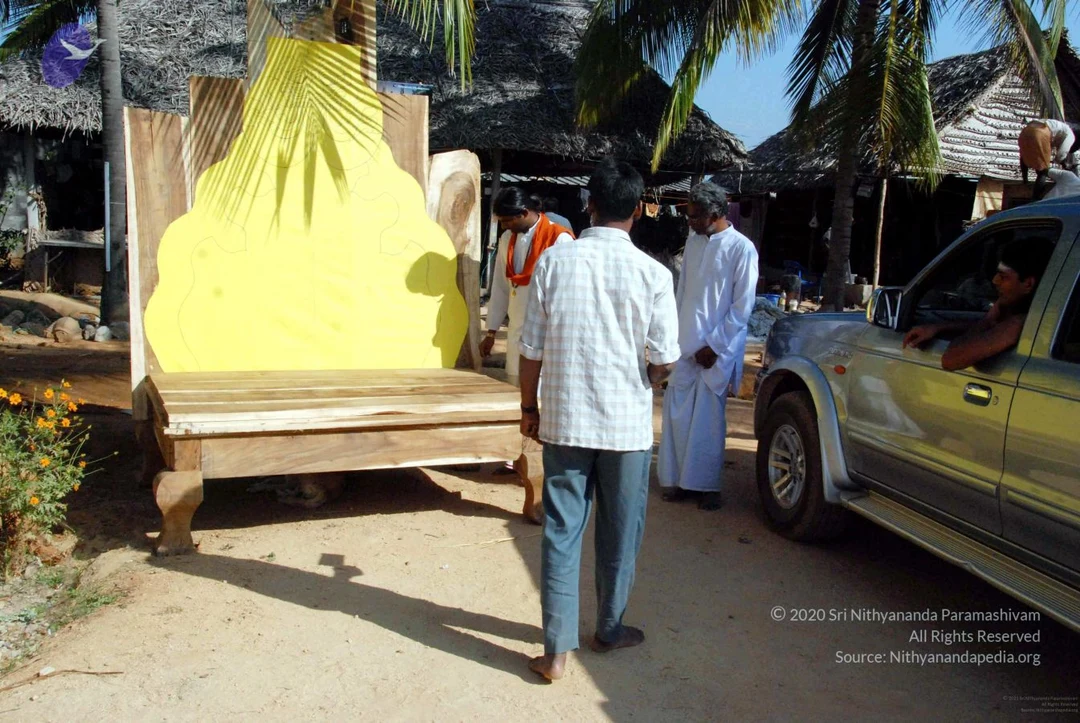
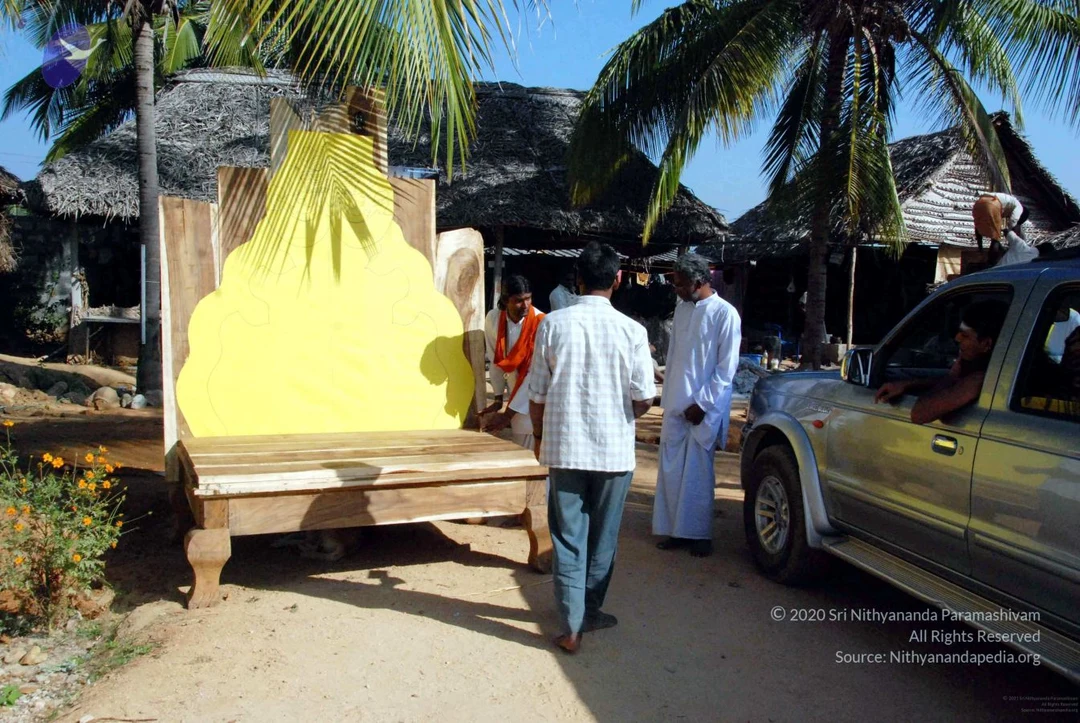
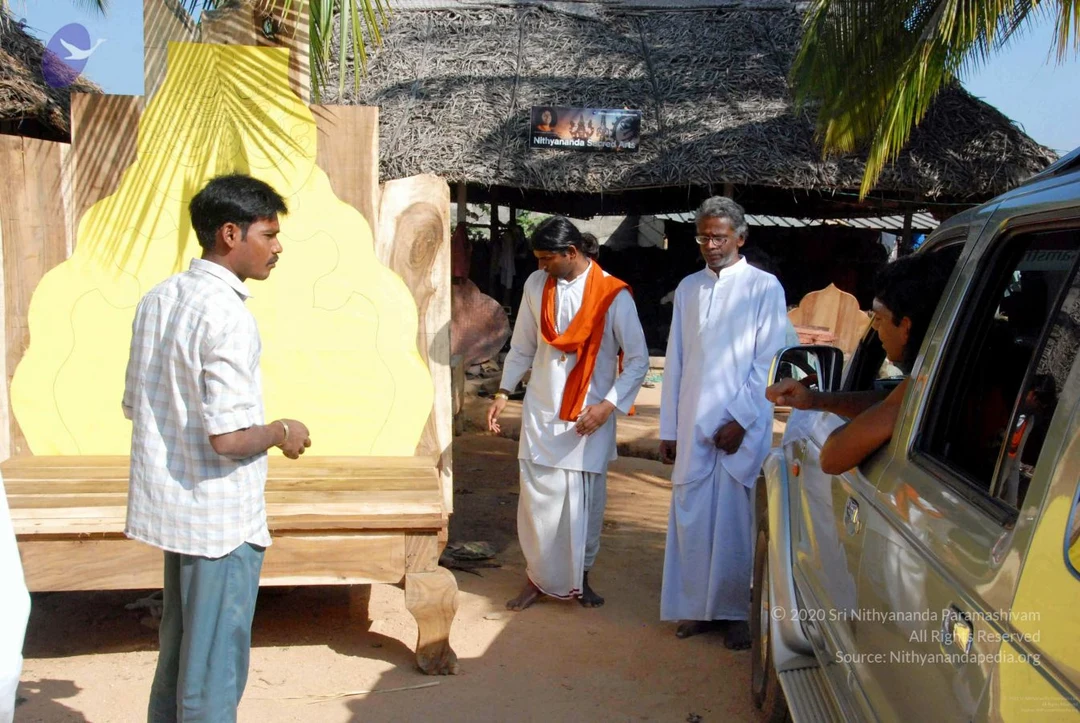
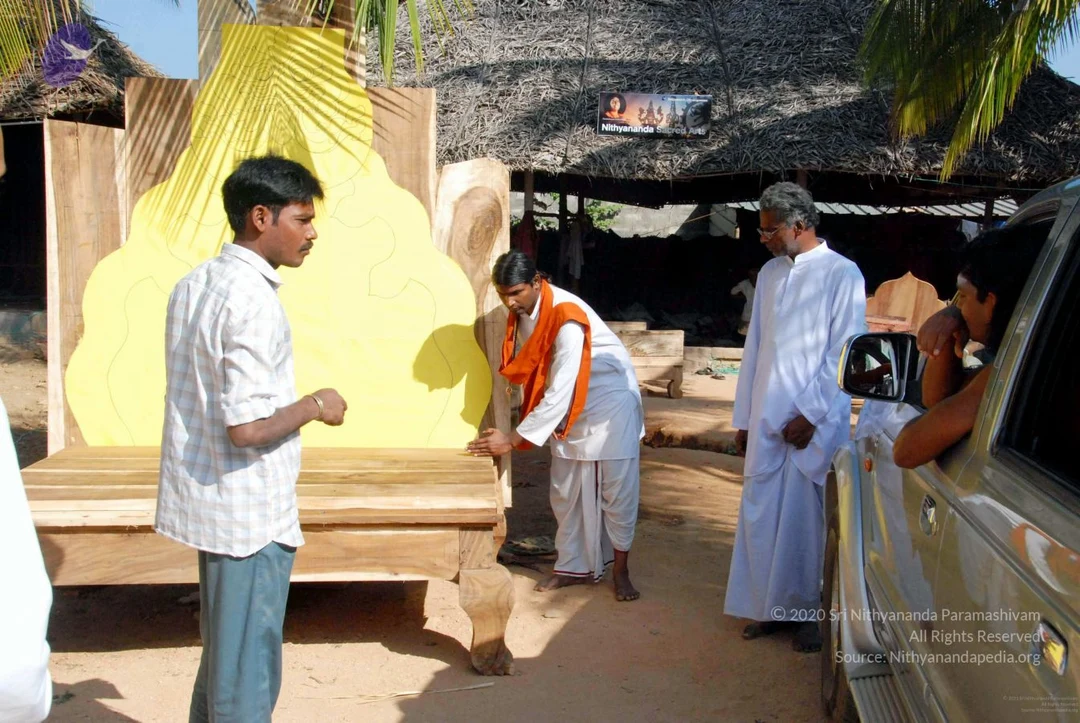
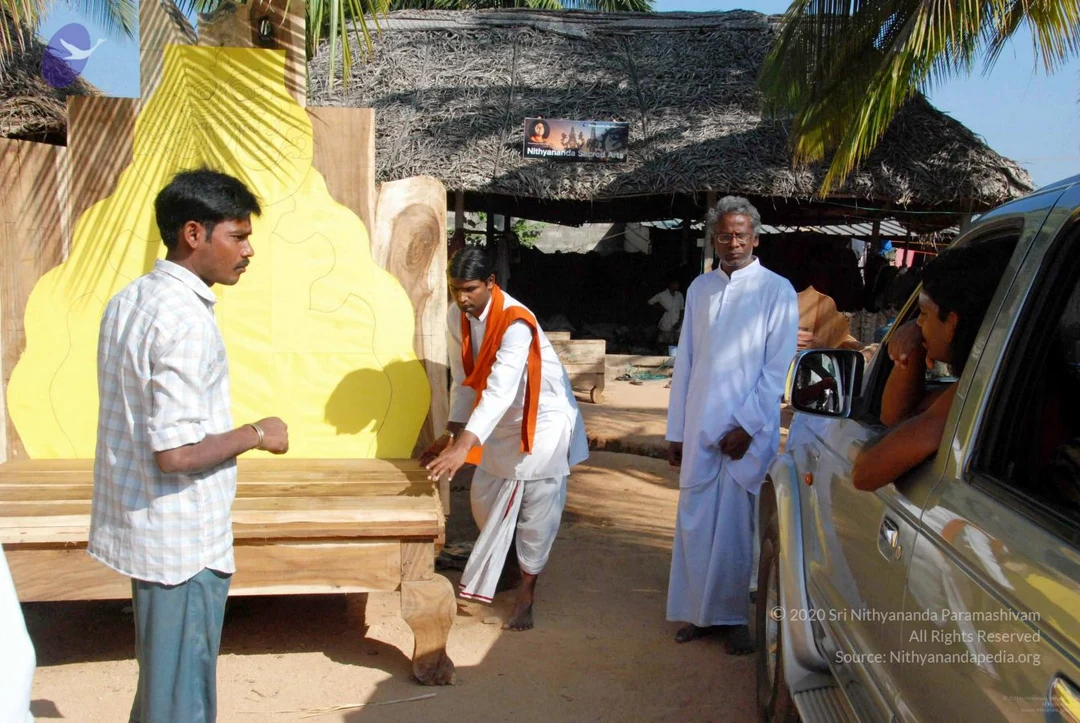
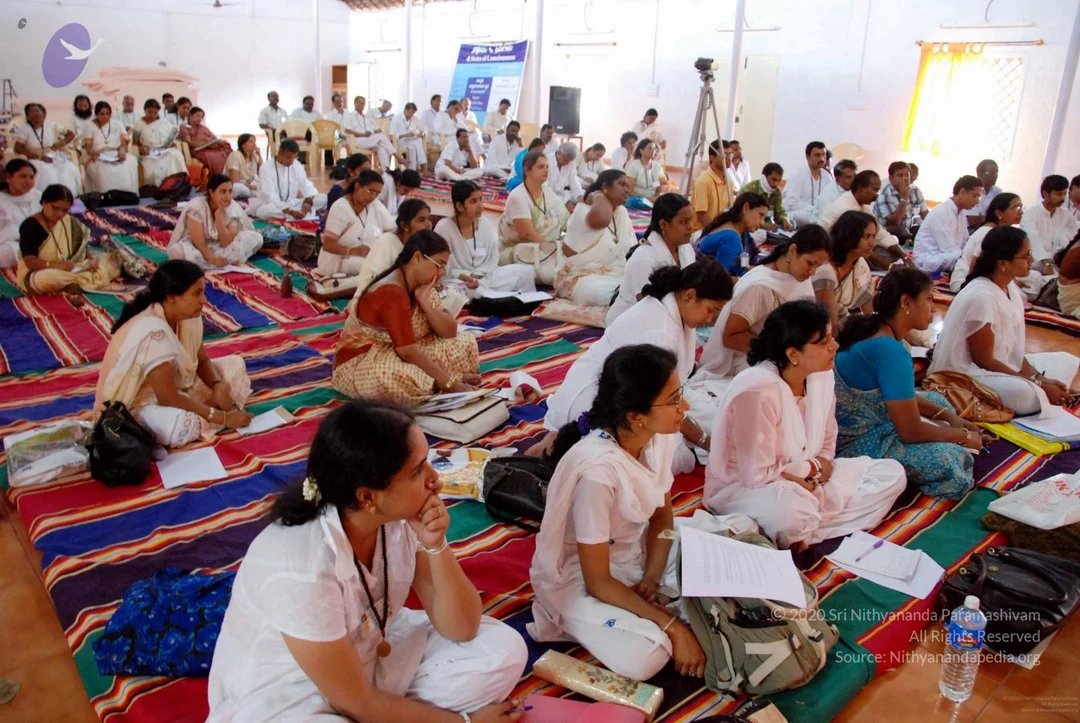
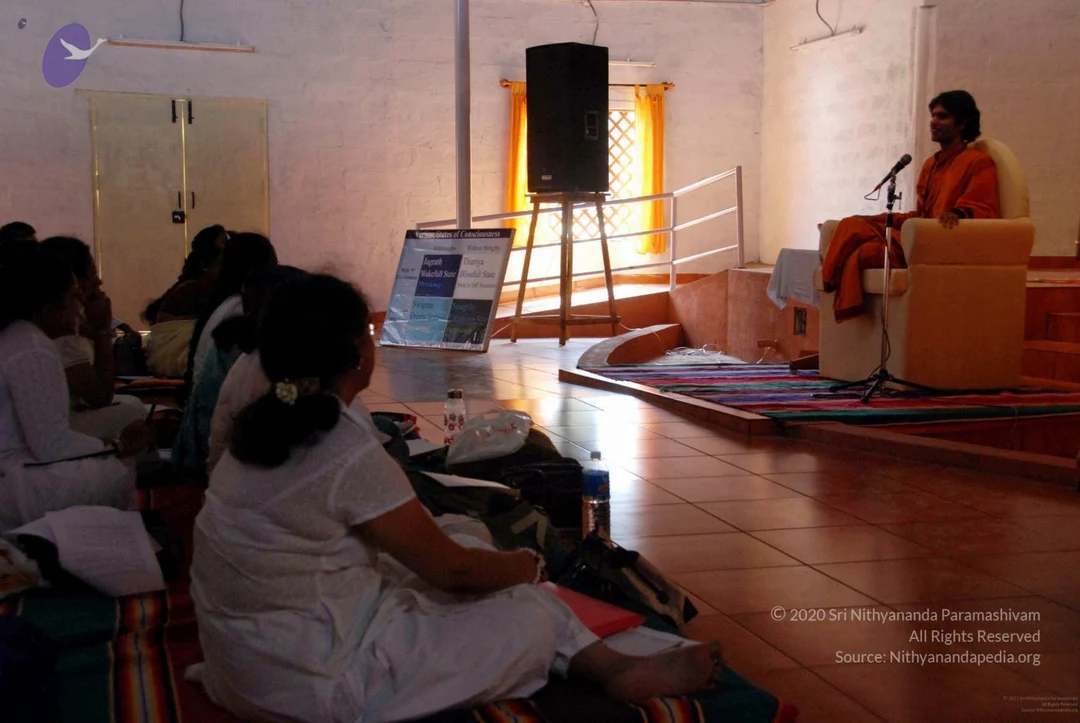
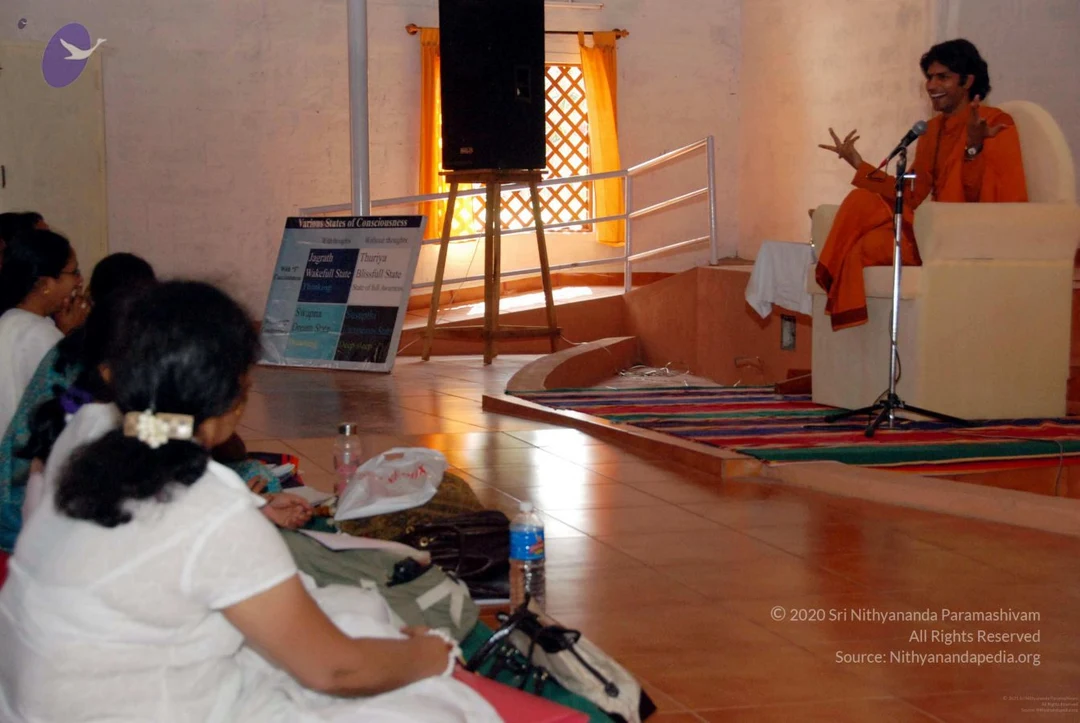
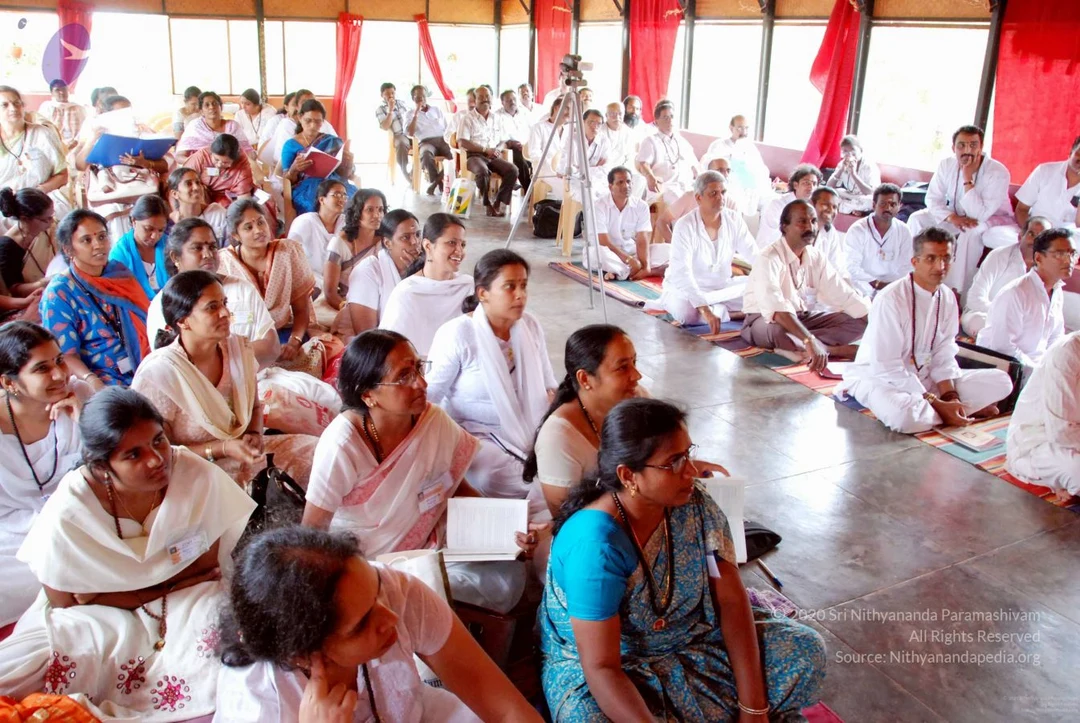
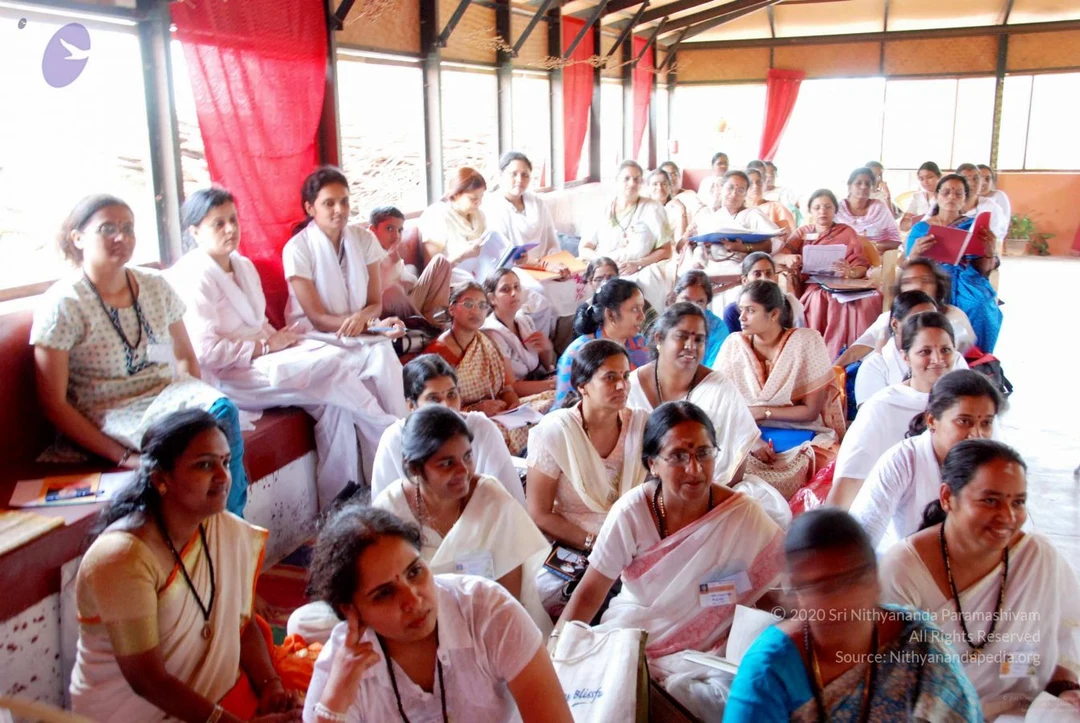
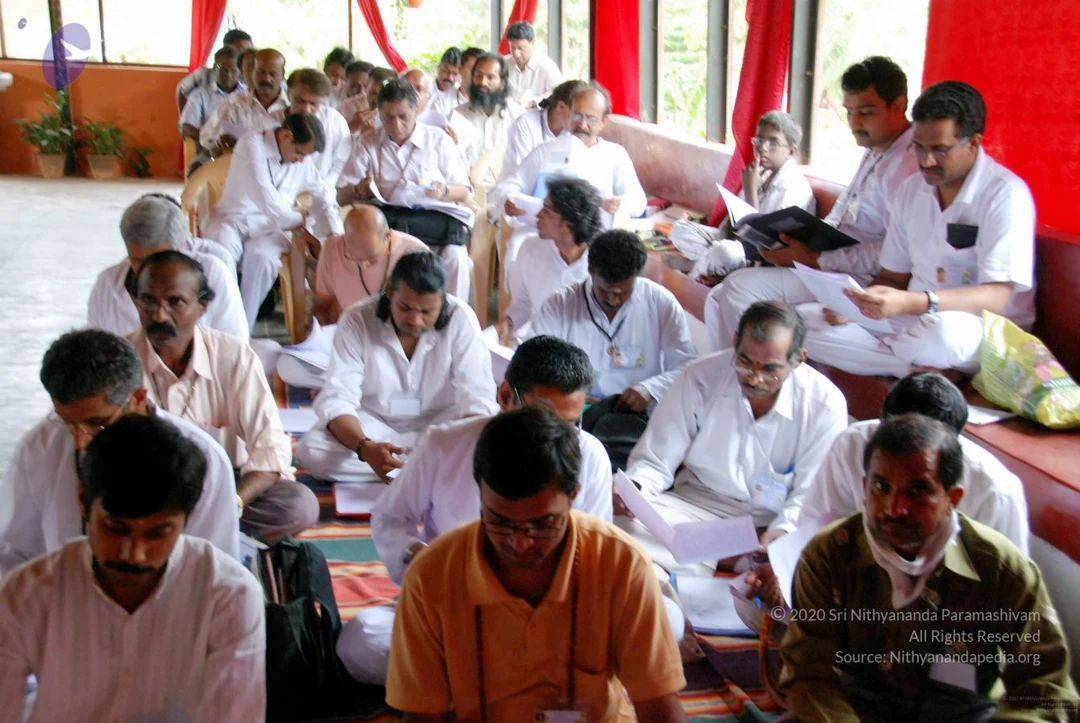
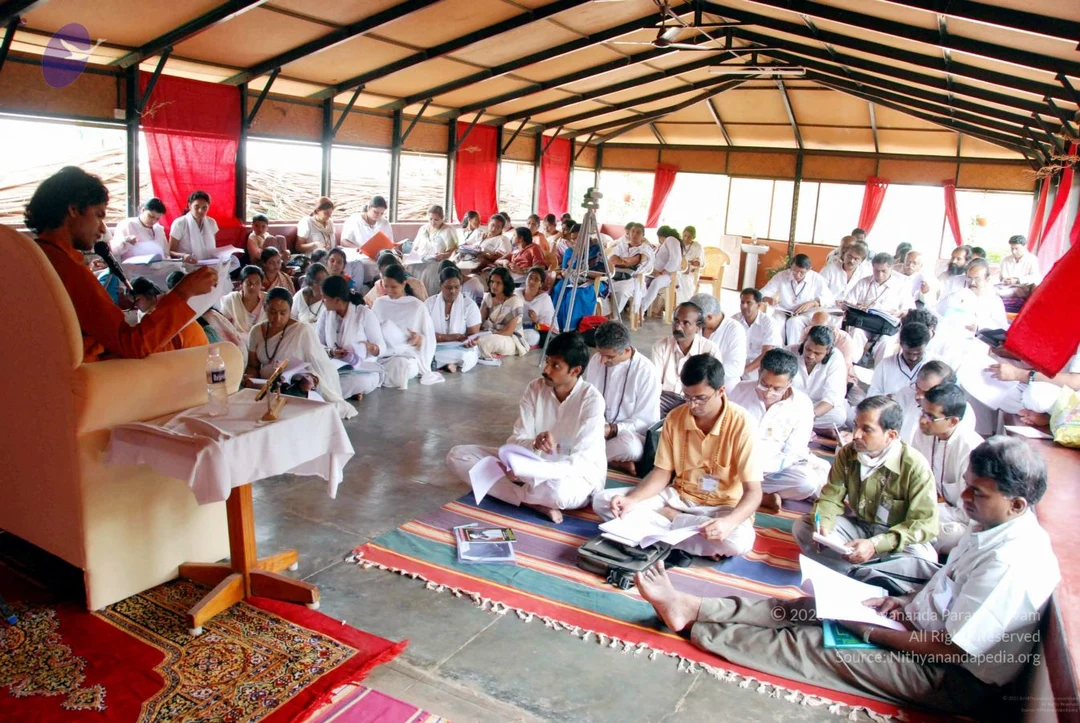
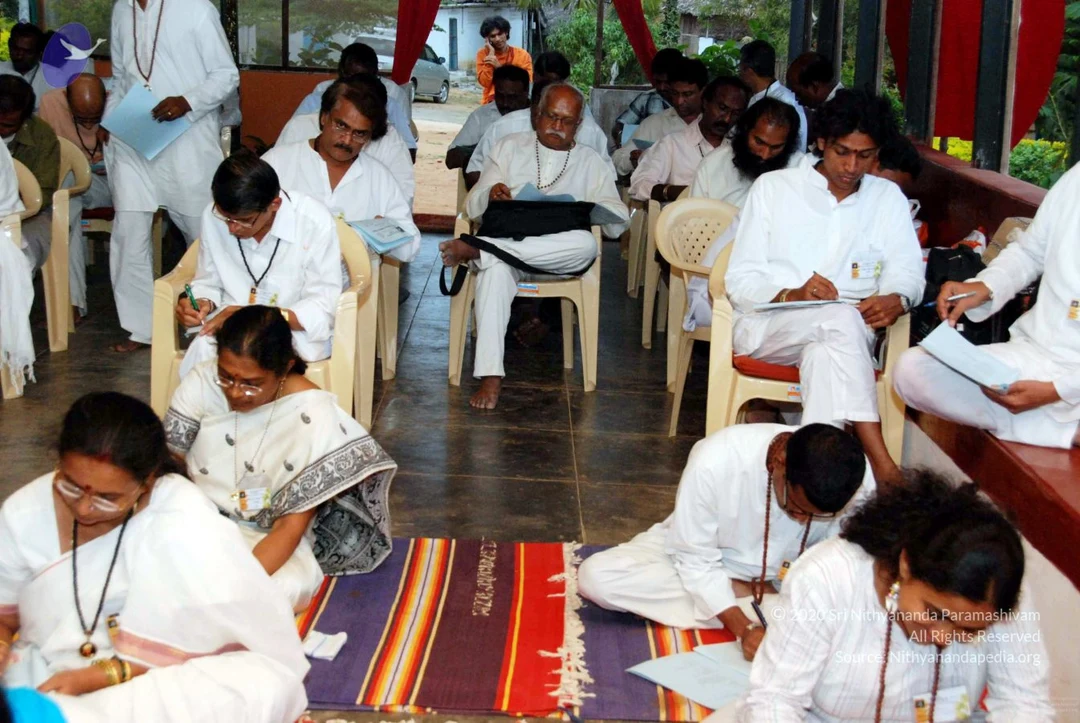
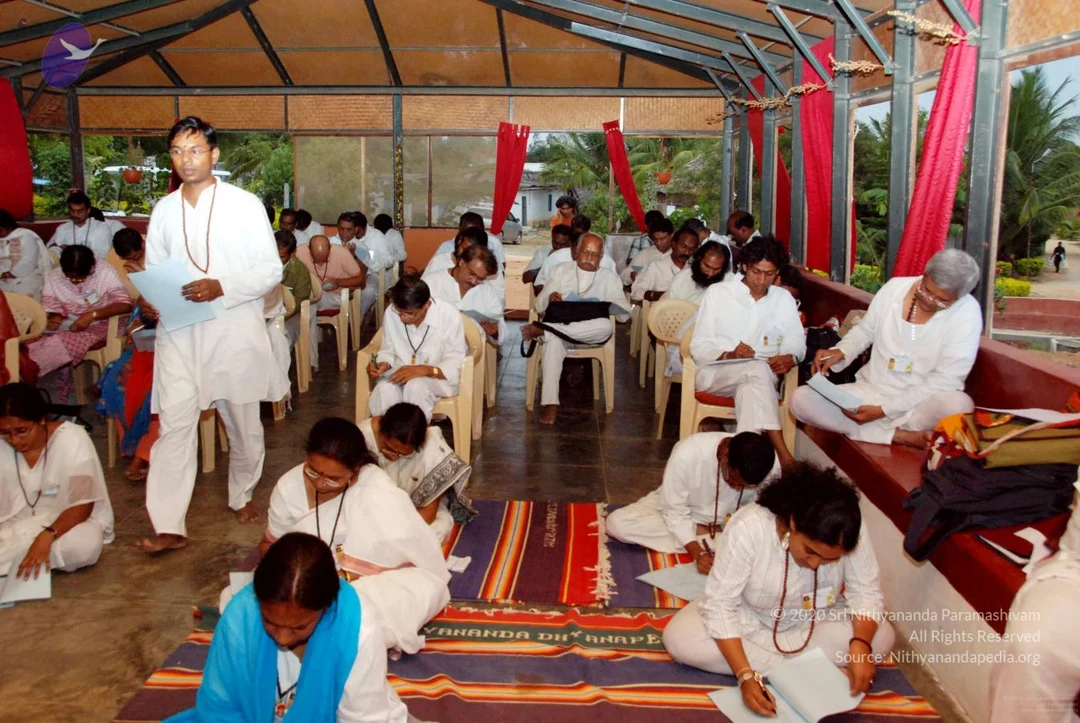
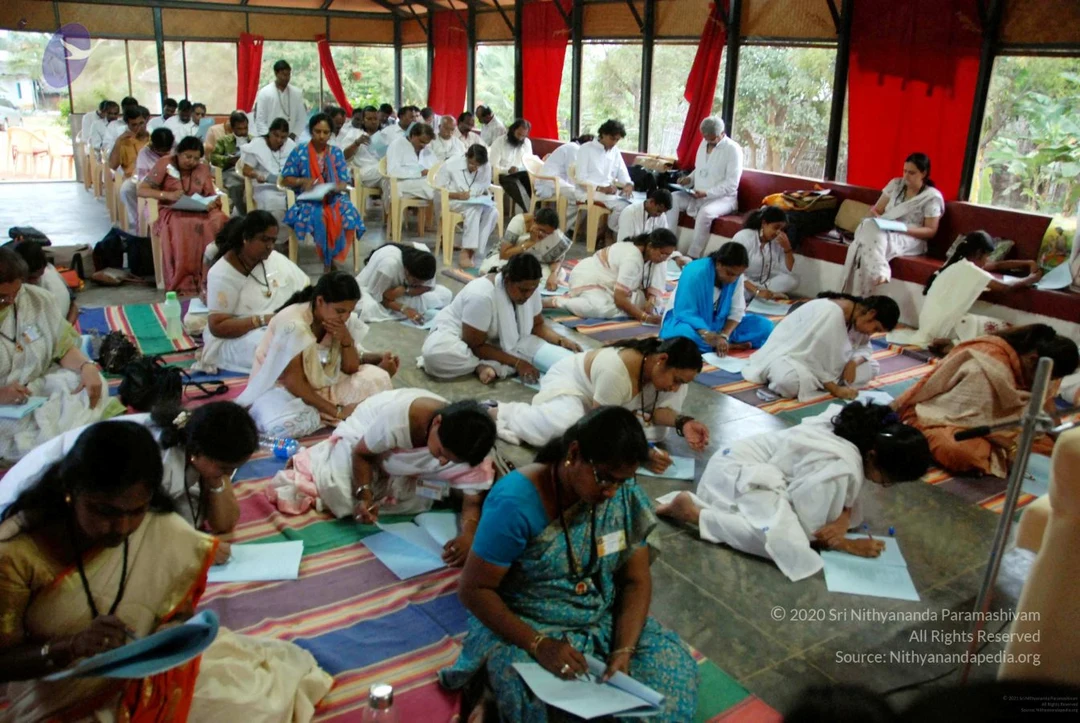
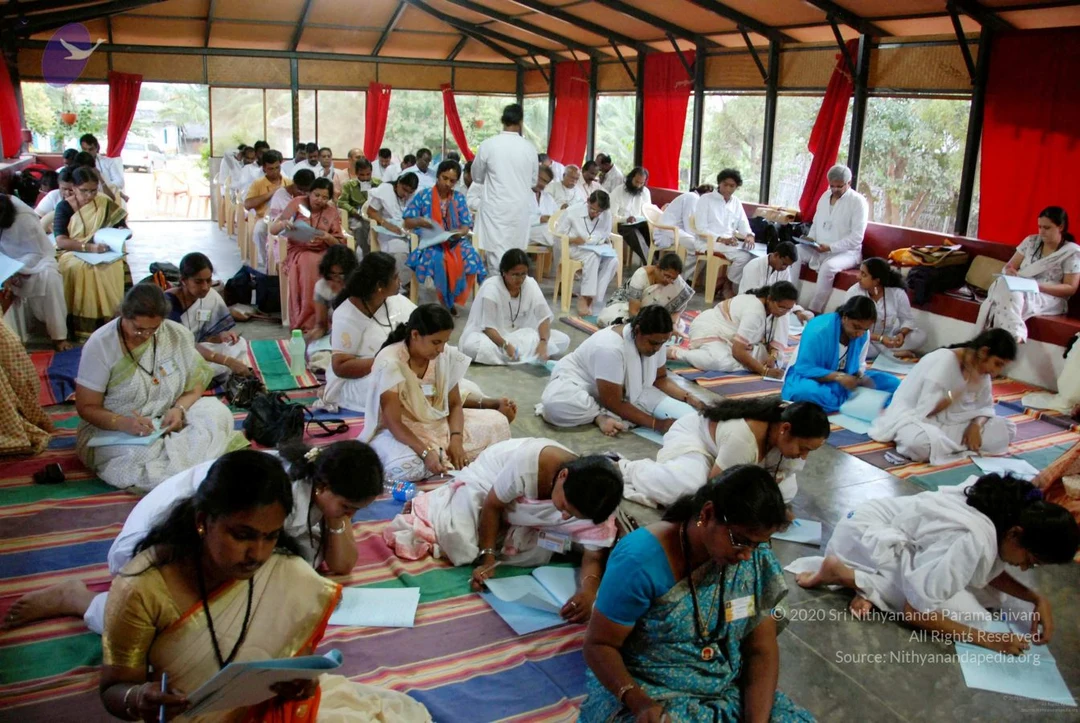
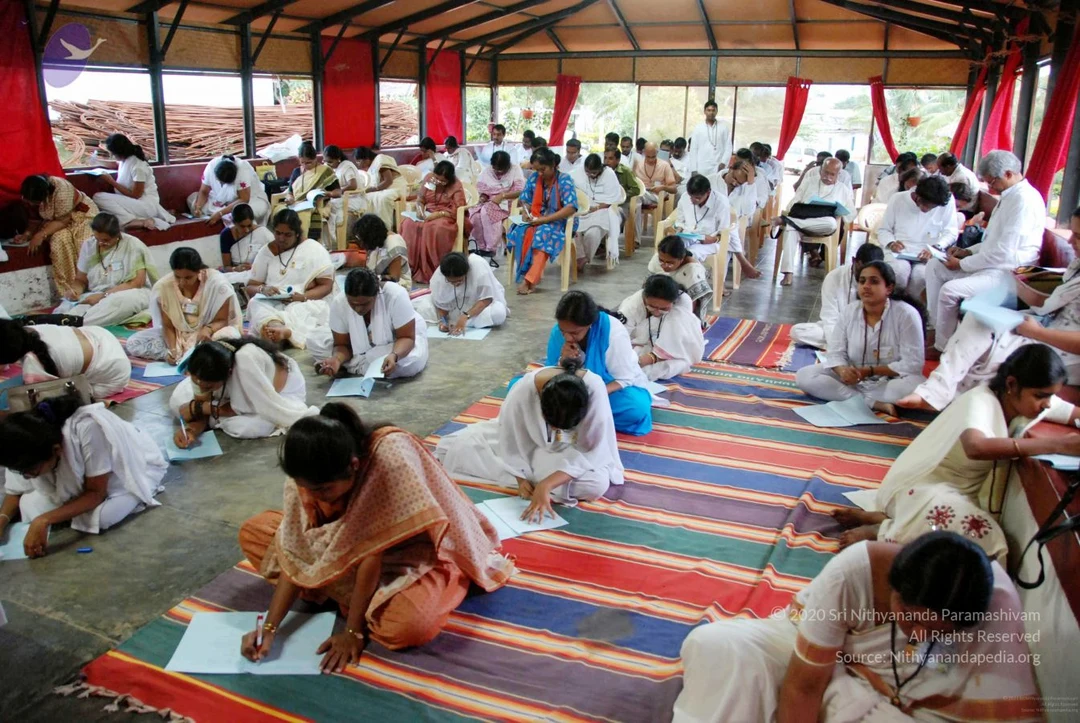
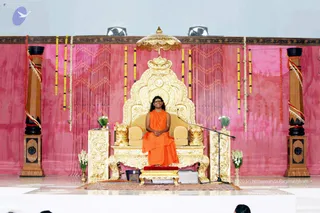
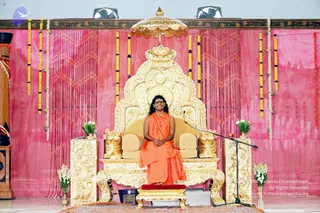
A wooden throne-like seat with a tall carved backrest painted bright yellow stands on a dirt road in a village. Behind it, thatched huts and palm trees line the lane. A man in a checked shirt and grey trousers stands facing away from the camera beside a man in white dhoti and shirt with an orange shawl over his shoulder, who is also facing away. A silver SUV is parked to the right with a passenger visible inside. A third figure in white stands further back near the thatched structures.A man seated on an ornate gilded throne with carved golden panels, dressed in saffron-orange robes and a rudraksha mala, with a red bindi and vibhuti on his forehead. His long dark hair is swept back, and he gestures with his right hand while speaking into a curved microphone on a stand. Small white flowers in brass vases and a red cushion flank him, with fruit such as apples on a side table. A pale wall and dark blue curtain form the backdrop. Appearance-based label: a person, seated and speaking as a discourse teacher.A photograph of a seated meeting or session in an open-sided hall with red curtains and plastic chairs. Many people dressed in white clothing sit writing or reading papers on clipboards and pads. In the foreground a woman in a white sari with a dark rudraksha mala writes on paper, and a man in a white dhoti and white shirt sits cross-legged on a striped woven mat, writing. Behind them a man with a white shirt, white dhoti and a rudraksha mala sits in a chair, and a bearded man in white also writes. Another man in a white shirt and white dhoti sits on a plastic chair with a dark bag across his lap. A person in an orange top stands in the background near the doorway. Several participants wear name badges on lanyards.

December 20 2009

Original wiki page

Photos from this day

View all 703 photos

Sarvadarshan
57 photosSource gallery
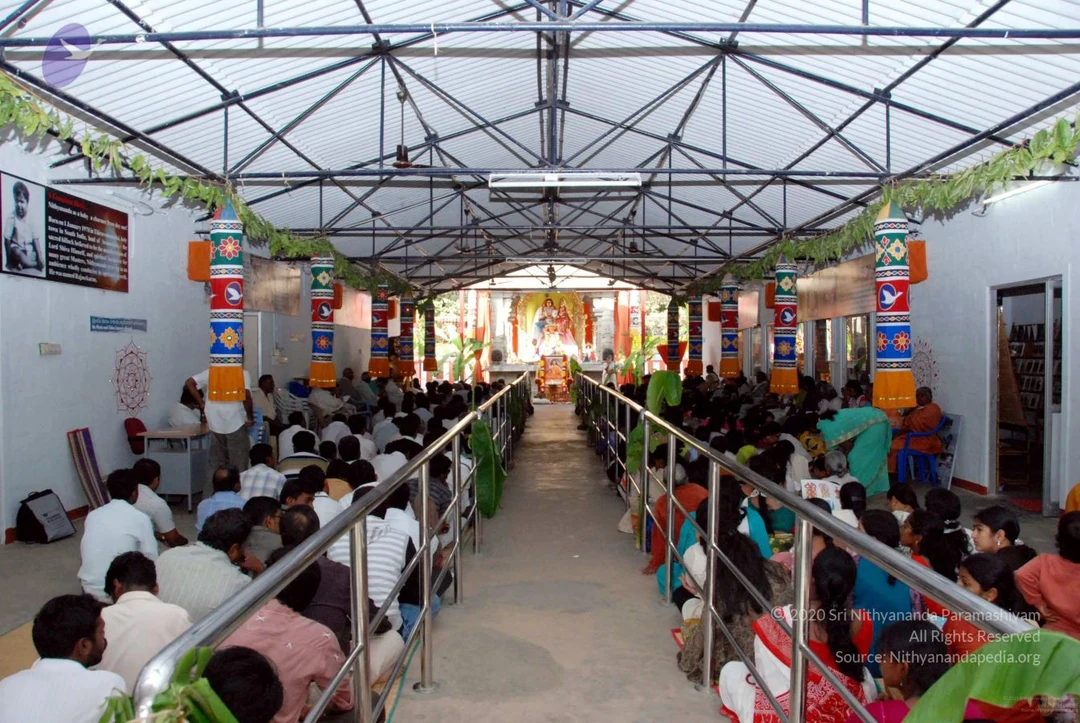
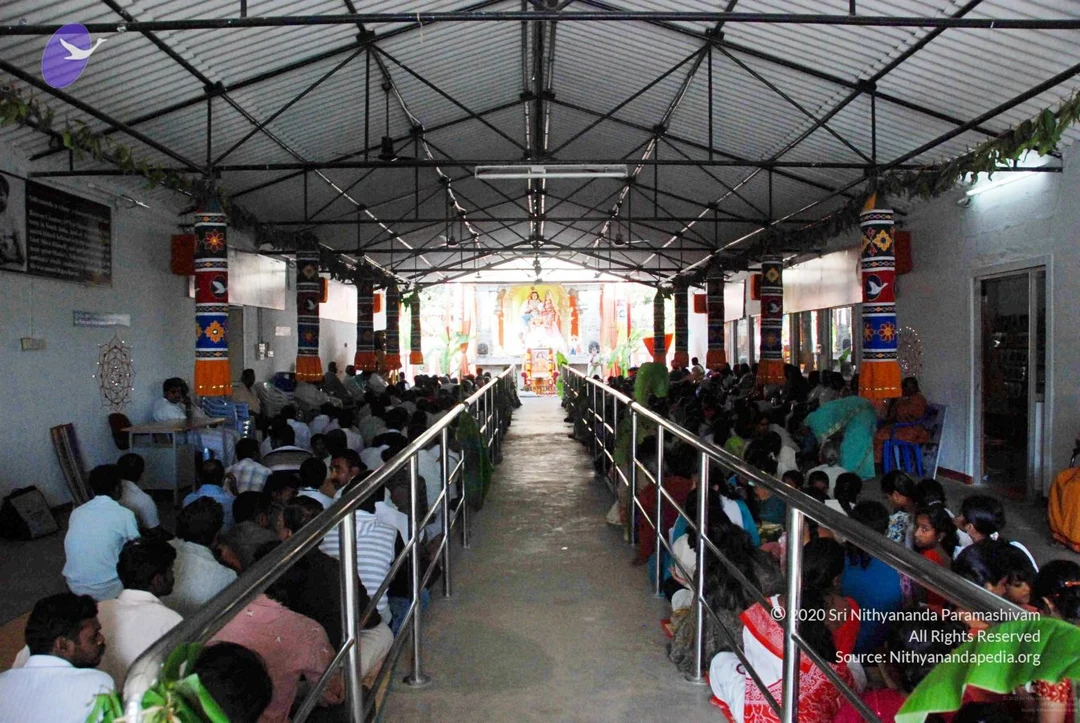
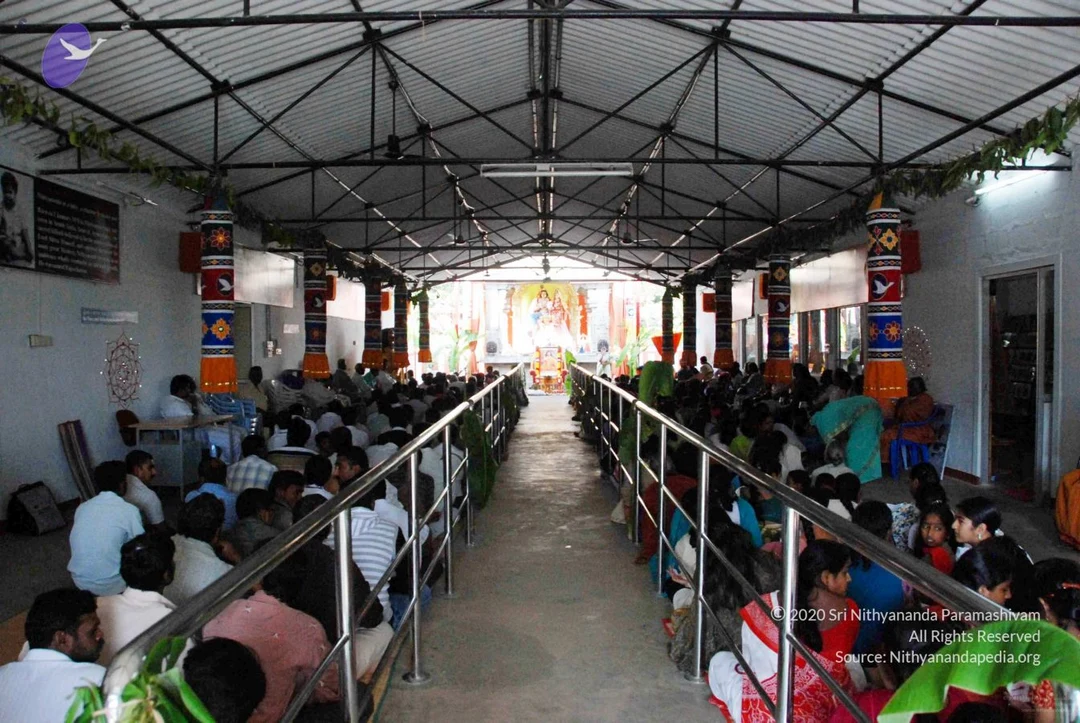
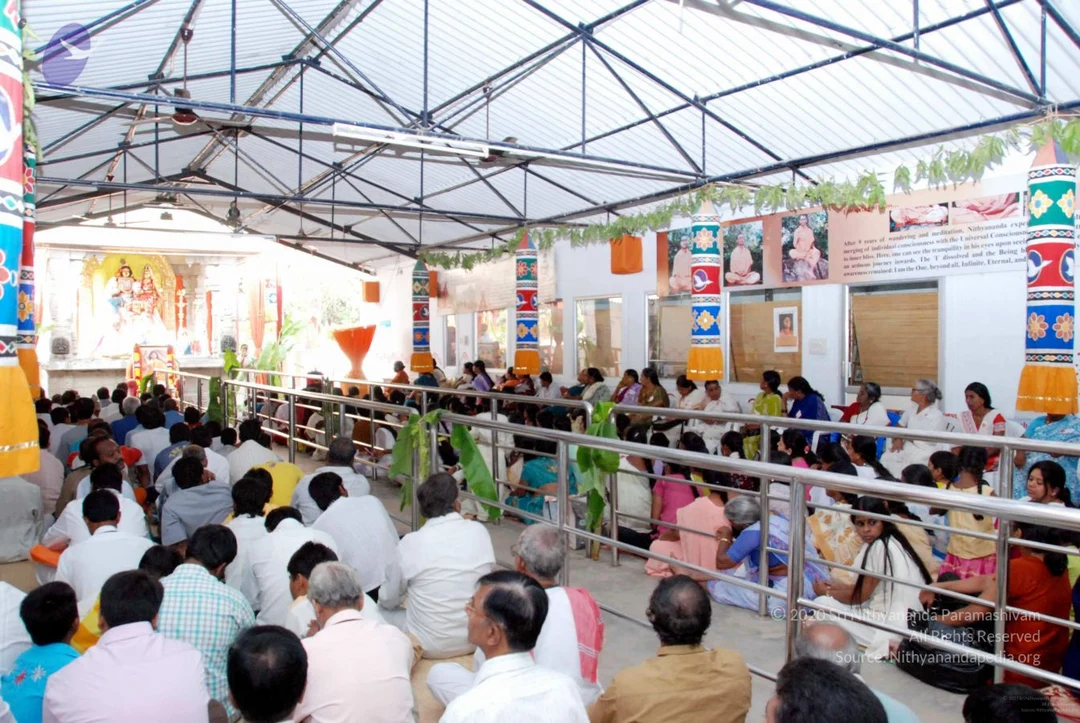
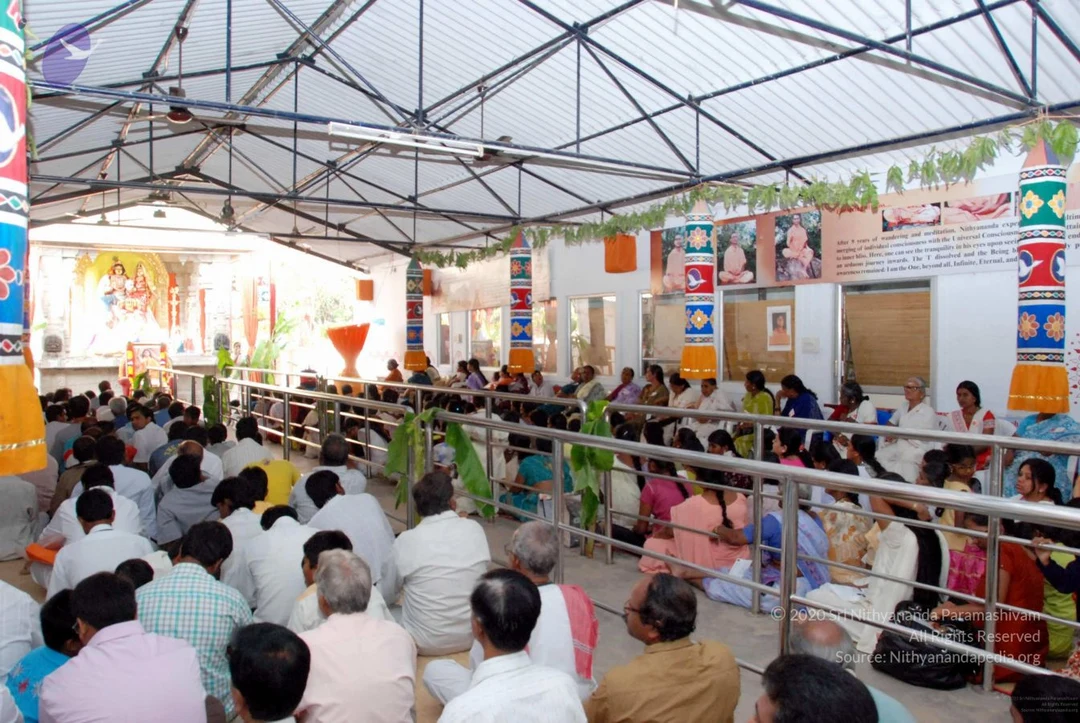
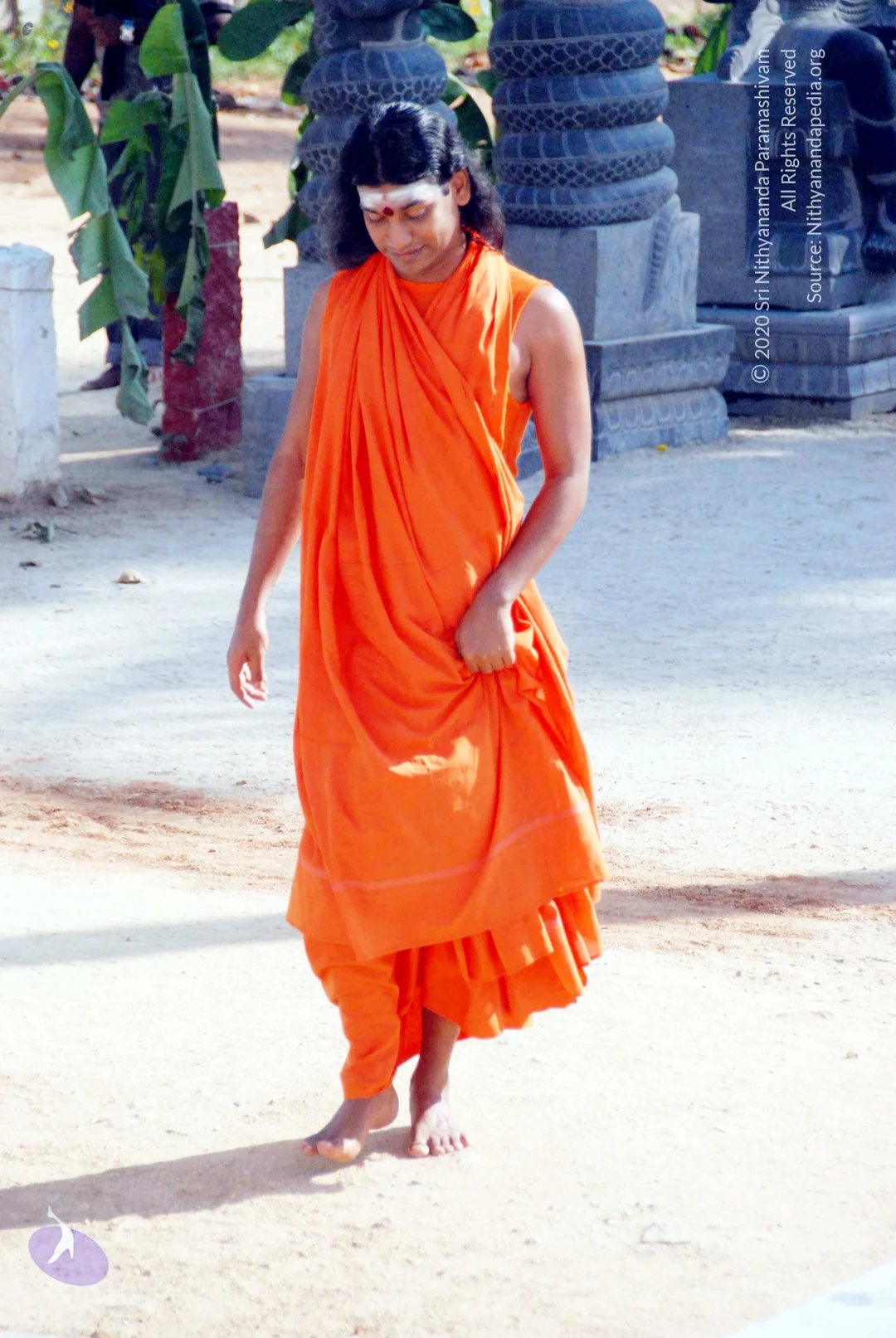
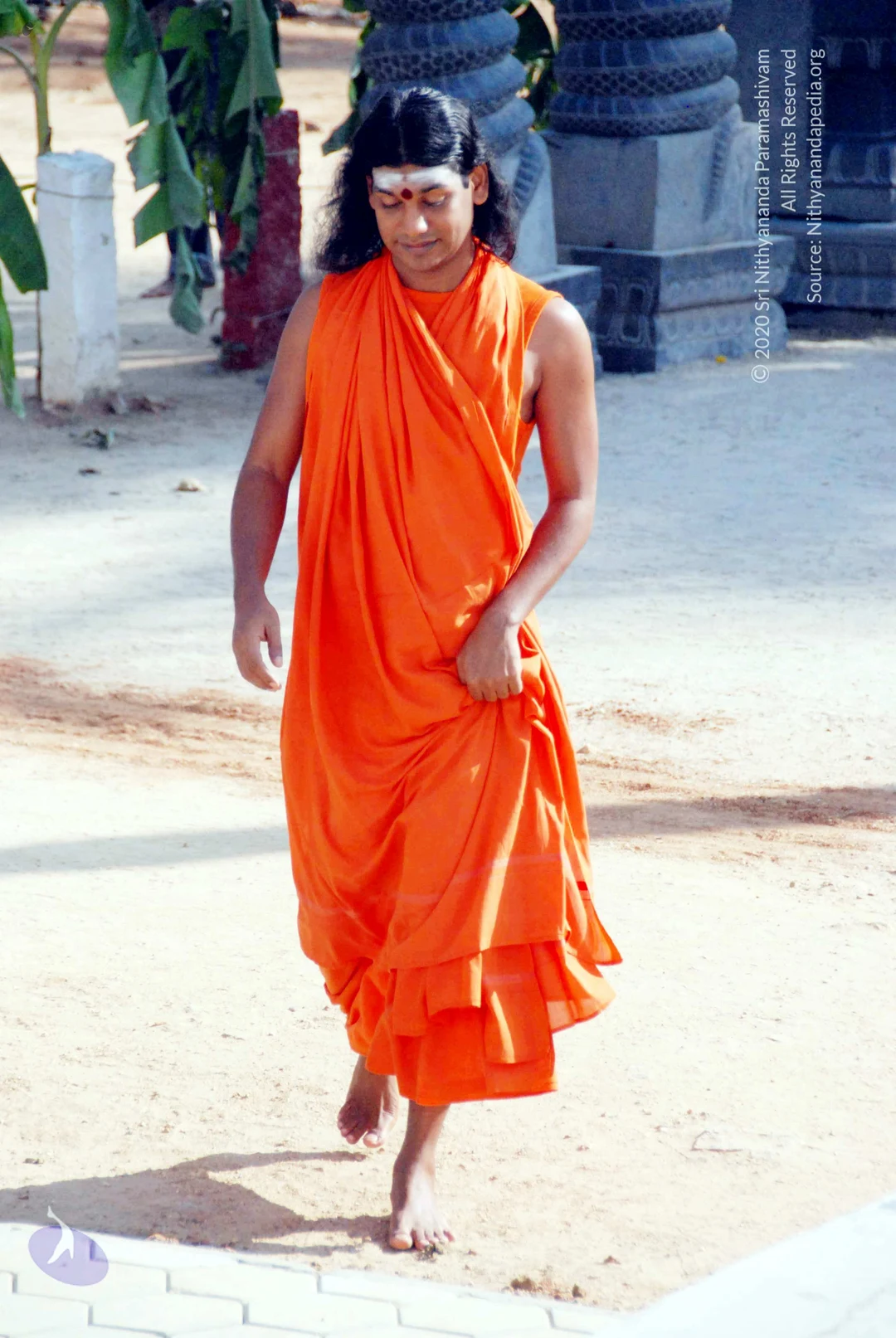
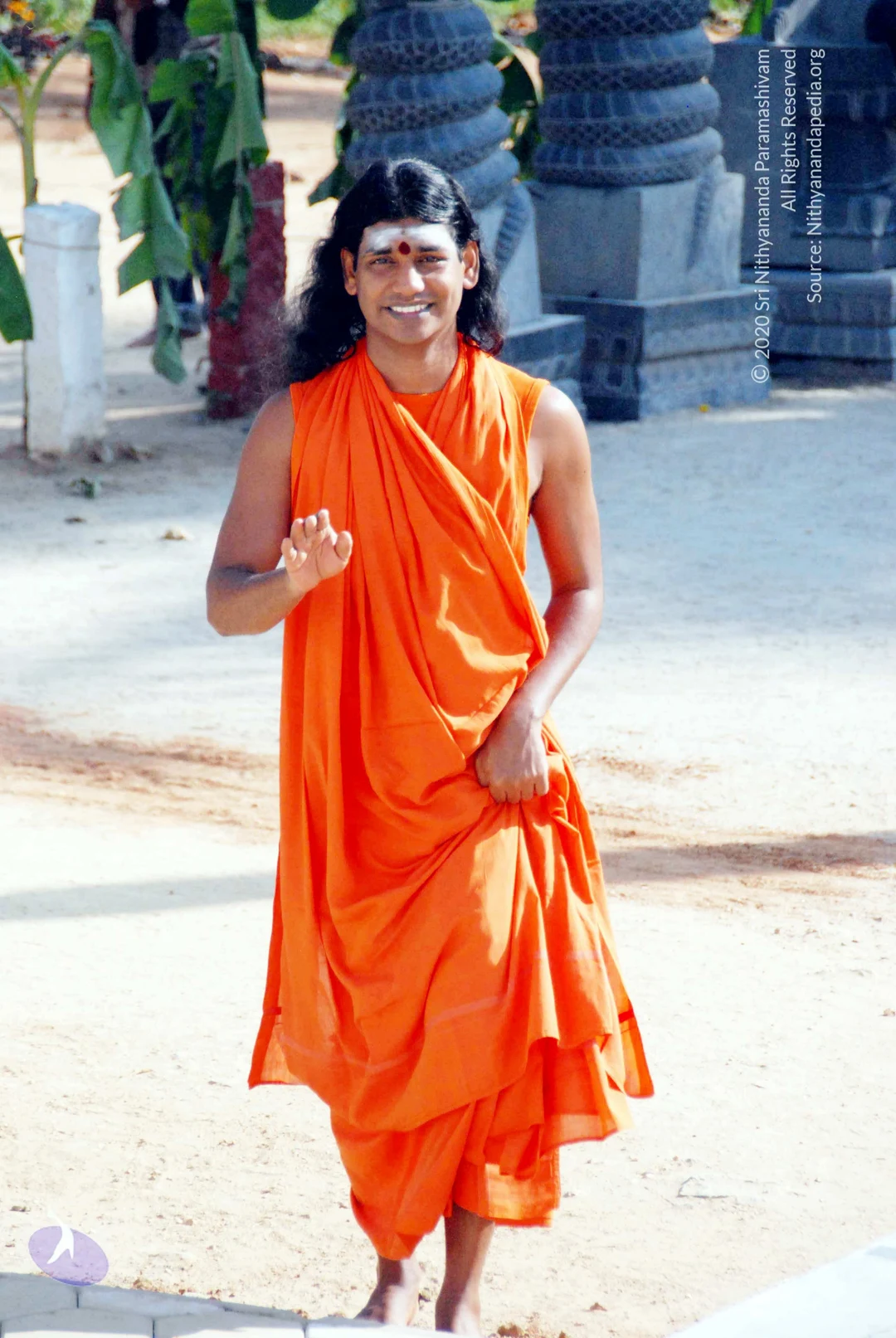
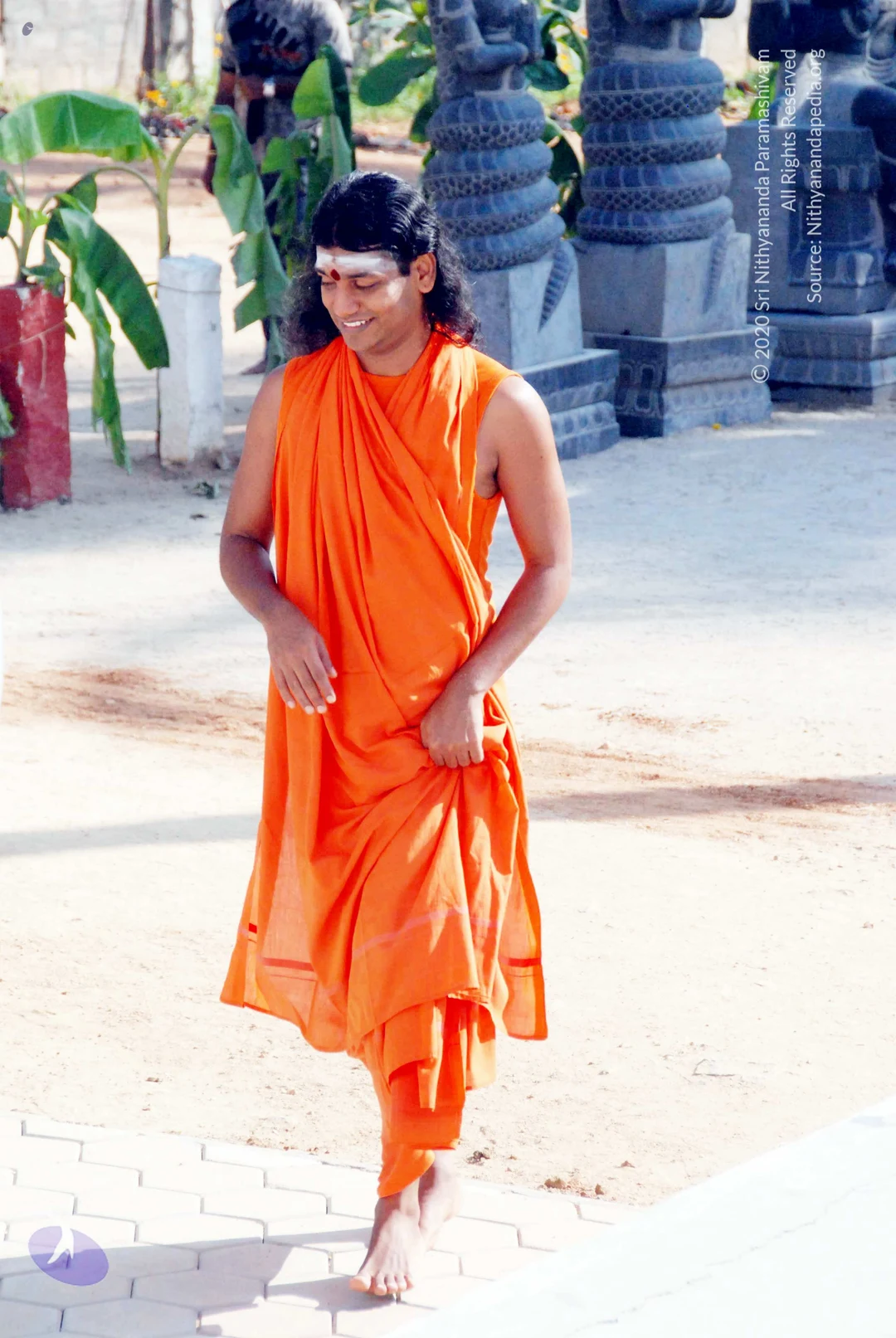
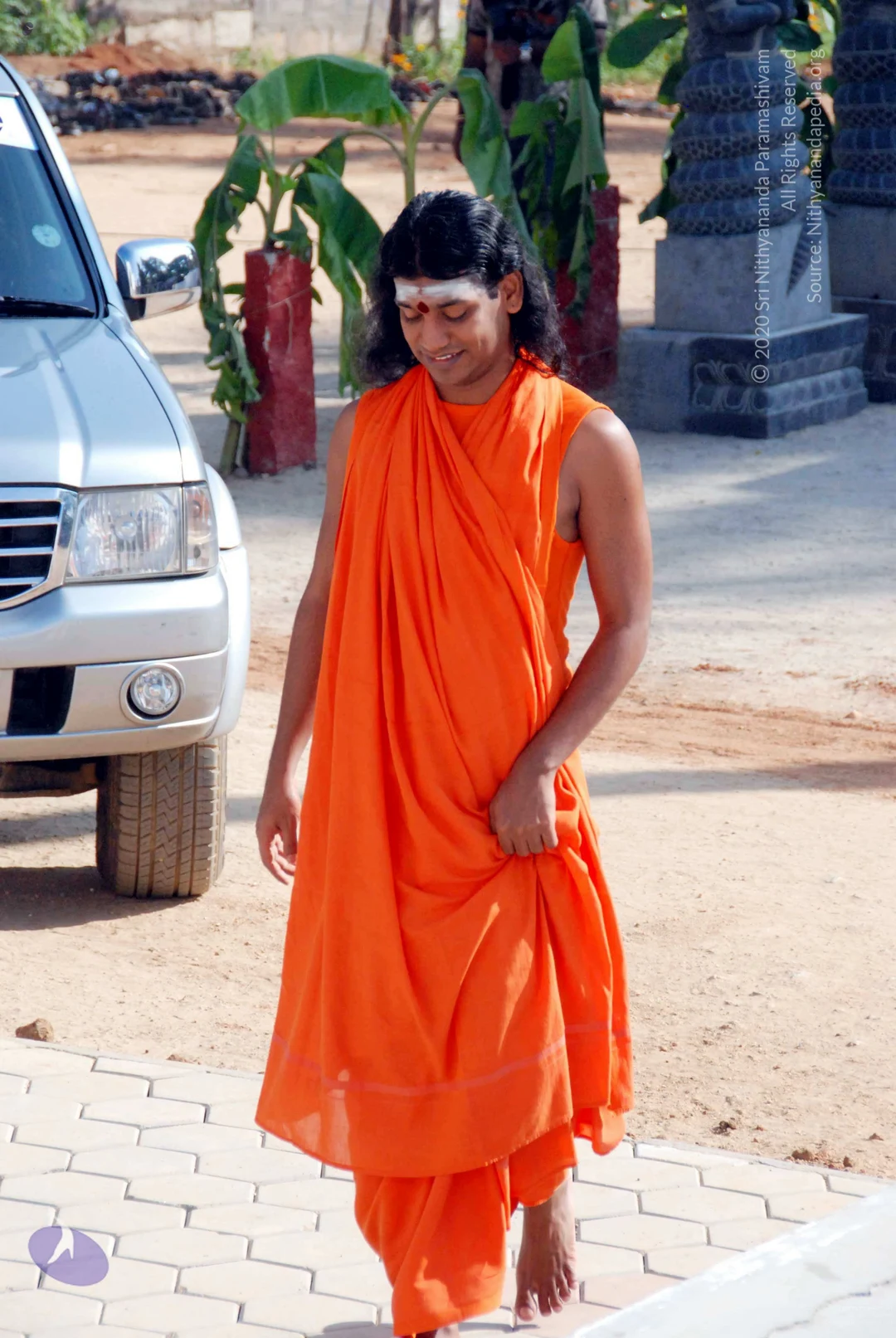
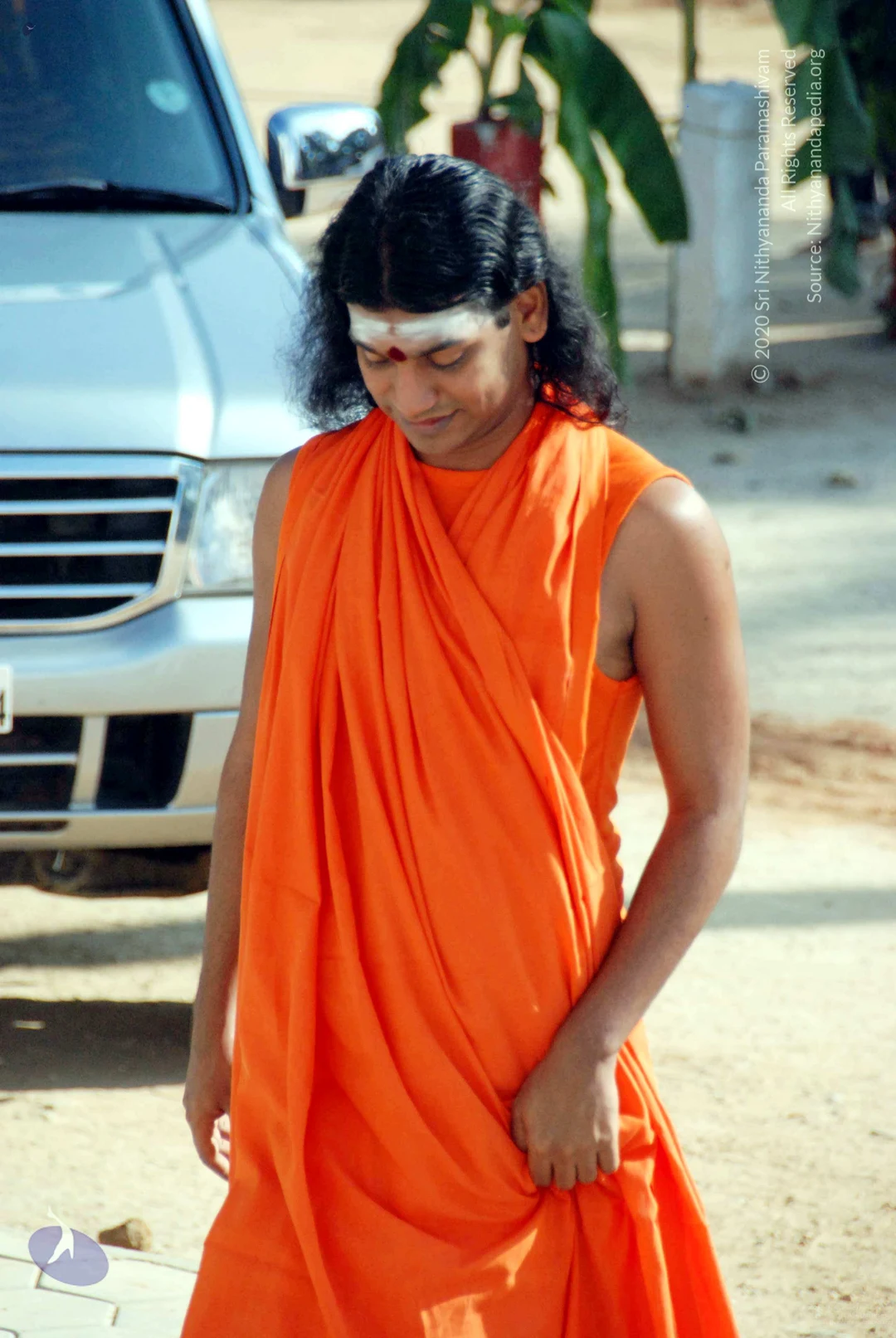
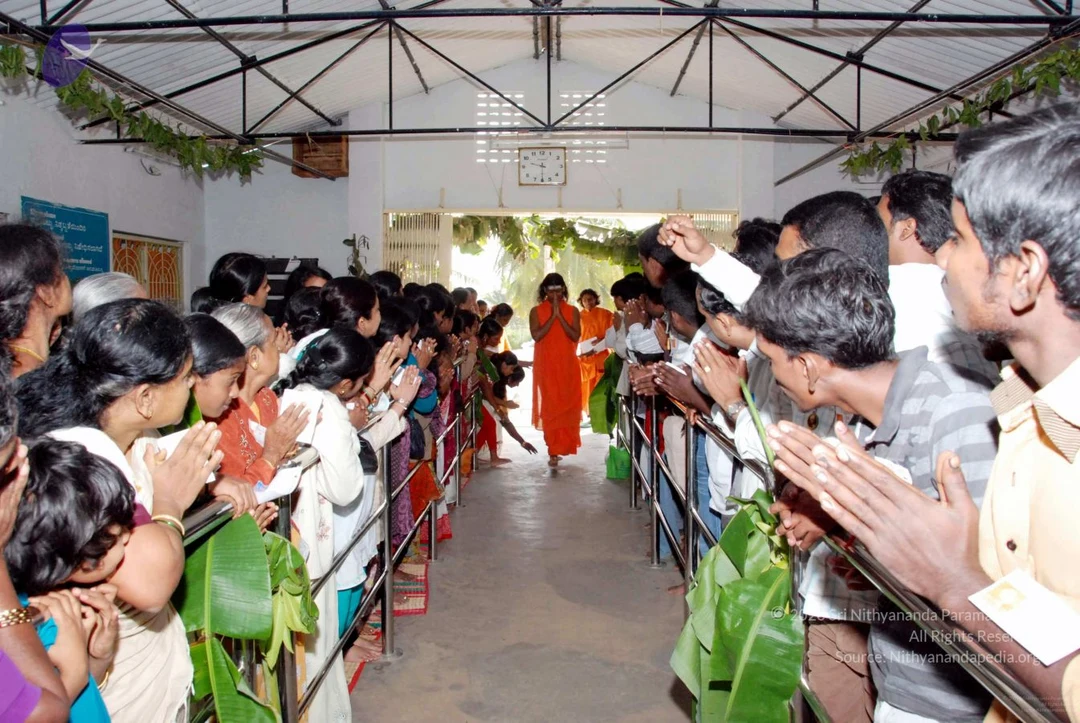
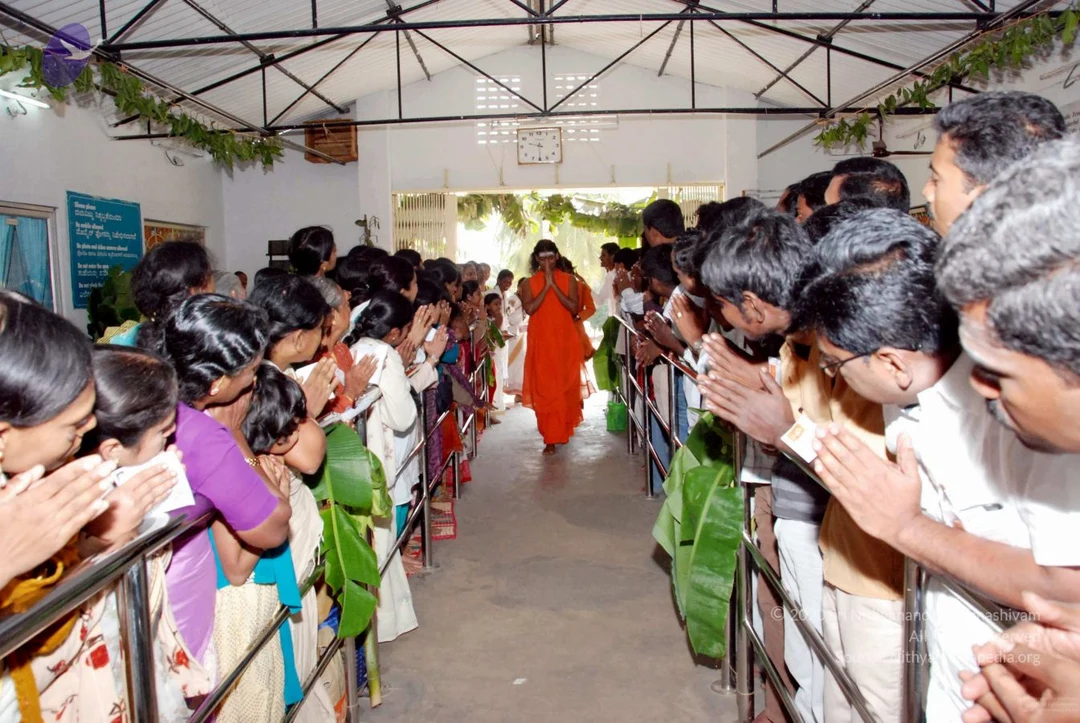
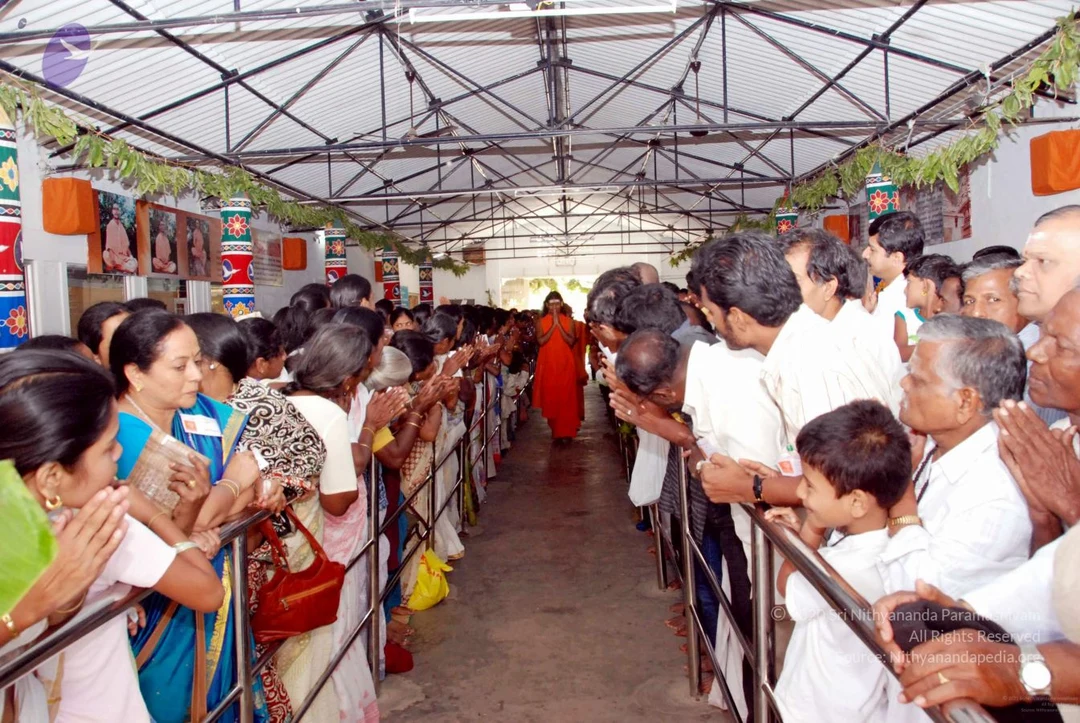
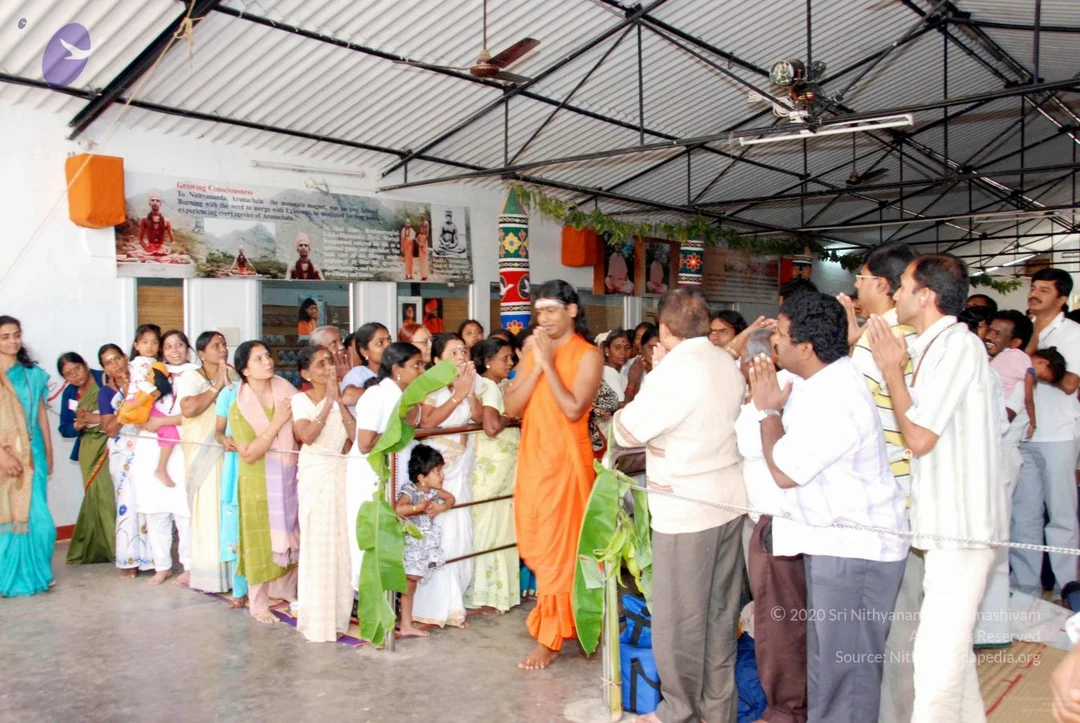
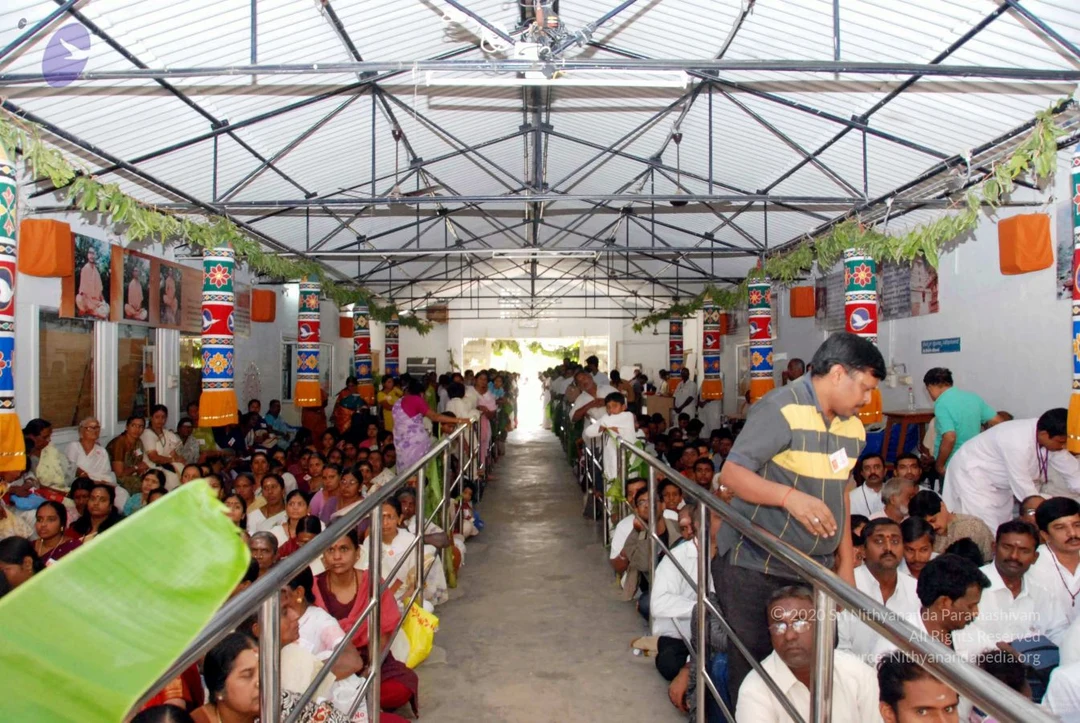
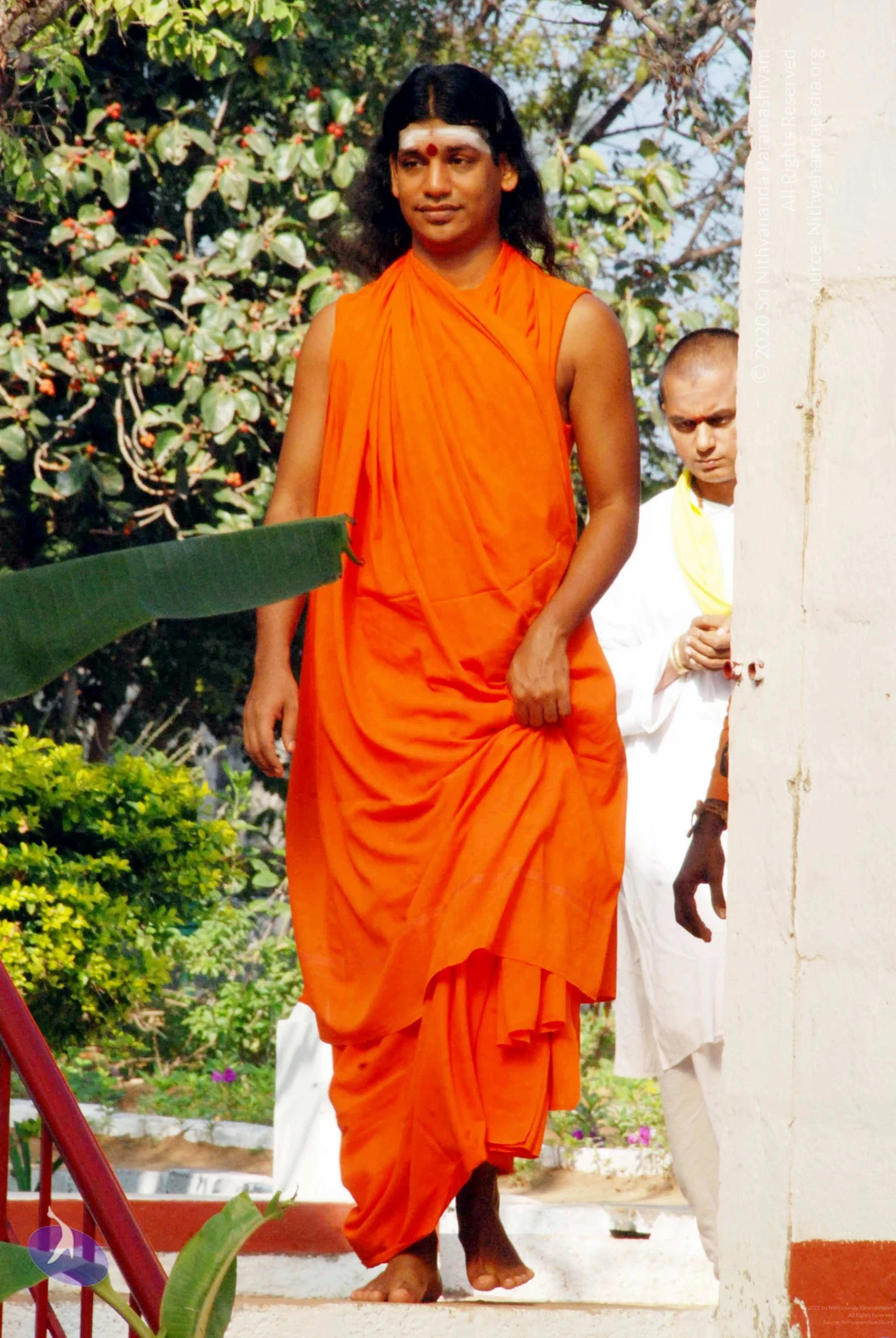
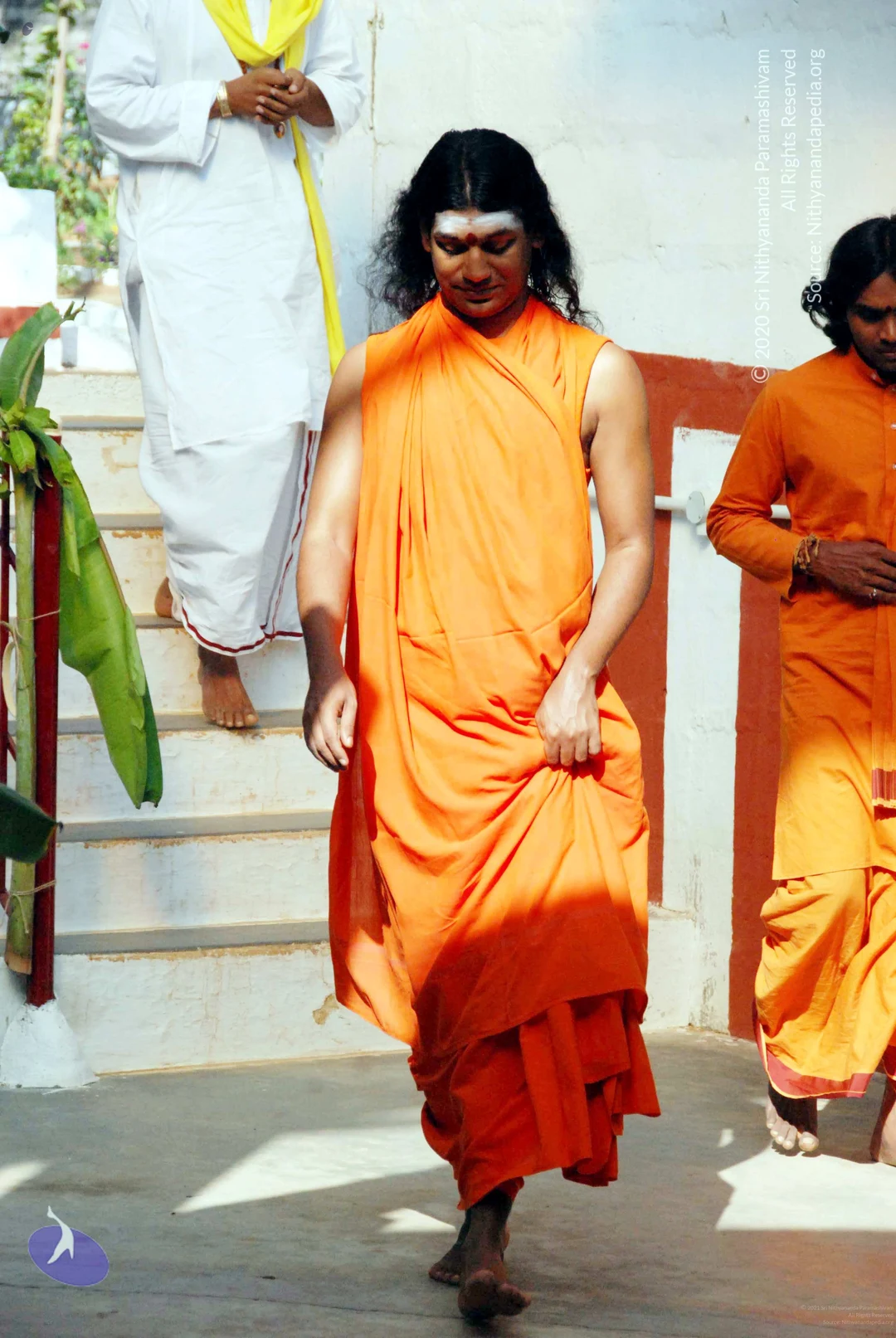
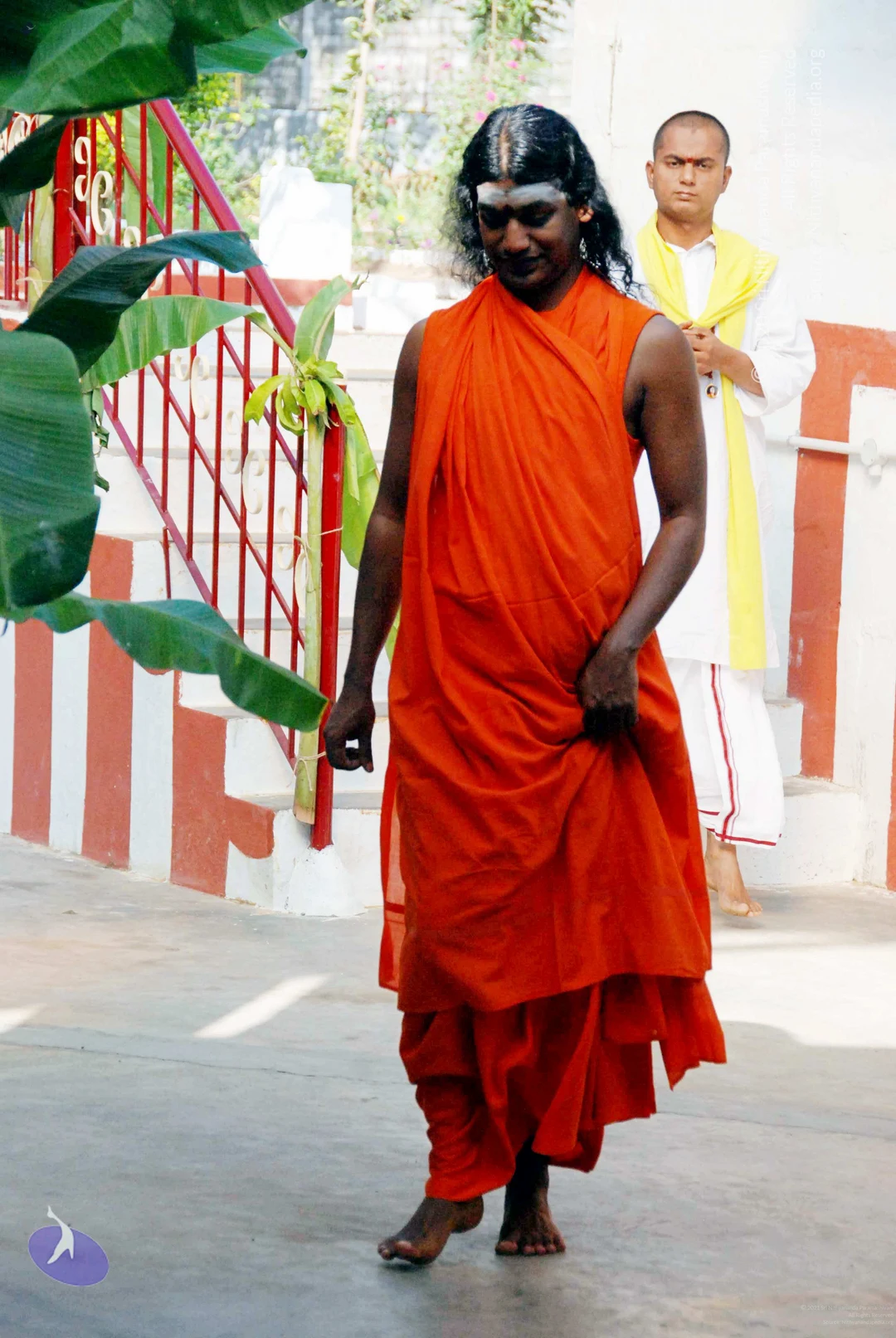
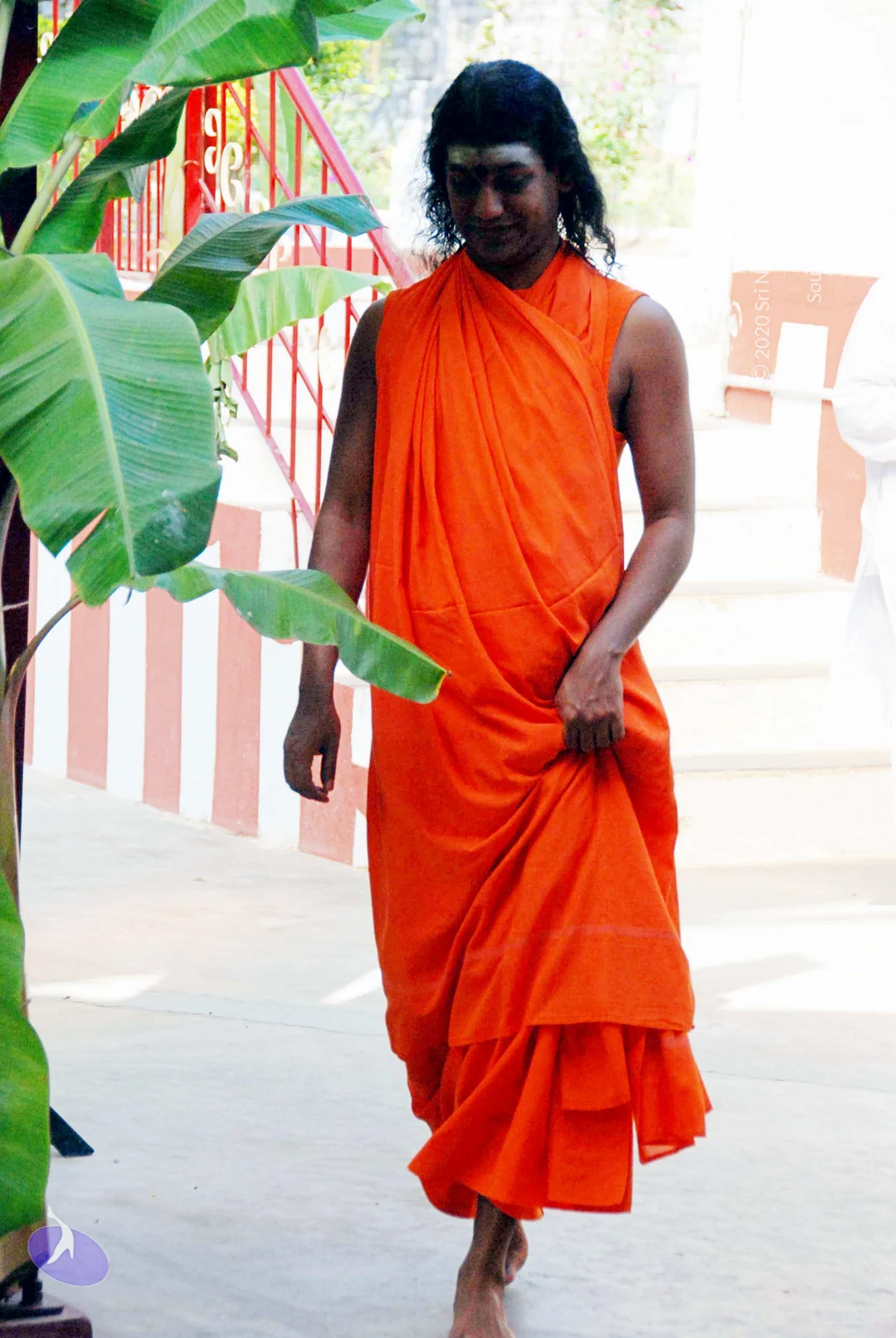
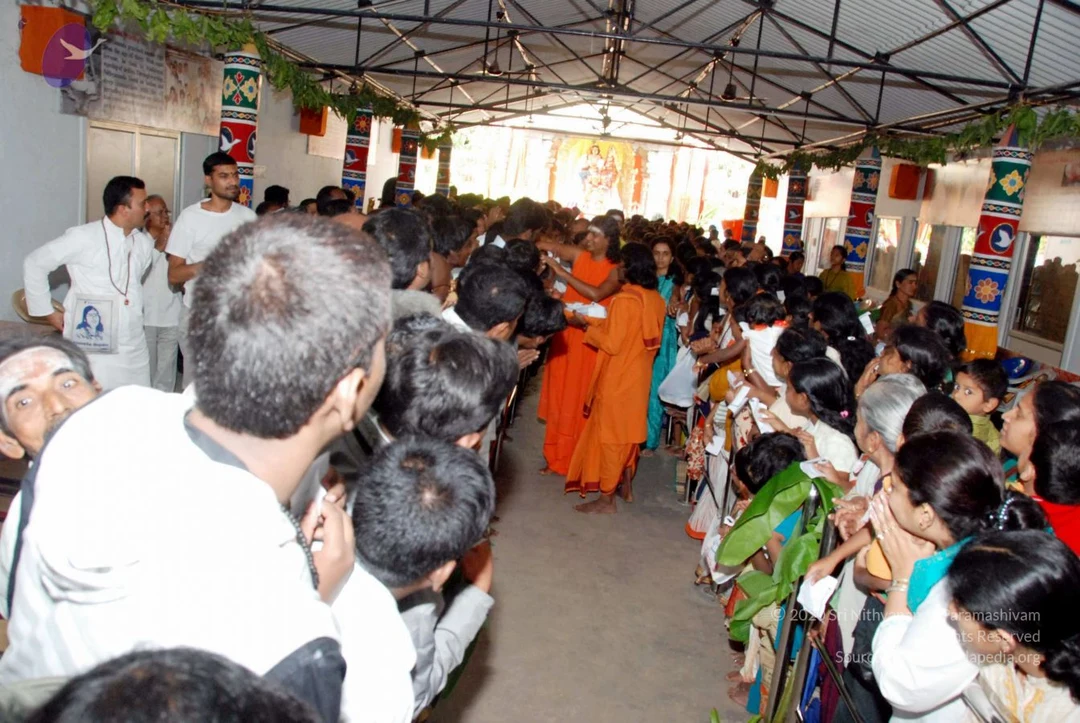
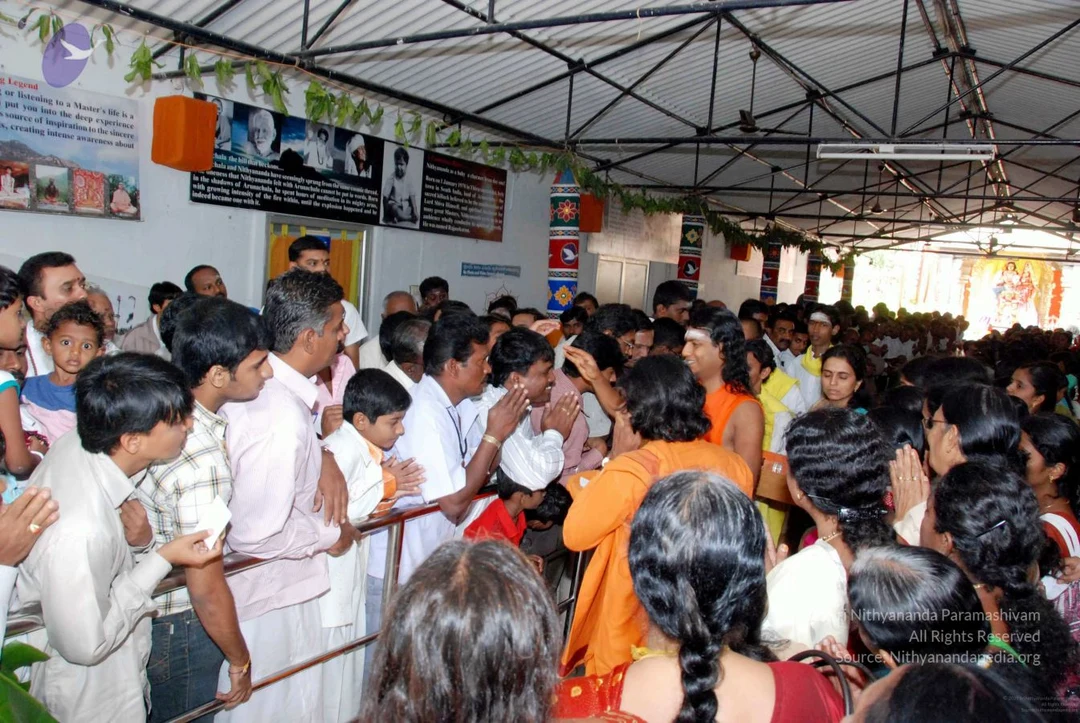
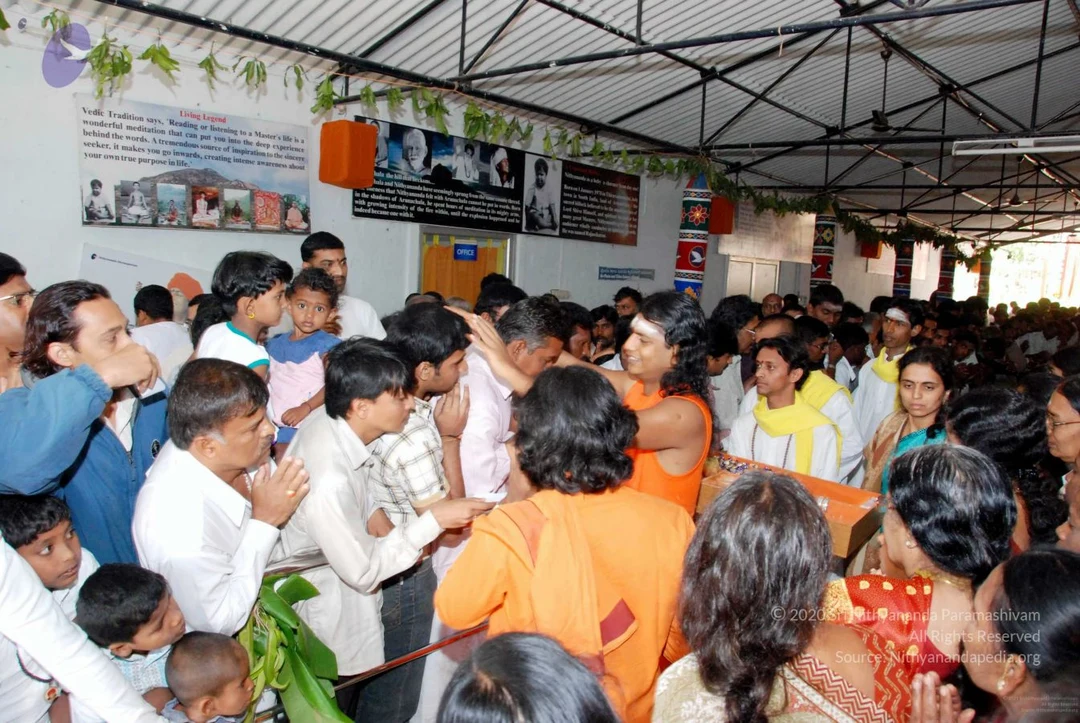
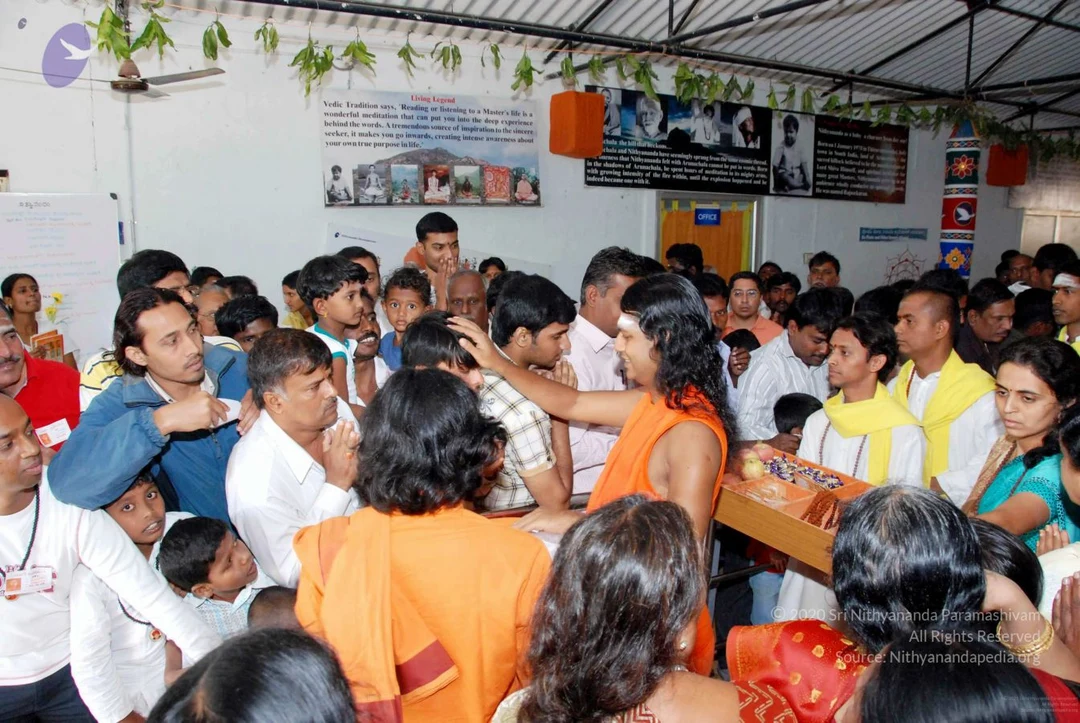
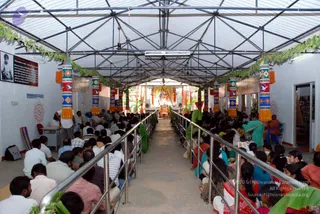
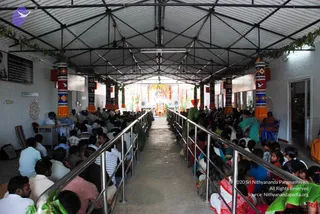
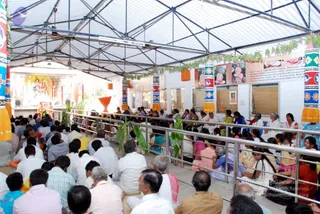
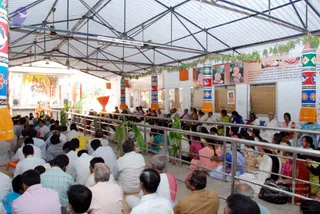
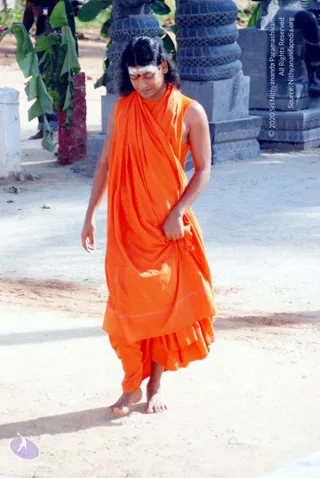
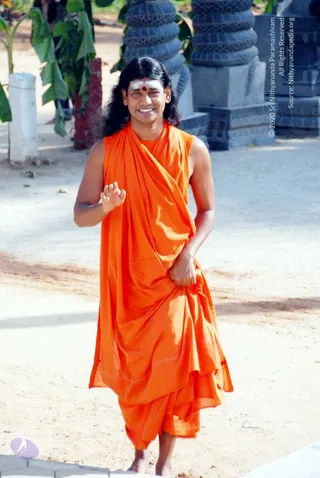
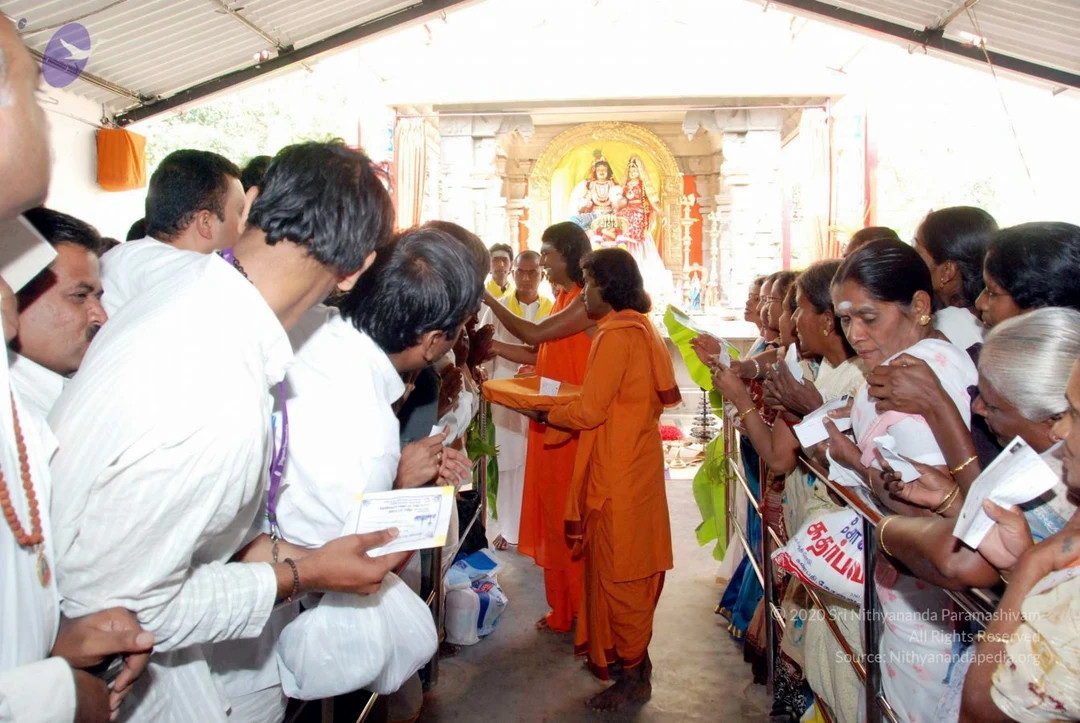
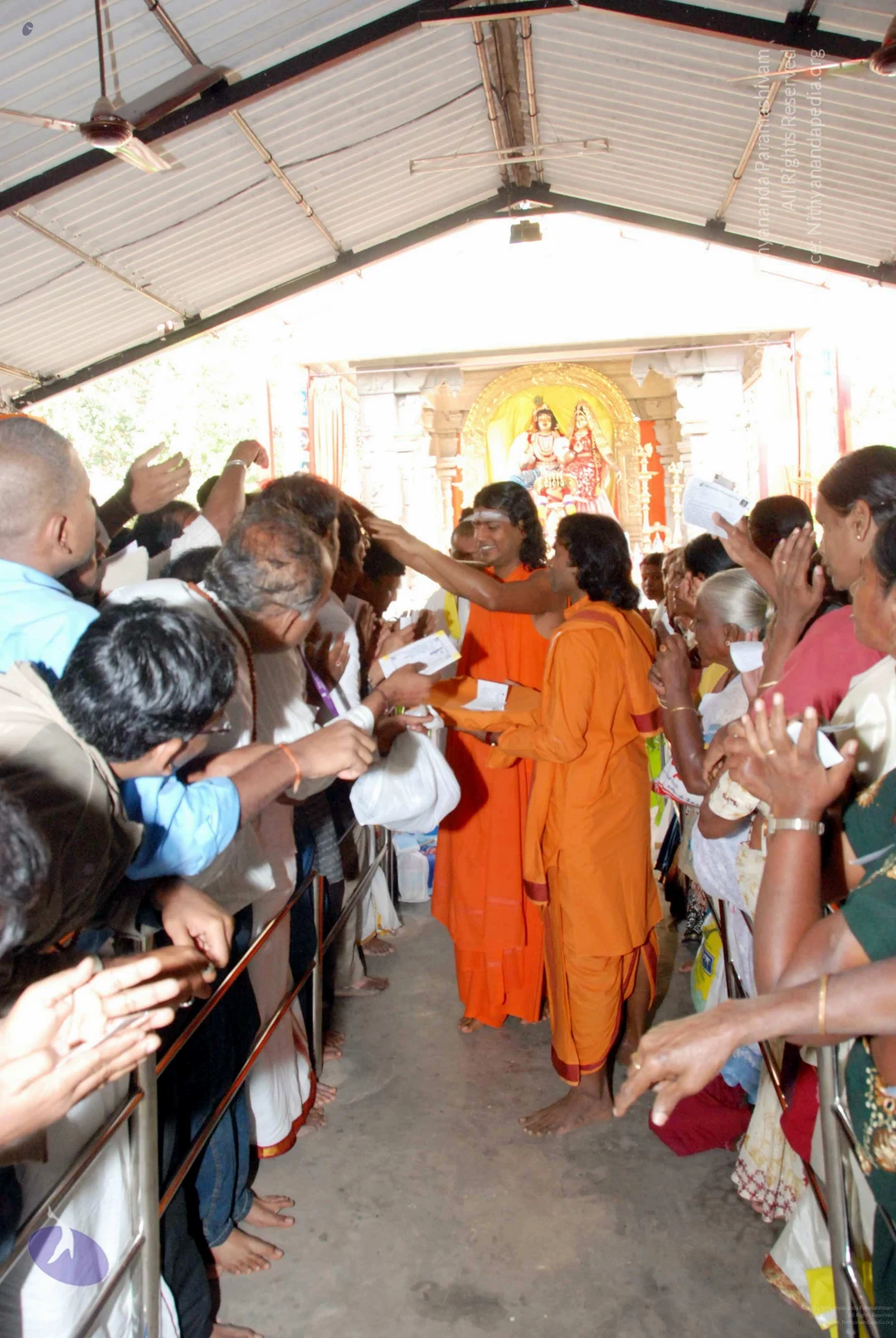
Interior of a covered hall with a translucent roof and steel trusses, decorated with green leaf garlands along the beams. Rows of seated devotees, mostly men in white shirts on the left and women in saris in teal, orange and red on the right, face a central shrine lit with warm light and garlanded deity murti. Tall pillars are painted with colourful geometric patterns, and a framed portrait with text hangs on the left wall. A steel railing divides the central aisle.A photograph of a large open-sided hall with a corrugated metal roof, decorated with green leaf garlands and tall pillars wrapped in colourful patterned cloth. Rows of seated devotees fill the floor on both sides of a central aisle, many wearing white, and women in saris of red, teal and pink sit at the right. At the far end a deity murti and framed devotional picture are set against a backdrop of red and orange draping, with a small altar in front. At the left a man in white sits at a table near a wall display. Many seated people are visible, with the nearest rows partly cropped.Wide view of a covered open-sided hall with a corrugated roof and metal framing, filled with seated devotees on the floor in rows facing a shrine at the left. Men in white and pastel shirts sit in the foreground, while women in colourful saris, some in white and pink, sit in the right section behind a metal railing. Tall pillars wrapped in bright multicoloured patterned fabric line the hall, with green leafy garlands strung along the top. At the left, an altar displays a deity murti set before decorated backdrops and lit lamps, and a large orange ceremonial pot stands near the railing. Framed photographs and text panels hang on the back wall behind the seated crowd.A seated congregation fills an open-sided hall under a translucent corrugated roof with metal ceiling fans and strip lights. Devotees sit in rows on the floor behind a steel railing, men on the left in white shirts and dhotis and women on the right in saris and salwar kameez in pink, green, blue and yellow. Tall cylindrical pillars wrapped in colourful patterned fabric stand along the sides, with garlands of green leaves strung across the top. On the left, a shrine holds a deity murti in a lit alcove, and a large orange kalasha-like vessel sits near the front. On the back wall, framed photographs and a printed text panel are displayed. Several devotees in white sit at the front right beside the railing.A barefoot man in saffron-orange robes walks across a sandy open ground, gathering his wrap in one hand. He has long dark hair, a white forehead marking with a red dot, and his gaze is lowered. Behind him stand stacked black tyre-shaped stone pillars, a dark stone sculpture and a red painted post, with leafy banana plants at the left edge. The image is a candid photograph, and the page's a person flag is not visually confirmed beyond the robed figure's appearance, so the identity is left uncertain.A smiling man with long, swept-back dark hair walks barefoot on sandy ground, wearing a sleeveless saffron-orange robe draped over one shoulder and wrapped around the waist, with a white forehead marking and red bindi. His right hand is raised in a gesture of greeting while the left holds the robe. Behind him stand stacked black tyre-like pillars and a banana plant, with a white pillar at left. A vertical Source , which is excluded from the text field
PaadaPooja
37 photosSource gallery
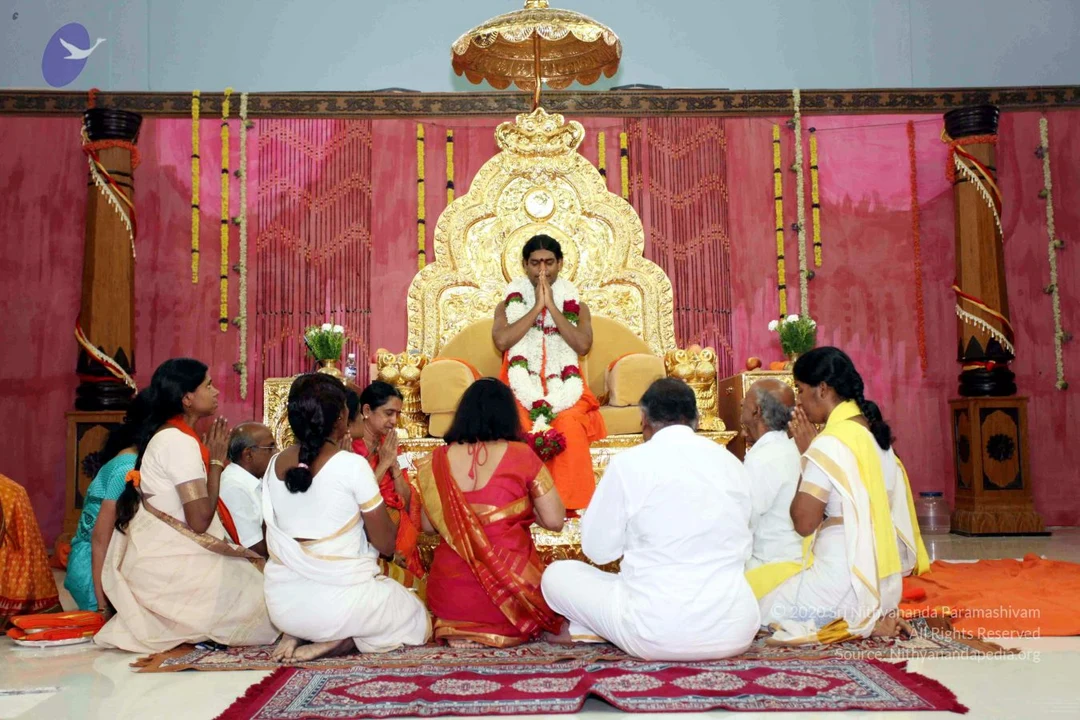
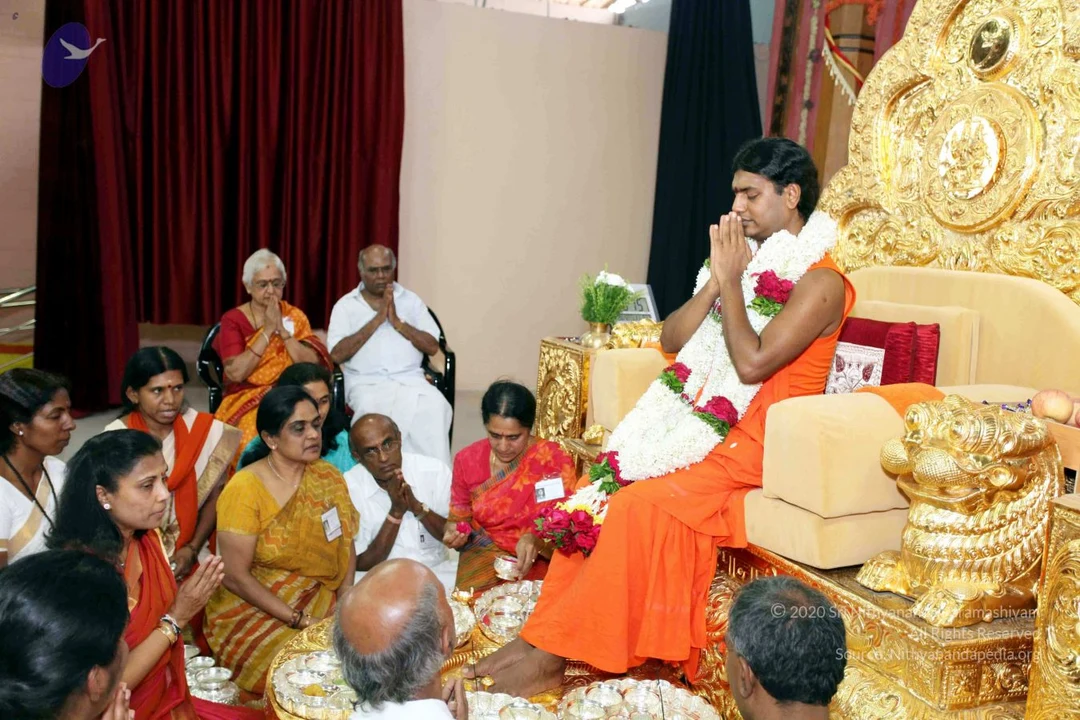
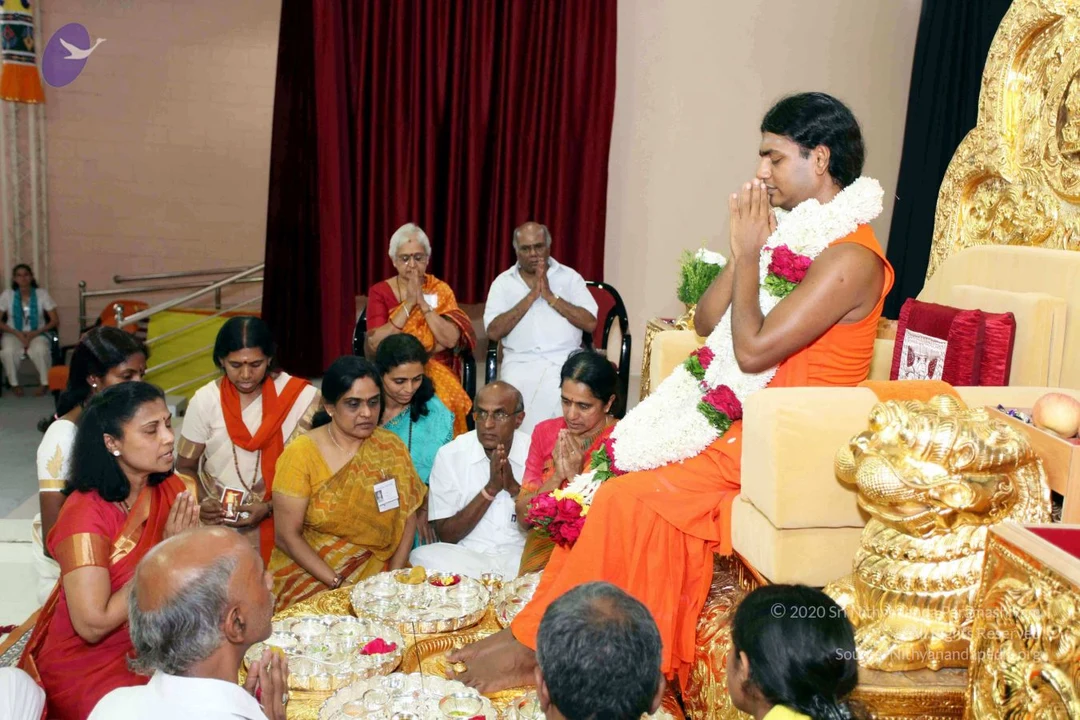
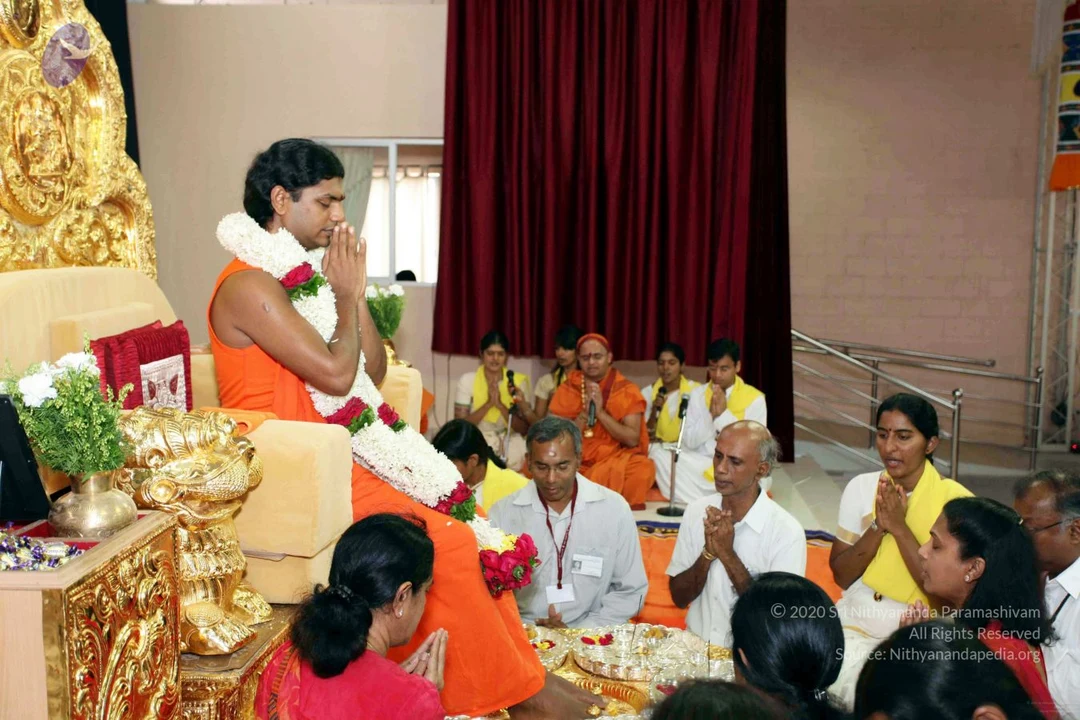
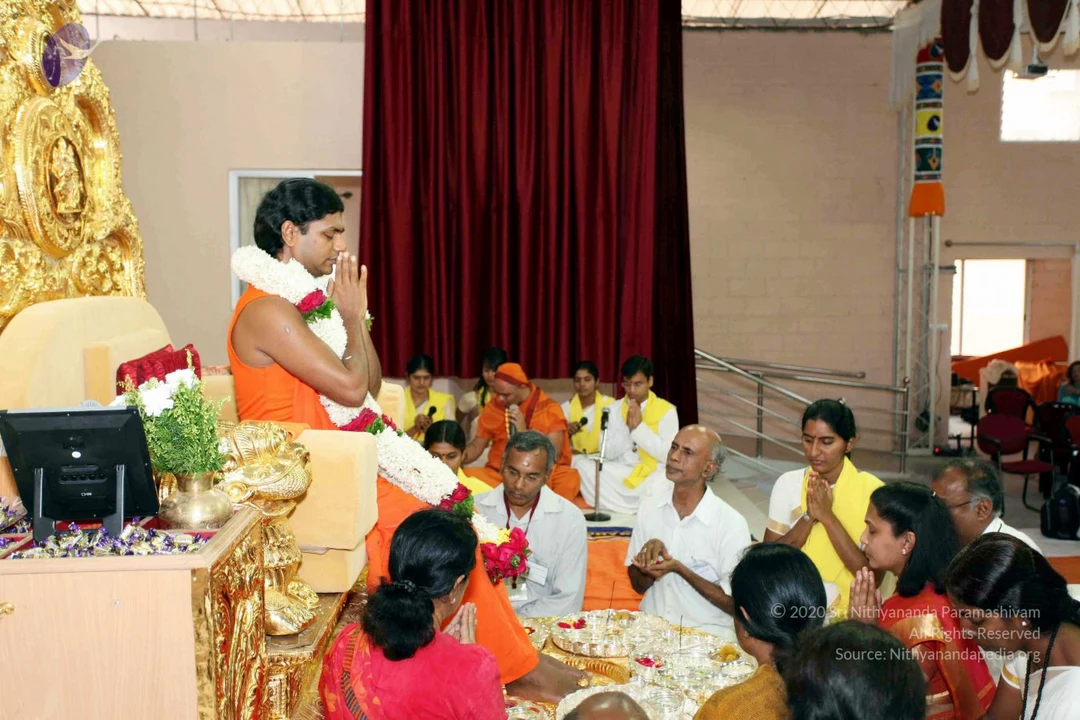
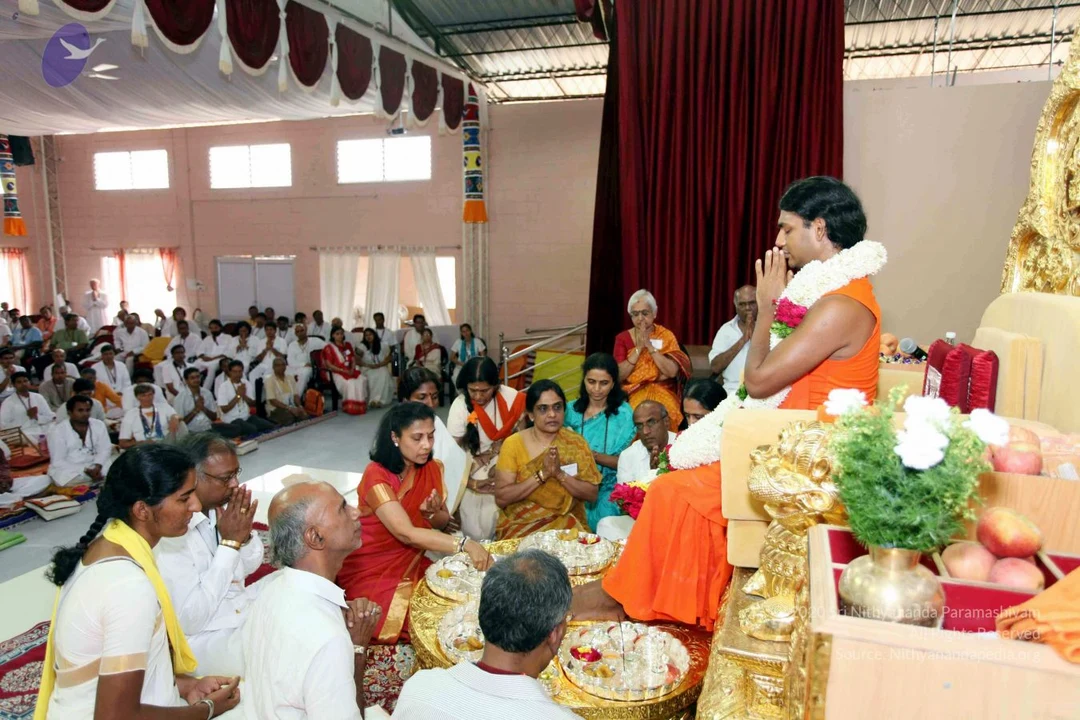
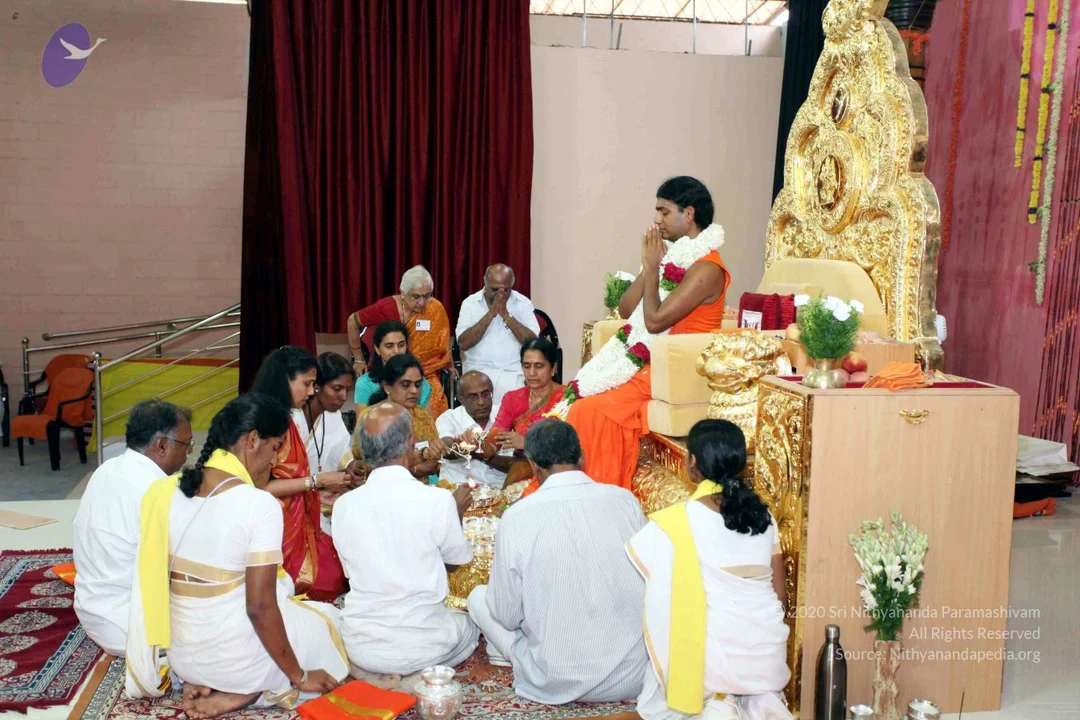
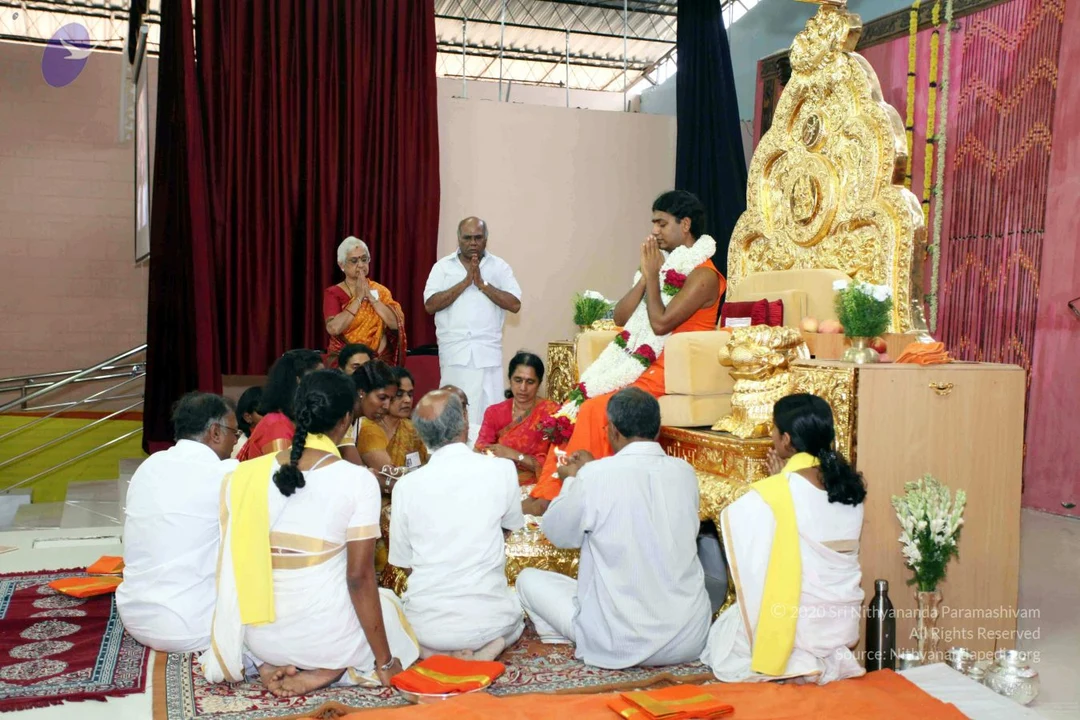
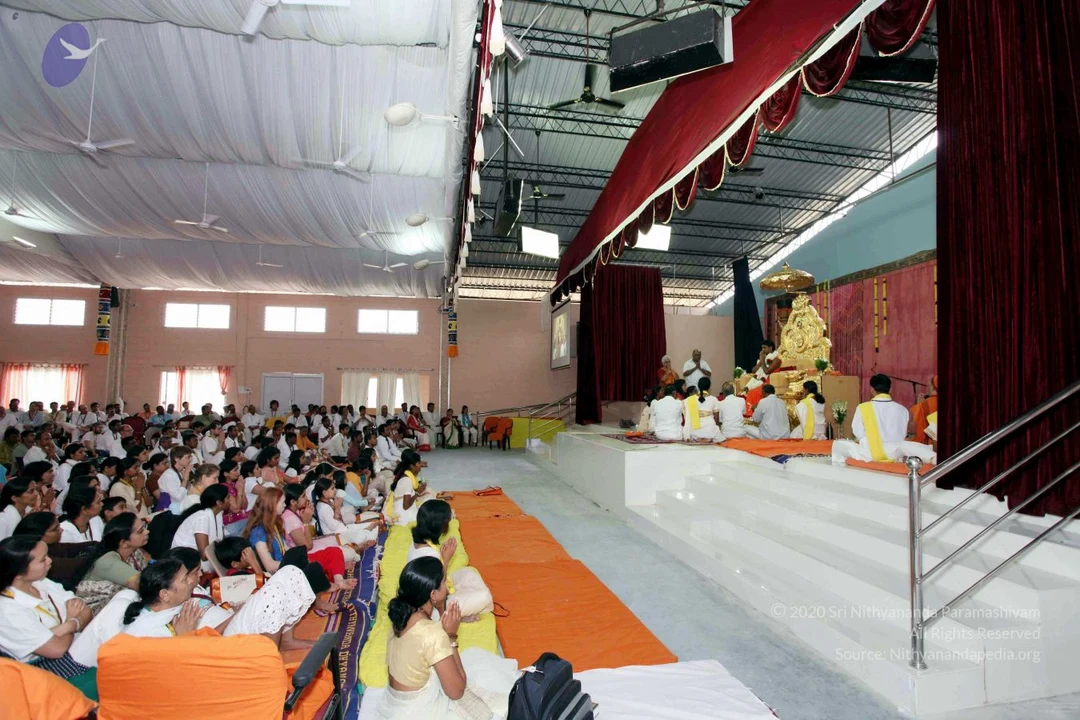
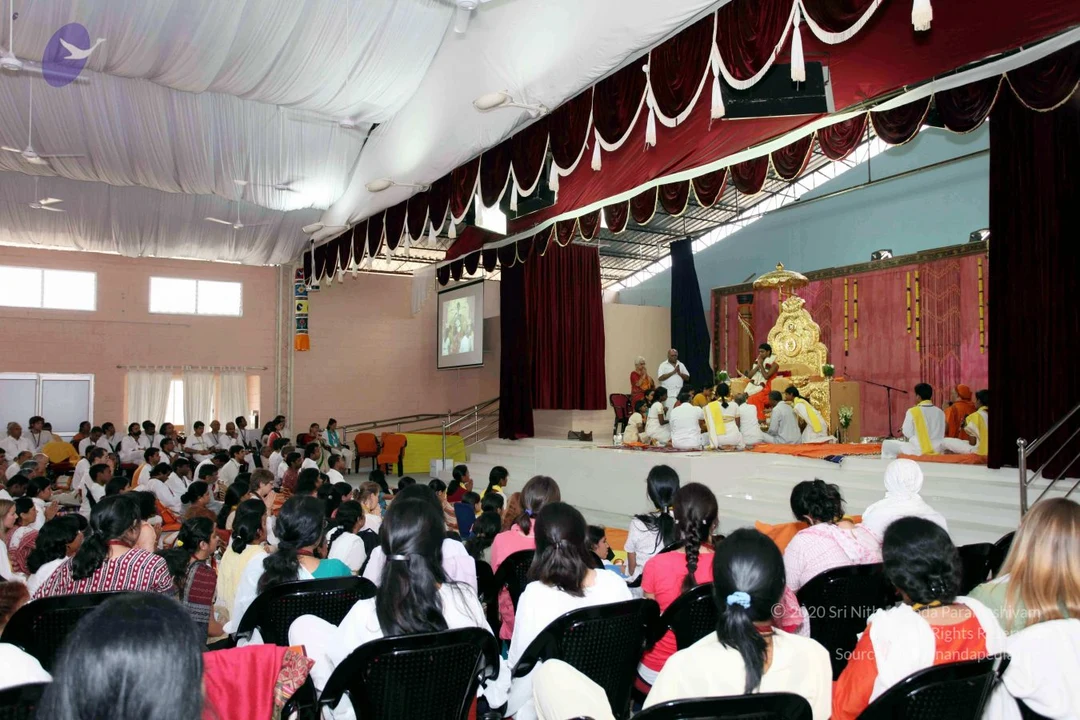
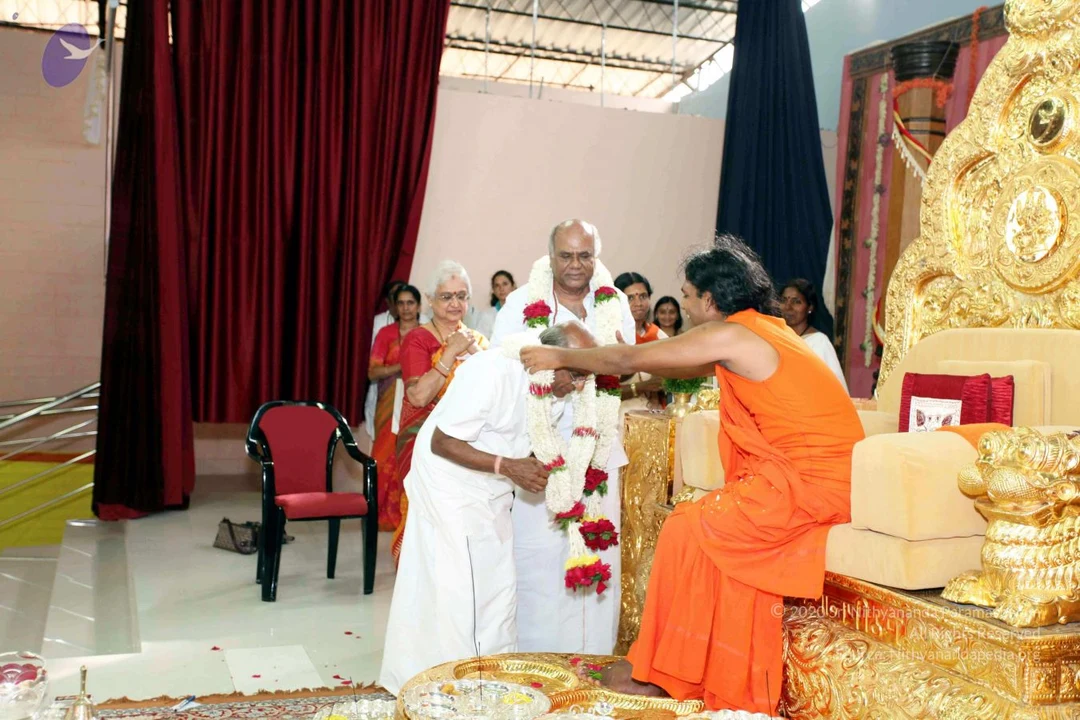
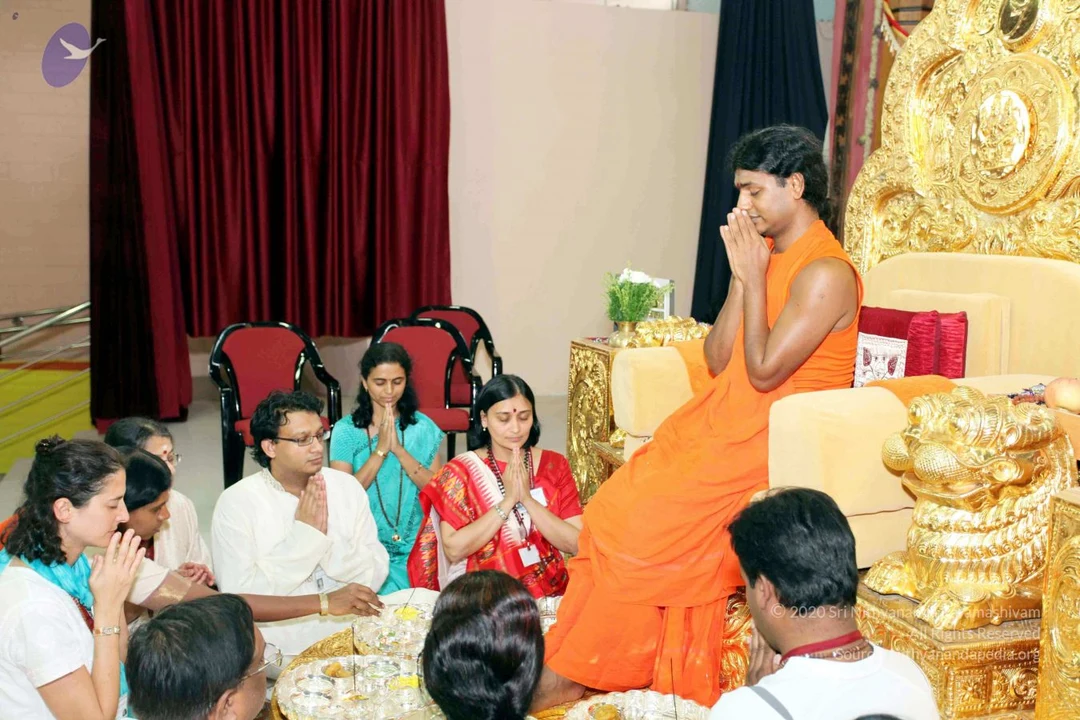
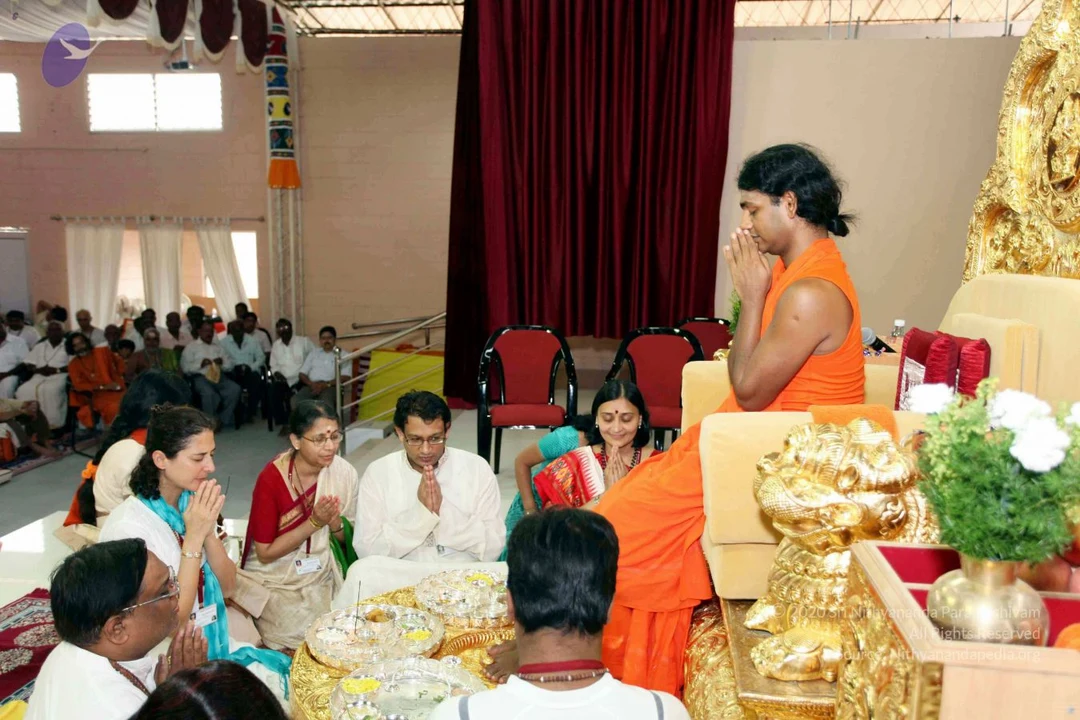
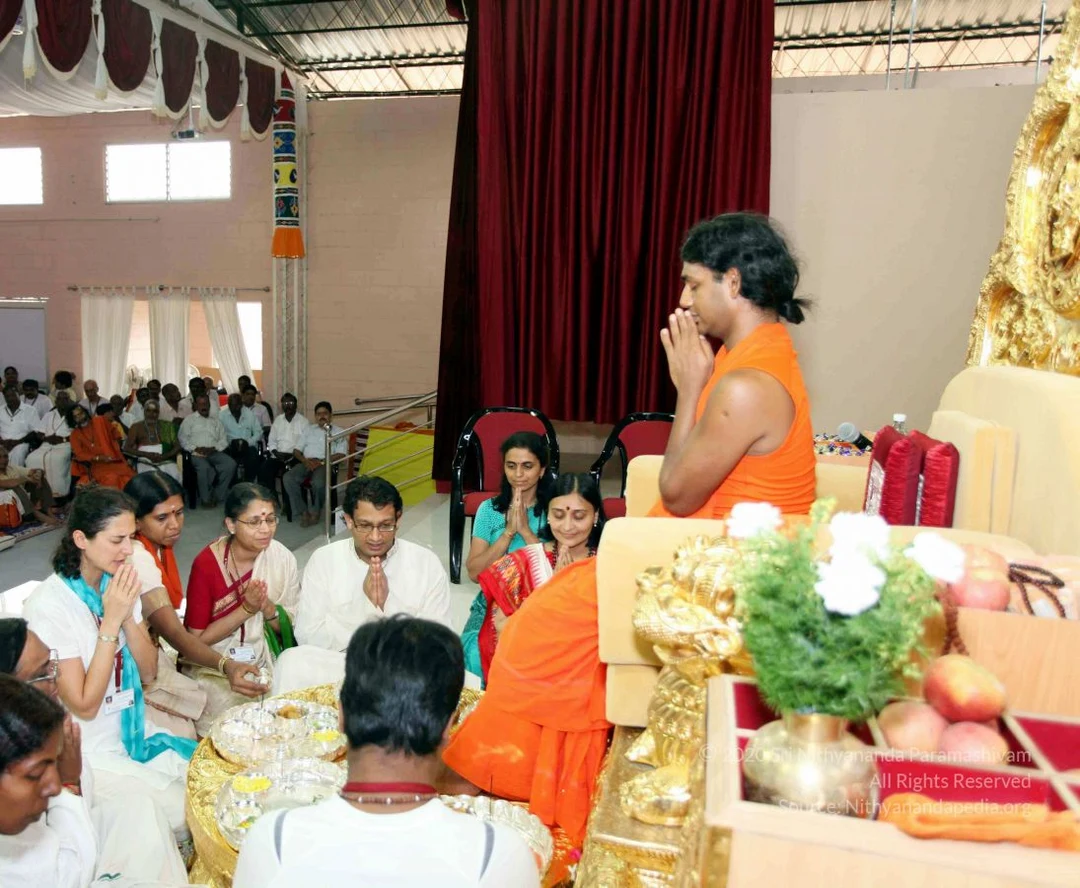
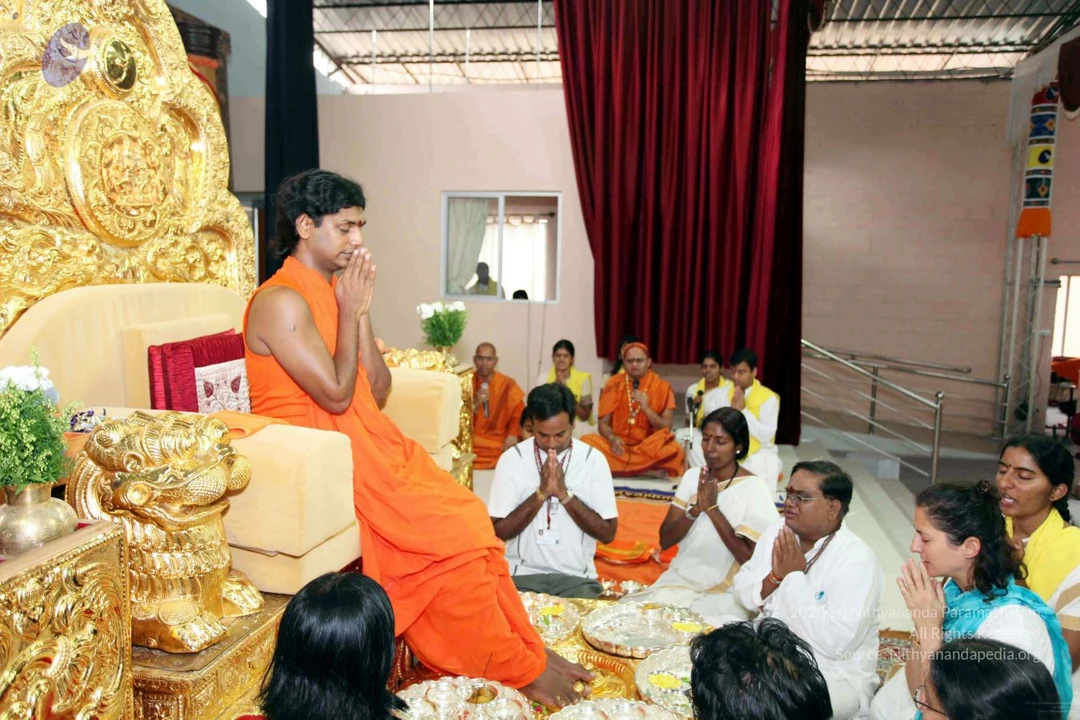
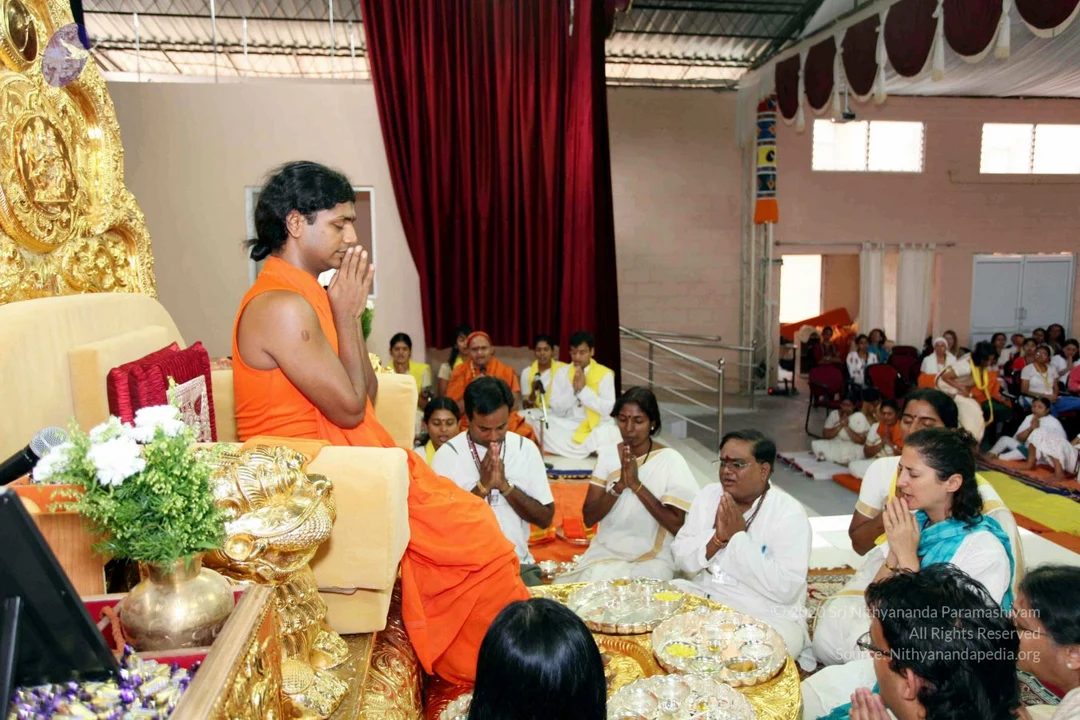
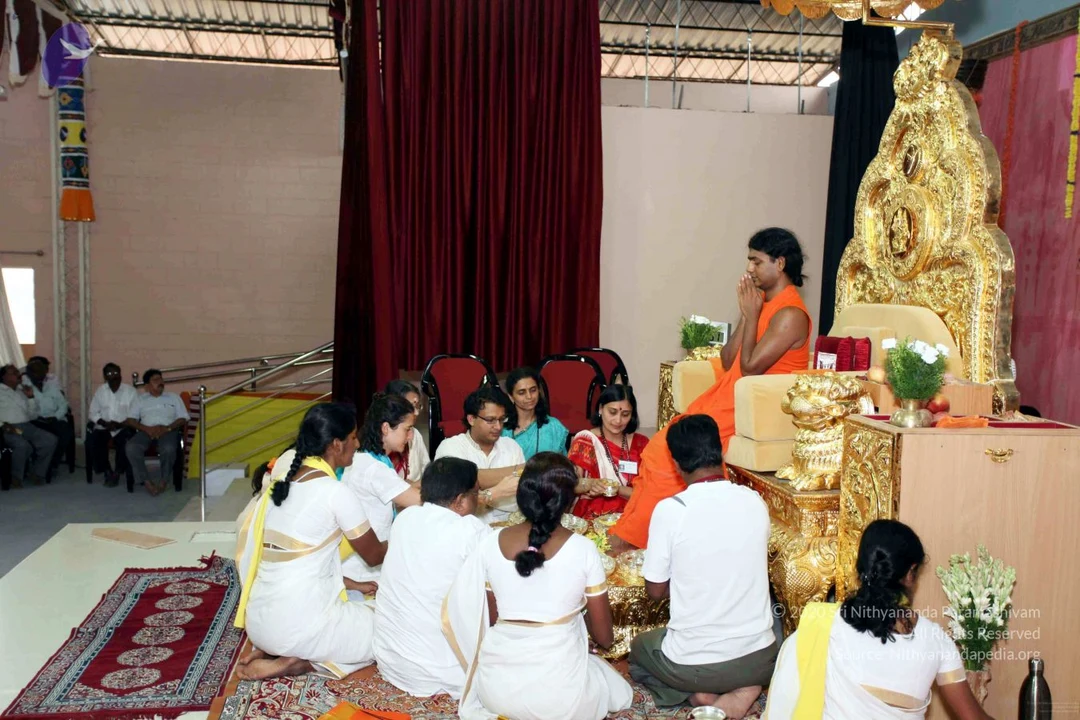
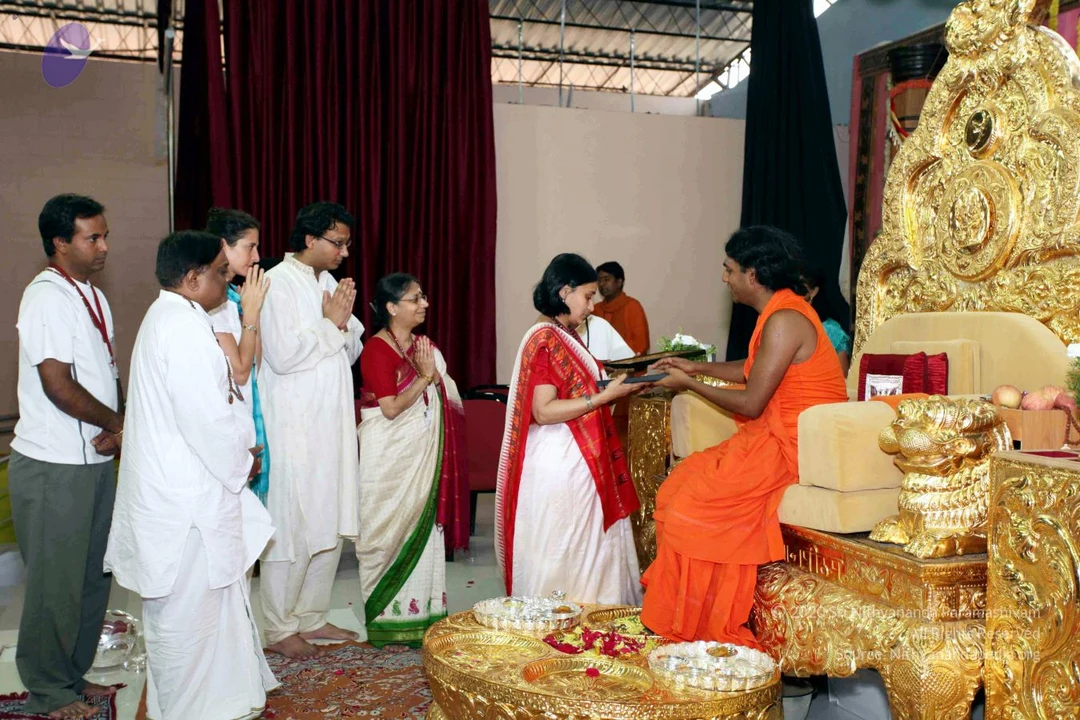
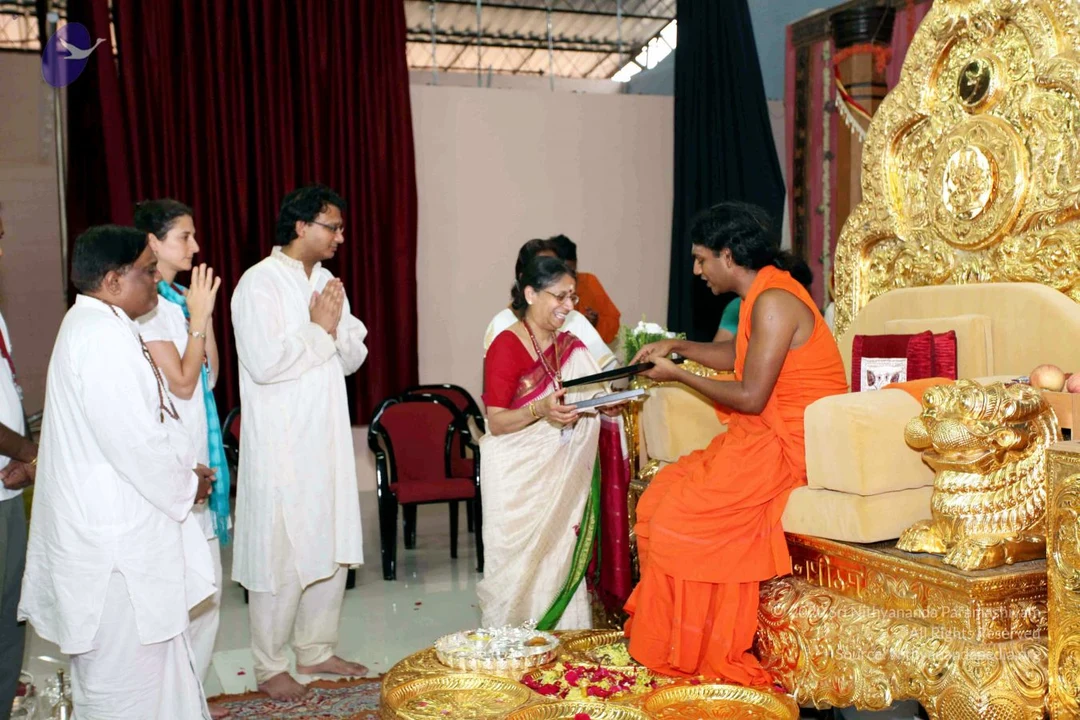
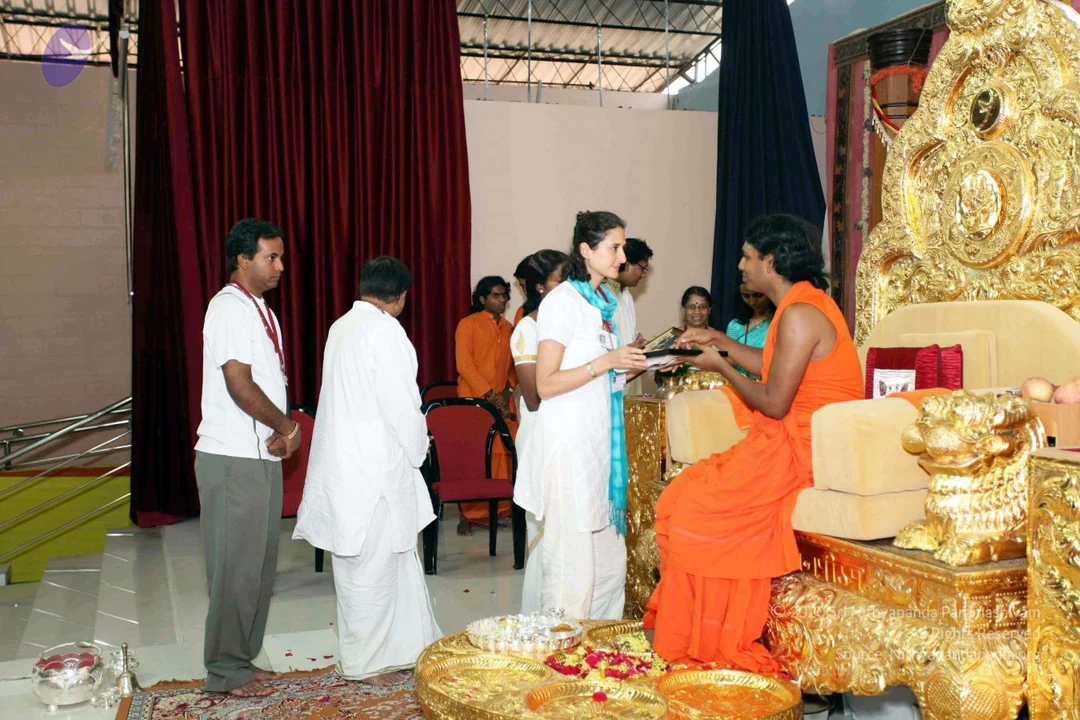
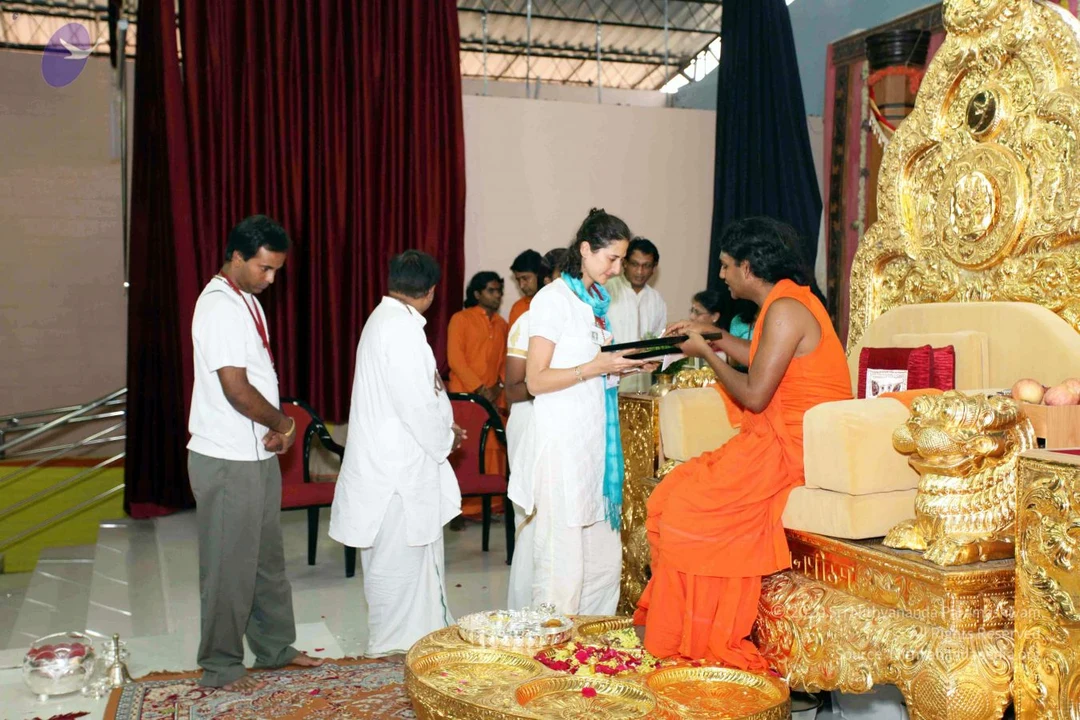
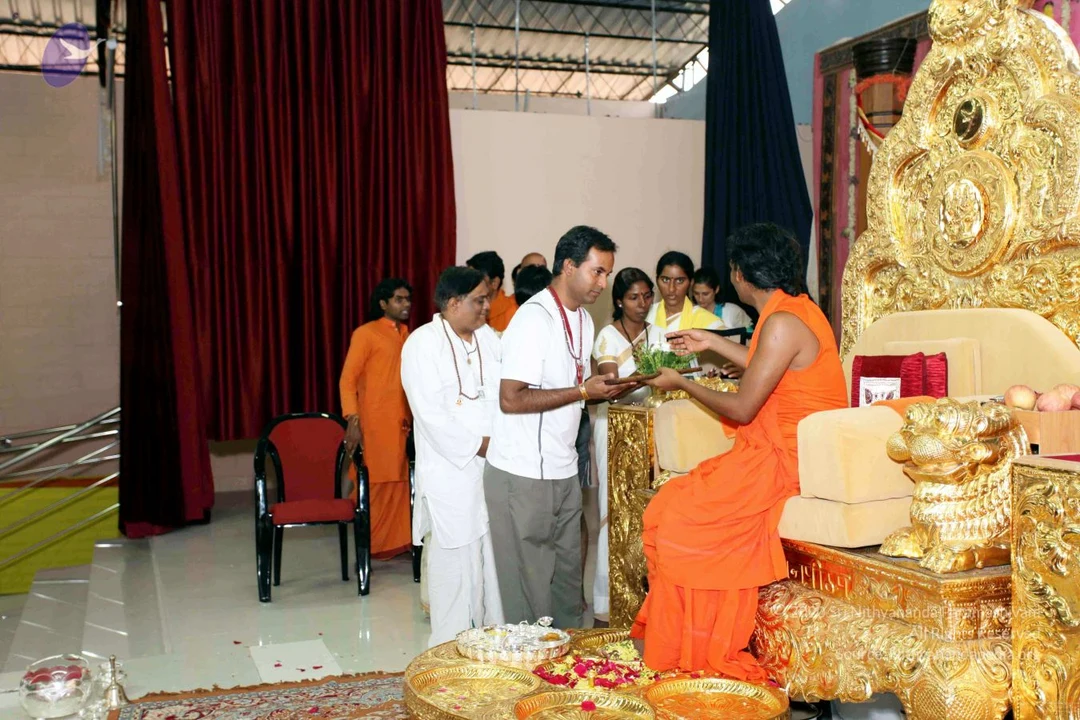
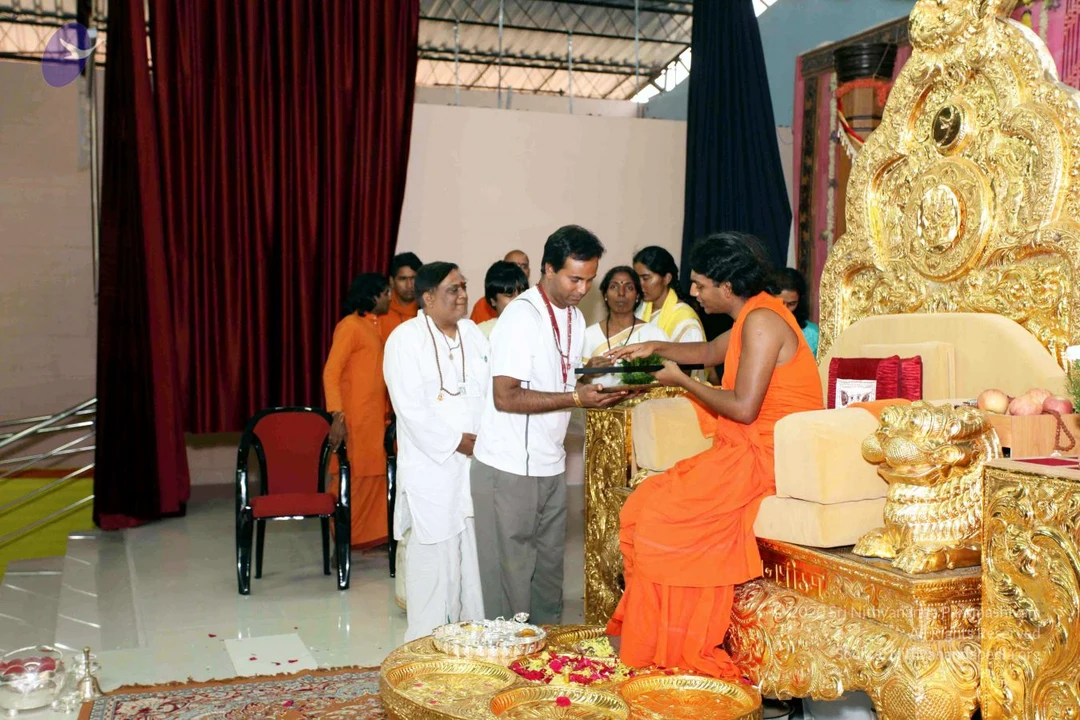
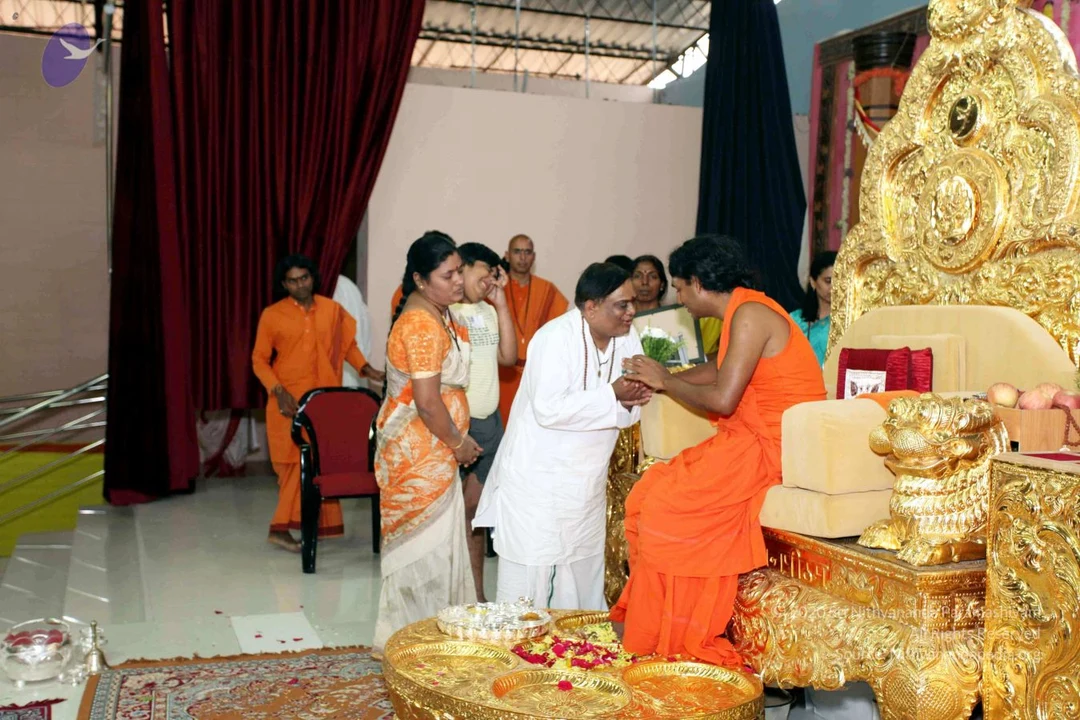
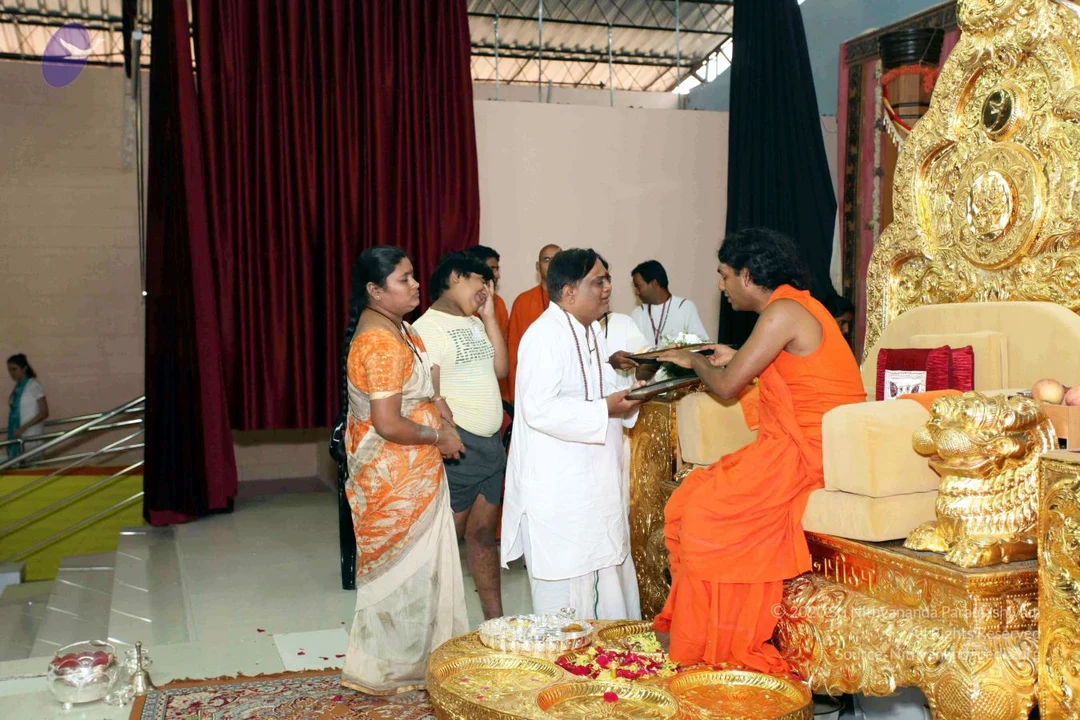
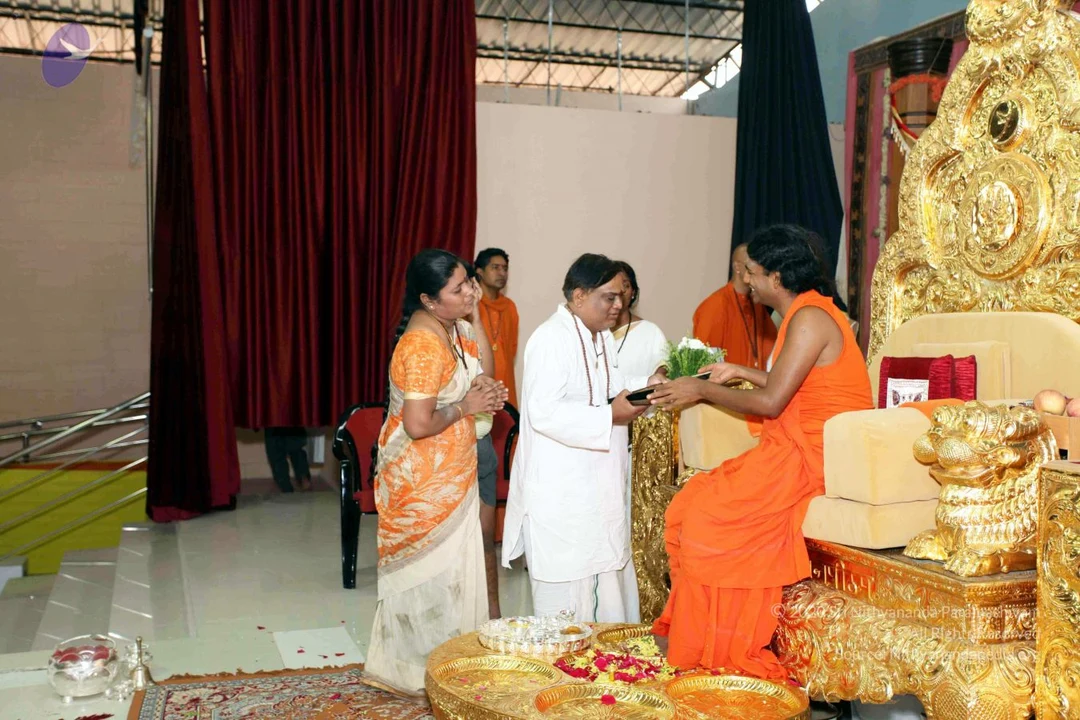
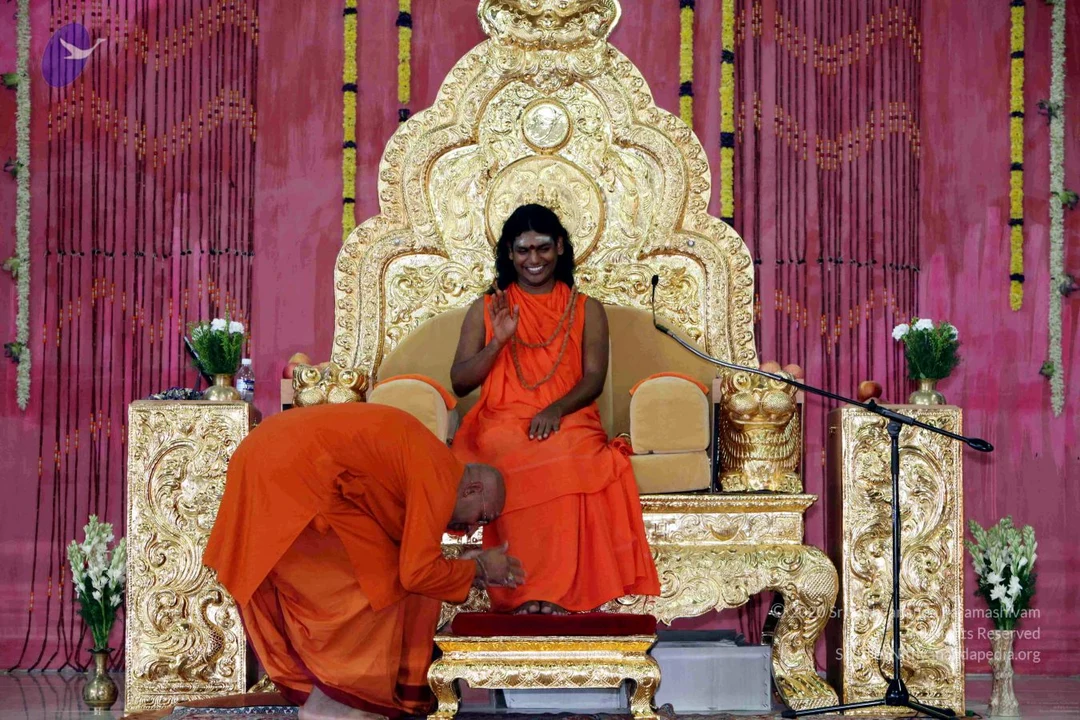
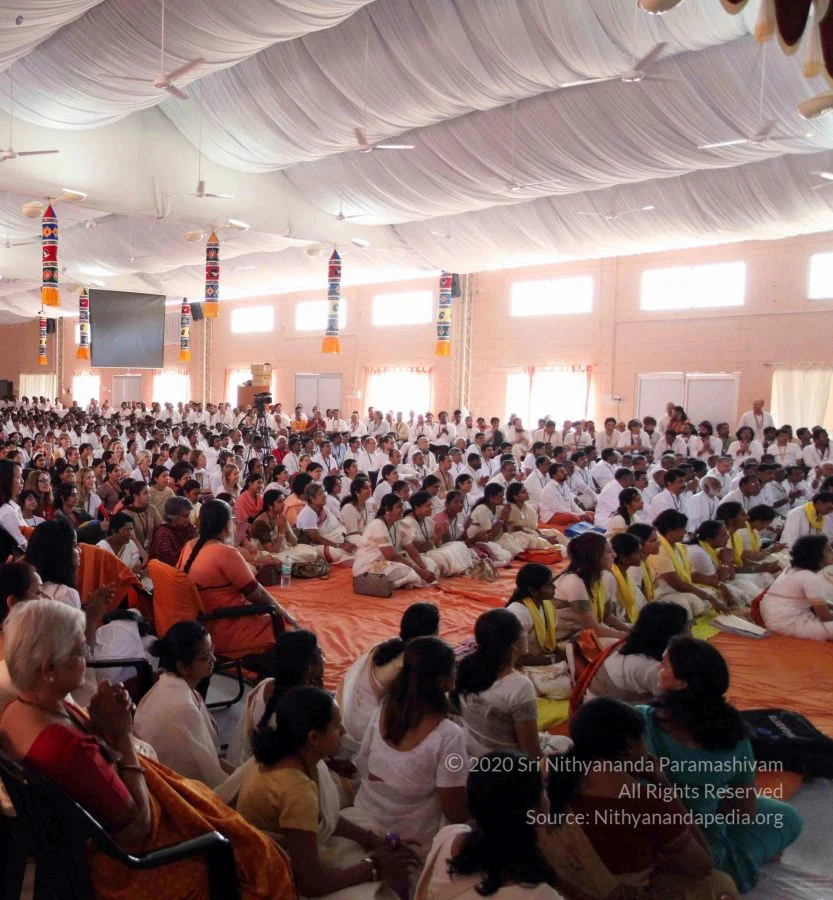
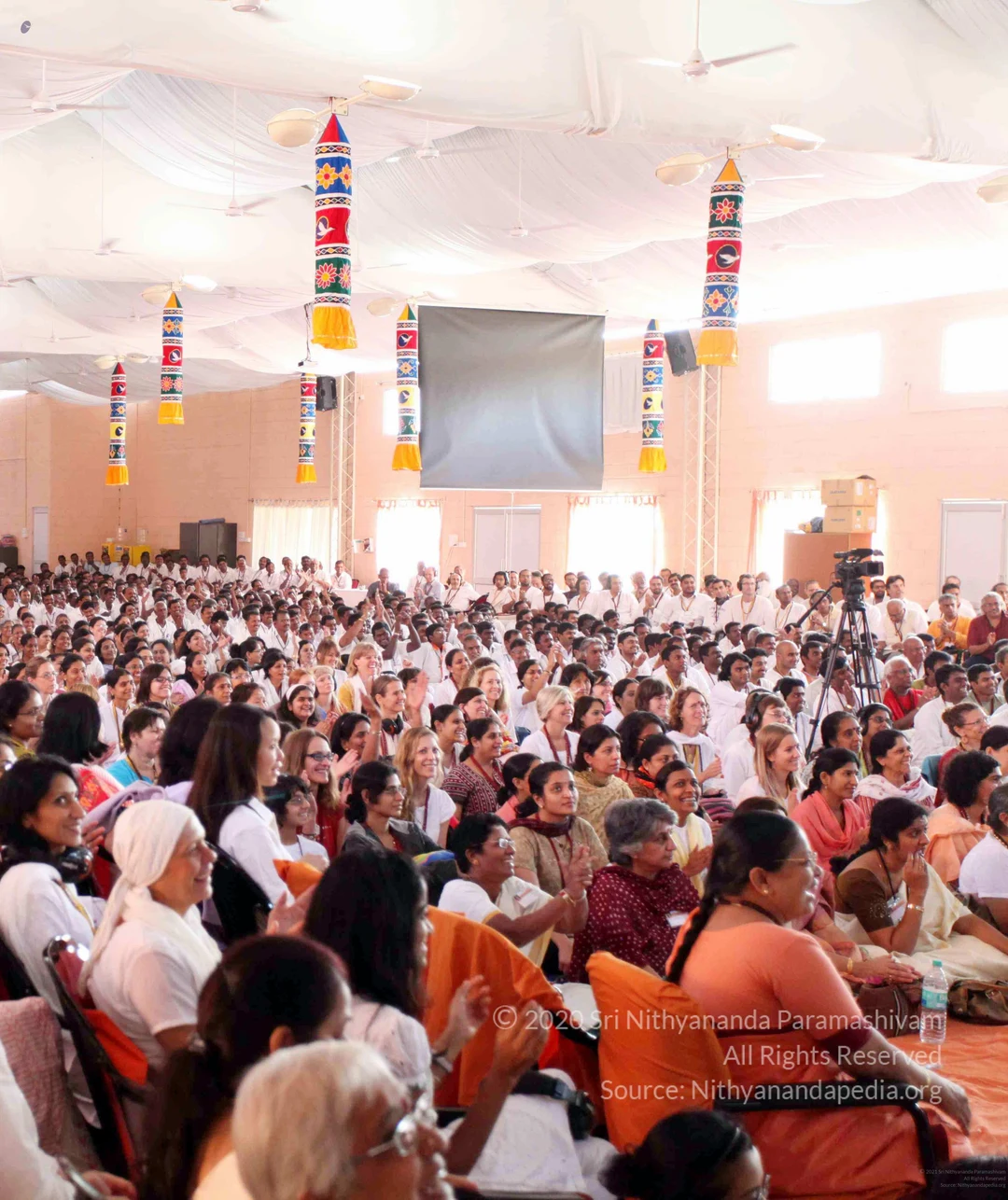
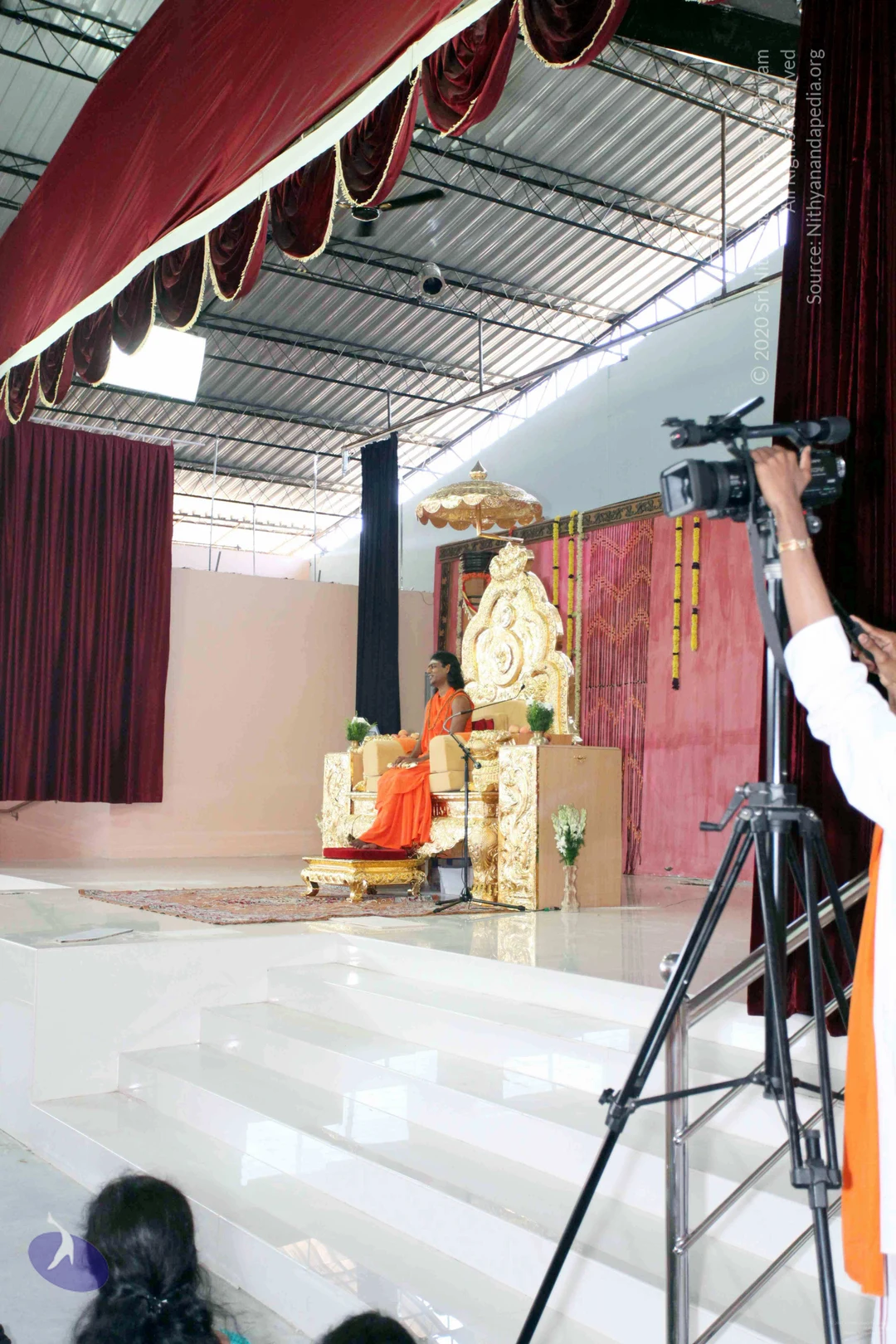
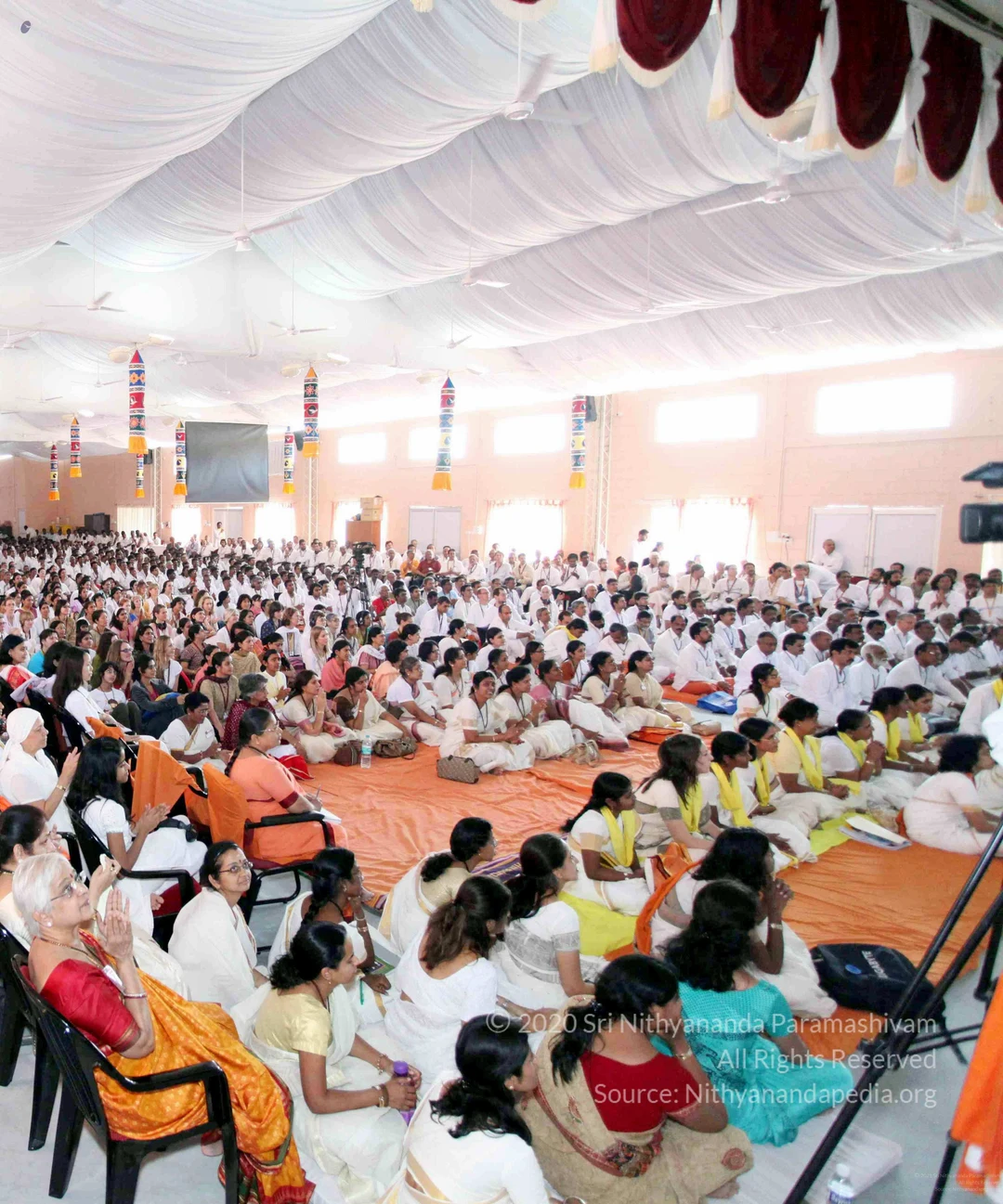
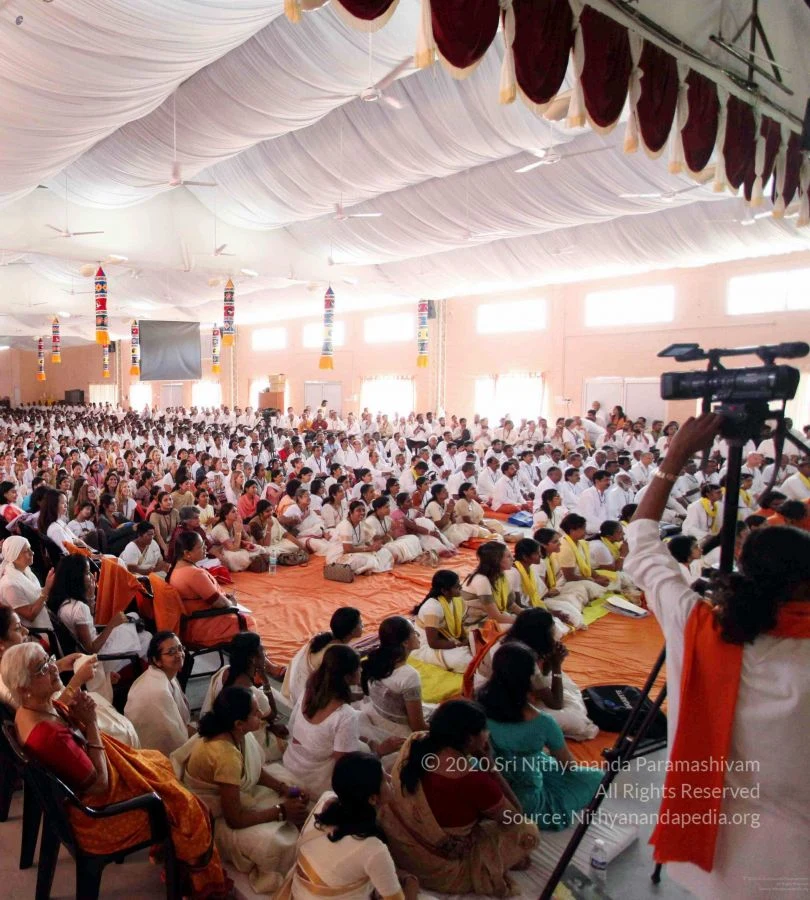
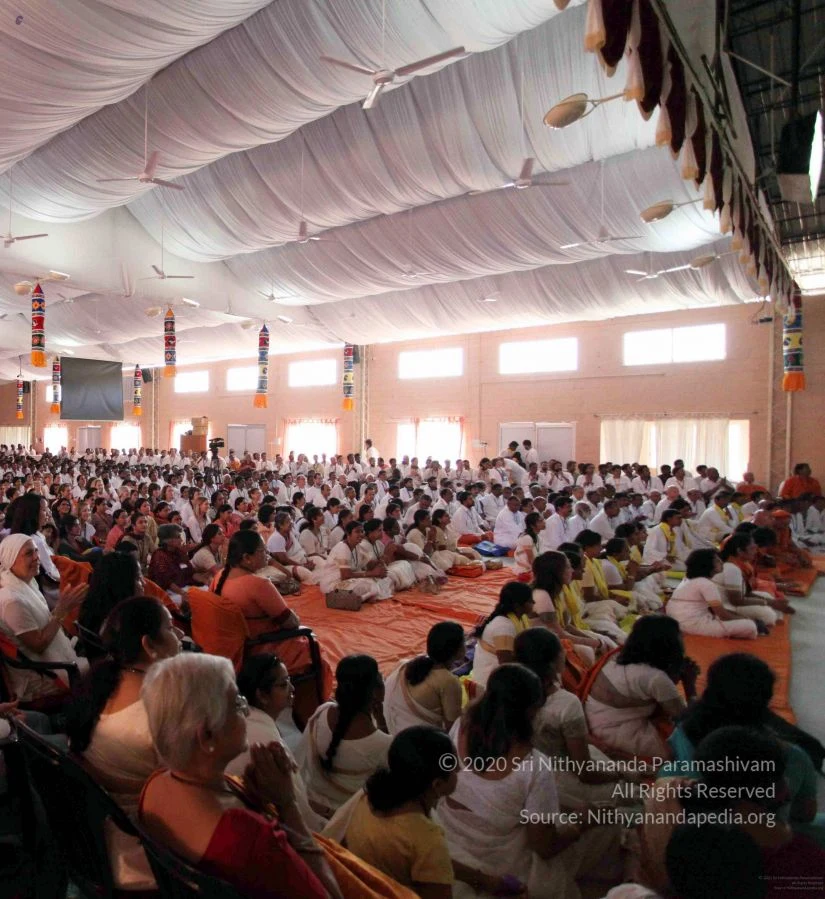
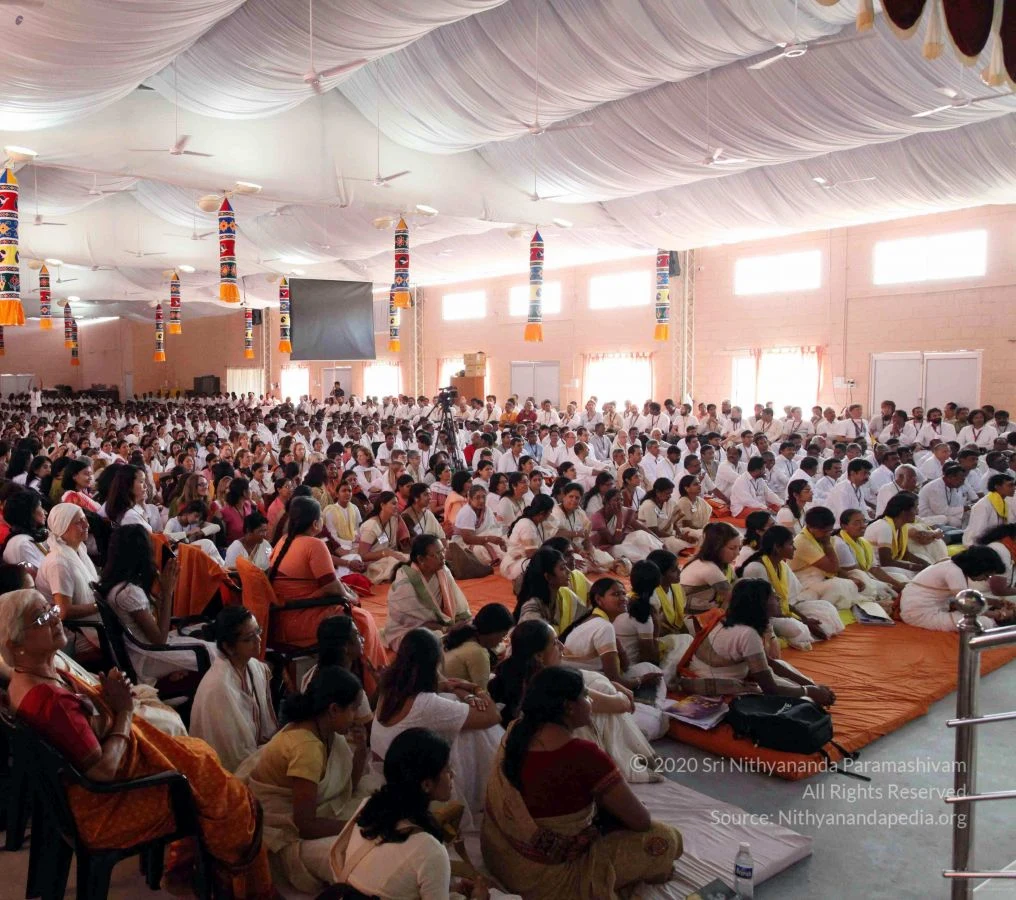
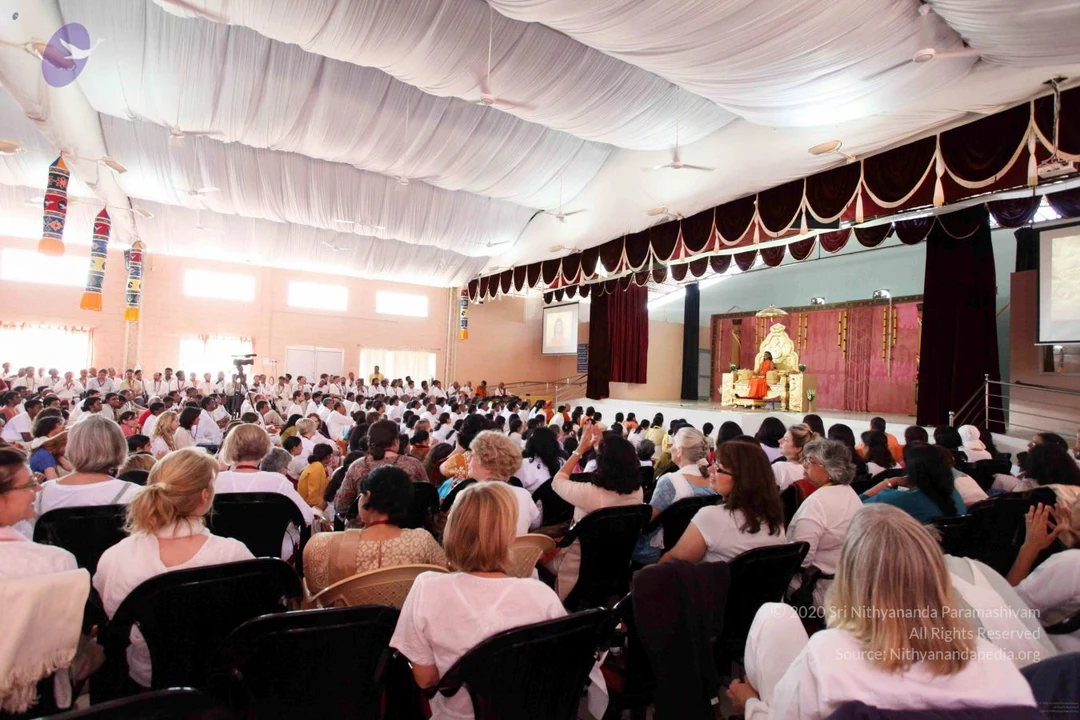
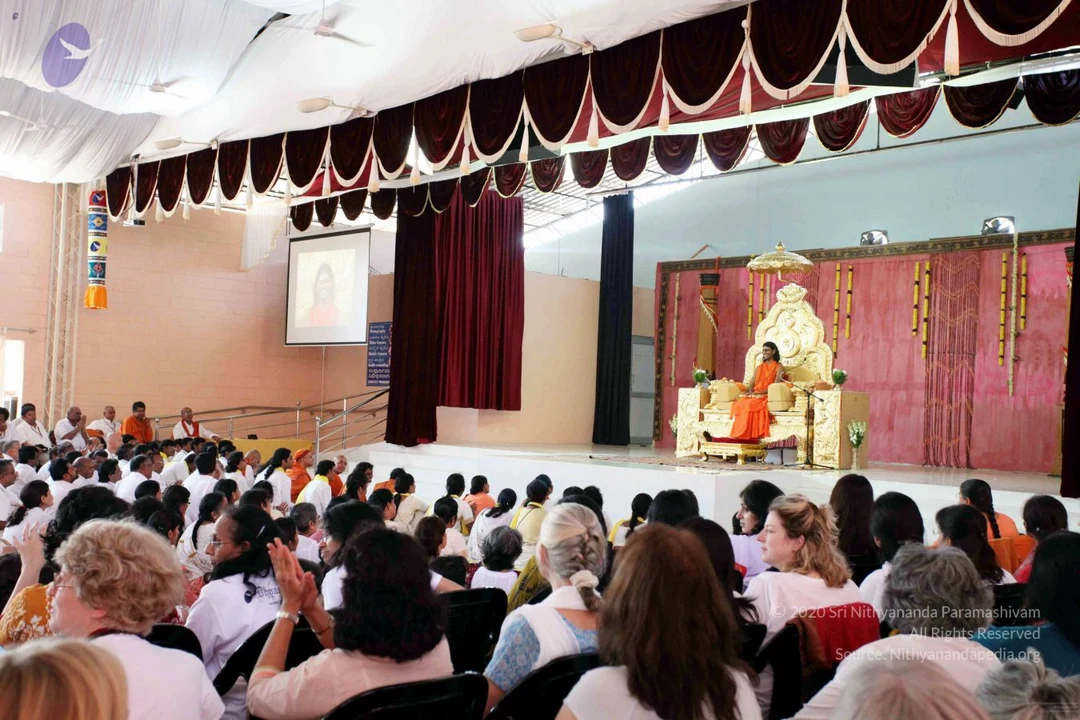
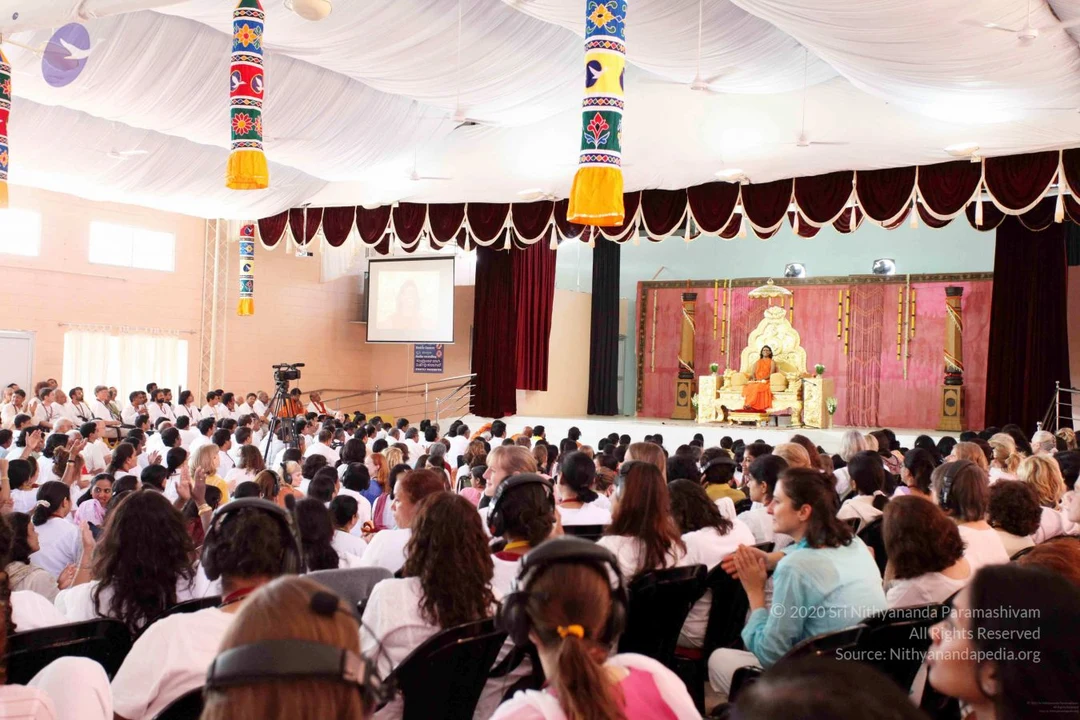
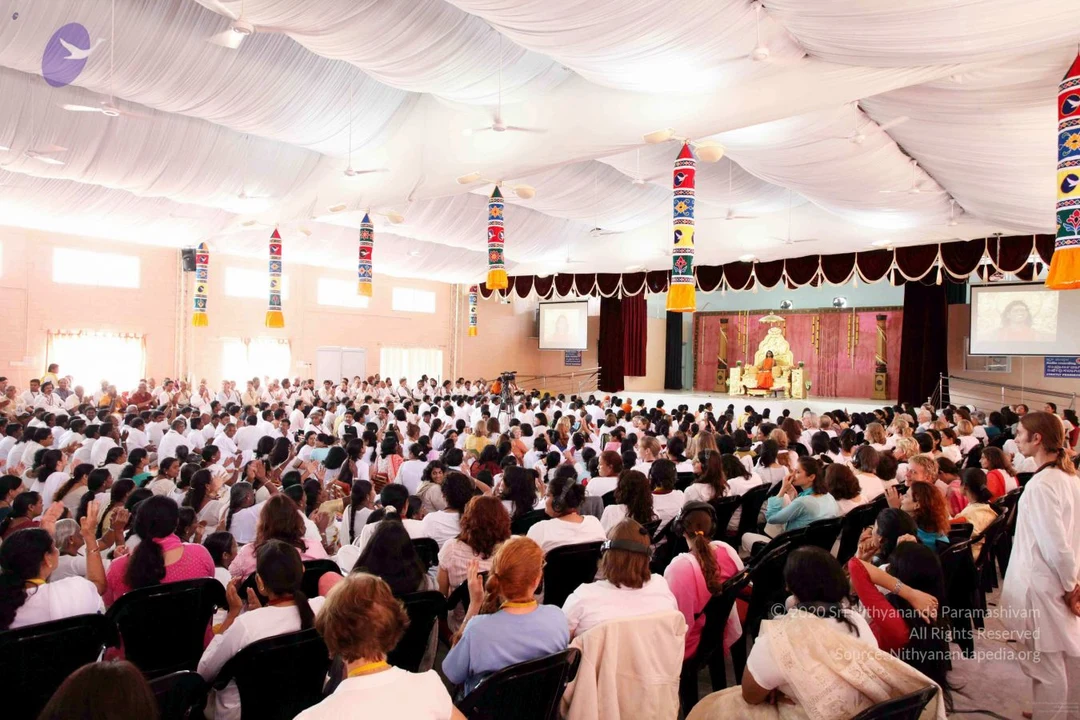
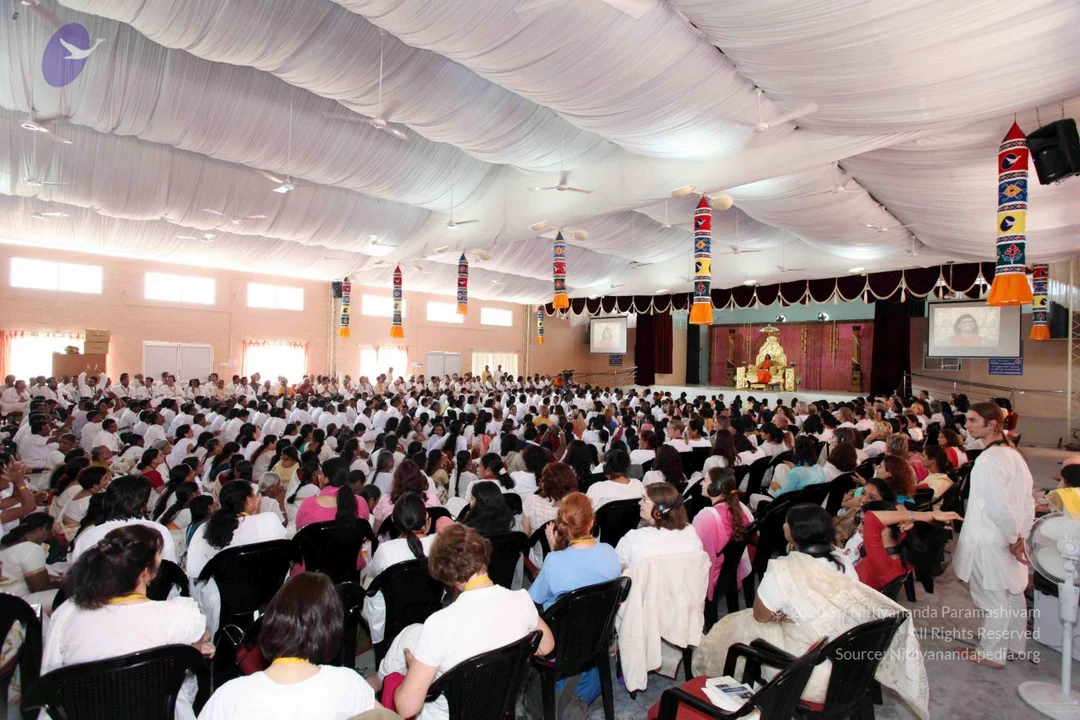
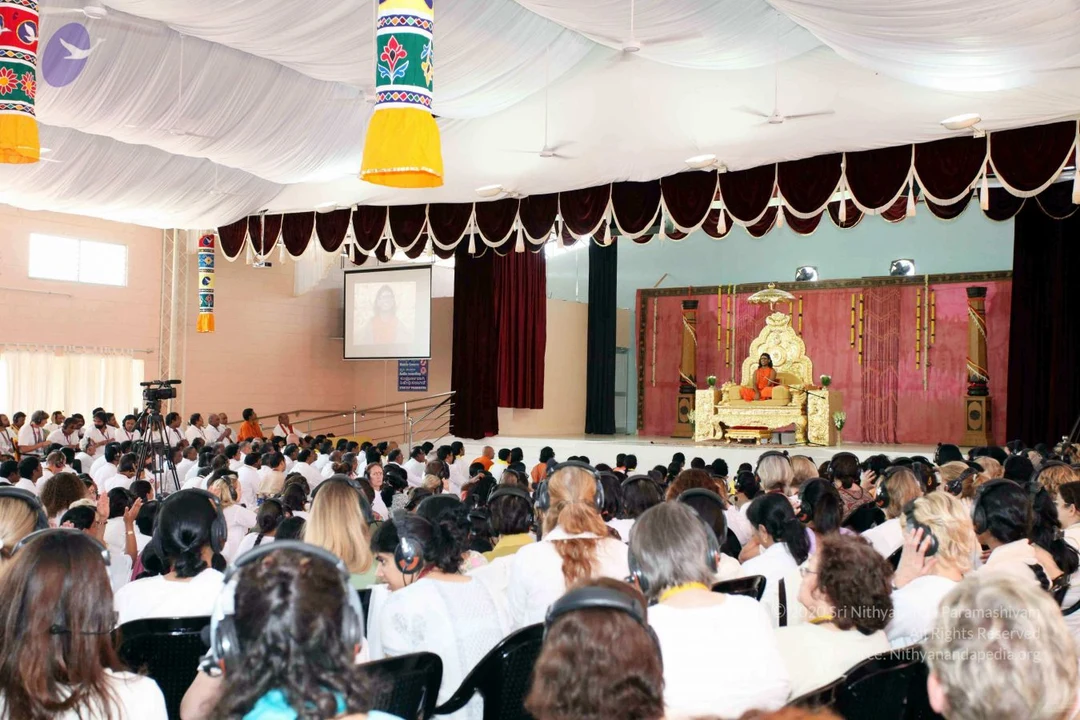
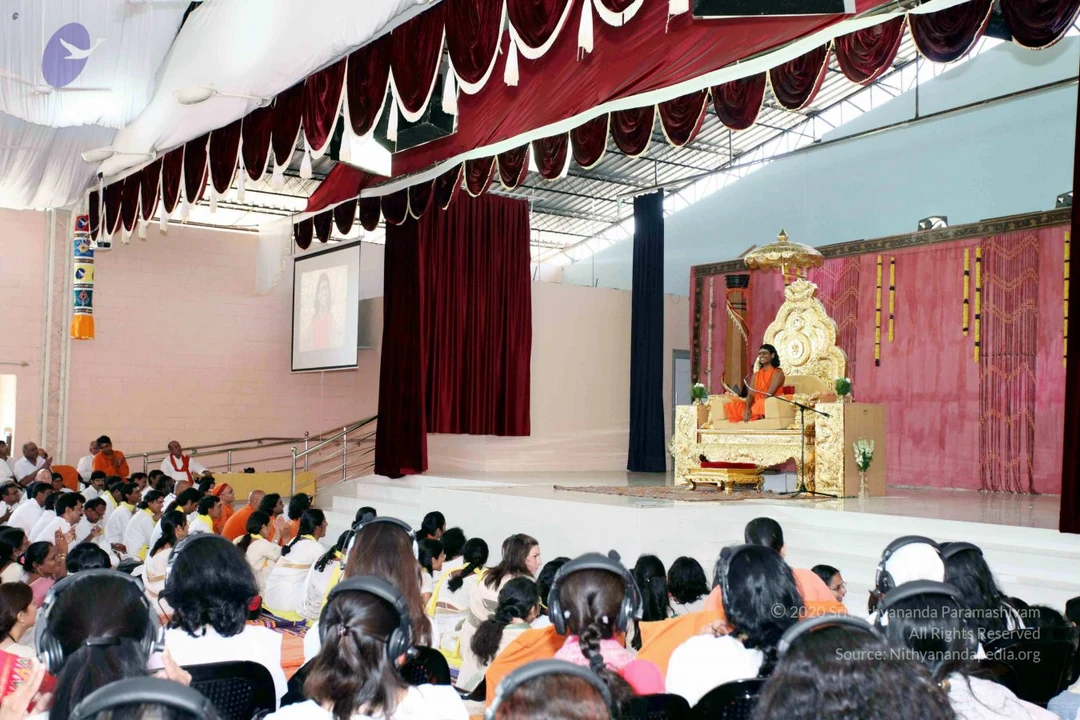
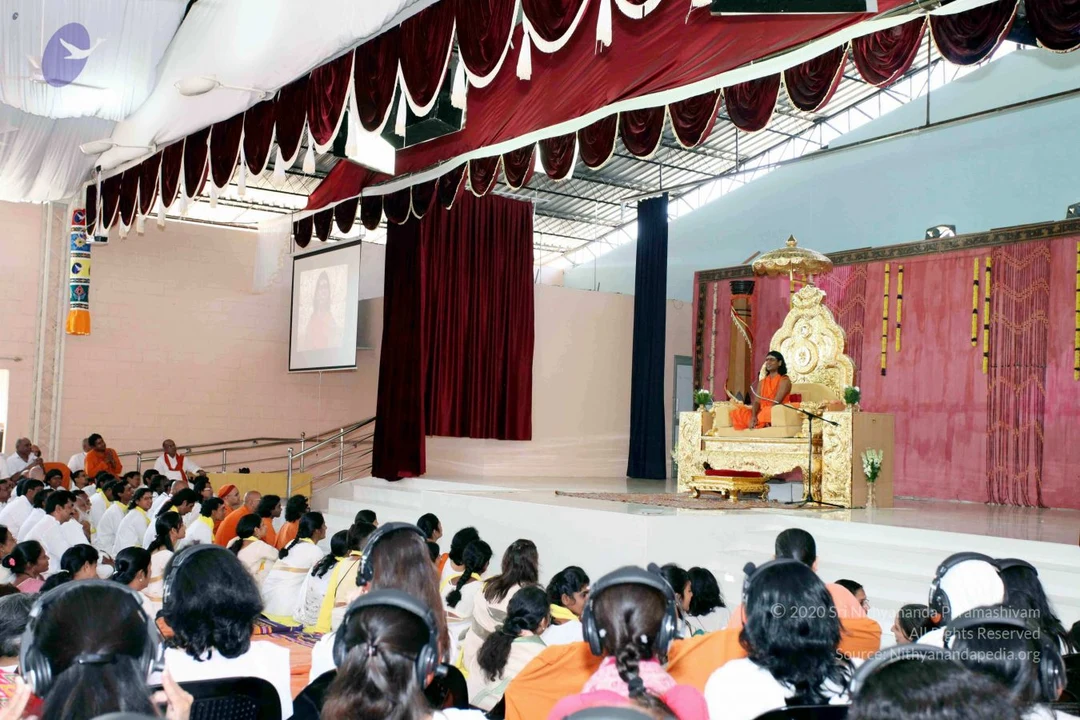
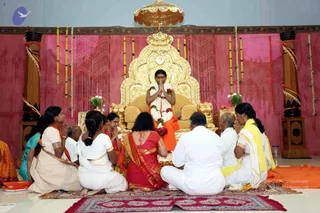
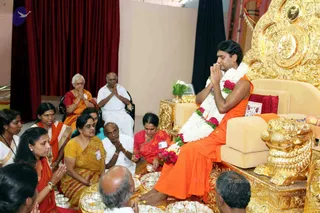
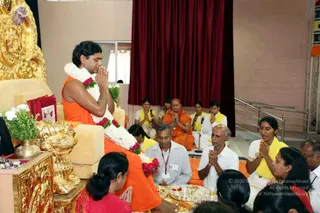
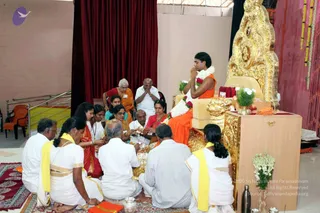
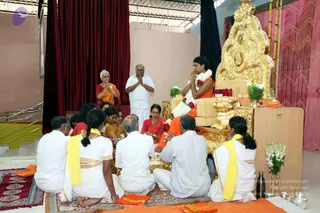
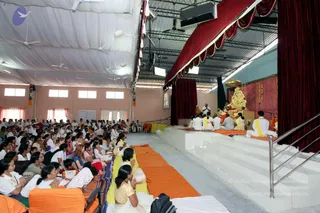
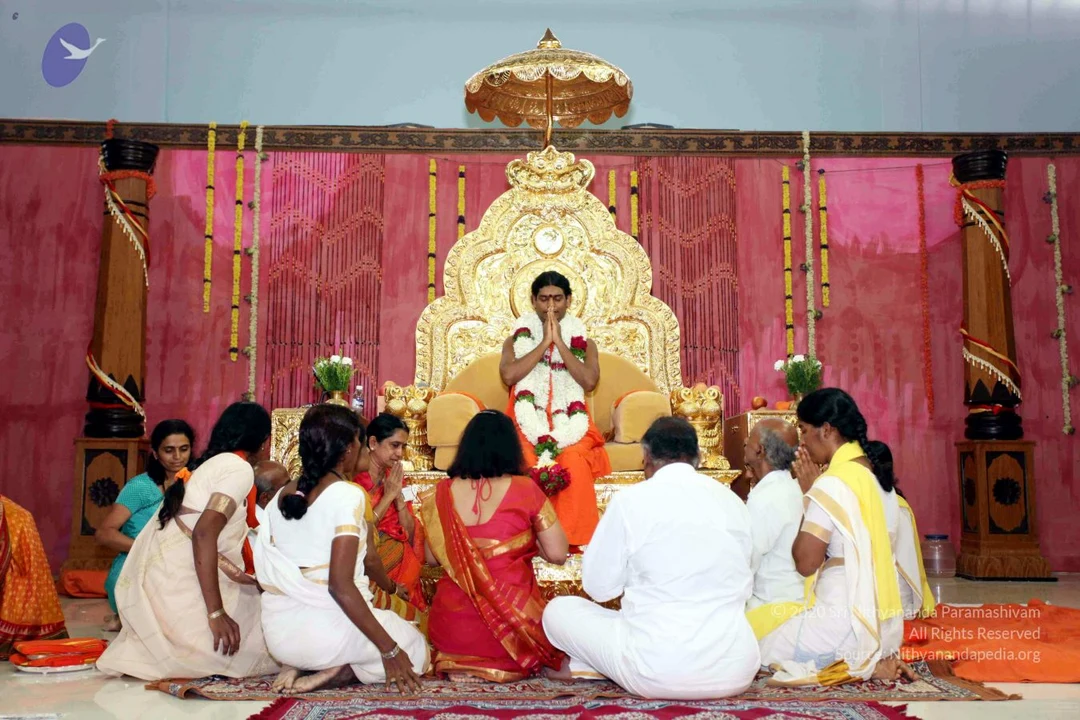
A photograph of a seated figure with hands pressed together in namaskar, wearing an orange-saffron garment and a white flower garland, on an ornate gold throne with a gold canopy. Pink draped curtains and garland-hung pillars frame the stage. Around the throne, several devotees sit on a red and maroon rug with hands folded in prayer: women in white saris with gold borders, a woman in red and maroon, a woman in a yellow-and-white sari, and men in white dhotis and shirts. Orange cloth and a brass pot are at the lower edge. The setting suggests a devotional gathering or pada puja, with the figure receiving the seated devotees.A photograph of a seated man in saffron-orange robes with a white jasmine and red rose garland, hands pressed together in namaskar, sitting on an ornate gold throne with a golden lion-form armrest. Around him, devotees kneel and sit on the floor and on chairs; several women wear saffron, orange and red saris and a man in white dhoti sits with folded hands. Brass plates with lamps and offerings lie in front of the throne, with a potted green plant and a small framed picture on a side table. Red and maroon drapes hang behind. A pada puja-style ritual of devotion is visible, with devotees honouring the seated figure.A seated man with short dark hair wearing a saffron-orange robe and a long white and red flower garland sits on a gilded throne with hands folded in prayer and eyes closed. Gold ornate carvings frame the throne, and a small pot of white flowers sits nearby. Behind him, seated devotees in white with yellow shawls and saffron-clad sadhus press palms together, and a woman in red kneels at the lower left beside brass plates of flowers and offerings. Red curtains and a beige wall form the backdrop. a person: the seated figure in saffron with a long garland on a throne matches the page's claim, though the face and presentation cues are not distinctive enough to confirm.A photograph of a padapuja-style ritual in a hall with a red curtain and a large gold-ornate throne. A man with a shaved head in white and a seated man in white sit on the floor with brass plates and vessels. A figure in saffron/orange robes, wearing a white flower garland and a red and white floral garland, sits on the gold throne with hands folded in greeting. a person (saffron robes, garlands, and seated on the gold throne). Around them, devotees in white dhotis and yellow-bordered shawls and women in red and orange saris kneel and sit, some holding offerings. Flower arrangements and a small potted plant stand near the throne, and red cushions rest on the throne's side. The scene shows about 14 physical people.A seated man in saffron-orange robes, with a white flower garland around his neck and hands pressed together in namaste, sits on an ornate gold throne with carved gold backrest and armrests. Before him, several devotees sit on a red and patterned rug: a man in a white dhoti and shirt, women in white and yellow-bordered saris, and a woman in an orange sari with folded hands. Behind them a grey-haired woman in an orange sari stands with hands folded, next to a bald man in white. Red and maroon drapes, flower garlands and a vase of white flowers decorate the hall, and brass vessels and an orange cloth sit in front of the throne.Wide photograph of a large hall with white fabric ceiling and ceiling fans, where a large audience of devotees sits on orange and yellow mats facing a raised white stage. On the stage, a figure in orange sits on a golden throne-like seat beside a gold kalasha-style ornament, with several people in white with yellow sashes seated around. Red and maroon drapes frame the stage and a small screen shows an image. Many attendees in white and light clothing sit with hands folded in prayer, some in front rows, as a satsang or discourse proceeds.
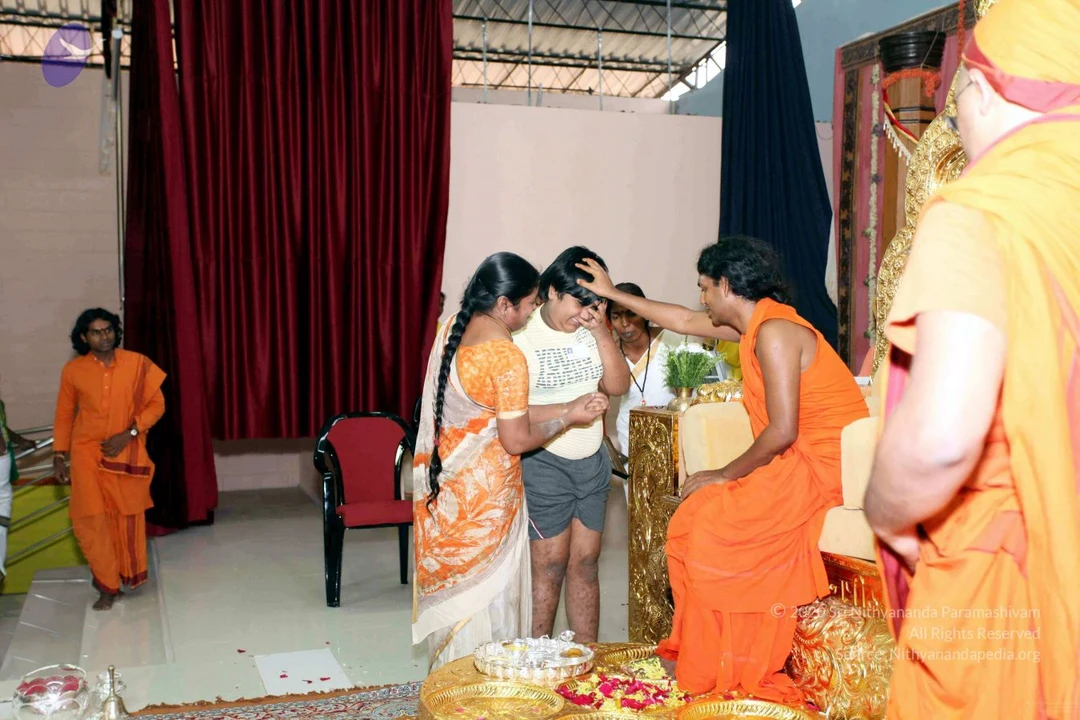
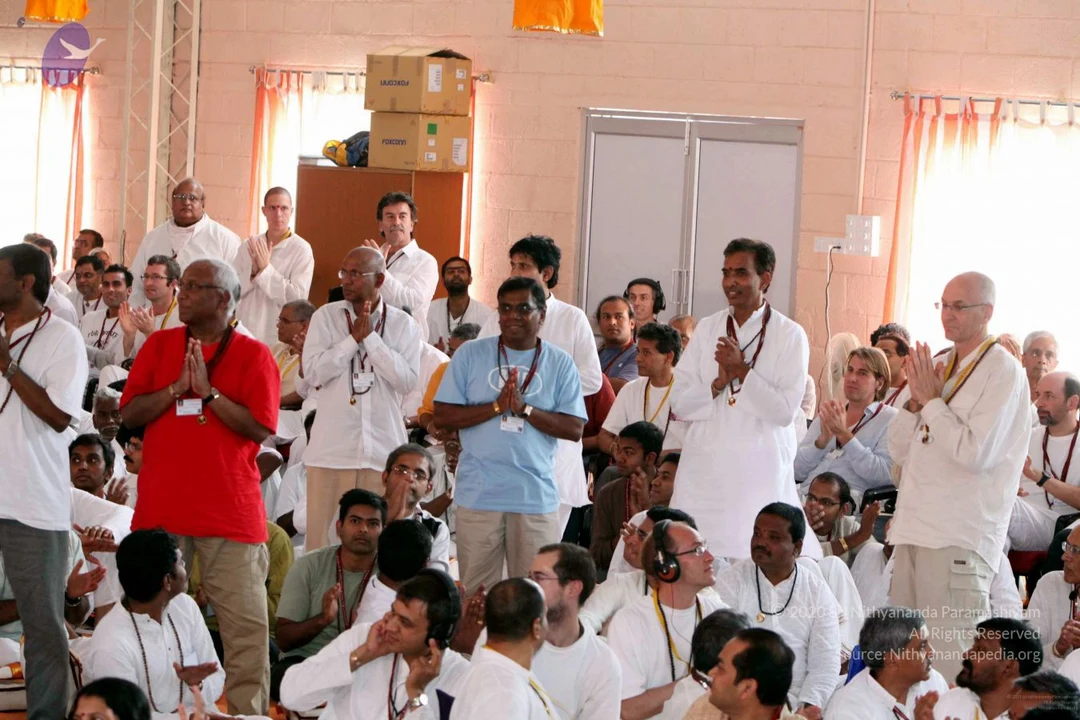
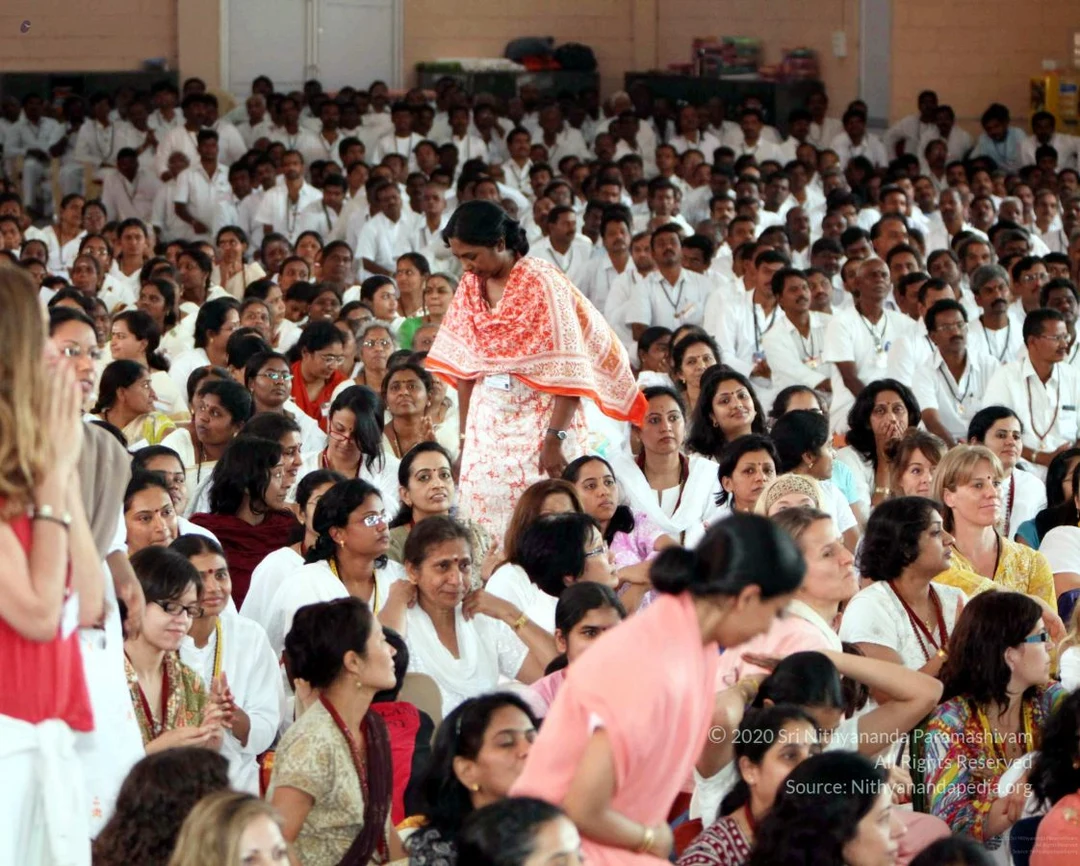
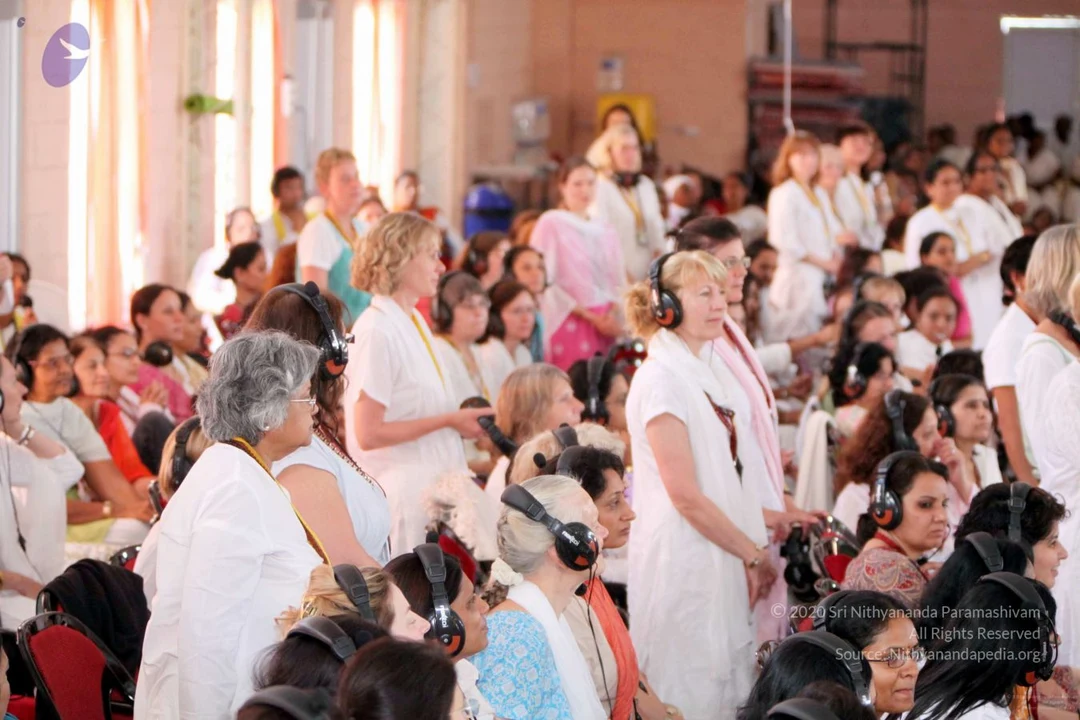
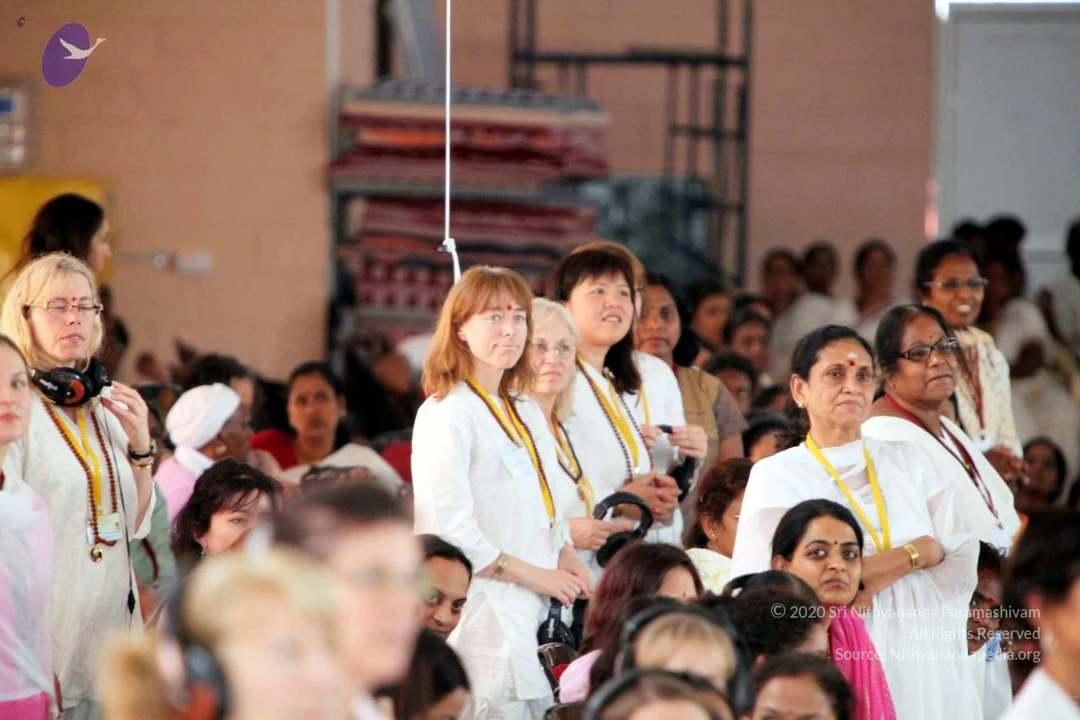
Inner Awakening Session
198 photosSource gallery
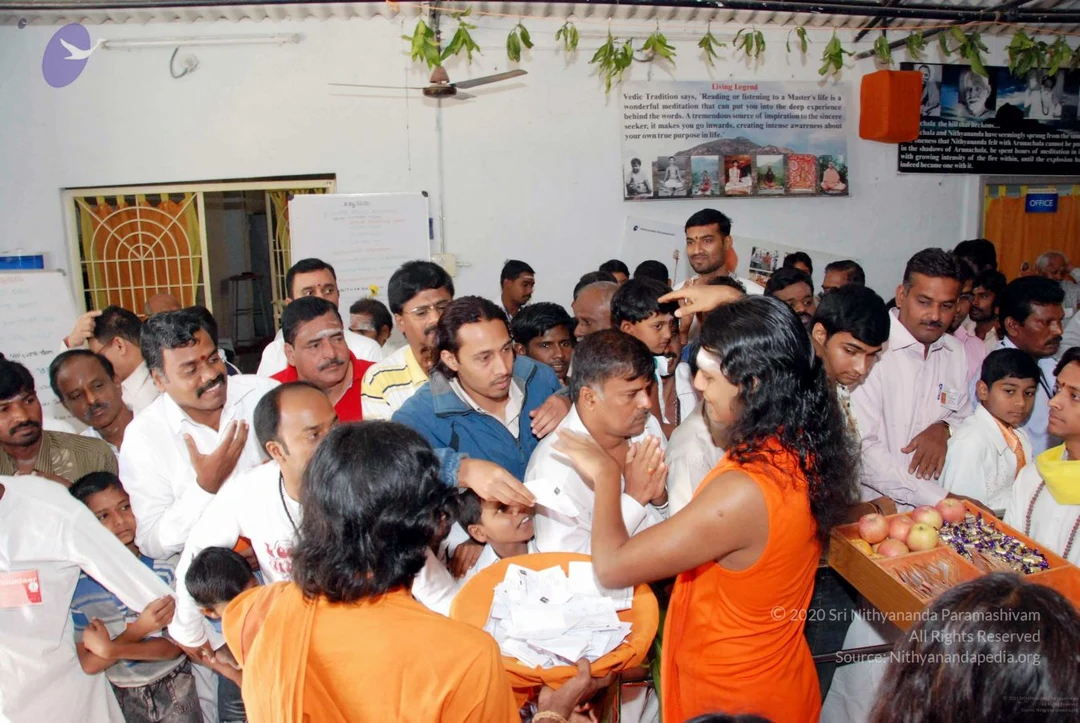
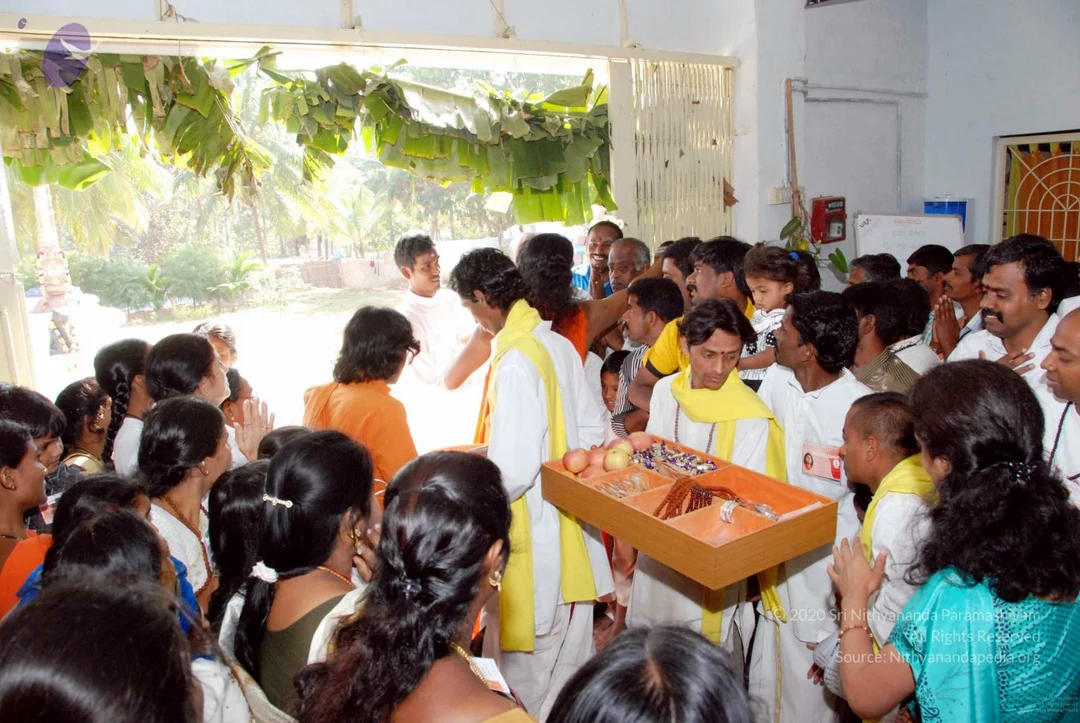
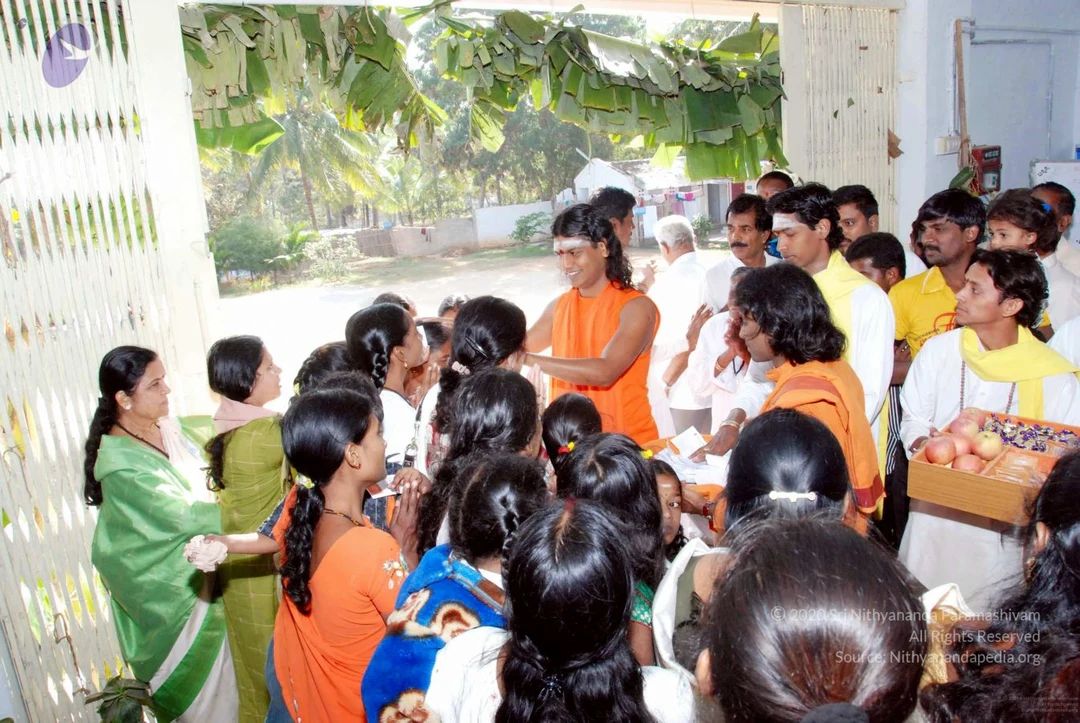
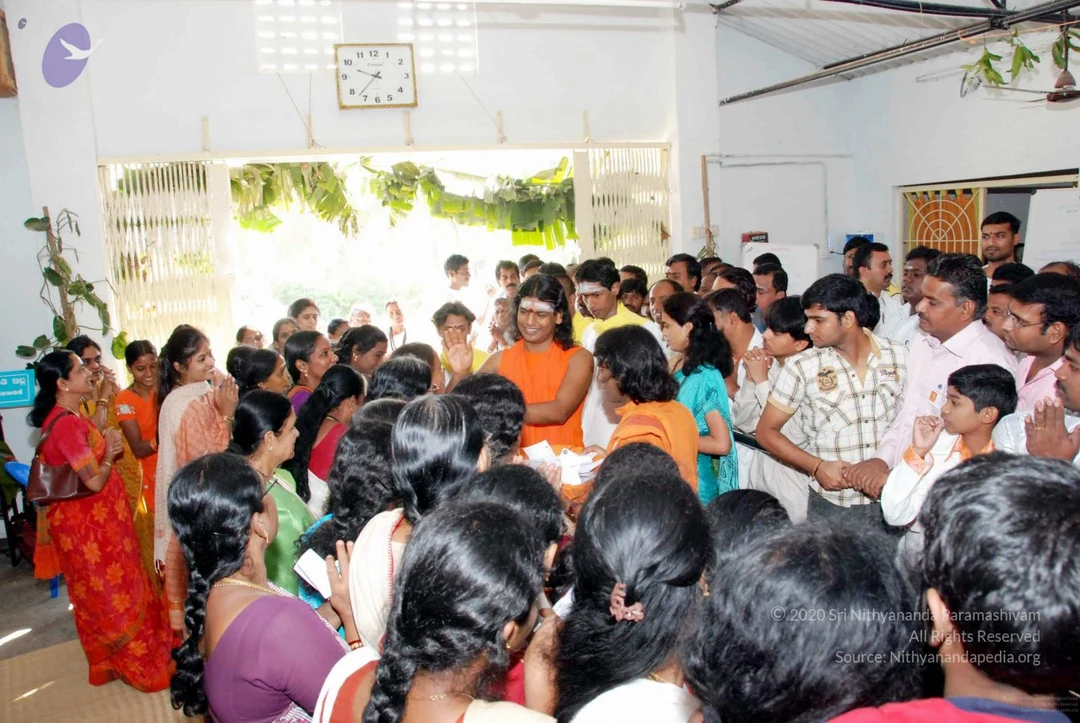
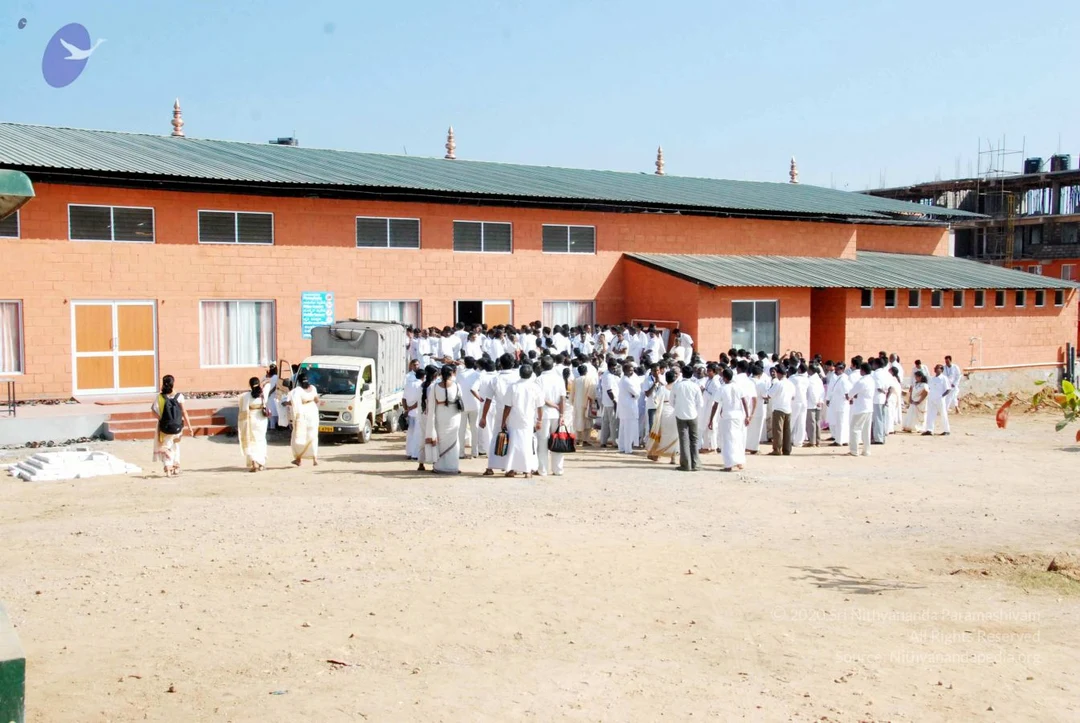
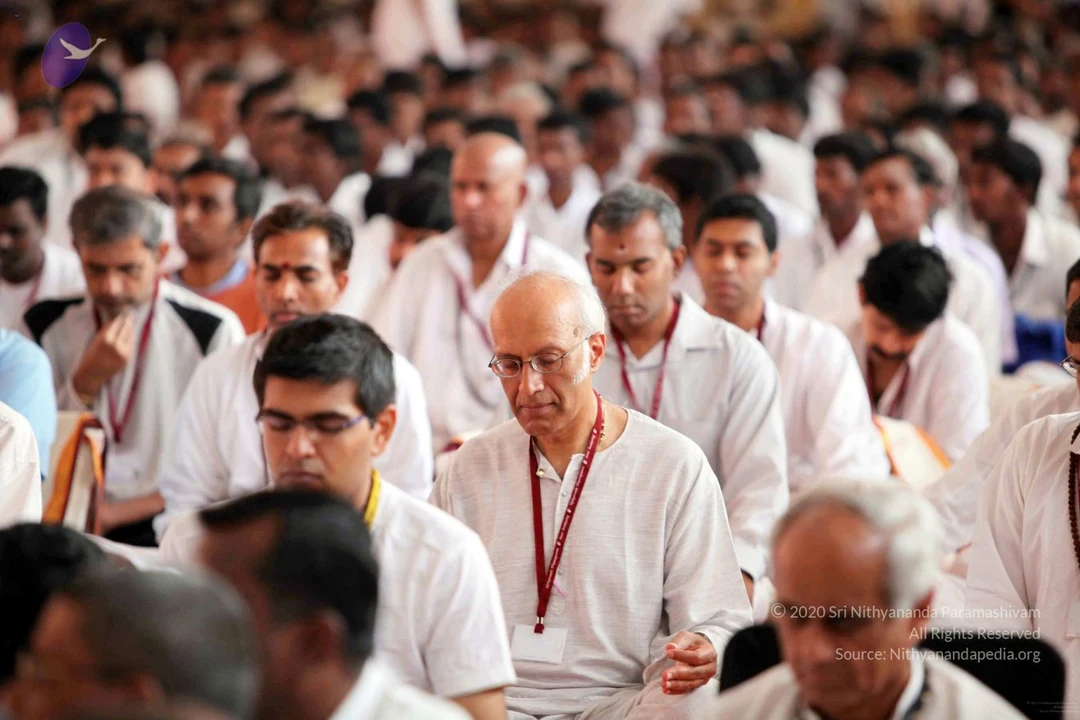
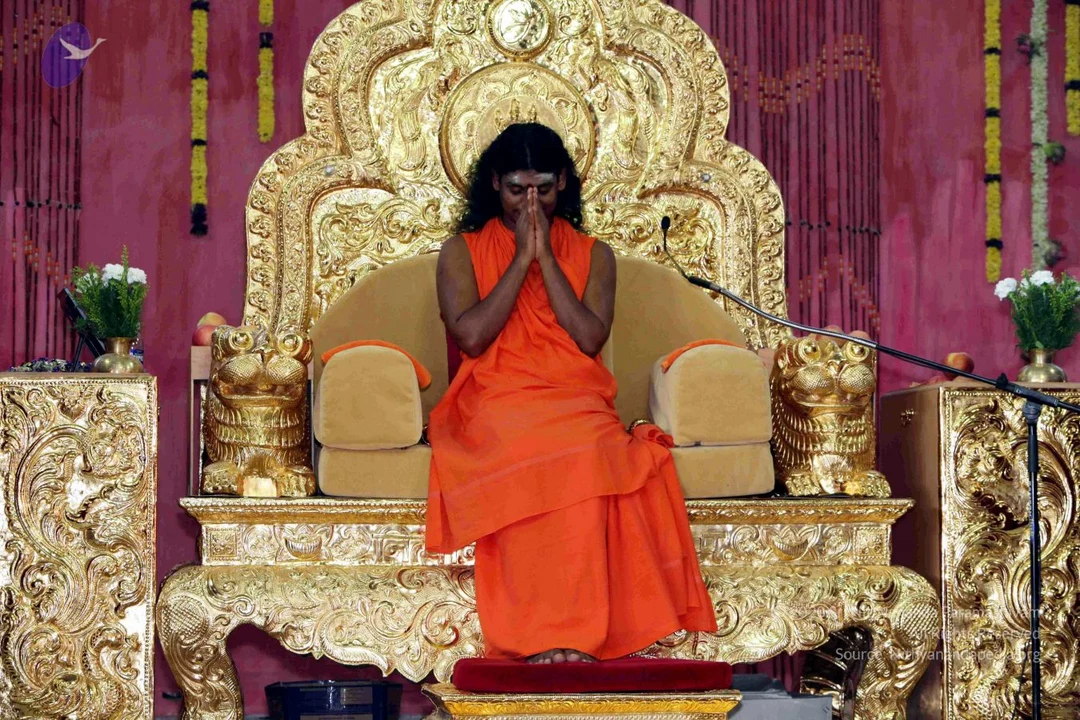
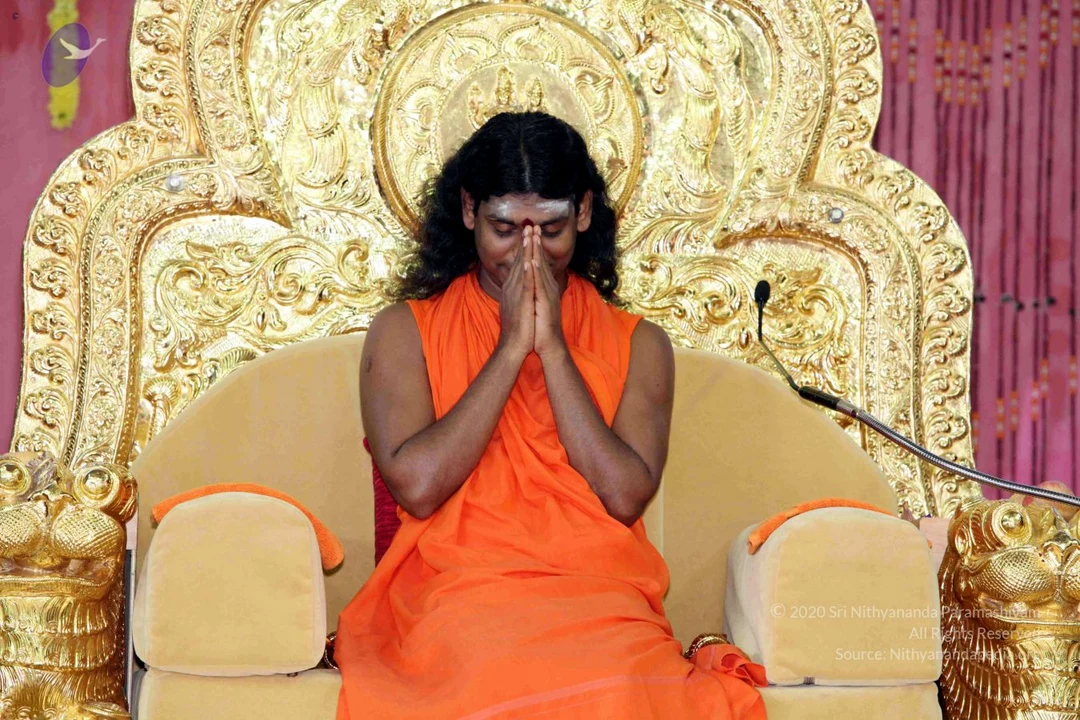
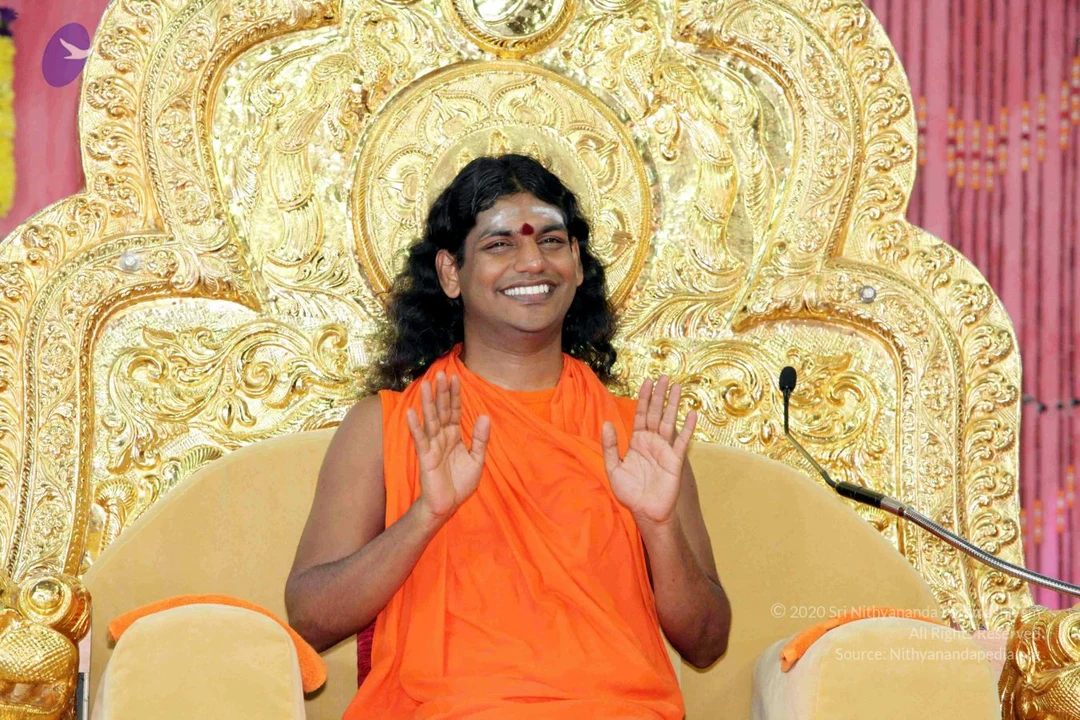
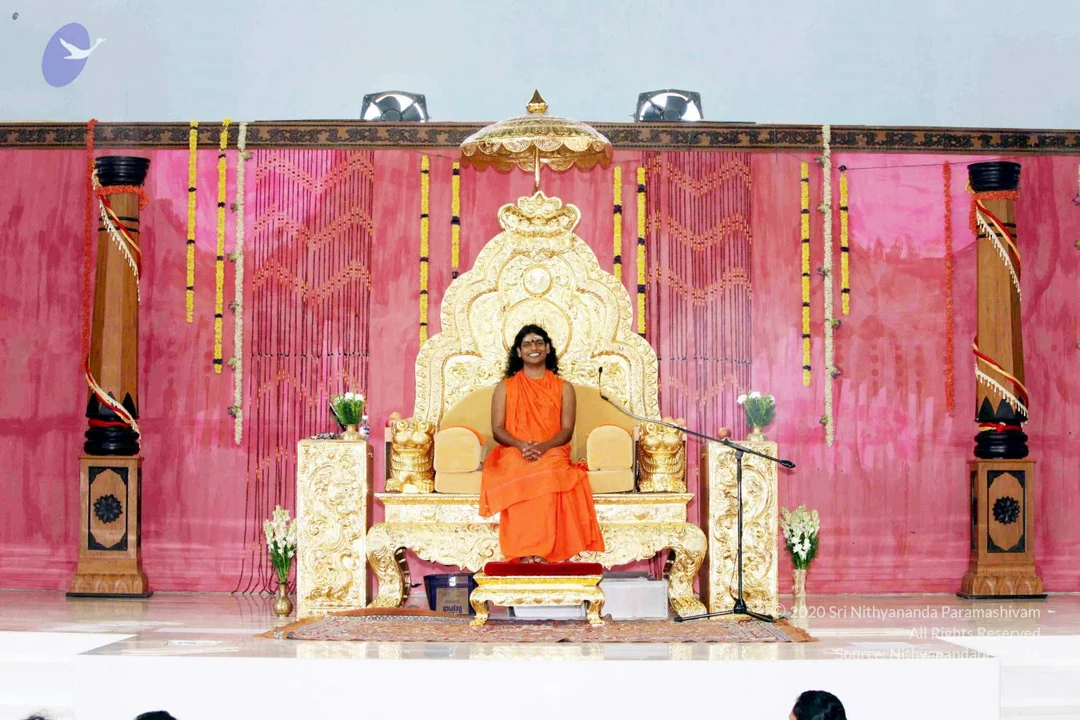
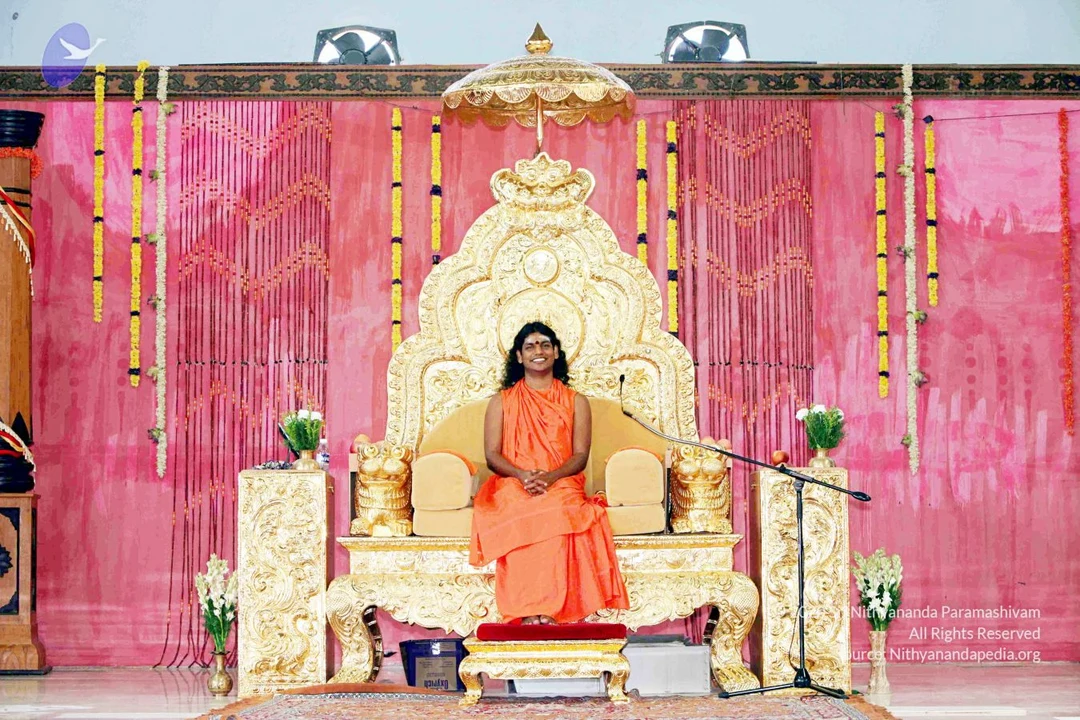
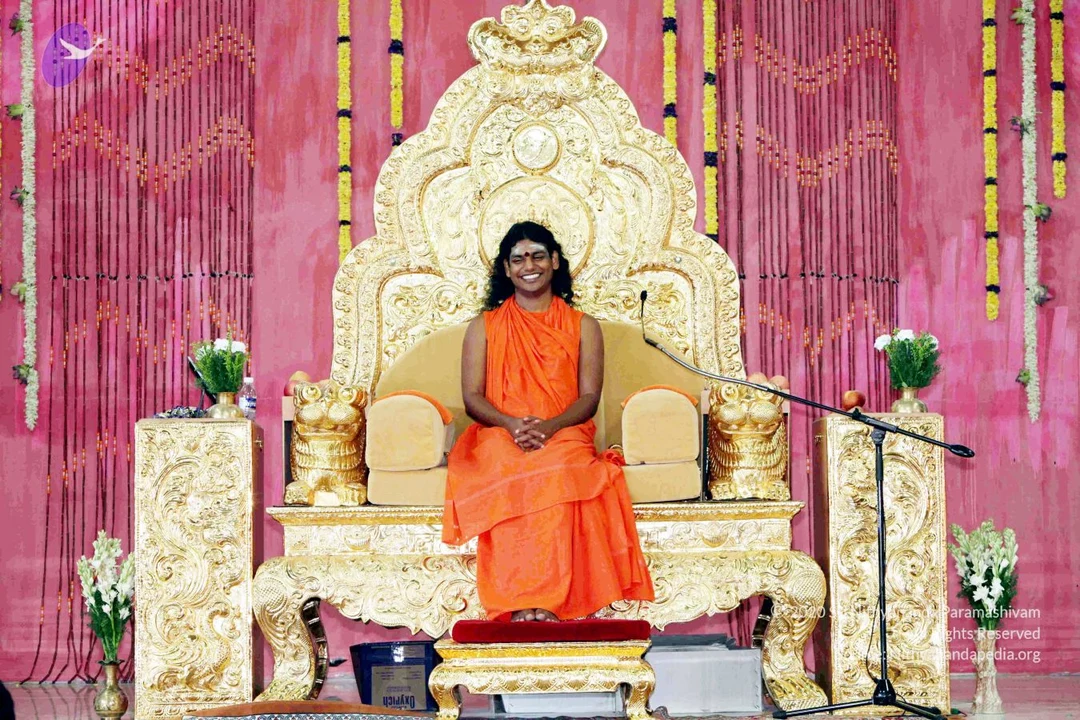
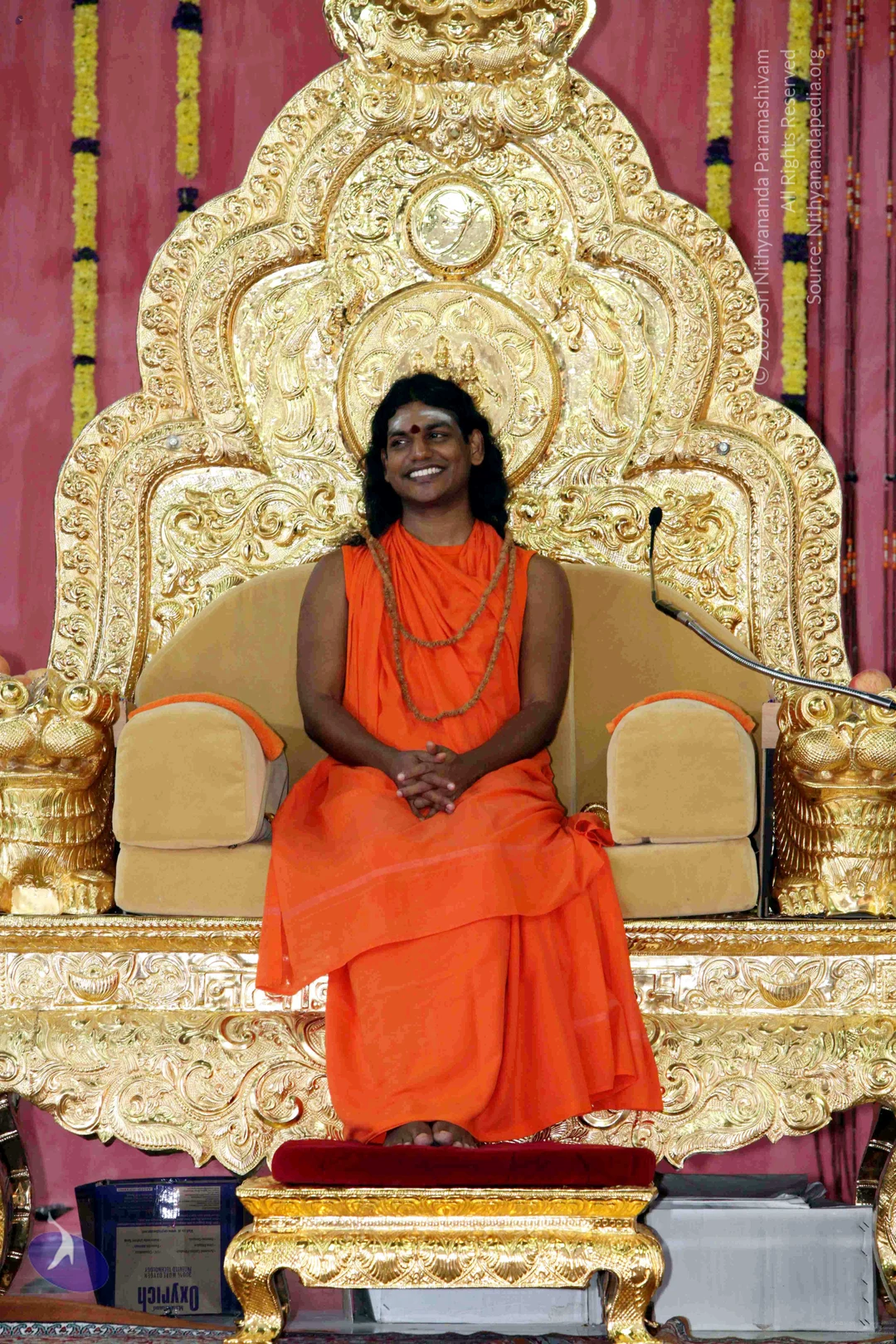
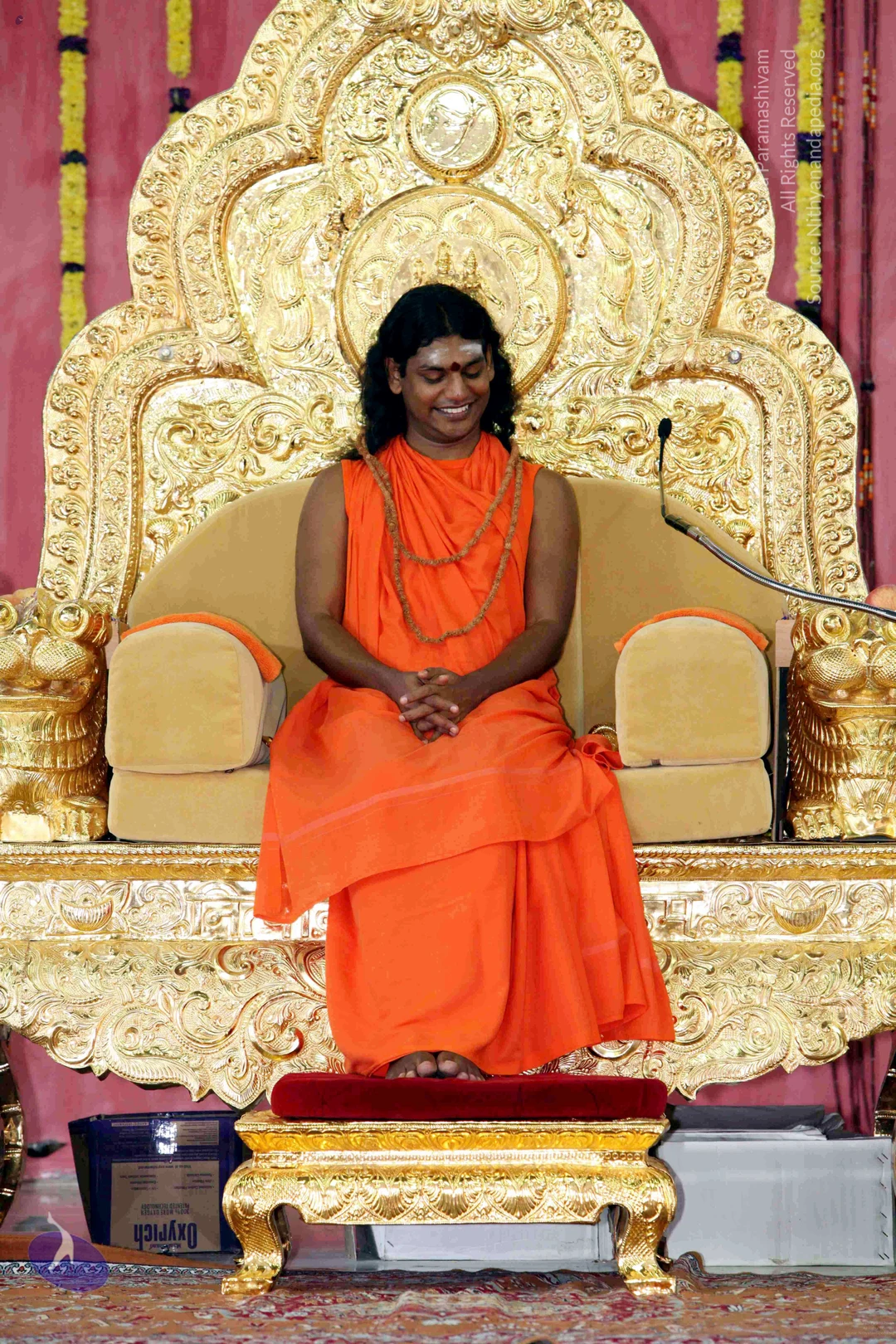
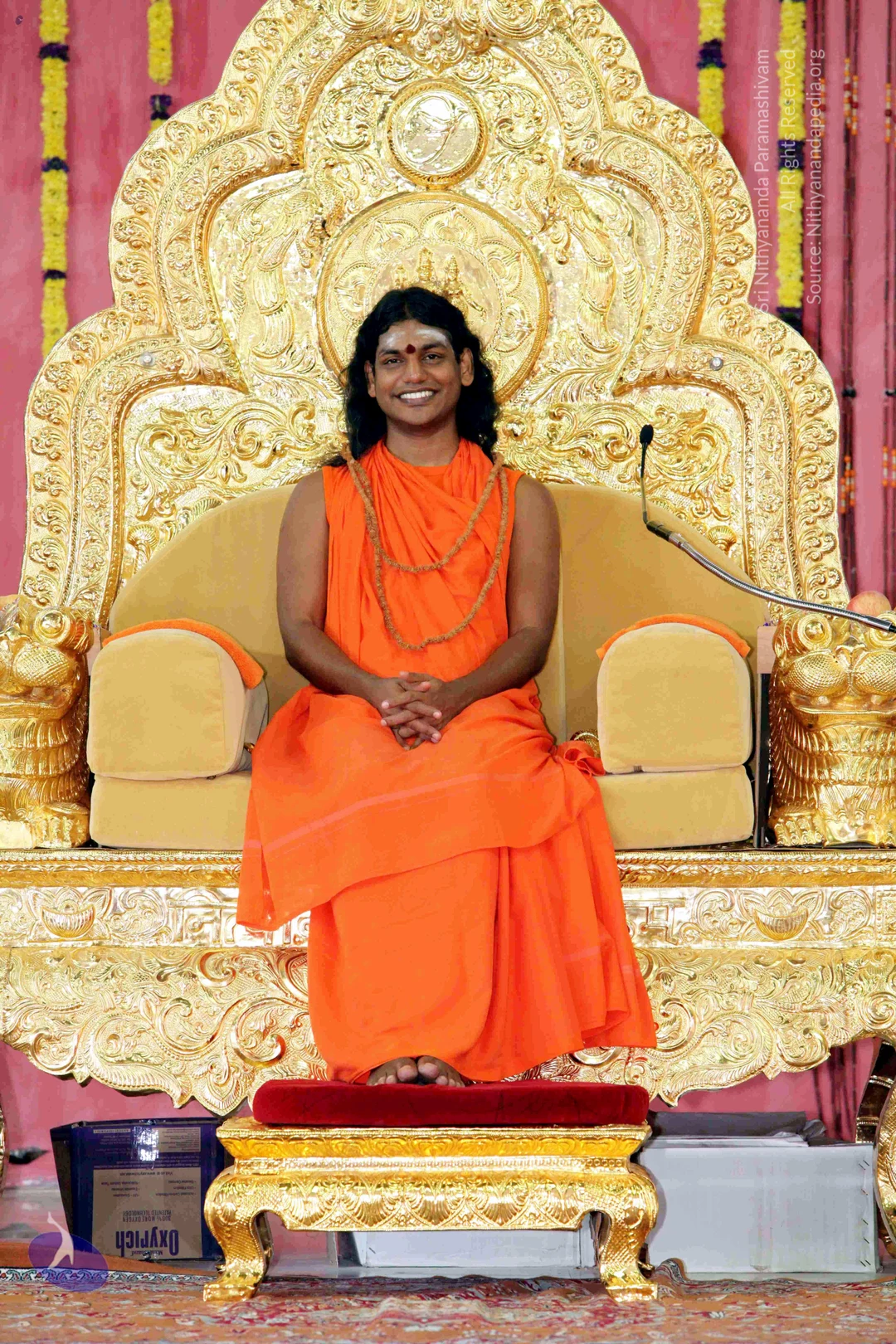
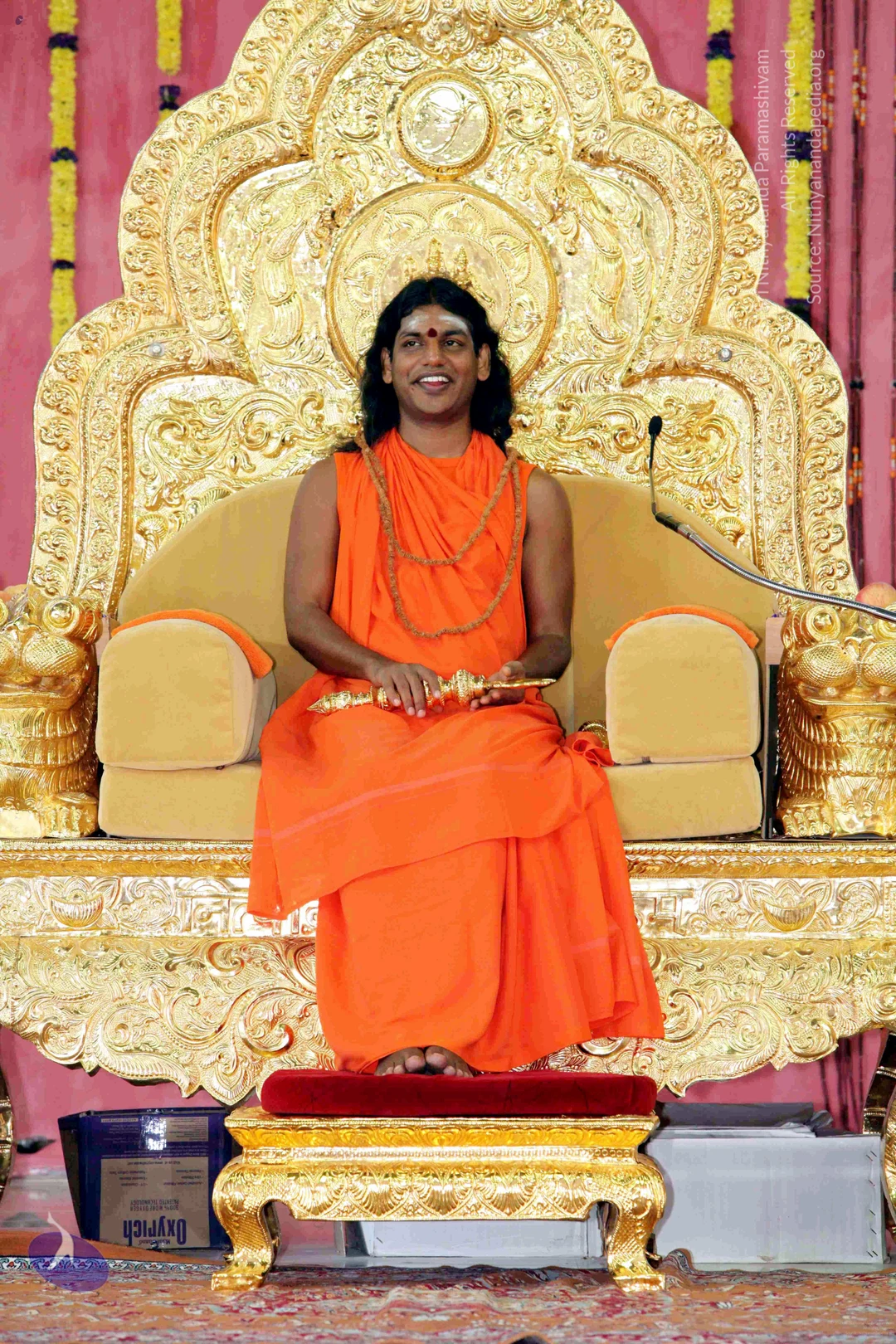
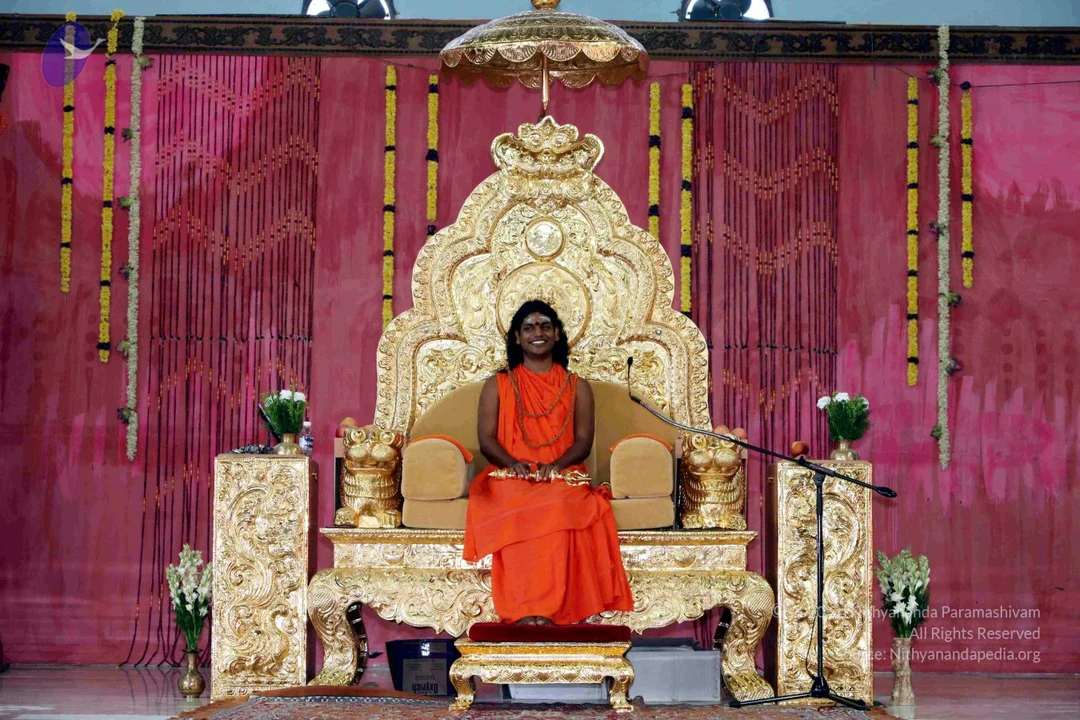
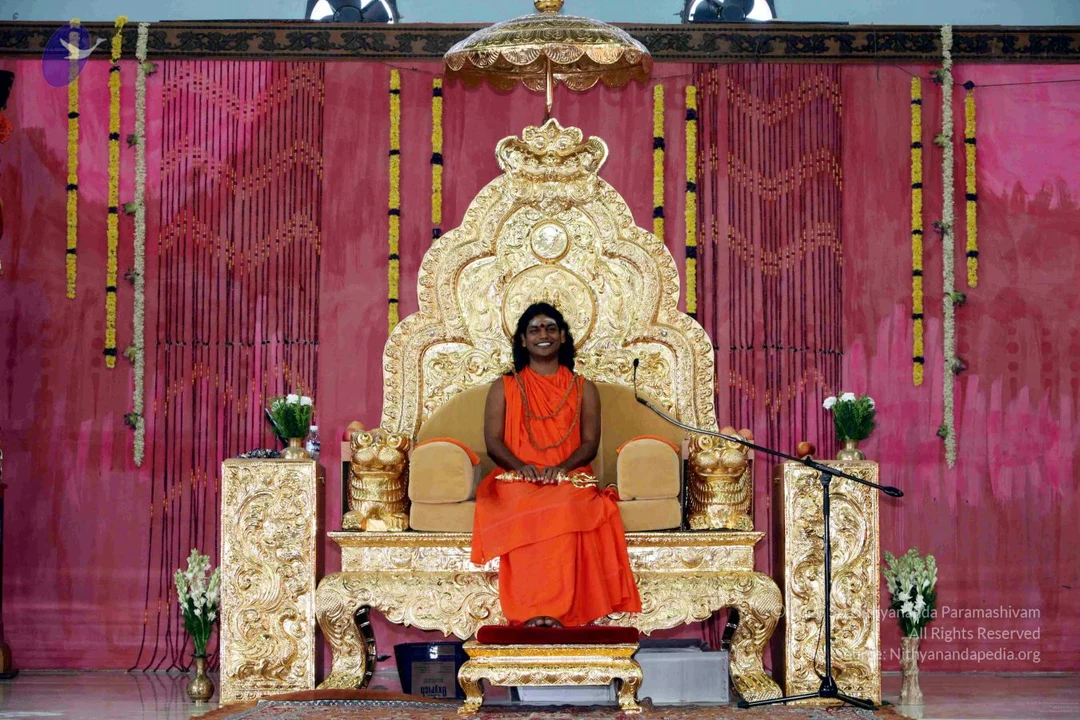
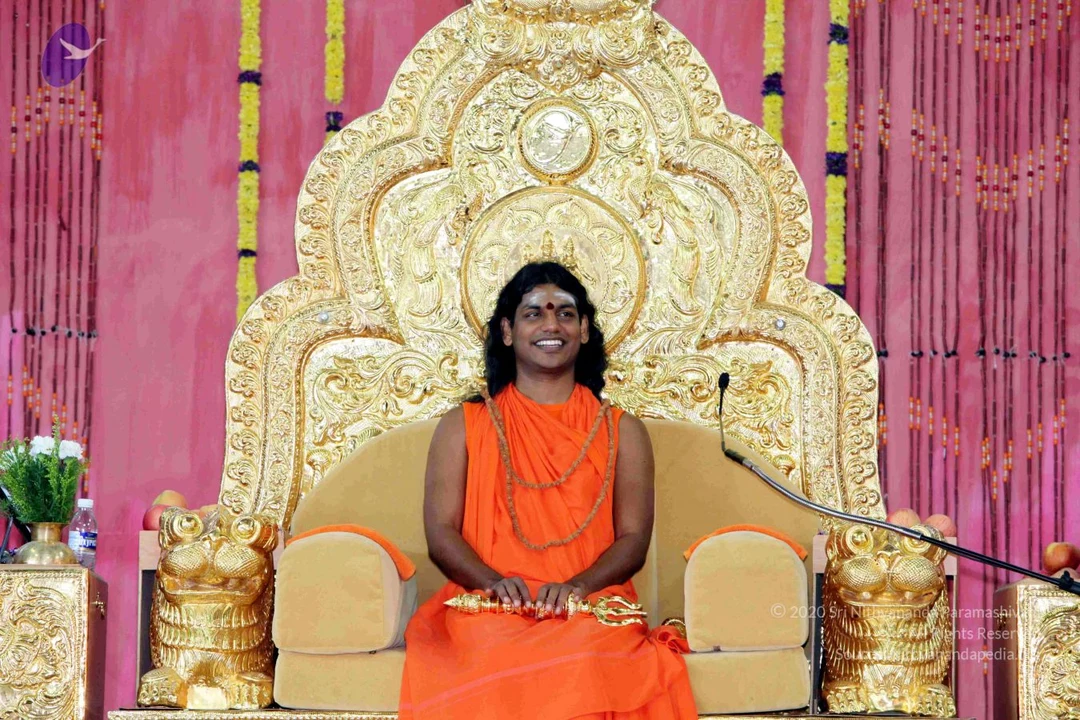
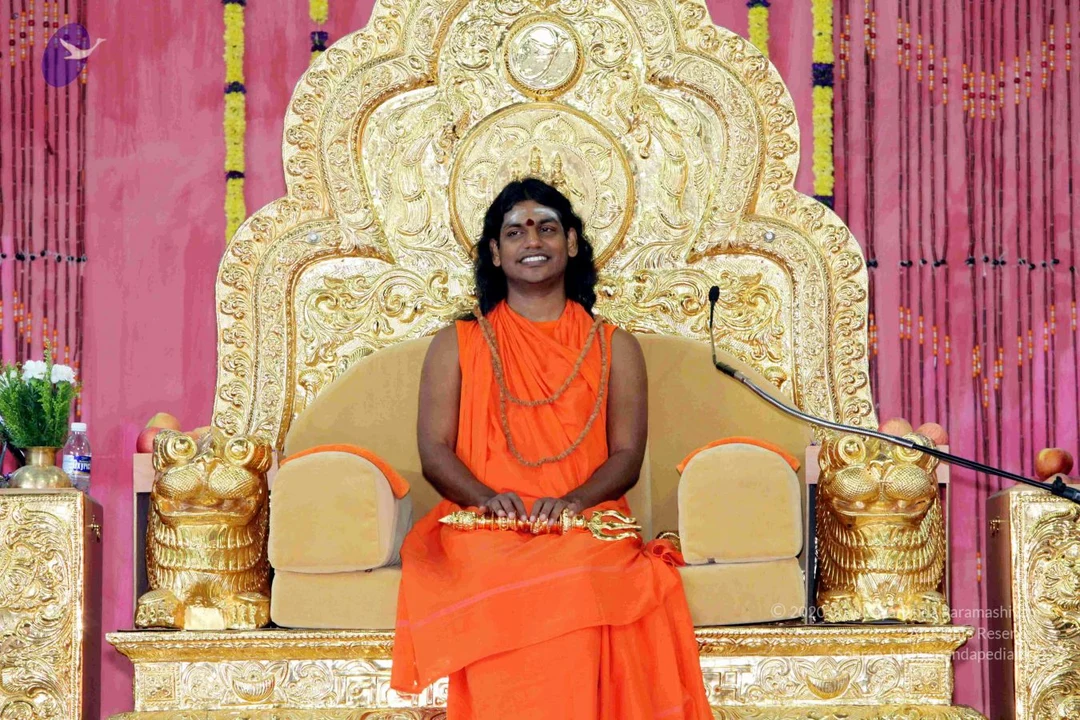
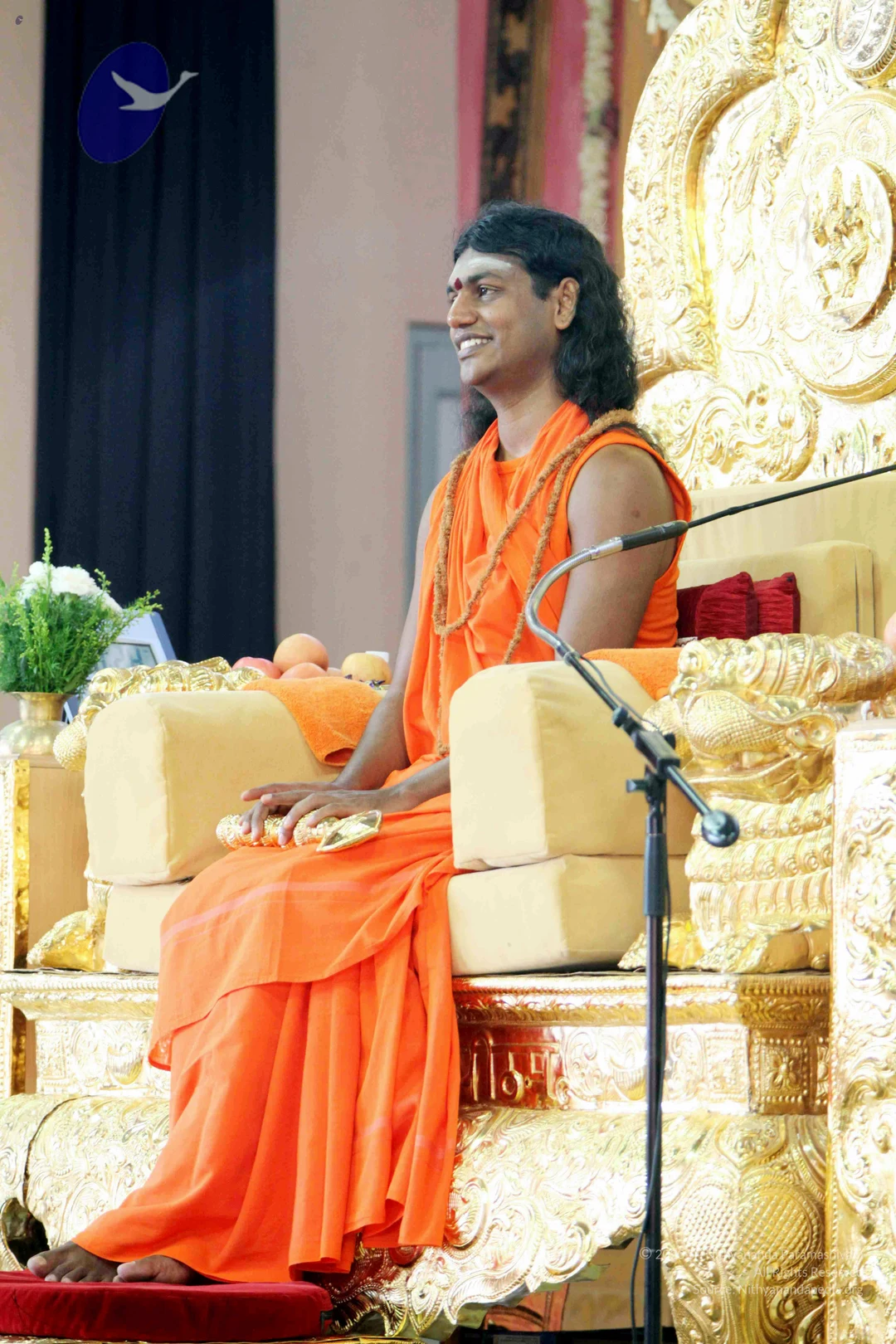
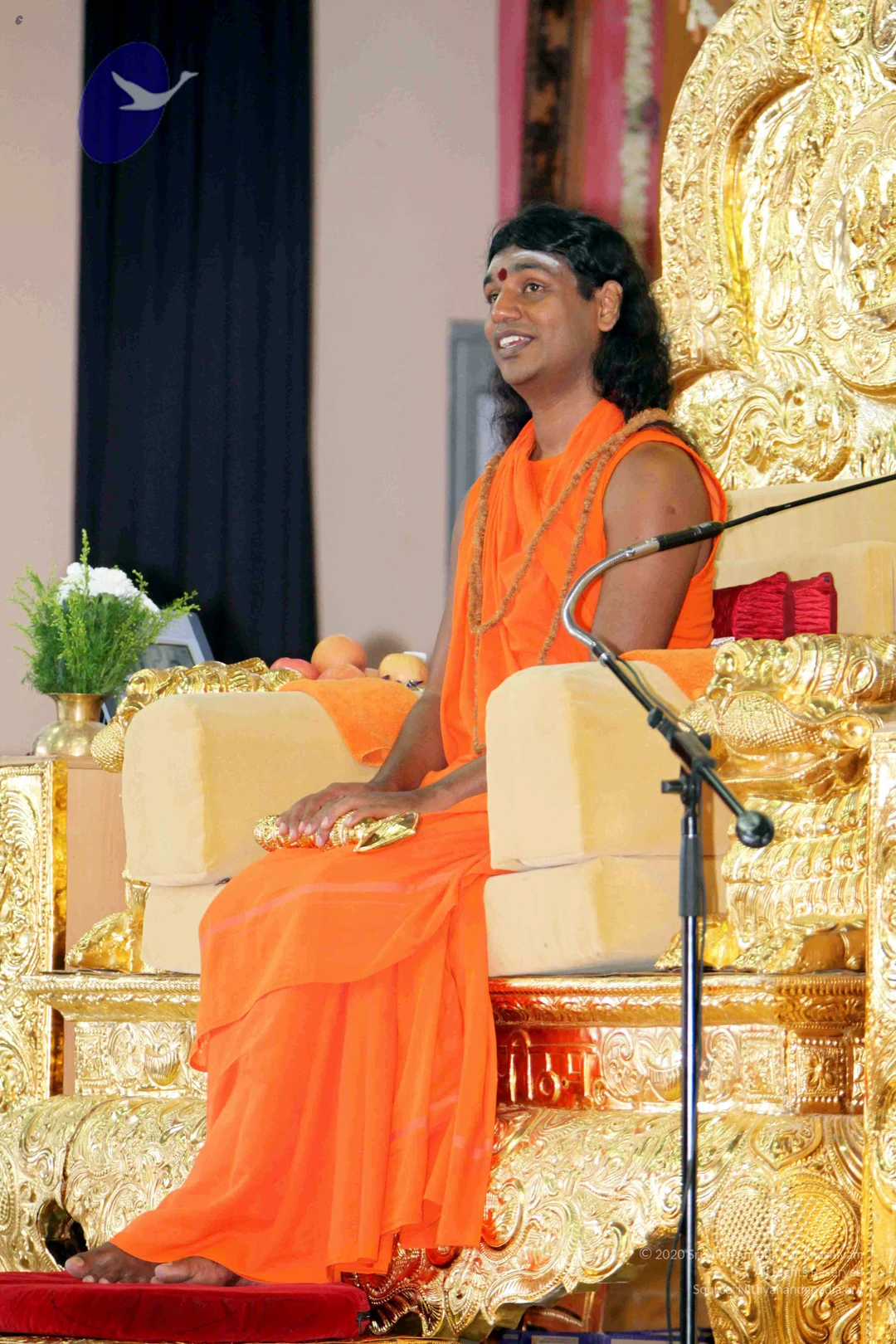
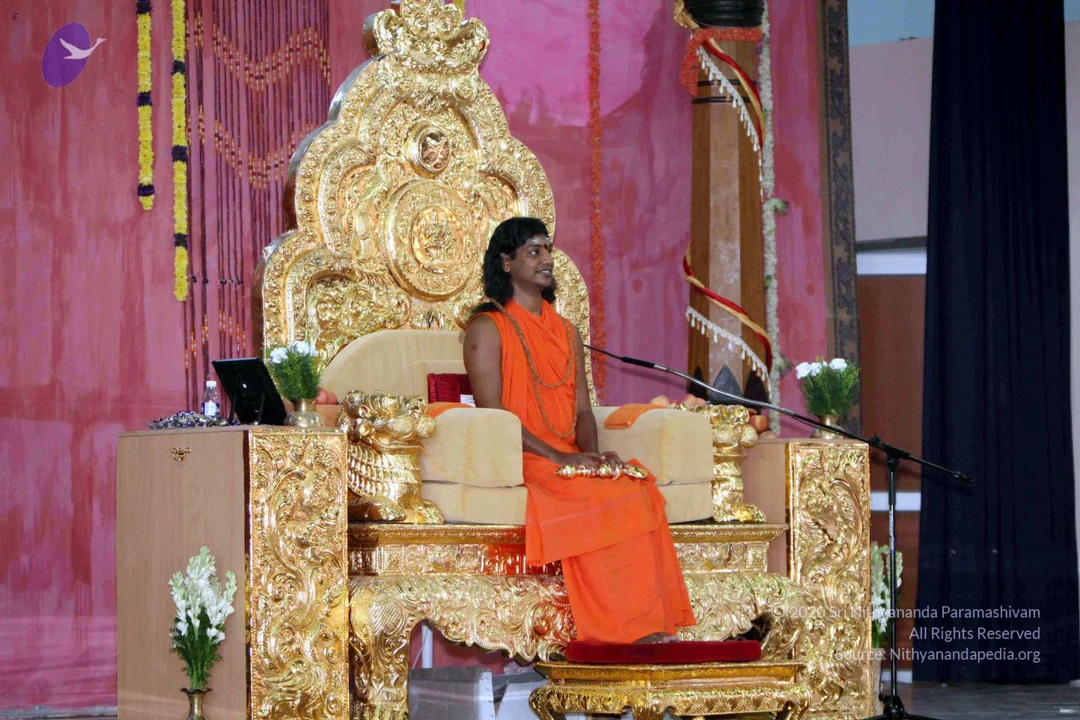
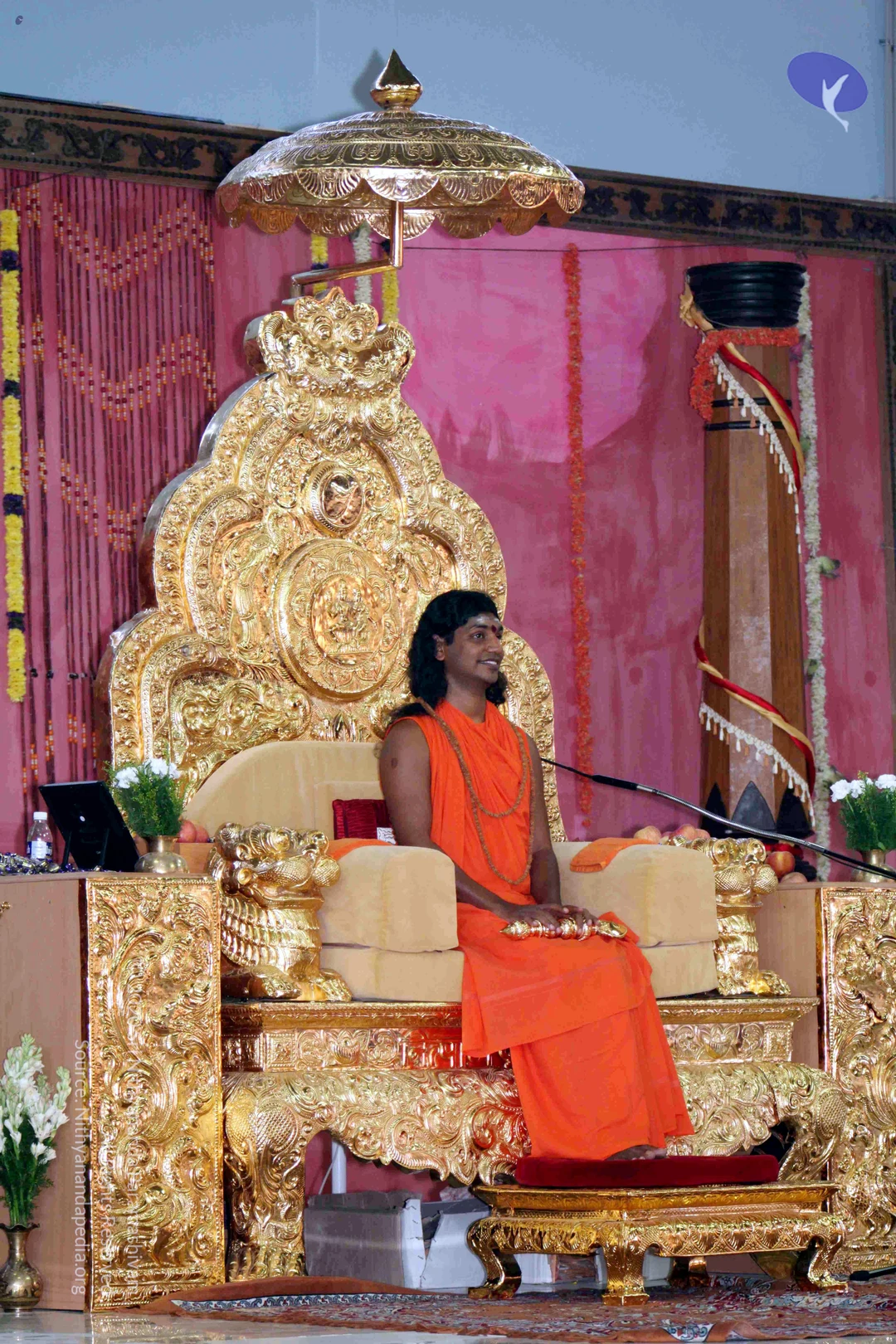
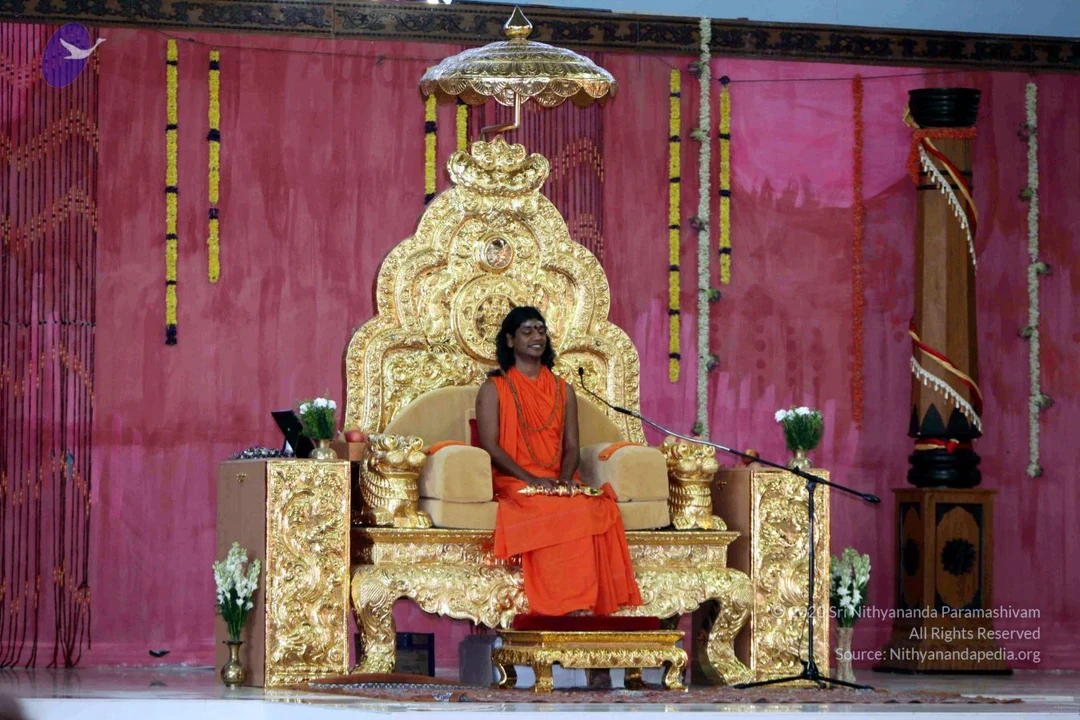
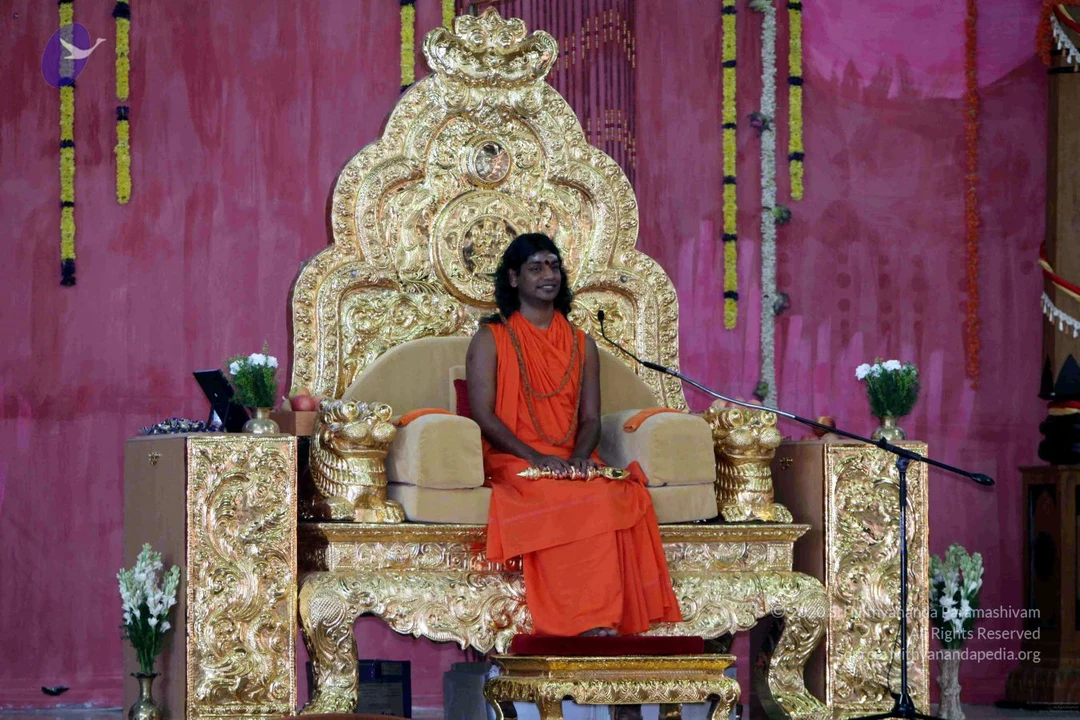
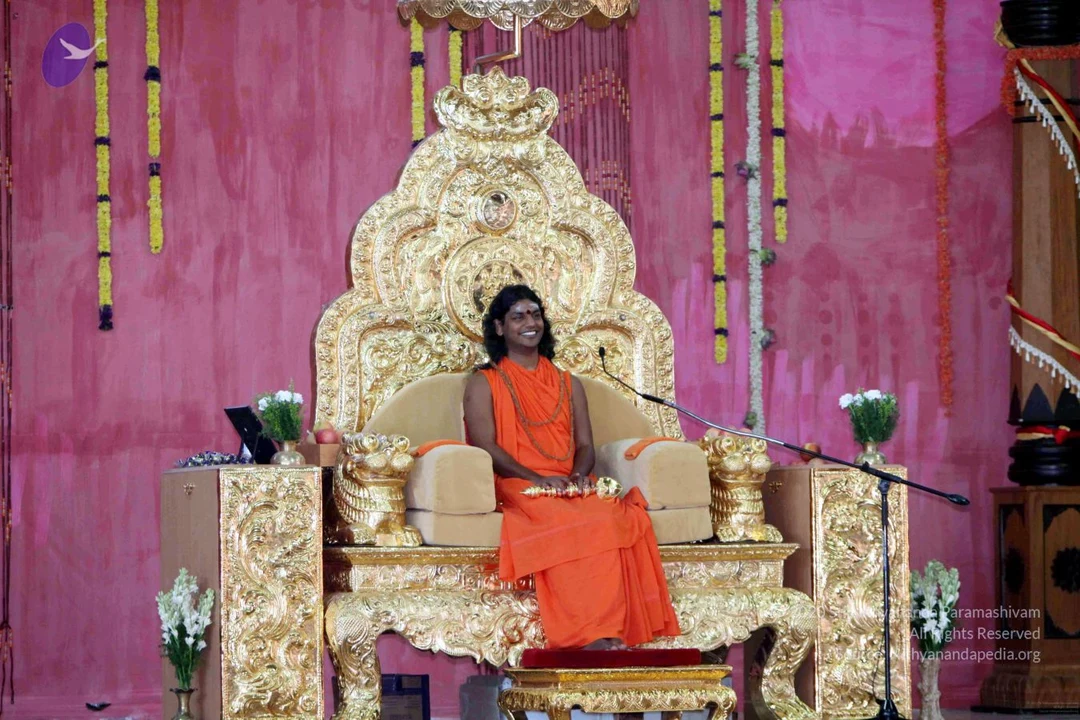
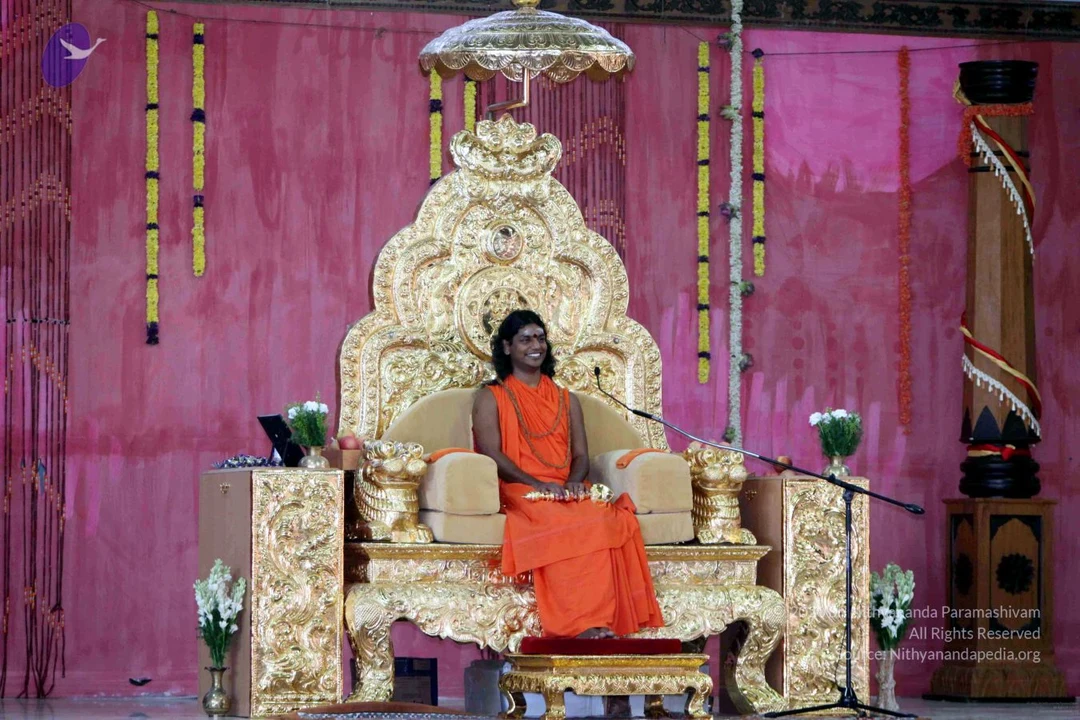
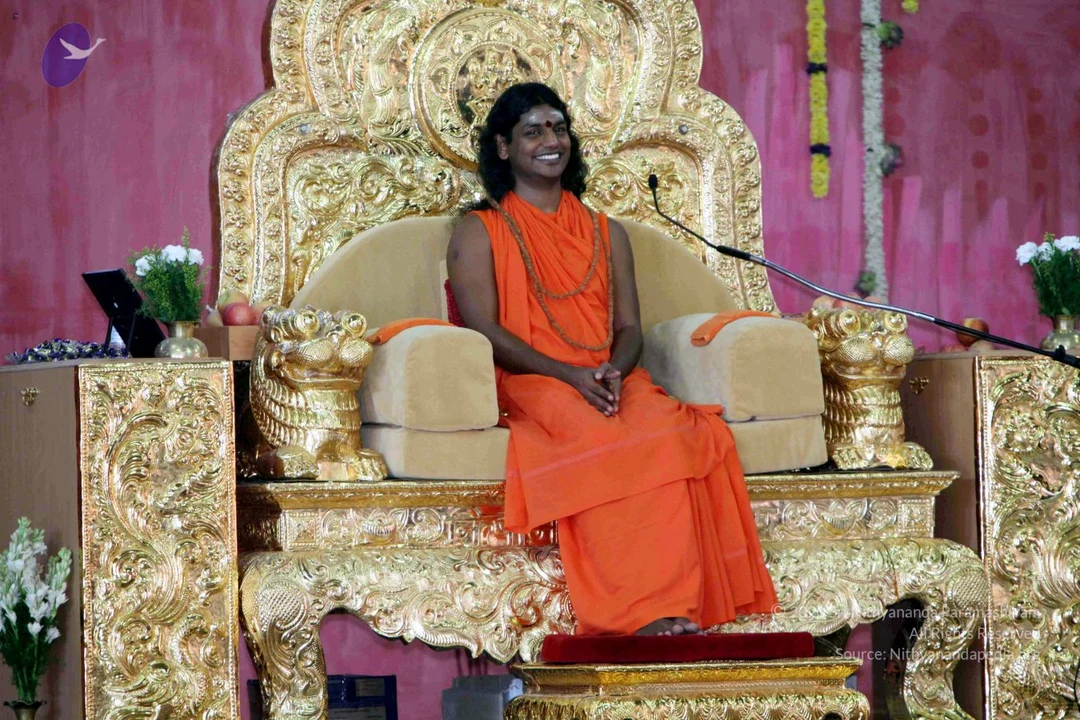
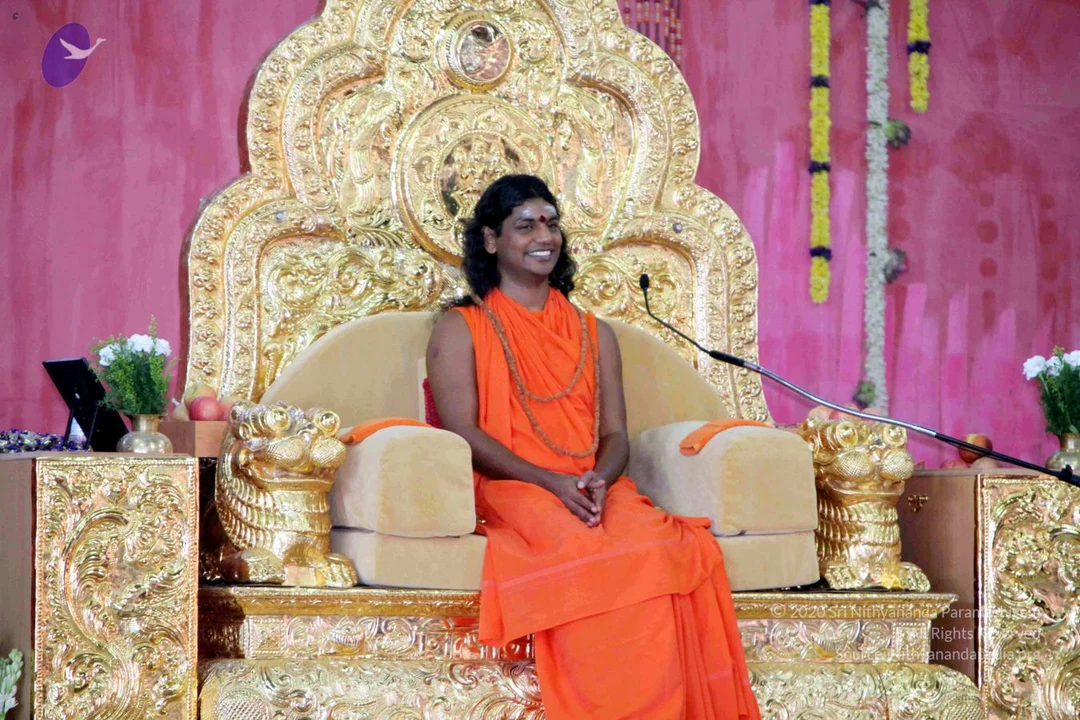
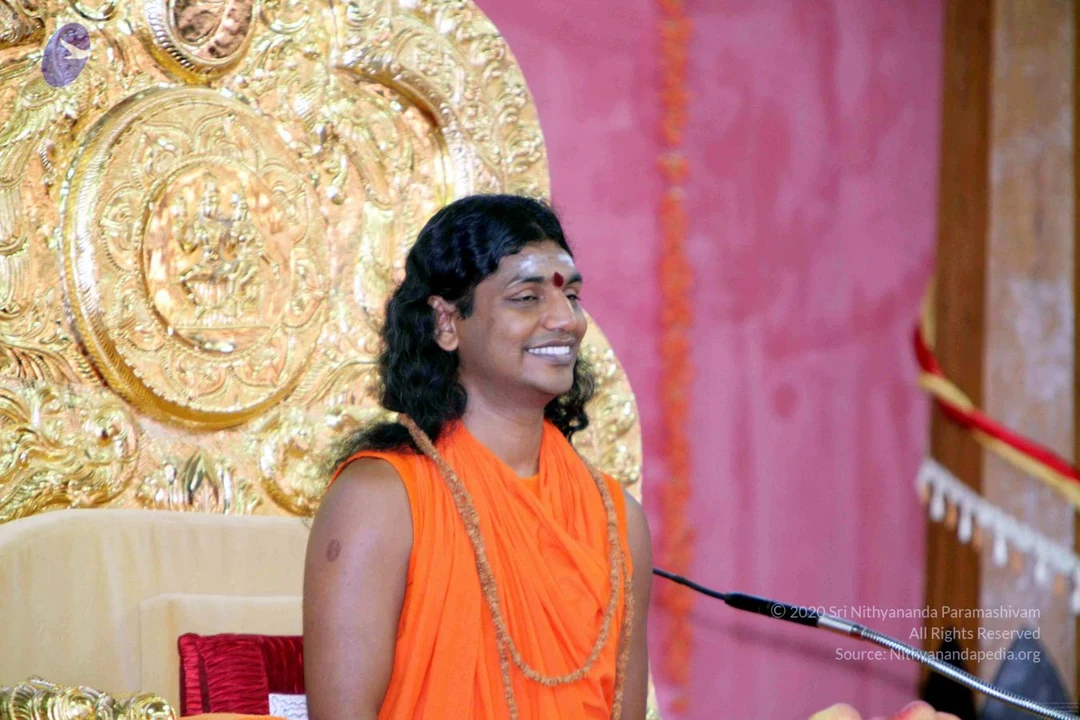
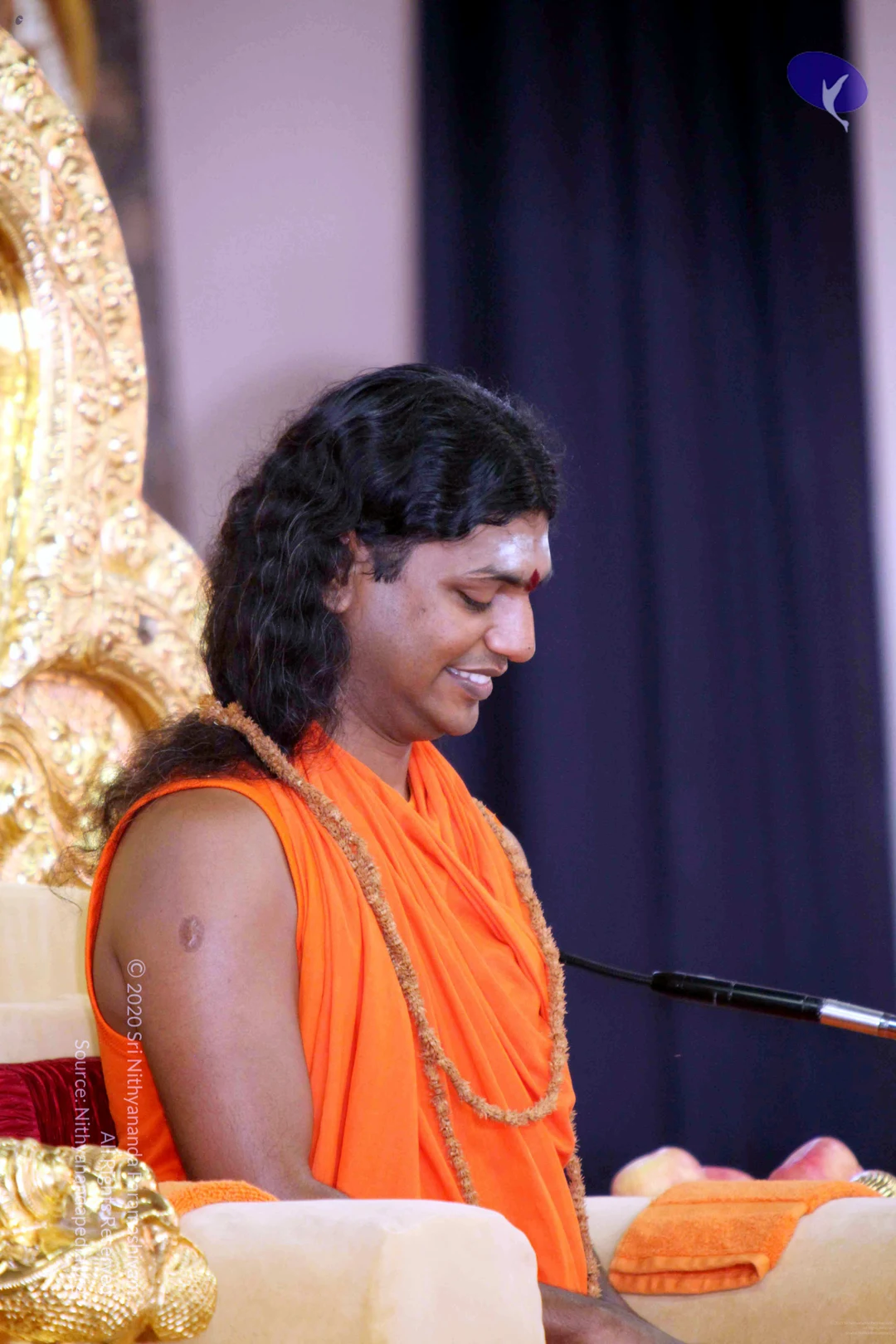
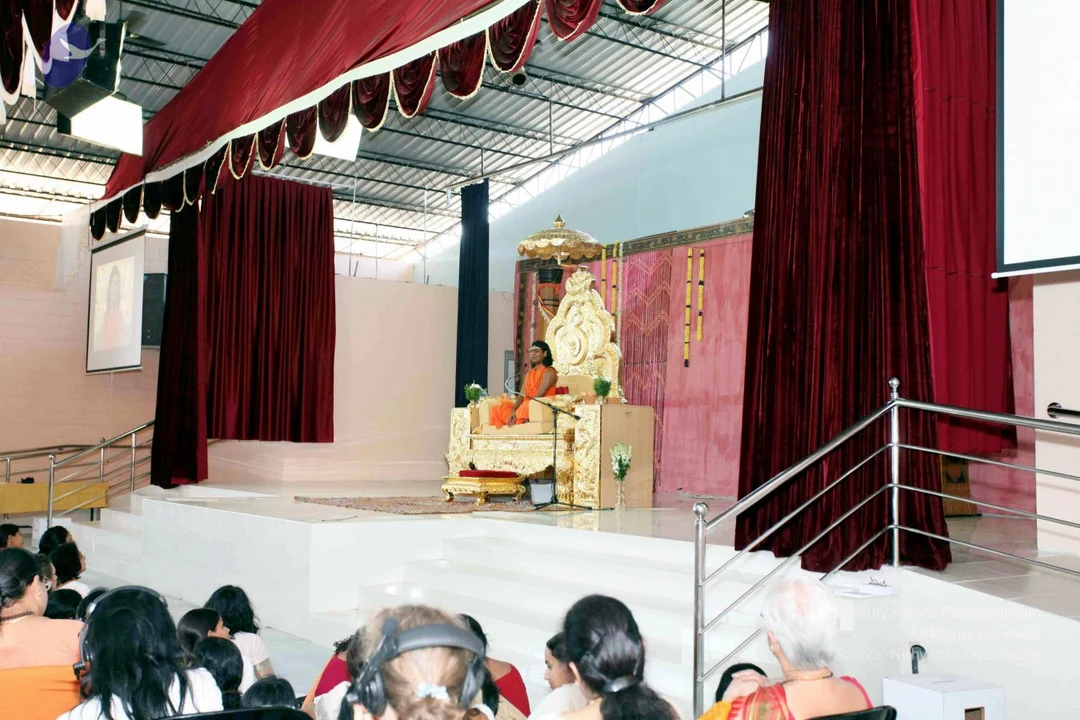
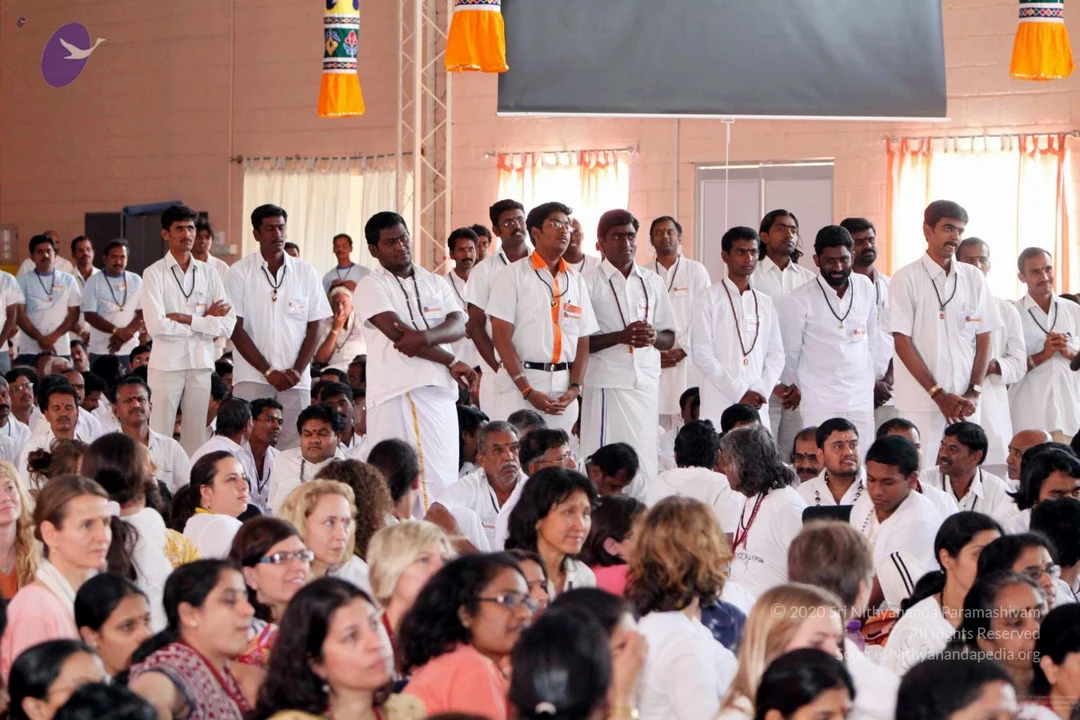
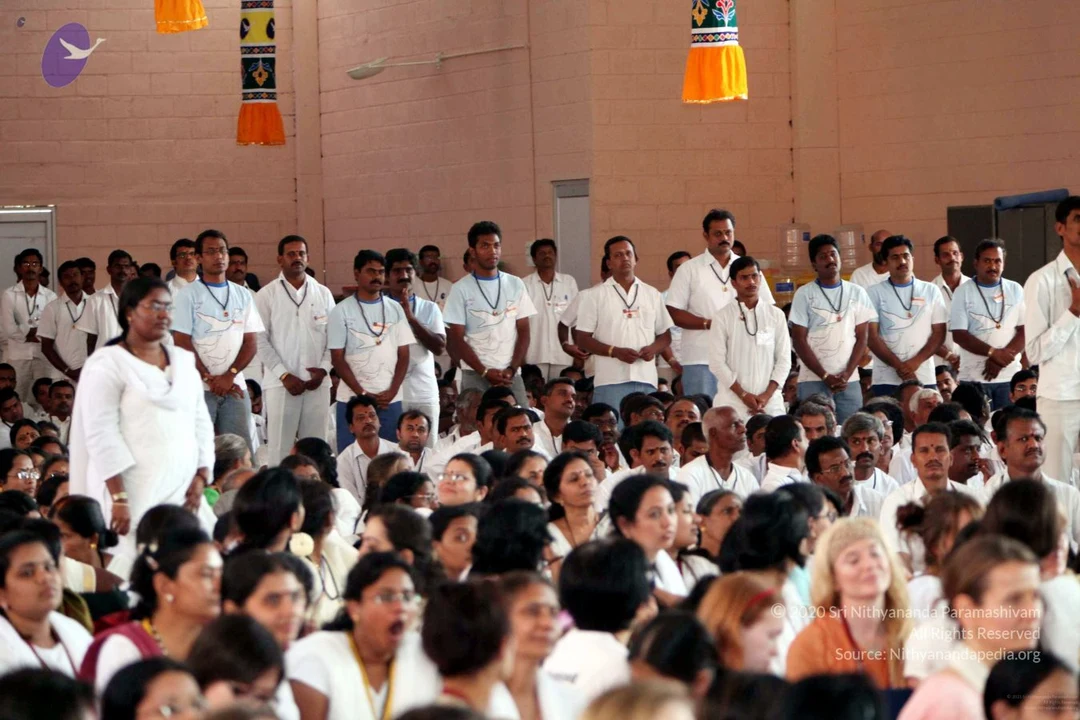
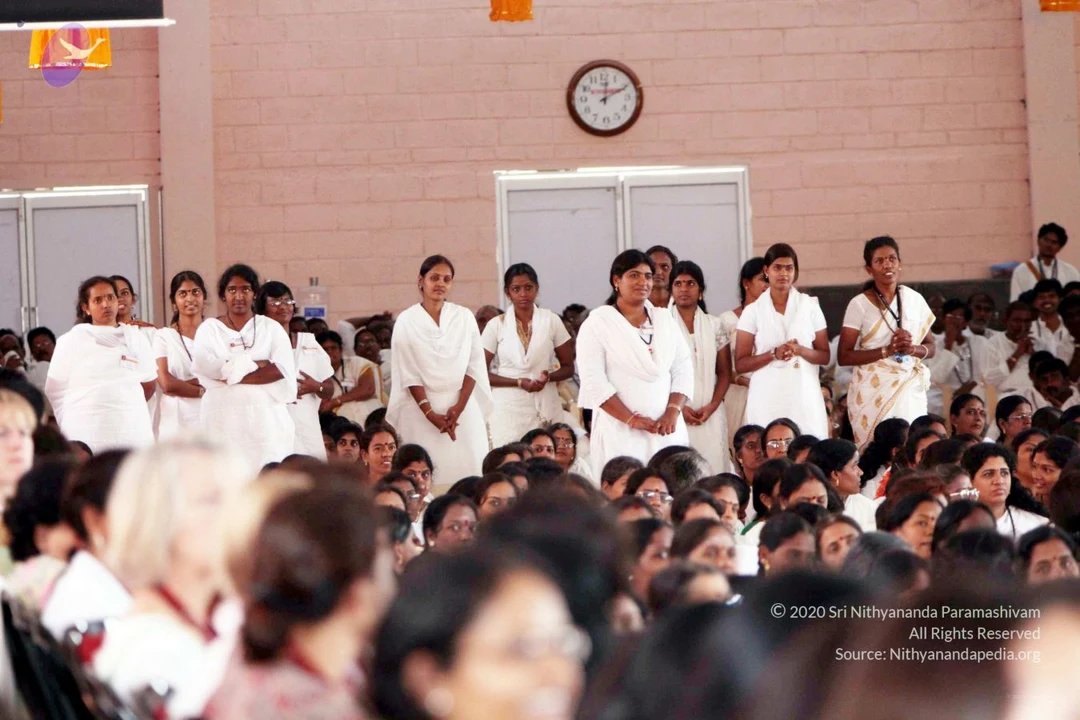
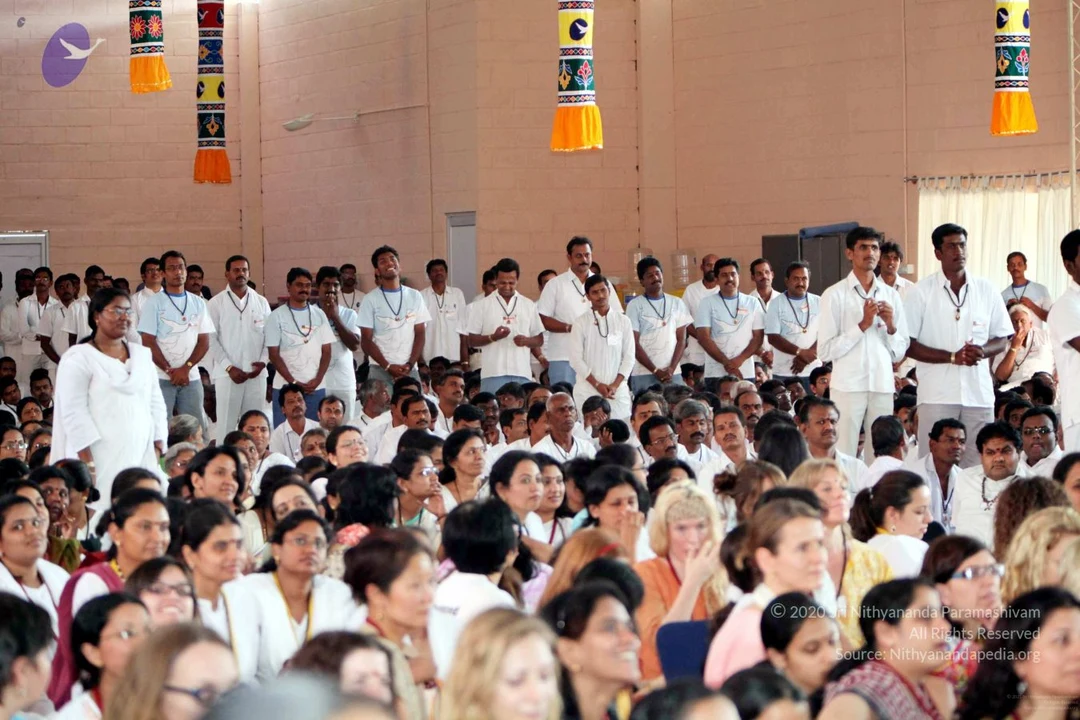
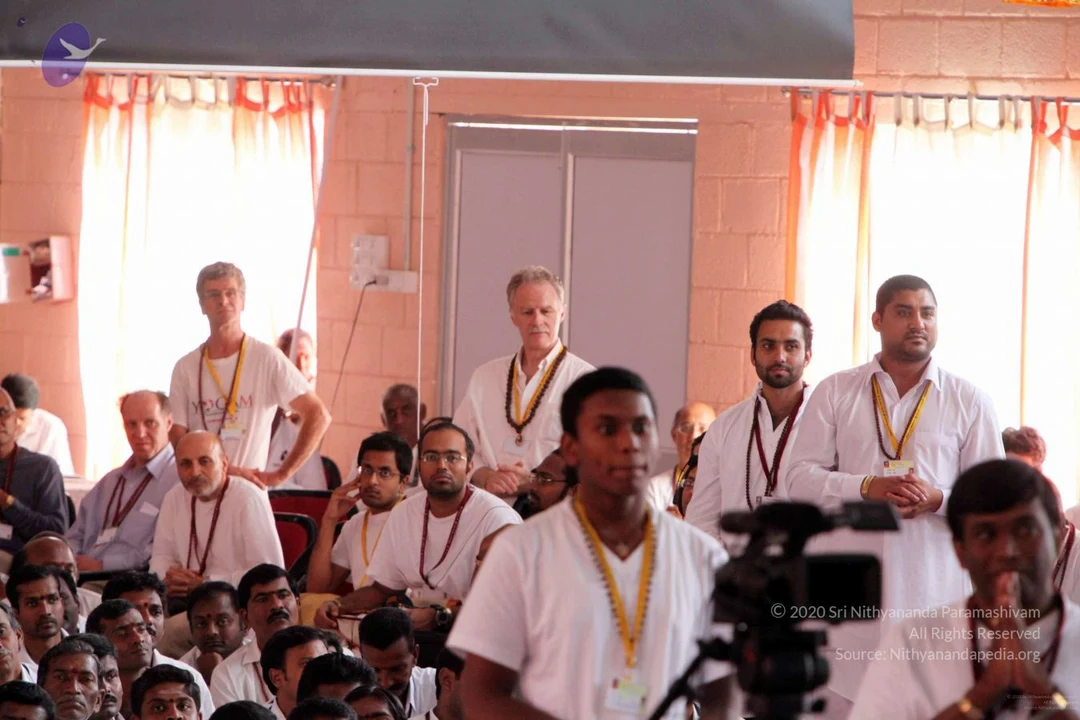
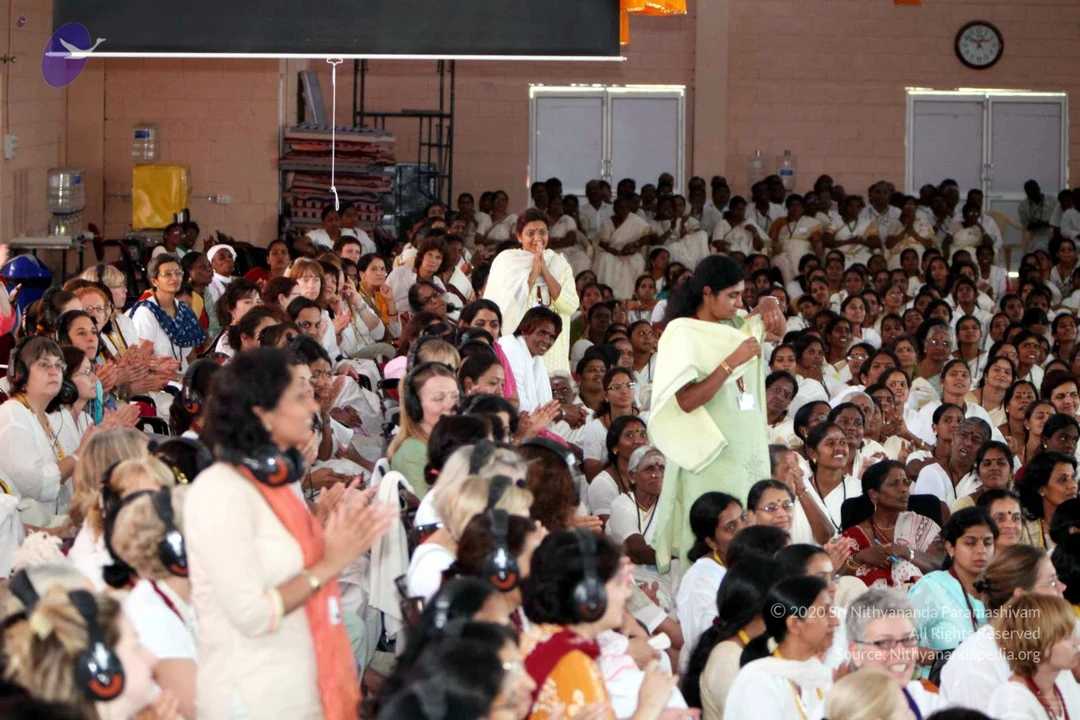
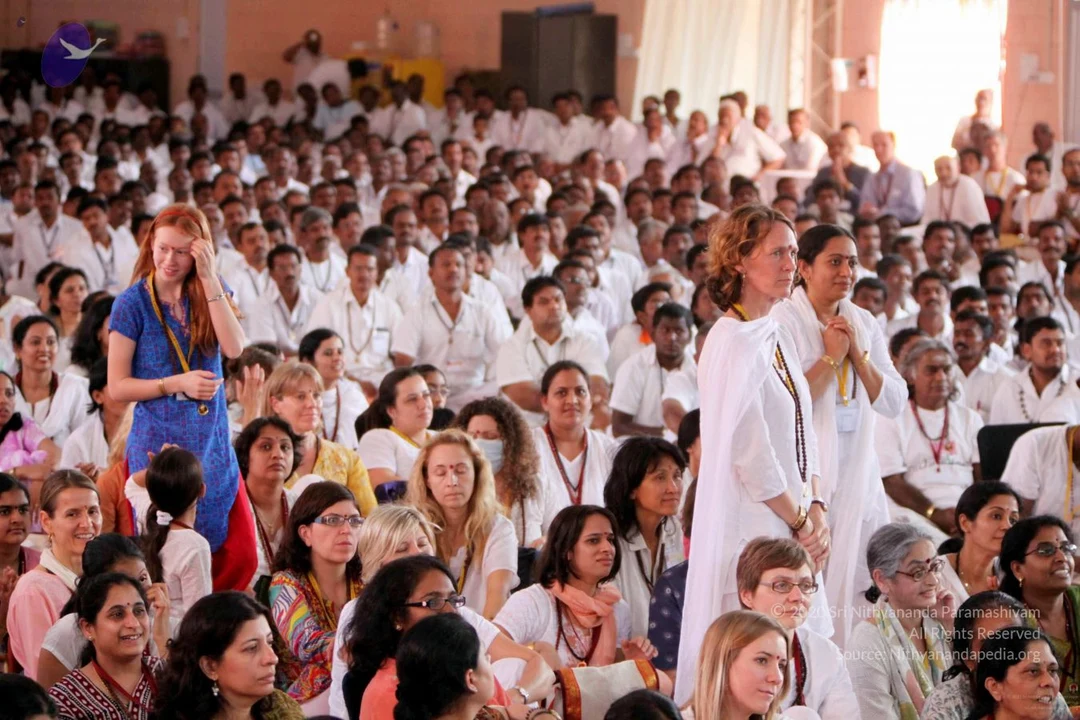
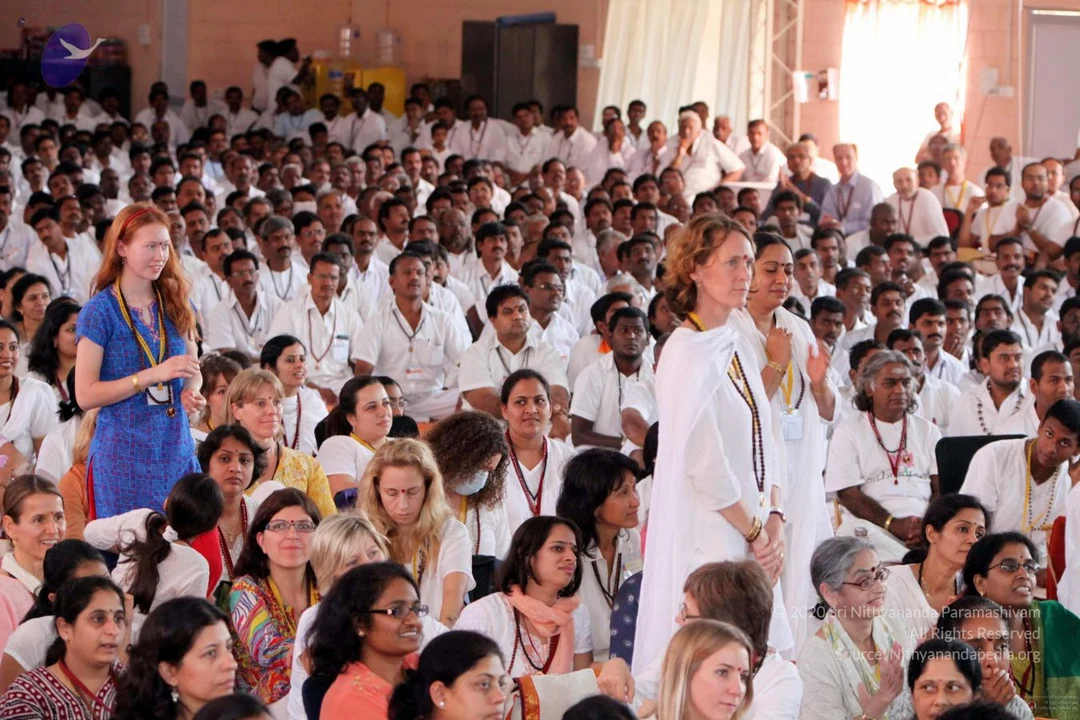
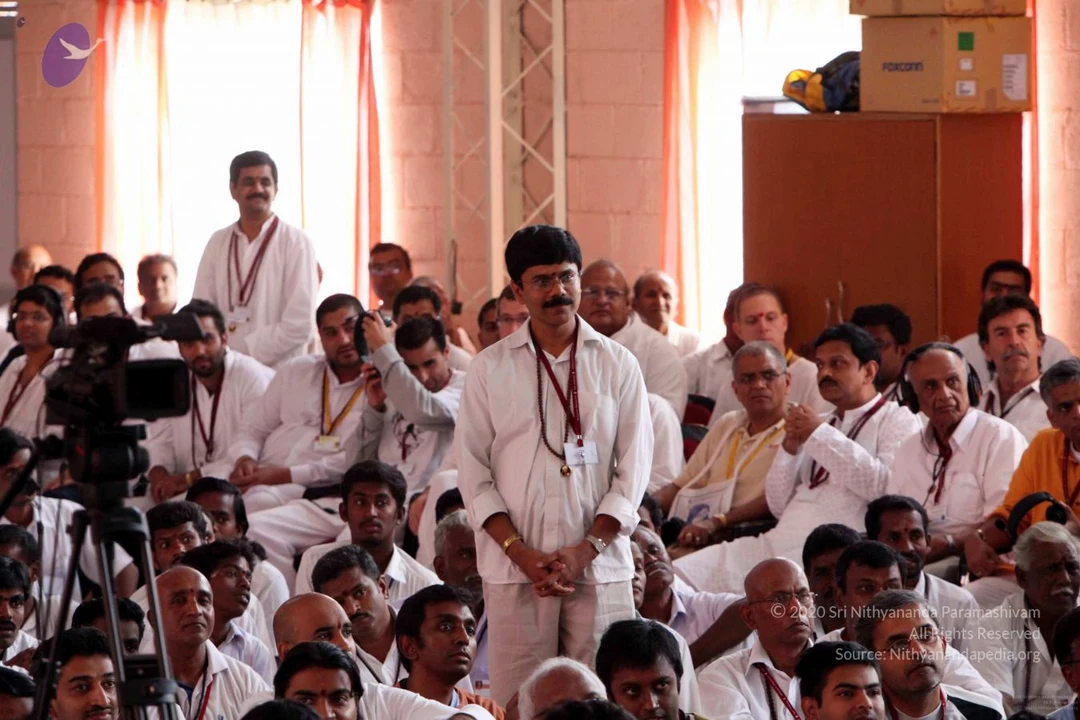
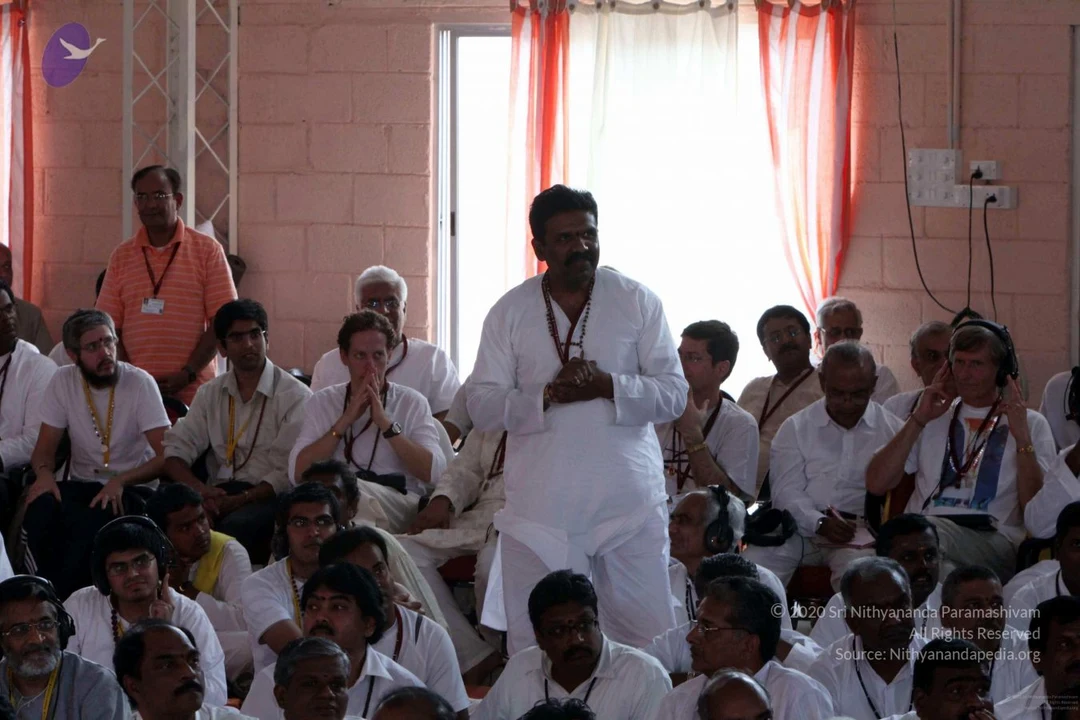
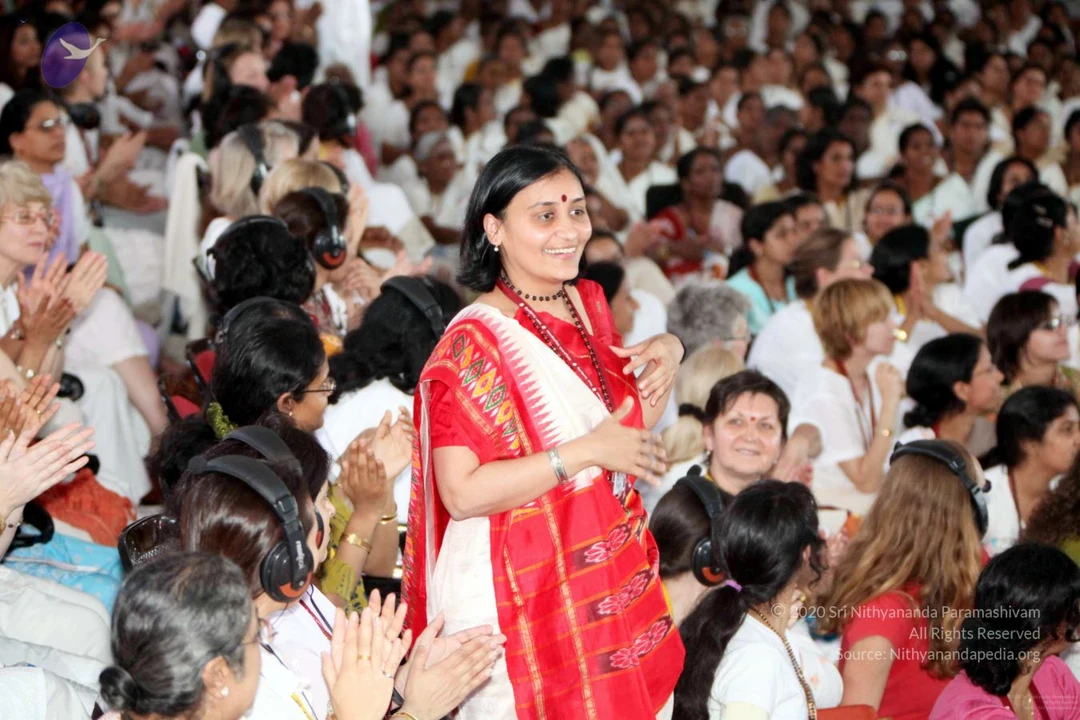
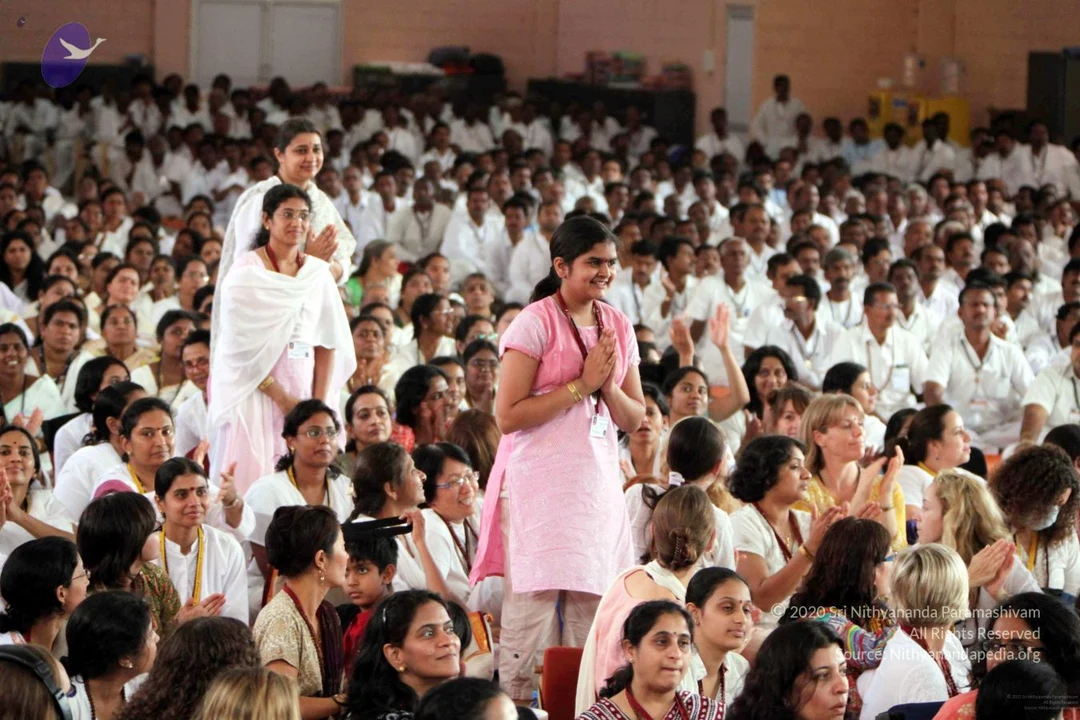
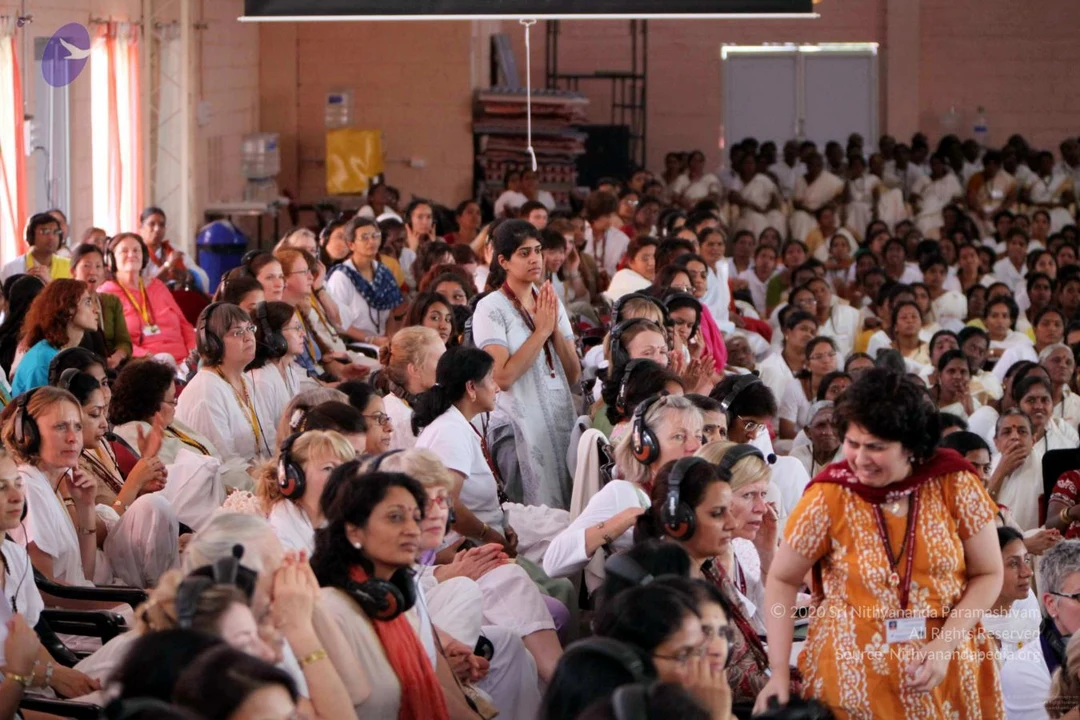
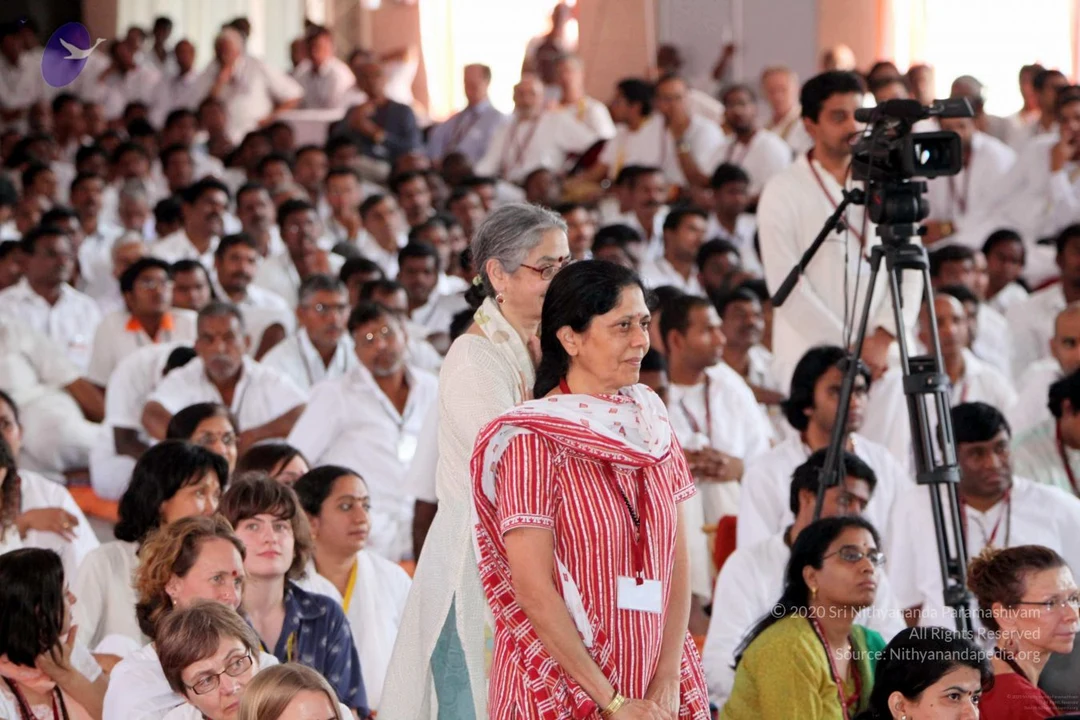
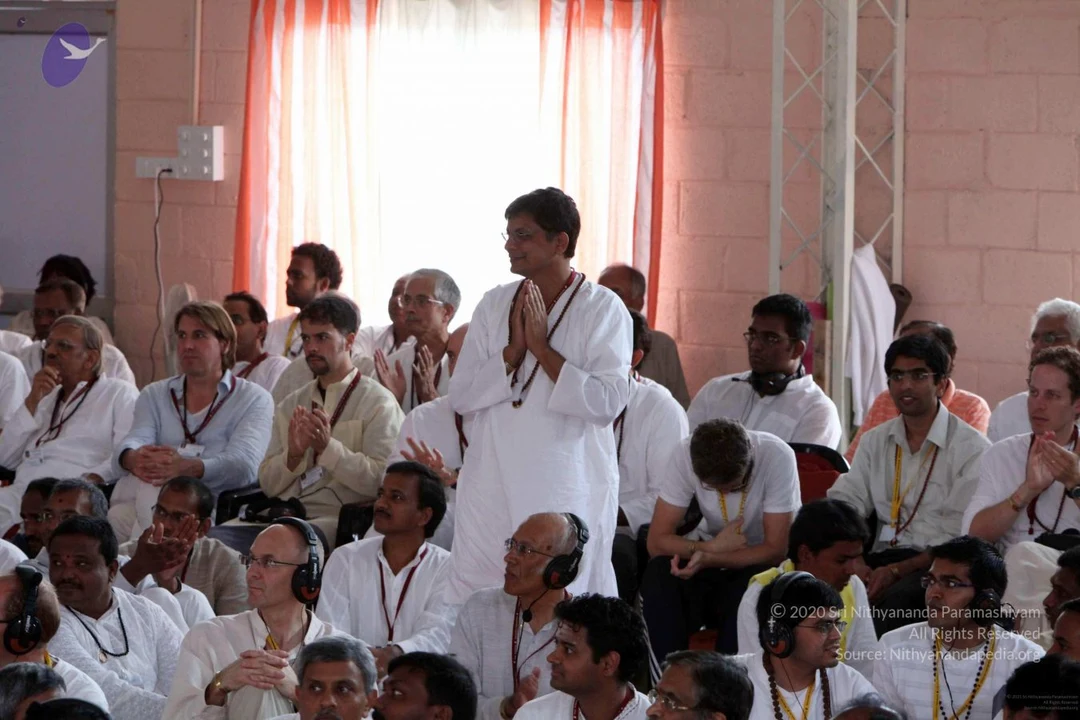
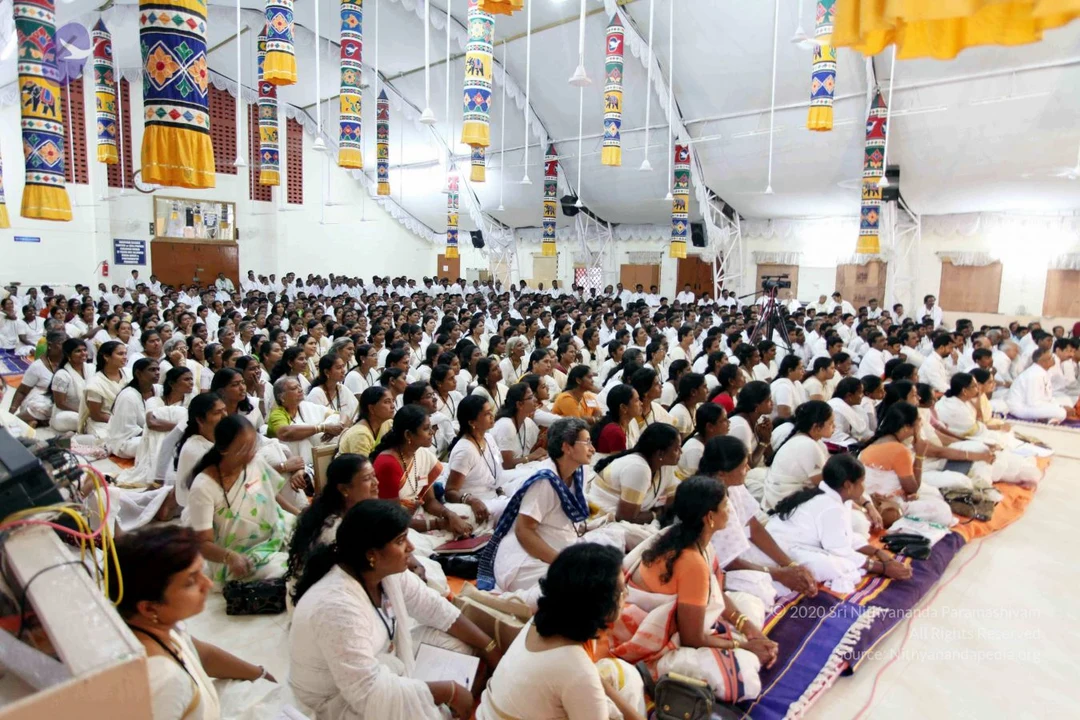
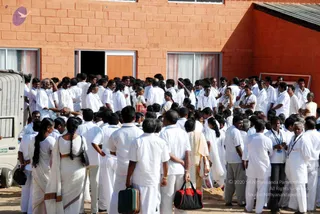
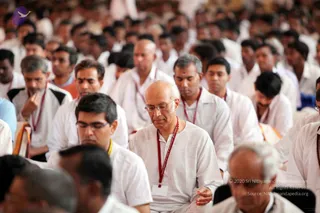
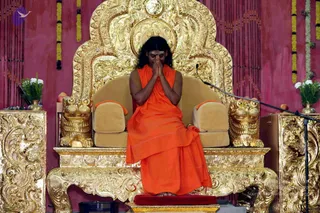
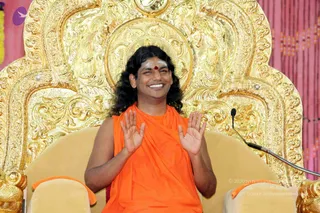
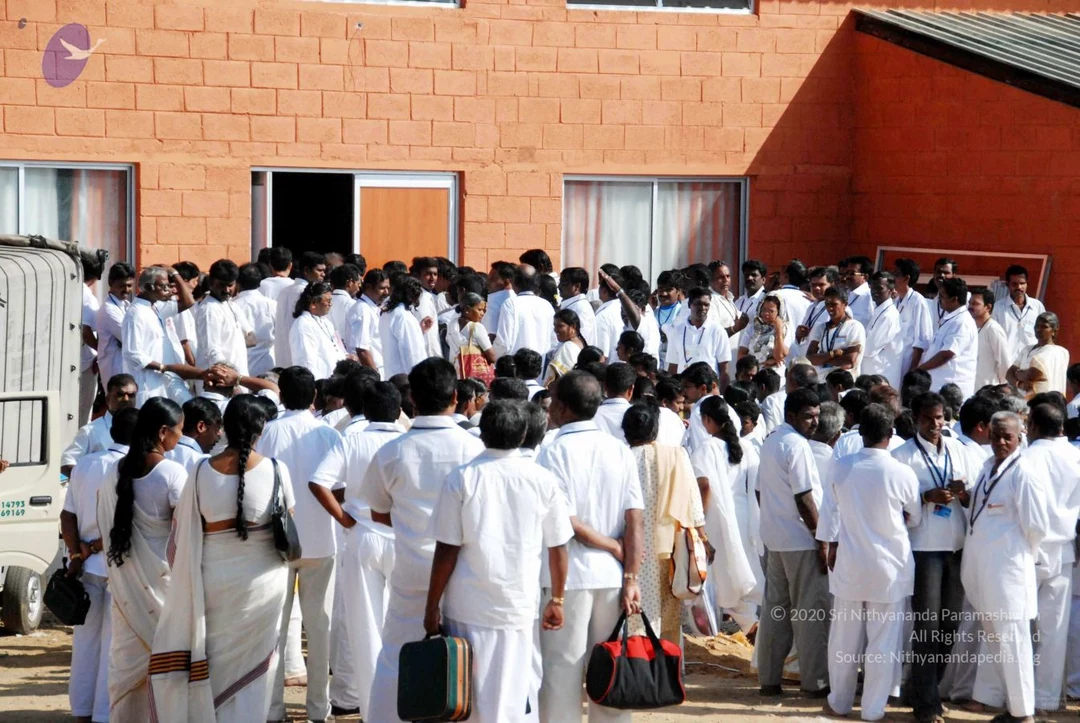
A crowd of people dressed in white stands outside an orange-brick building with large windows and a metal-roofed overhang. Many men wear white shirts and white dhotis, and several women wear white saris, some with coloured borders. A woman with a long plait carries a black handbag, and a man in front holds a red-and-black bag while another carries a blue bag. Several people wear blue lanyards or identification badges. A white van is parked at the left edge. The people appear to be gathered near the building's open doorway, though no specific figure can be identified as a person from appearance.A large seated assembly of devotees in plain white kurta-style clothing, many wearing red lanyards with name badges, sitting with eyes closed in meditation or quiet attention. In the foreground a bald, bespectacled man in white with a red lanyard sits with hands resting in his lap. Rows of people fill the background, with a few wearing orange cloth or yellow shawls. The scene conveys a dense satsang or meditation gathering in a hall.A seated figure in an orange saffron garment sits on an ornate gilded throne carved with floral scrollwork and lion-shaped armrest supports, palms pressed together in prayer at the chest with eyes closed. The figure has long dark hair and is barefoot on a red cushion. A microphone stands at the right, flanked by gold-carved side panels, white flower vases and yellow marigold garlands hanging on a pink backdrop. a person: long swept-back hair and saffron robes match the page label, but the figure is shown only from the front seated on a throne, so identity is uncertain. Scattered fruit and flowers sit near the throne.A smiling man in an orange saffron garment sits on an ornate gold throne with intricate carved relief, raising both palms toward the viewer in a gesture of greeting or blessing. He has long dark wavy hair, a red bindi and white markings on his forehead, and a microphone stand is at his right side. Pink draped curtains and a bit of yellow floral garland appear in the background. Probable Swamiji (probable): long swept-back hair, saffron clothing and a ceremonial golden throne are visible cues for a sannyasi leader in a discourse setting.A photograph of a seated figure on an ornate gilded throne on a raised stage, with a gold canopy overhead and a red-cushioned footstool. The person wears an orange-saffron robe and has long dark hair, seated with hands folded in the lap before a microphone stand. Pink draped backdrop with beaded curtains and marigold garlands hangs behind, with carved wooden pillars at each side and white flower vases on the stage. A small number of people are partially visible at the bottom edge of the frame.A photograph of a seated figure on an ornate gold throne (peetha) with a gold canopy overhead, set against a pink backdrop hung with yellow and white marigold garlands and beaded strands. The seated person wears an orange-saffron robe draped over the shoulders, a red bindi, and has long dark hair; hands are folded in the lap. Flanking the throne are gold carved pillars with lion-like figures, a microphone on a stand to the right, white flowers in vases, and a small red-cushioned footstool. a person is seated on the throne in saffron robes, the appearance-based label applied from long swept hair, saffron clothing and the throne setting.

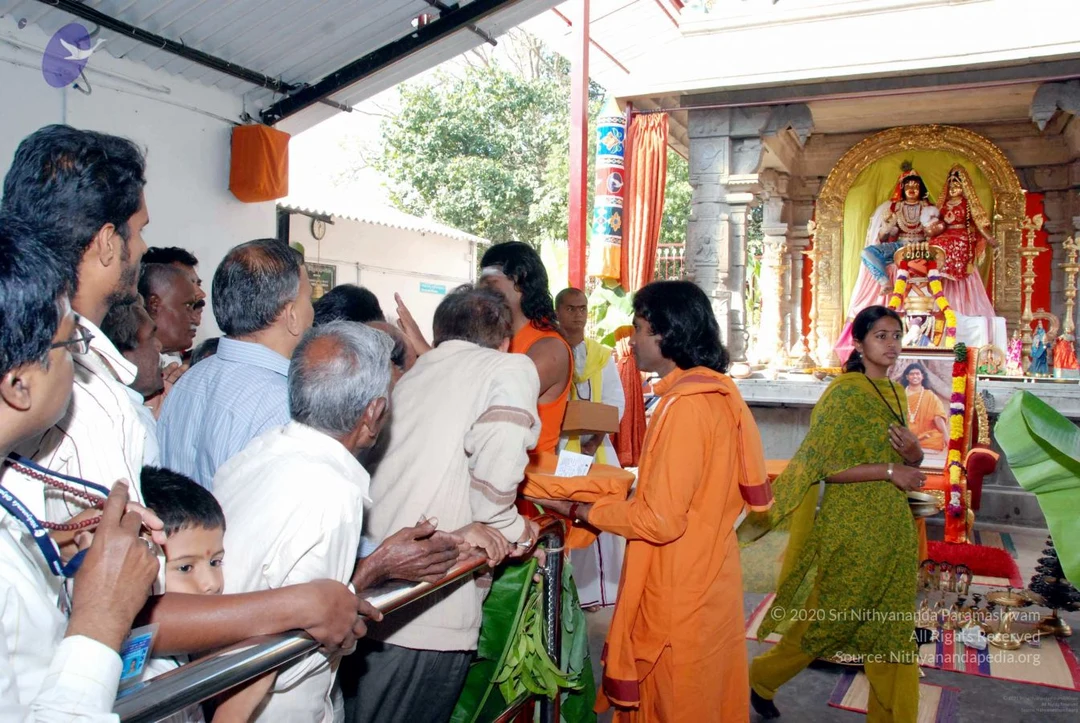
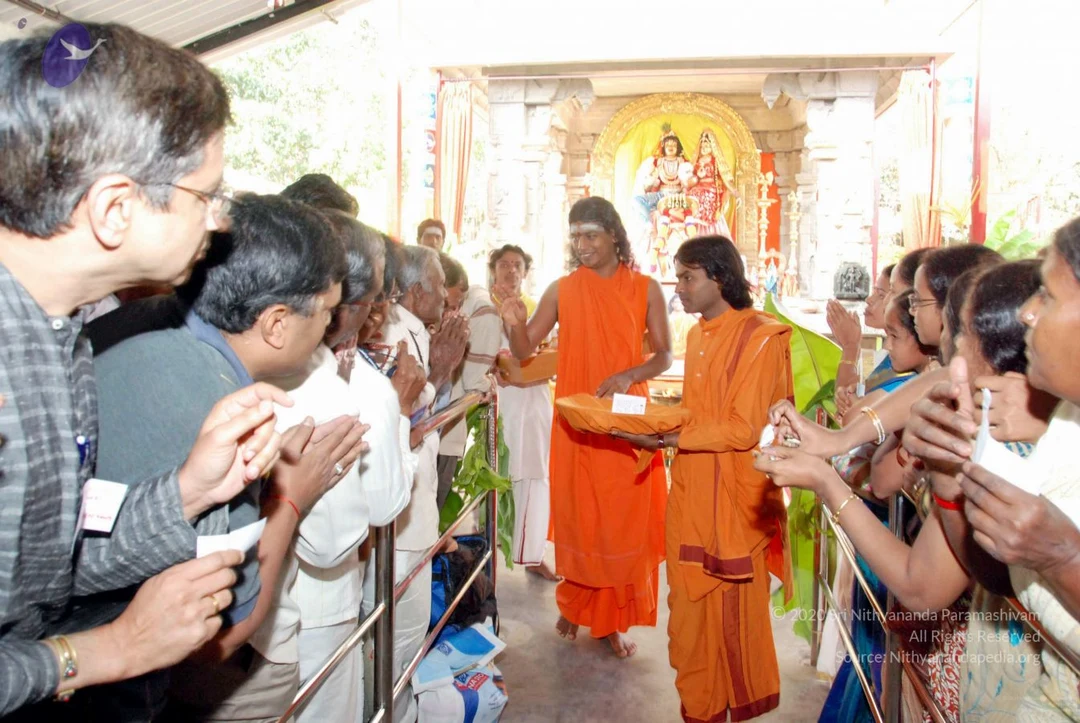
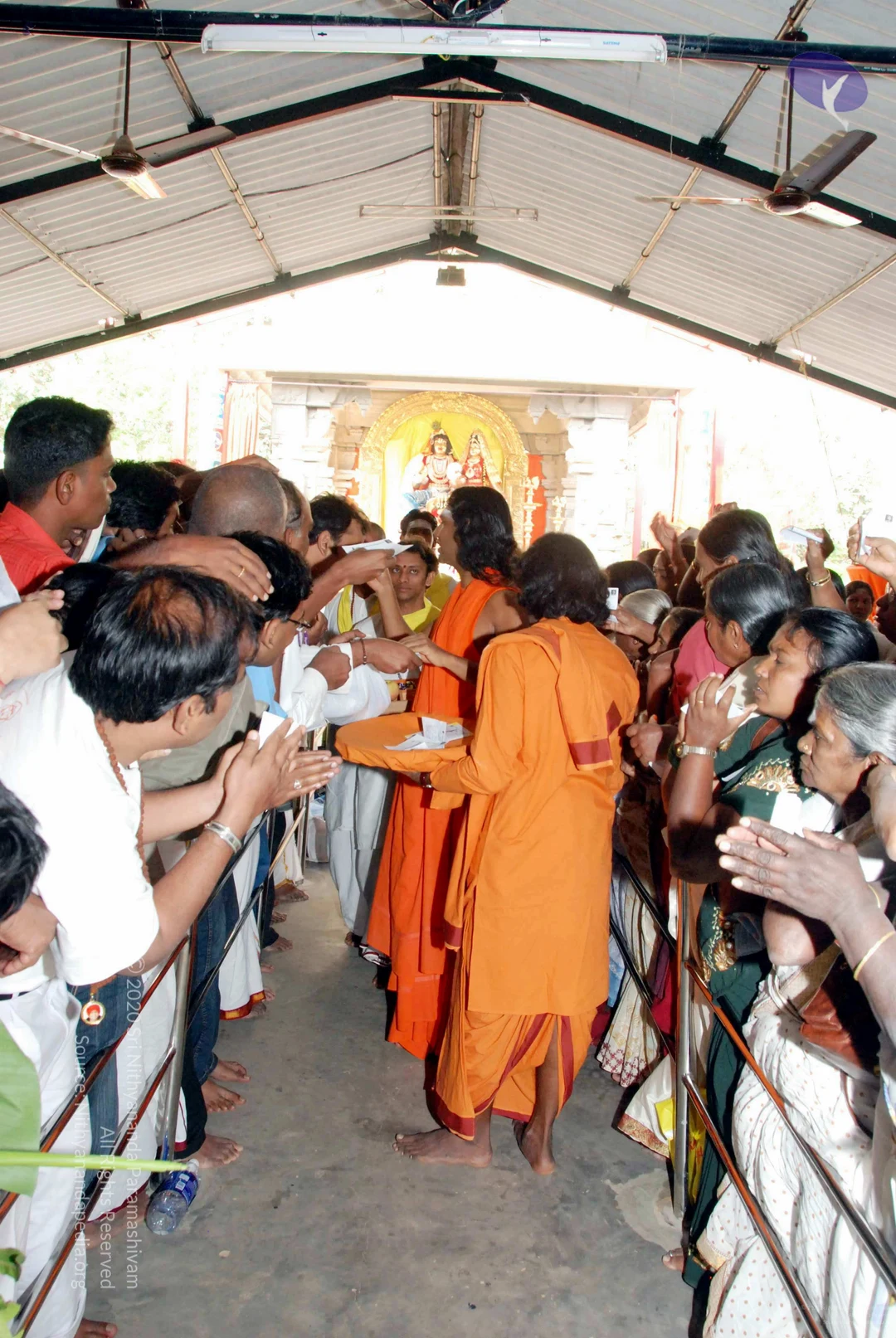
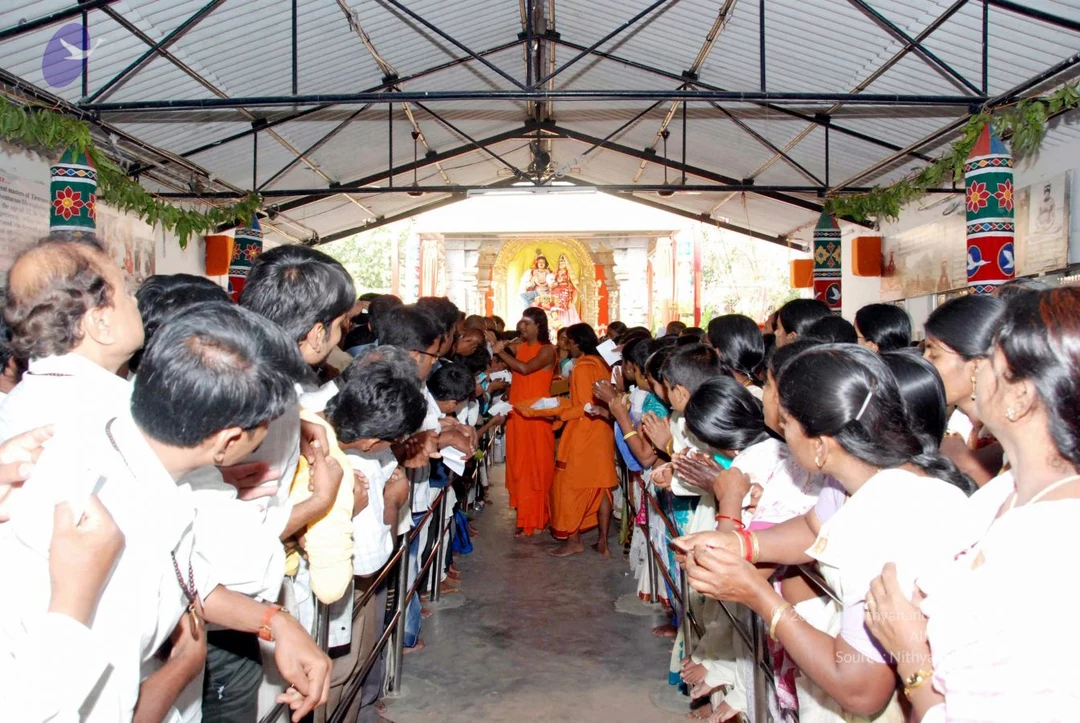
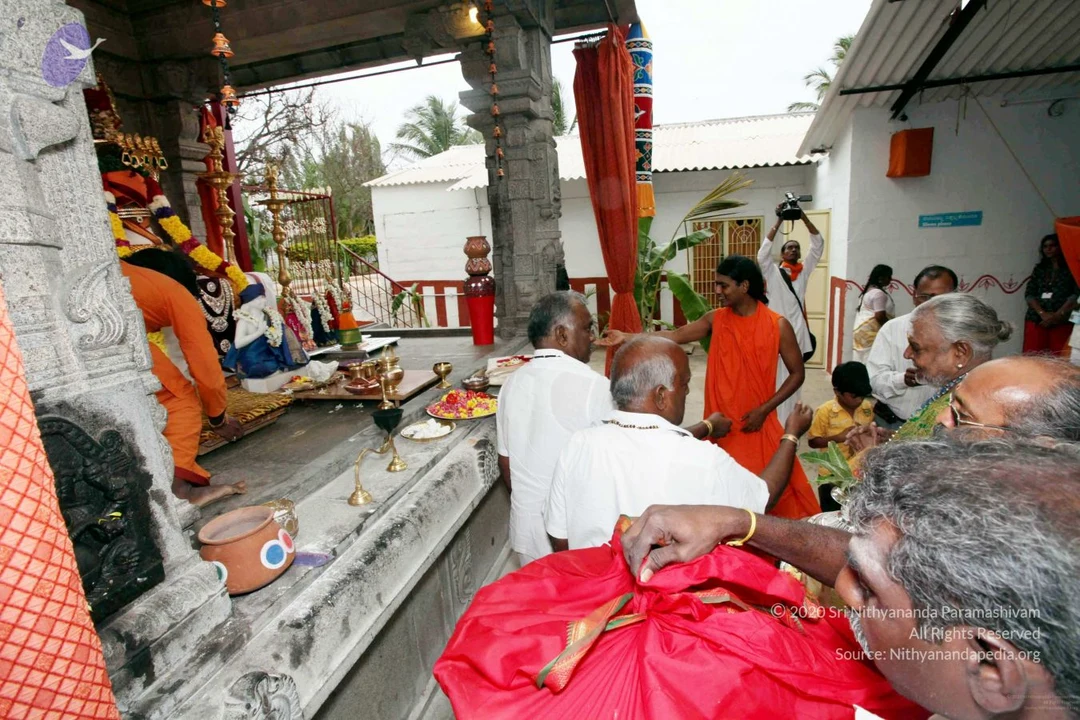
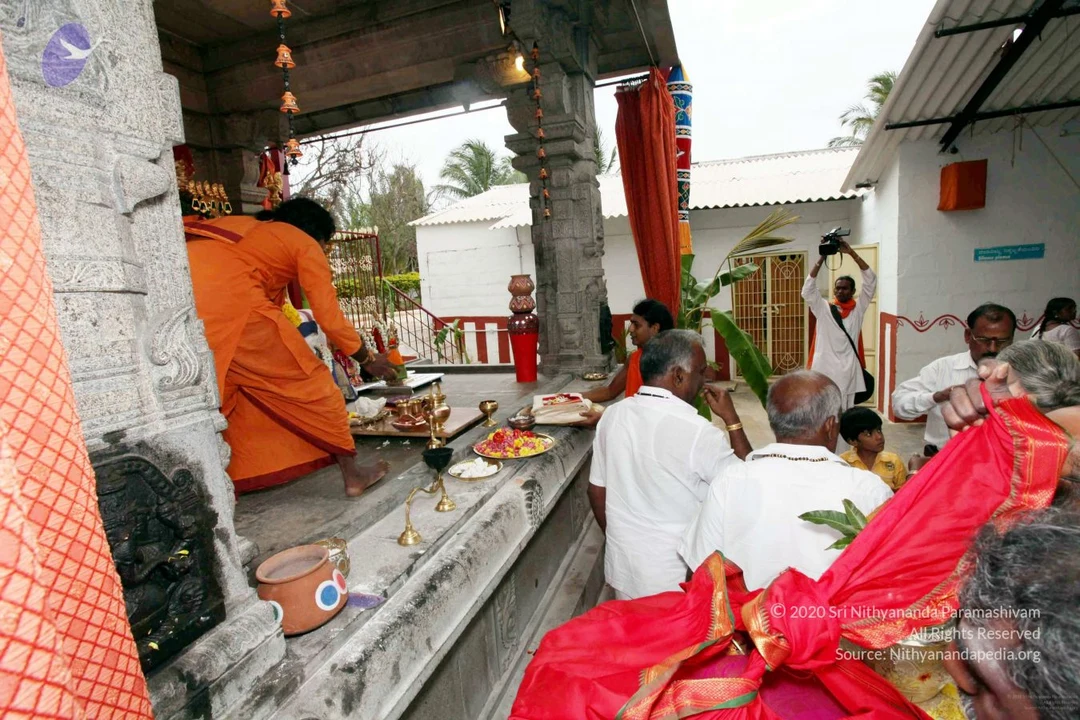
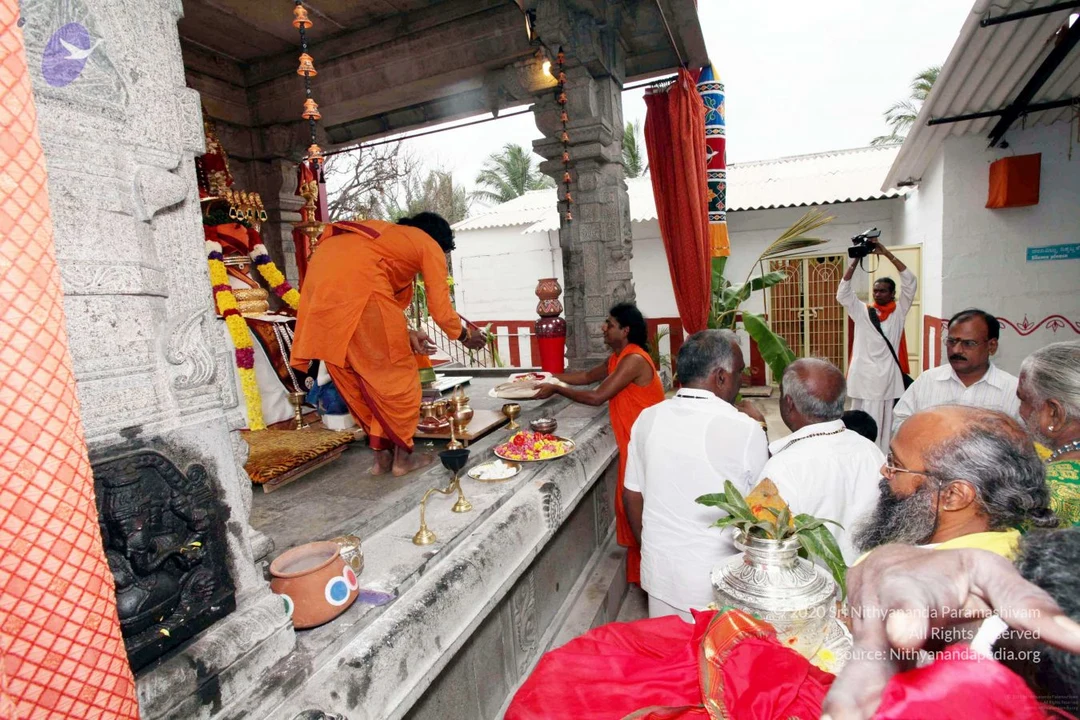
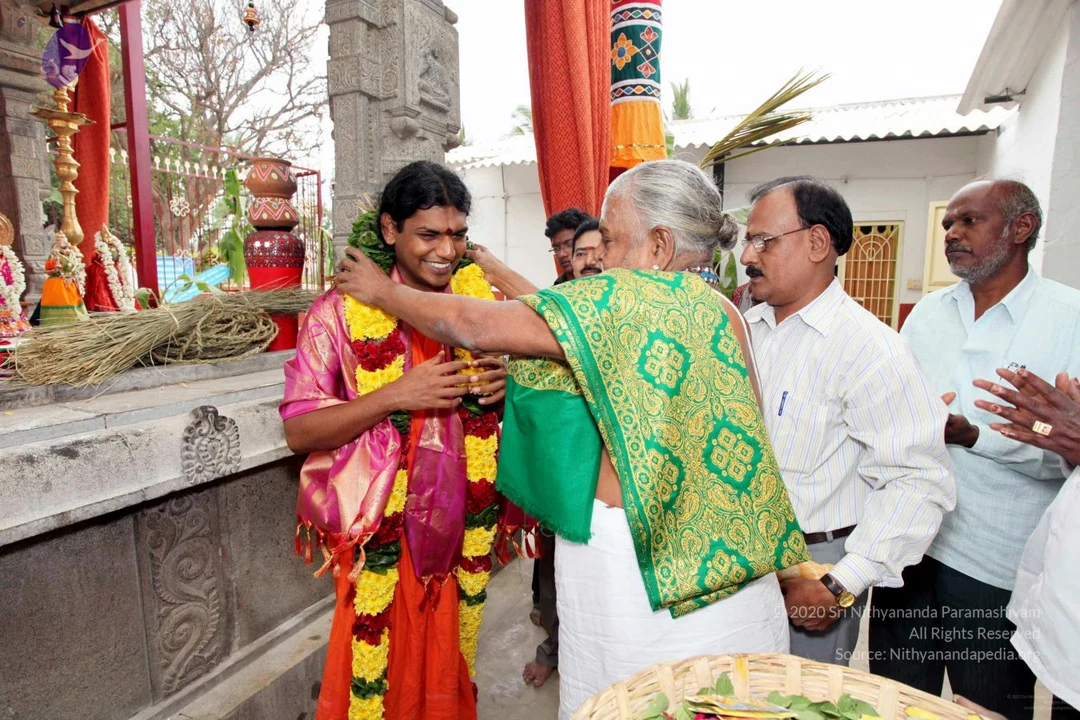
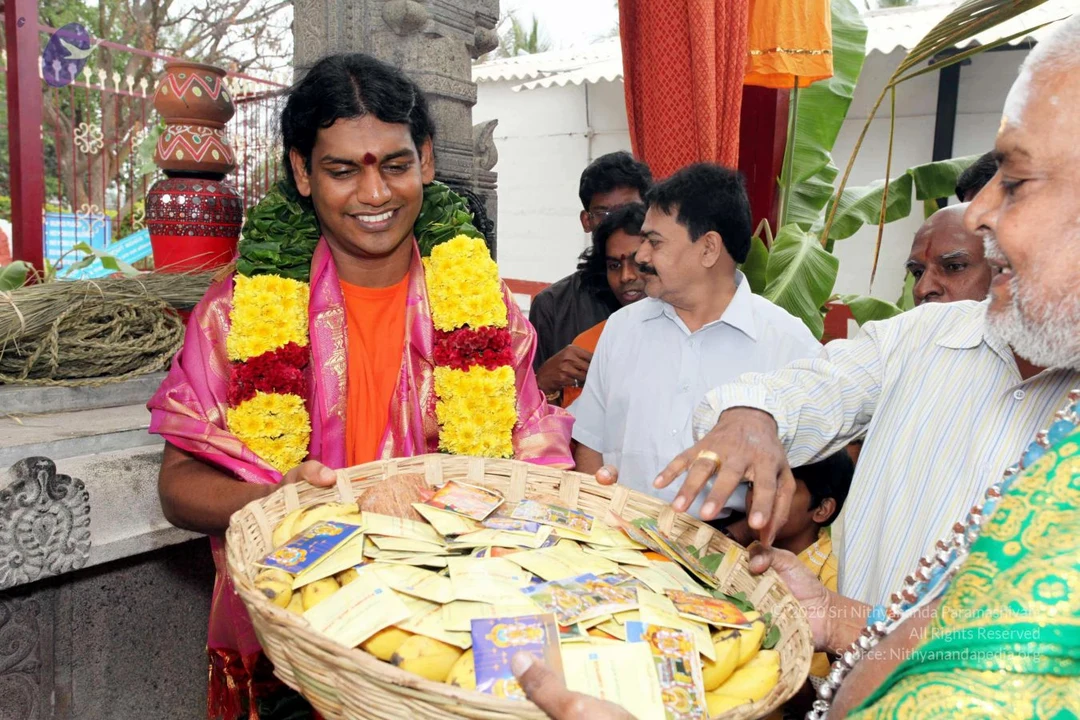
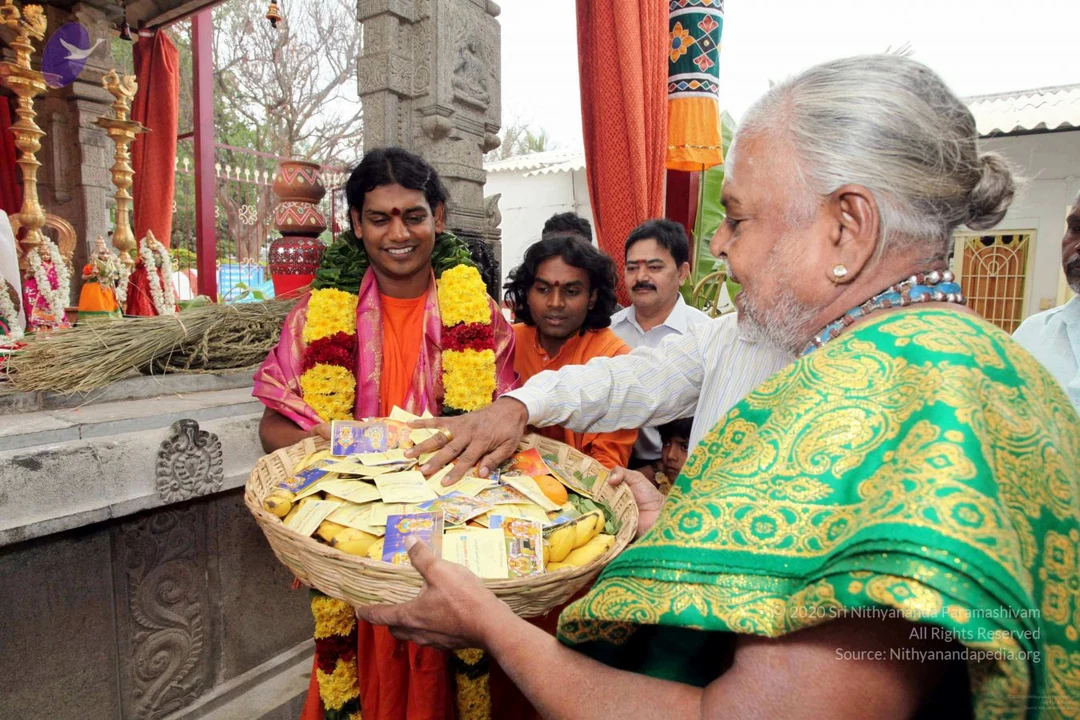
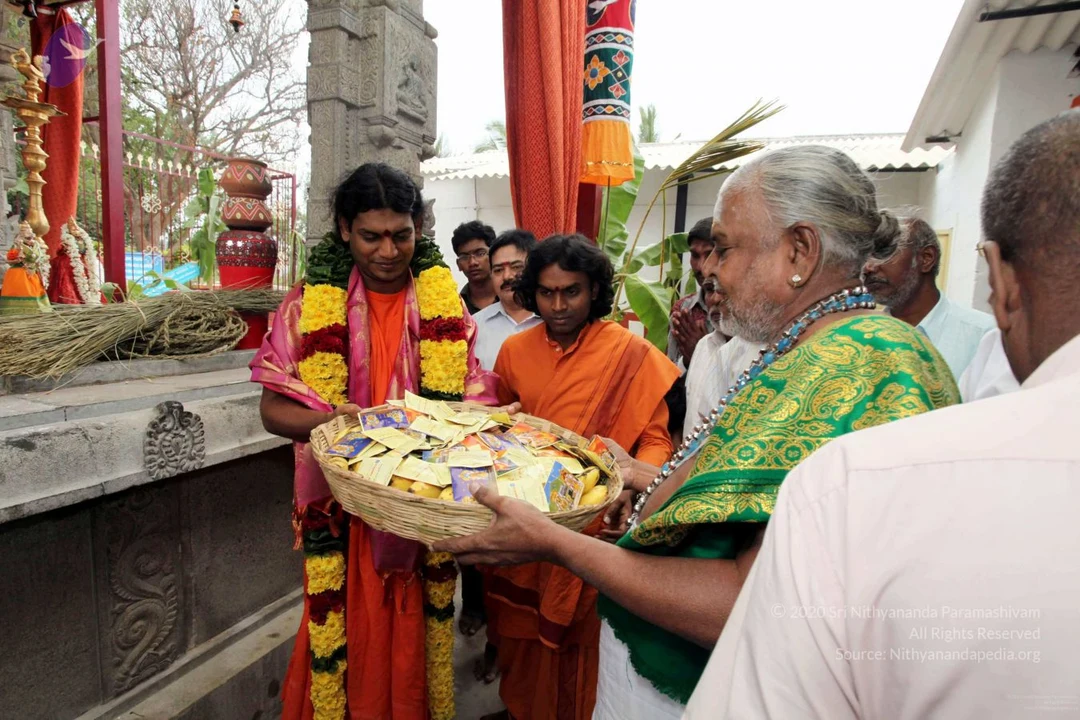
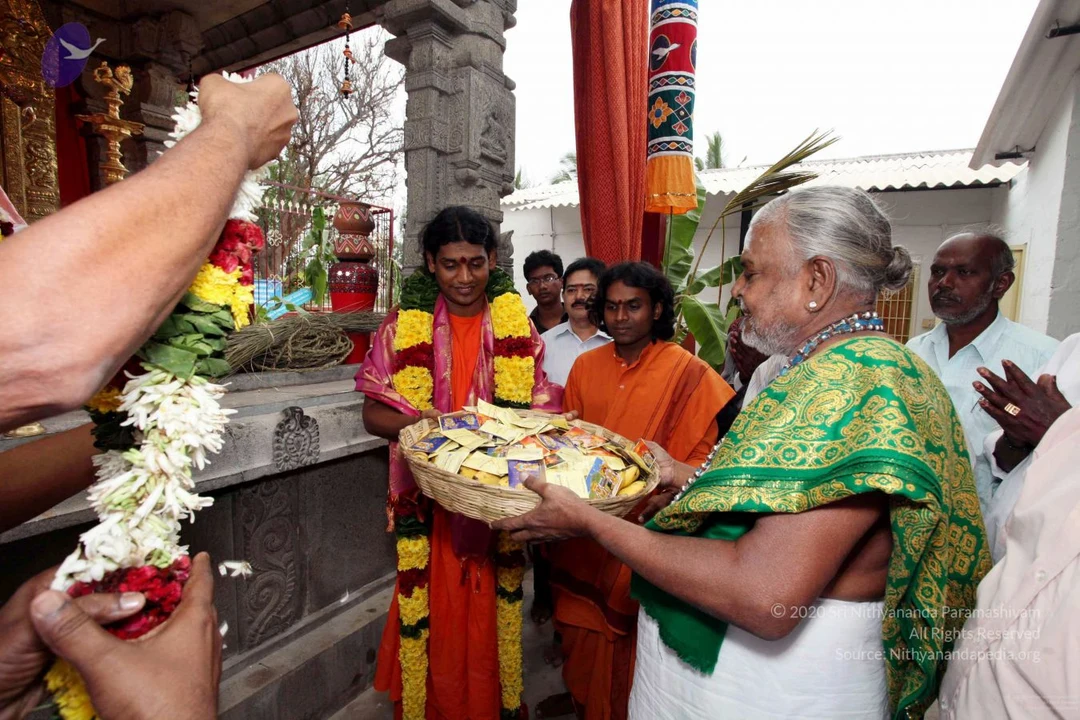
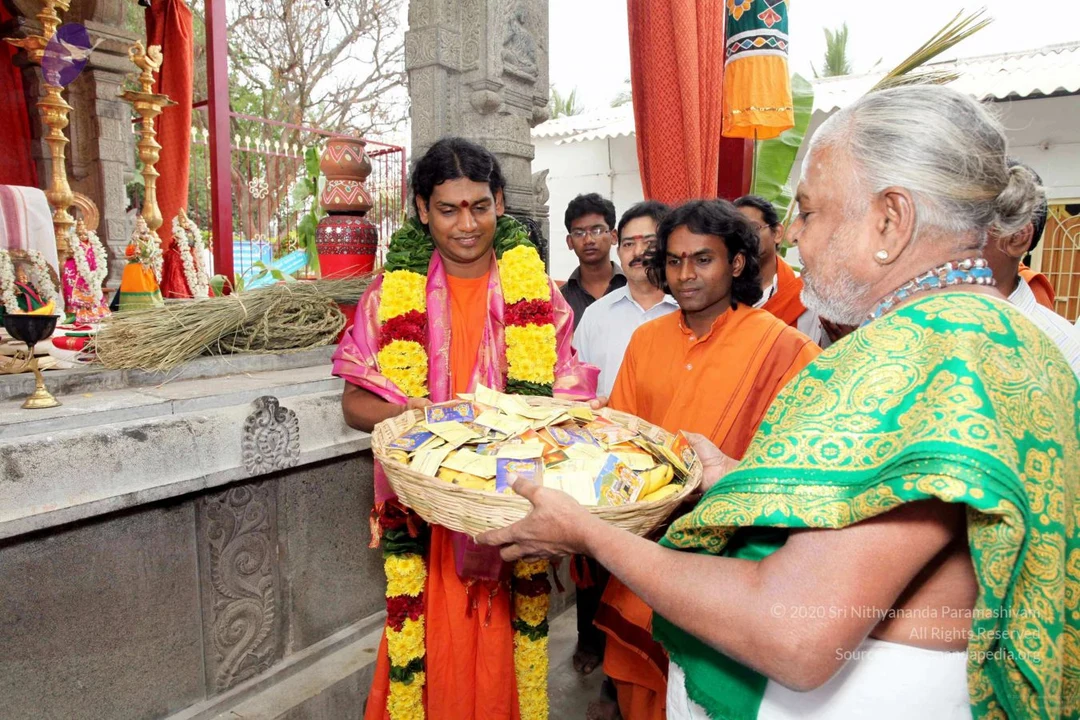
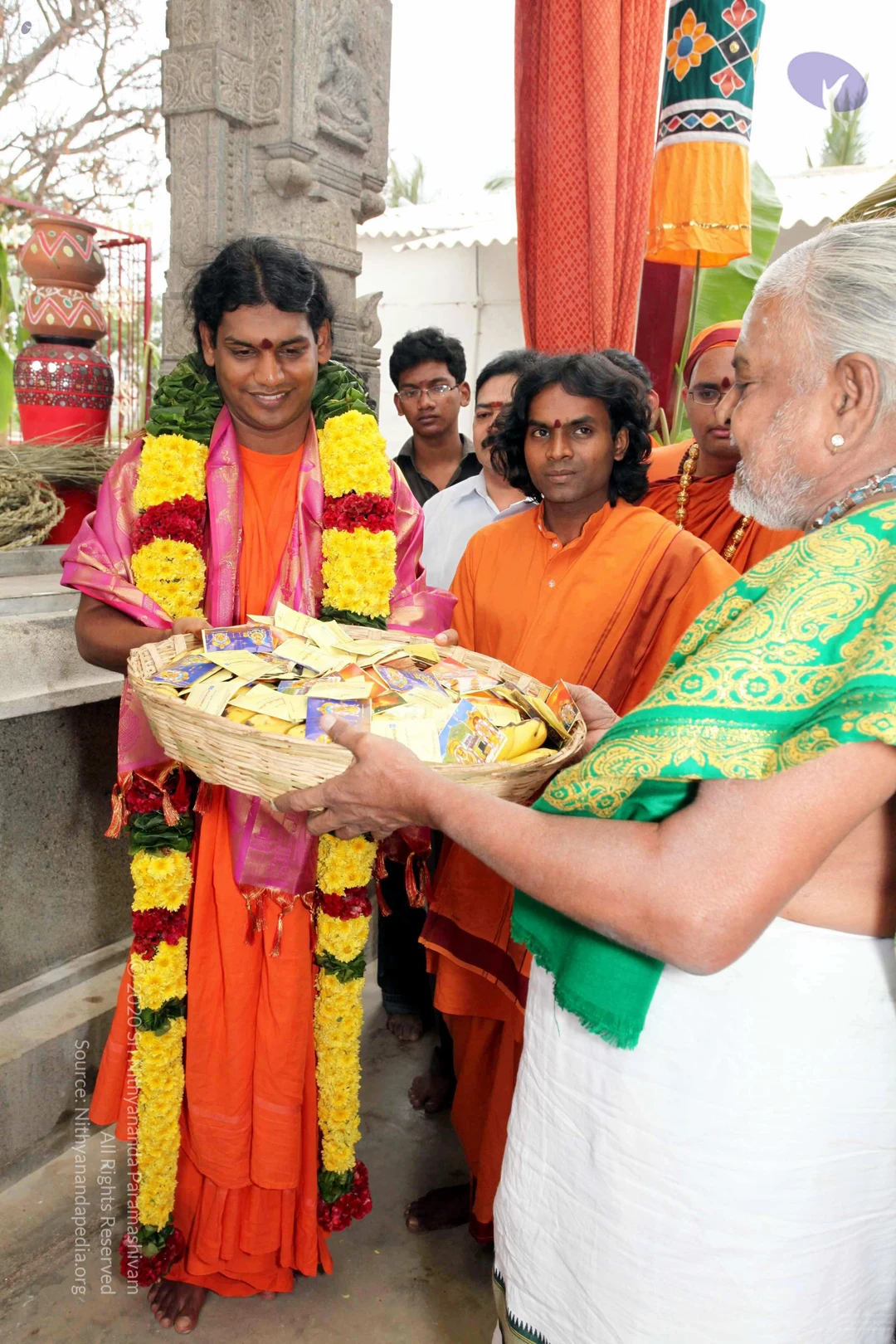
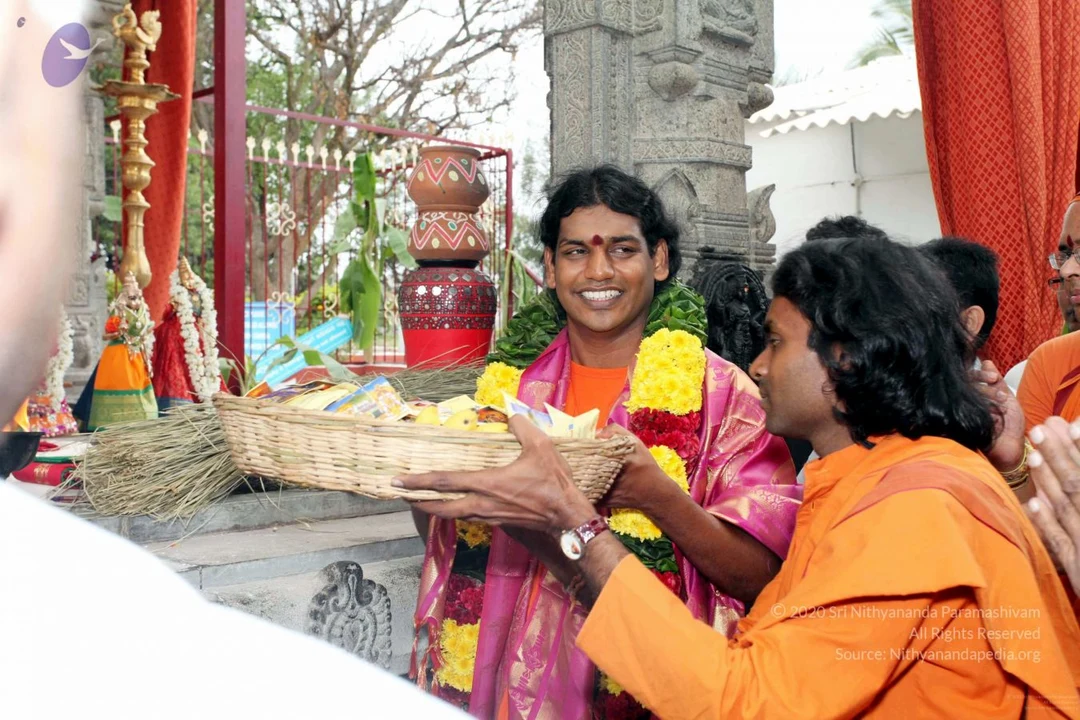
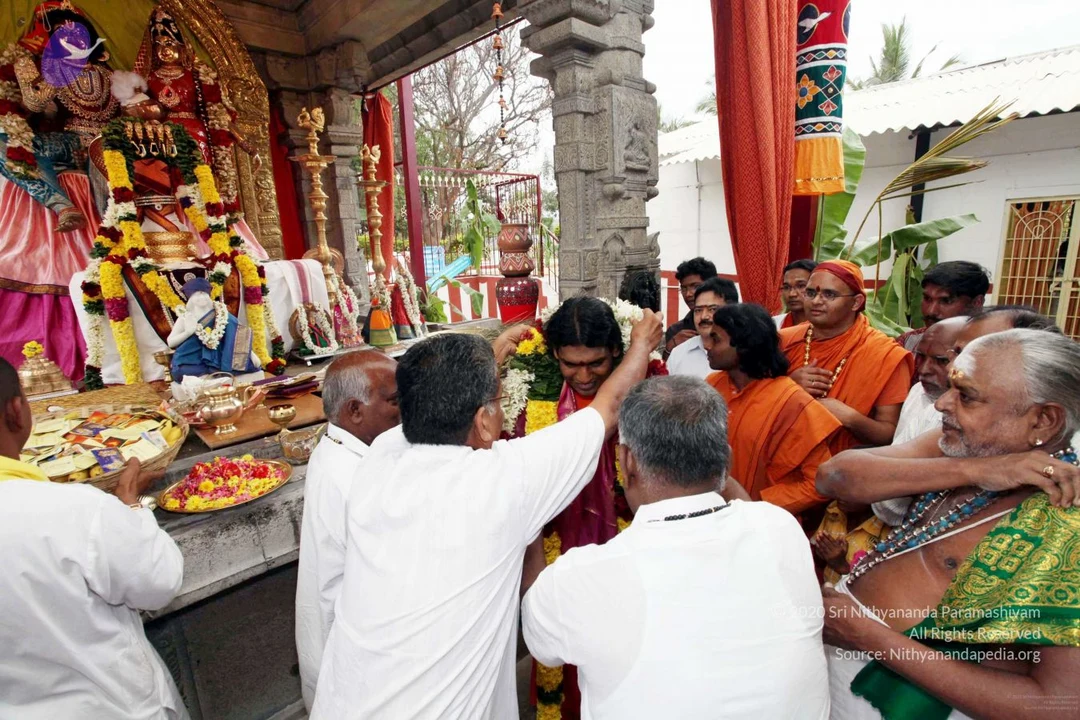
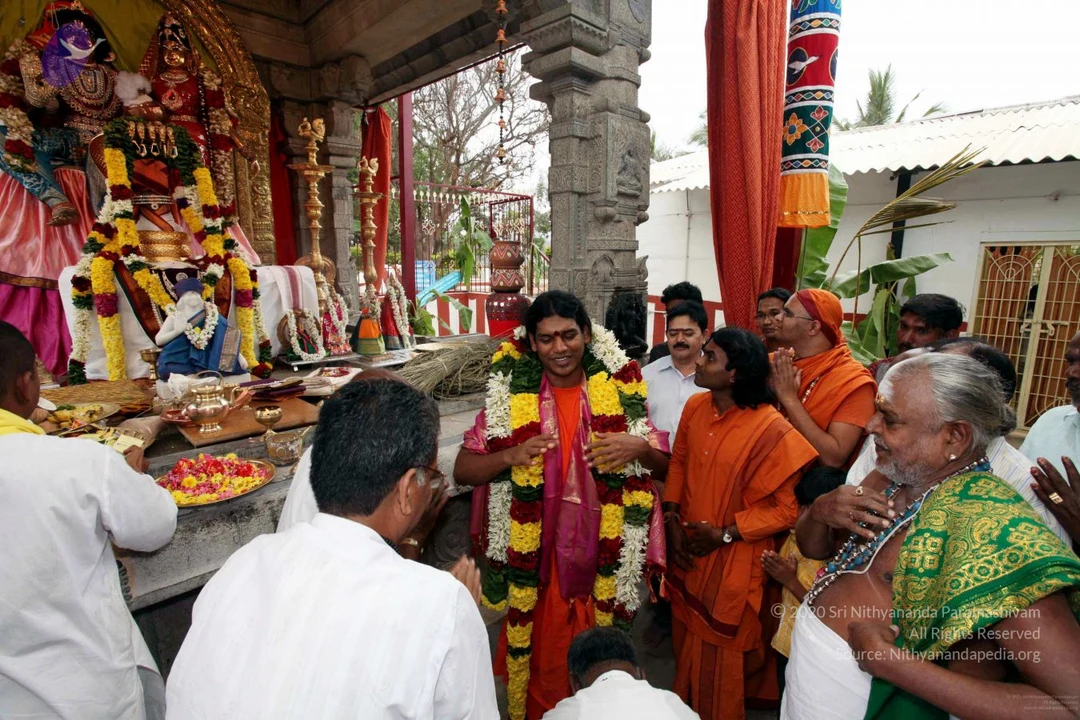
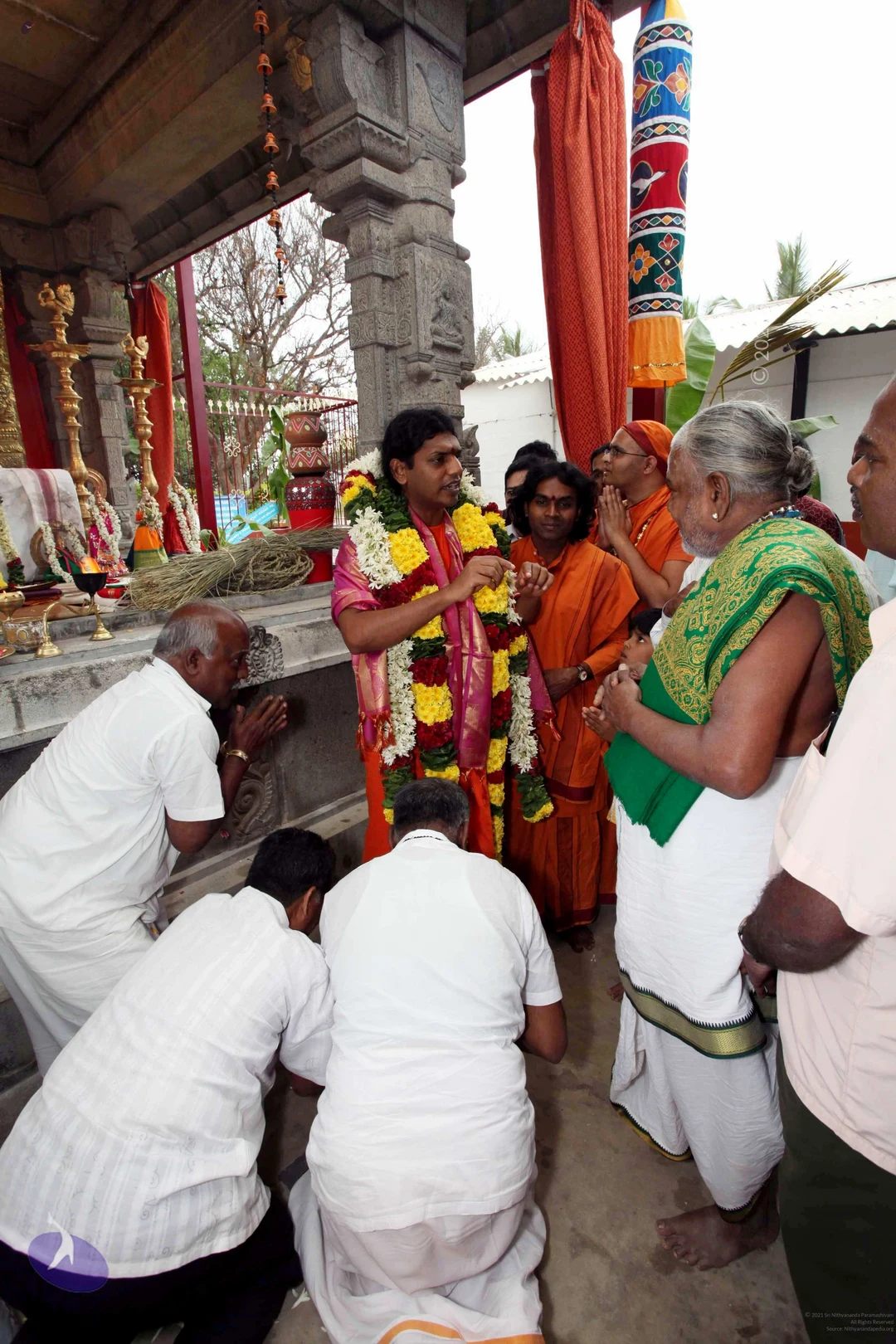
SPH JGM HDH Bhagavan Nithyananda Paramashivam receiving the Arunachaleshwara Temple Prasadam

96 photosSource gallery
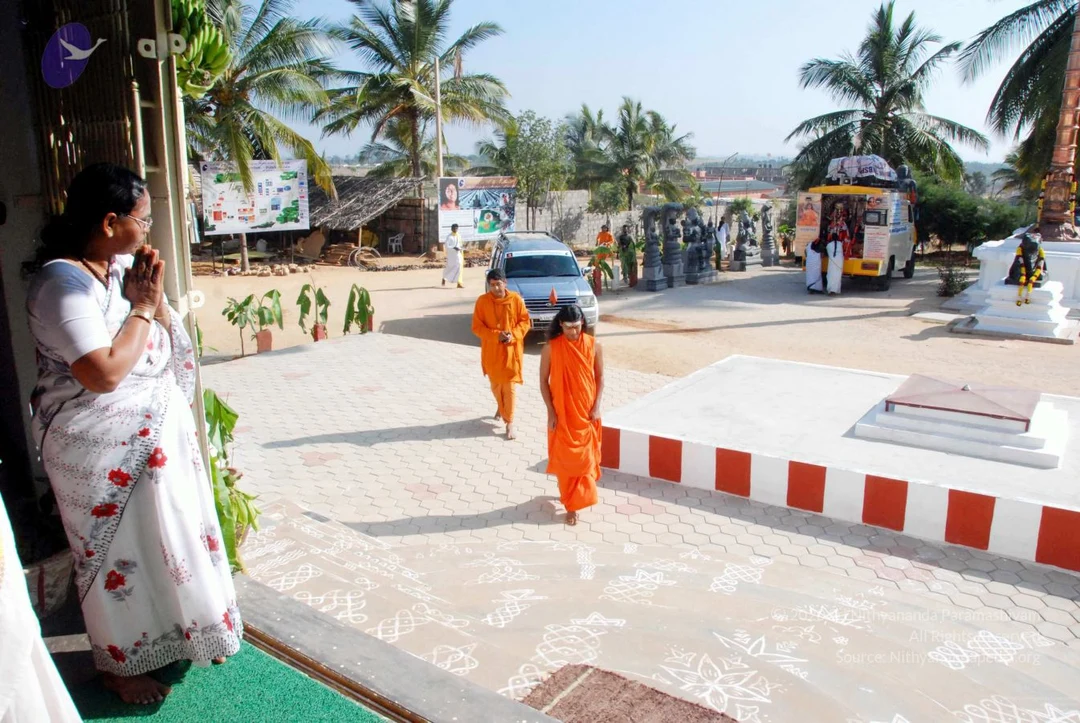
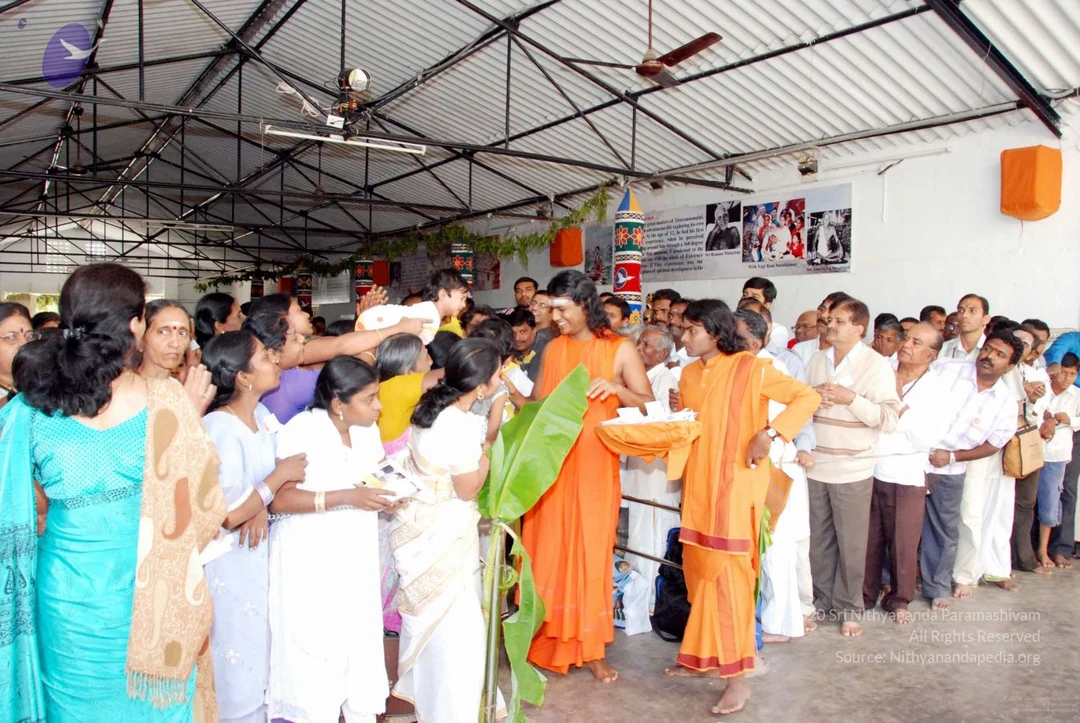
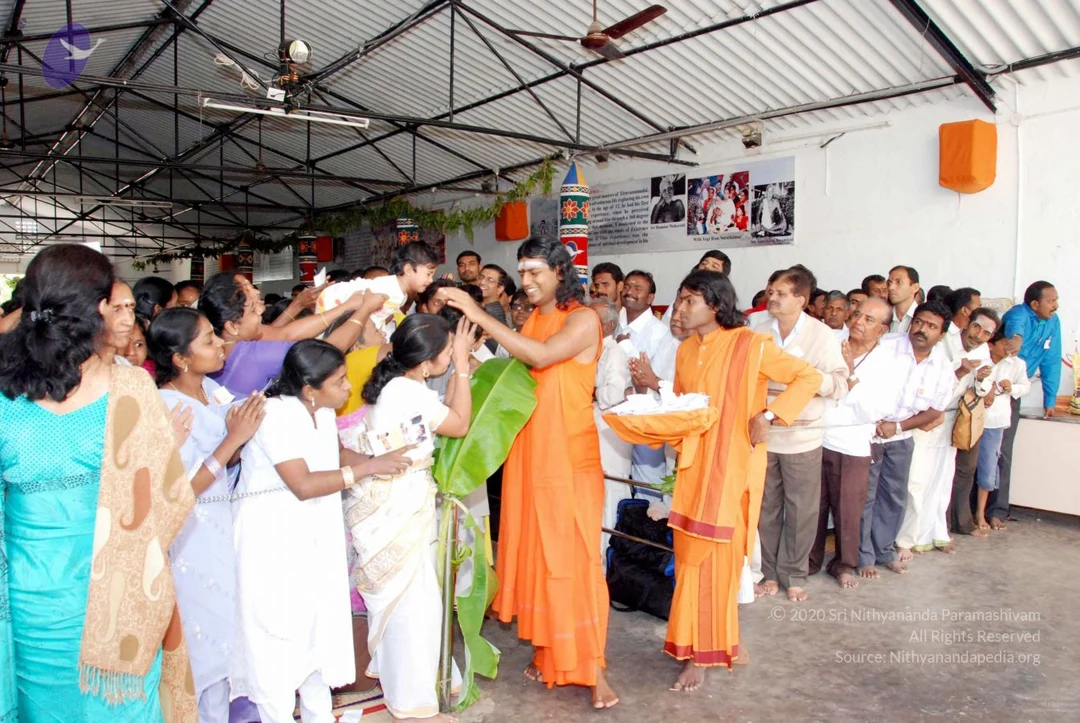
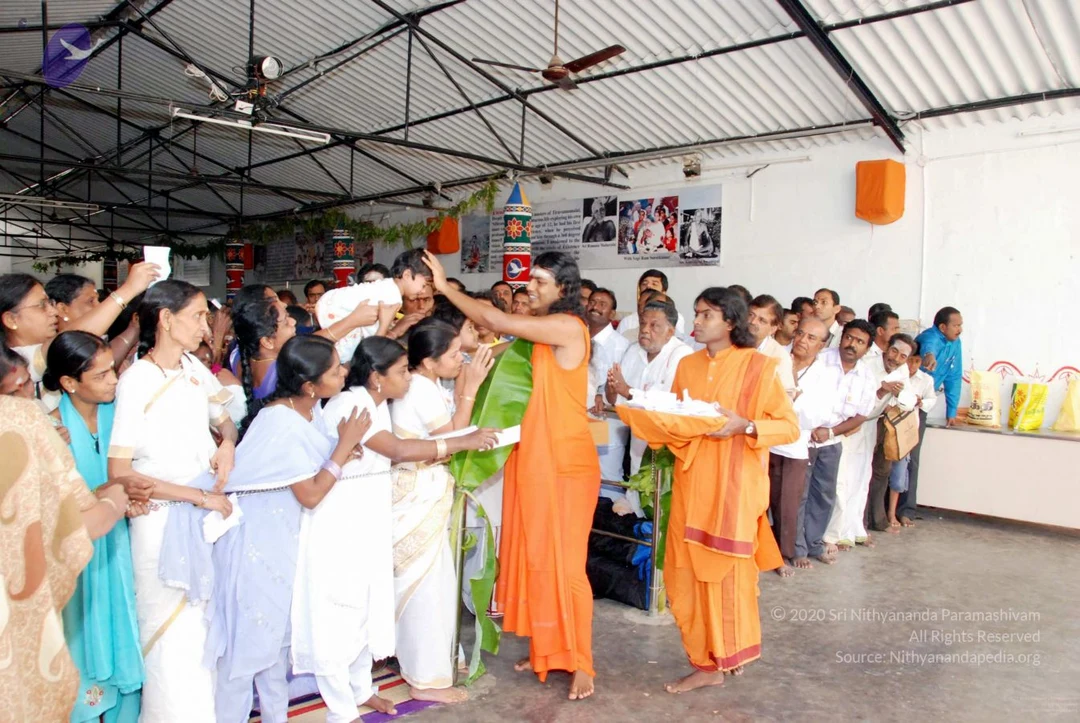
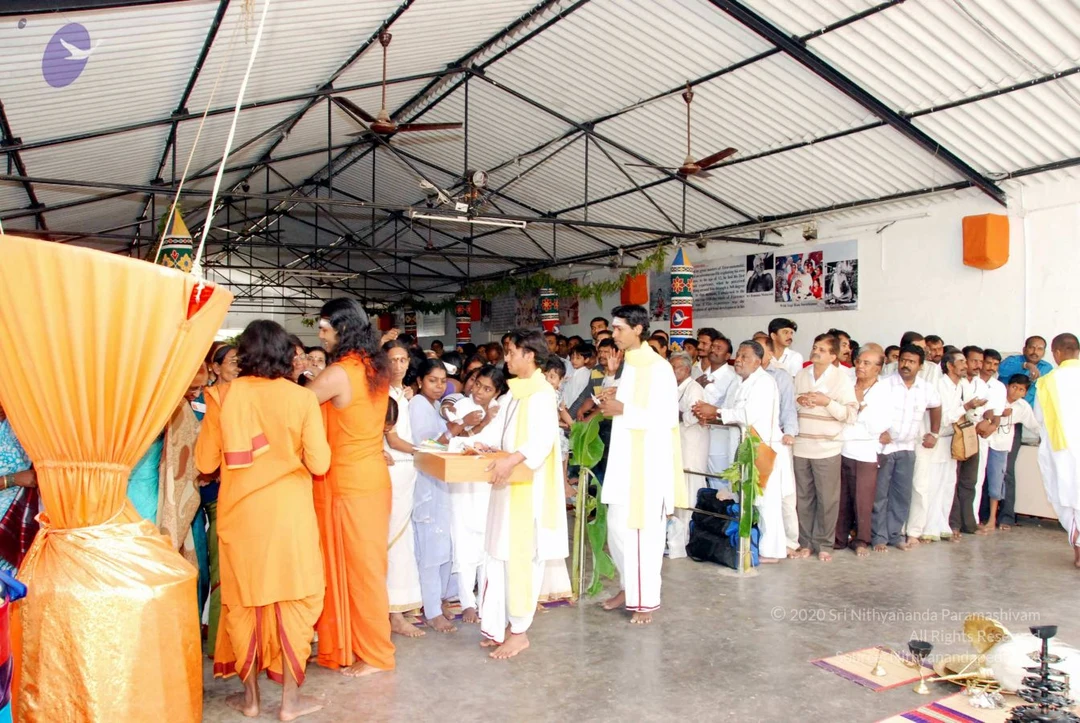
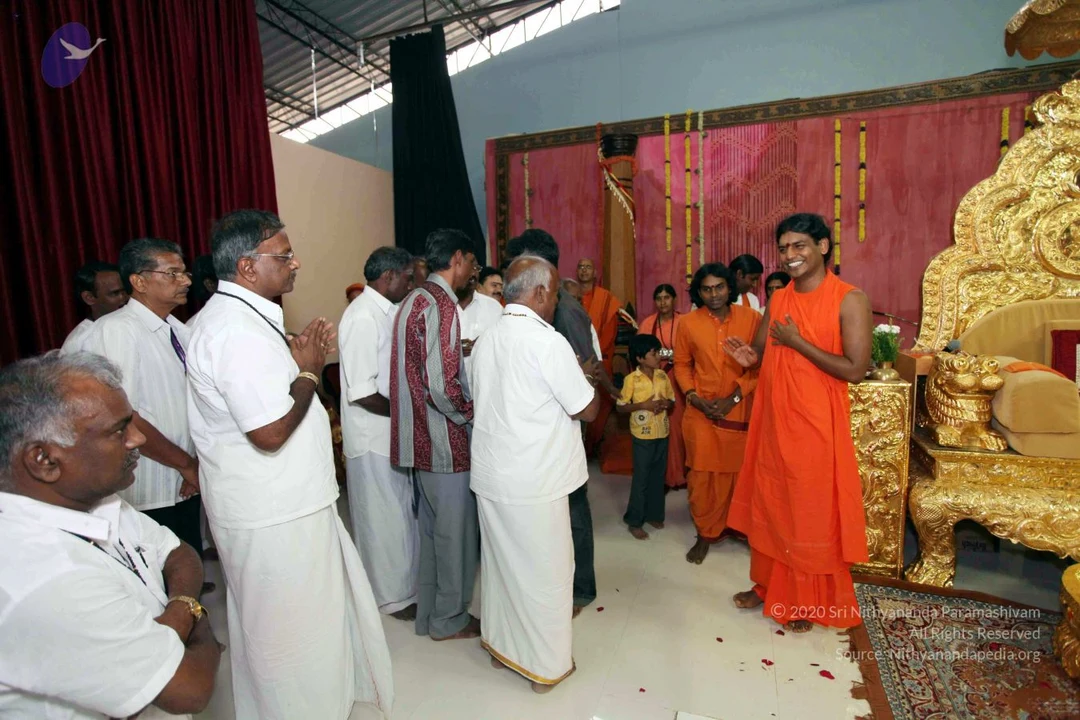
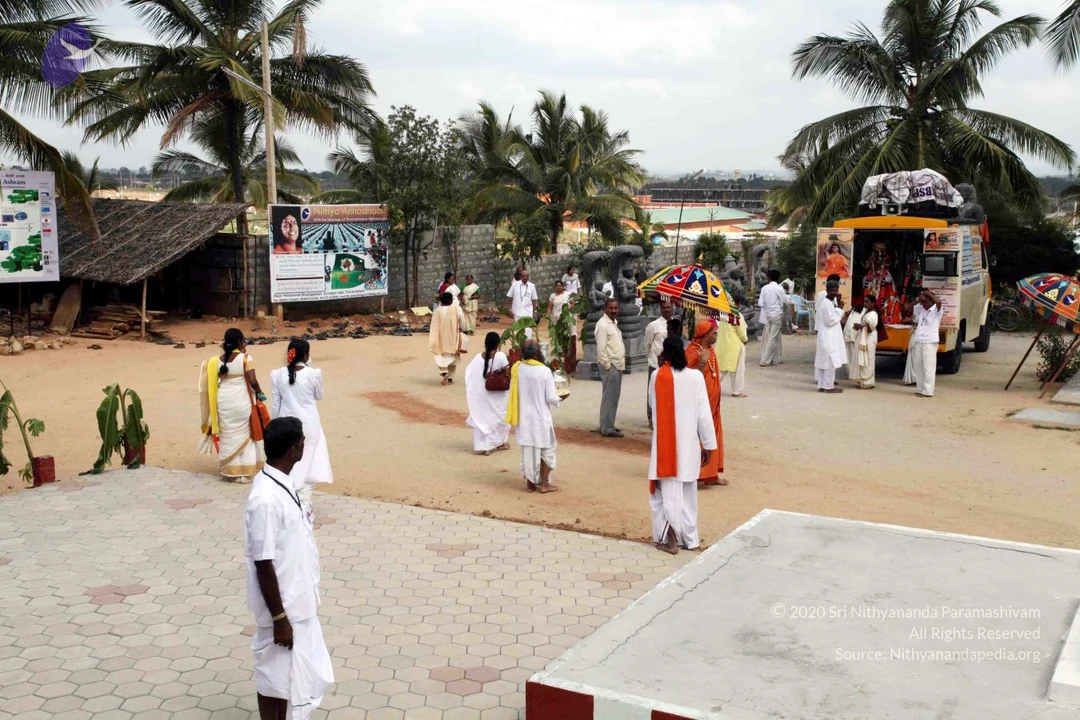
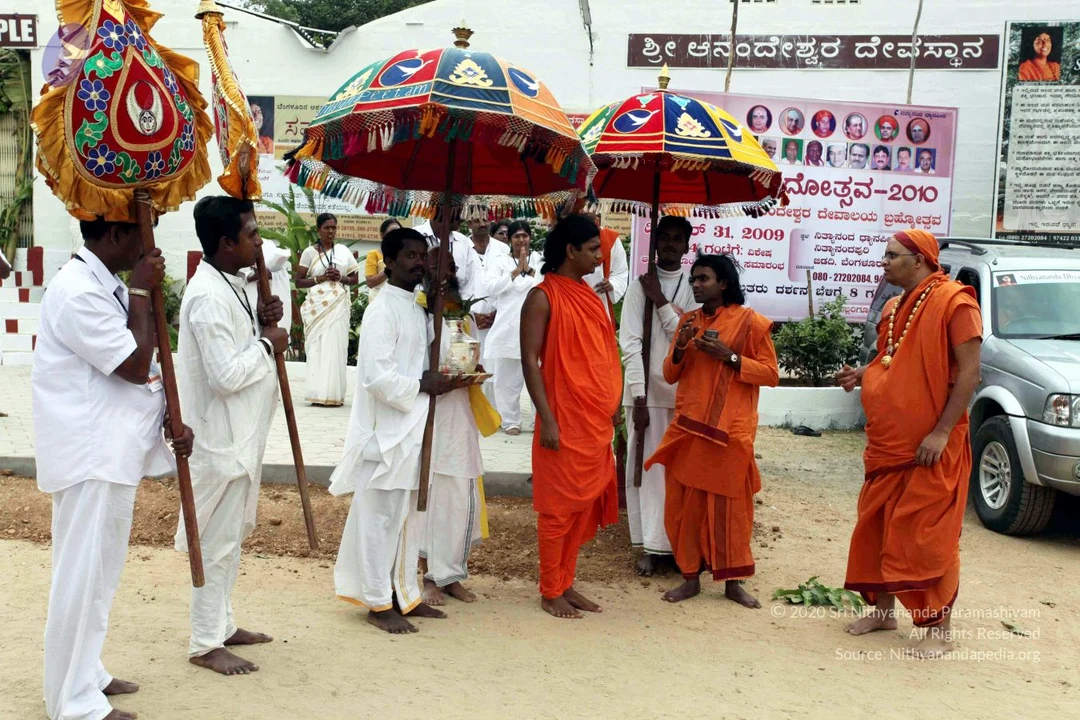
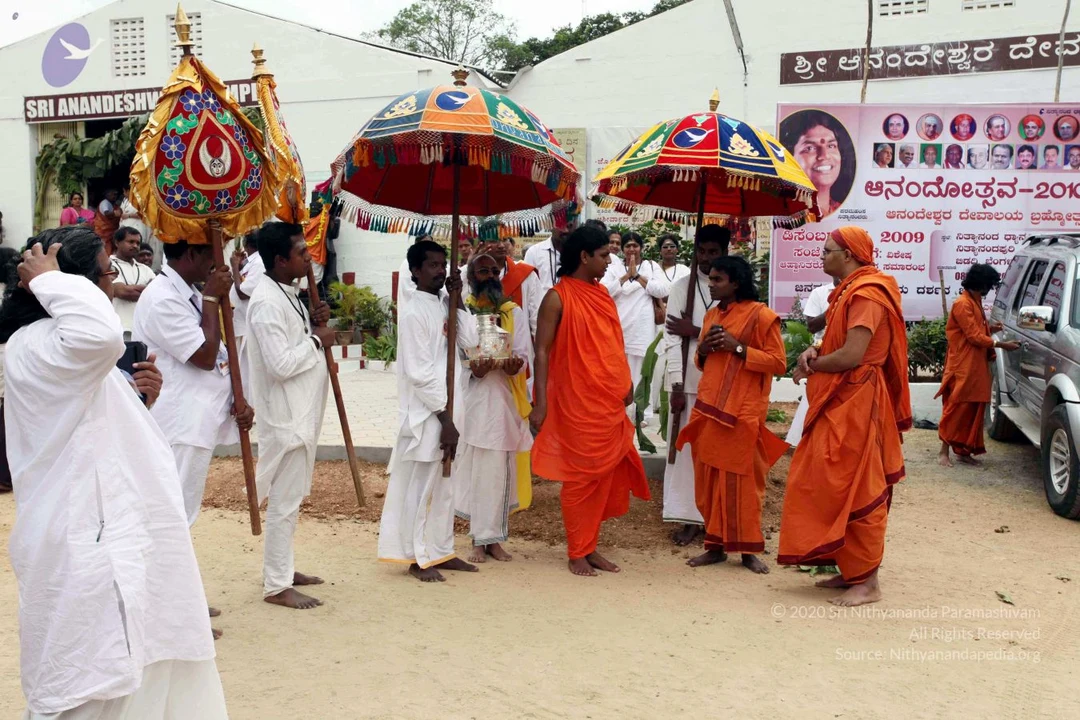
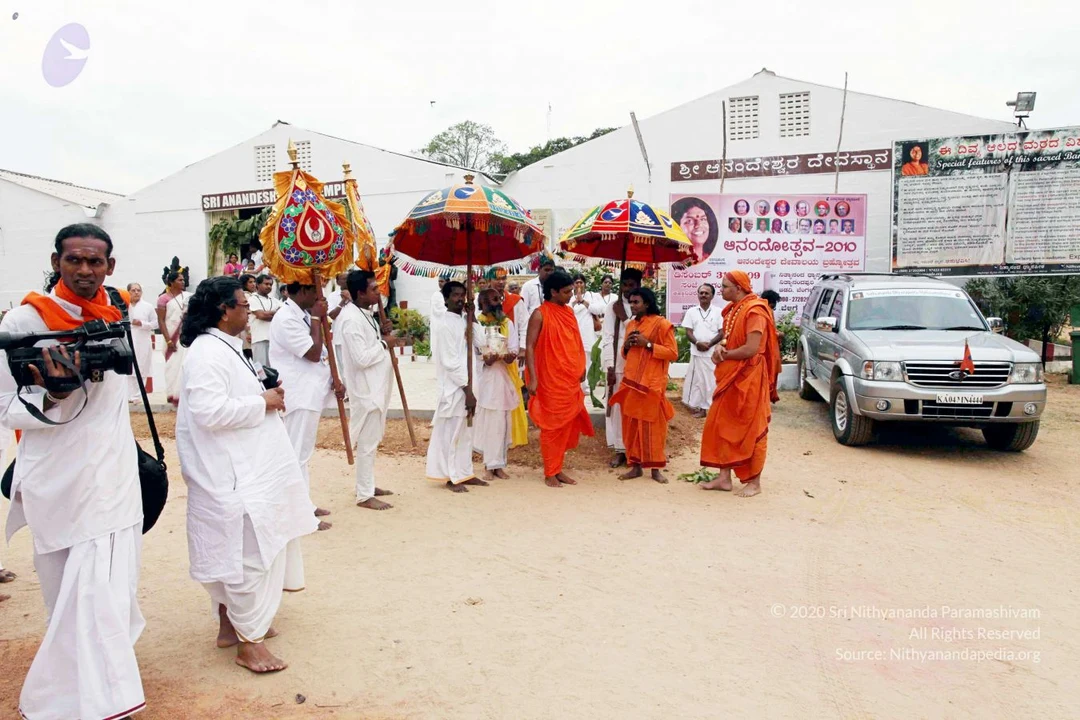
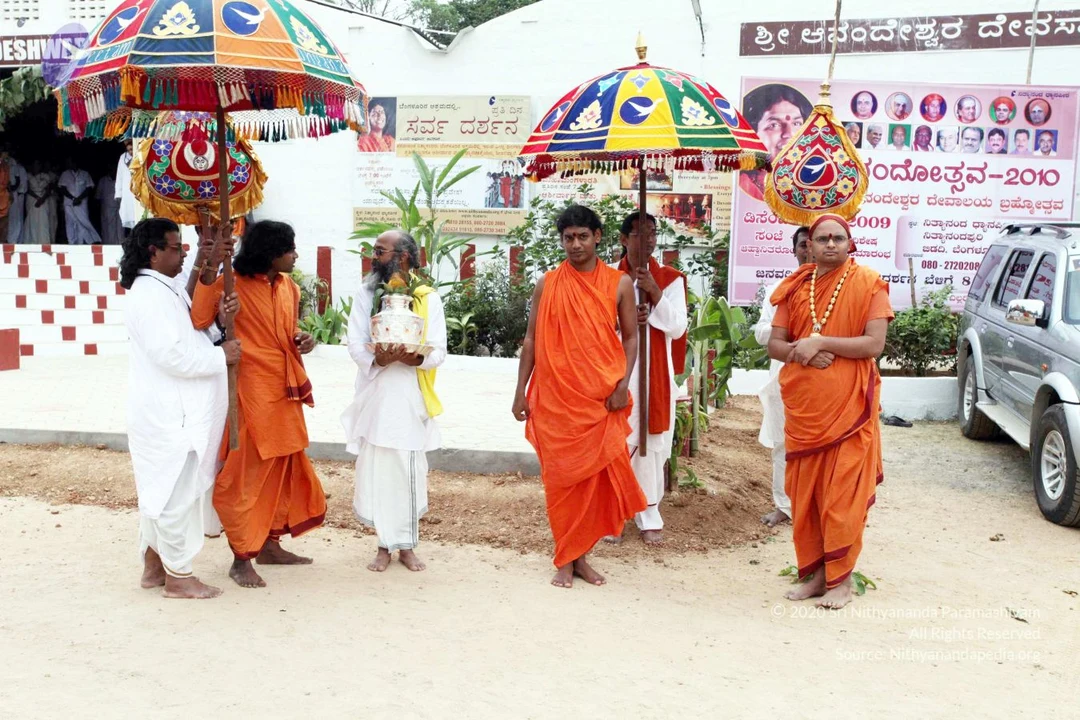
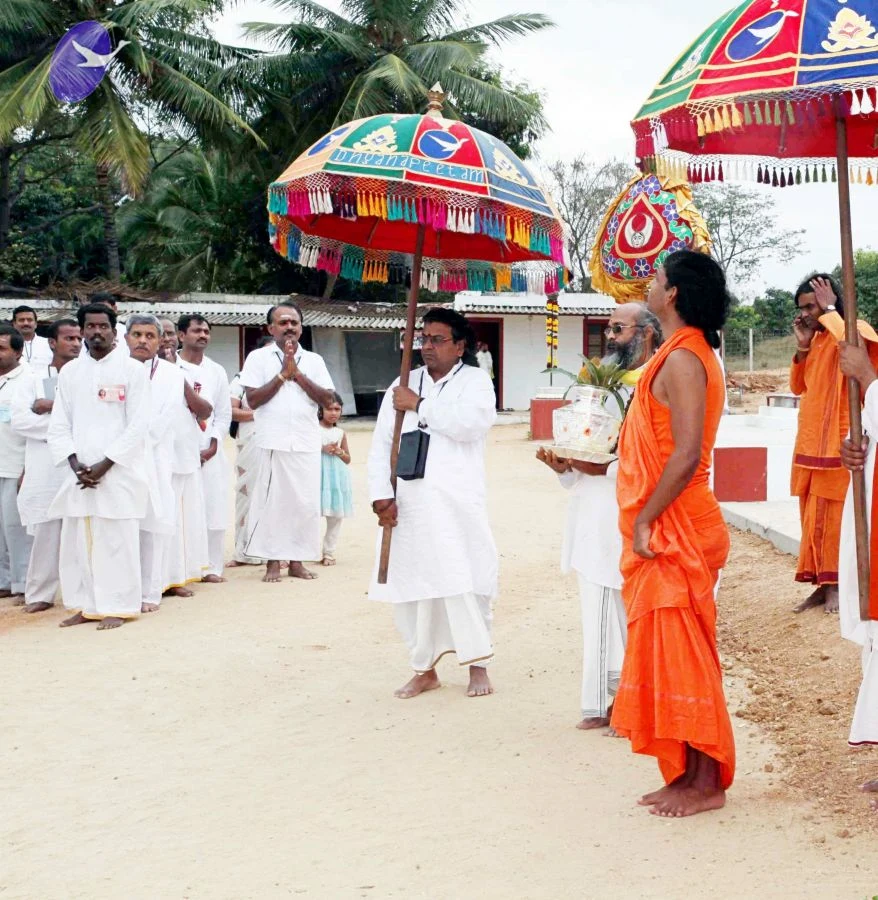
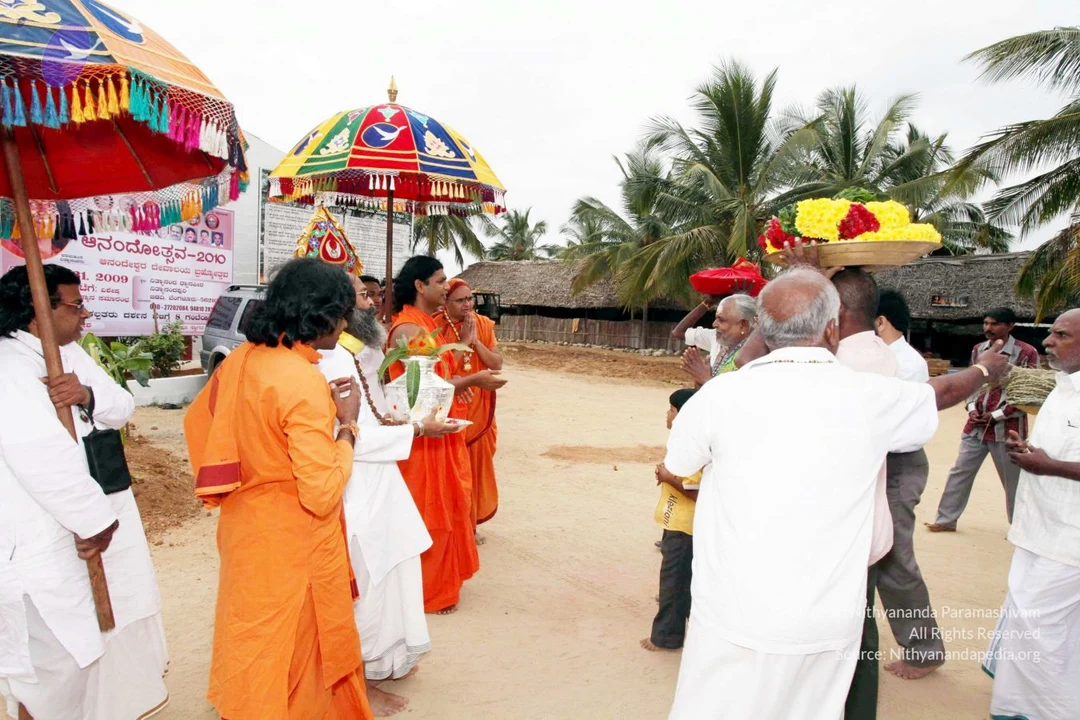
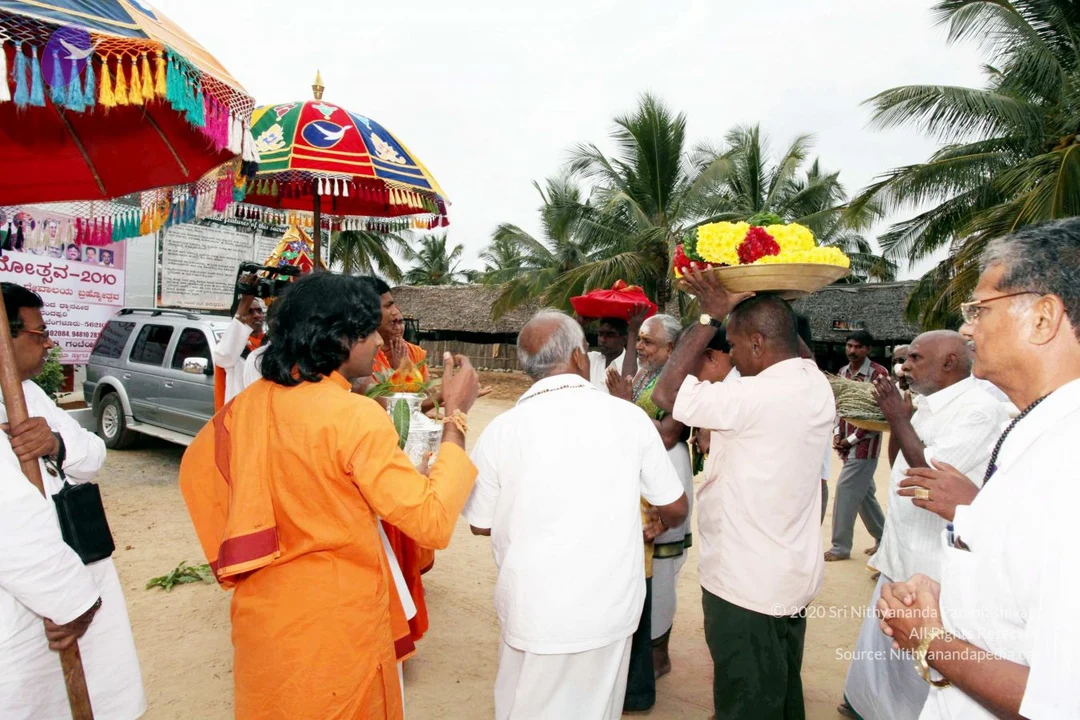
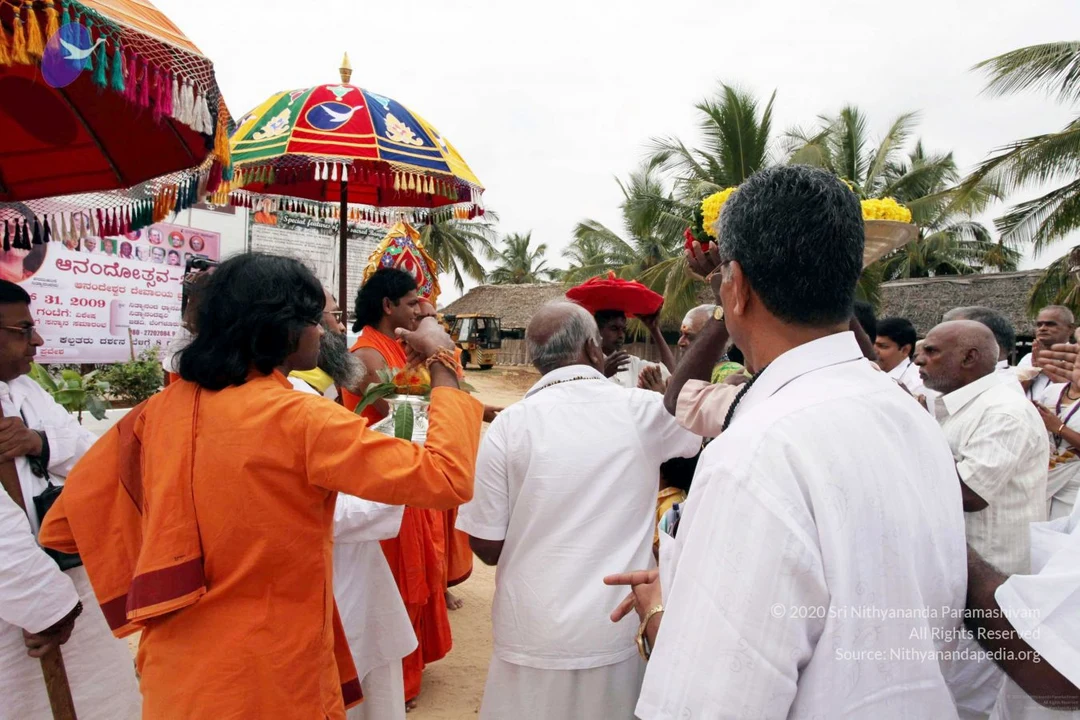
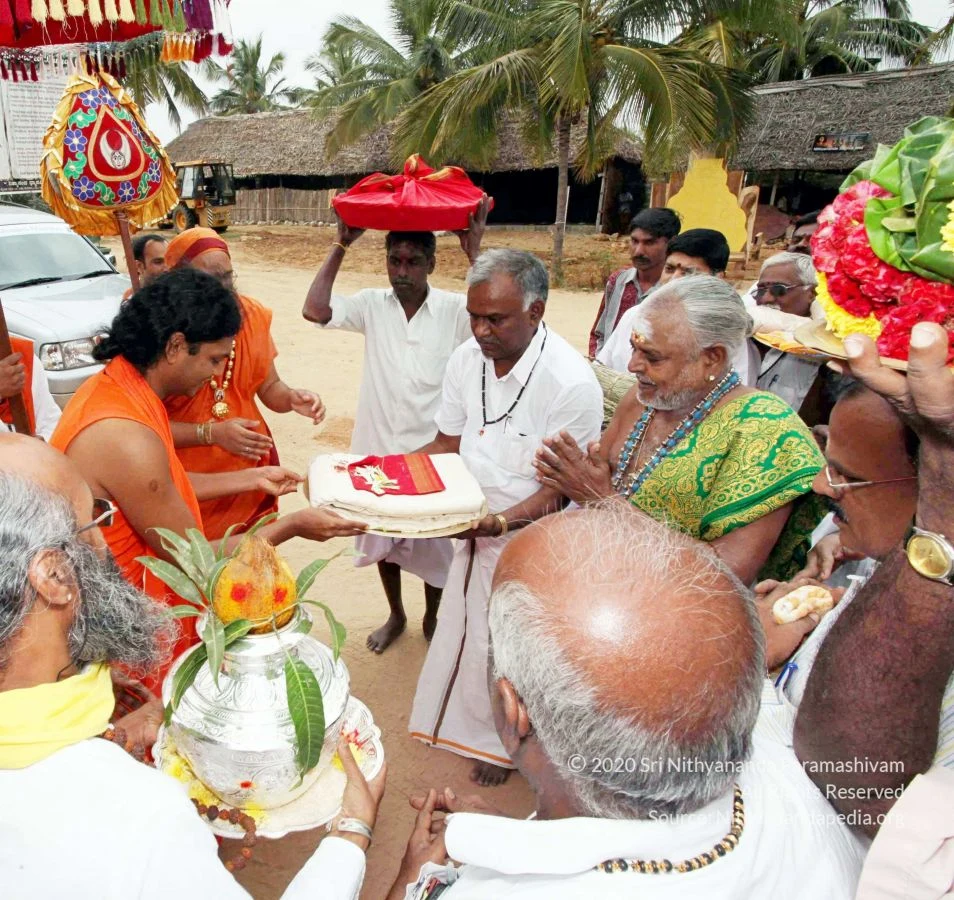
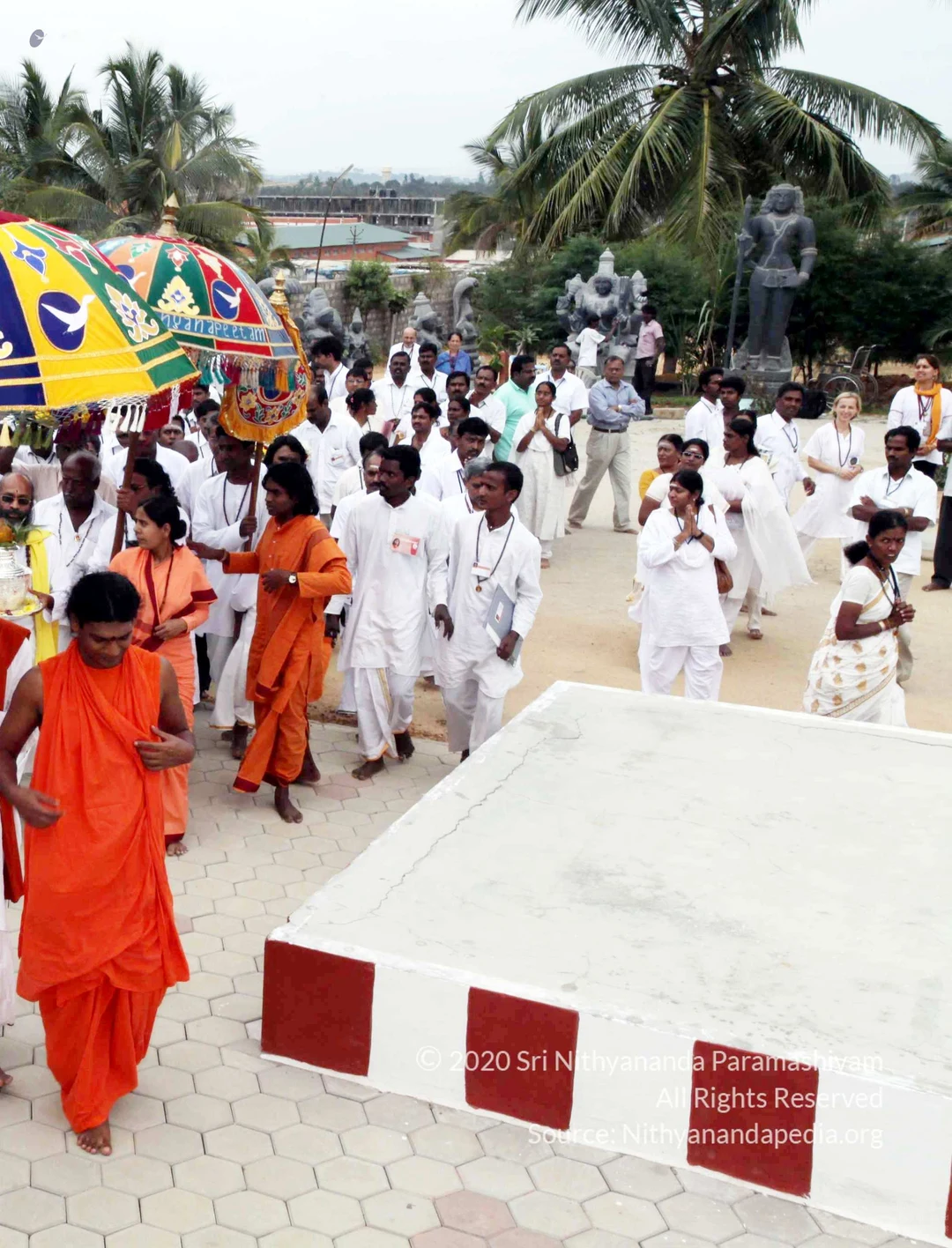
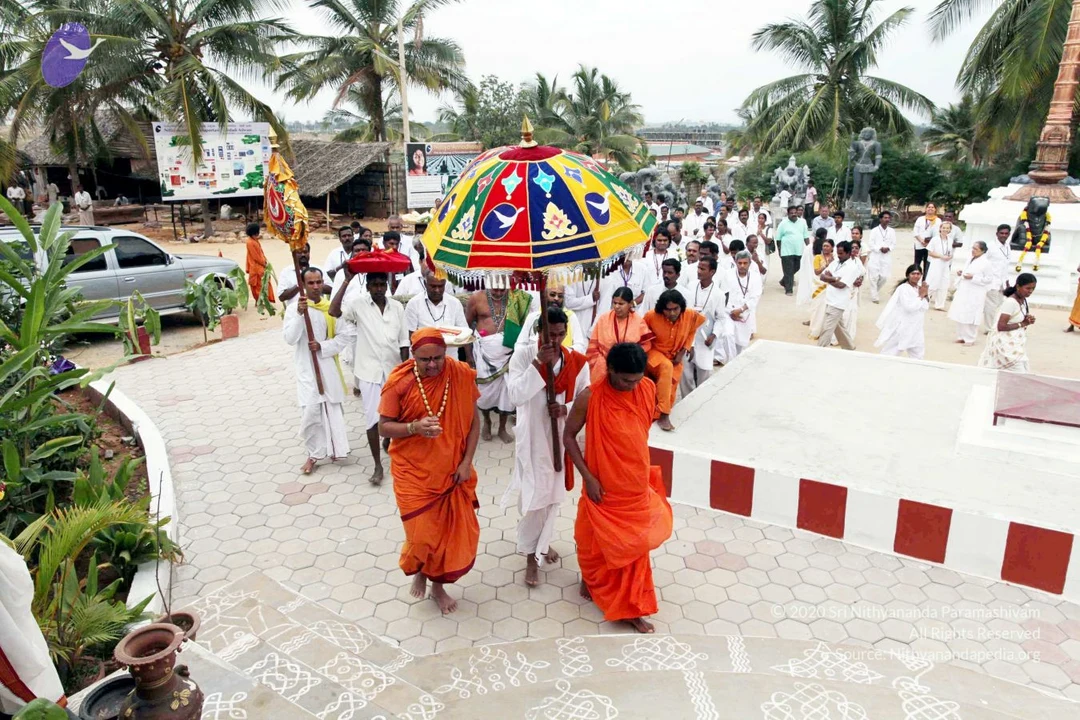
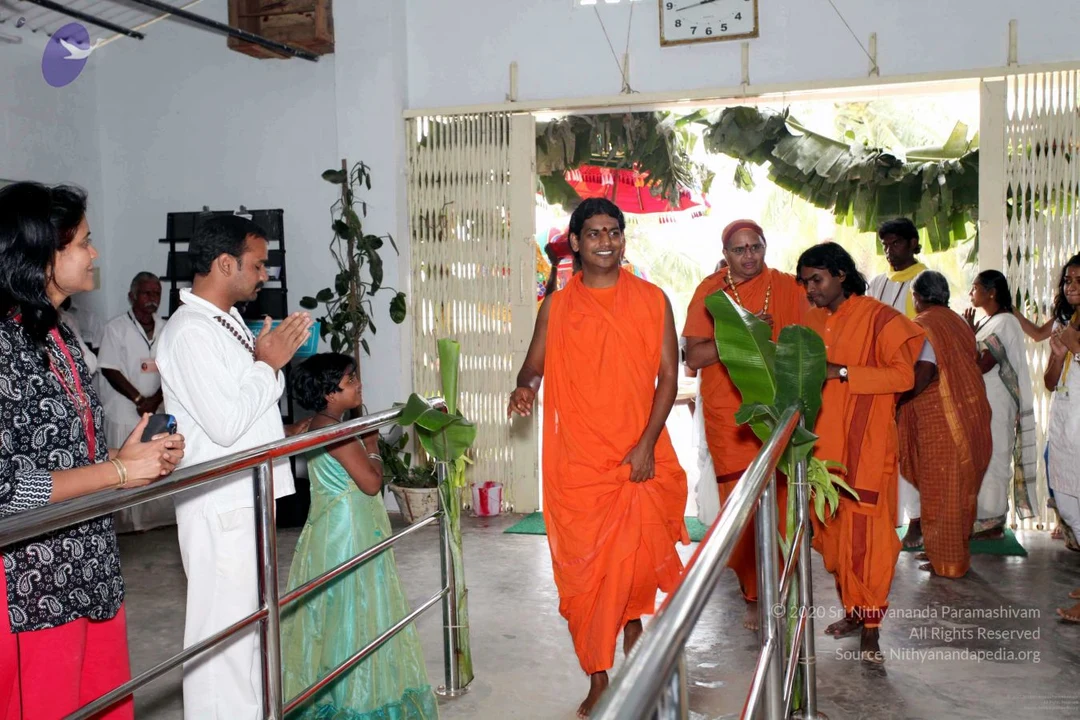
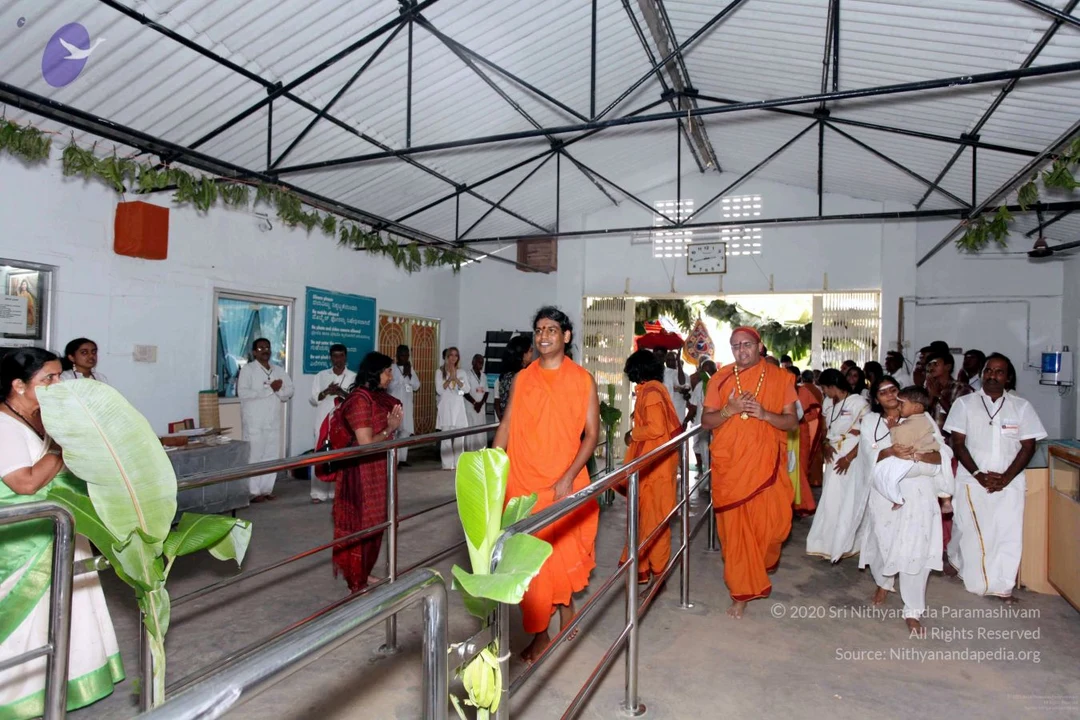
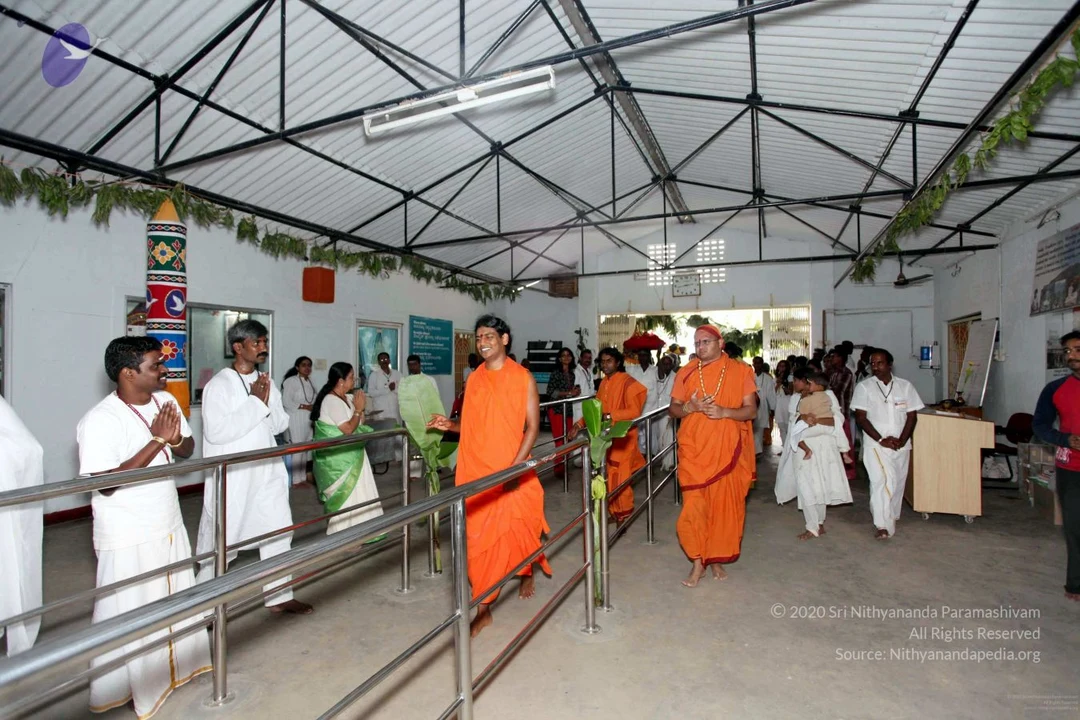
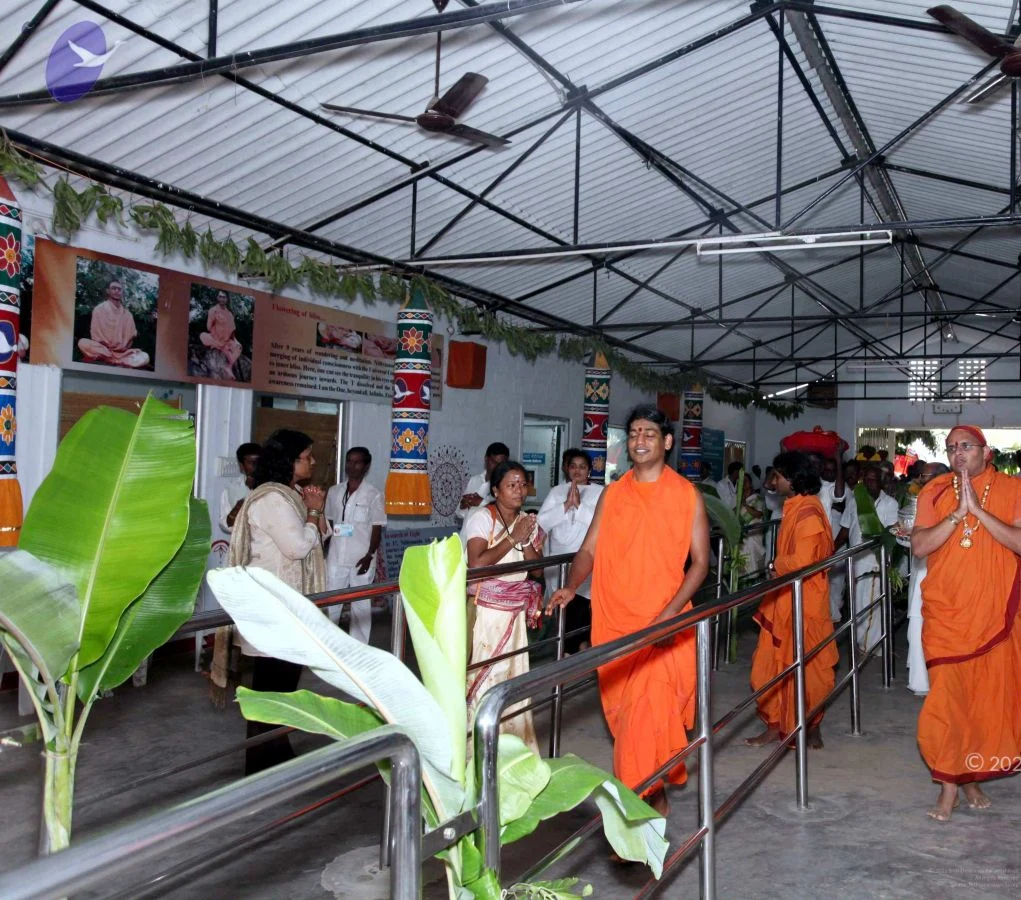
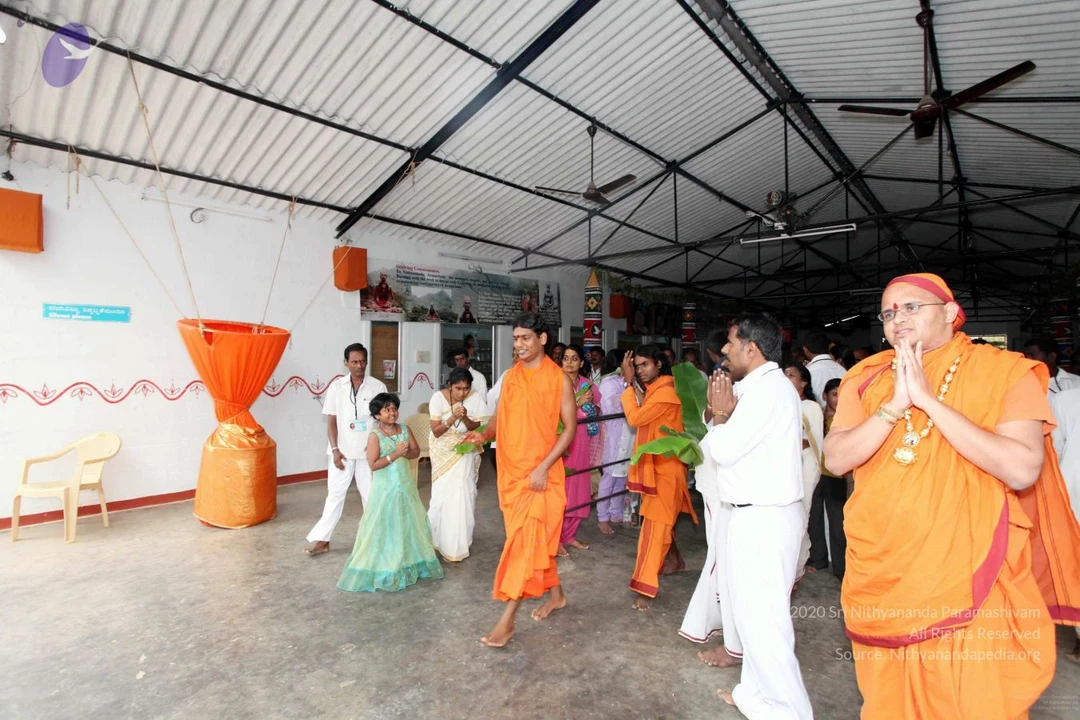
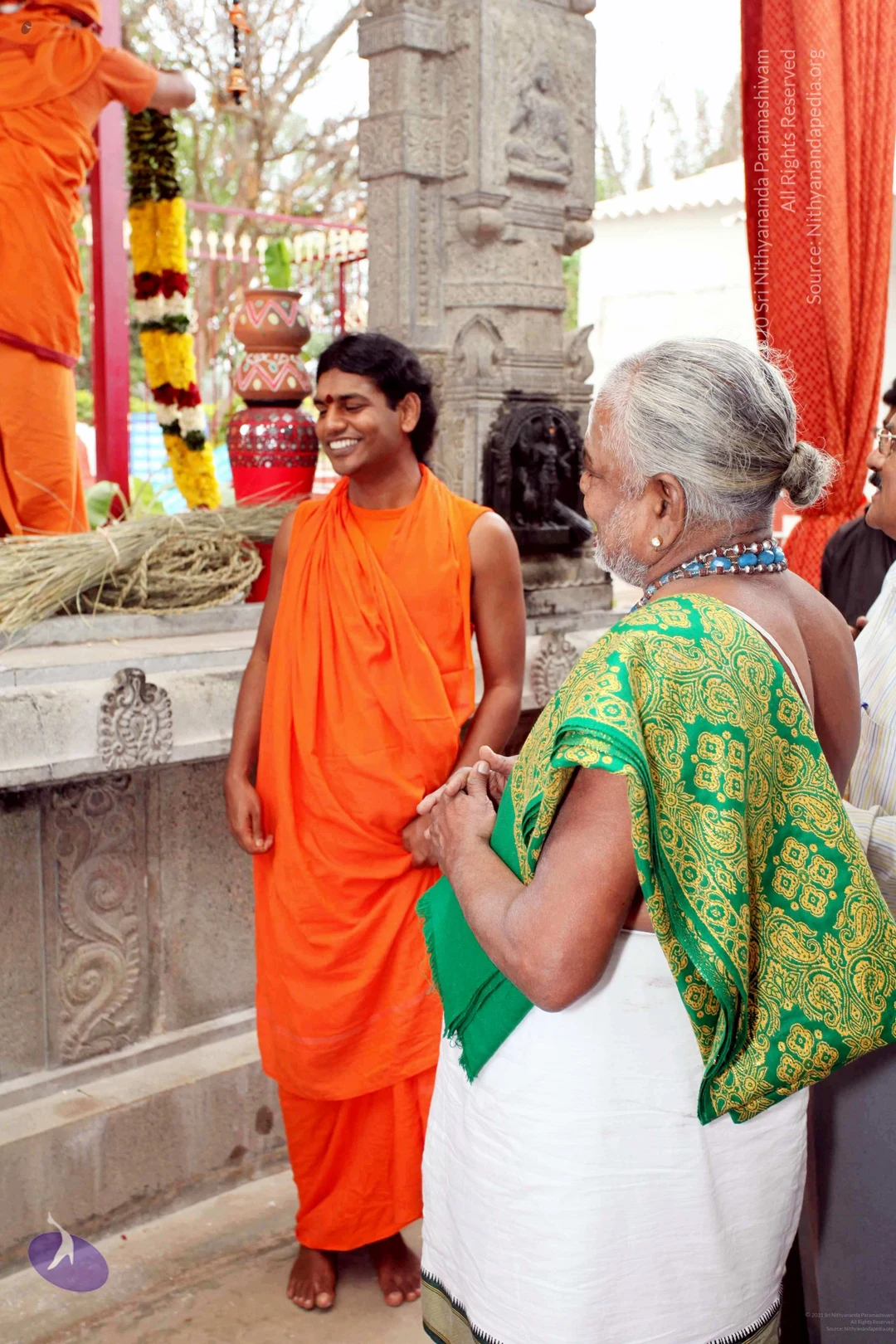
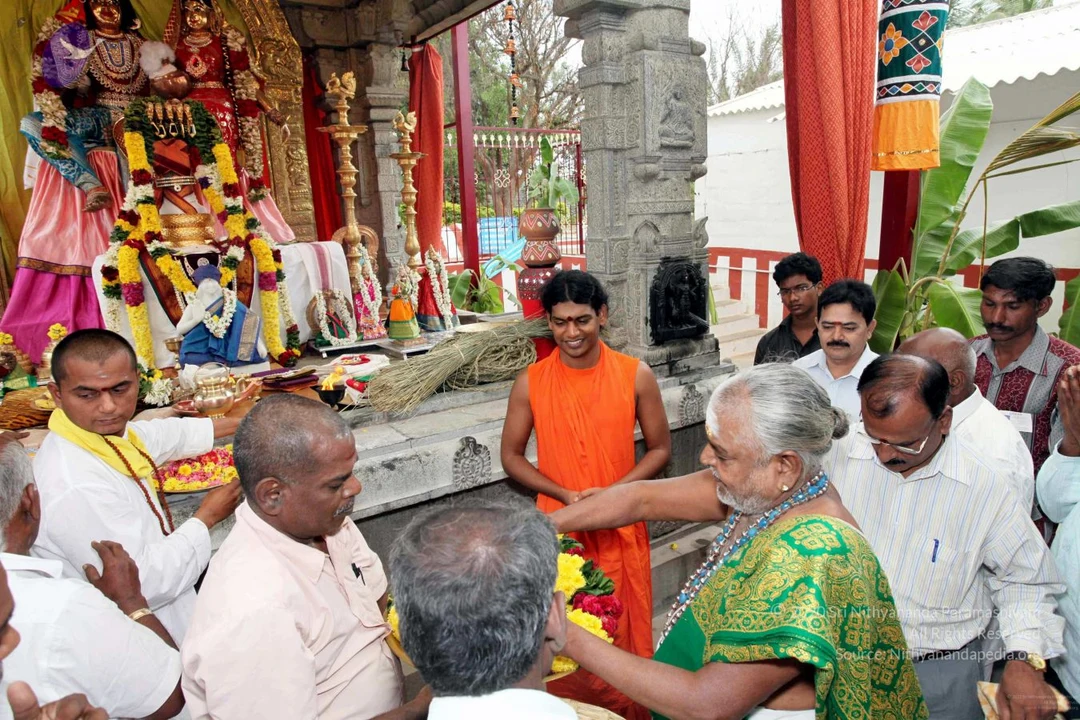
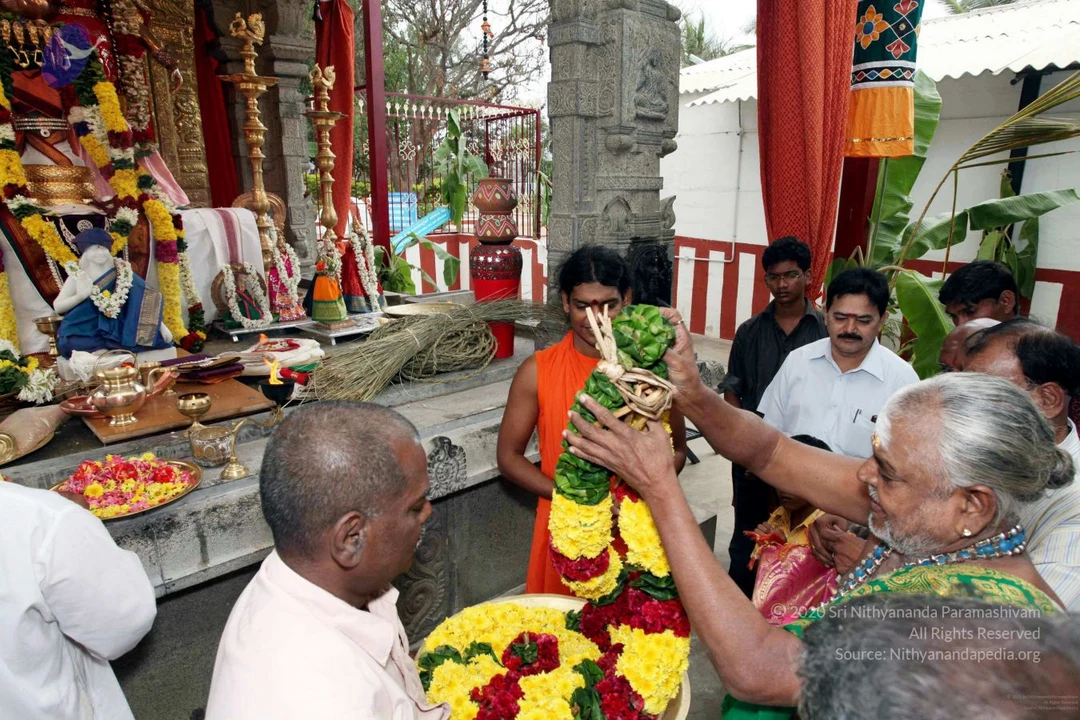
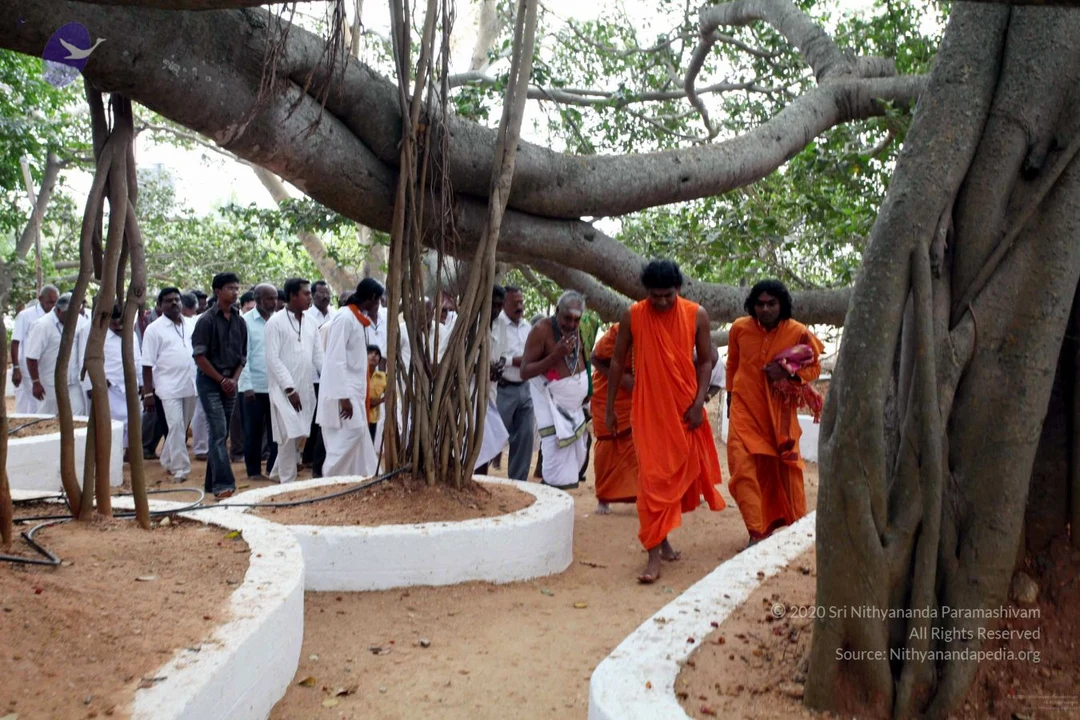
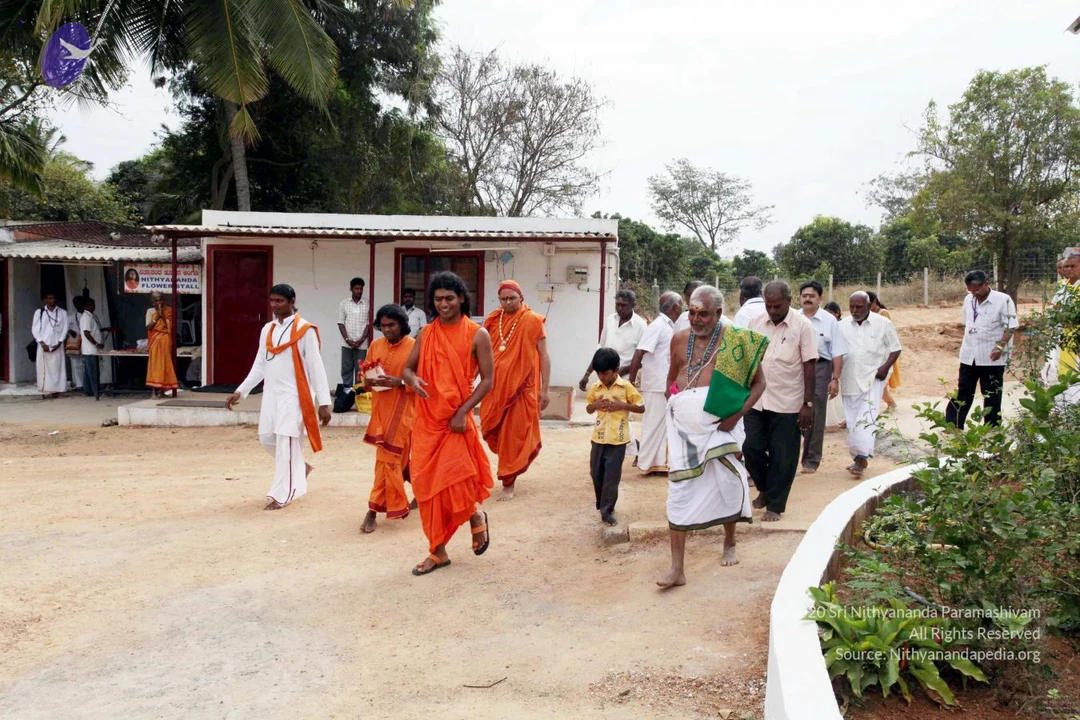
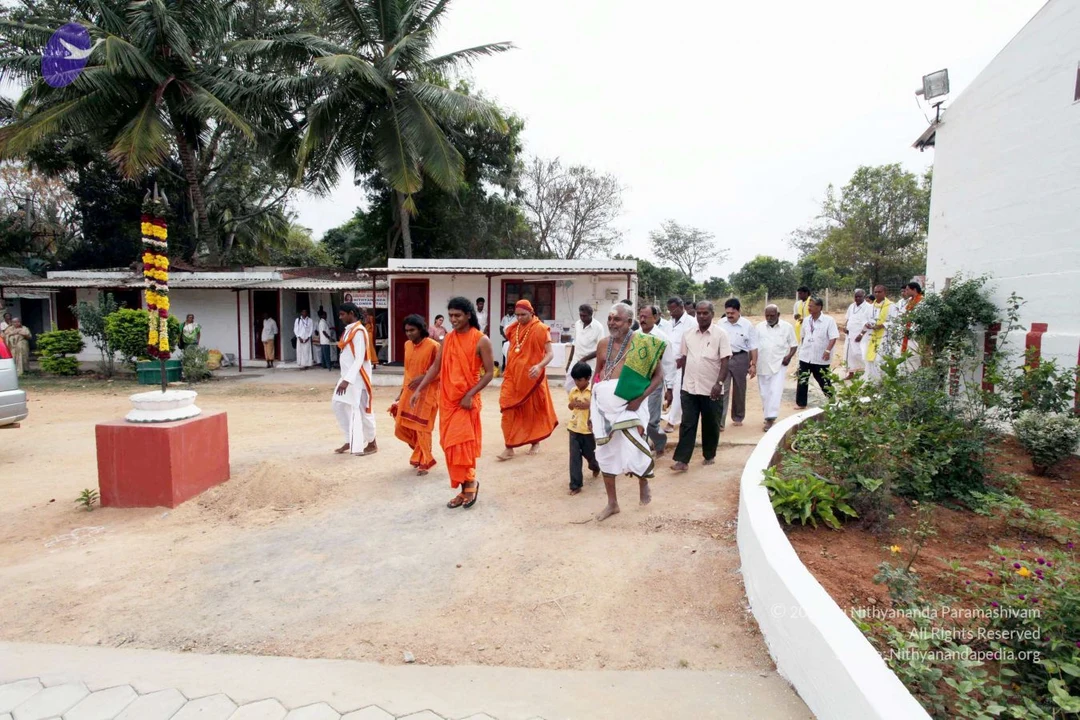
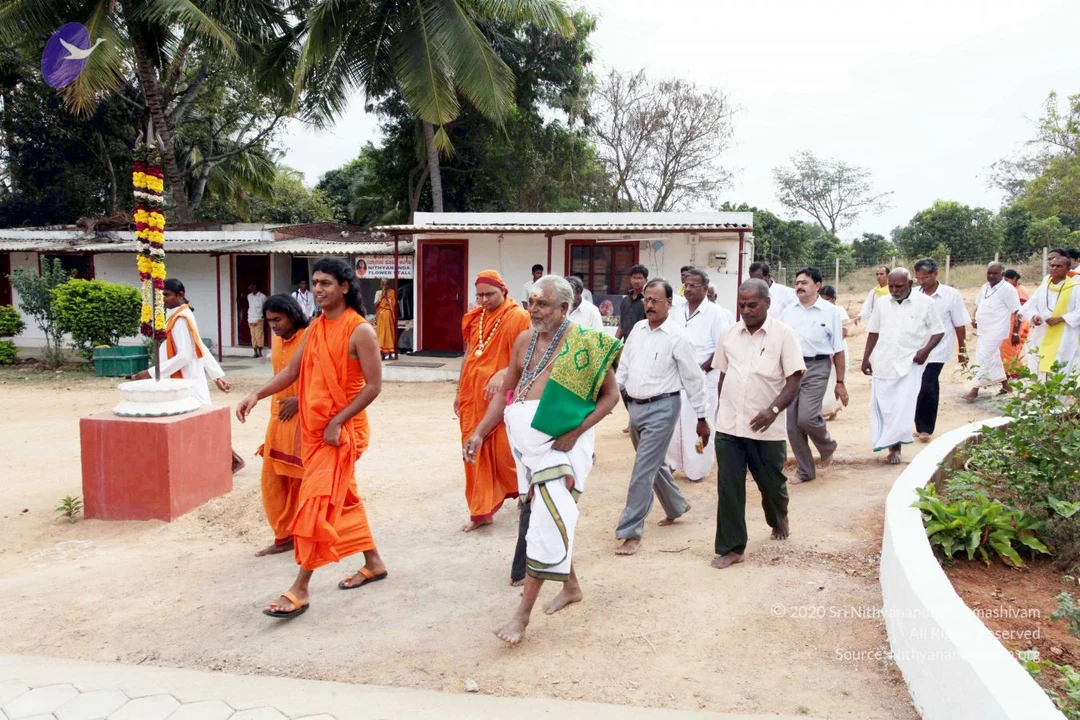
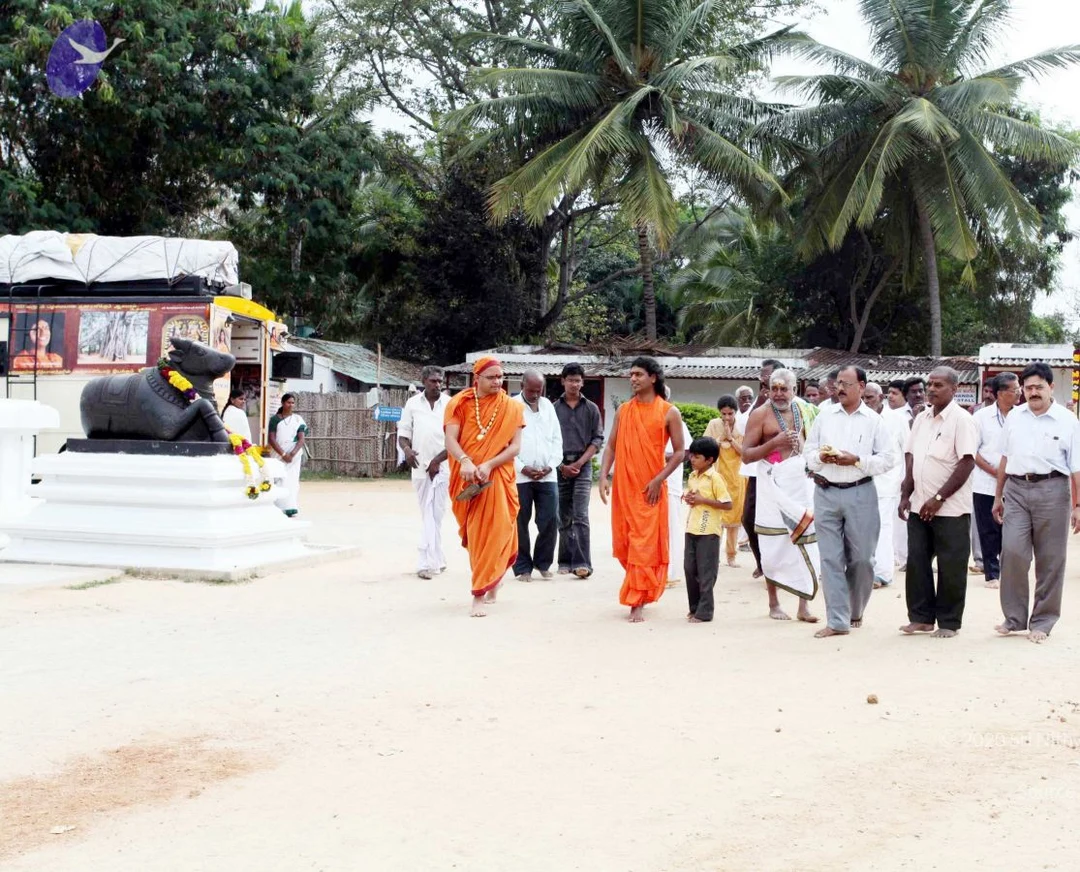
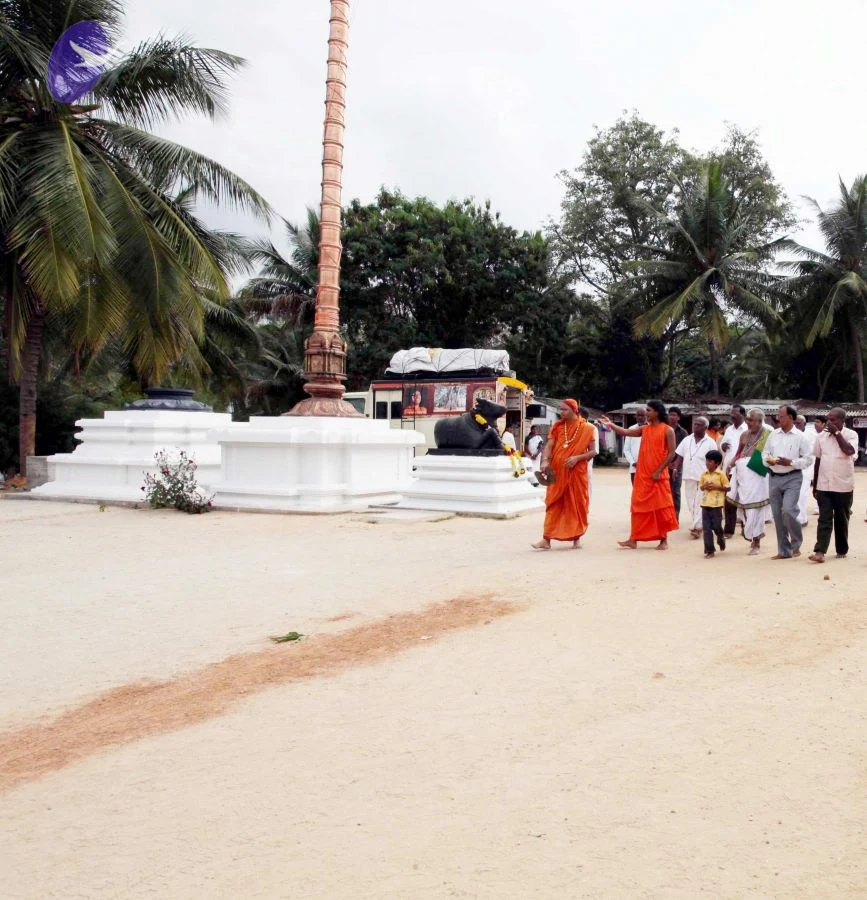
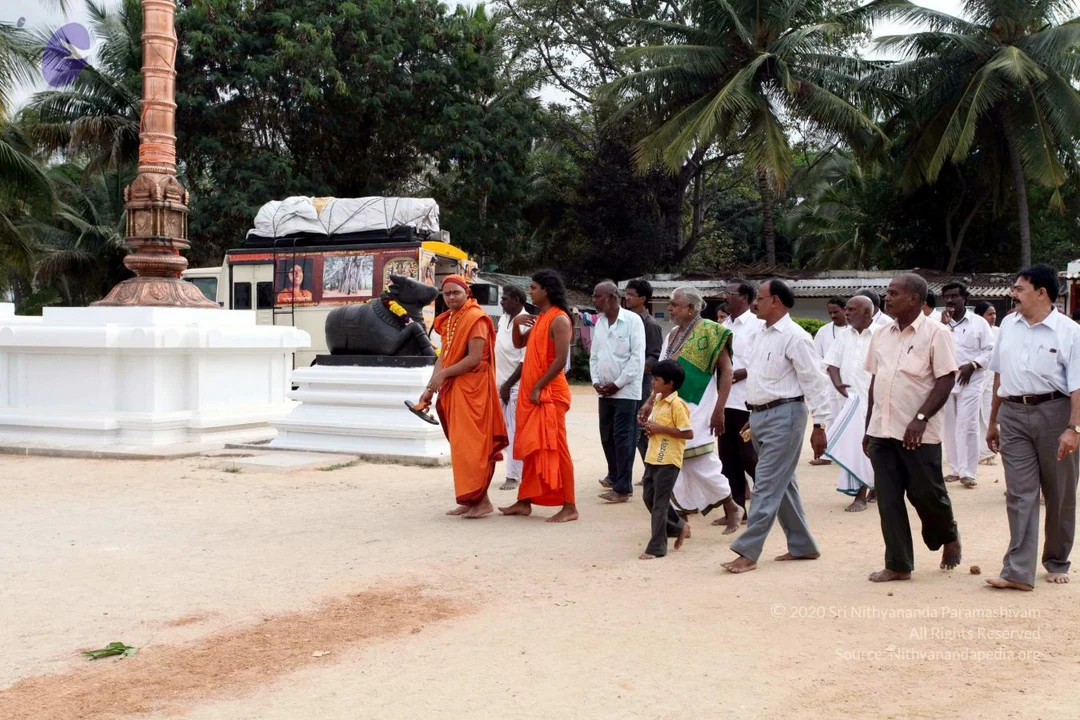
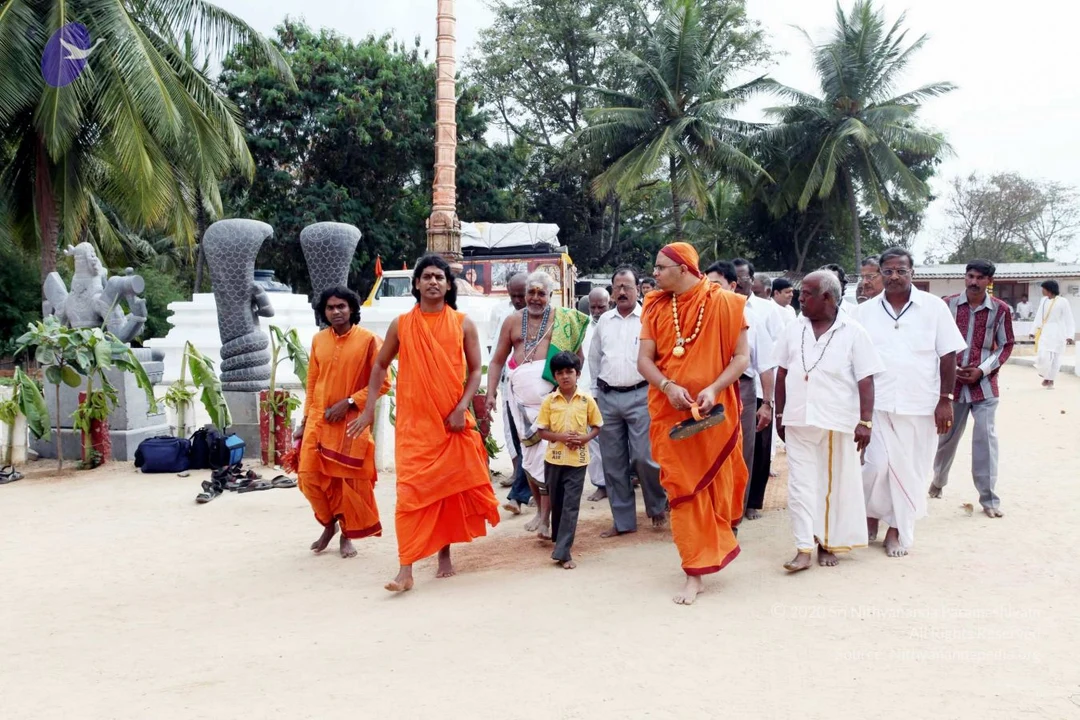
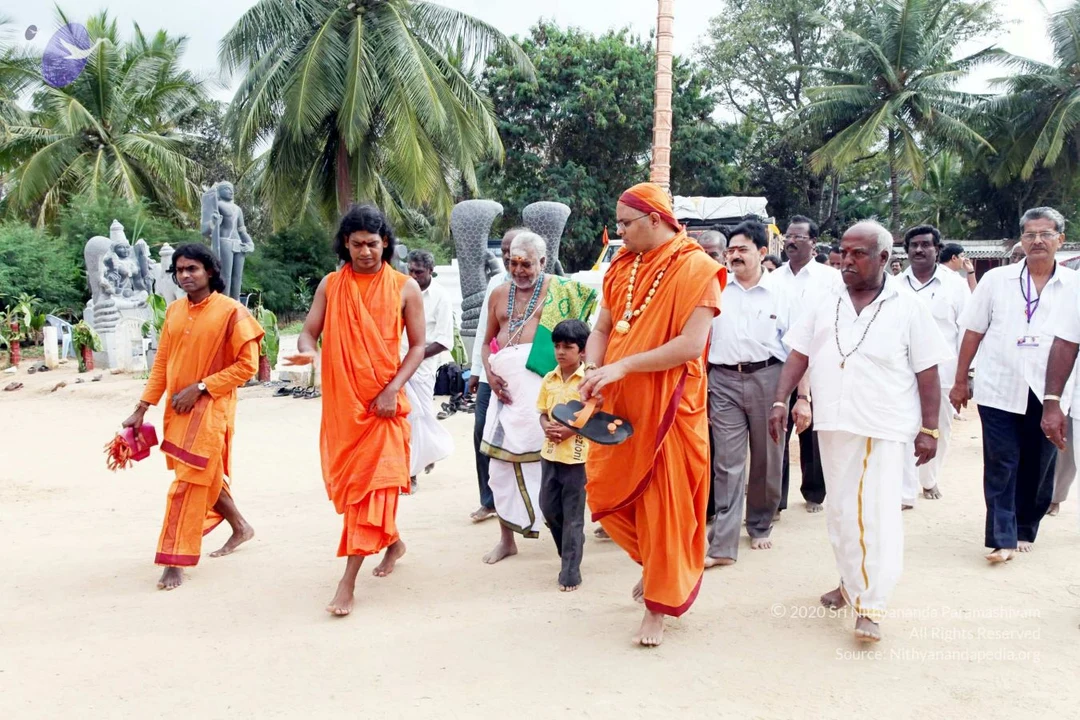
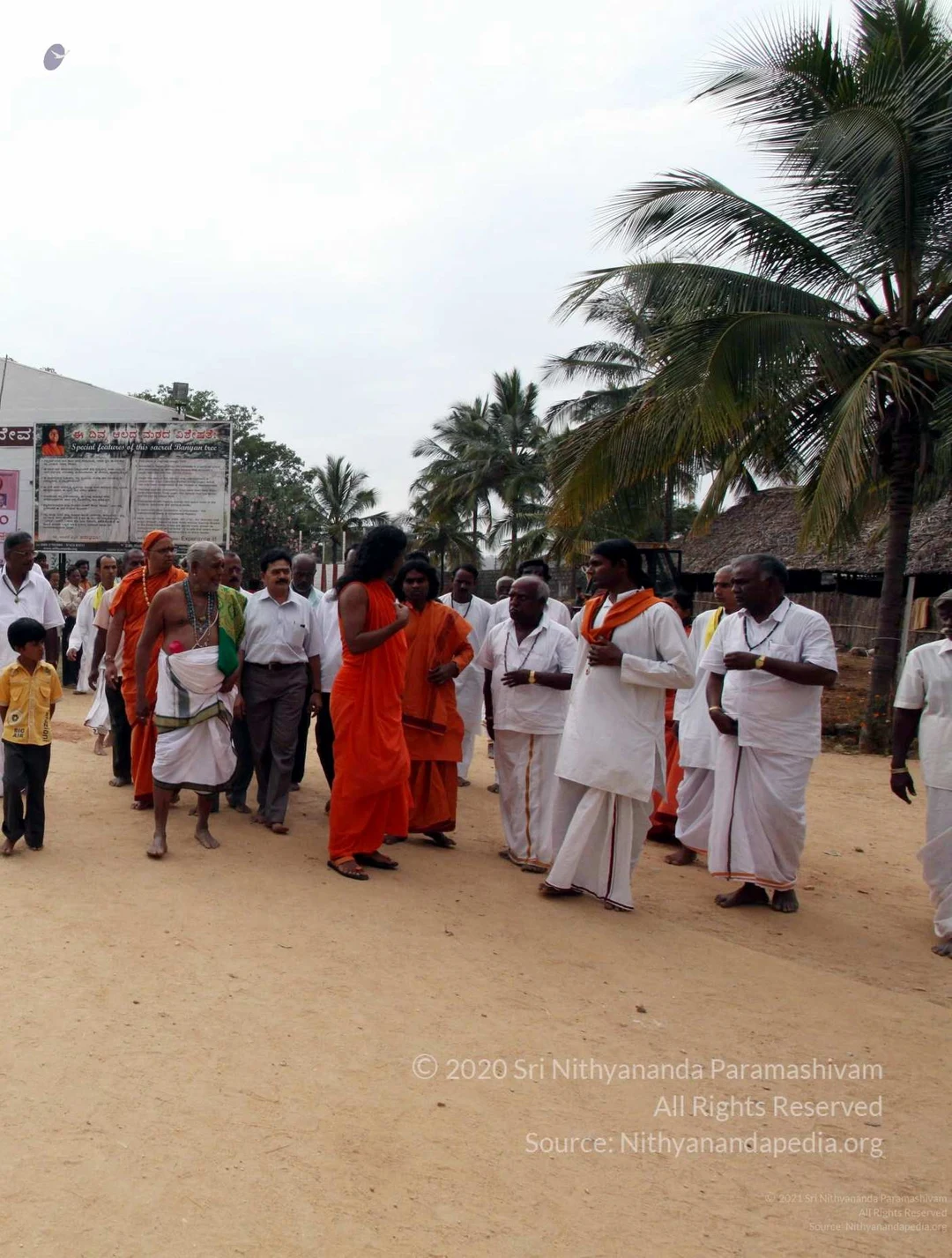
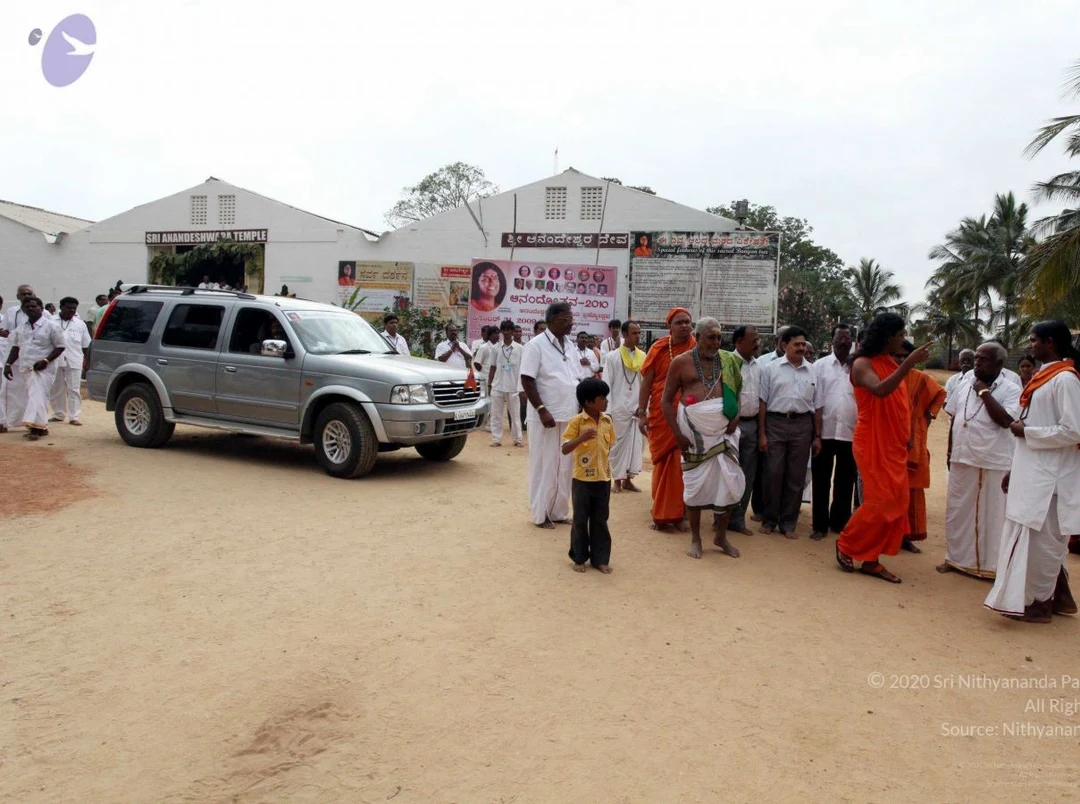
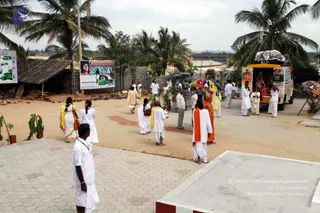
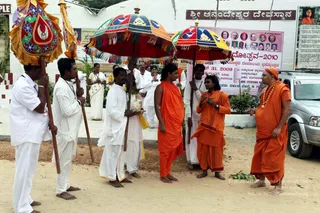
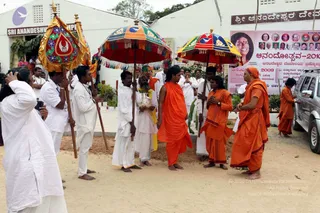
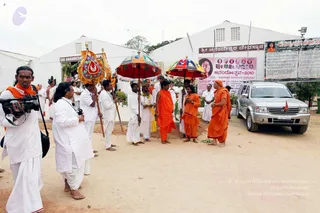
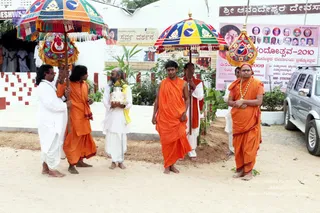
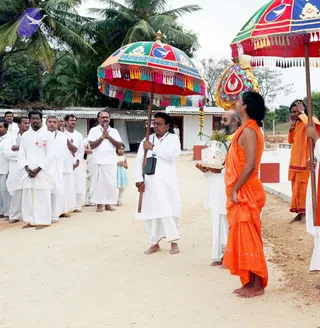
Outdoor photo of a procession at an ashram courtyard of packed sand under palm trees. In the foreground a man in a white shirt and white dhoti stands on a paved tiled path with his back to the camera. A group of devotees in white dhotis and white saris walk across the sand, some carrying leafy green branches and a brass pot. A woman in a white sari with a yellow border and a man in white with an orange shawl stand near a yellow van on the right; the van's open side displays a decorated deity murti surrounded by garlands and framed pictures. Two colourful striped parasols stand nearby. A banner on a wall reads Nithyanandeshwara Paramashiva Devalayam with a photo of a temple and a tall figure in orange.Outdoor procession scene at a temple entrance beneath a signboard reading Shree Anandeshwara Devasthana. Several people in white dhotis and shirts hold decorated red, orange and blue ceremonial umbrellas with gold tassels and ornate banner poles, one man carrying a brass vessel. In the centre, a man in a long orange robe with long swept-back hair stands barefoot, facing an older man on the right who wears an orange robe, a beaded garland and an orange turban, and holds a sprig of green leaves. Behind them a pink banner shows a row of portraits and Utsava-2010 text. A grey pickup truck is parked at the right edge.Outdoor photo of a procession at a temple entrance on a dirt ground. Three men in white dhotis and shirts hold up ornate, fringed parasols: a yellow-and-red one with a red emblem, and two multicoloured ones in red, blue and green. Beside them, a man in white holds a brass pot. In the centre, a man in an orange robe stands facing a shaved-headed monk in orange wrap and dhoti, who has a crown-like orange head covering, while another orange-robed attendant stands at the right. Behind them are a silver SUV and a sign reading Sri Anandeshwara Devalaya and a banner with portraits and the title Anandotsava-2009. A woman in white stands at the left.Outdoor procession at a white-walled temple complex with a signboard reading Sri Anandeshwara Temple. Several men in white dhotis and shirts walk barefoot carrying ornate red, orange and blue ceremonial parasols on poles. In front, a man in orange robes and a rudraksha mala walks with a cameraman in white filming with a video camera. A man in orange robes stands barefoot on the dirt ground at the centre, appearing to receive an offering. A silver SUV is parked nearby. Behind, a large banner shows a portrait and rows of photos labelled Ananotsava-2010, and a board reads special features of this sacred event.Outdoor procession at a temple-style compound with a banner reading Sri Anandeshwara Devasthana. Two colourful striped parasols with tassels are held aloft by men in orange robes. A bearded man in white holds a large silver-toned vessel. A young man in orange shawl stands centre, and on the right an orange-robed figure with a rudraksha mala and shaved head stands with hands folded. A second man in white stands behind, and a silver SUV is parked at right. Behind the figures, a large printed banner shows portraits and text about an Anandotsava-2010 event dated December 2009.Outdoor procession on a sandy path beside a white-walled building with palm trees behind. Two men in white dhotis hold large multicoloured parasols with tasselled fringes, one red-and-green, one red-and-blue. A man in white kurta holds a tray or vessel with flowers at the centre. A man with a shaved head and bare chest, wearing a saffron-orange dhoti, stands with hands folded in front of him beside another orange-clad man with a shawl. On the left, a line of men in white dhotis and shirts stand with hands folded, and a young girl in a light blue dress stands among them. The scene looks like a ceremonial welcome or procession.

Organisers Meeting

10 photosSource gallery
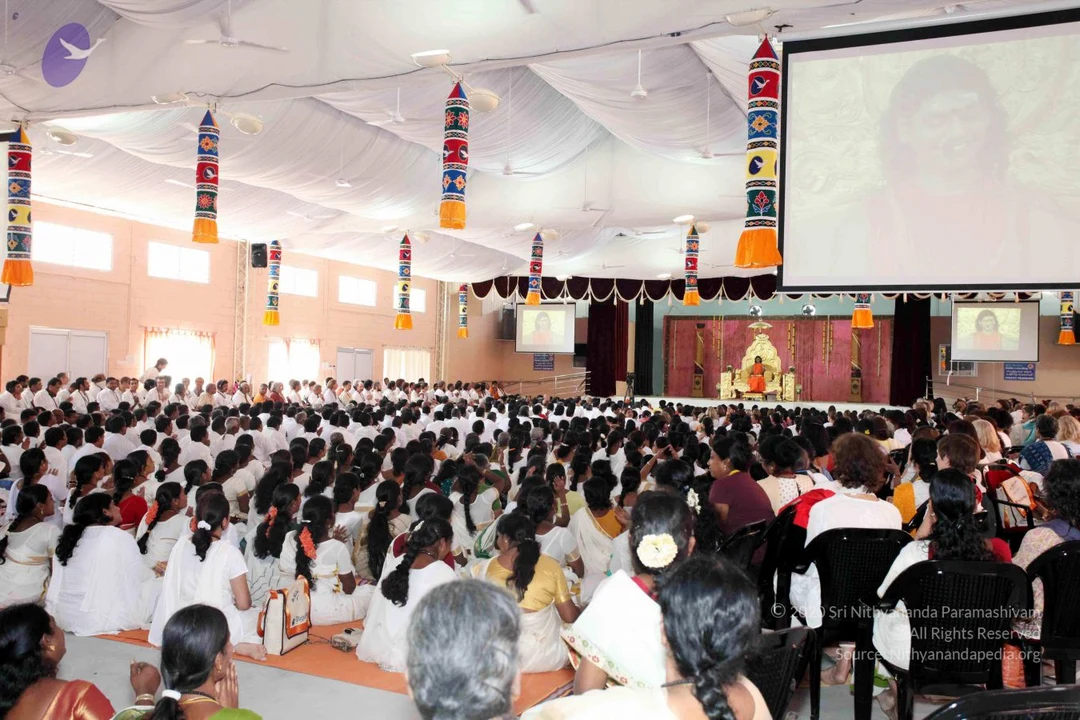
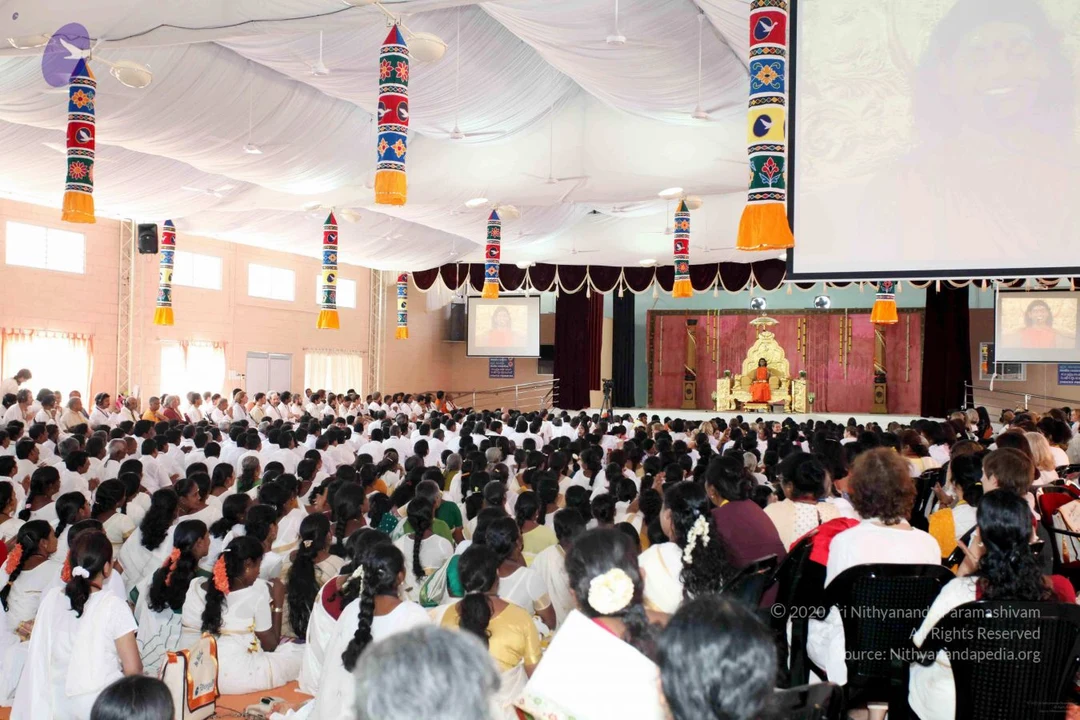
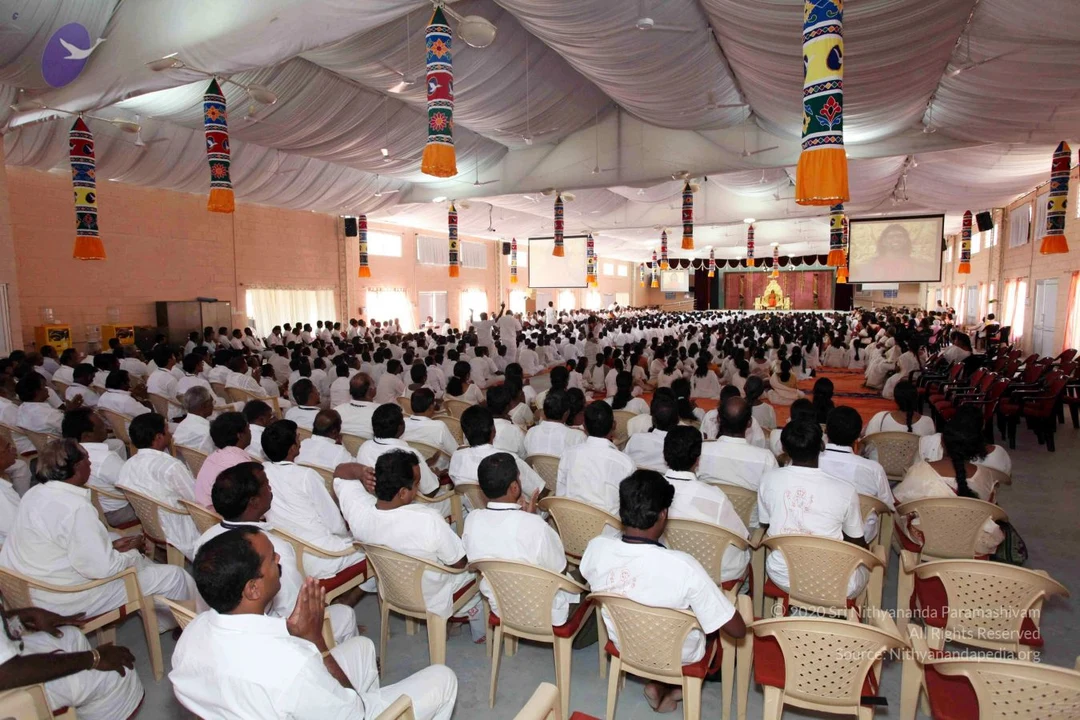
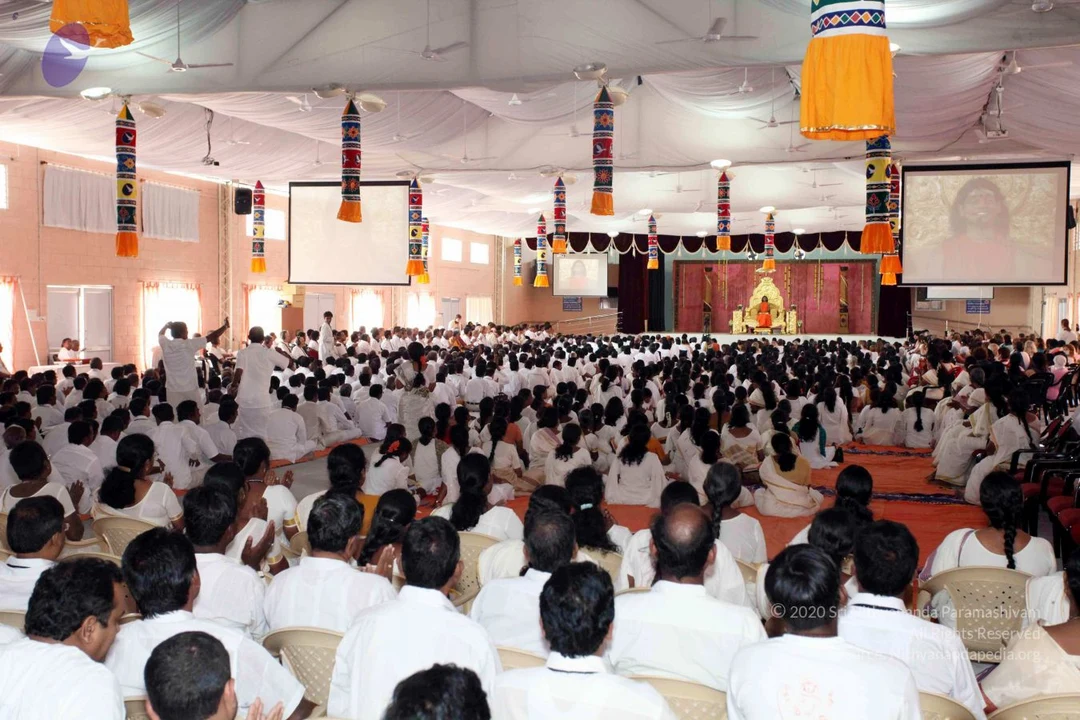
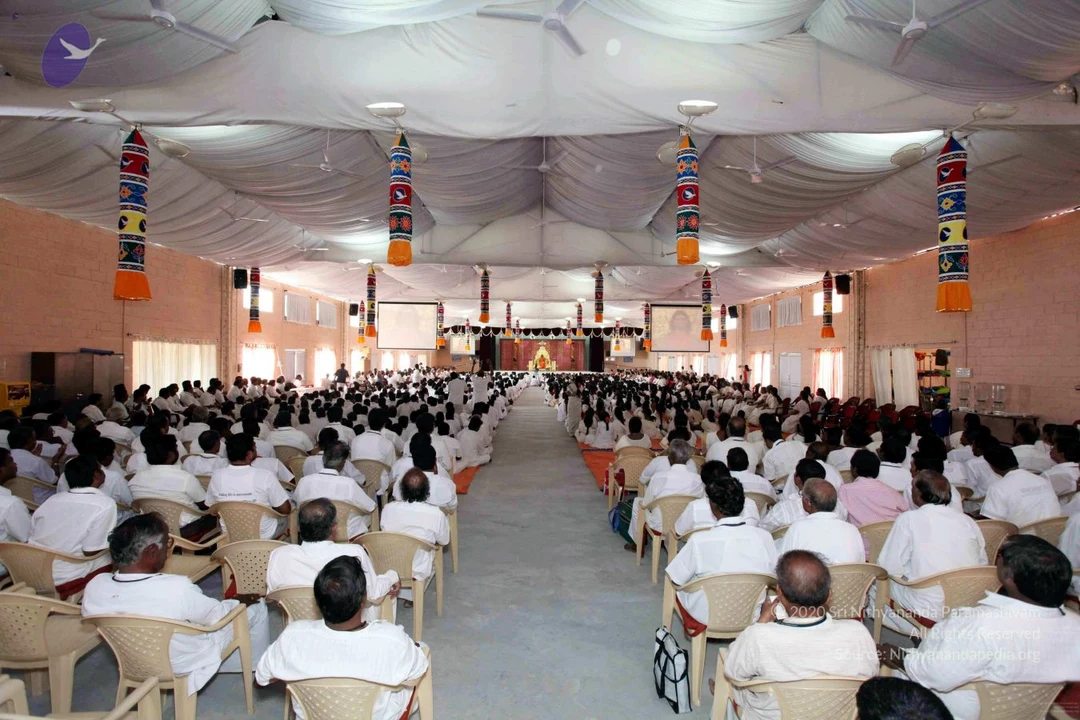
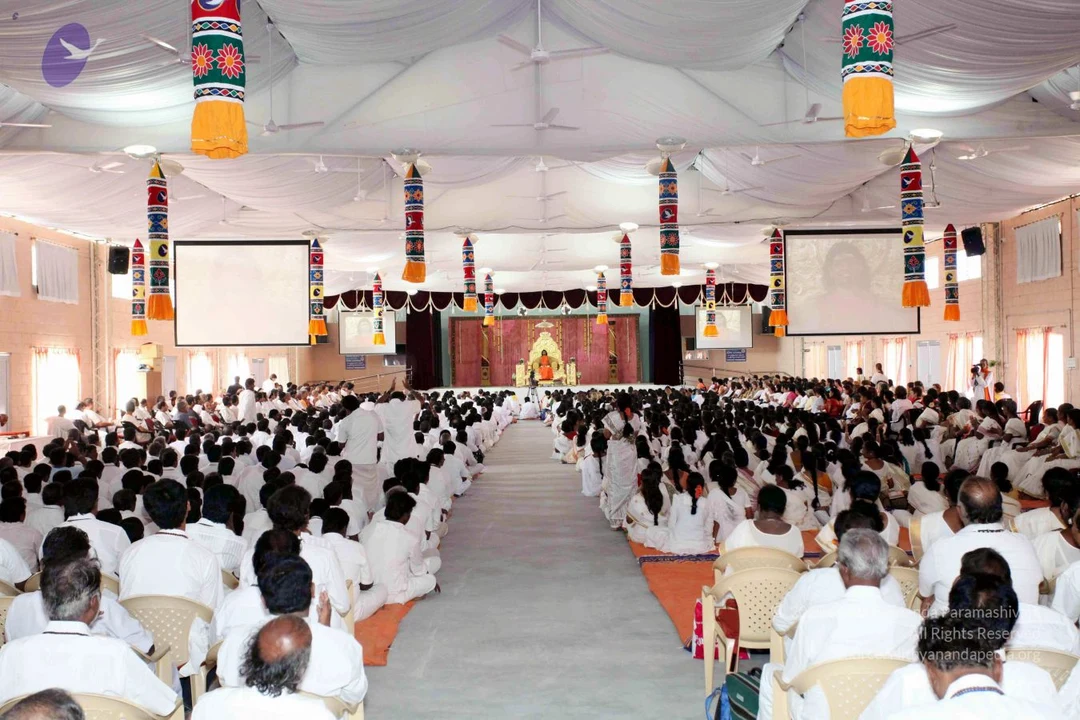
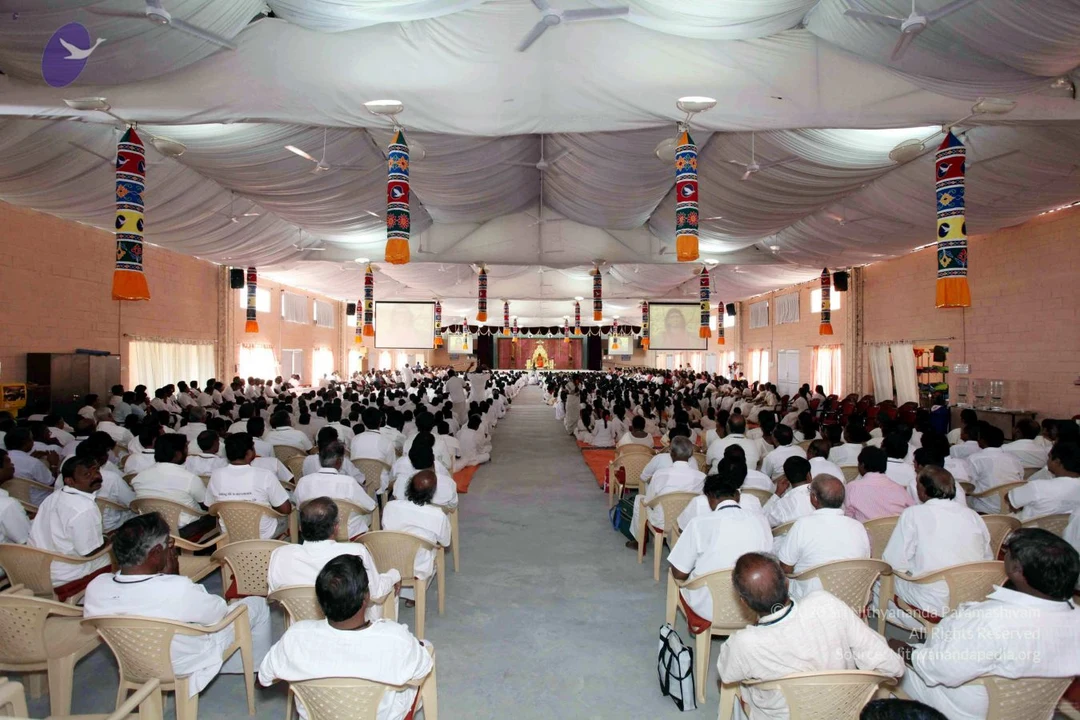
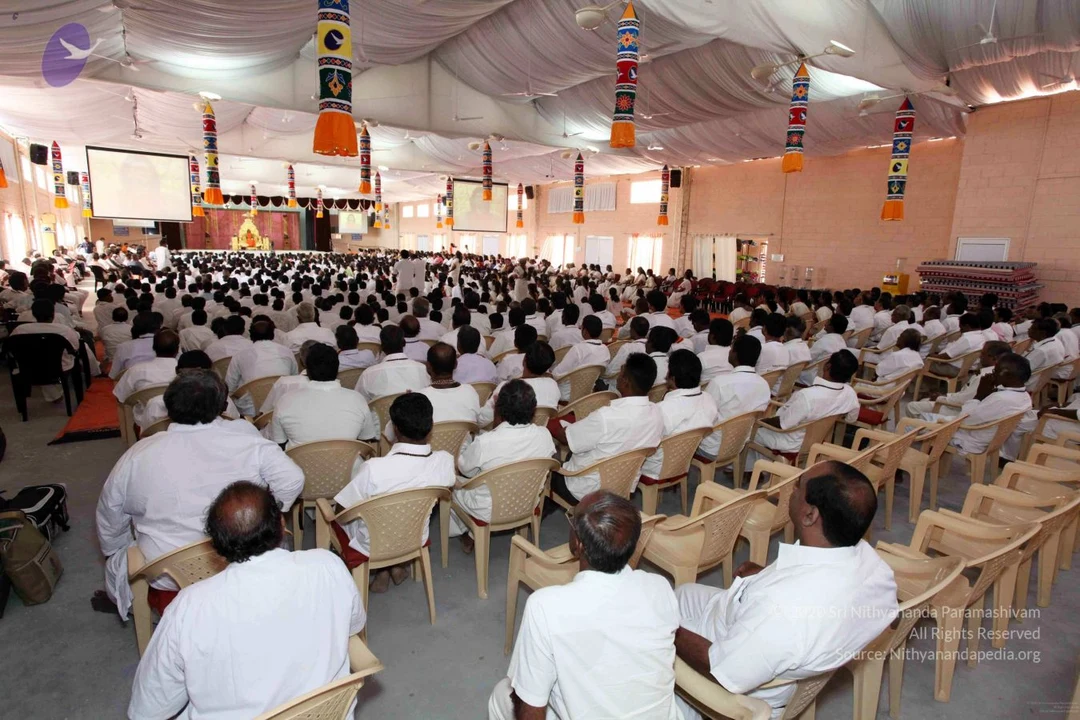
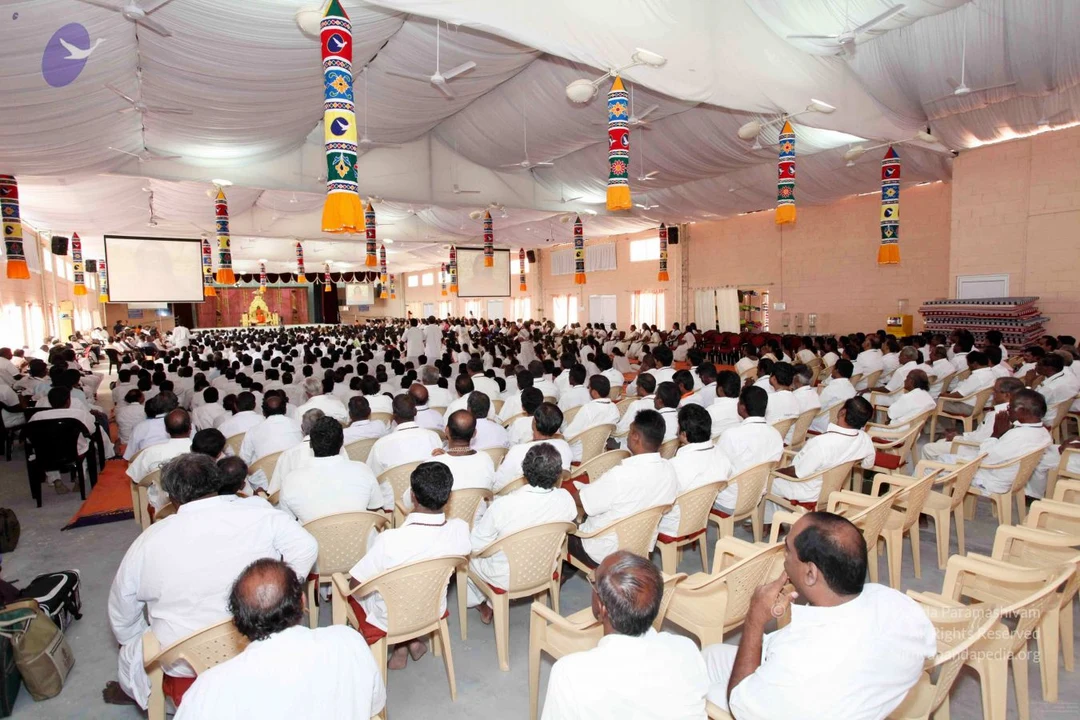
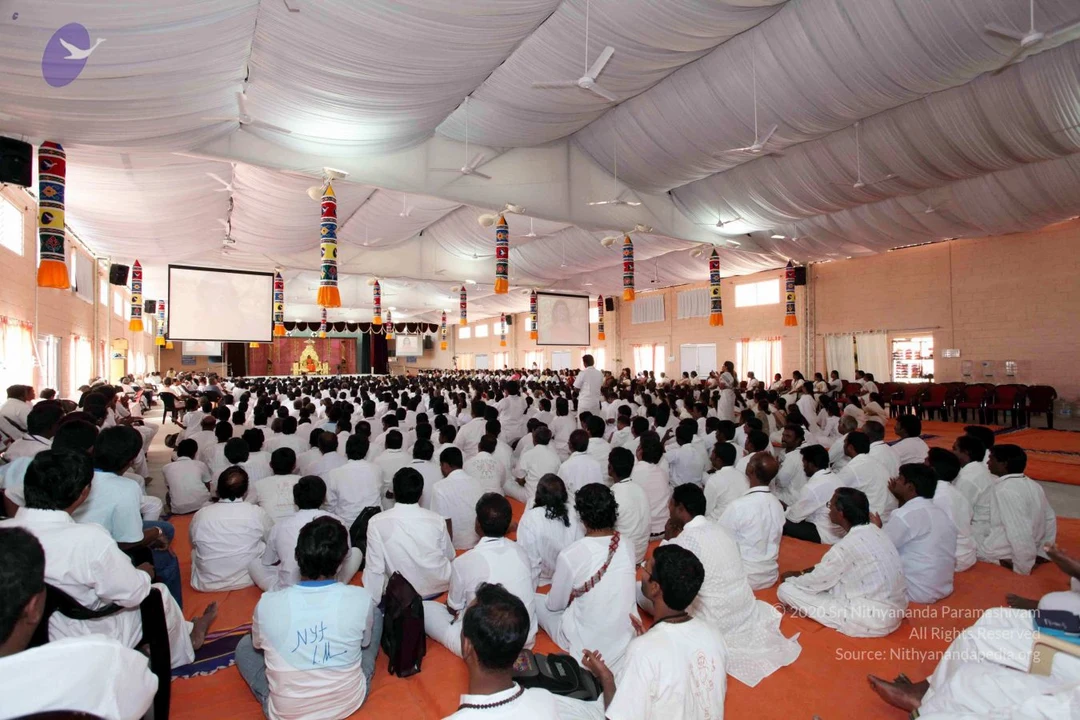
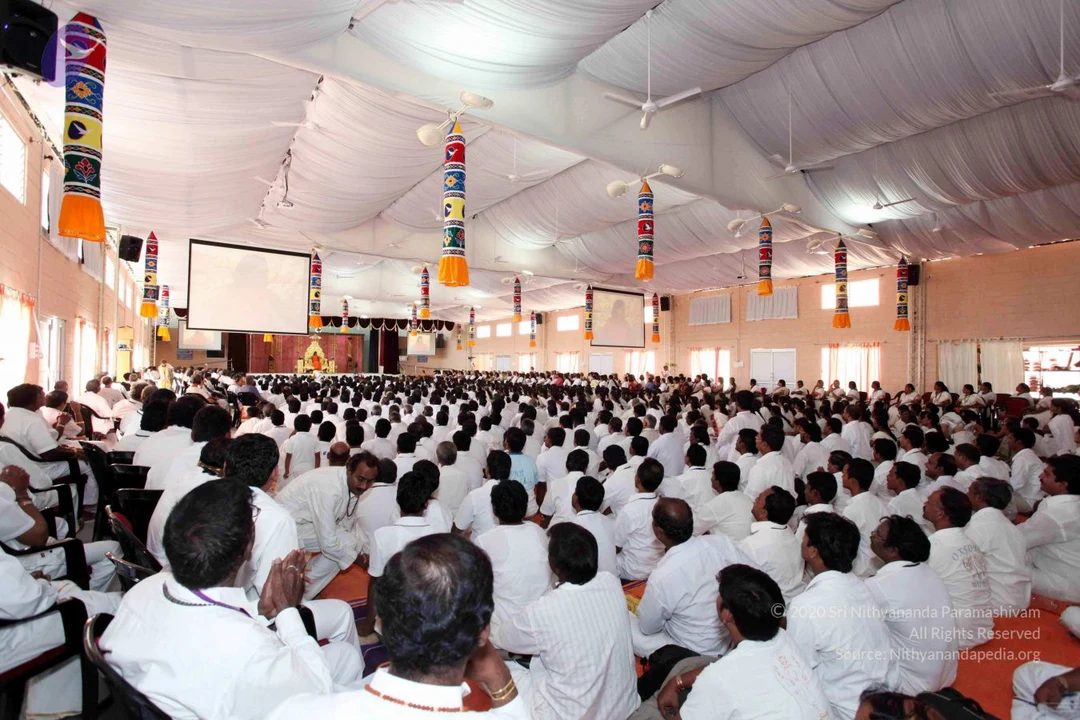
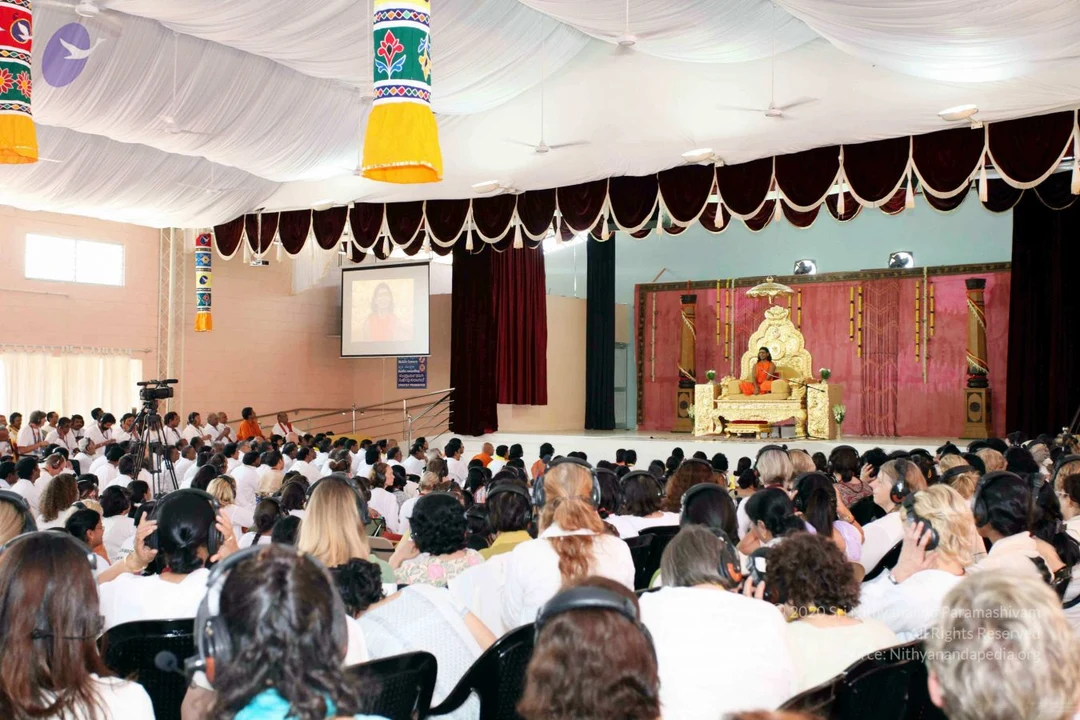
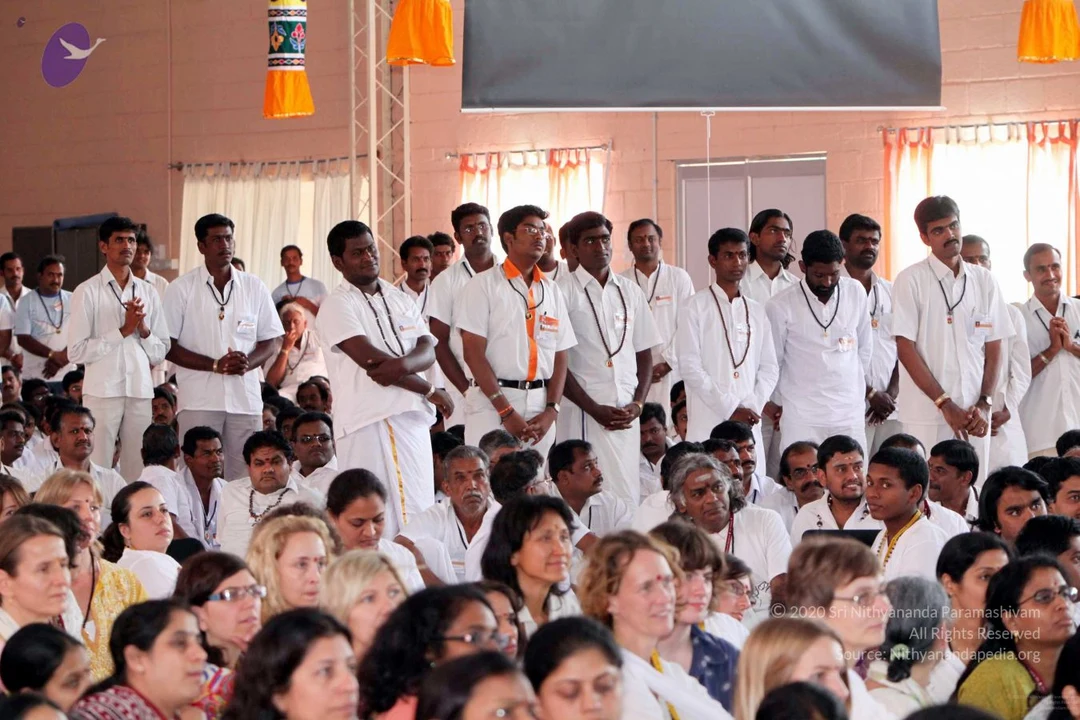
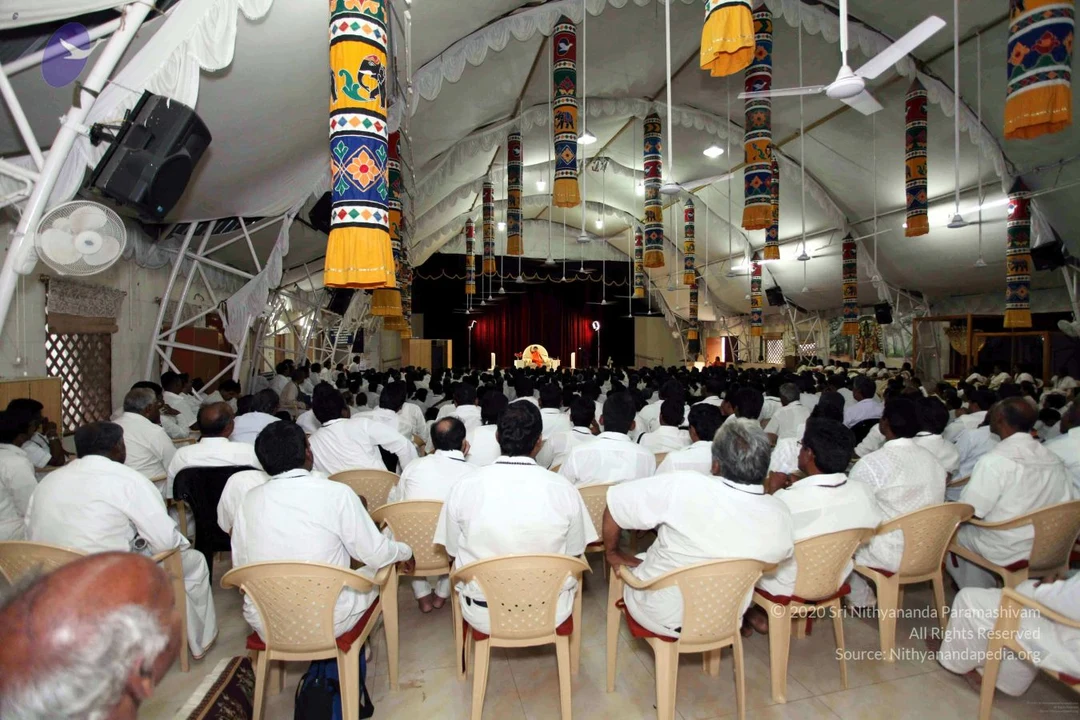
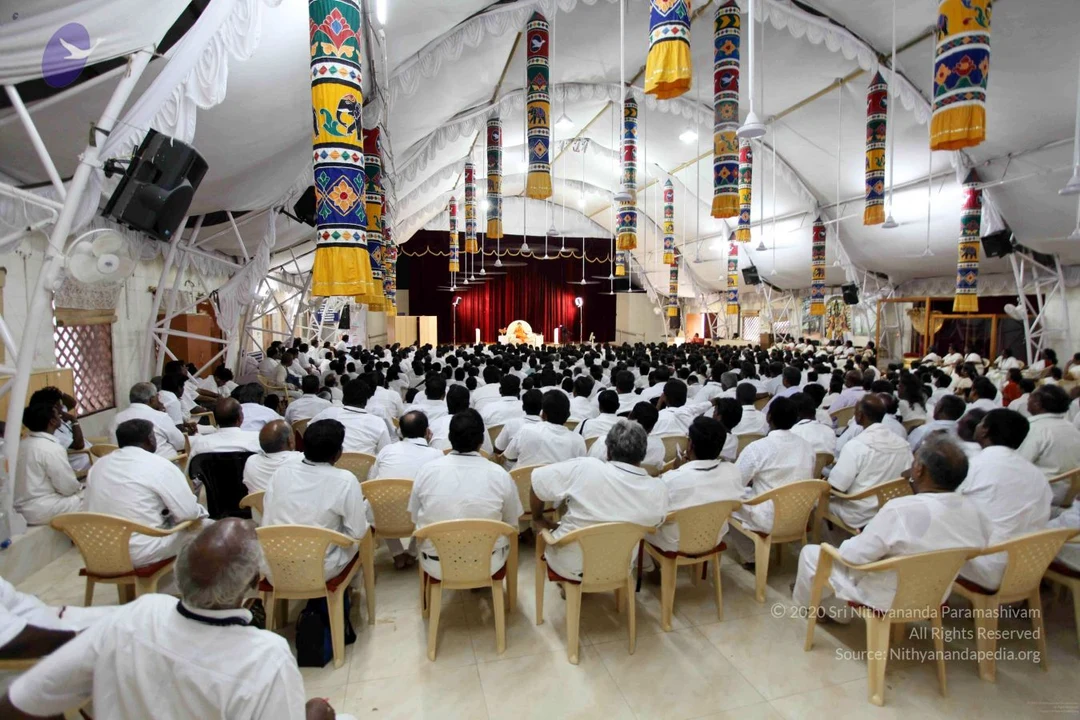
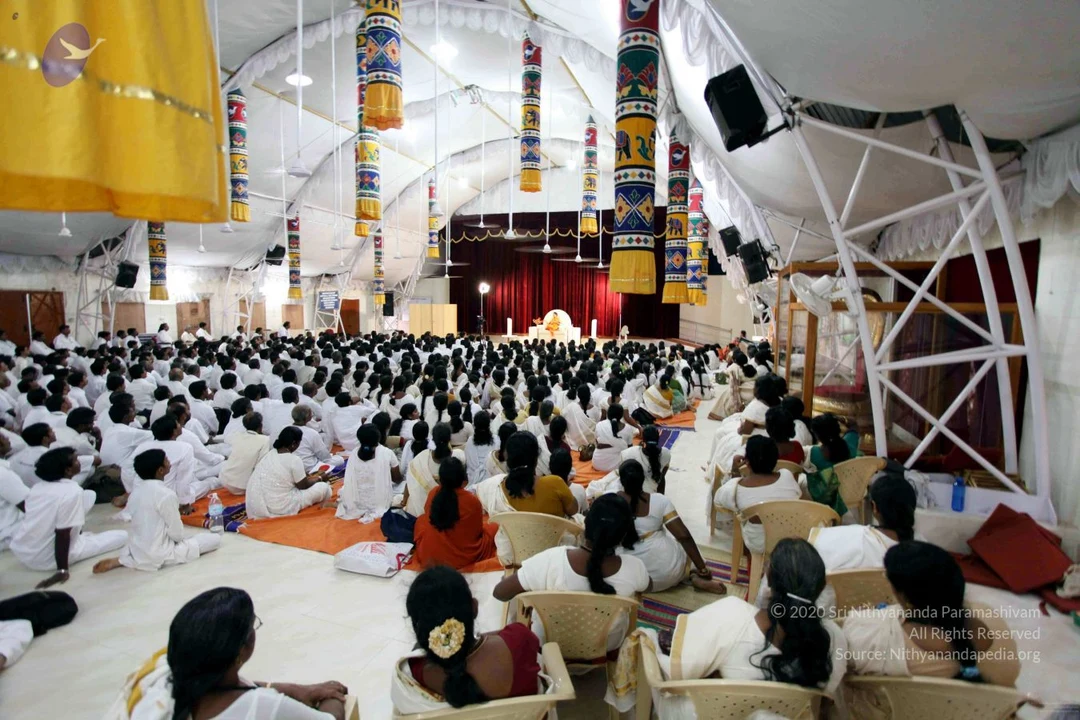
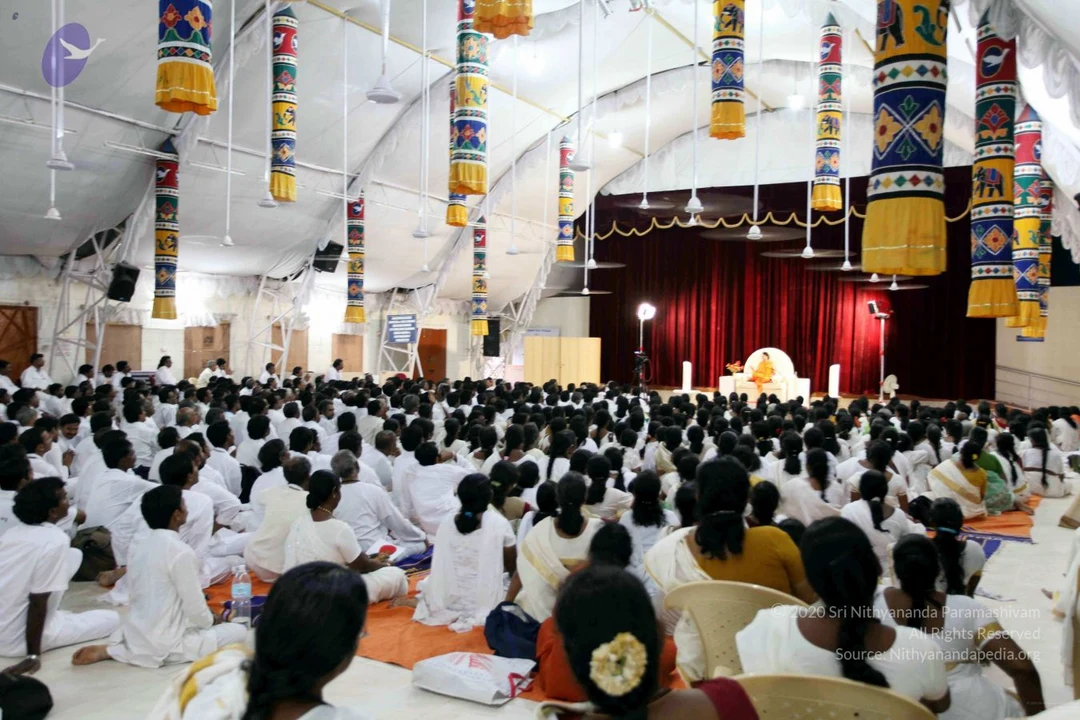
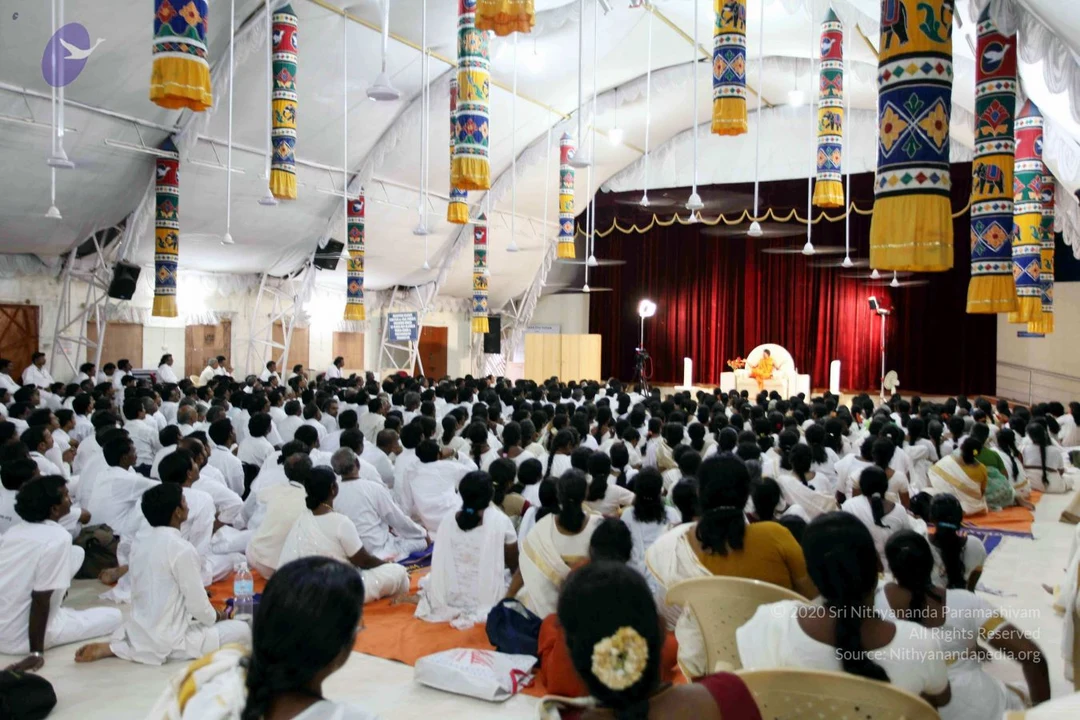
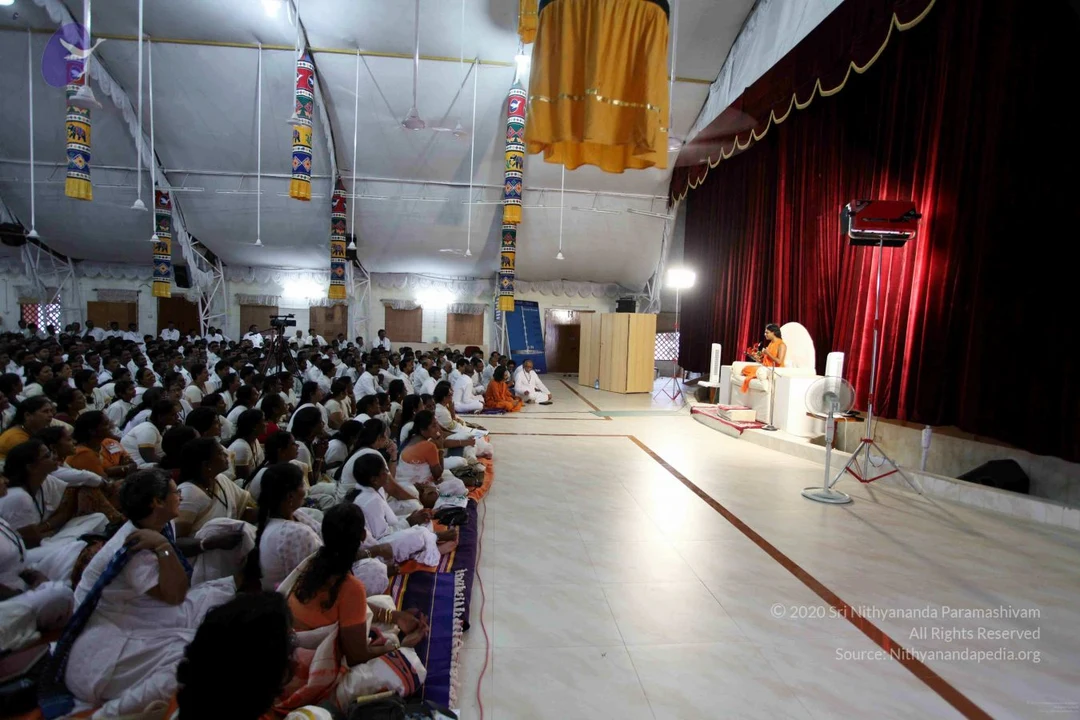
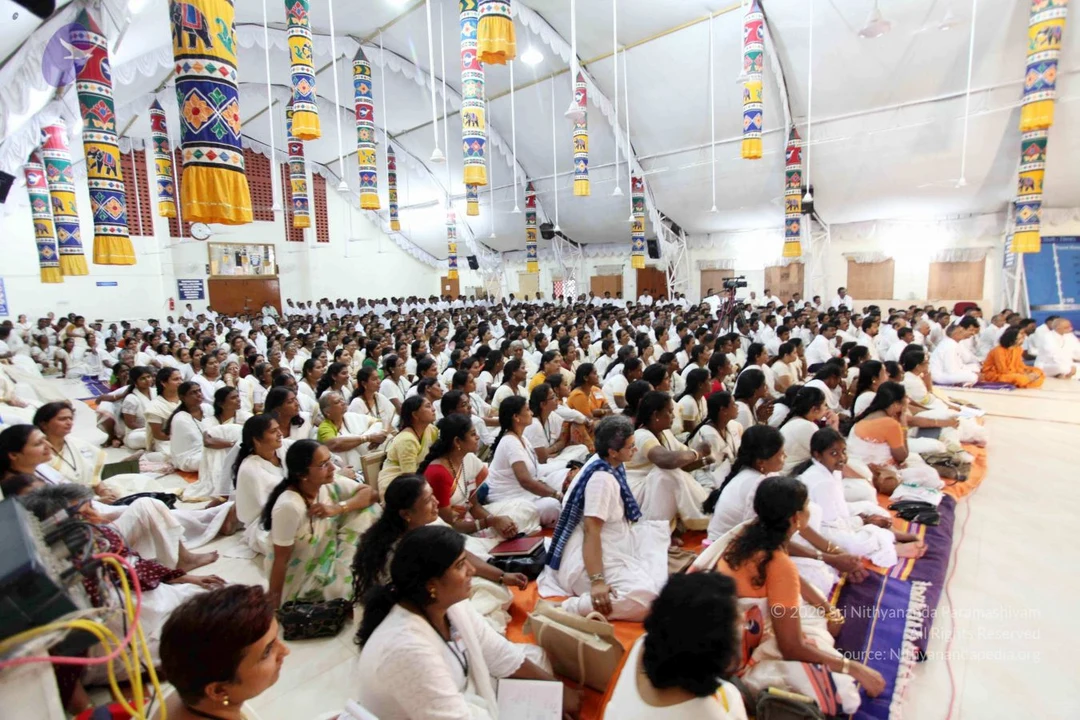
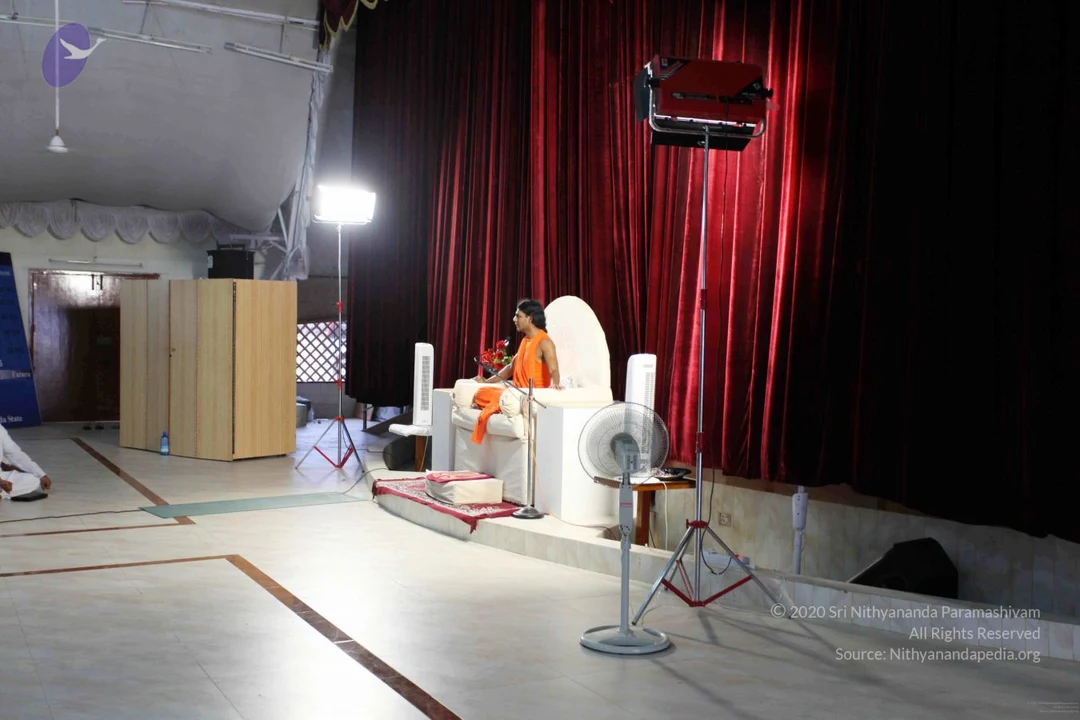
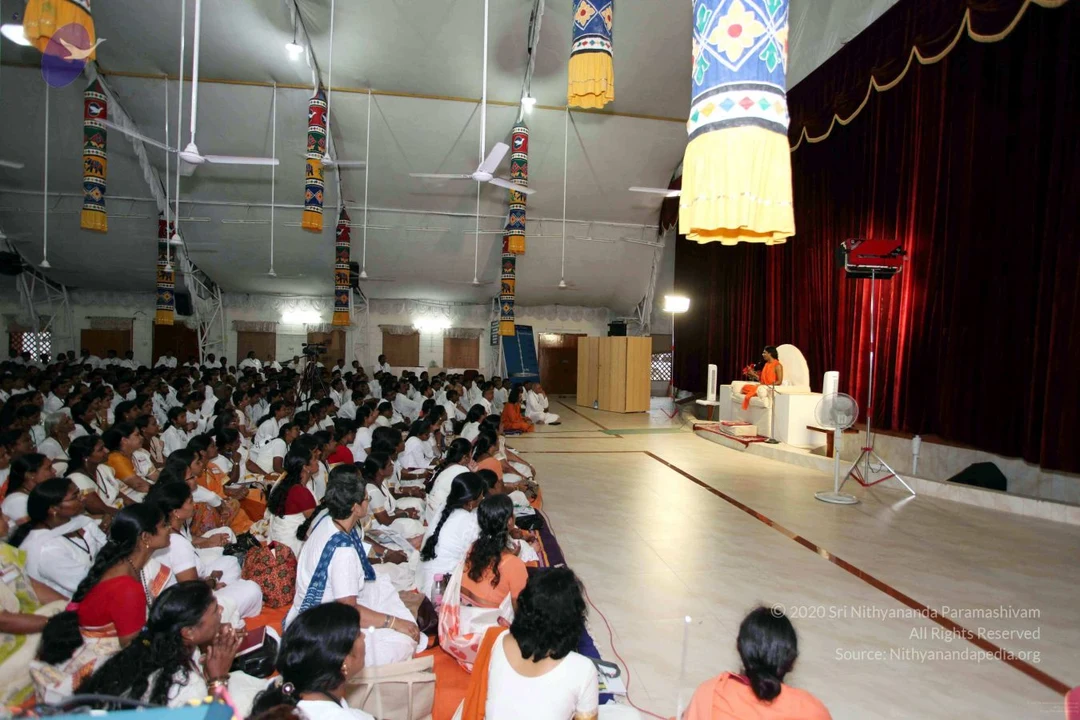
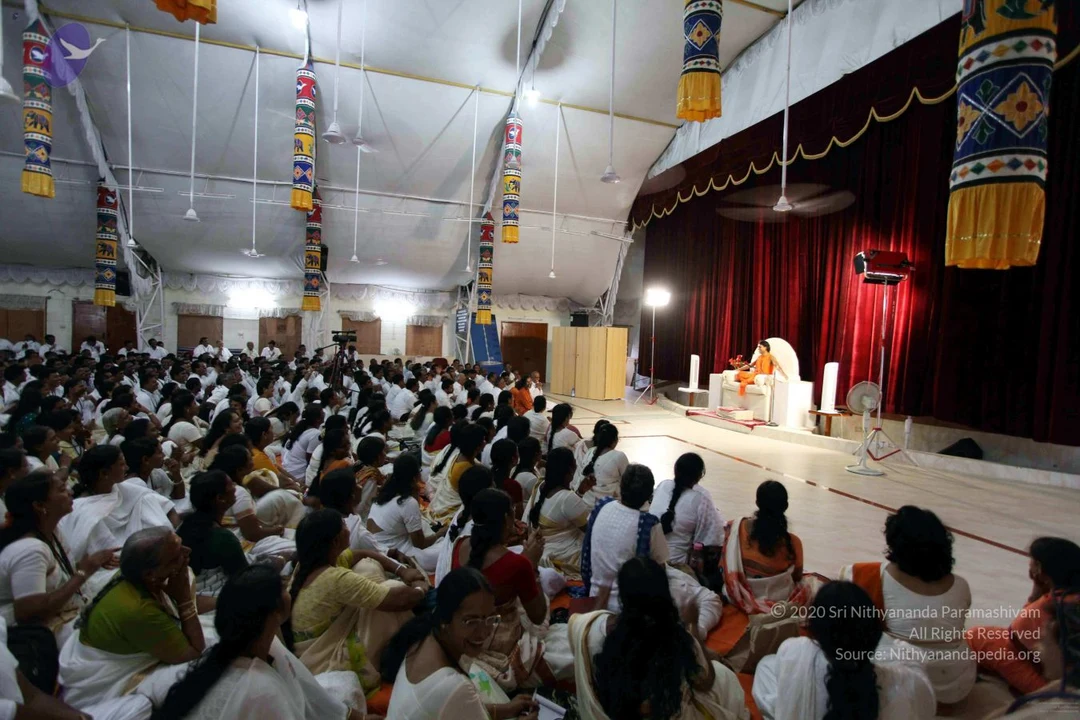
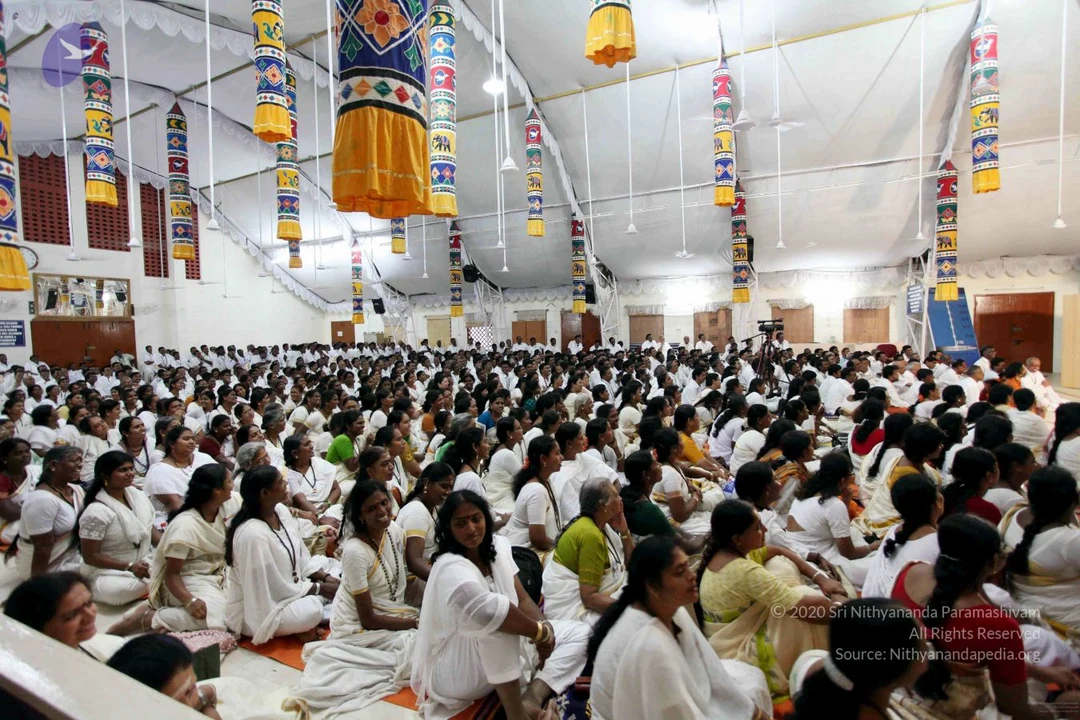
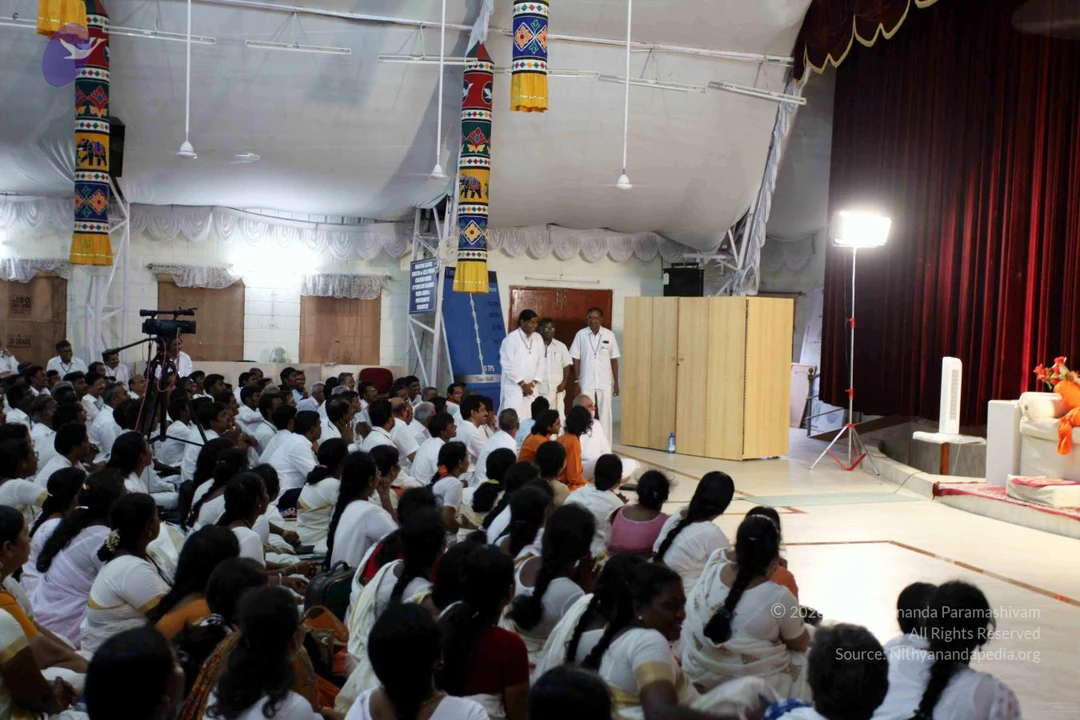
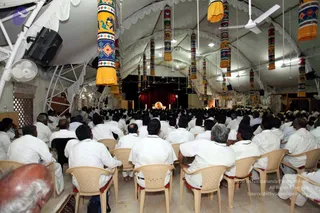
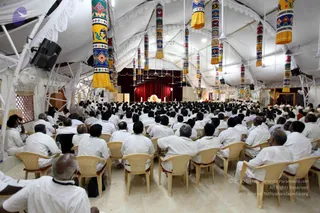
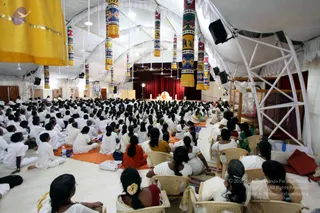
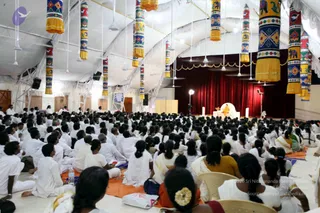
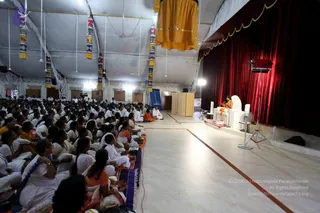
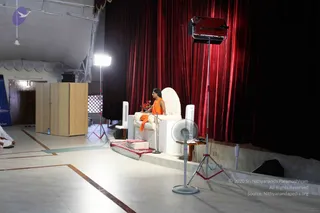
Wide view from the back of a large white tented hall where a crowd of men in white dhotis and white shirts sits on beige plastic chairs facing a stage. Colourful hanging cylindrical banners in yellow, red, green and blue patterns hang from the white canopy, with ceiling fans and a black speaker on a stand. On the distant stage, a seated figure sits before a deep red curtain and a golden decorated seat, with an oil lamp and floral arrangements nearby.A large white tent hall filled with rows of seated men in white clothing on beige plastic chairs, all facing a raised stage at the far end. The stage has red draped curtains and a central seated figure in orange-gold, distant and small. Colourful hanging cylindrical banners with geometric patterns and yellow tassels hang from the white canopy ceiling, with speakers mounted on the left and a ceiling fan visible. Most attendees wear white shirts and dhotis or white garments; a few are bald or grey-haired. The scene reads as a large satsang or event session.A large tented hall filled with many devotees seated on the floor and in white plastic chairs, most dressed in white clothing, with some women in saffron or orange and maroon saris. Tall cylindrical pillars wrapped in colourful patterned fabric line the tent, and a yellow banner hangs at upper left. At the far end a small raised stage with a red curtain holds a figure seated on a white-draped seat, but the figure is too small and distant to identify. Loudspeakers are mounted on the frames and the scene looks like a satsang or discourse session.A large wide-angle photo of a crowded hall during a satsang or discourse. Hundreds of devotees sit on orange mats and cloth, most dressed in white, with some women in yellow and orange saris. A tall stage at the far end has a deep red curtain, and a figure in orange sits on a white throne-like seat in the centre of the stage, flanked by white candles and a microphone stand. Tall cylindrical hanging banners with bright geometric patterns in yellow, blue, green and red decorate the white tent ceiling, along with rows of ceiling fans.A large hall filled with seated devotees on the floor facing a raised white stage with a red curtain backdrop. Many attendees wear white clothing, while some wear orange and saffron garments. Hanging yellow and golden fabric decorations and colourful painted pillars with elephant motifs frame the ceiling. On the stage, a single figure in saffron/orange robes sits on a white throne-like seat with a microphone stand and a small table nearby, appearing to give a discourse or satsang. A fan and stage lights stand at the side. A camera operator is visible at the left.A photograph of a stage in a hall with deep red velvet drapes and a white throne-style seat on a raised platform. A person in an orange saffron robe with long dark hair sits on the white throne holding a small bunch of red flowers, with a red-and-white cushion on the step below. Stage lights on tripod stands and standing fans flank the platform, and a cream tiled floor stretches toward the foreground. Swamiji (probable) by the saffron robe and long hair and the throne seat, though the figure is distant and small. Photo of an ashram stage setting.

Sacredarts

41 photosSource gallery
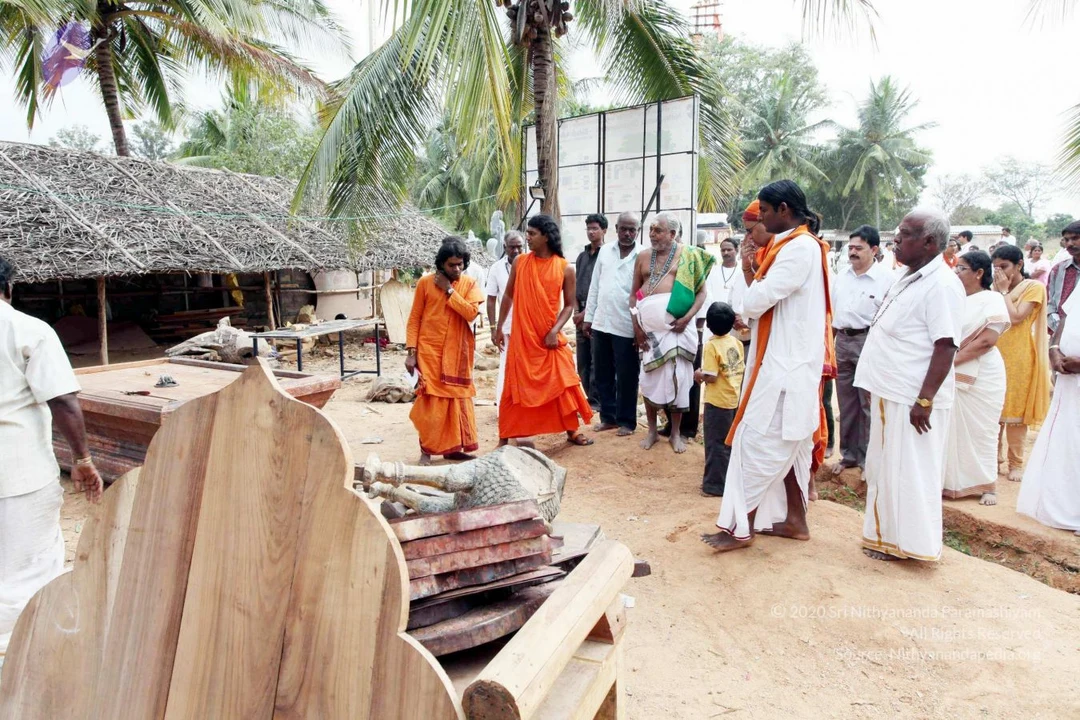
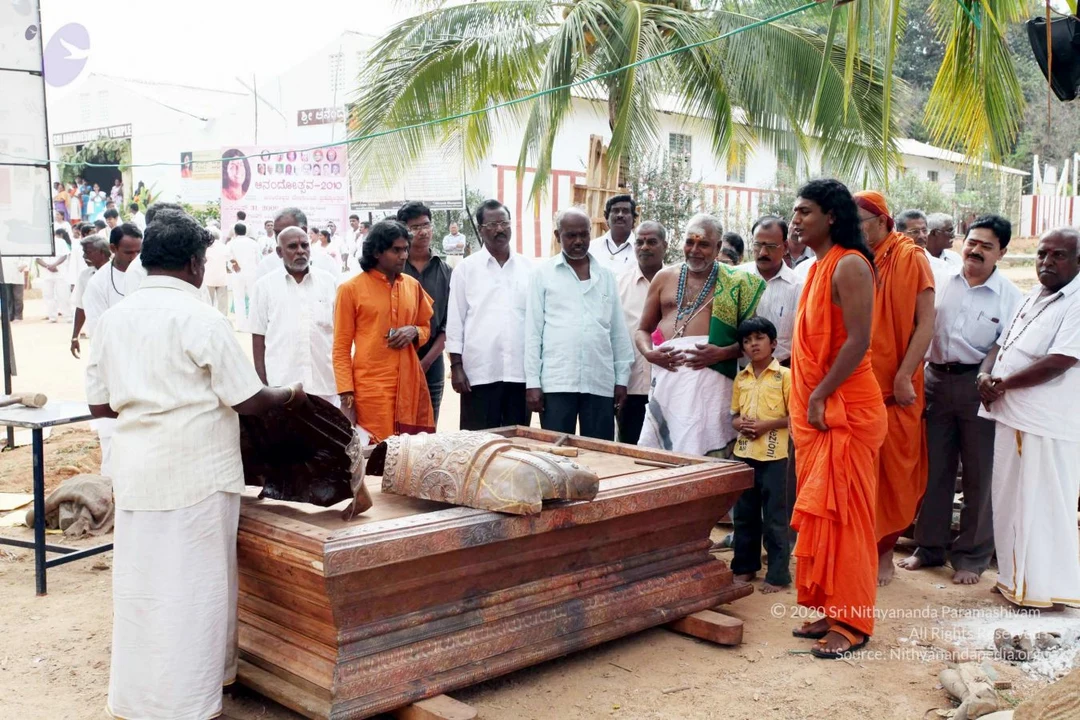
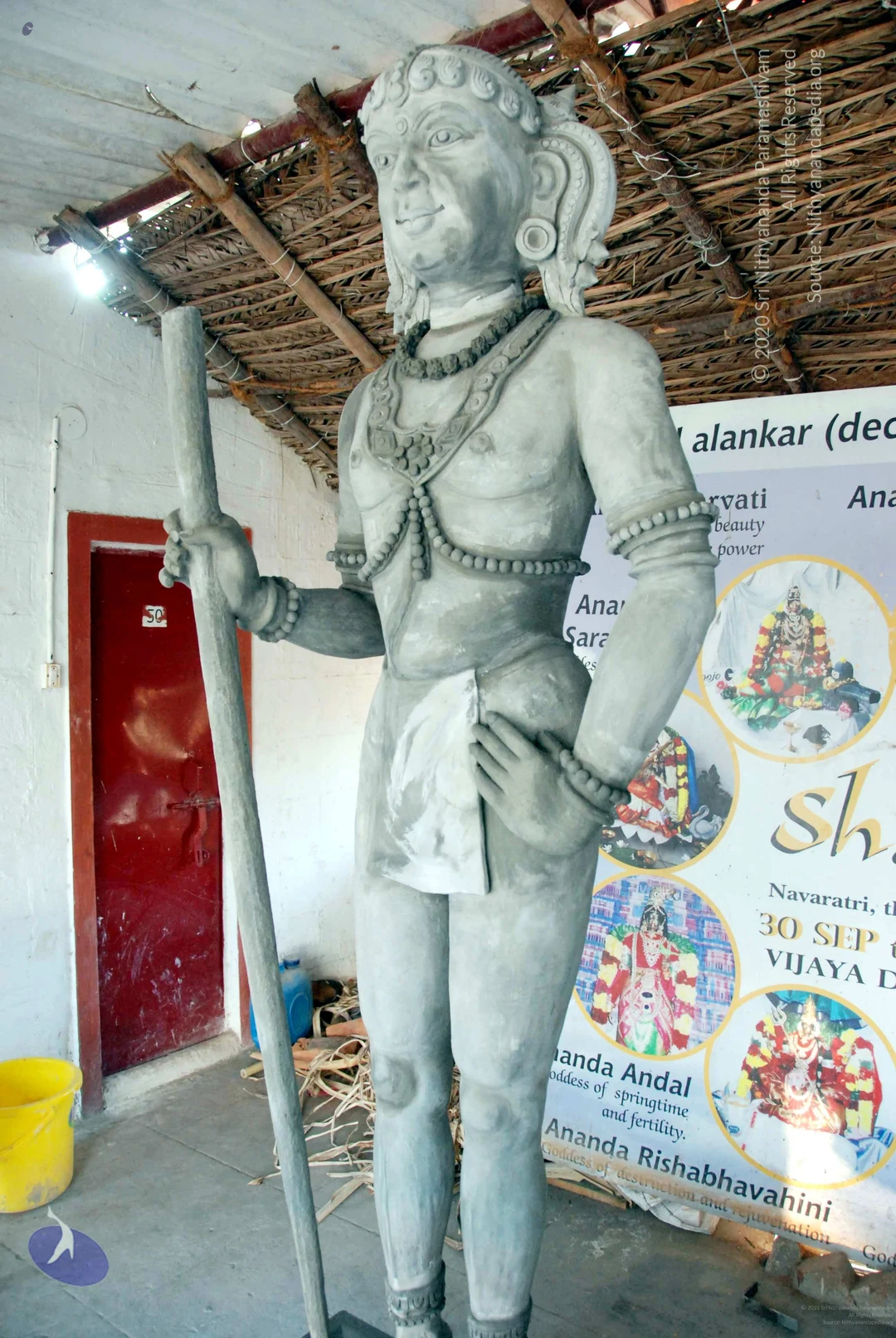
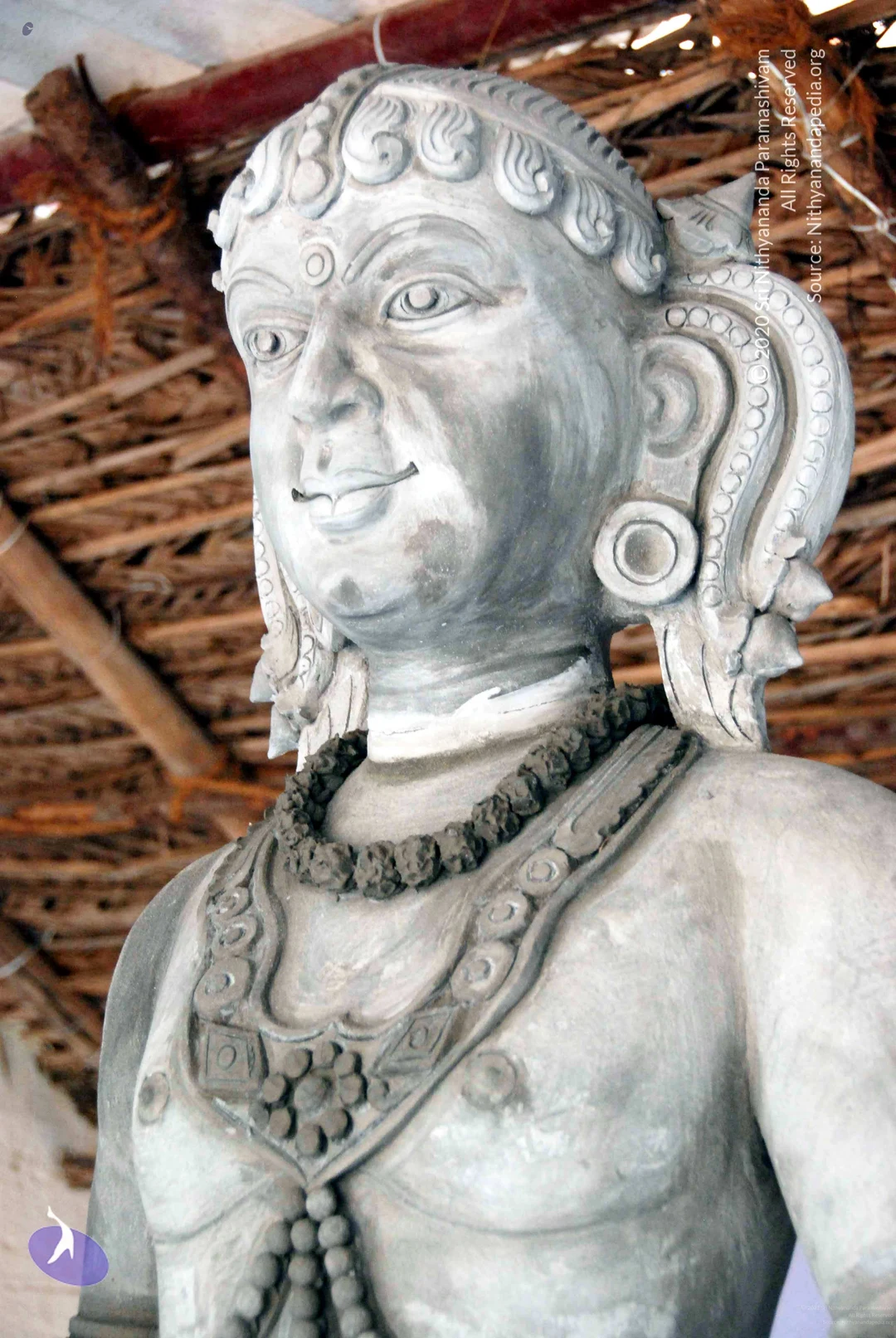
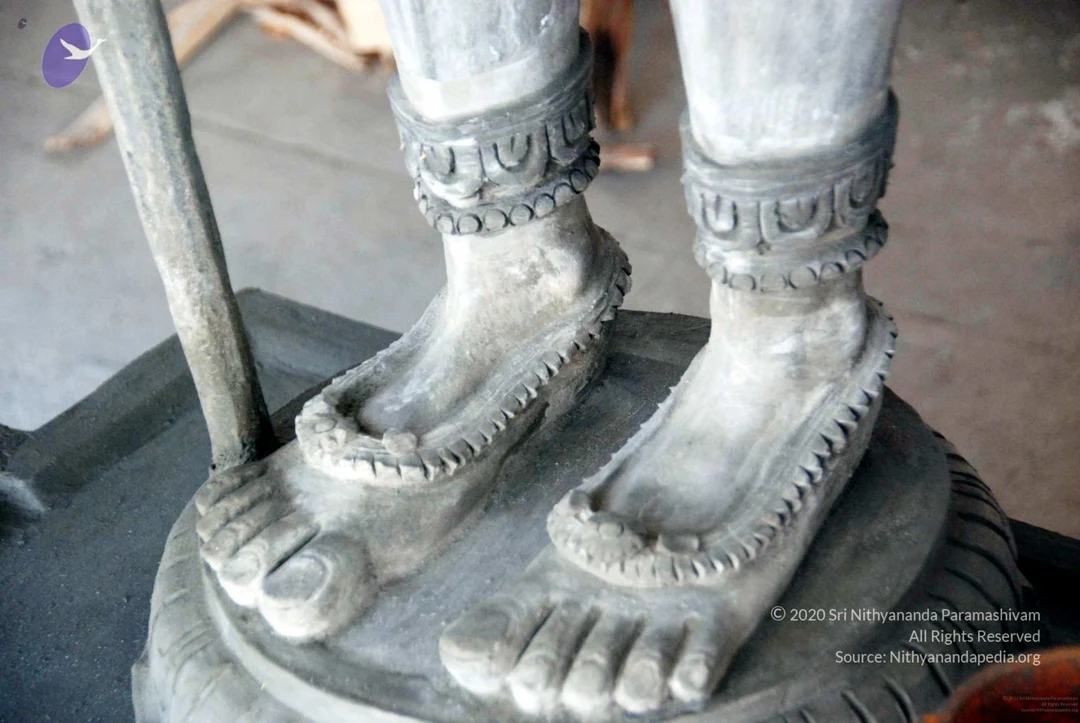
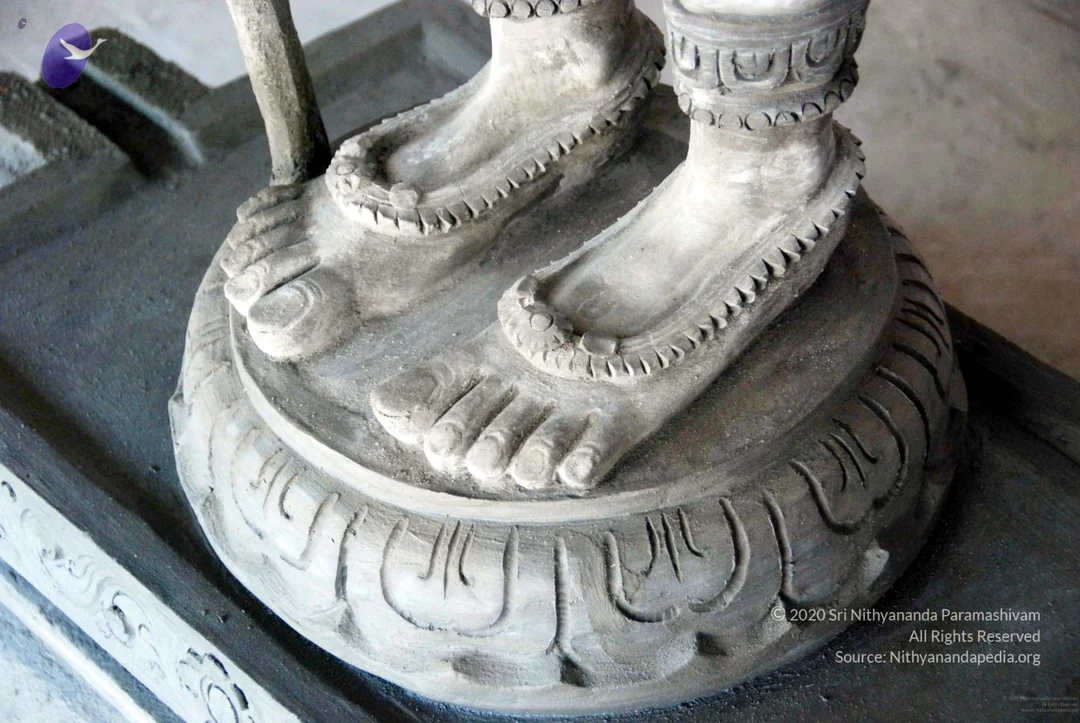
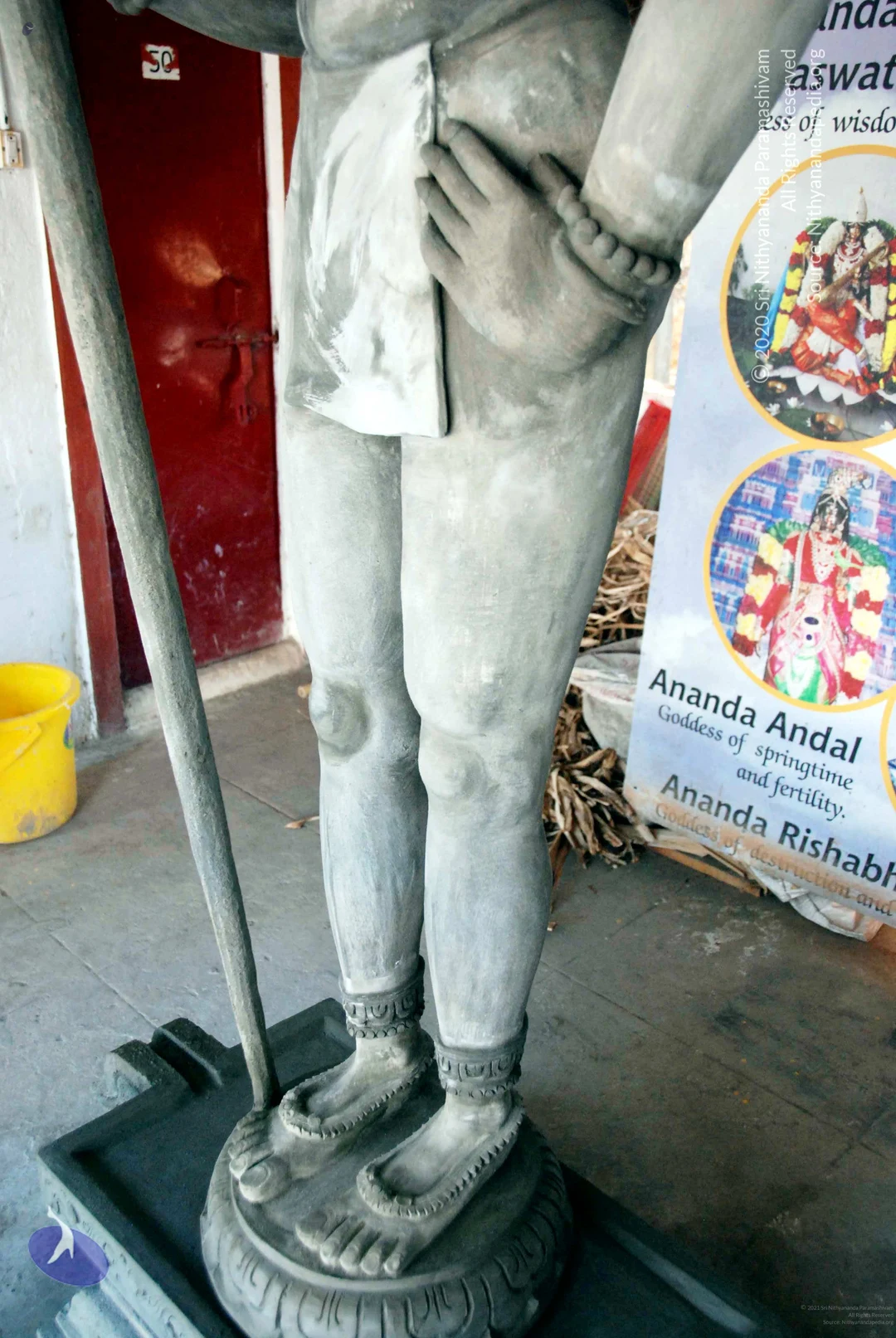
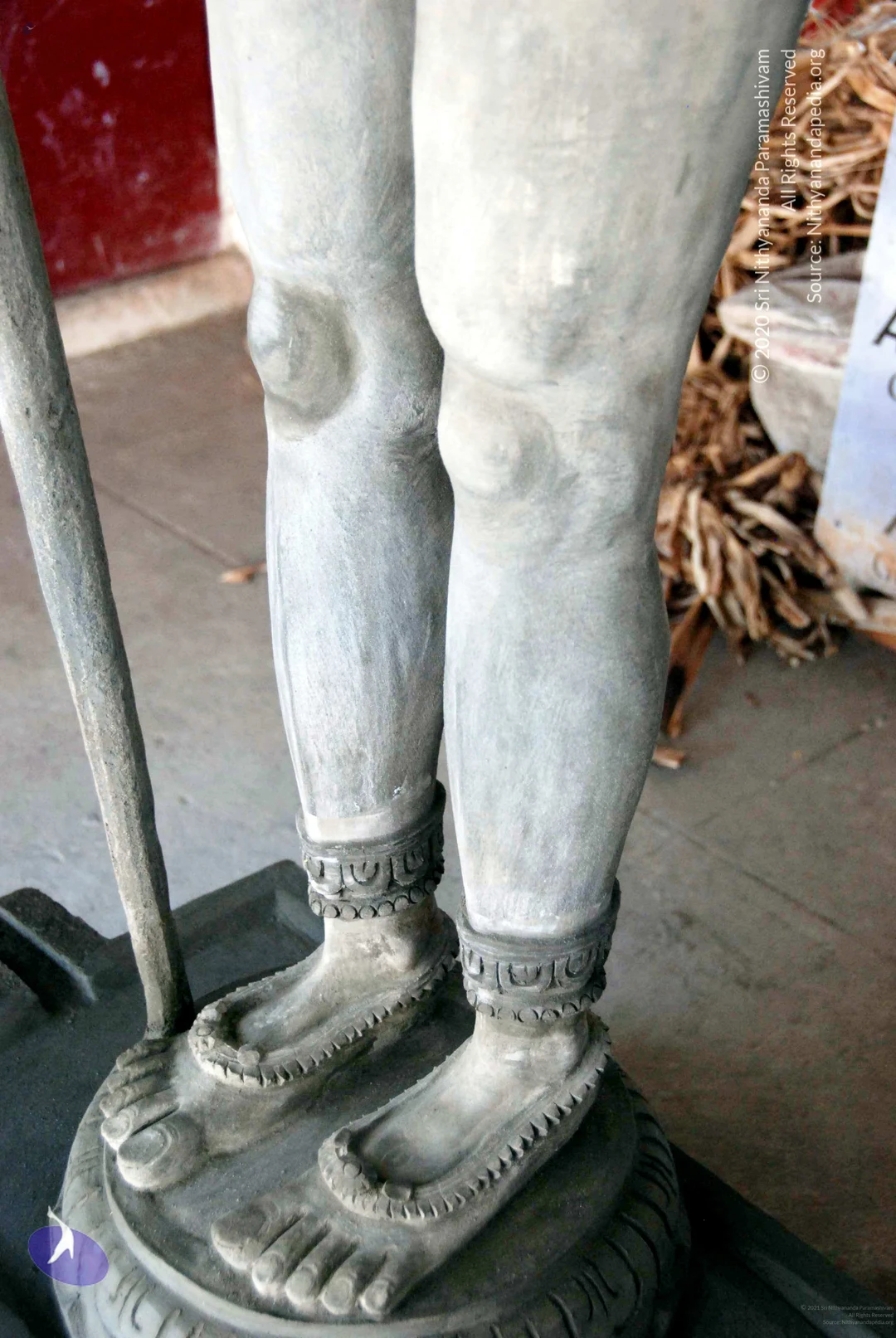
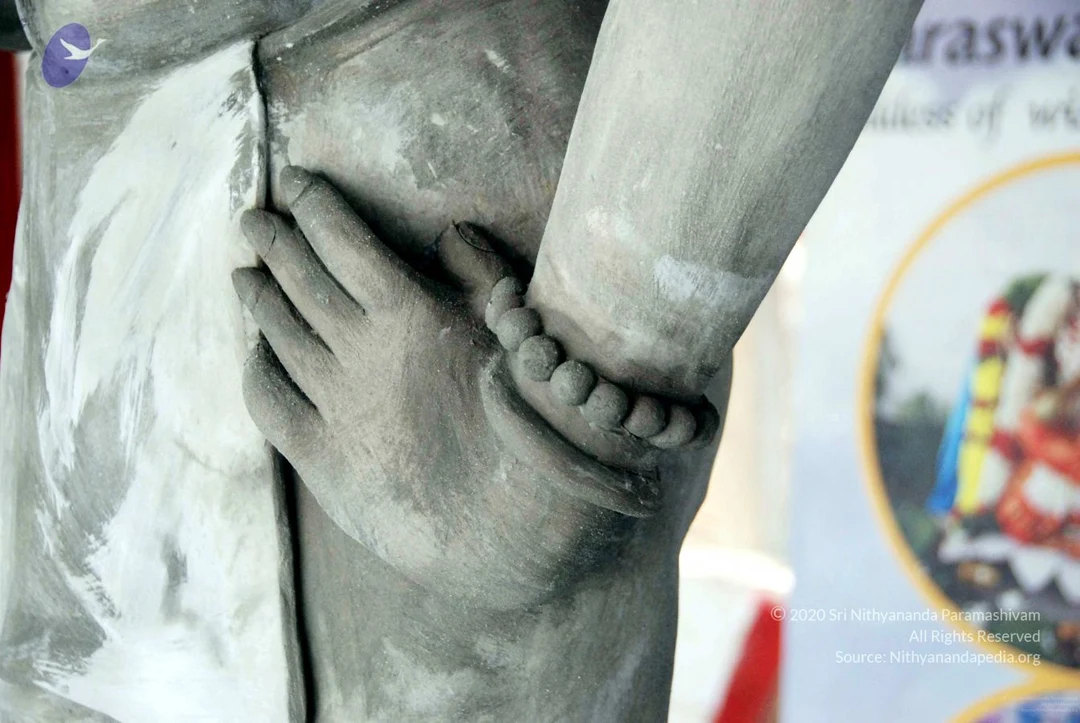
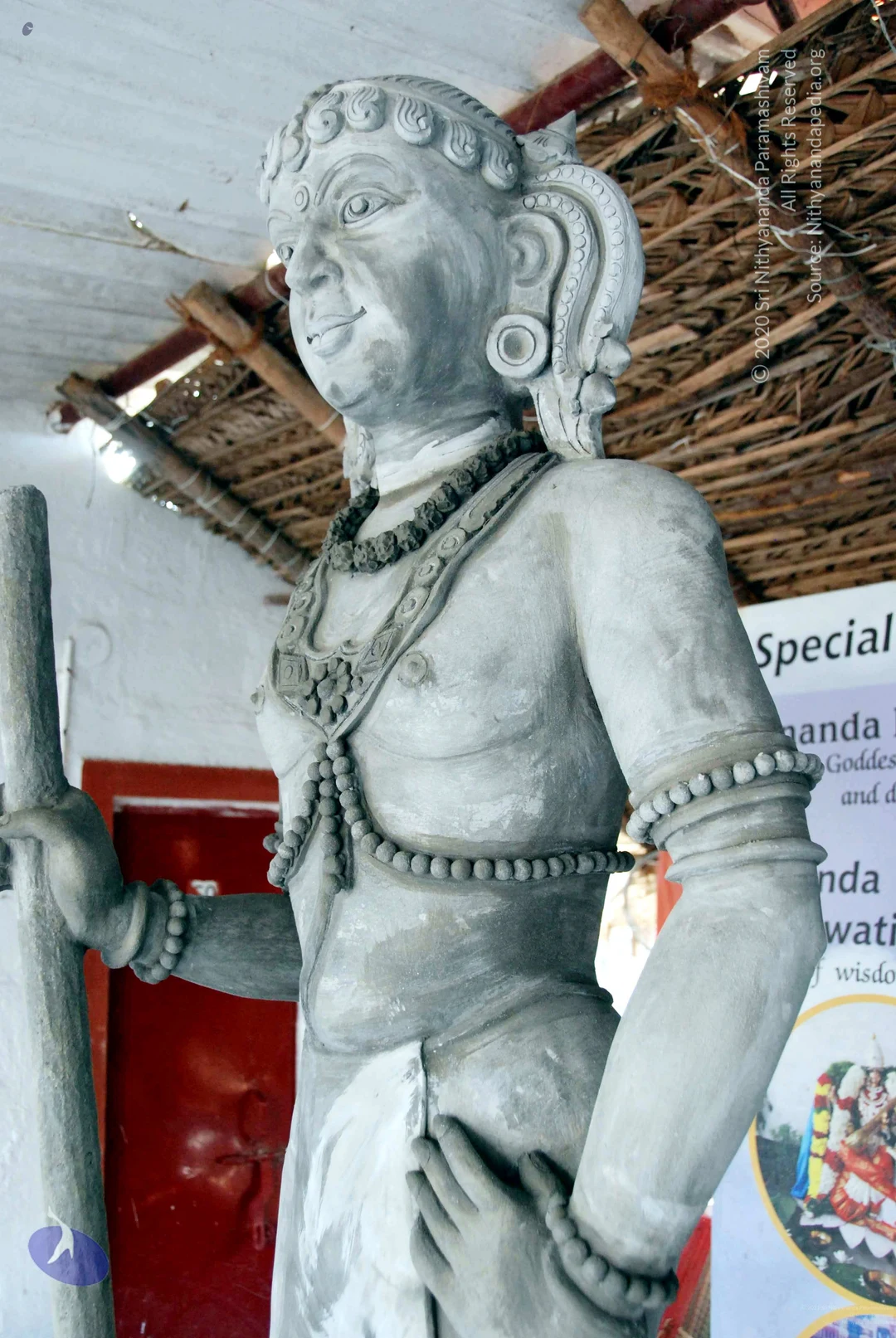
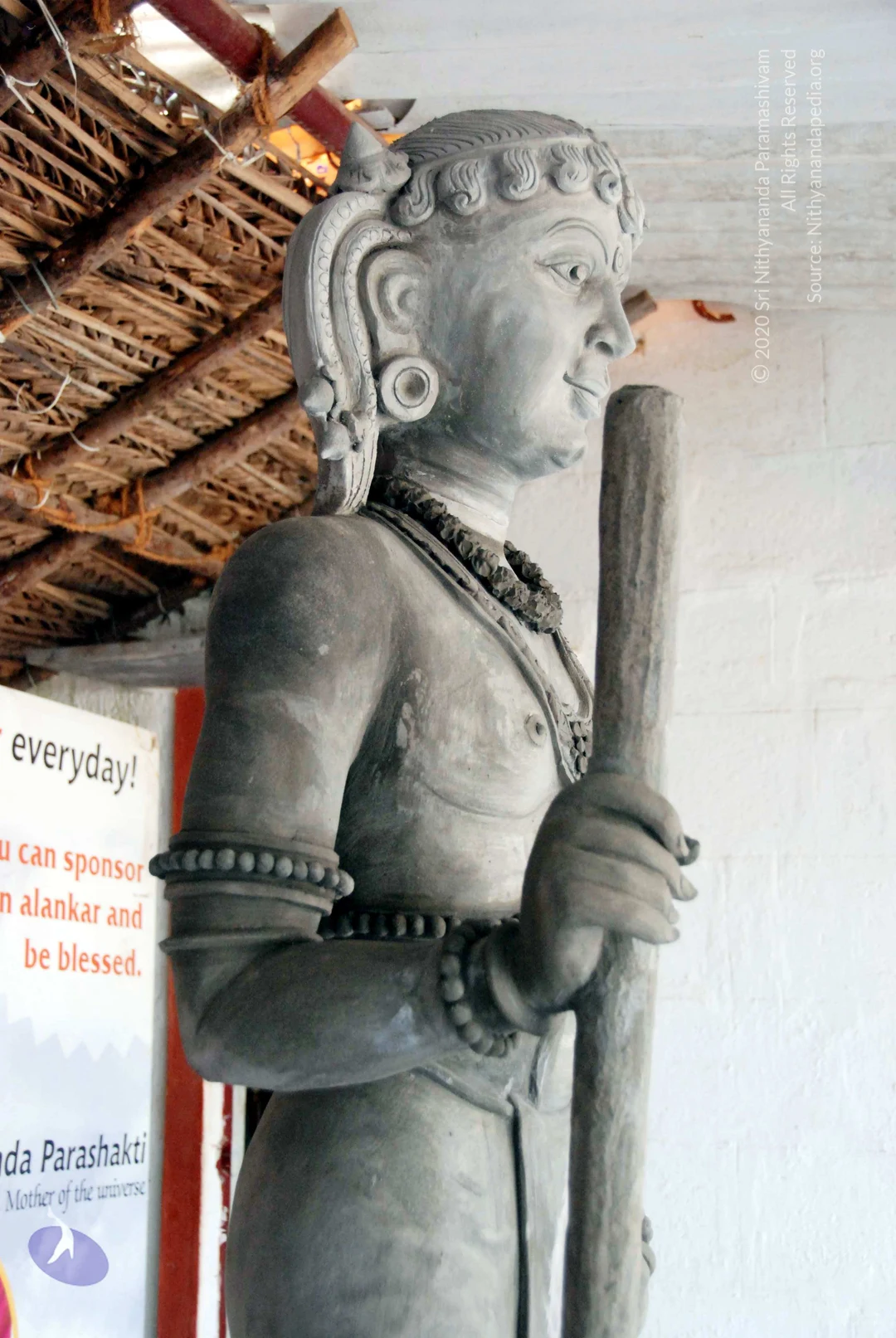
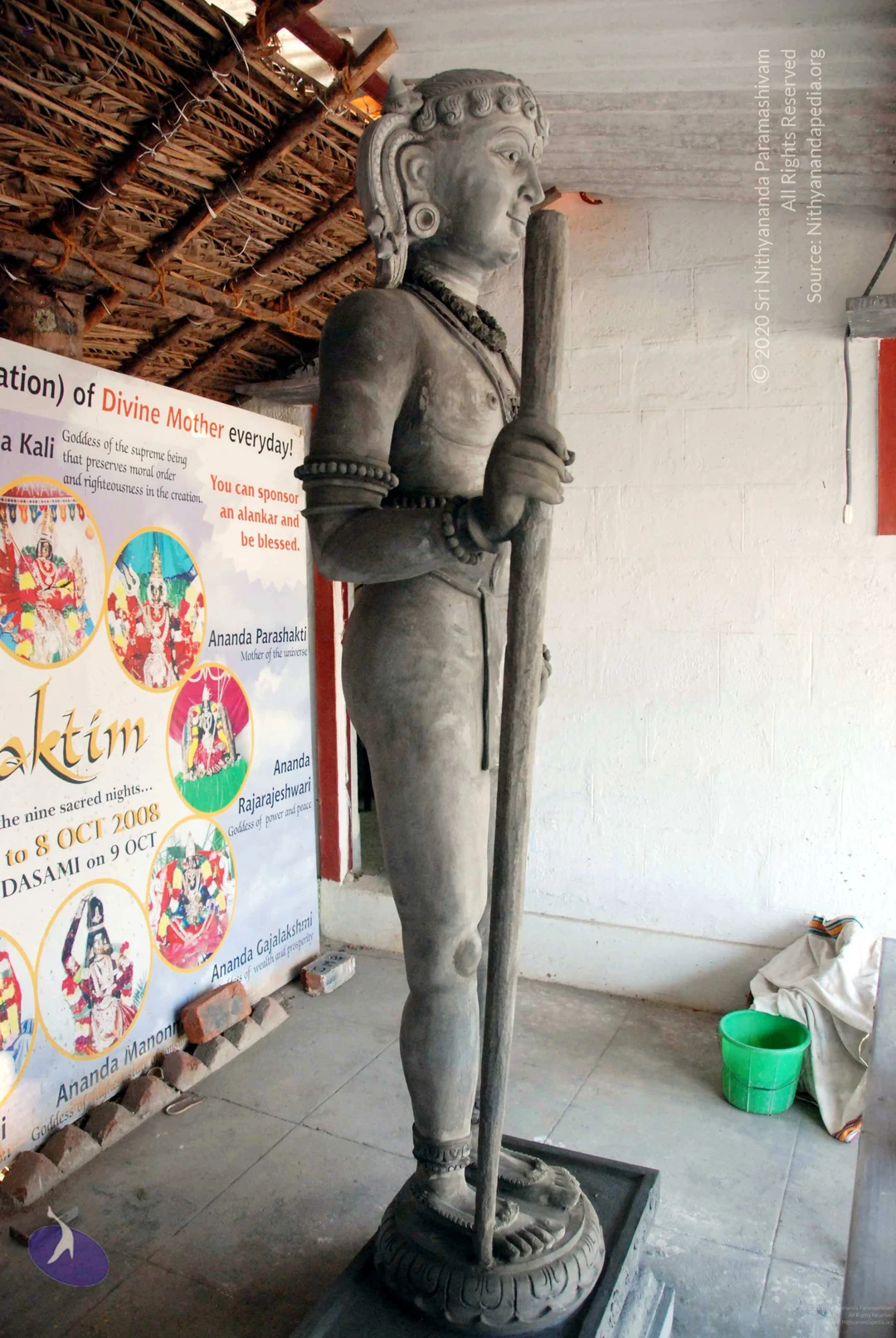
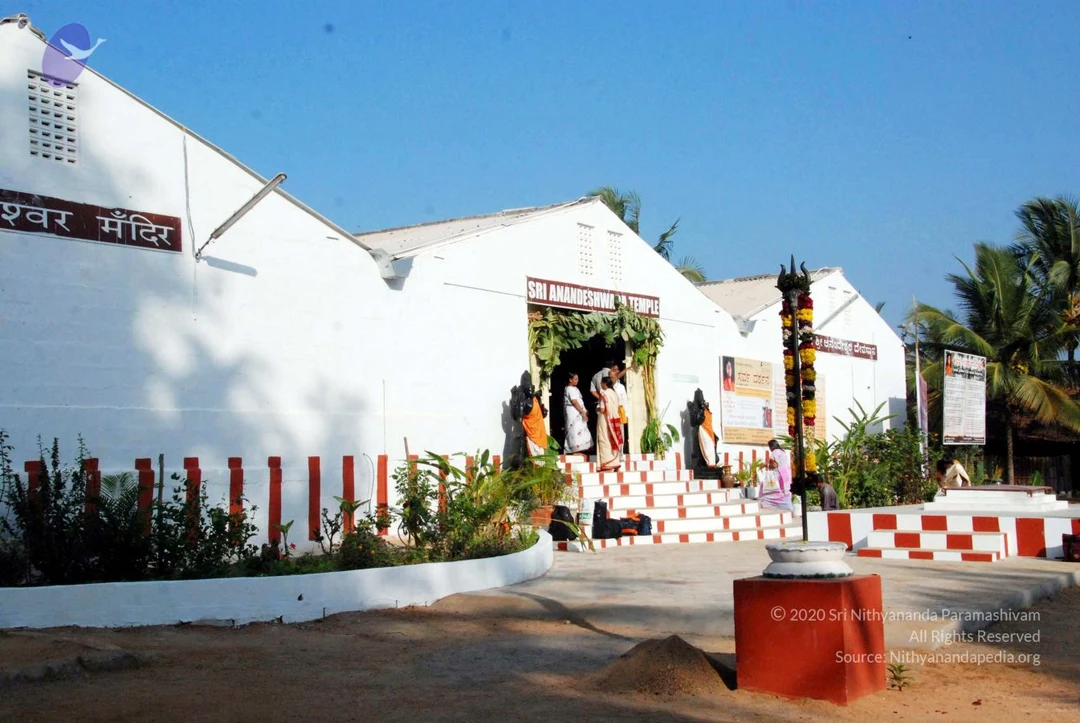
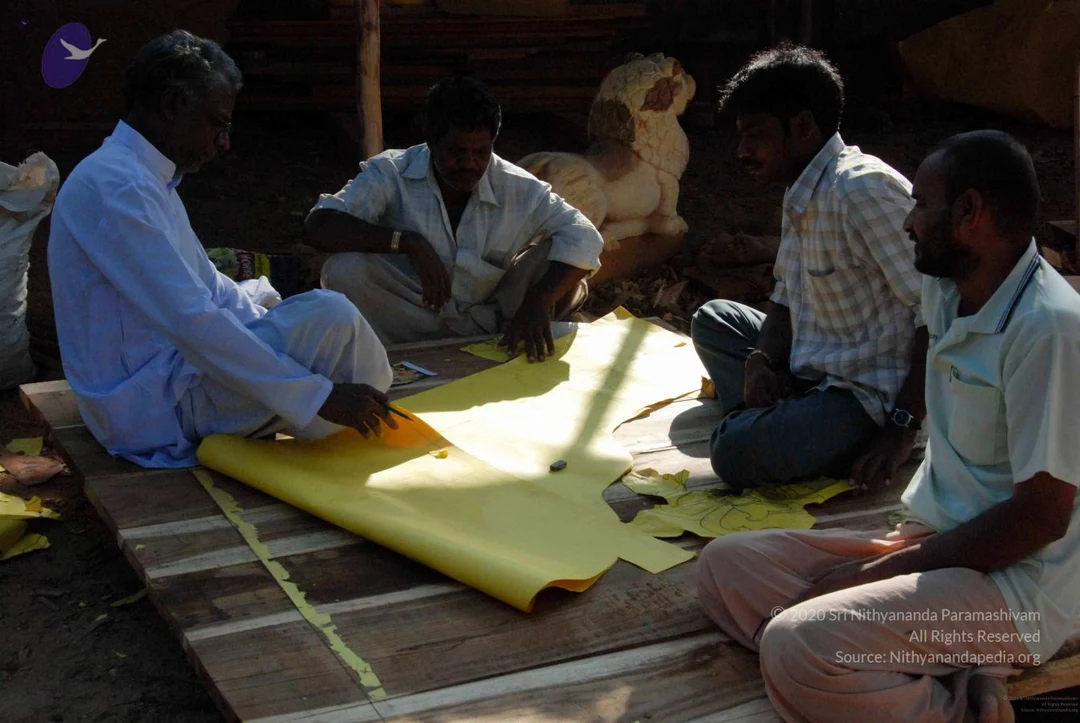
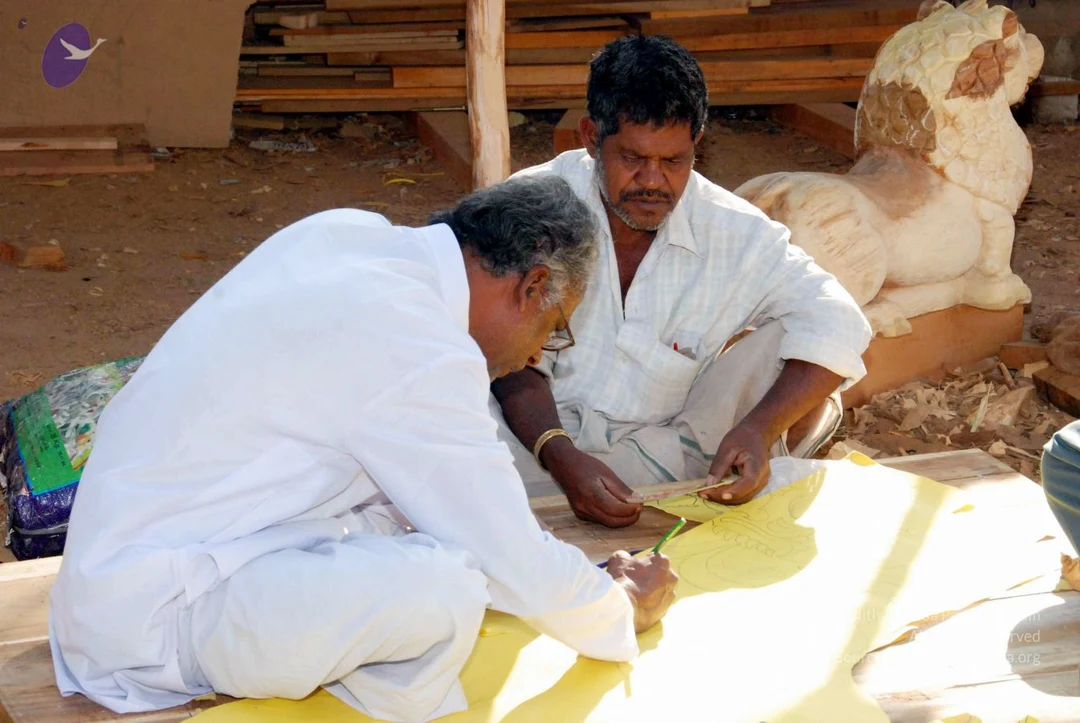
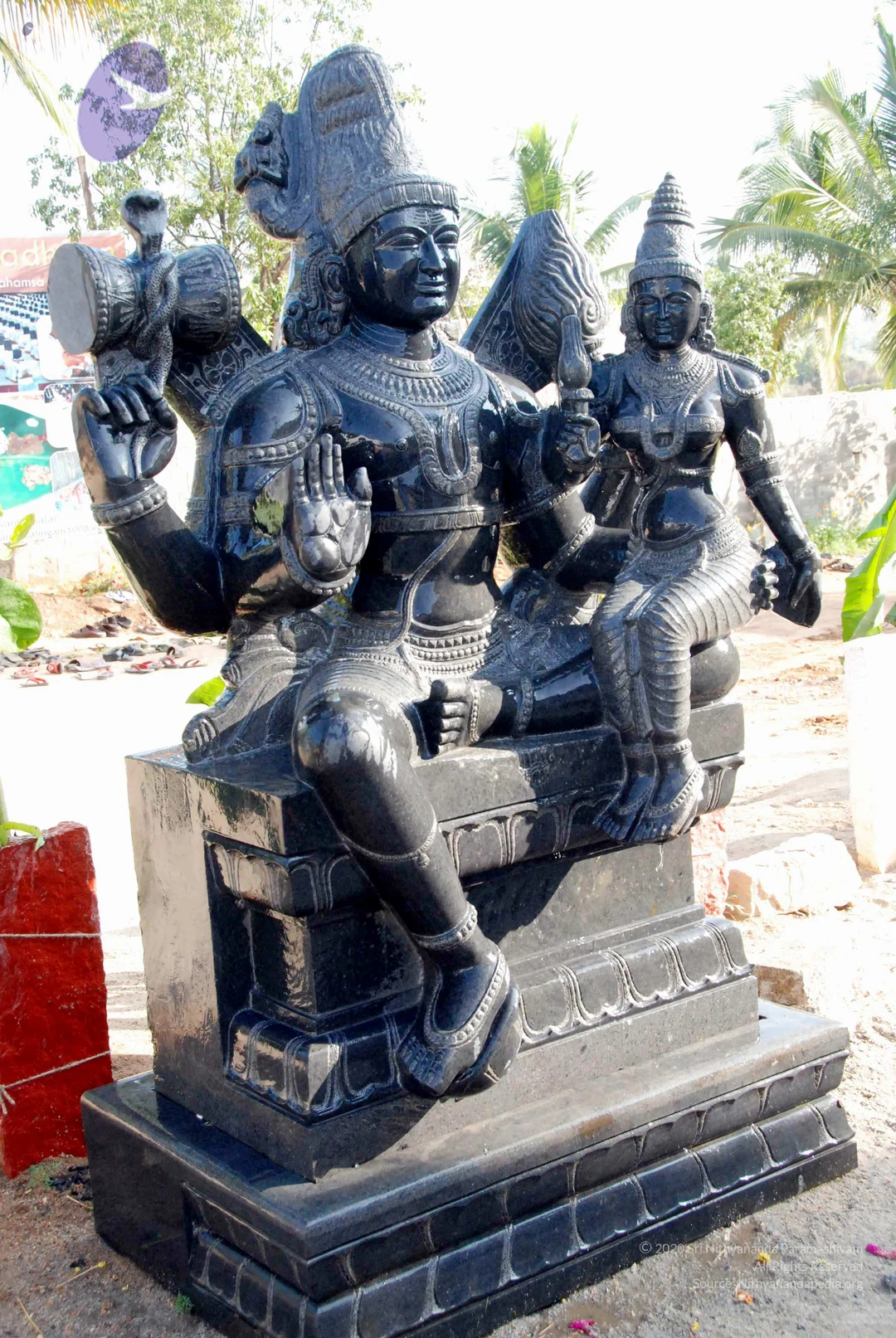
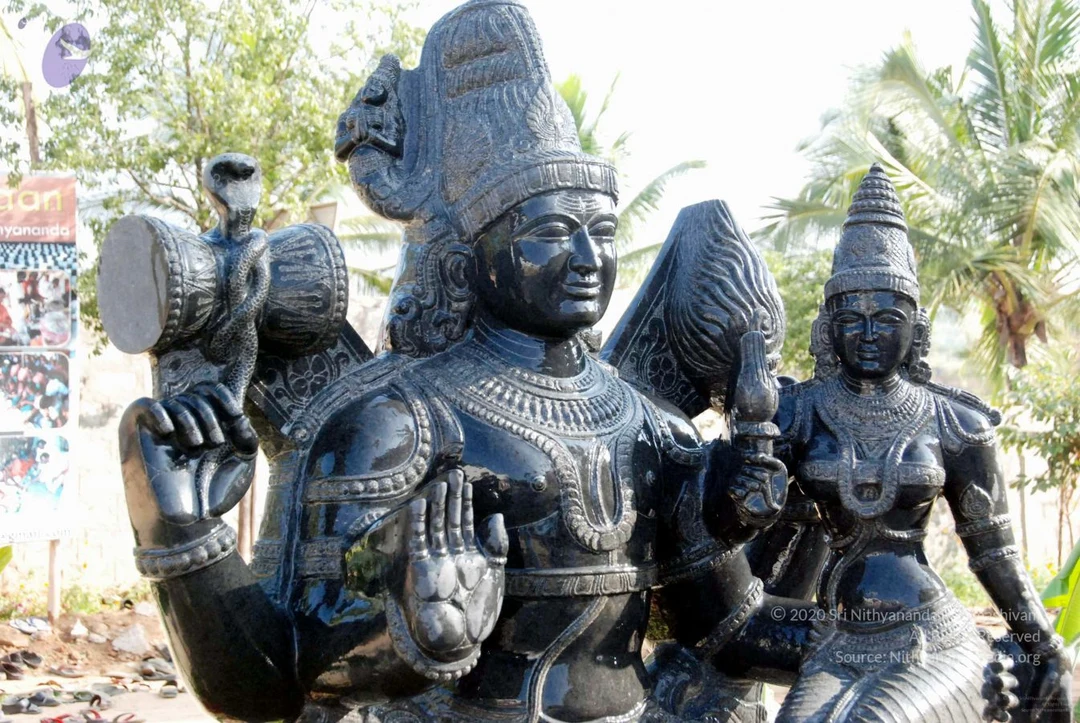
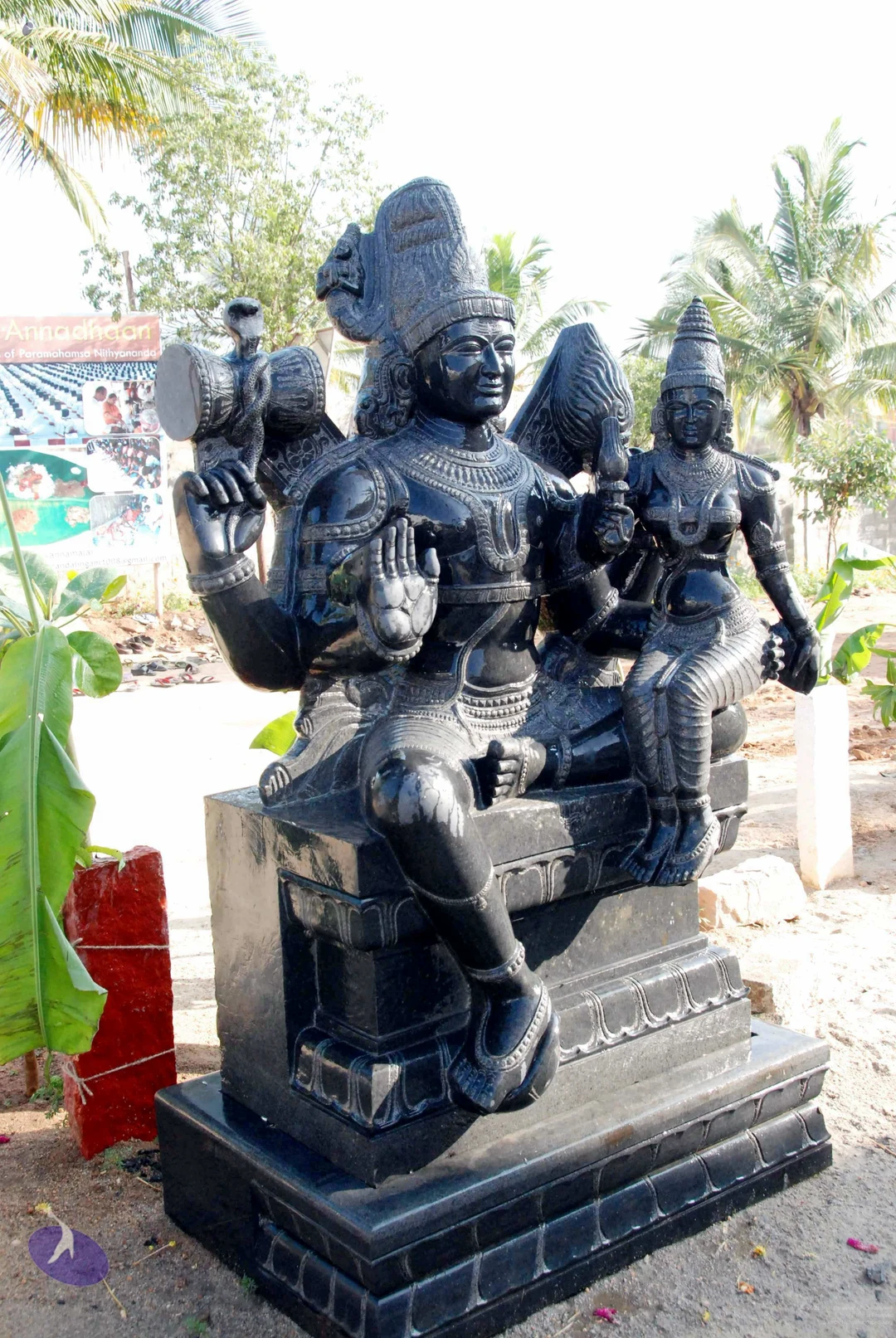
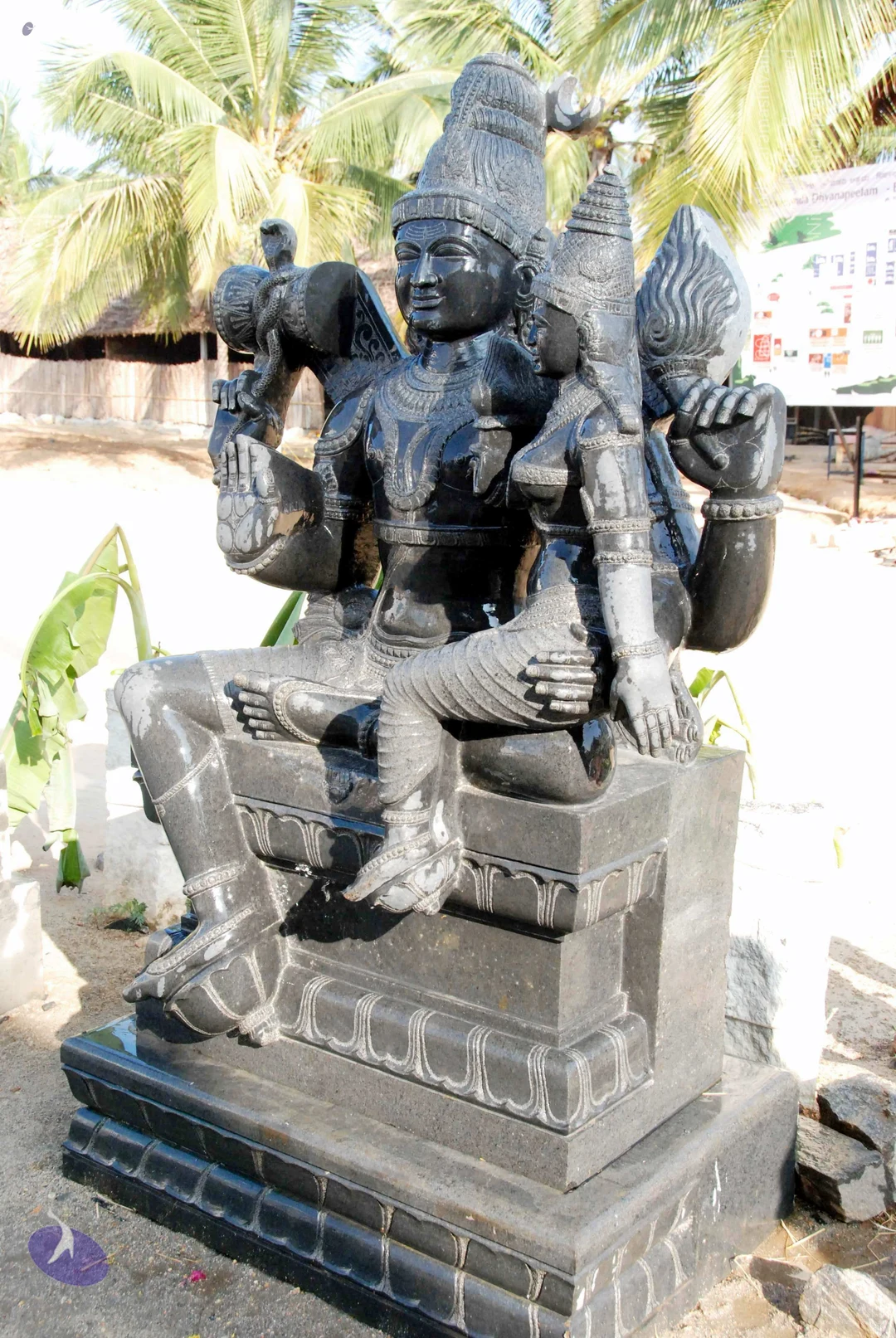
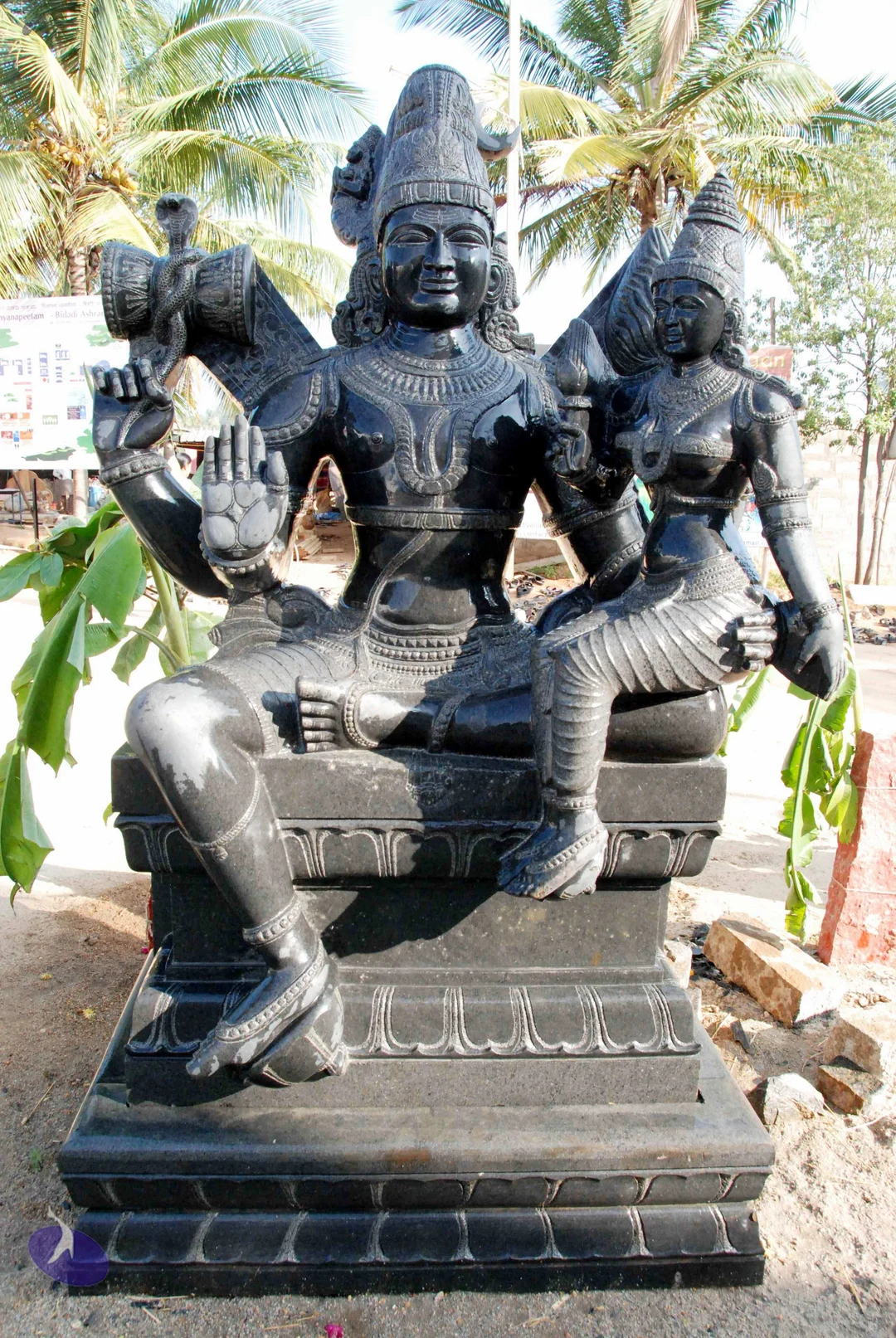
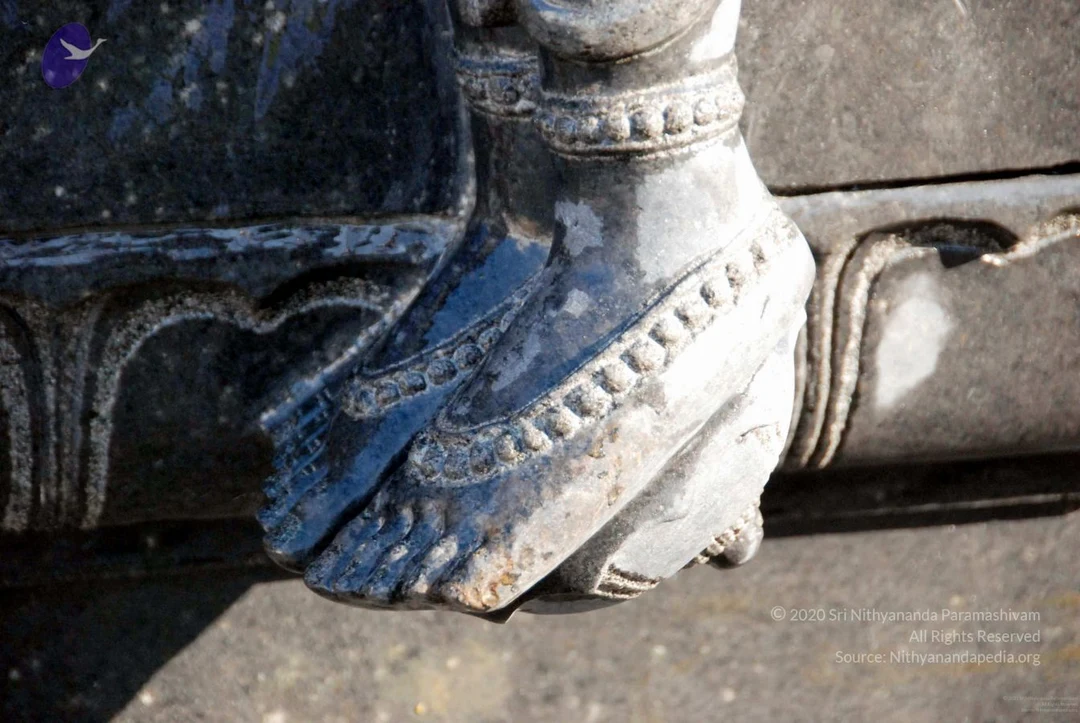
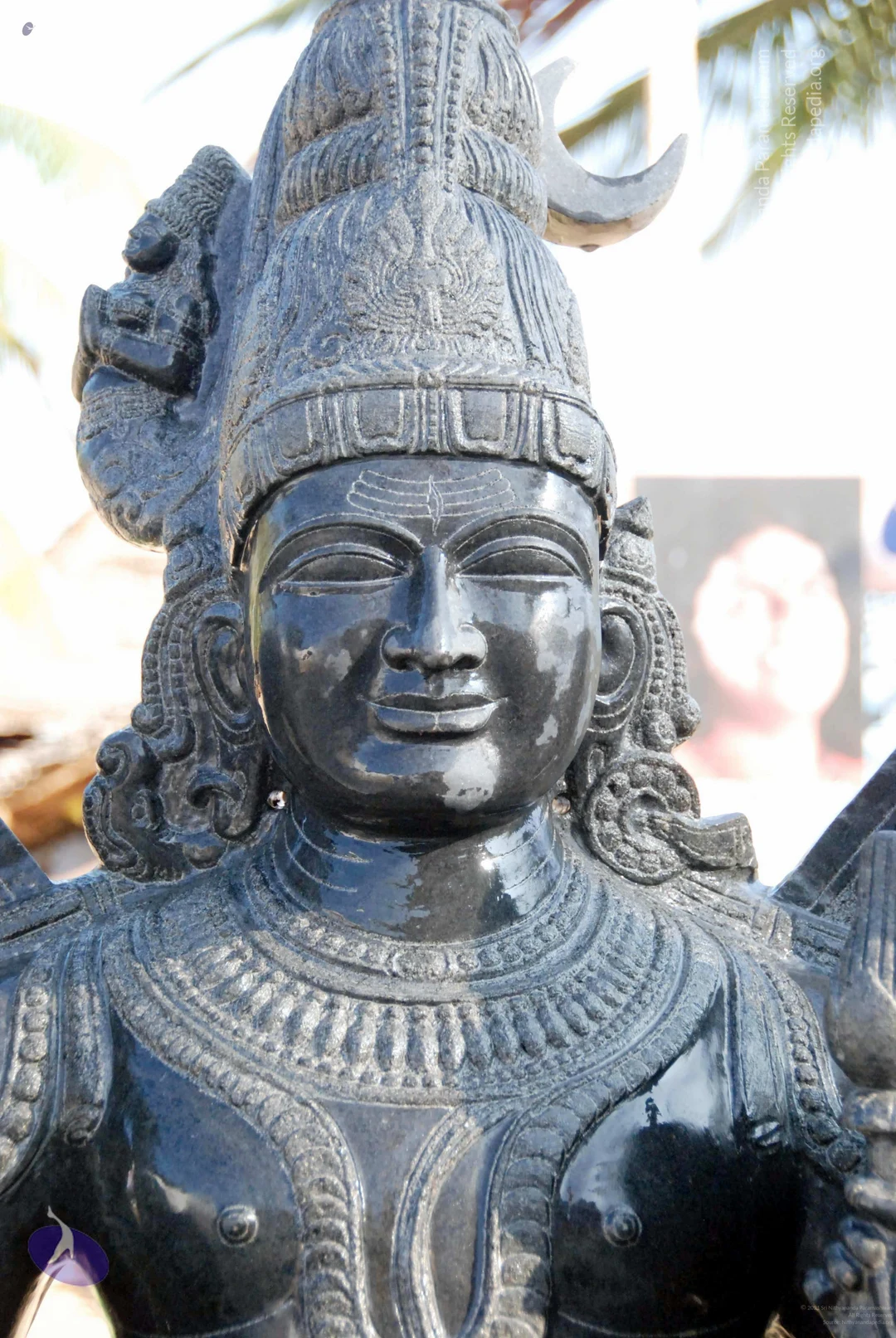
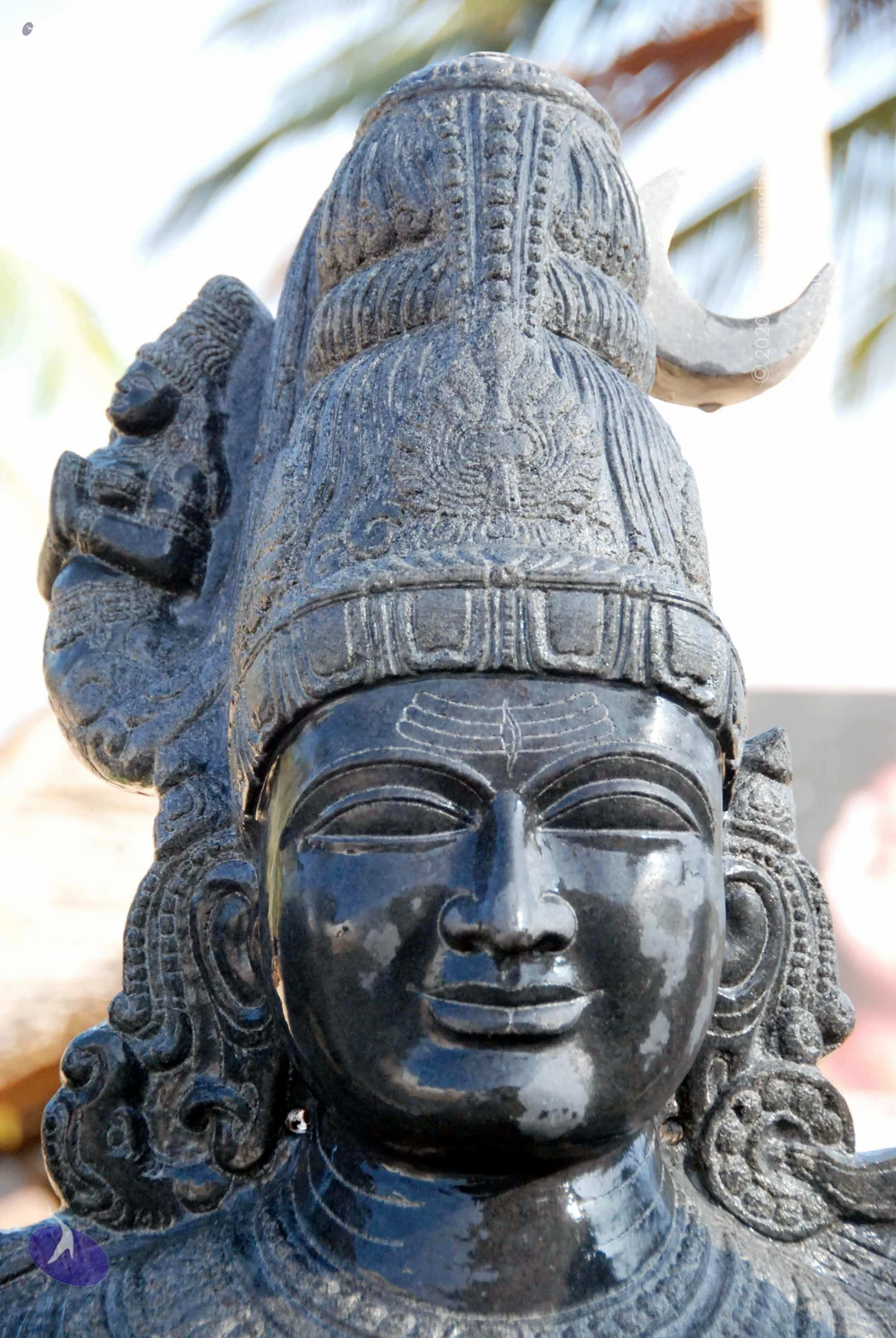
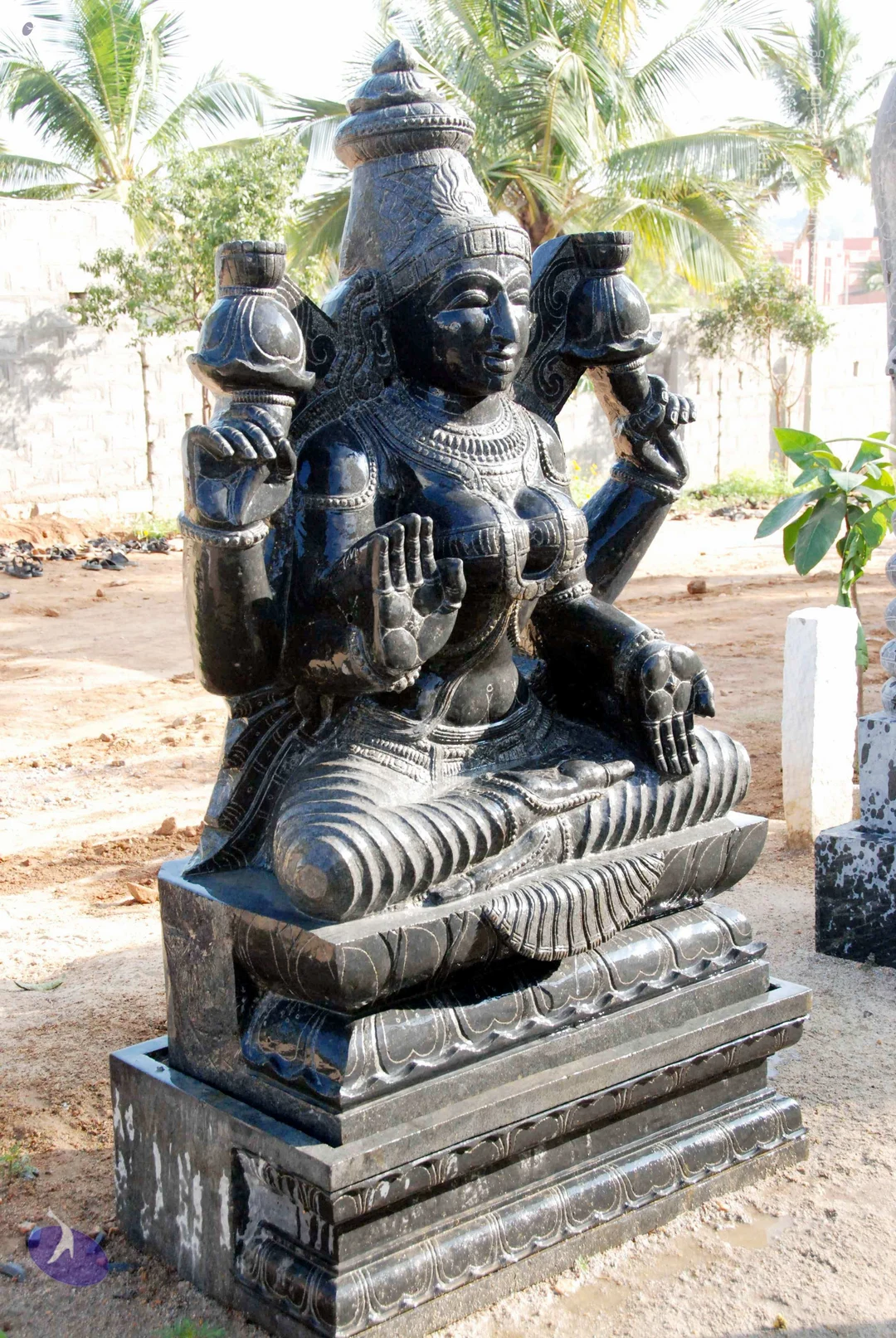
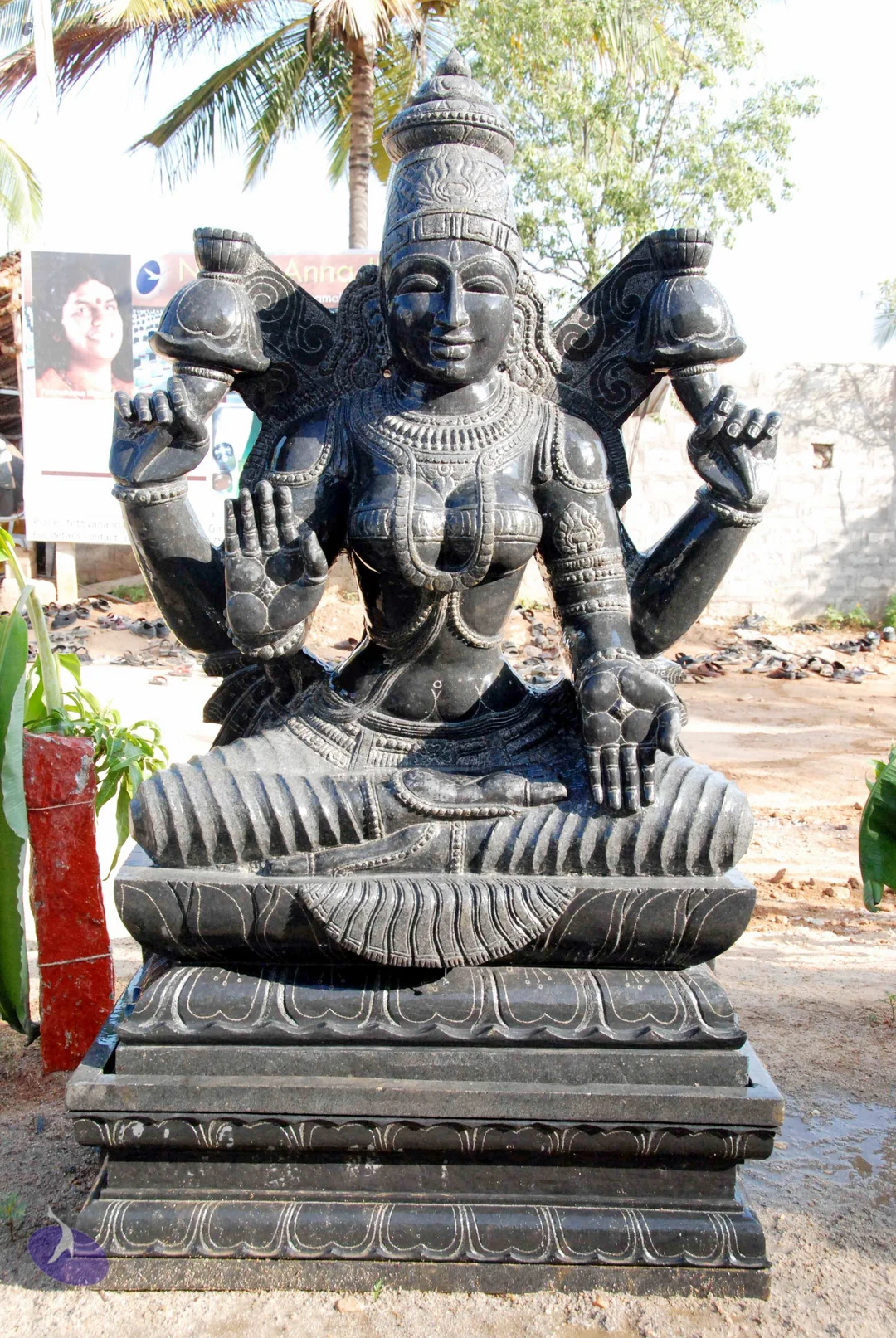
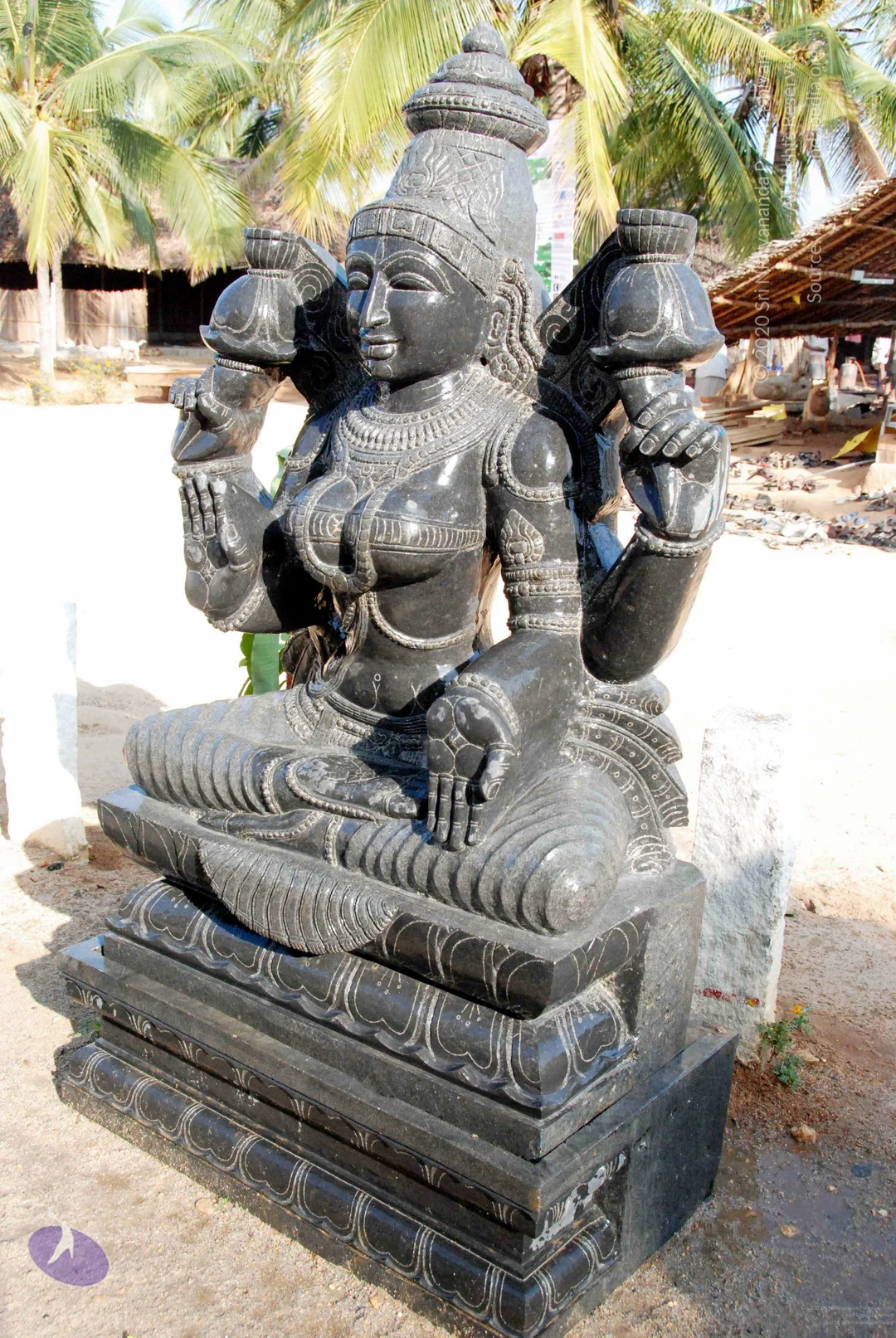
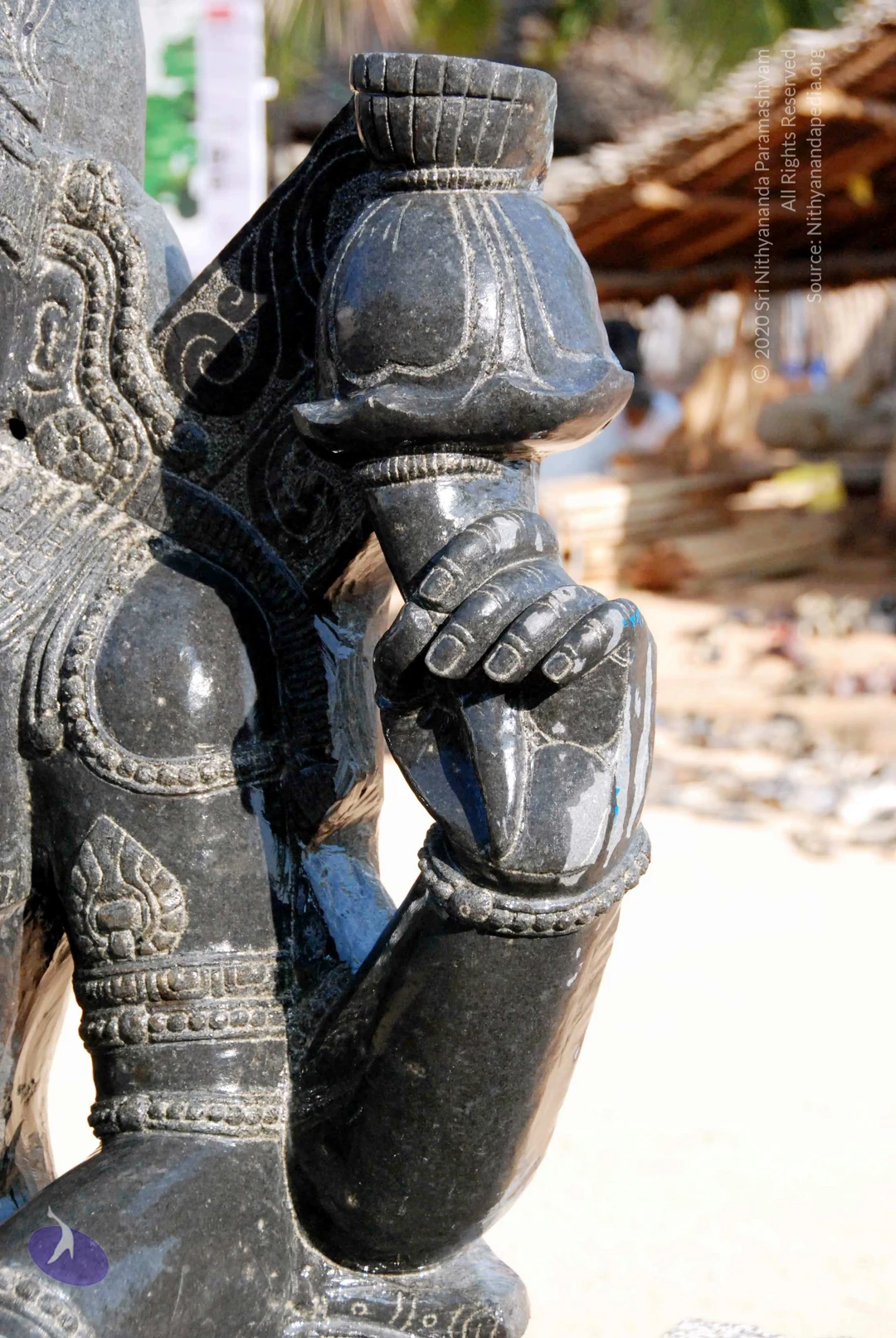
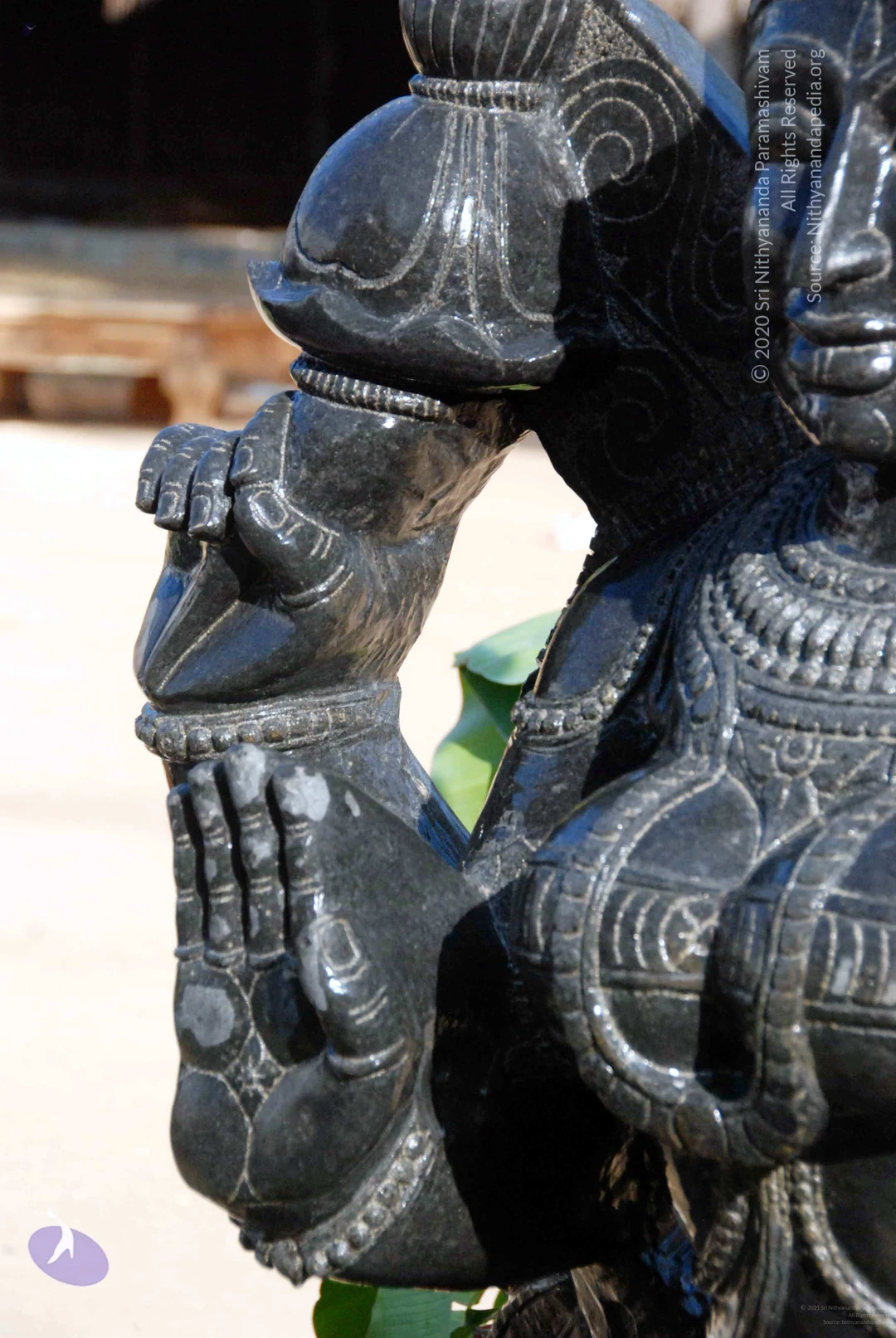
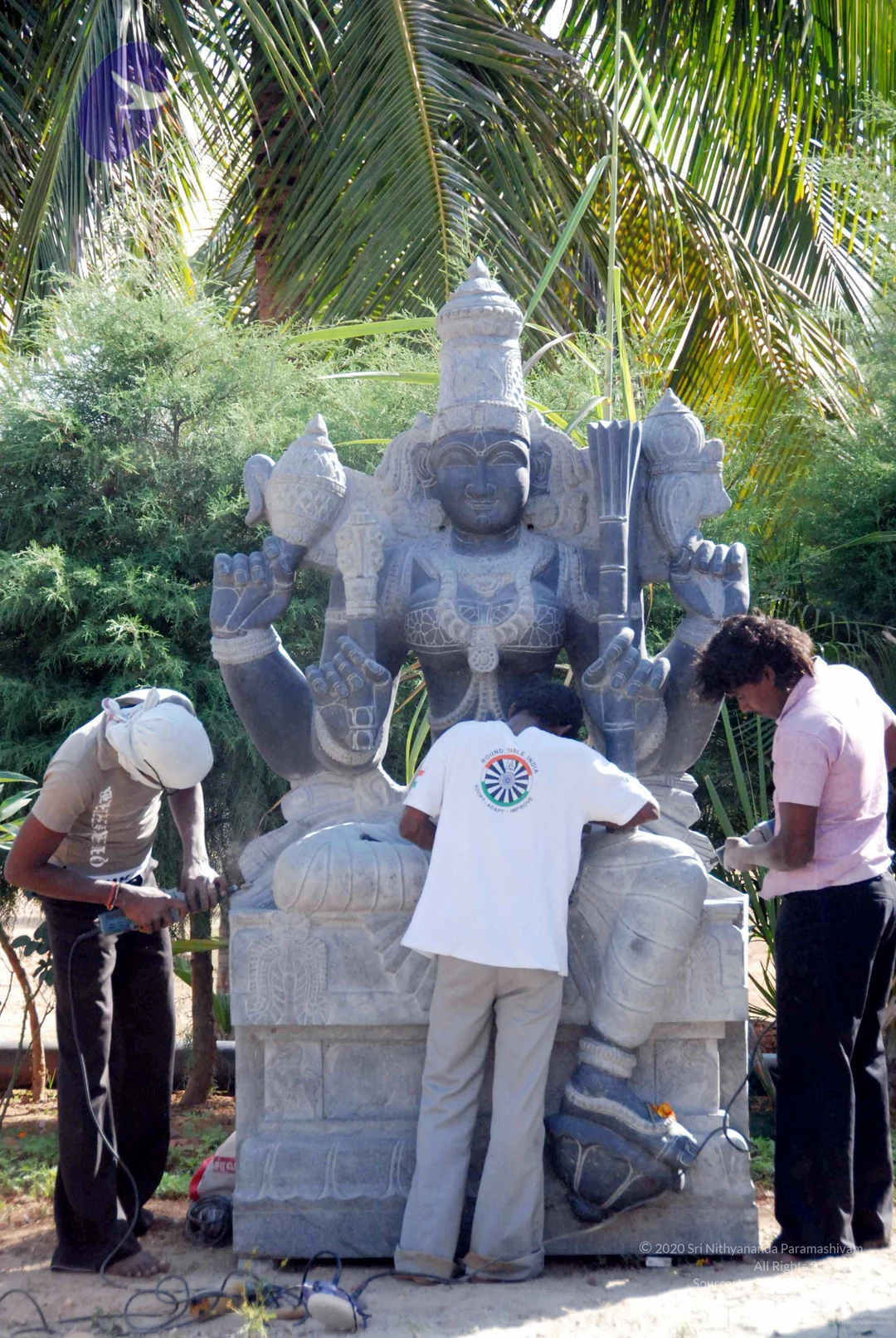
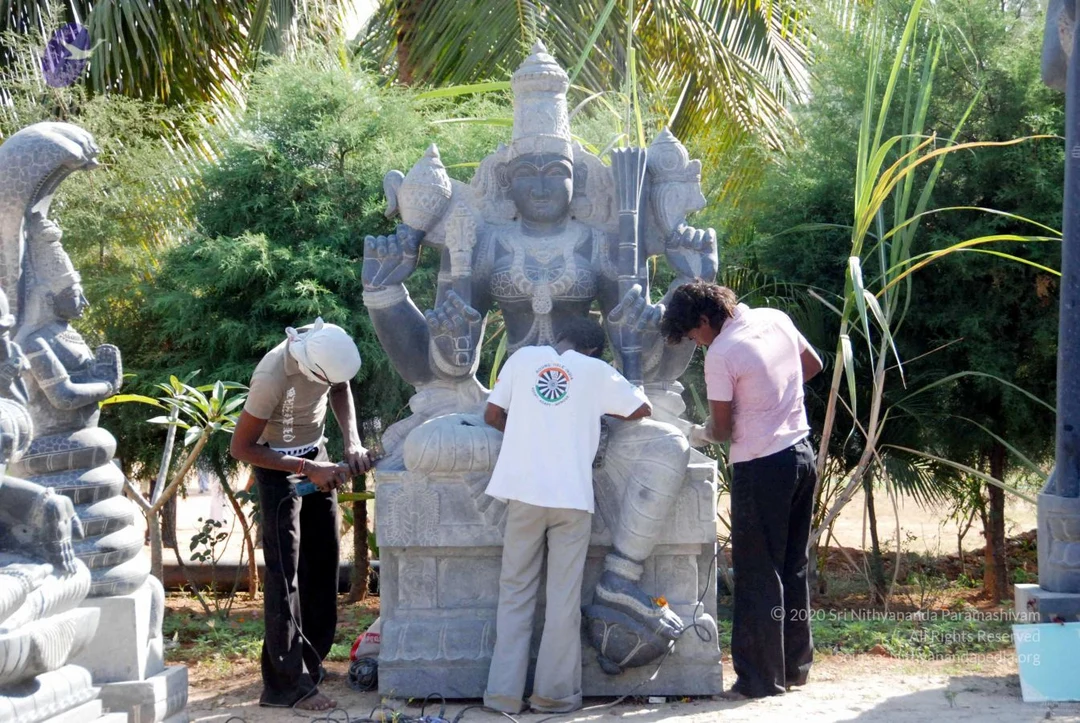
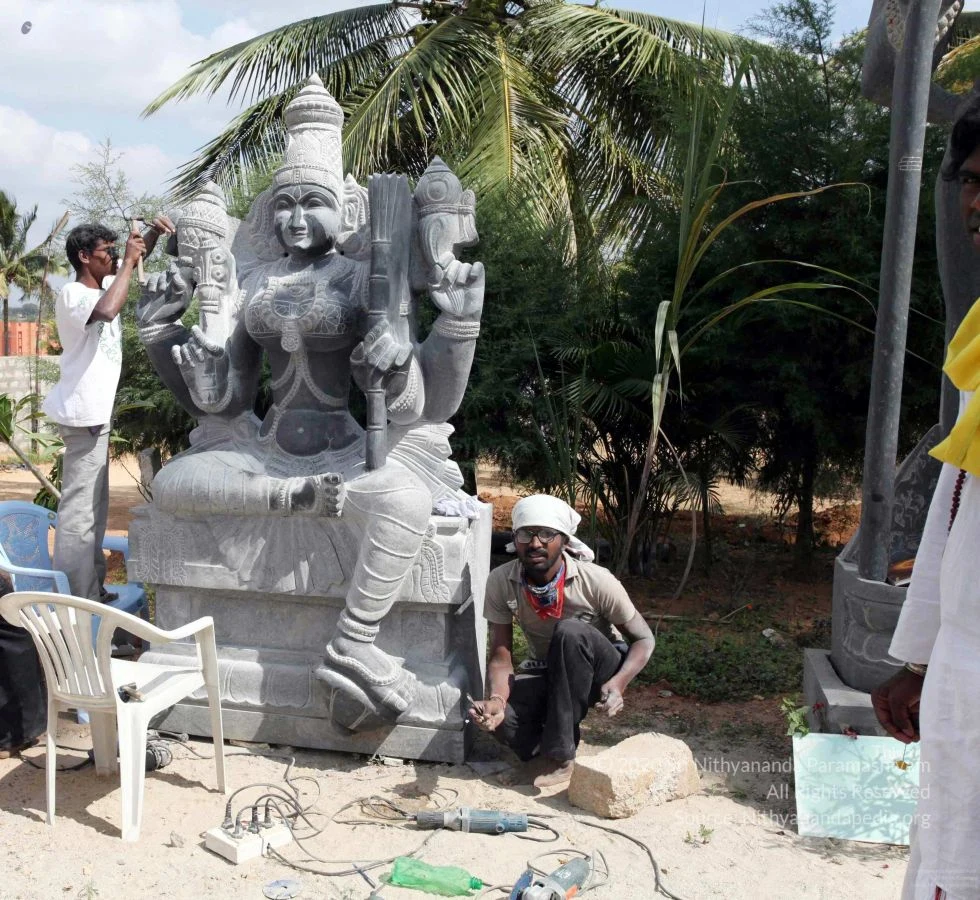
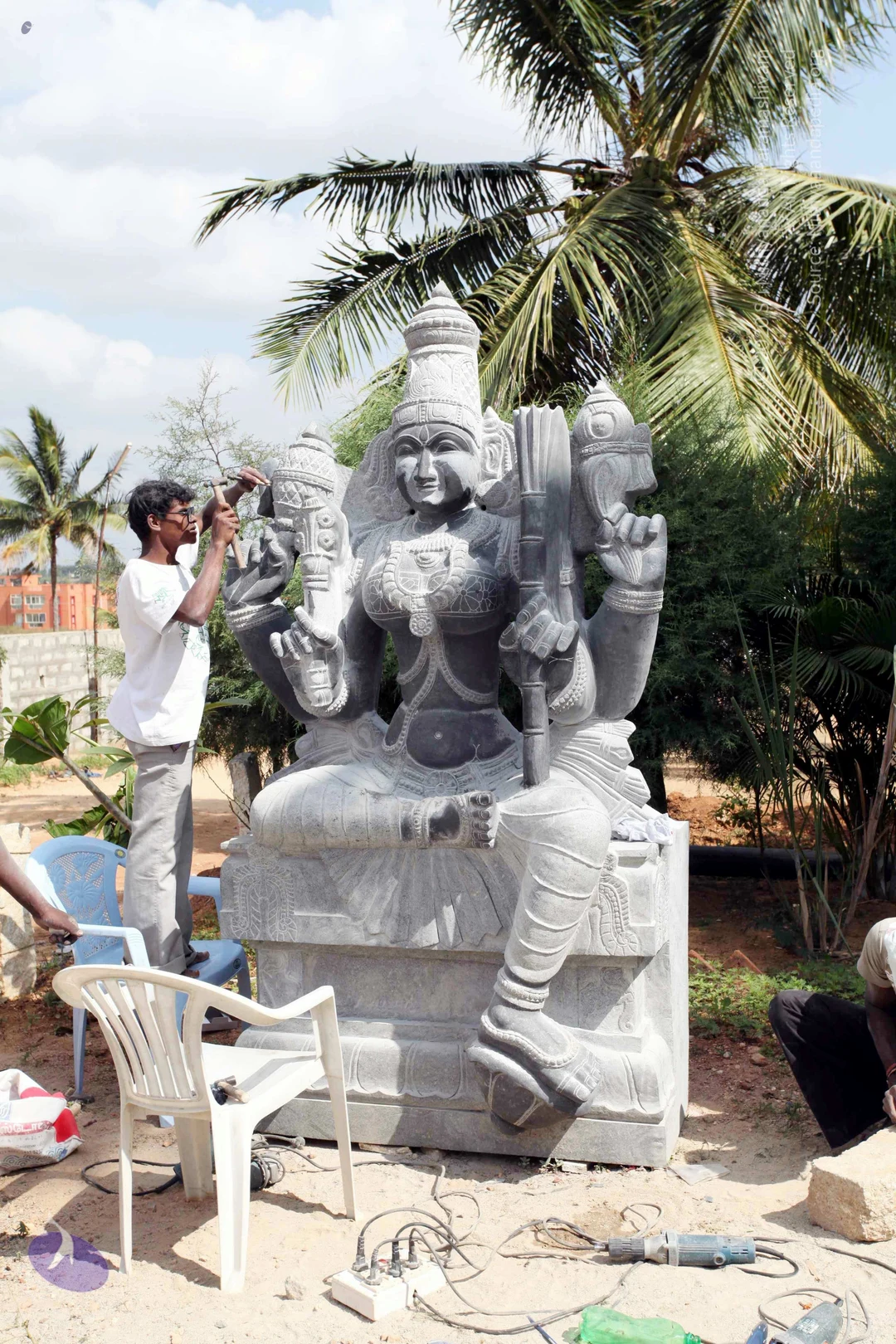
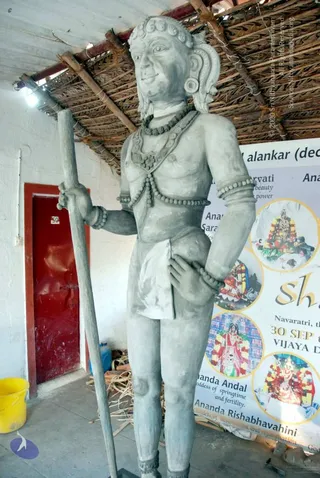
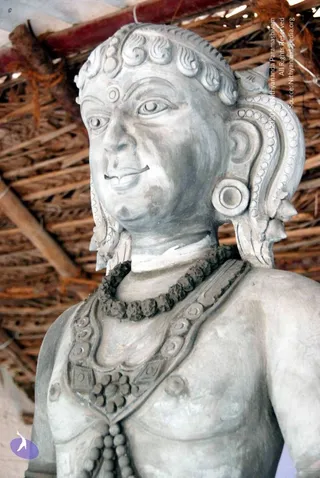
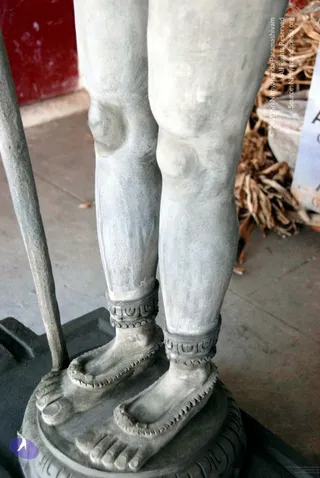
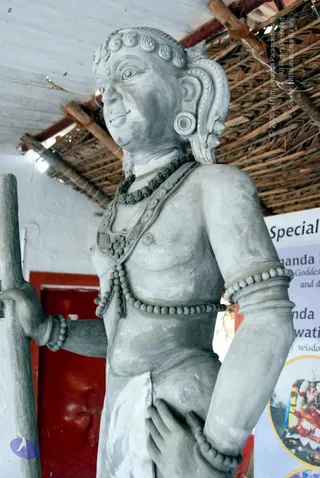
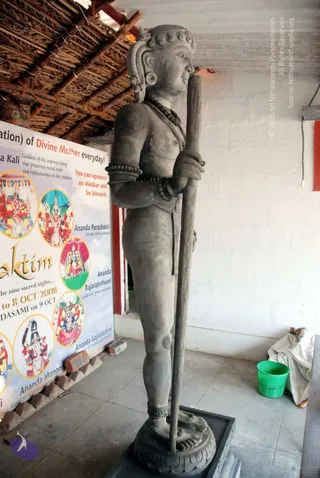
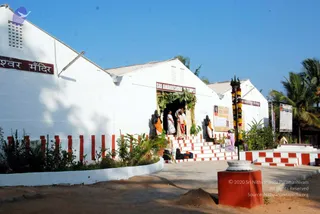
A large unpainted grey statue of a standing deity figure stands in a sheltered workshop under a thatched roof, gripping a tall staff in its left hand and resting its right hand on the hip. It wears a rudraksha-style bead necklace, layered beaded garlands across the chest, bead bangles on the arms and a short draped lower garment. Behind it a banner shows several circular photos of decorated deity murti with flower garlands and offerings, with the words Navaratri and Vijaya Dashami and the names Ananda Andal and Ananda Rishabhavahini. A red door, a yellow bucket and scattered straw sit in the room. No living people are visible. The statue is a plain sculpted figure, not a painted deity or a person.A grey stone or plaster statue of a figure with curled hair bound up in a decorative crown-like headdress, large circular earrings with ornate side pieces, a bead necklace or mala around the neck, and a broad ornamented collar with pendant detailing across the chest. The bust is set against a thatched roof of dried palm and bamboo rafters.Close-up photograph of the lower legs and bare feet of a grey stone or cement statue standing on a round black base. Ornate bands with decorative patterns circle each ankle, and the toes are carved in detail. A thin pole or staff leans against the left side. Behind the statue is a red wall, dry straw or husks, and a white sign with partly visible lettering.A grey plaster statue of a standing deity figure, shown in close angled view under a thatched palm roof beside a white wall and red door. The figure has curled hair, a beaded necklace and chest ornament, multiple beaded bangles, and a beaded waist cord, and holds a staff in one hand. Beside it is a printed banner with the phrase "Special" and a partial caption reading "Goddess" and "wisdom", with a small circular picture of a seated deity with garlands. The statue is a depiction, not a physical person.A large grey stone statue of a standing male figure holding a tall wooden staff upright in his right hand, with a beaded necklace and bead bracelets on the arms, placed on a lotus-patterned base in a covered open hall with a thatched ceiling. Beside it stands a banner with a Navaratri-style schedule showing circular images of goddesses in colourful saris, labelled Ananda Parashakti, Ananda Rajarajeshwari, Ananda Gajalakshmi and Ananda Manonmani. A green plastic bucket and folded cloth sit on the floor at right. No living people are visible.Exterior of the Sri Anandeshwara Temple, a whitewashed building with a red-and-white striped plinth and steps, a green leaf-and-banana decorated doorway, and a tall pole with a trident finial wrapped in marigold garlands. Several people in white and orange clothing stand near the entrance, some carrying items, and a man sits at the right edge beside the steps. A red-and-white striped boundary fence, potted plants and palm trees surround the courtyard under a clear blue sky. Signboards read Sri Anandeshwara Temple and a Hindi-script sign for a temple.

Ganapathy Homa

4 photosSource gallery
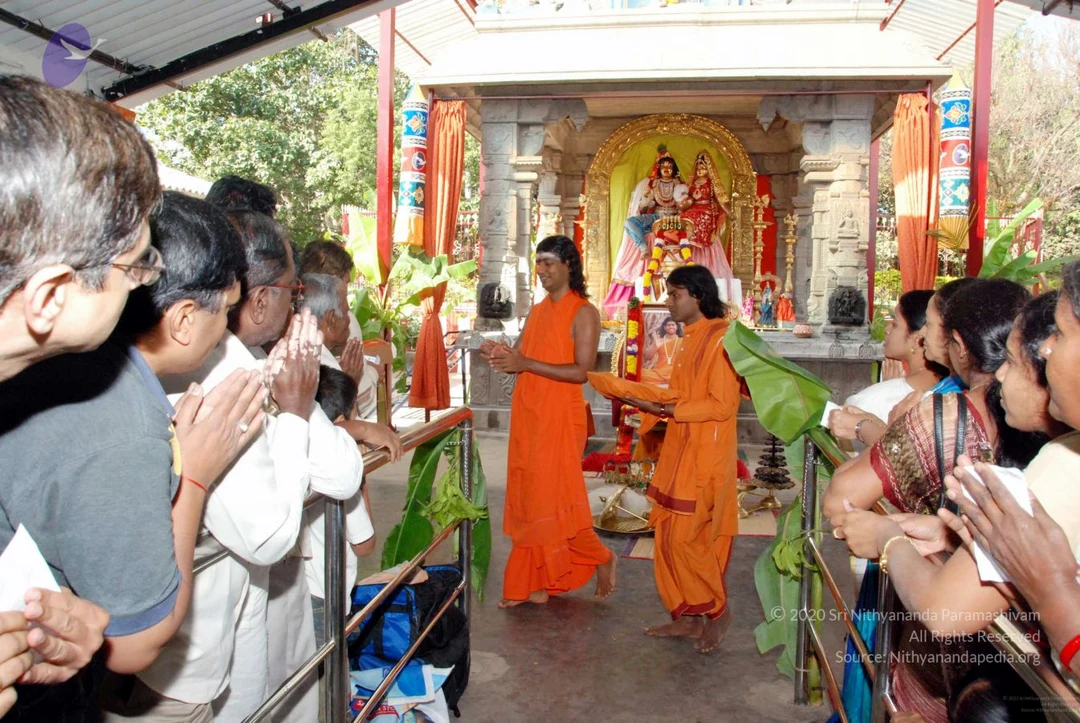
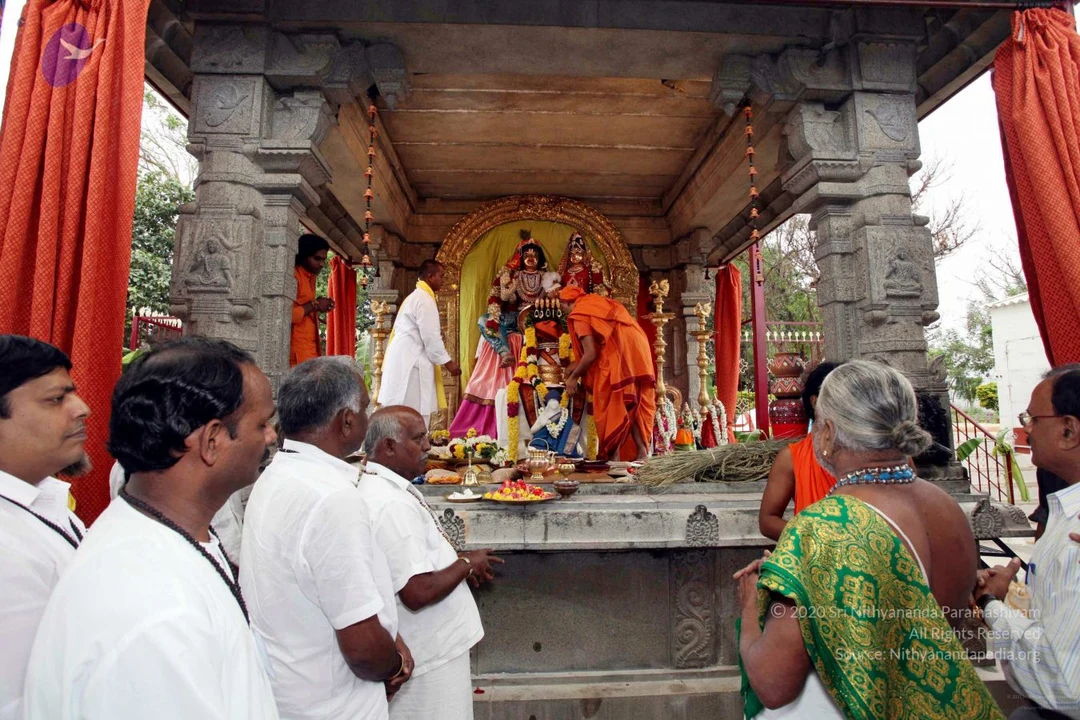
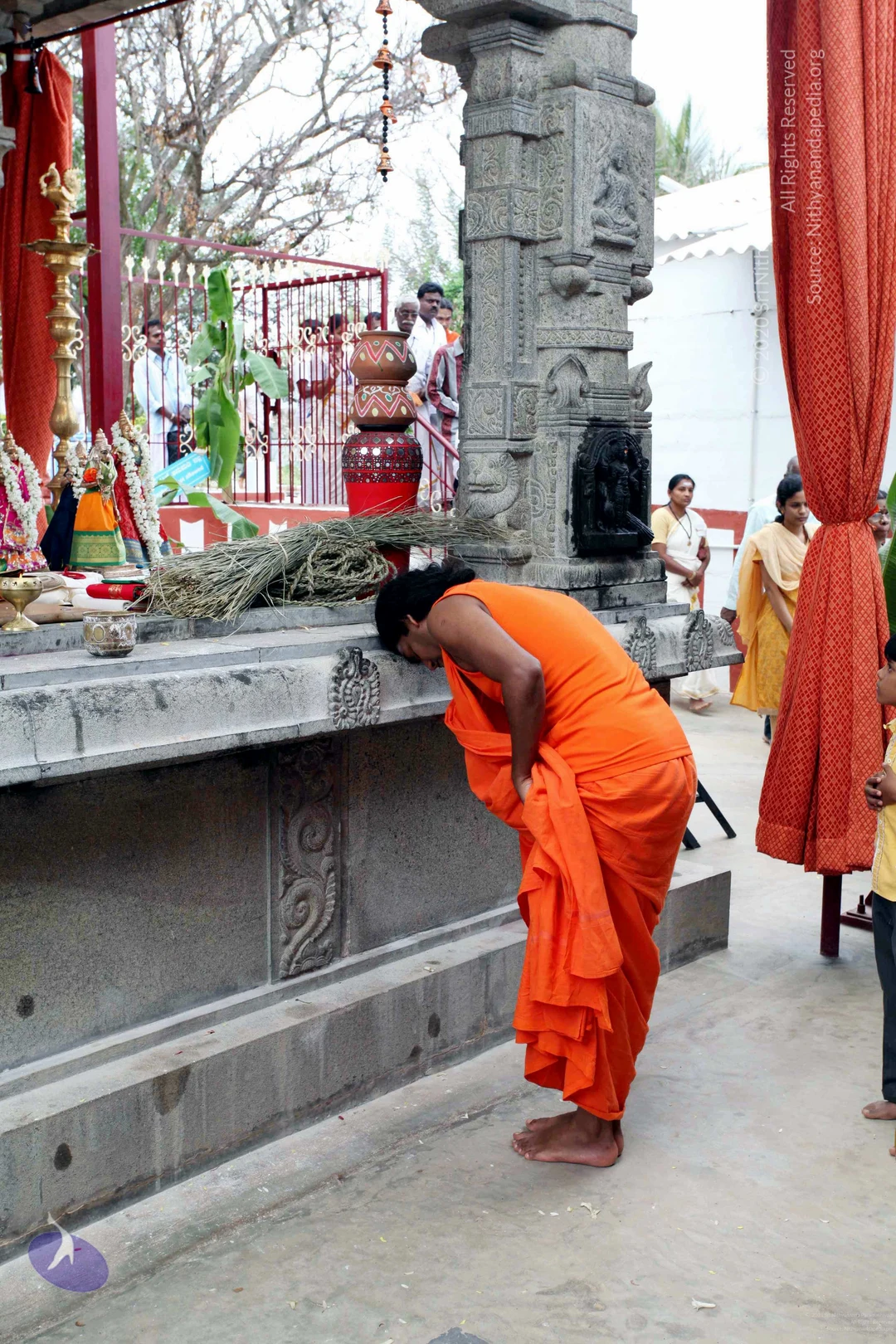
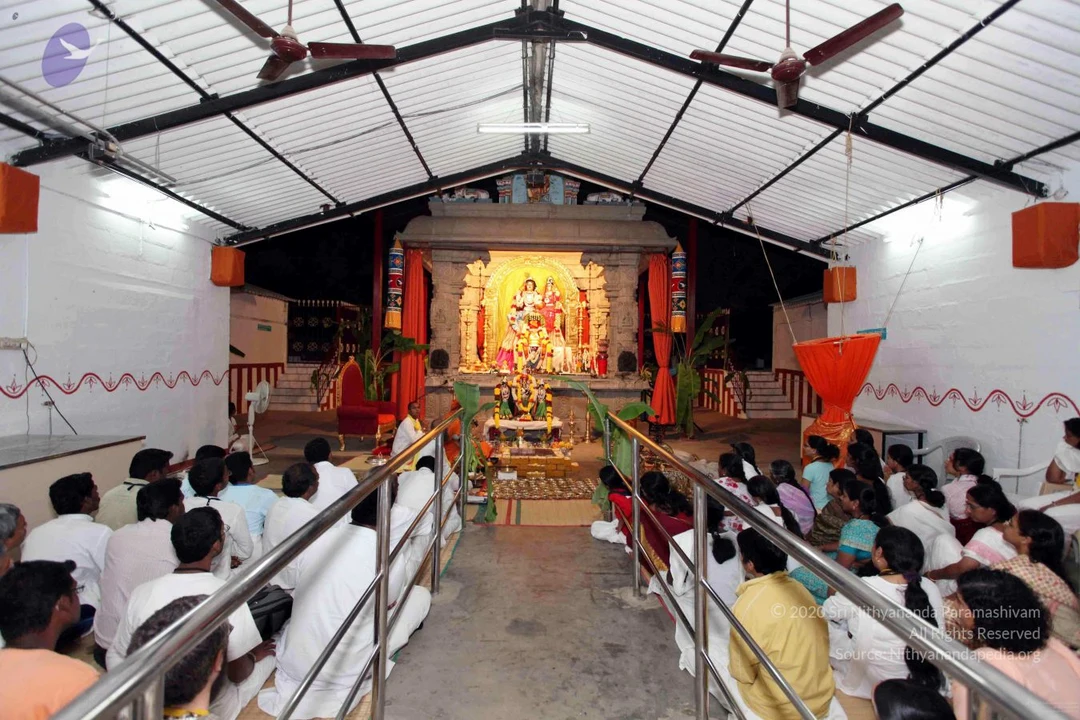
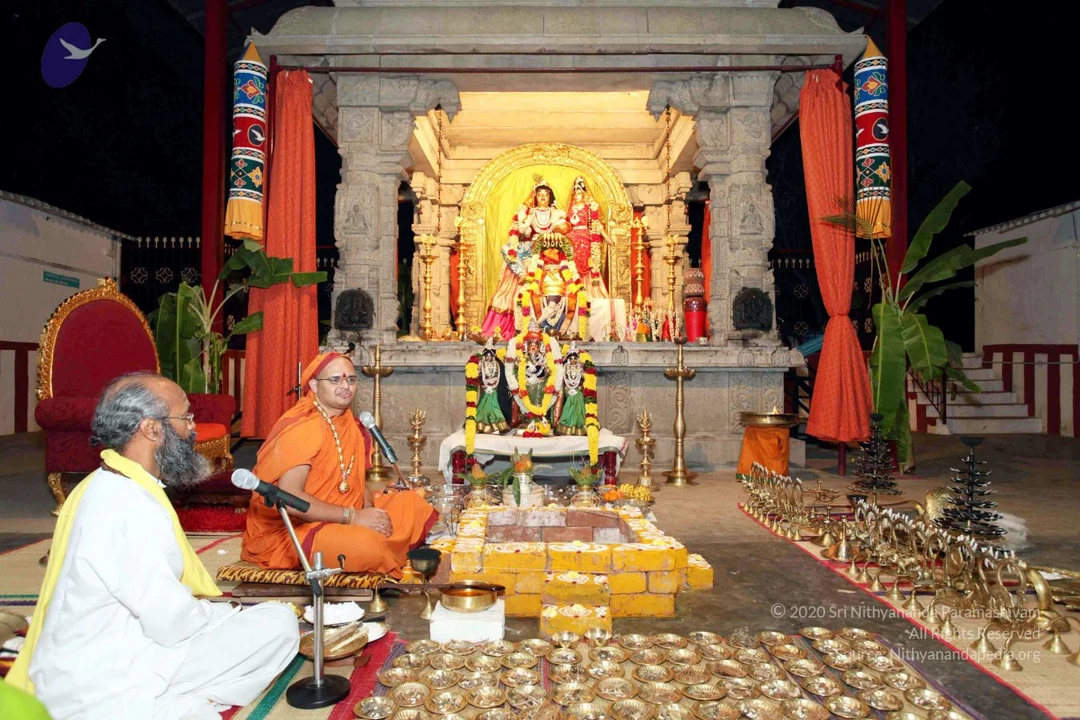
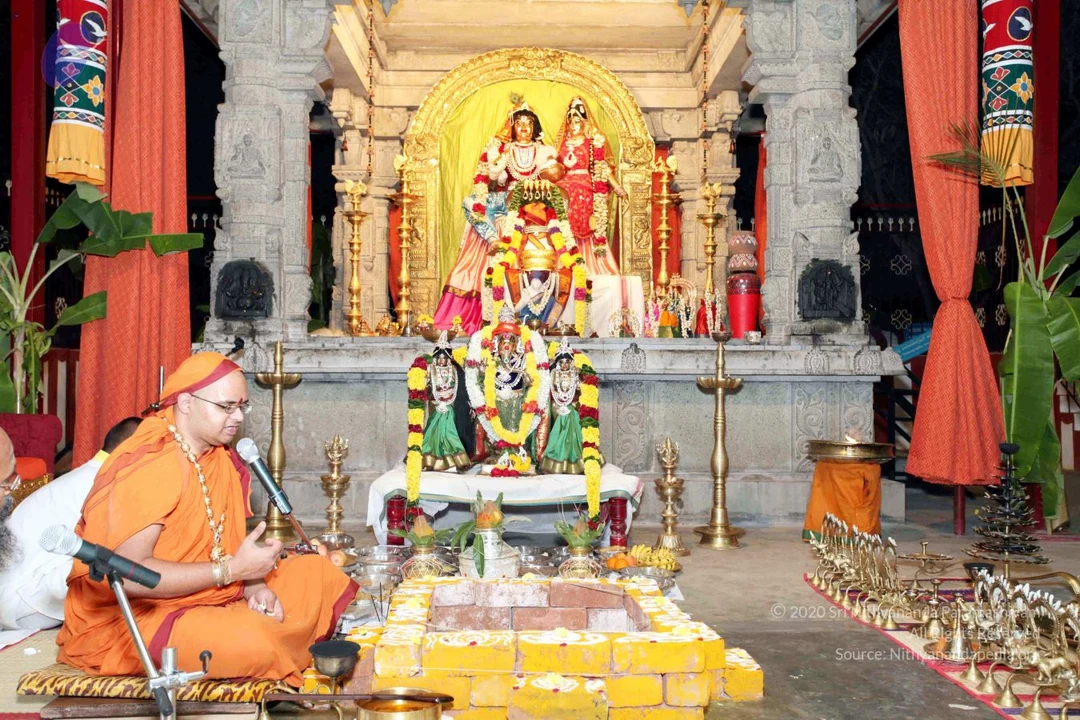
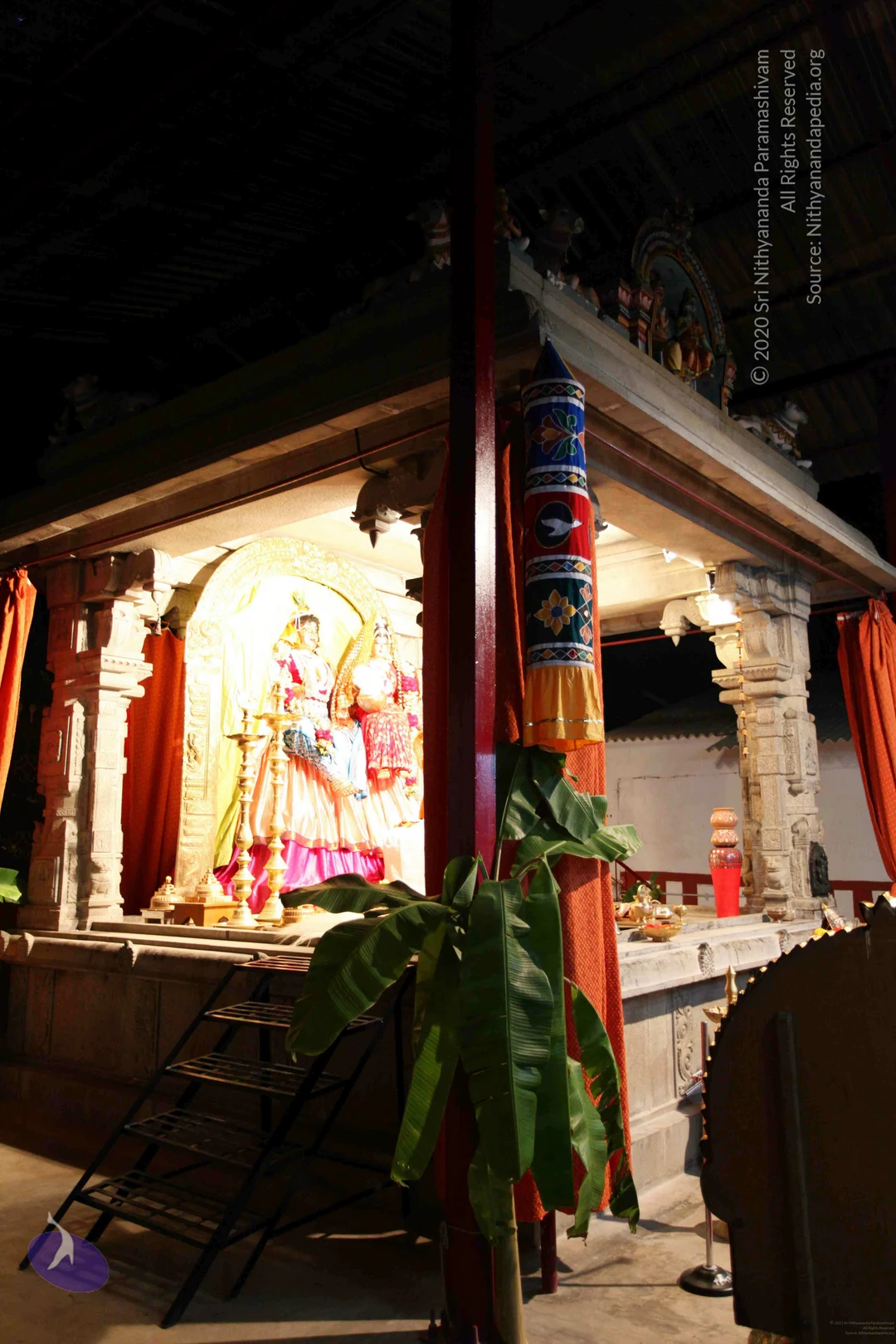
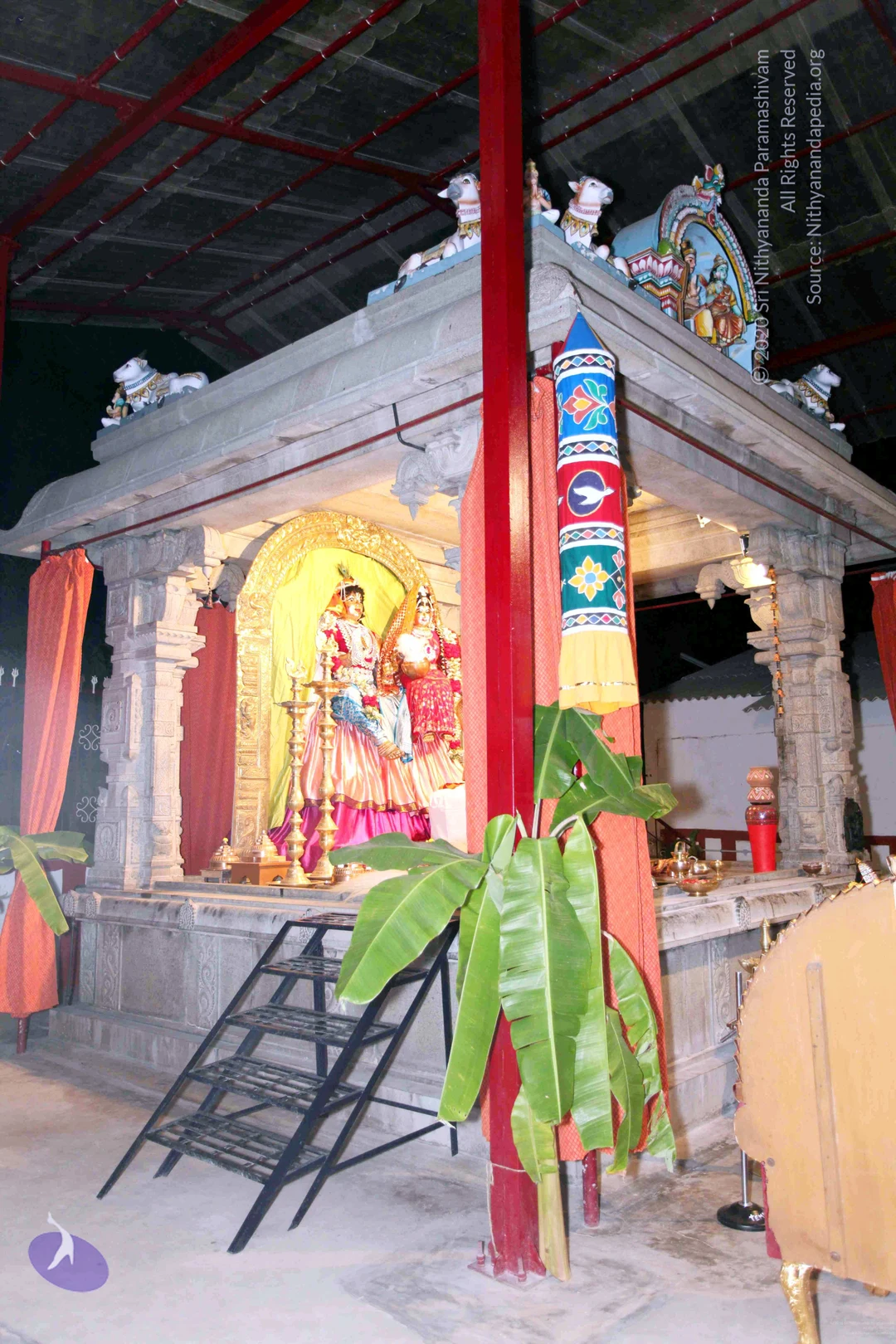
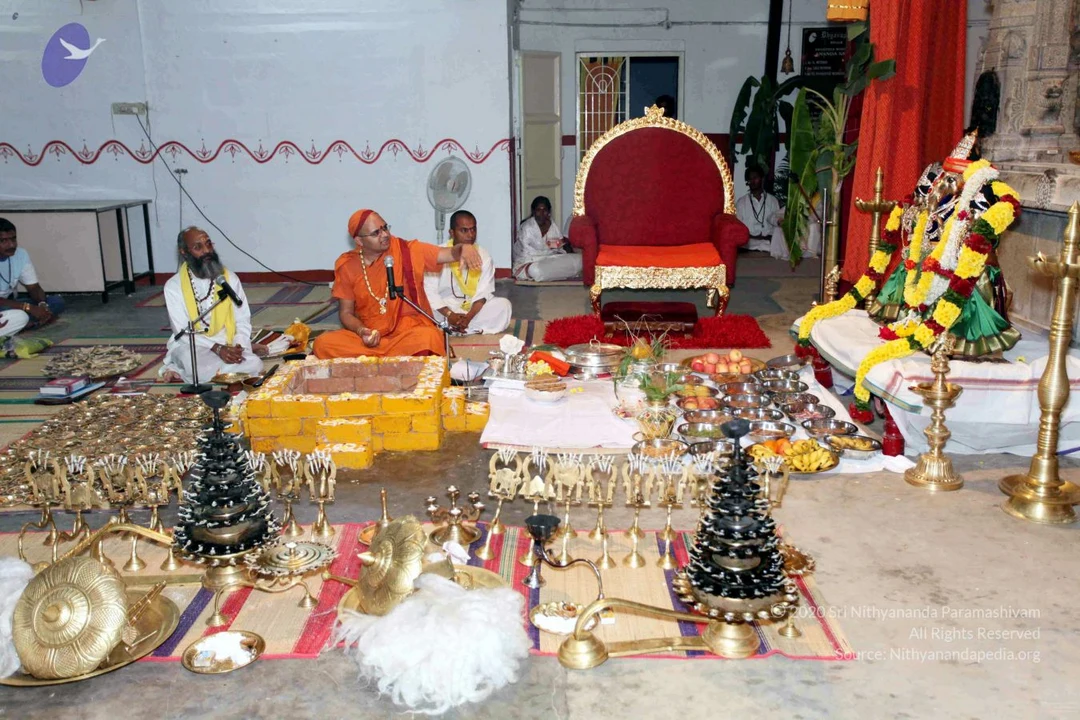
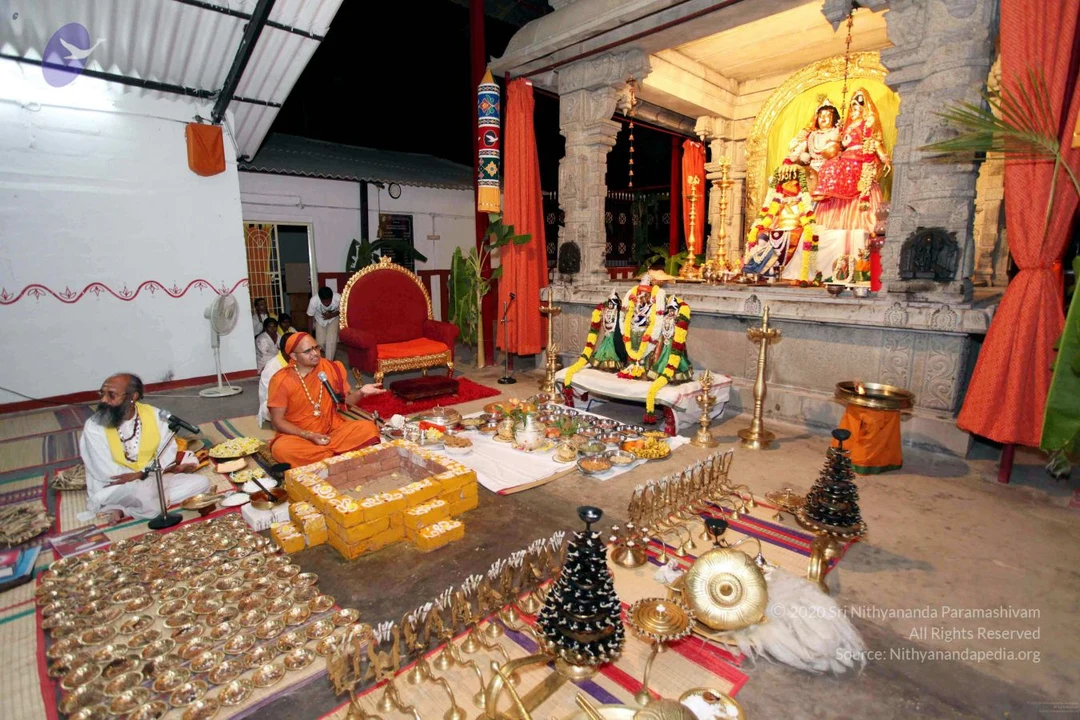
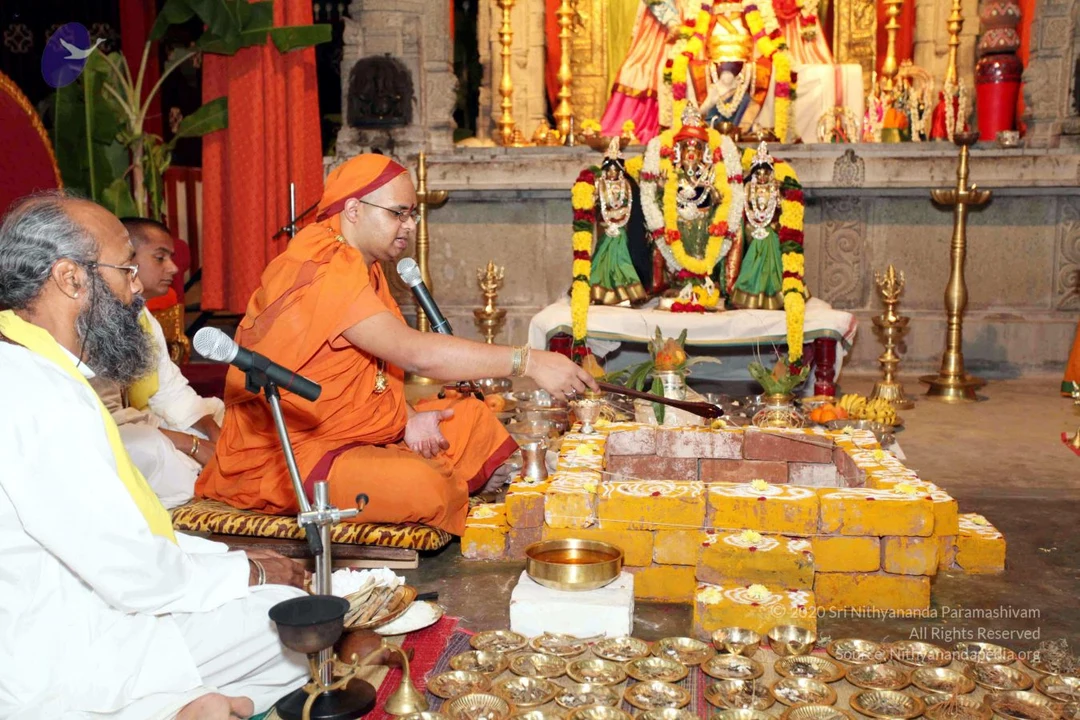
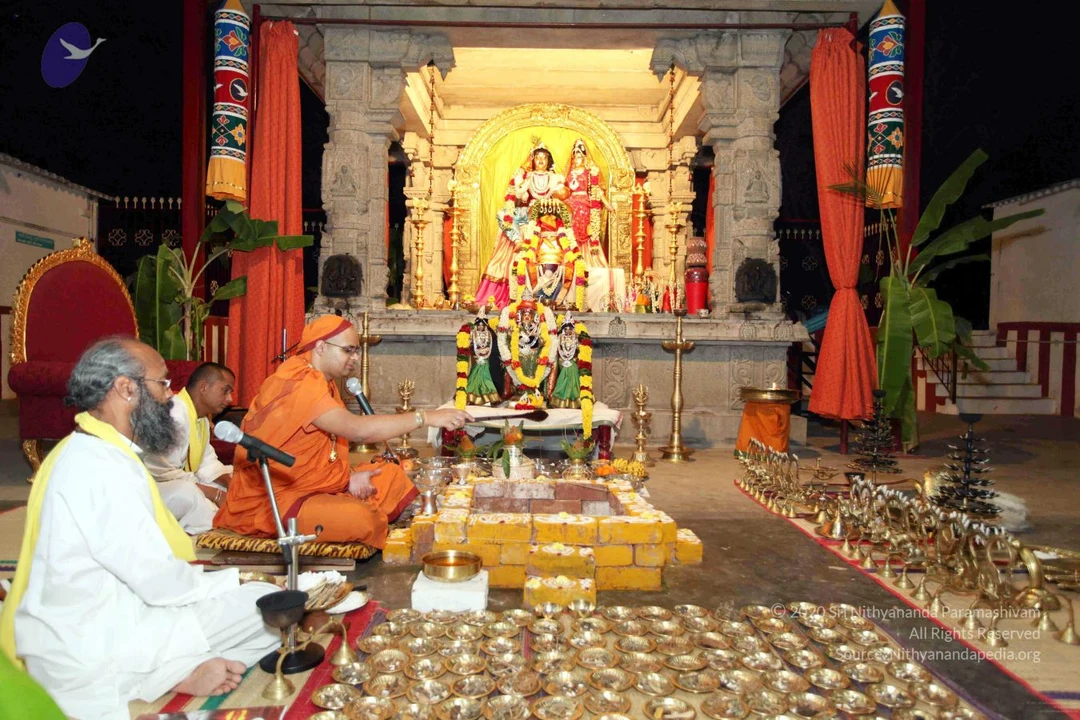
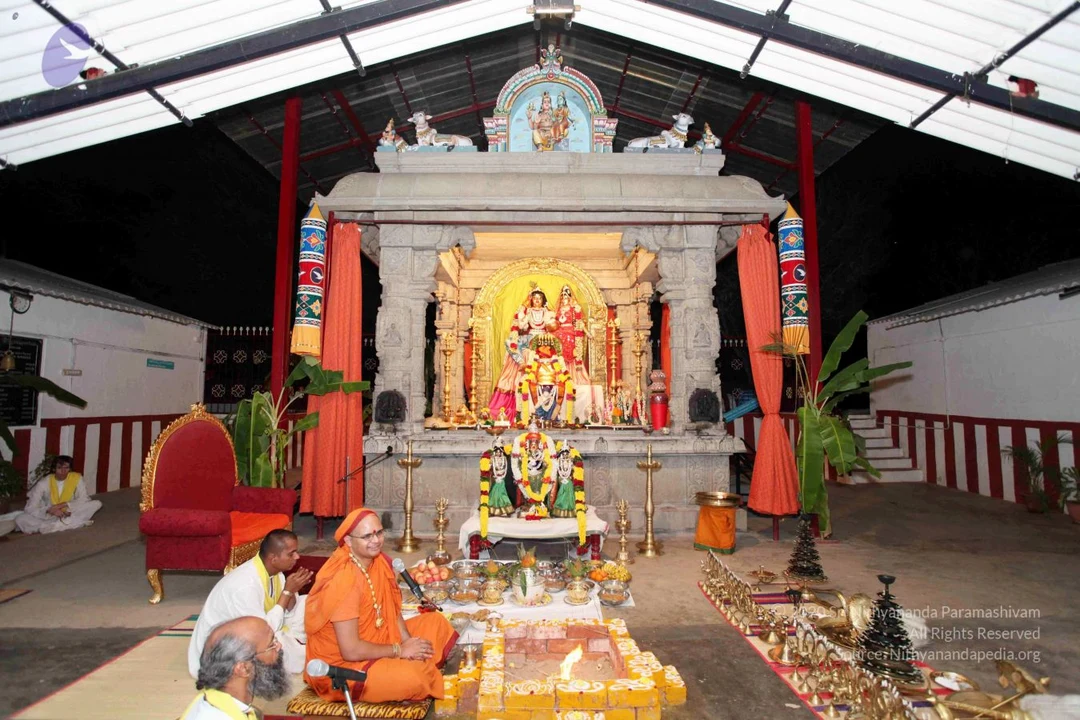
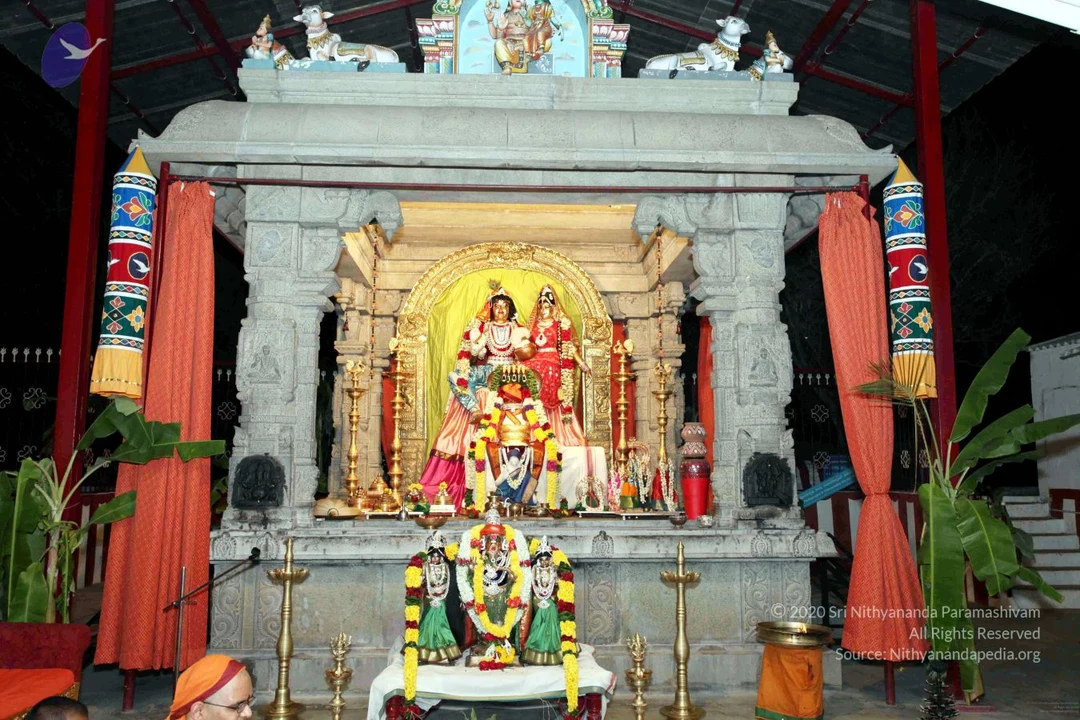
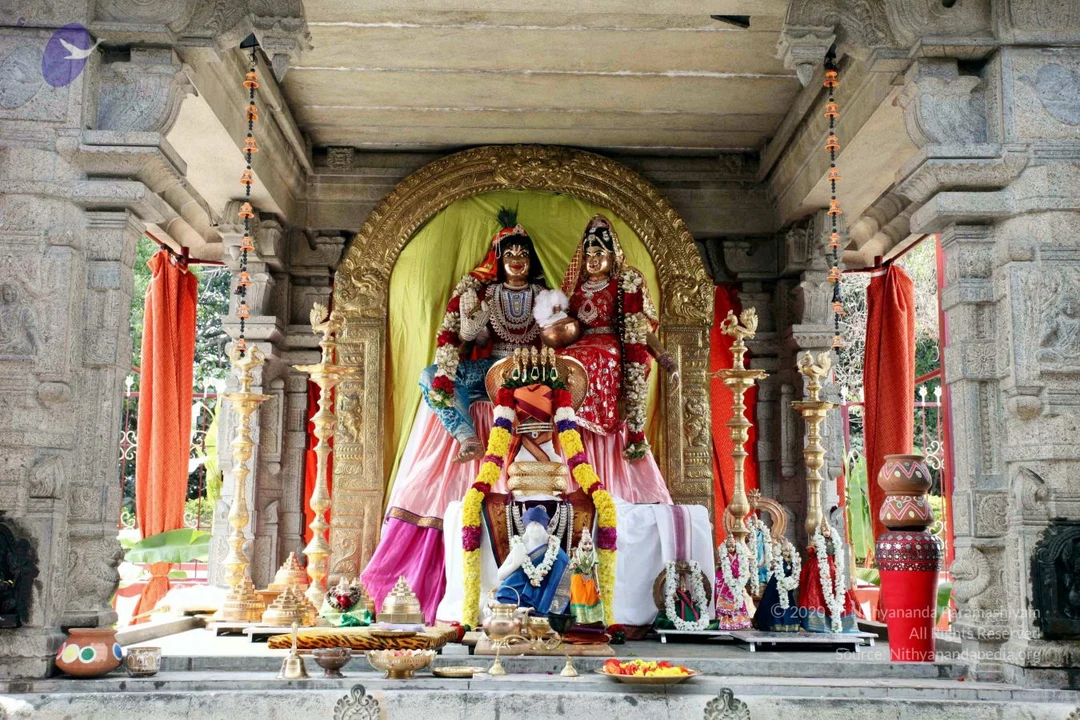
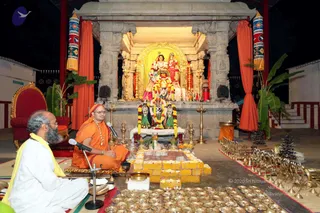
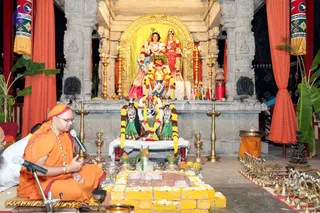
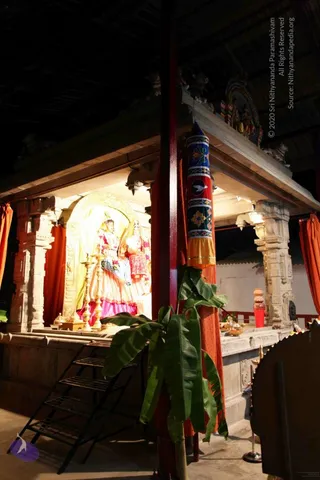
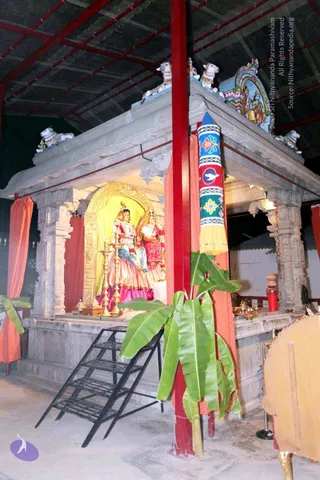
A photograph inside a temple hall at night showing an ornate stone shrine lit by warm light, with a deity murti group decorated with marigold garlands and flanked by two dressed figures. In front, a seated man in orange robes with a rudraksha mala and a small orange turban sits cross-legged on a mat before a microphone, while a bearded man in white with a yellow shawl sits beside him. Rows of brass oil lamps fill the floor, and a red-and-gold throne stands at left with orange curtains and tall banana plants framing the scene.A photograph inside a temple shrine during a ritual. A seated man in saffron-orange robes with a saffron head covering and a rudraksha-style beaded necklace speaks into a microphone while gesturing with his hands, sitting beside a square brick-and-marigold yajna pit. Behind him a deity murti group stands under a gold arch, decorated with marigold garlands, flanked by brass oil lamps and a kalasha; orange curtains and banana plants frame the scene. Brass oil lamps line the floor at right, and offerings of fruit sit near the fire pit.A lit temple shrine with a stone-pillared mandapa and orange curtains. Inside an arched niche stand two painted deity murtis, one dressed in blue and white with a red garland and the other in red and pink with flower garlands, flanked by brass lamp stands. Beside the shrine a red kalasha-style vase and brass vessels sit on a stone platform. A banana plant leaf and a metal rack stand in the foreground. No people are visible.A photograph of a small stone shrine inside a covered hall with red-painted pillars and a corrugated roof. Within a gilded arched niche stand two painted deity murtis dressed in pink and red garments with floral garlands; the male figure holds a rod and the female figure holds a vessel. Brass oil lamps stand before the shrine, and a striped kalasha-style banner in blue, green, and yellow hangs beside a pillar. White nandi bulls with decorated collars sit on the roof corners, and banana leaves are placed near the steps. No people are visible in the scene.

FIMT Session
38 photosSource gallery
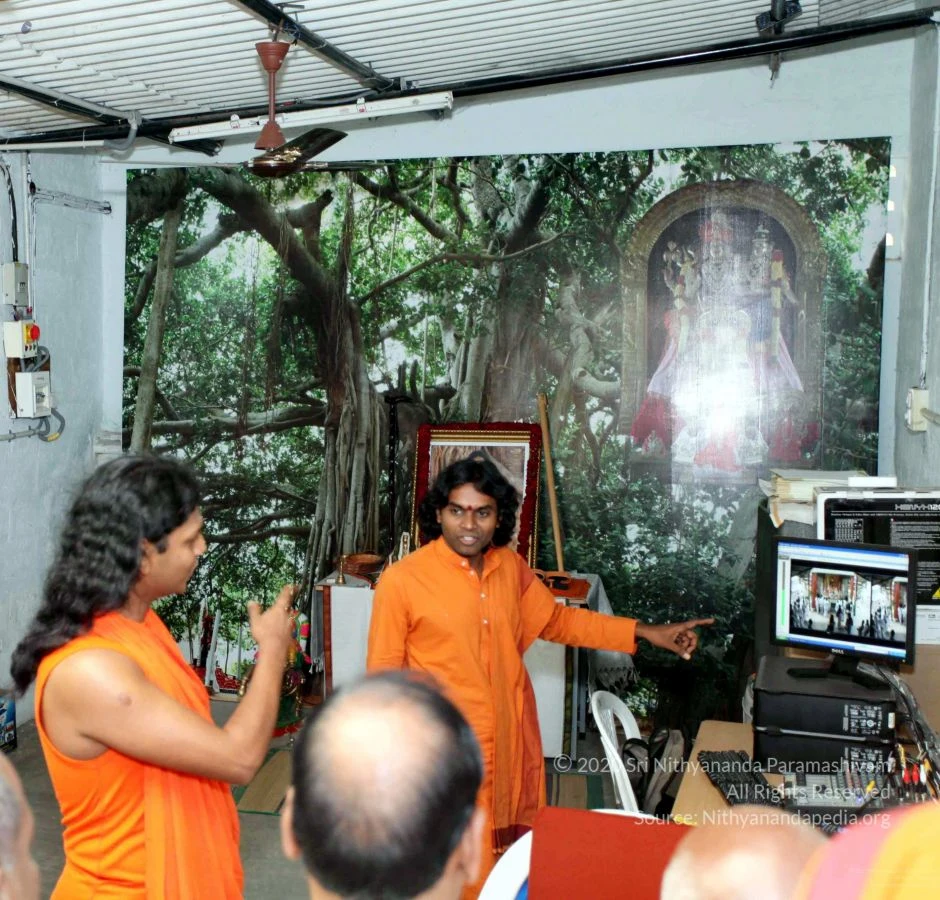
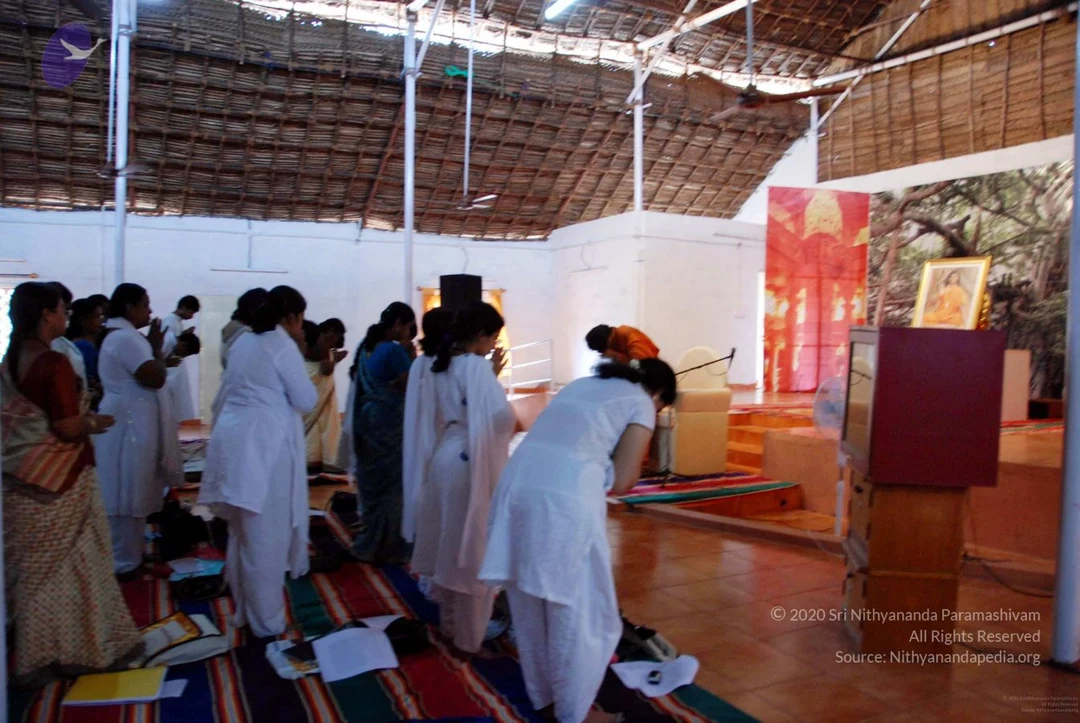
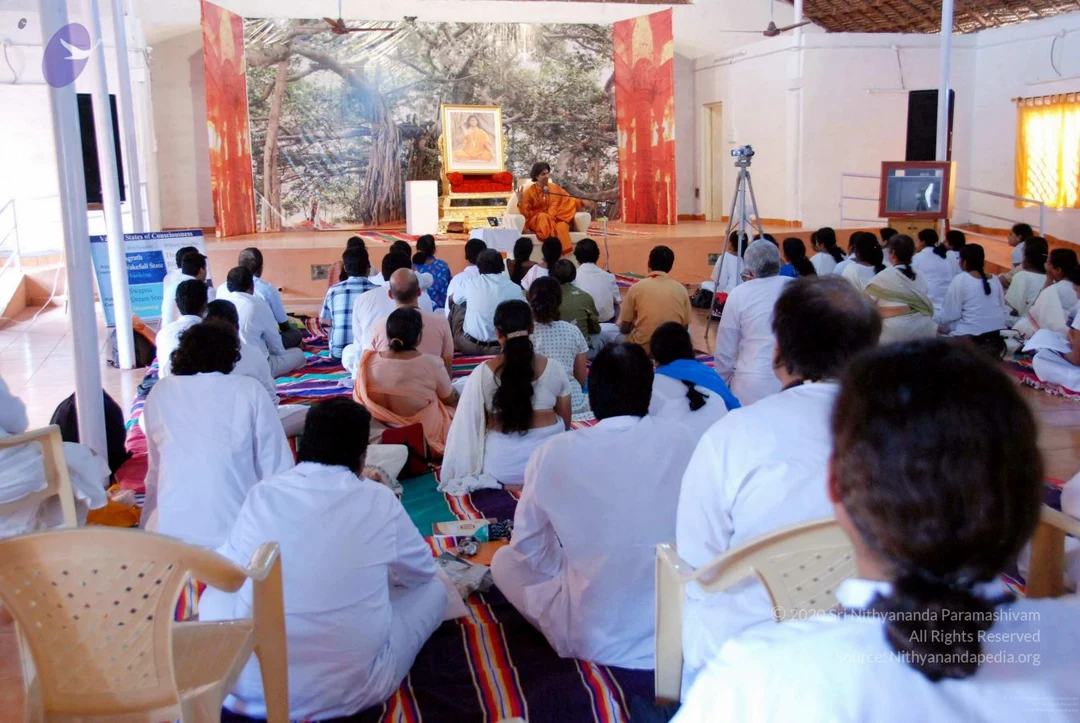
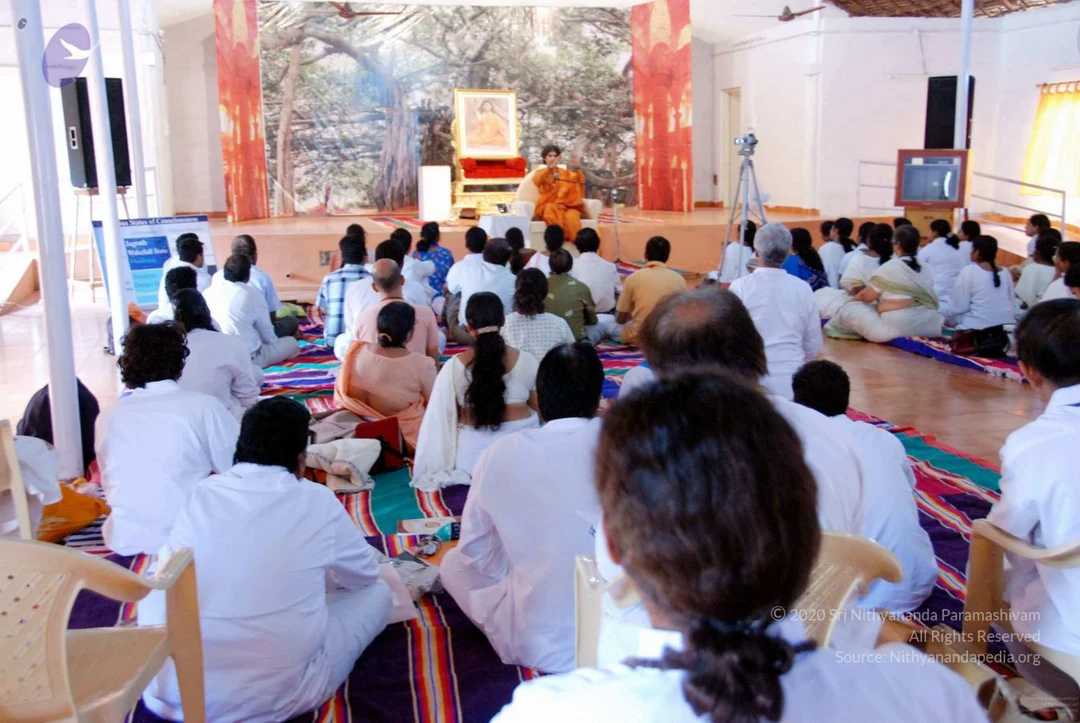
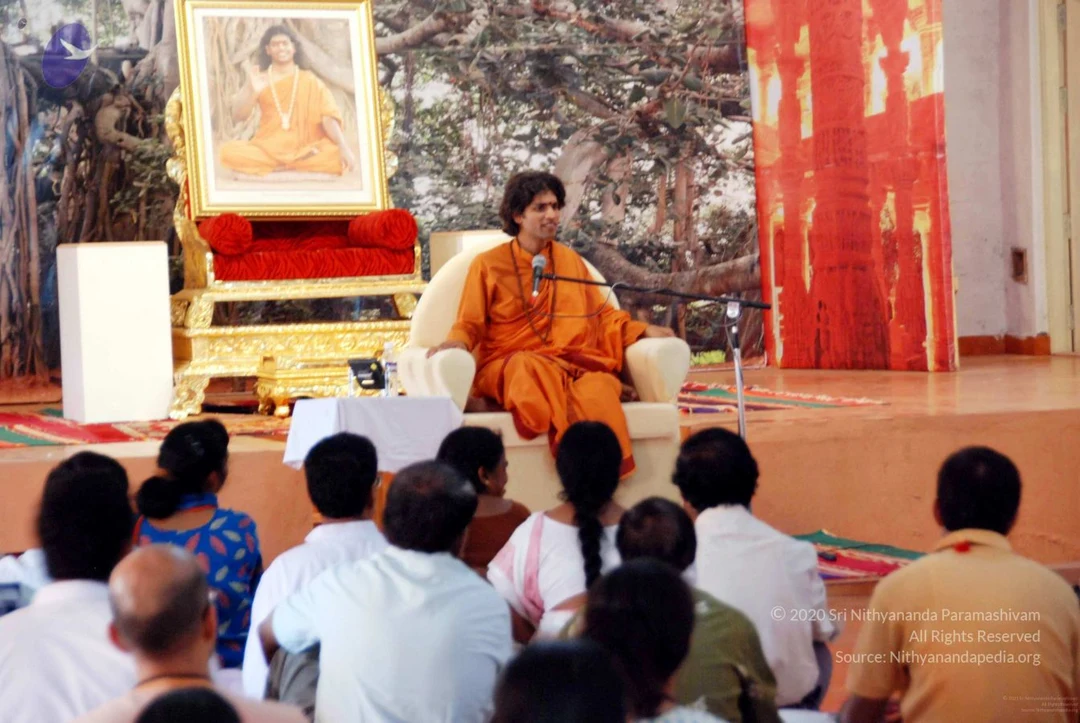
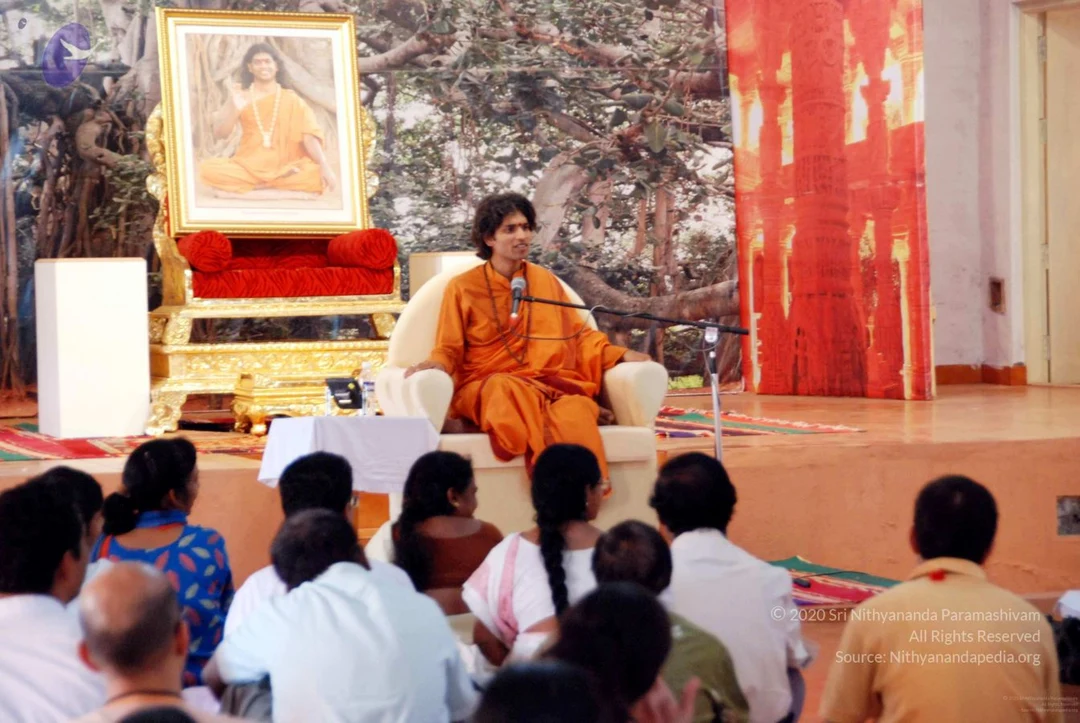
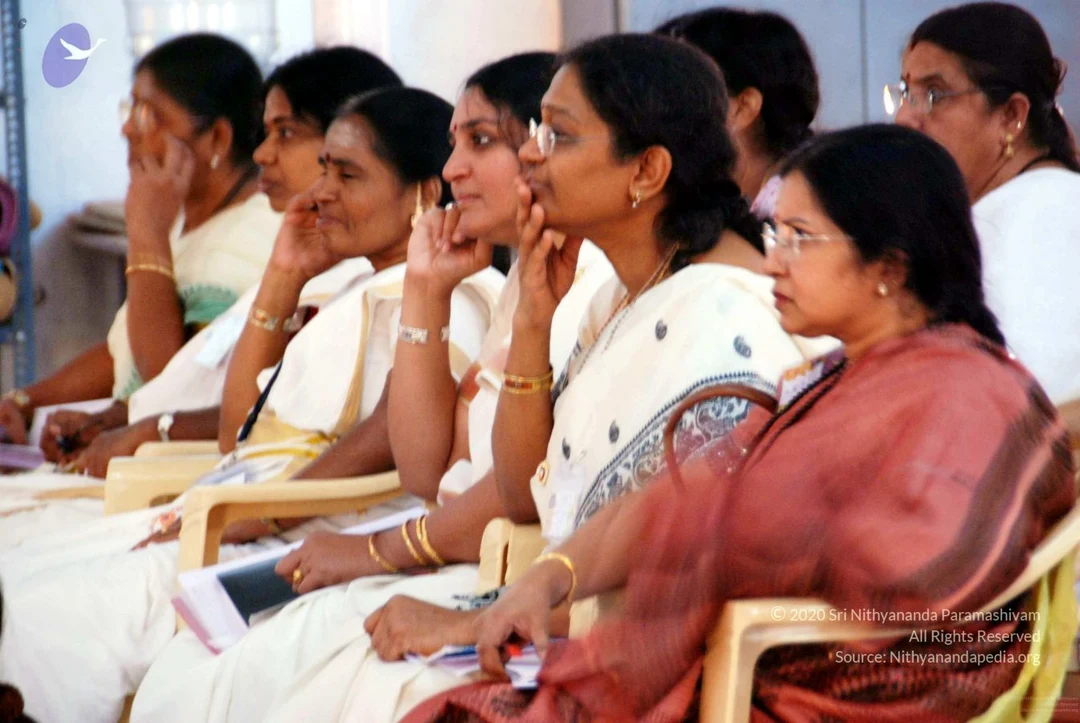
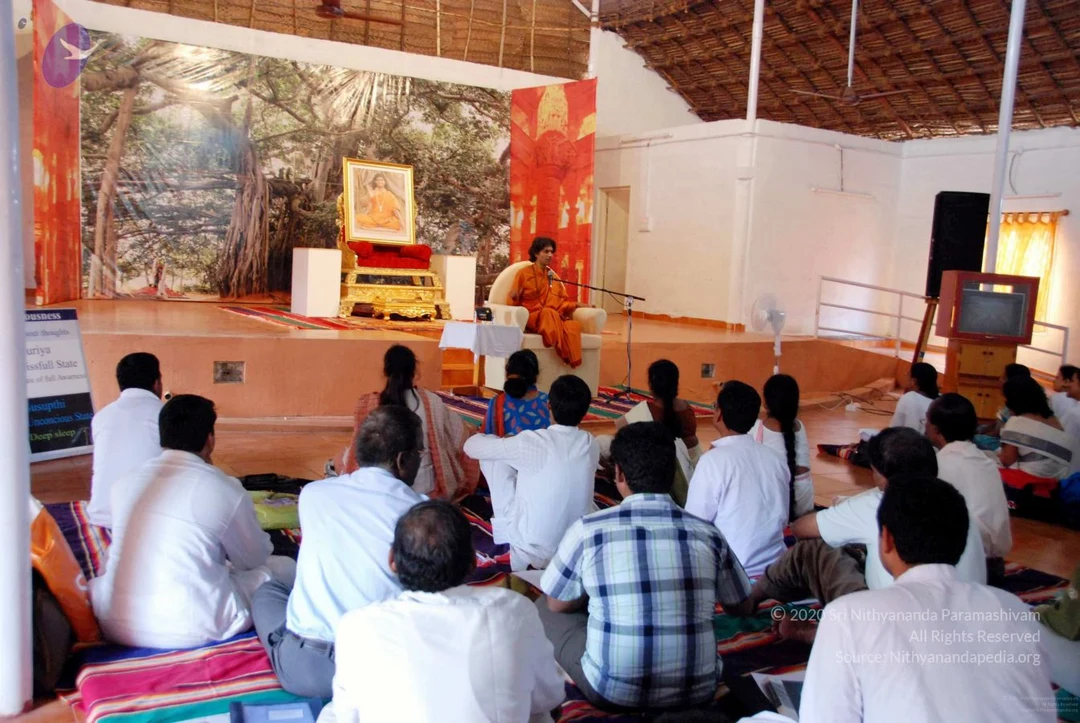
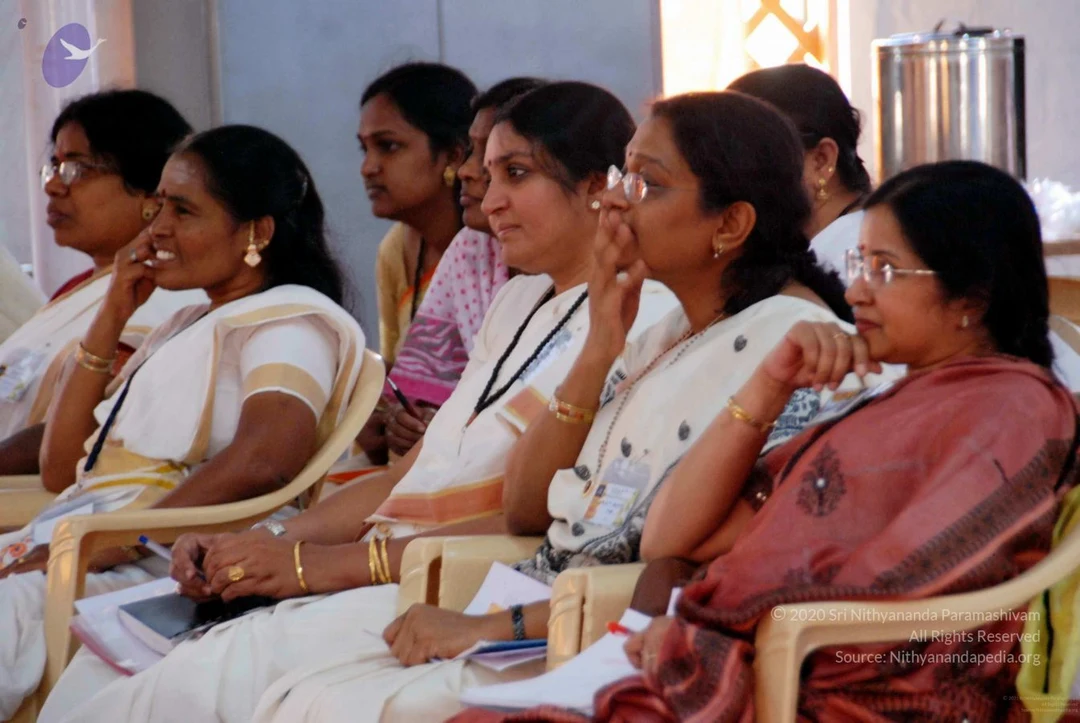
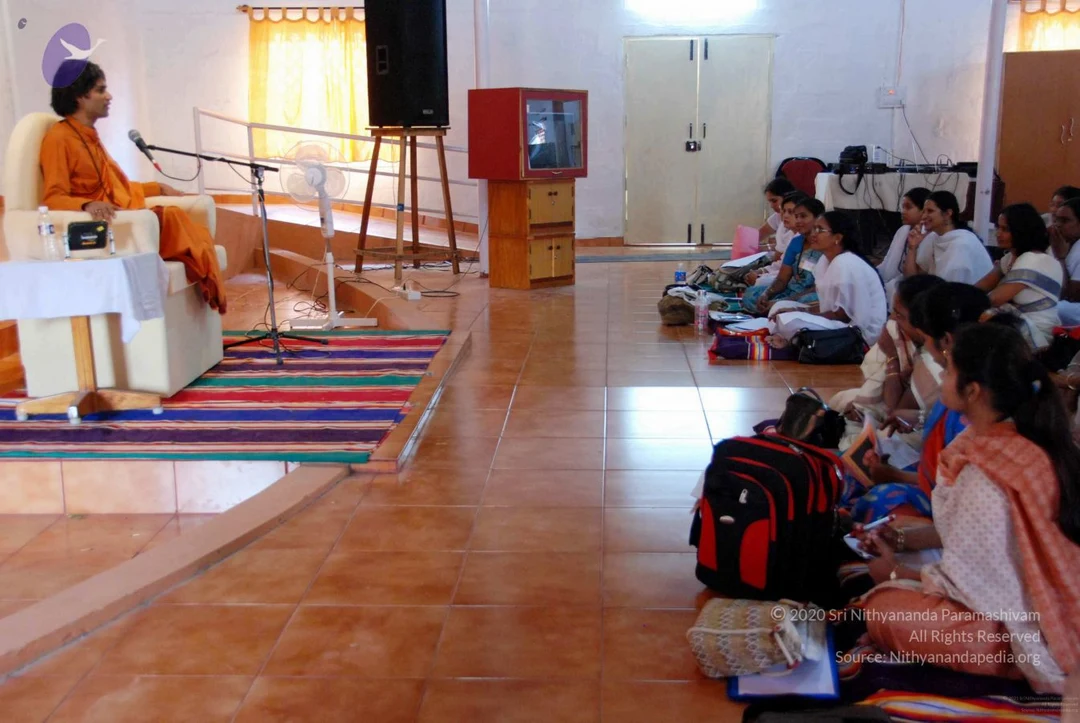
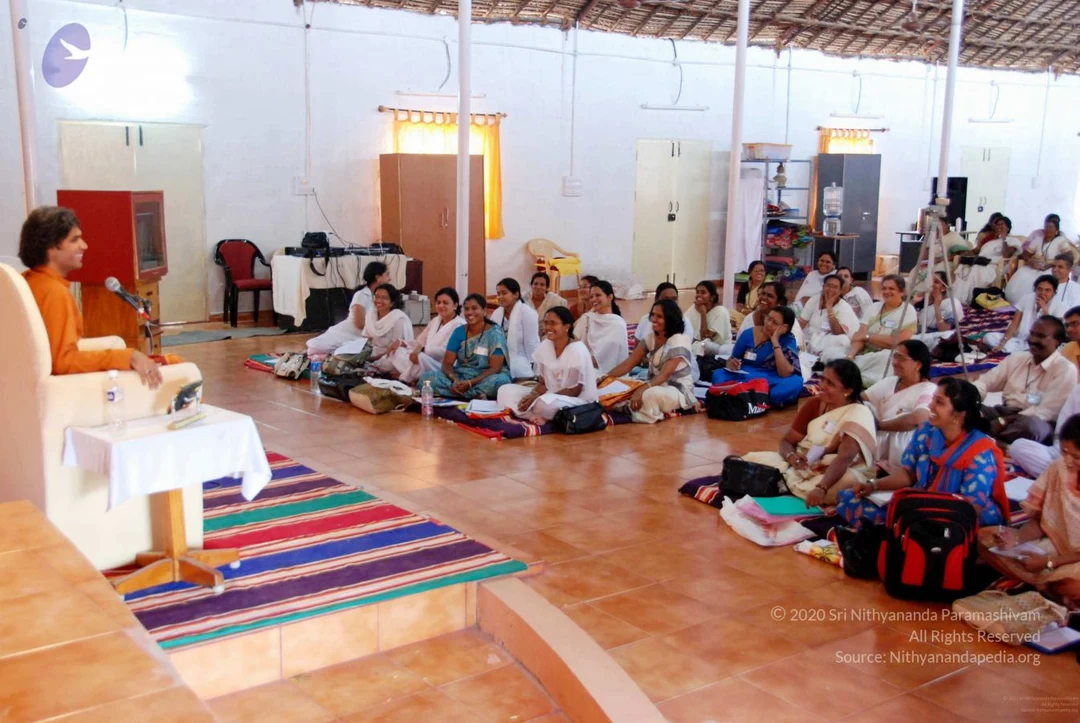
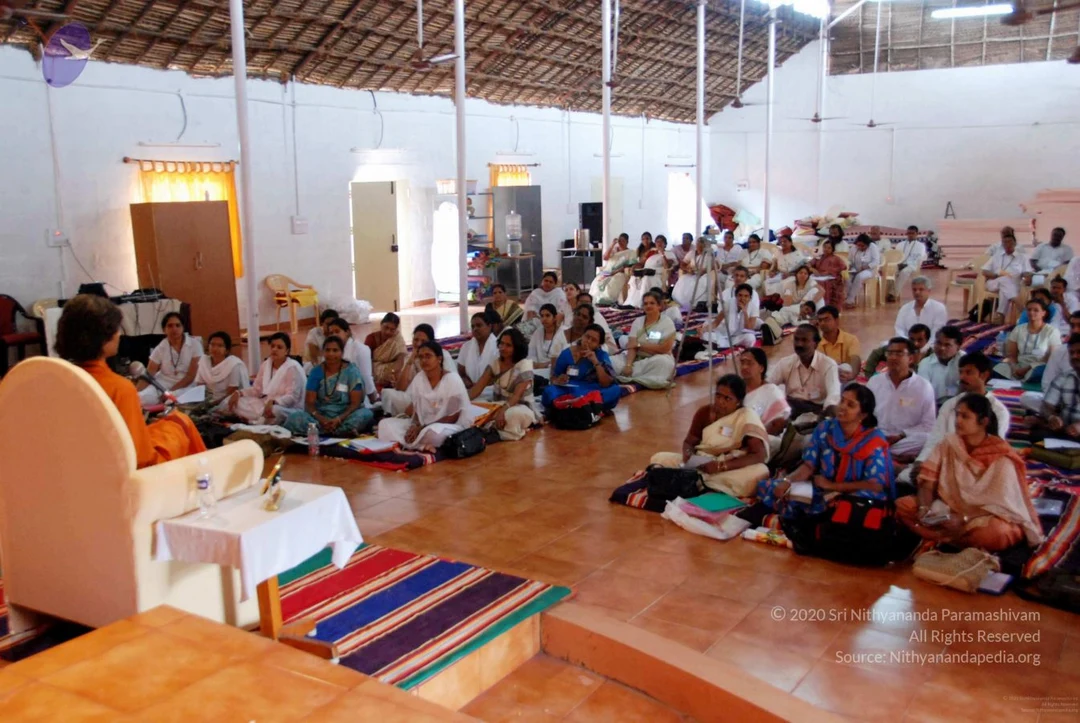
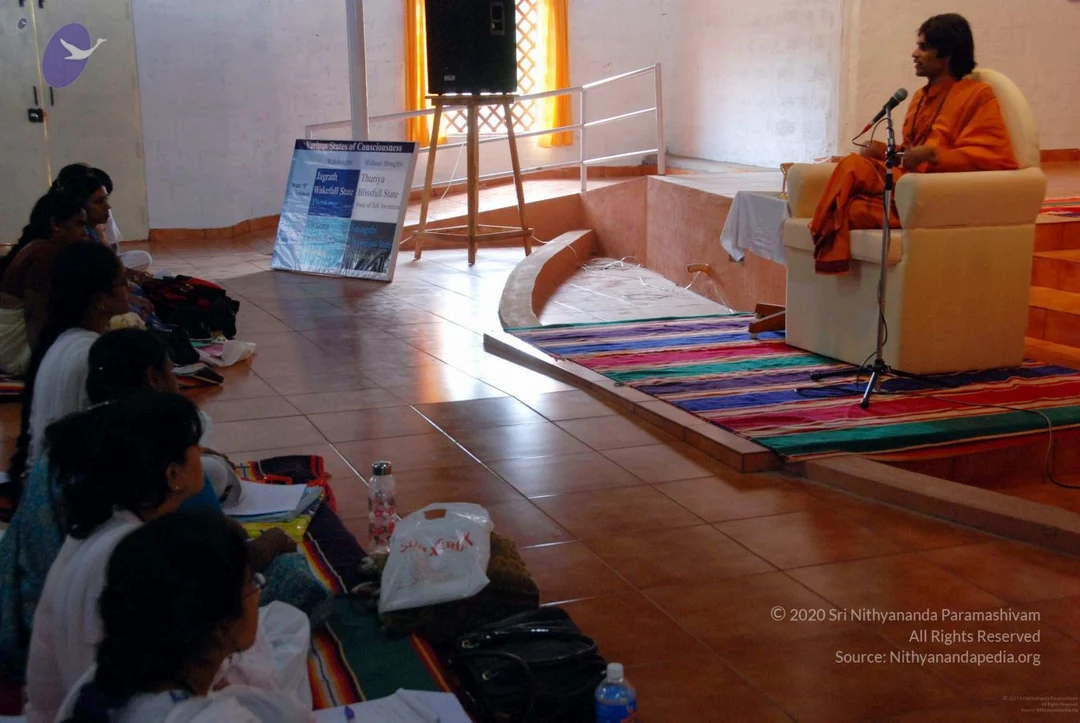
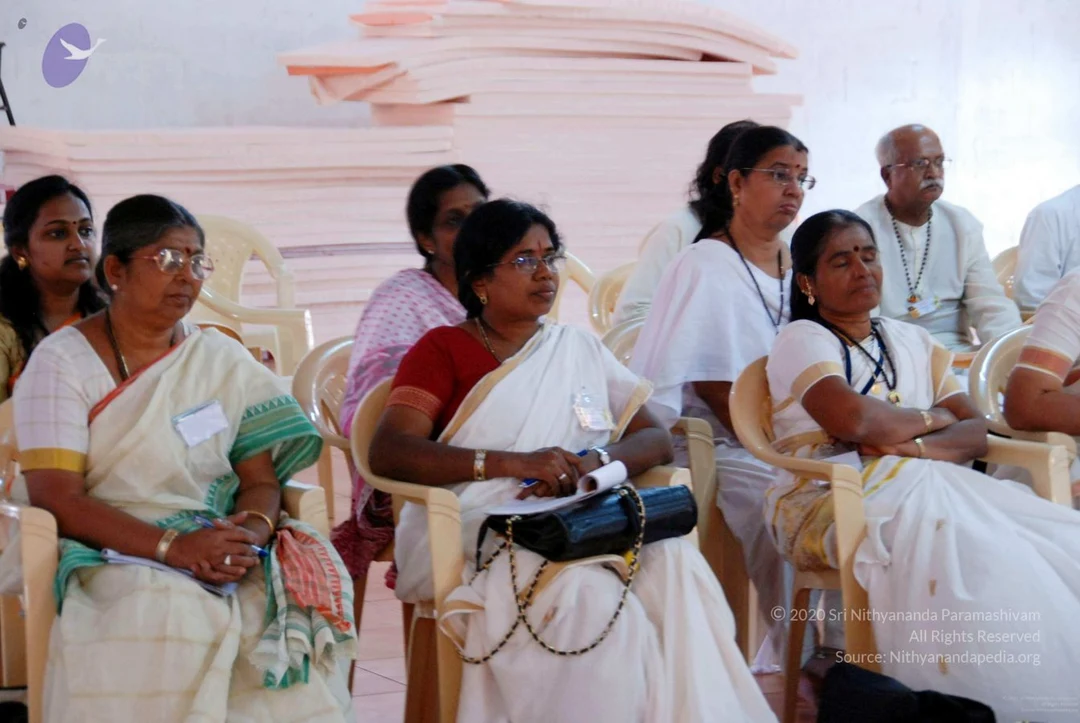
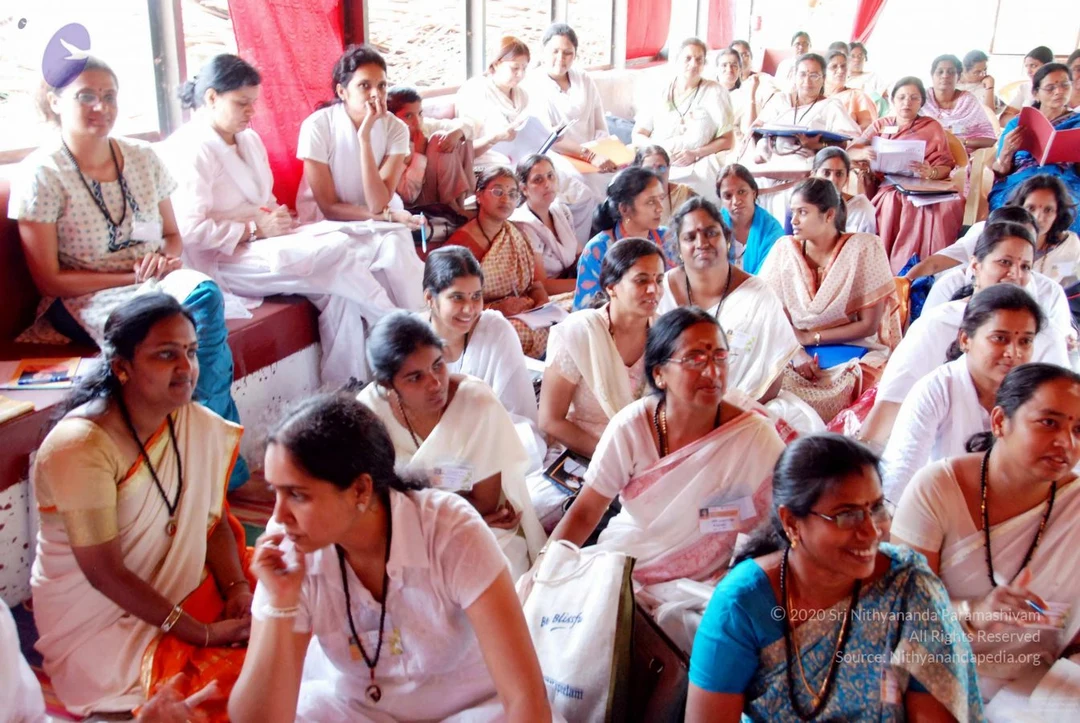
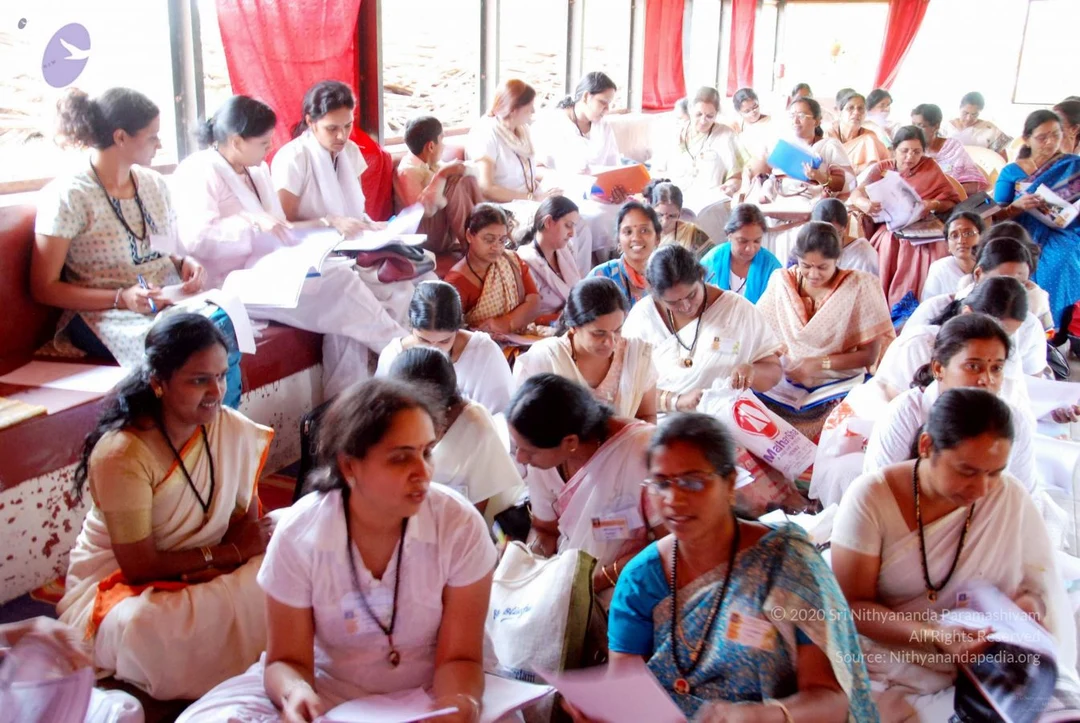
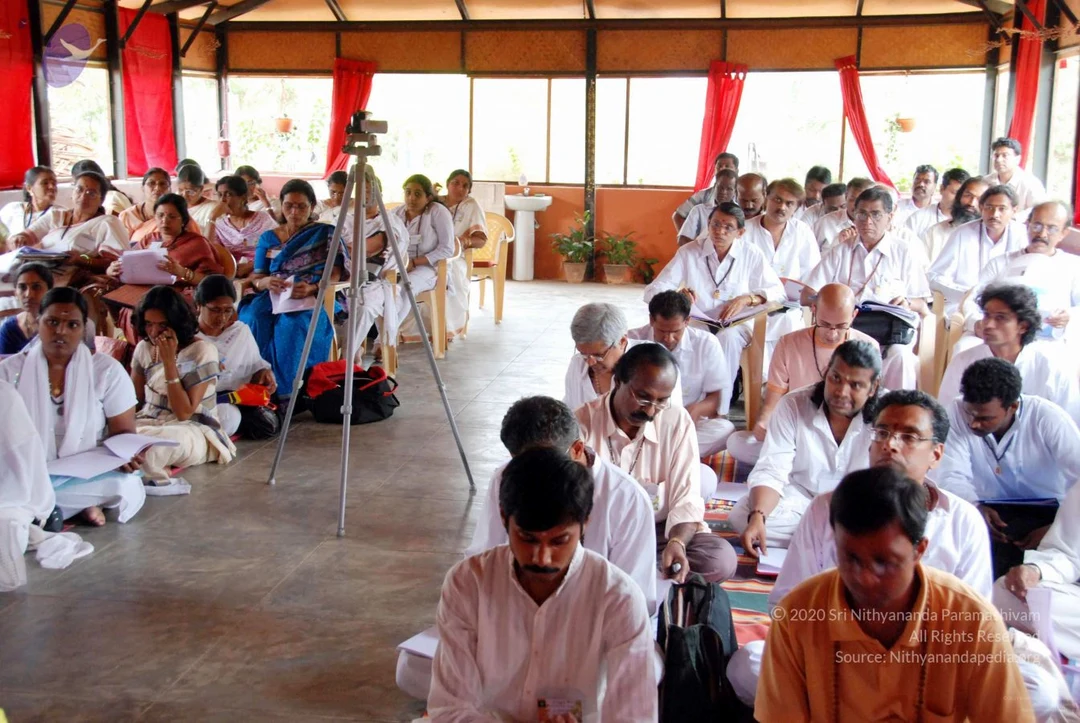
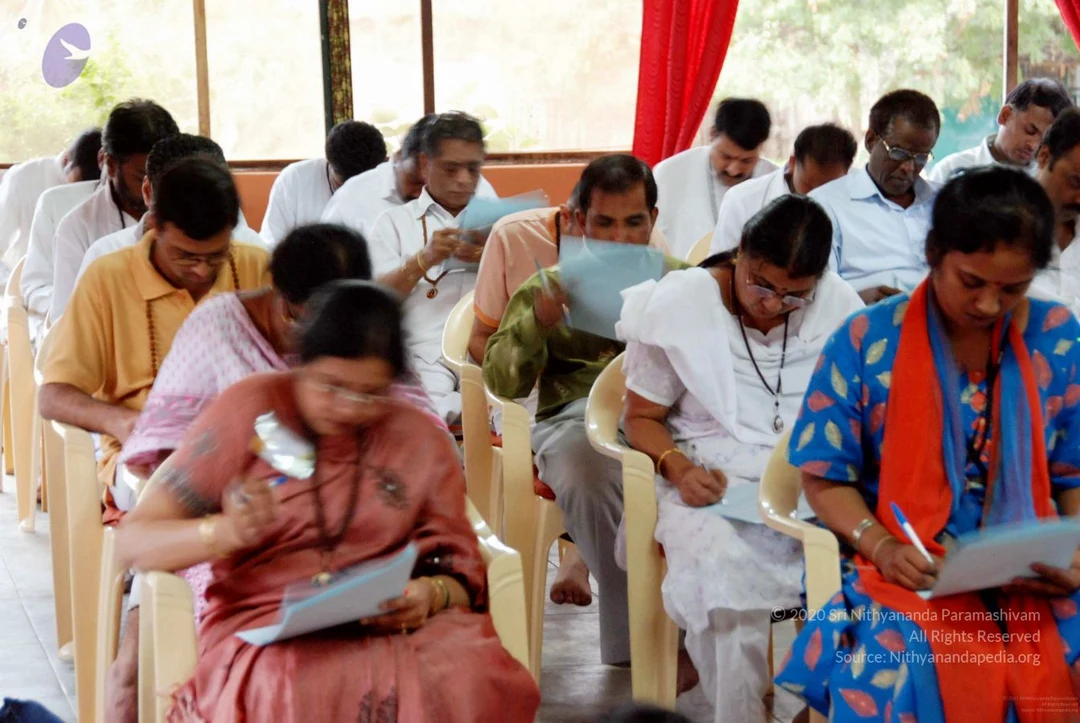
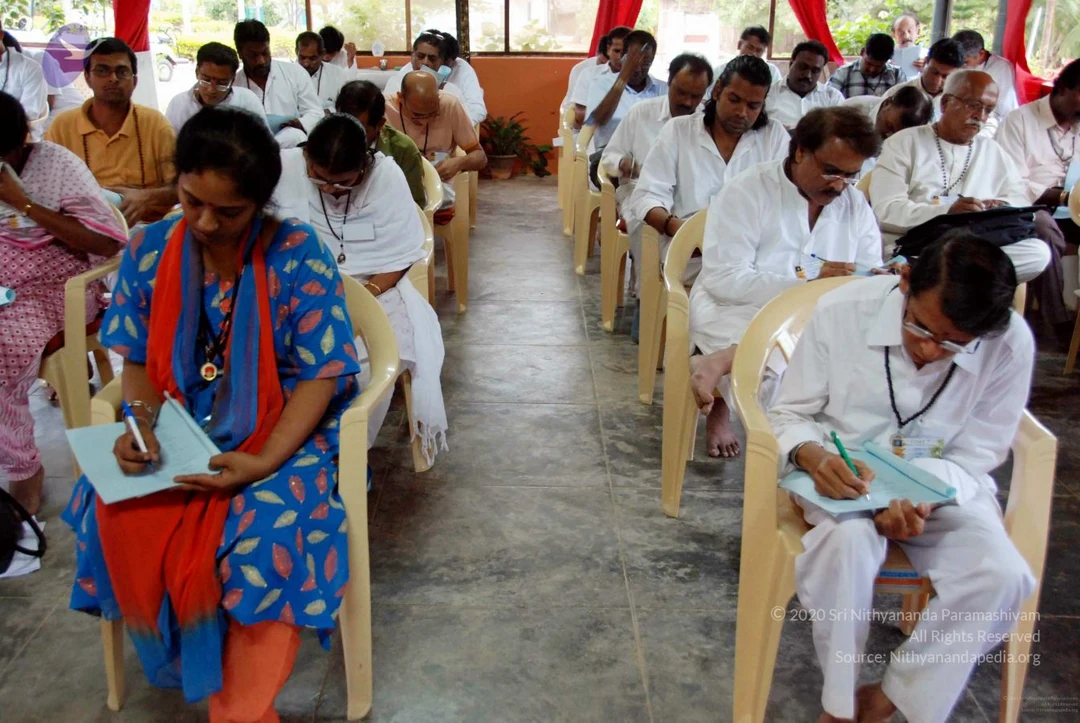
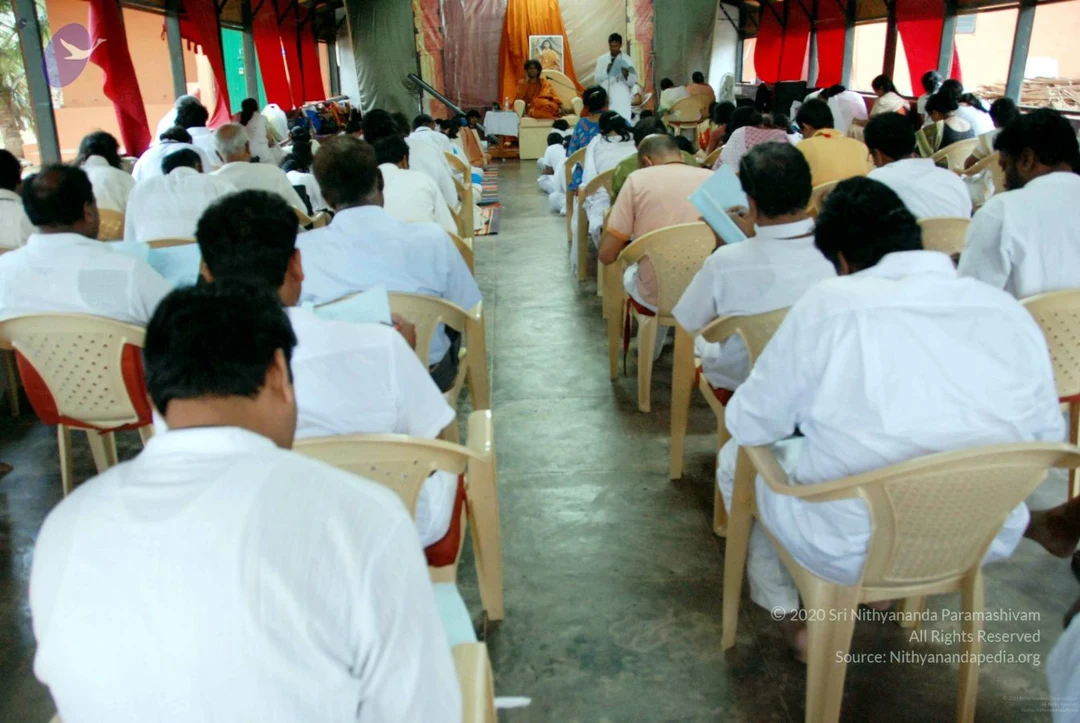
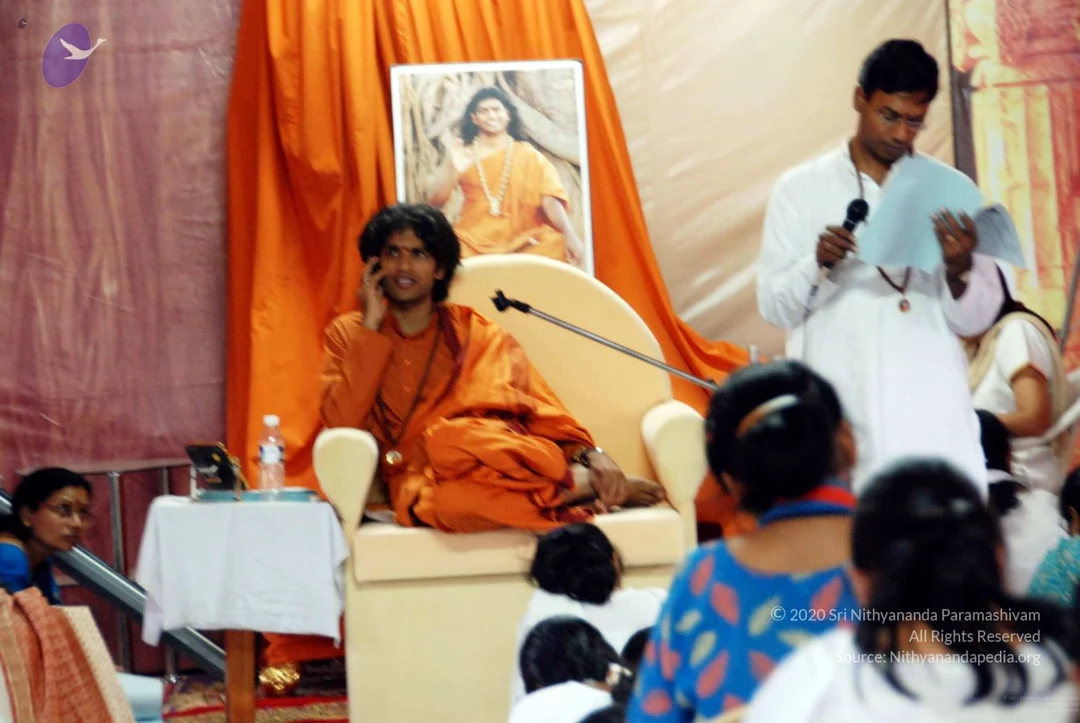
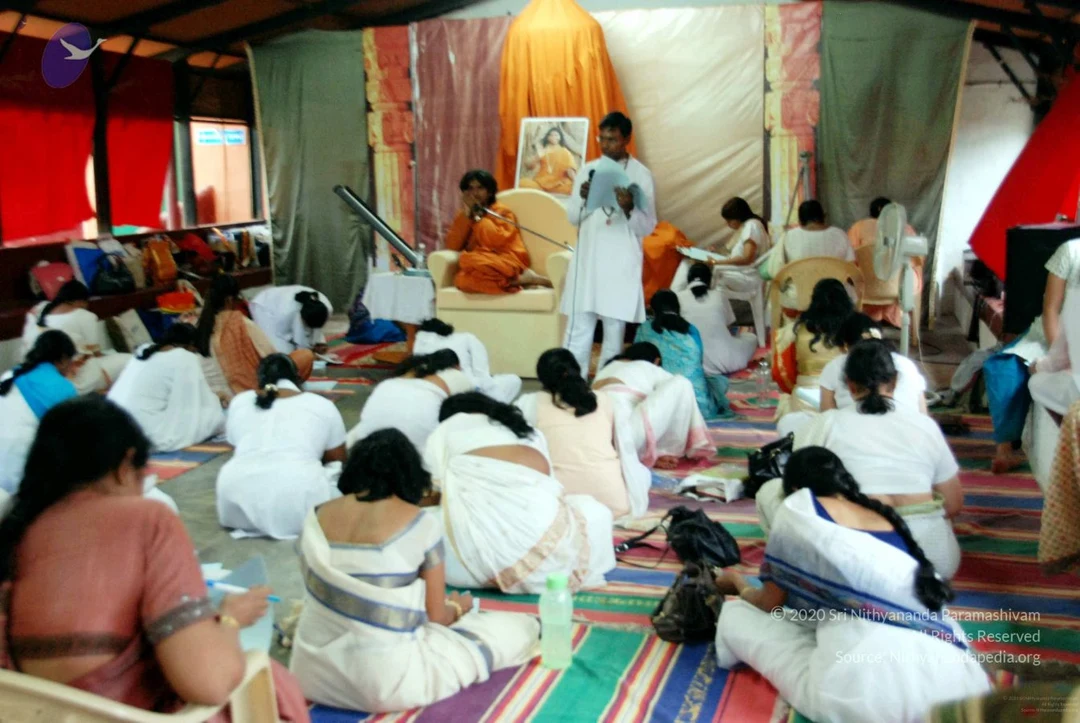
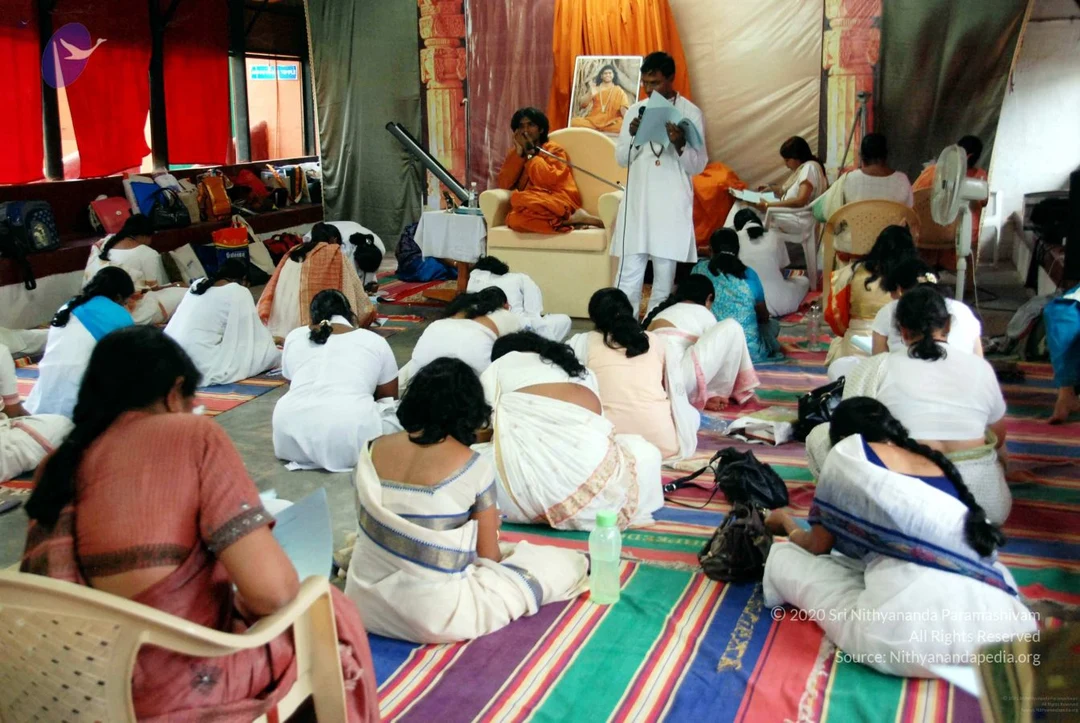
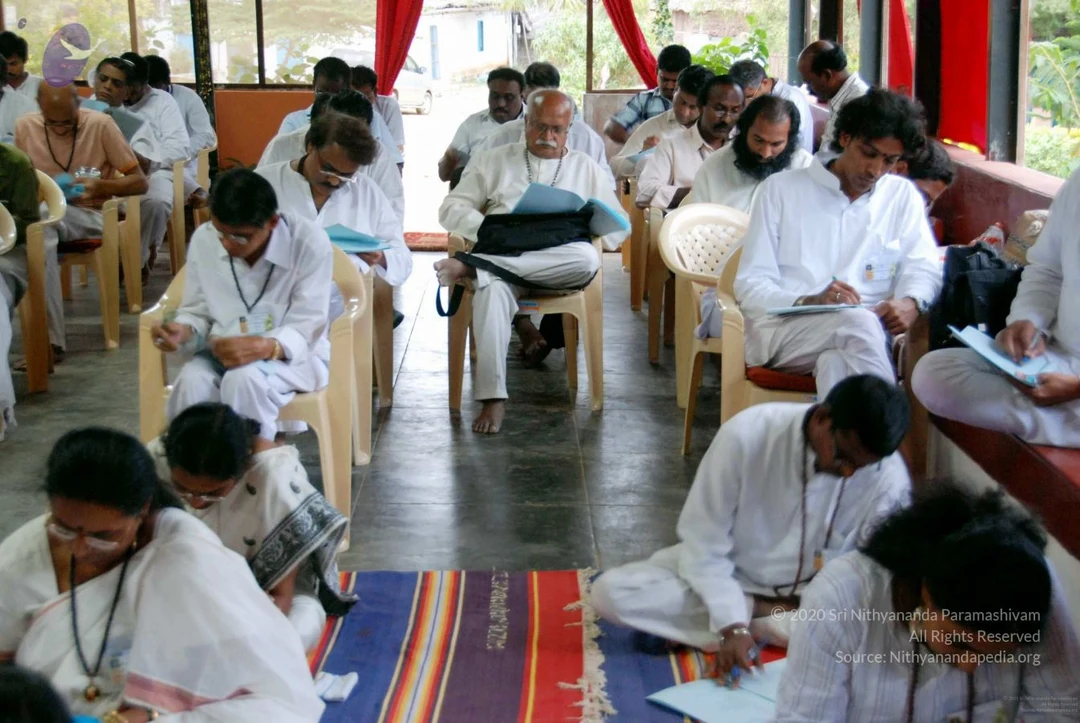
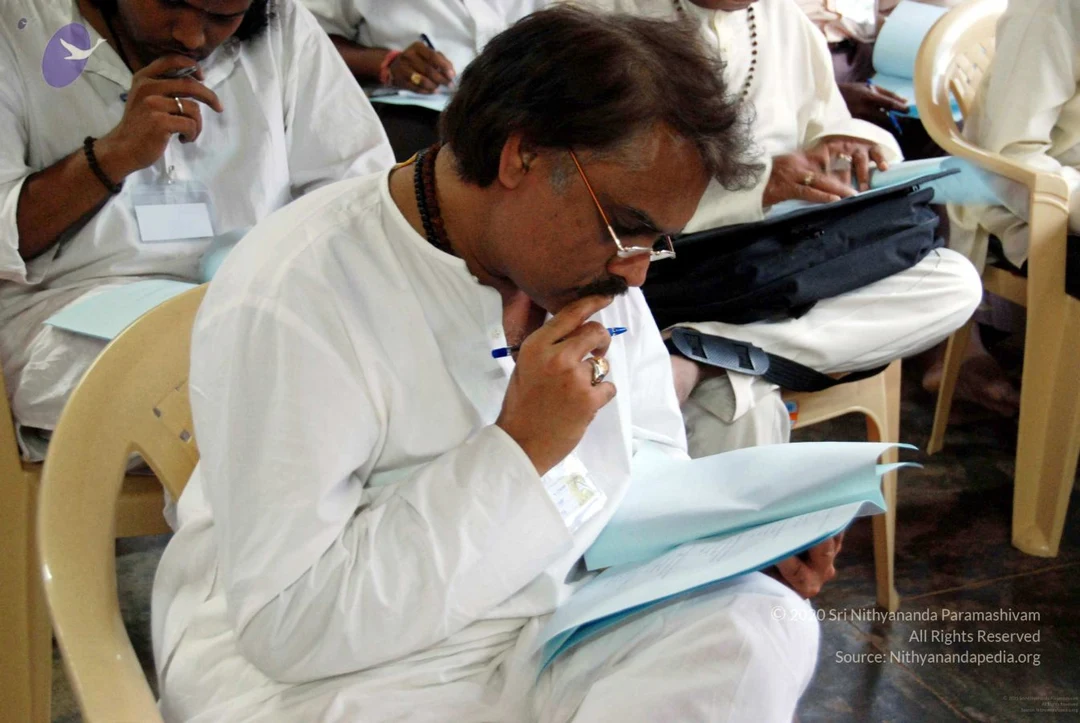
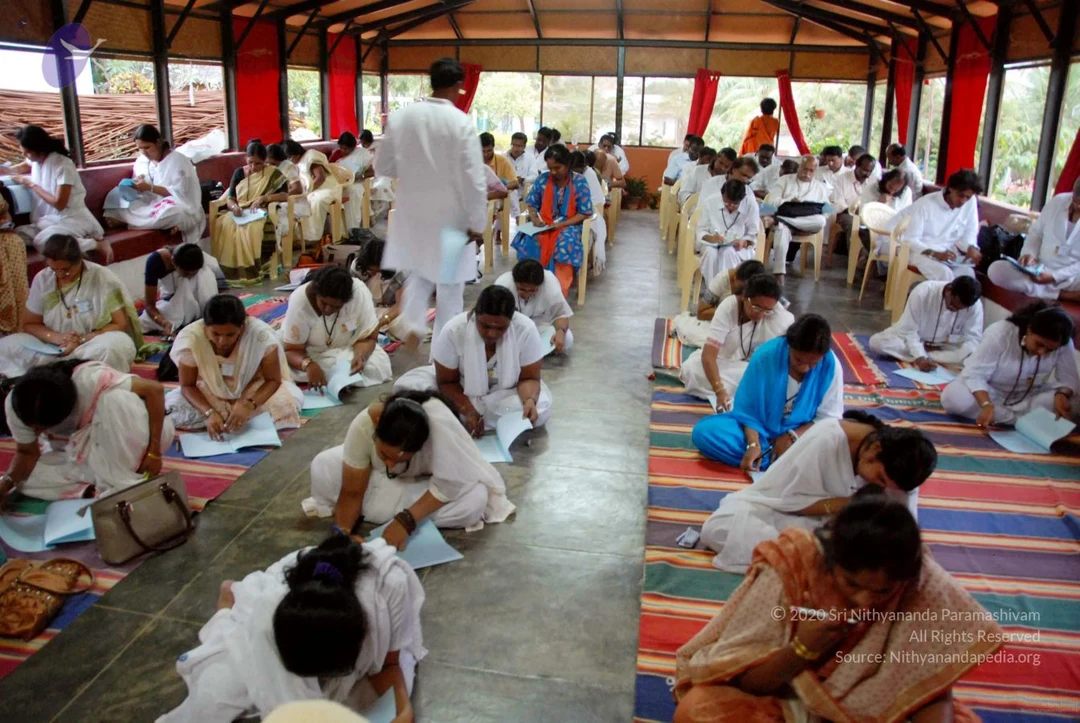
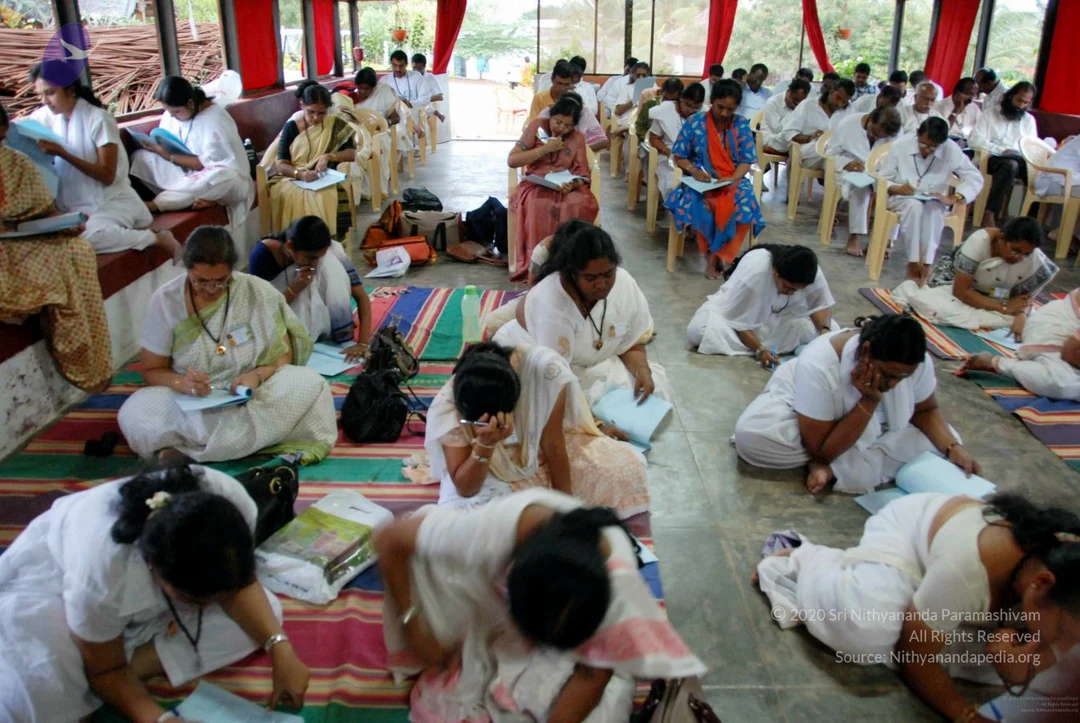
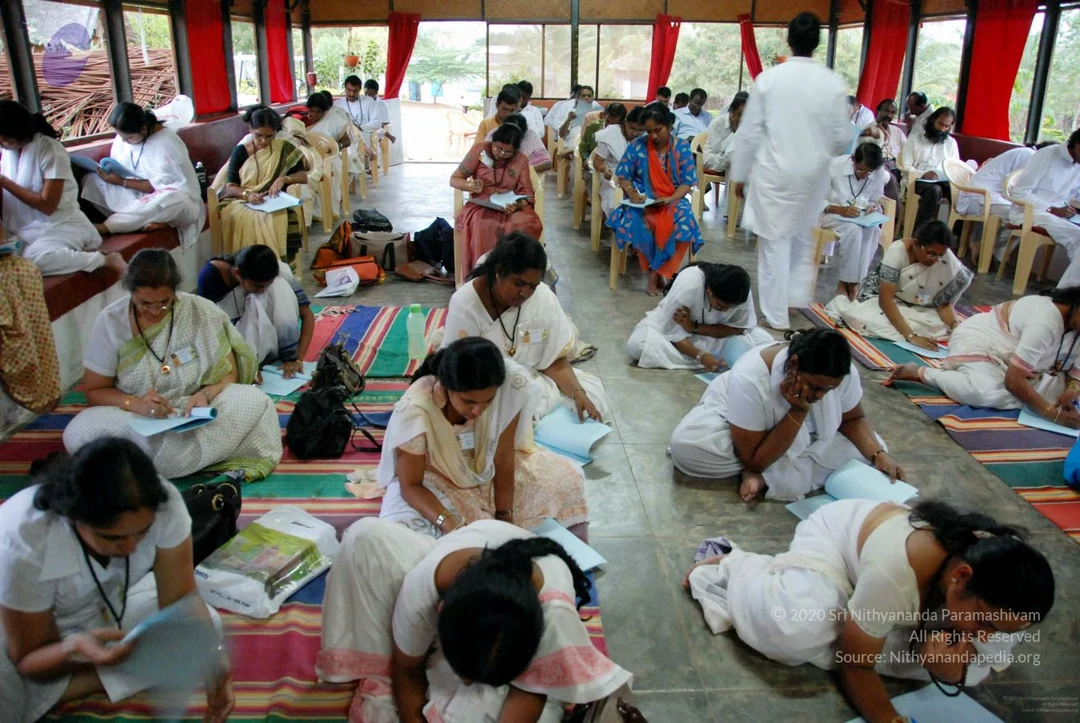
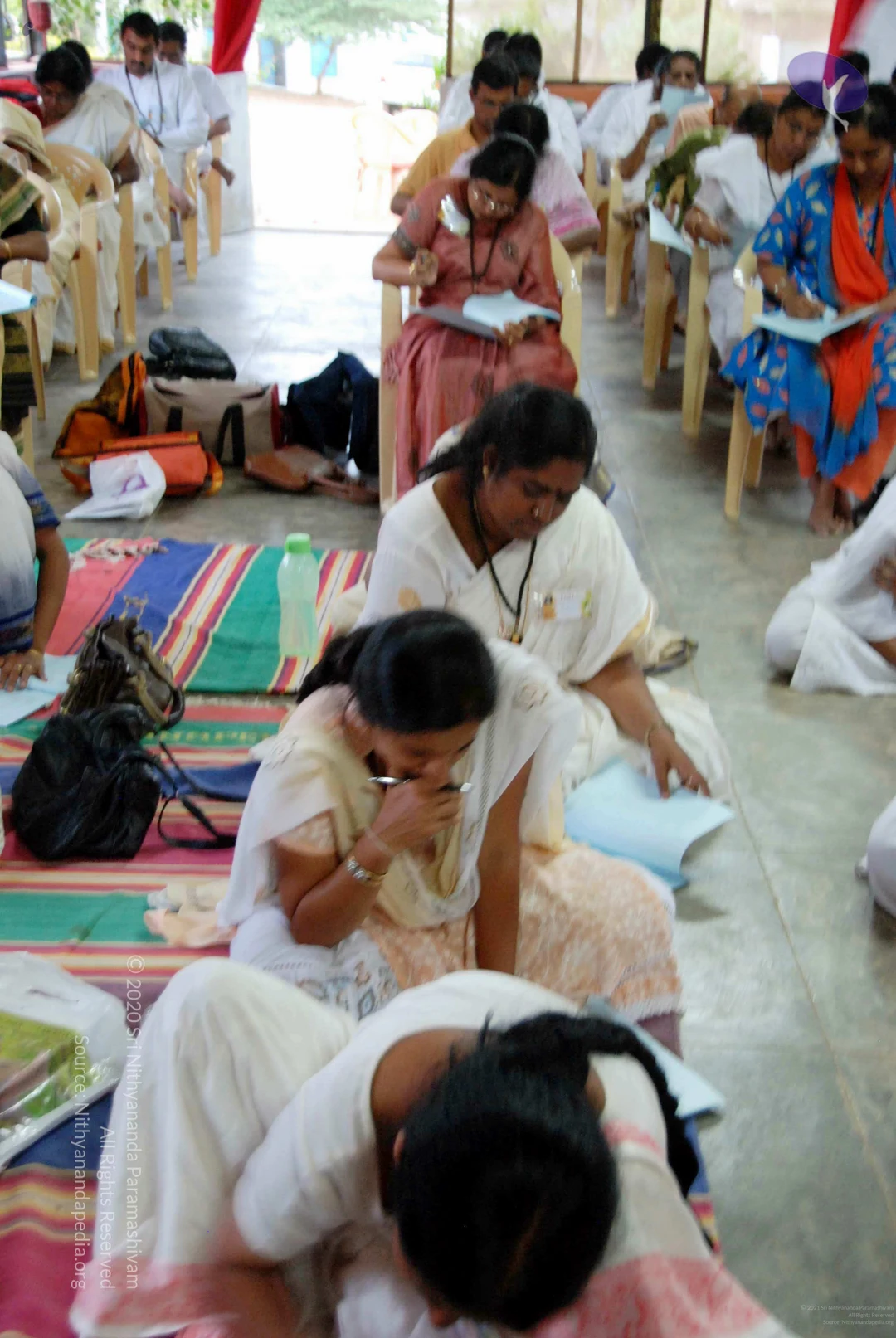
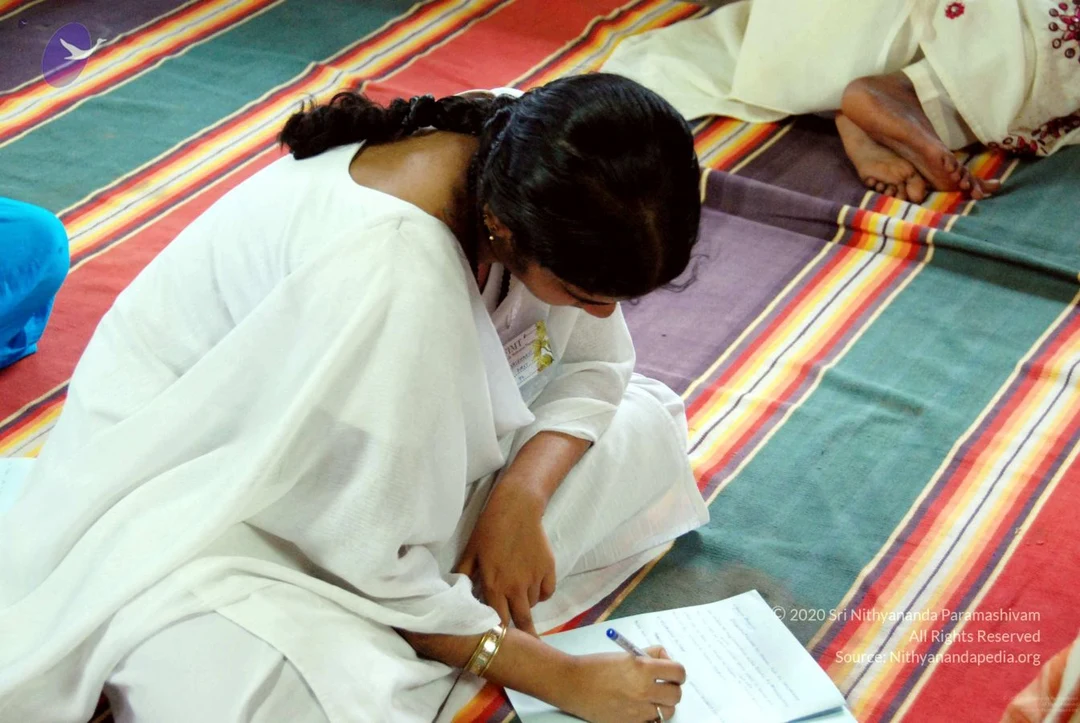
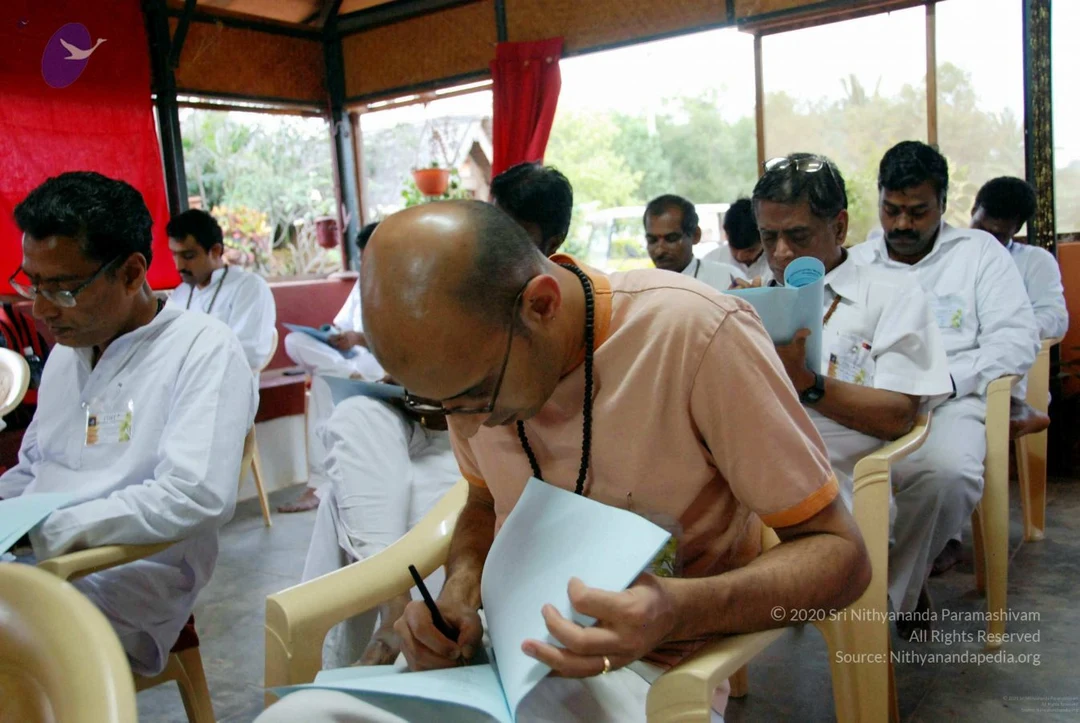
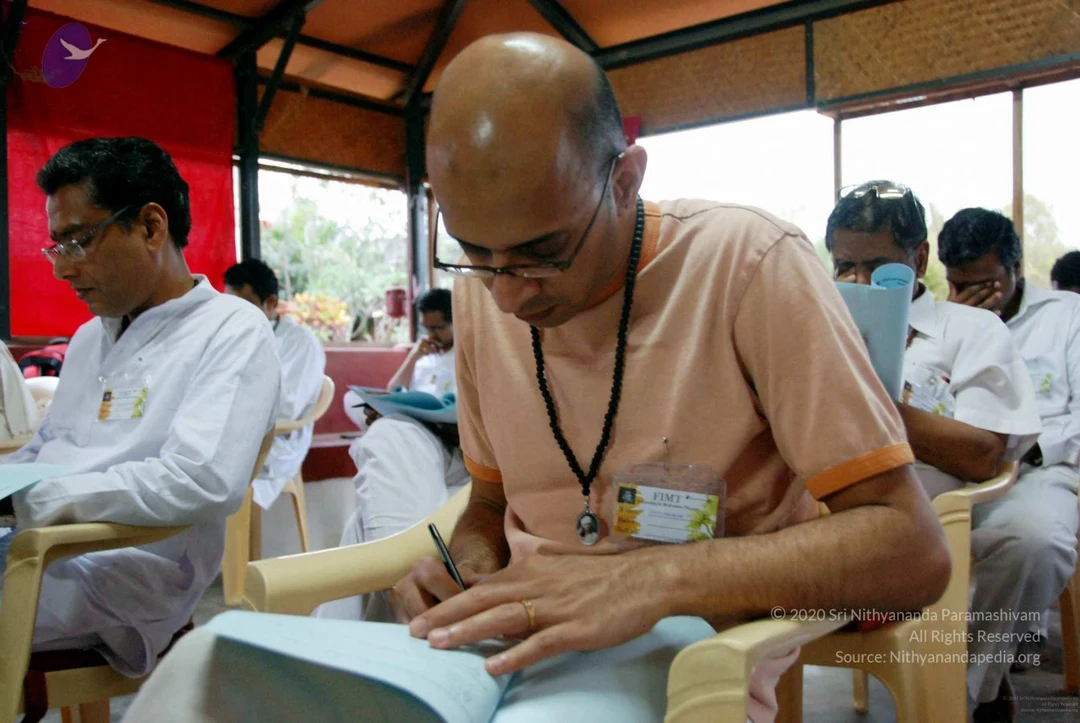
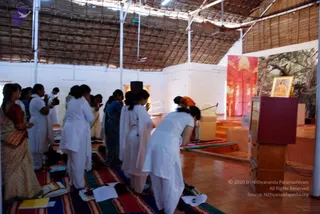
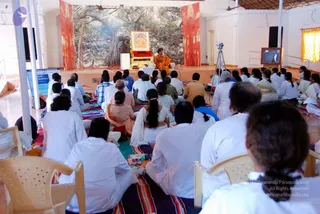
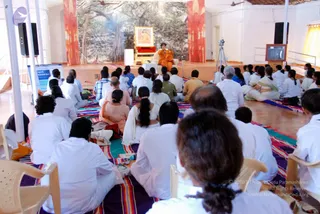
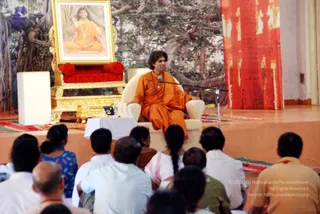
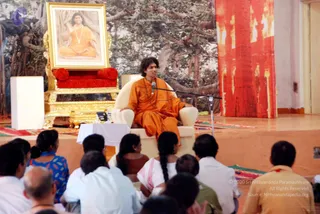
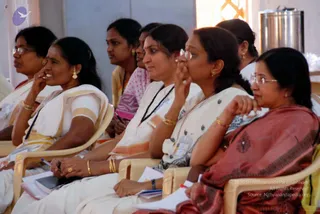
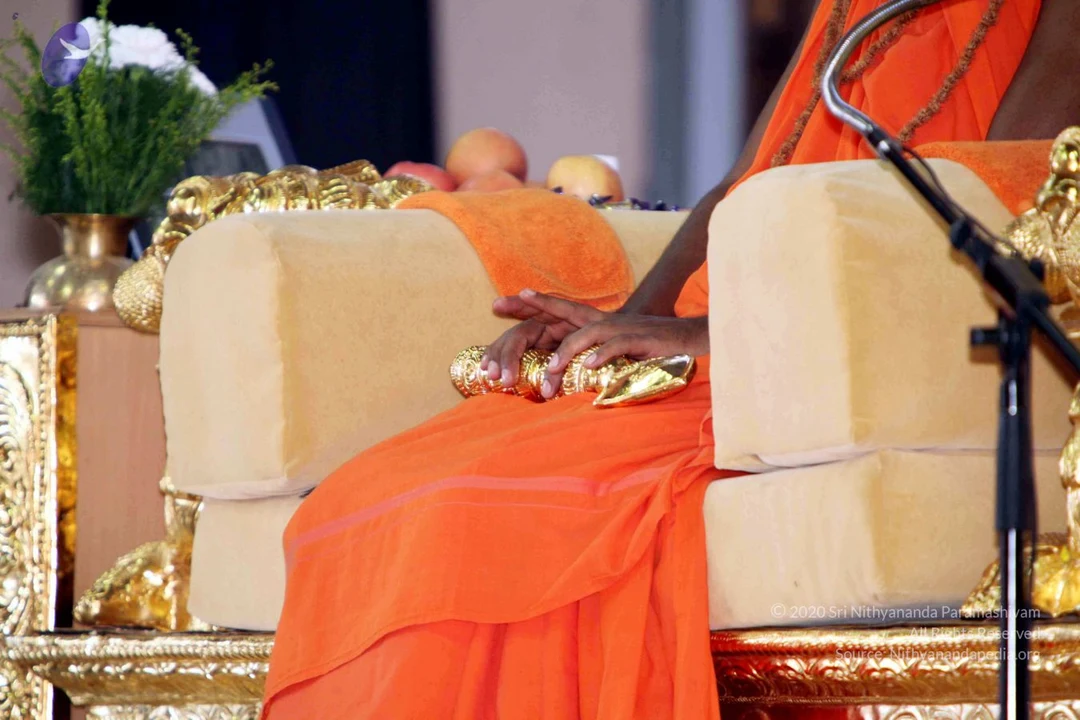
Interior of a thatched-roof hall with white walls and a low dais at right. A group of devotees, mostly women in white salwar kameez and saris, kneel and bow with palms pressed together on striped mats. One woman in a white outfit bends forward toward the empty cream-coloured seat on the dais, while a figure in orange clothing is partly visible near it. A framed photograph of a saffron-robed figure sits on a stand at right beside a red-orange backdrop with a forest tree print. Papers and bags lie on the mats.A photograph of a teaching session in a plain white hall with a large backdrop of a banyan tree. On a raised stage, a figure in orange robes sits on a gold-and-red throne-style seat, gesturing as he speaks. A framed portrait is displayed above the seat. Rows of seated devotees in white clothes face the stage, several in orange or colourful saris, sitting on striped mats and plastic chairs. A video camera on a tripod and a small television screen are at the side, and a blue banner reads partially in view on the left. Probable Swamiji (saffron/orange robes, long hair, seated centrally on the raised throne).Photograph of a seated group session in a hall with a tree-and-forest backdrop on the stage. A central figure in orange robes sits on a raised stage facing the audience, gesturing with one hand; a framed portrait of a deity or saint sits on a gold-trimmed stand above him, and a small tripod camera stands near the stage. Most of the audience wear white clothes and sit on colourful striped mats on the floor, some in chairs at the edges, with many with long dark hair pulled back. A television screen stands at the right side of the room. Several women wear sarees and salwar-style outfits in pale colours.A seated man in orange robes with long swept-back dark hair and rudraksha malas sits in a white armchair on a raised stage, speaking into a microphone. Behind him hangs a large framed portrait of a seated figure in orange with a rudraksha necklace, raised hand in blessing, set on a gilded throne with red cushions. A banyan-tree backdrop and red-and-orange pillar drape frame the stage. In the foreground, about fifteen seated devotees in white, pink, blue and green clothing face the stage, some with braided hair. Probable Swamiji cues: long swept-back hair, orange robes and rudraksha malas; the portrait labelled with a name is not used to identify the seated speaker.A seated man in saffron-orange robes with a rudraksha mala speaks into a microphone on a raised stage, seated in a cream upholstered armchair before a red-and-gold ornate throne with red cushions. Behind him hangs a framed painted portrait of a saffron-robed figure with long hair and a beaded necklace, set against a large banyan tree backdrop, with a red patterned hanging on the right. Several devotees sit cross-legged on the floor in the foreground, including people in white, blue and brown clothing, viewed from behind. The scene appears to be a discourse or satsang. The speaker shows a person cues: long swept hair, saffron robes and a rudraksha mala.A photograph of a row of women seated in cream plastic chairs at an indoor event, watching attentively toward the left. They wear white and cream saris and kurtas with gold and tan borders, several with bangles, earrings, and rudraksha or beaded necklaces; the woman at right wears a rust-red sari and glasses. Some hold pens and notebooks on their laps. A stainless steel container sits at upper right.
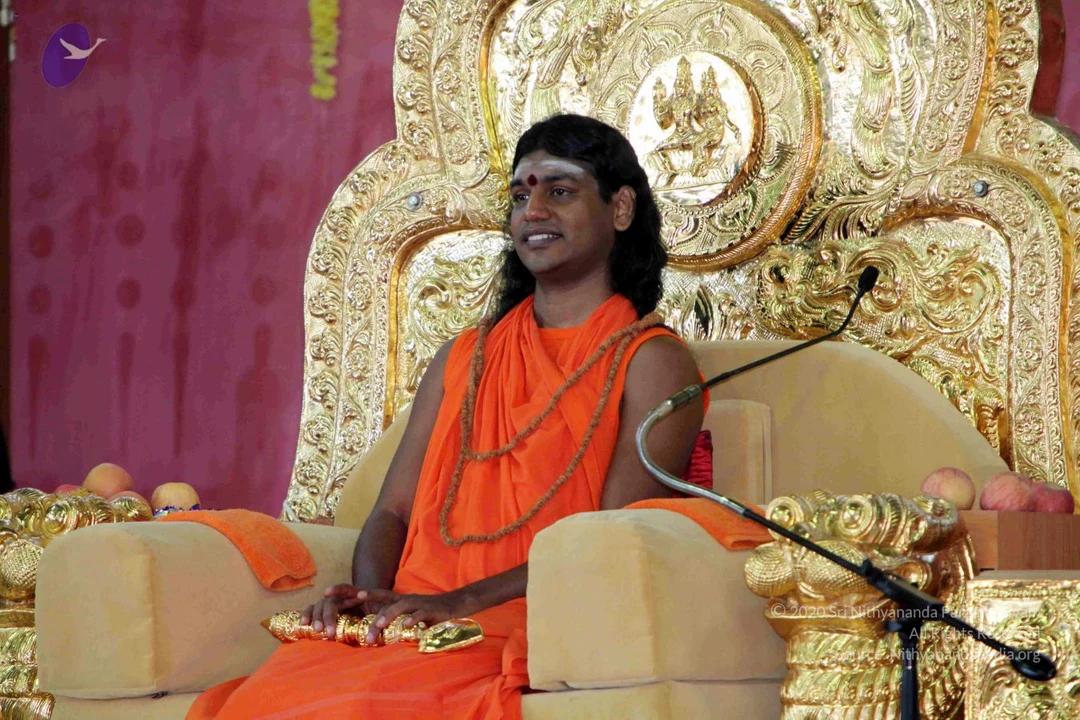
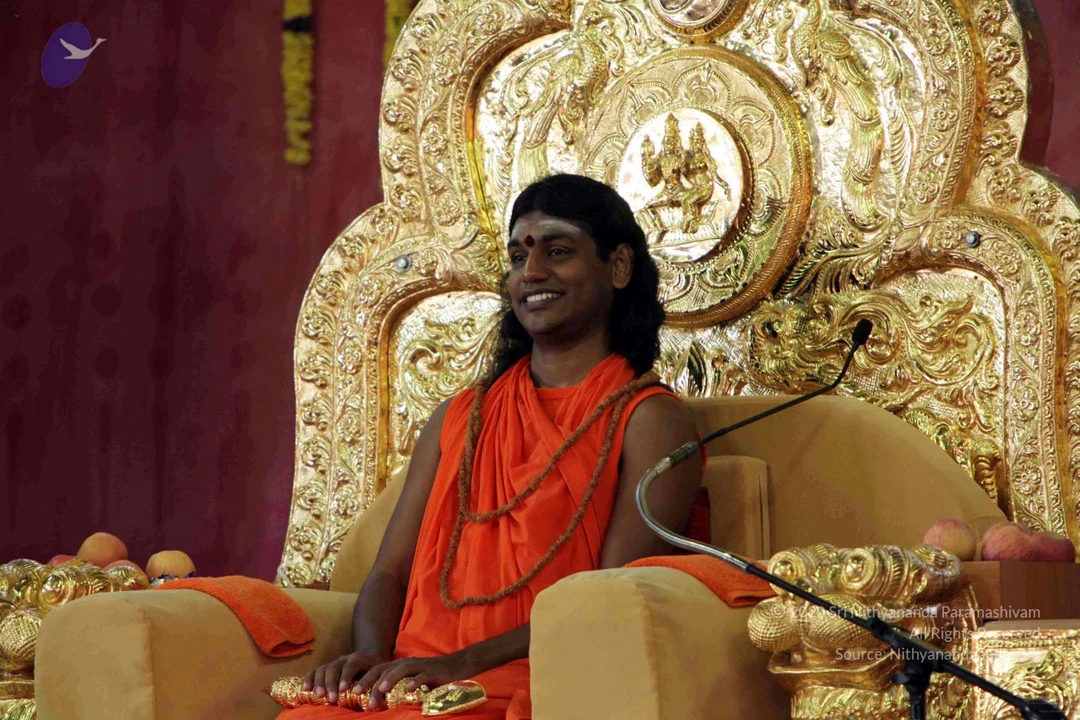
Nithyanandeshwara Paramashiva Devalayam

4 photosSource gallery
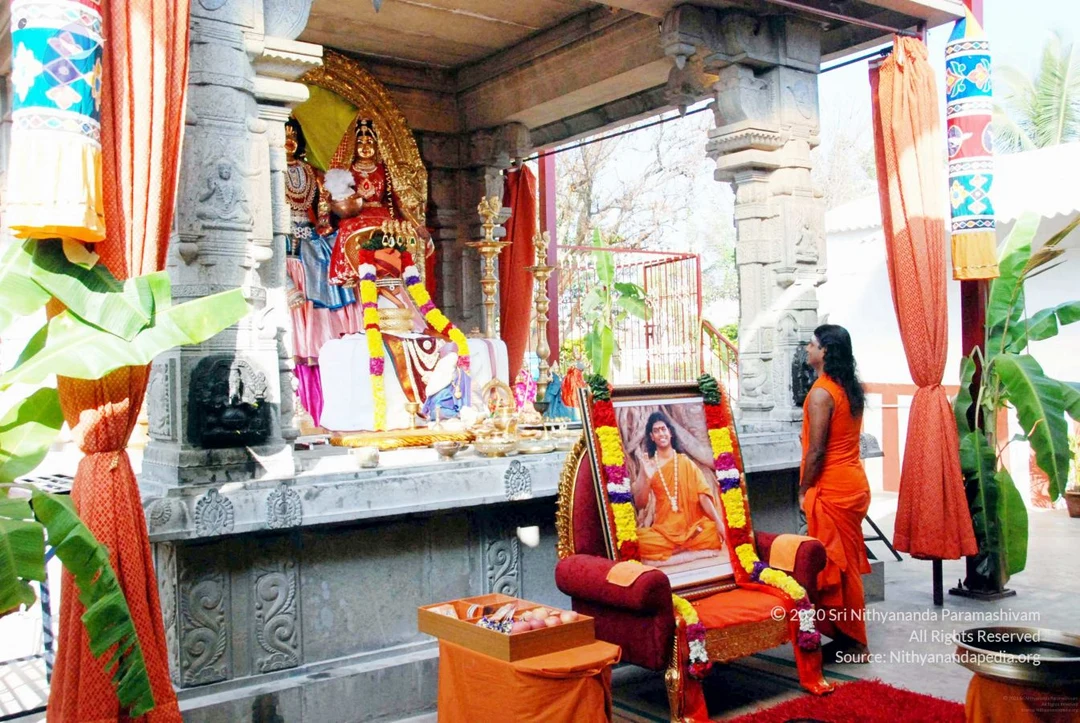
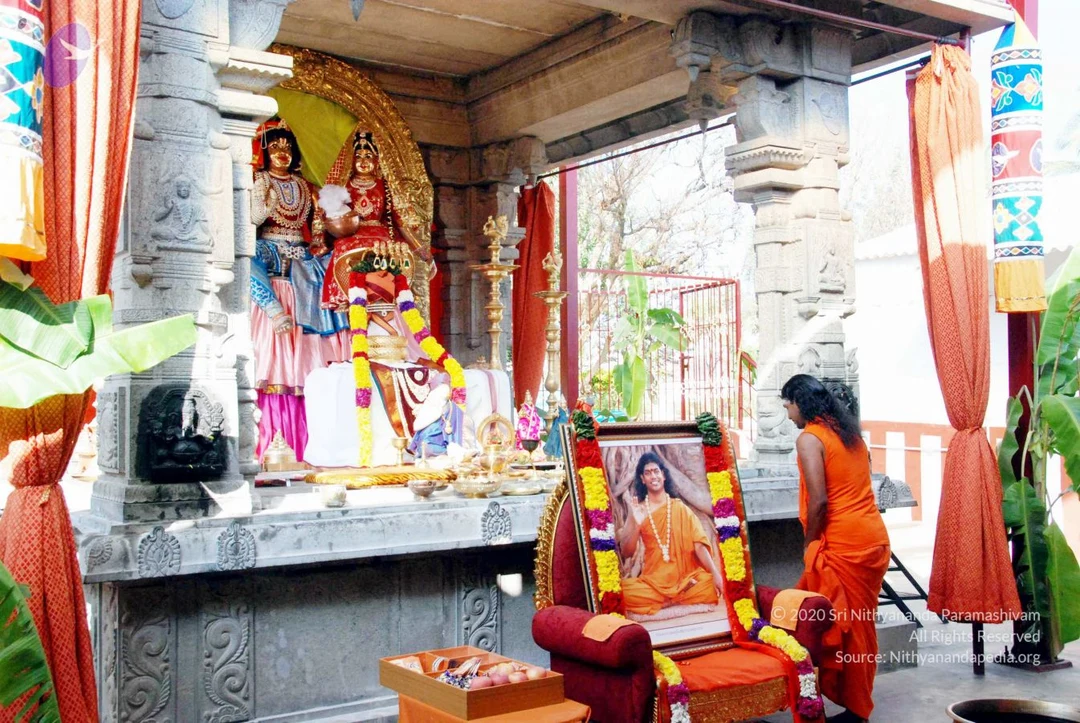
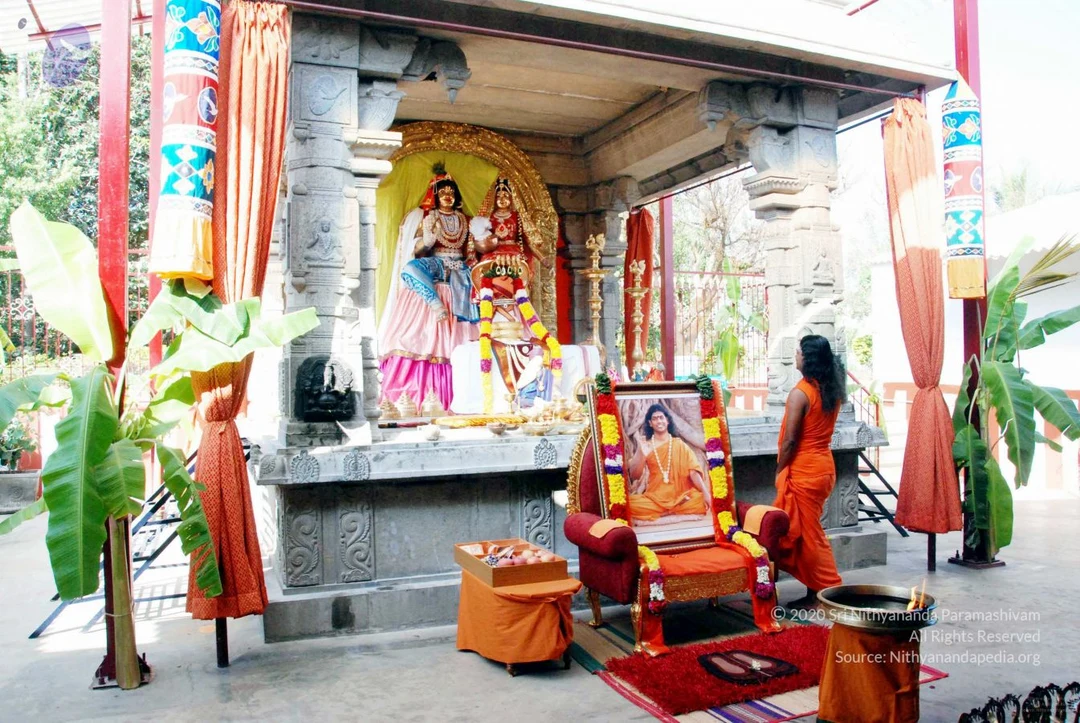
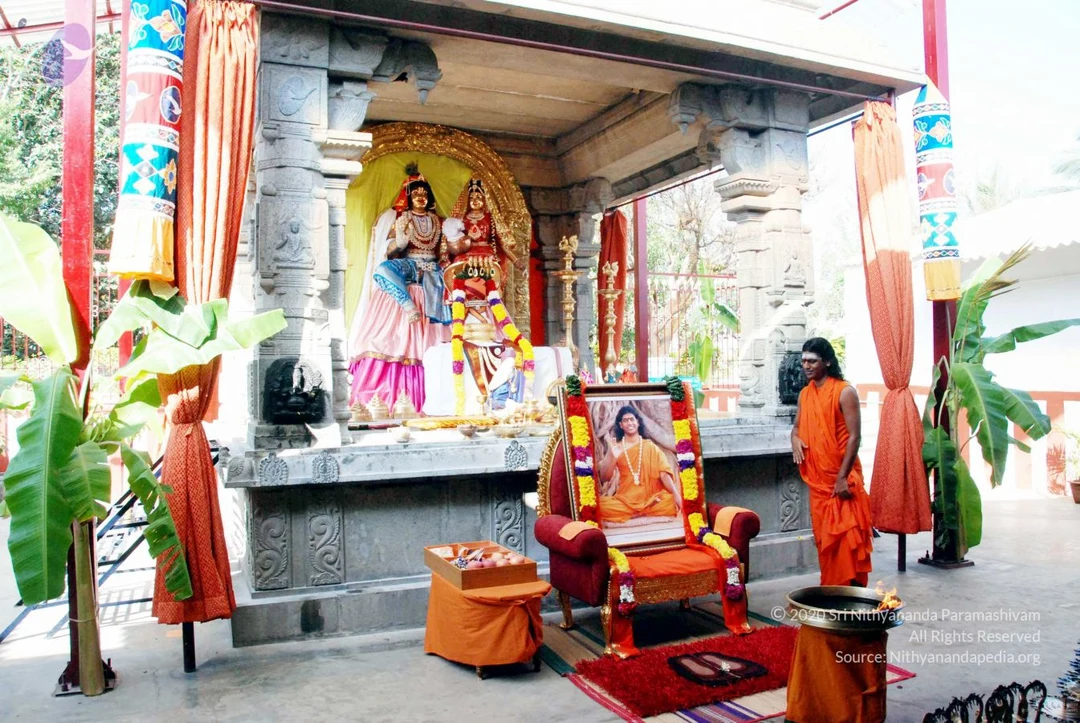
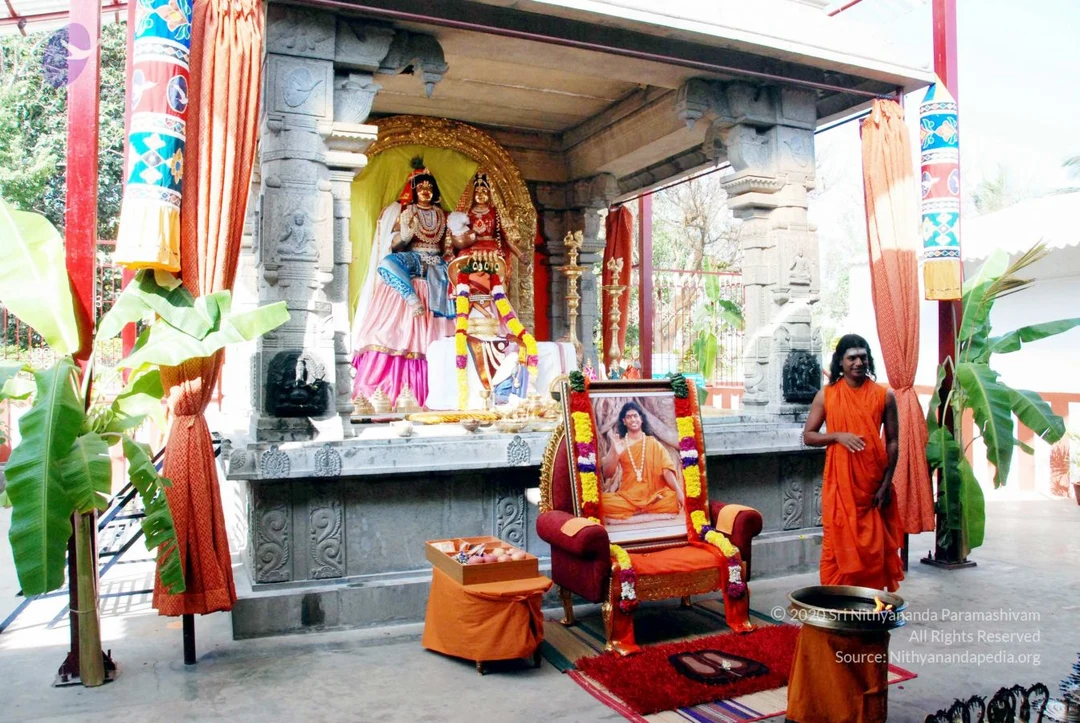
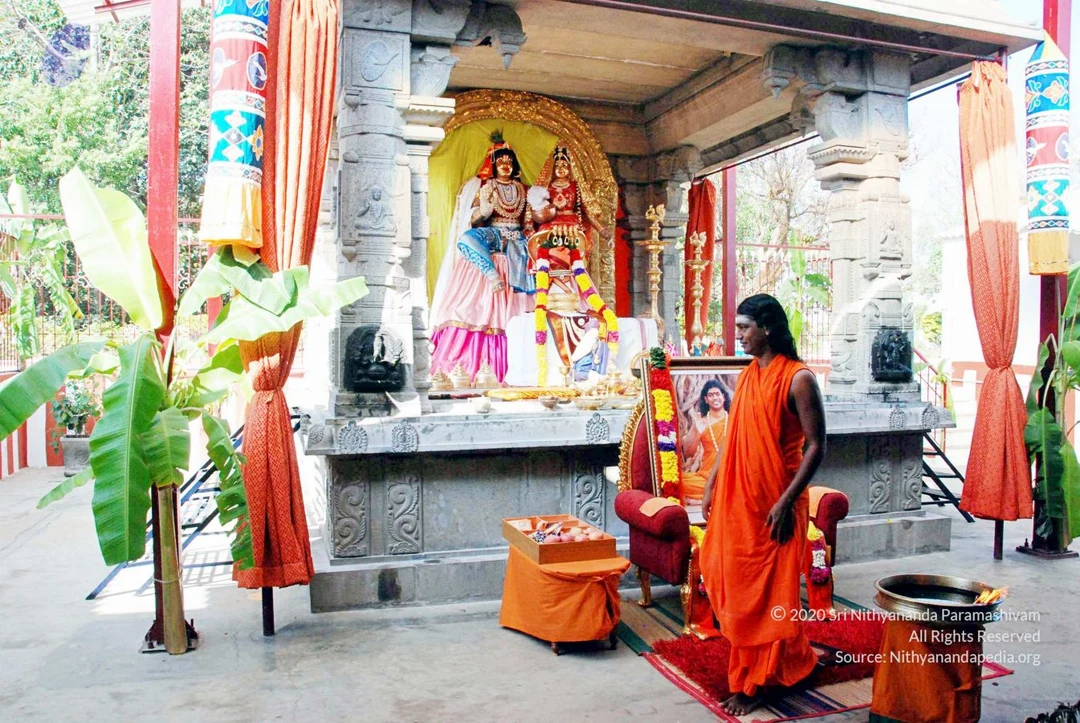
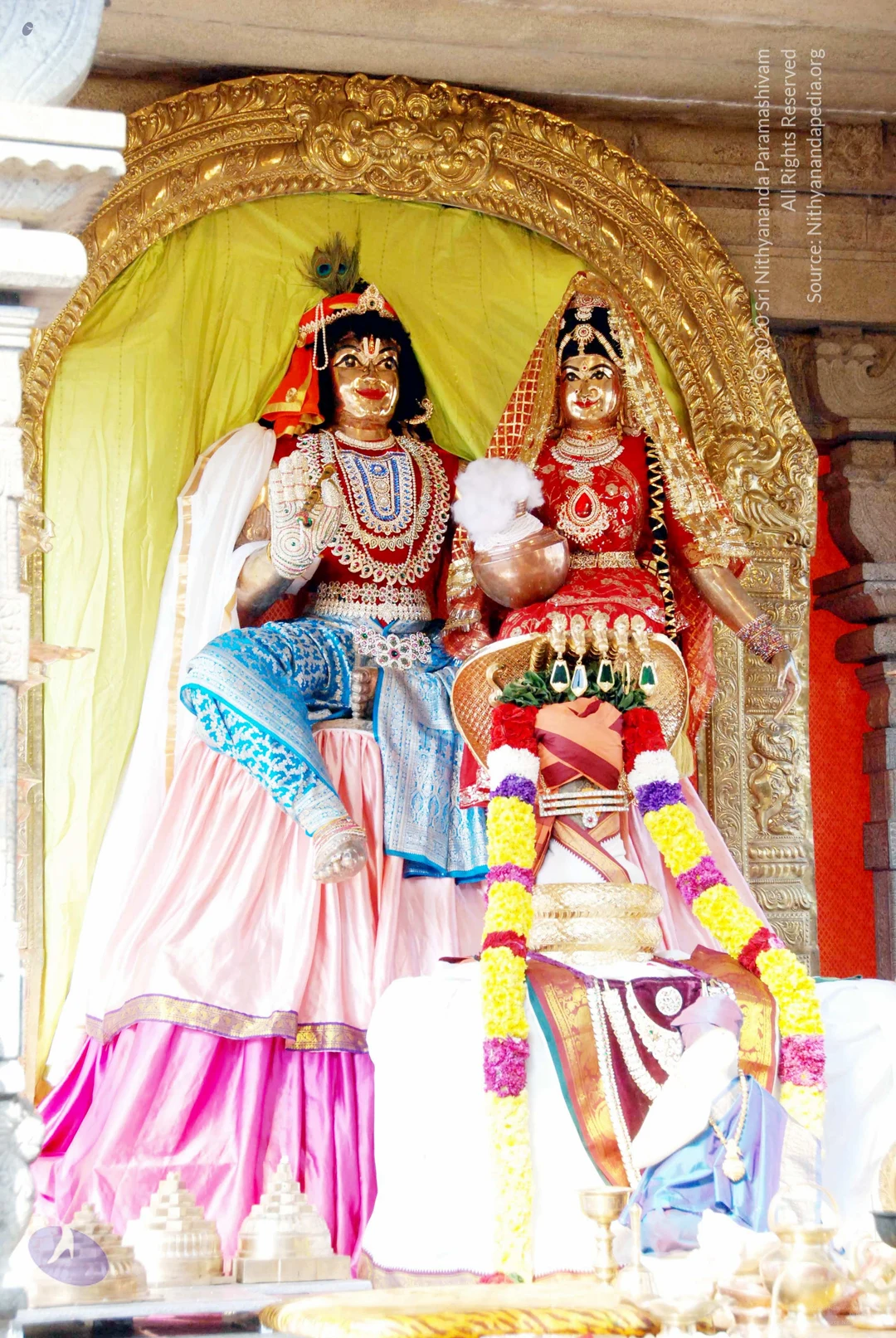
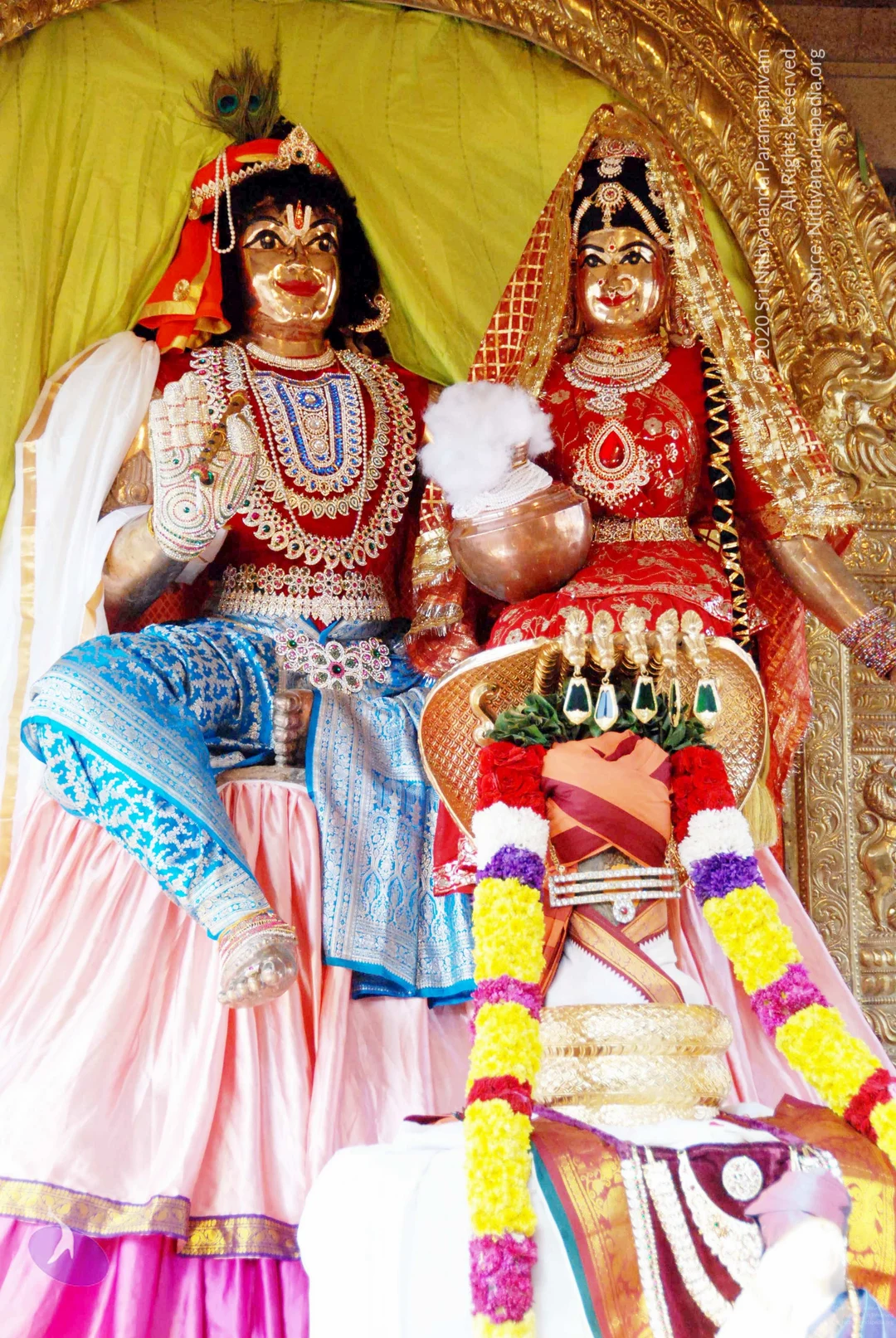
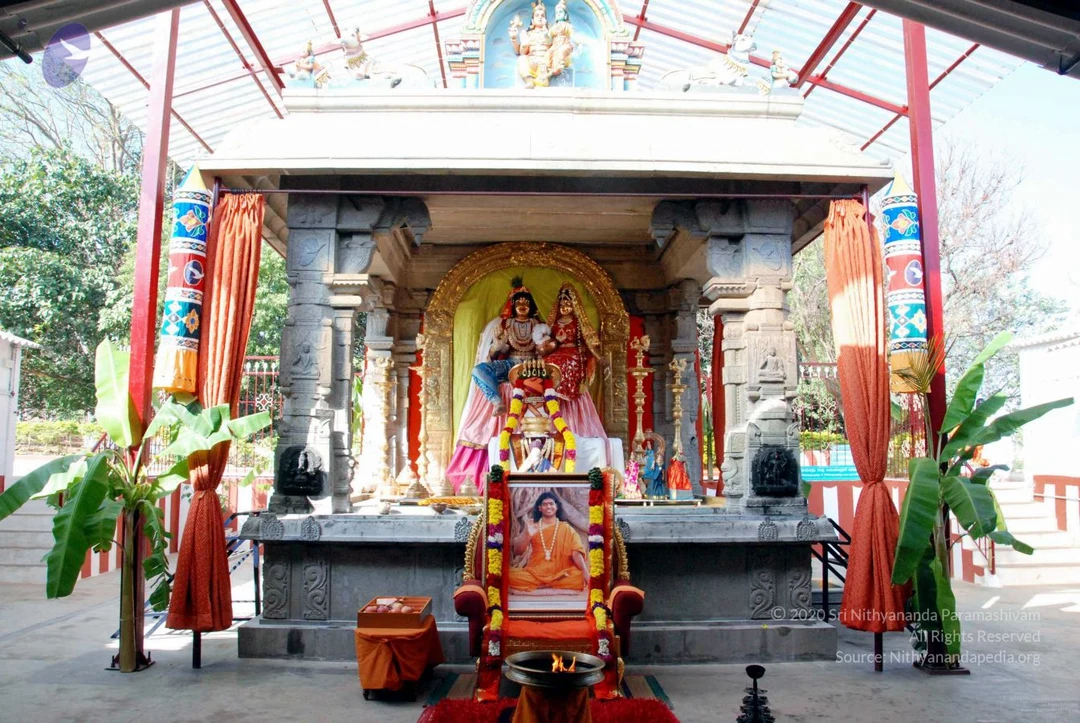
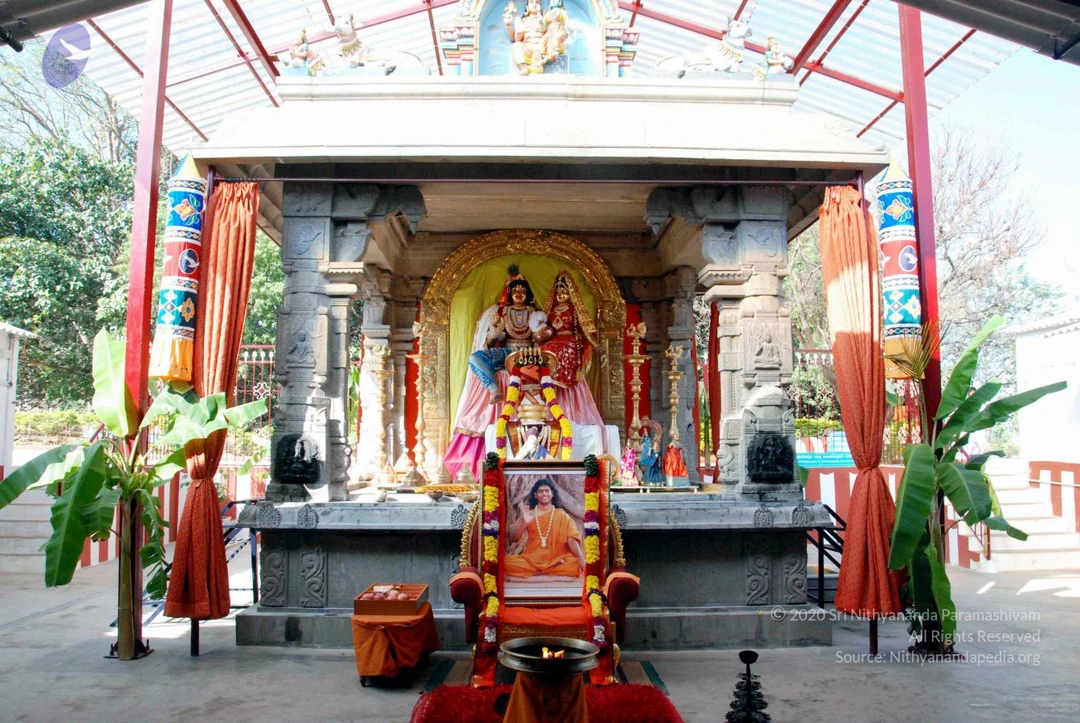
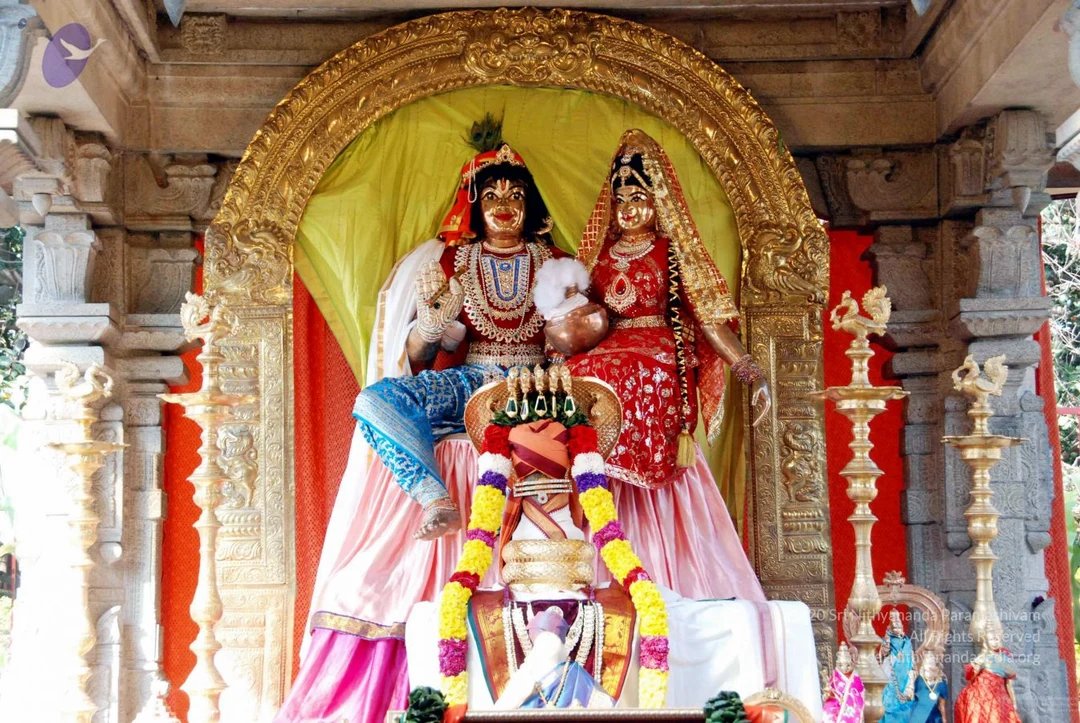
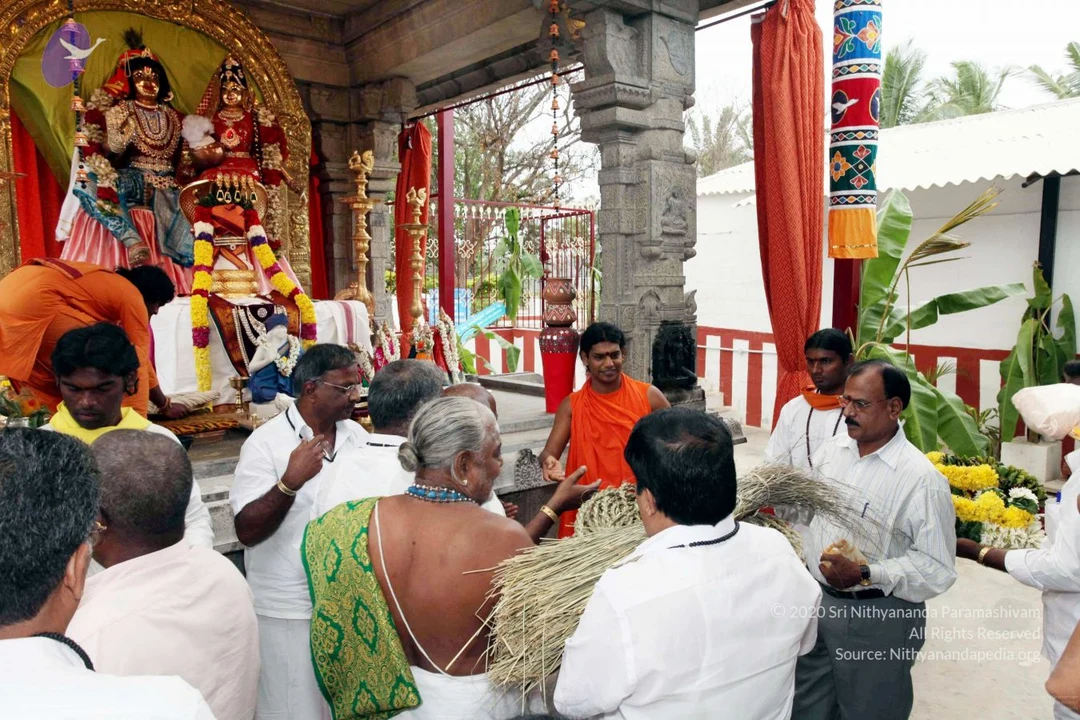
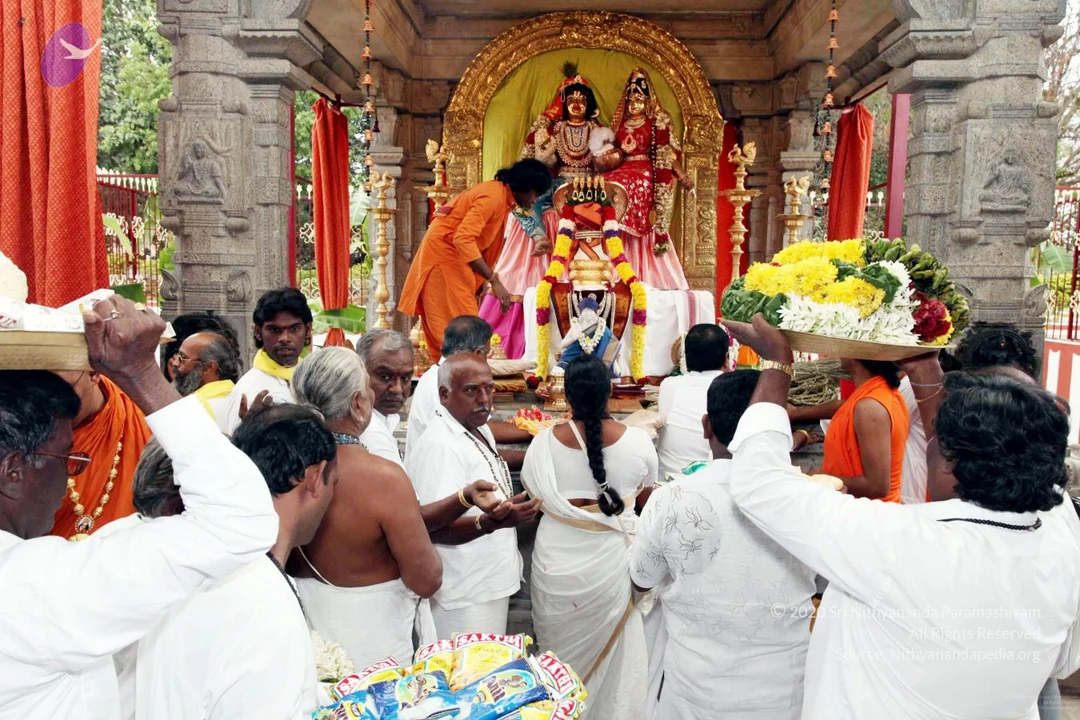
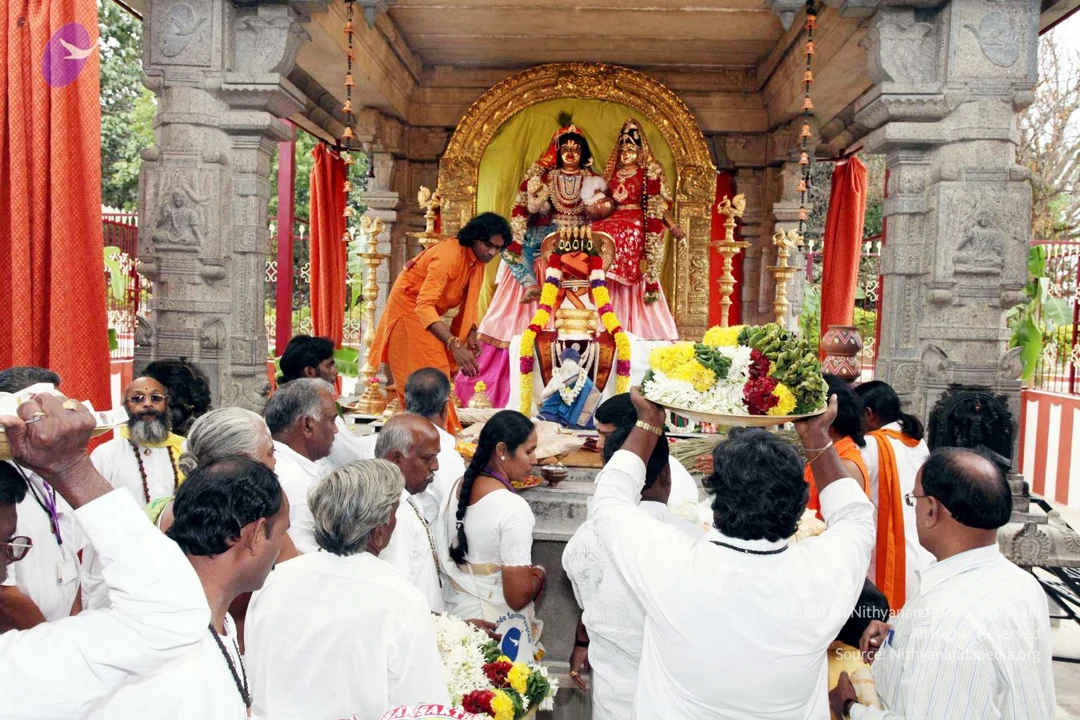
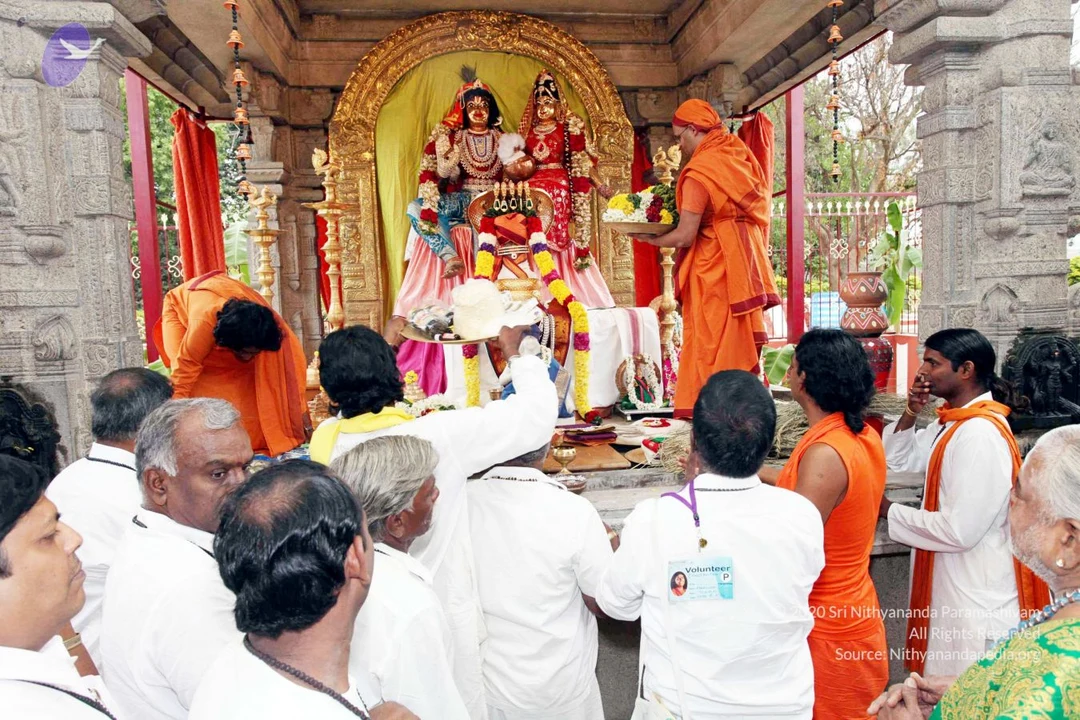
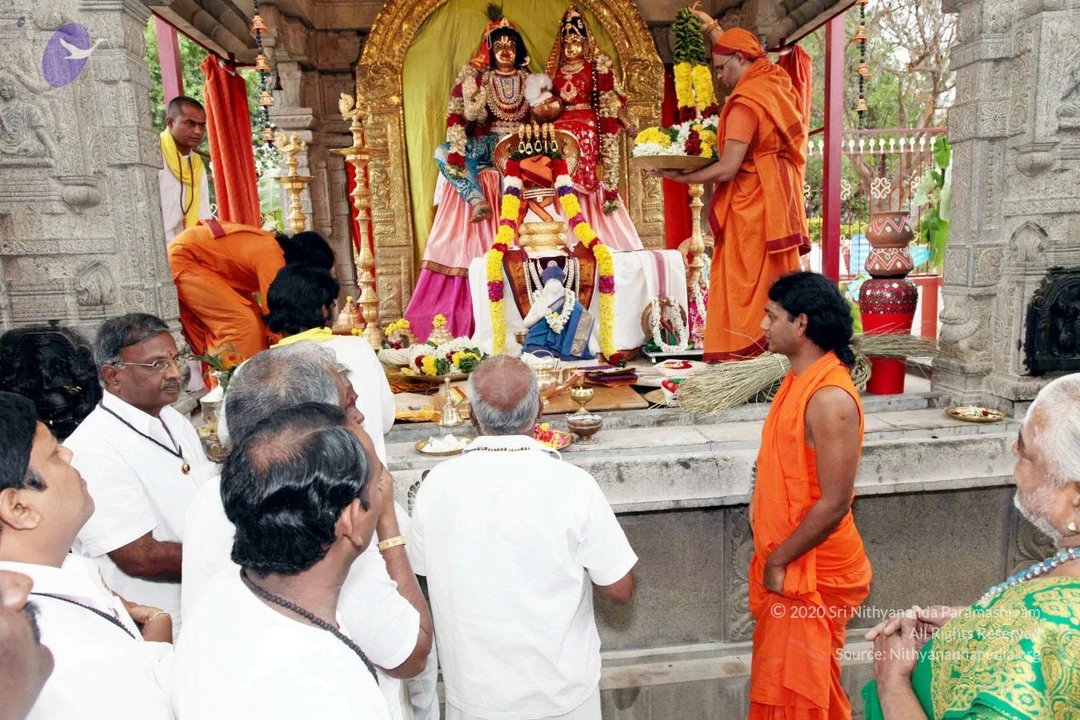
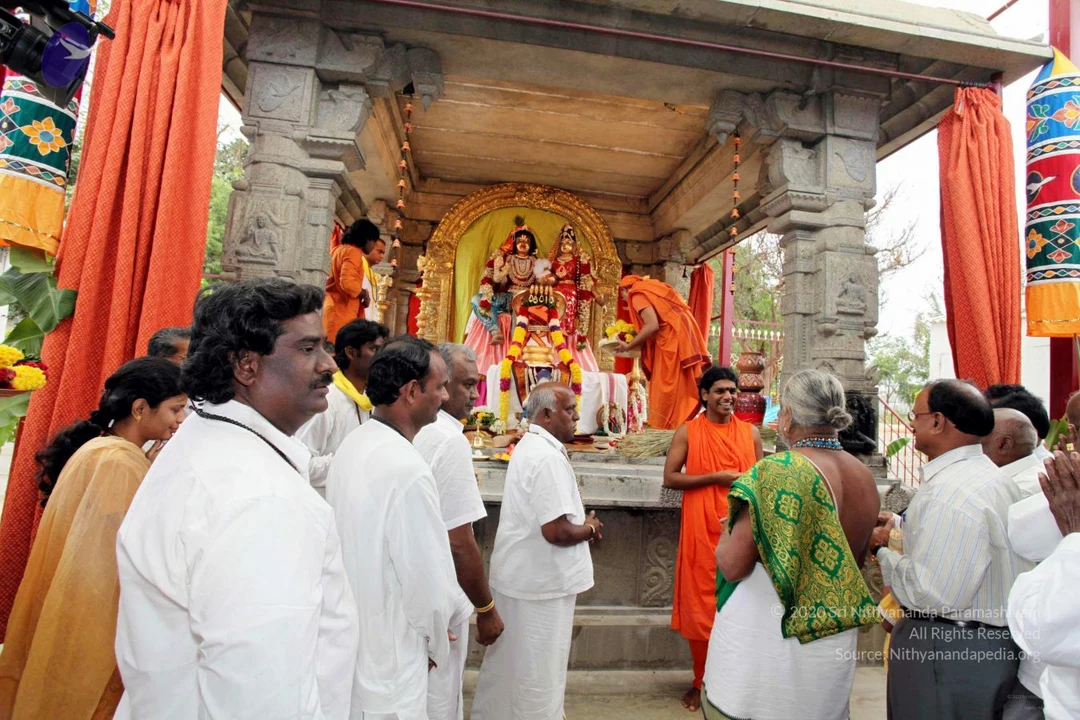
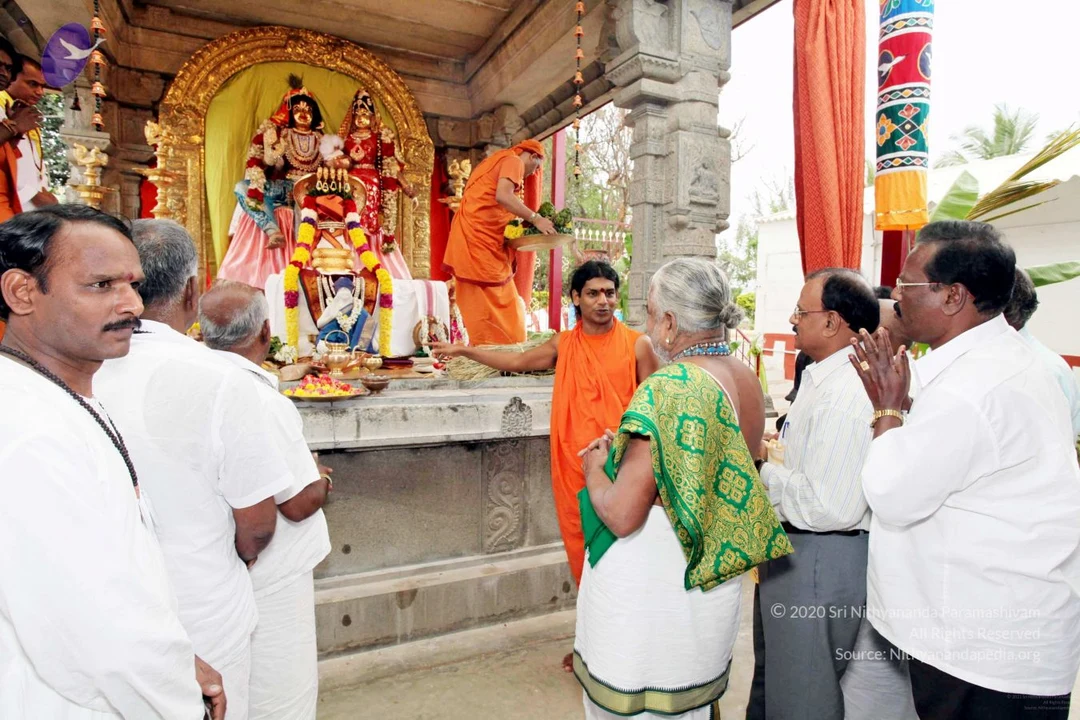
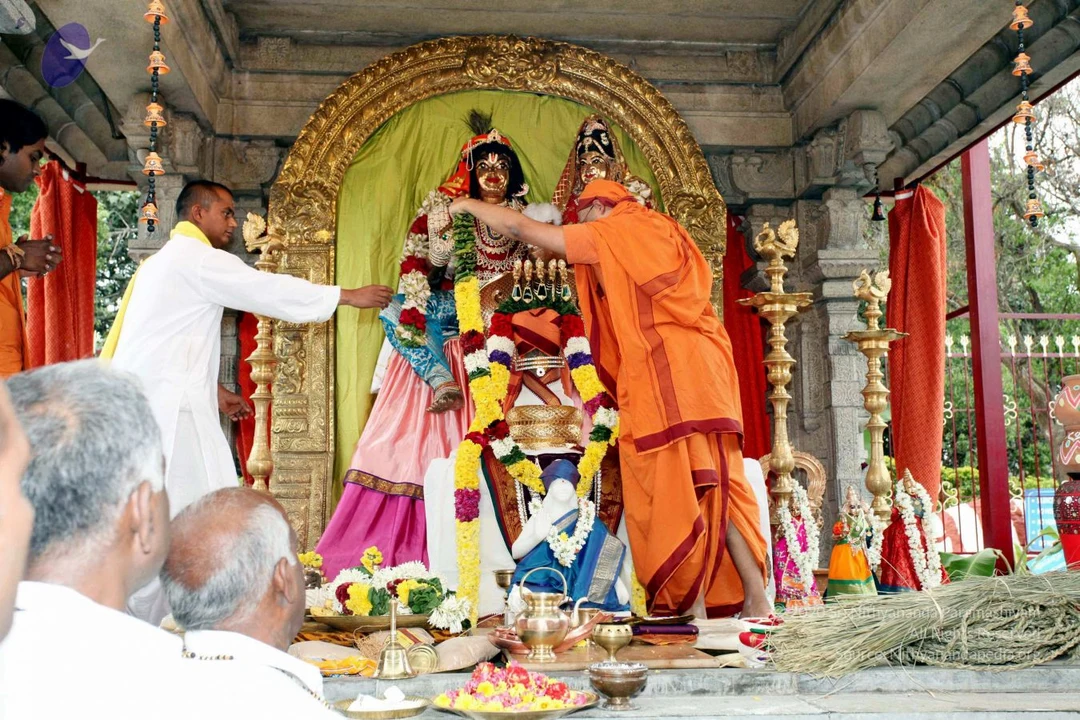
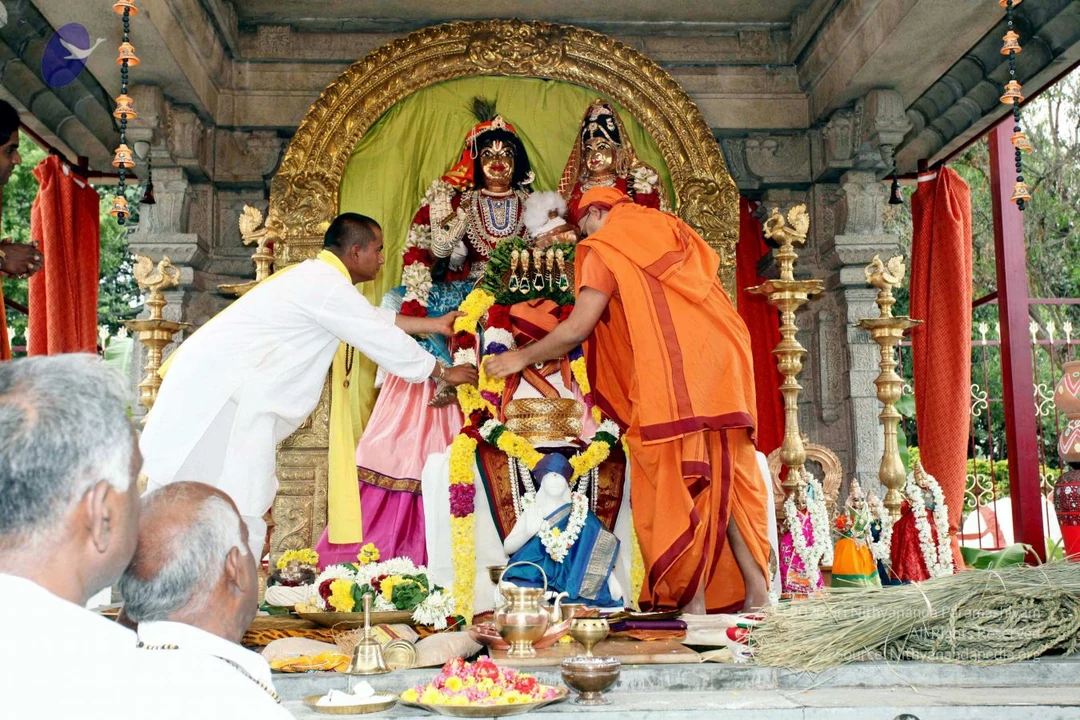
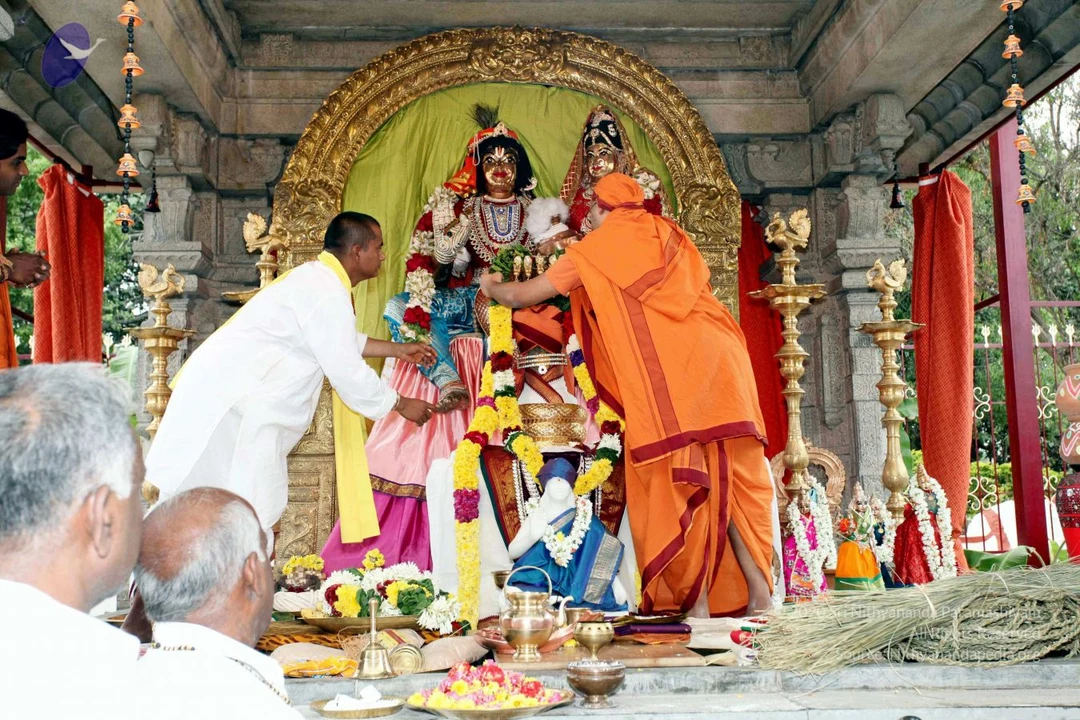
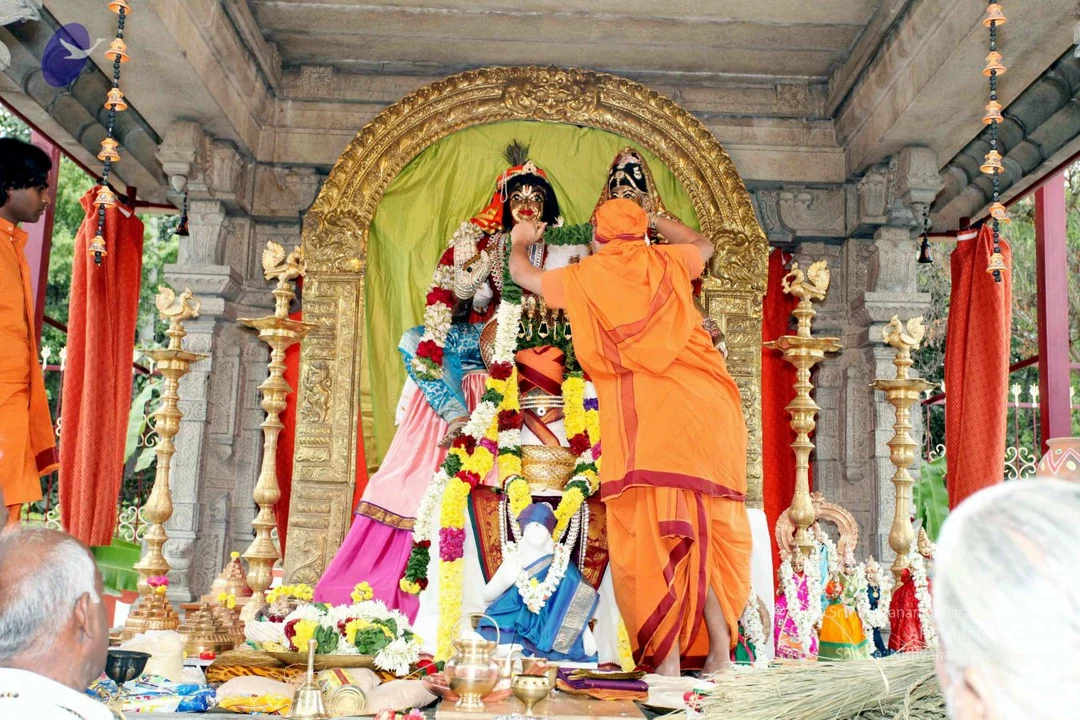
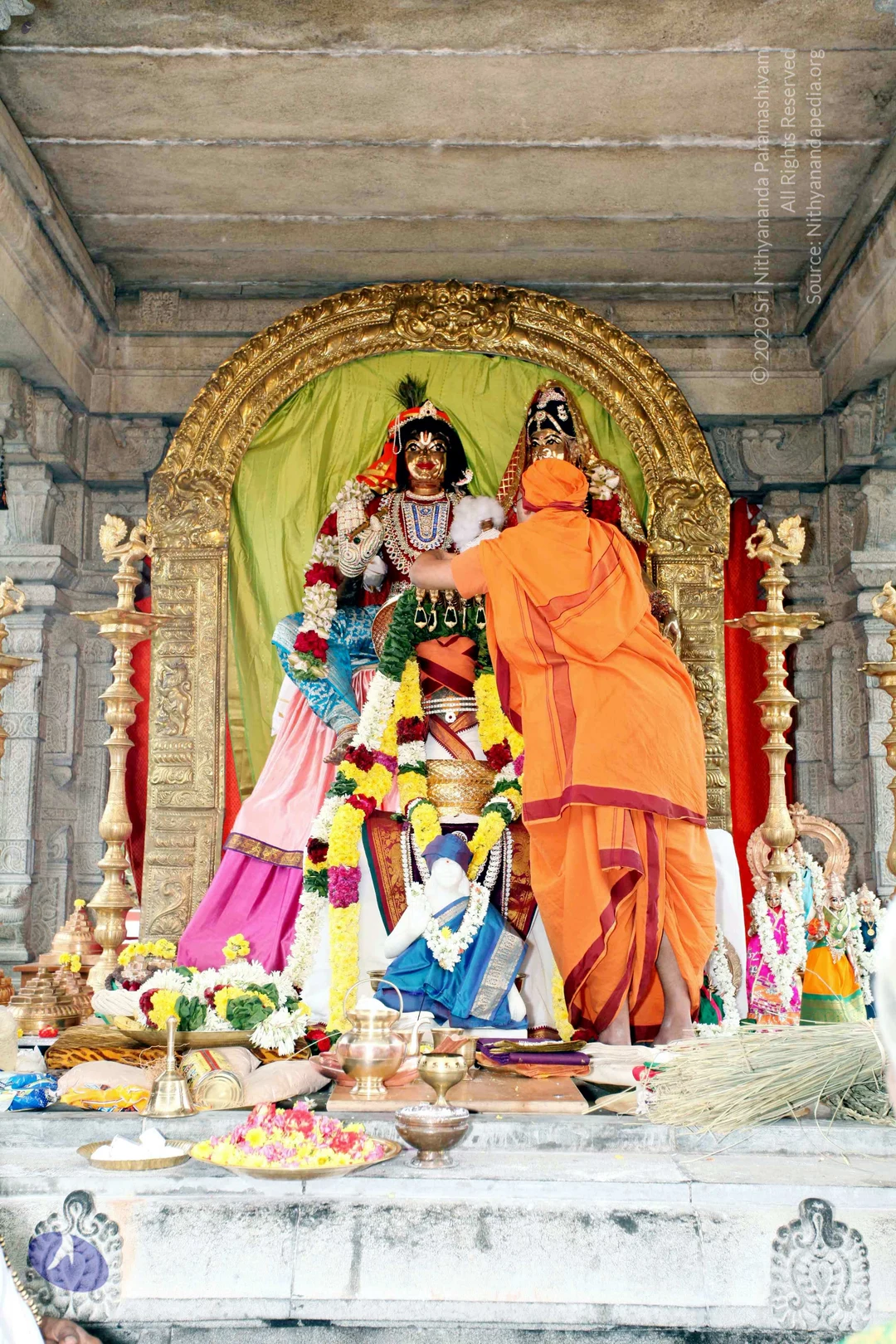
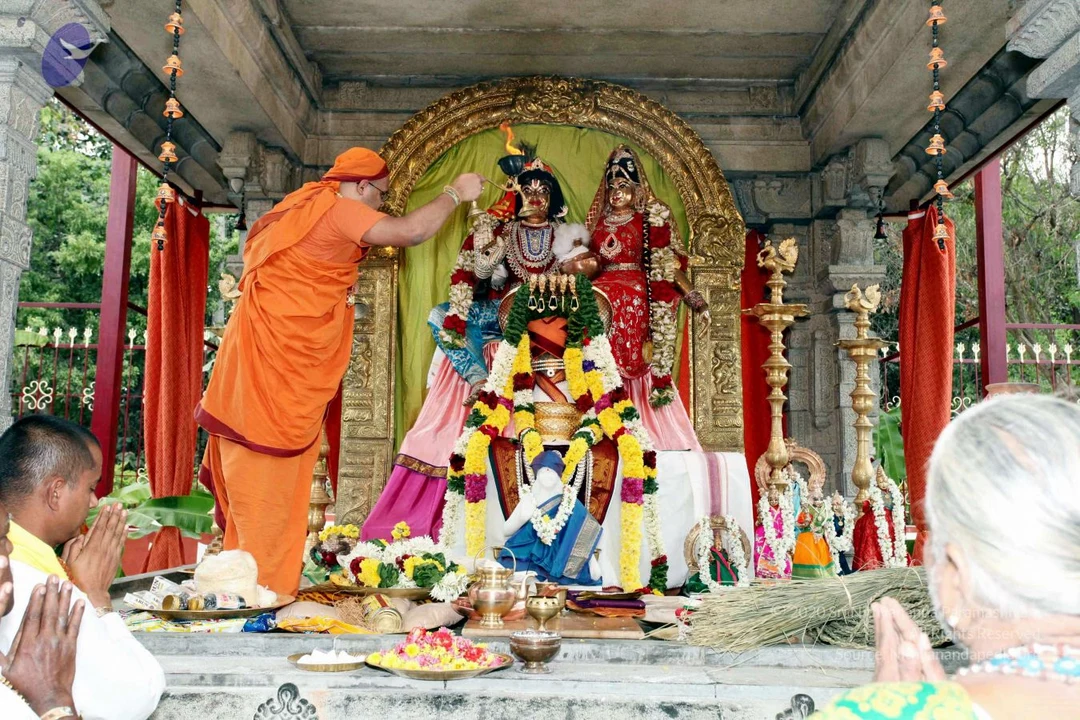
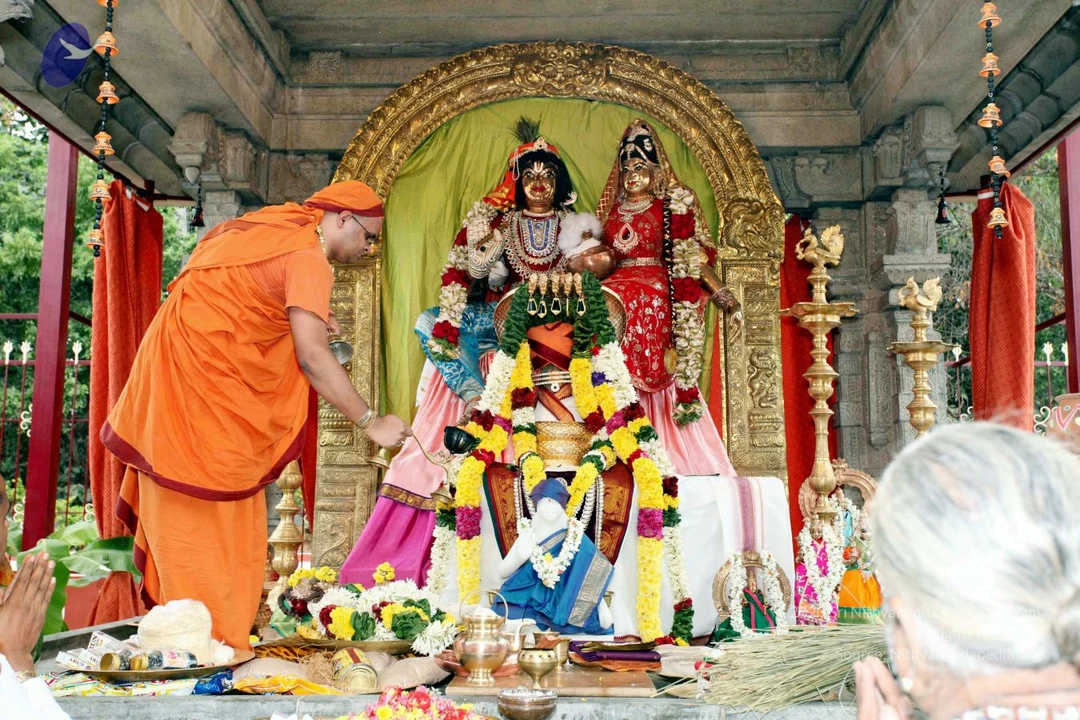
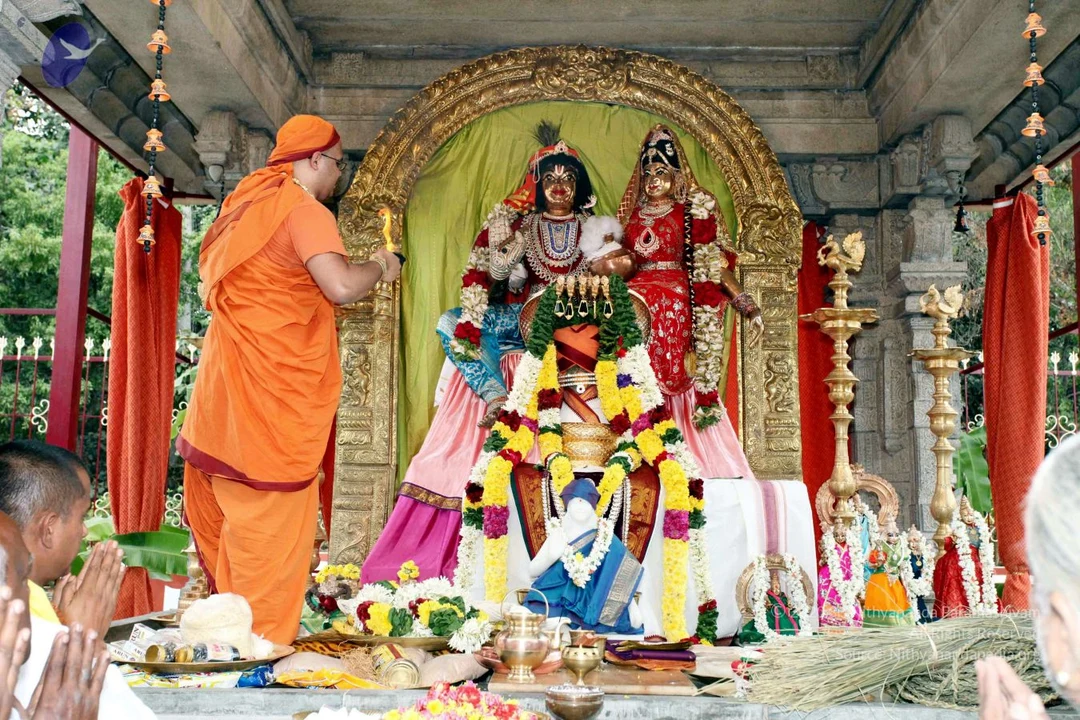
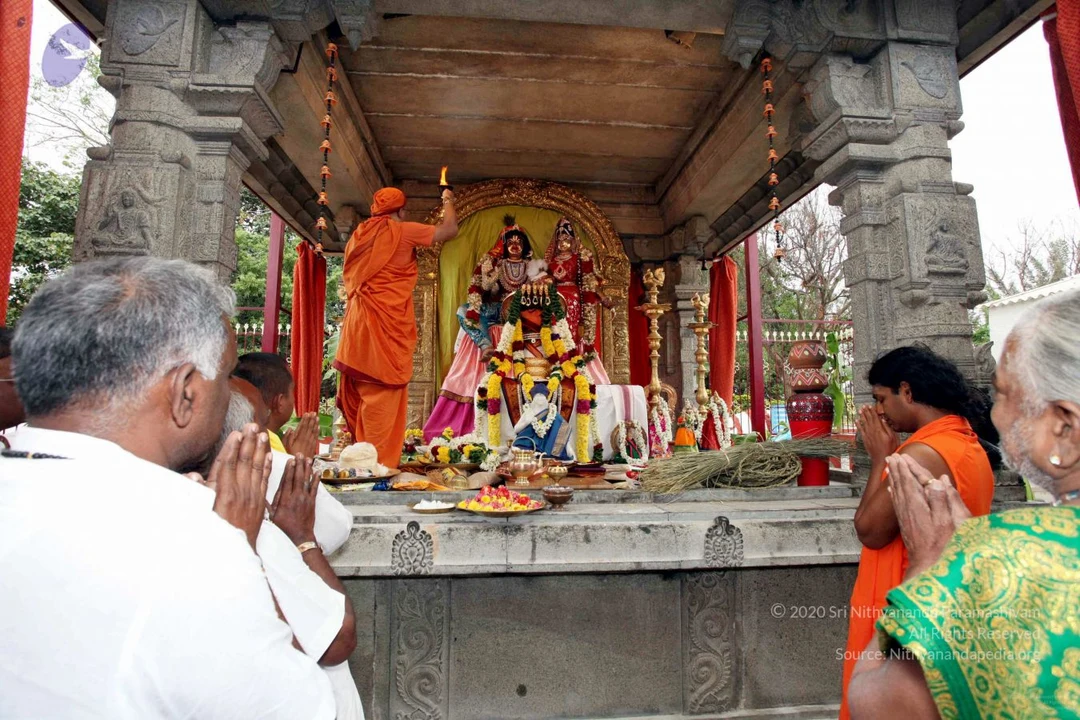
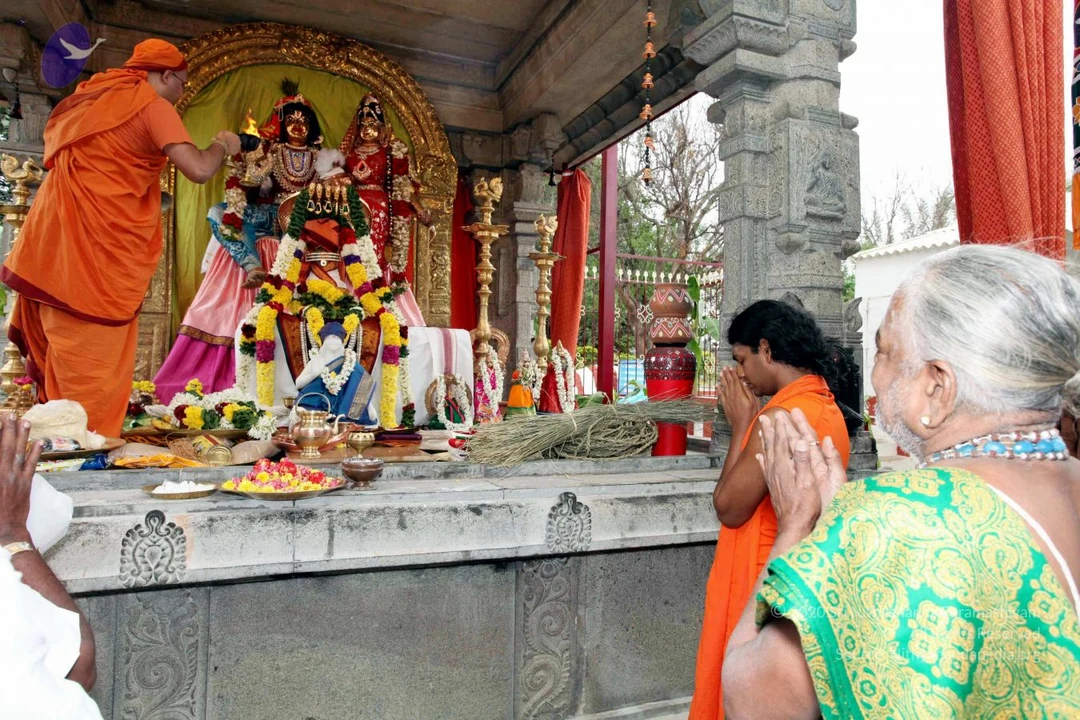
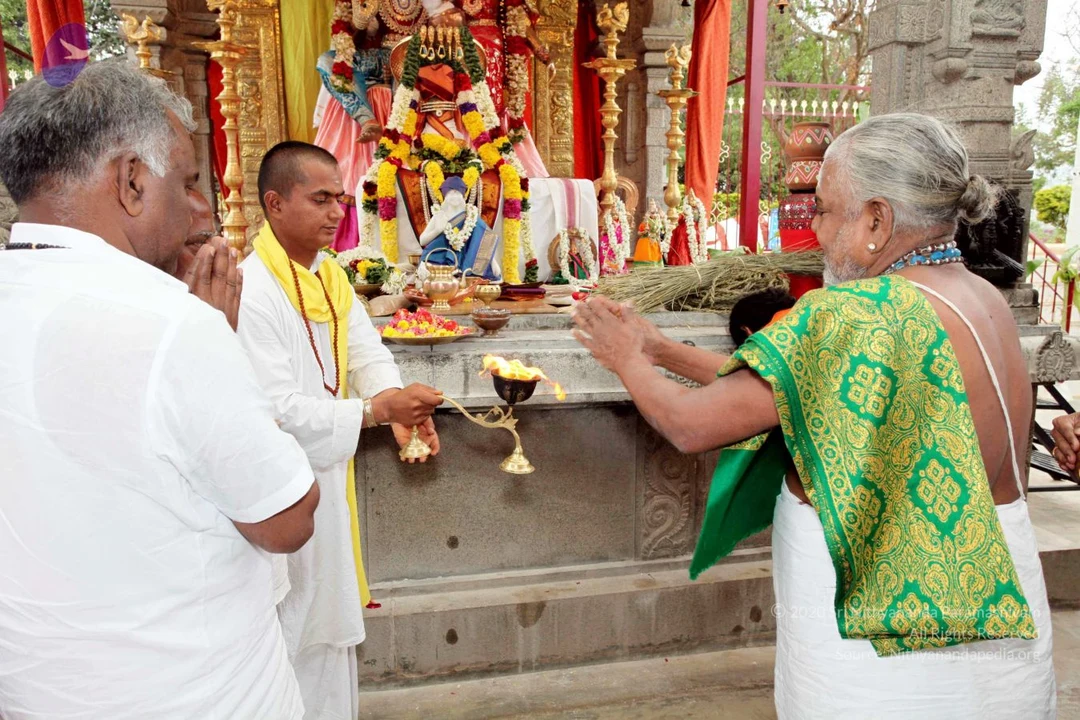
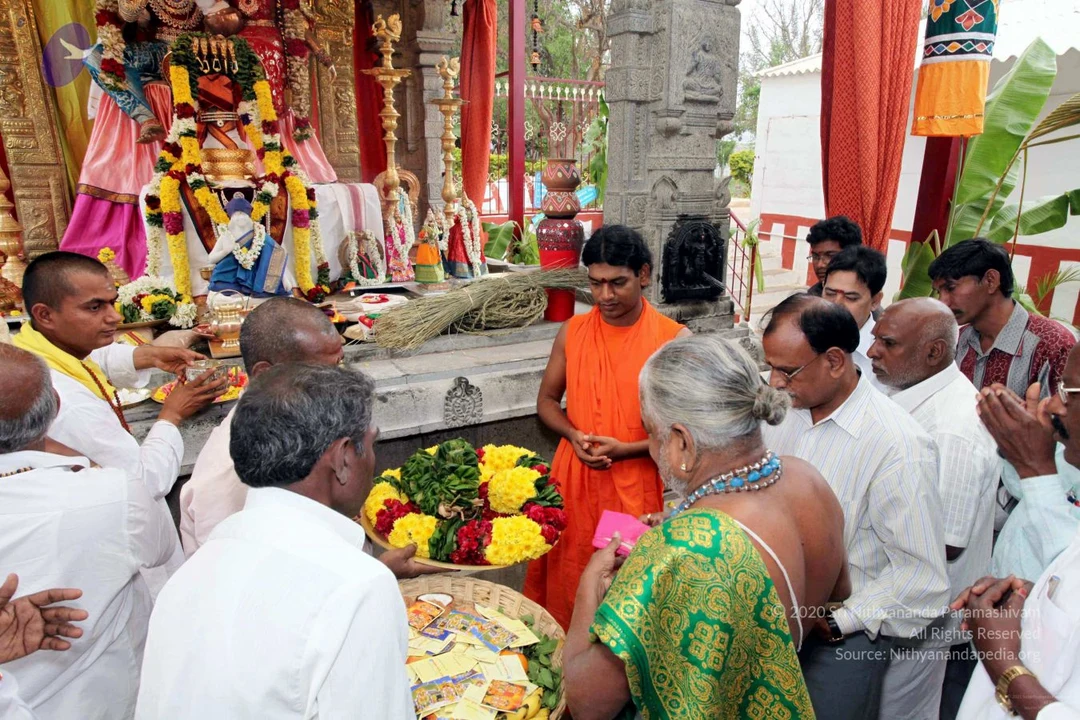
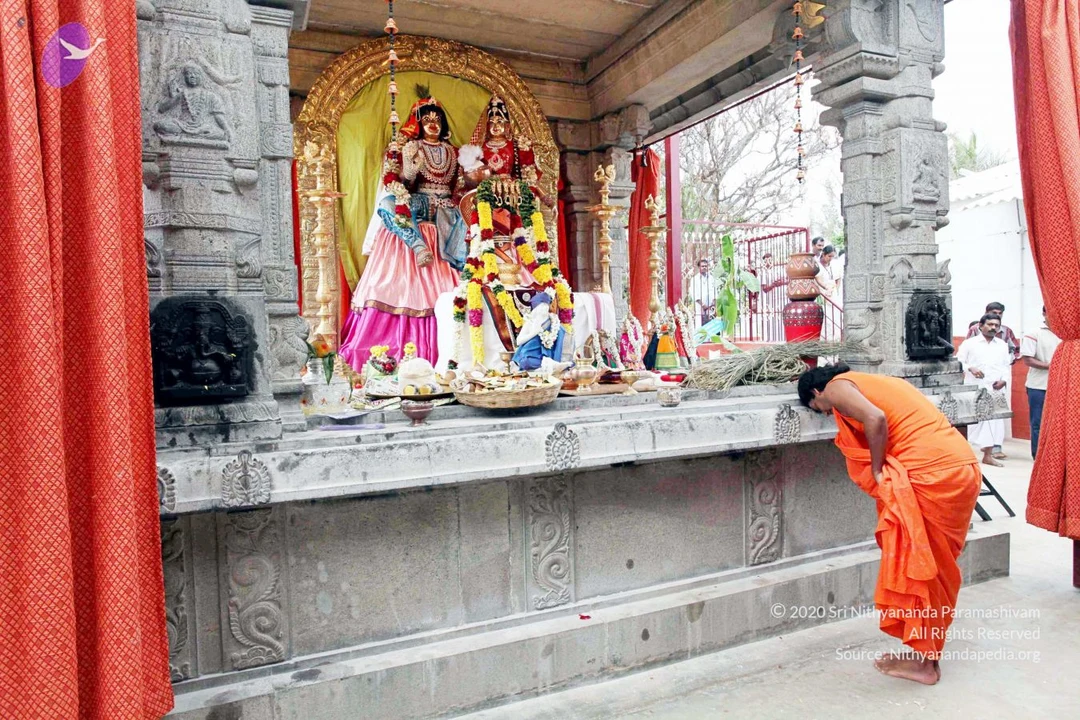
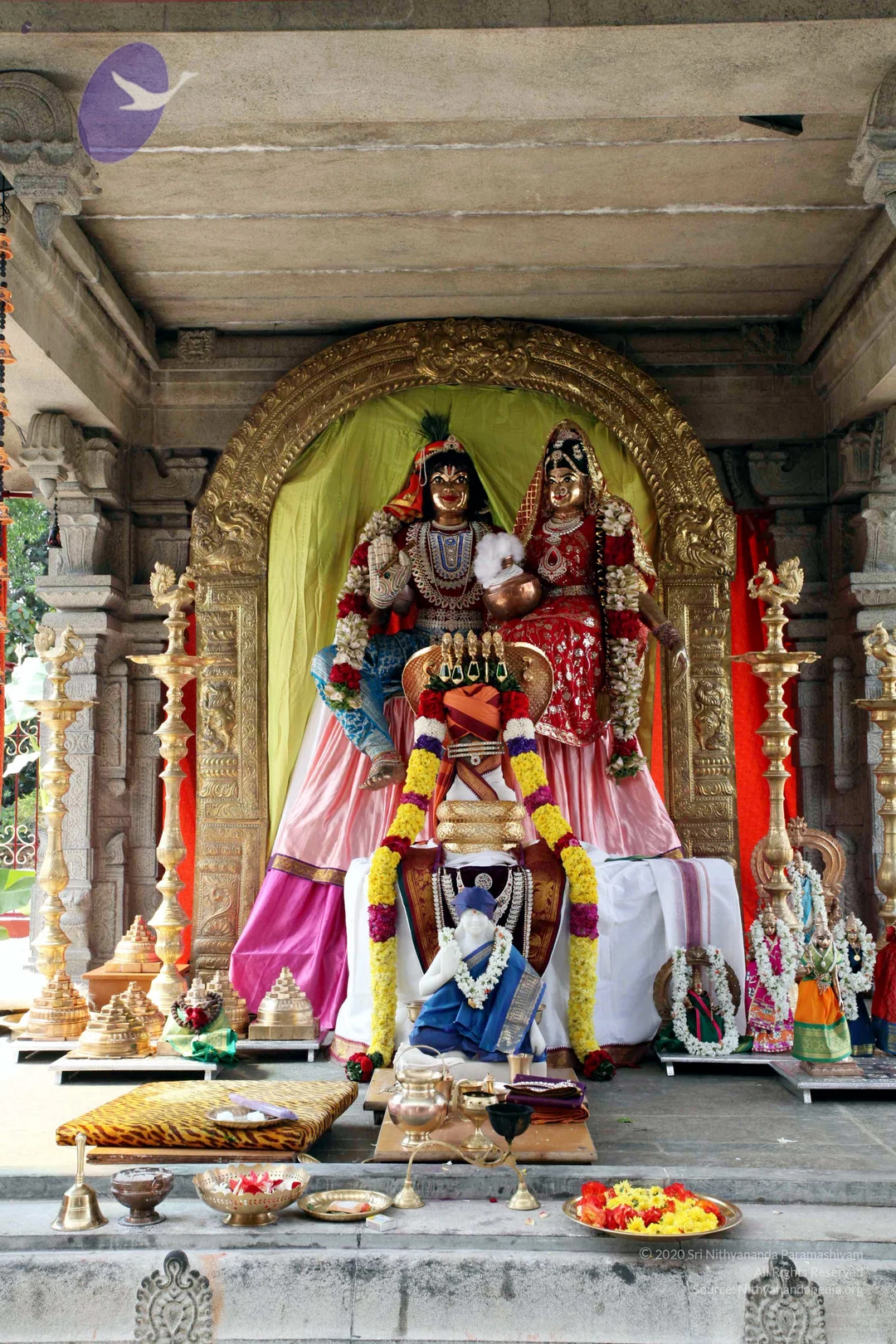
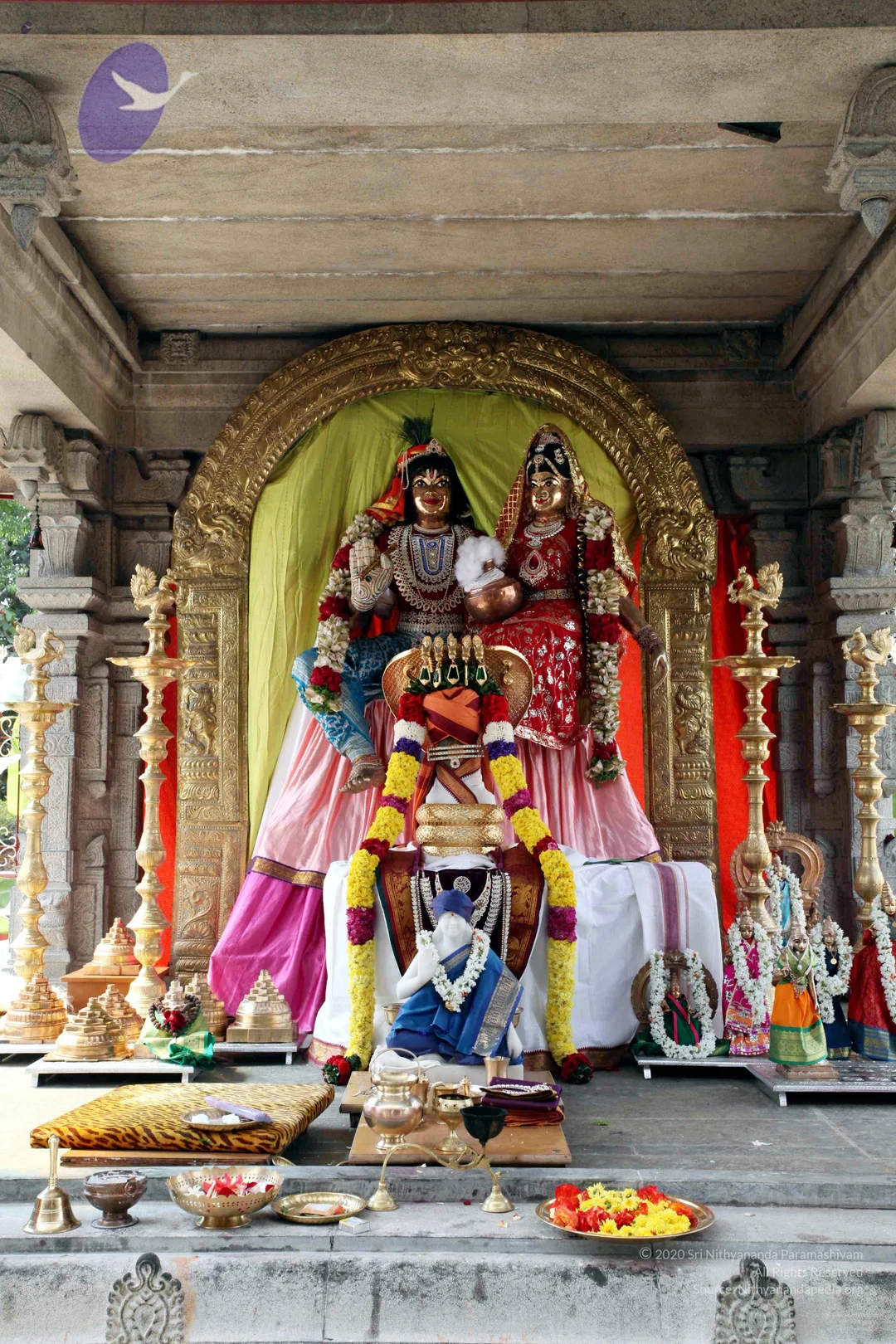
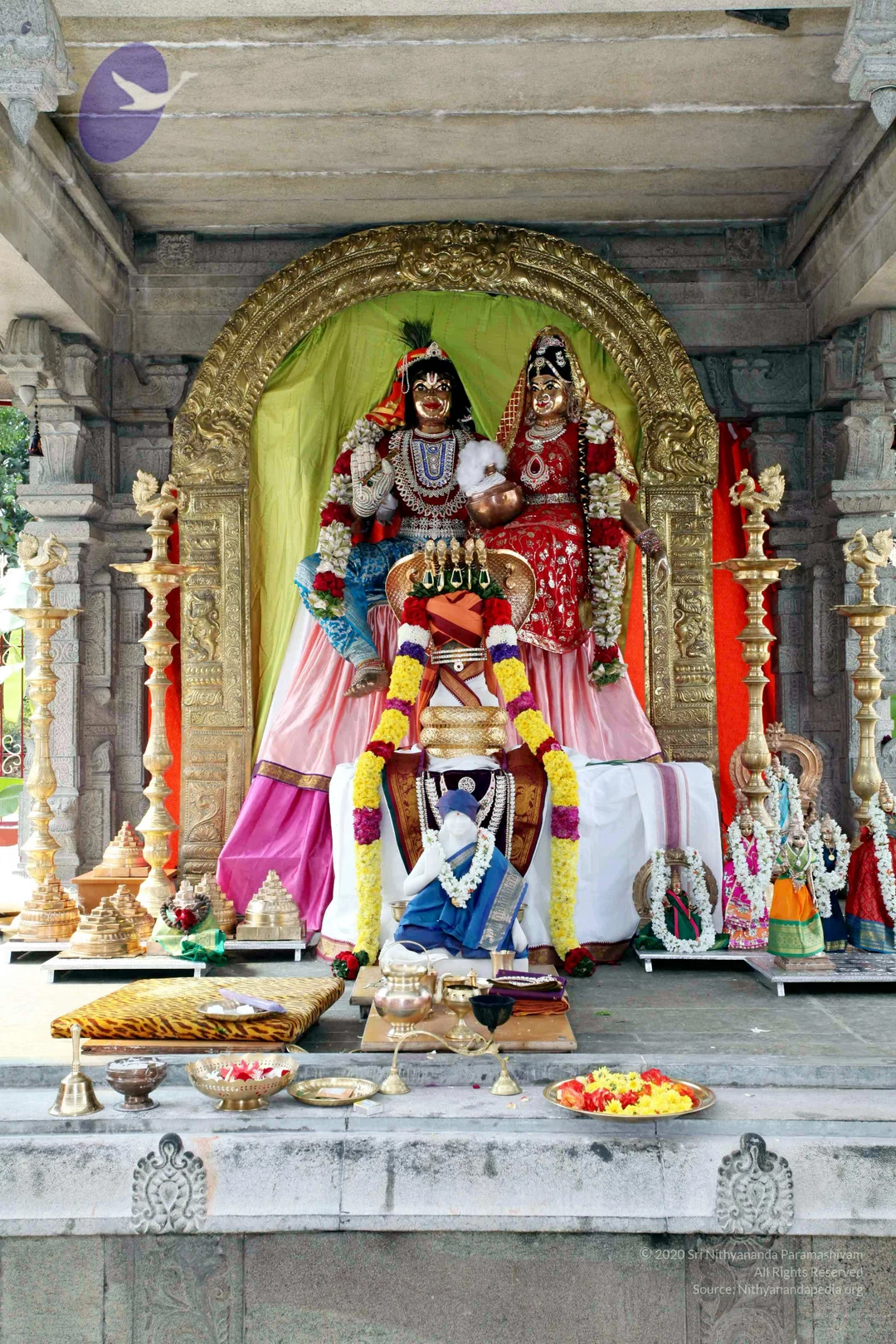
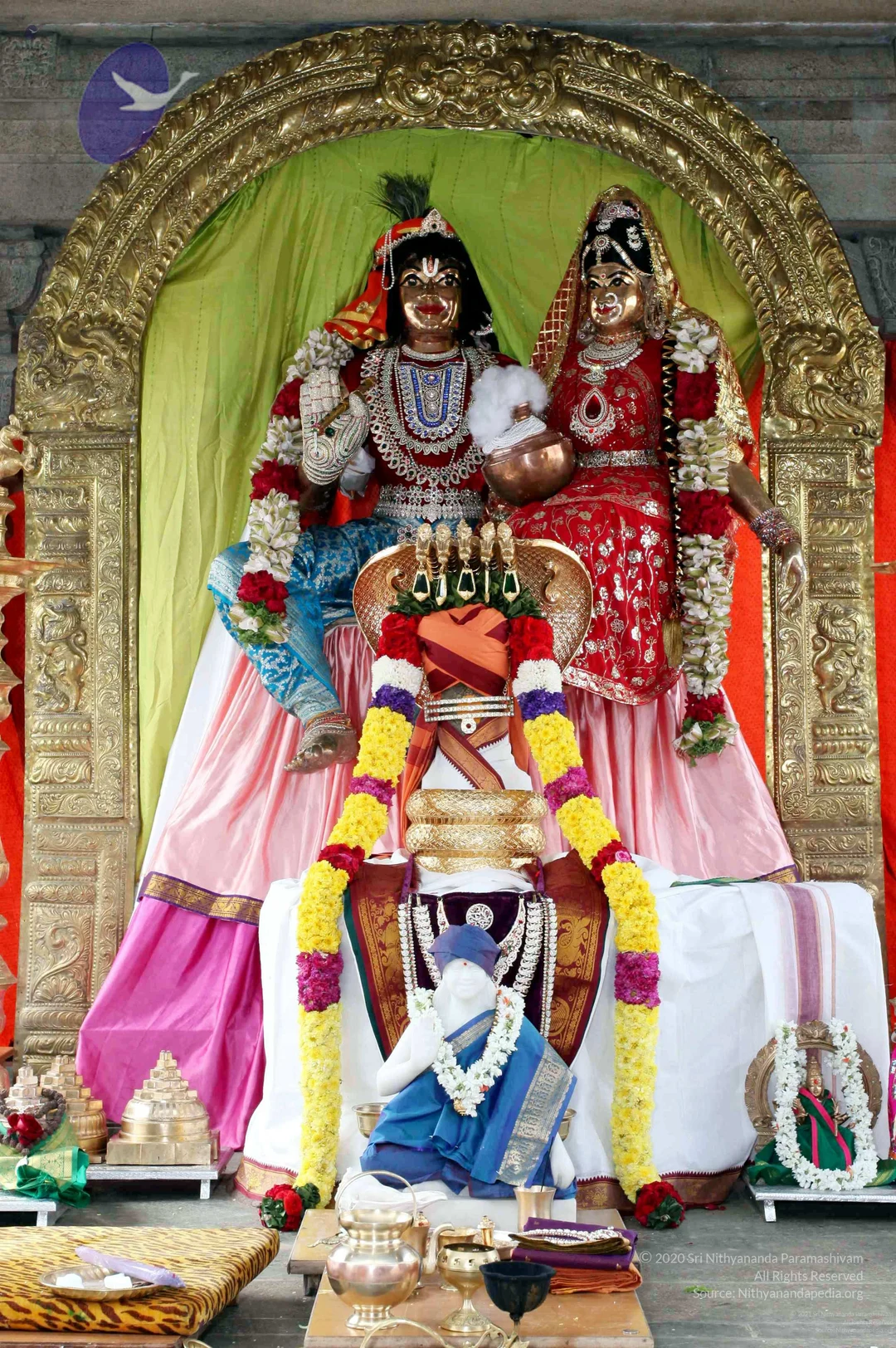
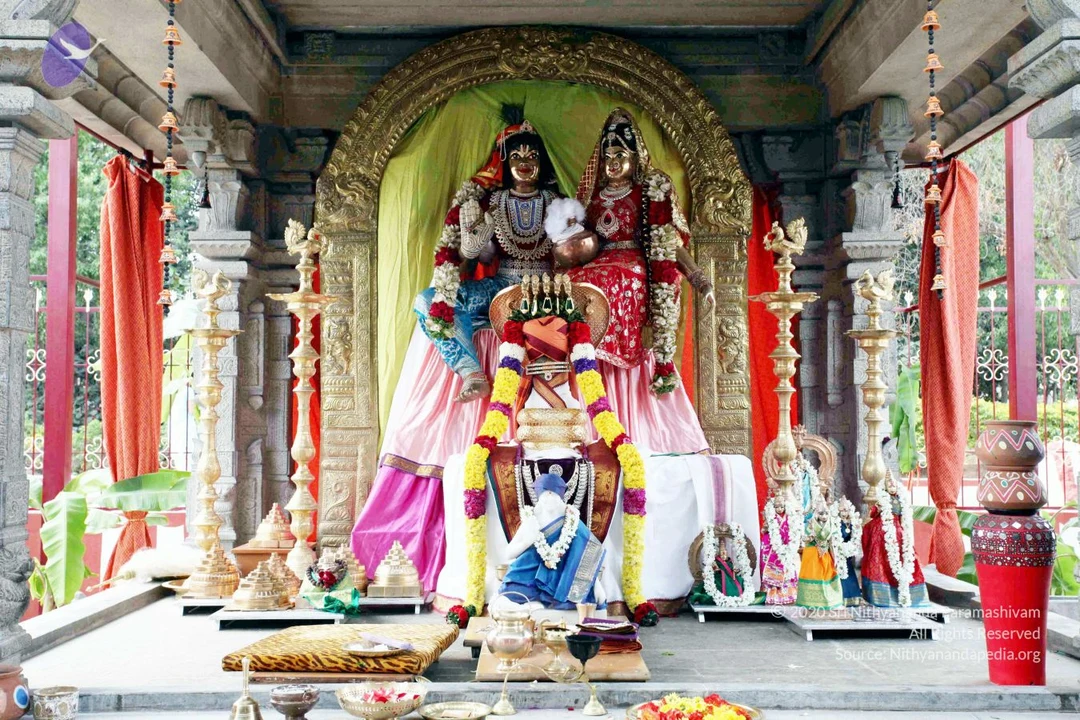
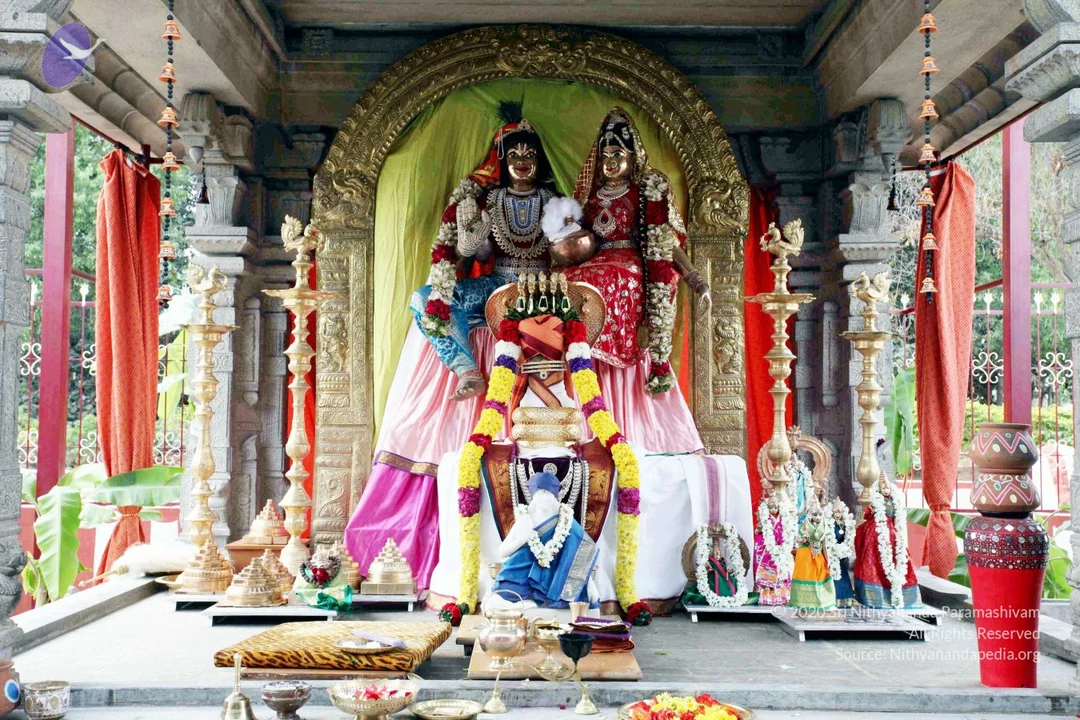
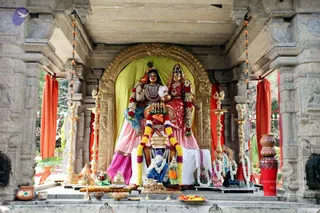
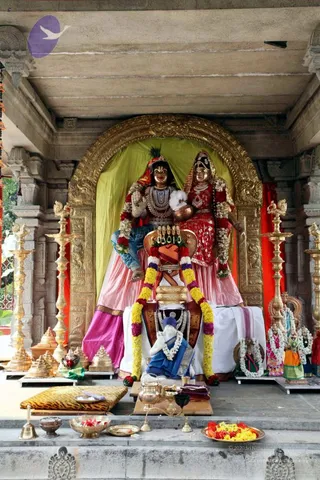
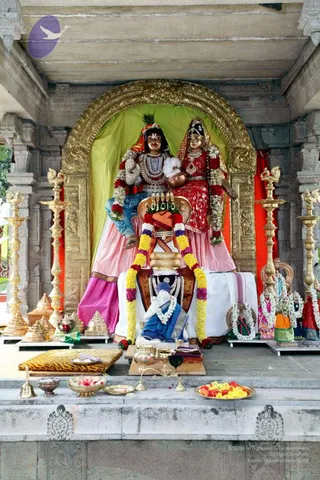
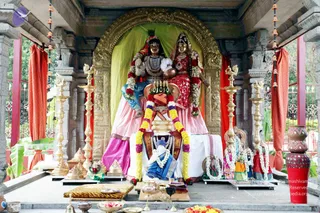
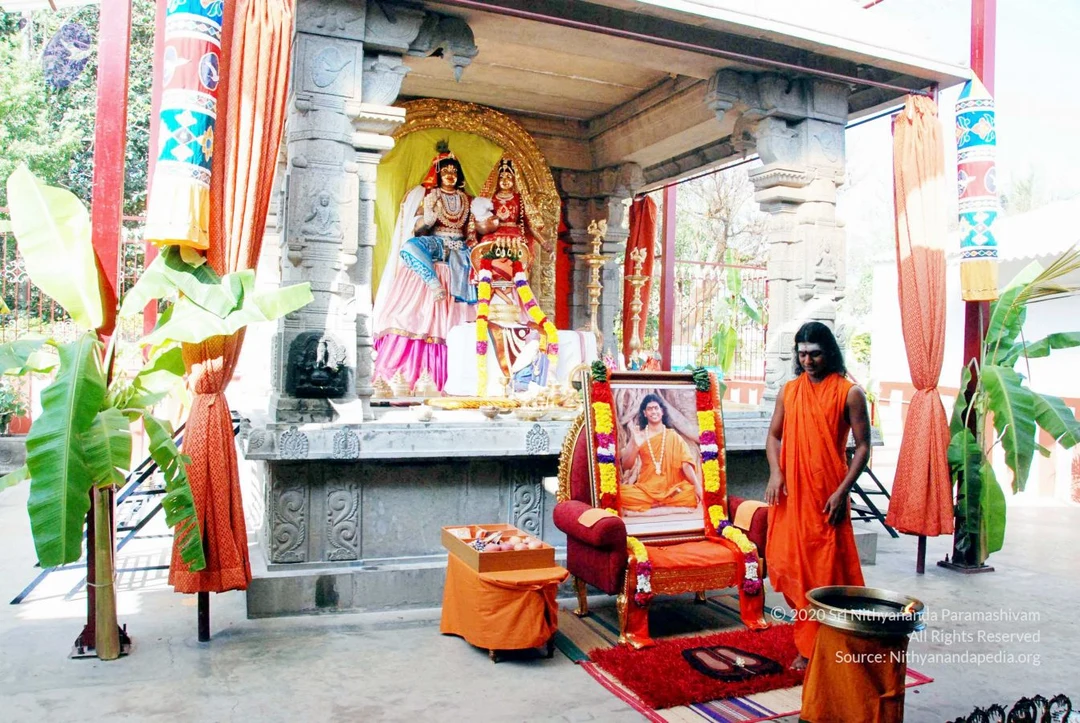
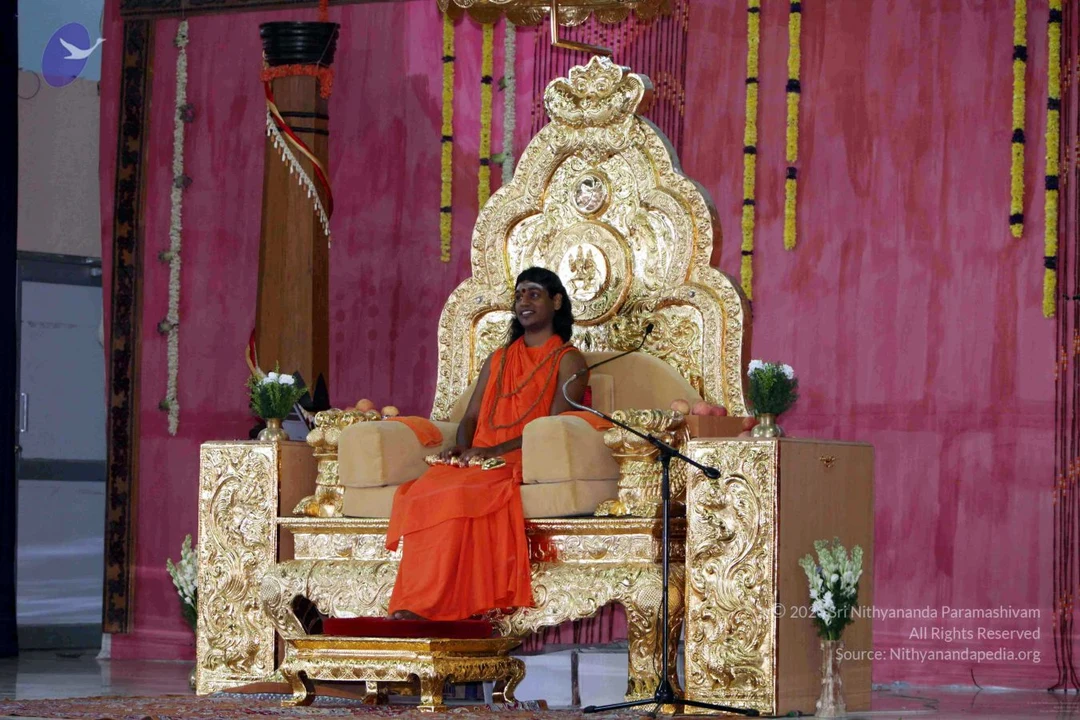
A stone shrine with carved pillars and an arched golden niche holds two deity murtis, a male figure on the left and a female figure in red with a gold crown on the right, seated on a raised pedestal. Green and gold drapes frame them, with garlands of marigold and white flowers hanging across the pedestal. Brass oil lamps, a kalasha pot, a bowl of fruit and metal vessels stand in front, with orange drapes and red and white pots at the sides.A temple shrine photograph showing a pair of painted deity murtis seated under an ornate gilded arch with a lime-green backdrop. The taller figure on the left wears blue and white garments, a crown with a feather and a sacred thread, and holds a ritual object. The figure on the right wears a red sari-style garment with gold jewellery and holds a brass pot. A seated figure in the centre is draped with a blue-and-gold cloth and garlands in yellow, orange and purple. Brass oil lamps stand on both sides, with brass kalasha-shaped vessels, a brass bell, bowls of flowers and a tray of marigold petals placed on the steps in front.A shrine niche in a stone temple with a gold-framed arch and green backdrop holds two painted metal deity figures seated side by side: a male figure in a blue-and-red garment with a red headdress and feathered plume, and a female figure in a red and pink sari with a veil, holding a copper pot. Both are garlanded with white jasmine and red flower strands. In front, a seated white figure in blue drapery sits on a cushioned throne draped with white cloth and a golden band, decorated with yellow and magenta flower garlands. Brass oil lamps with bird finials, small brass shrine models, a brass bell, kalasha, and a plate of flower petals stand on the ground in front. No people are visible, and this is a photograph of statues.Photograph of a shrine inside a temple-style pavilion with grey stone pillars, red curtains and an arched gold frame. Two painted or sculpted deity figures sit on a raised seat draped in green and pink cloth, one blue-skinned with a crown and tall headdress, the other in a red sari with a veil, both garlanded with white flowers and marigolds. A large garland of yellow and purple flowers hangs over a central seat. Brass lamps, a kalasha, brass vessels, a tiger-skin mat, trays of flowers and offering plates surround the altar. No physical people are visible.
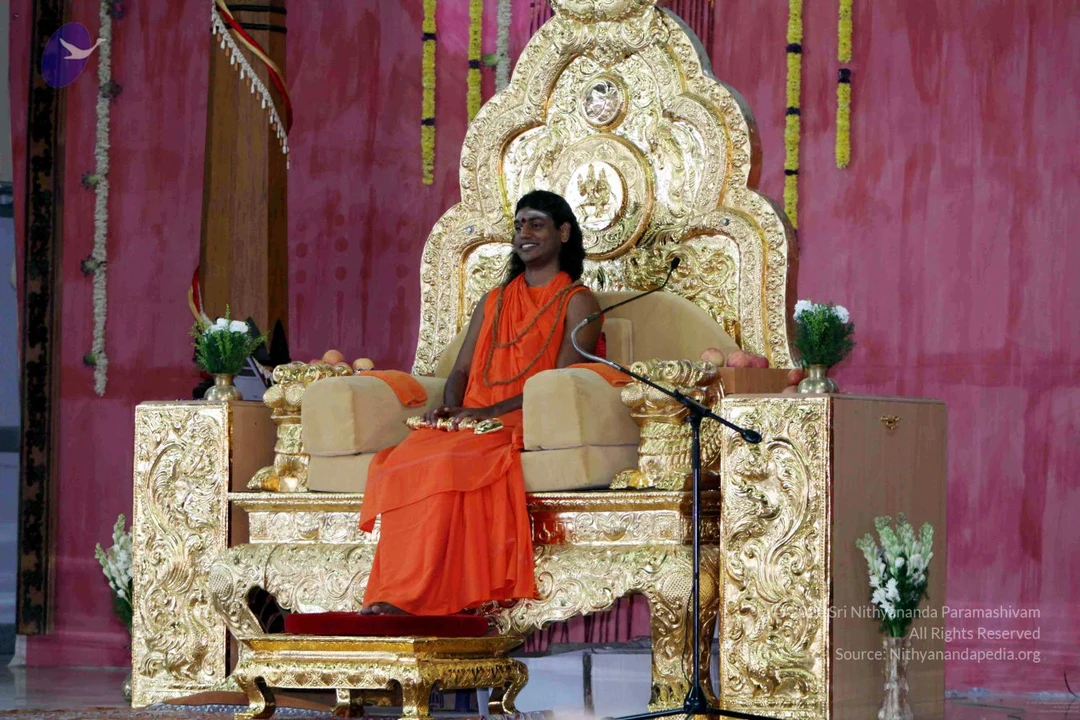
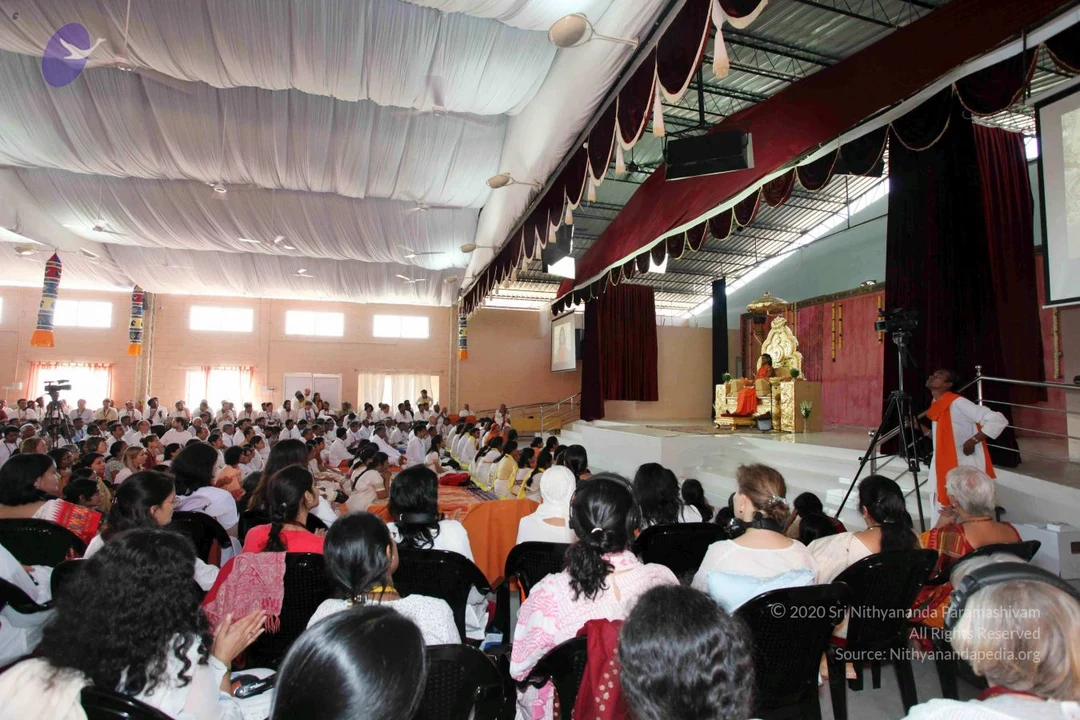
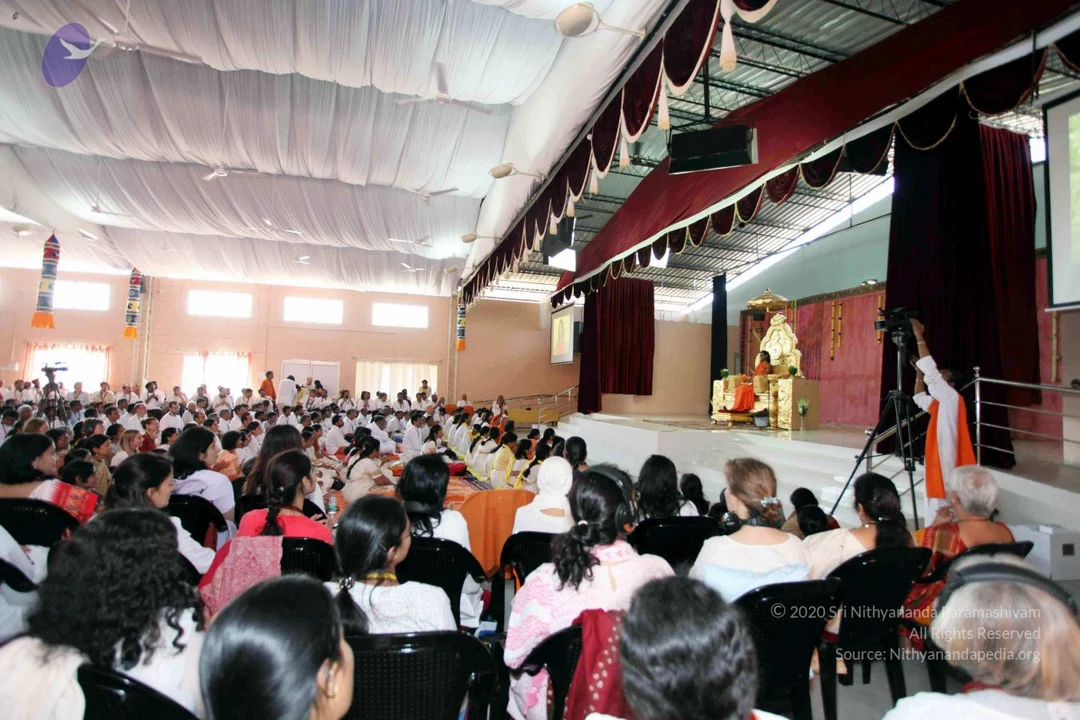
Ananda Spurana Convention

15 photosSource gallery
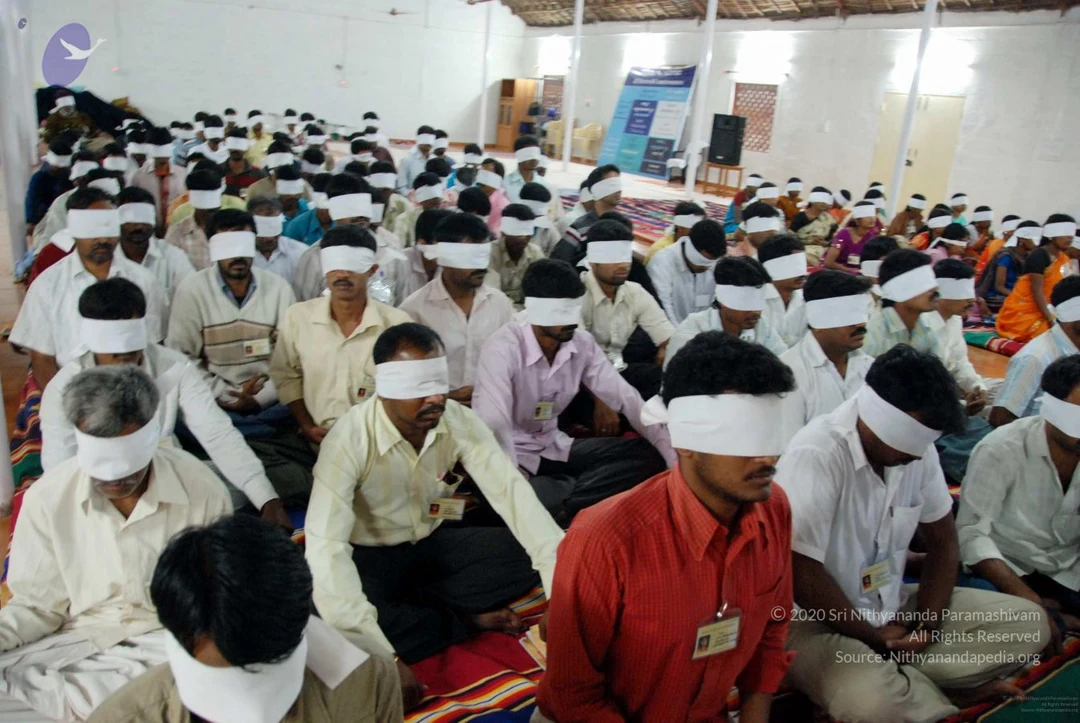
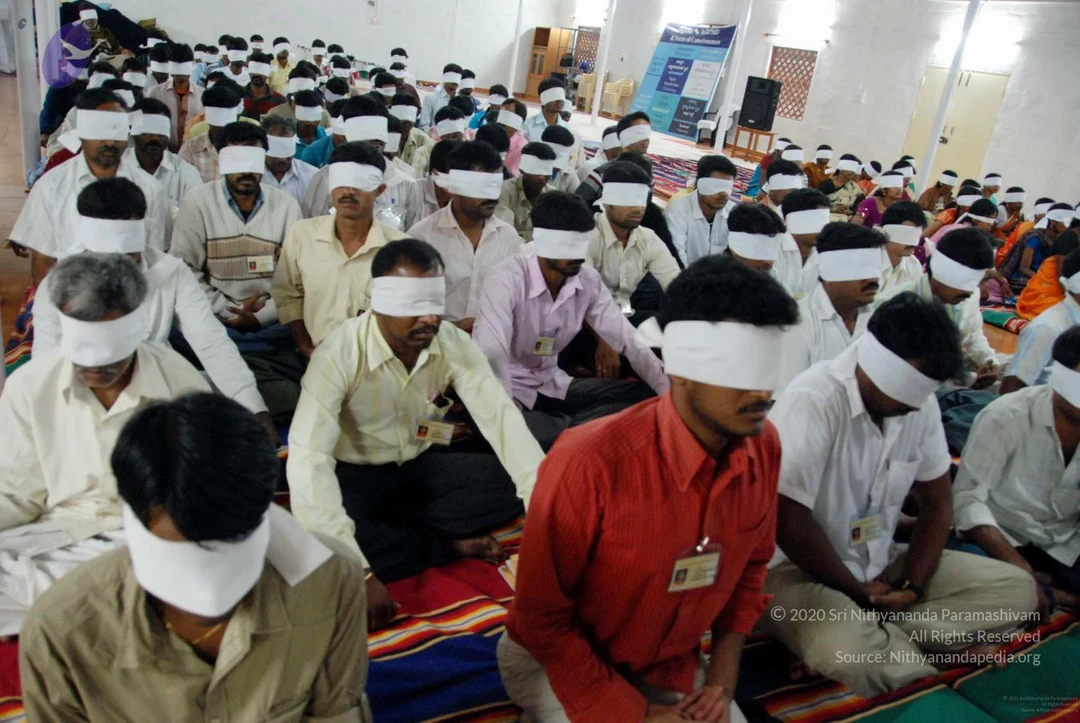
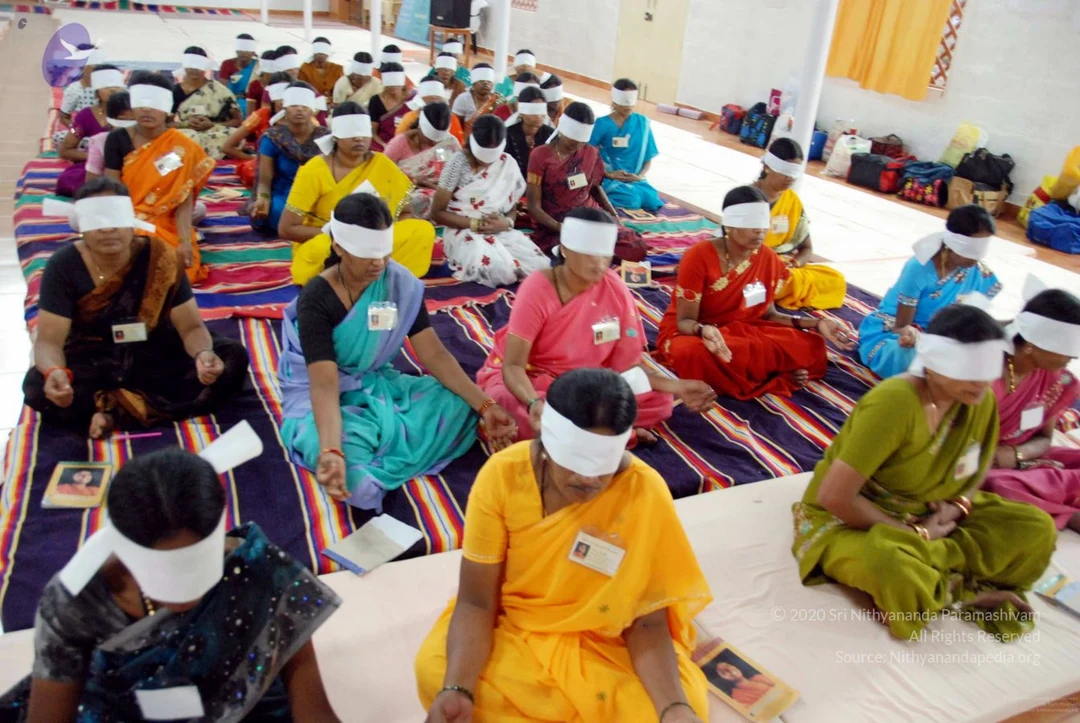
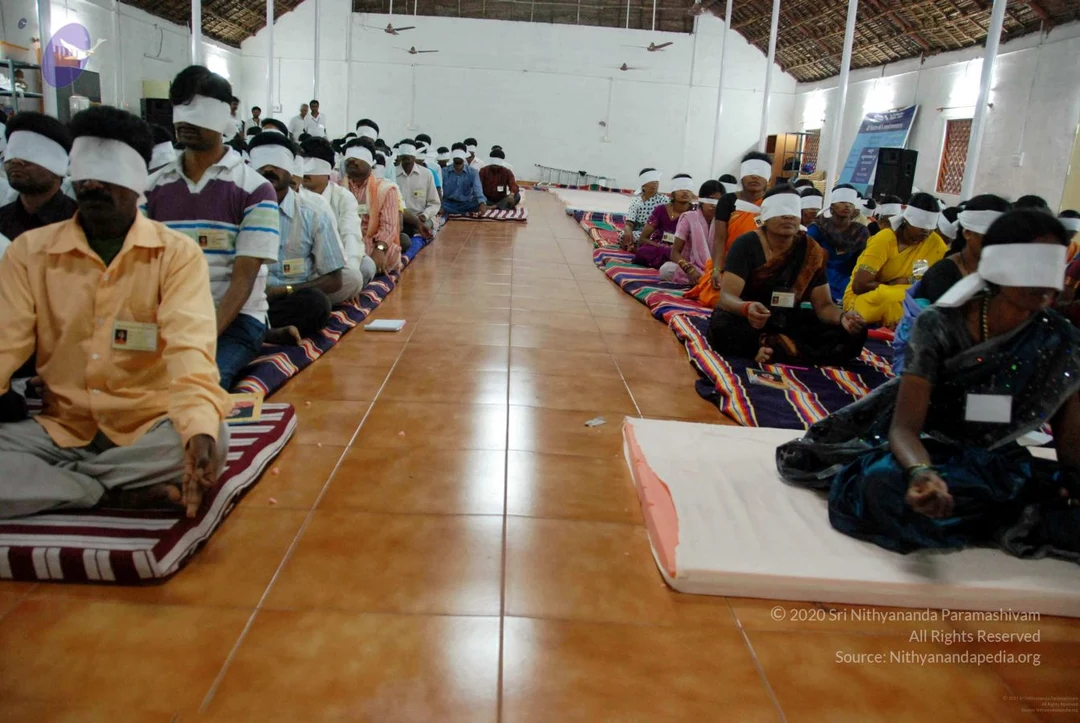
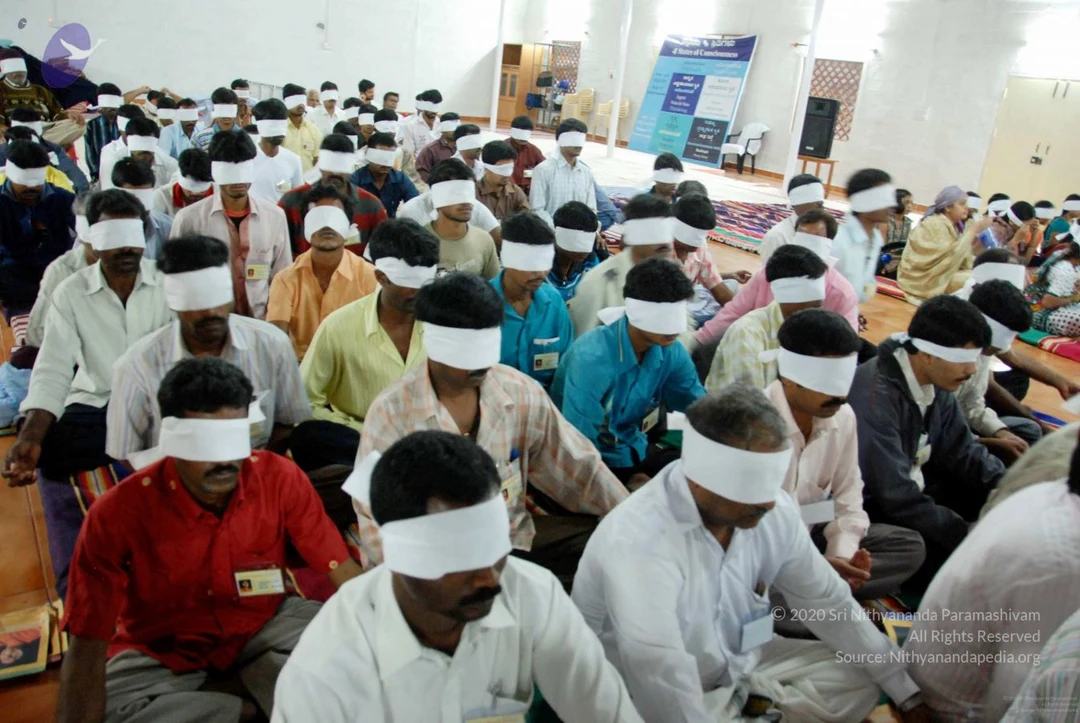
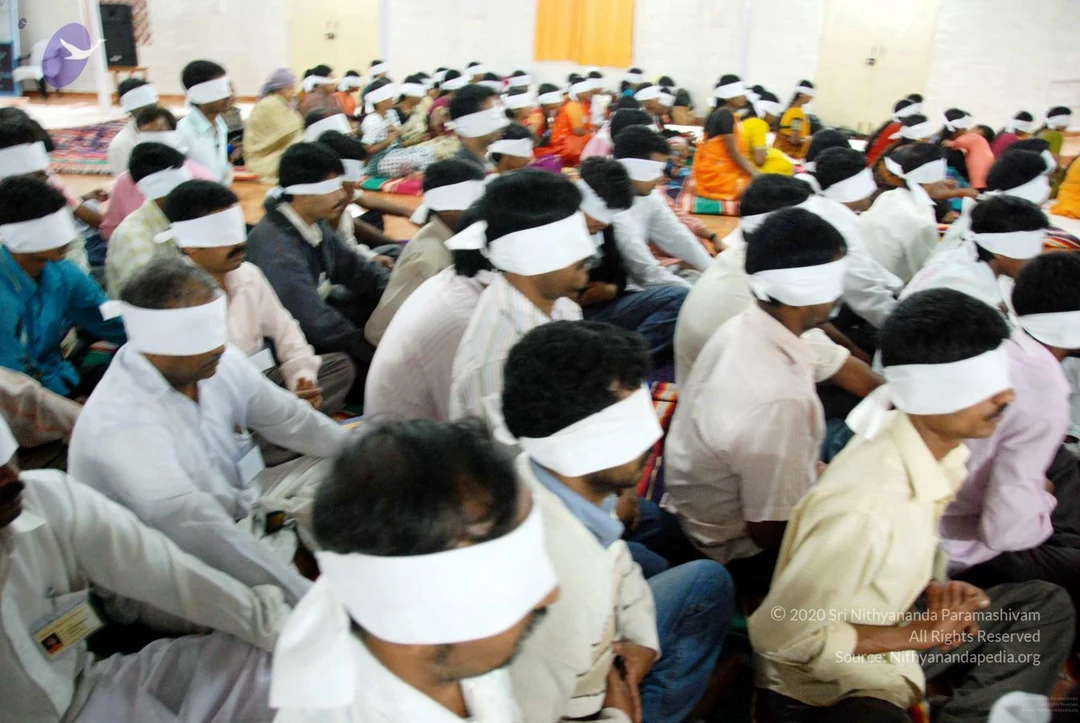
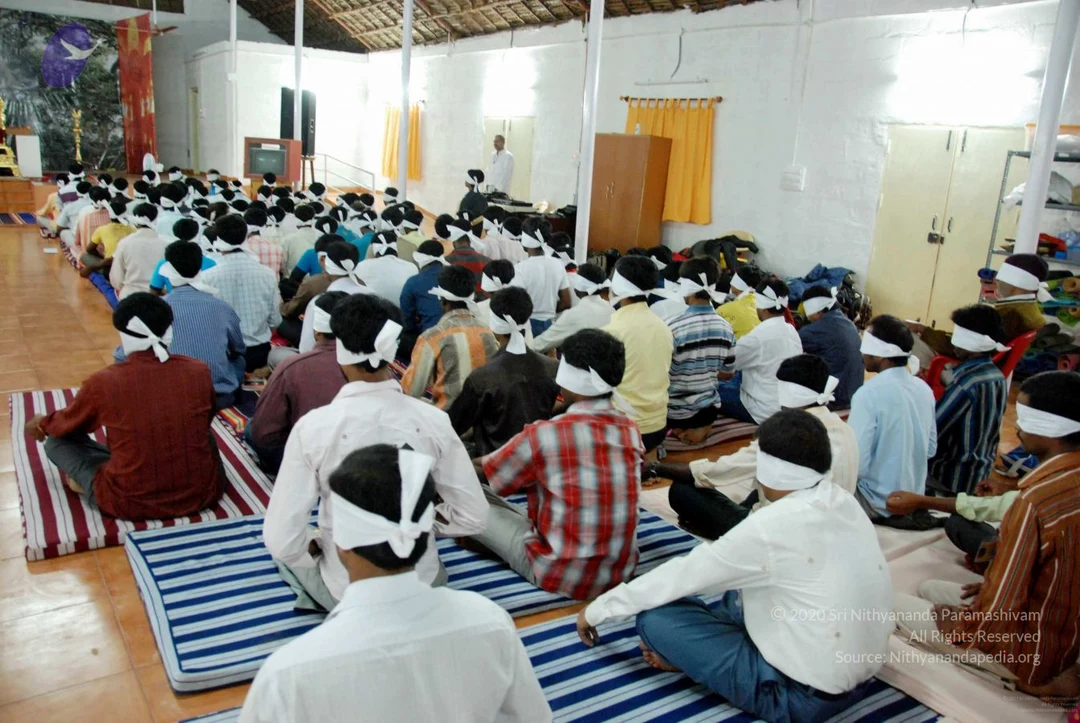
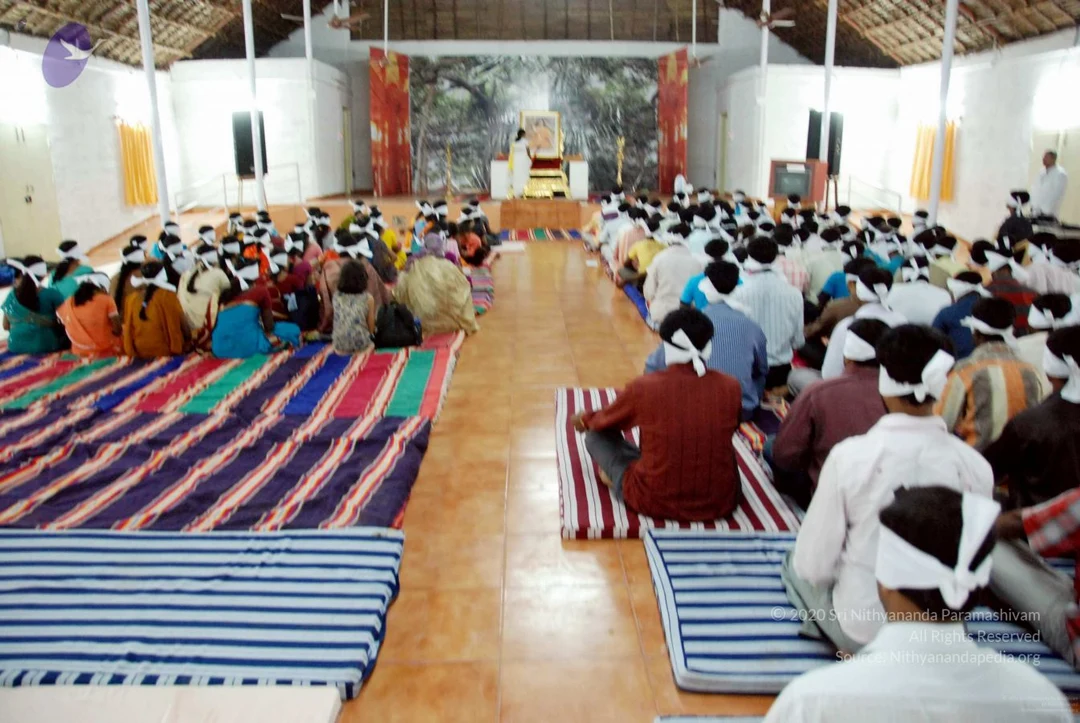
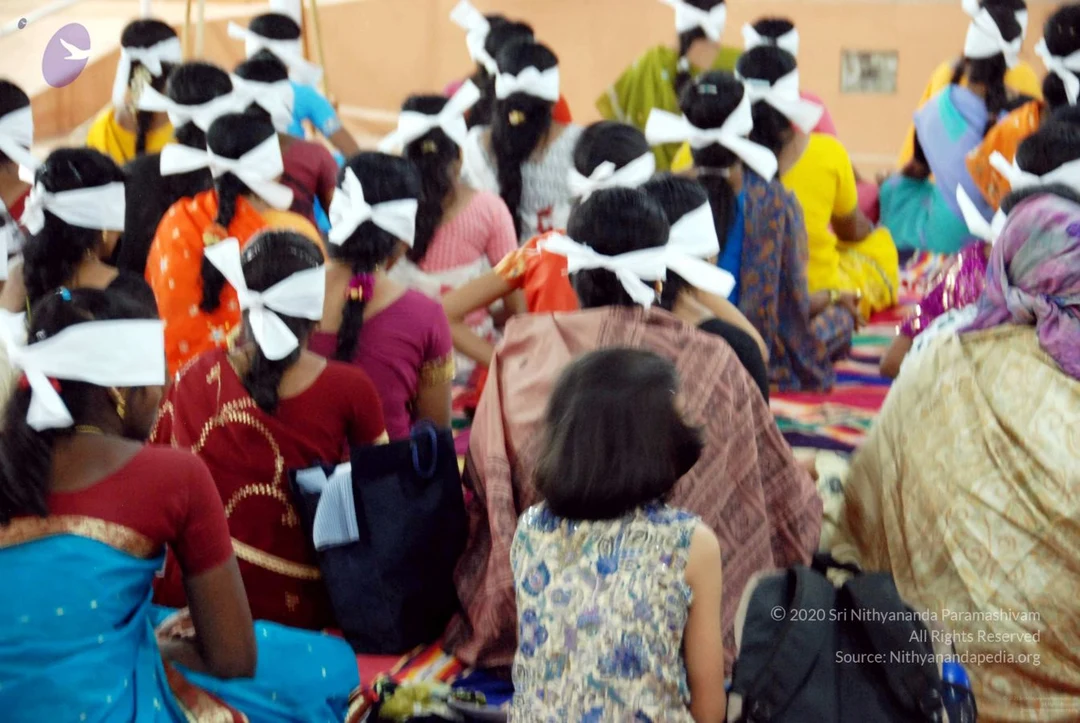
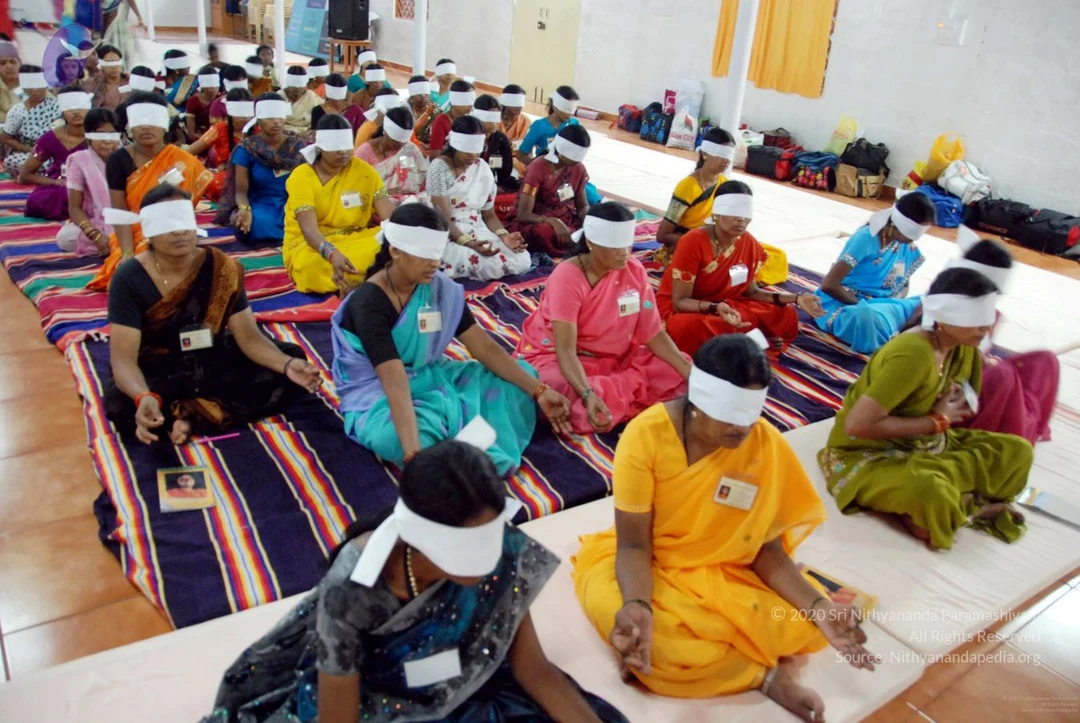
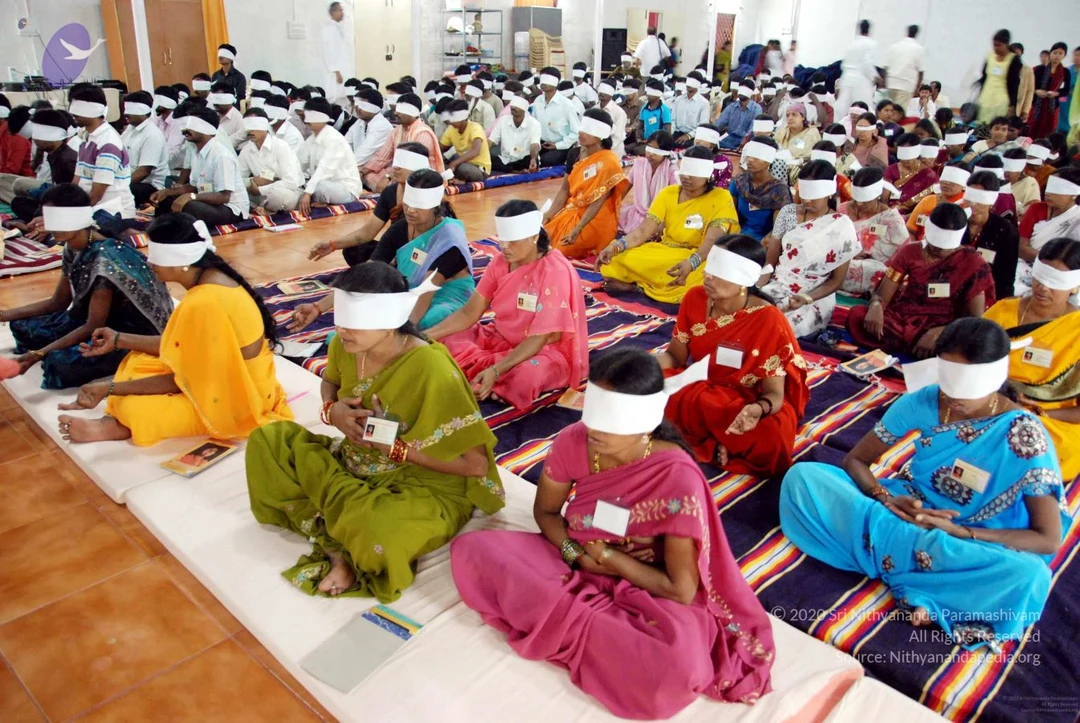
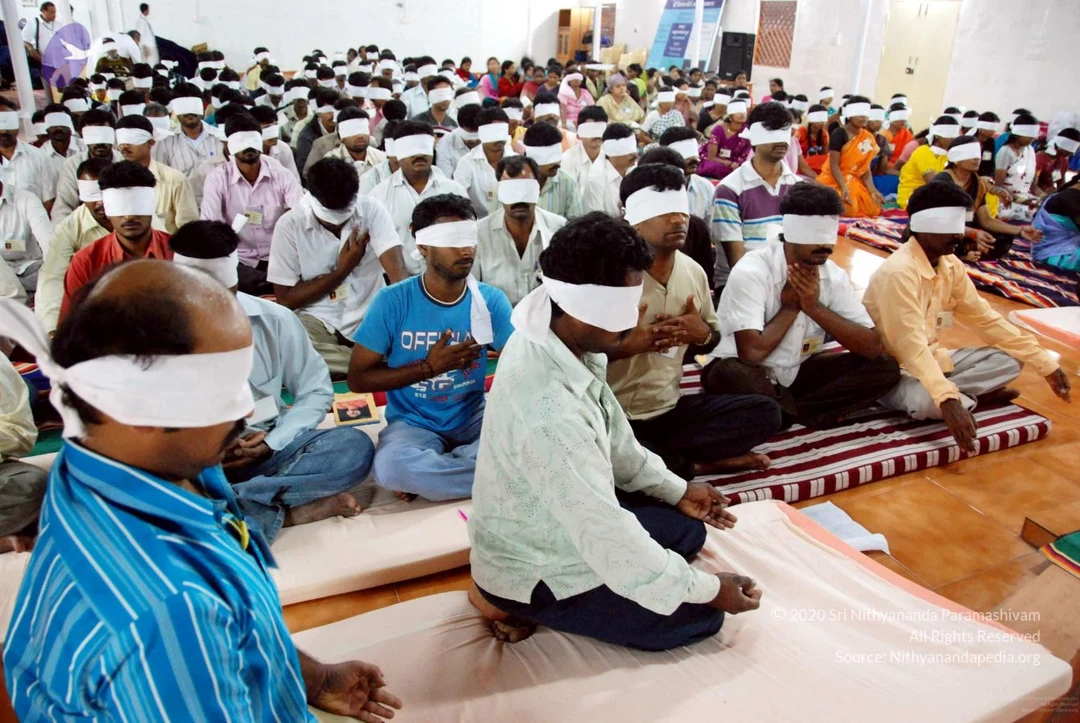
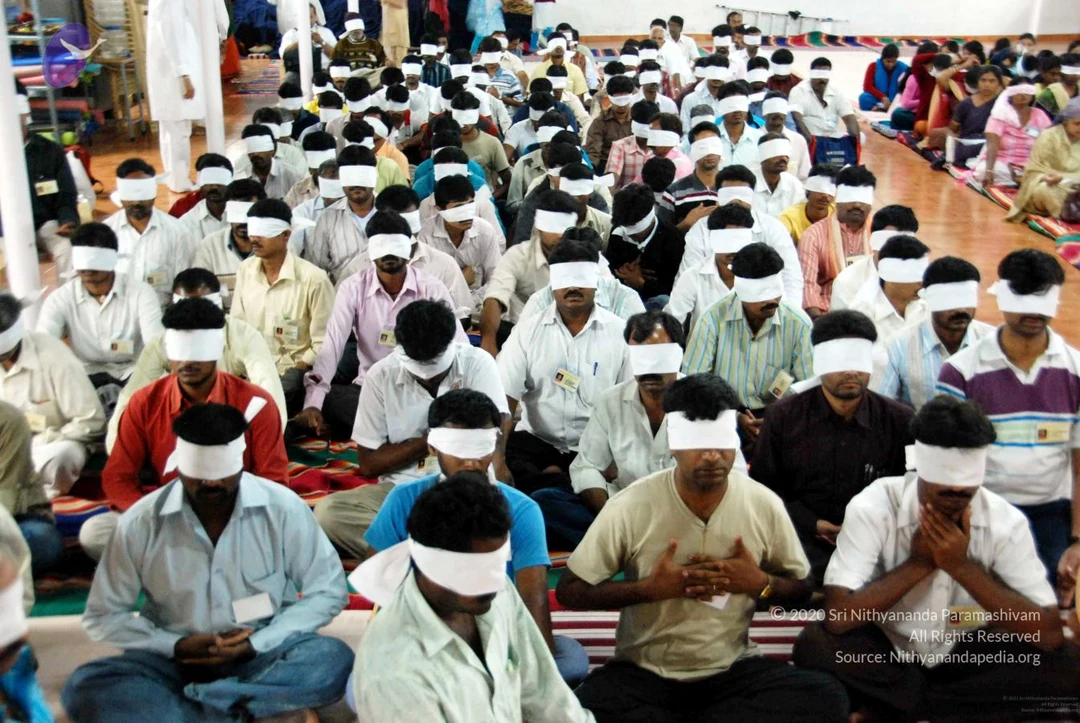
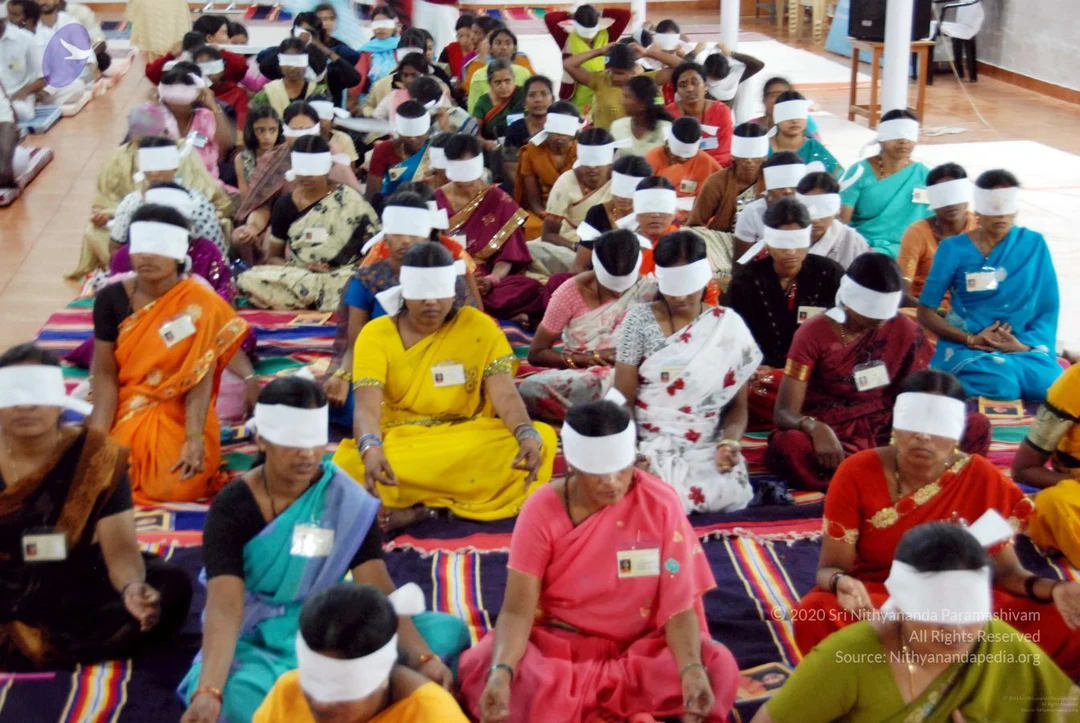
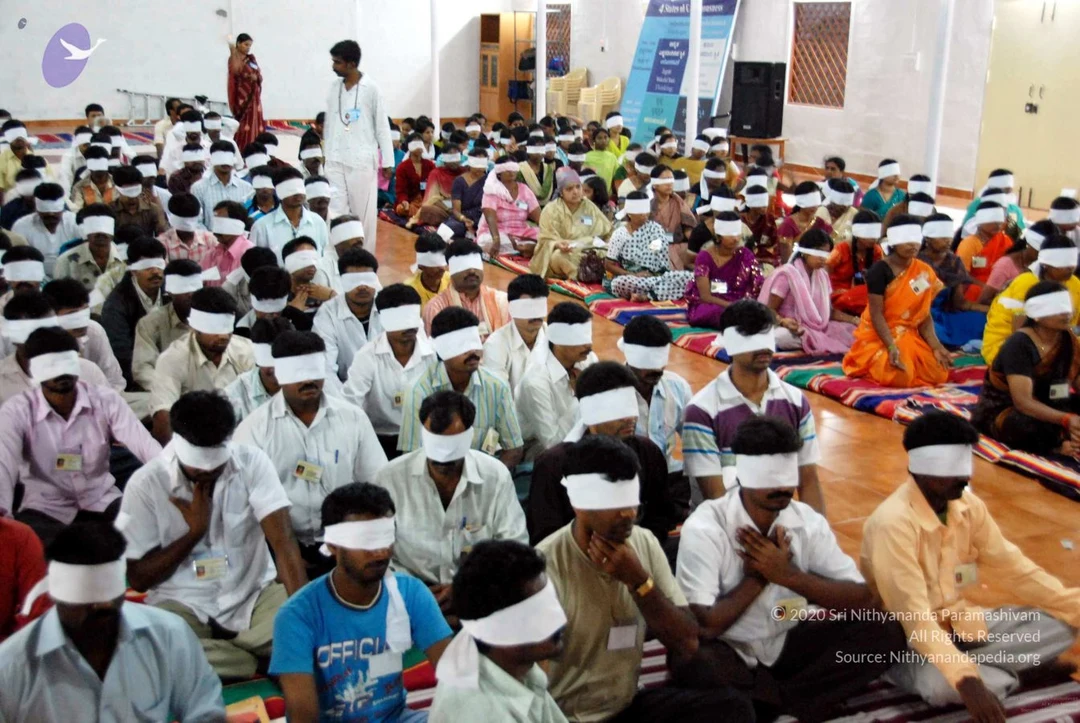
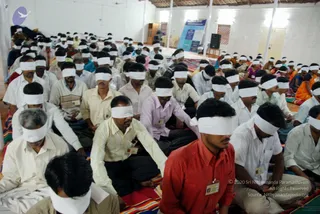
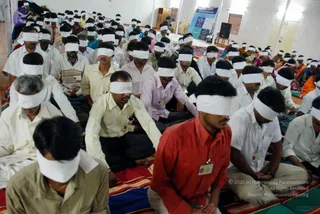
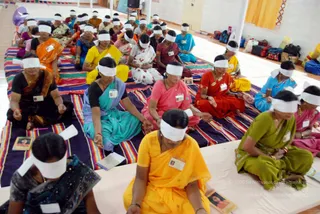
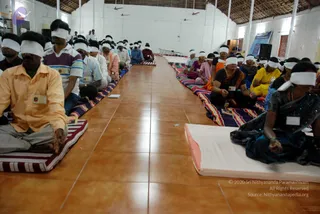
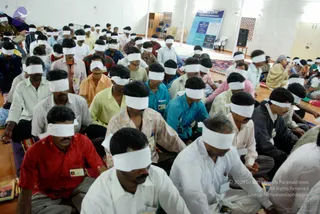
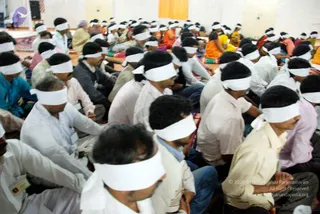
A hall with white walls and a thatched ceiling, where a large group of people sit cross-legged on colourful striped mats, most wearing white blindfolds tied over their eyes. Many wear white or pale shirts, one man in the front centre wears a red shirt, and some have name badges. Behind them a blue banner hangs on the wall, and a speaker sits in the corner.A large group of men sit cross-legged on colourful striped mats in a bright hall, all wearing white cloth blindfolds tied over their eyes. Most wear light shirts and trousers or dhotis, and several have ID badges clipped to their clothing; one man in front wears a red-orange shirt. A blue banner on the wall behind them is partly visible. The seated participants appear to be in a guided meditation or inner awakening session. No speaker or a person is visible in the frame.A large group of women sits cross-legged in rows on colourful striped mats in a bright hall, many wearing white blindfold-style cloth over their eyes during a meditation session. Their saris are in orange, yellow, black, teal, pink, red, blue and green, and several have name badges clipped to their clothes. Small framed photos lie on the mats in front of some participants, and a bag rack and white pillars line the back wall. No single leader is clearly visible in the frame.A wide hall with a tiled floor and a thatched roof where many participants sit in rows on striped mats, all wearing white blindfold cloths over their eyes. Men on the left wear yellow, white and striped shirts, and women on the right wear saris in black, yellow, orange and blue. Several participants wear name badges. A banner hangs on the far wall and ceiling fans are visible. The seated participants appear to be in a meditative or blindfolded exercise.A large indoor session of many seated participants, most wearing white cloth blindfolds tied around their heads. They sit cross-legged on a red and patterned floor mat in a white-walled hall. Men in white shirts, red, orange, blue and yellow shirts and dhotis fill the front rows, with women in saris at the back right. Several wear name badges on their clothing. Behind them hangs a blue and white banner with printed text, and chairs and a speaker stand at the right edge. No individual is identifiable as a particular person here.A large seated gathering of devotees in a bright hall with white walls, most wearing white cloth blindfolds tied across their eyes. Men in white shirts, pale kurtas and blue or cream clothing sit closest to the camera, while women in saffron, orange, yellow and pink saris sit further back on colourful striped mats. A black speaker and a small purple logo appear at the top left. The blindfolded participants appear to be in a guided exercise or session together.