Skip to content
Saturday

22 December 2007

Be Unclutched® Vol 1

Dated photos
239
Source pages
1
Media
12
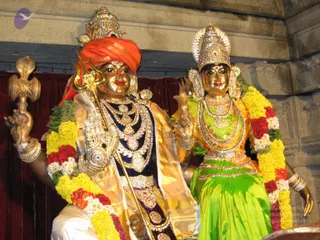
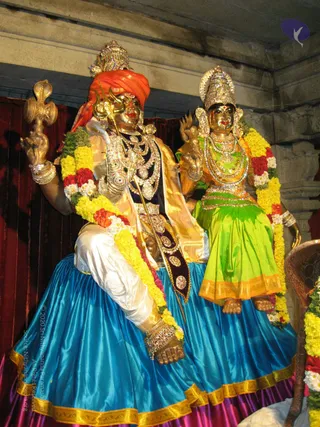
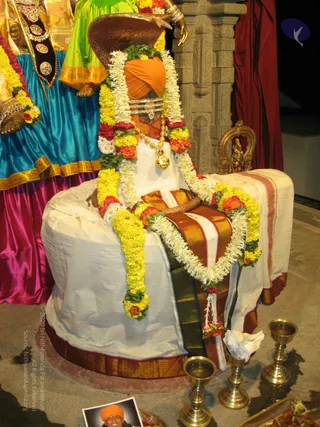
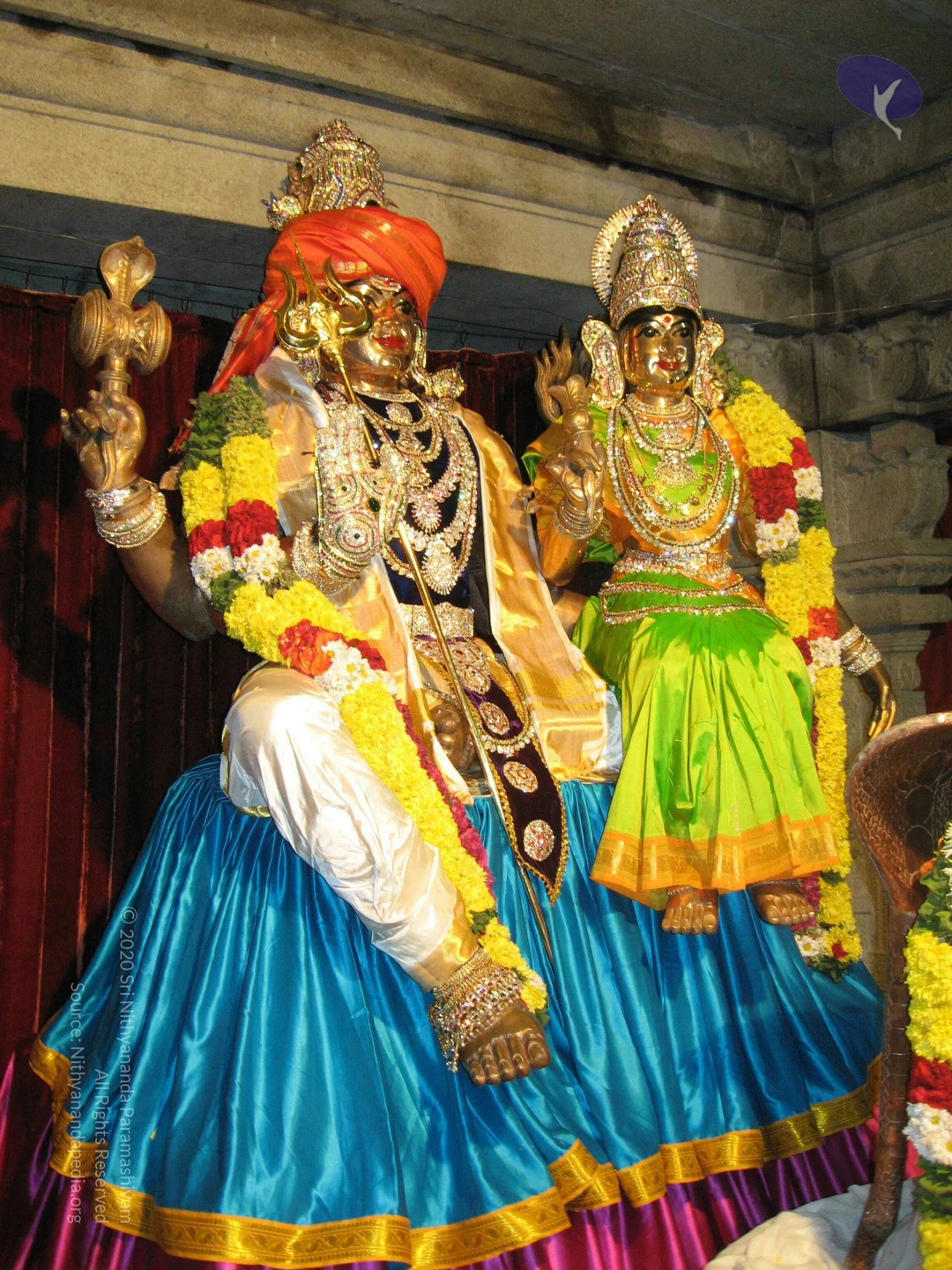
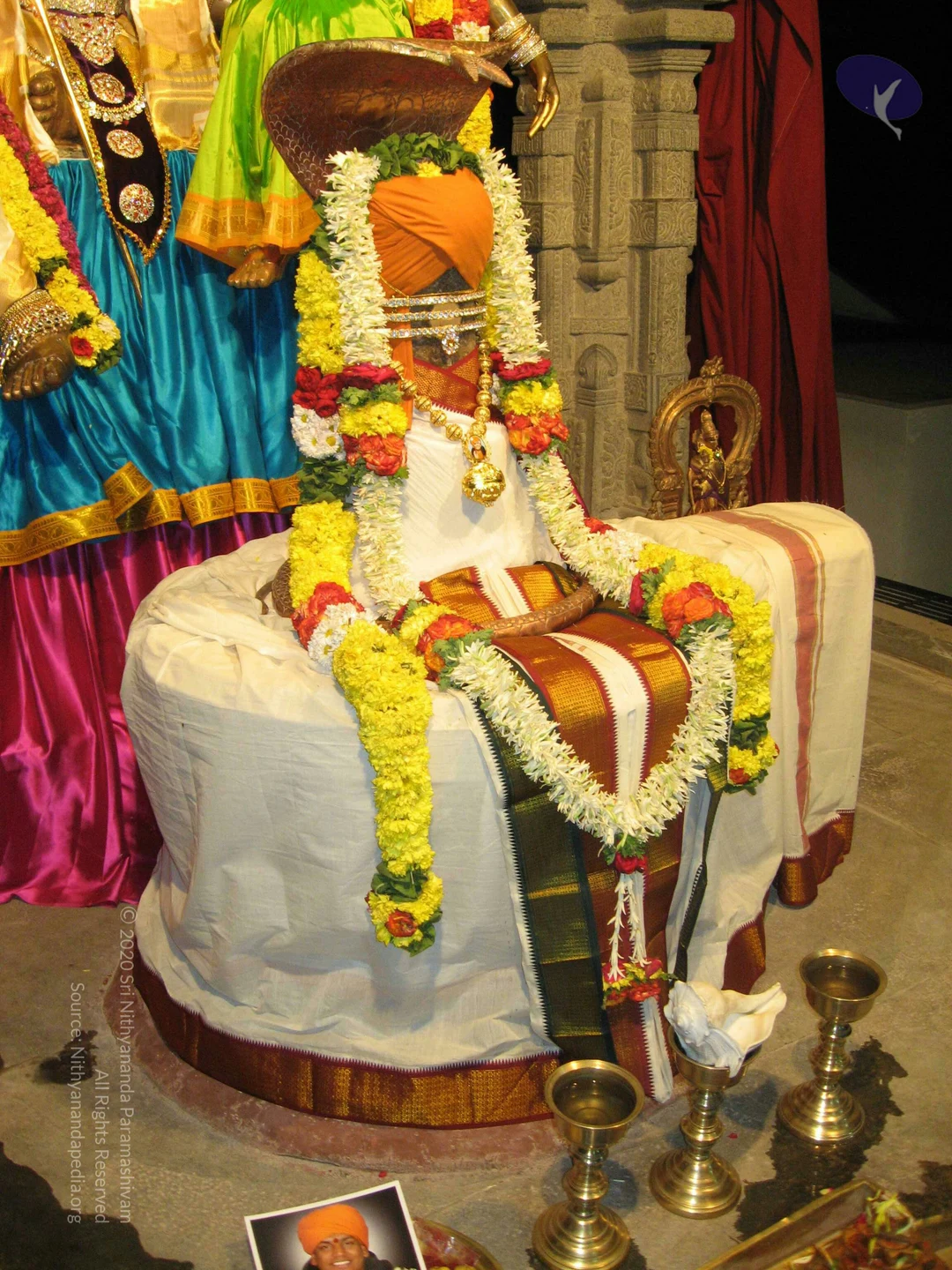
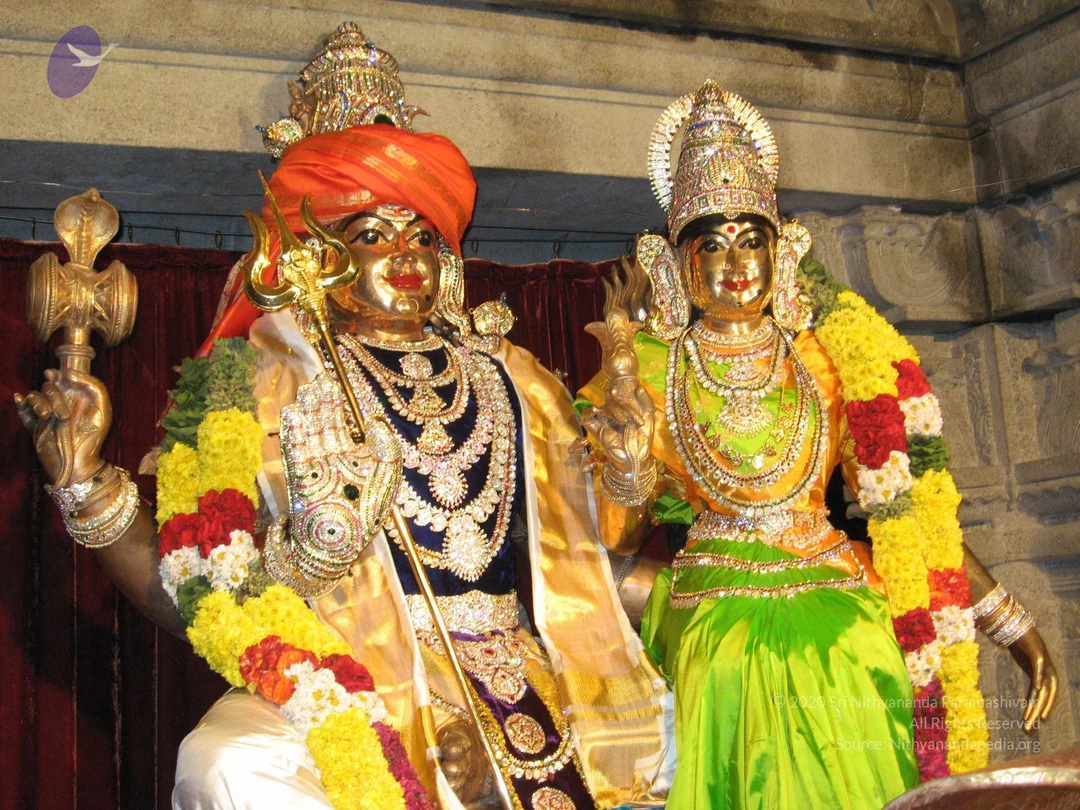
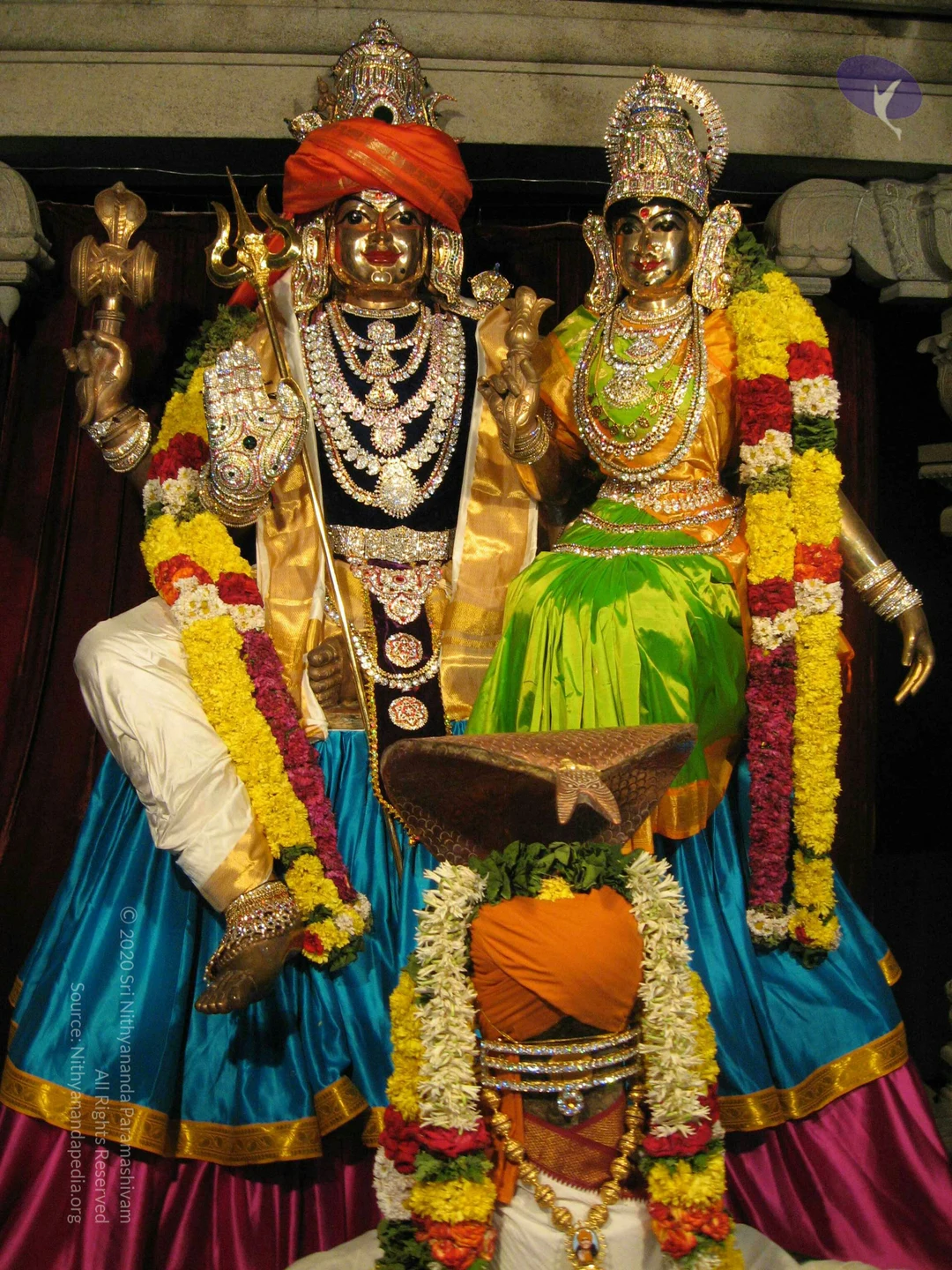
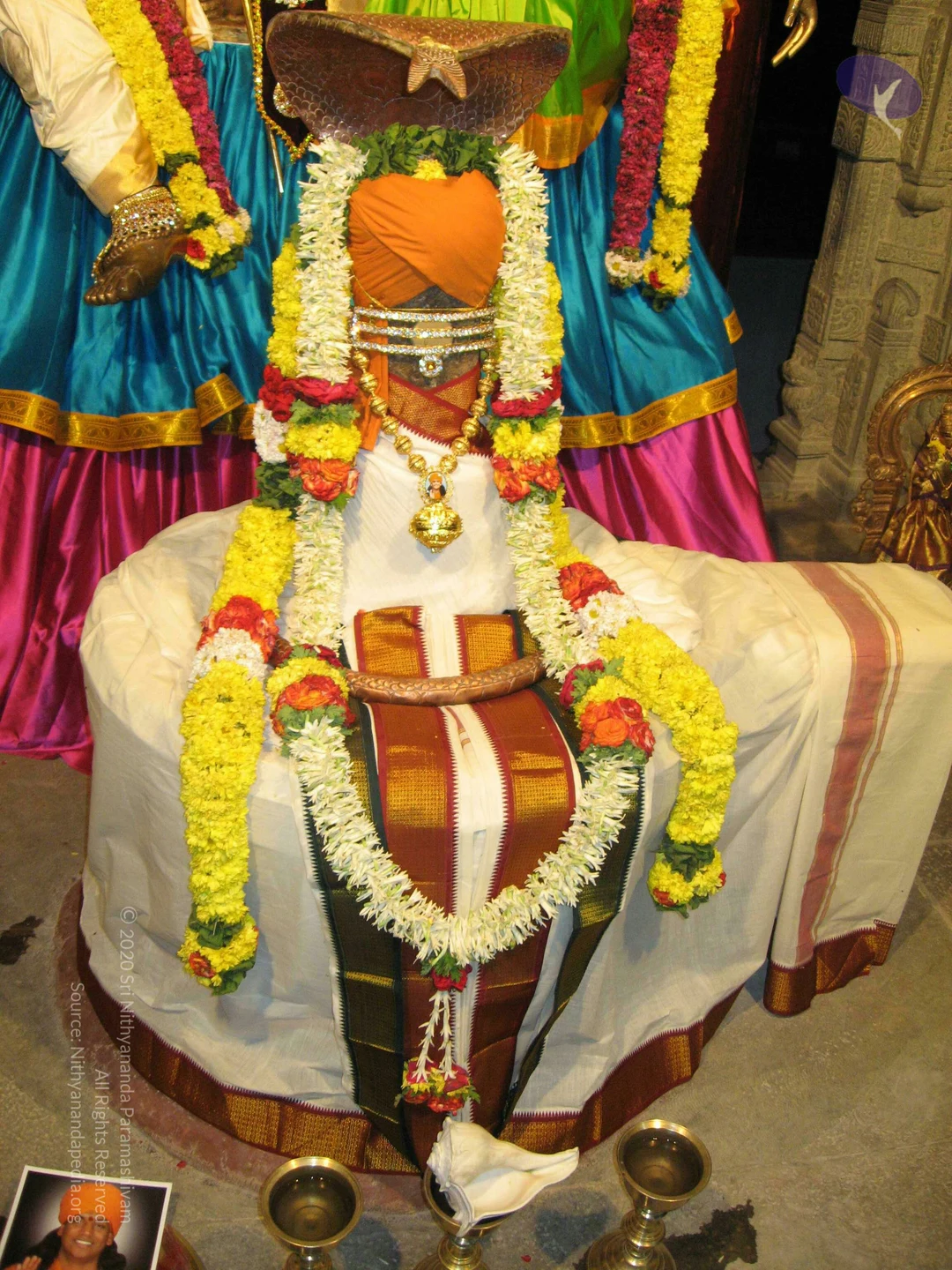
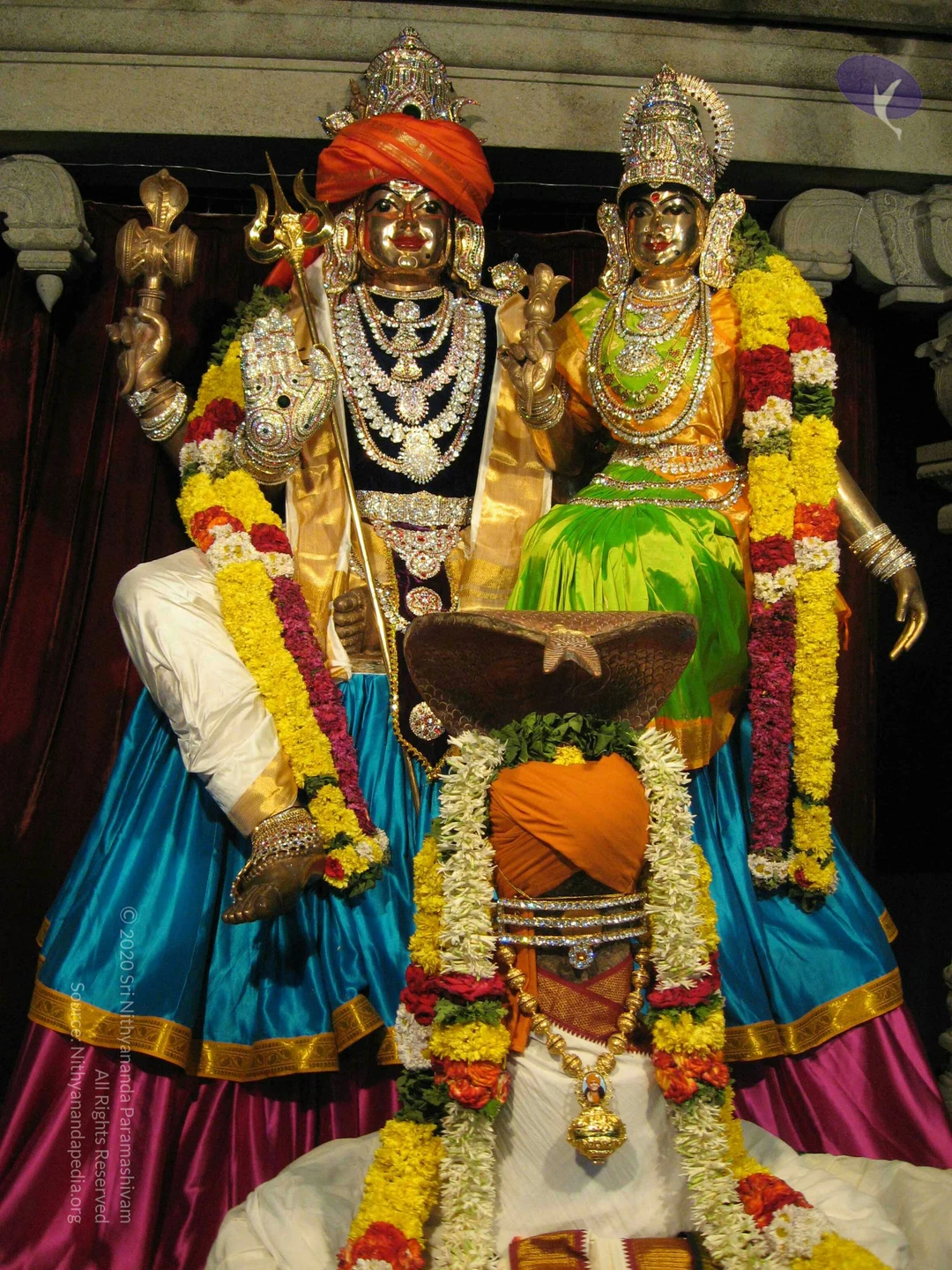
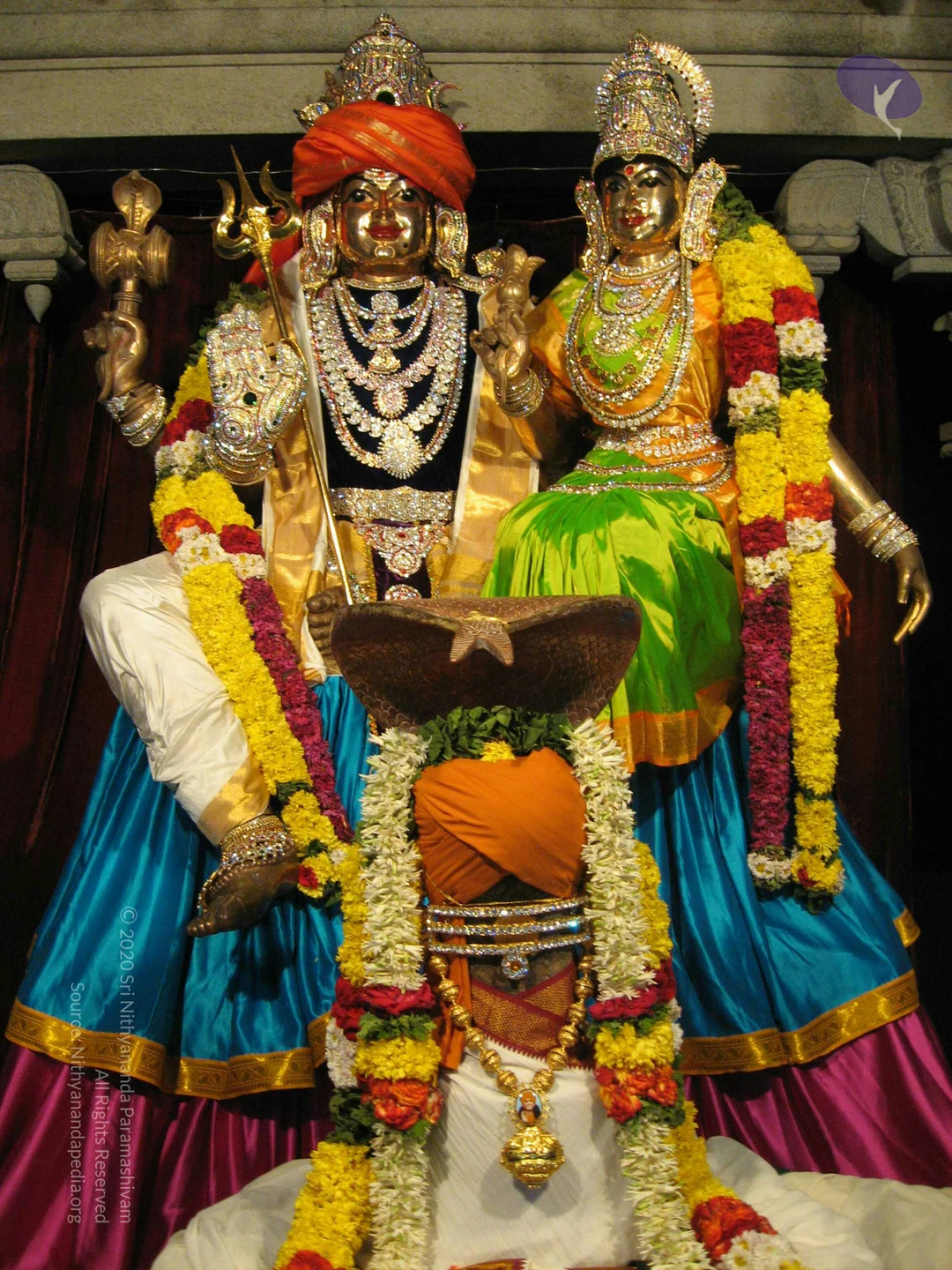
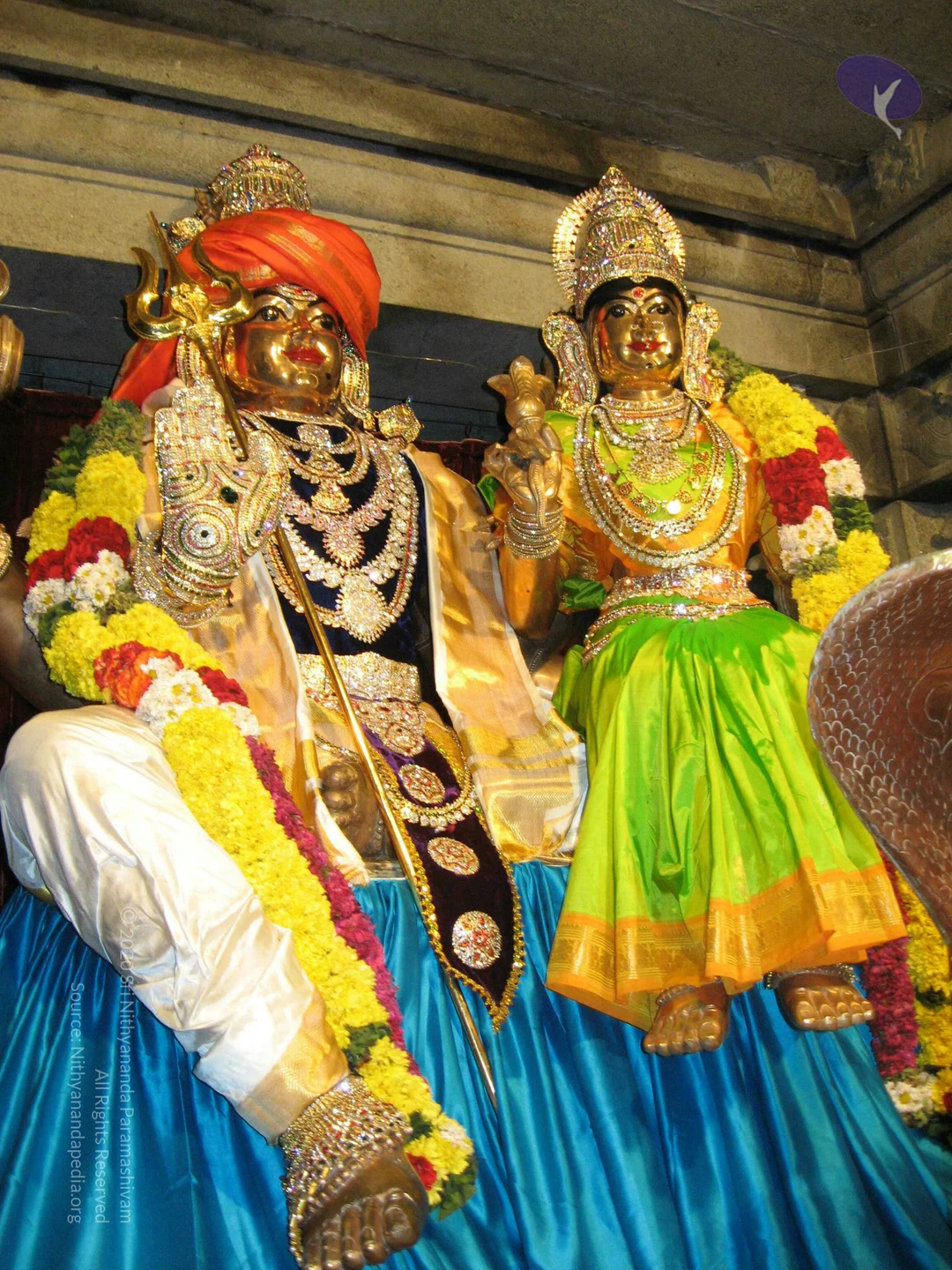
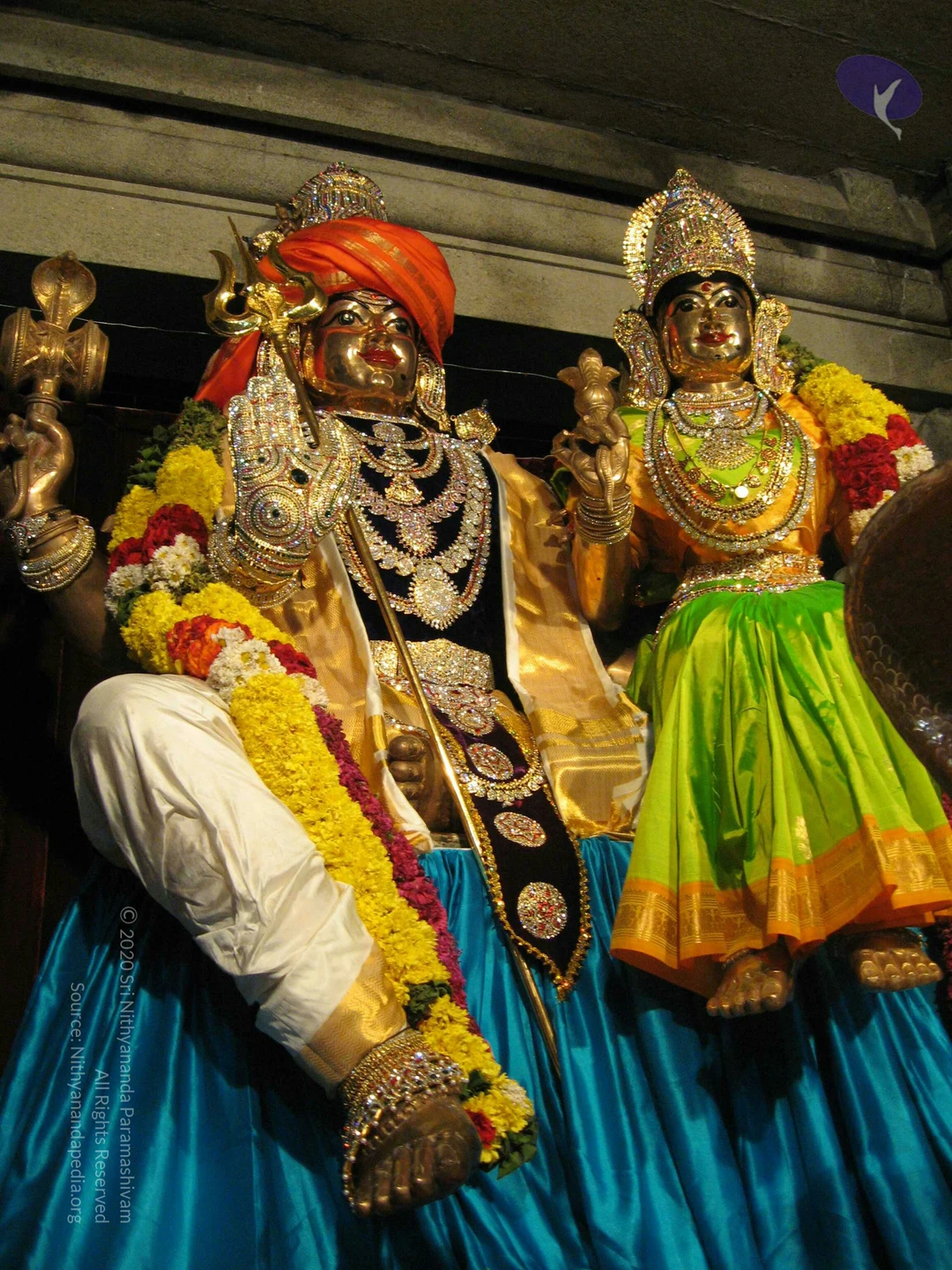
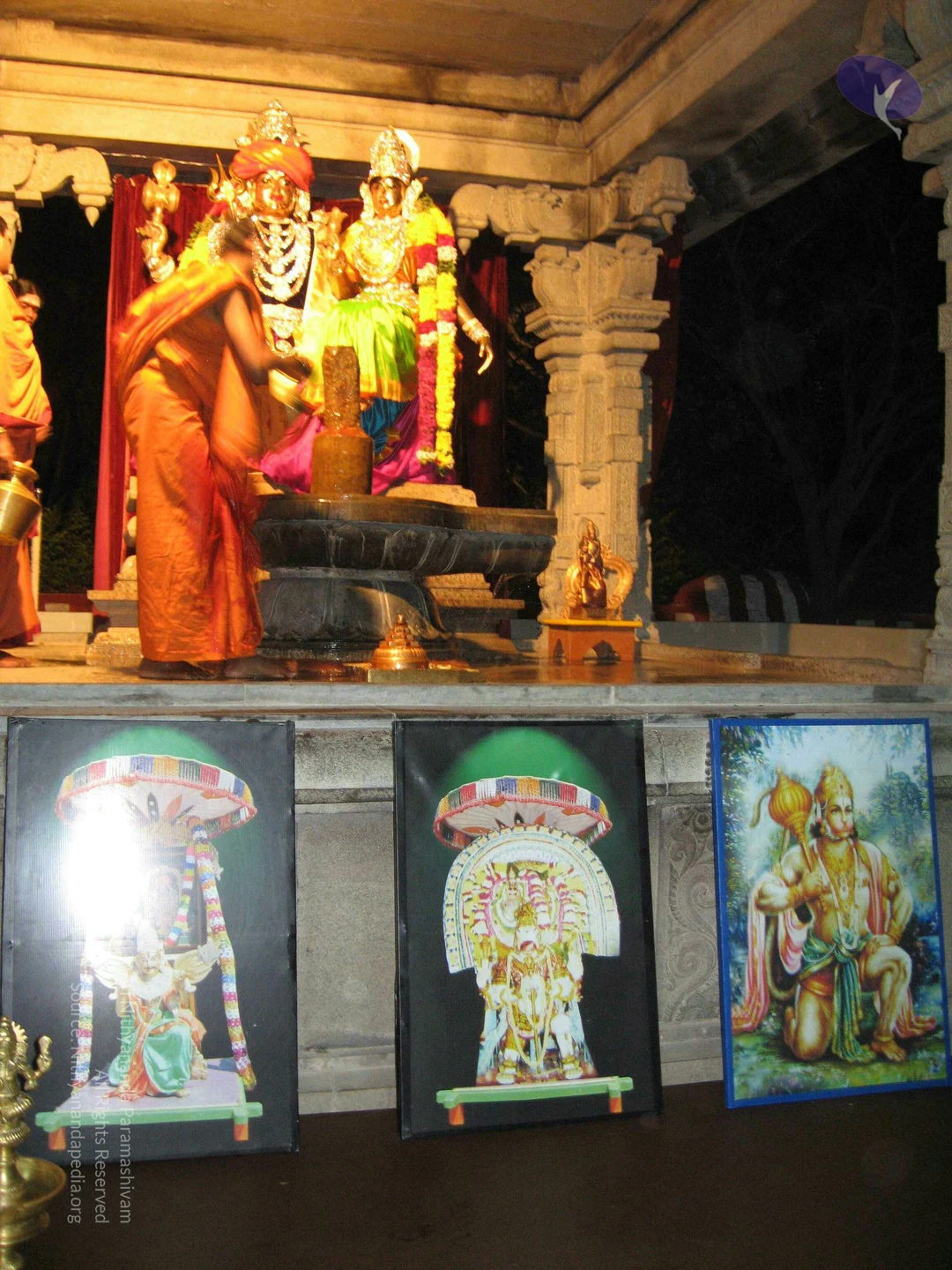
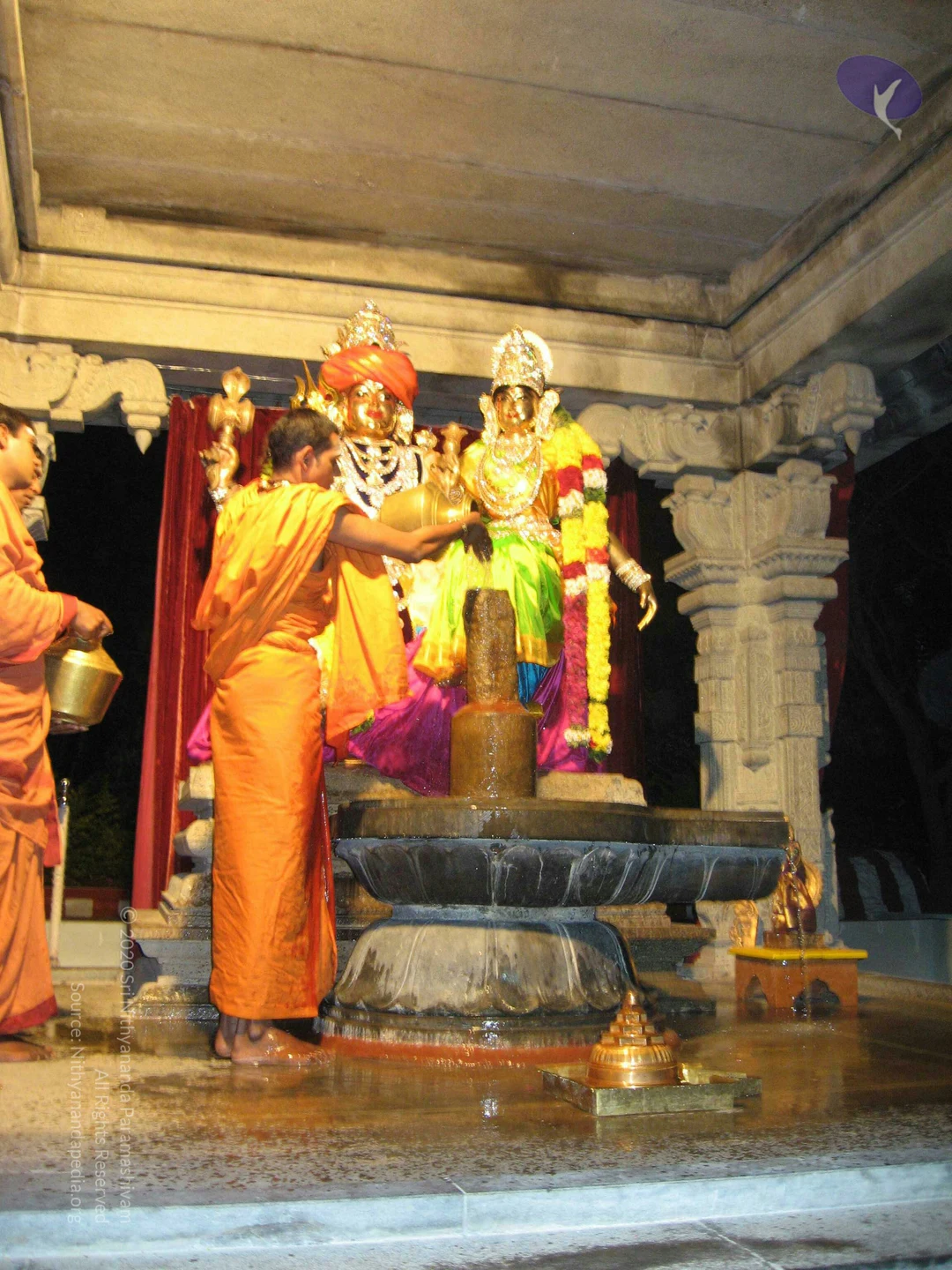
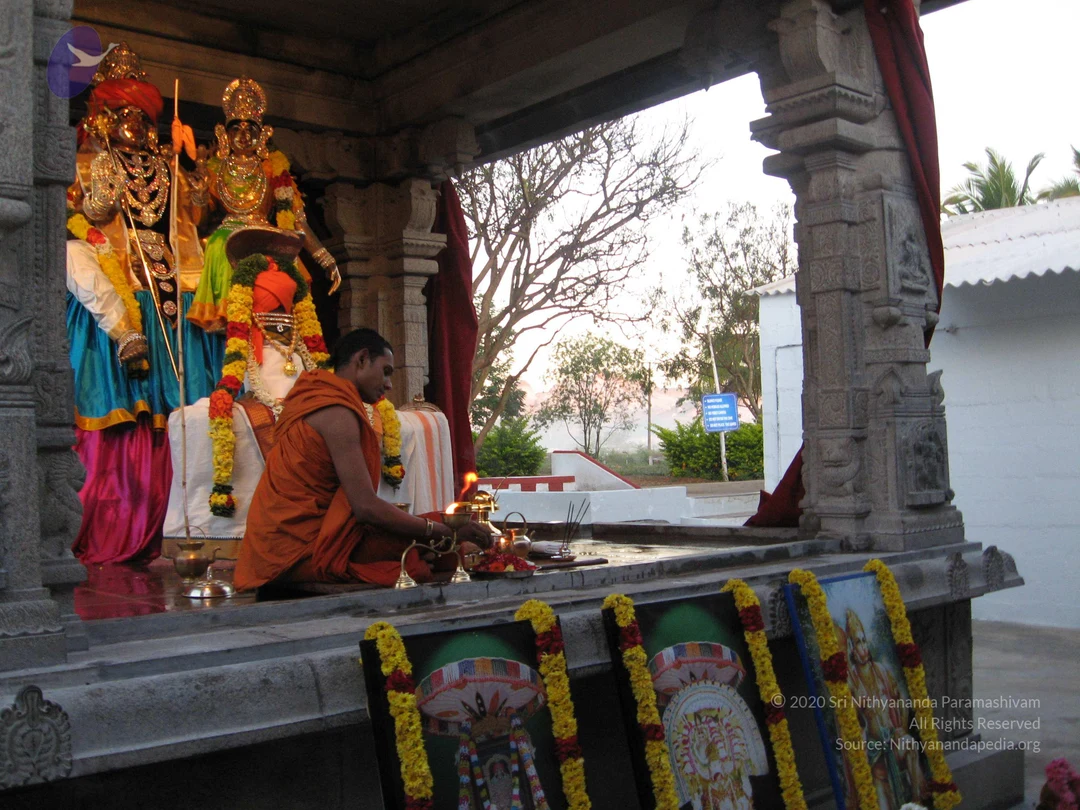
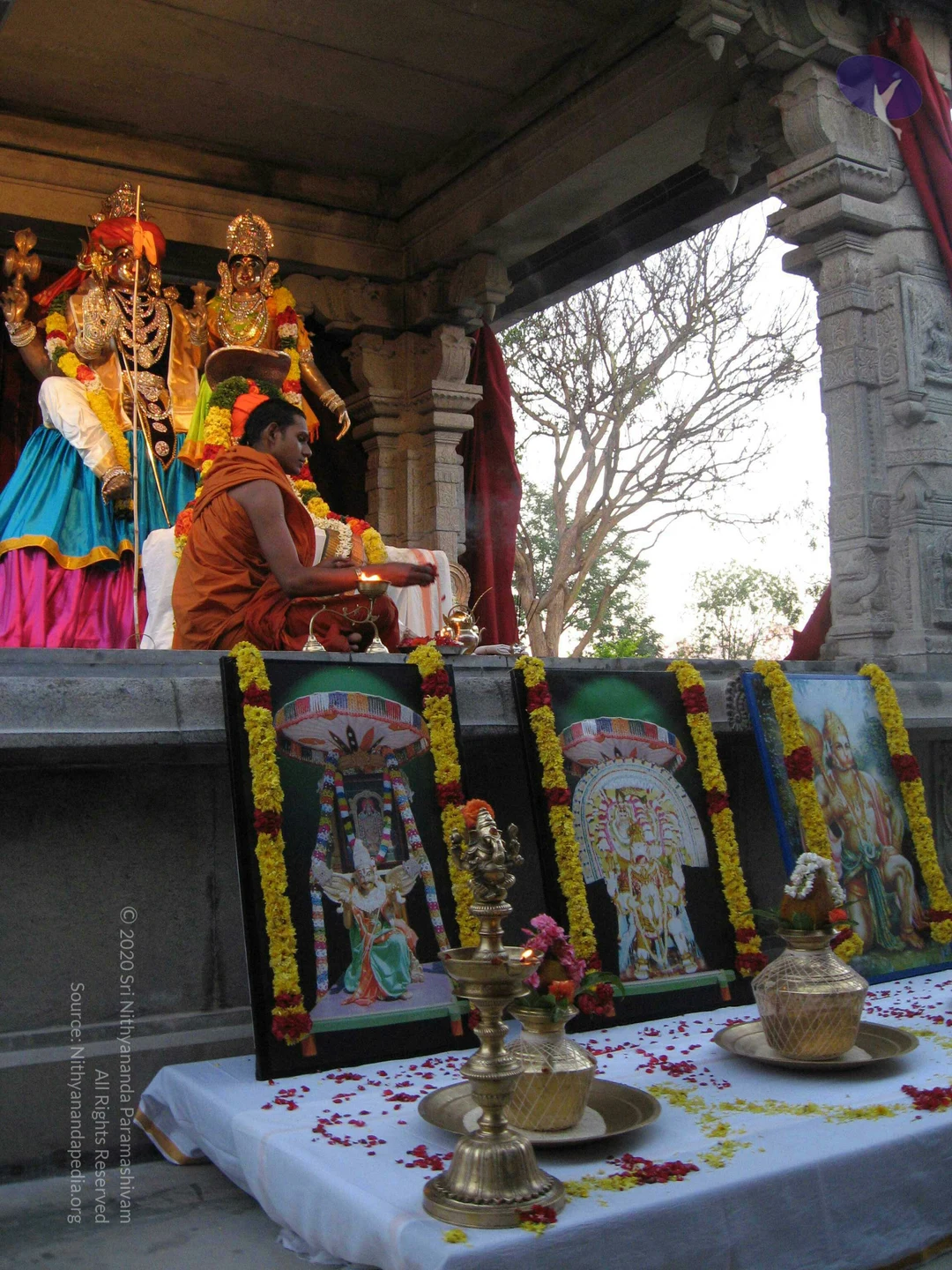
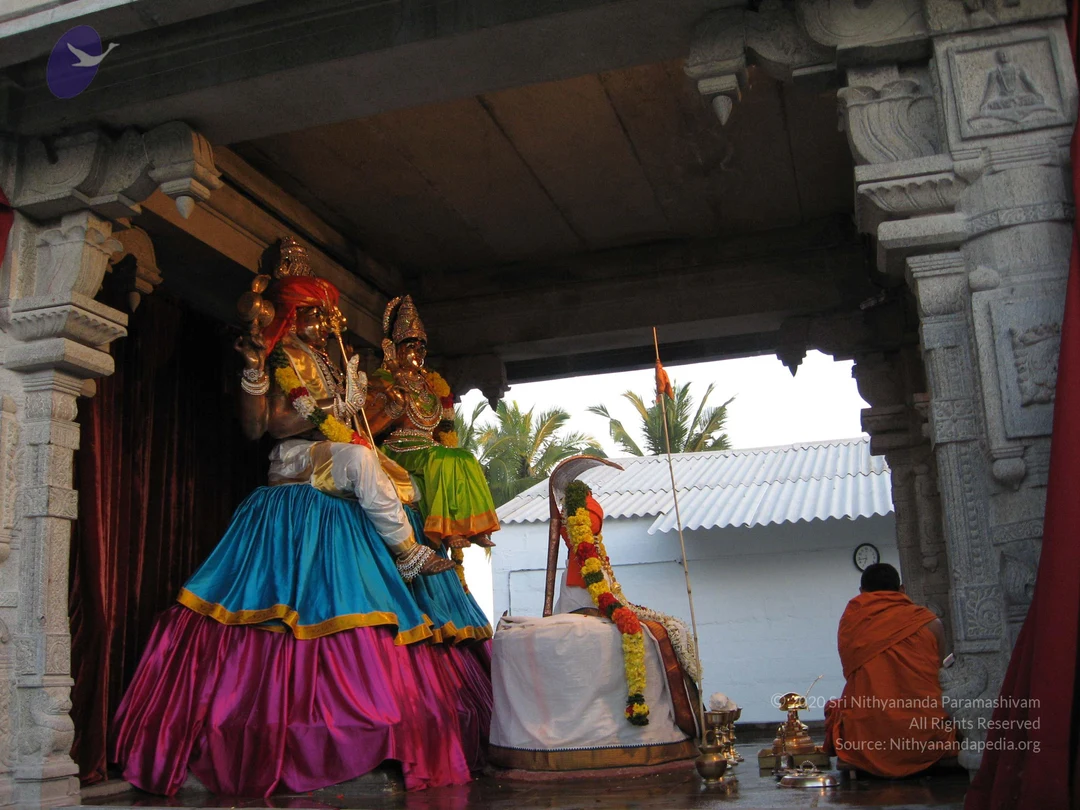
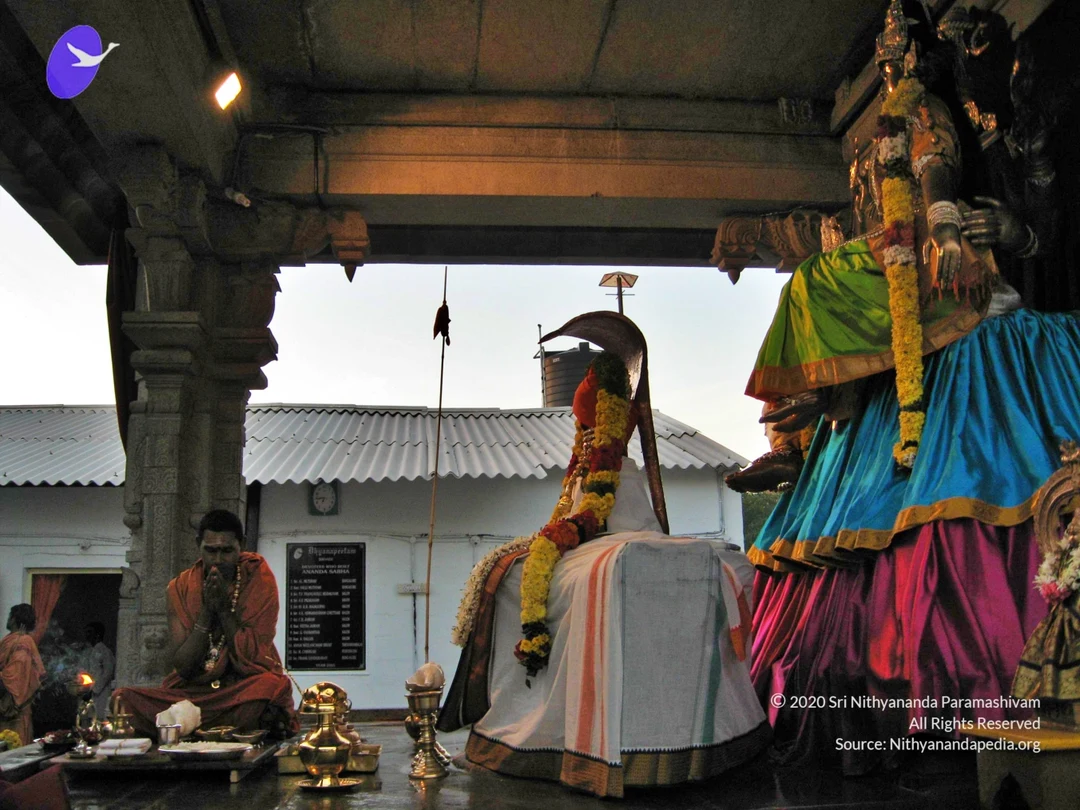
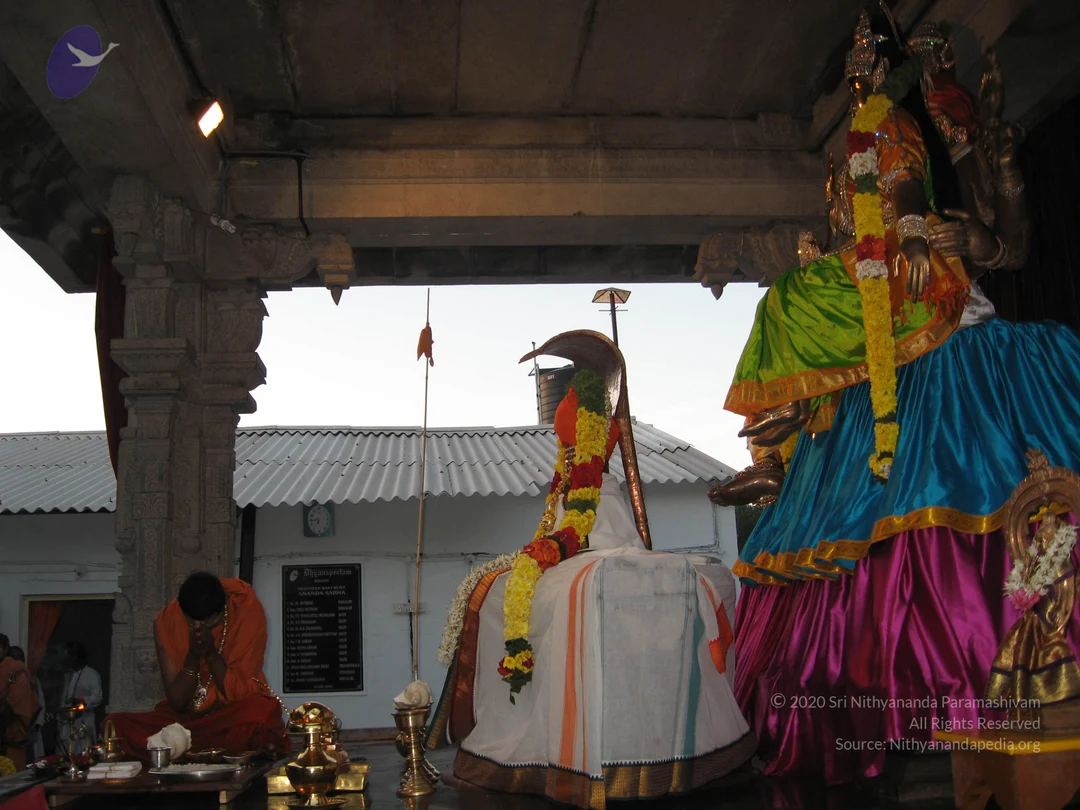
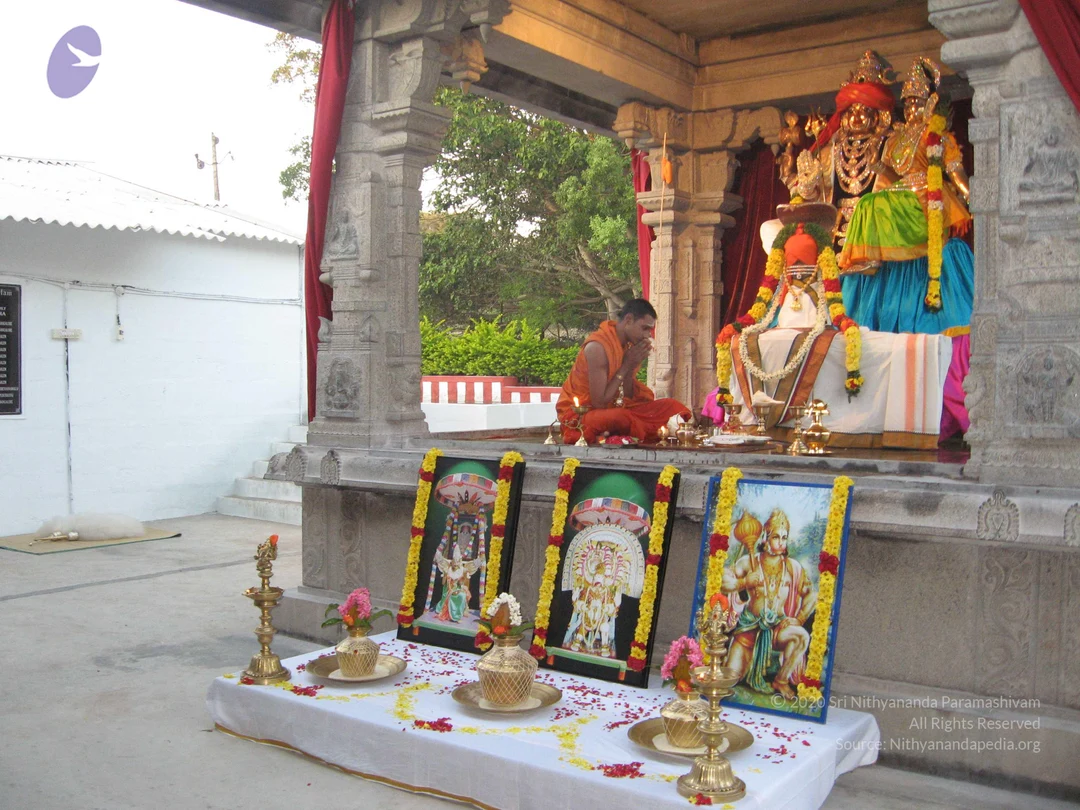
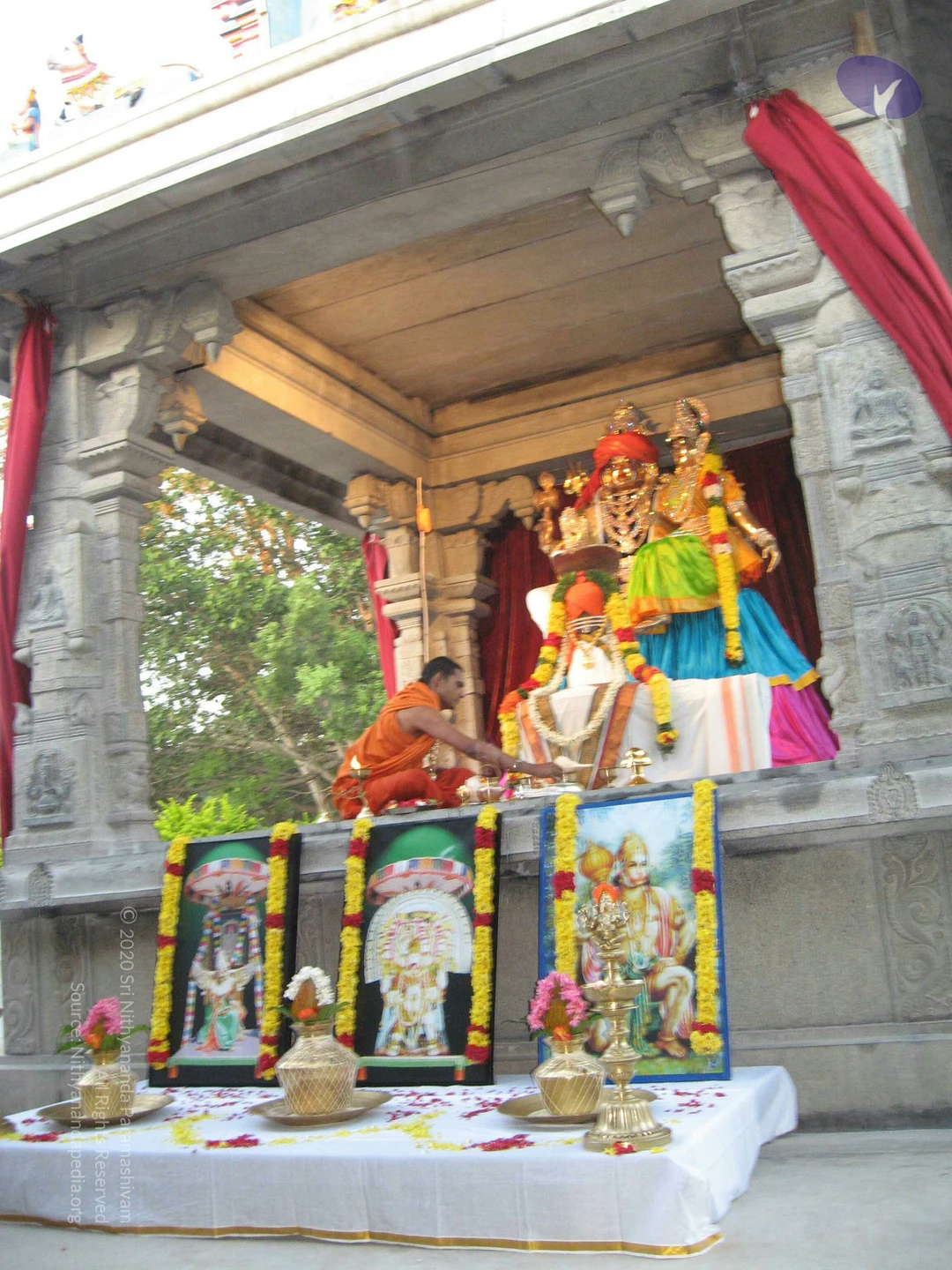
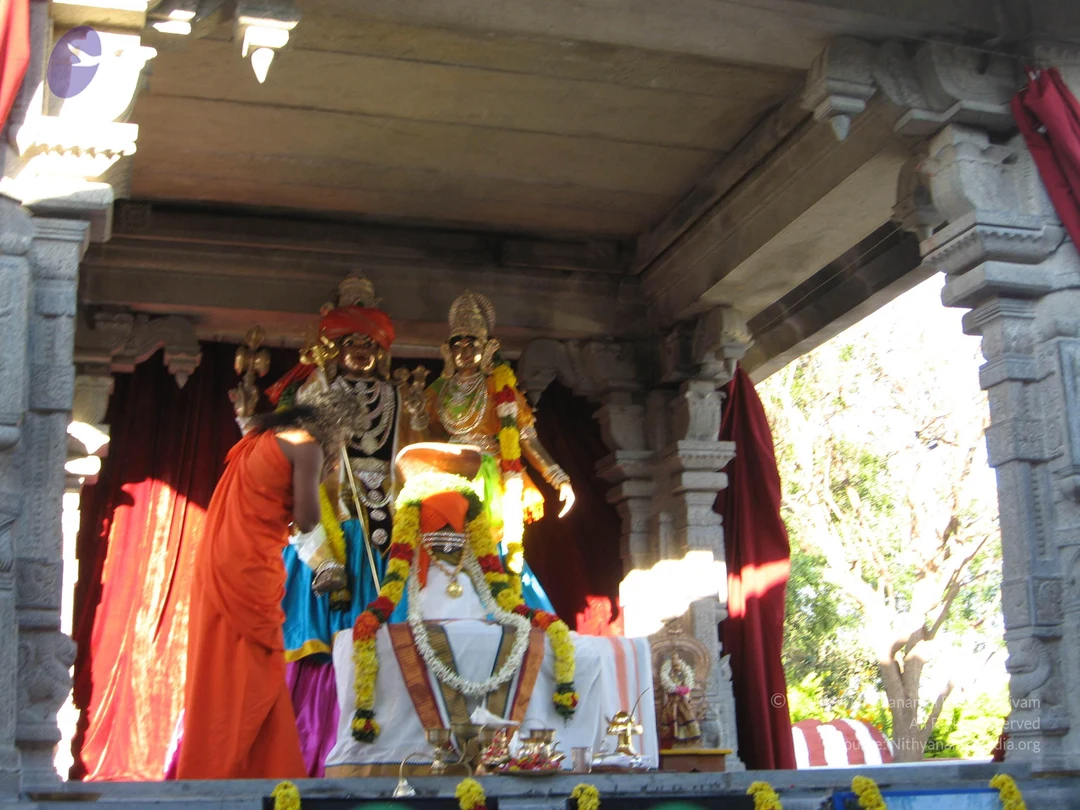
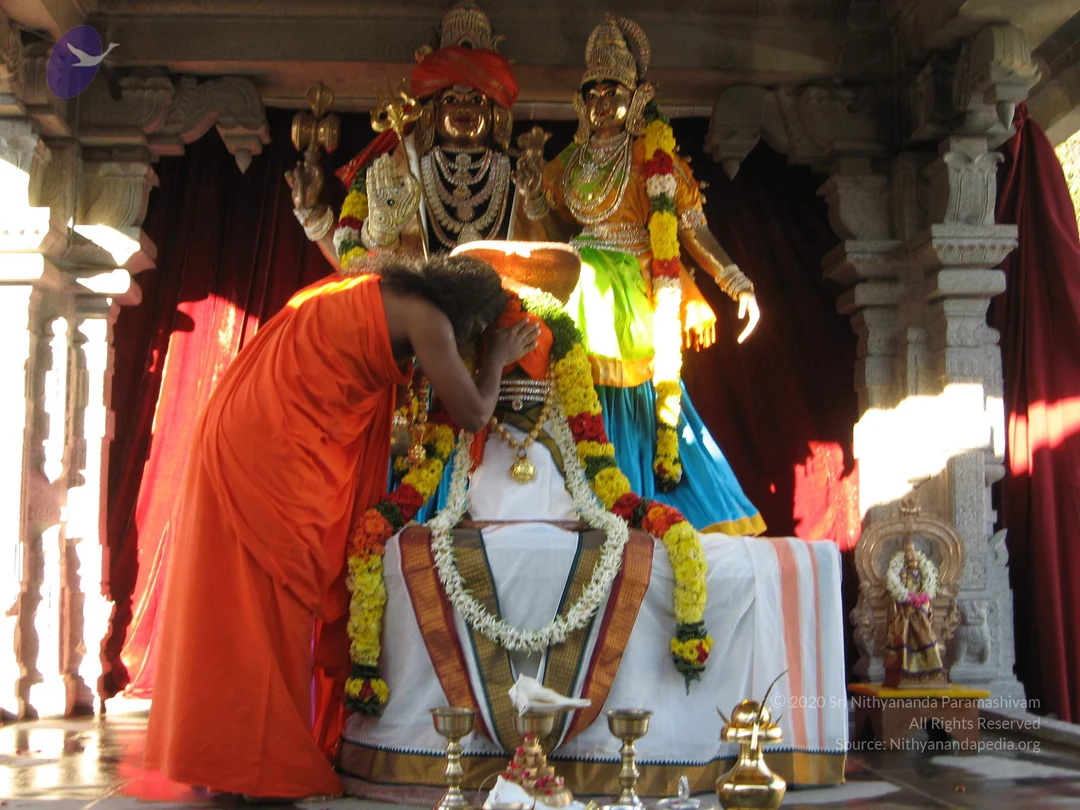
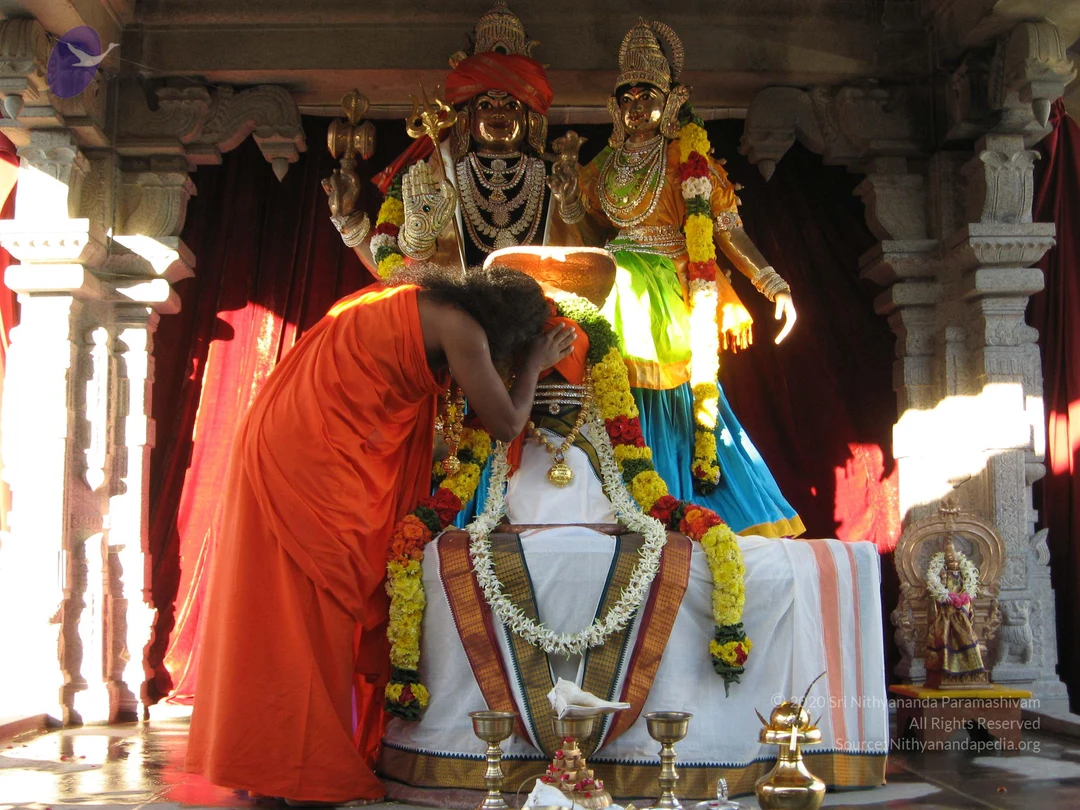
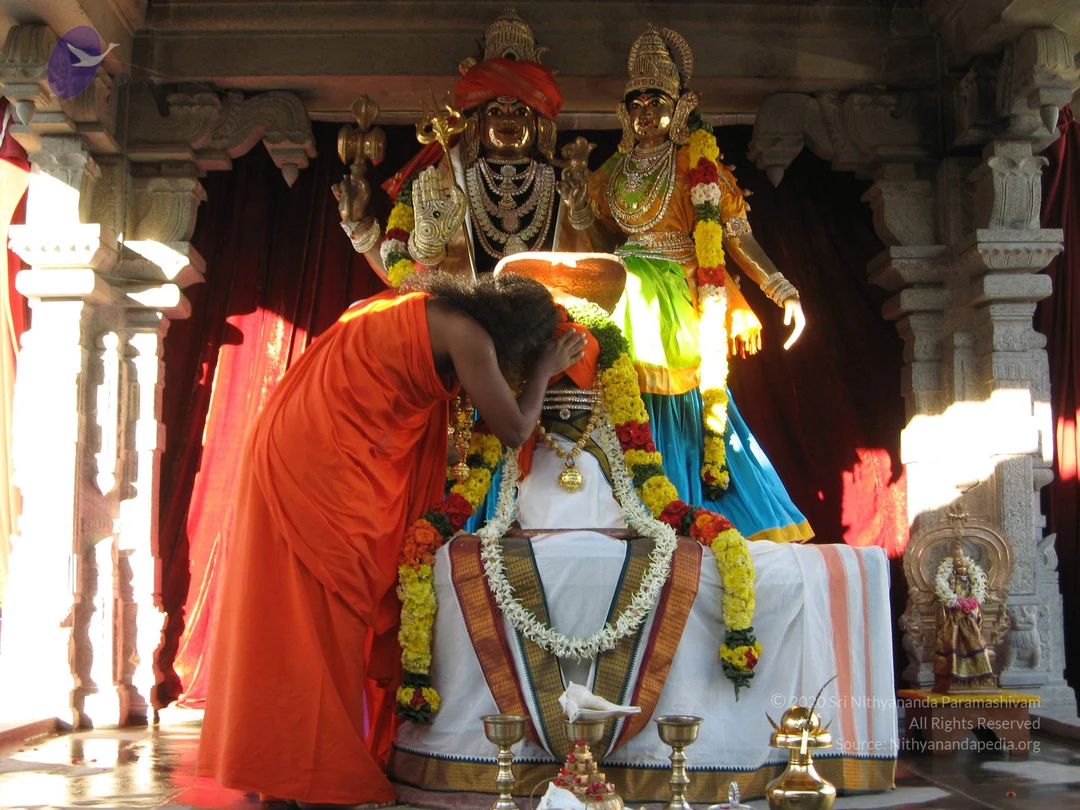
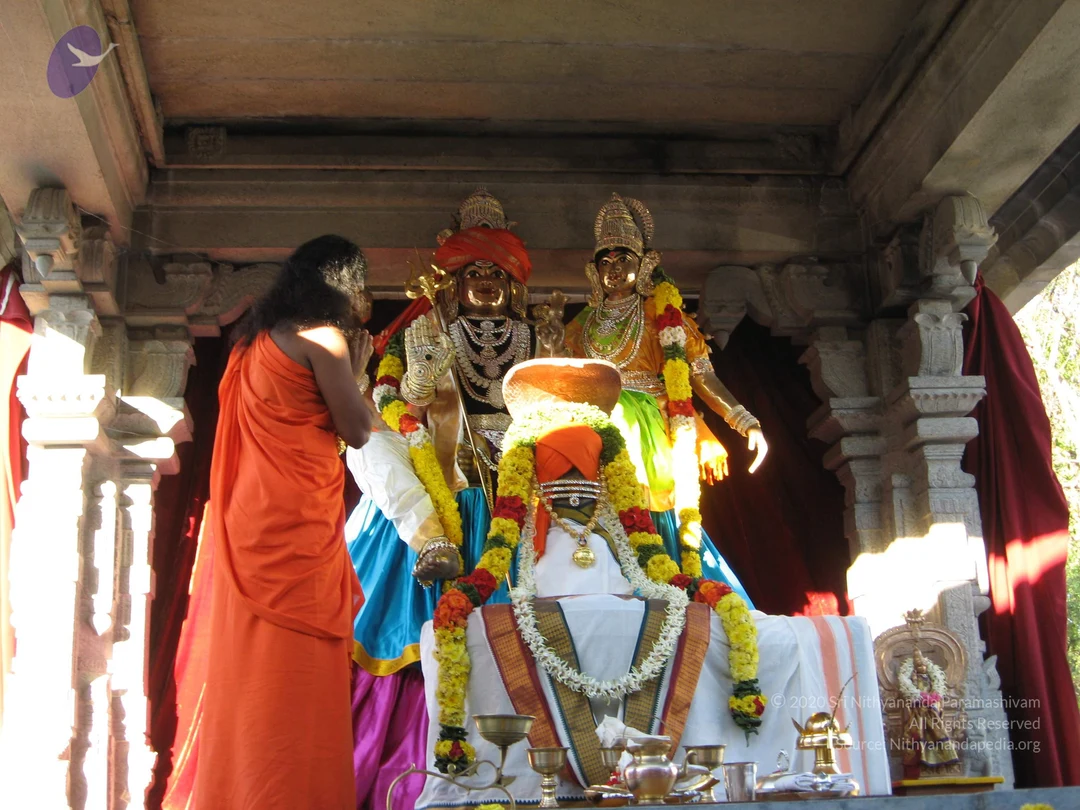
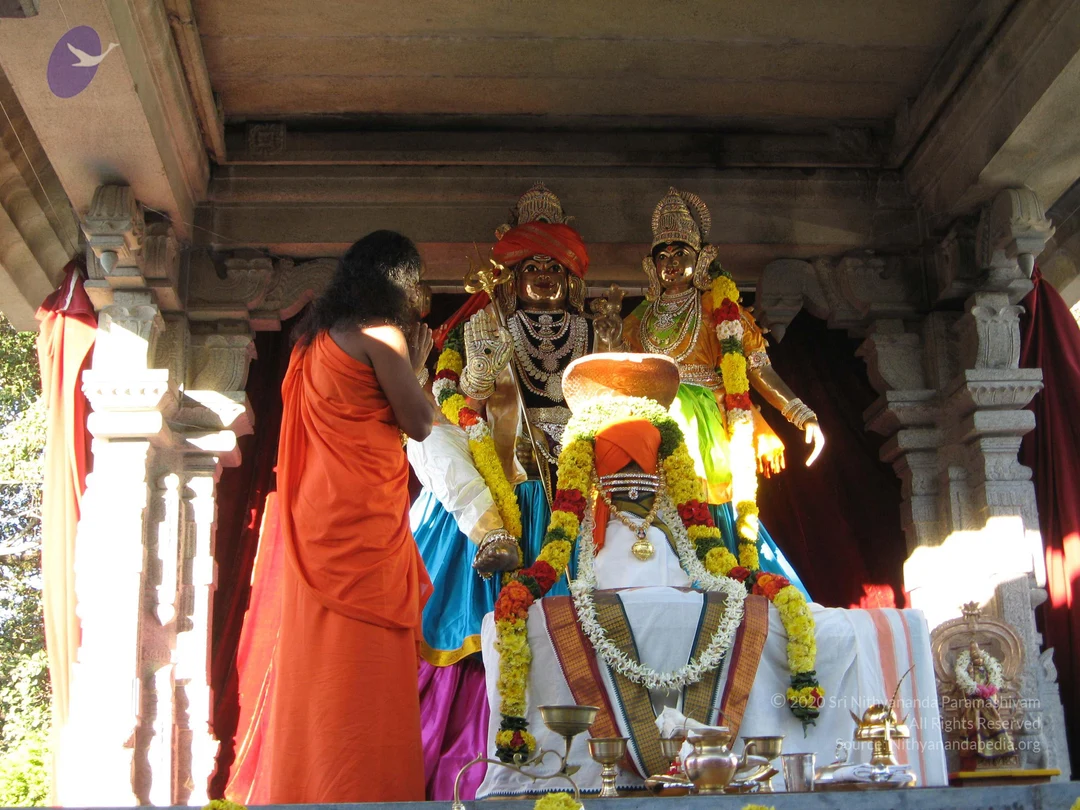
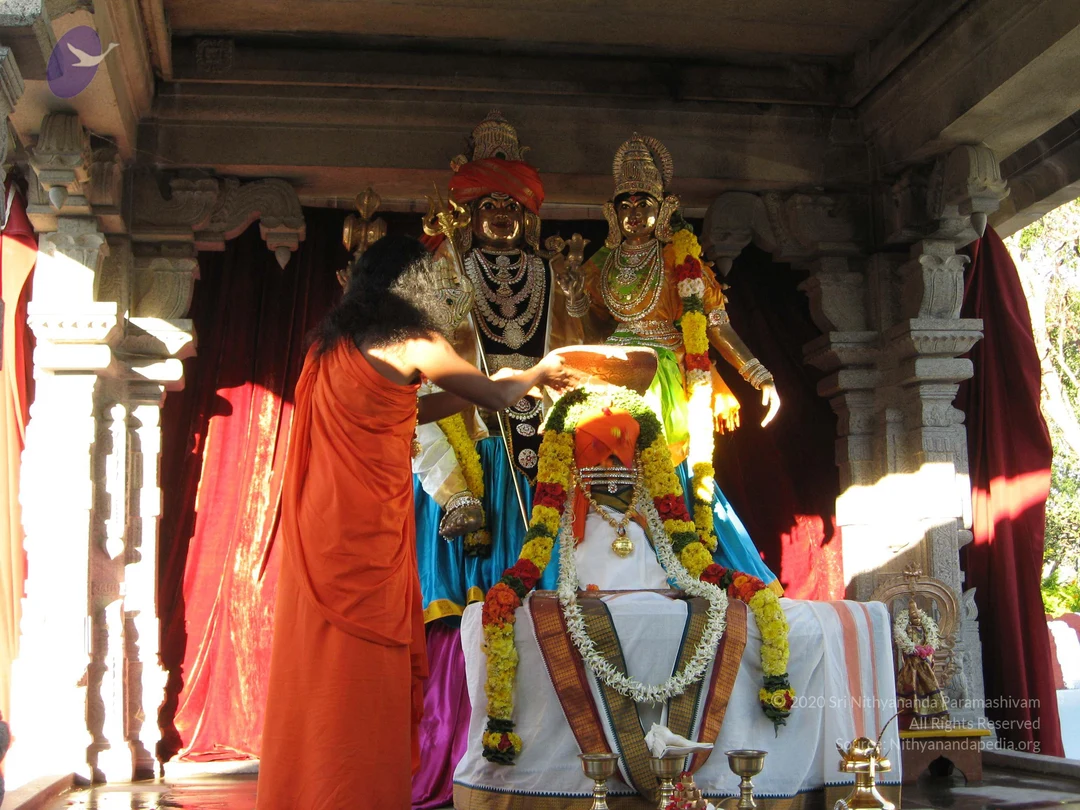
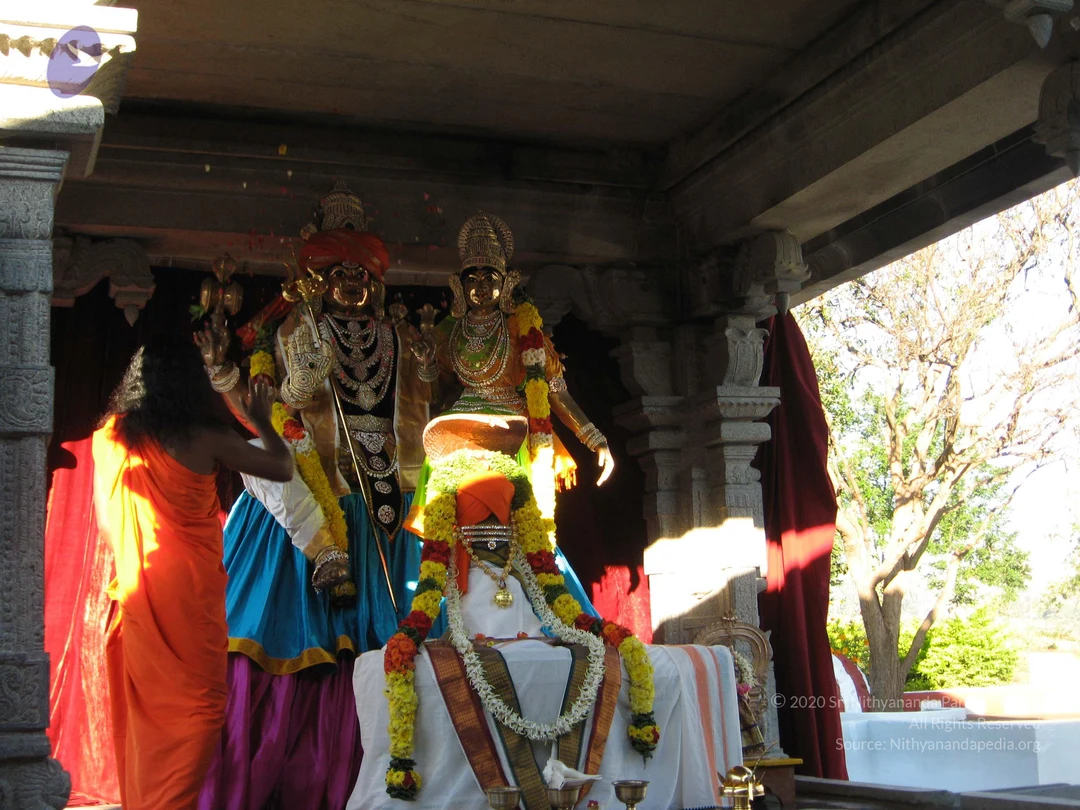
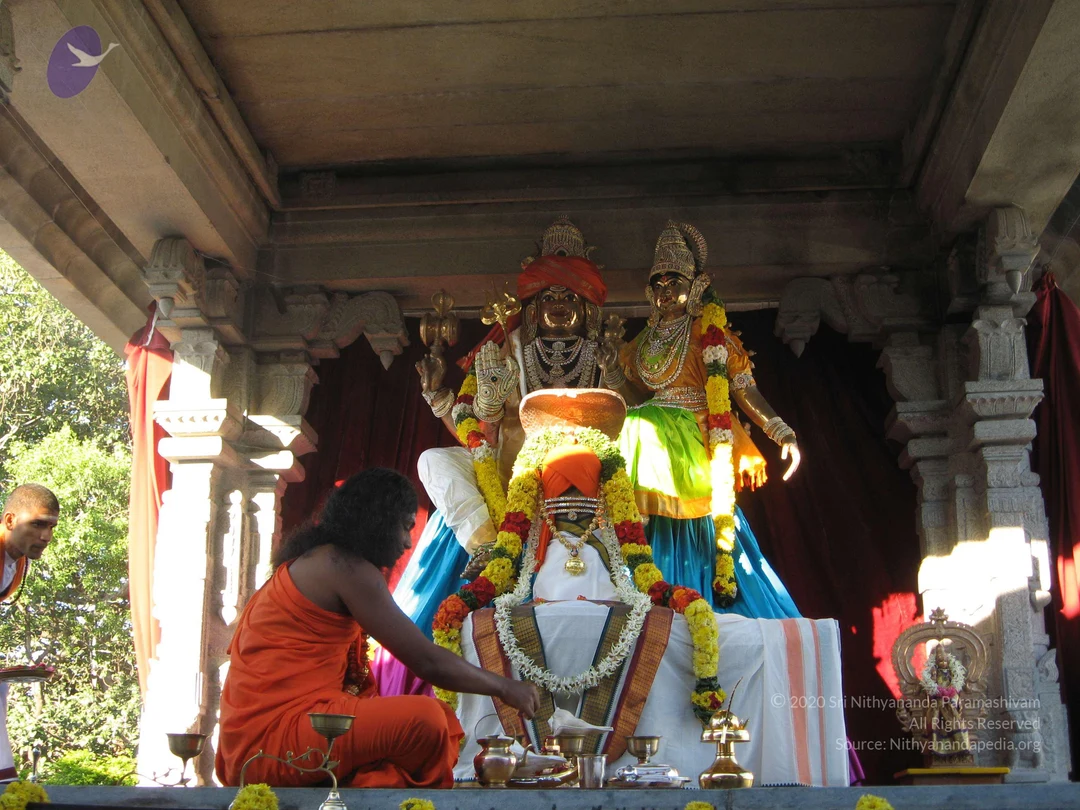
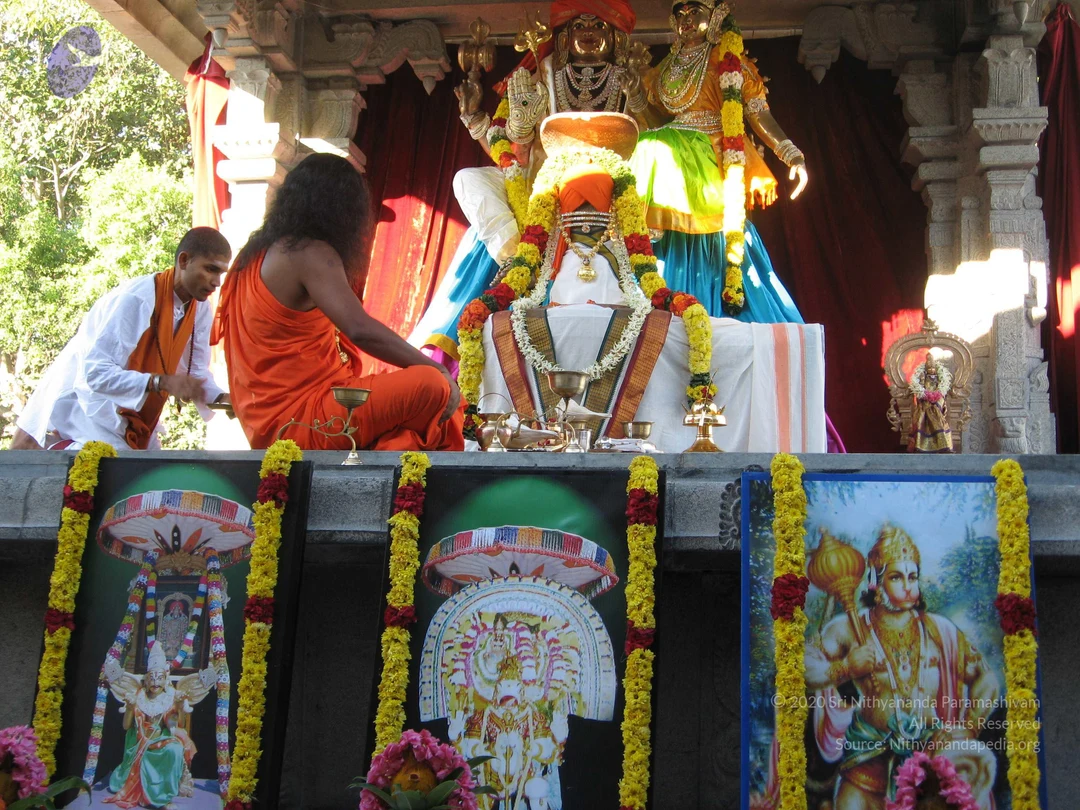
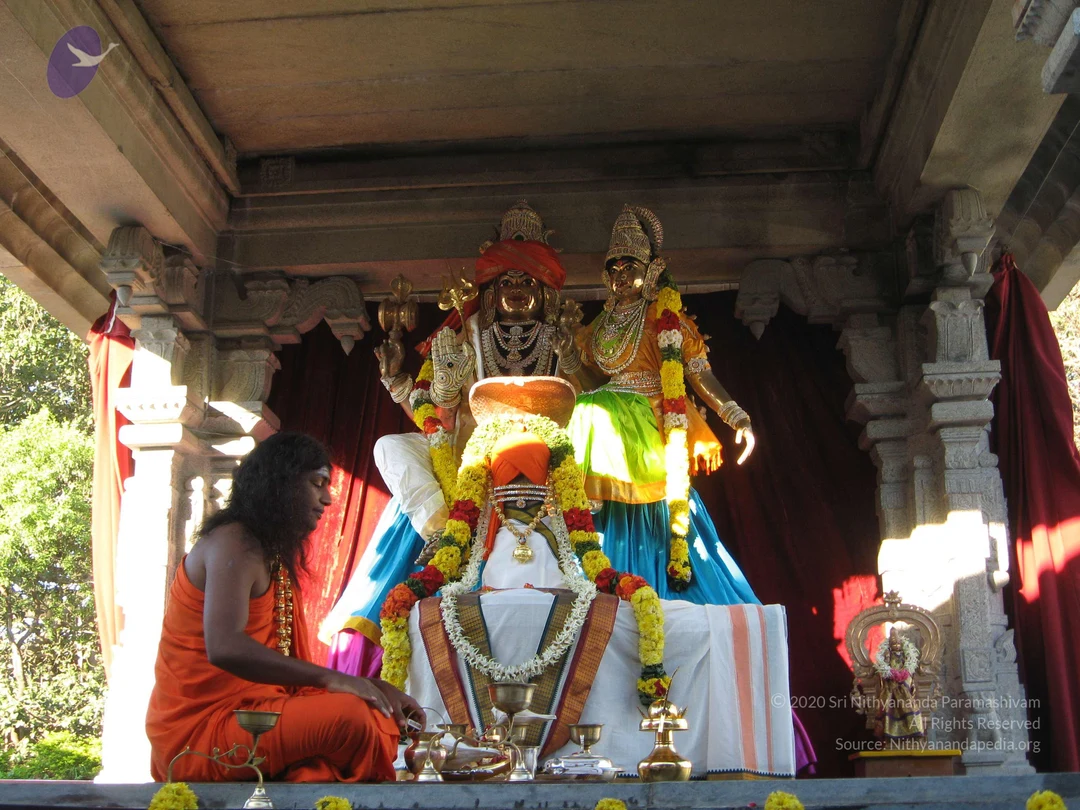
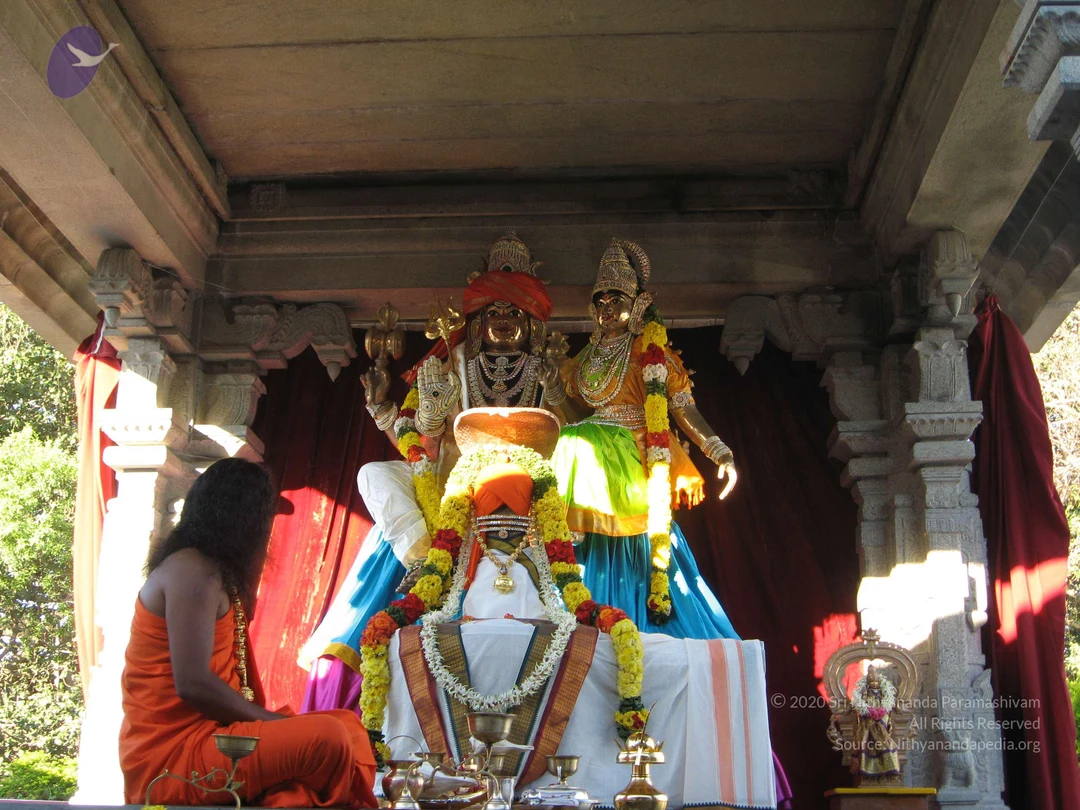
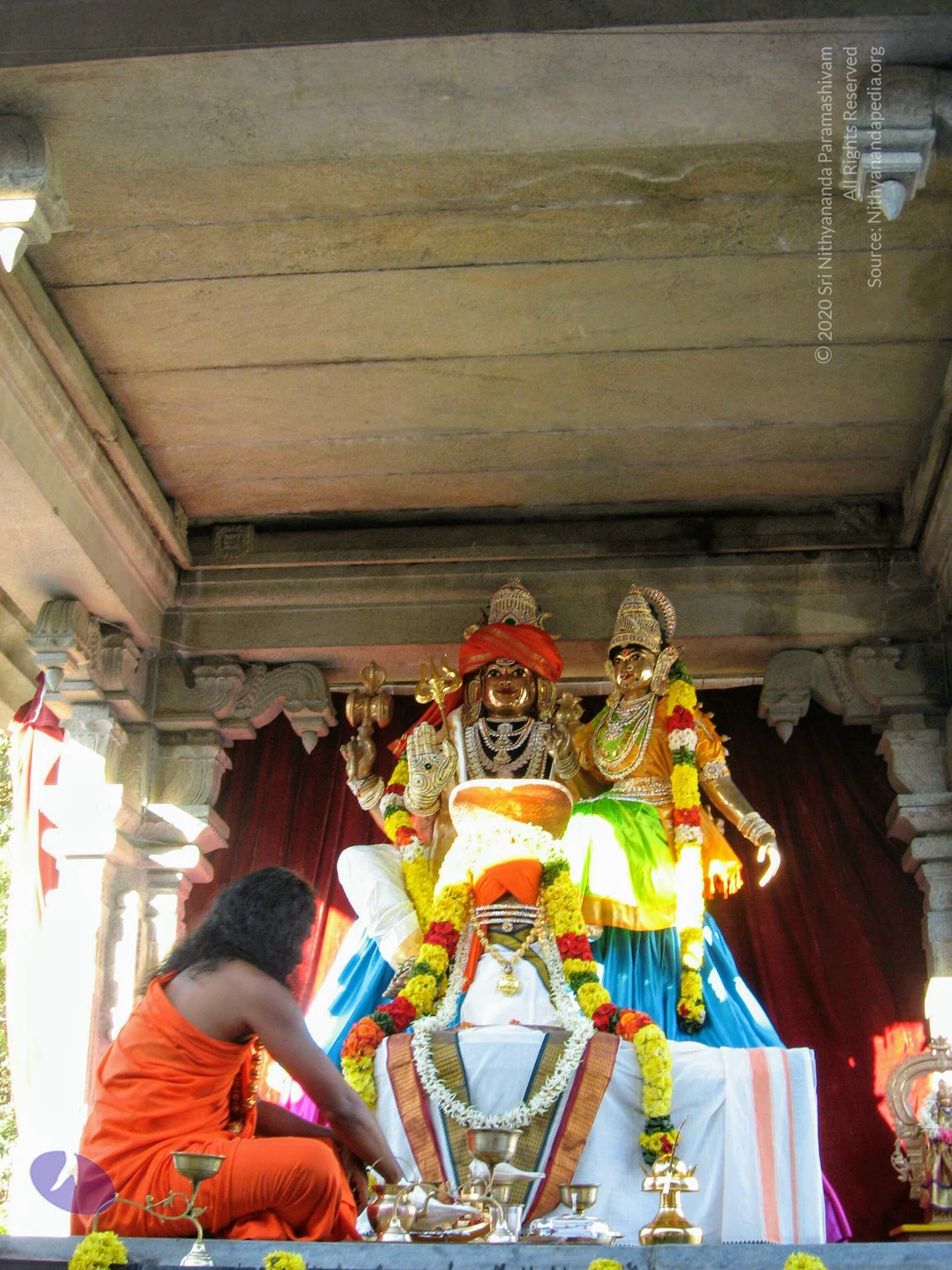
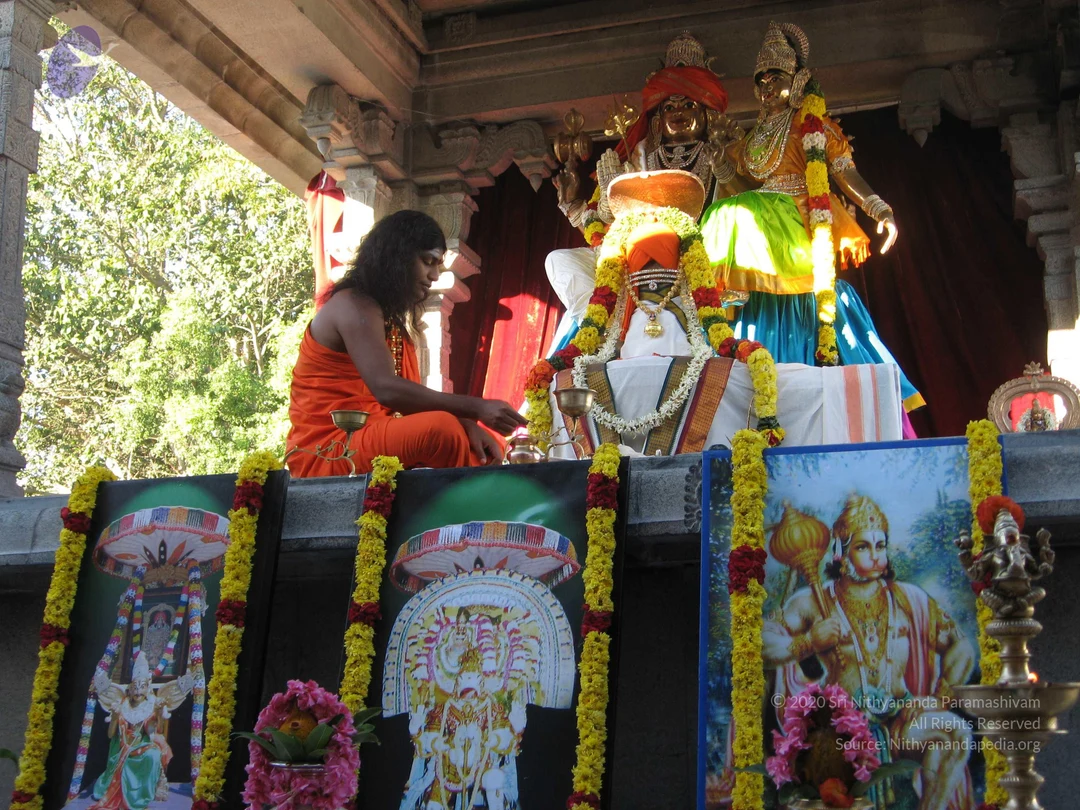
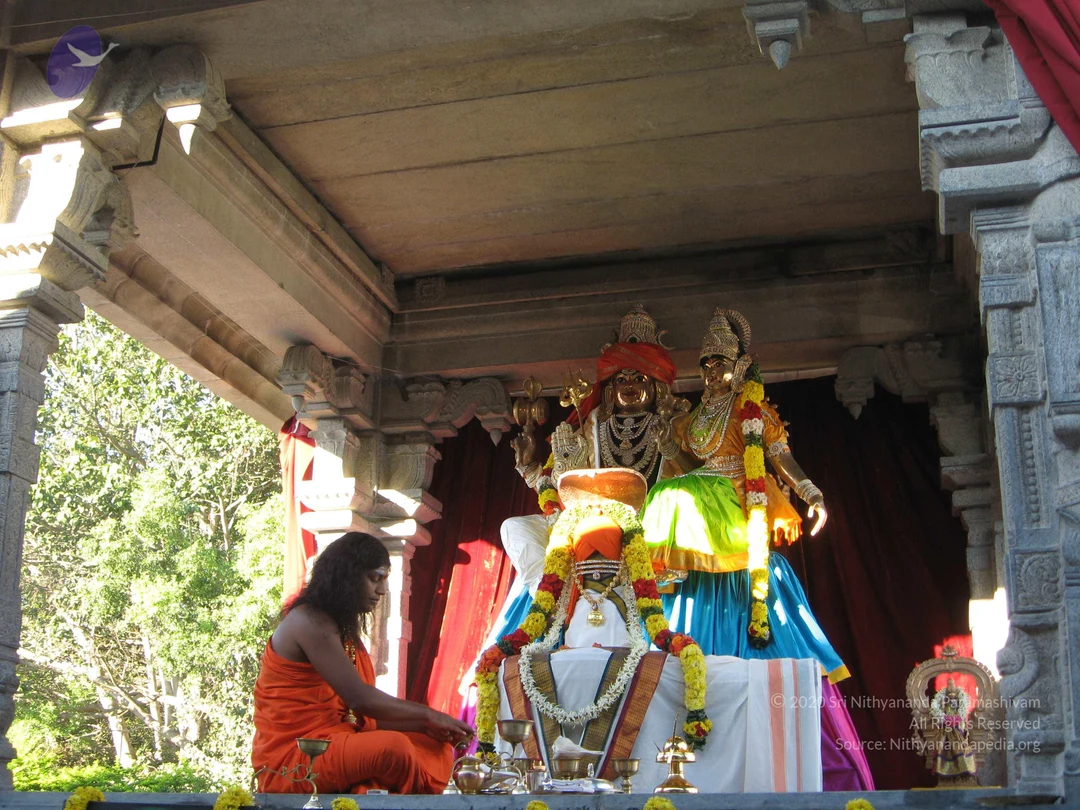
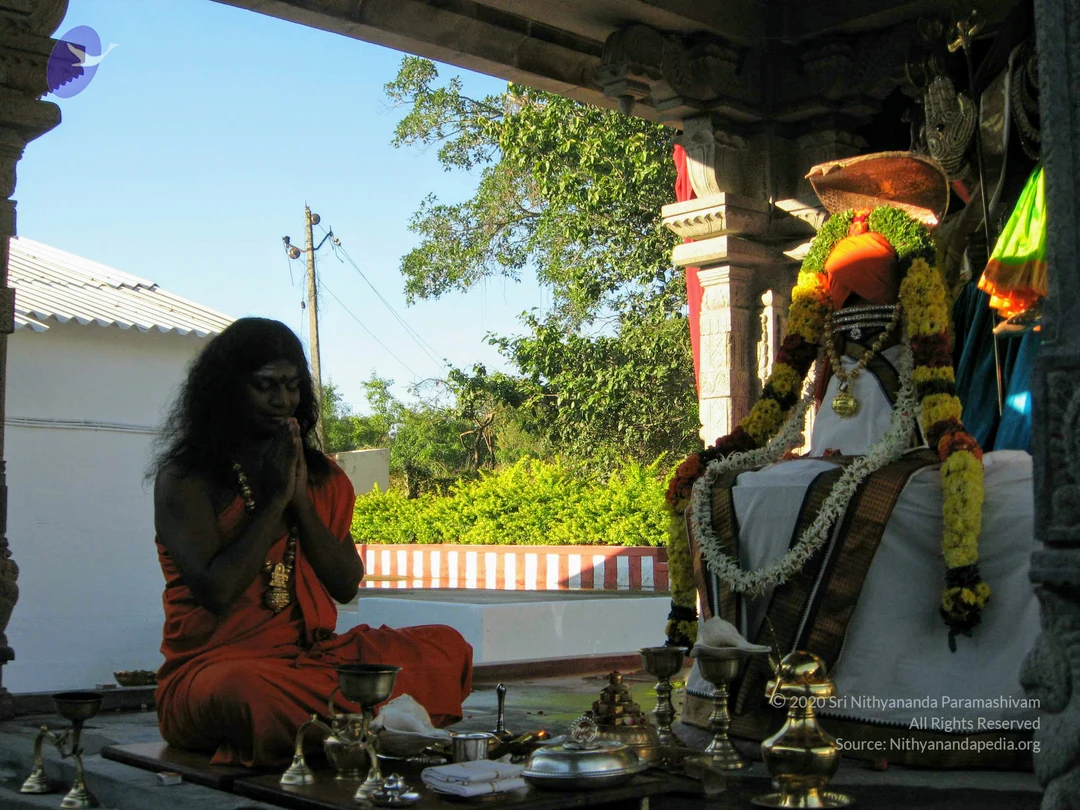
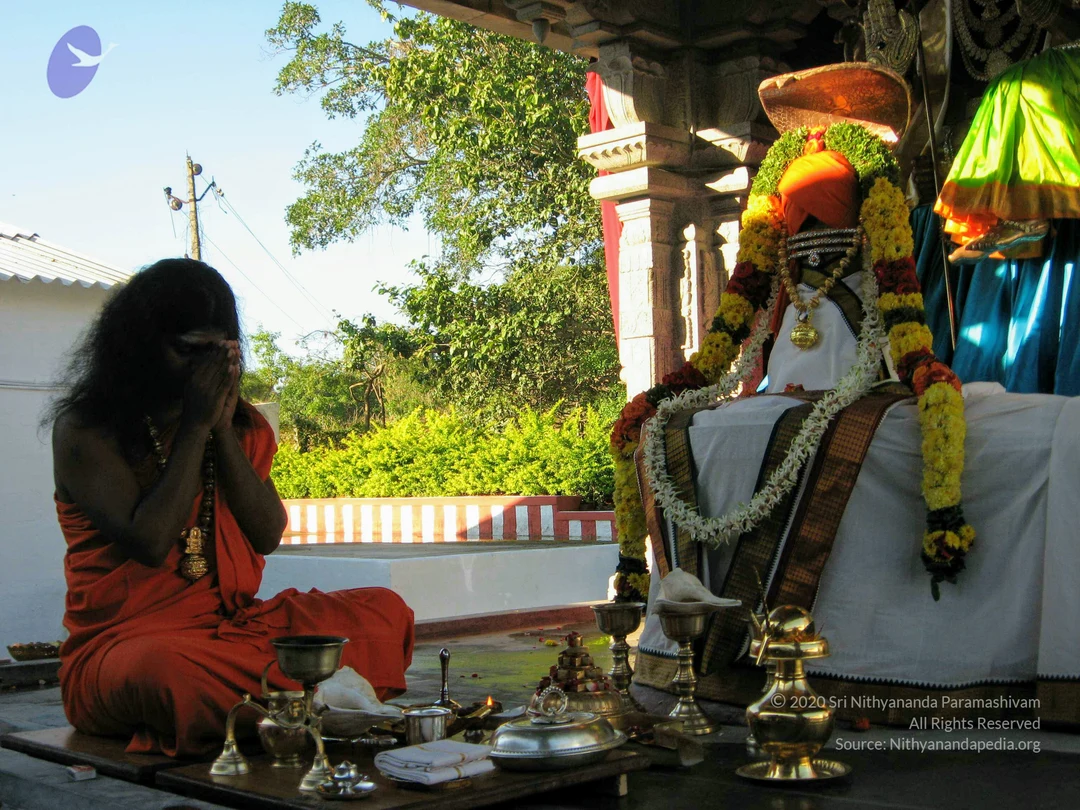
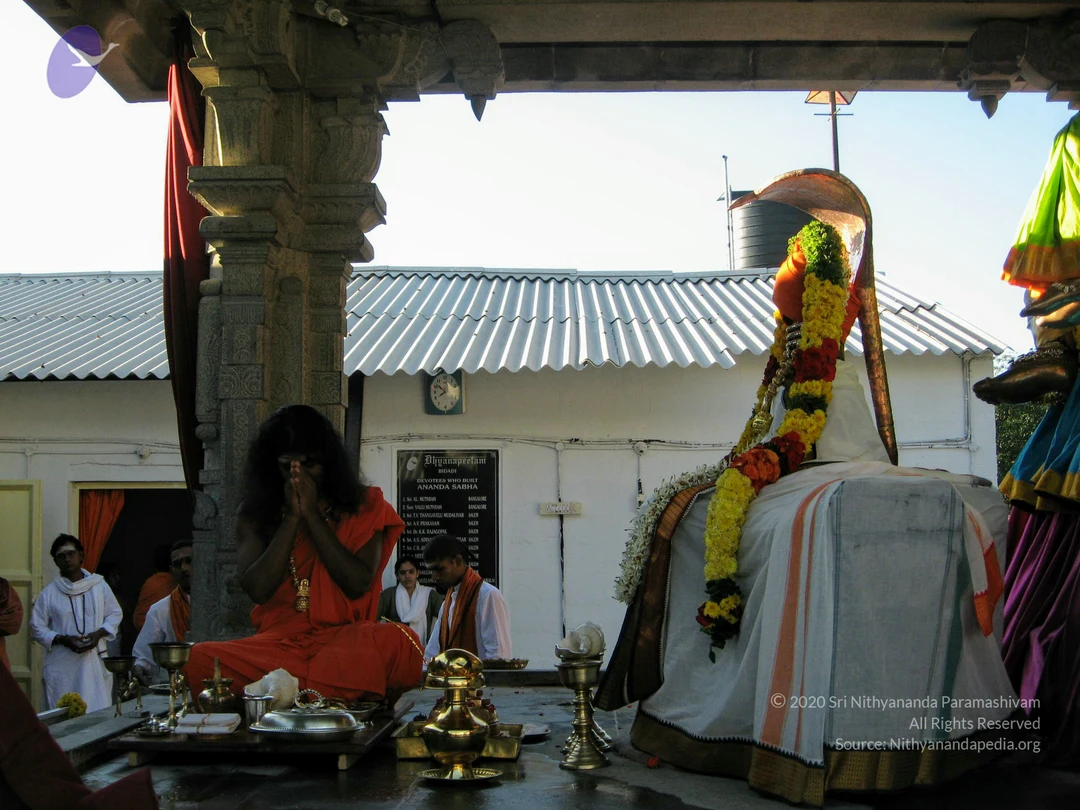
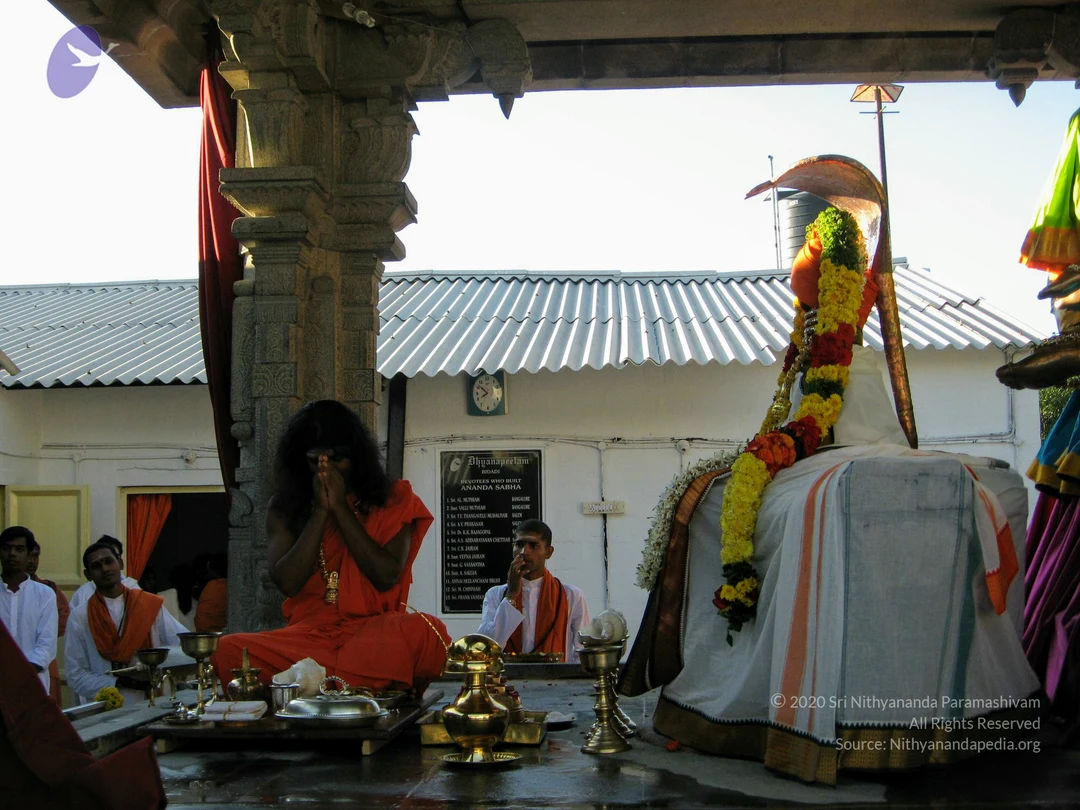
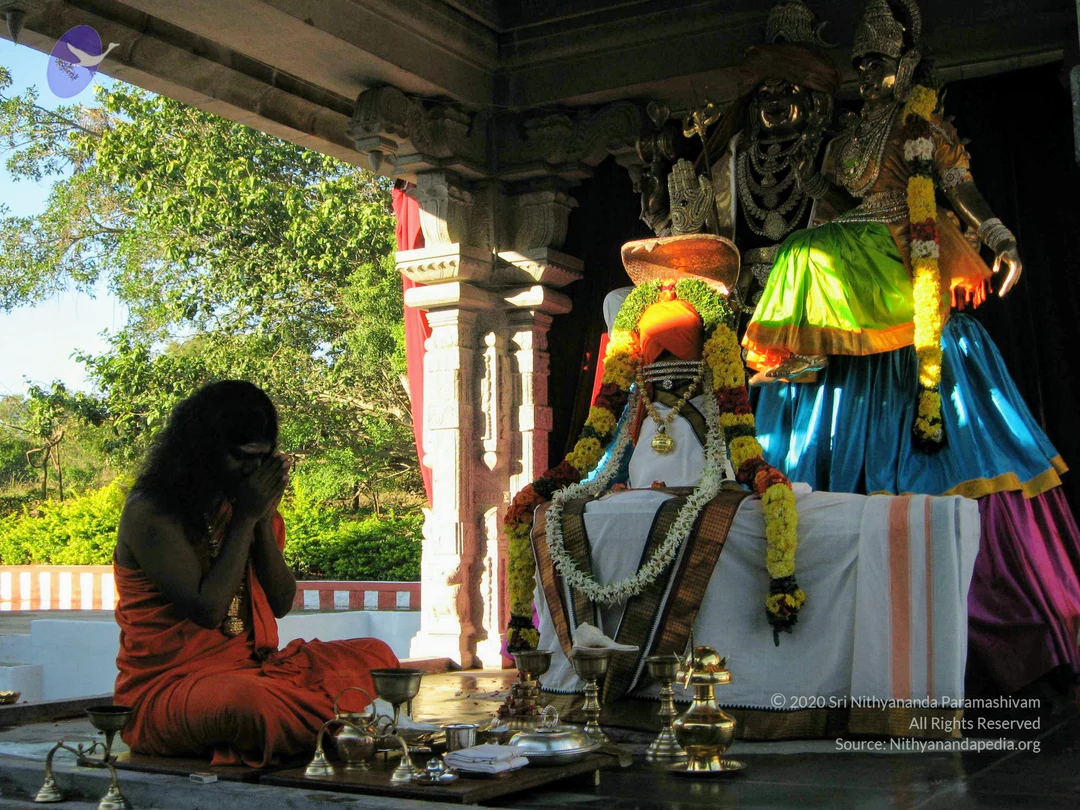
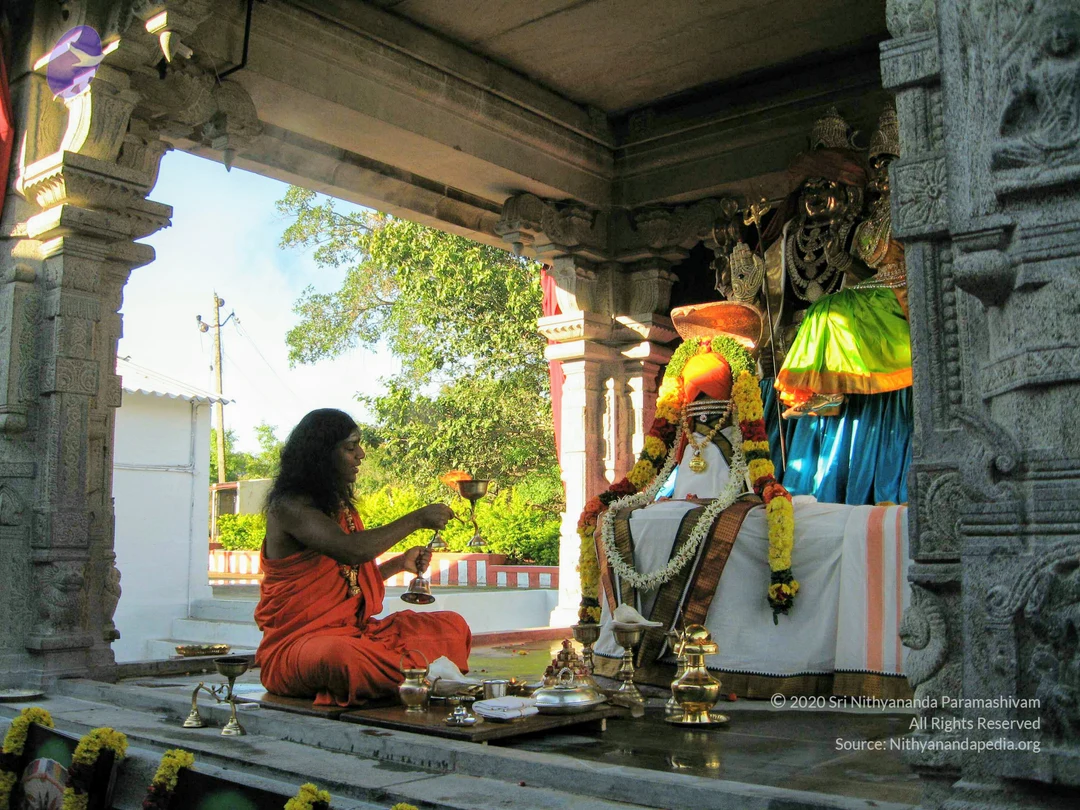
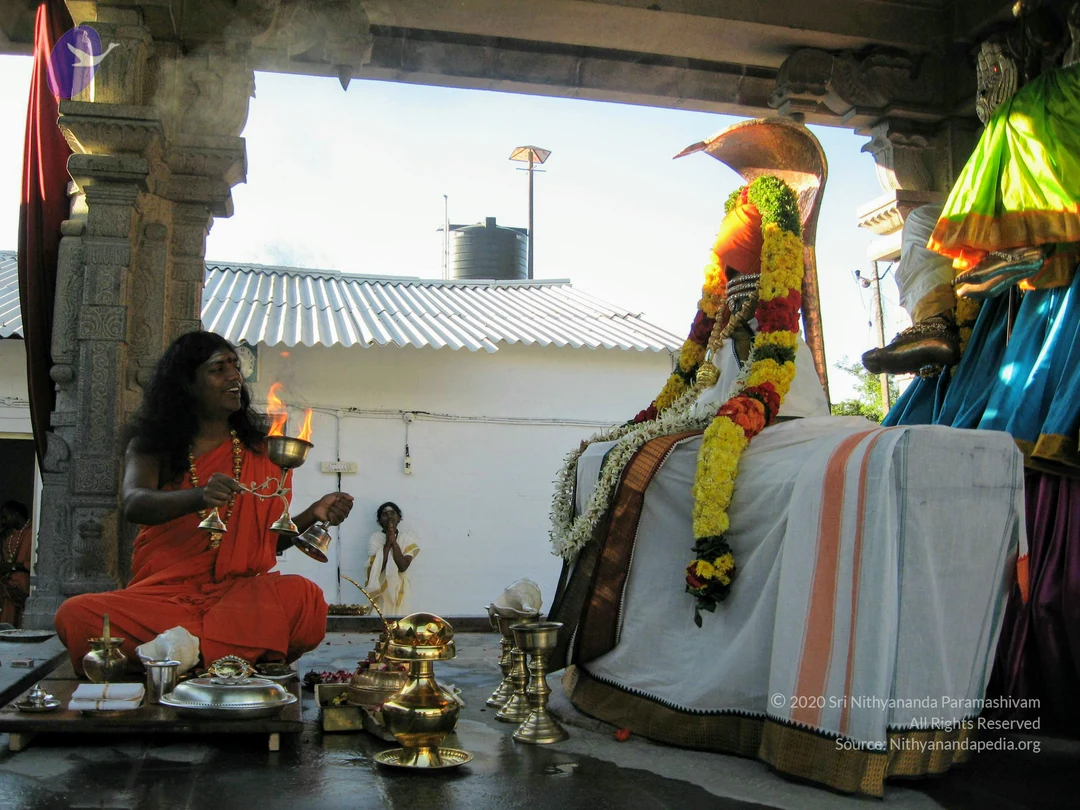
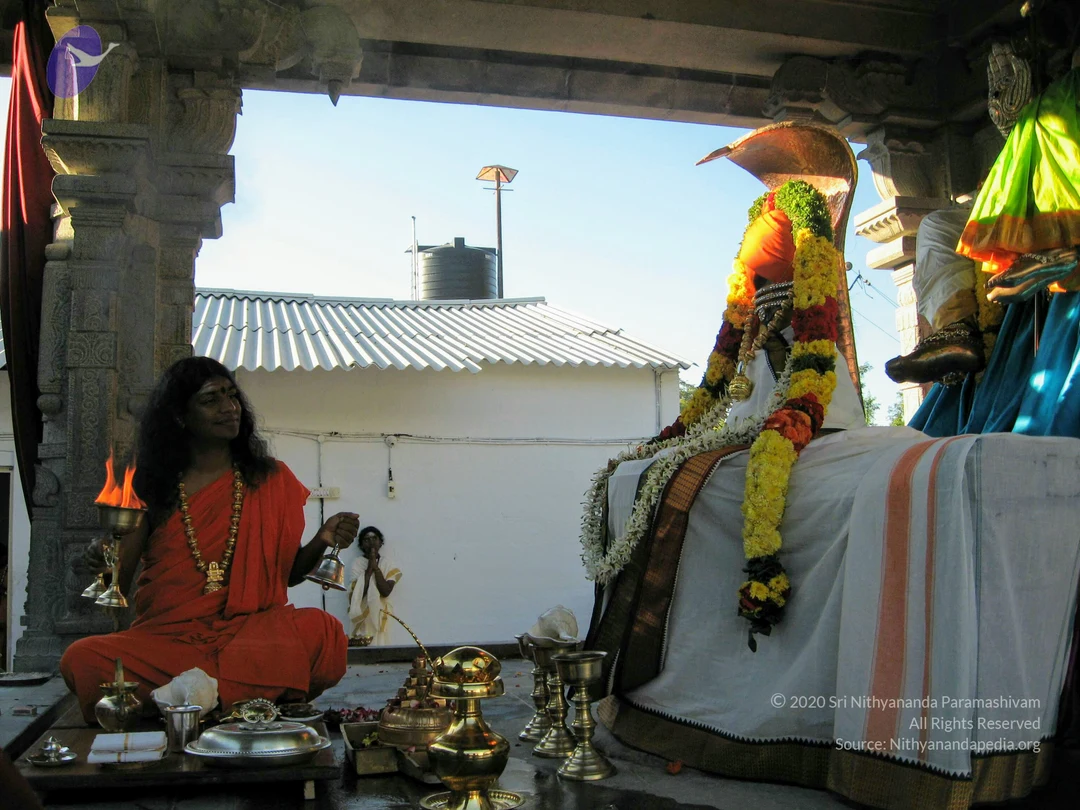
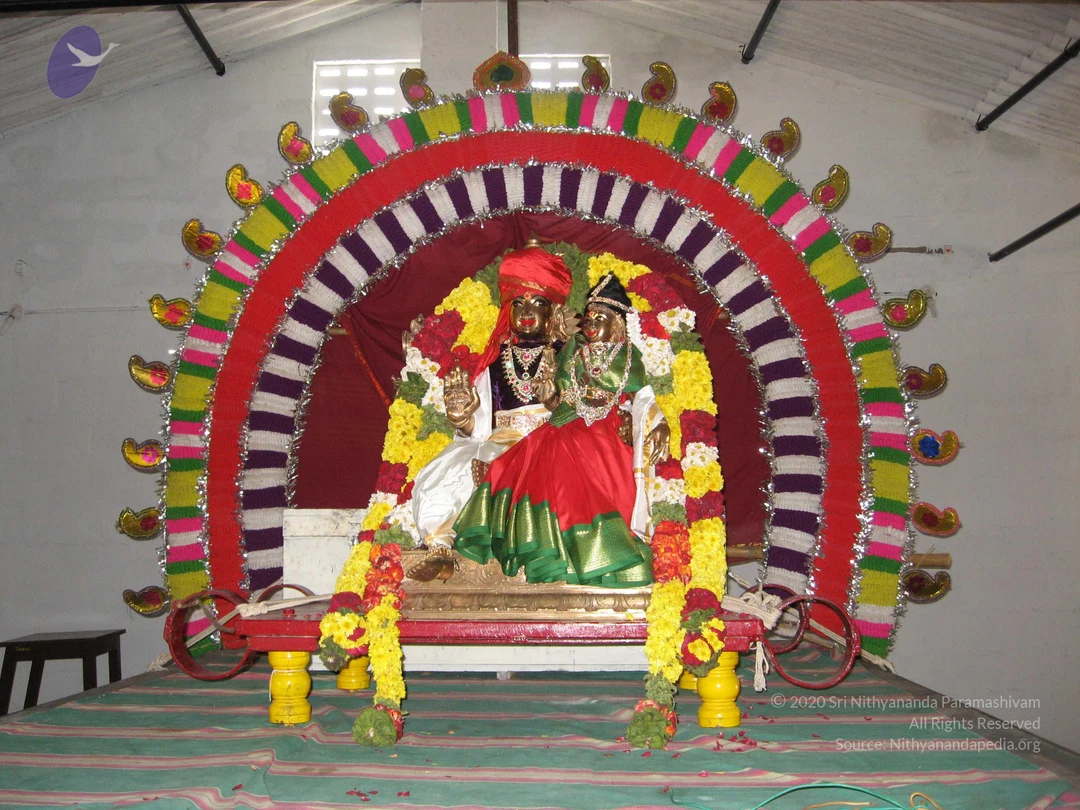
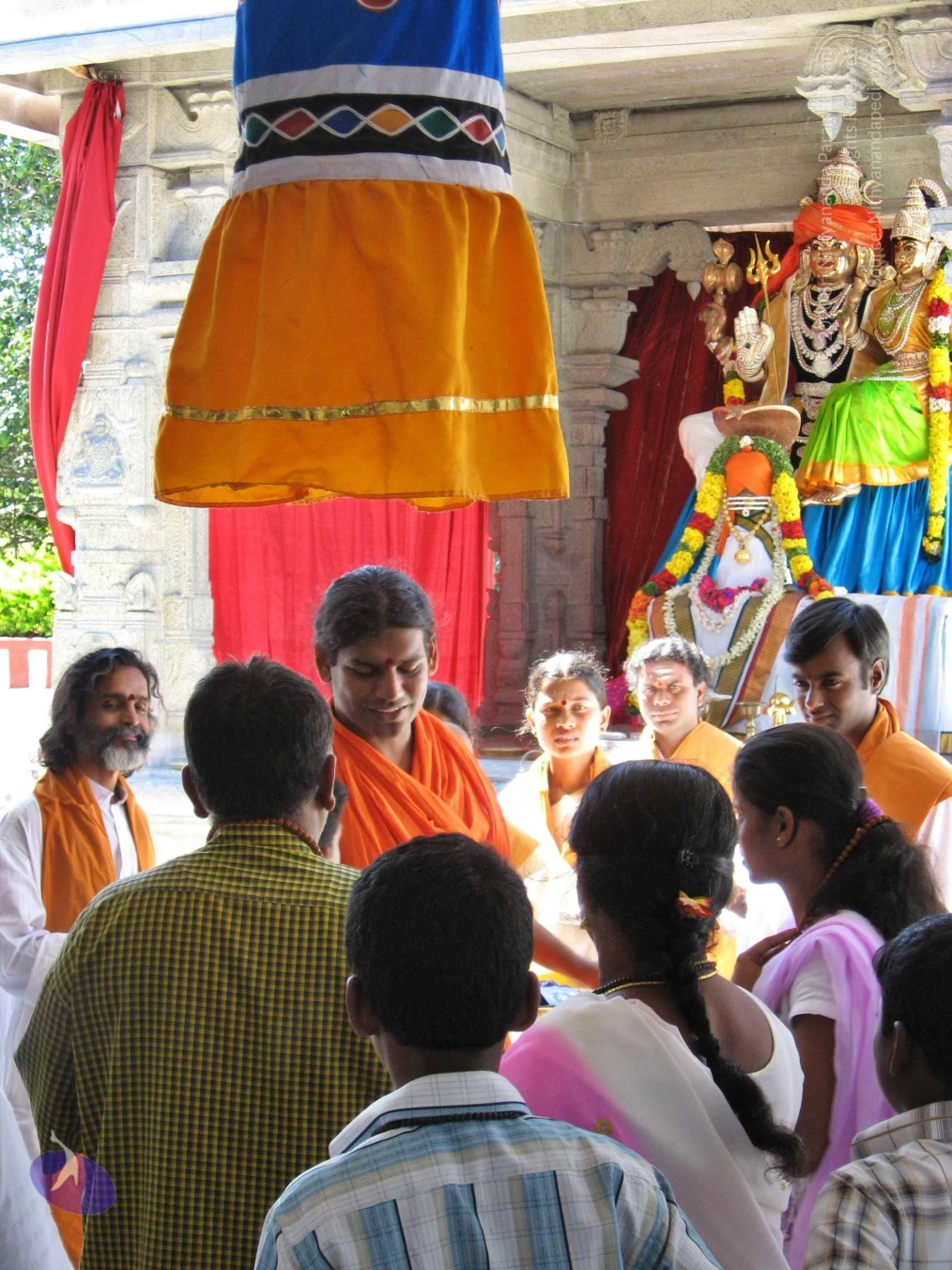
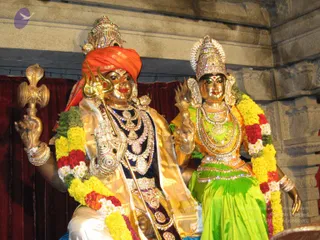
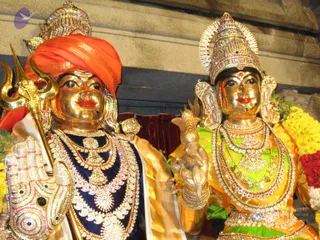
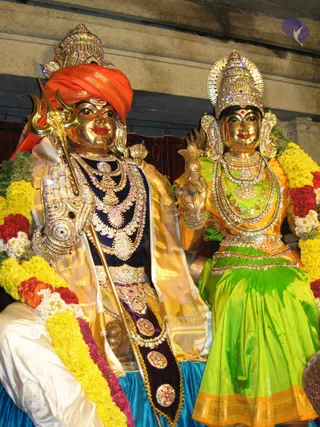
A photograph of two gilded processional murti figures on a festival platform, a male deity on the left and a female deity on the right. The male figure wears an orange turban and a crown-like headdress, holds a golden trident and a golden ritual staff, and is adorned with layered jewelled necklaces, a white and gold sash and a jewelled armlet. The female figure wears a jewelled crown, a green and orange skirt and layered gold necklaces, with a red bindi, and holds a golden lamp-like object. Both are draped in yellow, red and white flower garlands in front of a deep red curtain and carved stone wall. These are statues, not living people.Two large golden deity murti figures stand together on a stage before a red draped backdrop, decorated with layered jeweled necklaces, bangles and crowns. The male figure wears an orange turban, holds a trident and a damaru-like hand drum with a cobra-shaped handle, and wears a blue silk skirt with white leggings and a gold border. The female figure wears a green and orange silk skirt and holds one hand raised in blessing. Both are draped in yellow and red flower garlands. The figures are statues, not people, so no living person is visible.A photograph of a decorated ritual seat draped with white and maroon silk cloth with gold border, garlanded with yellow marigold and white jasmine strands and red flowers. An orange turban rests on the seat with a gold pendant hanging from it, and a cobra-hood shaped canopy stands behind. Brass oil lamps stand on the floor in front, and a small framed printed photo of a smiling man in an orange turban sits at the bottom left edge. Bright blue, green and pink silk hangs behind the seat, and a carved stone pillar stands at the back. No physical people are visible.

December 22 2007

Original wiki page
Contents

Title:

Be Unclutched® Vol 1

Description:

From the works of Living Enlightened master Paramahamsa Nithyananda. This clip is taken from the discourse titled, "Unclutching® -- De-program the inner self" delivered during the third day of the first Nithya Dhyan mass satsang held in Bangalore in December 2007. In this clip Swamiji gives us the essence of his teachings through the modern day mahavakya (great truth)-- "Be Unclutched®". He unravels the truths about makeup of the mind and how we are clutching and creating joy or suffering. He beautifully describes how we create thoughts, how we connect thoughts and experience life. He tells us the first profound truth that there are so many thoughts that are moving in front of us, but our awareness is not always shining on the thoughts flowing in front of us. As such many life changing decisions are made by us without awareness. Every single moment that passes in our life without our being aware causes suffering us either directly or indirectly. Swamiji then goes on to discuss the second profound truth. The complete discourse part of the three day Nithya Dhyaan discourse series may be purchased online at www.lifeblissgalleria.com.

Link to Video and Audio:

VideoAudio

Title:

Be Unclutched® Vol 2

Description:

From the works of Living Enlightened master Paramahamsa Nithyananda. This clip is taken from the discourse titled, "Unclutching® -- De-program the inner self" delivered during the third day of the first Nithya Dhyan mass satsang held in Bangalore in December 2007. In this clip Swmaiji gives us the essence of his teachings through the modern day mahavakya (great truth)-- "Be Unclutched®". He unravels the truths about makeup of the mind and how we are clutching and creating joy or suffering. He beautifully describes how we create thoughts, how we connect thoughts and experience life. He tells us the first profound truth that there are so many thoughts that are moving in front of us, but our awareness is not always shining on the thoughts flowing in front of us. As such many life changing decisions are made by us without awareness. Every single moment that passes in our life without our being aware causes suffering us either directly or indirectly.

Link to Video and Audio:

VideoAudio

Title:

What is Initiation?

Description:

From the works of Living Enlightened master Paramahamsa Nithyananda. This clip is taken from the discourse titled, "Unclutching -- De-program the inner self" delivered during the third day of the first Nithya Dhyan mass satsang held in Bangalore in December 2007. We find that we get drained easily of life energy either from the environment outside or from within due to our own inner conditionings. Whenever you need to heal yourself or bring yourself again to the life energy, the truths or ideas that brings you out of the tiredness or low energy or depression, those truths are called Shastra Shastras or knowledge weapons. The truths that not only brings us out of the depression, but also destroys the source of depression once for all is called mantra. Truth that comes out of enlightened inner space, and causes a click that is beyond logic, a sort of quantum connection with the very core of us is called initiation. The initiation can break the very core of depression, the very core of the mind. The complete discourse part of the three day Nithya Dhyaan discourse series may be purchased online at www.lifeblissgalleria.com.

Link to Video and Audio:

VideoAudio

Title:

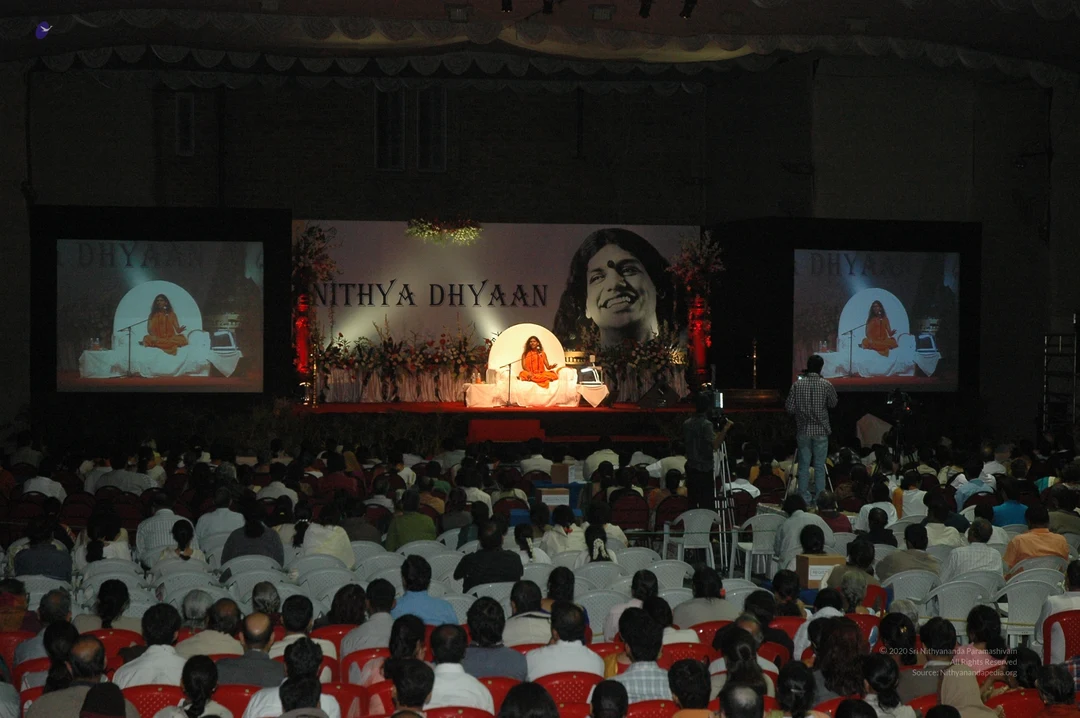
Nithya Dhyaan at Bangalore

Link to Video and Audio:

VideoAudio

Title:

Dream State and Reality State -- What is real?

Description:

From the works of Living Enlightened Master Paramahamsa Nithyananda. In this clip Swamiji shatters our understanding of the dream satte and the so called realithy state. He sheds very deep light in the process of dream state and real states and proves us through logical analysis that there is nothing called reality or dream. Understanding that all dreams are reality and all reality is a dream leads us to a state beyond dreams or reality. Understanding that it is logically possible that the so called reality state can also be one more long dream will turn our attention towards our consciousness and bring about the psychological revolution in us.

Link to Video and Audio:

VideoAudio

Title:

Four States of Consciousness

Description:

From the works of Living Enlightened Master Paramahamsa Nithyananda. In this clip from opening discourse of the 3 day Nithya Dhyaan meditation workshop Swamiji answers the question Why do we need to learn meditation. He explains the four states of the being which are formed by relation between states of mind and states of consciousness. The four states, Jagrat, Swapna, Susupthi and Thuriya define our being. Swamiji reveals deep truths about disturbances such as chronic fatigue caused when our Susupthi sate (deep sleep) is penetrated by Swapna State (dream state). The more the dream state penetrates the waking state, the frequency of our consciousness drops and we are in a lower state of awareness. All physical and mental disorders arise from dream state penetrating the waking state or the deep sleep state. By meditation practices, the fourth state, the state of Turiya will penetrate our waking and deep sleep states and leads us to health in the mind, body and being.

Link to Video and Audio:

VideoAudio

Photos:

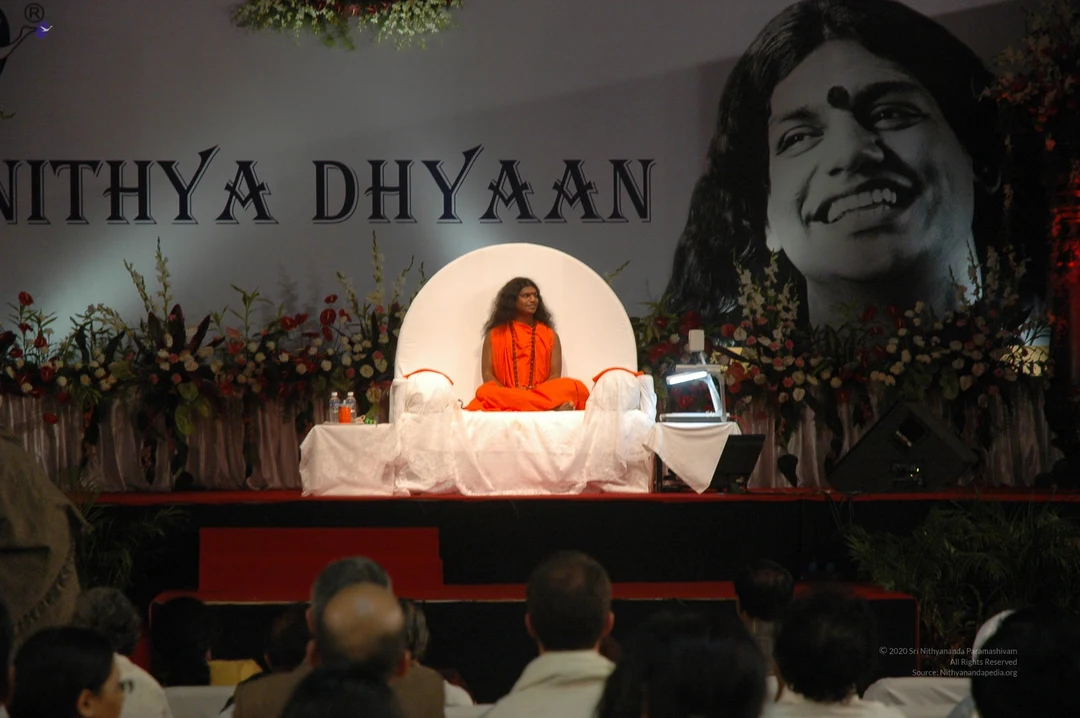
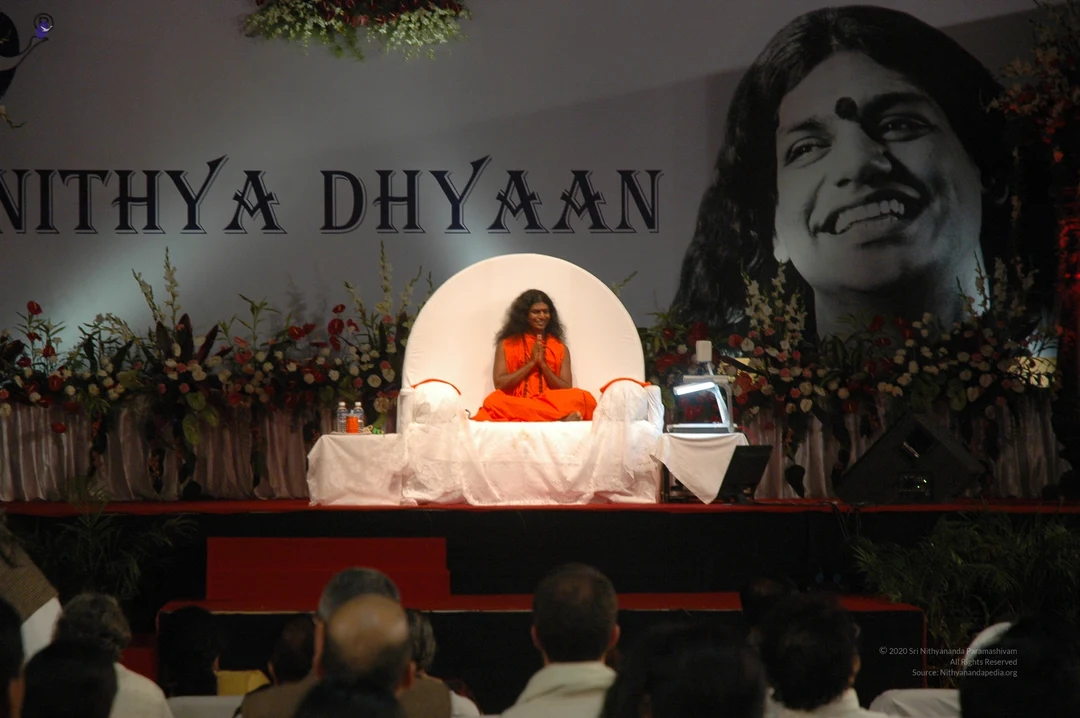
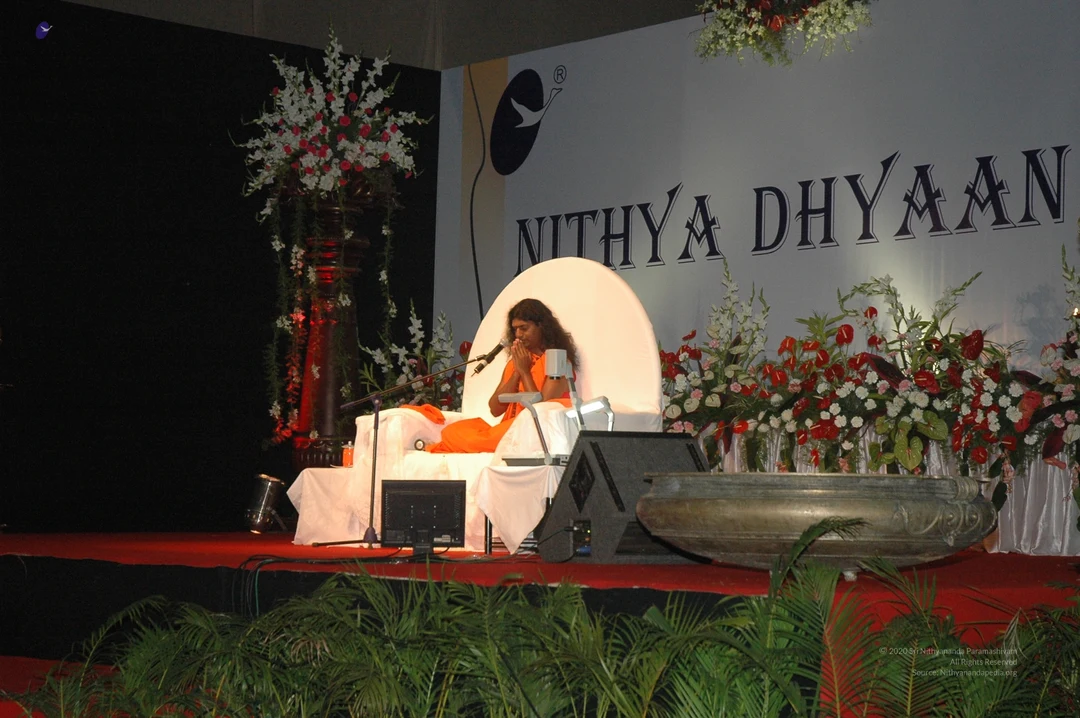
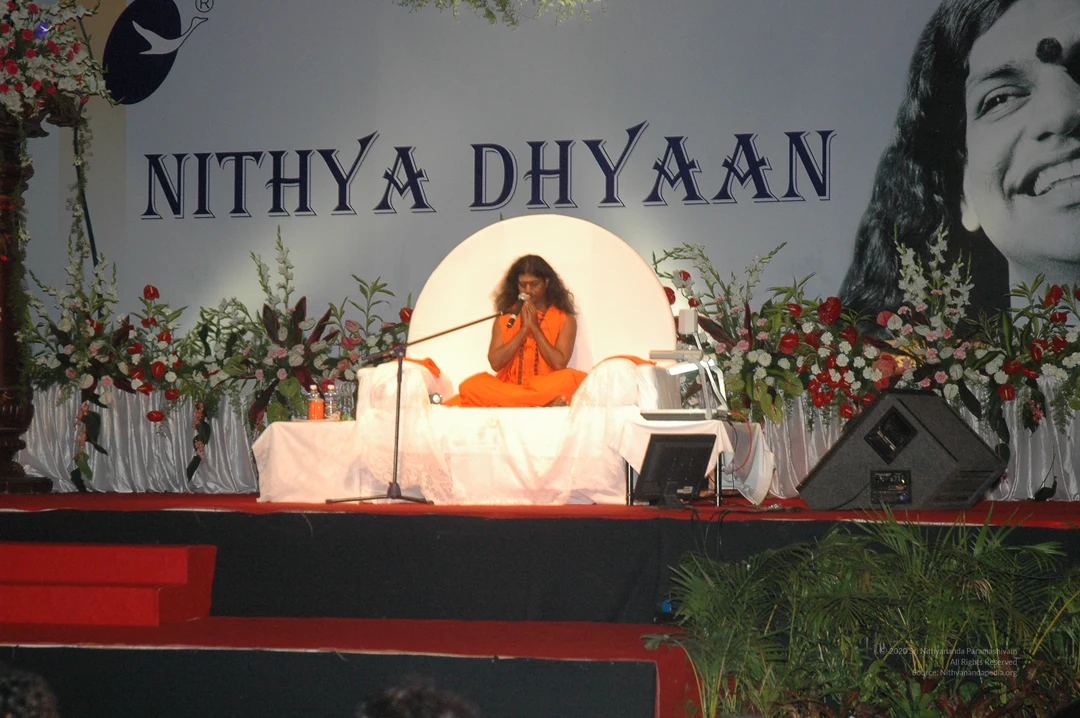
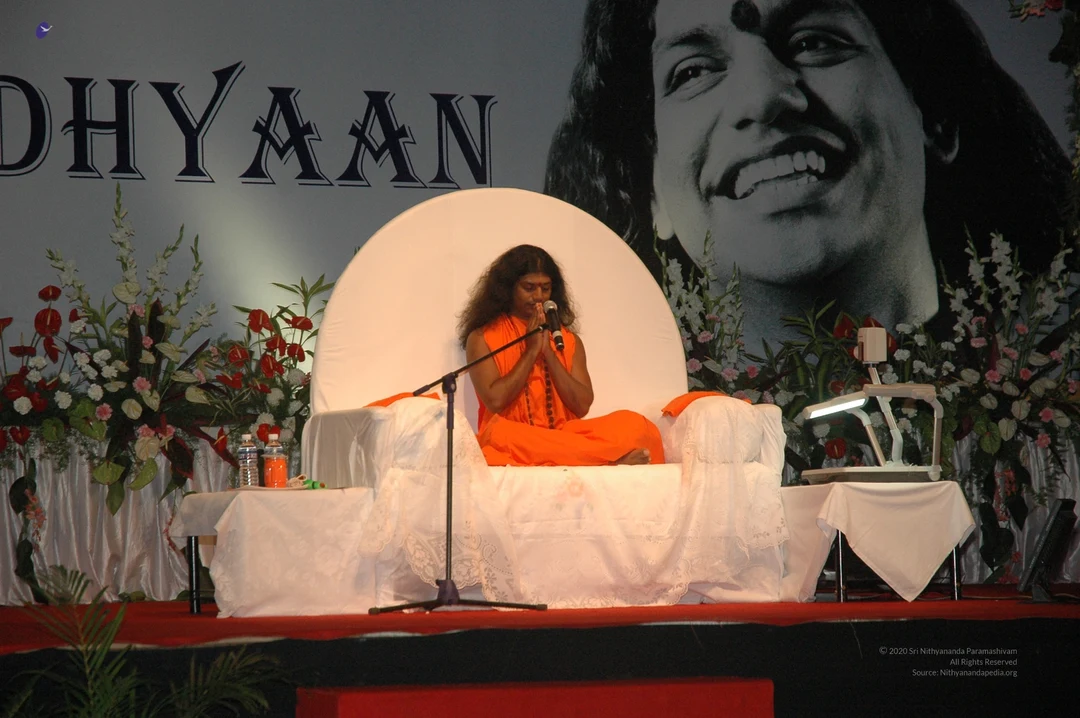
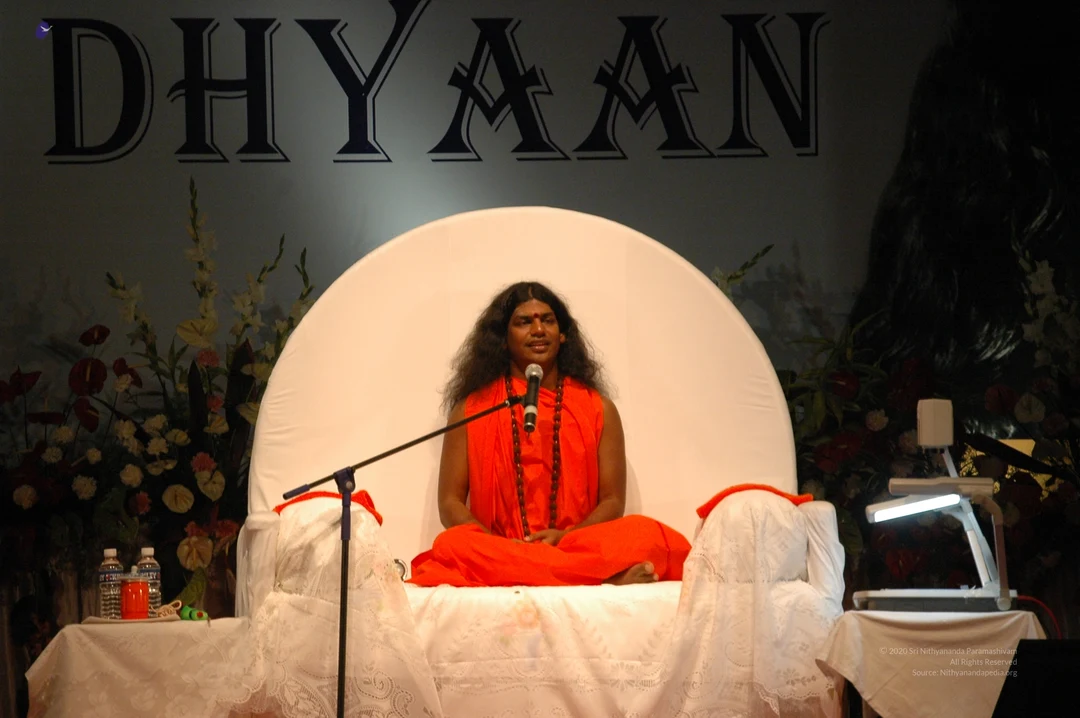
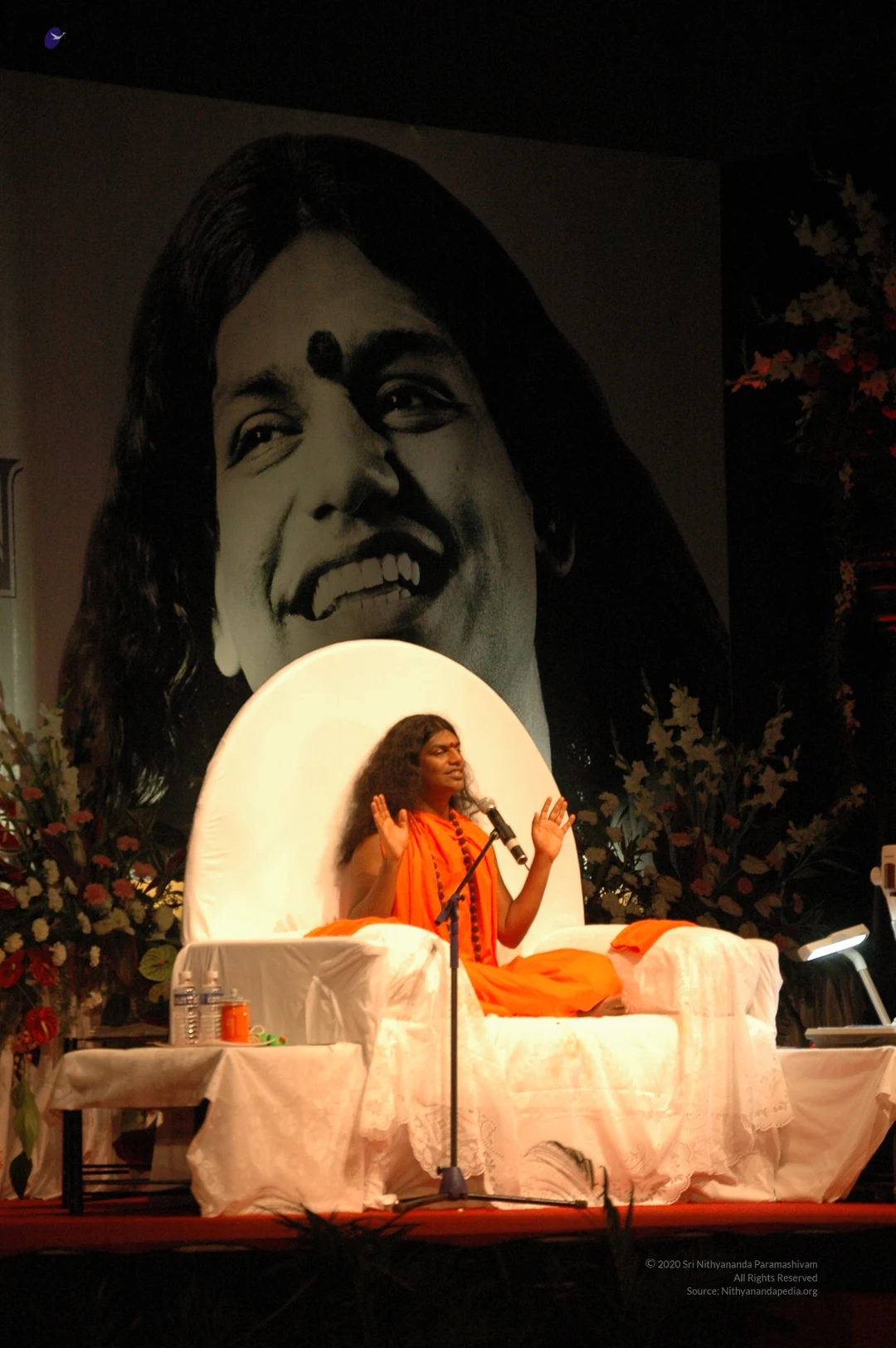
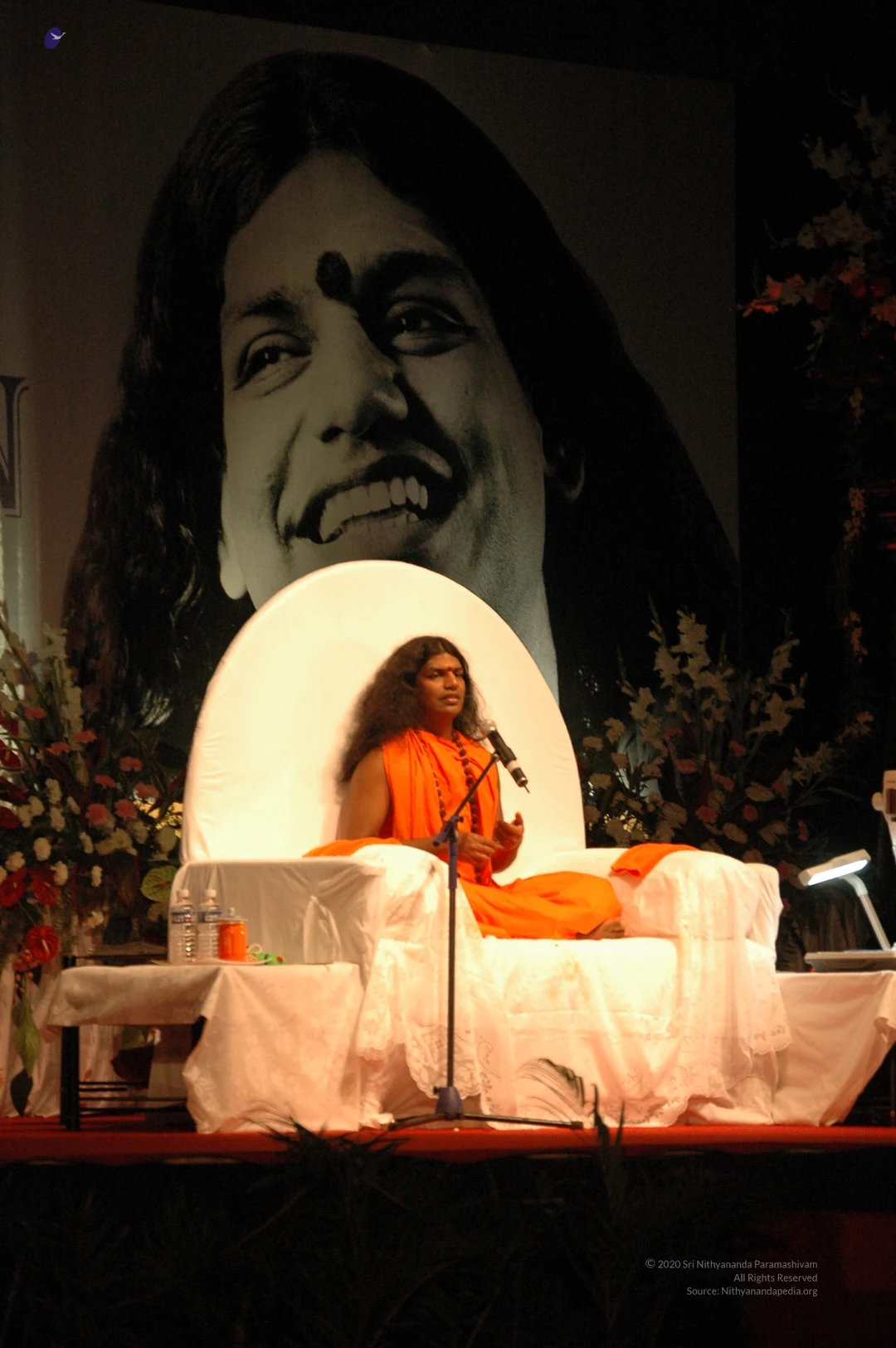
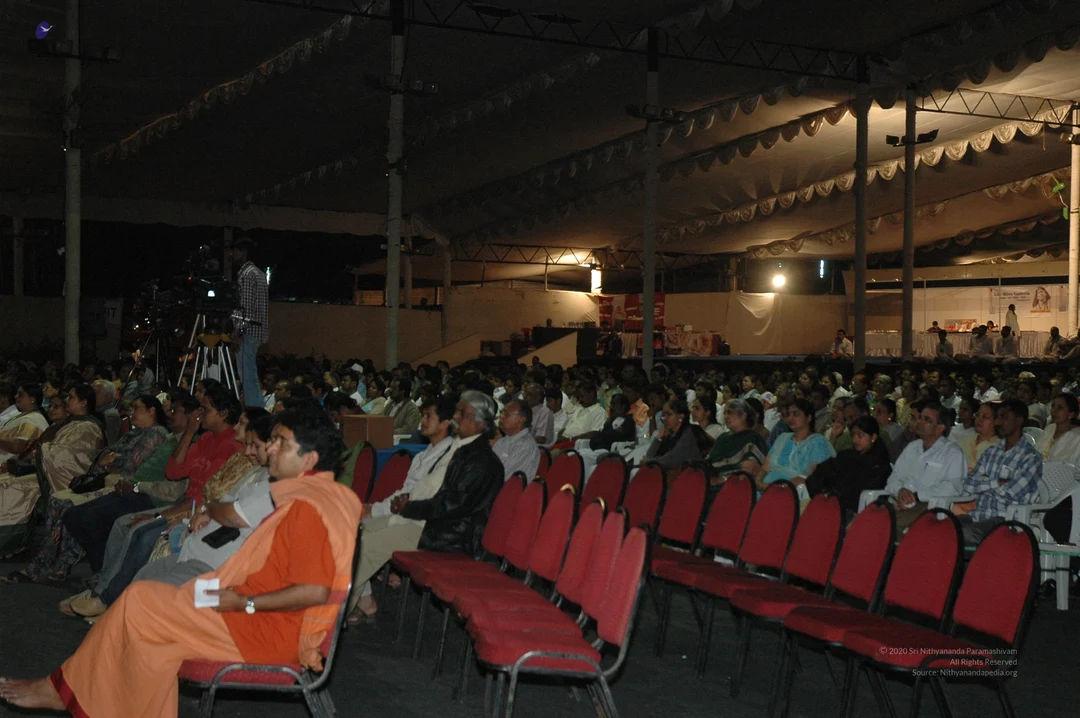
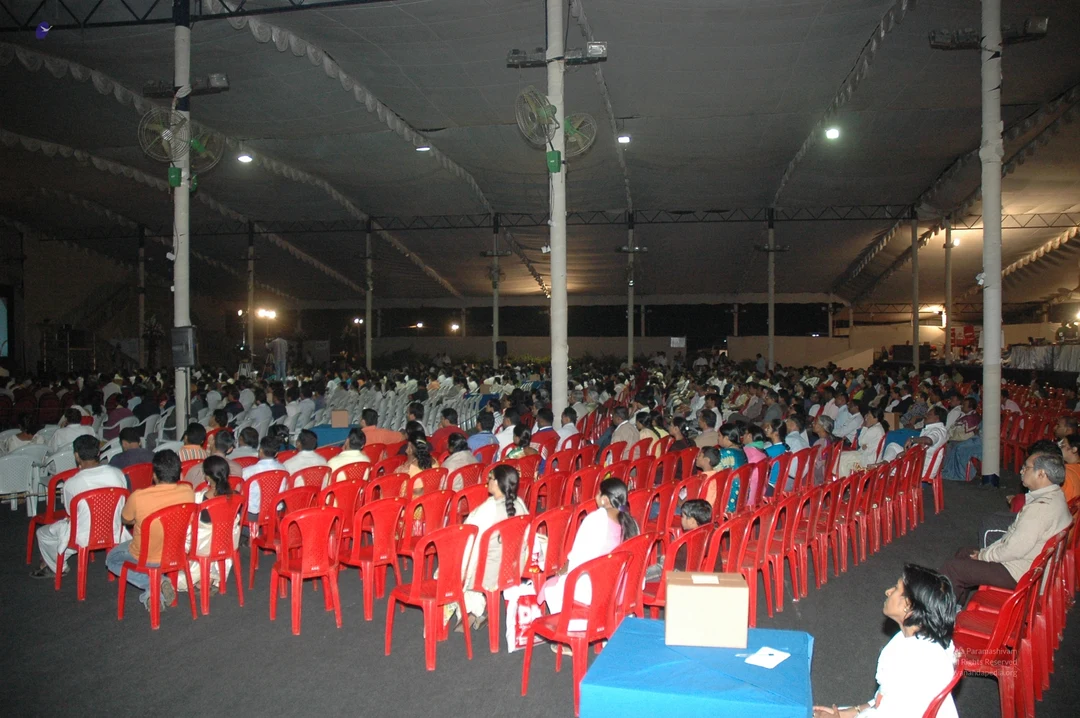
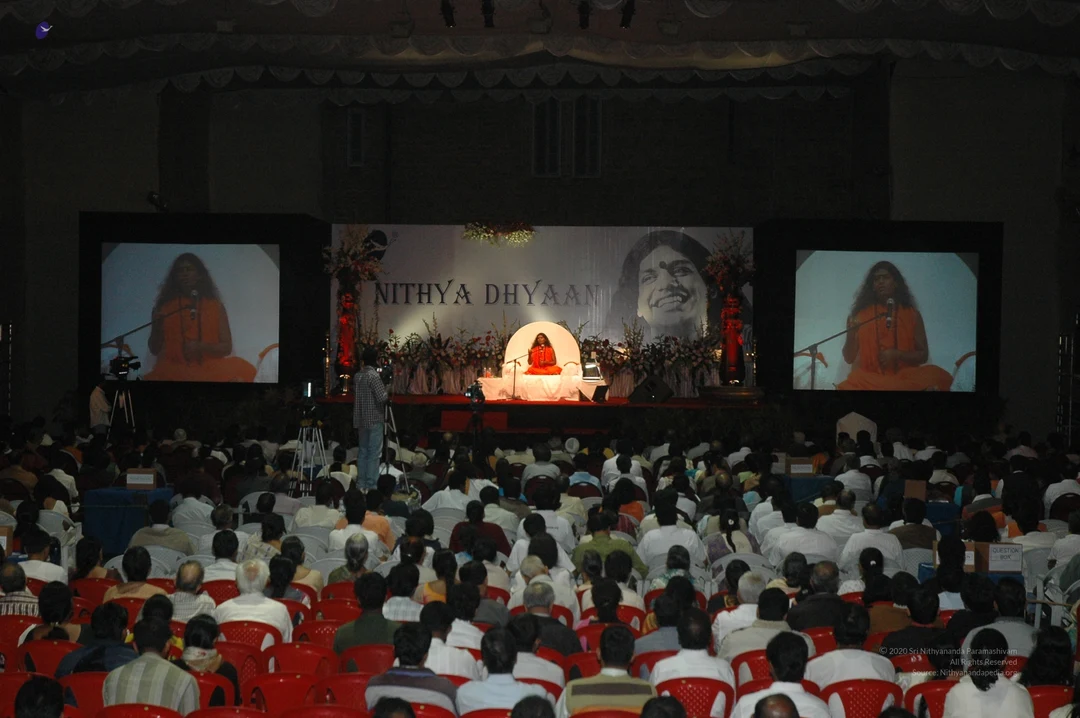
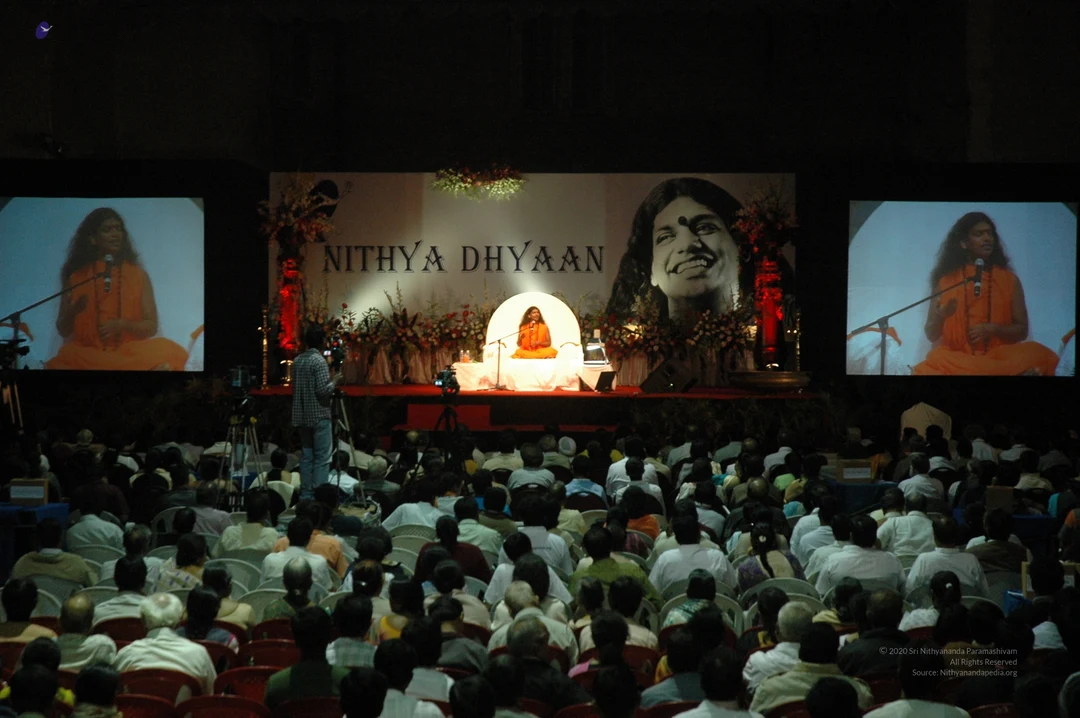
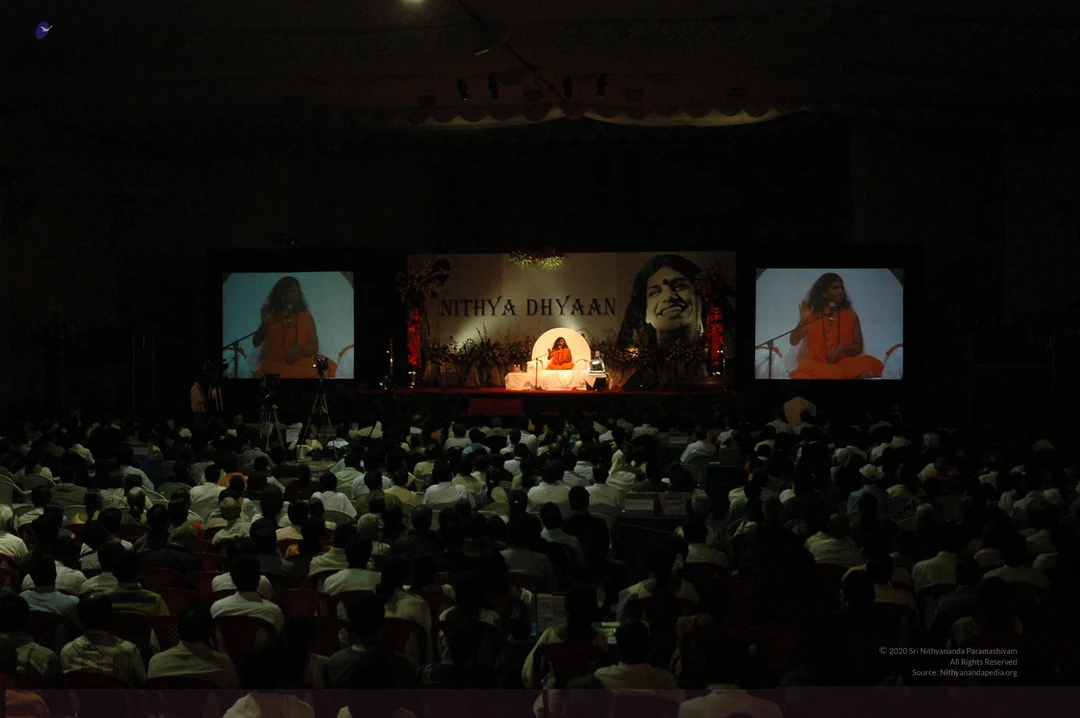
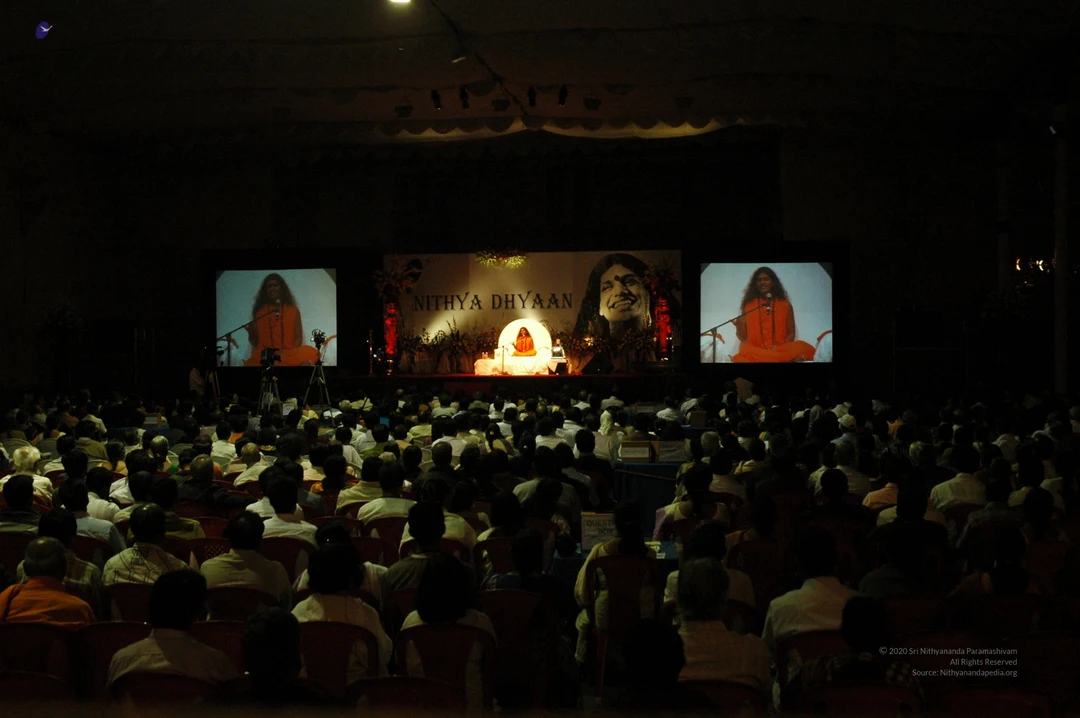
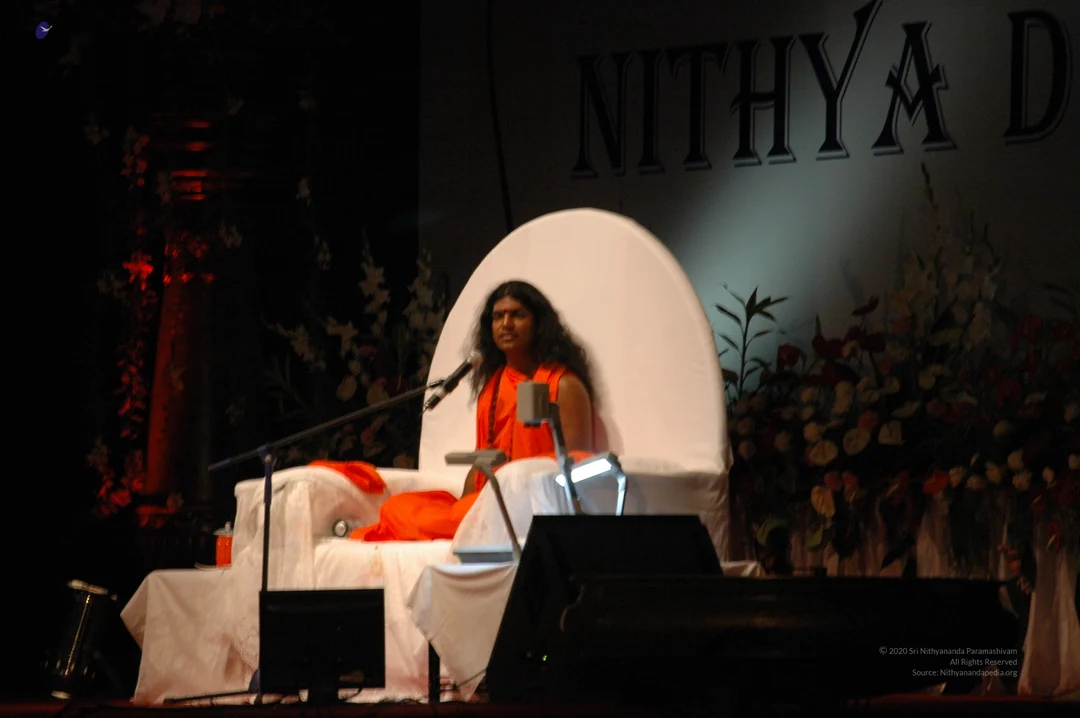
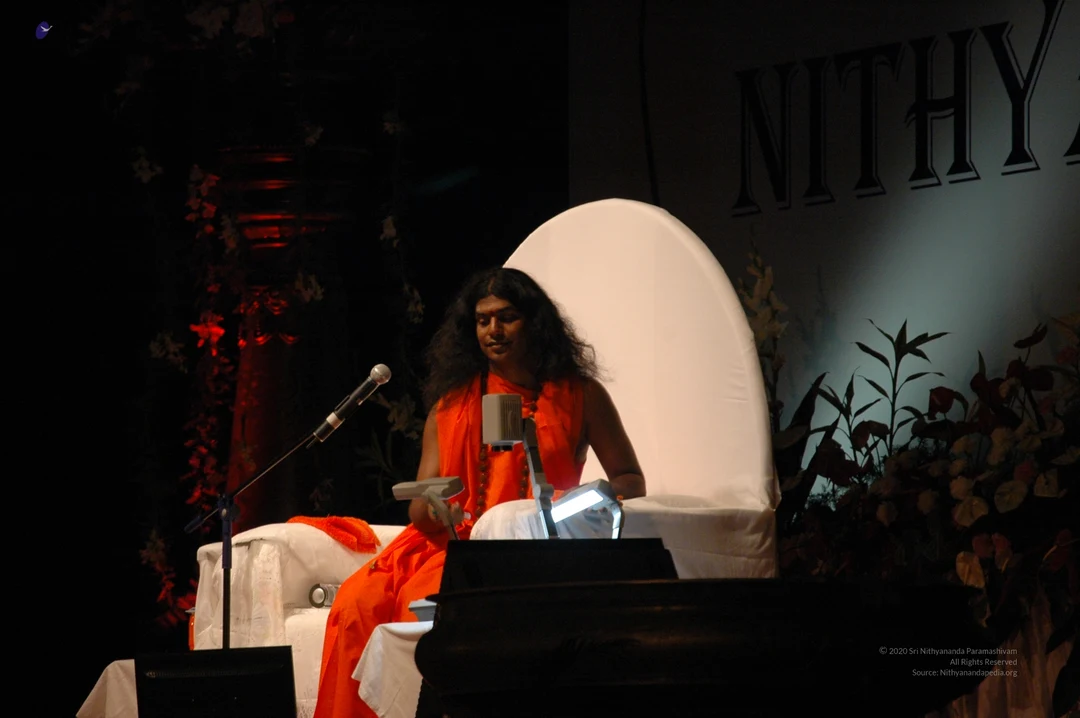
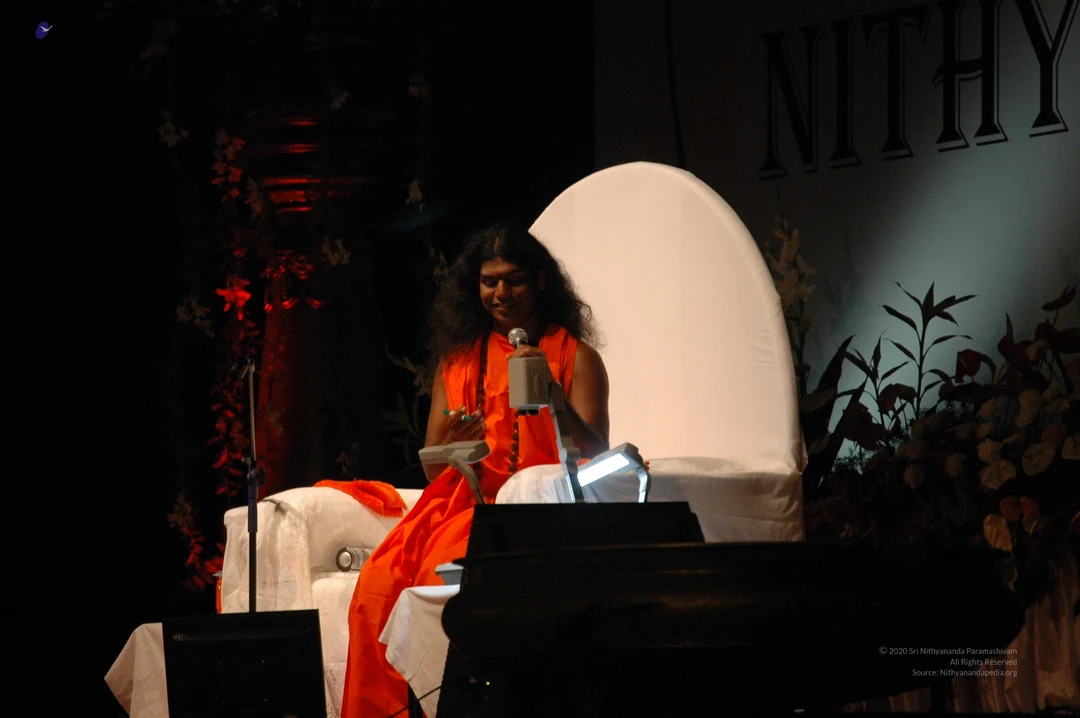
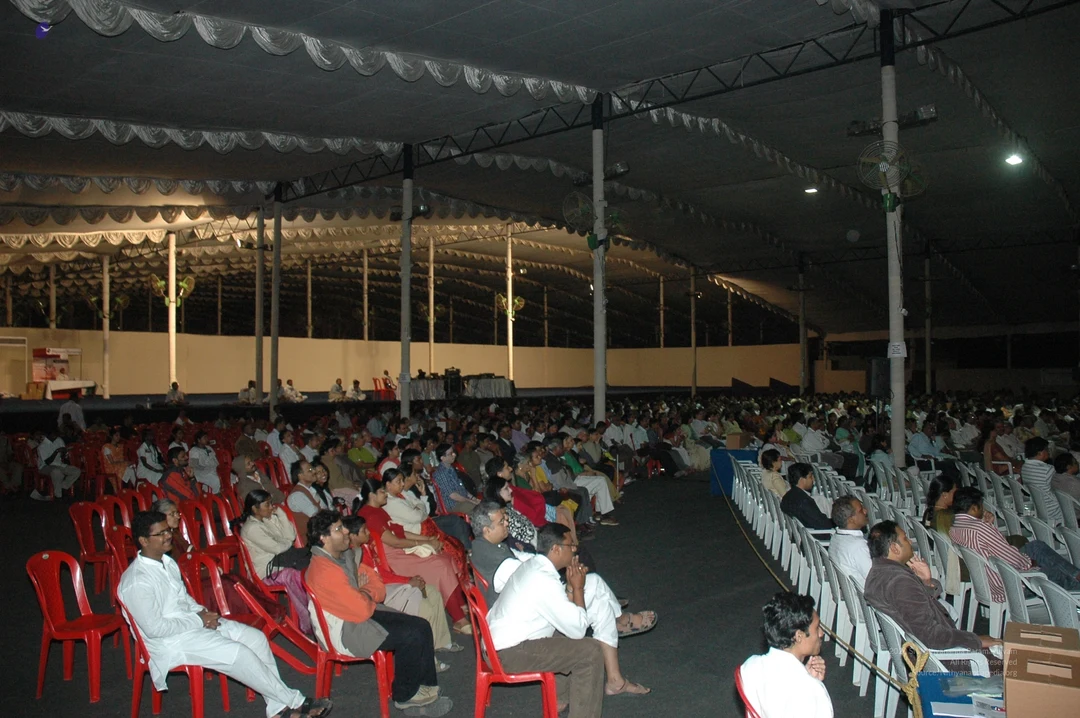
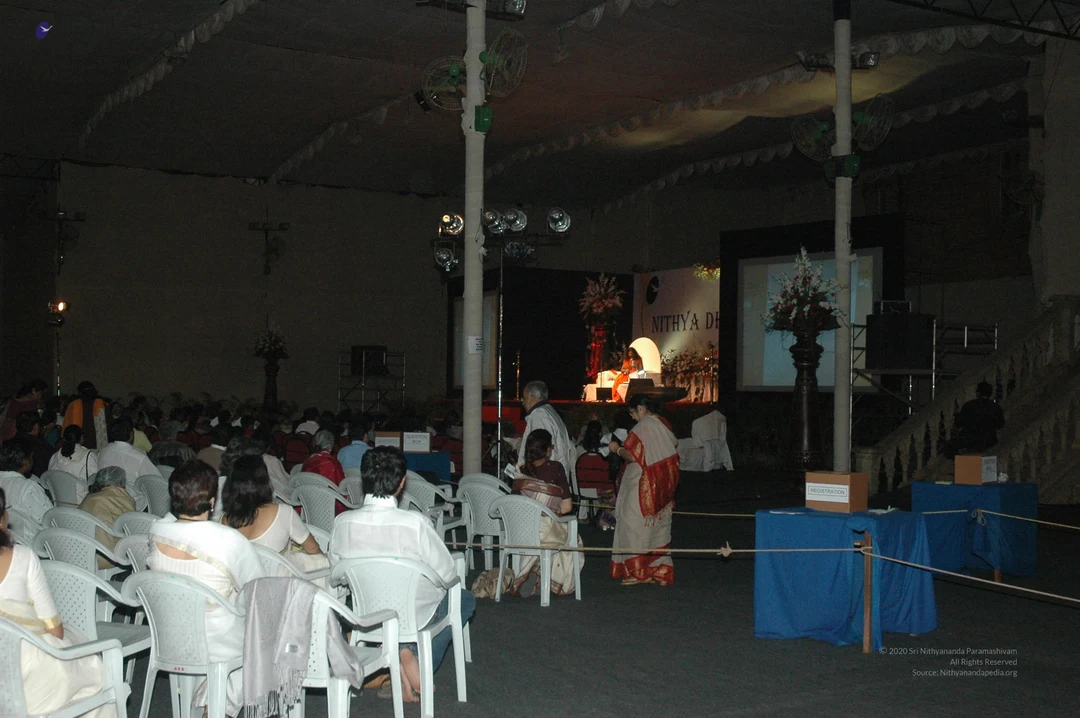
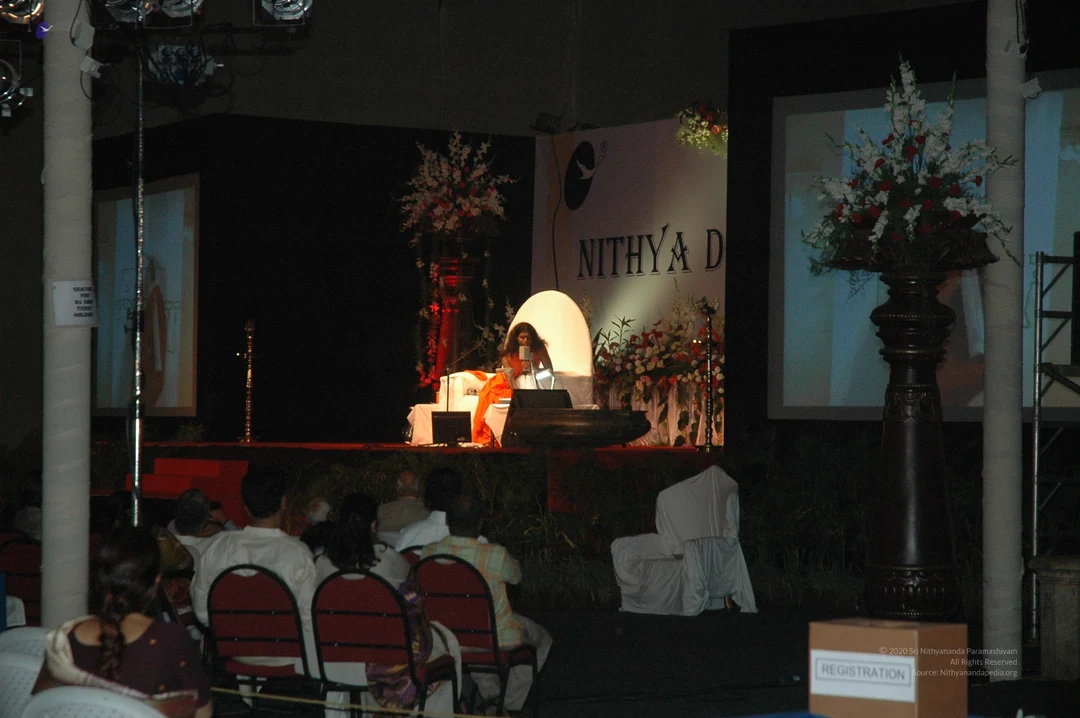
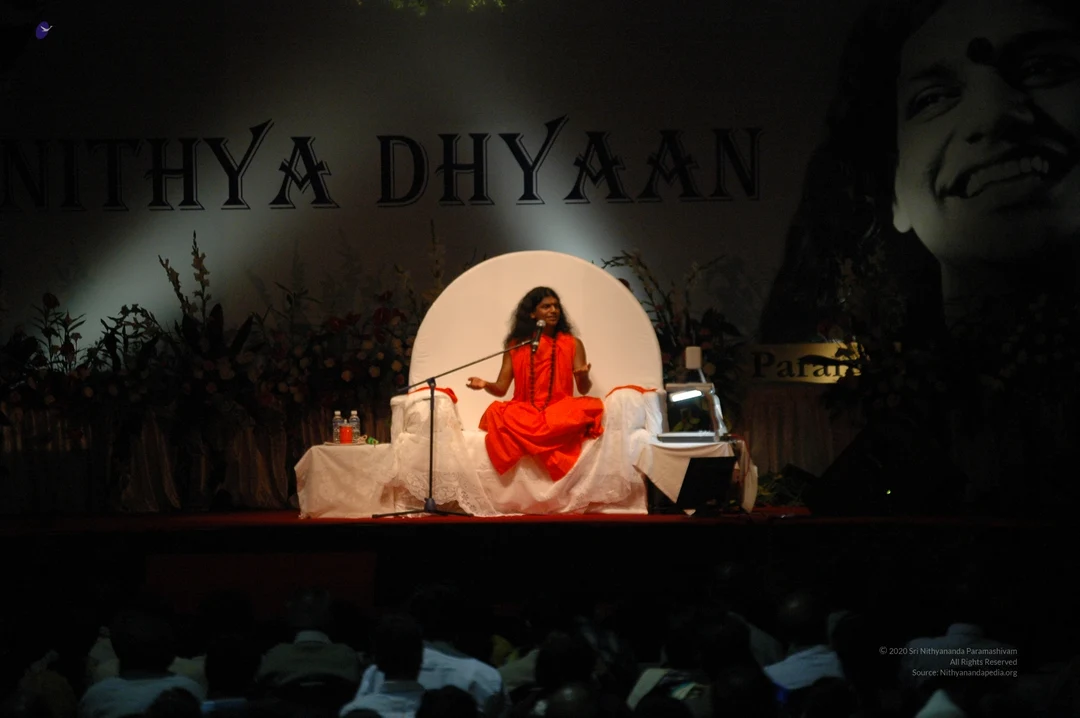
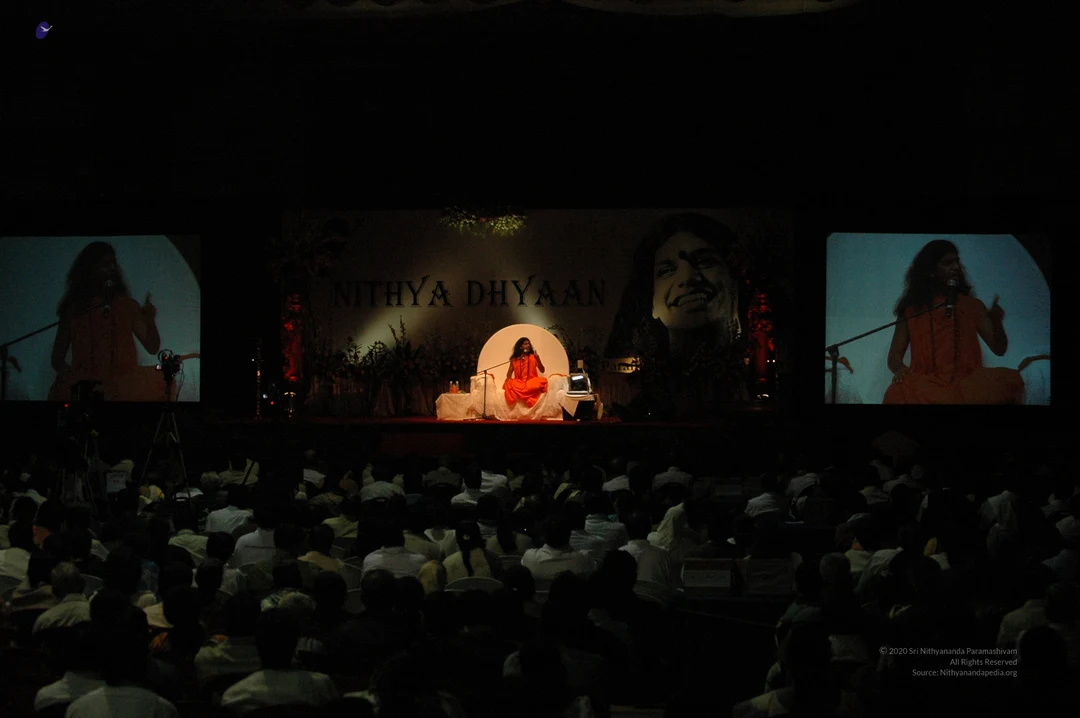
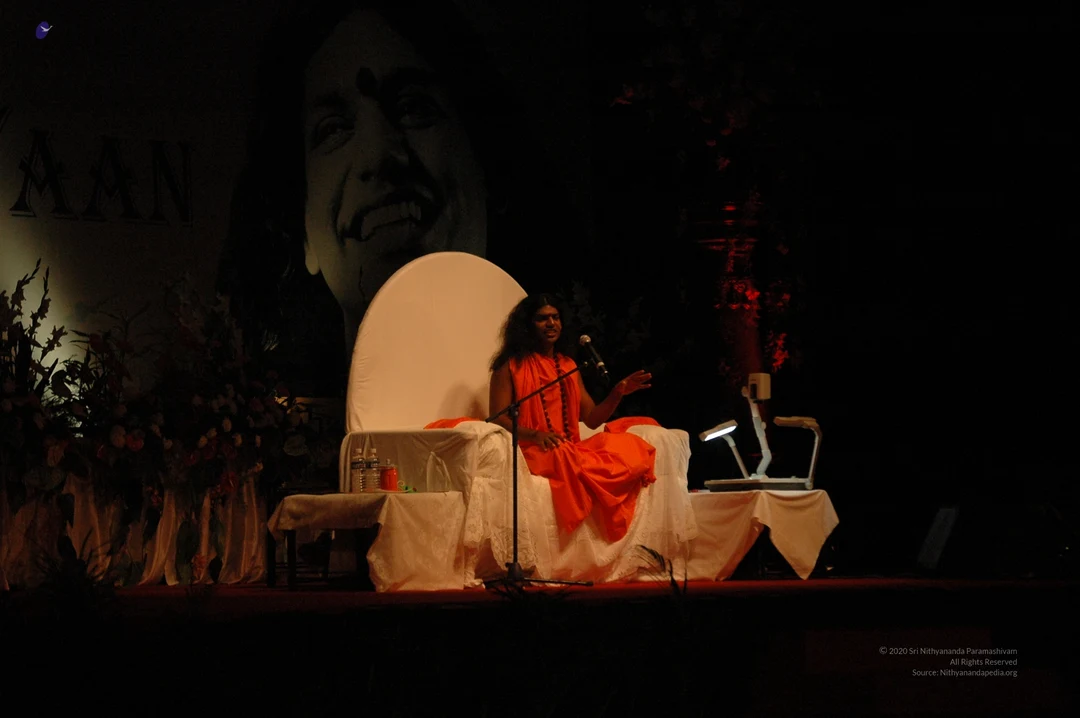
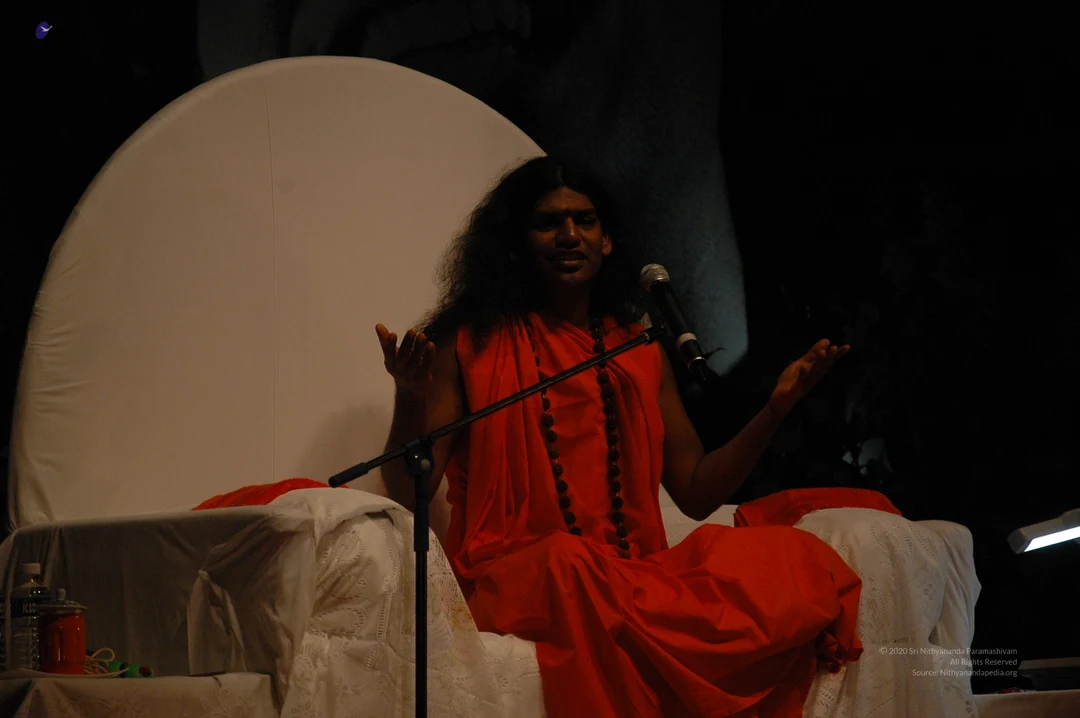
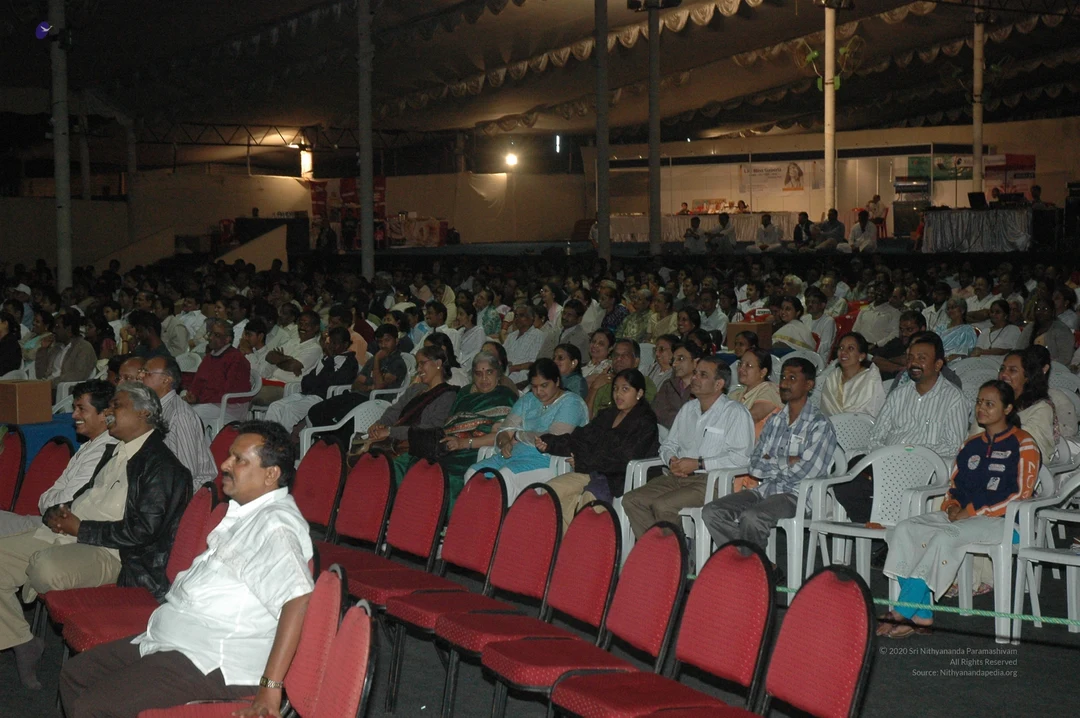
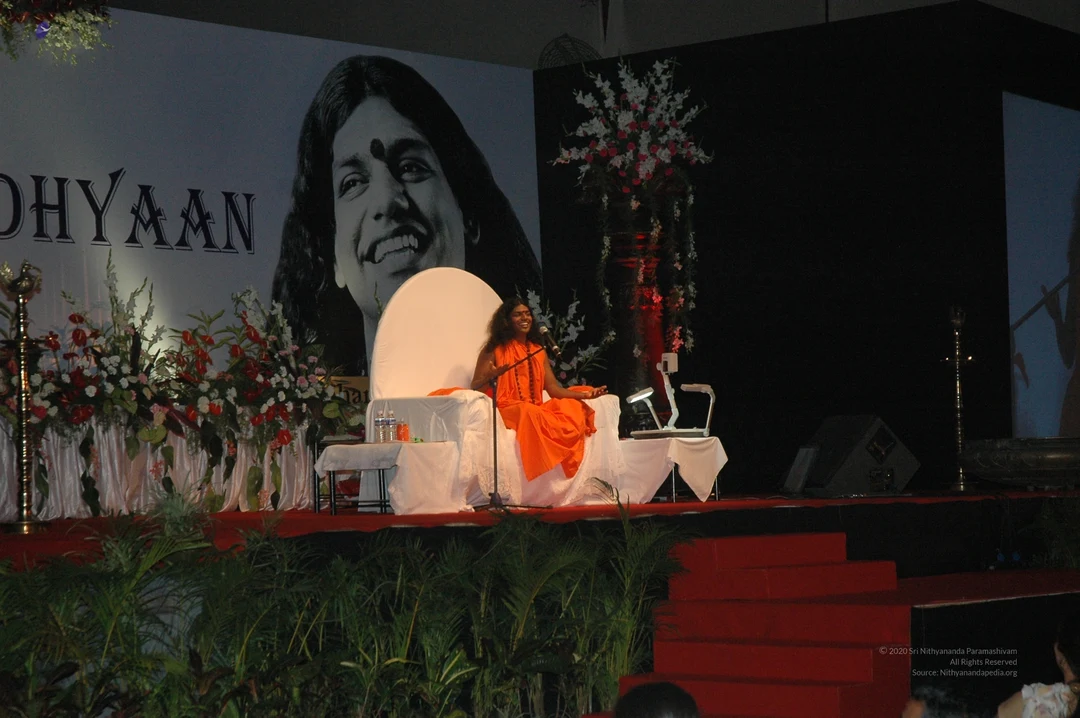
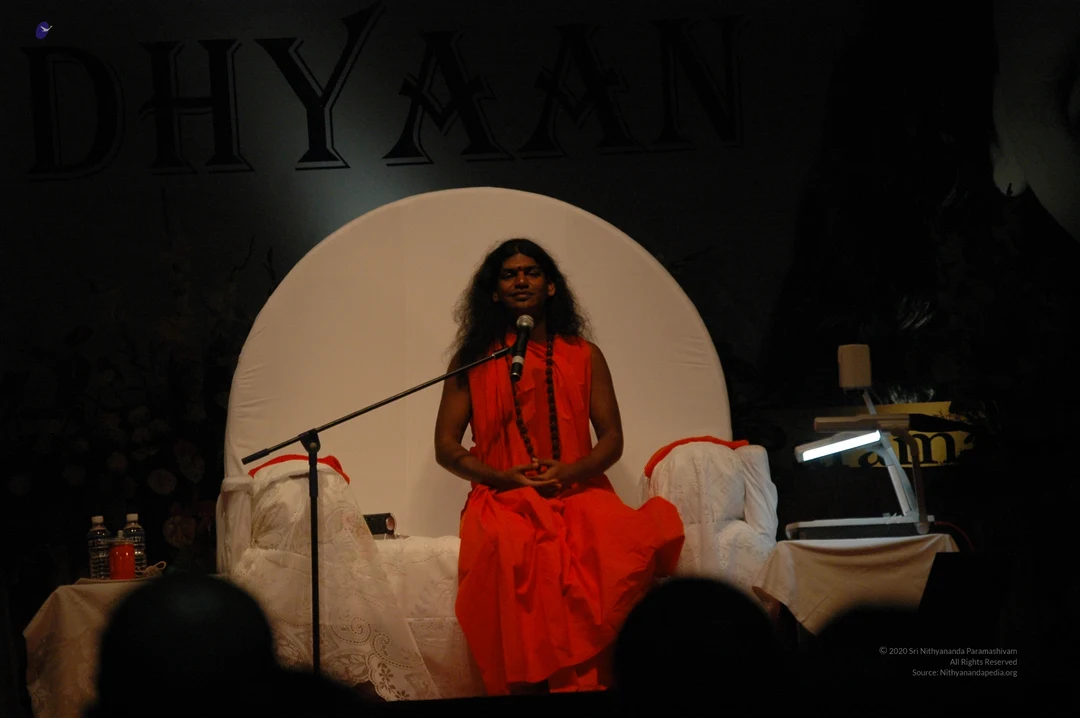
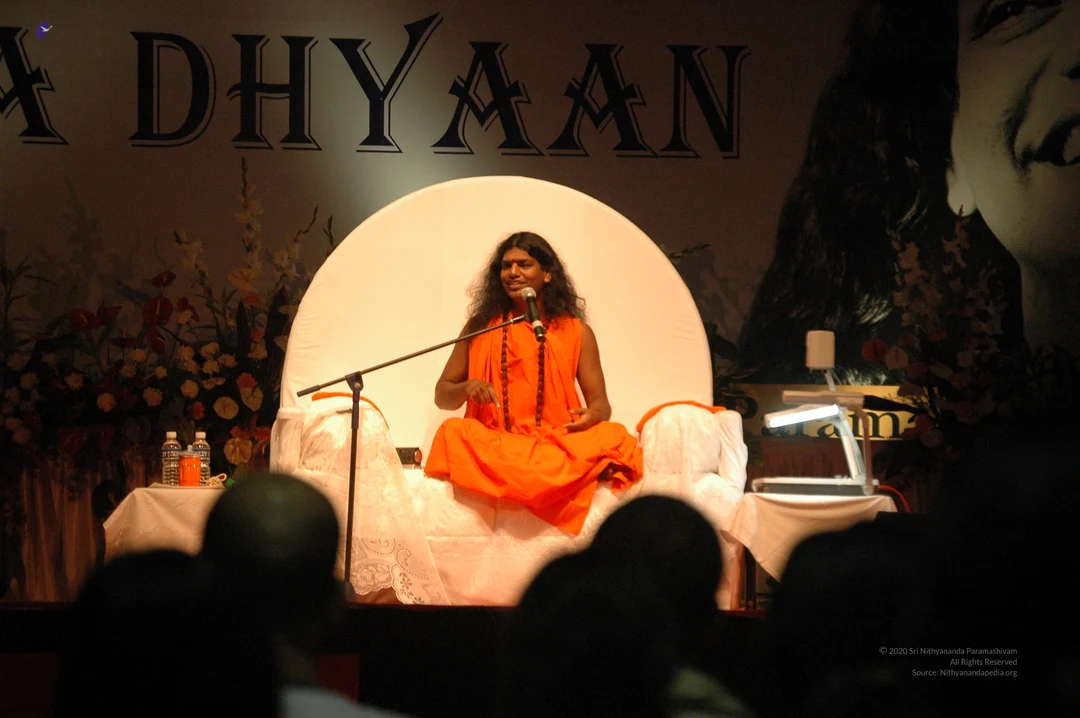
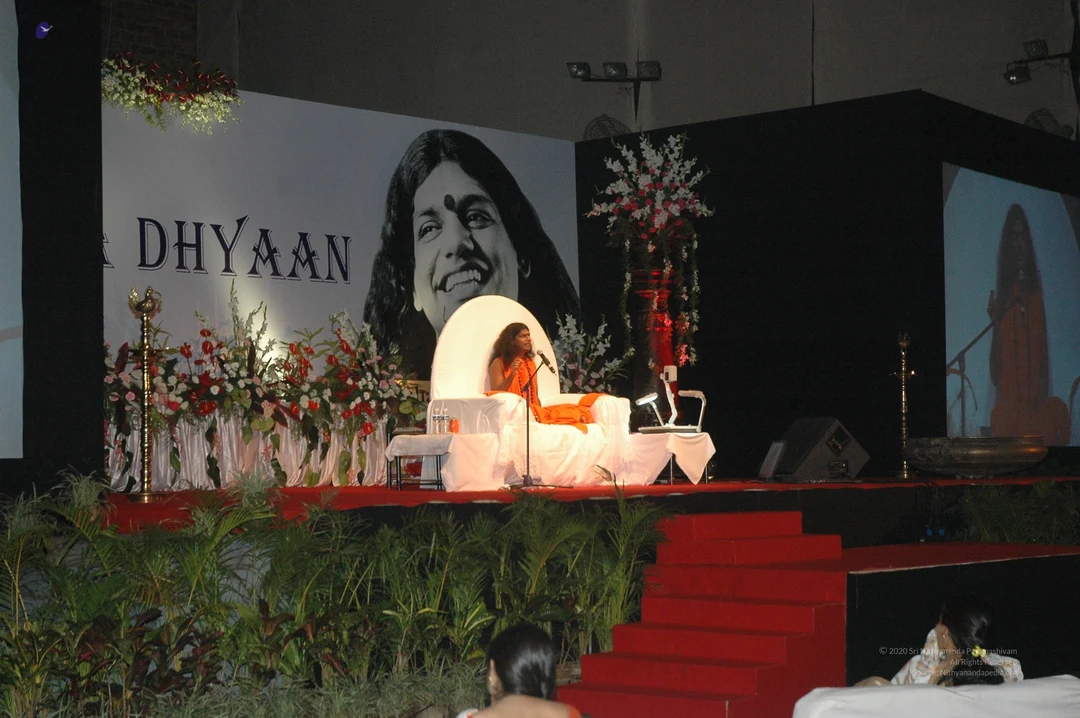
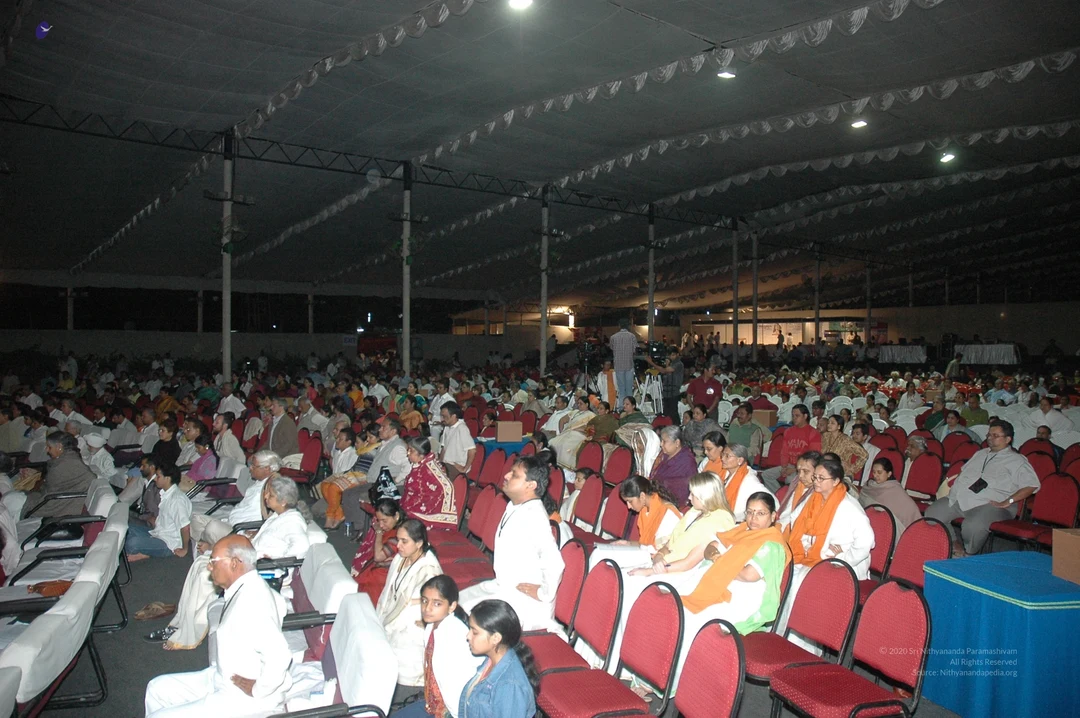
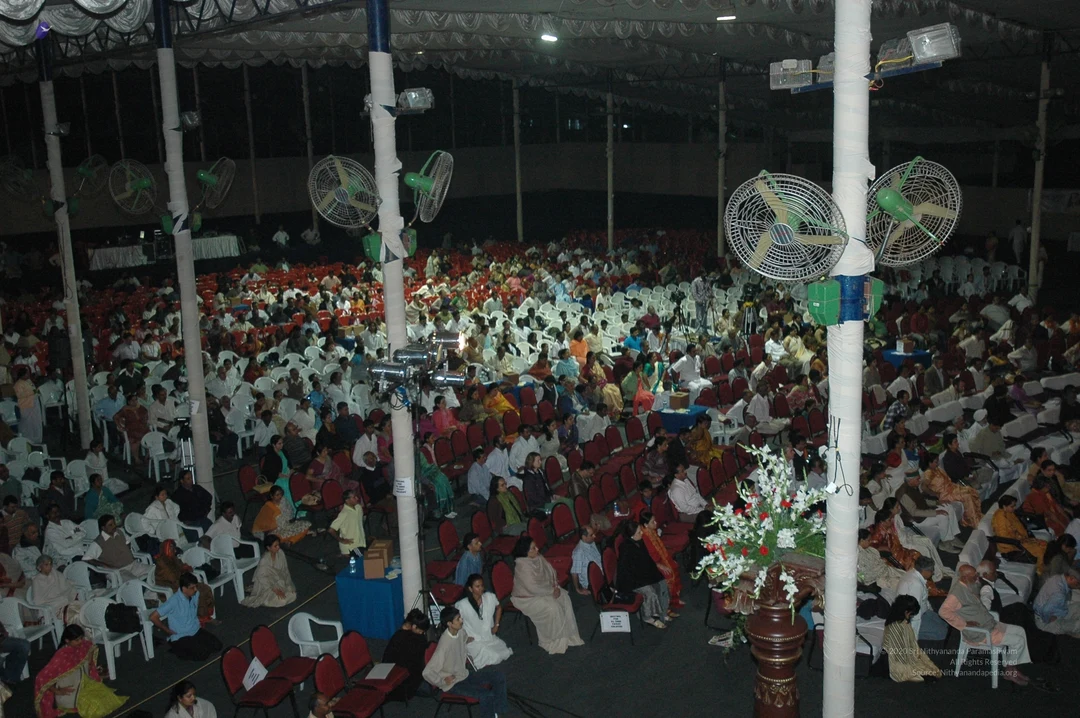
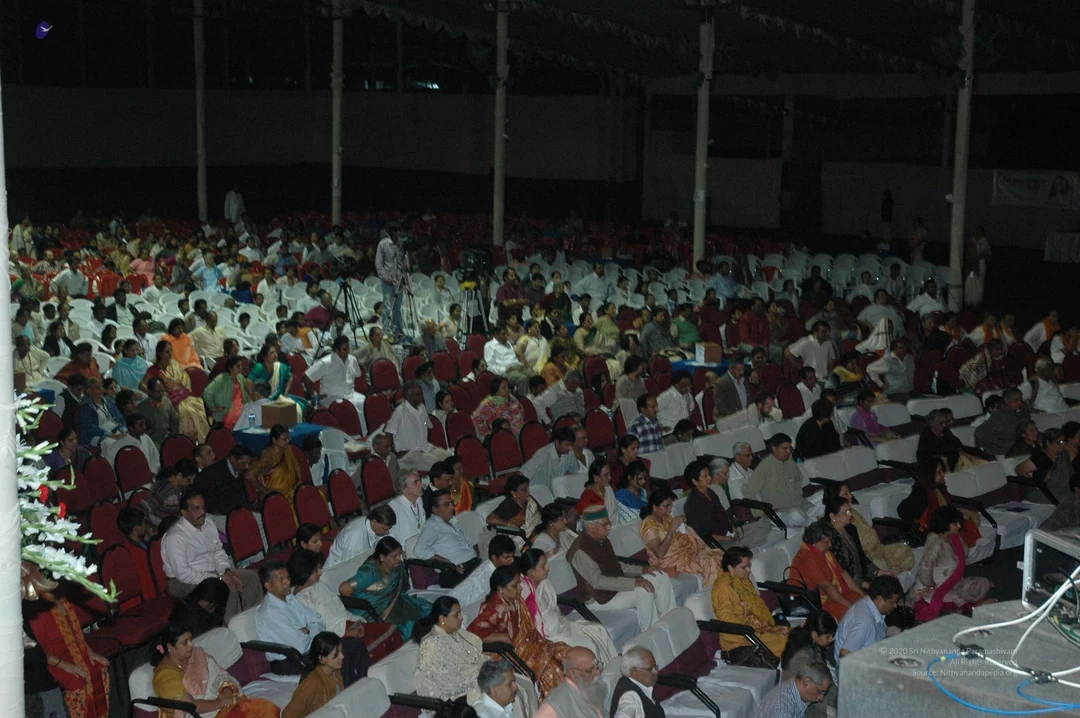
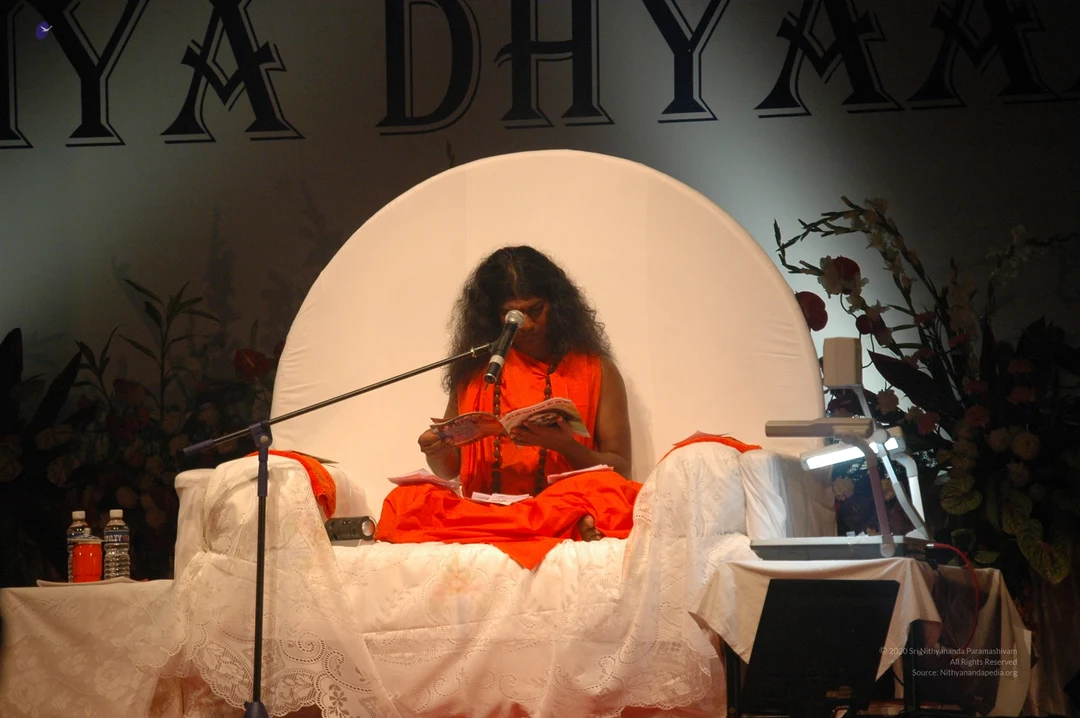
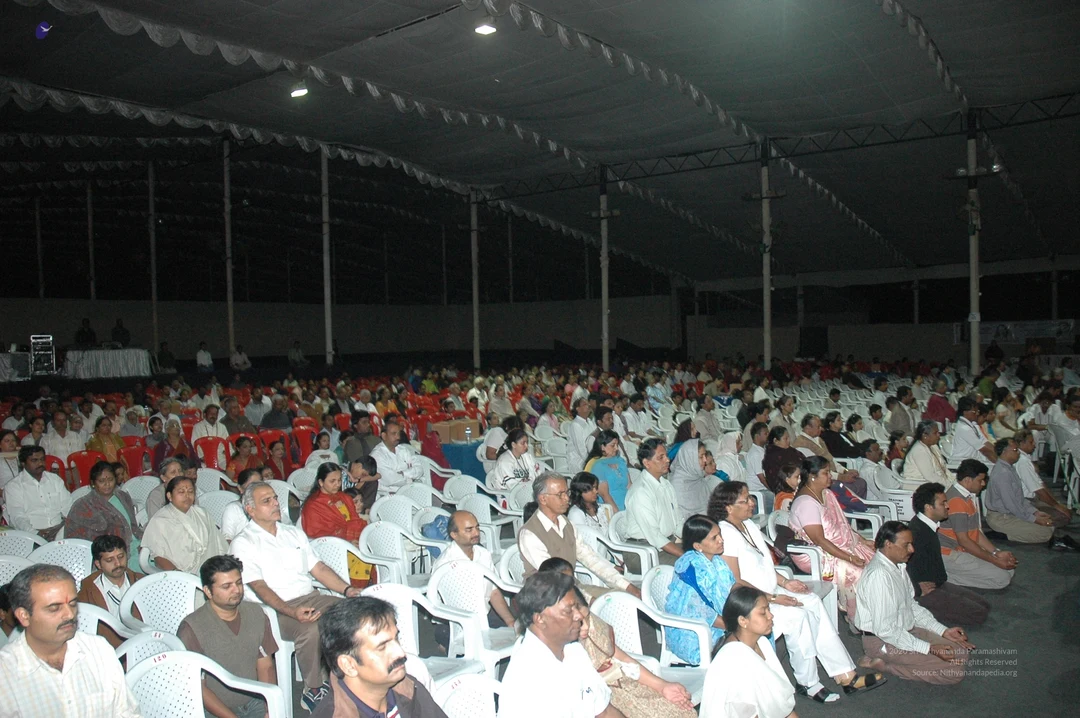
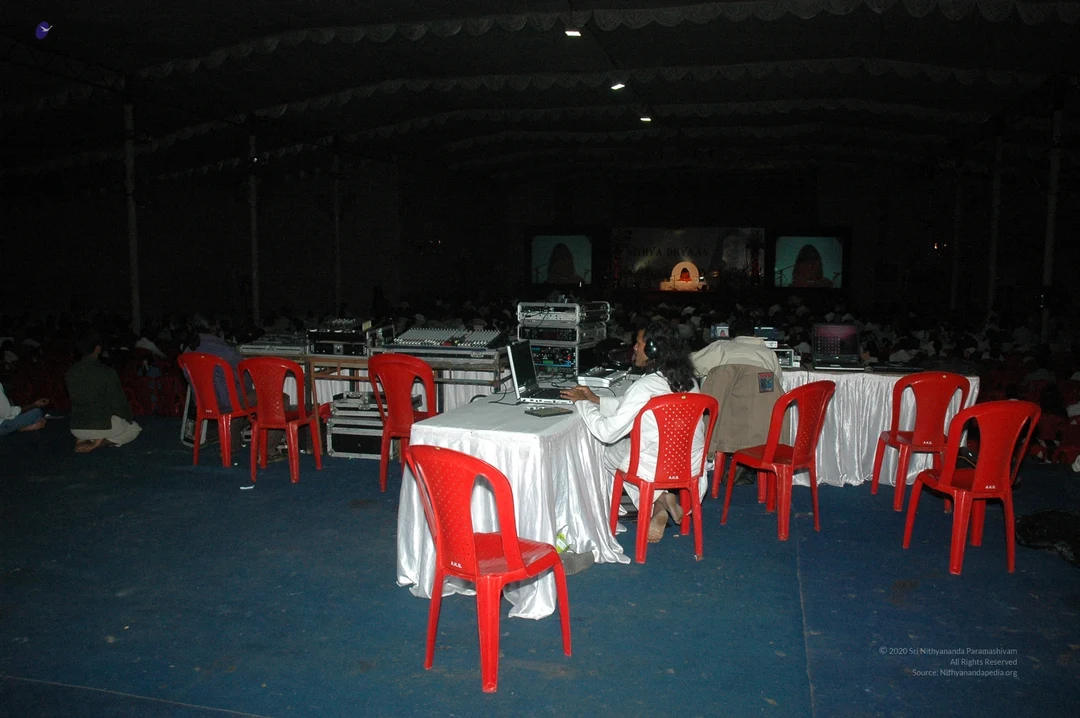
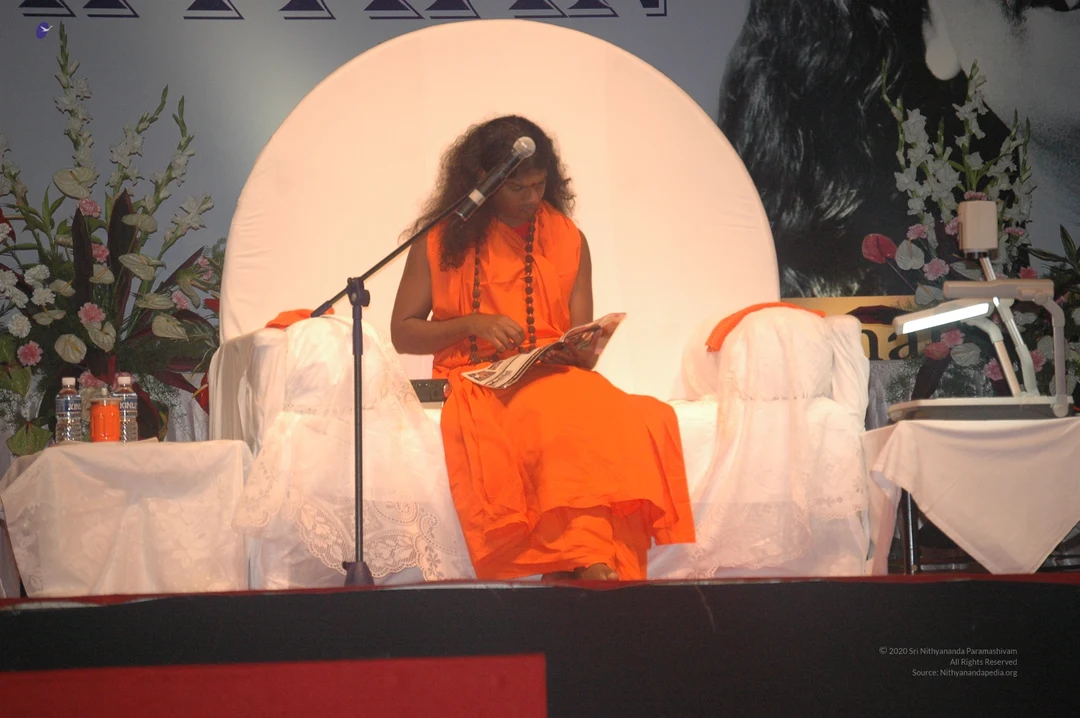
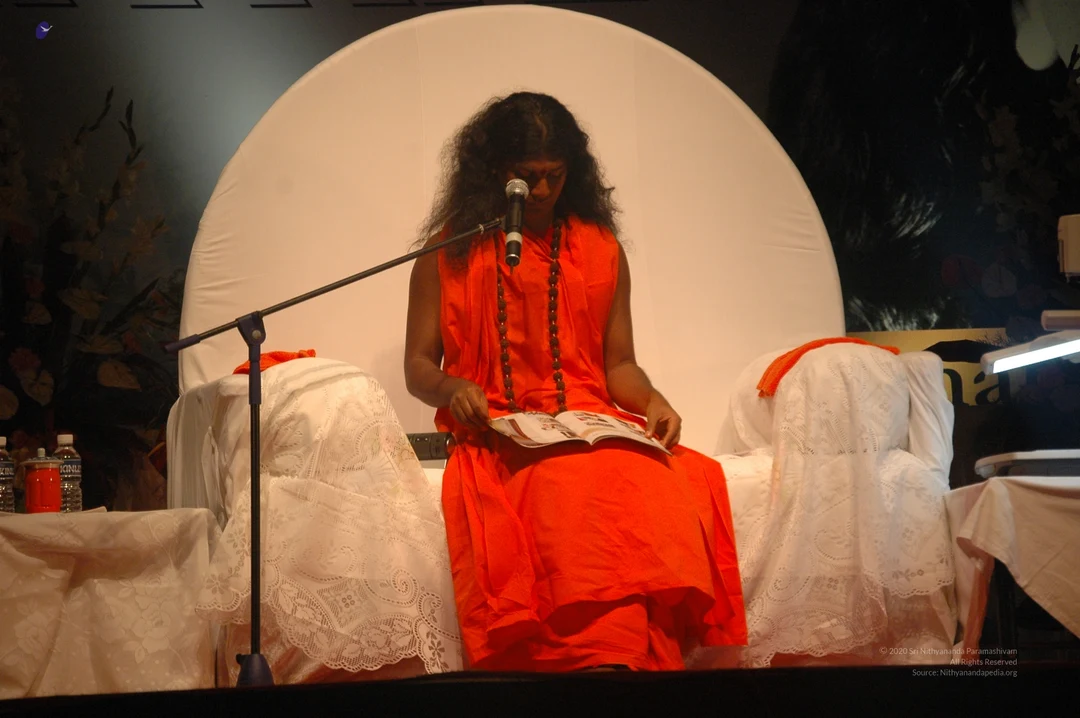
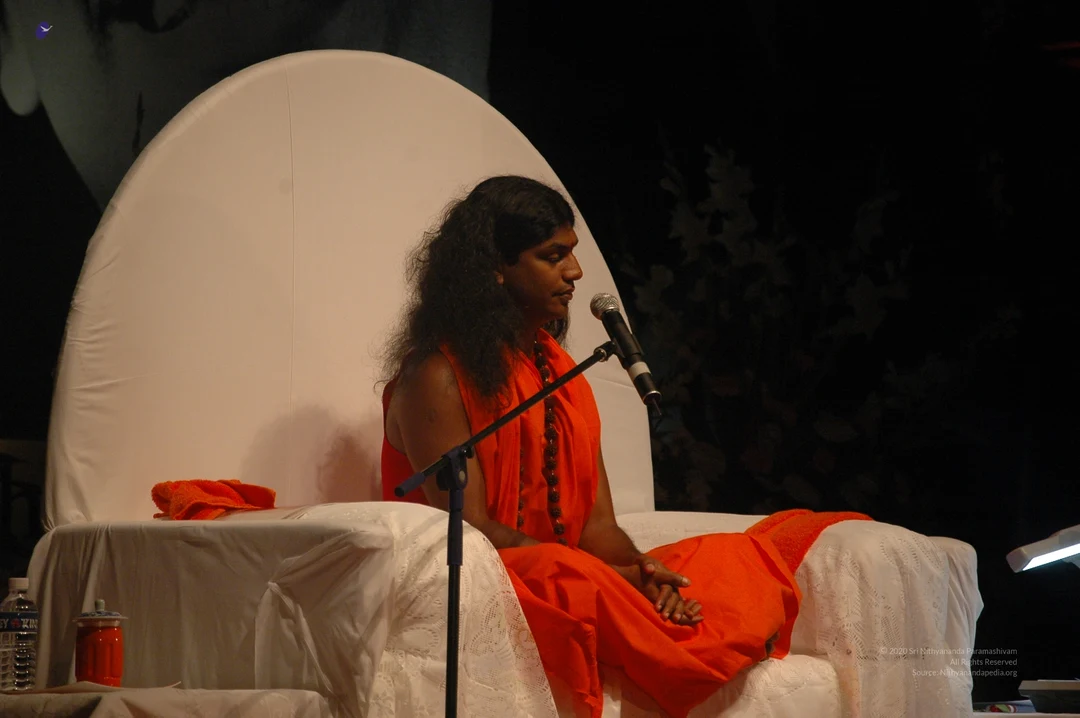
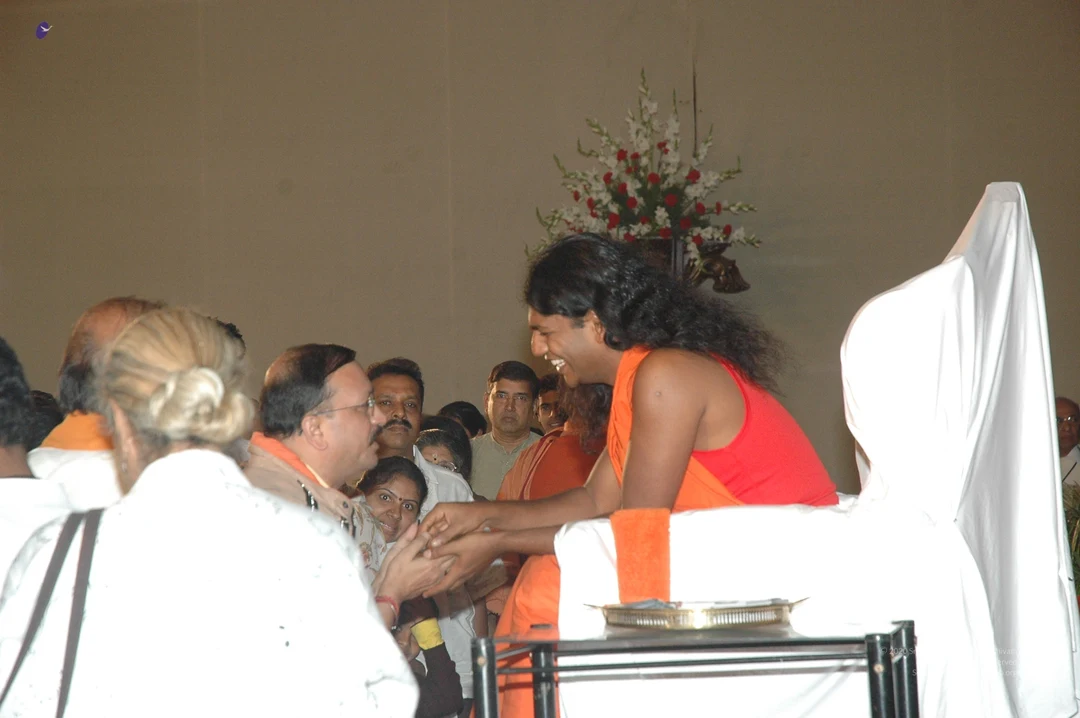
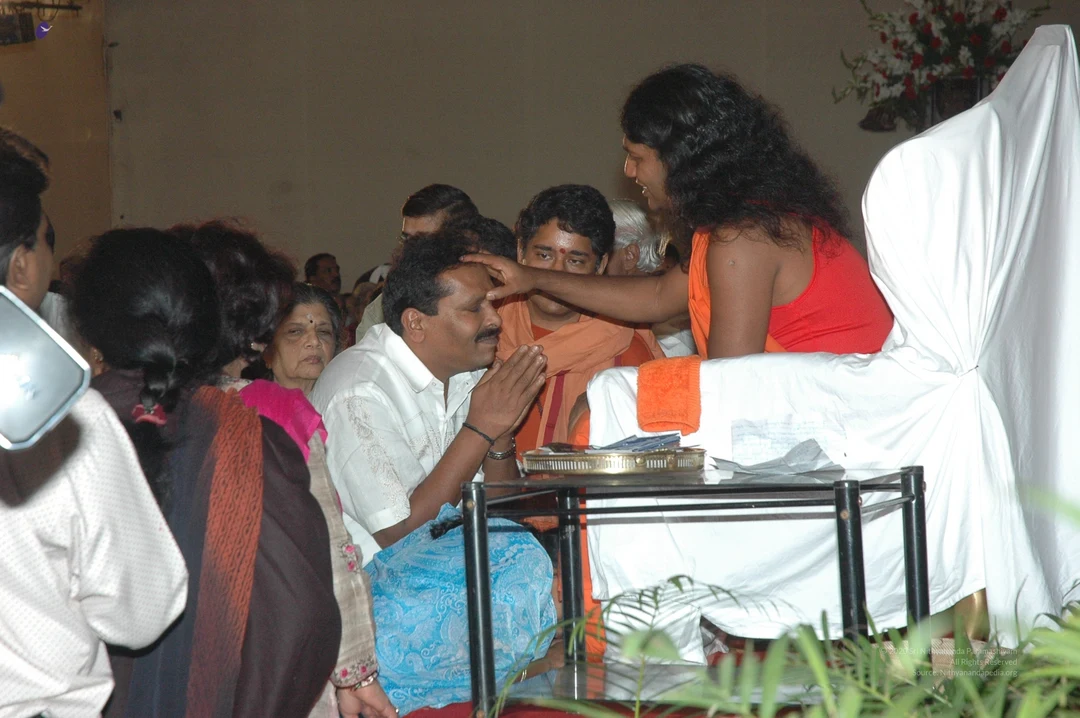
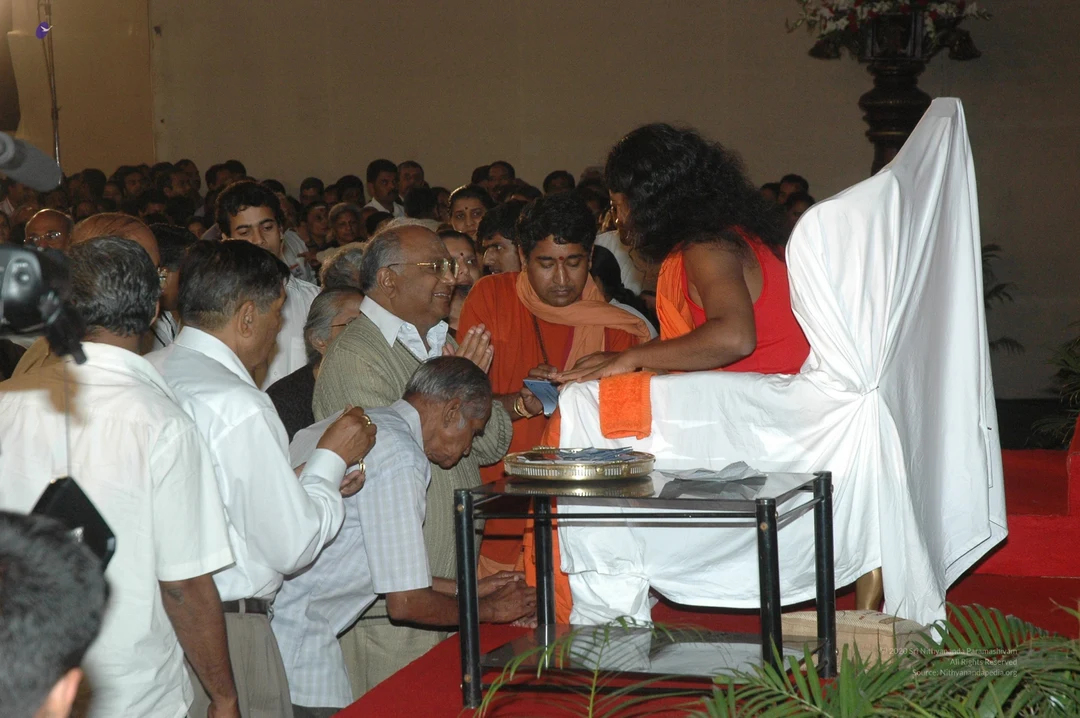
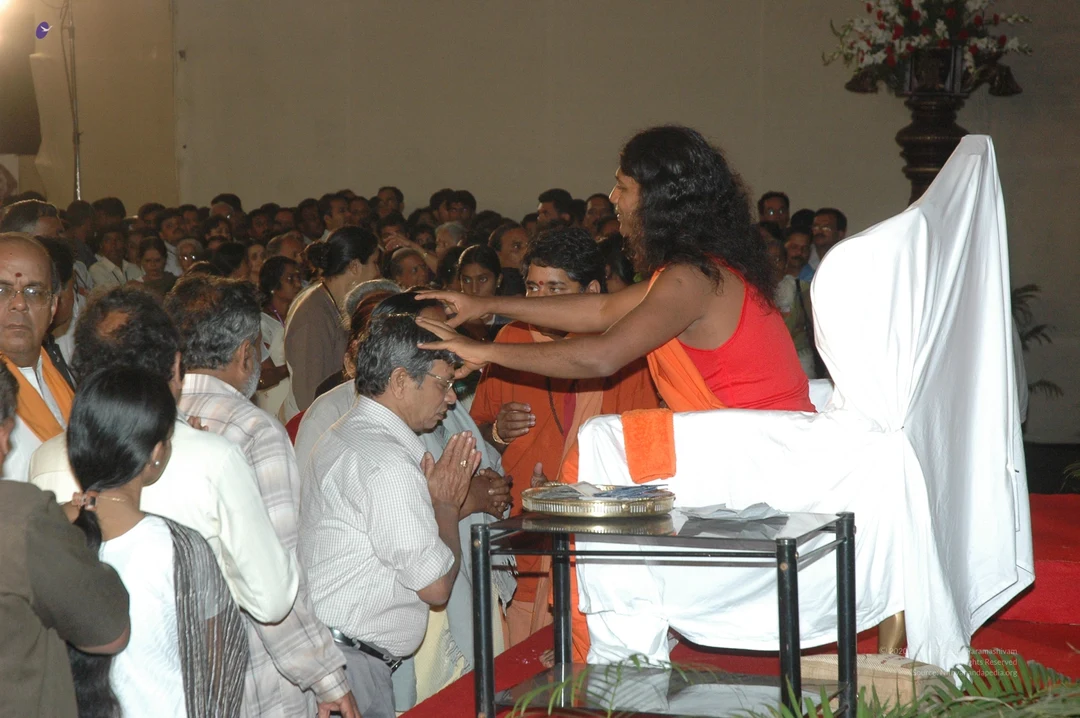
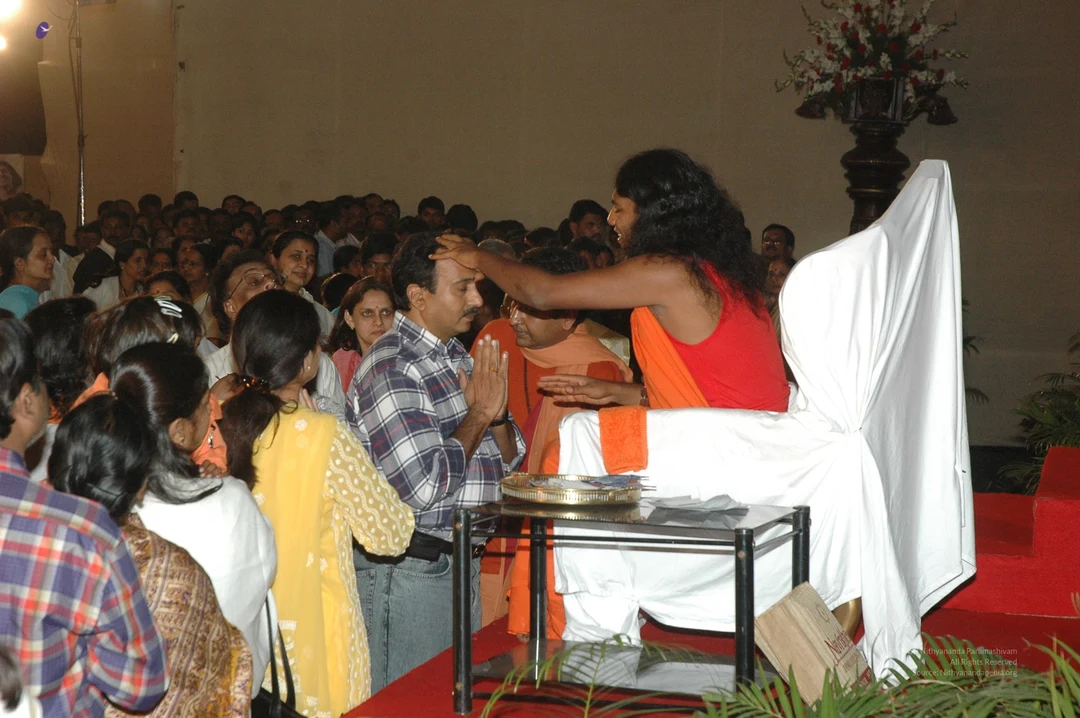
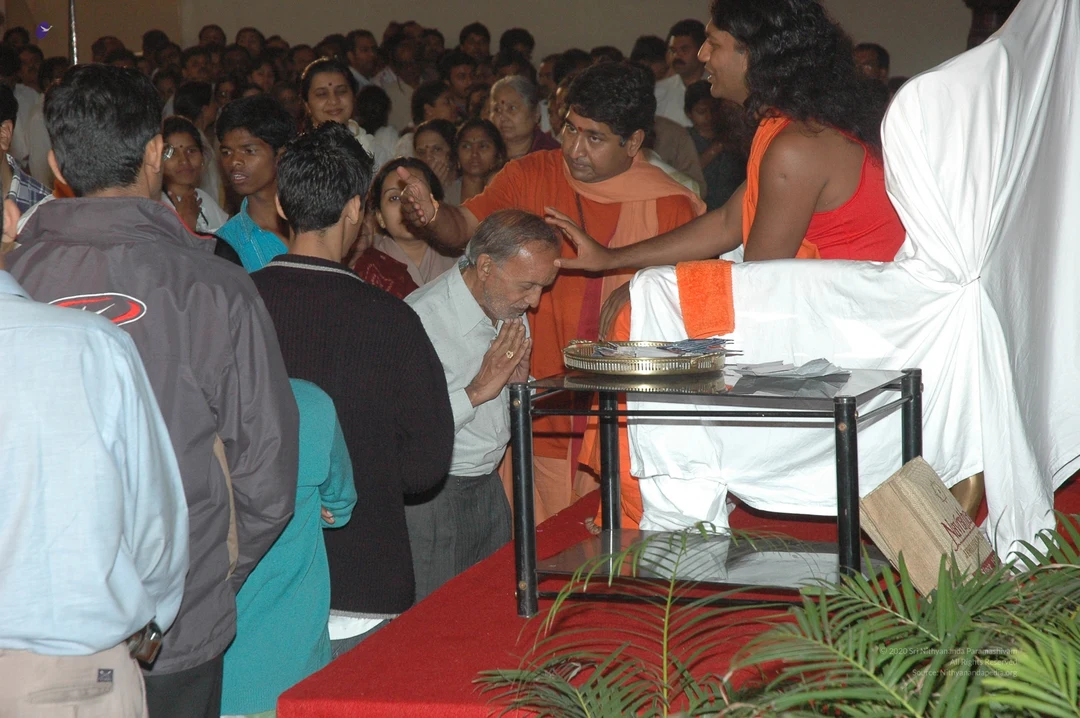
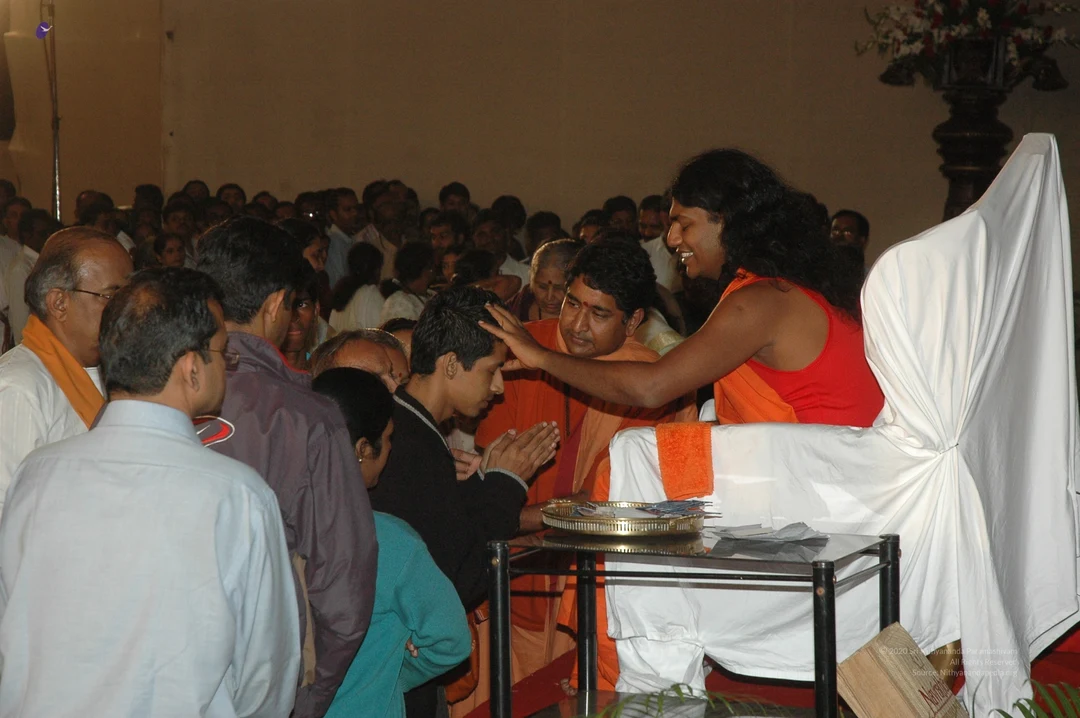
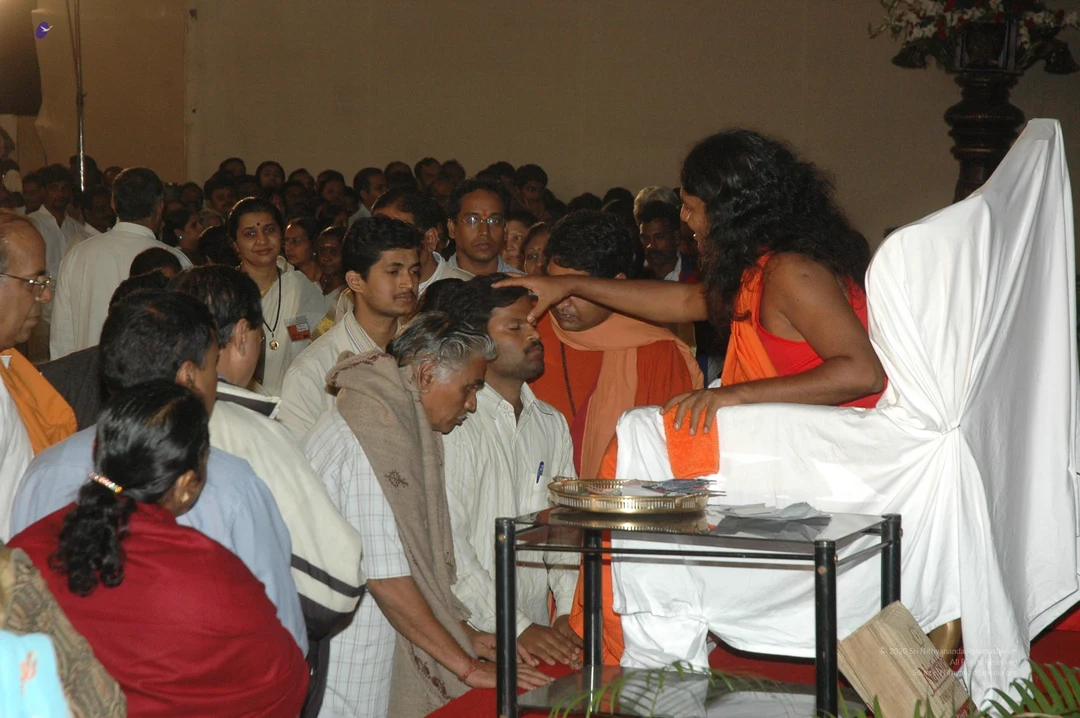
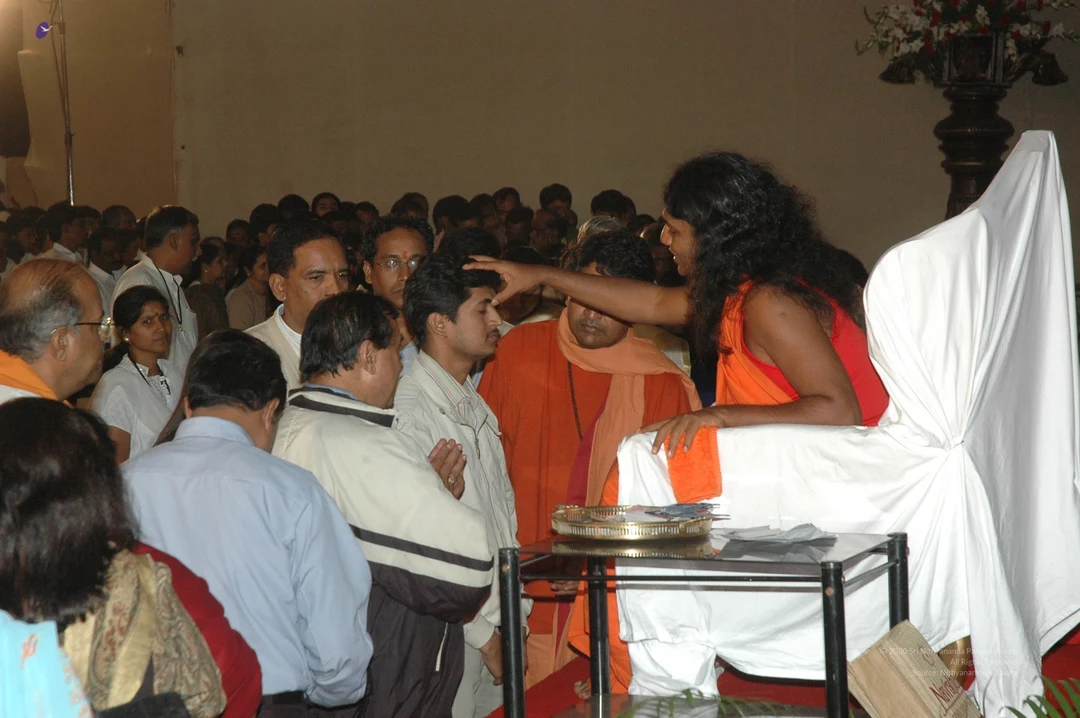
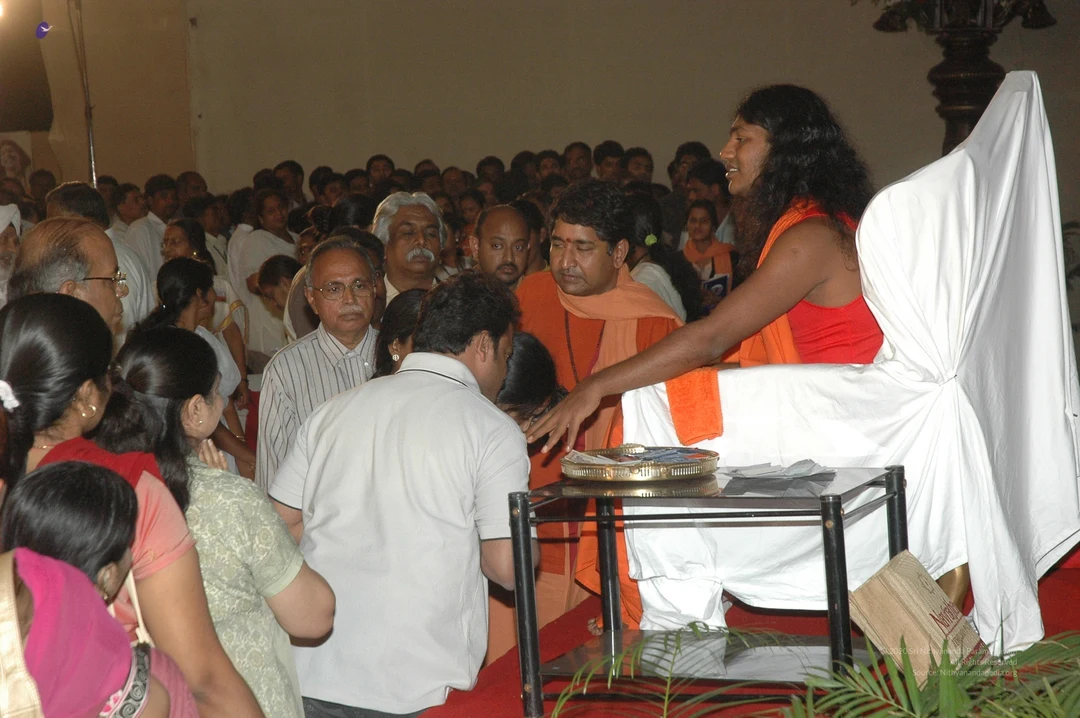
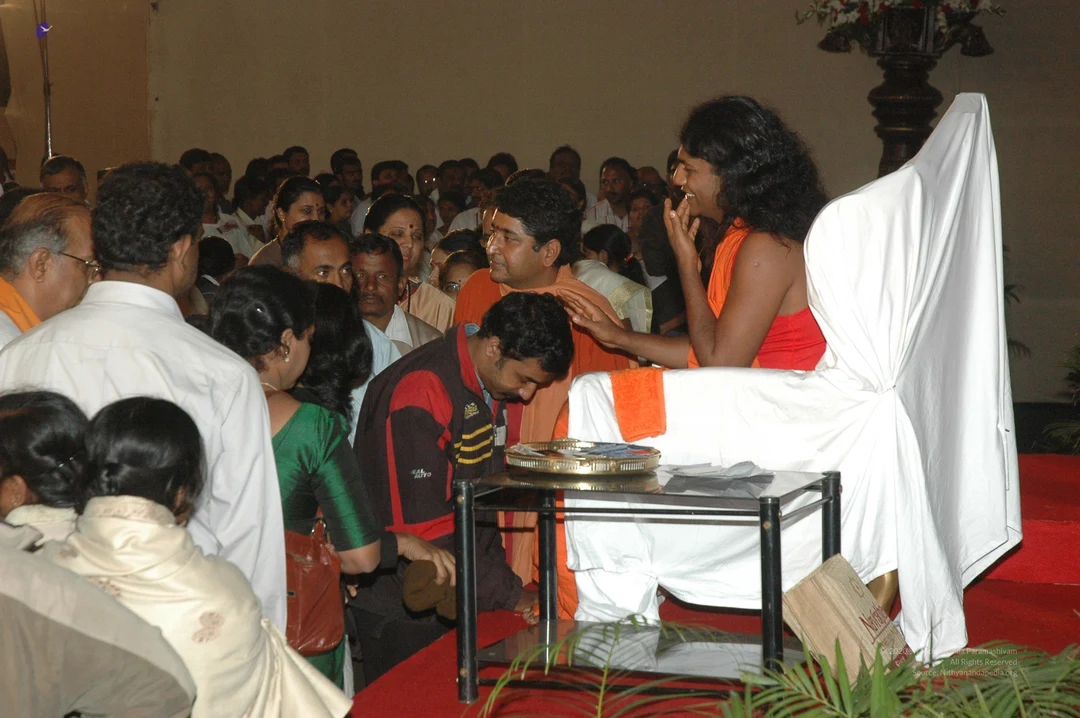
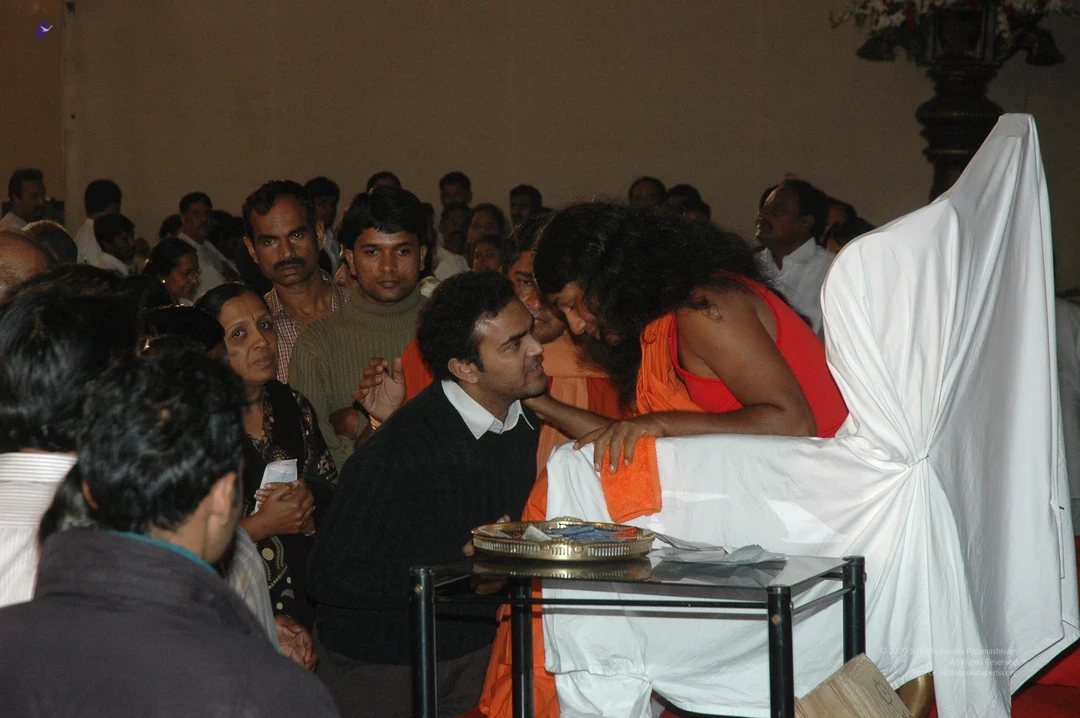
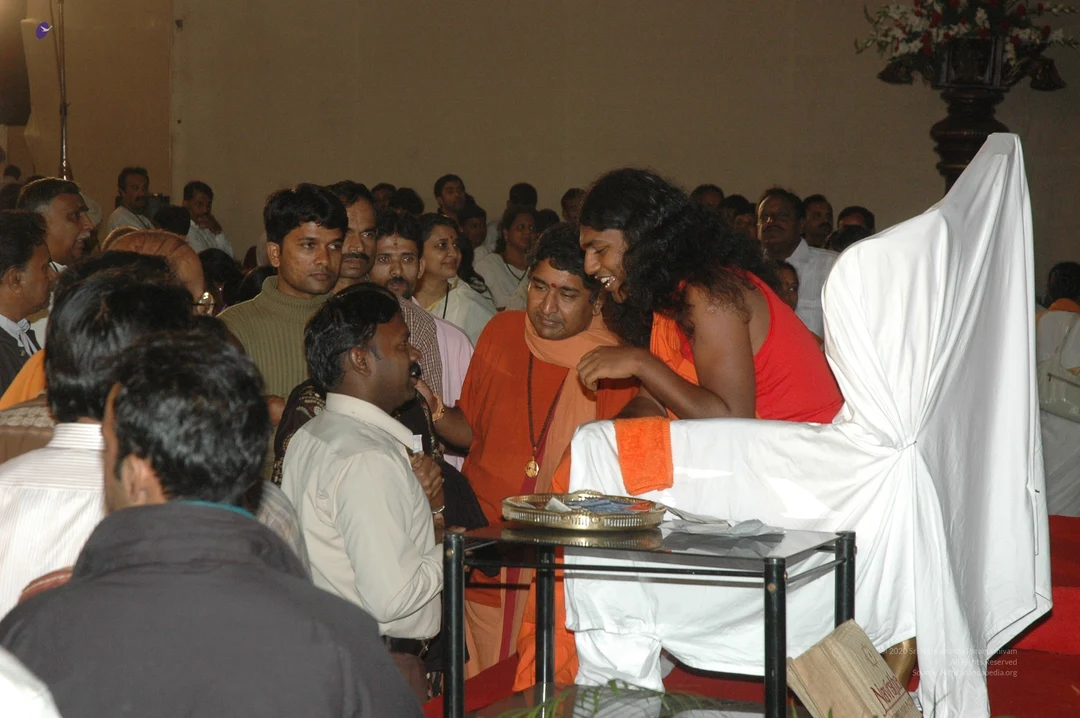
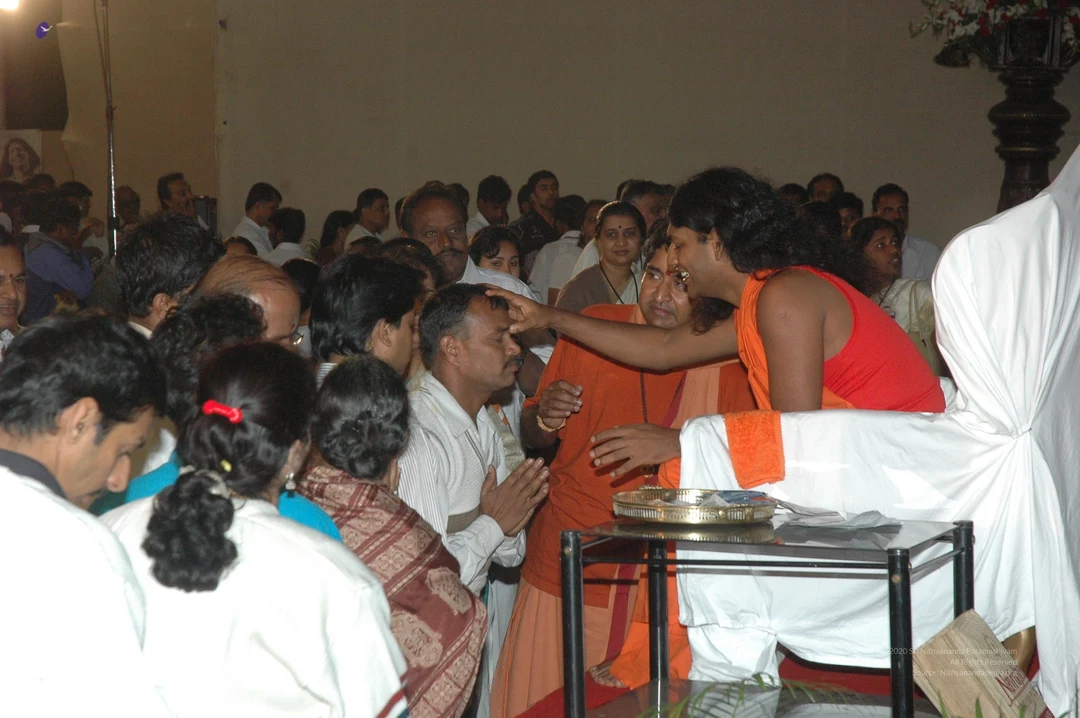
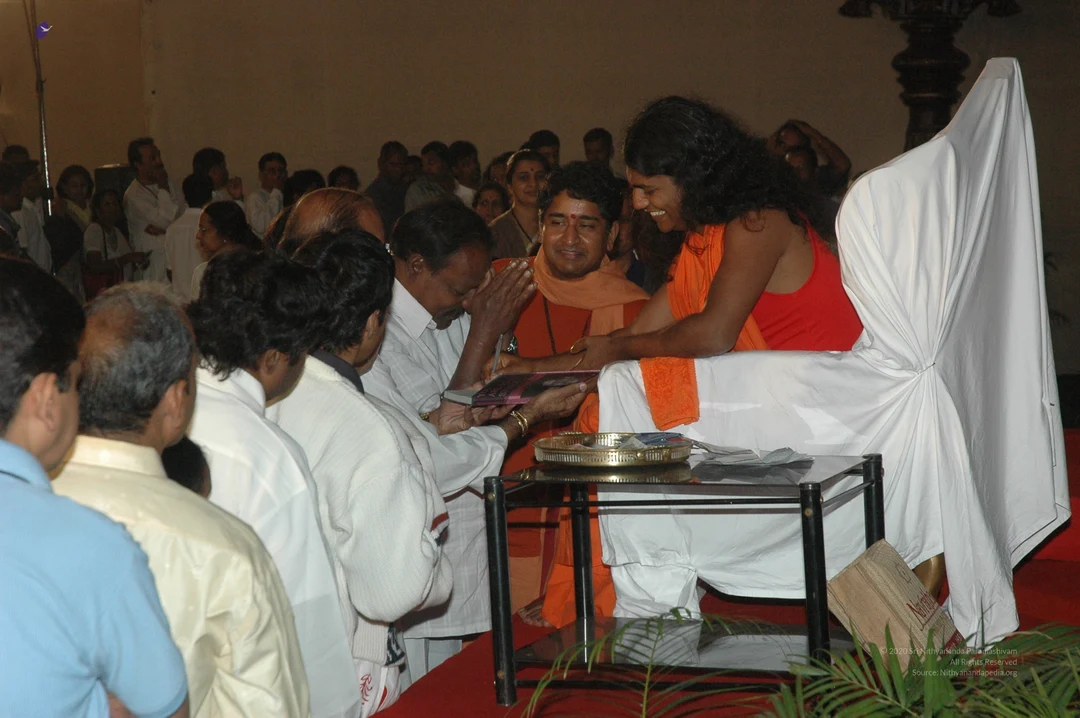
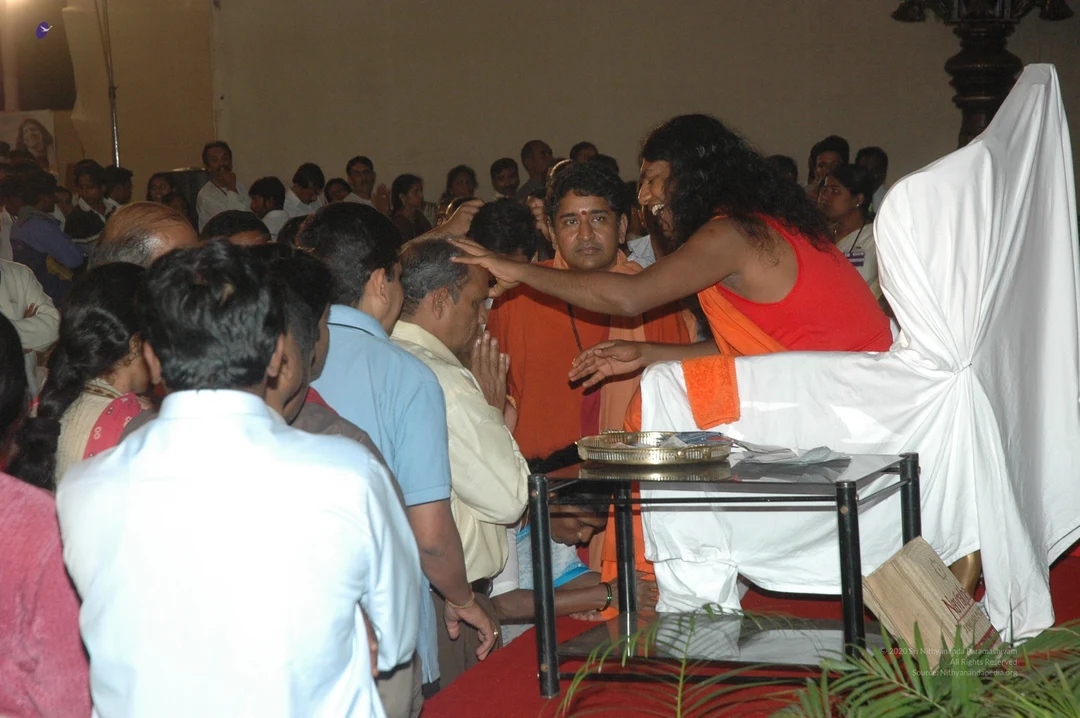
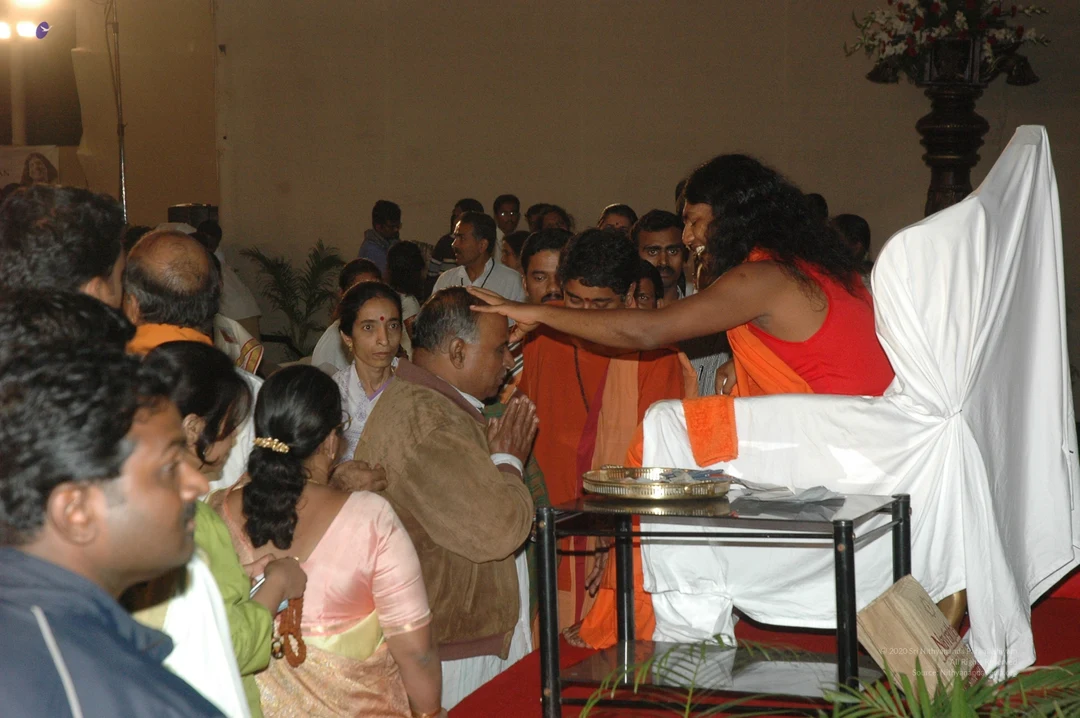
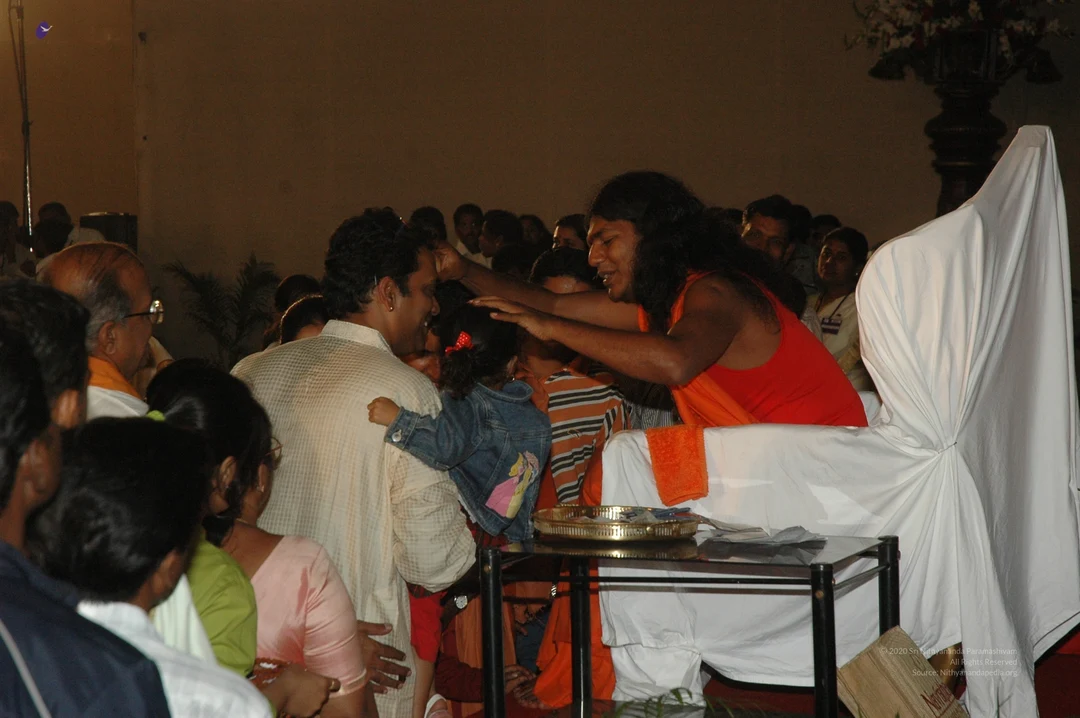
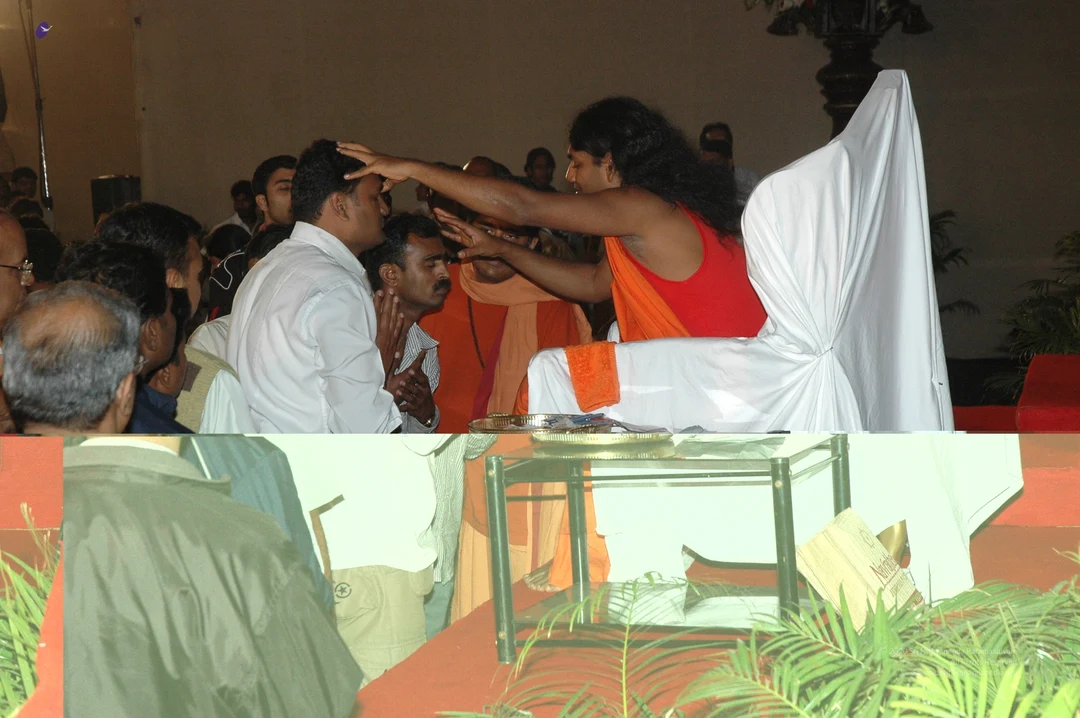
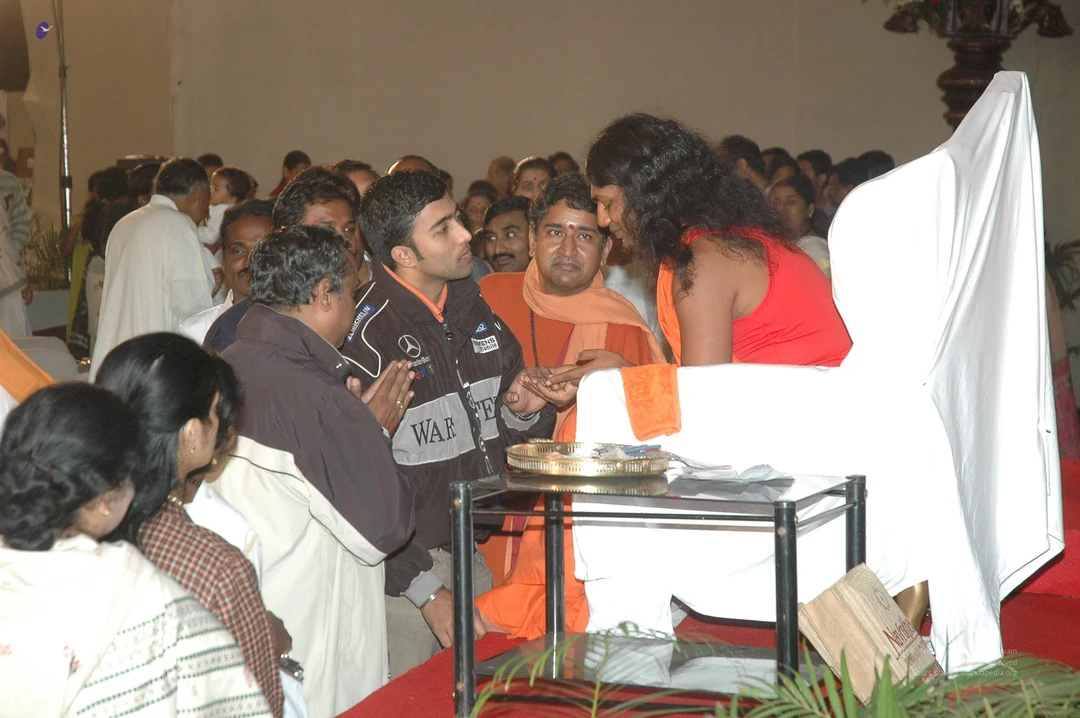
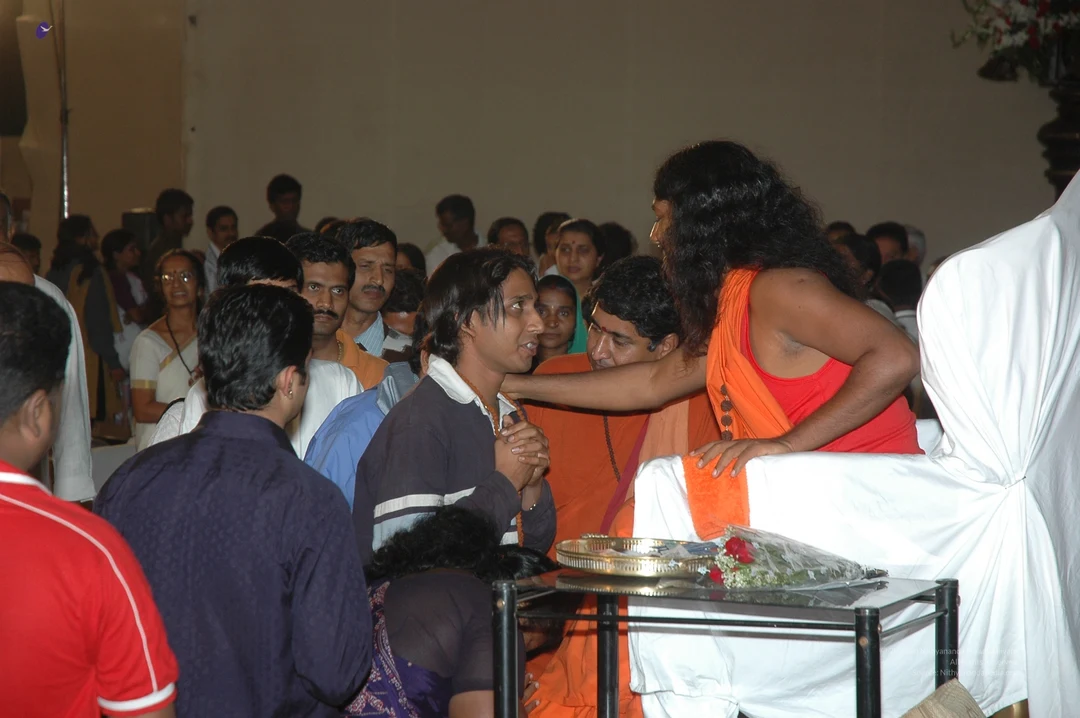
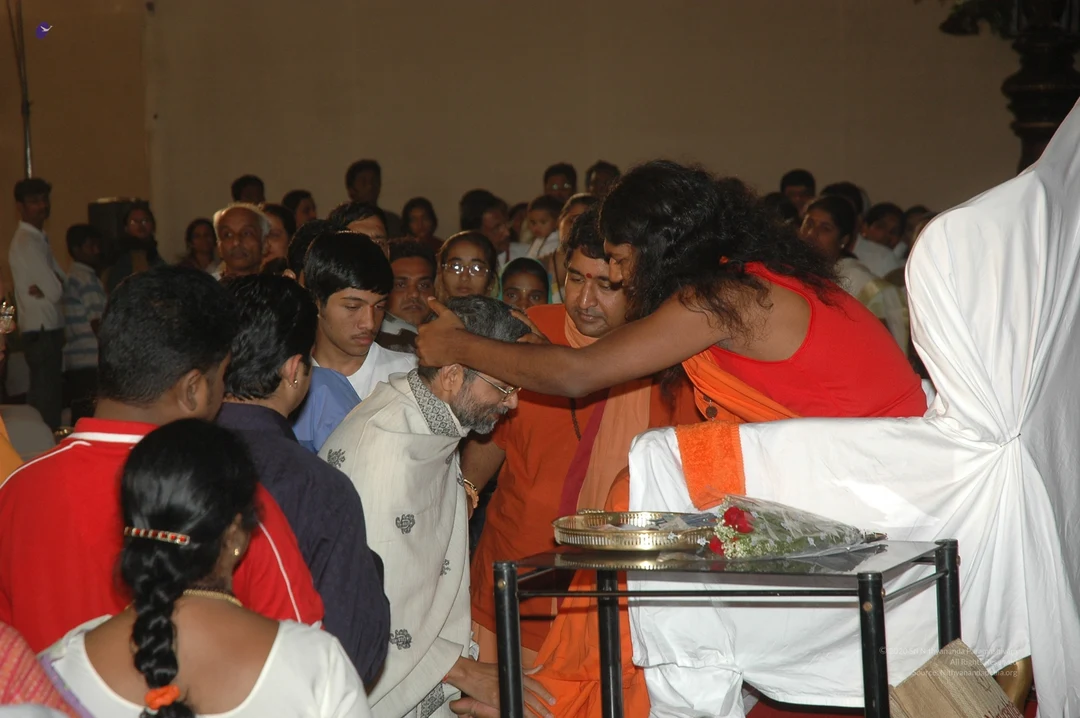
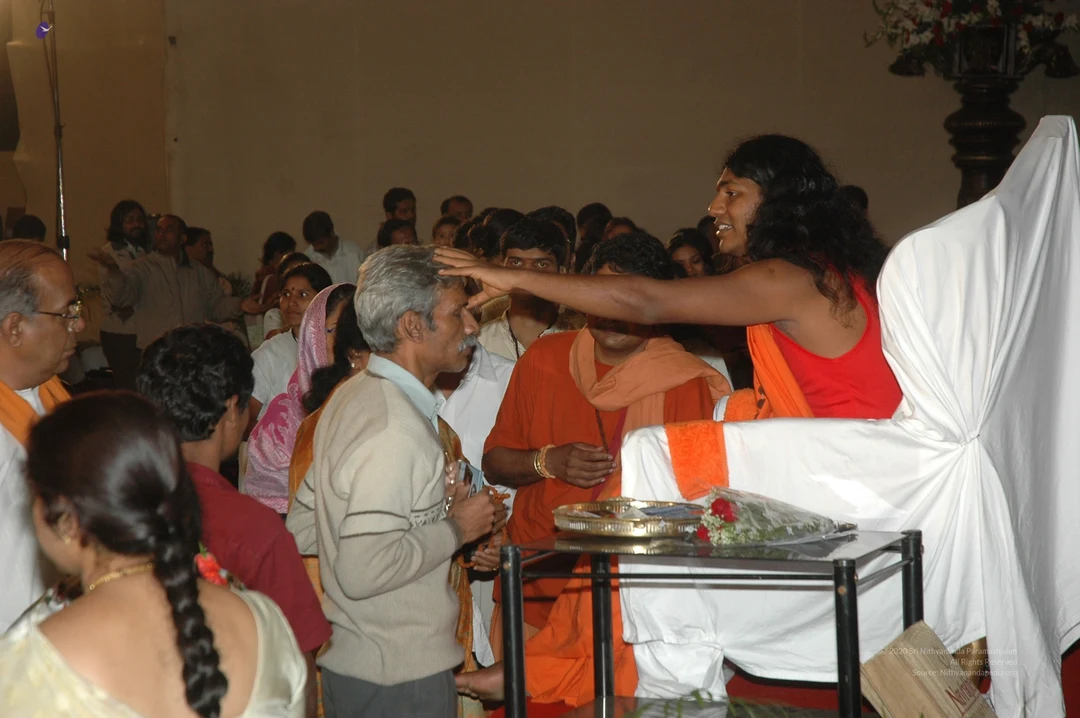
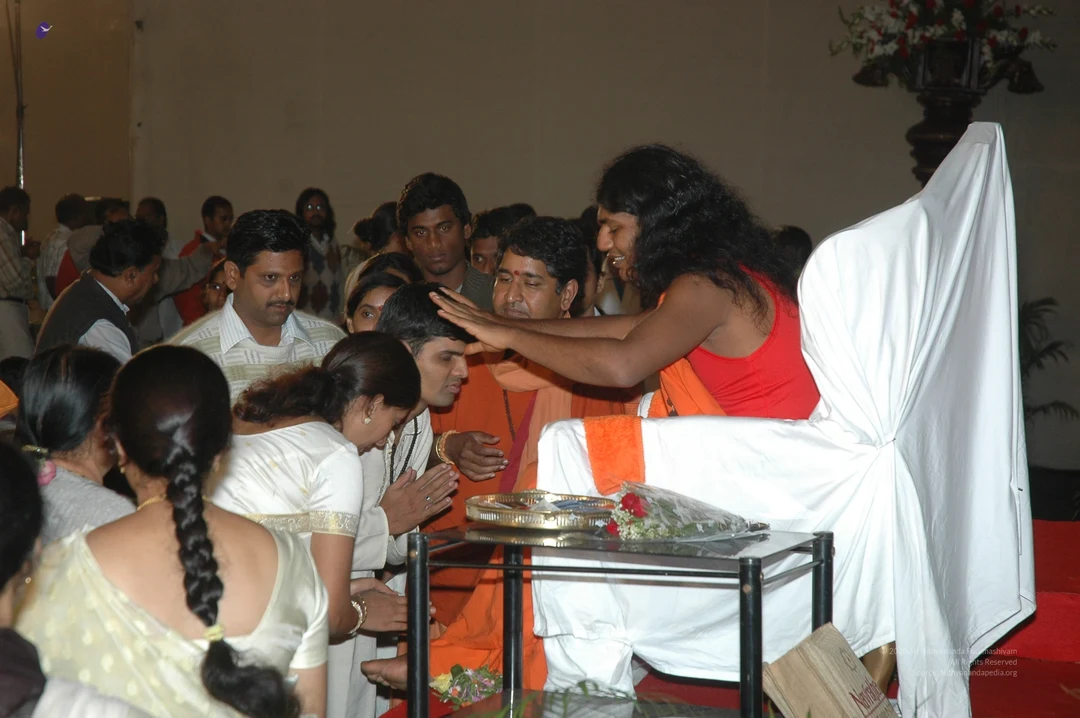
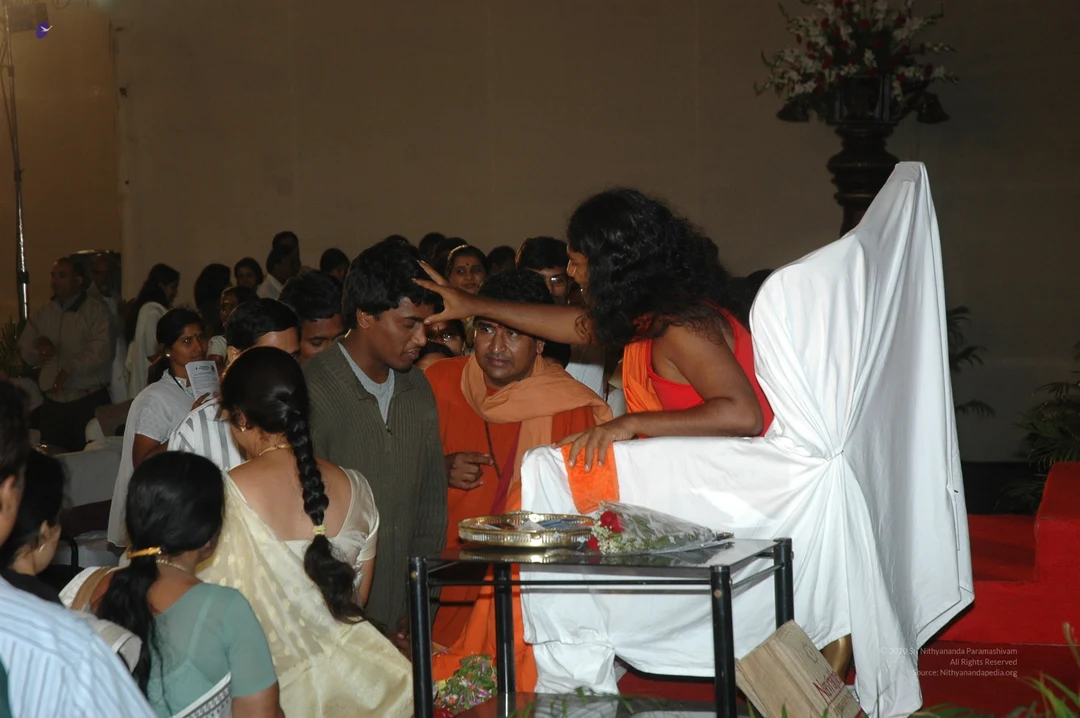
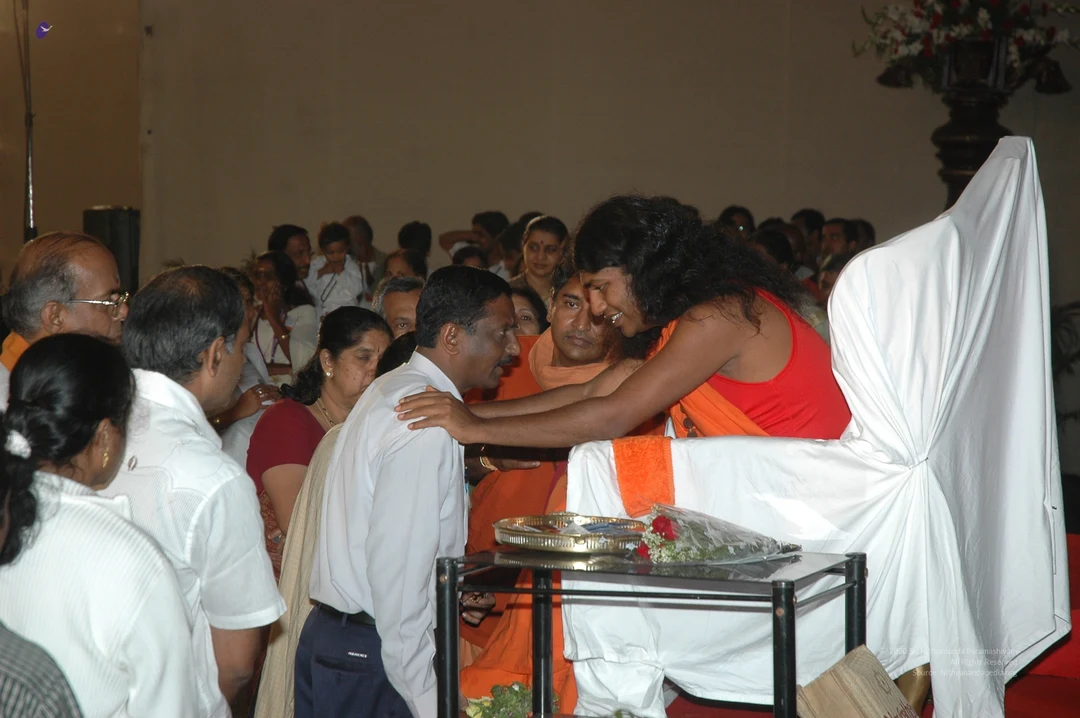
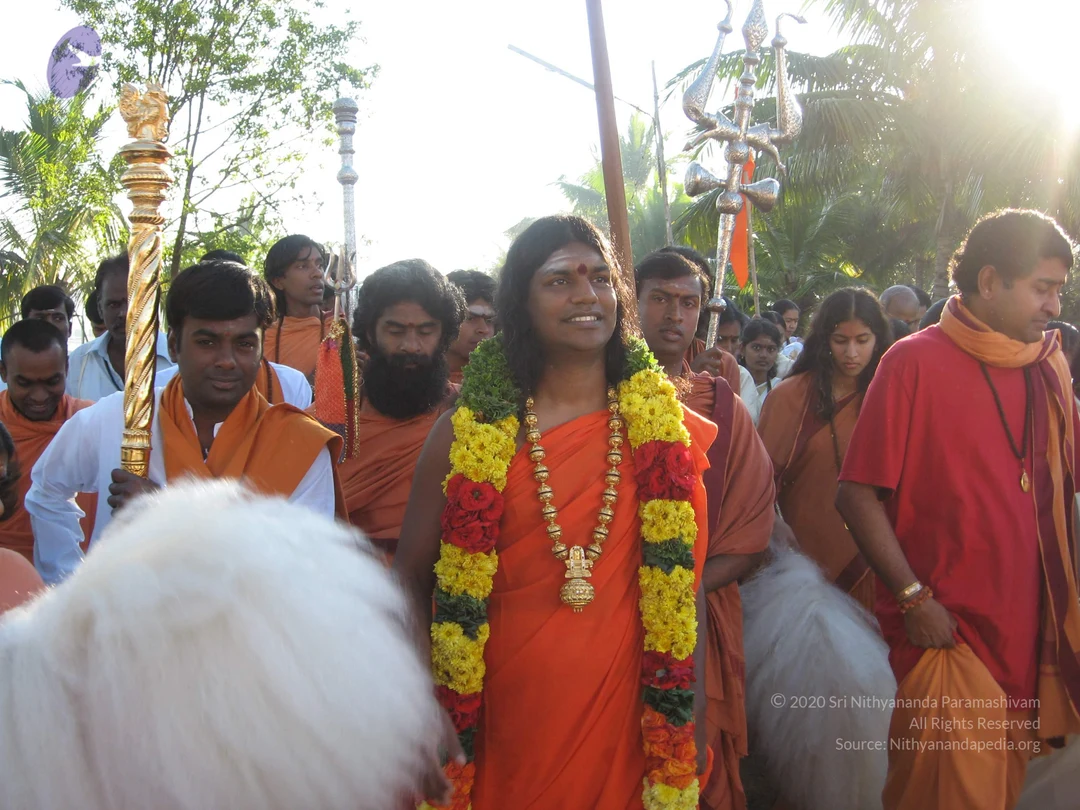
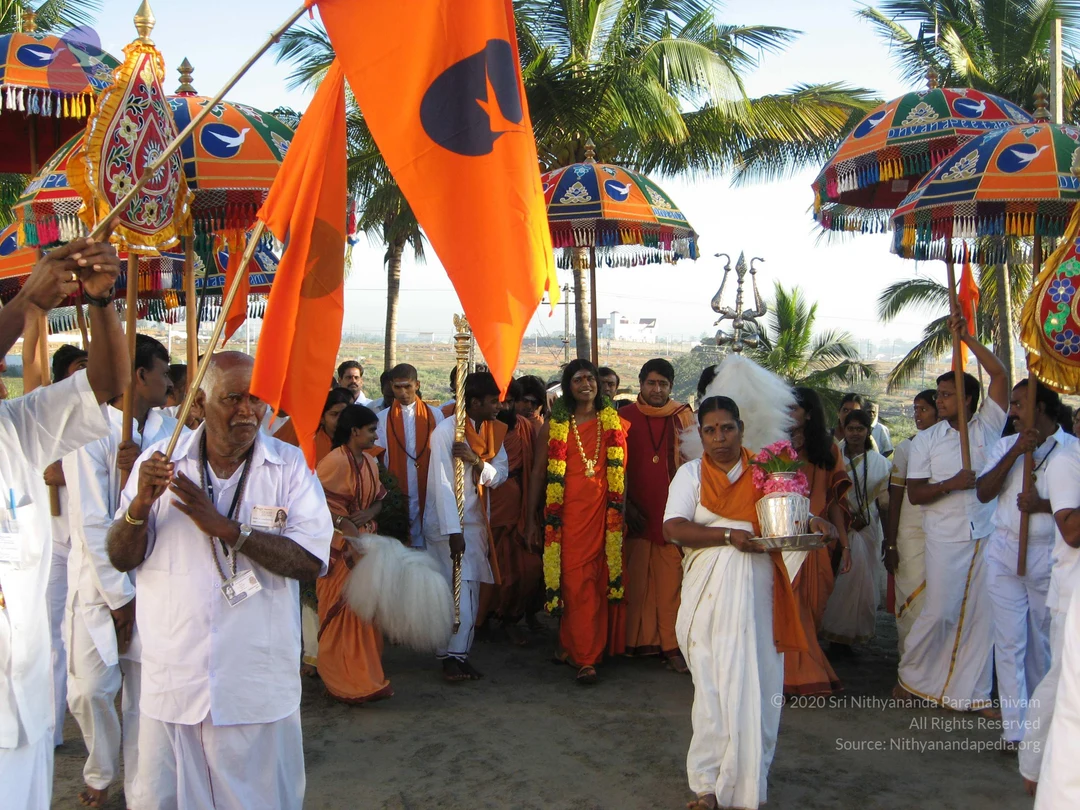
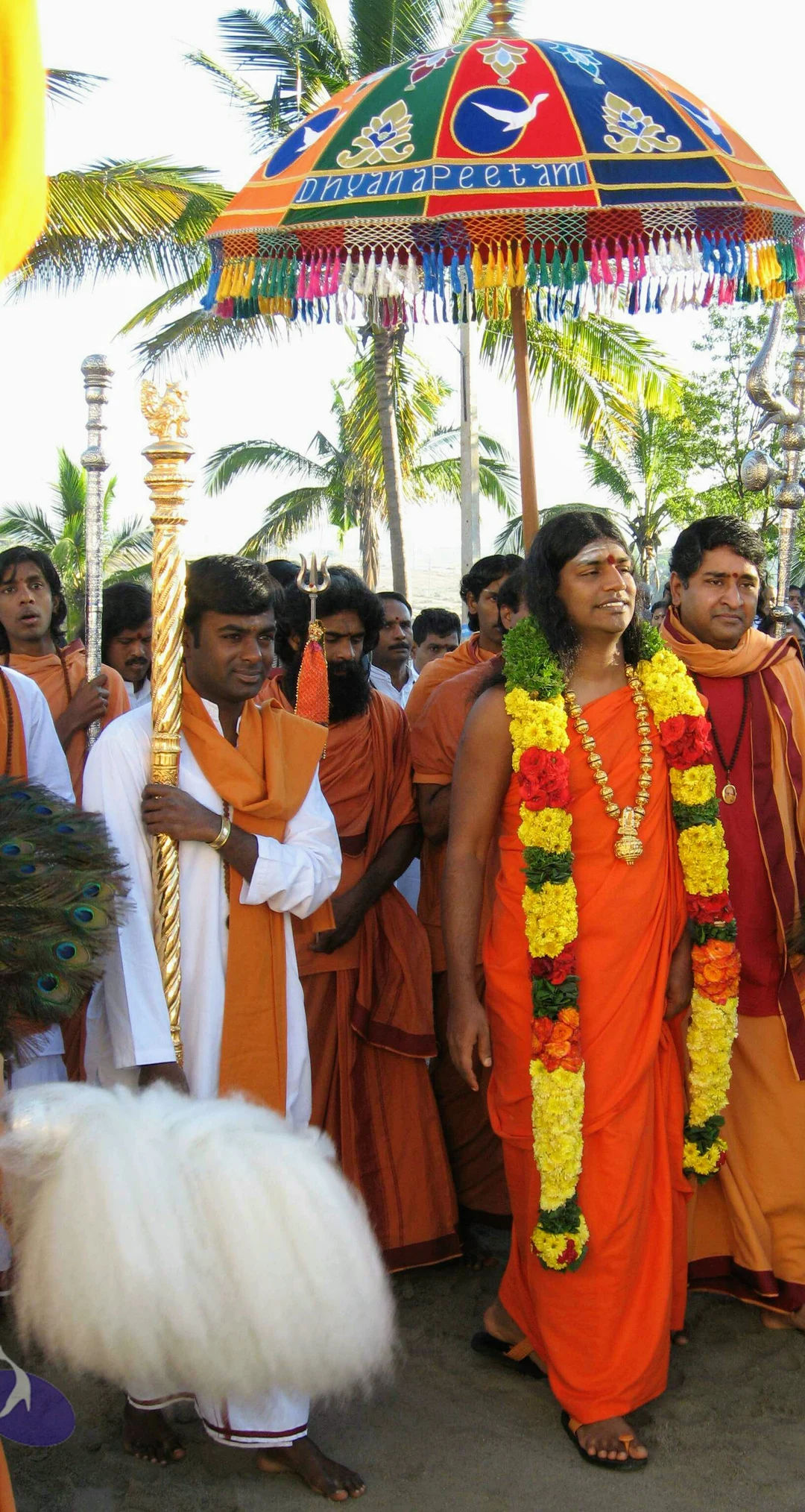
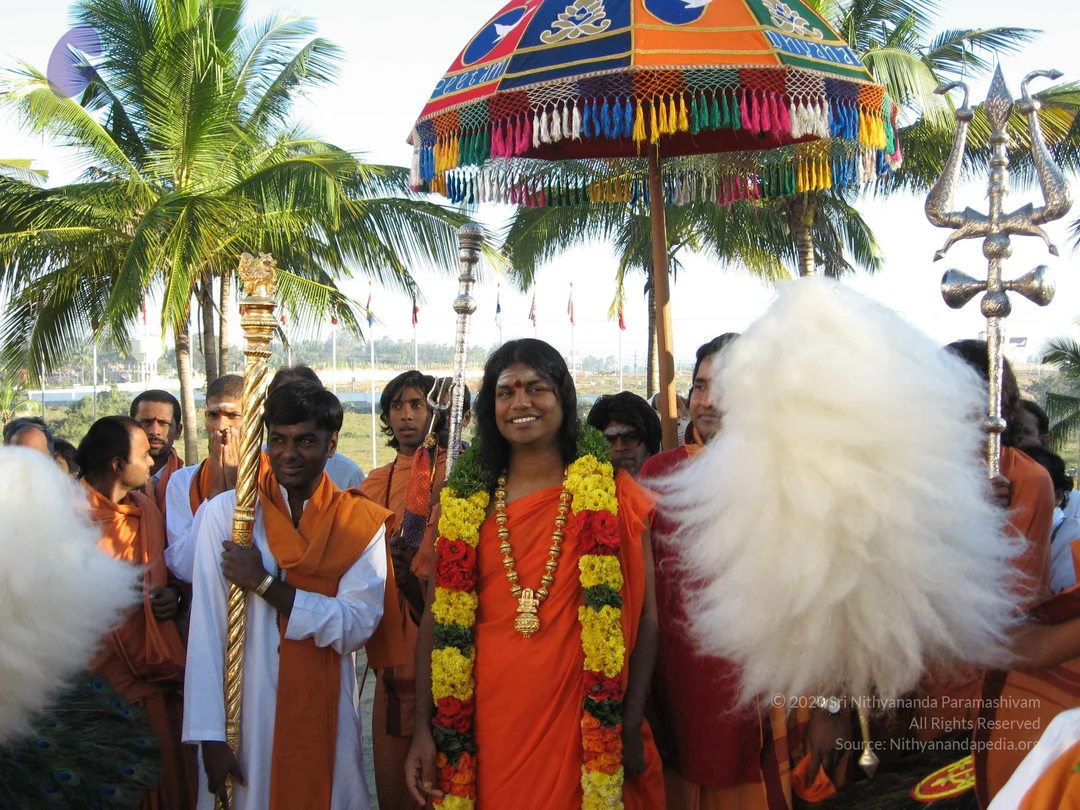
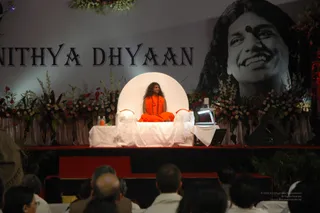
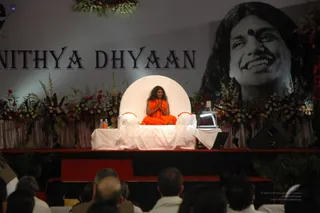
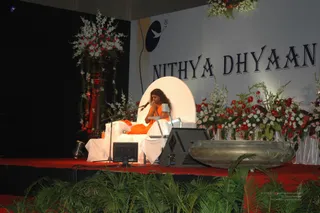
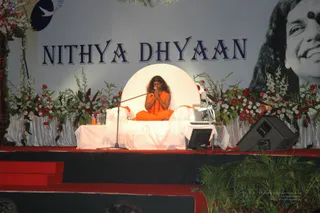
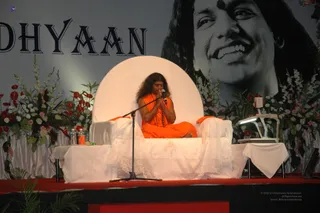
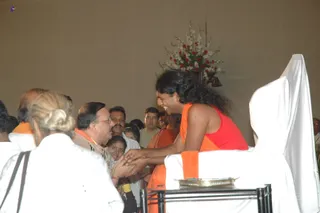
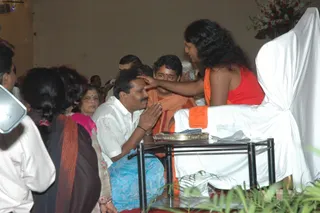
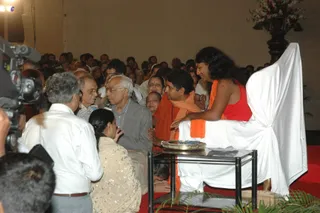
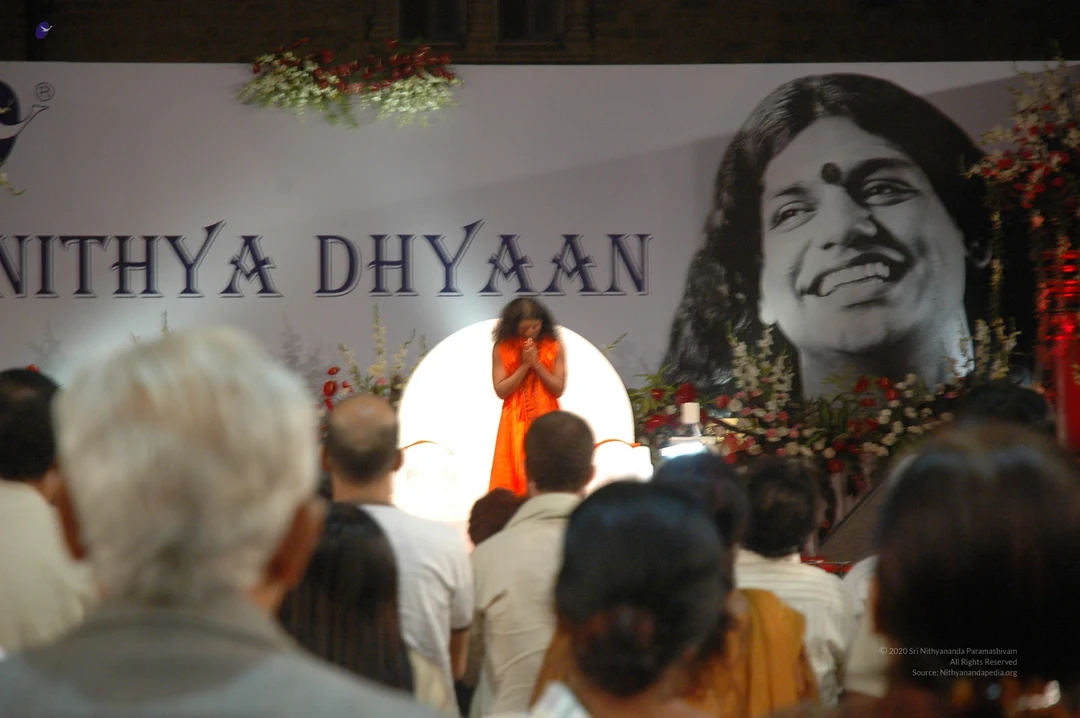
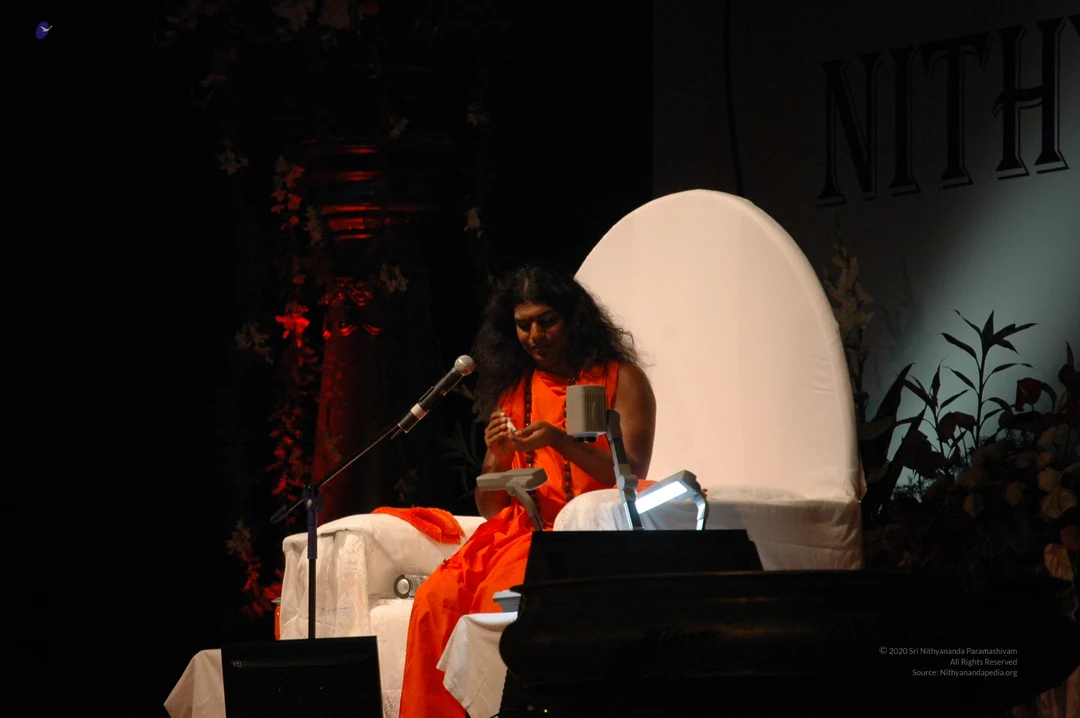
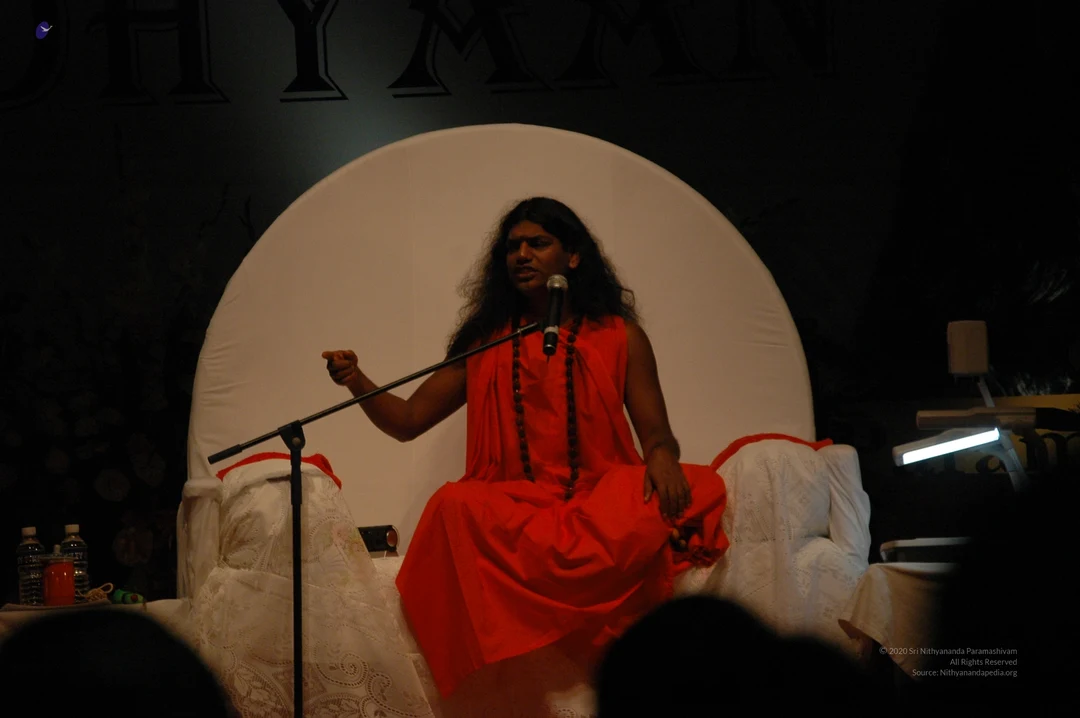
Nithya Dhyaan, a 3 day satsang-meditation-darshan program was conducted by His Divine Holiness Bhagavan Nithyananda Paramashivam (HDH) at Bangalore, India from 20th-23rd December 2007. On the last day HDH delivered a discourse on "Express your True self" where he explained the concept of Be-Unclutched after which he answered questions from the audience. HDH then later led everyone through Nithya Dhyaan, the meditation for which he was preparing everyone for 3 days. The program ended with HDH giving darshan to one and all who attended the event.

Following are some pictures taken during the last day of the program.

Nithya Dhyaan Satsang
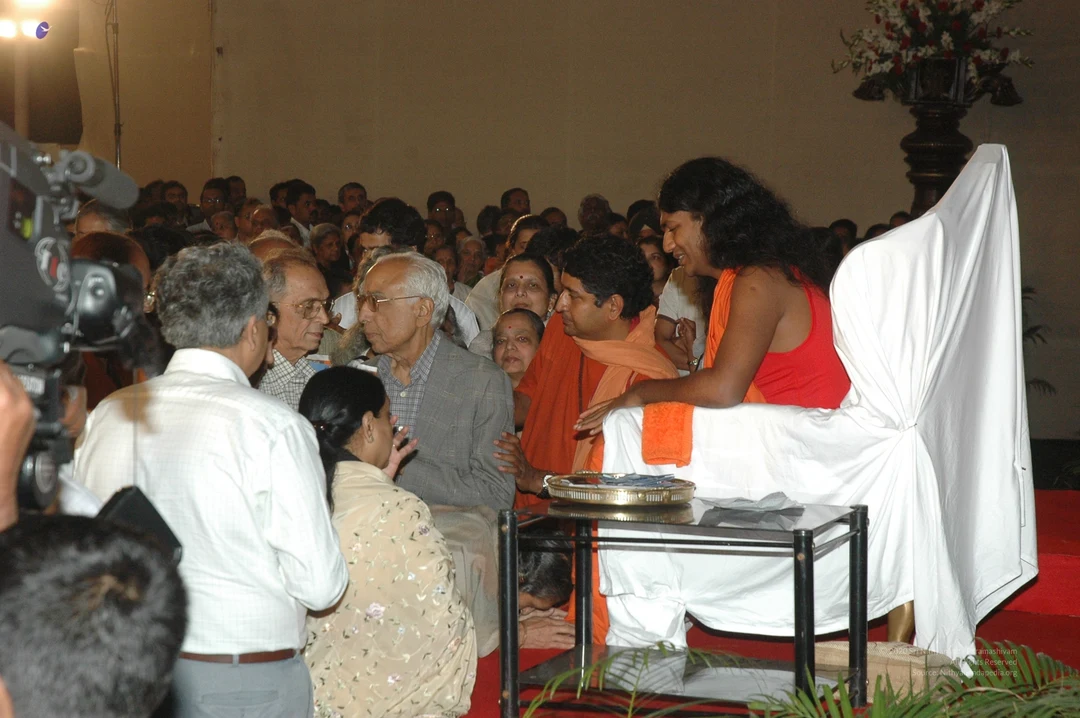
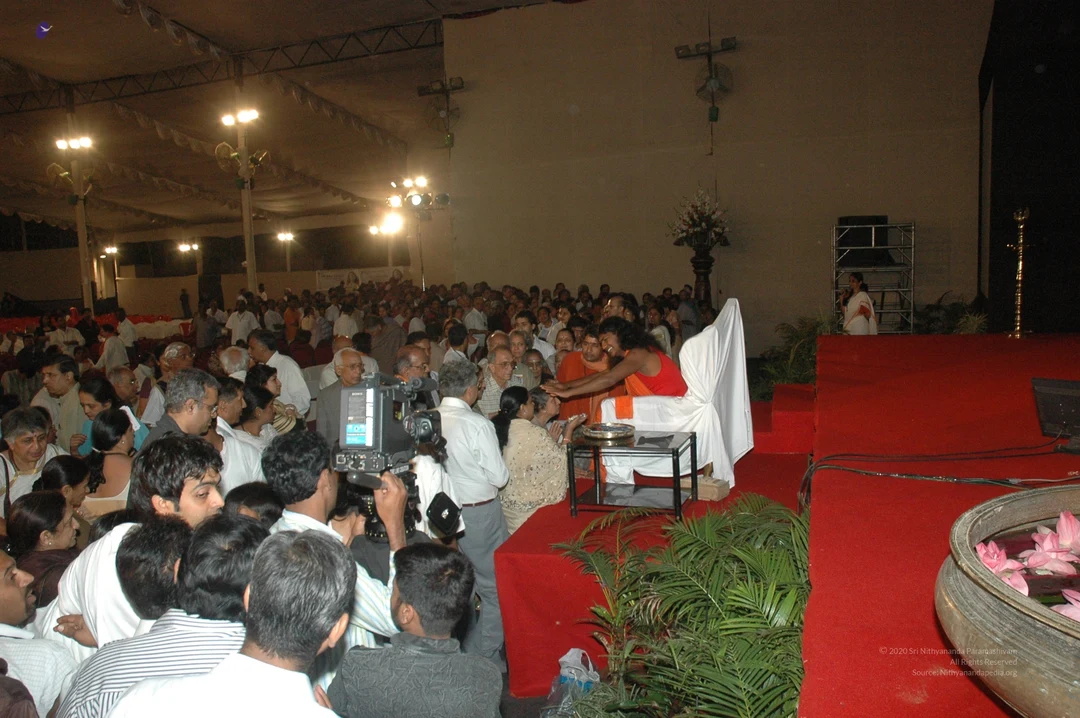
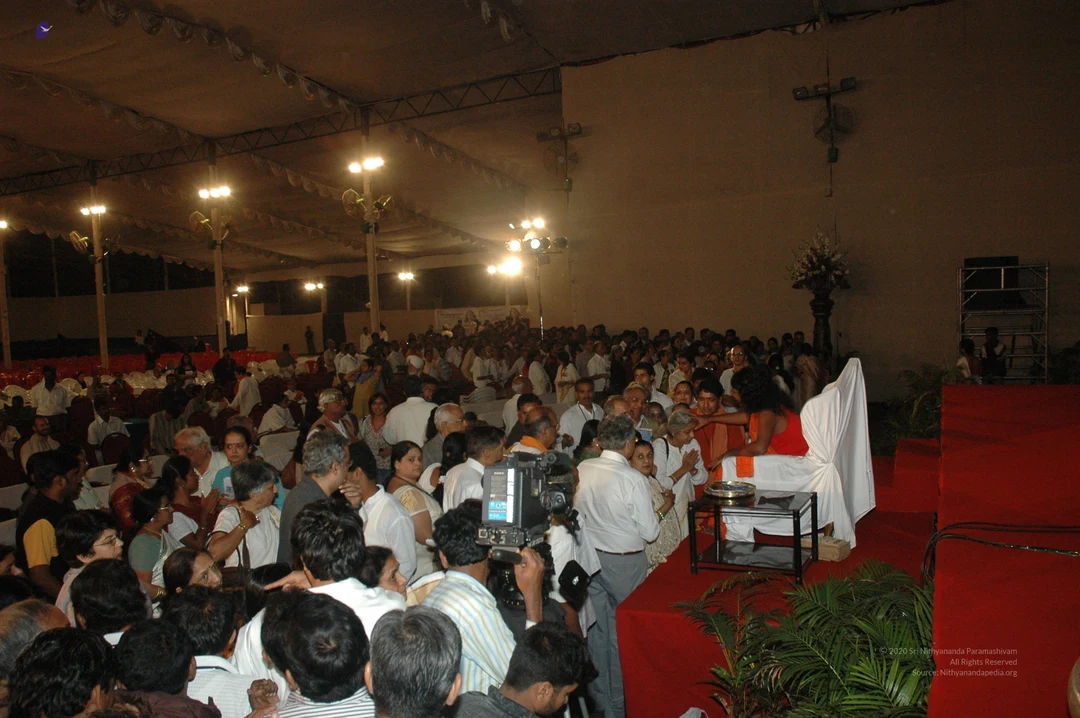
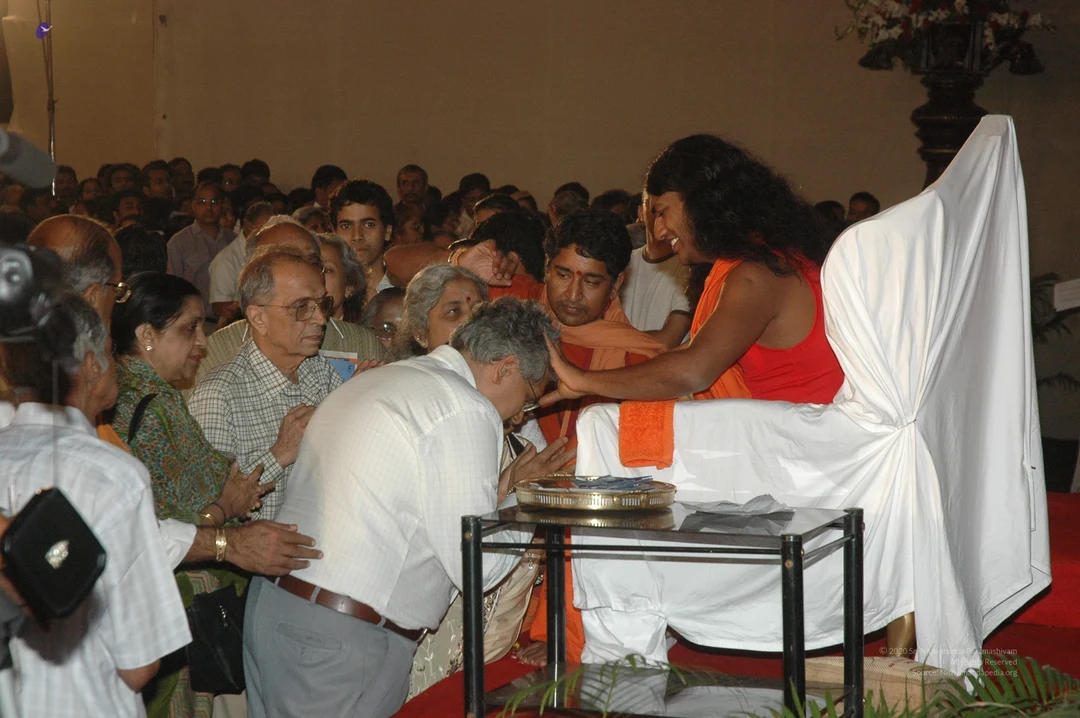
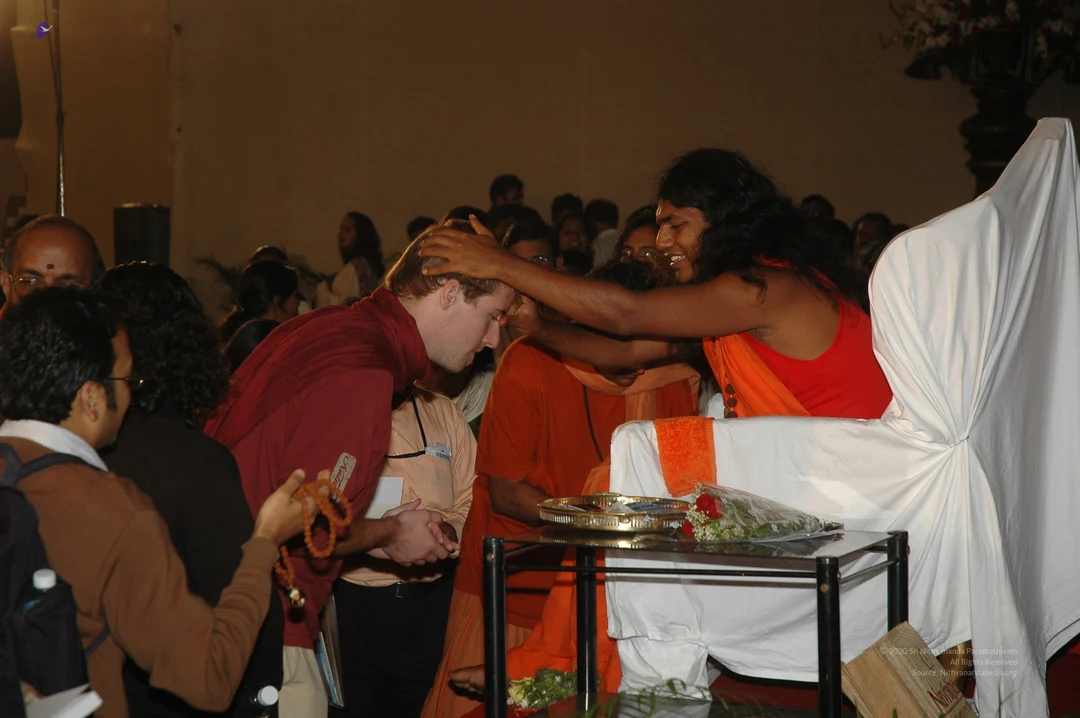
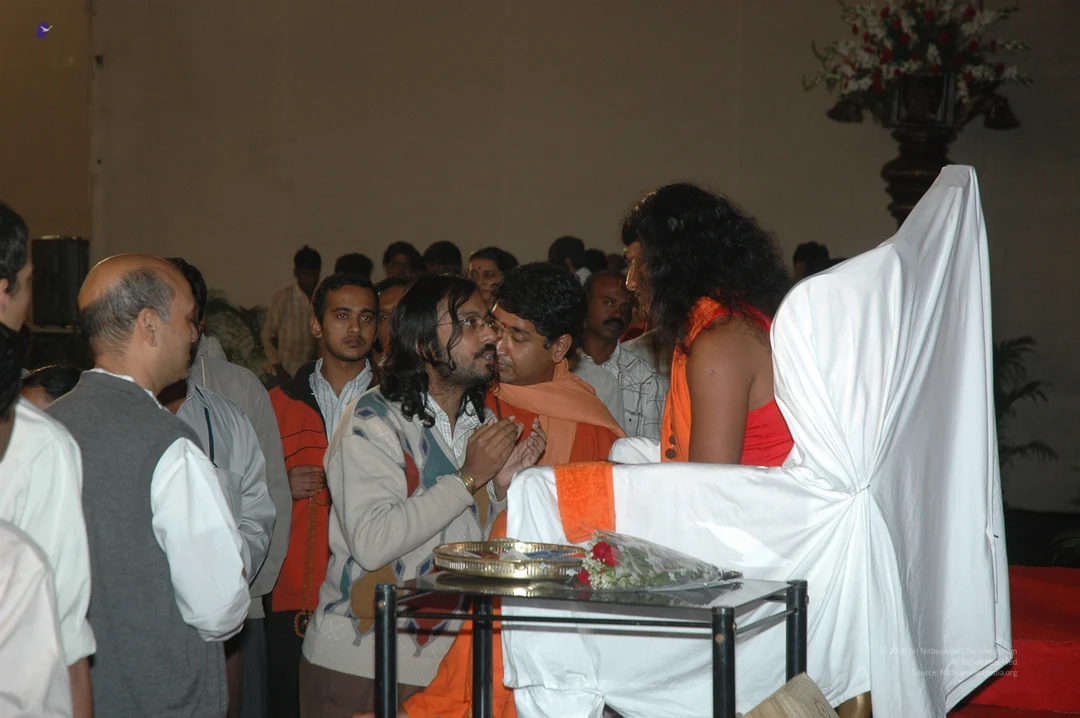
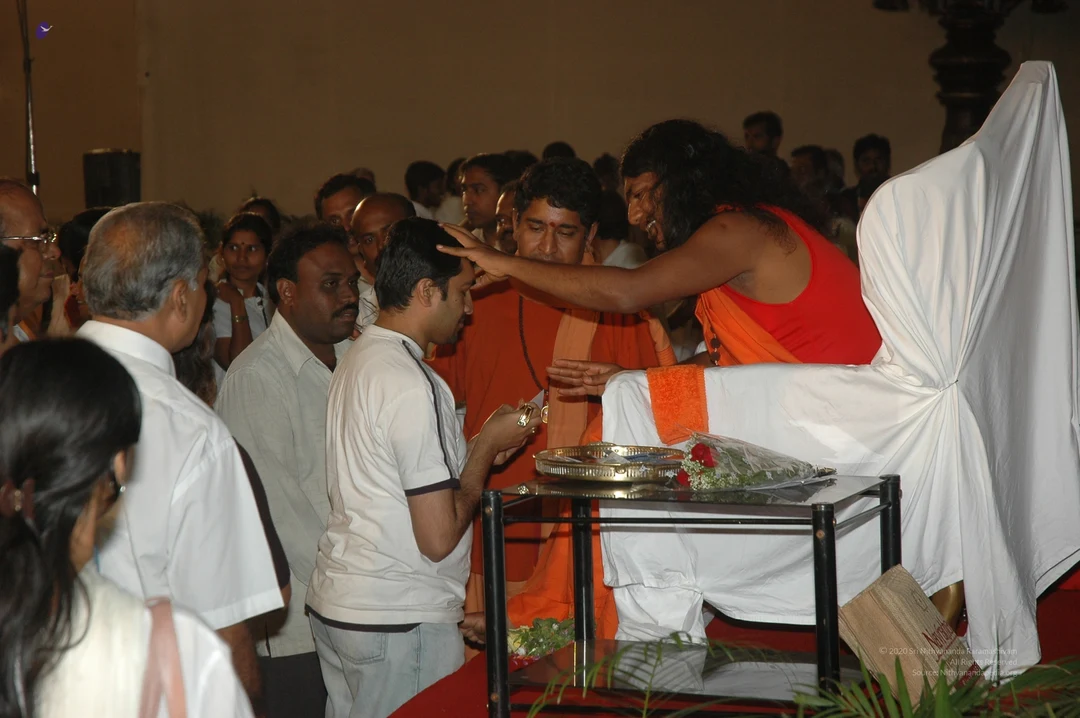
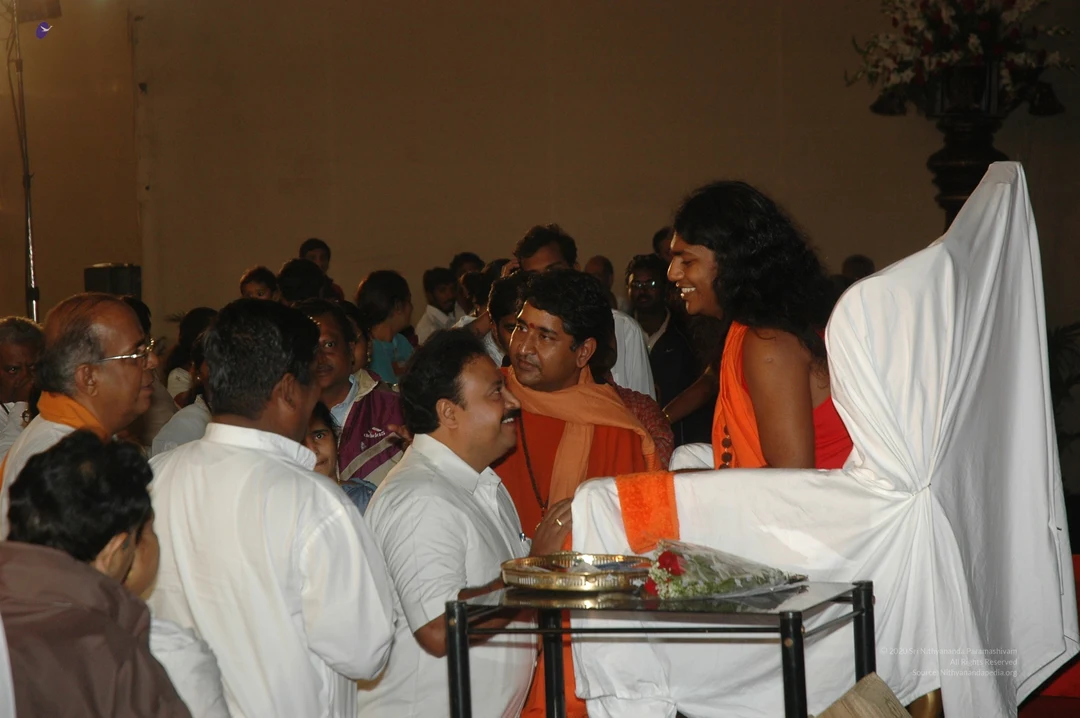
Sarva Darshan

Photos Of The Day:

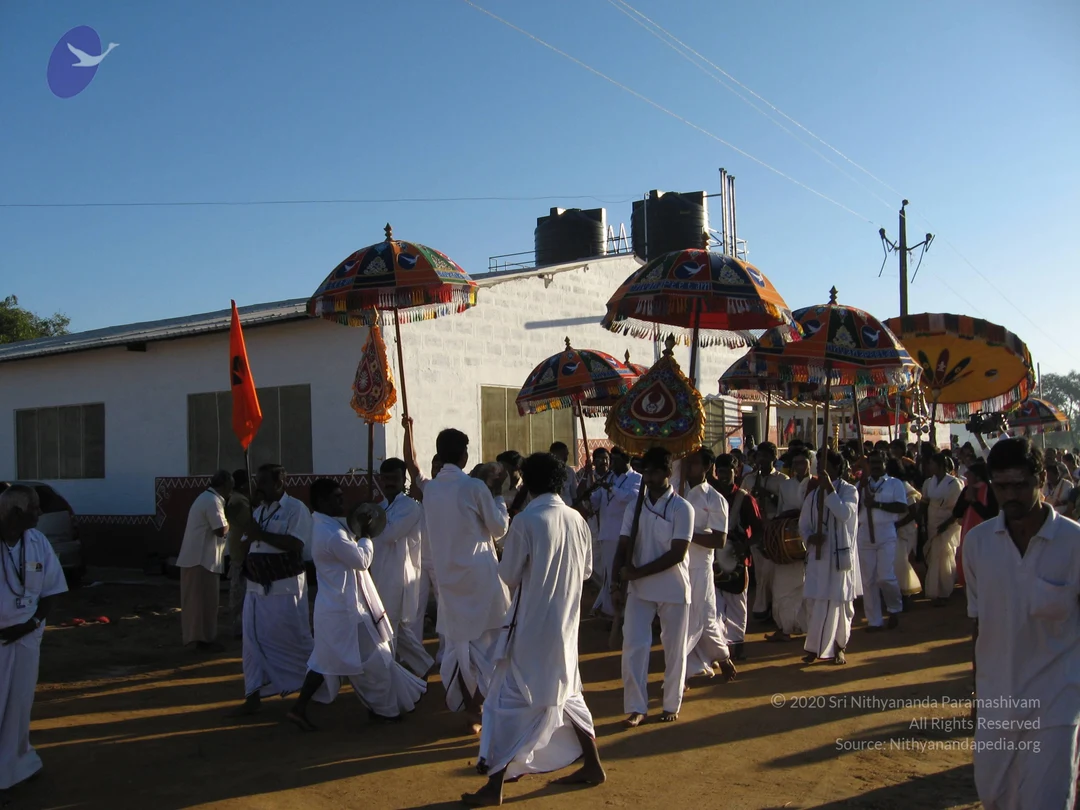
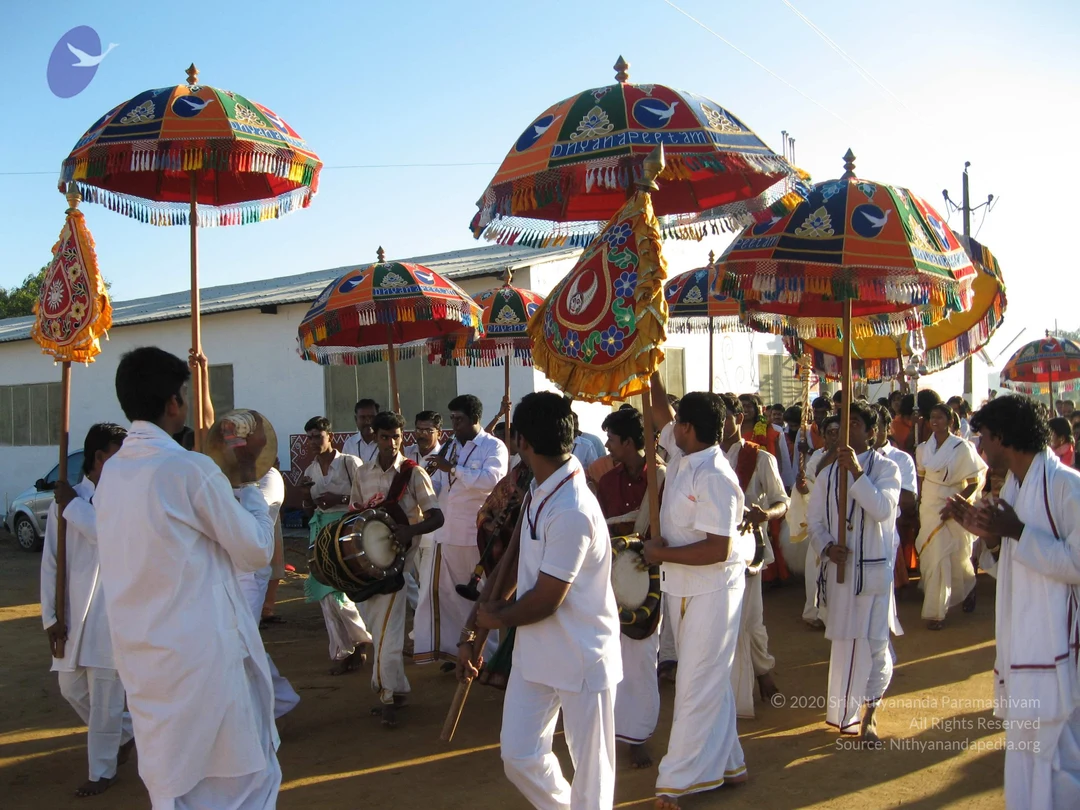
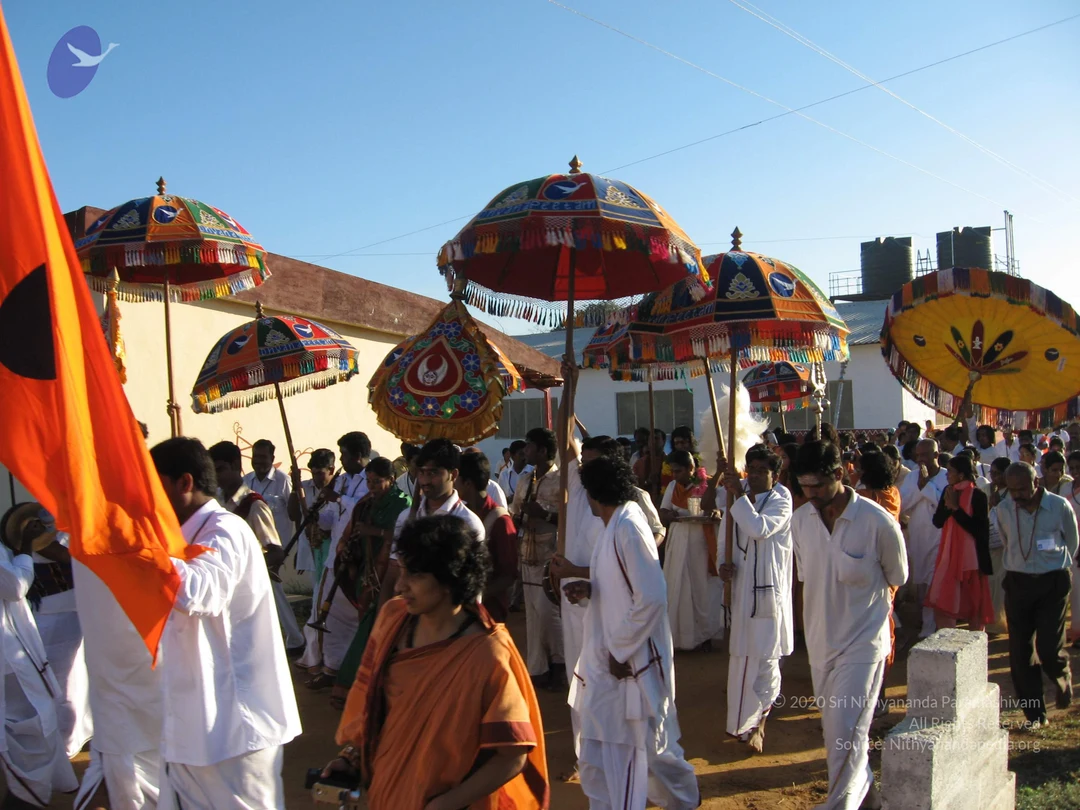
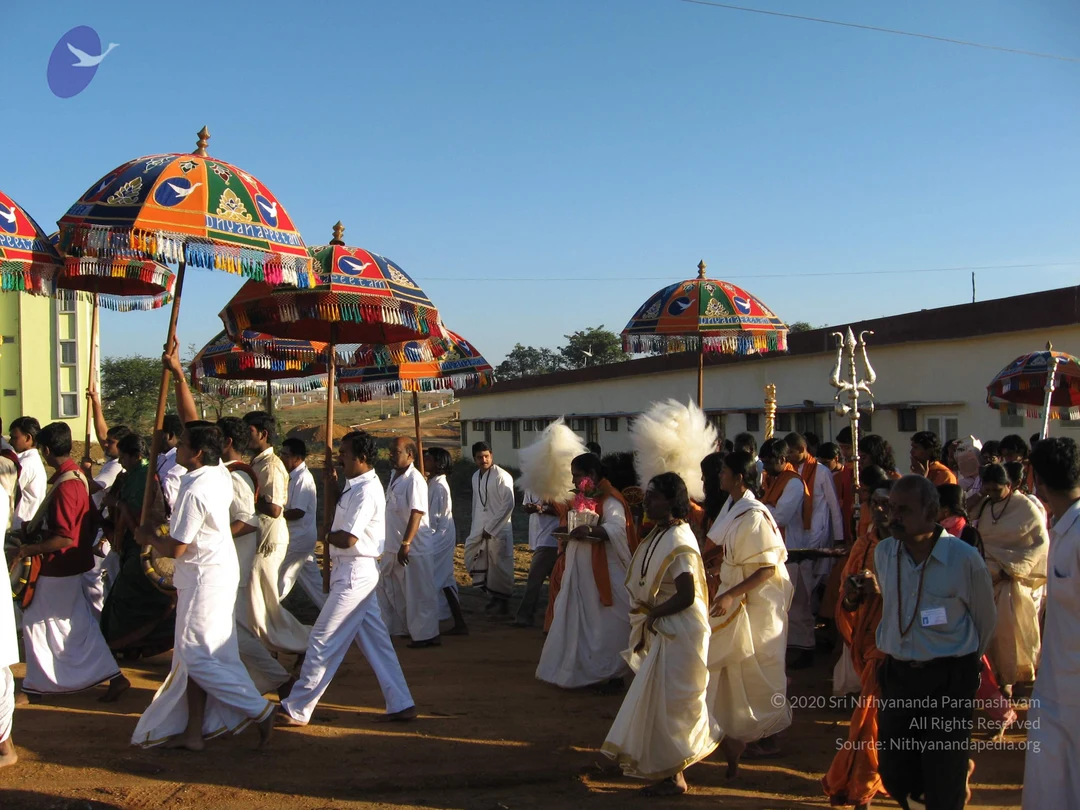
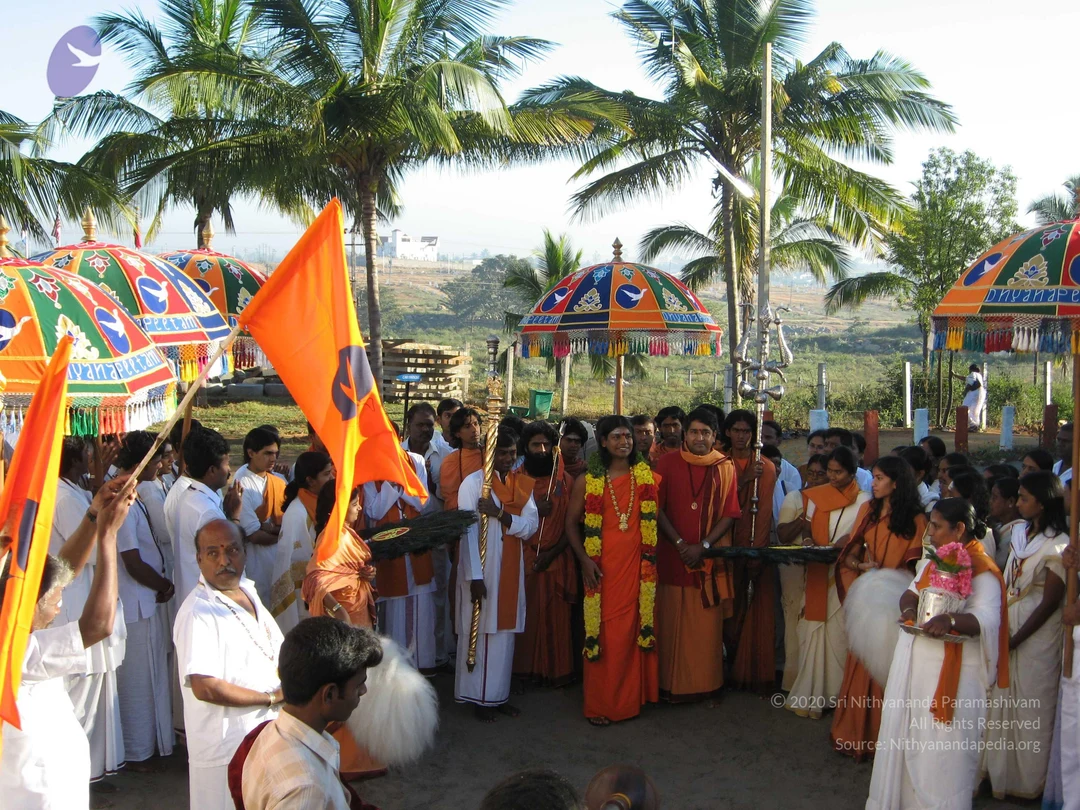
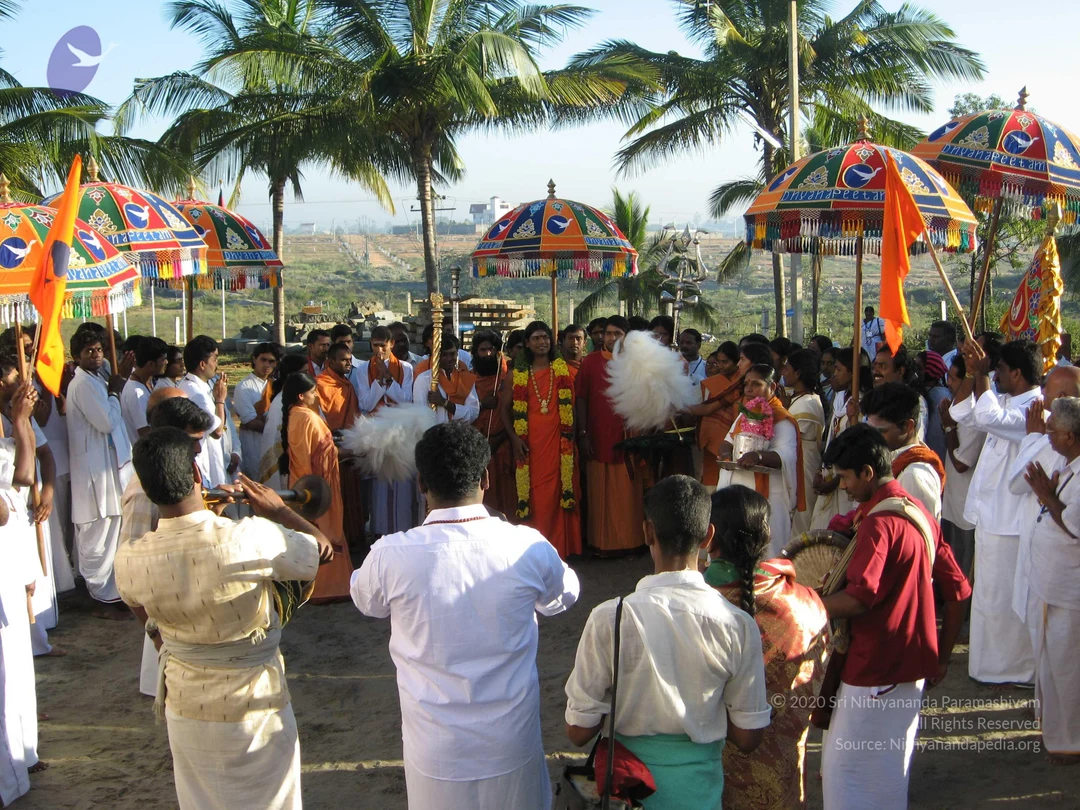
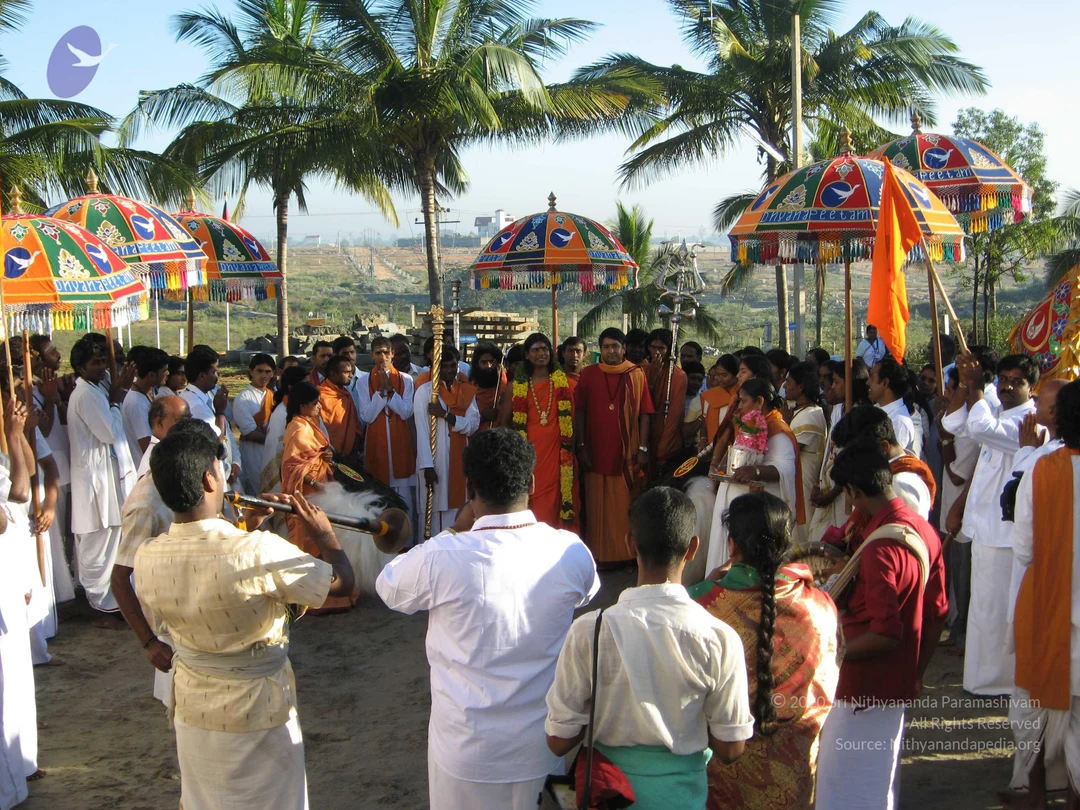
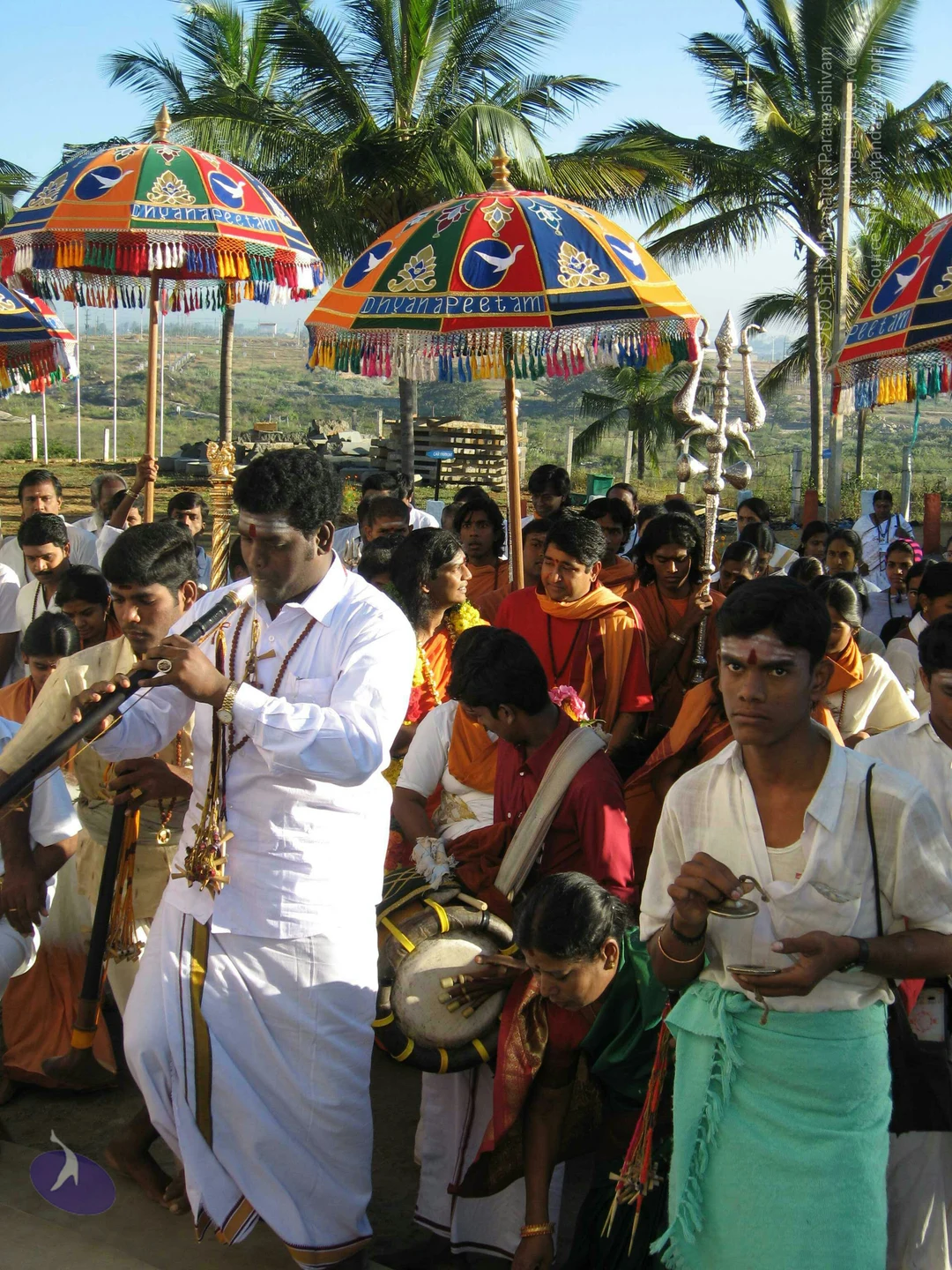
01-JAYANTHI-BRAHMOTSAVAM-DAY-1

02--Satsang

Photos from this day

View all 239 photos

Nithya Dhyaan Satsang
46 photosSource gallery
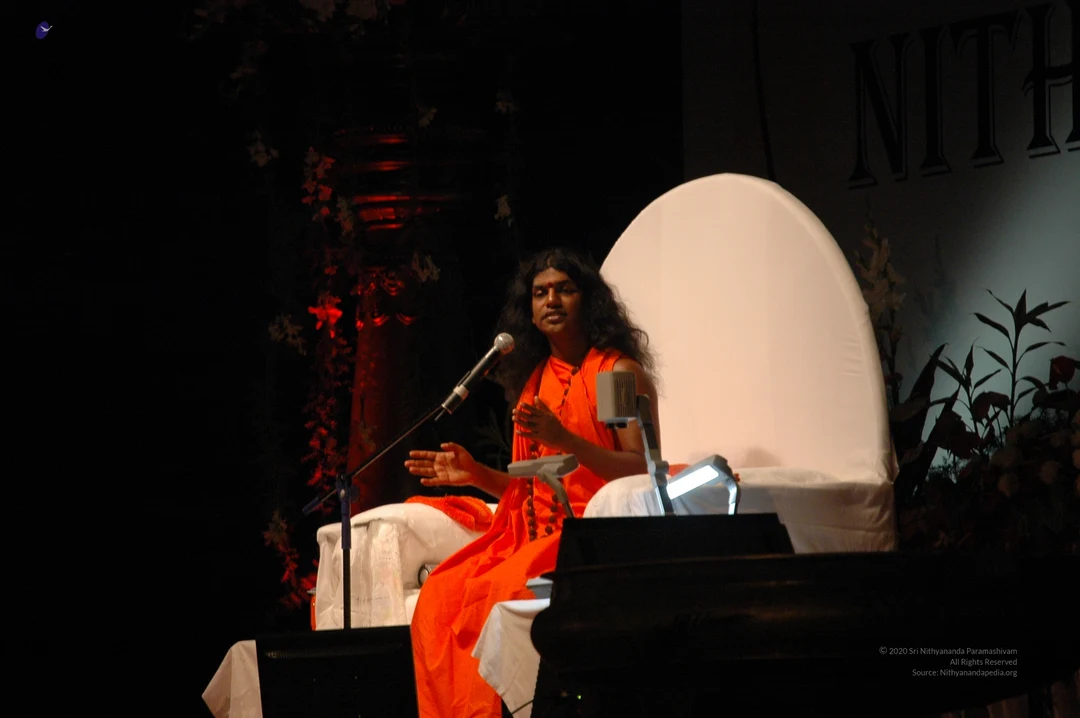
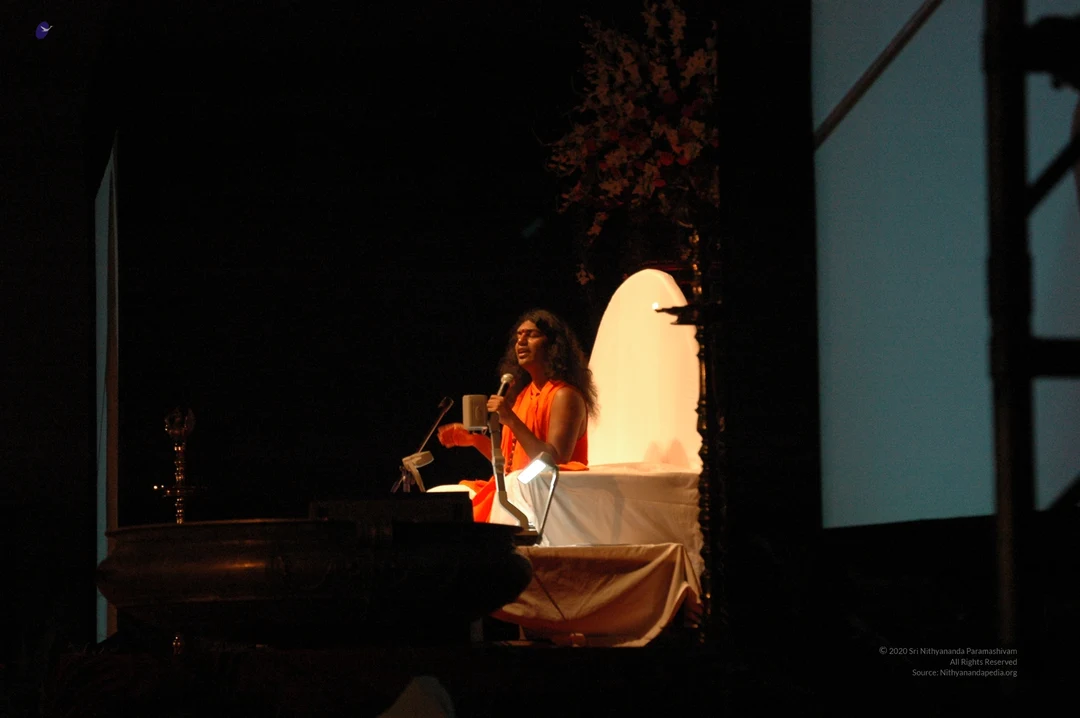
Photograph of an evening satsang stage. A figure with long dark hair in an orange robe stands centre-stage with hands pressed together in namaste, lit by a glowing white circular backdrop. Behind them a large black-and-white portrait of a smiling woman with a bindi is framed by red, white and pink flower arrangements, and a banner reads "NITHYA DHYAAN". In the foreground, the backs of seated audience members are visible, including a white-haired person in grey, a bald man in a white shirt, and a woman in orange. Counting only visible people in the scene, roughly a dozen or more are shown. The figure's appearance is uncertain given the distance and the presentation cues, so no identification is made.A seated figure in flowing orange-saffron robes with long dark hair and a rudraksha mala sits cross-legged on a white circular-backed throne on a red-edged stage. Behind him a large black-and-white portrait of a smiling man with a bindi is labelled as the banner, and white and red flower arrangements line the stage. Seated audience members in the foreground are seen from behind. The stage banner reads Nithya Dhyaan. Several audience members are visible in the lower foreground.A seated figure in orange-saffron robes sits in a meditative pose with palms pressed together in namaste on a white draped throne-style seat on a raised stage. Long dark hair falls past the shoulders. Behind the seat, a large black-and-white portrait labelled Nithya Dhyaan shows a smiling face with a bindi, framed by white and red flowers. Water bottles sit on the white draped table, and a microphone stand is visible on the right. Audience members seen from behind in the foreground face the stage. The figure resembles the a person candidate on the page, but the appearance is only partly clear, so identity is uncertain. The scene shows a discourse event setting.A seated figure in orange robes sits on a large white throne-style chair on a red-carpeted stage, hands pressed together in a namaste gesture, with long curly dark hair falling forward. A microphone stands before the throne and a small monitor sits on the stage floor. Behind the stage hangs a banner reading NITHYA DHYAAN with a bird logo, flanked by tall arrangements of white and red flowers, red anthuriums and white lilies. A large metal bowl and potted palms sit in the foreground.A seated speaker in saffron-orange robes with long, swept-back dark hair sits cross-legged on a white-draped dais with palms pressed together in anjali. A microphone stand stands before him, with water bottles and a small monitor on the table. Behind him a backdrop reads NITHYA DHYAAN, with a large portrait of a smiling man with long hair and a dark bindi beside it, and white and red flowers frame the stage. A few audience heads appear at the lower edge. Probable Swamiji is seated in a satsang discourse setting; the figure's appearance cues include the long swept-back hair and saffron robes with rudraksha mala.A seated speaker in an orange robe with long, dark, wavy hair sits cross-legged on a large white rounded chair draped in white lace cloth on a red-carpeted stage. He holds a handheld microphone with both hands pressed together in a gesture of greeting or prayer, eyes lowered. Behind him is a large black-and-white portrait of a smiling face on a grey backdrop with the word DHYAAN partly visible, flanked by arrangements of white and pink flowers, red anthuriums and green foliage. A microphone stand, a water bottle, a small orange drink, a side table and a lamp are at the stage edges. The speaker appears to be Swamiji (probable), identified by his long swept-back hair, saffron robe and mala beads seated on a throne-style chair before a large portrait, but this is an appearance-based label only.

Sarva Darshan

34 photosSource gallery
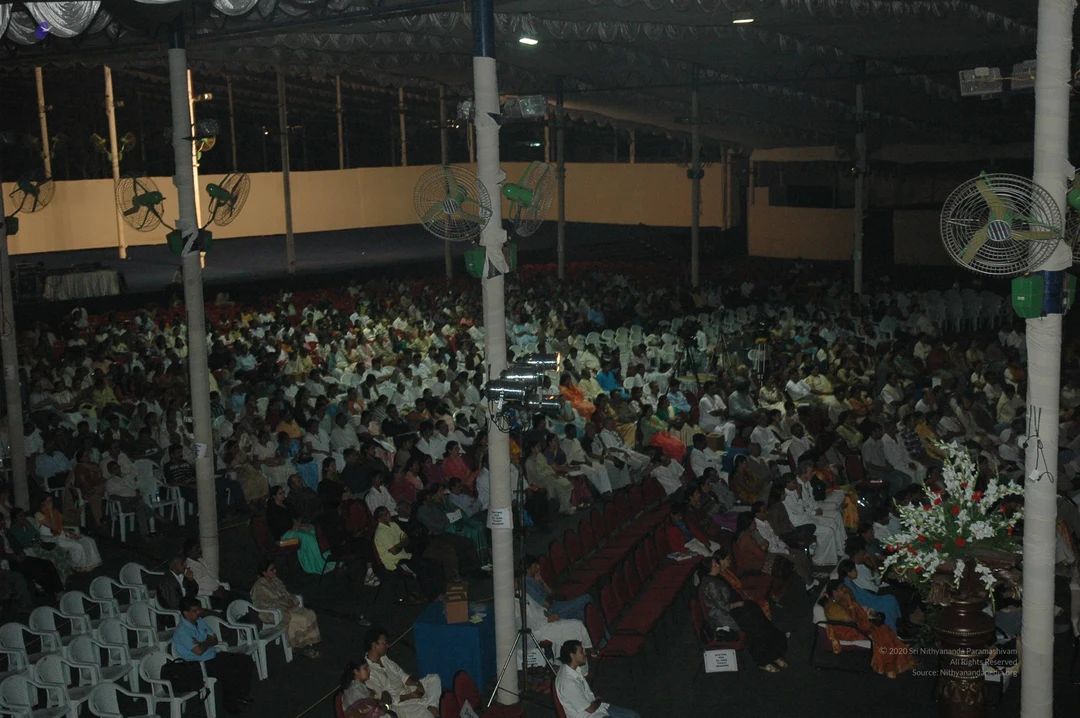
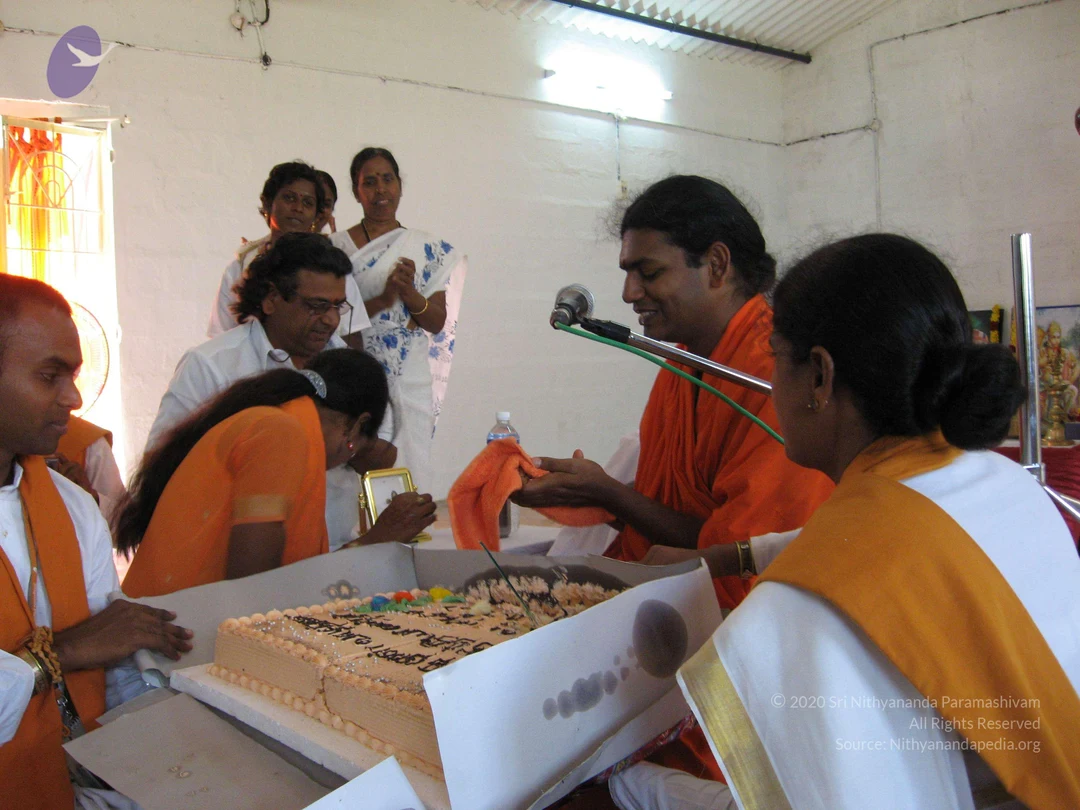
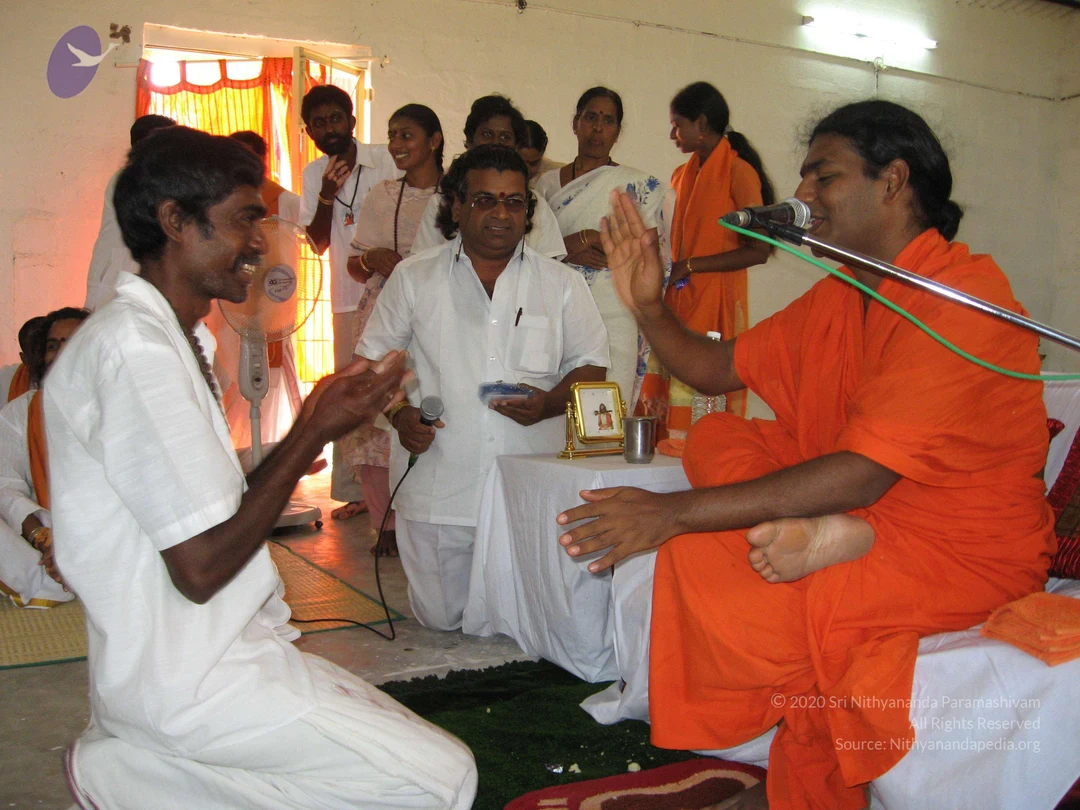
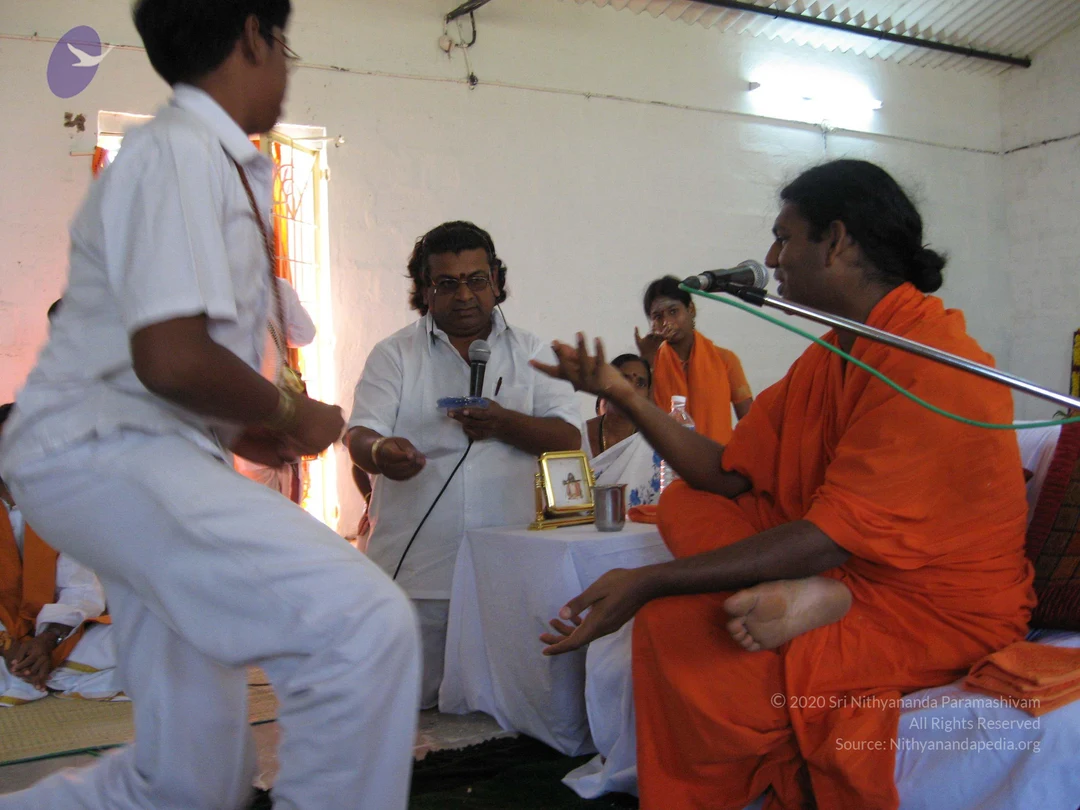
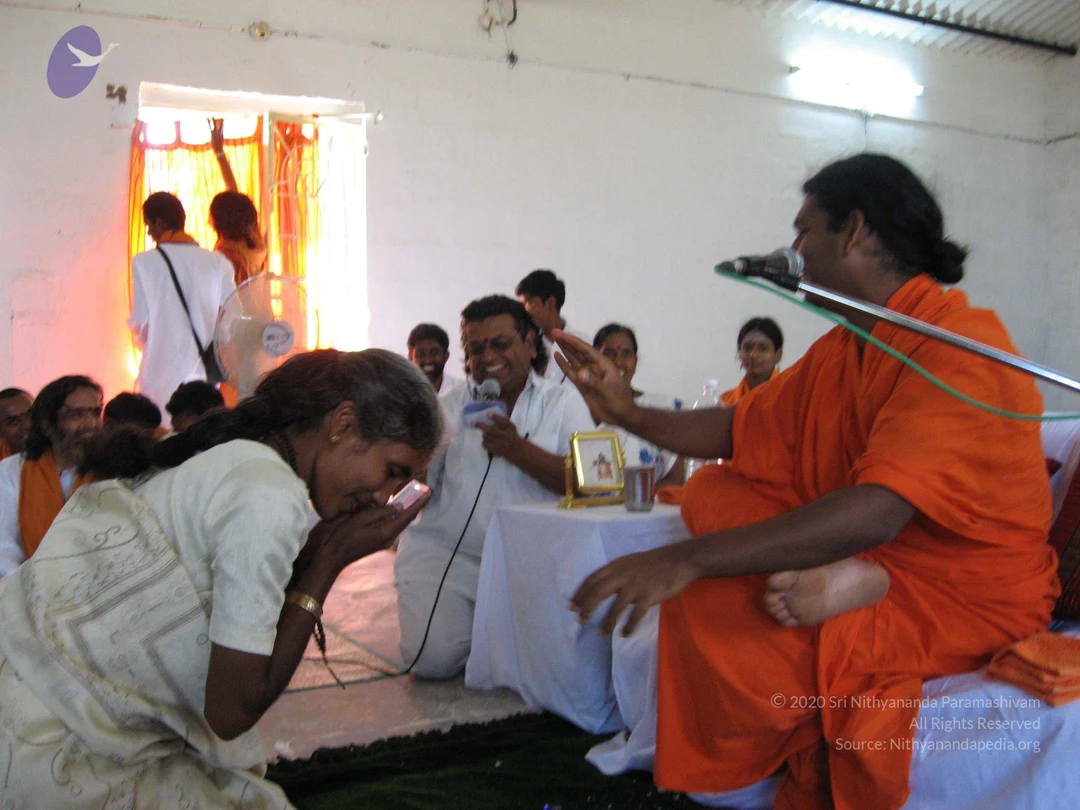
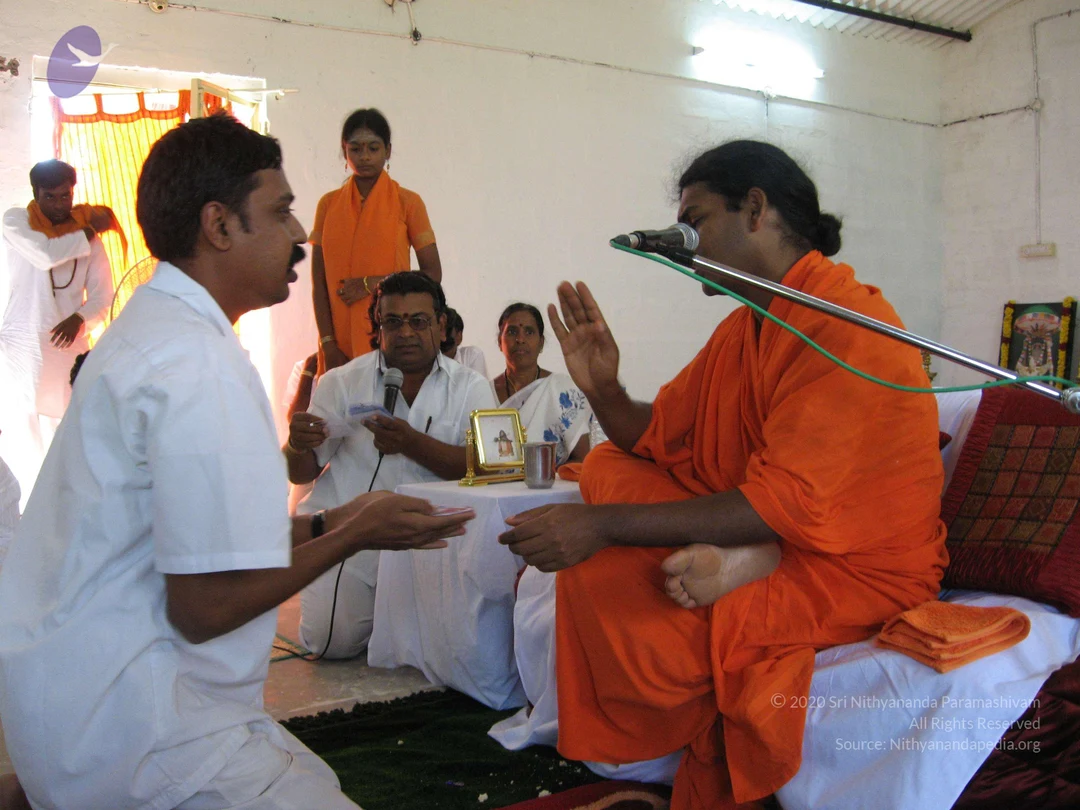
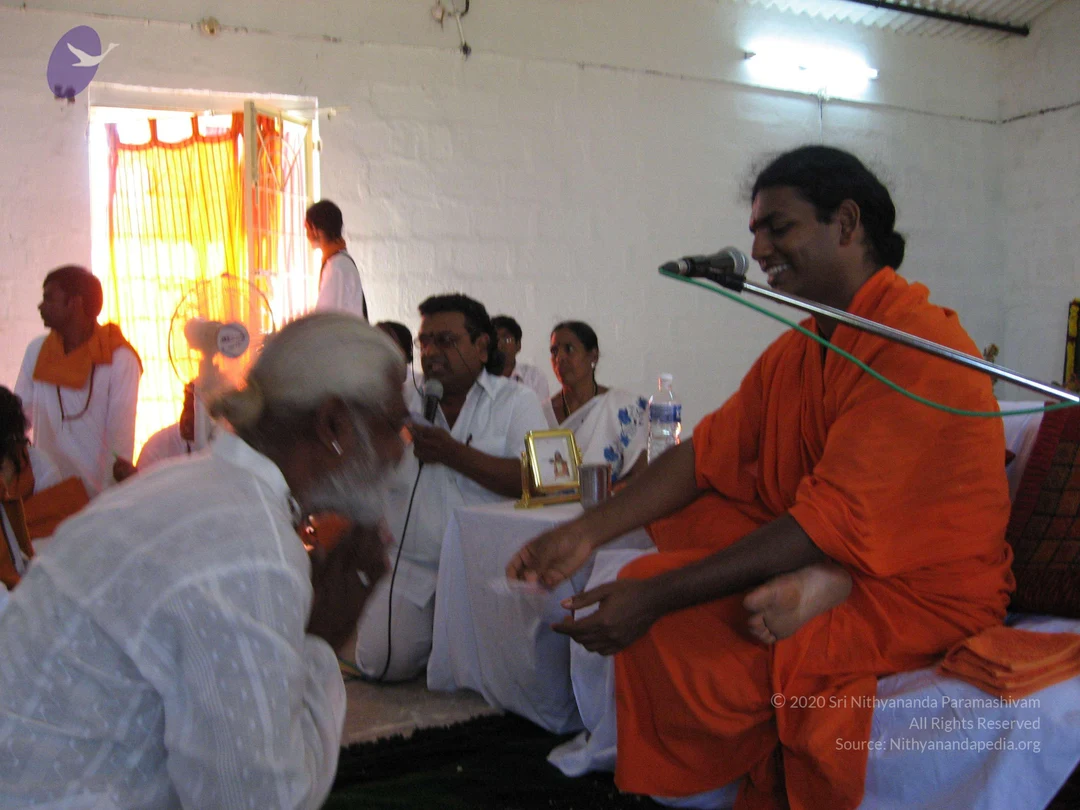
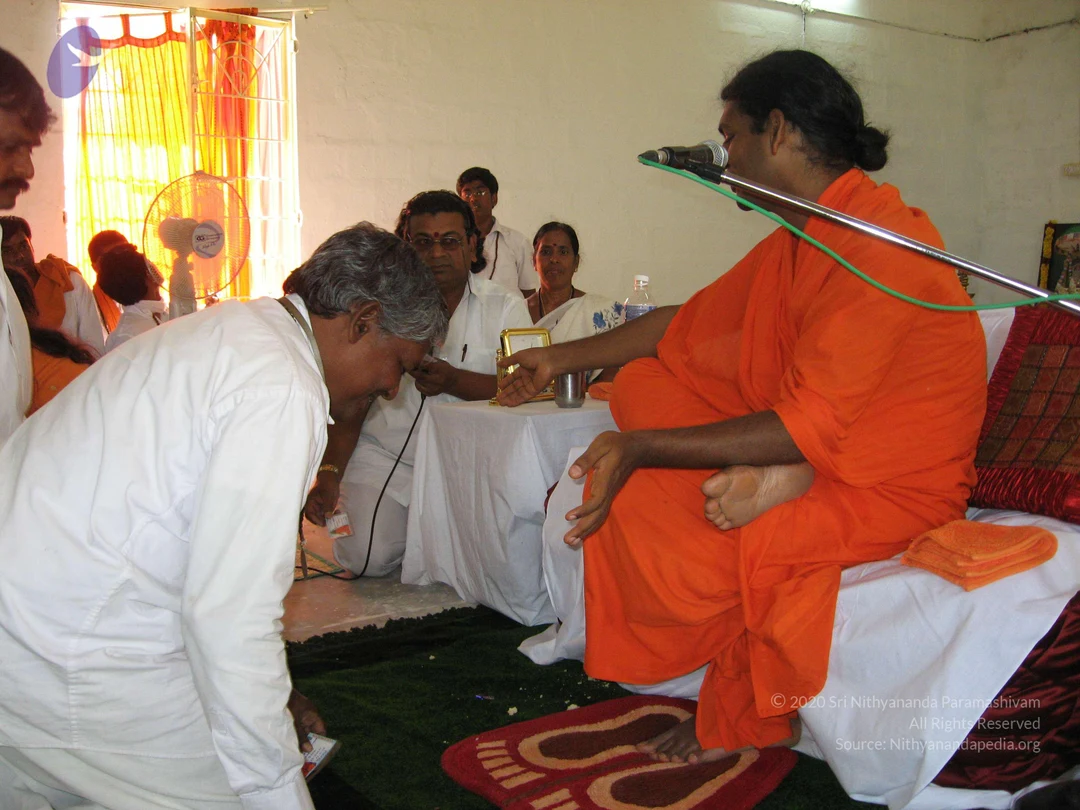
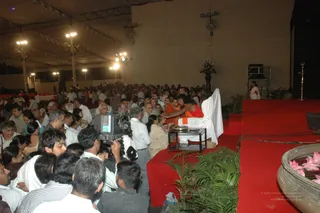
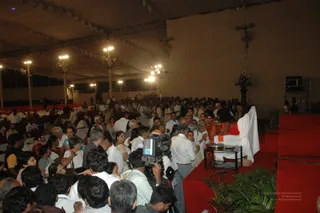
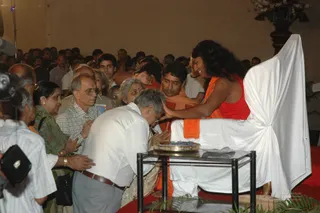
A photograph of a satsang event where a long-haired man in an orange sleeveless top and orange cloth sits on a white draped seat, smiling and clasping the hands of a man in a light shirt. Several people stand and sit behind them, including a woman in white with a hair bun in the foreground and a man in orange clothing. A tall arrangement of white and red flowers stands in the background, and a silver tray sits on a dark table in front. The setting is a plain beige hall.A woman with long curly dark hair, wearing an orange and red sleeveless top, leans forward from a white-draped seat and presses her palm onto the forehead of a man kneeling with folded hands. The kneeling man wears a white shirt and light blue patterned lungi and has a moustache. Behind him stand an older woman in a dark sari with a pink-edged shawl and a man in an orange robe. Other people in white and dark clothing fill the background, a white-draped chair with an orange cloth sits at the right, a metal tray with papers rests on a black side table, and a flower arrangement stands in the upper right.A photograph of an indoor satsang hall with a dense audience of seated and standing devotees and a cameraman filming at left. On a raised red stage, a long-haired figure in a red sleeveless top and white dhoti sits on a white draped seat, leaning forward toward visitors. A man beside him wears an orange saffron shawl and orange robe, with a brass tray of offerings on a black glass side table in front. Elderly men in glasses and a woman in a cream sari with floral embroidery kneel or sit near the stage. Tall floral arrangements stand in the background. a person is the long-haired figure in red, seated on the white throne with the orange wrap nearby, shown in a darshan moment.A large crowd of seated and standing people fills a tented hall at night, lit by hanging lamps. On a raised red-carpeted dais, a long-haired figure in a saffron-orange robe and red top sits on a white-draped seat, reaching a hand toward a seated devotee in a white shirt. A small glass table holds a brass plate, and a potted flower arrangement and a bowl of pink lotus blossoms sit at the right edge. A video camera operator films from the front of the crowd, and a tall standing lamp stands at the far right. Swamiji (probable): the seated figure has long swept-back hair and saffron/orange clothing, and the person's role as the seated teacher on the dais is described here.A large crowd fills a brightly lit tent hall at night, with many people in white and light clothing standing and seated in rows of chairs. On the right, a raised red-carpeted stage holds a white-draped seat with a figure in an orange and red garment and a white shawl leaning toward a devotee, a brass tray and small table nearby. A video camera operator in the foreground films the scene. Potted plants, a floral arrangement and overhead lights line the hall, and a dense crowd of many more people fills the middle distance.A photograph of a seated figure in an orange-red top and orange shawl with long, swept-back dark hair, resting on a white draped chair on a red carpet. A man in a white shirt and brown belt bends forward to touch or bow at the figure's feet, while an older man in glasses and a checked shirt and several women in saris stand behind, hands raised in reverence. A man in an orange-trimmed white garment stands near the seated figure. A brass tray sits on a black side table in front. A crowd fills the hall behind, with a floral arrangement at the upper right and a camera operator at the left edge. The seated figure's appearance matches a person by long swept-back hair and orange clothing, and is being honoured with padapuja-style reverence.

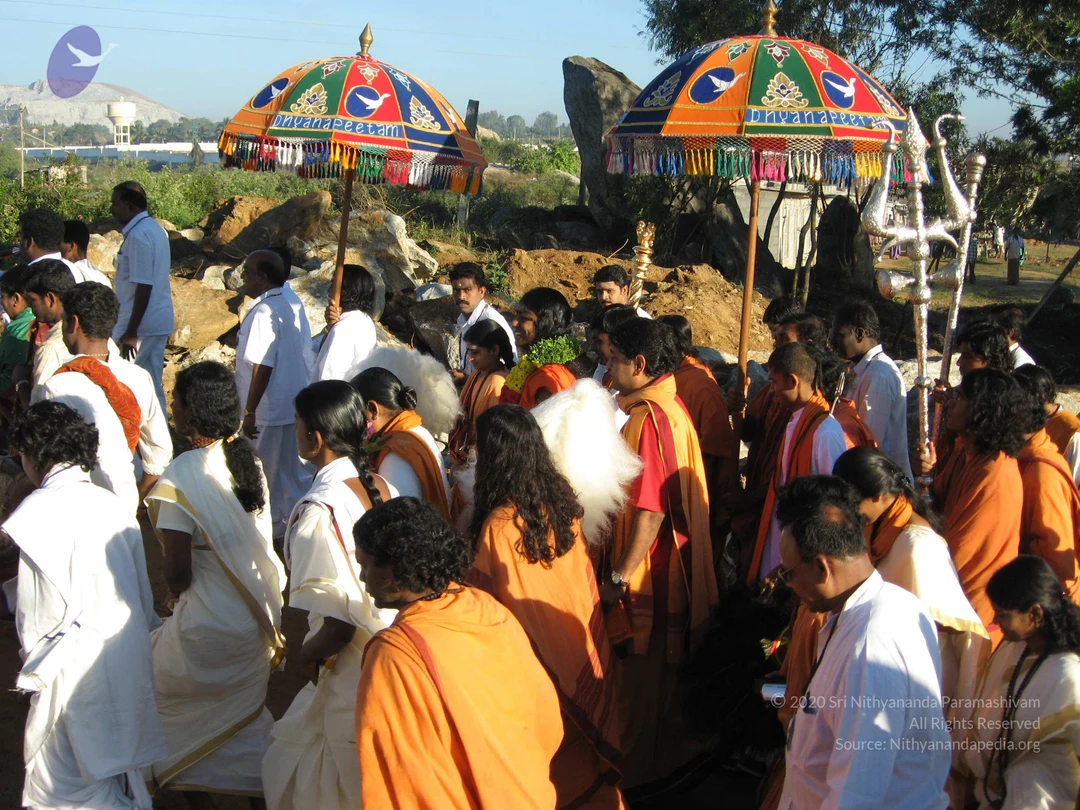
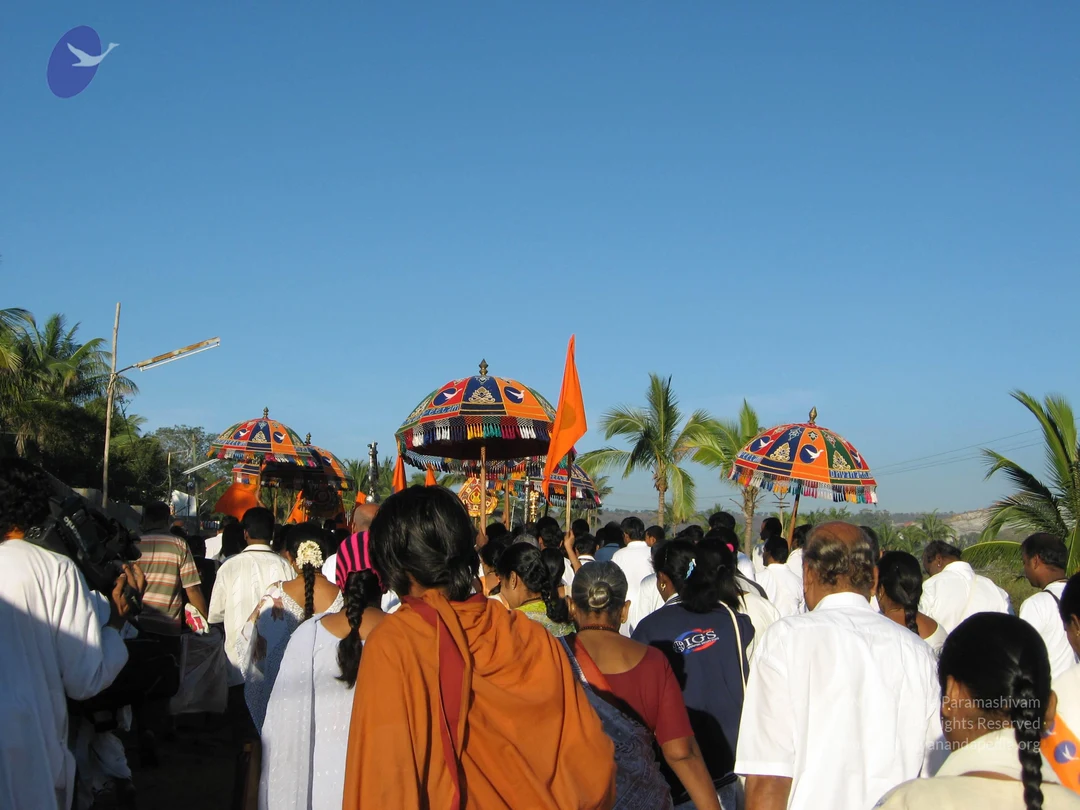
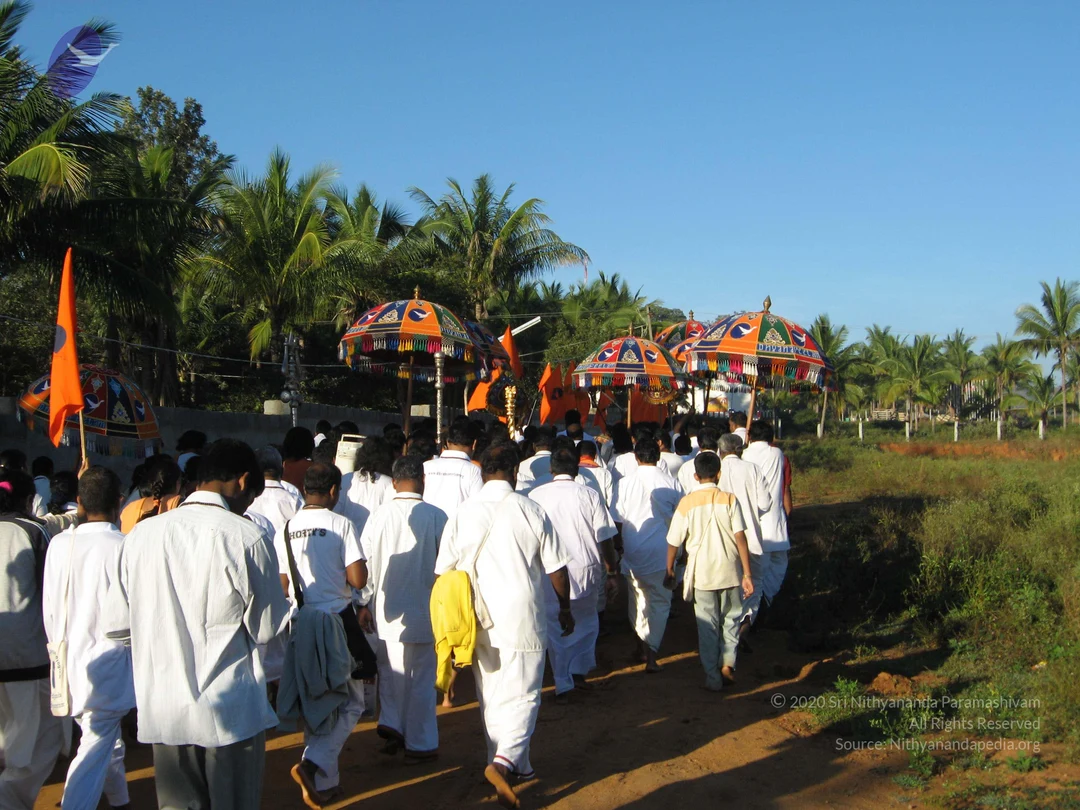
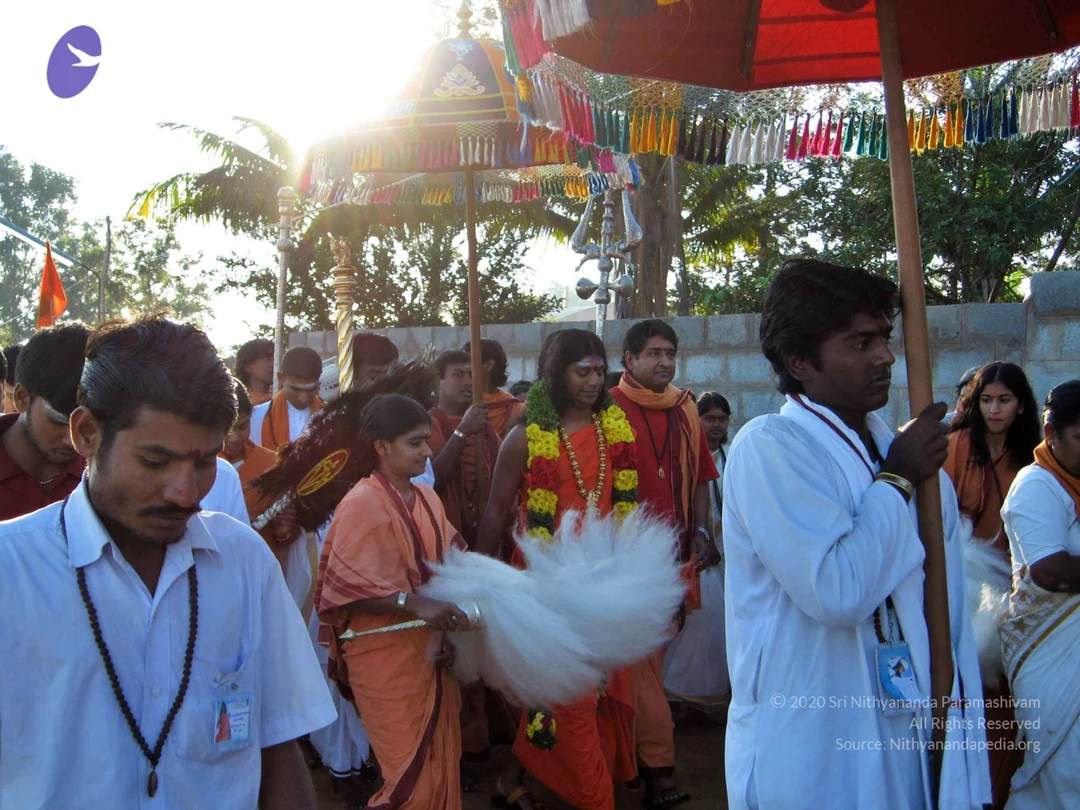
01-JAYANTHI-BRAHMOTSAVAM-DAY-1

133 photosSource gallery
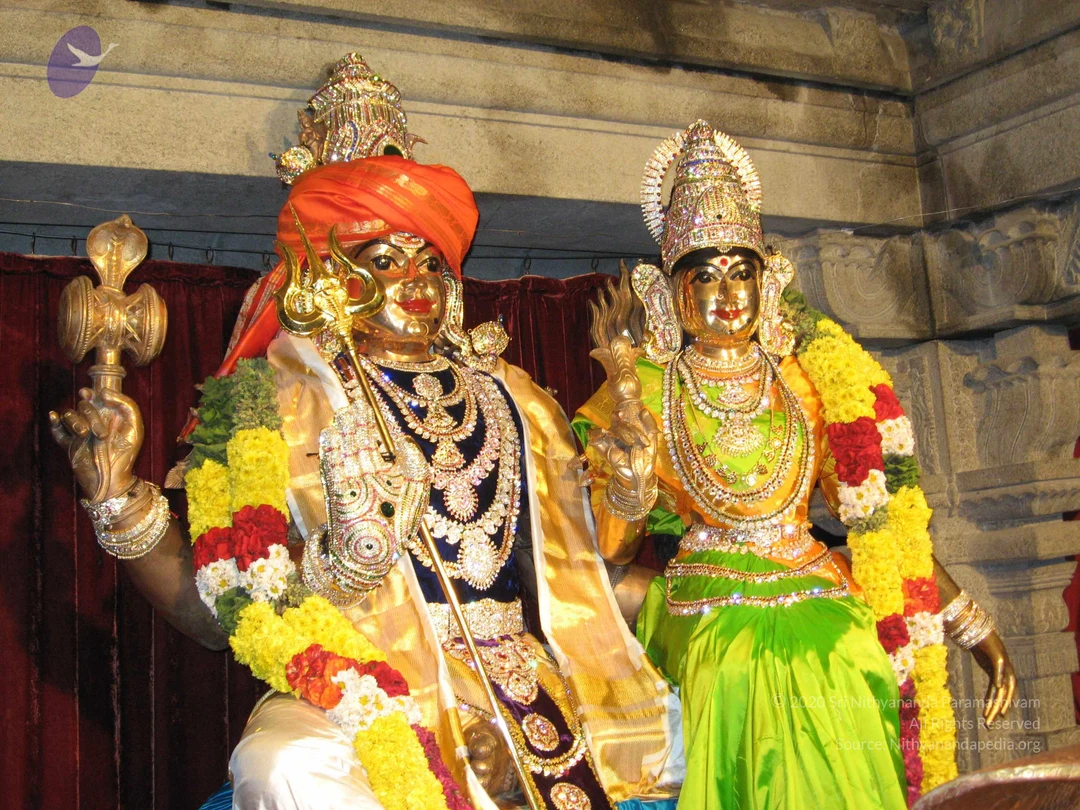
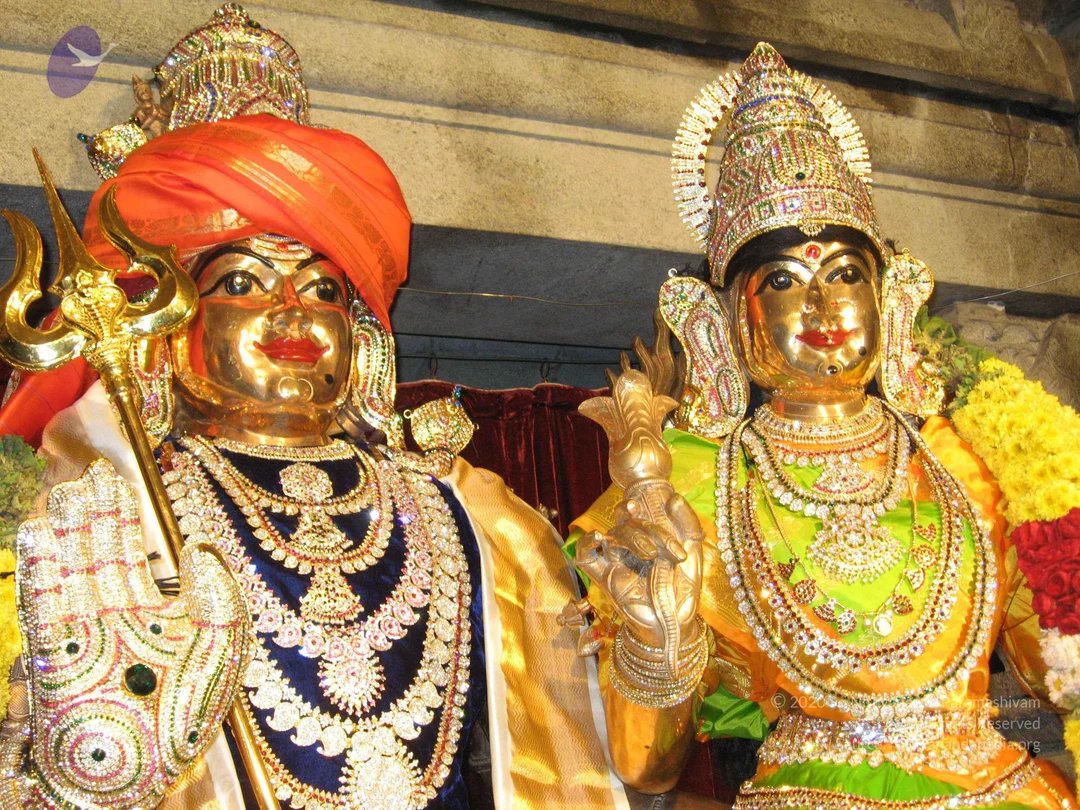
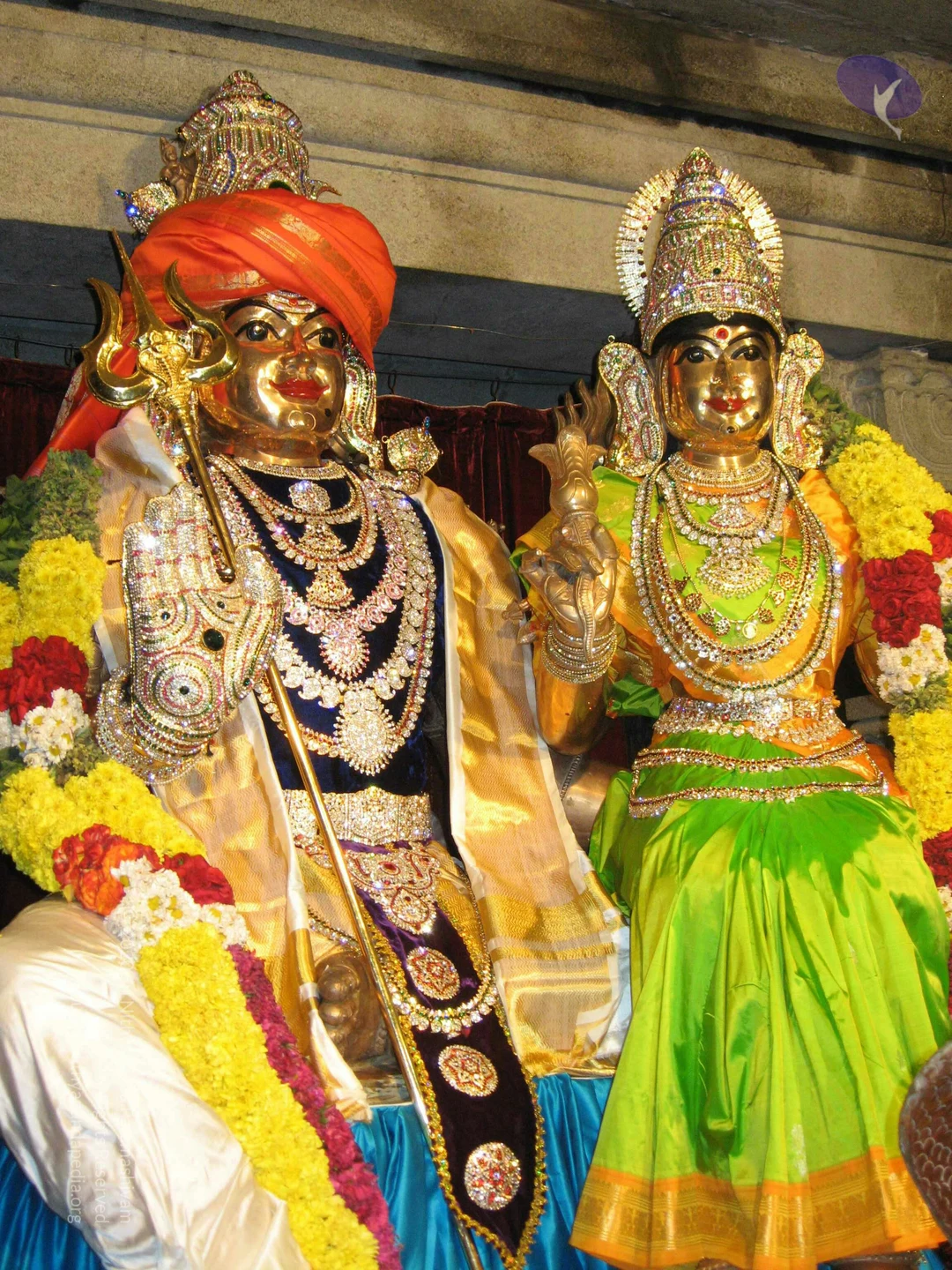
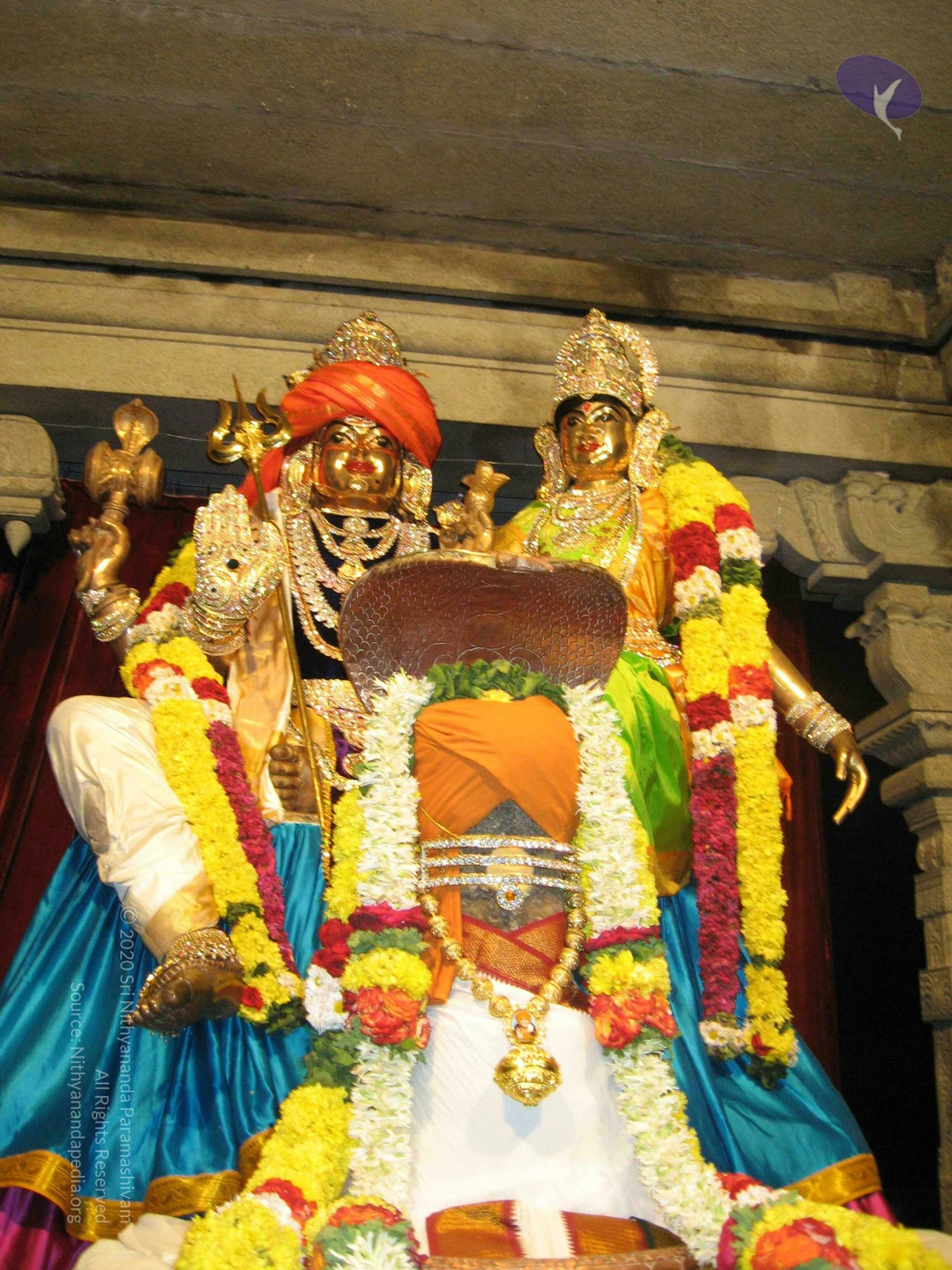
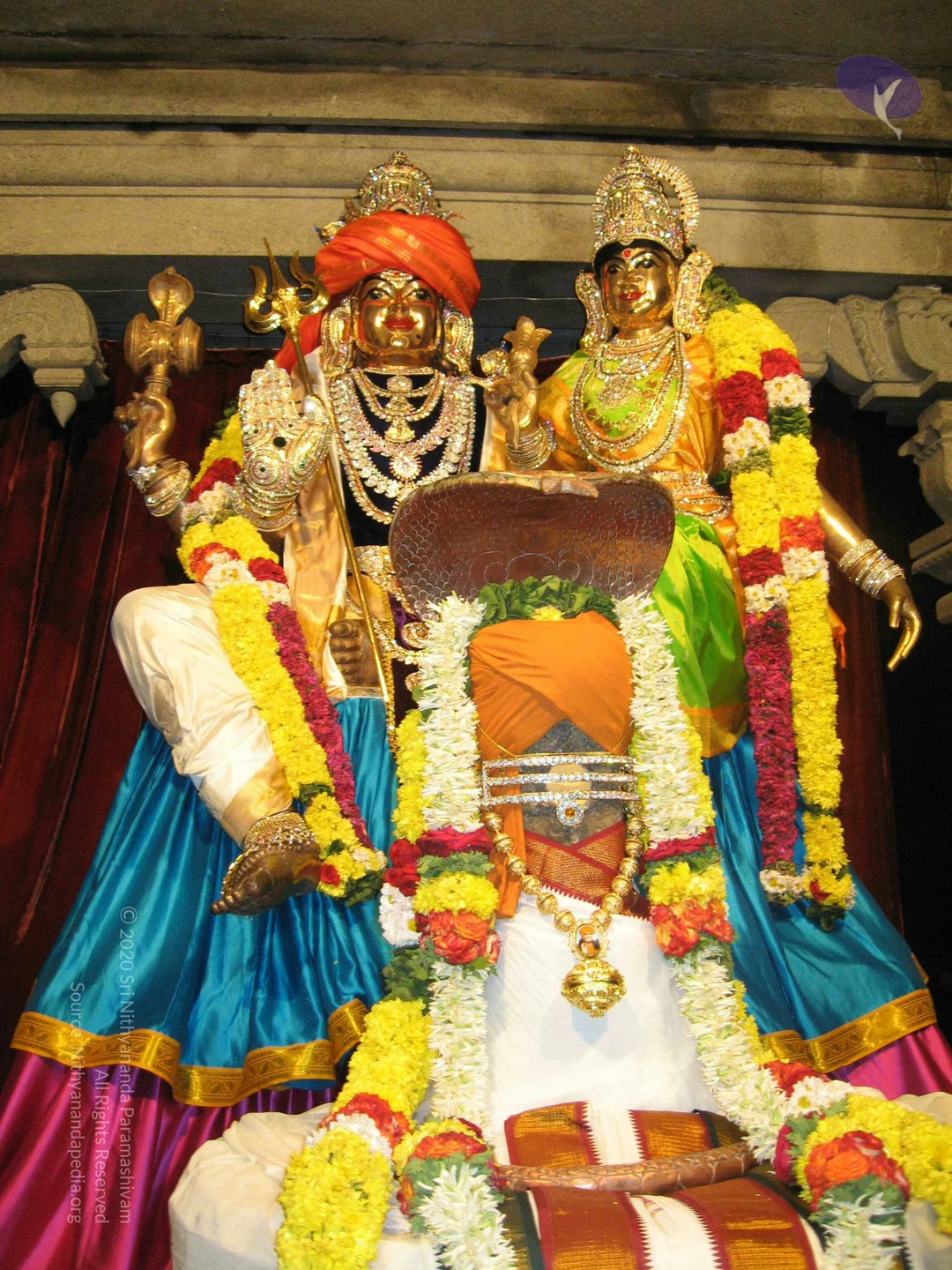
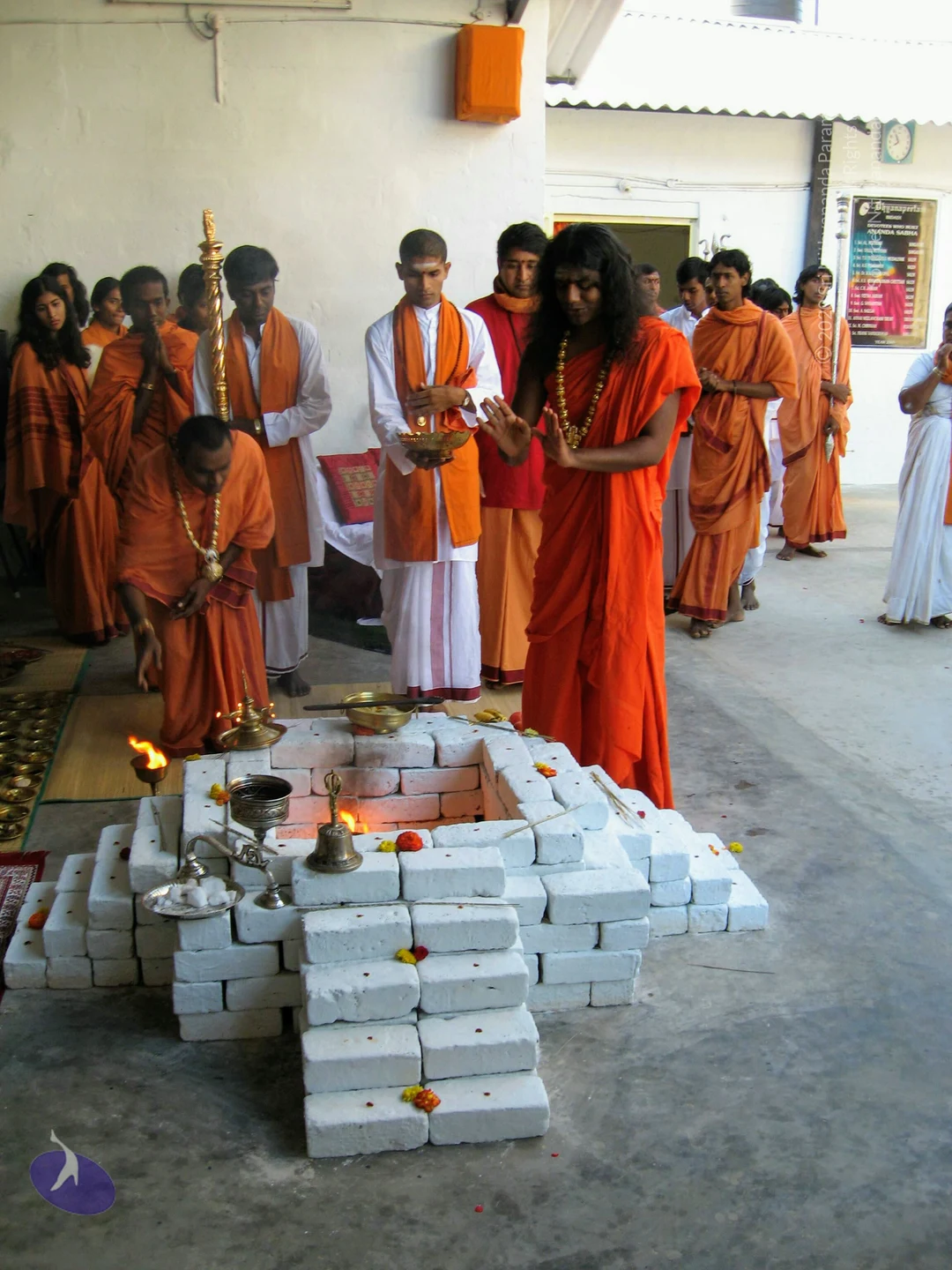
Two large golden deity murti figures stand together on a stage before a red draped backdrop, decorated with layered jeweled necklaces, bangles and crowns. The male figure wears an orange turban, holds a trident and a damaru-like hand drum with a cobra-shaped handle, and wears a blue silk skirt with white leggings and a gold border. The female figure wears a green and orange silk skirt and holds one hand raised in blessing. Both are draped in yellow and red flower garlands. The figures are statues, not people, so no living person is visible.A photograph of a decorated ritual seat draped with white and maroon silk cloth with gold border, garlanded with yellow marigold and white jasmine strands and red flowers. An orange turban rests on the seat with a gold pendant hanging from it, and a cobra-hood shaped canopy stands behind. Brass oil lamps stand on the floor in front, and a small framed printed photo of a smiling man in an orange turban sits at the bottom left edge. Bright blue, green and pink silk hangs behind the seat, and a carved stone pillar stands at the back. No physical people are visible.A photograph of two gilded processional murti figures on a festival platform, a male deity on the left and a female deity on the right. The male figure wears an orange turban and a crown-like headdress, holds a golden trident and a golden ritual staff, and is adorned with layered jewelled necklaces, a white and gold sash and a jewelled armlet. The female figure wears a jewelled crown, a green and orange skirt and layered gold necklaces, with a red bindi, and holds a golden lamp-like object. Both are draped in yellow, red and white flower garlands in front of a deep red curtain and carved stone wall. These are statues, not living people.Two ornately decorated golden statues of deities stand side by side on a raised platform before a dark red curtain. The figure on the left wears an orange turban and a golden-brown shawl over a dark blue garment, holds a trident and a golden ritual staff, and is adorned with layered jewelled necklaces and flower garlands of yellow and red blooms. The figure on the right wears a crown with a halo-like arch, a green skirt and orange top, layered pearl and gold necklaces, and holds a flame-like object. Both are heavily ornamented with jewelry and garlands, and the setting is a stone temple wall. These are statues, not living people.Photograph of two gilded deity murtis, a male figure on the left and a female figure on the right, displayed before a stone wall. The left figure wears an orange turban, holds a golden trident, and is adorned with a jewelled blue-and-gold garment, layered necklaces and an ornate crown. The right figure wears a crown with a jewelled halo, a green and orange sari with a golden border, layered gold and jewelled necklaces, and holds a small ceremonial object. Yellow and red flower garlands hang at the right edge. Shown are statues, not living people.Two gilded murti statues of deities sit side by side on a blue draped platform, decorated with marigold and rose garlands. The figure on the left wears an orange turban, a dark blue velvet vest with a gold-trimmed sash, jewelled ornaments and a white dhoti, and holds a golden trident. The figure on the right wears a green silk skirt with an orange border, layered jewelled necklaces and an elaborate jewelled crown, and holds a small object in one hand. Both have ornate jewelled crowns and gold-toned faces. Behind them hangs a maroon curtain under a stone ledge. No living people are visible.

02--Satsang
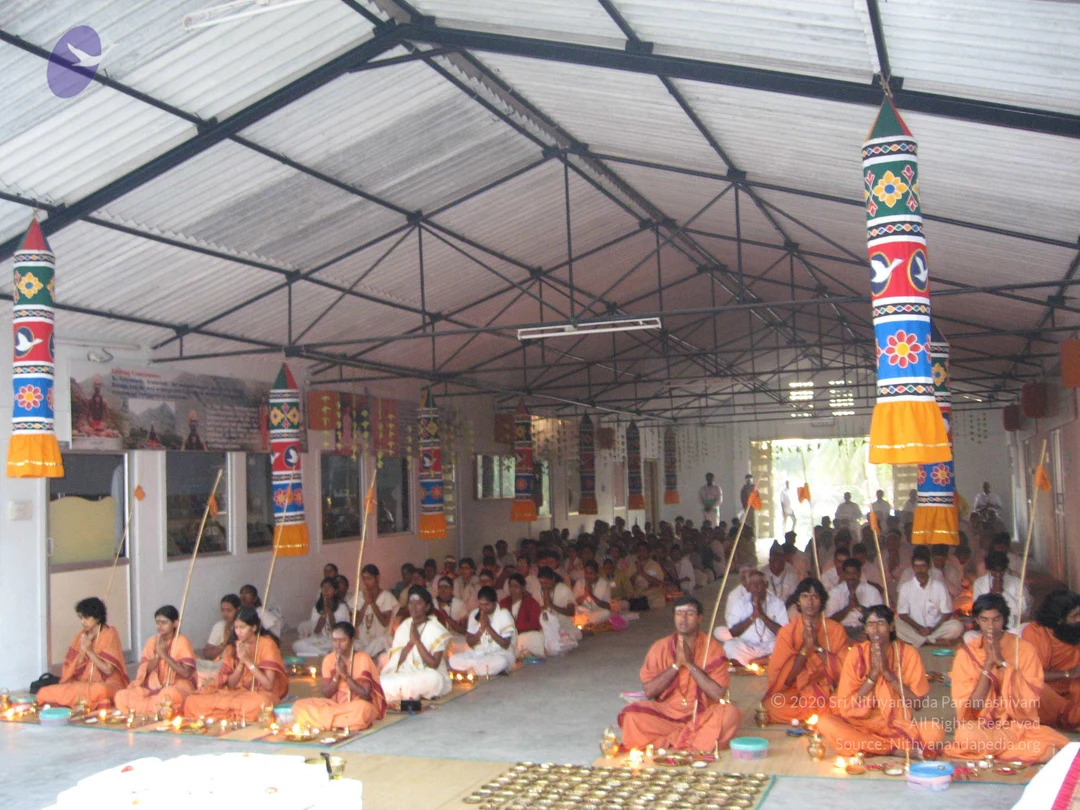
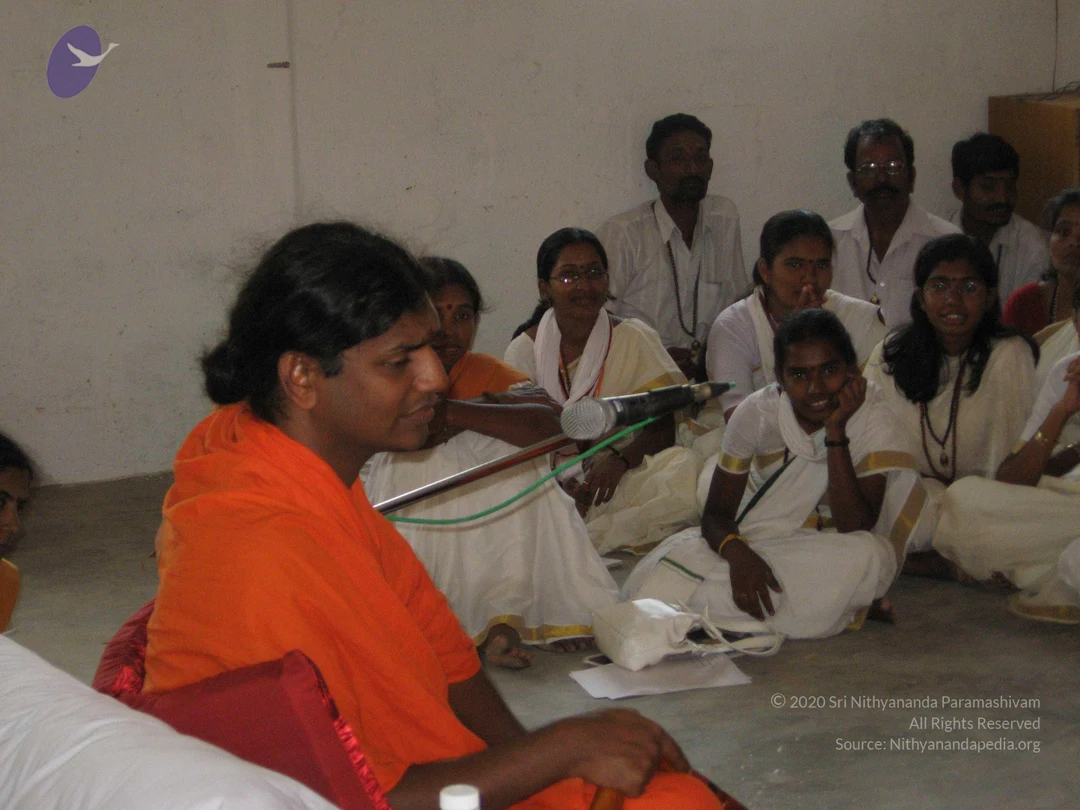
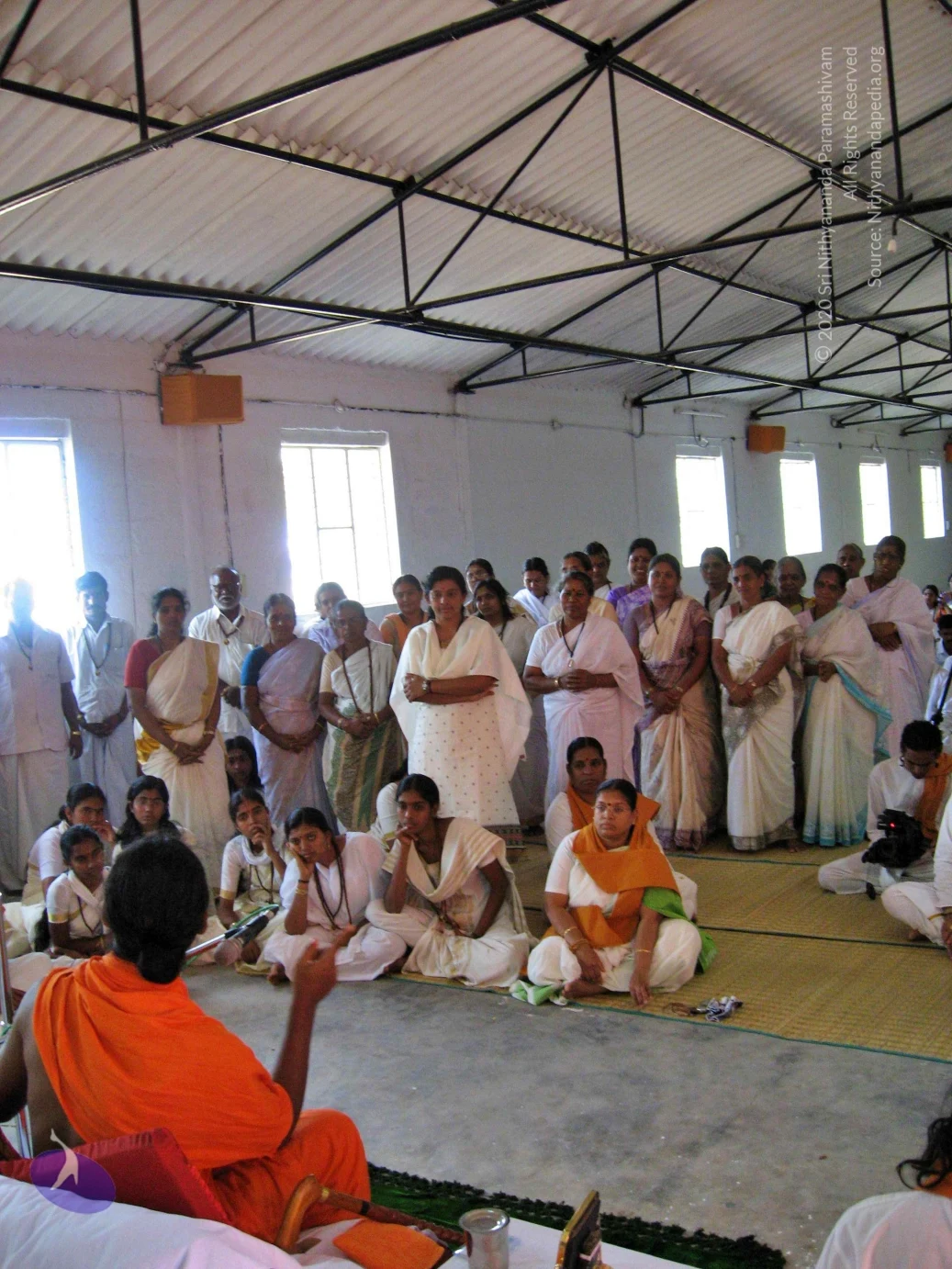
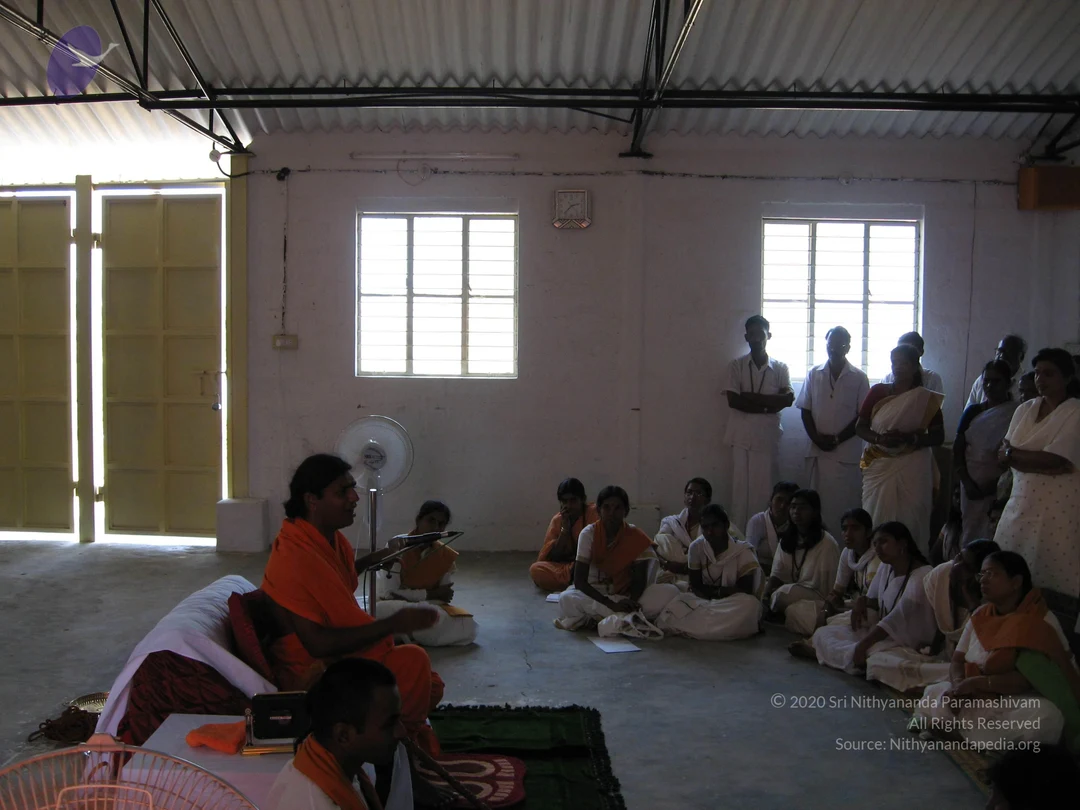
26 photosSource gallery
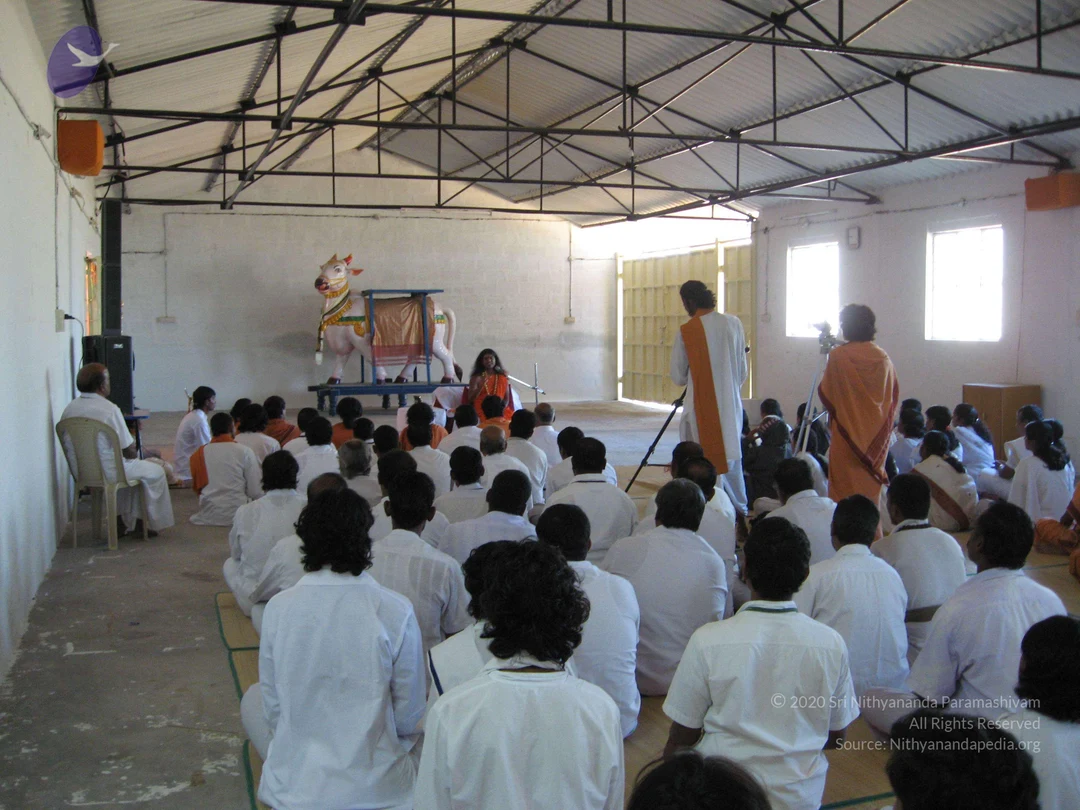
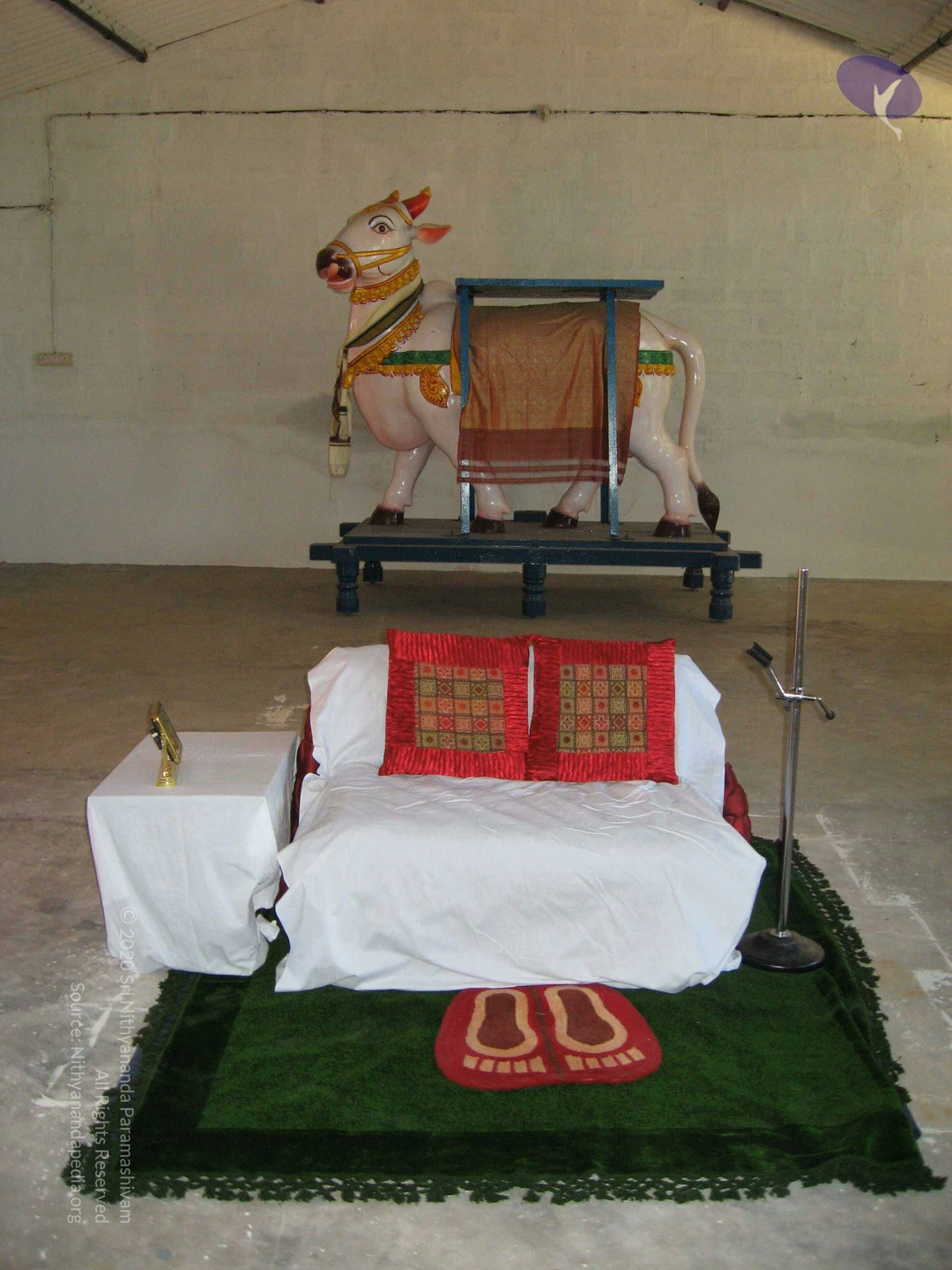
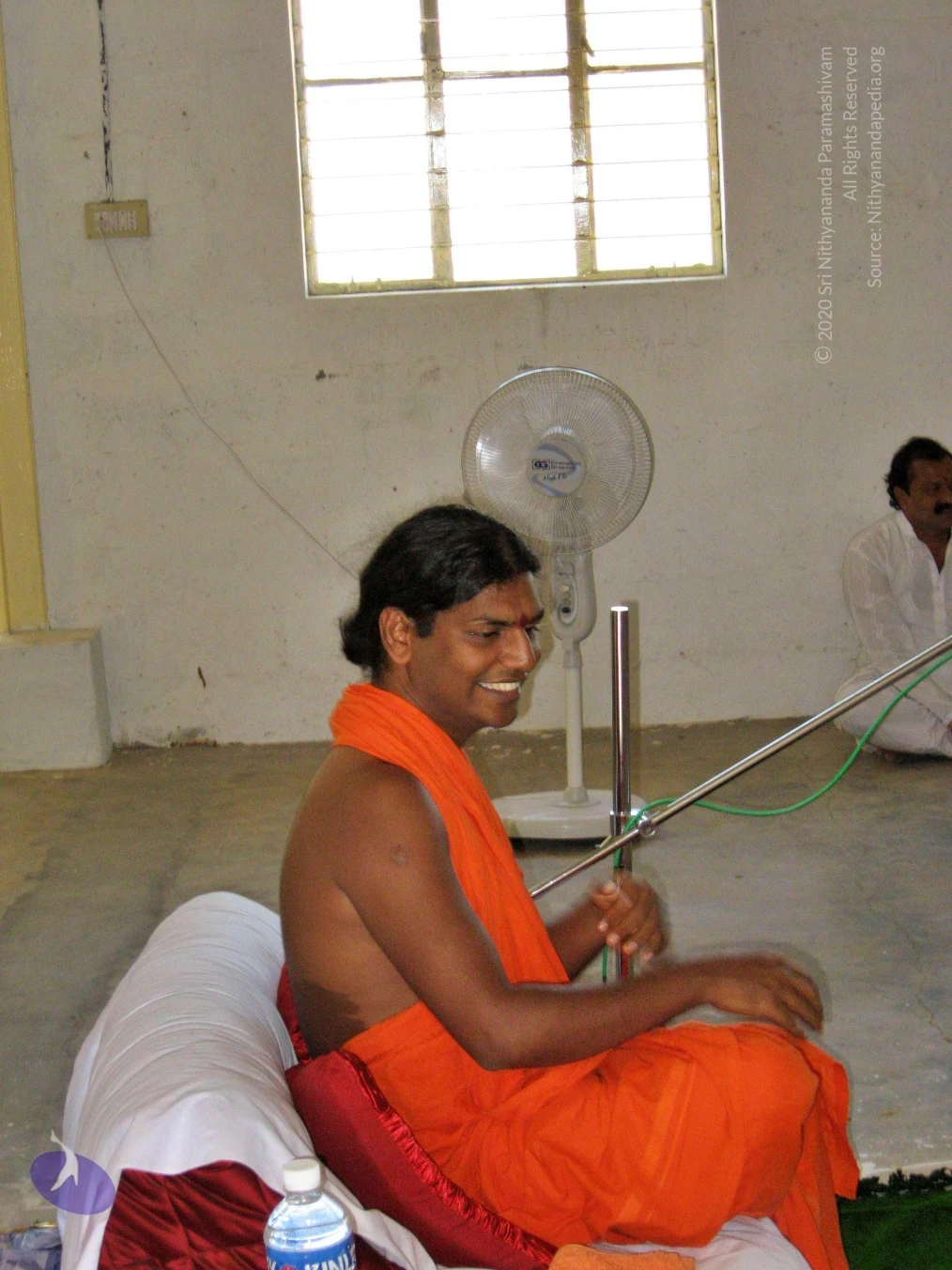
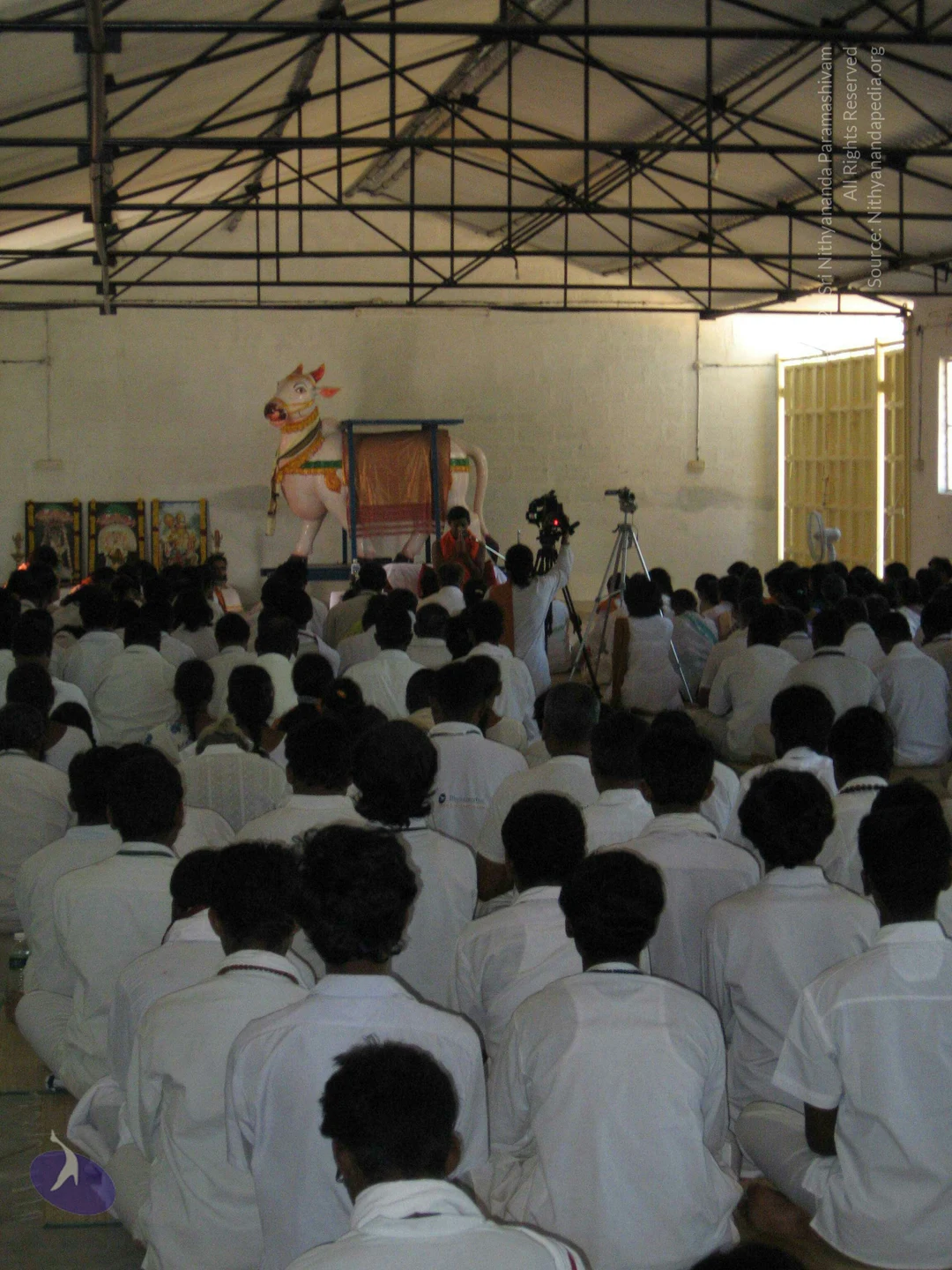
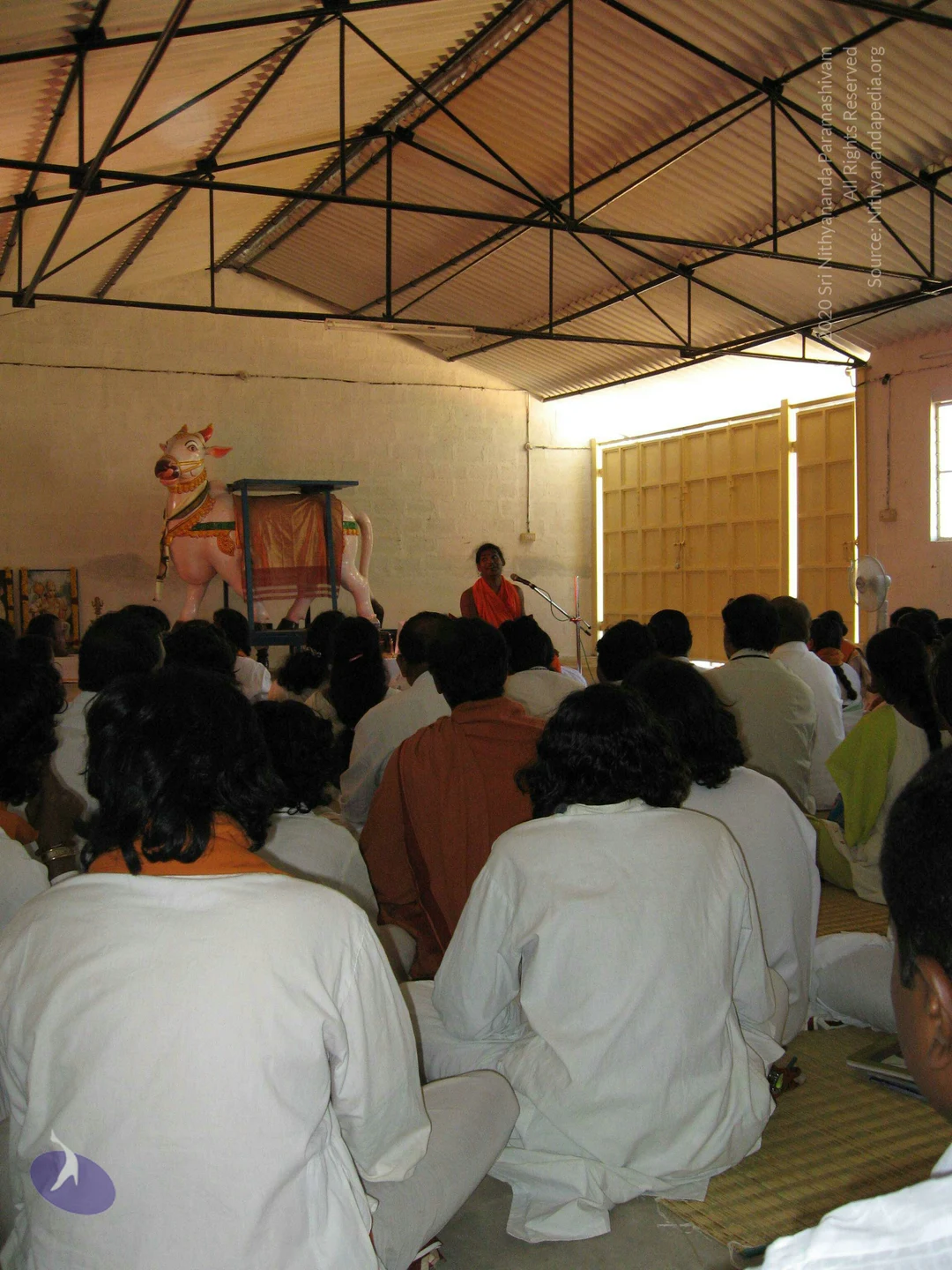
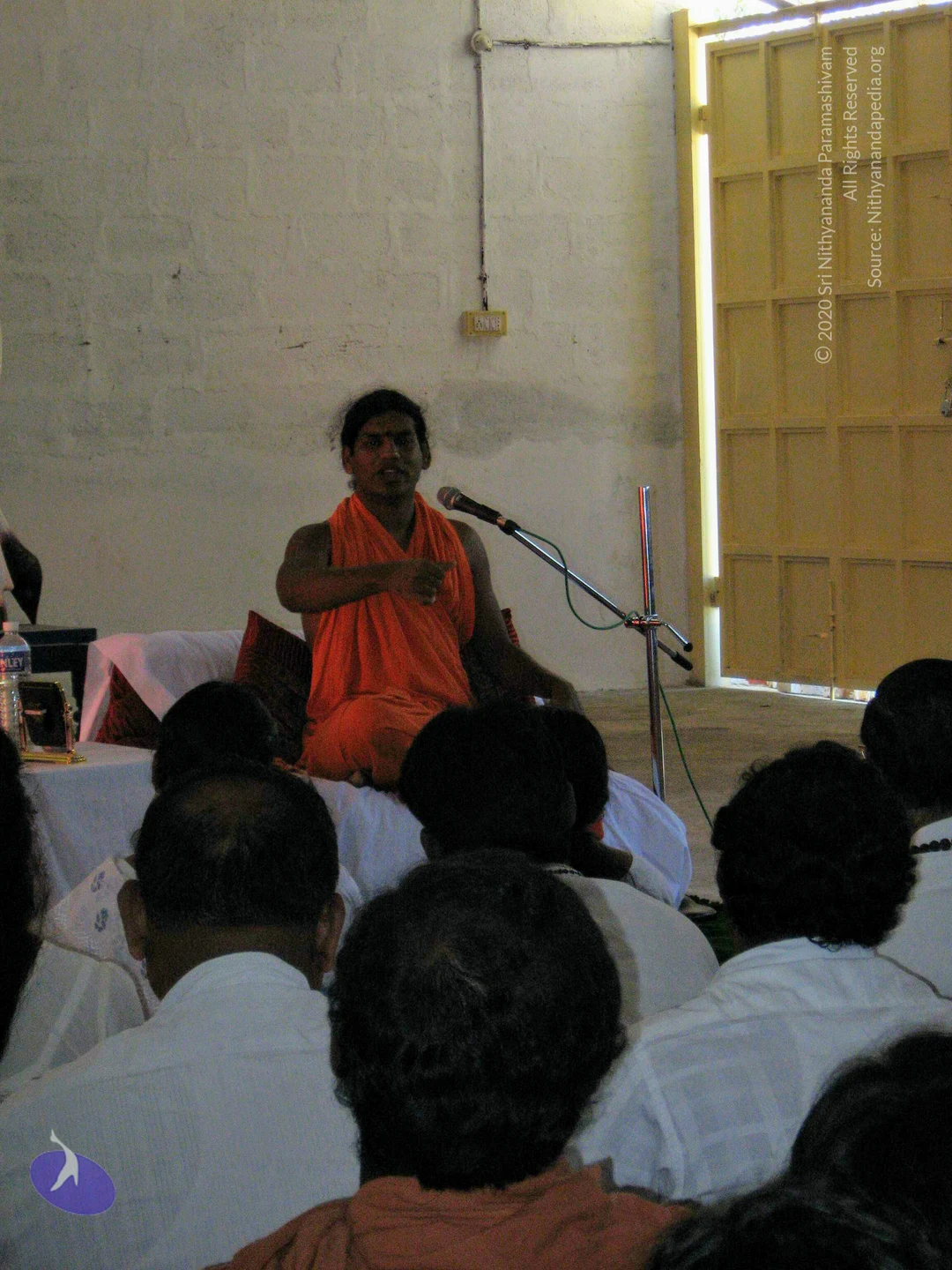
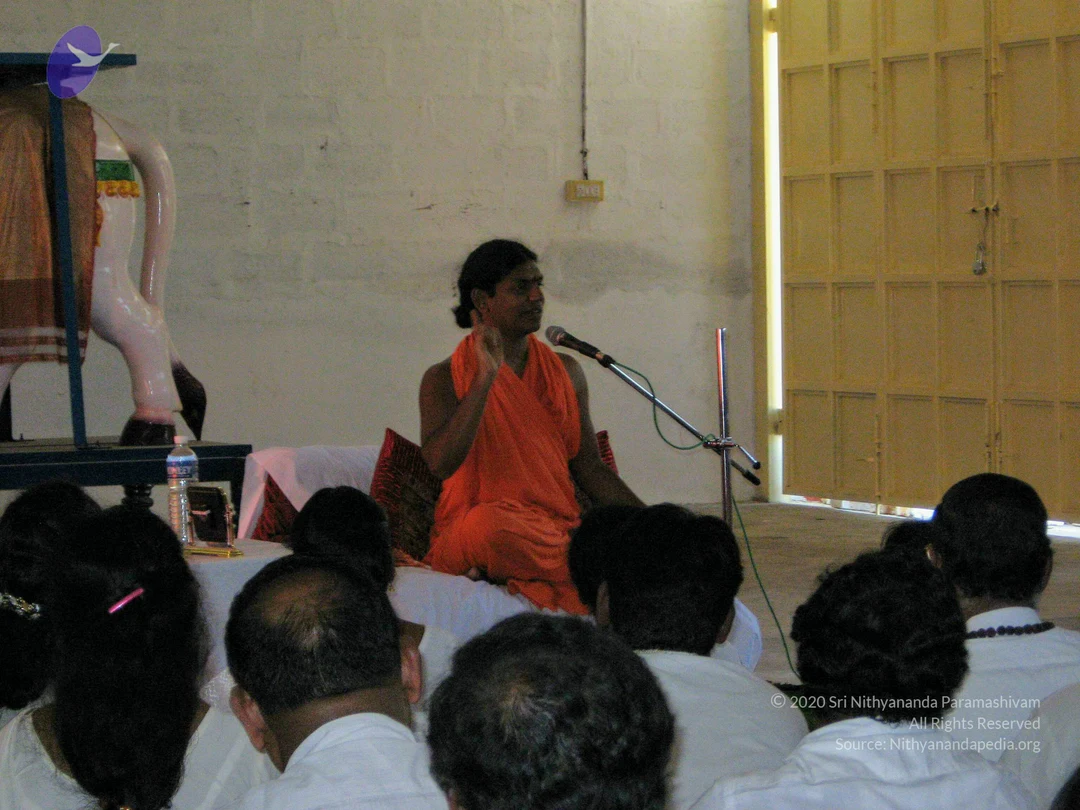
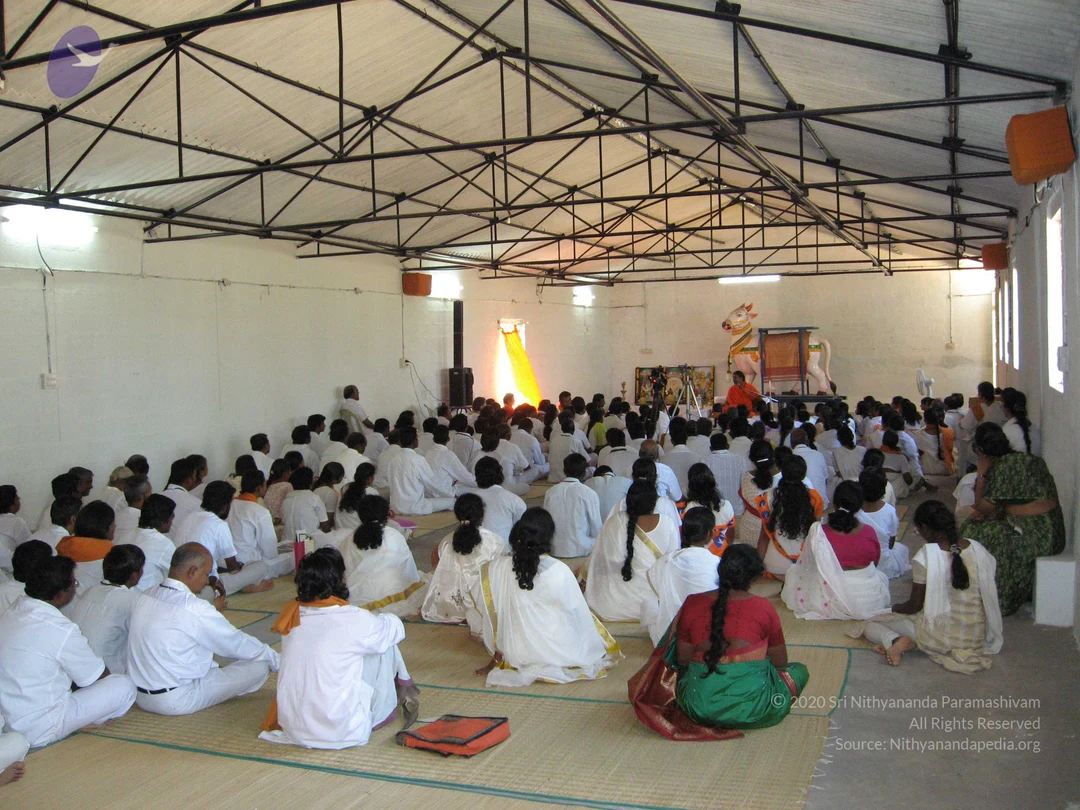
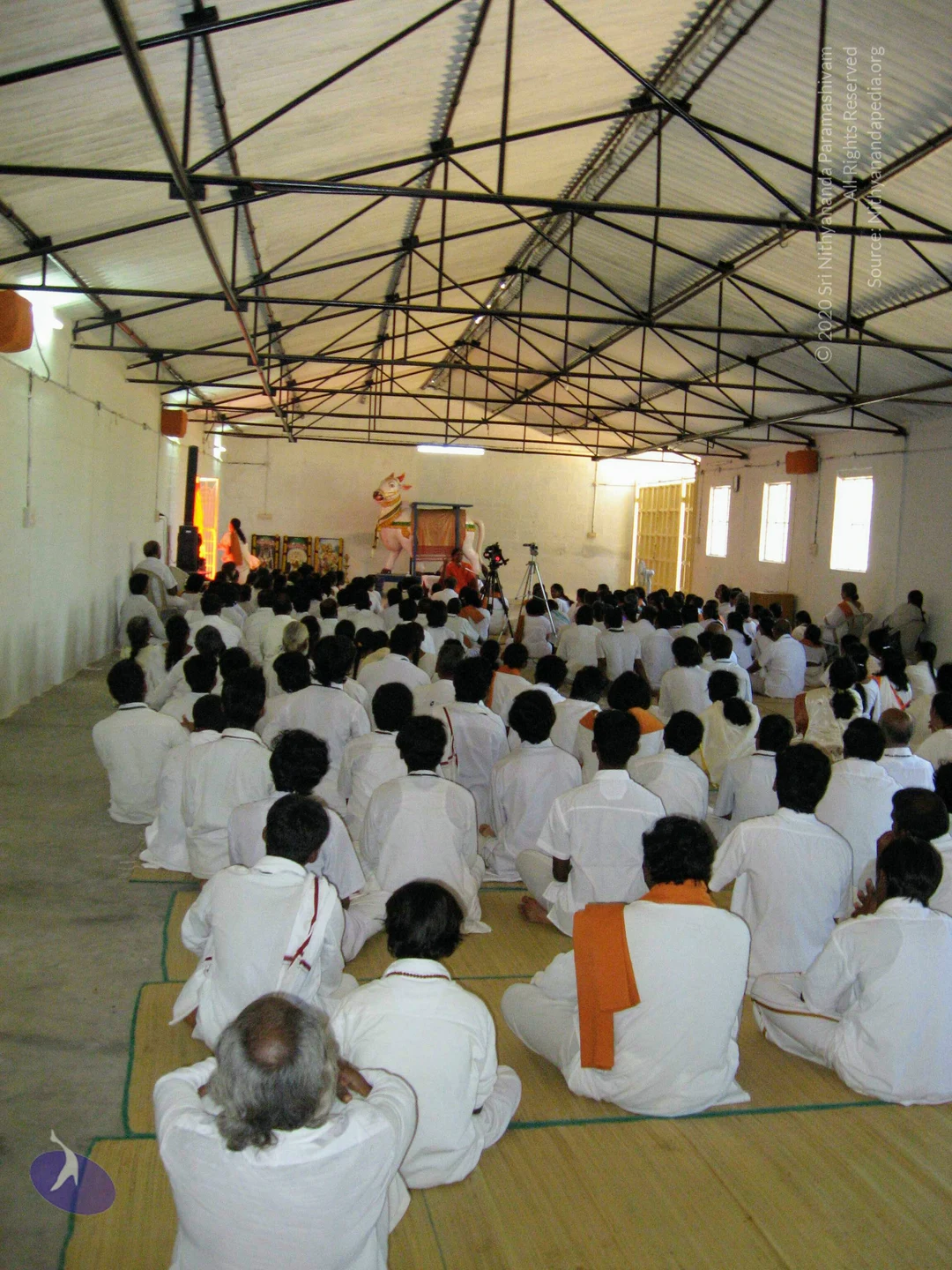
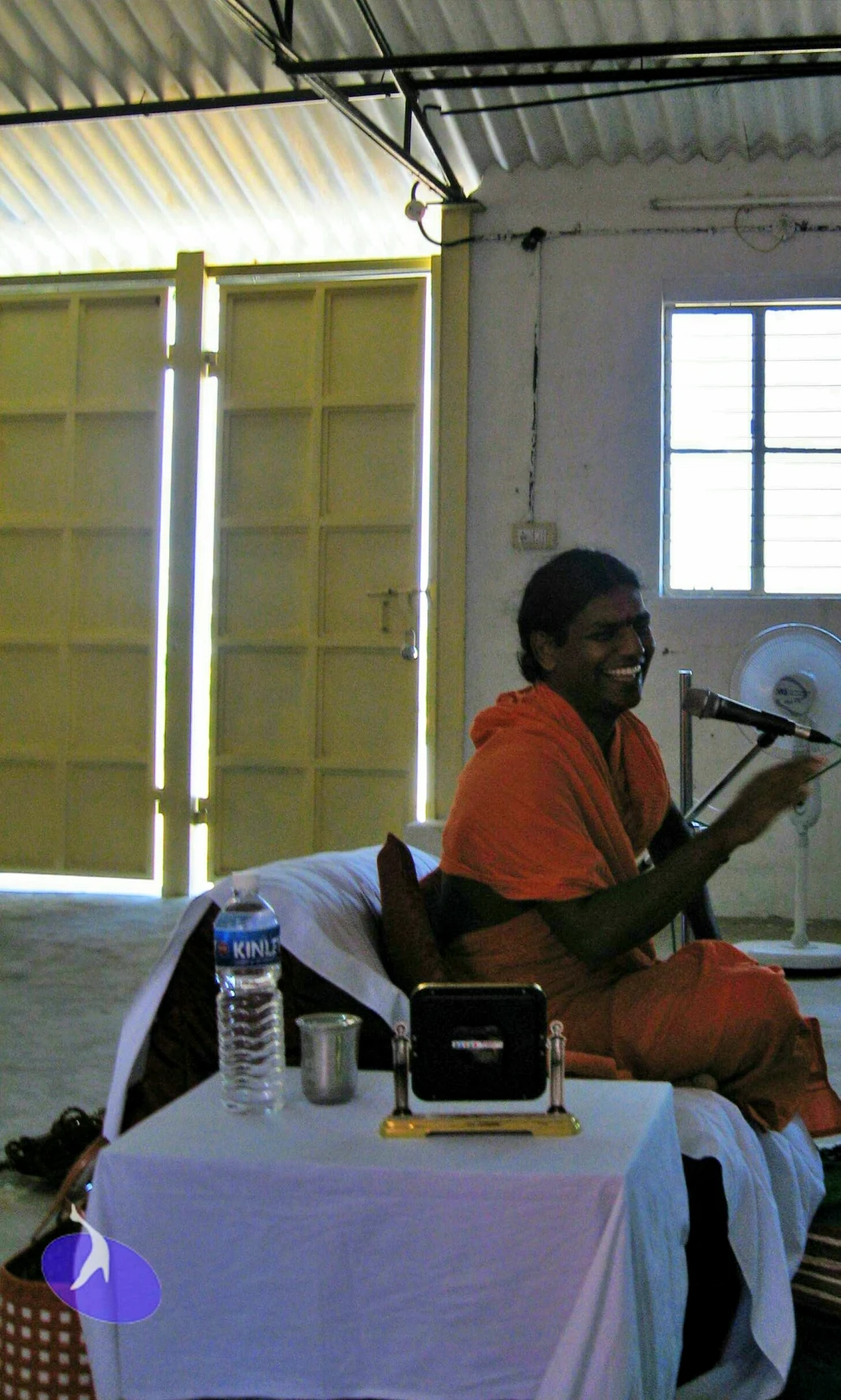
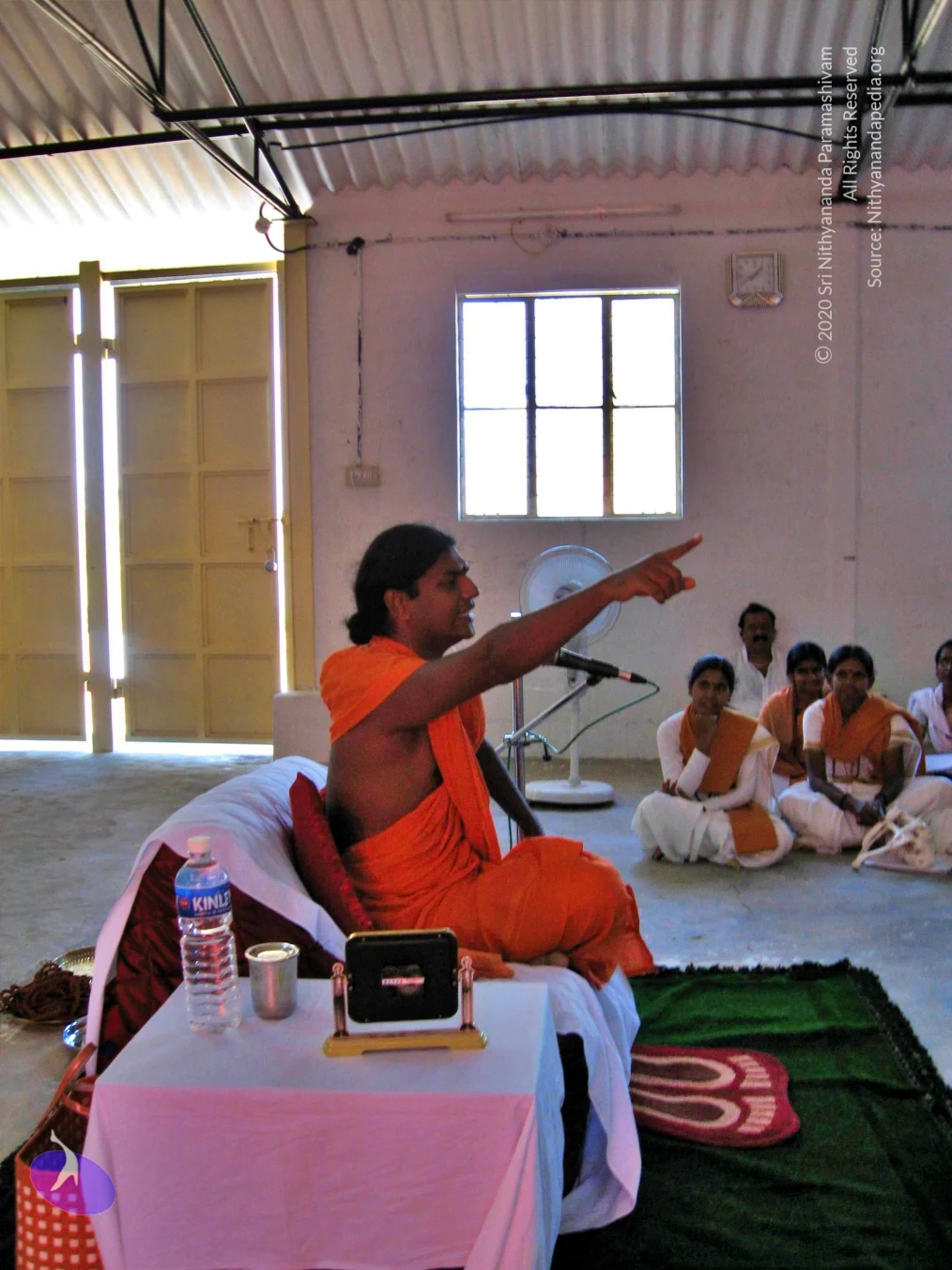
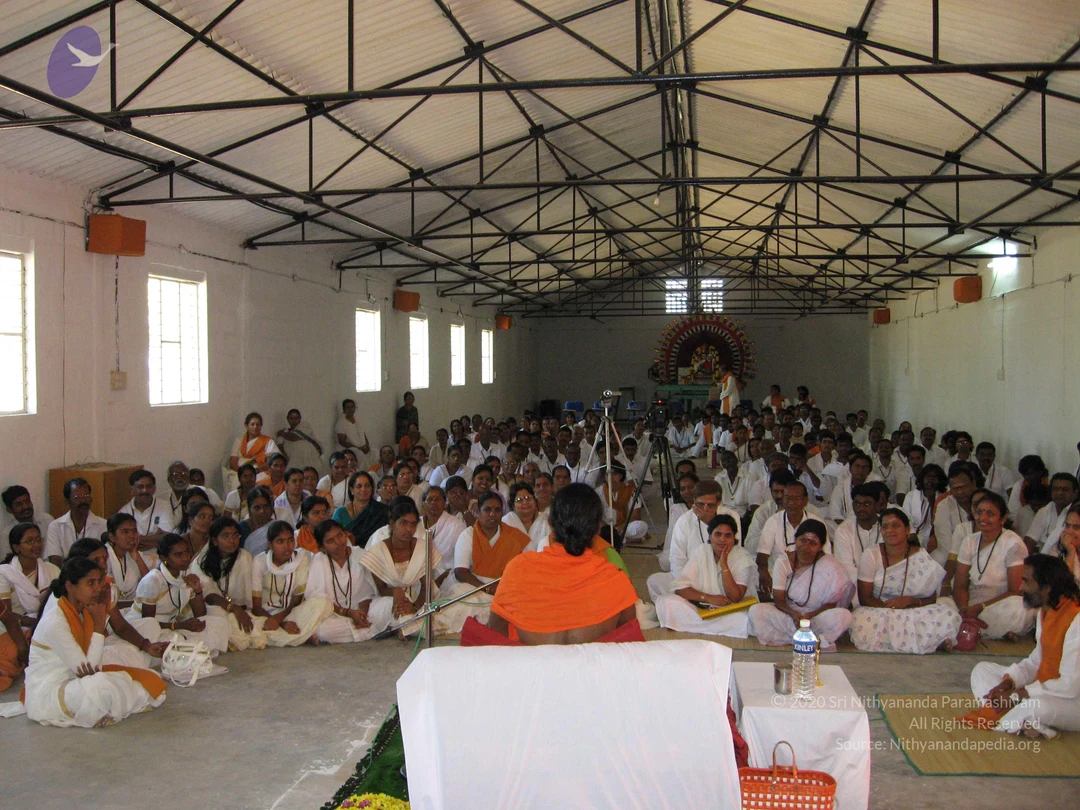
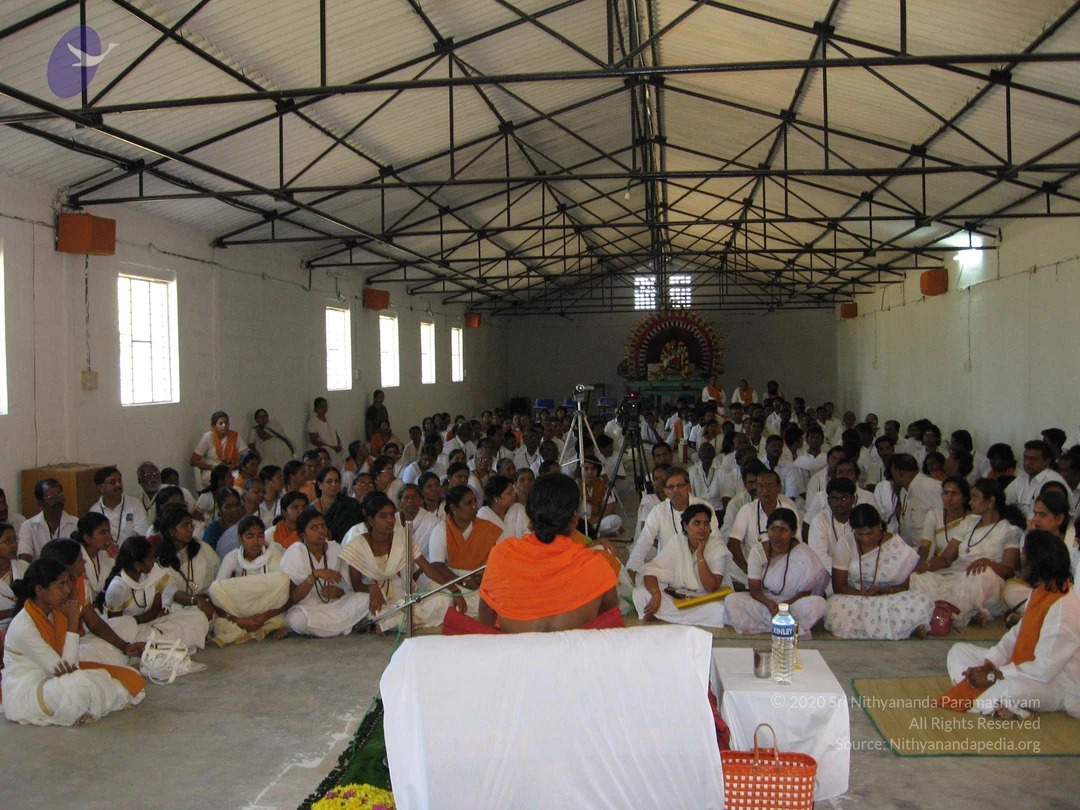
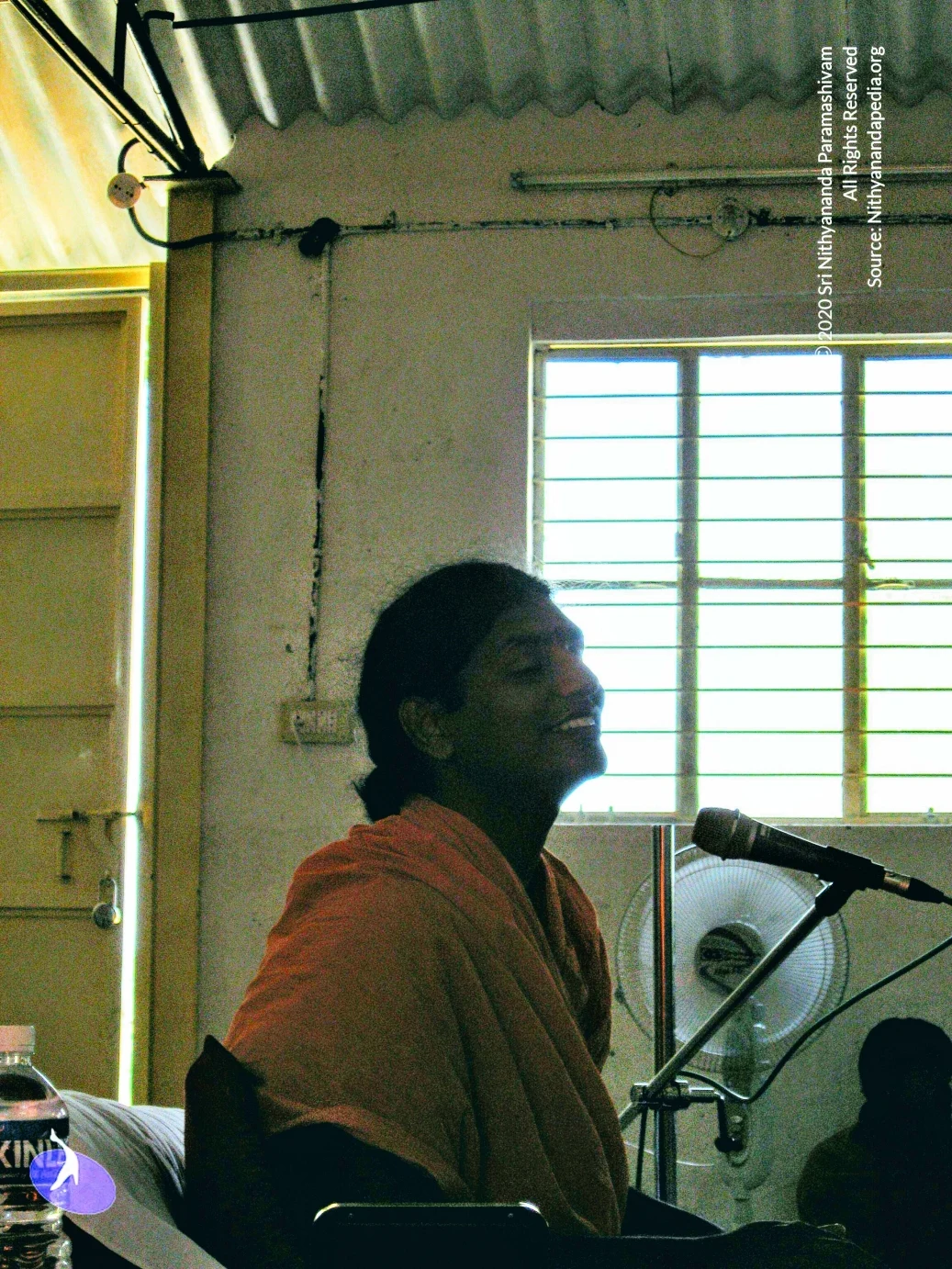
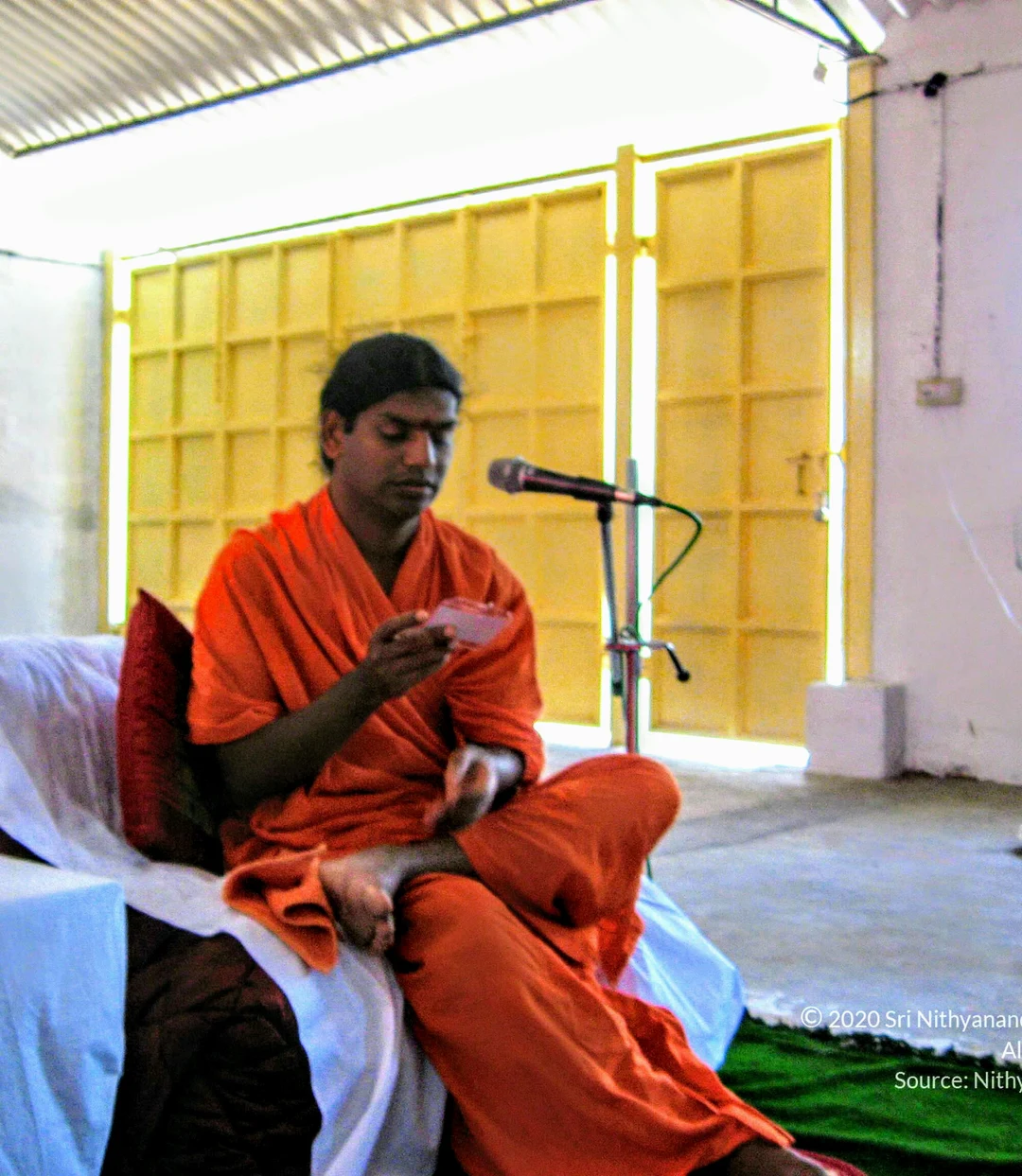
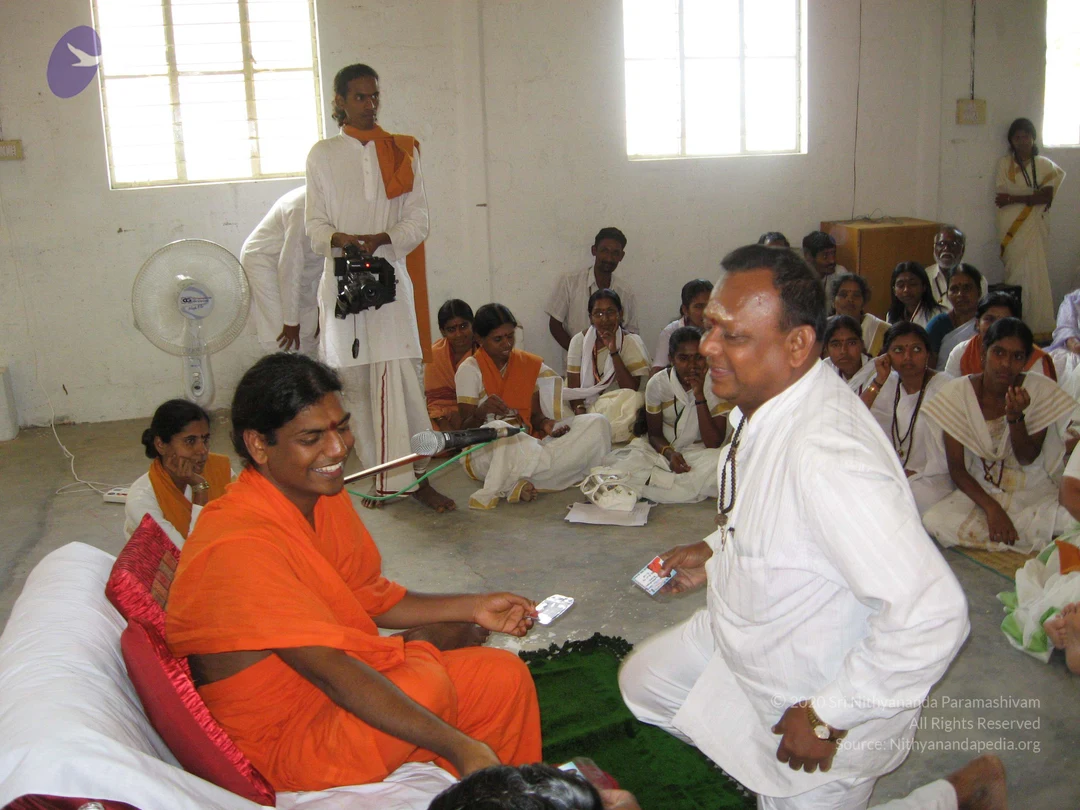
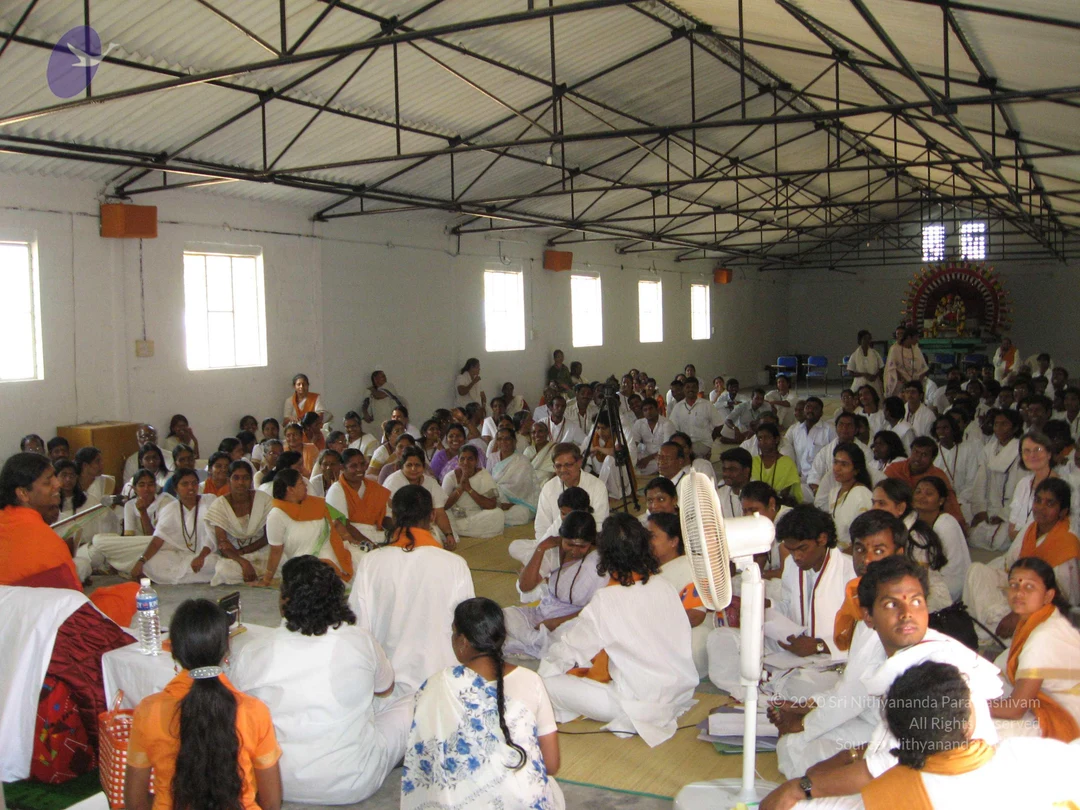
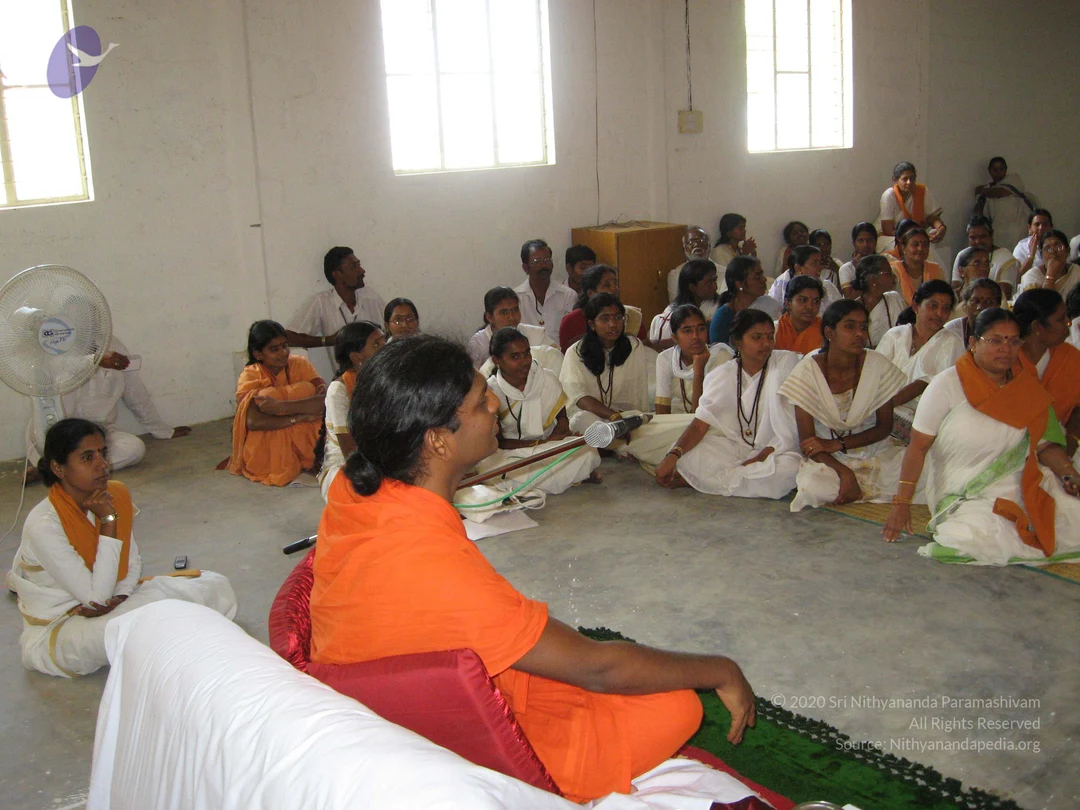
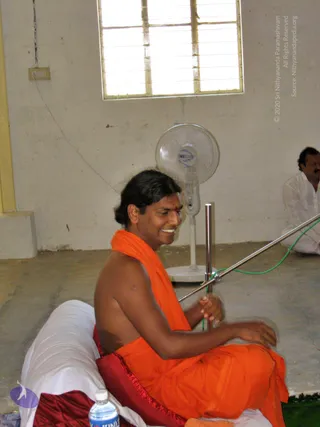
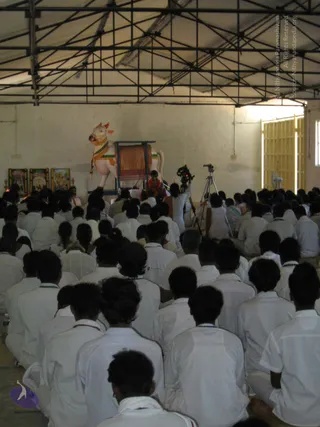
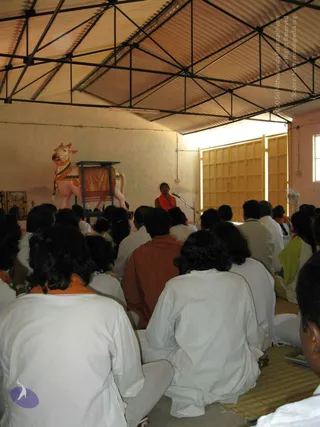
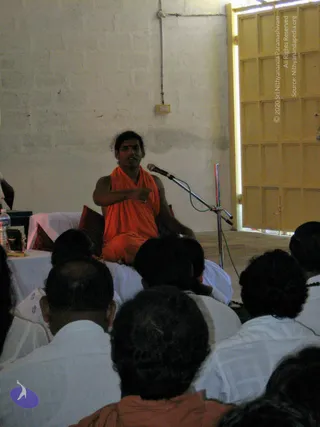
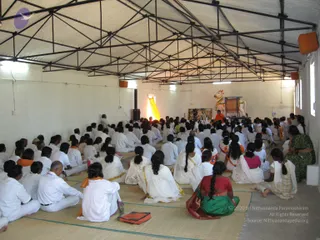
A photograph of a smiling man seated on a white and red cushioned seat in a plain whitewashed hall with a barred window and a standing fan. He wears an orange saffron wrap draped over his bare upper body, has a red tilak on his forehead and his hair tied back. He holds a silver microphone stand with a green cable. A second man in white clothes sits at the right edge of the frame. A plastic water bottle sits in the lower left corner.Photograph of a large congregation seated on the floor of a plain whitewashed hall with a metal truss roof, viewed from behind. Many people in white clothes sit in rows facing forward. At the front, a large white painted bull statue with a red and green garland stands behind a small raised platform draped with an orange cloth, where a seated figure in orange clothing sits. A cameraman on a tripod films the stage. Three framed religious pictures hang on the left wall, and a yellow barred door is open on the right.Photograph of a satsang hall with a tin roof and steel trusses. A seated speaker in an orange shawl sits at a microphone stand on a low stage in the background, beside a large white painted bull (Nandi) statue draped with an orange cloth on a blue stool. Roughly thirty or more devotees sit cross-legged on mats with their backs to the camera, most in white clothing, some in orange, with a man in an orange robe in the foreground. Large wooden doors stand open behind the stage, and a small fan is at the right edge.A seated man in an orange-saffron wrap and sleeveless orange garment speaks into a microphone on a stand, one hand raised in gesture, while seated on a white-covered platform with red cushions behind him. A small framed picture and a water bottle sit on a white-draped table at left. Audience members in white clothes are seen from behind in the foreground on the floor, and a yellow wooden door stands at the right of a whitewashed hall.A photograph of a satsang discourse in a plain whitewashed hall with a yellow panelled door. A seated speaker in orange saffron robes with dark hair tied back gestures with one hand while speaking into a microphone on a stand. Behind him sits a white-draped table with a pillow, a small framed picture and a water bottle, and a white sculpted form draped with an orange and gold cloth stands to the left. Several seated listeners in white clothes, some with dark hair and one wearing a beaded necklace, are shown from behind in the foreground.A photograph of a large satsang hall with a white-walled interior and a metal roof truss overhead. Dozens of seated devotees in white clothes fill the mats, with several women in red, green and pink saris and a few in orange shawls. In the front, a figure in orange robes sits on a raised seat near a white ceremonial bull and a decorated wooden platform, with a yellow cloth hanging behind. A framed picture and a small orange bag sit near the front. The attendees face the teacher on the dais.