Skip to content
Sunday

2 December 2007

How can we determine if a particular guru is right for me?

Dated photos
48
Source pages
1
Media
2
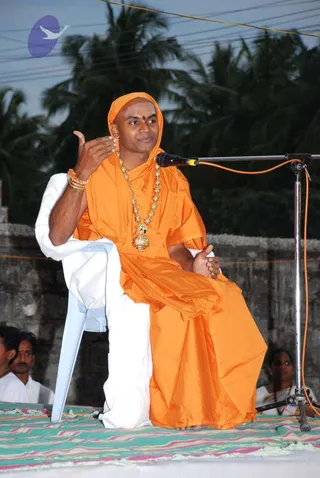
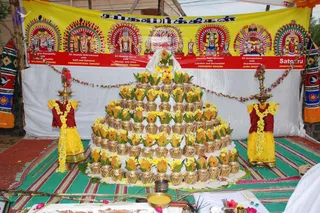
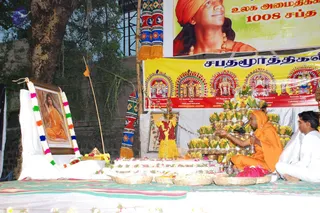
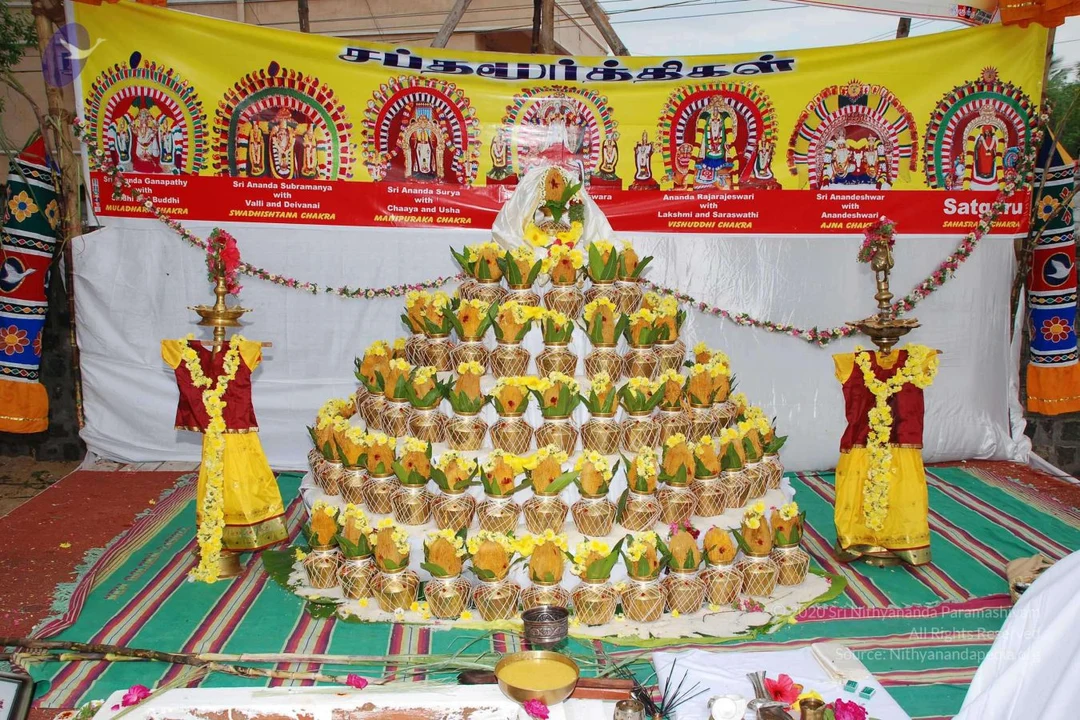
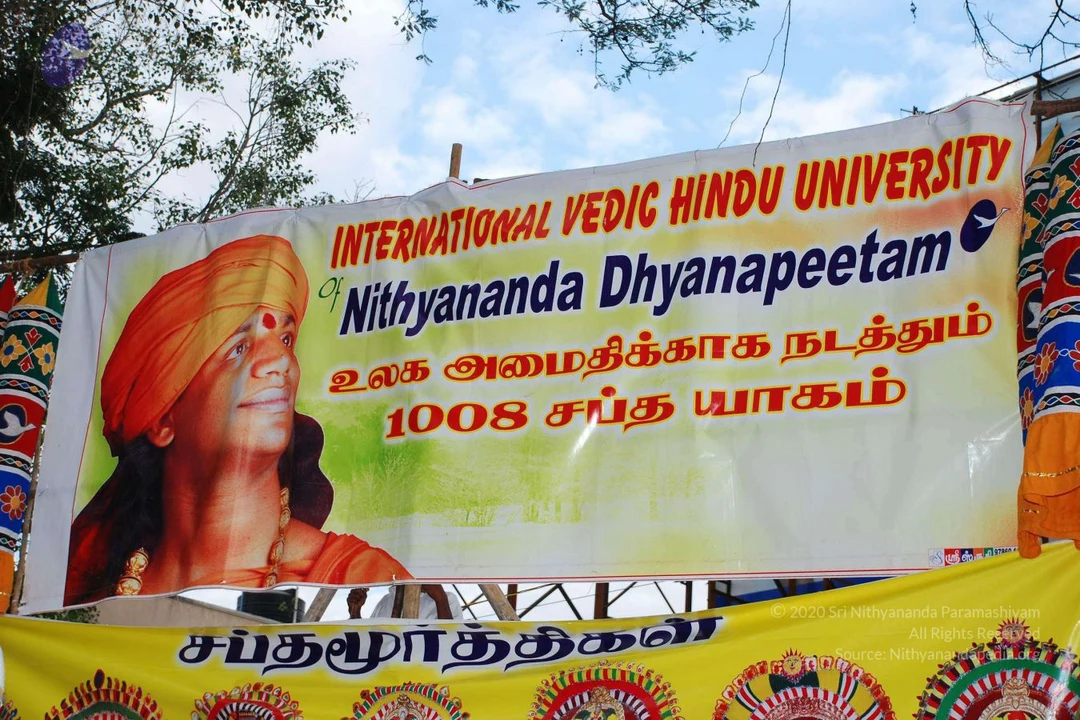
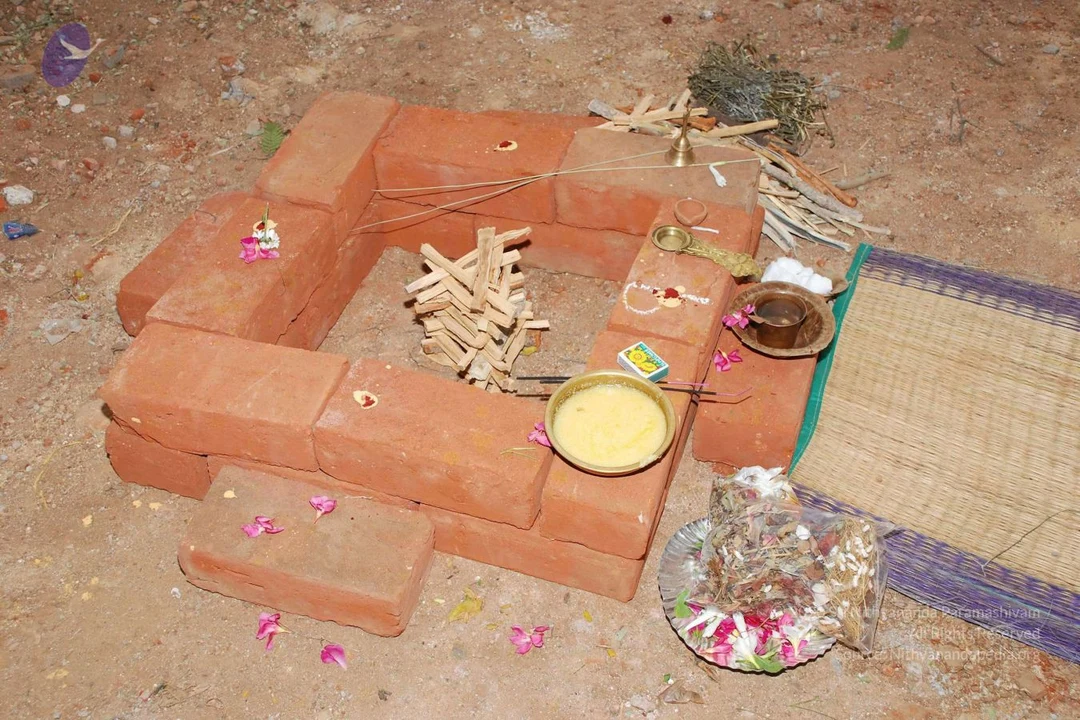
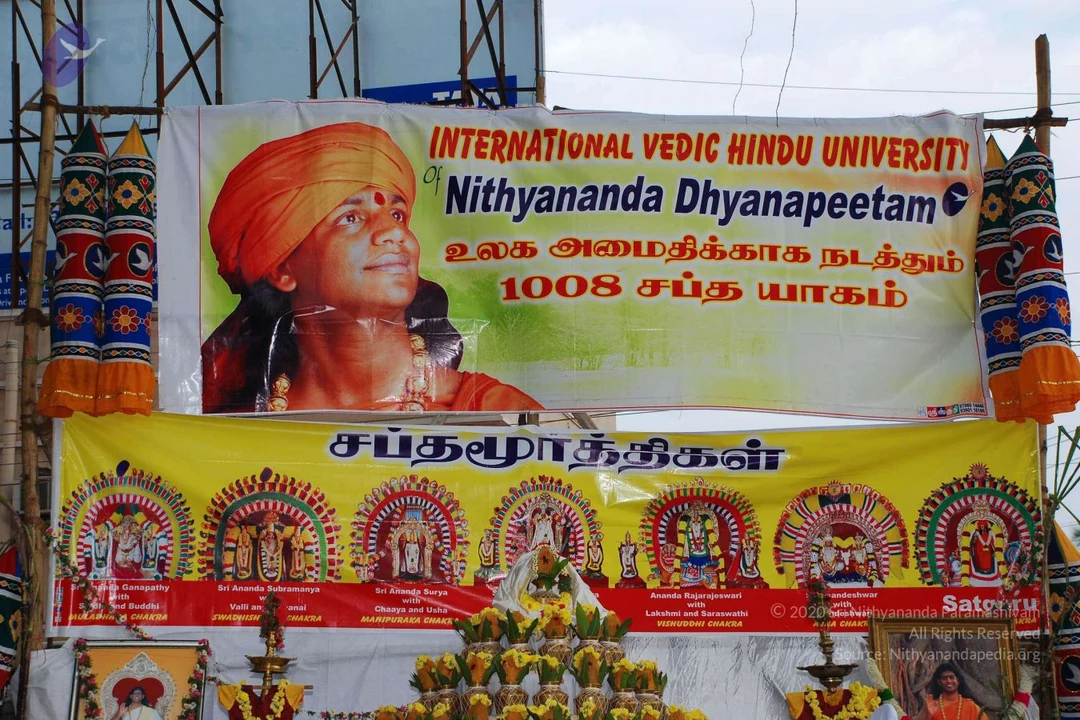
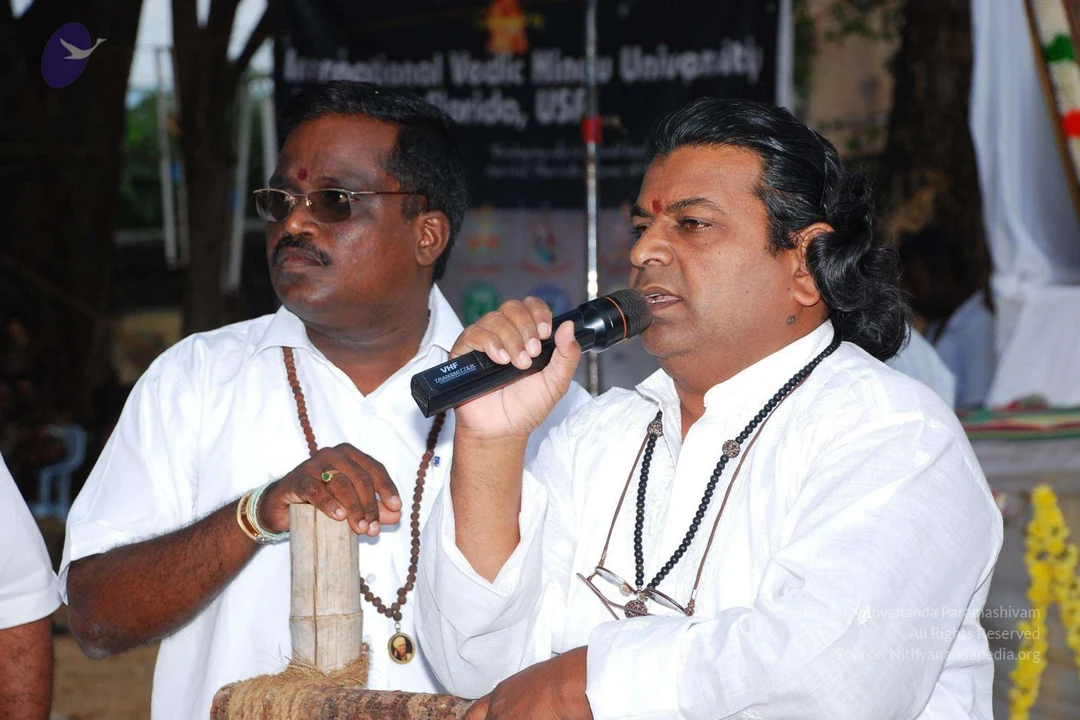
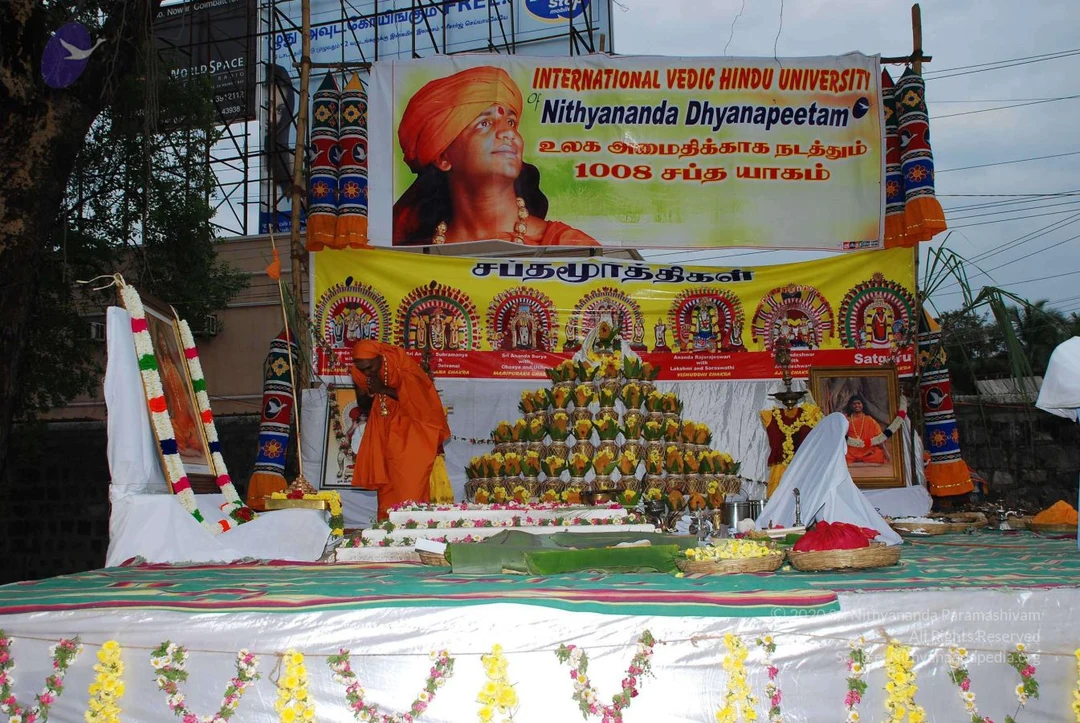
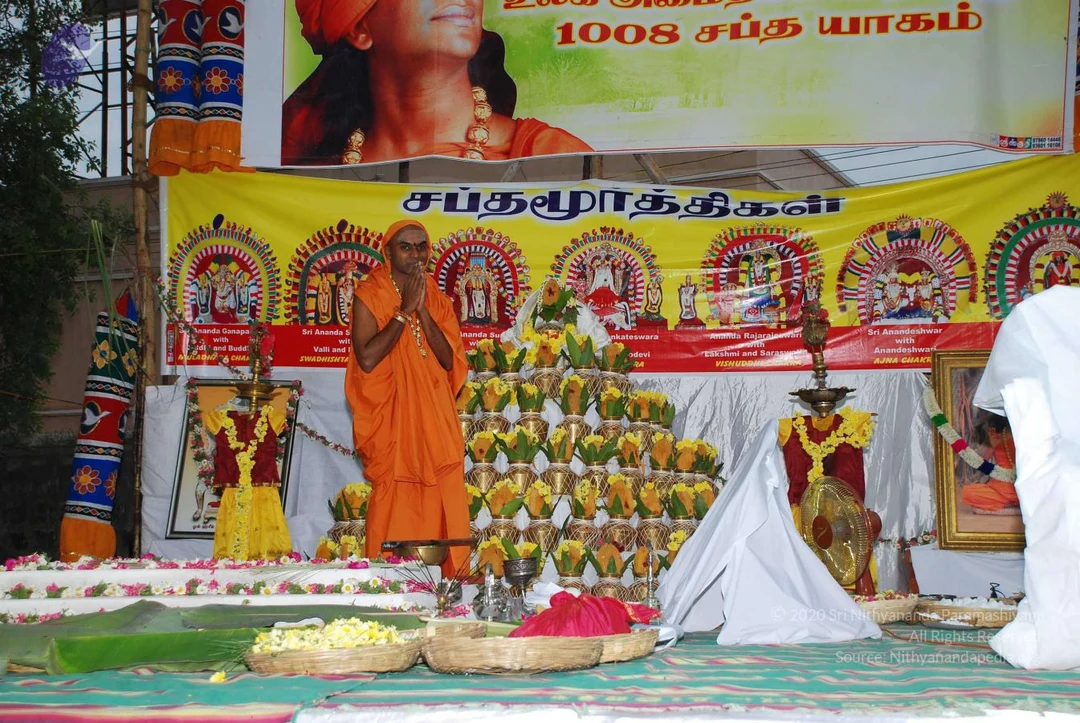
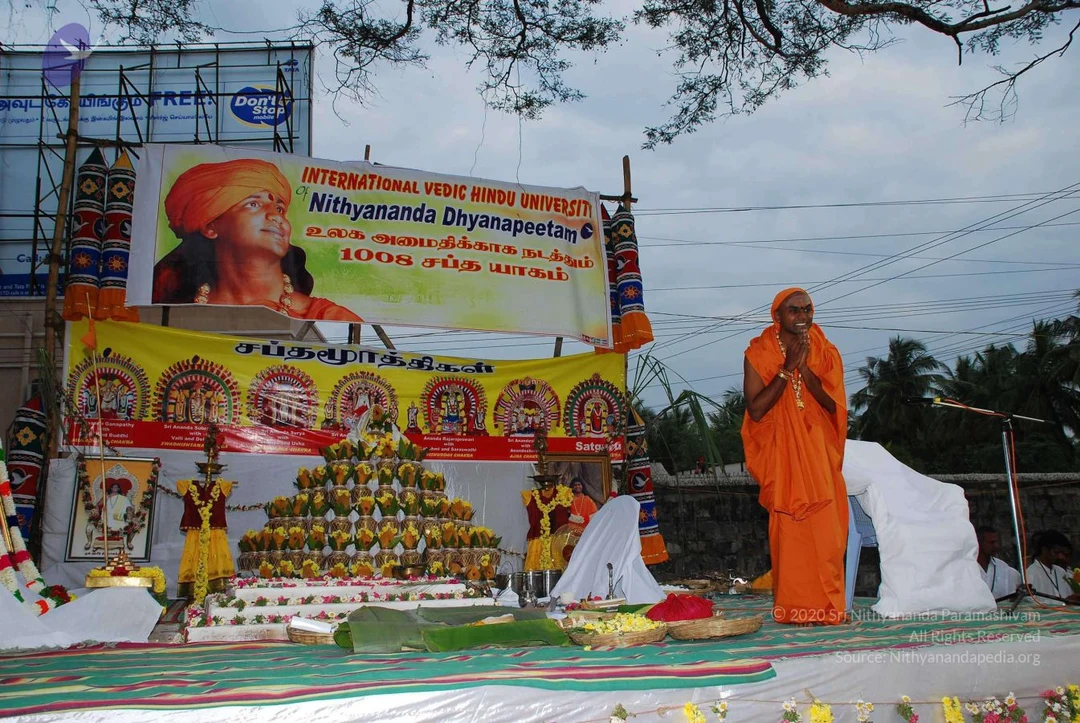
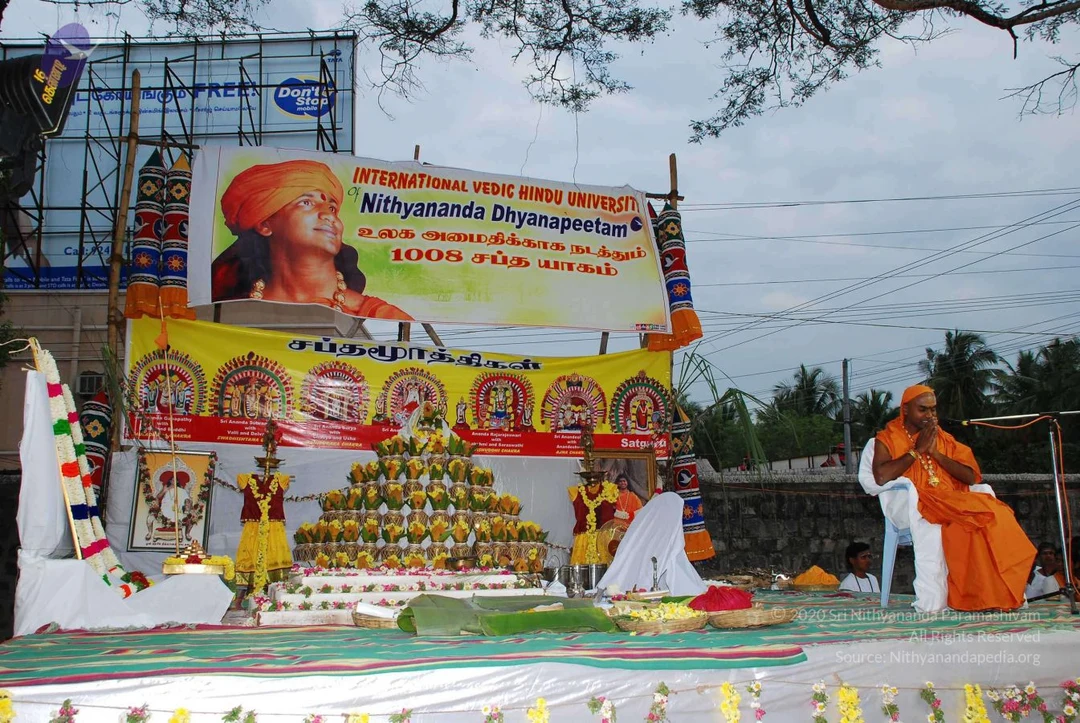
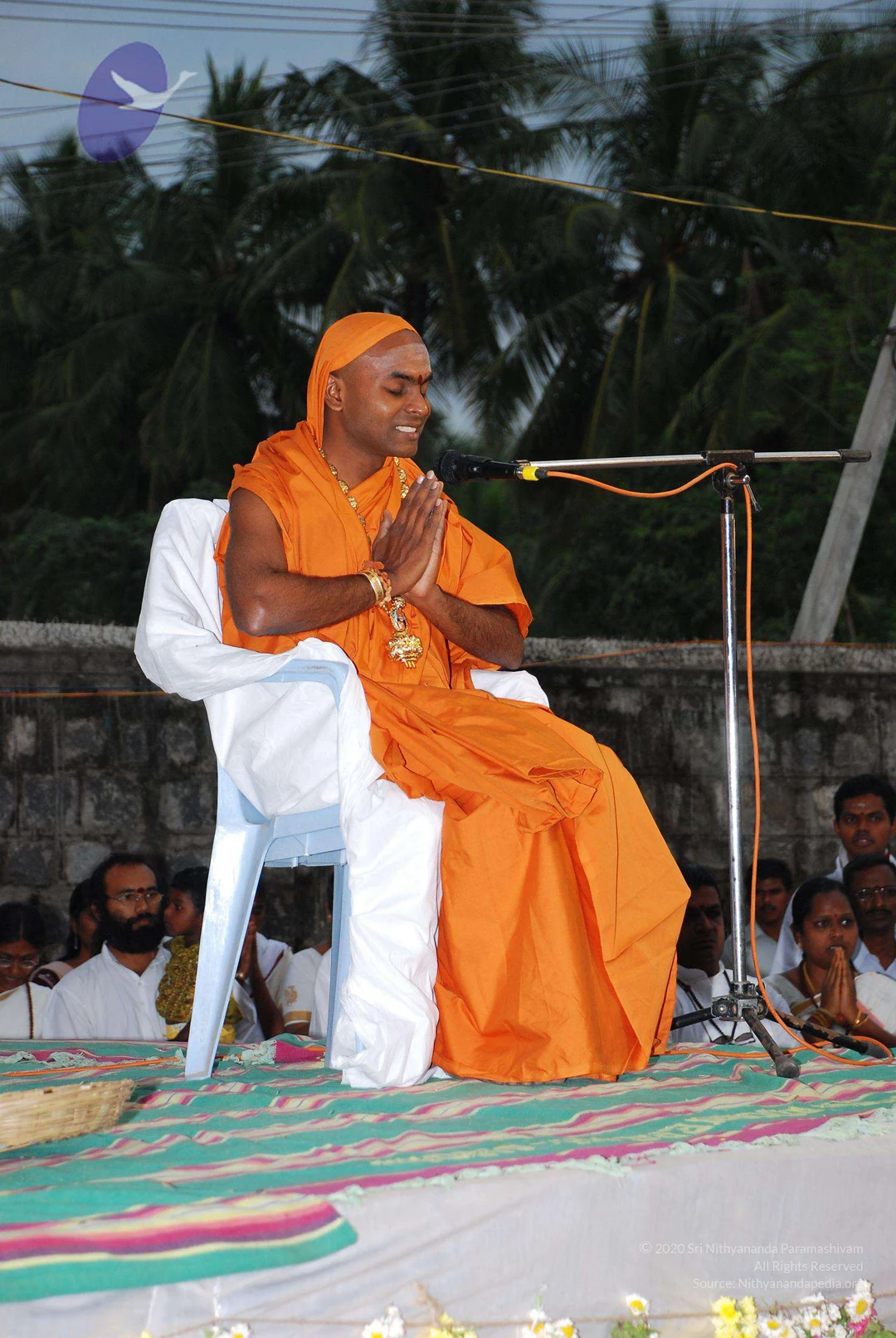
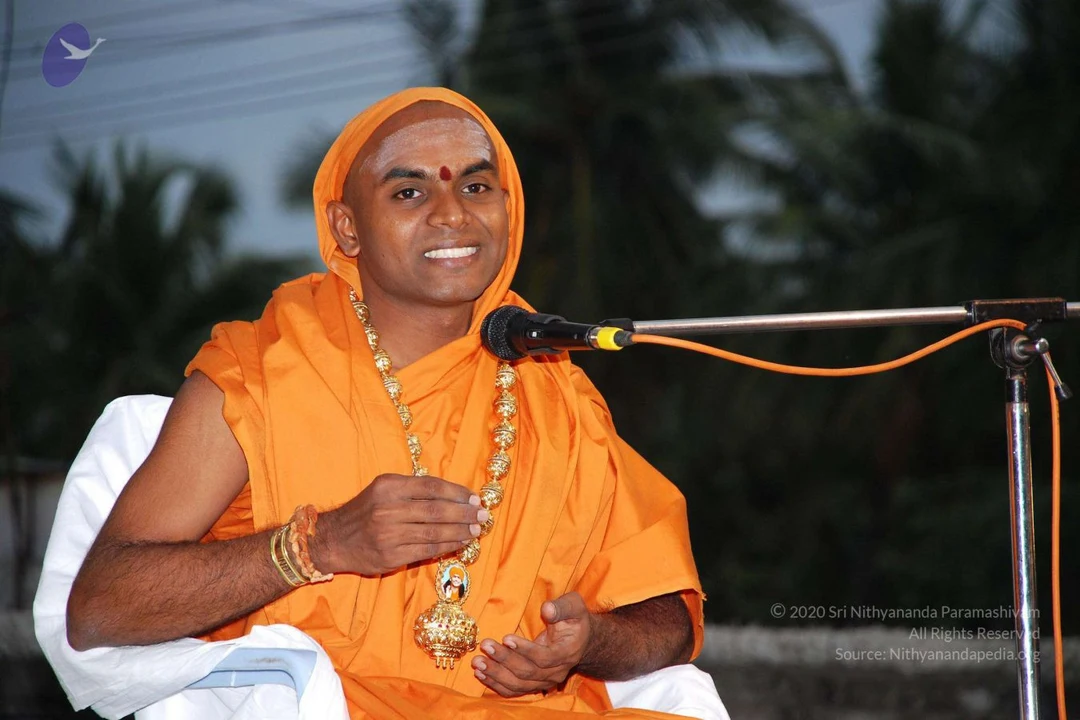
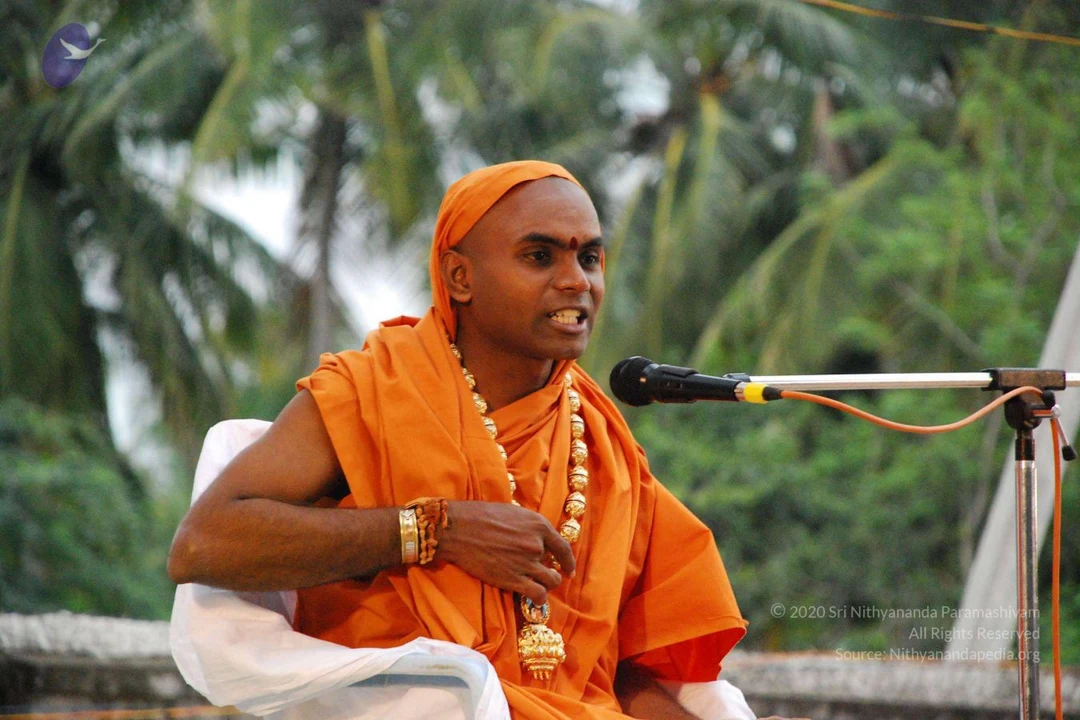
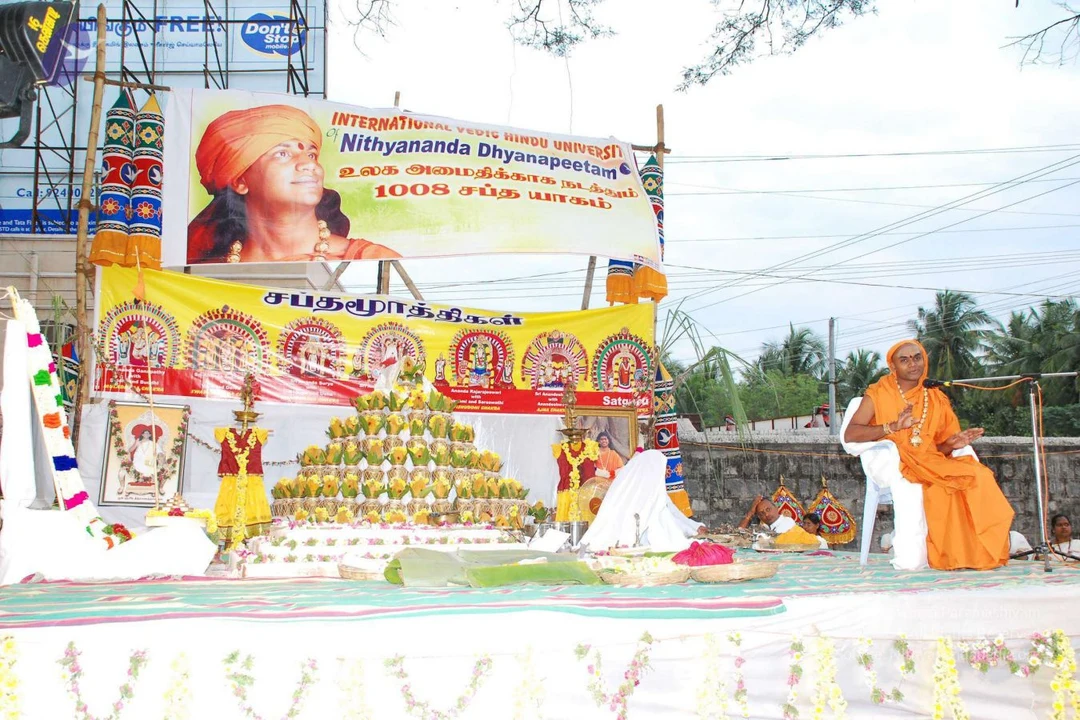
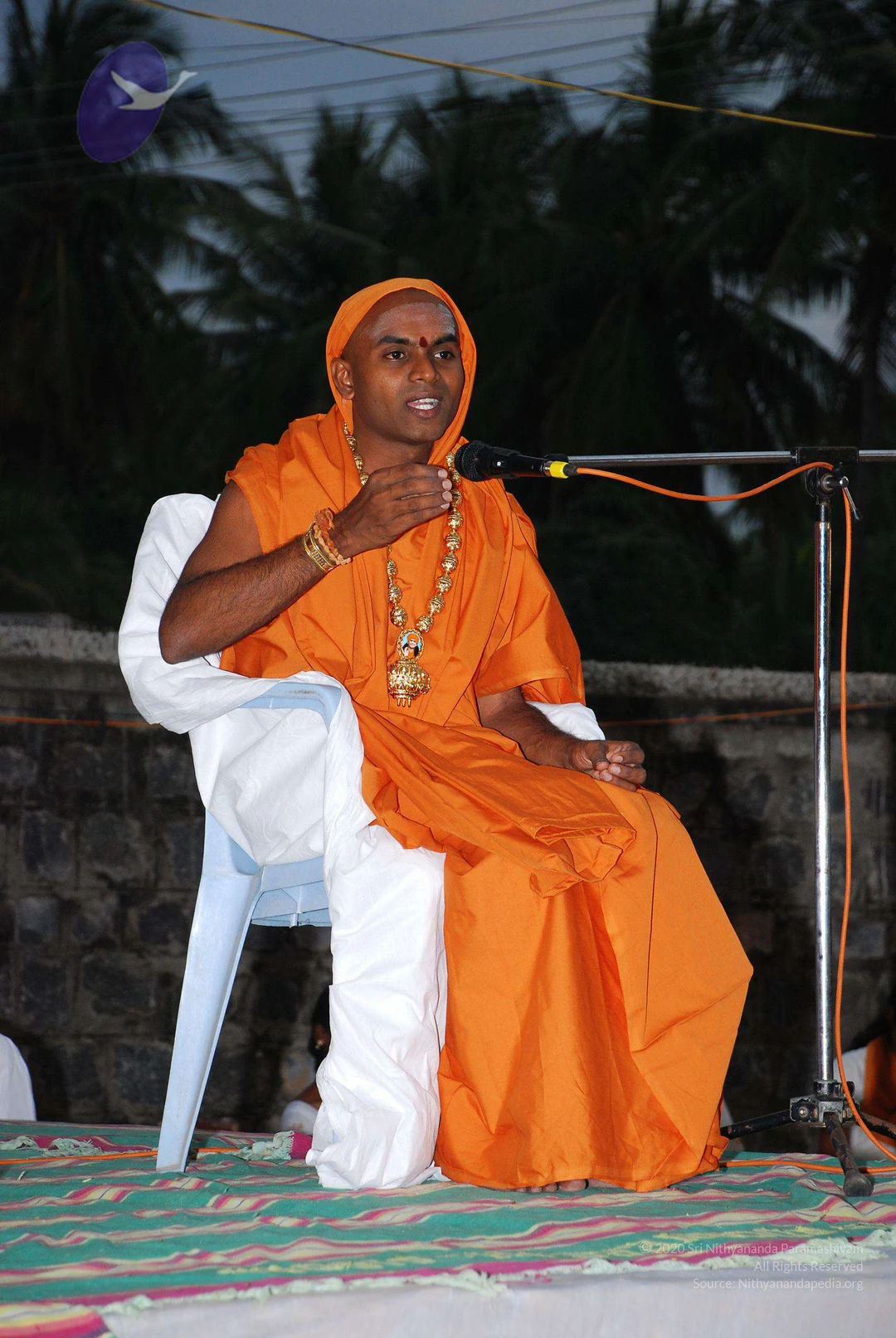
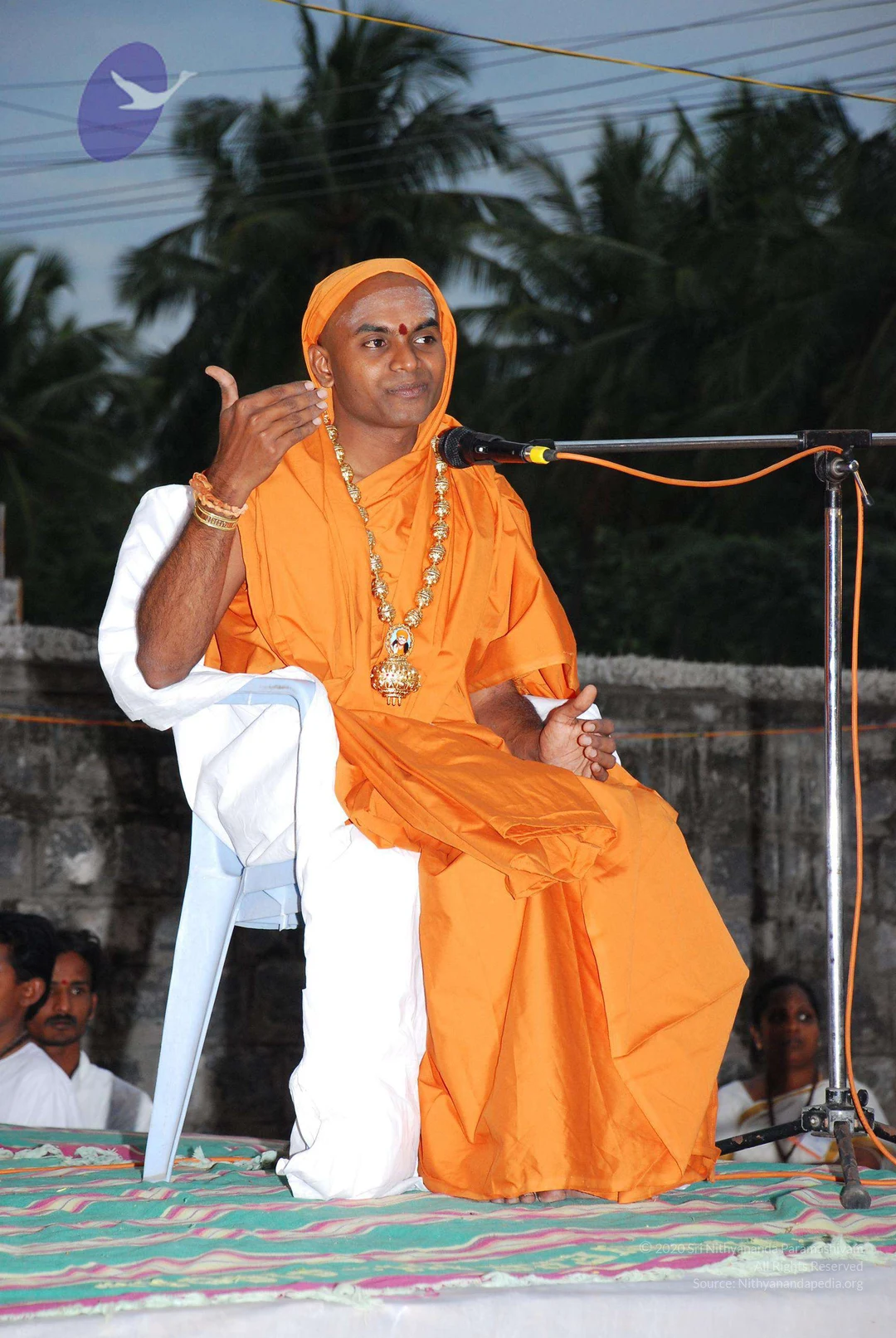
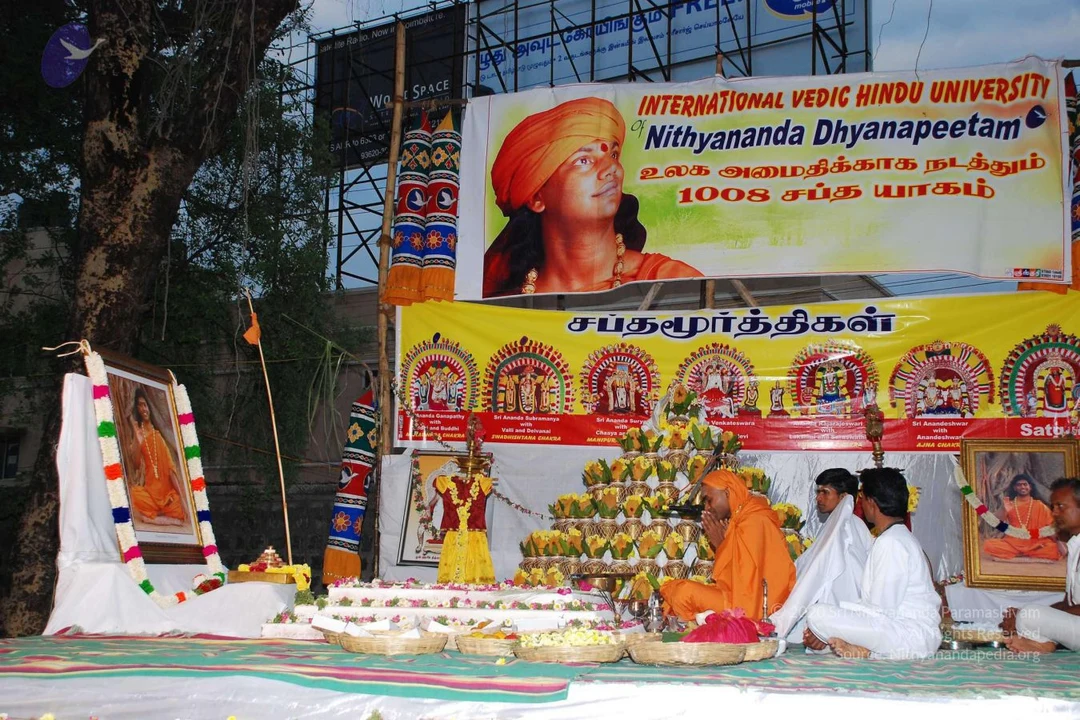
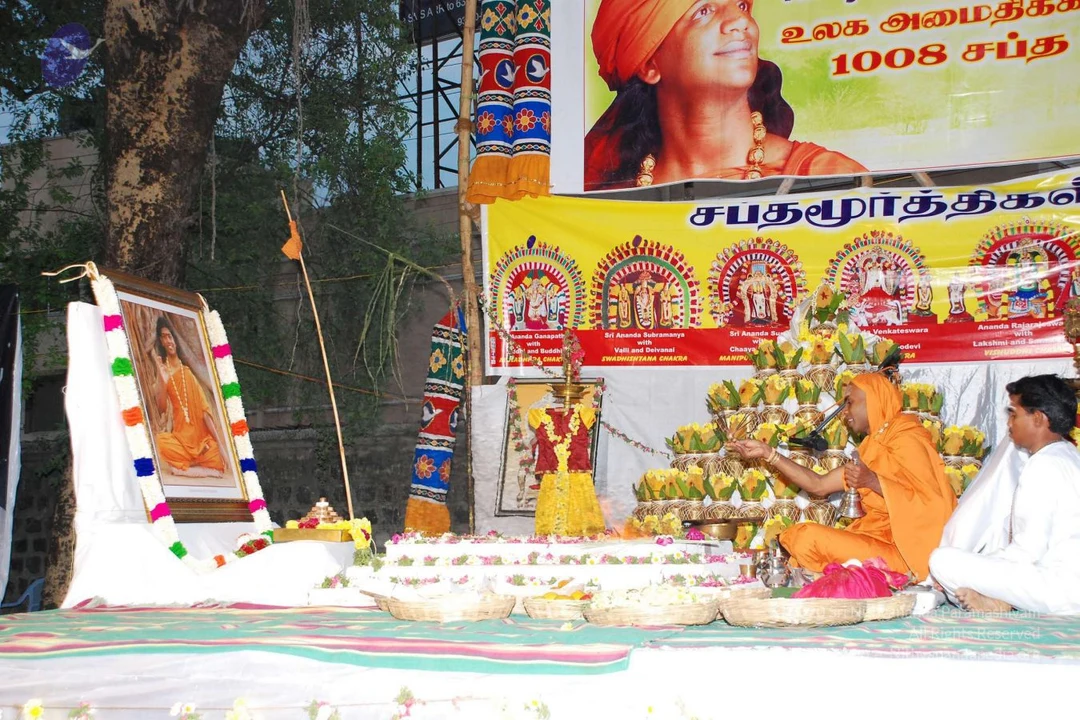
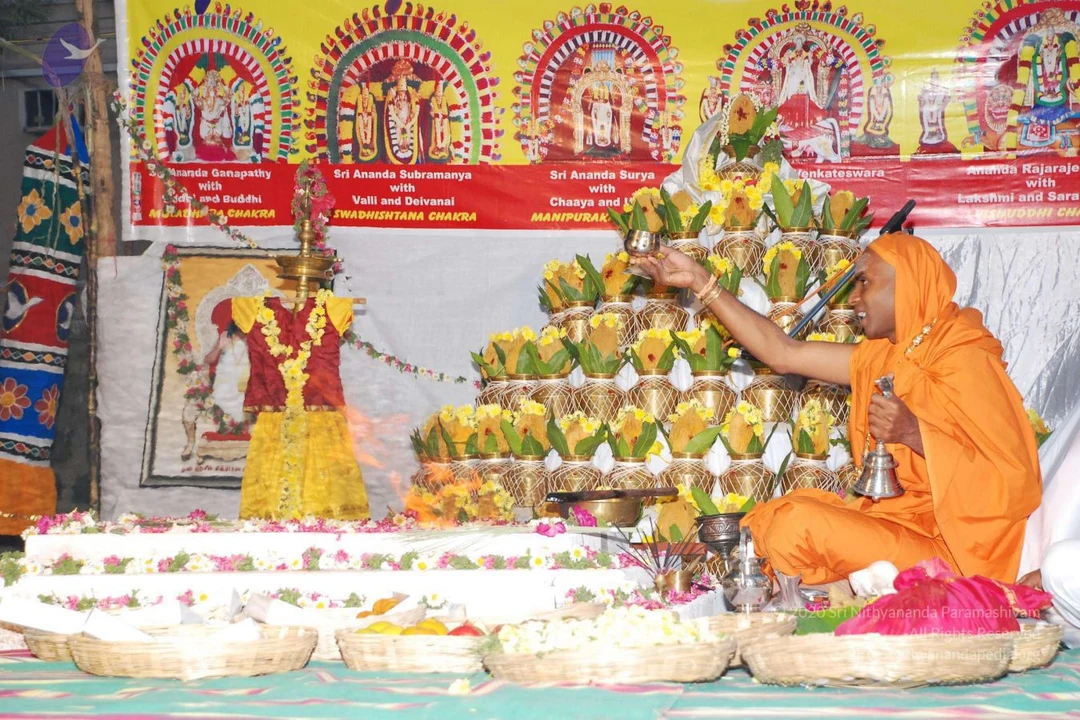
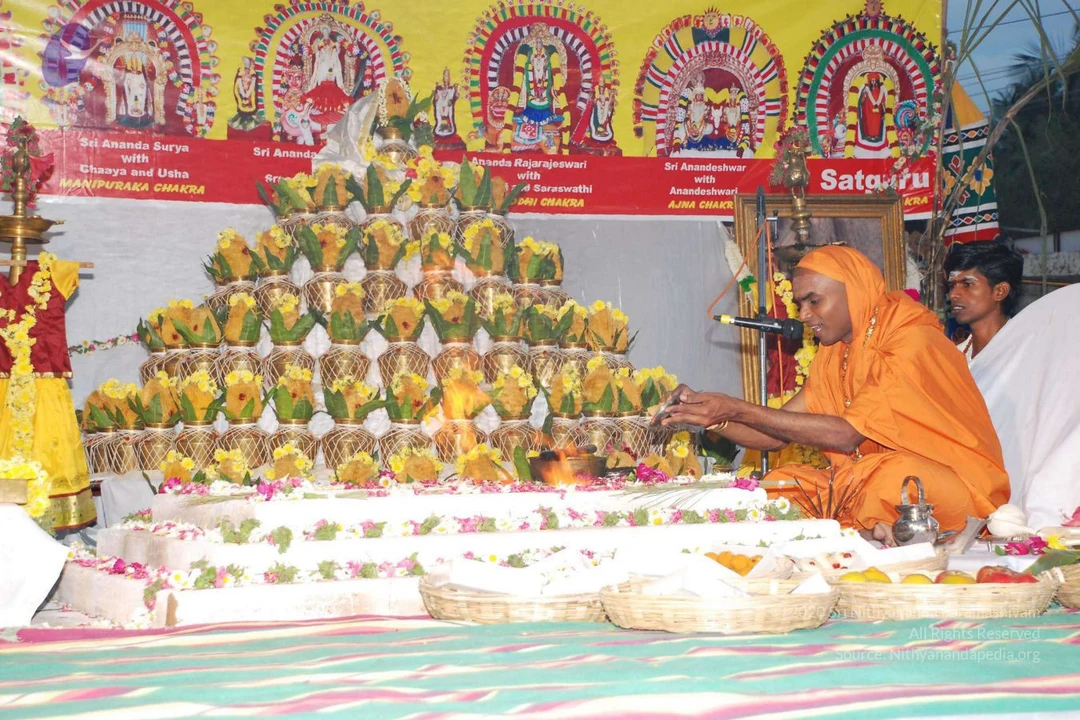
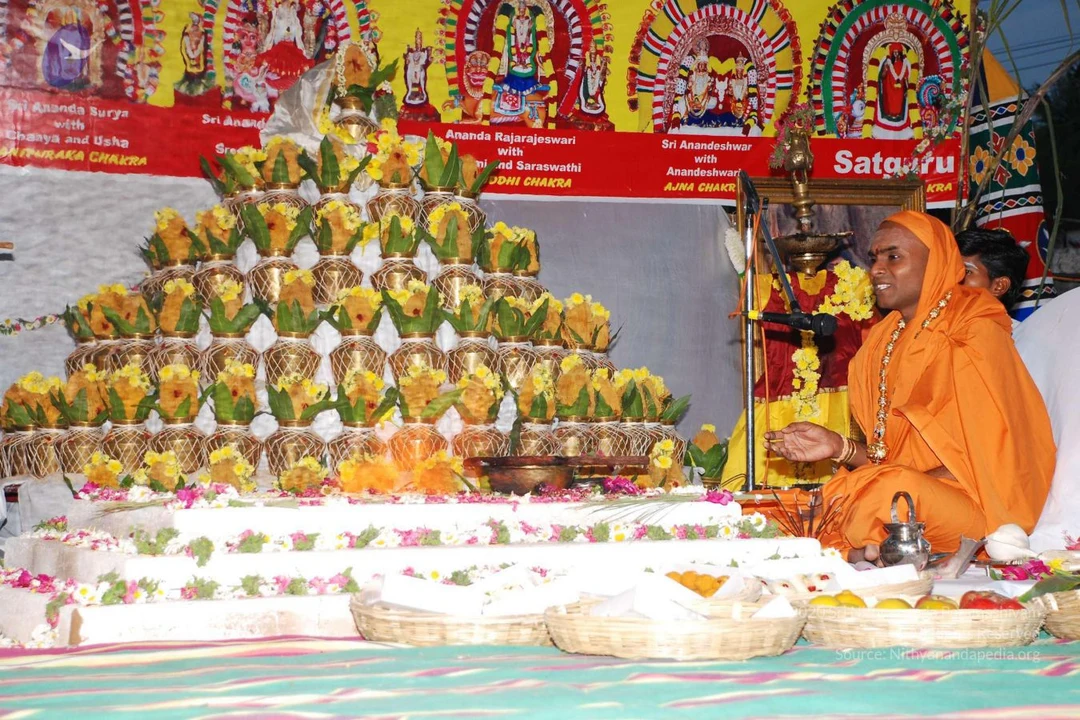
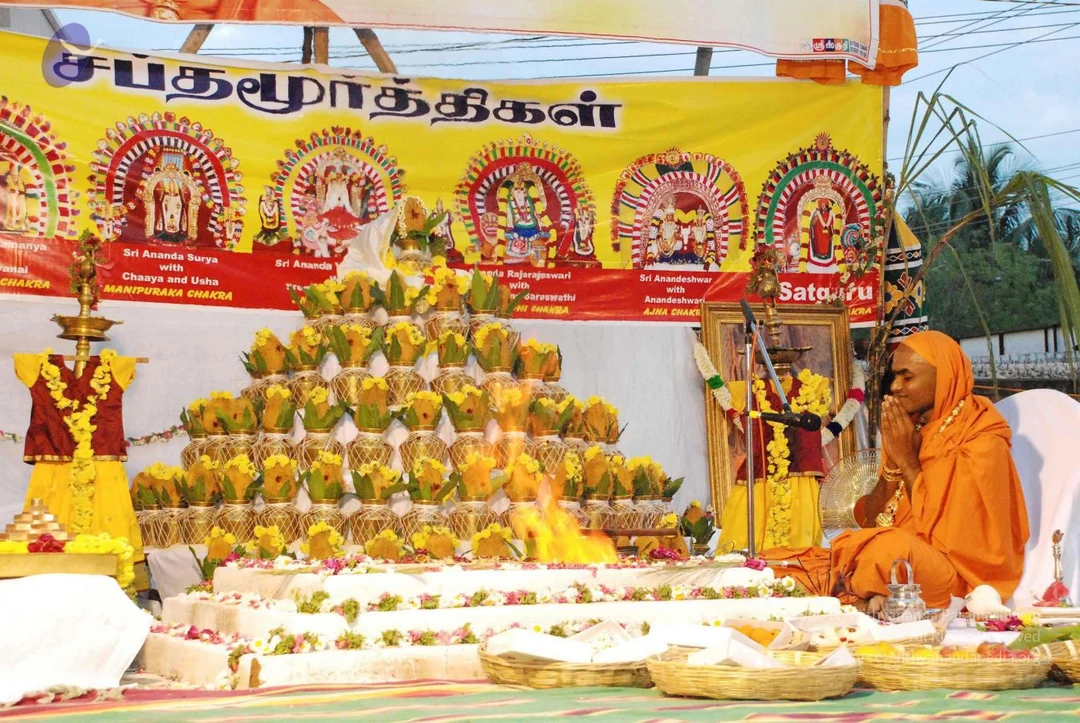
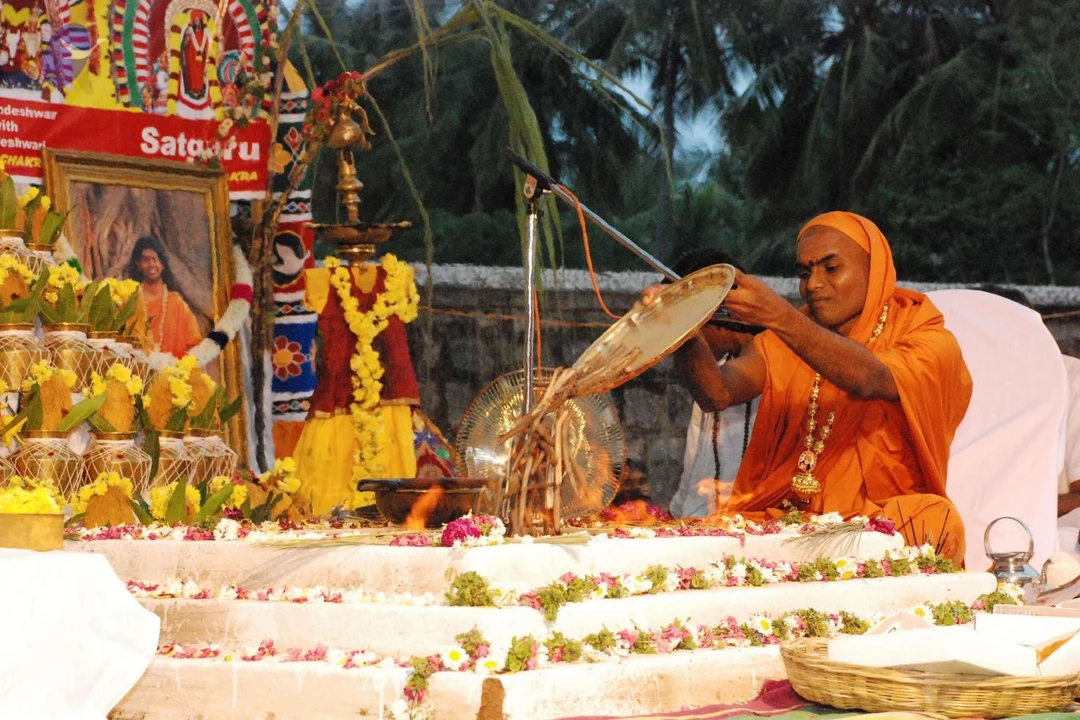
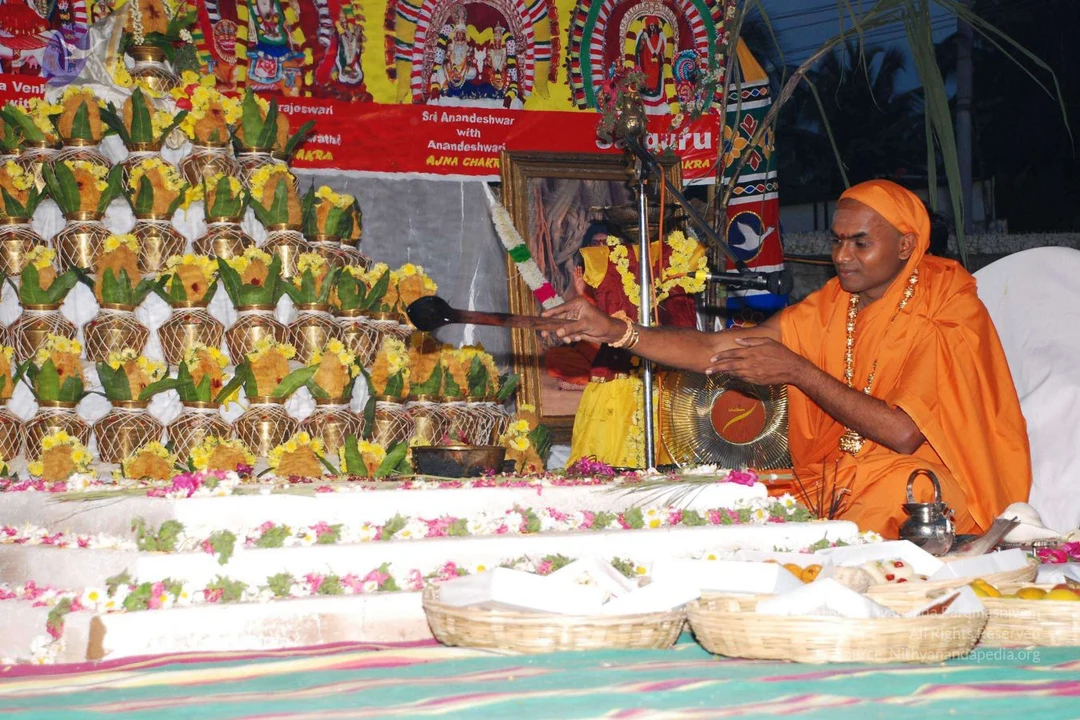
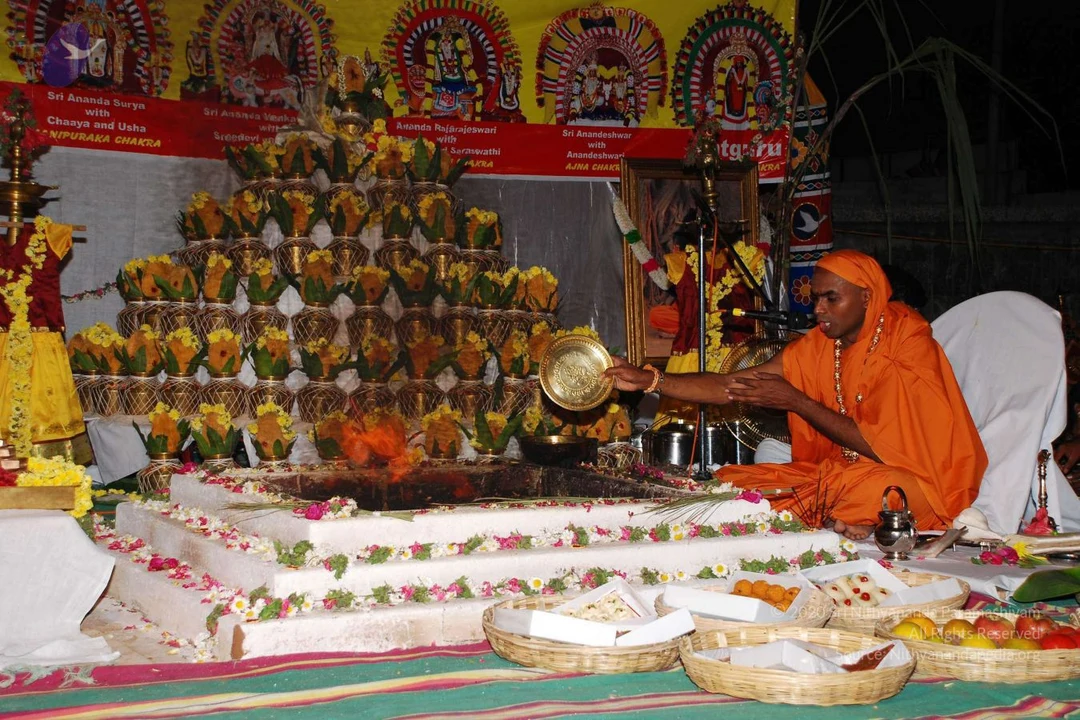
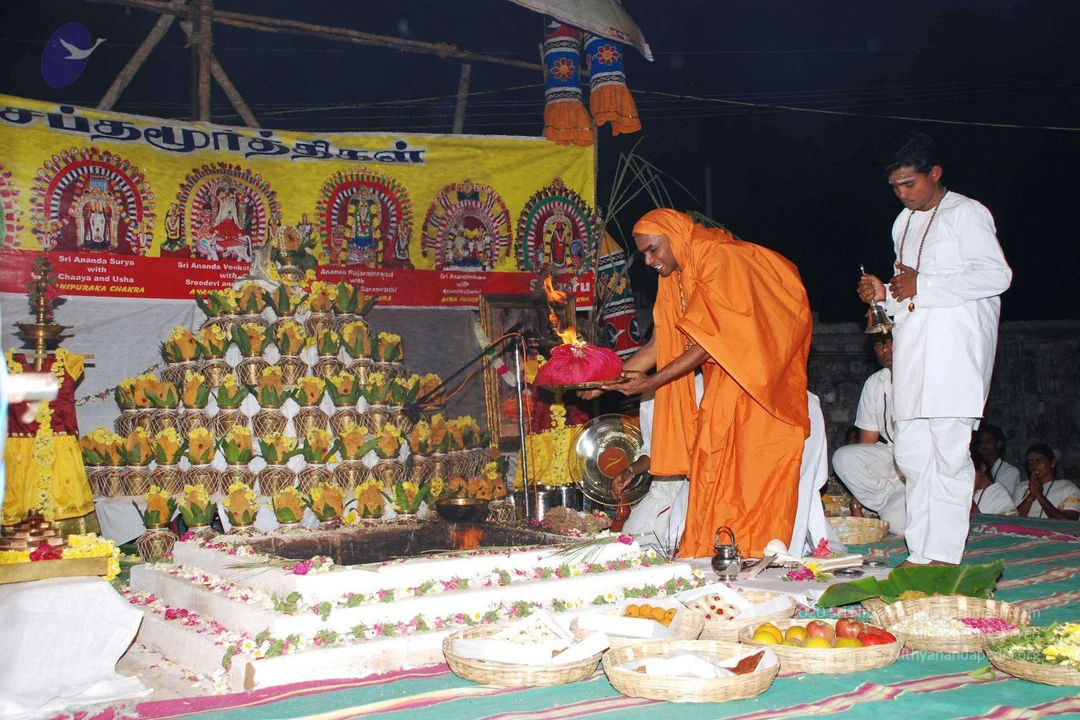
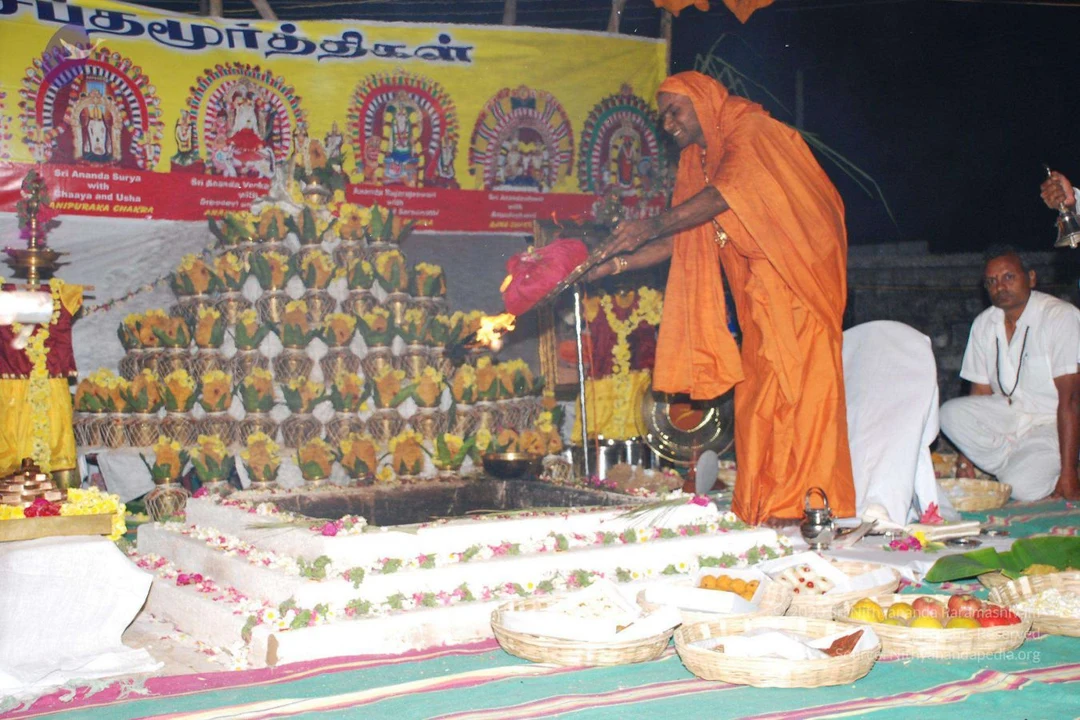
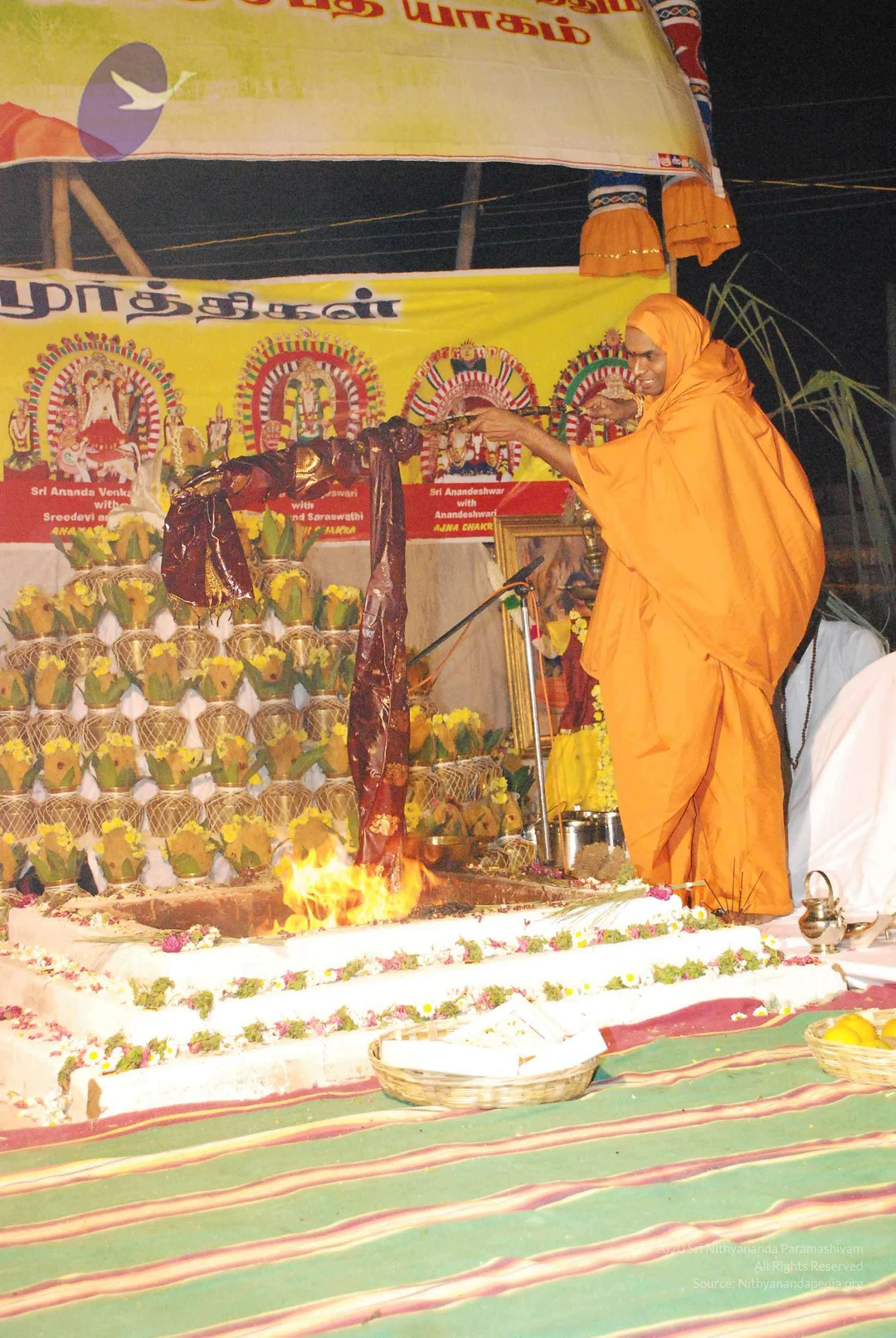
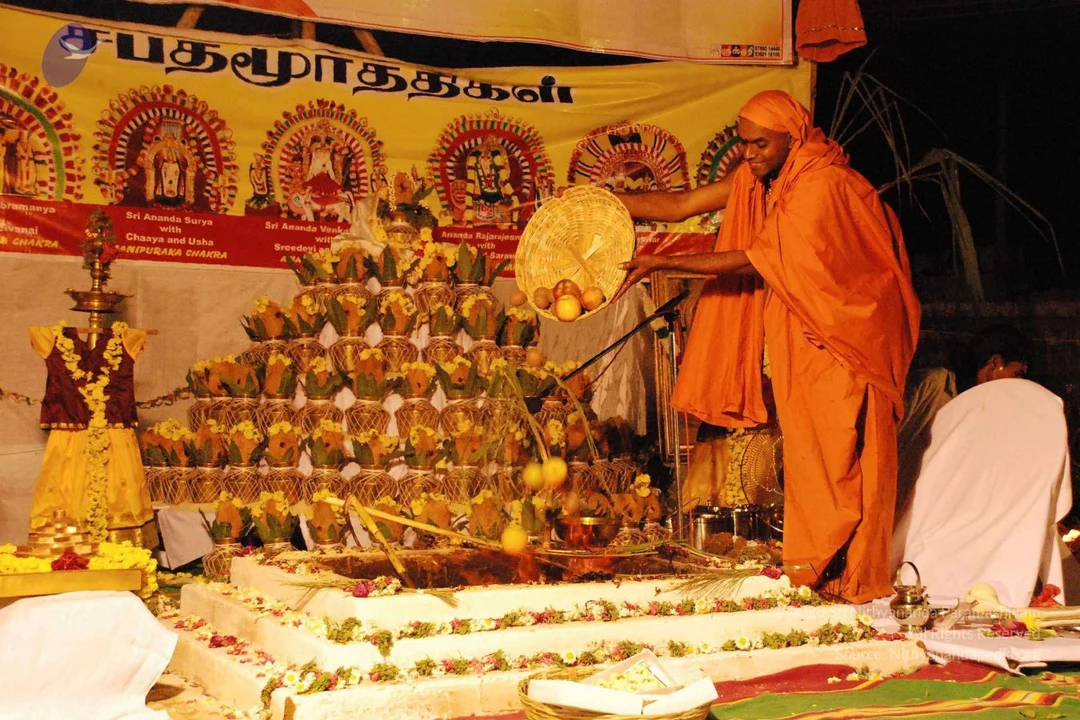
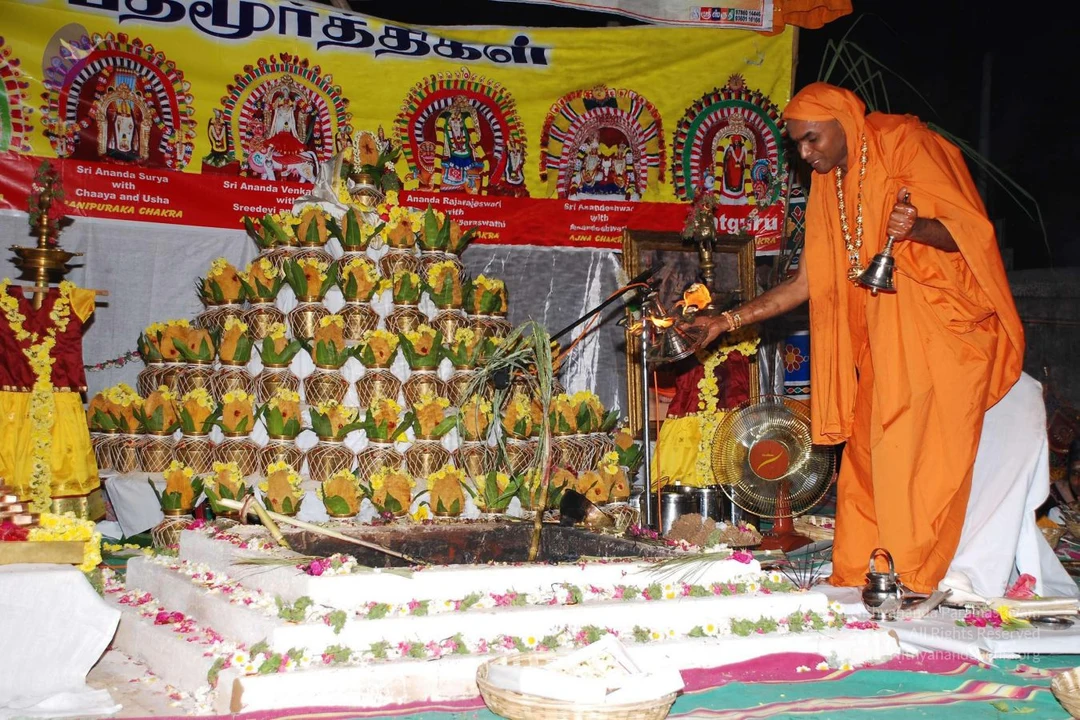
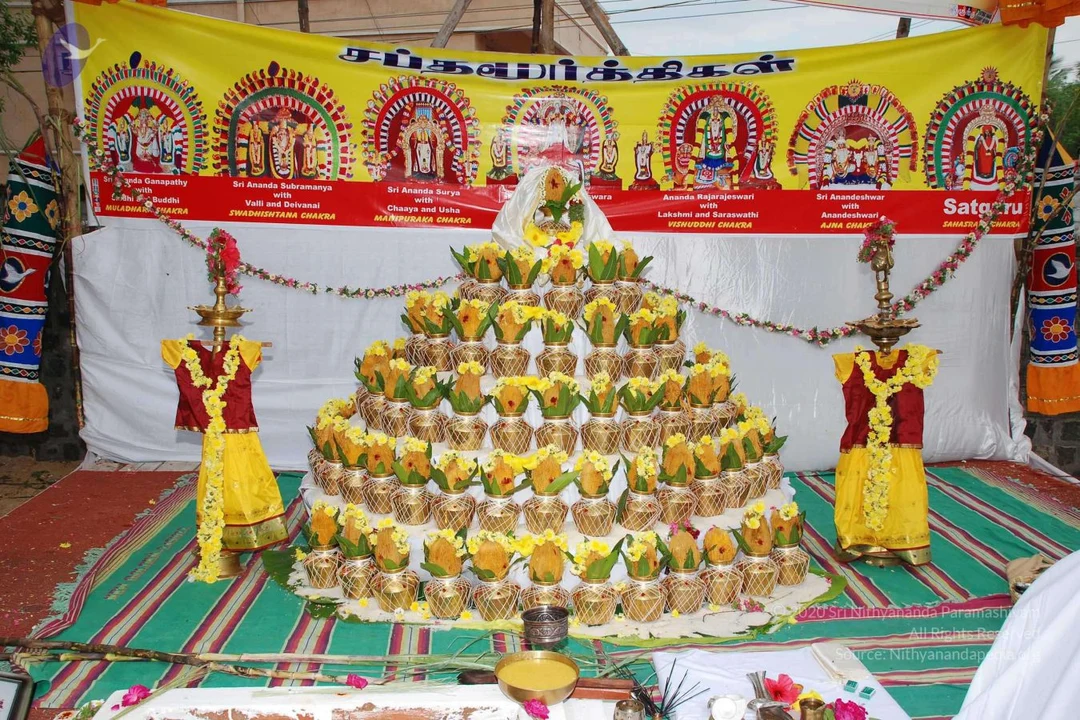
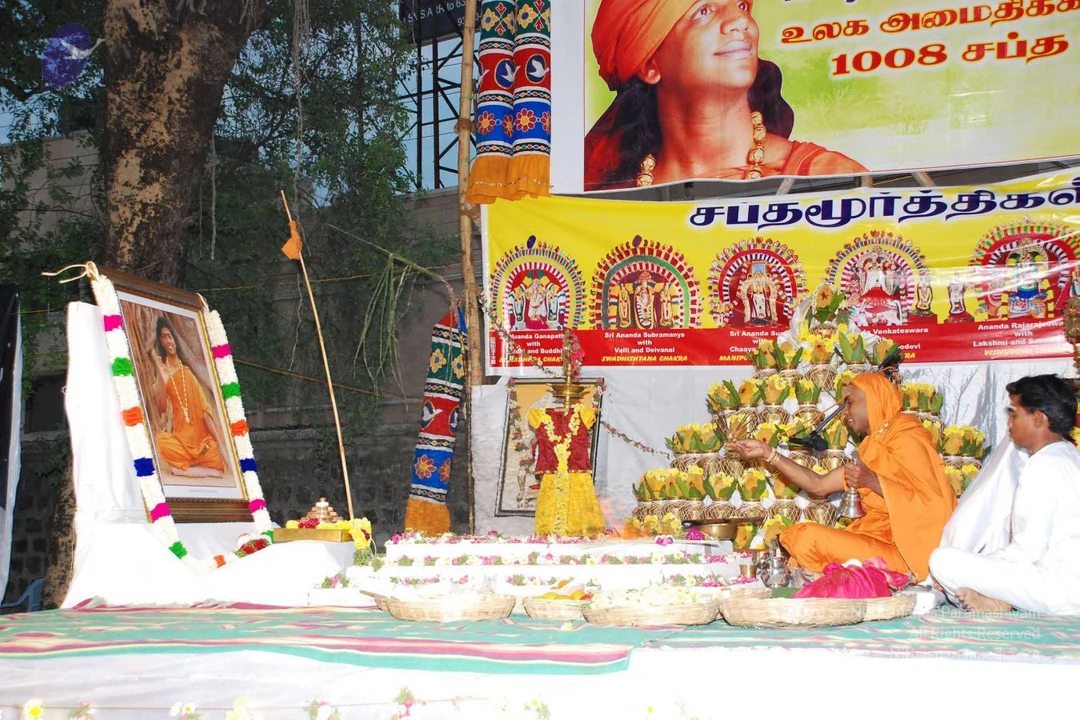
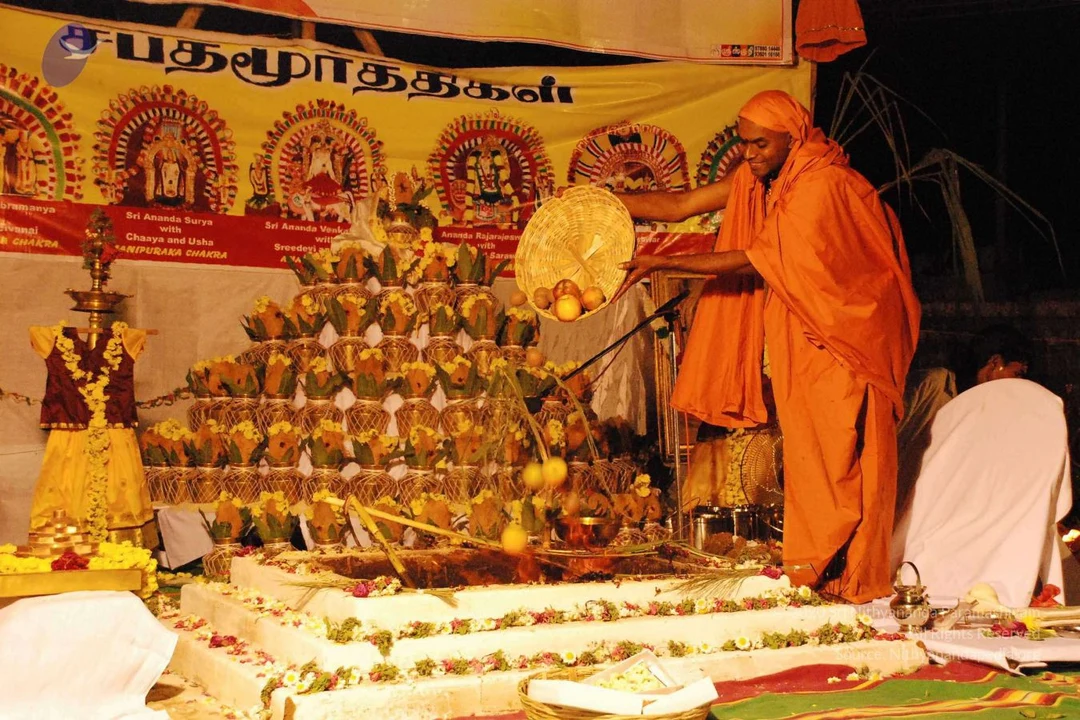
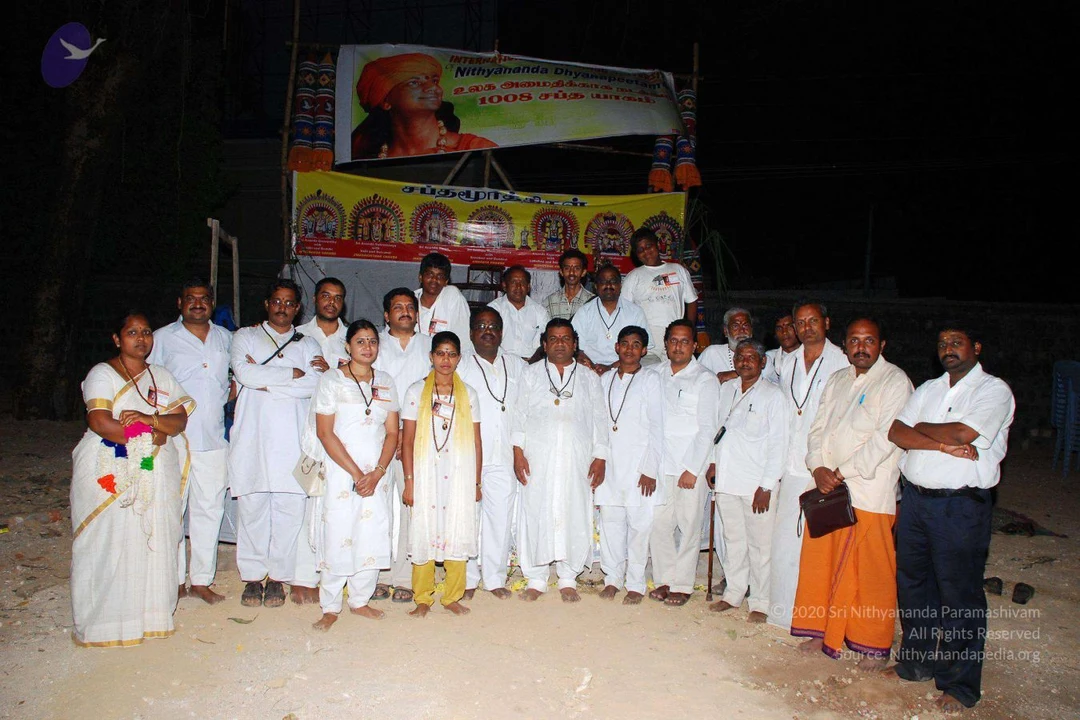
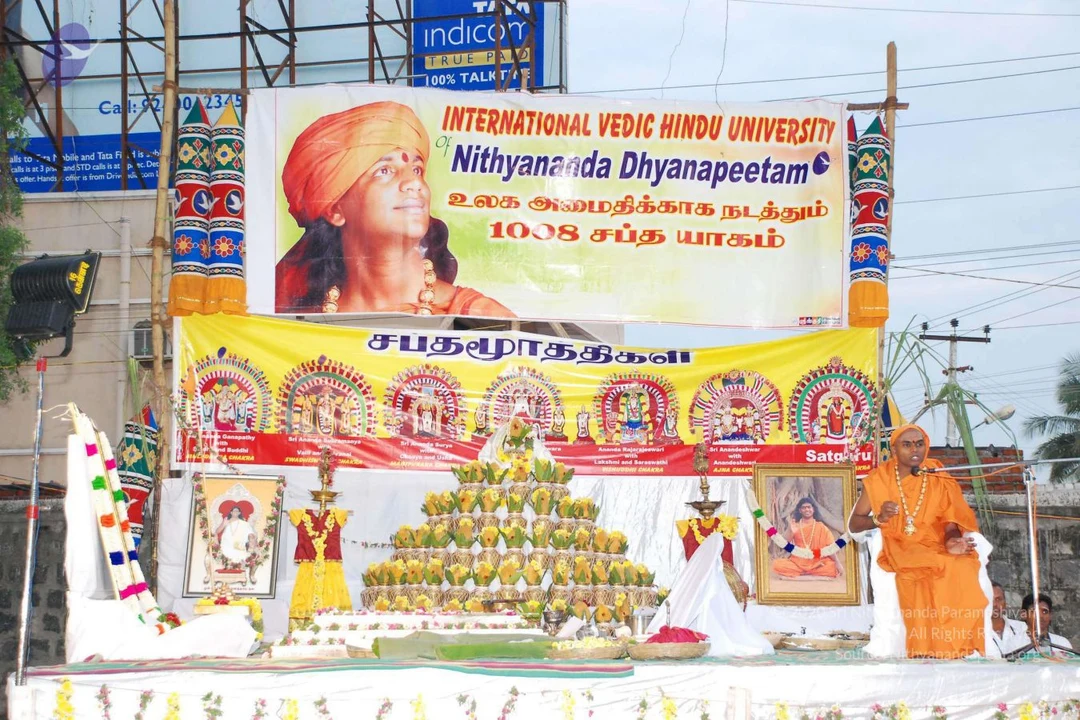
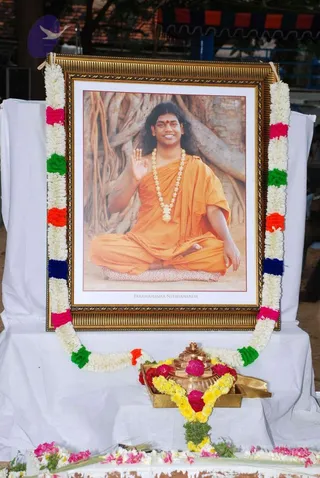
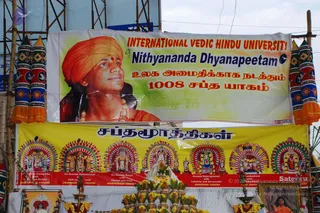
A photograph of a man in an orange saffron shawl and orange robe seated on a white plastic chair on a striped green-pink mat stage, speaking into a microphone on a metal stand with an orange cable. He wears a gold-toned necklace with a central pendant, a red bindi, an orange thread on his wrist and gold bangles, with his right hand raised in explanation. Behind him are palm trees and a stone wall, and two people in white sit at the stage edge. A purple bird logo appears at upper left. The man in orange matches the a person appearance cues of saffron clothing and ornate adornments, so he is described as a person, seated in discourse.A photograph of a ritual display at an outdoor venue. A large pyramid of tiered brass pots, each wrapped in woven netting and topped with yellow flowers and green leaves, is arranged on a white cloth atop a striped mat. Two standing brass lamps flank the arrangement, one on each side, each garlanded with yellow and pink flowers. Behind it hangs a yellow and red banner with painted panels of deities in arched frames, labelled with Tamil and English names and chakra designations. Brass vessels, flowers and a bowl of yellow liquid sit in the foreground. No people are visible in the frame.A photograph of an outdoor puja at the 1008 Sapthayagam in Salem, Tamil Nadu. A priest in orange robes and an orange head wrap sits cross-legged at right, pouring liquid from a small vessel over a tiered arrangement of brass kalasha pots decorated with green mango leaves and coconuts. A second man in white sits beside him. At left, a framed portrait of a long-haired figure in orange robes and beaded necklaces rests on a white draped platform with garlands of pink, white and orange flowers. Behind, a large banner shows a figure in orange with a turban, and a yellow banner shows deity murtis in arches. Flower-filled baskets and offerings sit on the platform, and a lamp with a garland stands in the centre. A tree and tall bamboo poles frame the scene.

December 02 2007

Original wiki page
Contents

Title:

How can we determine if a particular guru is right for me?

Description:

From the works of Living Enlightened Master Paramahamsa Nithyananda. In this clip taken from discourses titled, "Experience Through Your Eyes & Experience Your Aura", Swamiji answers a question about new age gurus and the gurus from the east who amass large followers through miracles. Swamiji tells us that the acid test to determine if a guru is right is: is the association with this person adding: 1. Intelligence, 2. Awareness and 3. Bliss. If either of the above three attributes are enhanced one can go behind the guru in question. Swamiji also provides clarity on this topic through the beautiful story of Yaksha's jar.

Link to Video:

VideoAudio

Photos

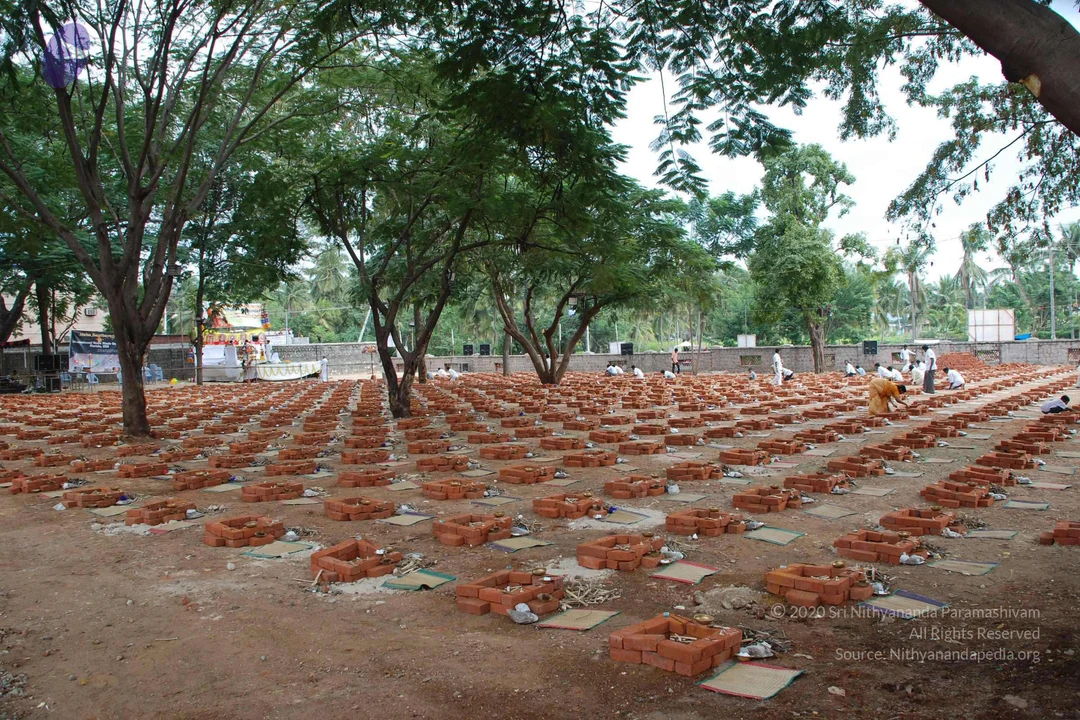
1008 Sapthayagam, Salem, Tamil Nadu, India
Photos from this day

View all 48 photos
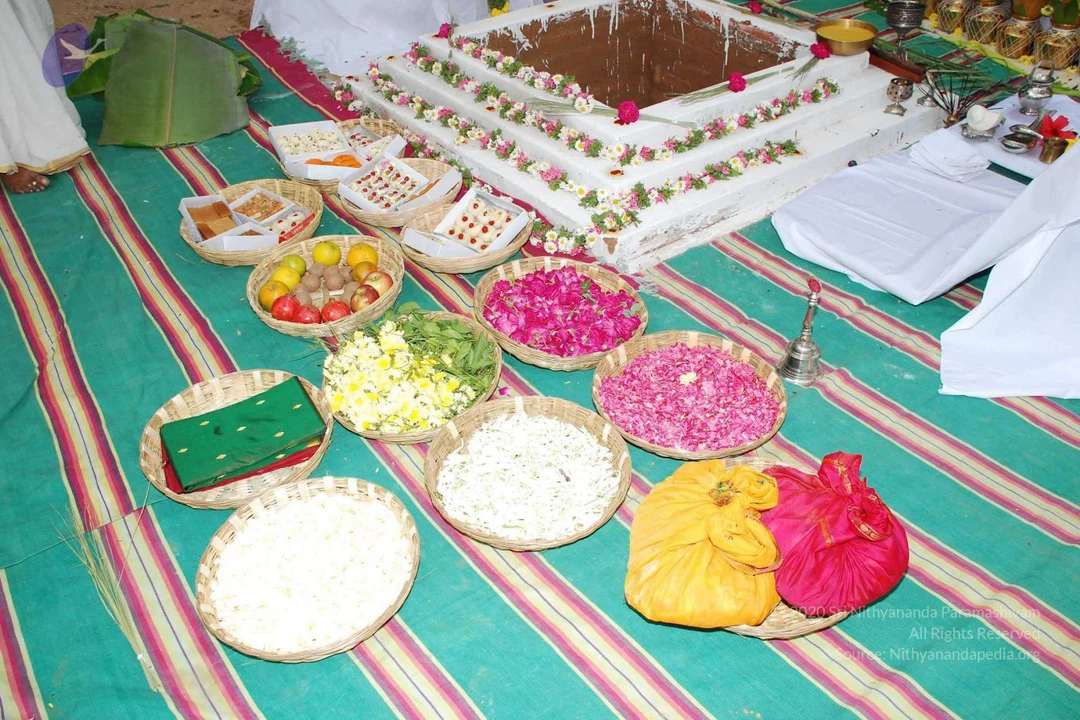
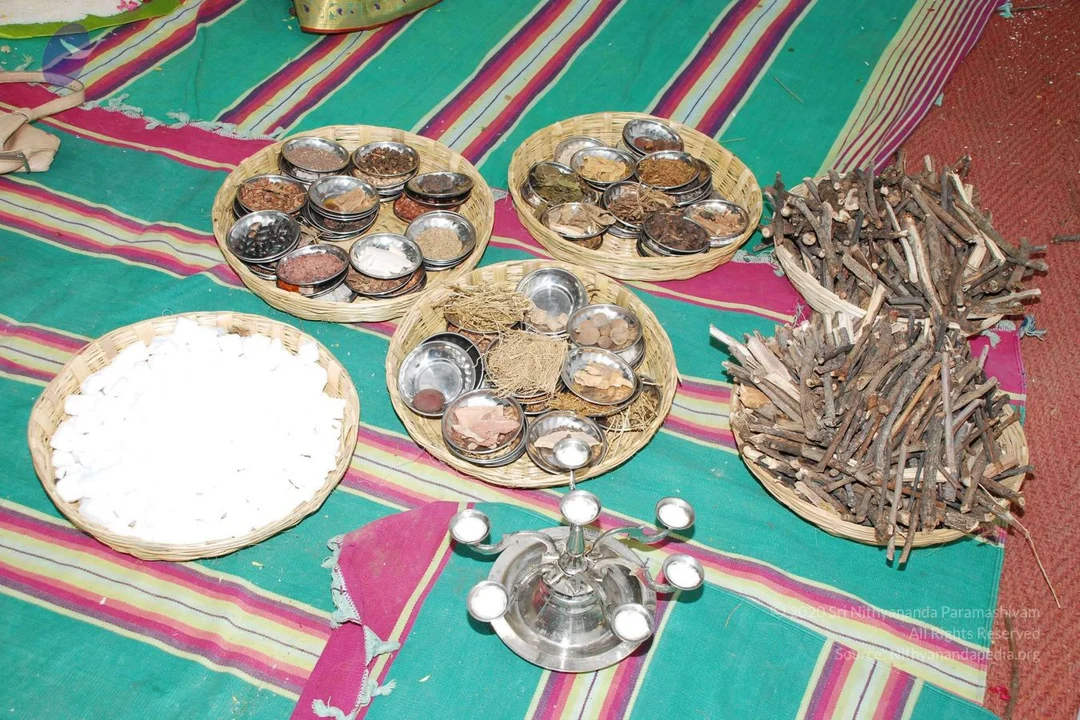
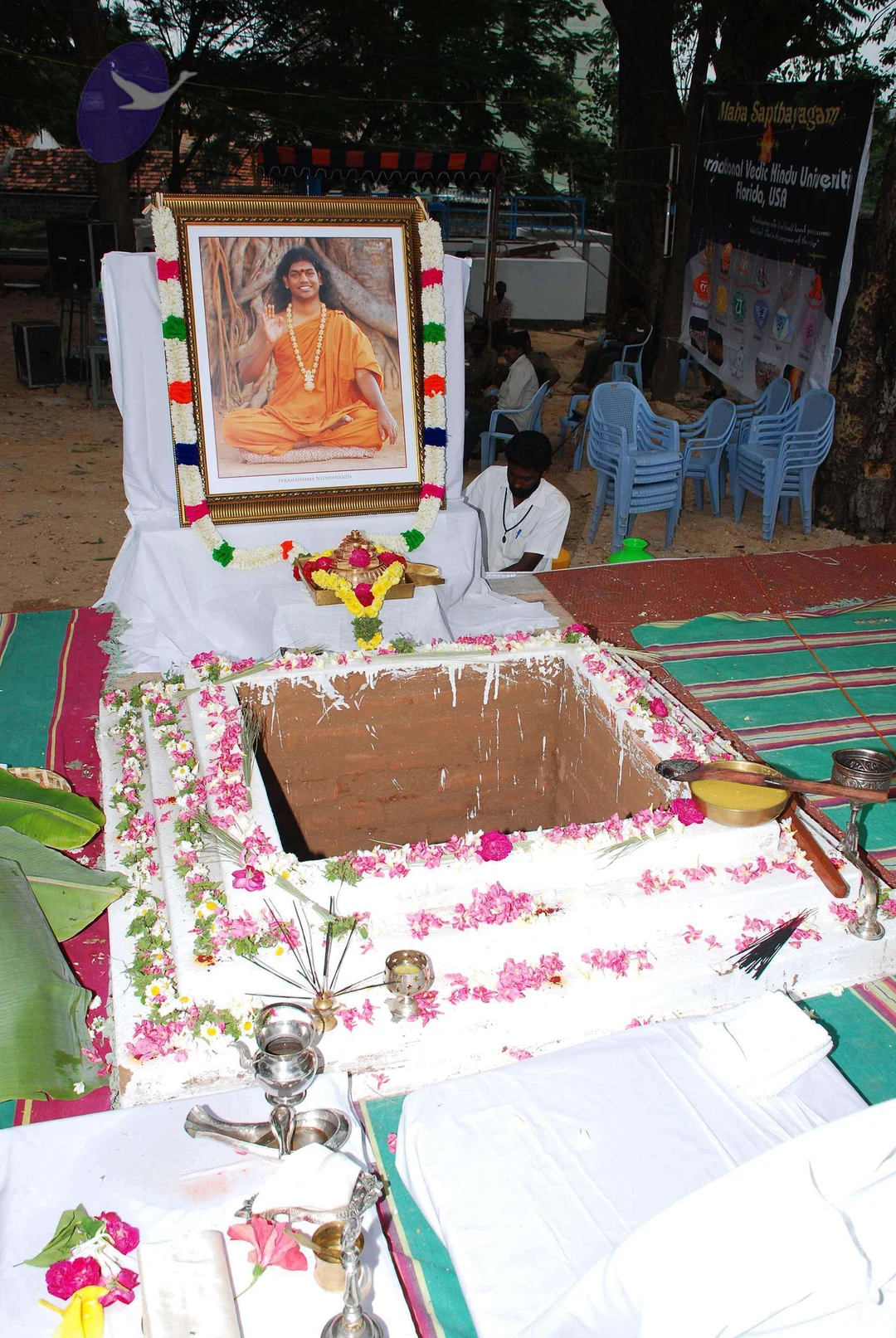
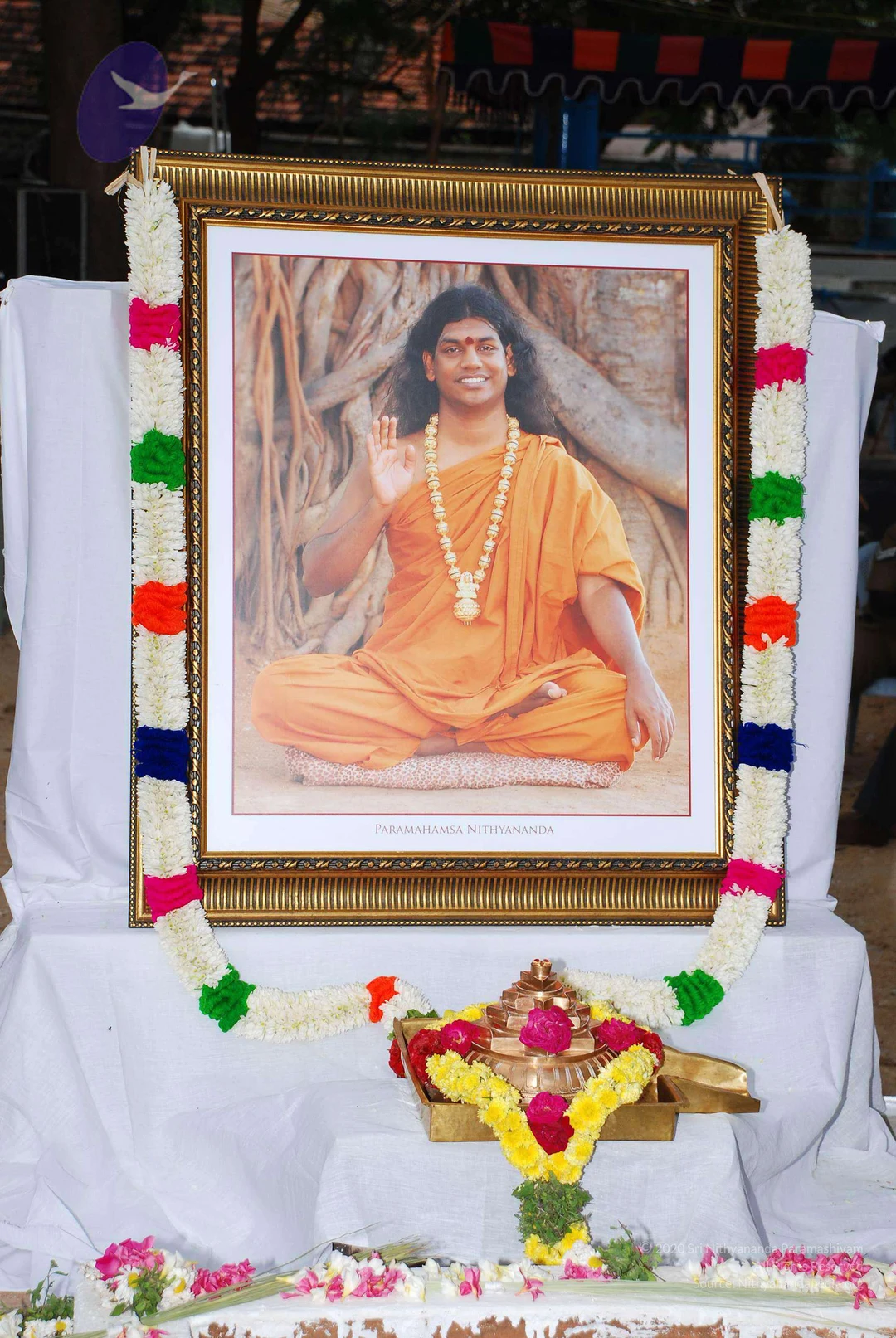
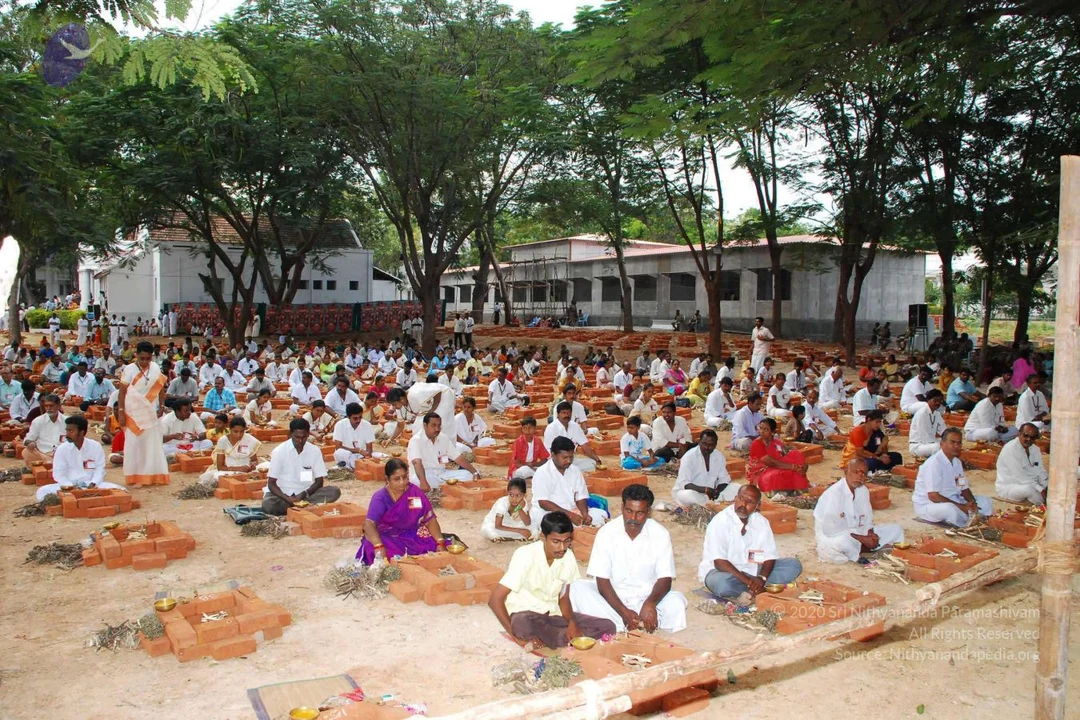
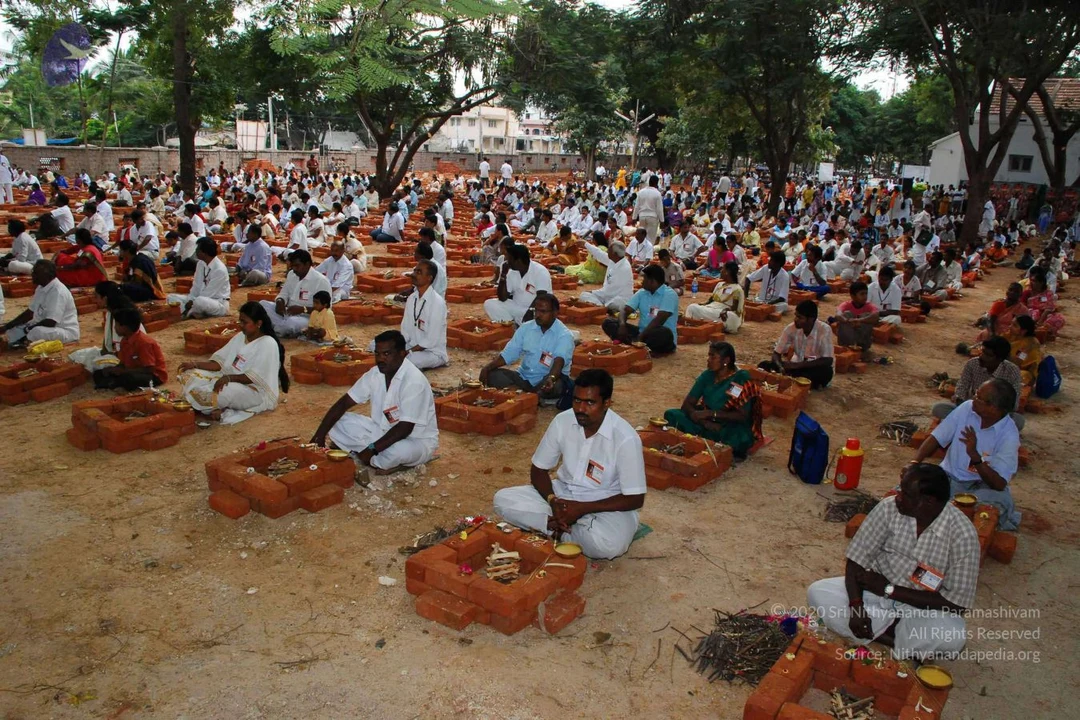
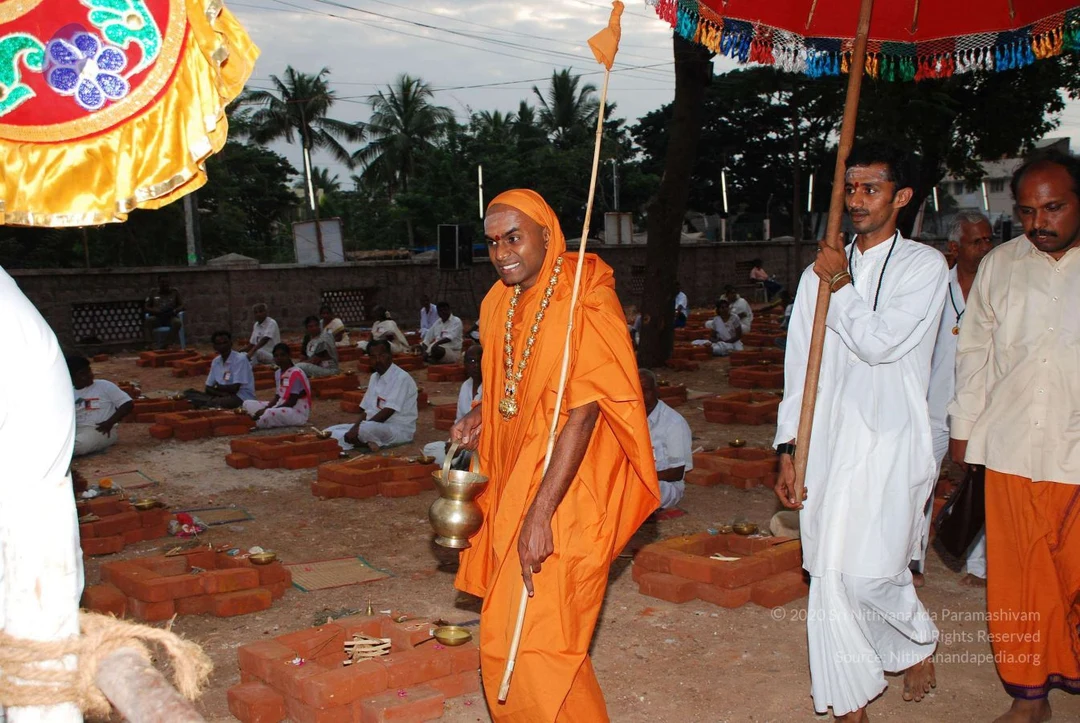
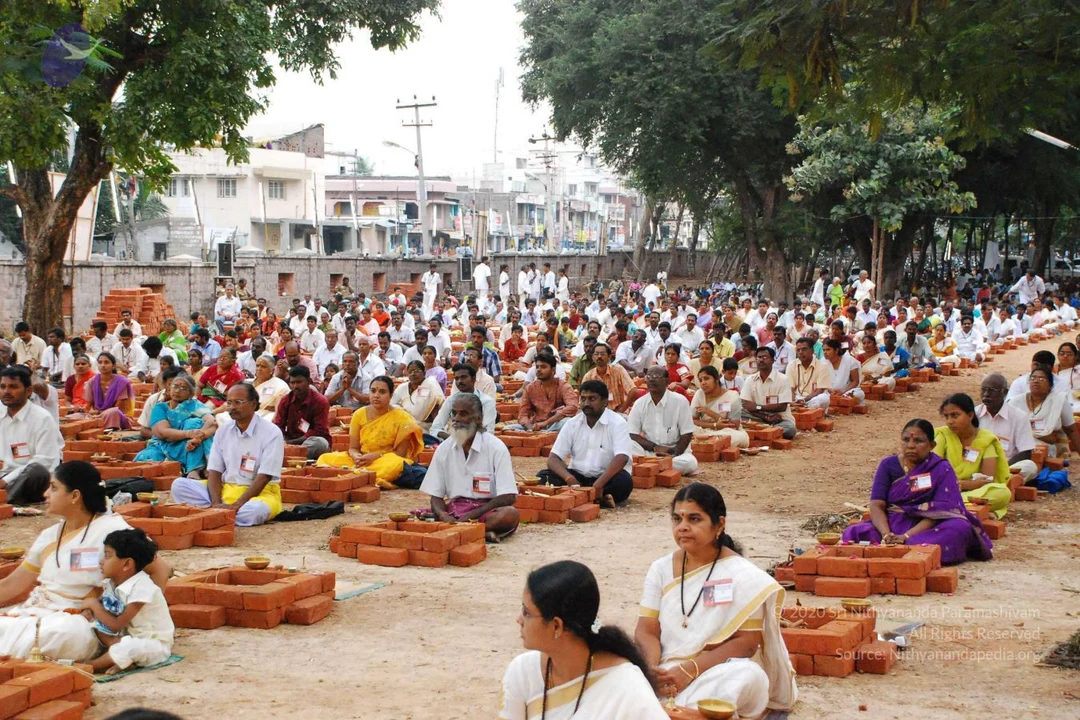
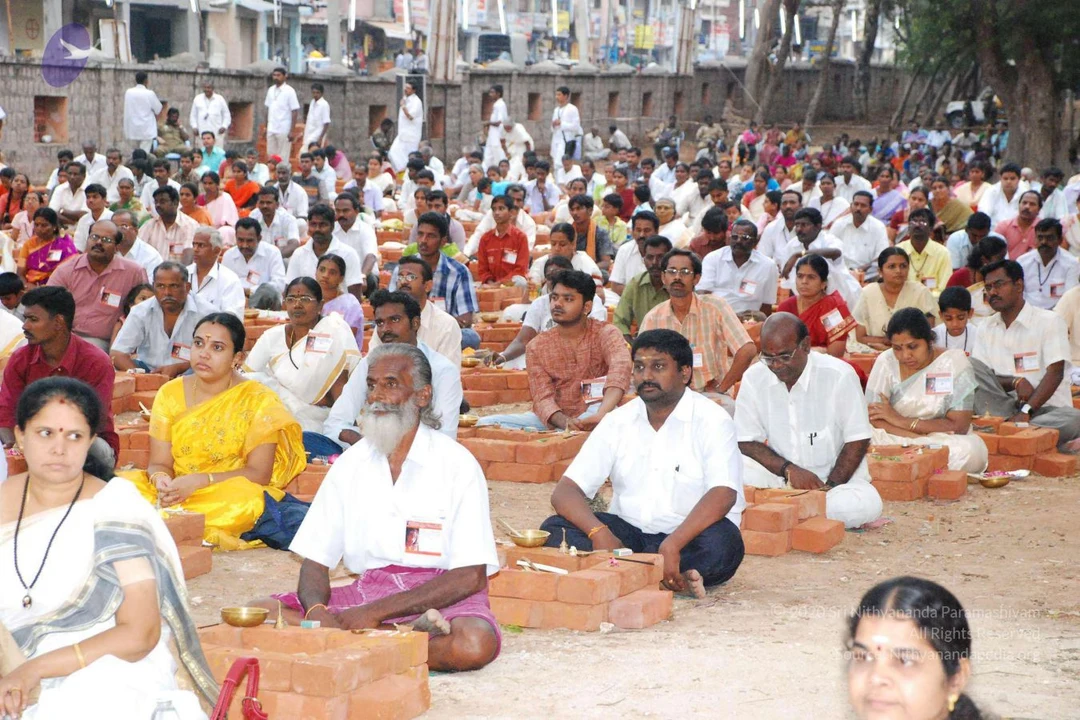
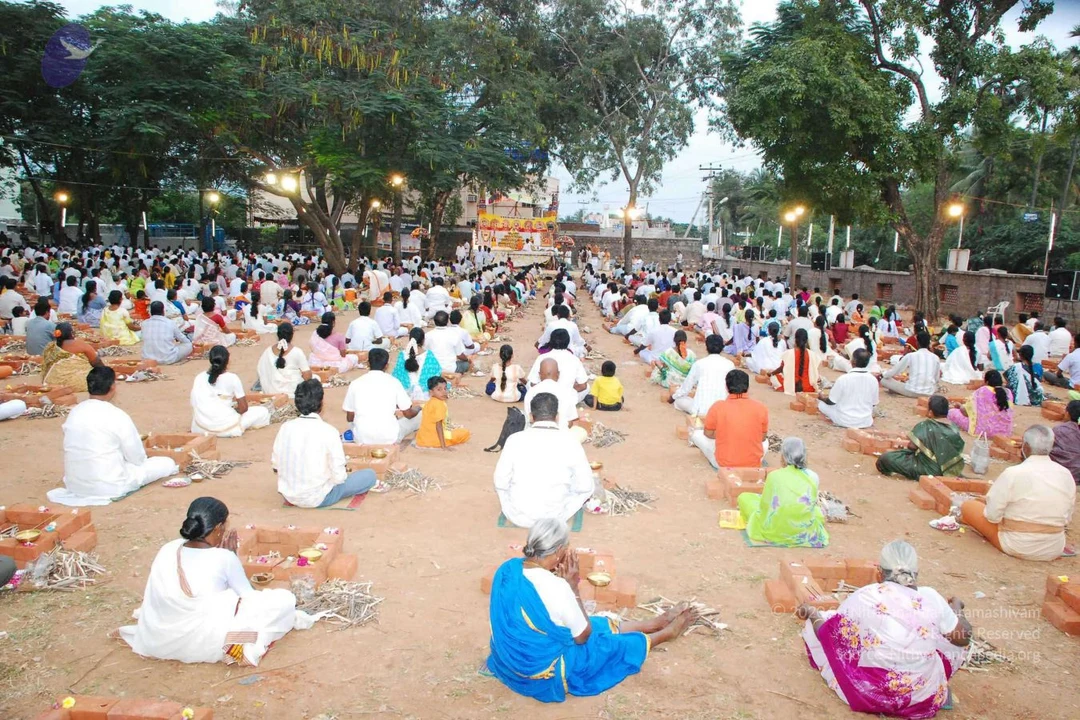
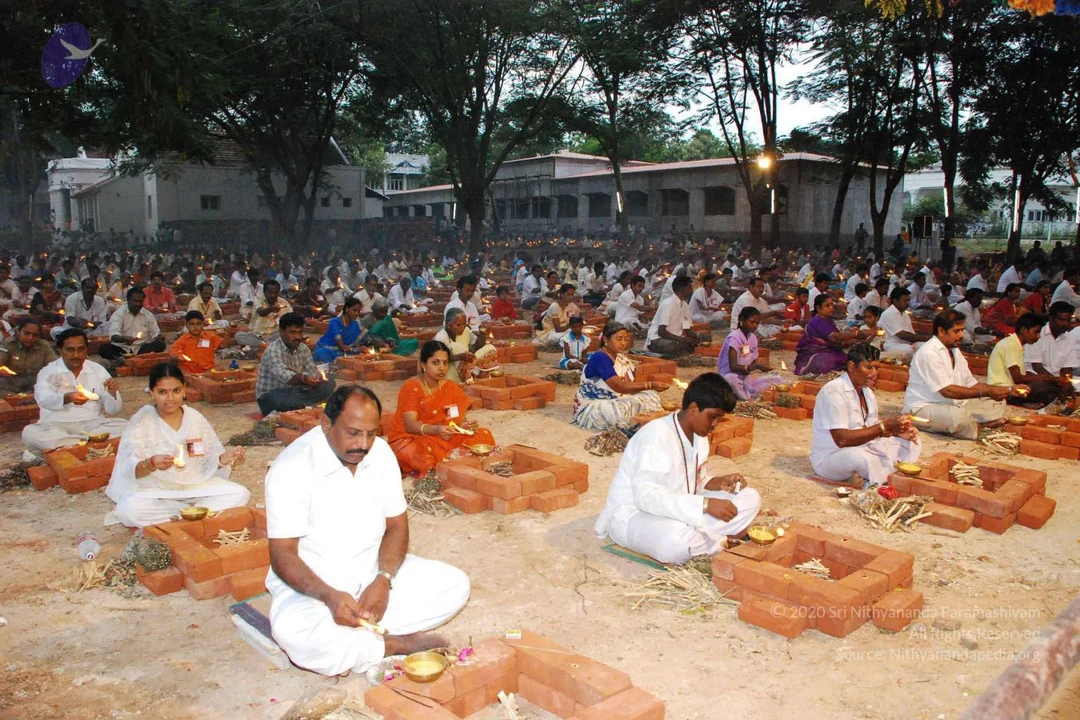
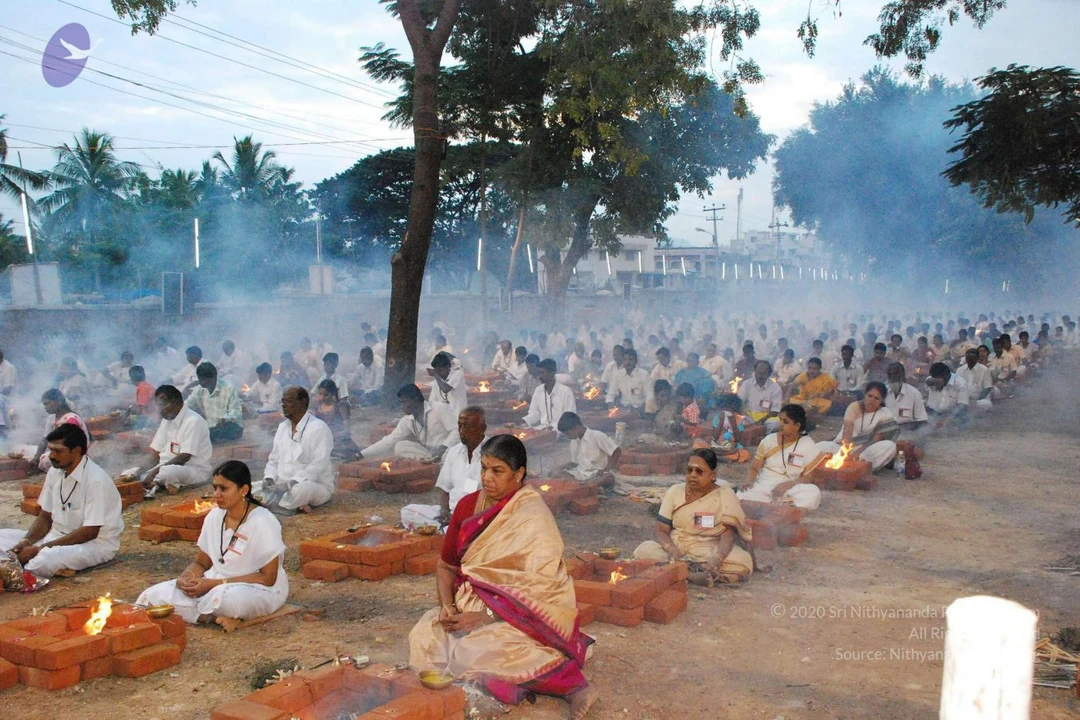
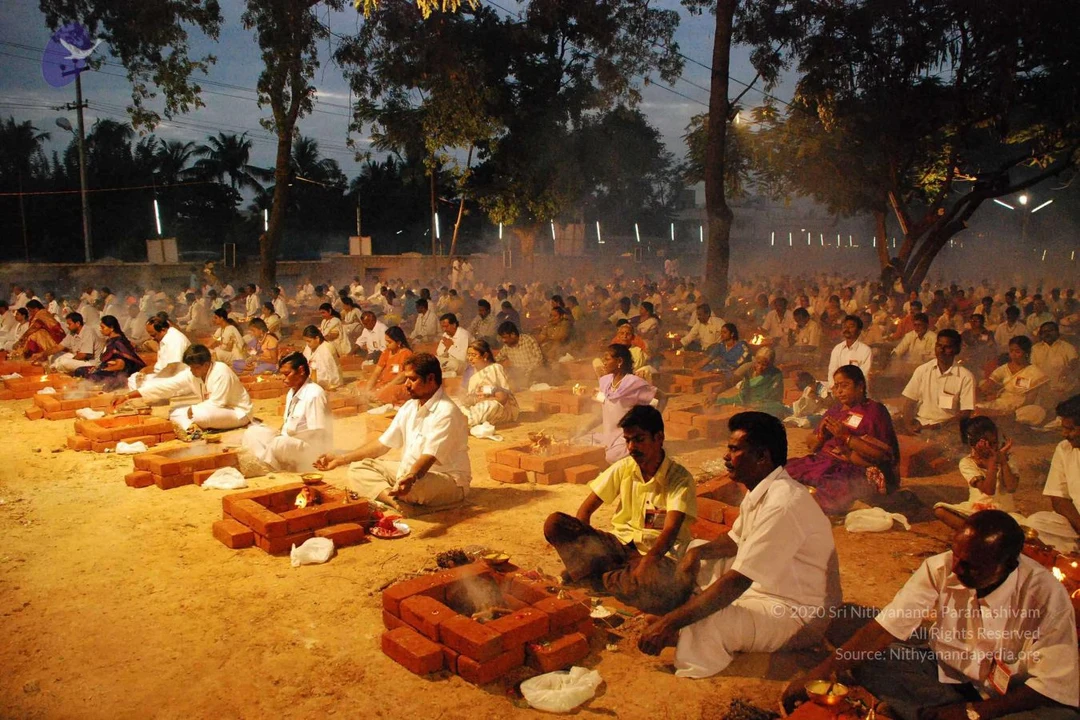
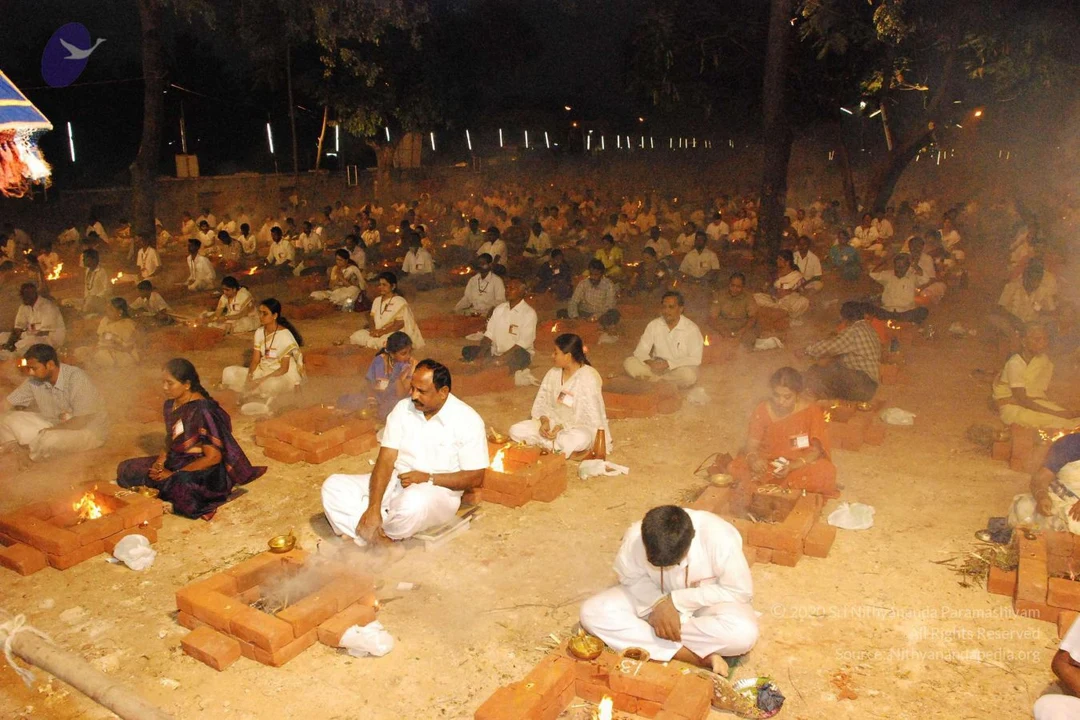
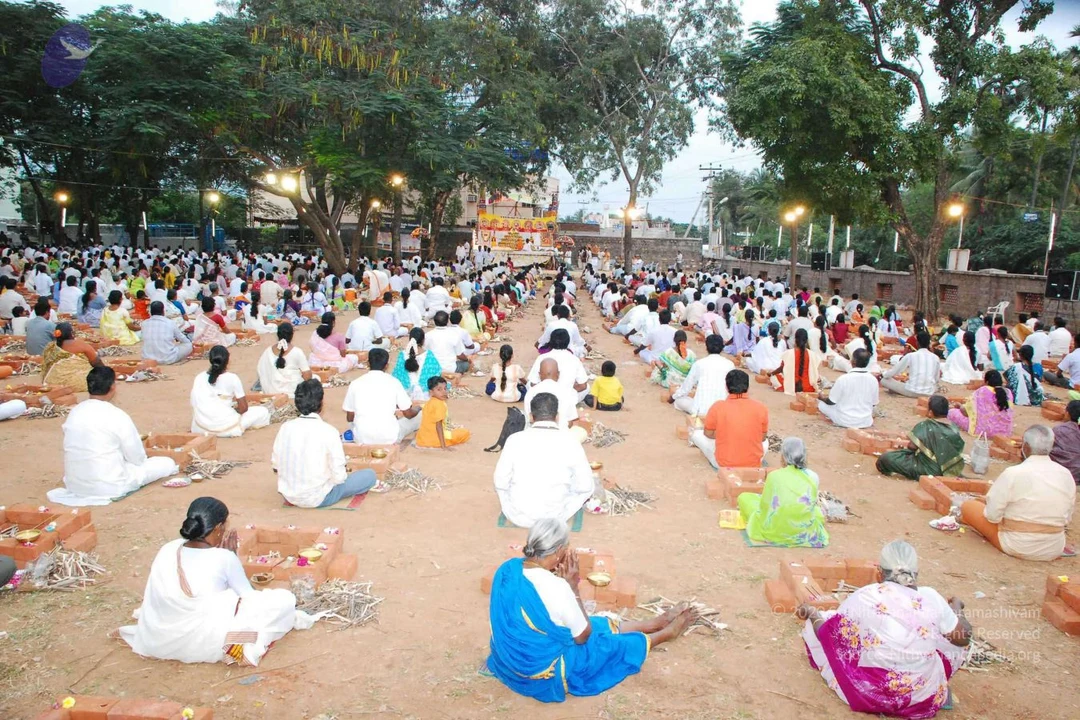
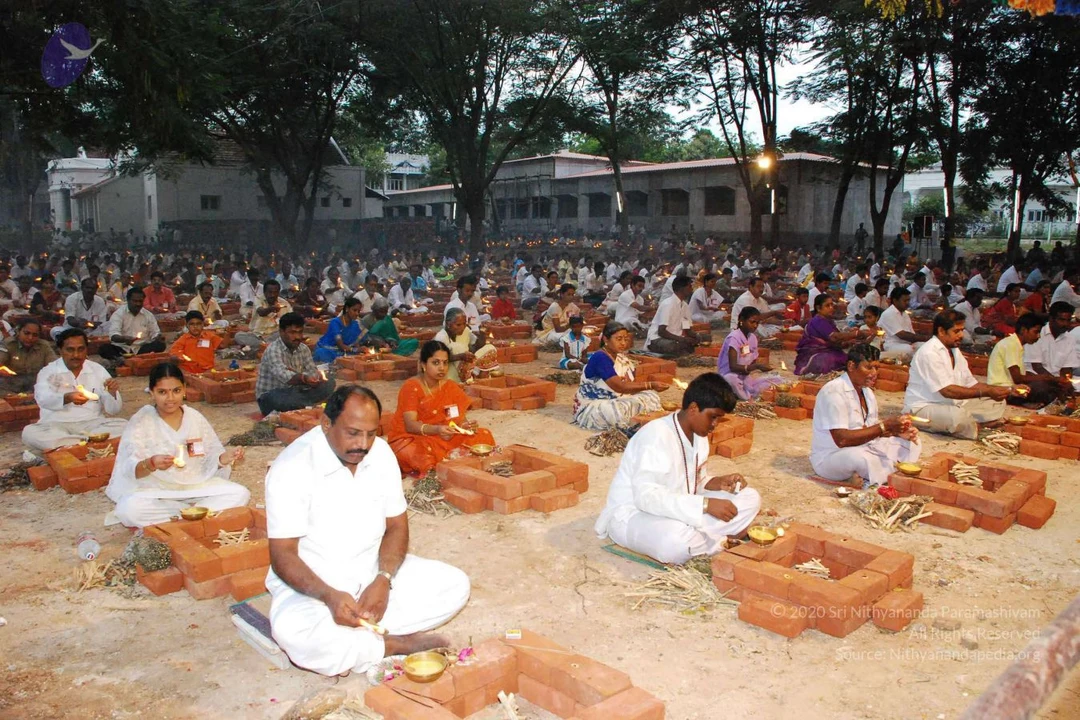
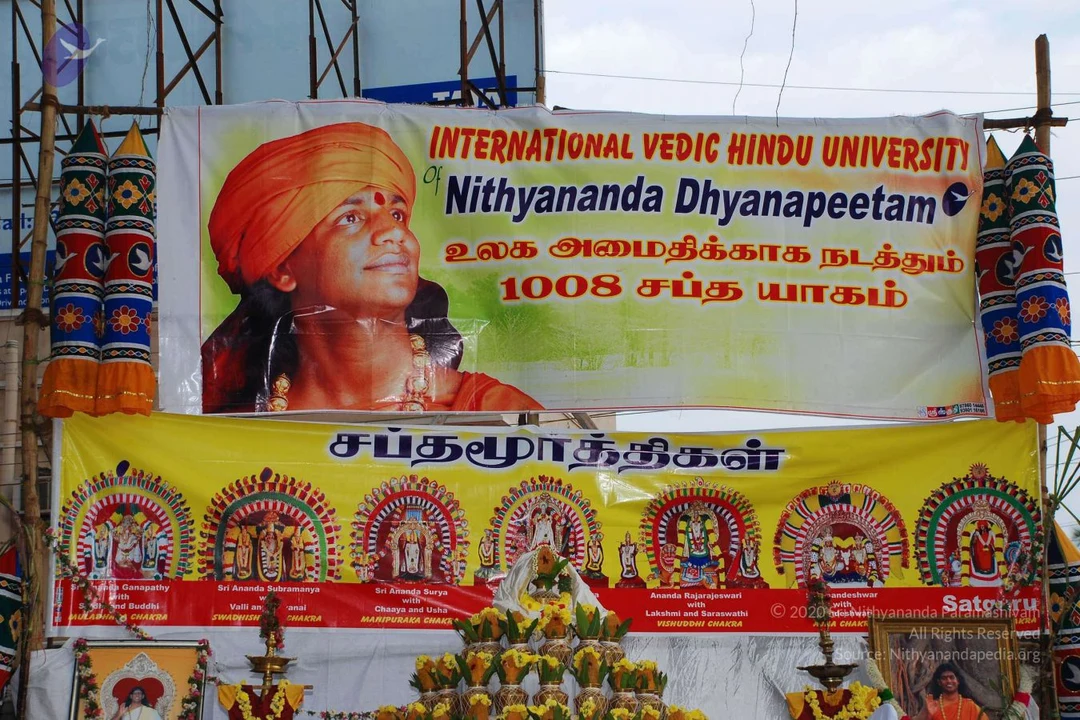
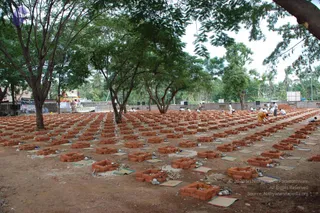
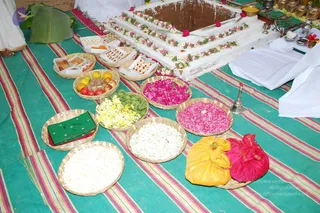
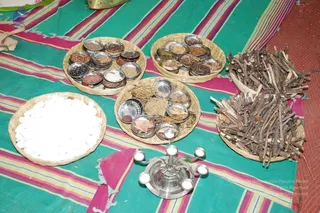
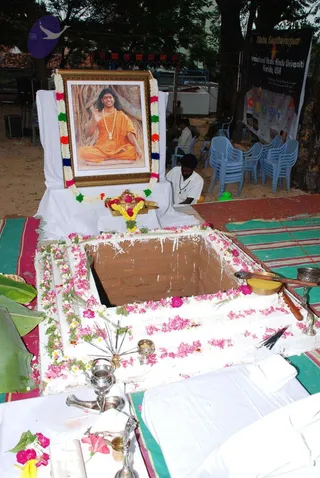
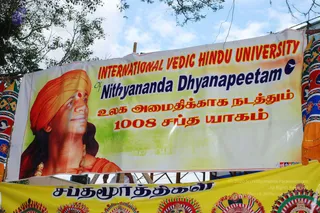
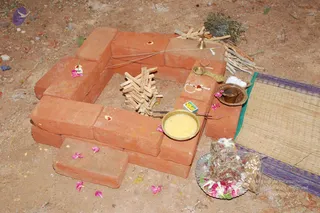
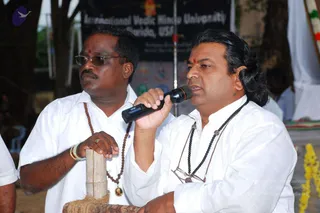
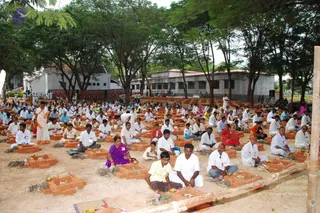
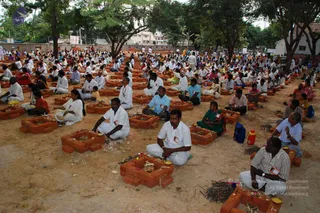
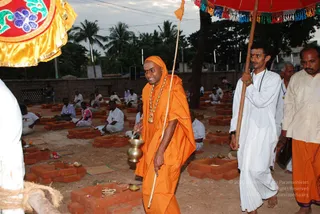
A wide outdoor photograph of a large field of small brick fire pits, rows of square red brick hearths set in bare reddish earth under tall shade trees. Several small mats and scattered pieces of straw or ash lie around the pits. In the far distance, a few figures in white and orange clothing stand or bend near the pits, and a brick boundary wall with palms and a decorated tent or canopy stands beyond. The setting suggests a homa or yagna ground, but it appears as a mass of pits under trees with few people visible.Ritual offerings are arranged on a striped green, pink and yellow cloth before a white square homa/yagna fire pit edged with garlands of white and pink flowers. Woven baskets hold fruit, marigold and jasmine flowers, rose petals, green leaves, sweets and betel-style packets, and two bundles of folded cloth wrapped in yellow and magenta silk sit in the foreground. A small brass bell and silver ritual vessels rest on the right beside white cloth, and a foot in white is visible at the top left. No people are fully visible in the frame.A photograph of homa ritual materials laid out on a striped green, pink and white cloth. Several woven baskets hold small steel bowls filled with dried herbs, seeds, grains, roots and powders. A large basket of white camphor-like pieces sits at left, and a basket of dry wooden sticks at right. In the foreground stands a silver multi-wick oil lamp with five lit wicks. No people are visible.Outdoor ritual site under trees with a sunken square homa pit lined with white paste and ringed with pink and white flower garlands, containing a central brown earthen cavity. Behind it, a framed photograph of a seated man in orange robes and a white flower garland, raising one hand in blessing, is printed with the caption "a person" and sits on a white-draped platform decorated with a multicoloured garland. Brass and silver ritual vessels, a silver lamp, an incense stick and loose flowers lie on the cloth. A banner reads "Maha Sapthavagam" and "International Vedic Hindu University, Florida, USA". A man in white shirt sits at a laptop, and a few other people and stacked blue plastic chairs are in the background. The portrait depicts a person, so the a person field is depiction.A framed photograph of a smiling man with long dark hair, wearing saffron-orange robes, a gold-toned ornate necklace, and a red bindi, seated cross-legged in meditation with one hand raised in blessing, against a backdrop of banyan tree roots. The framed portrait is labelled "Paramahamsa Nithyananda" and is garlanded with white jasmine and multicoloured flower strands, placed on a white-draped stand. Below it sits a copper kalasha-like vessel with a pink flower and marigold garlands, with rose petals scattered in front. This is a depiction on a print, not a person physically present; no people are visible in the scene. The portrait appearance matches the swamiji cues of long swept-back hair, saffron clothing and ornate necklace.A large outdoor banner, kind of a graphic rather than a photo of people, promotes the International Vedic Hindu University of Nithyananda Dhyanapeetam and an event titled 1008 Sapthayagam. The banner shows a painted-style portrait of a man in an orange turban with a red bindi, long dark hair, gold necklace and orange-saffron garment, labelled as a portrait. Below, a yellow banner reads Saptamurthigal with colourful decorative circular motifs. Tree branches and a blue sky frame the top, and decorative fabric hangs at the right edge. No physical people are visible.A square brick fire pit (homa kunda) built on bare earth, with stacked dry sticks laid inside and a brass bowl of yellow ghee or offering beside it. Small brass vessels, a brass spoon, a brass oil lamp, a folded white cloth, a matchbox and scattered pink flower petals surround the pit. A bundle of pink flowers, grain-like offerings and wrapped leaves sits in a paper plate at right, next to a woven straw mat with purple edging. No people are visible.A large outdoor event banner for the International Vedic Hindu University of Nithyananda Dhyanapeetam announces a 1008 Sapthayagam. The top panel shows a portrait of a man with a swept-back head covering and orange turban, a red bindi and orange garment with ornate gold necklaces. Below, a yellow banner titled Saptamatrikas displays seven arched panels of deities. In the foreground, brass lamps, a kalasha and tiered arrangements of marigold garlands and flowers are set up before a framed portrait of a woman in front of the banner. Scaffolding and colourful pillars frame the stage. No physical people are visible.Outdoor photo of a man in white kurta and white dhoti holding a black handheld microphone to his mouth while speaking, with long dark hair tied back, a small red tilak on his forehead, and dark wooden mala beads with a pendant and a black beaded necklace. Beside him, a second man in a white shirt with sunglasses and a brown rudraksha-style mala stands behind a wooden staff topped with a coiled cloth grip. Behind them a dark banner reads International Vedic Hindu University, with a yellow flower garland at the right edge and a white canopy above. a person speaking at a discourse, with a ceremonial staff and attendant present.Outdoor ritual gathering under tall trees at the Sapthayagam site in Salem, Tamil Nadu. Many people sit in rows on the ground behind small brick fire-pit enclosures, each with dried straw or sticks and small brass vessels, performing a homa/yagna. Most wear white clothes, with a few in colourful saris and yellow shirts. A man in white near the left wears an orange-bordered shawl and stands among the rows. Behind them are white buildings and a concrete structure under construction. A dense crowd of roughly one hundred or more people is visible, and no clear a person candidate can be identified in the scene.A large outdoor homa gathering in a sandy open ground shaded by trees. Hundreds of participants sit cross-legged in neat rows behind small square fire pits built from red bricks, each containing kindling sticks and brass vessels. Most men wear white shirts and white dhotis, with some in pale blue or checked shirts; women wear white, green and red saris. Participants wear lanyard name badges. A few standing figures in white move among the rows, and a white building and boundary wall appear in the background.Outdoor ritual procession at dusk with a figure in saffron robes and a long orange head cover, wearing a beaded necklace and a large gold pendant, carrying a brass kalasha vessel in one hand and a tall staff in the other. Beside him, a man in white dhoti and shirt holds a red umbrella with tassels overhead, and another man in white stands behind. Seated white-clad devotees sit on the ground among rows of low red brick enclosures with small brass lamps and offerings, under palm trees and a yellow decorated canopy. Ritual site with homa-style brick pits in the courtyard.