Skip to content
Thursday

15 November 2007

Be Uninterruptedly Aware & Realize the truth

Dated photos
290
Source pages
1
Media
12
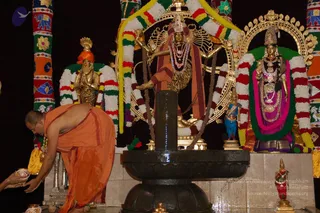
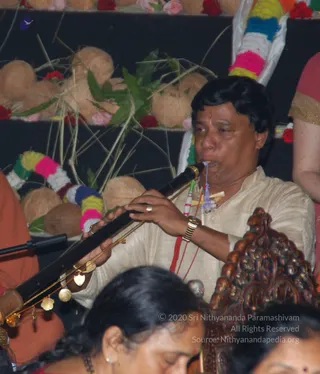
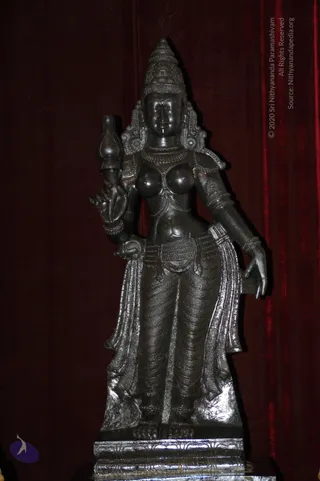
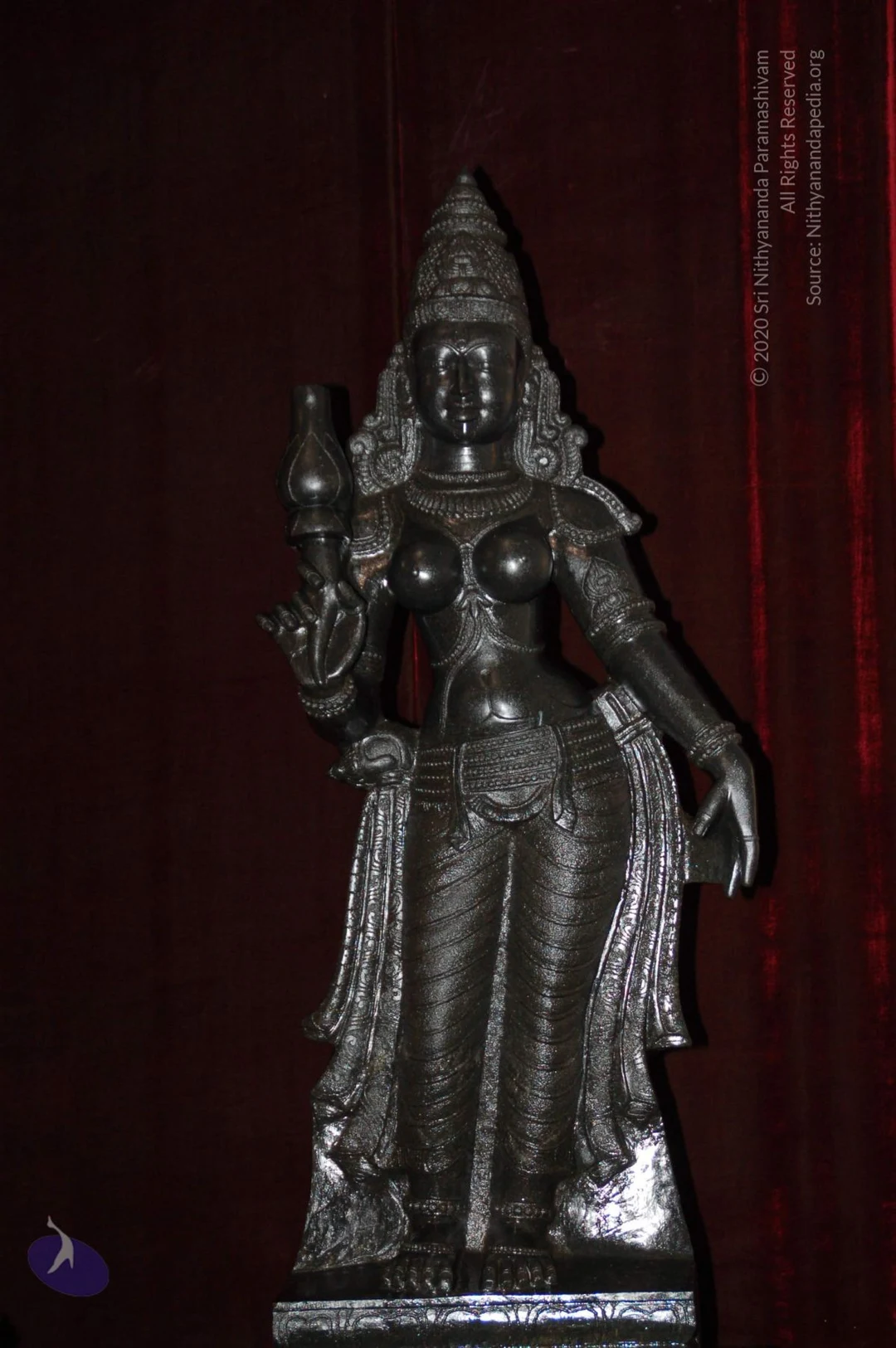
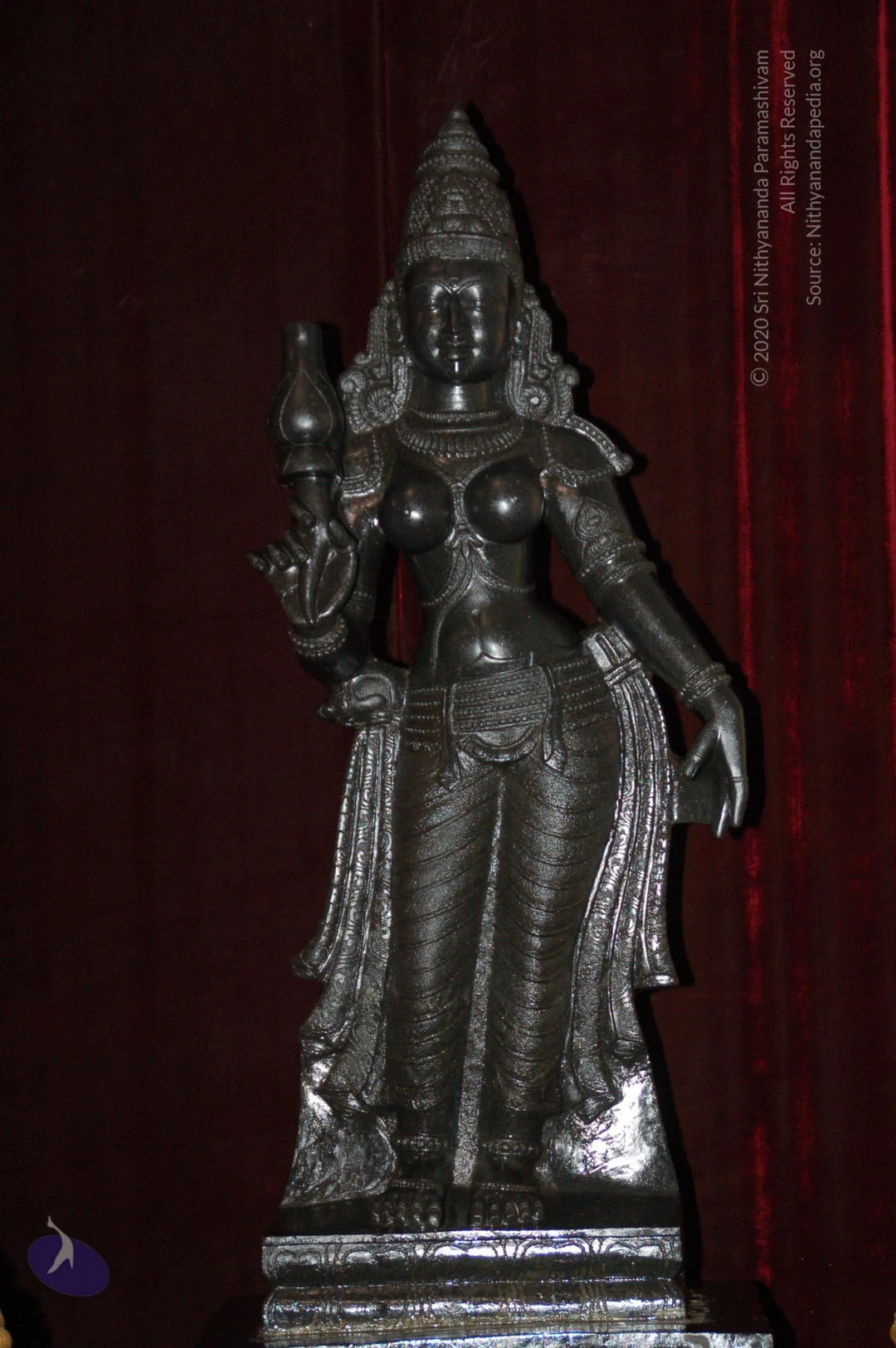
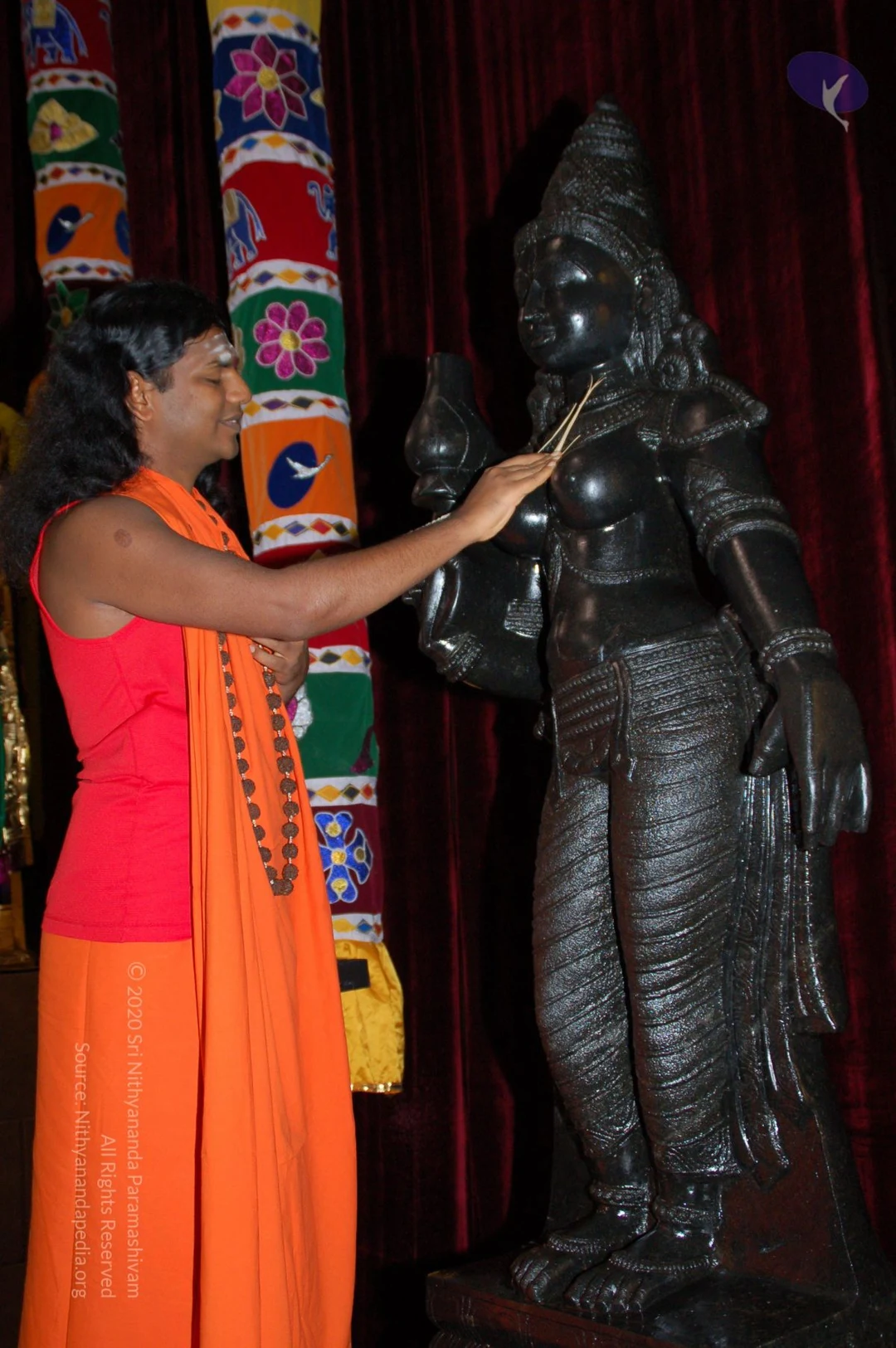
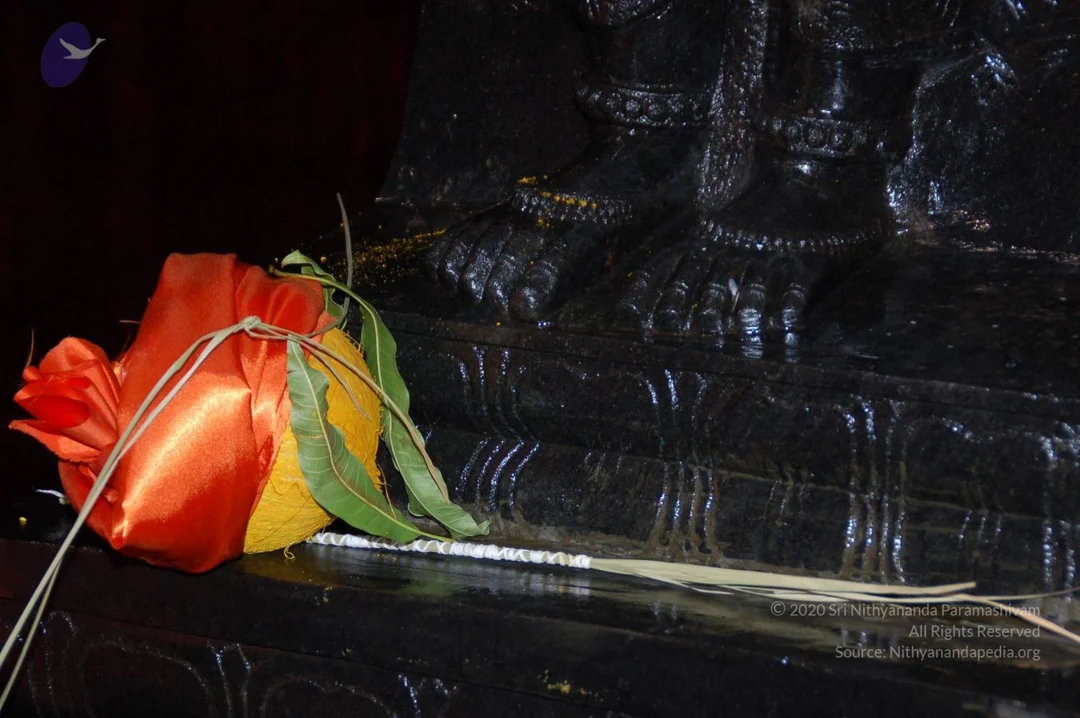
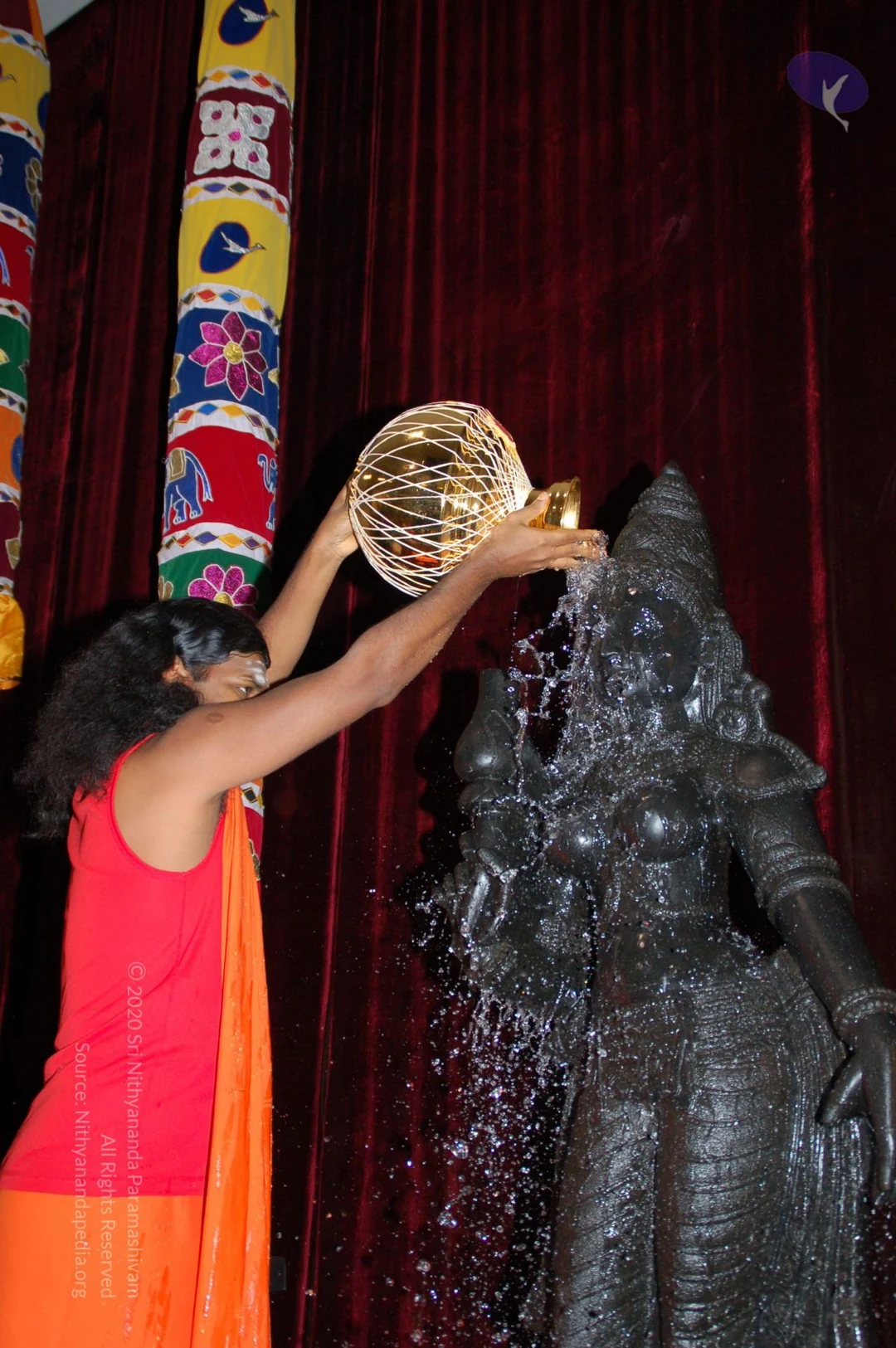
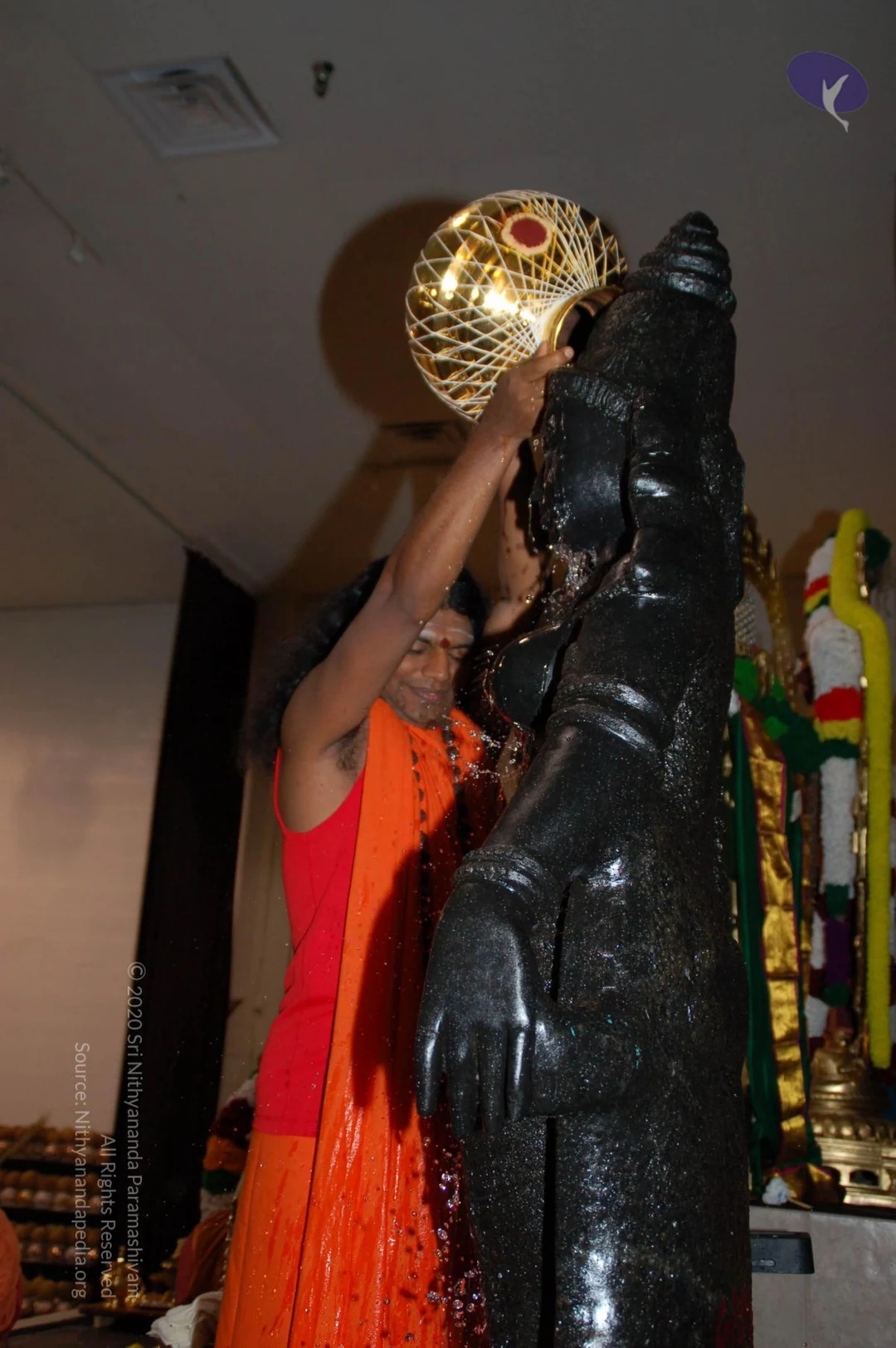
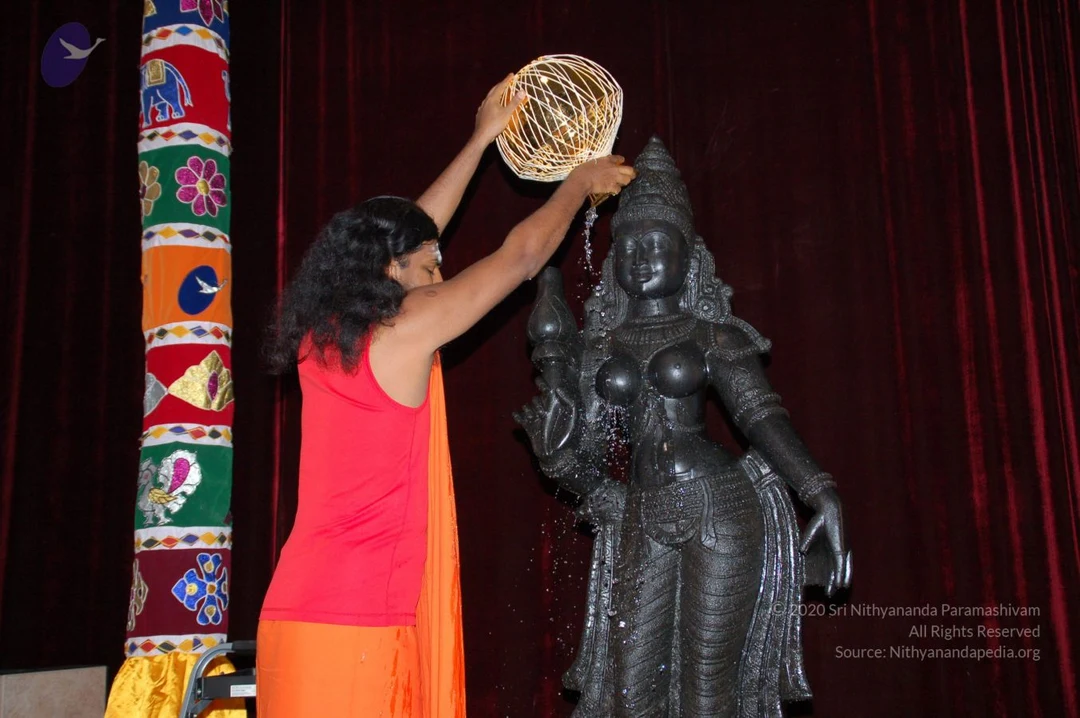
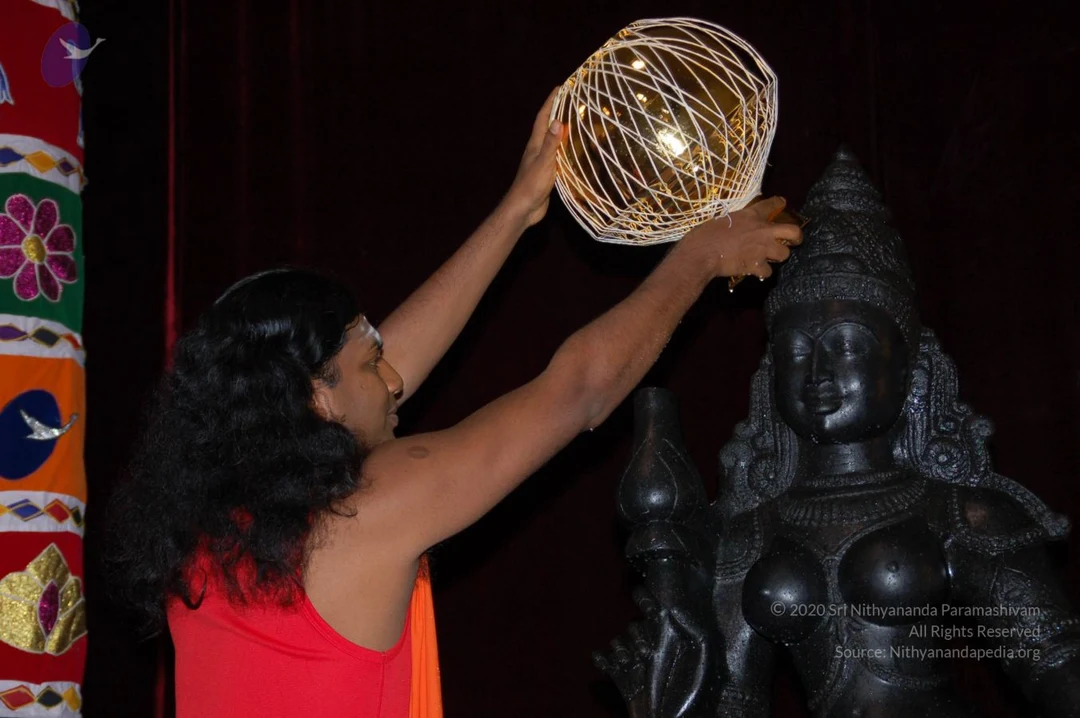
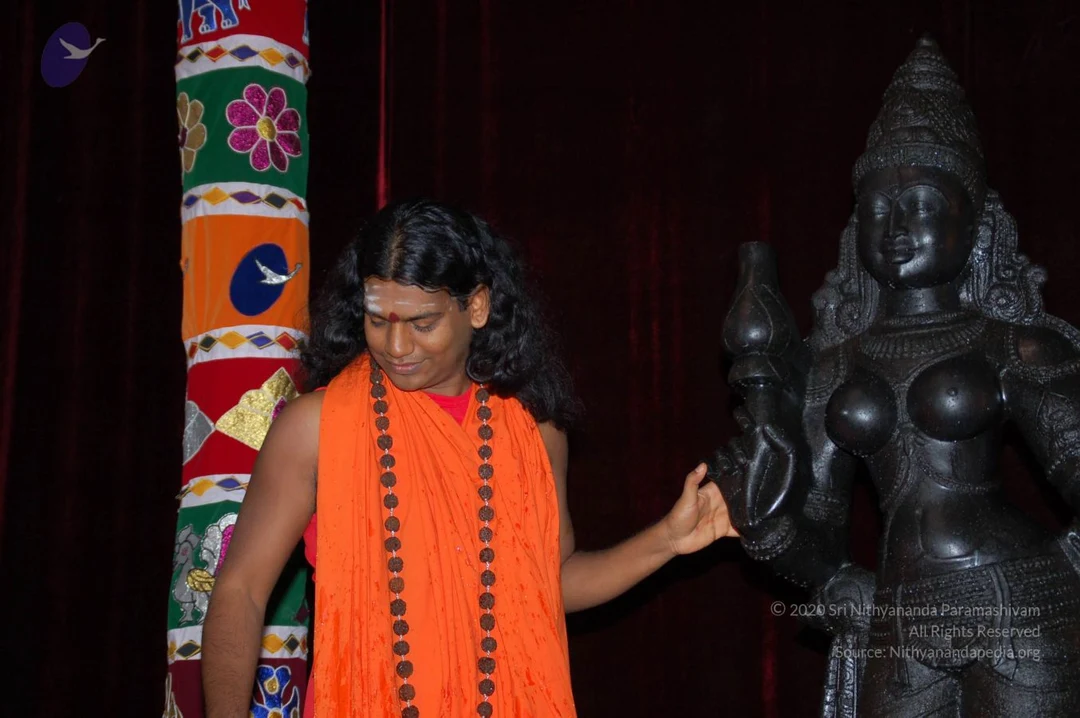
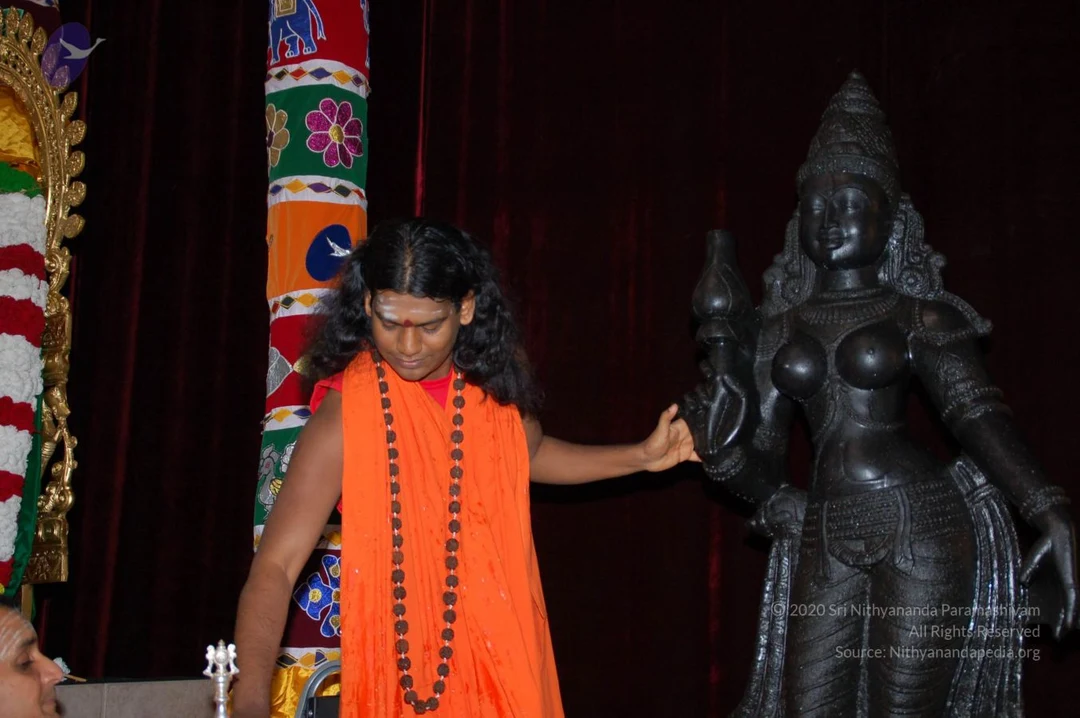
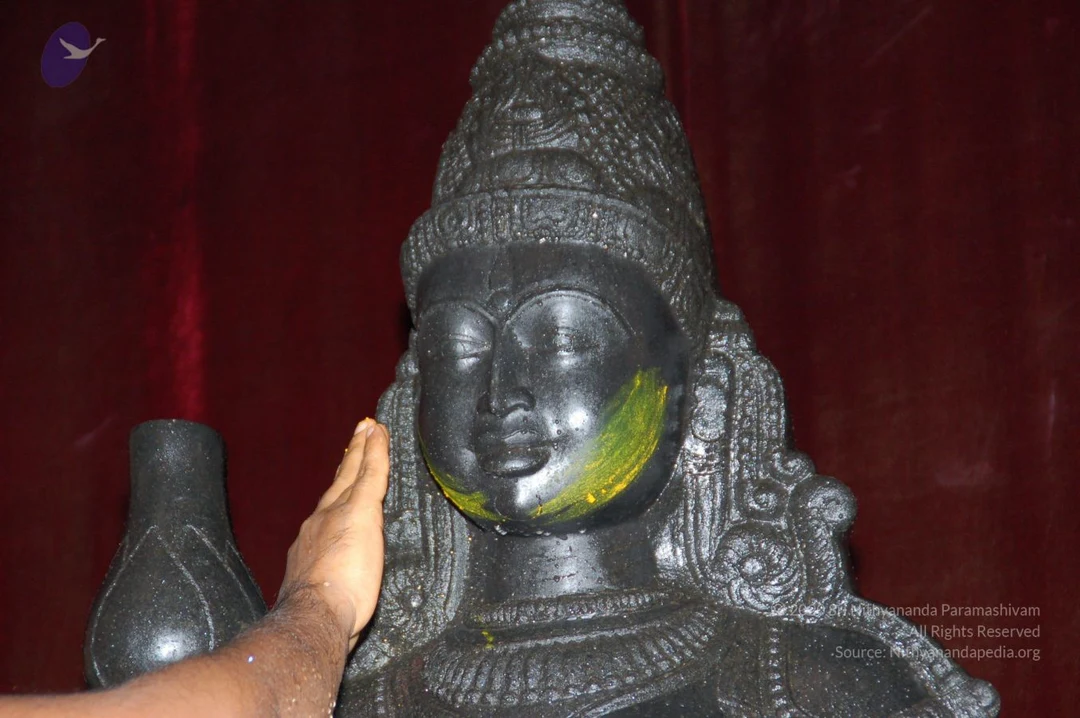
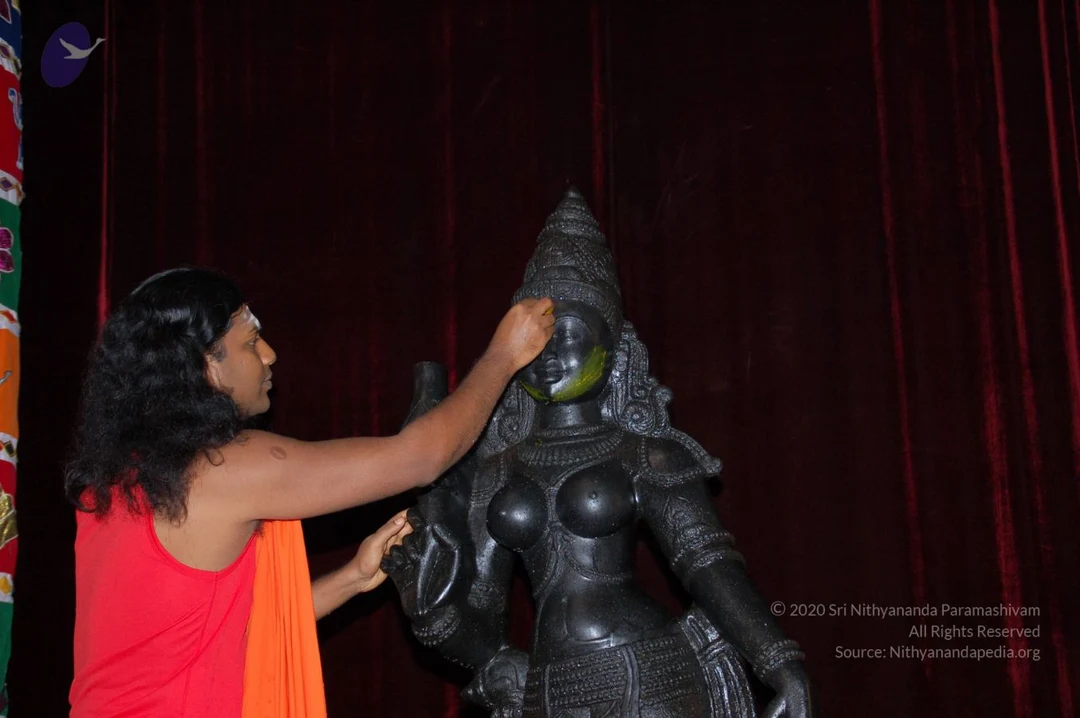
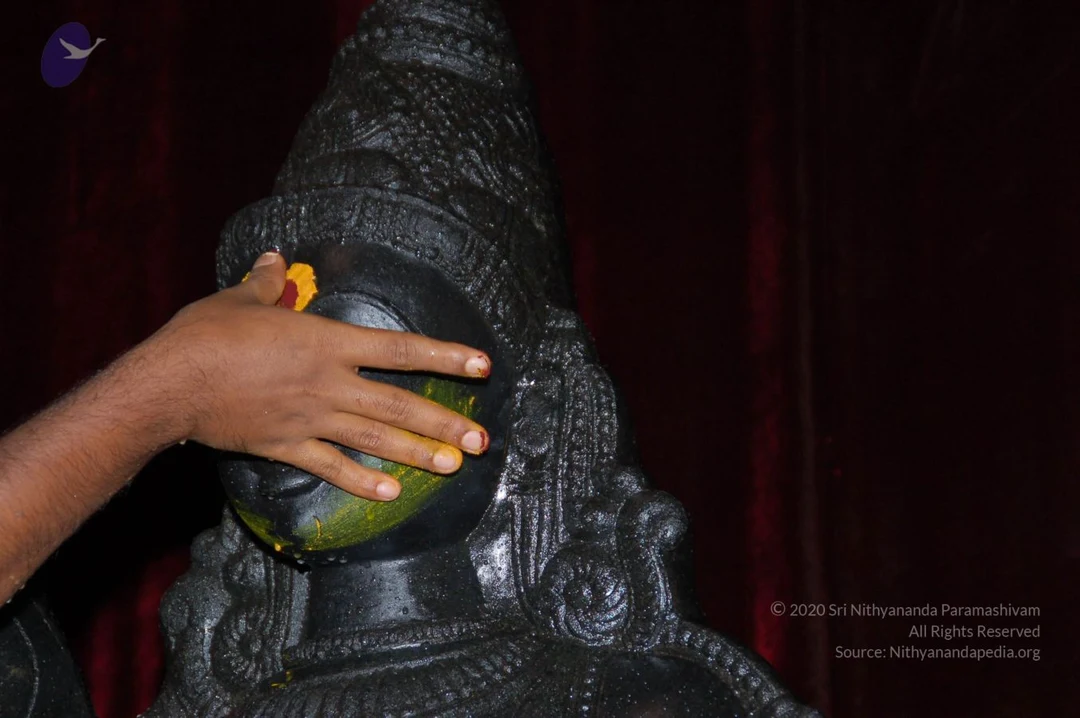
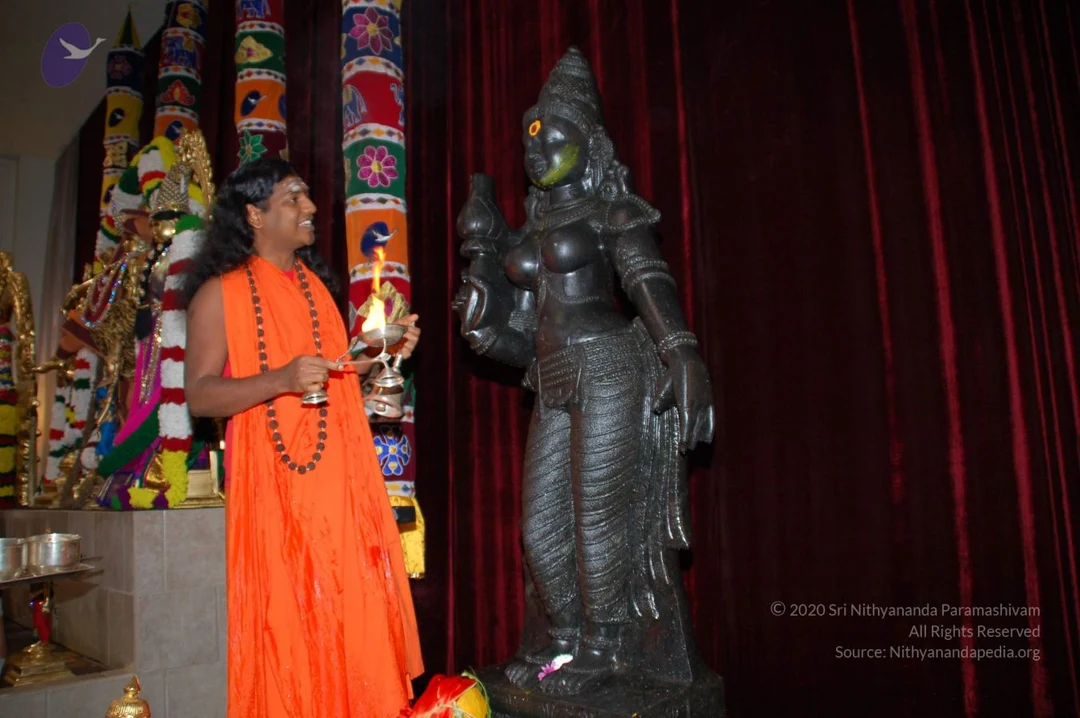
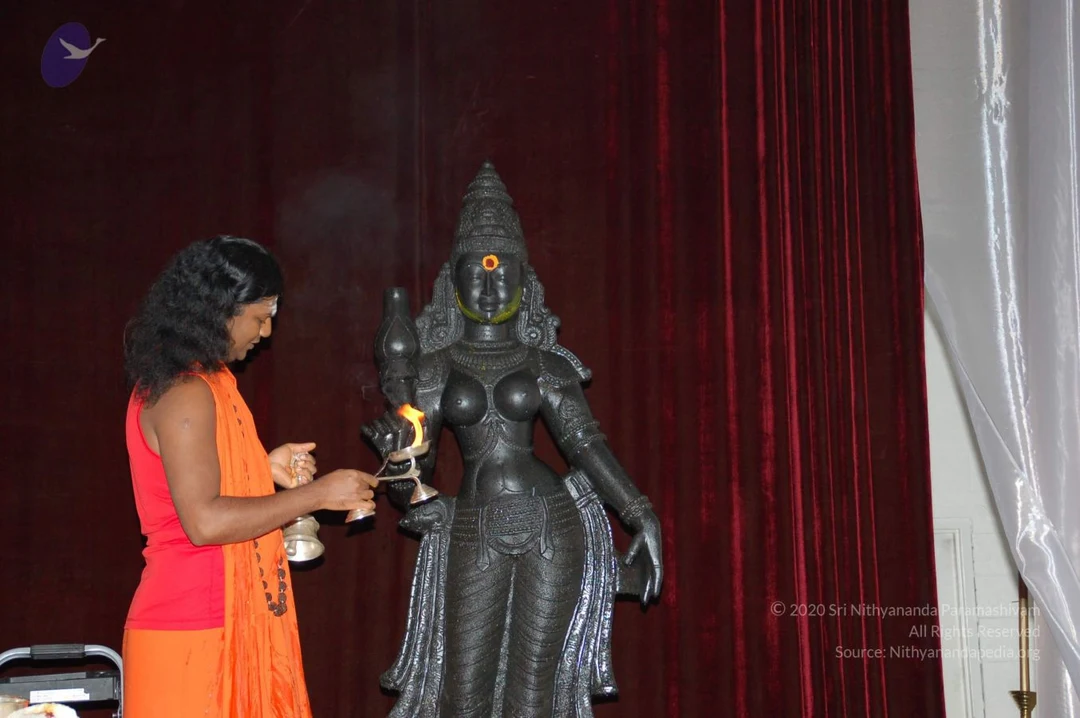
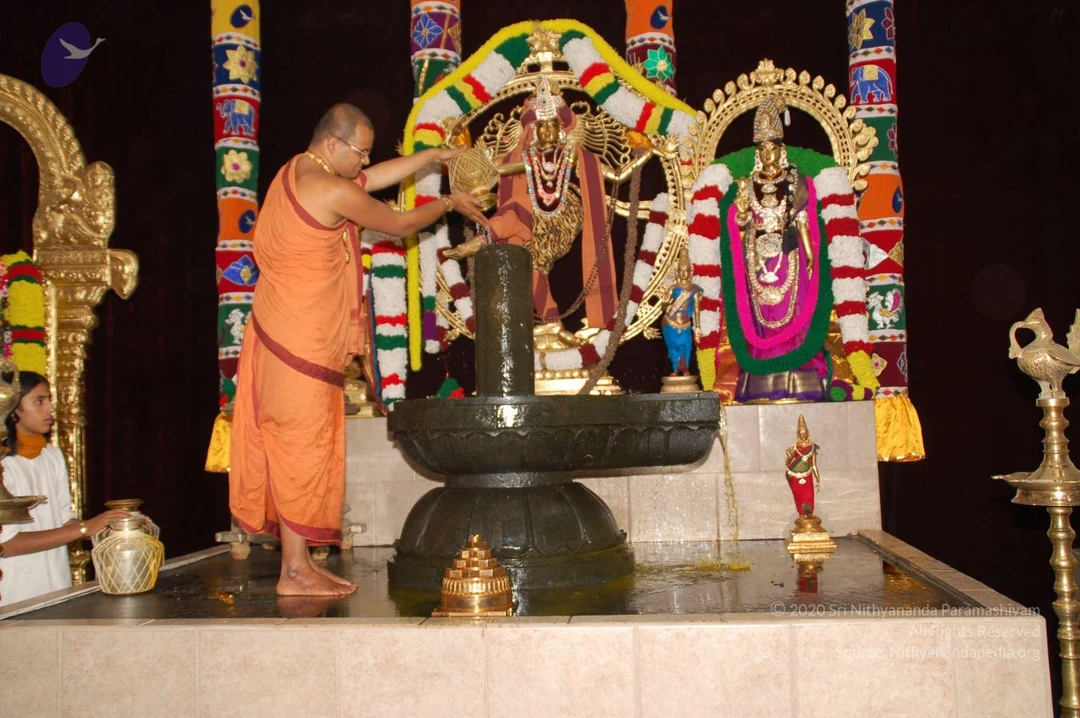
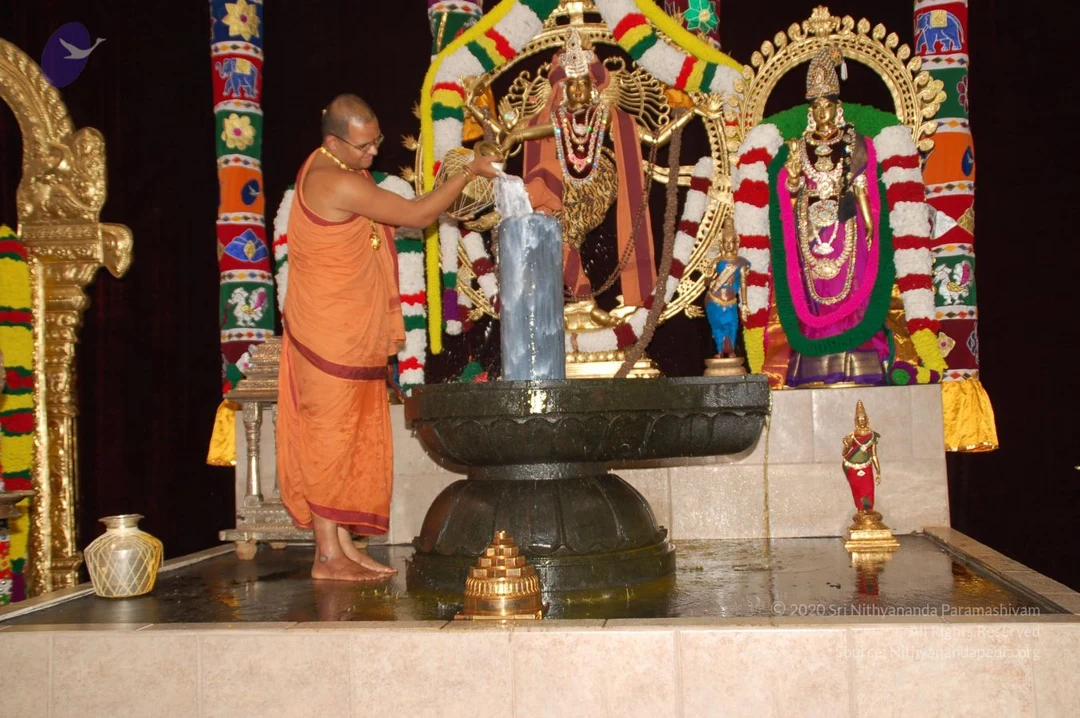
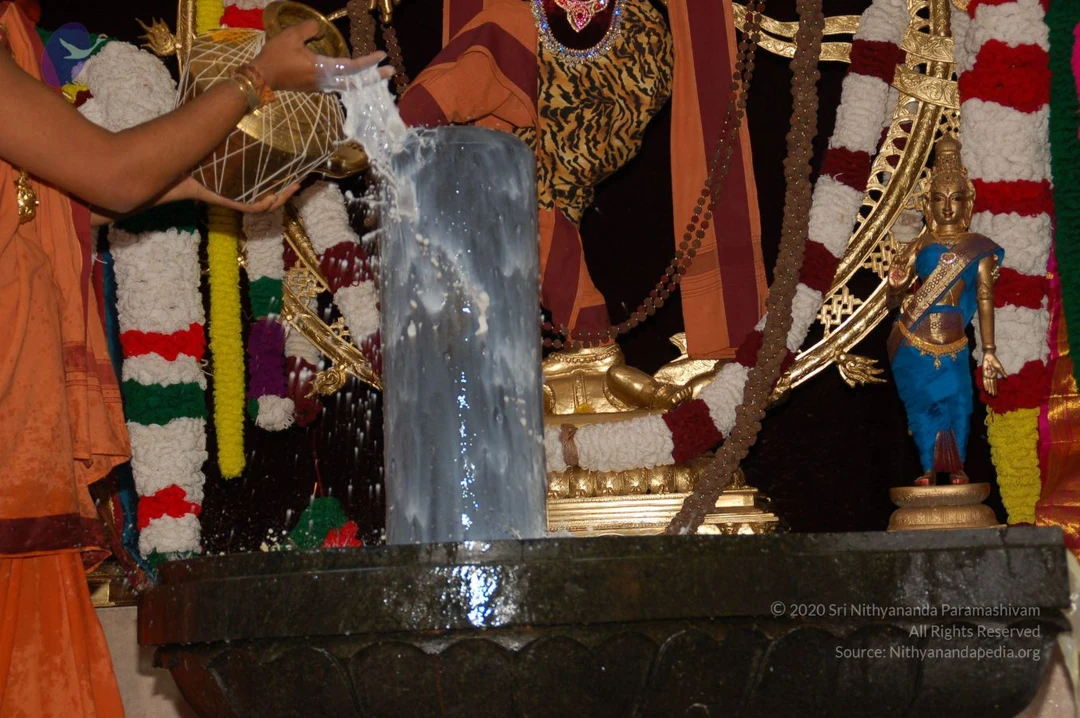
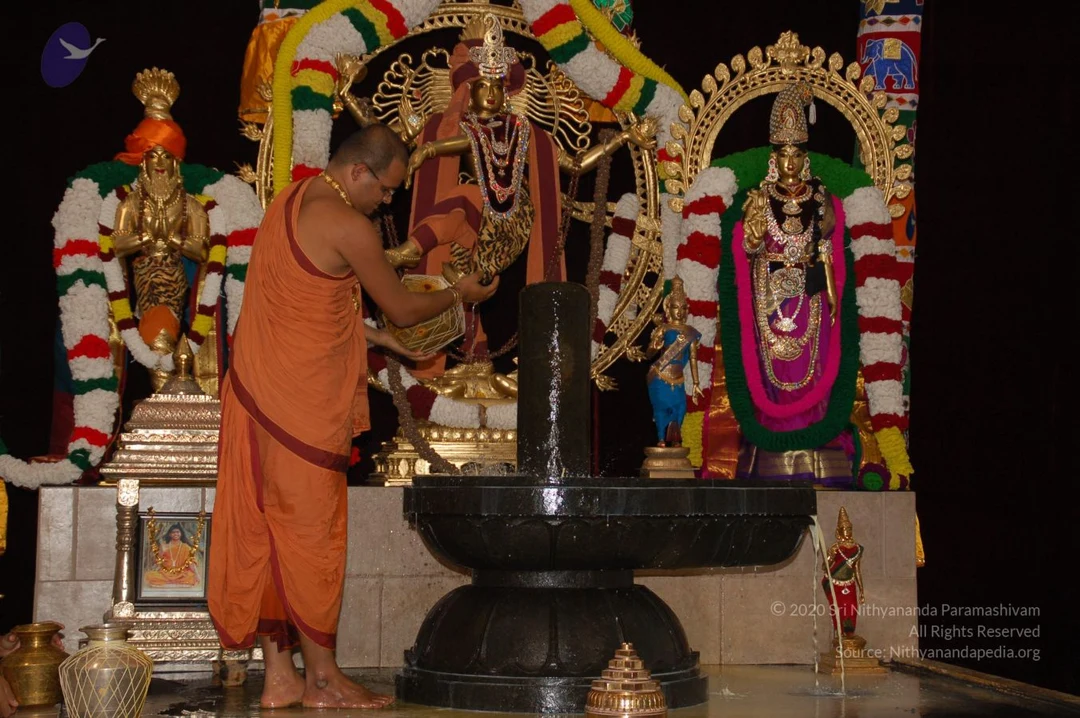
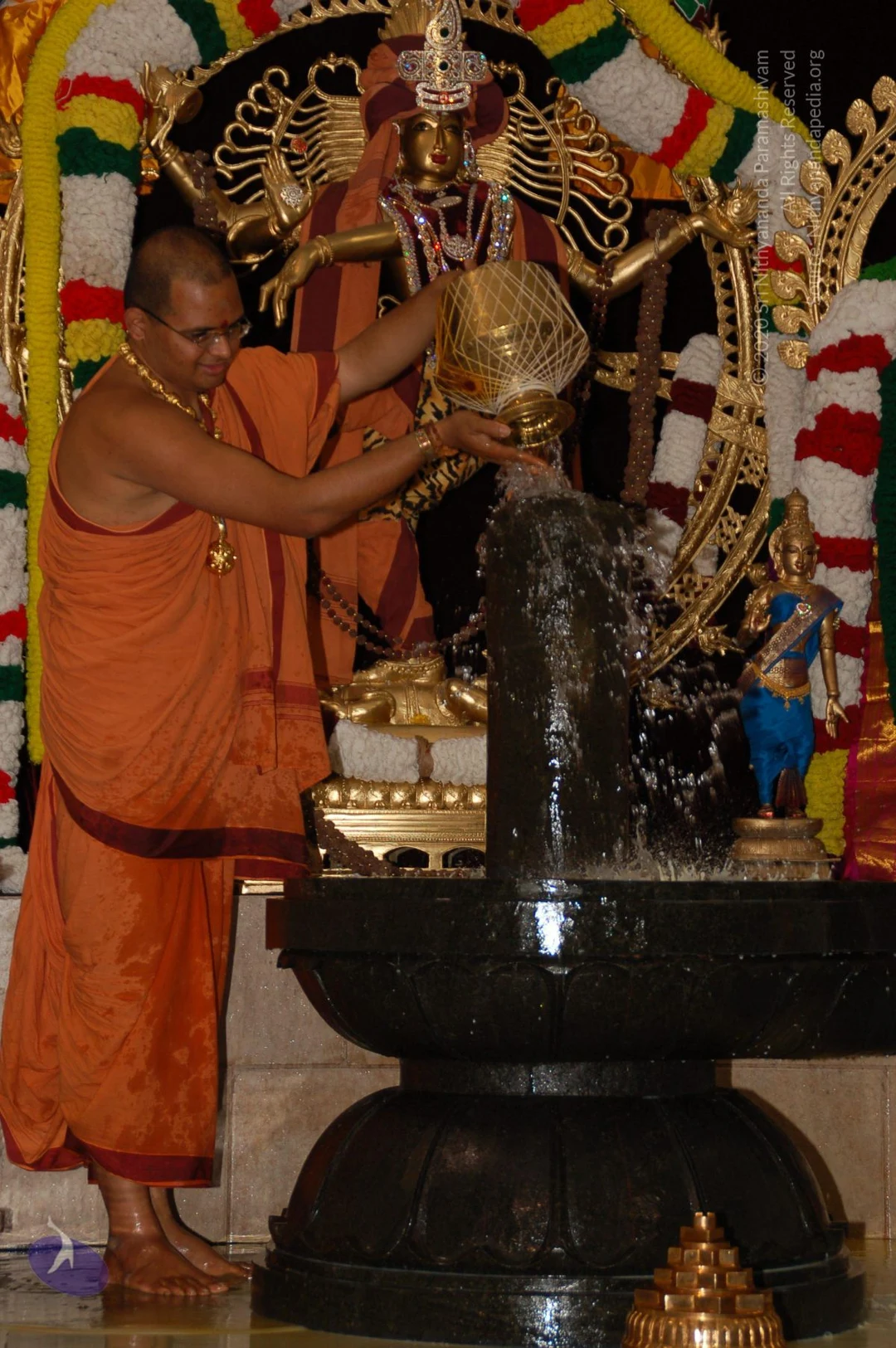
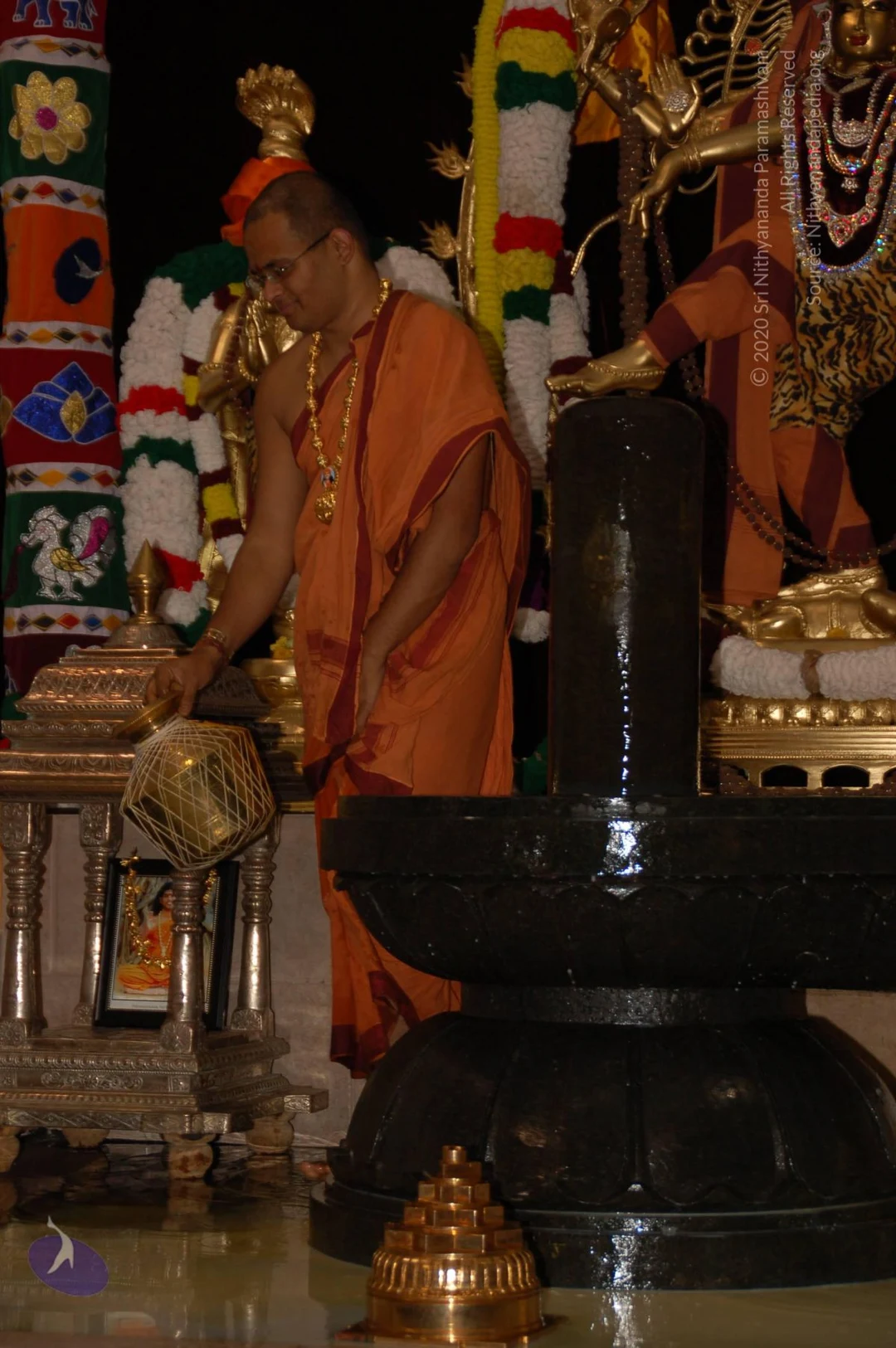
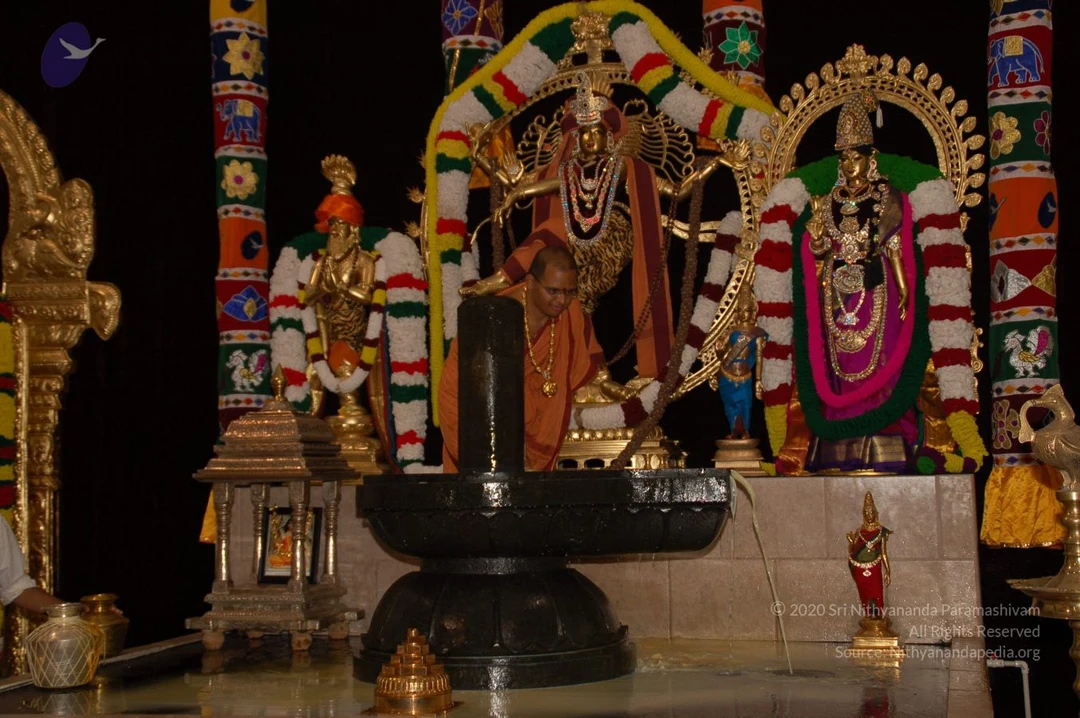
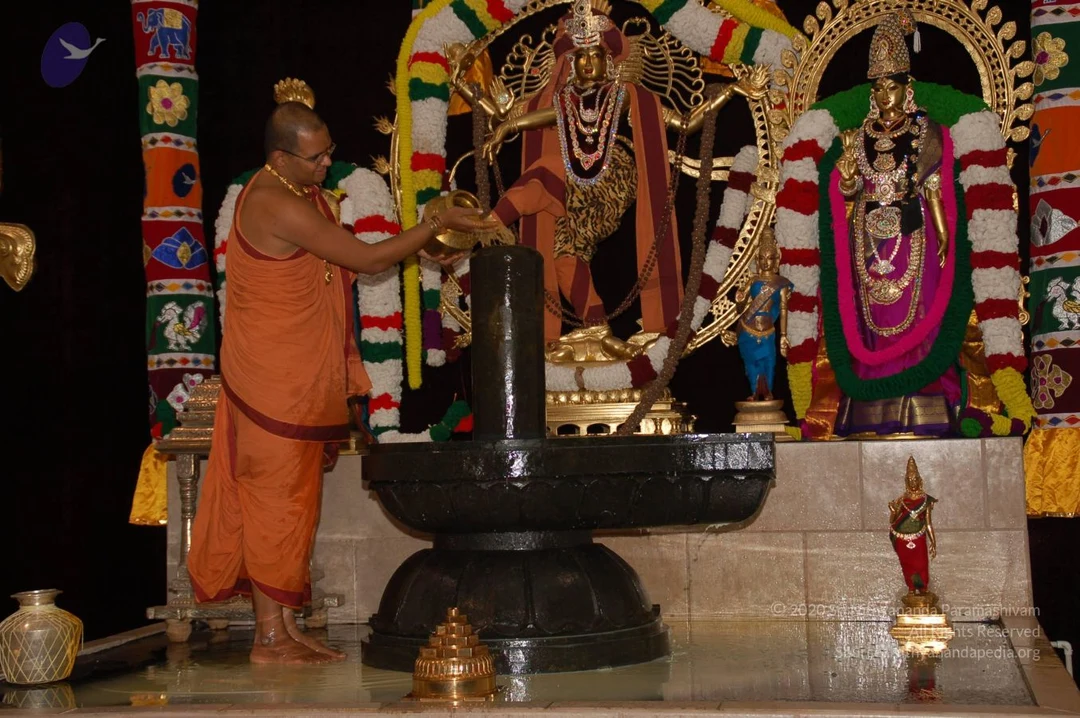
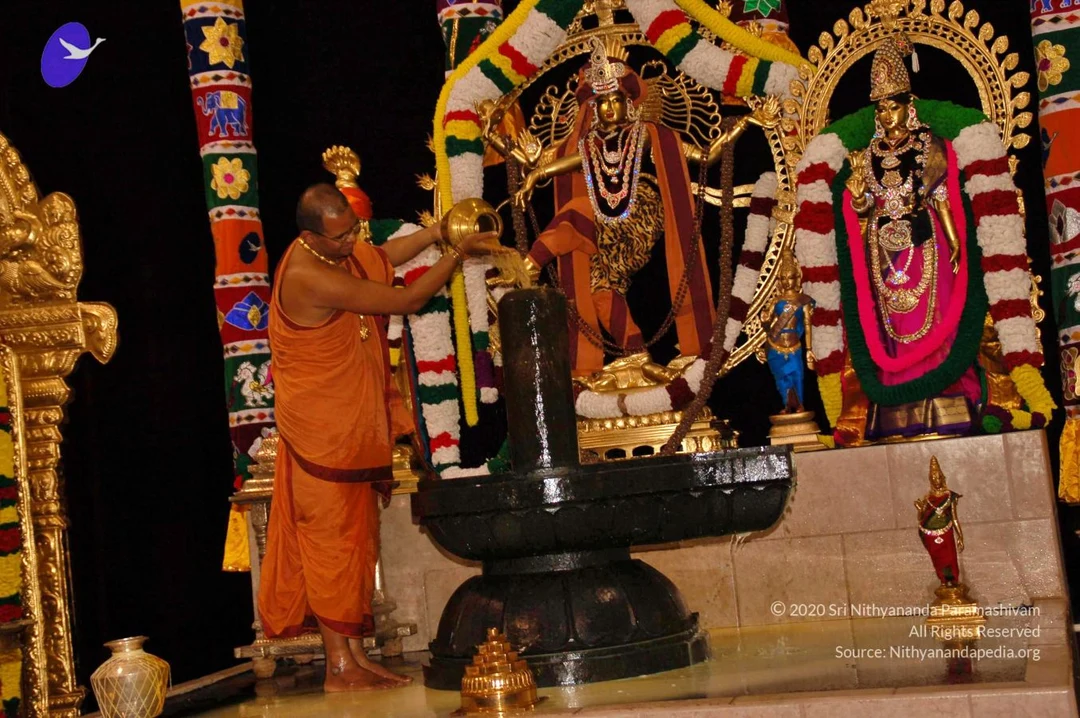
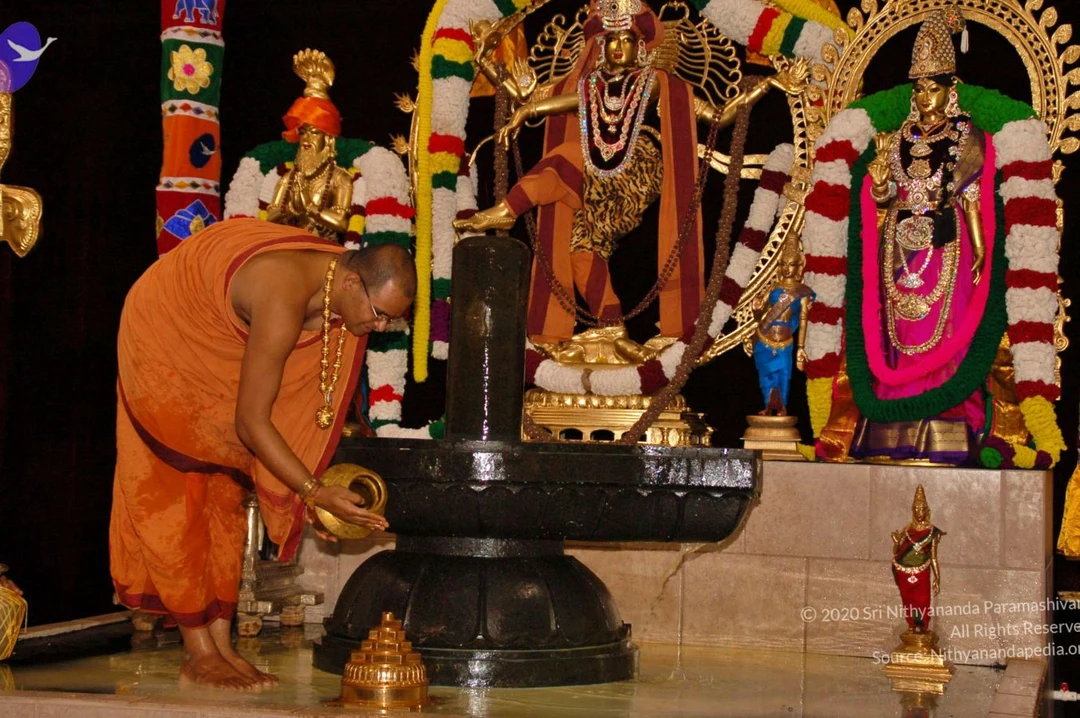
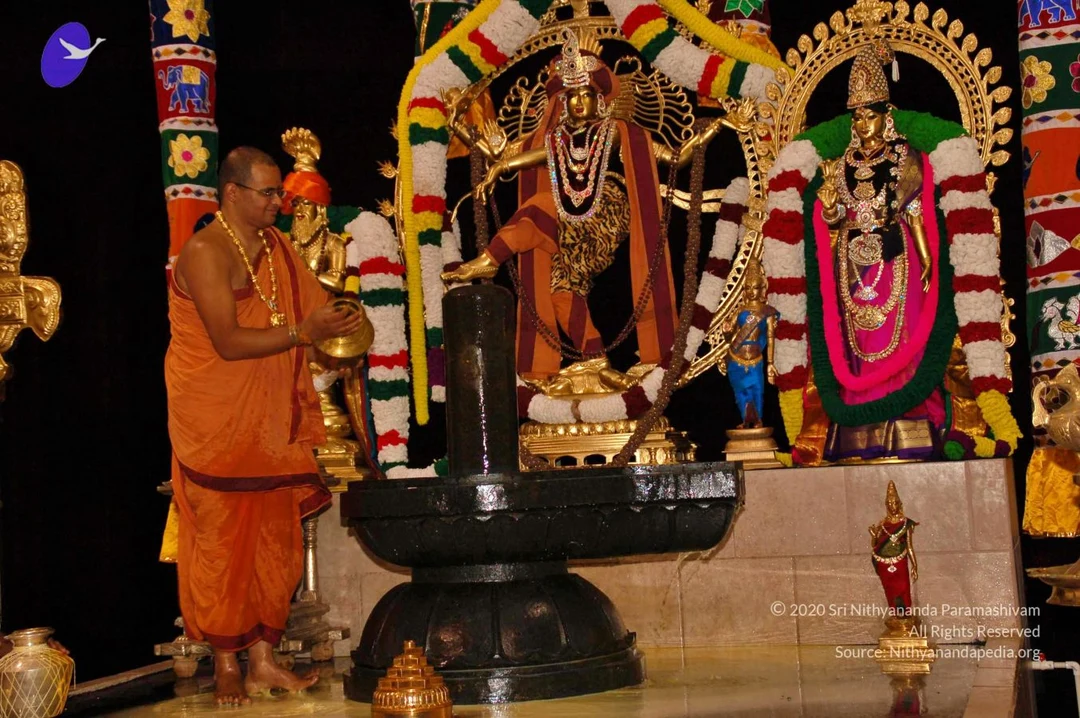
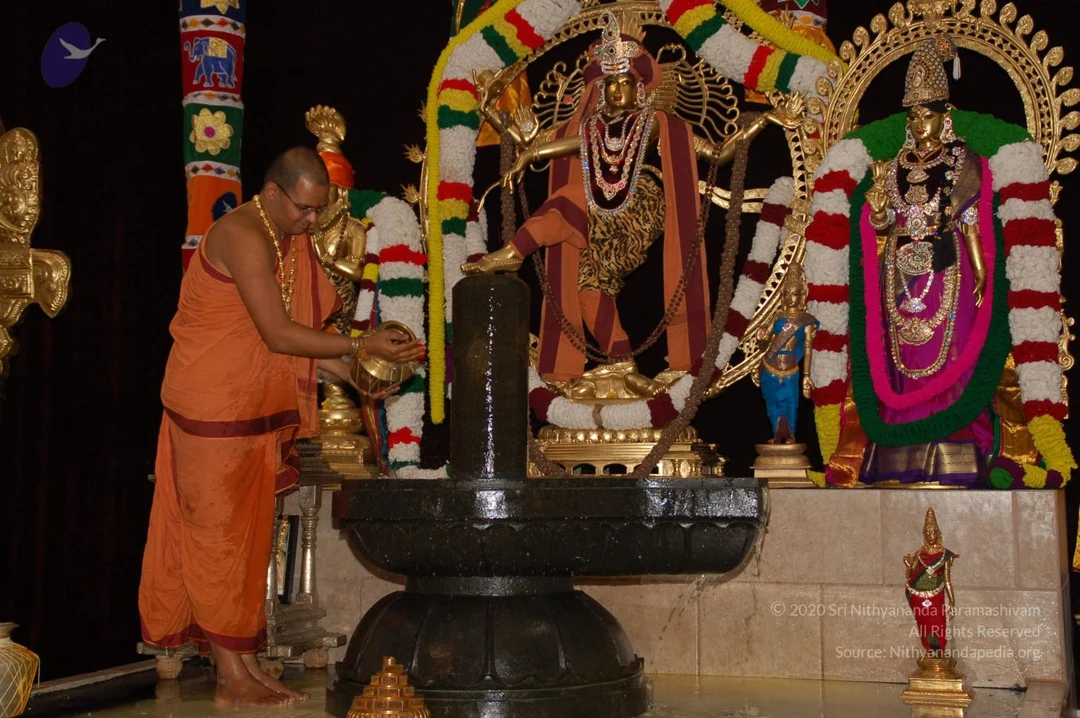
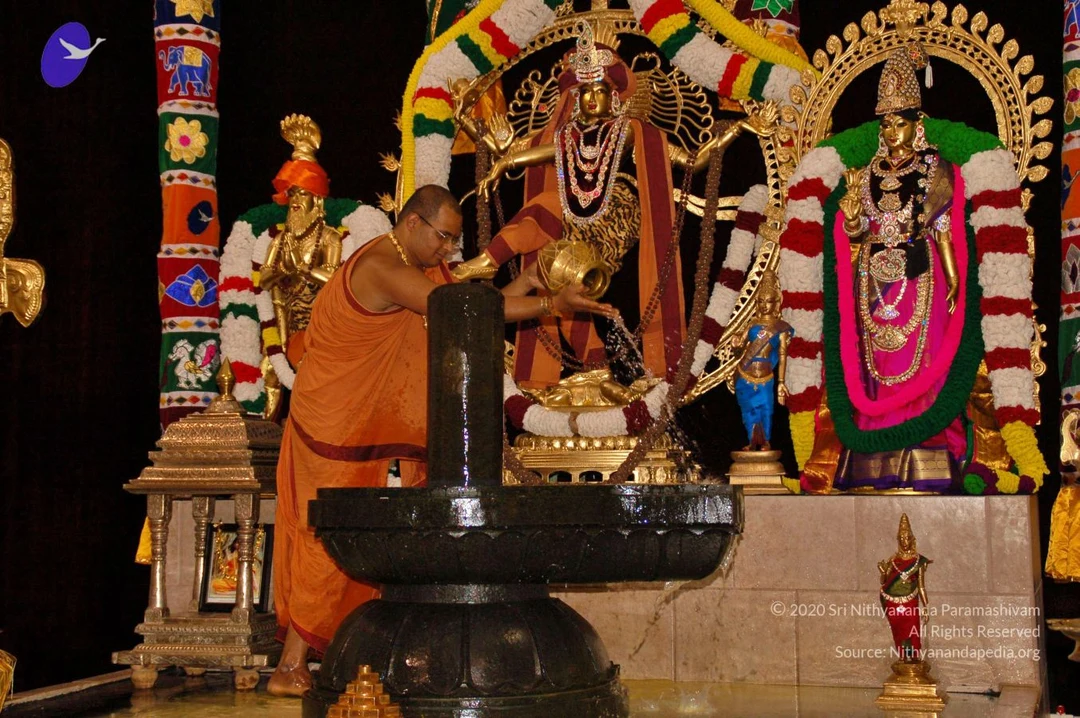
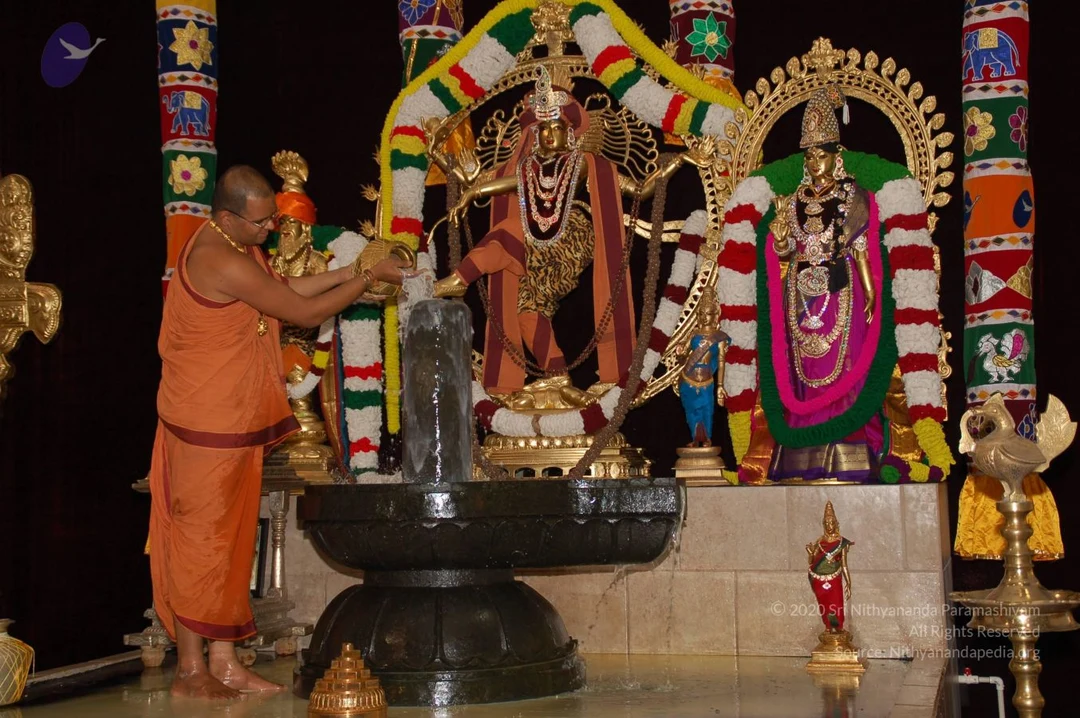
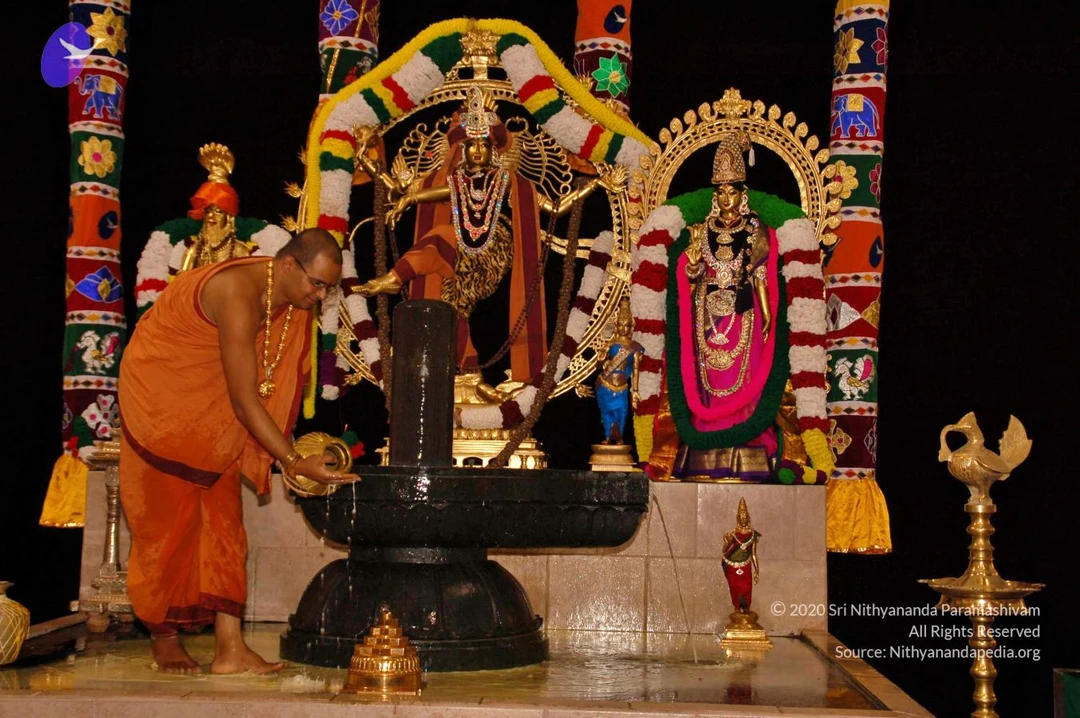
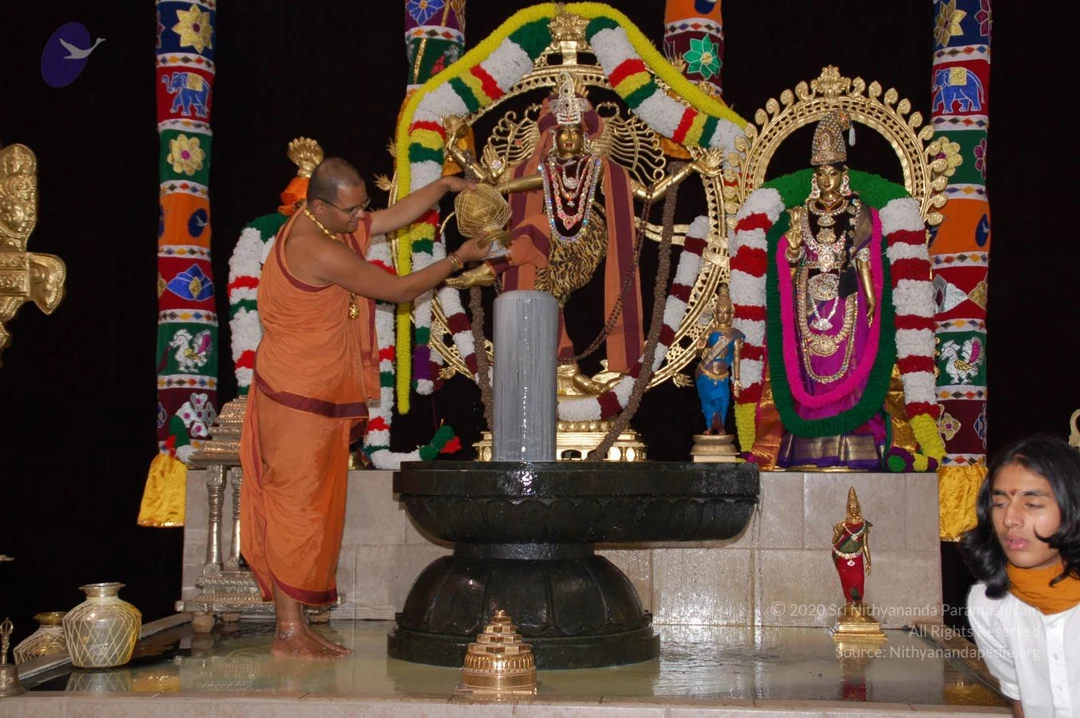
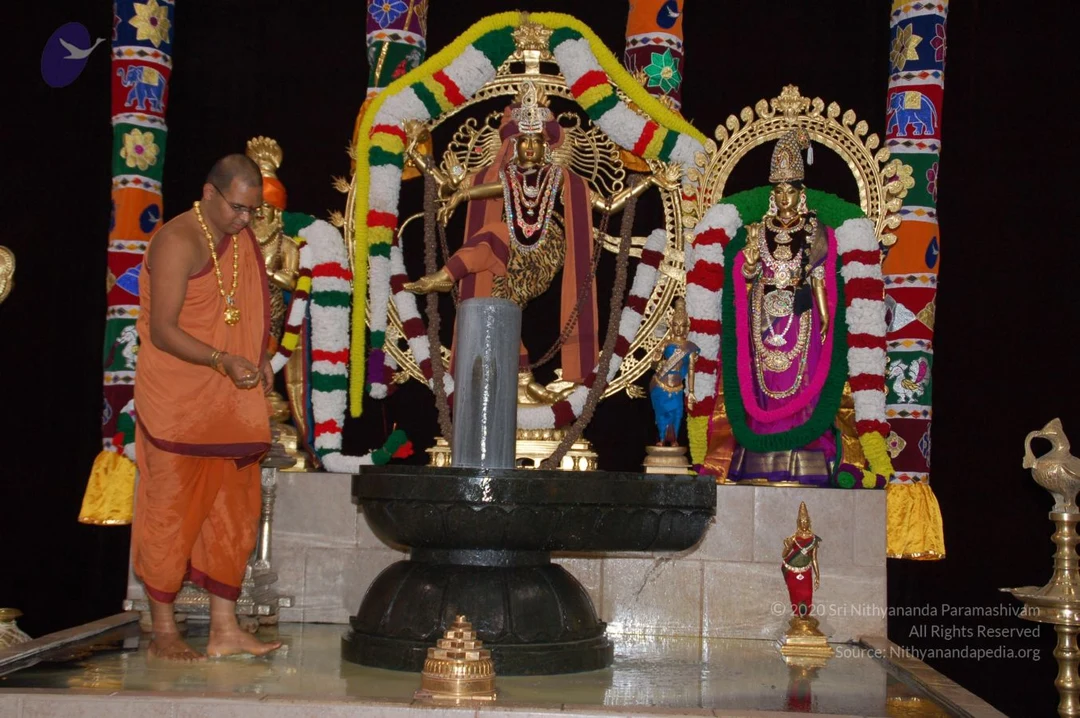
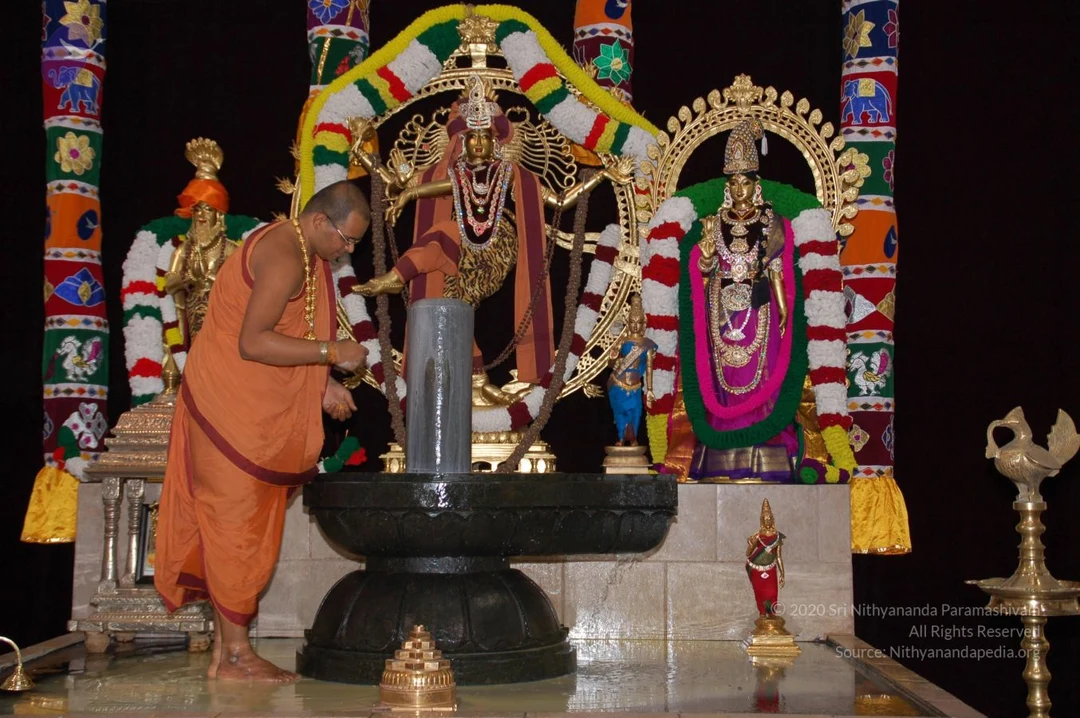
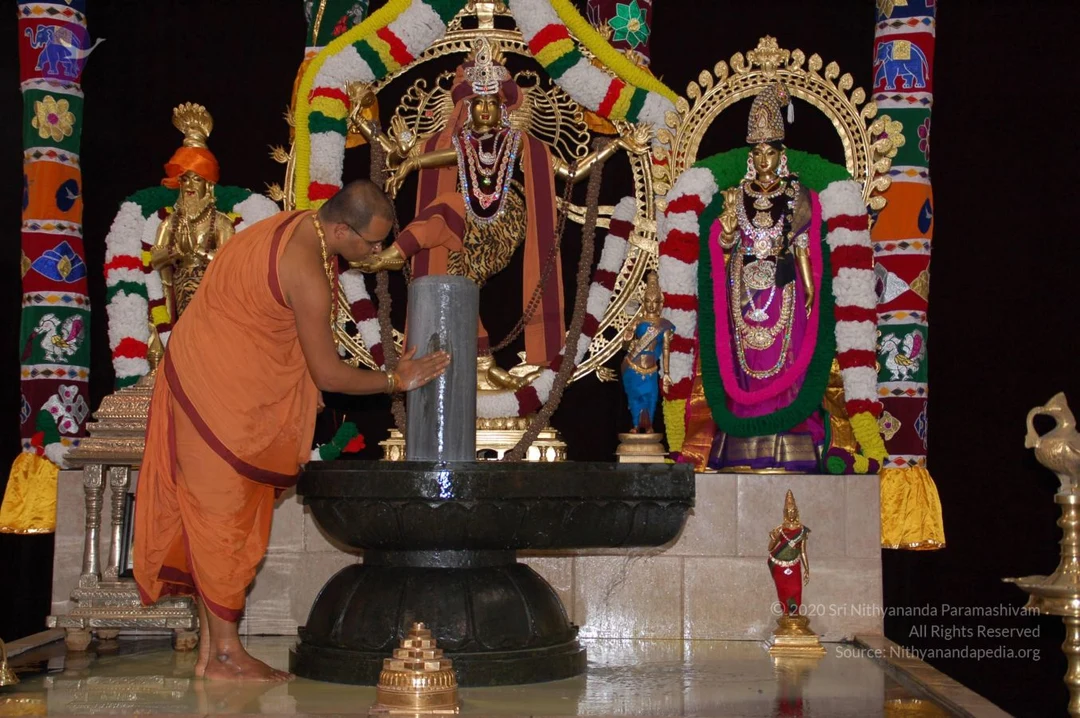
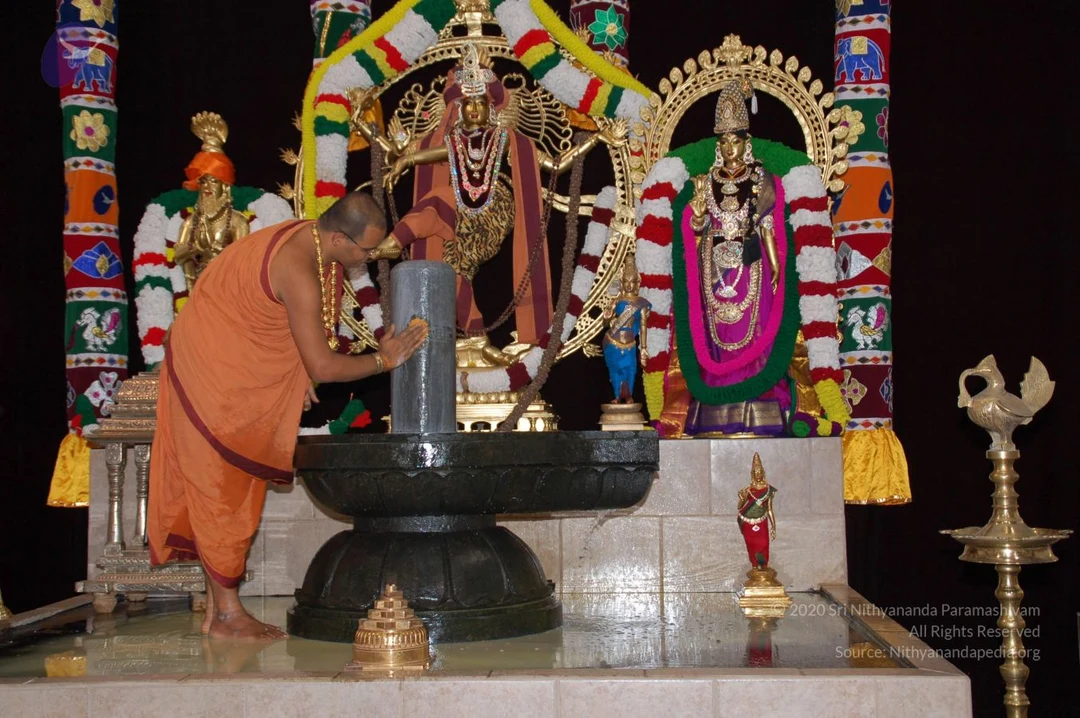
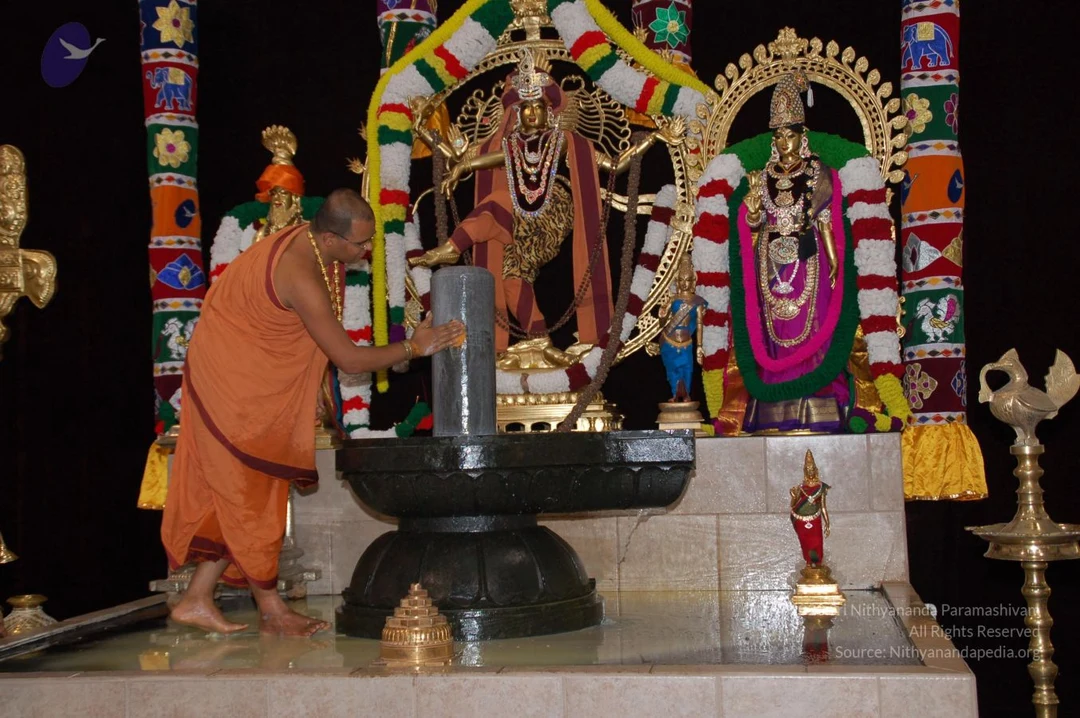
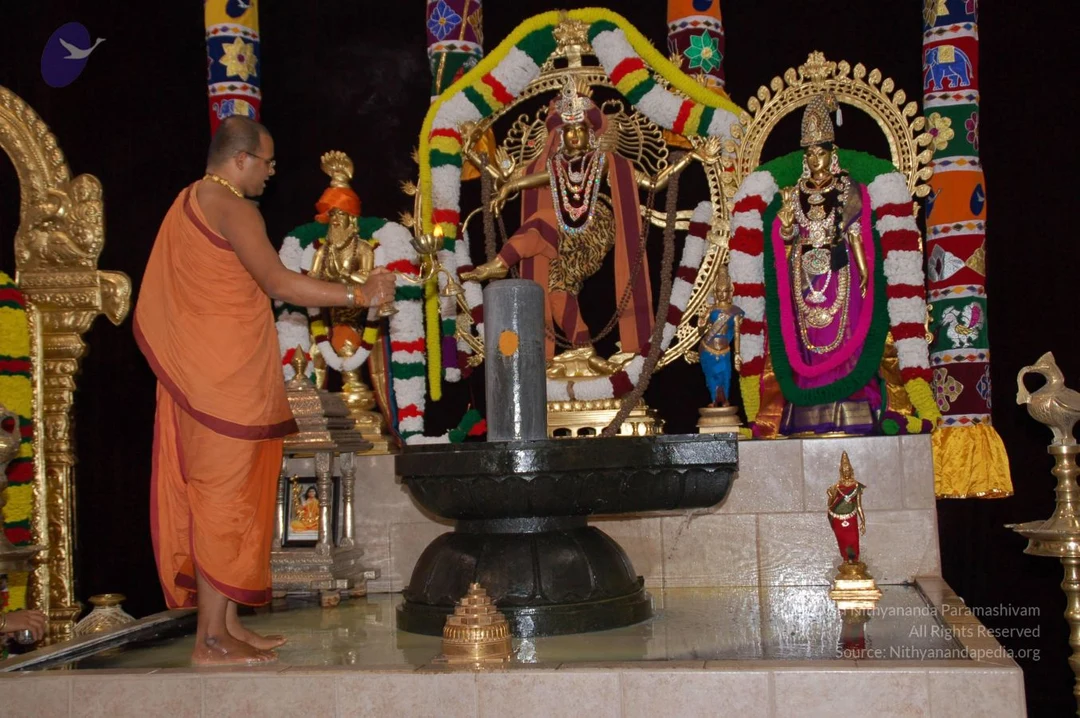
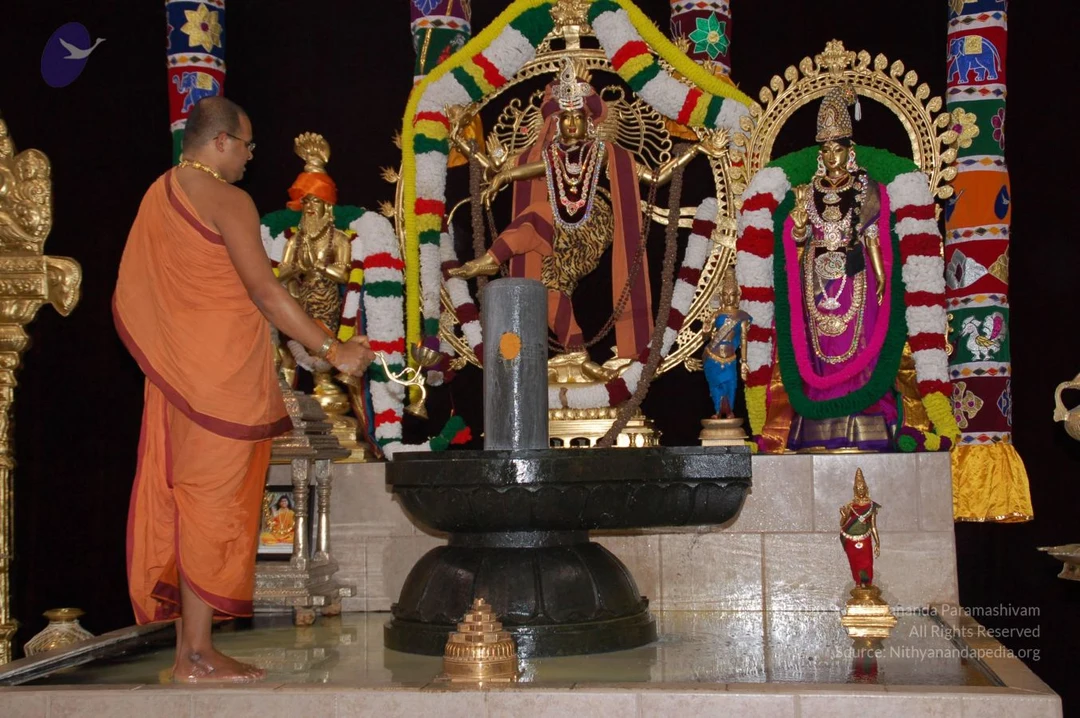
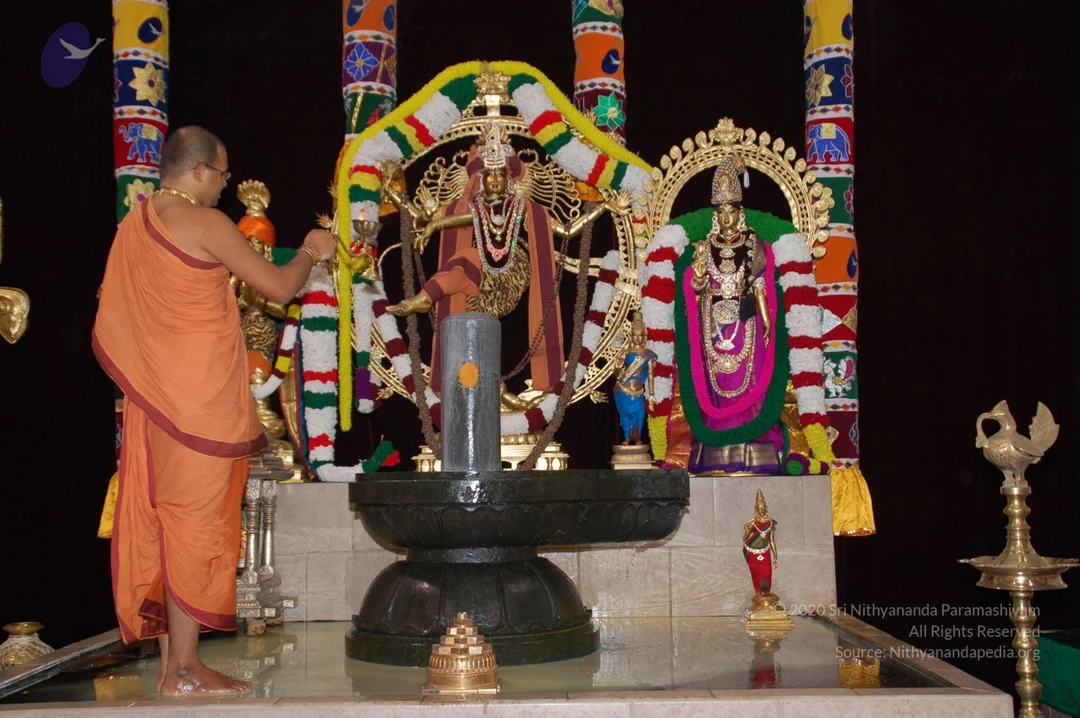
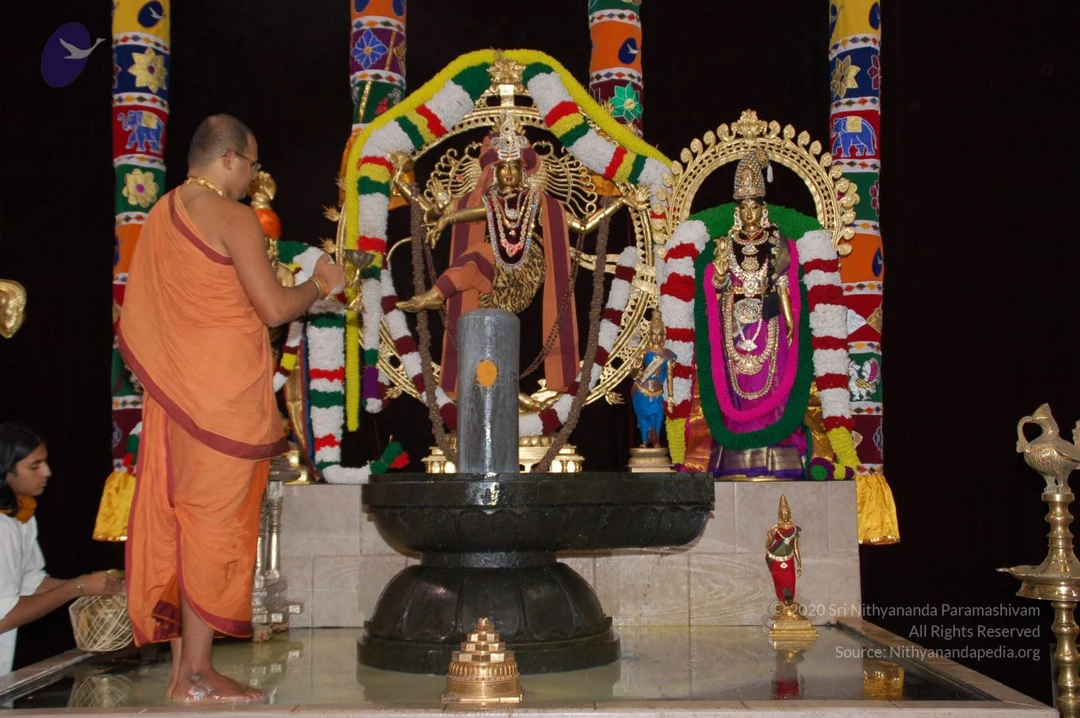
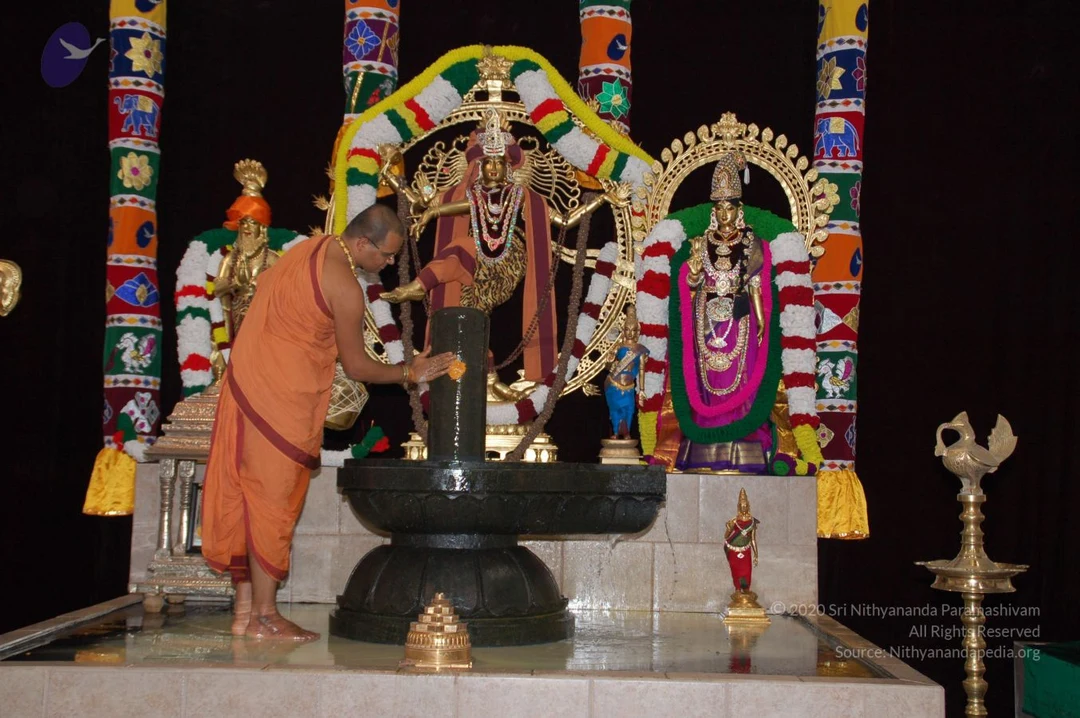
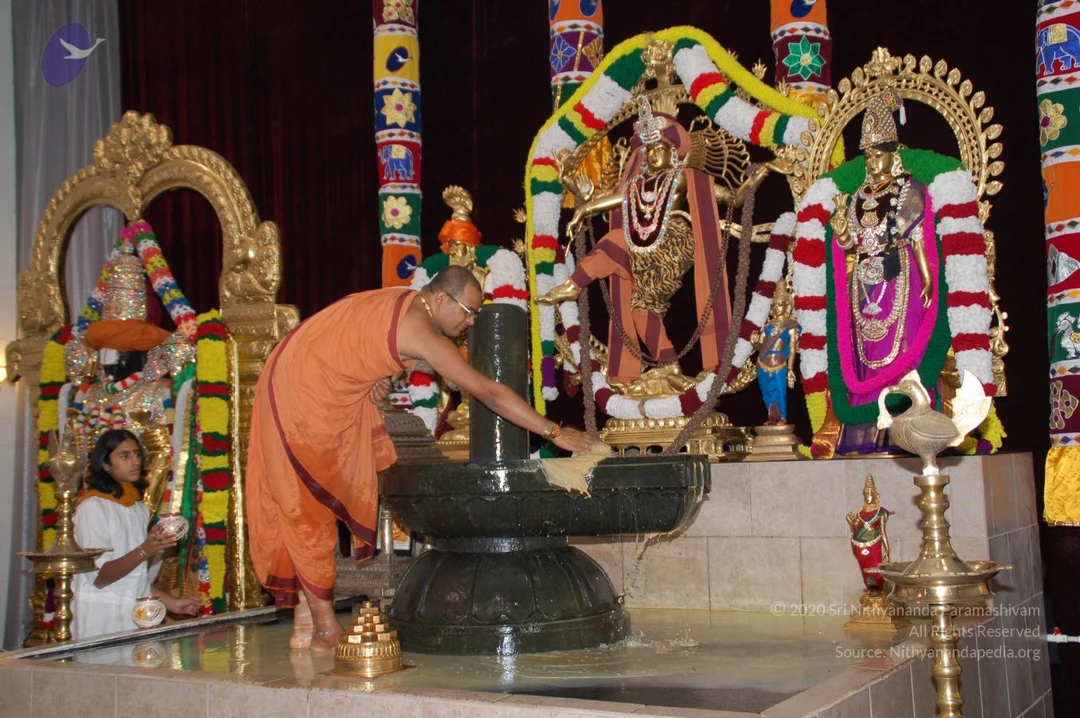
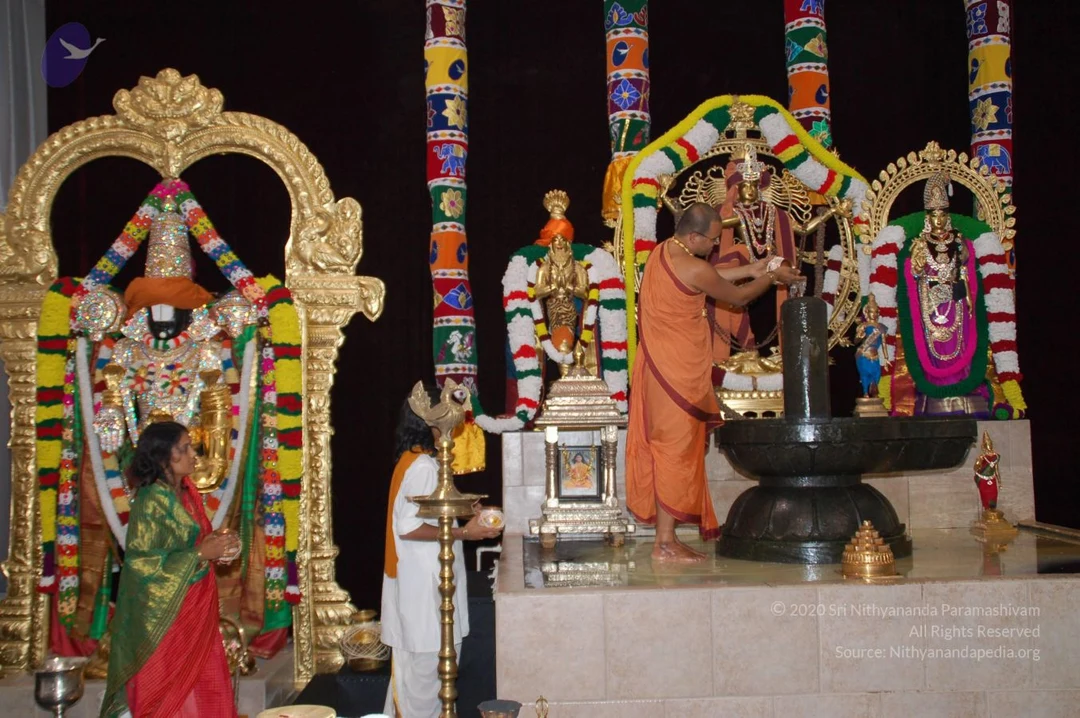
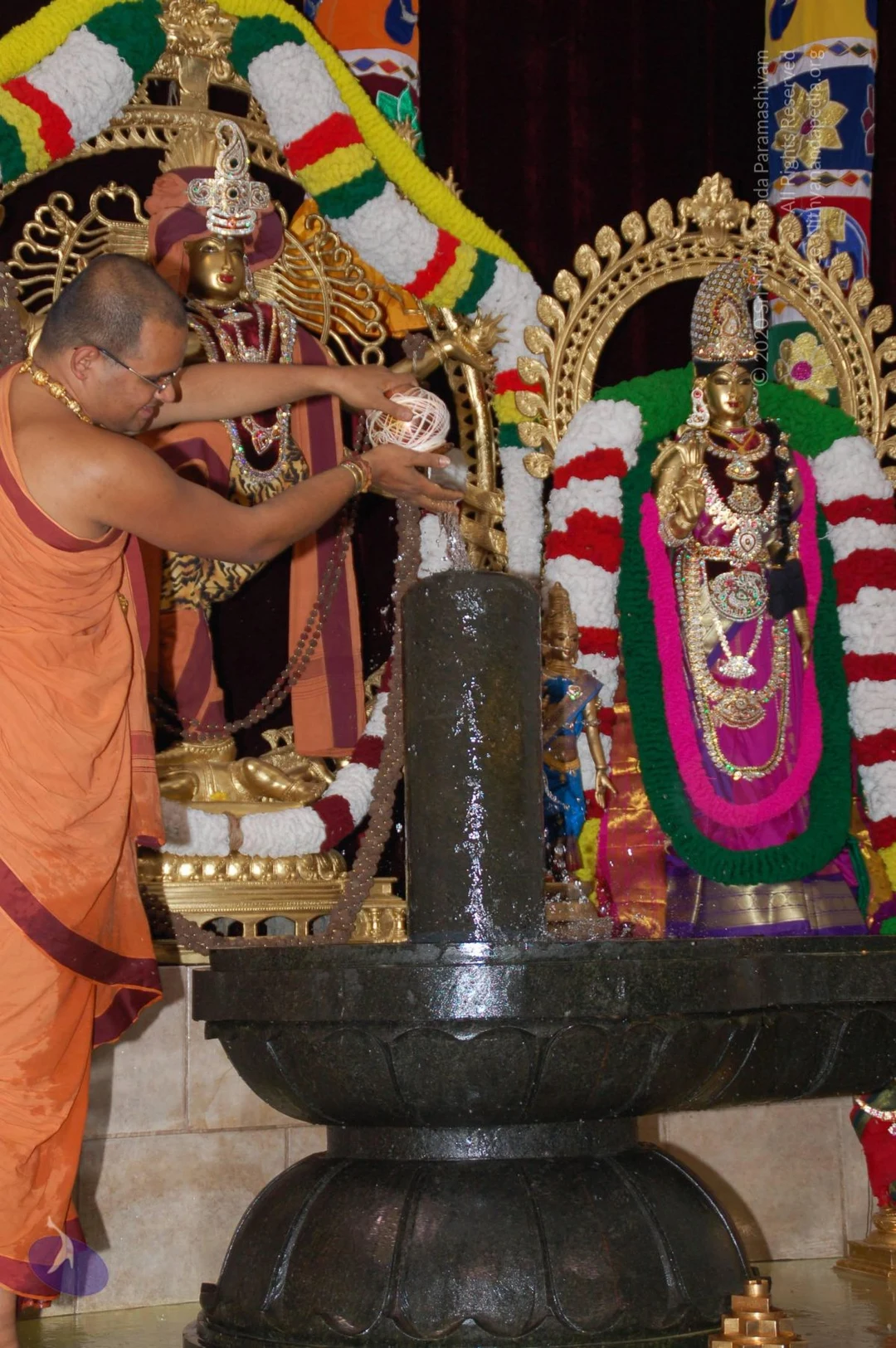
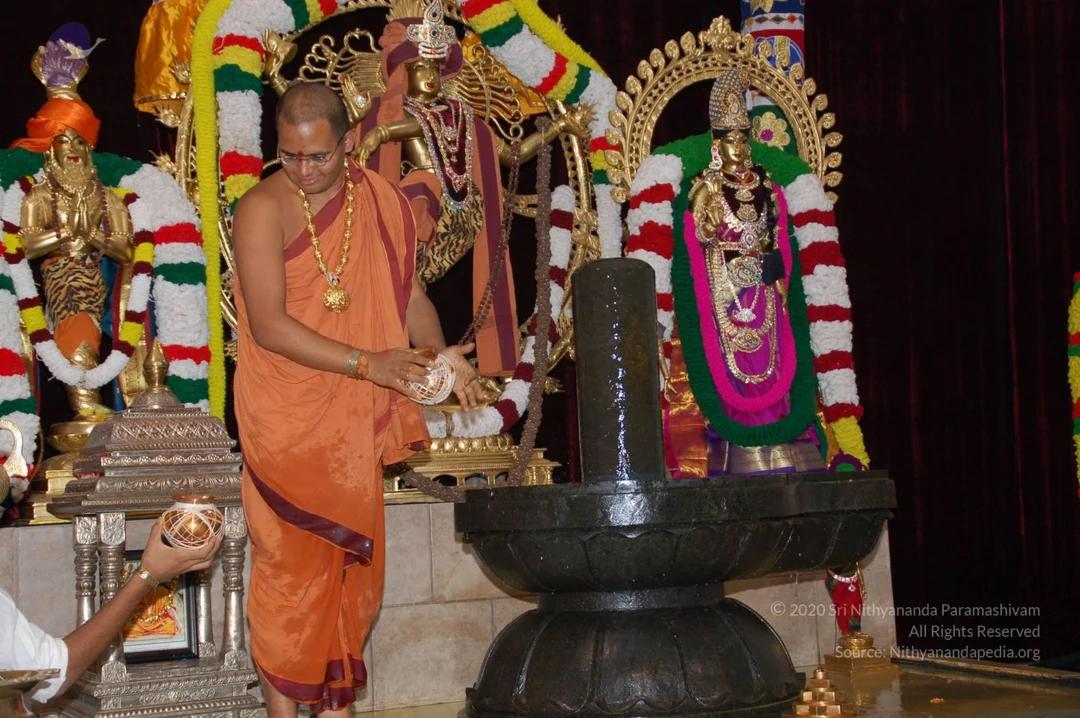
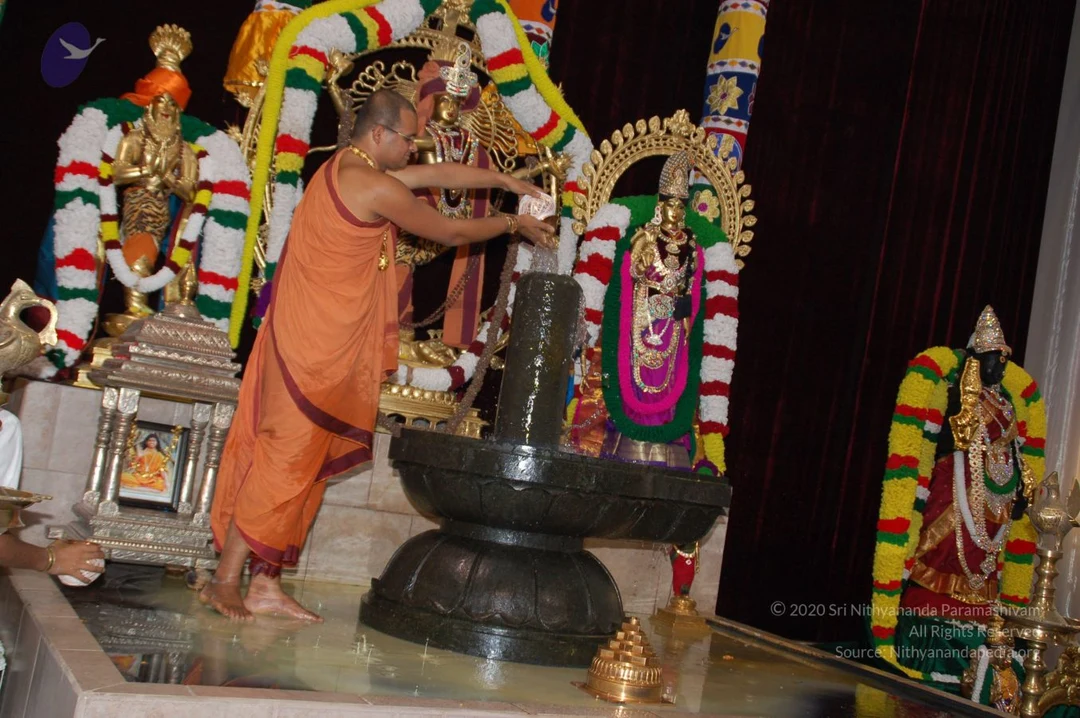
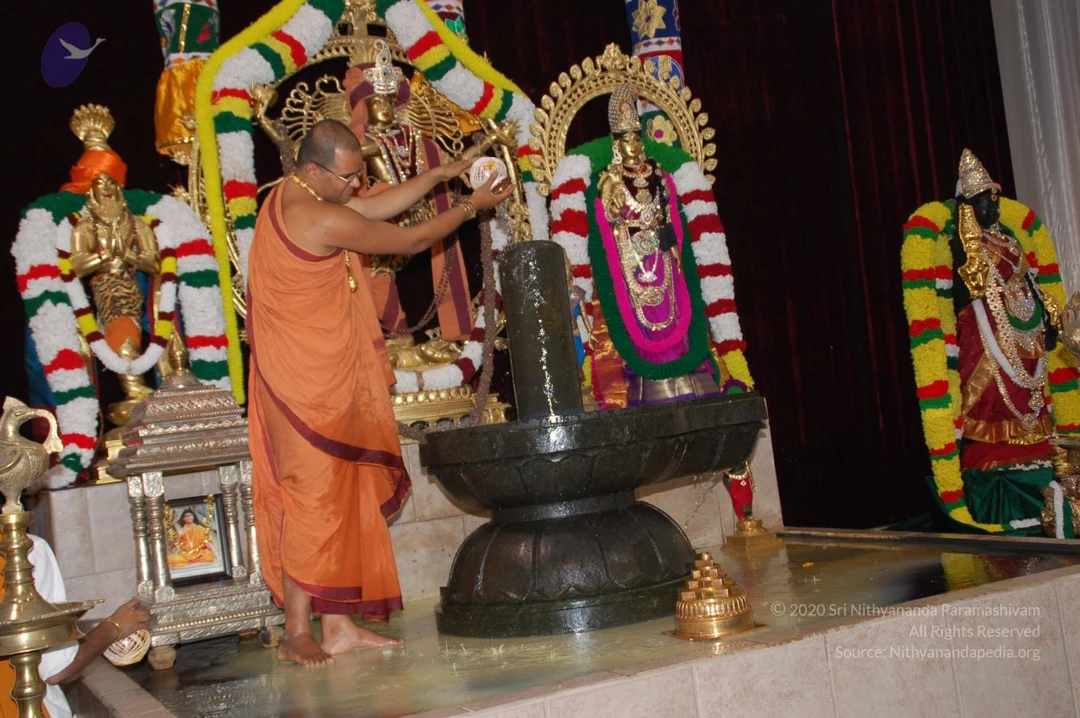
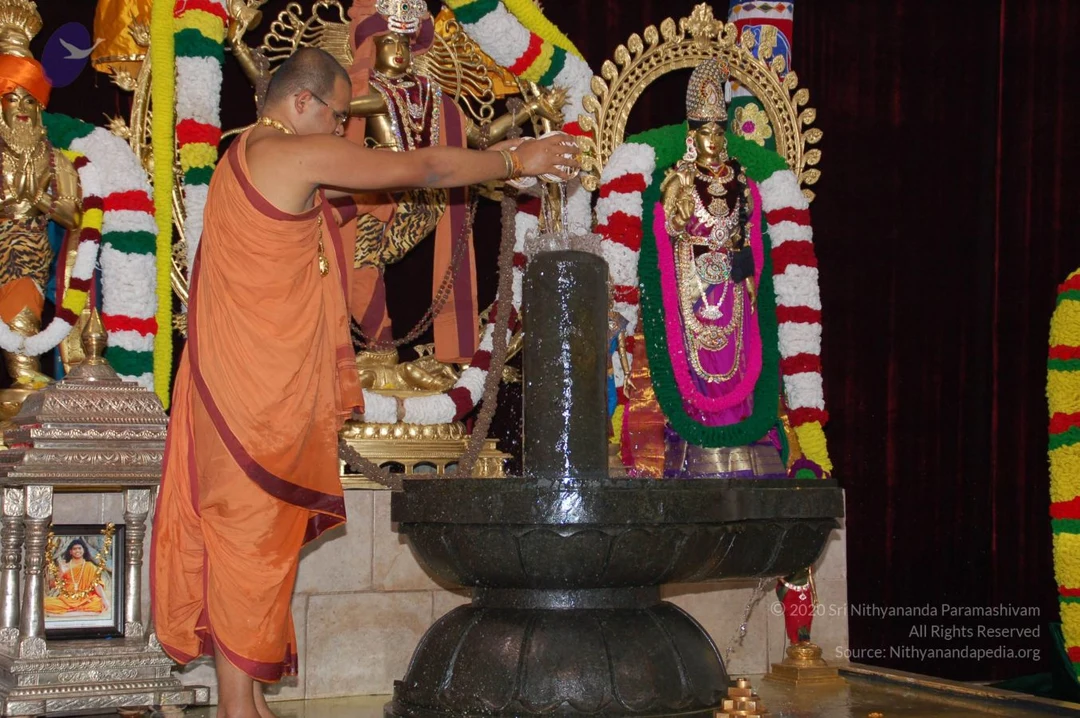
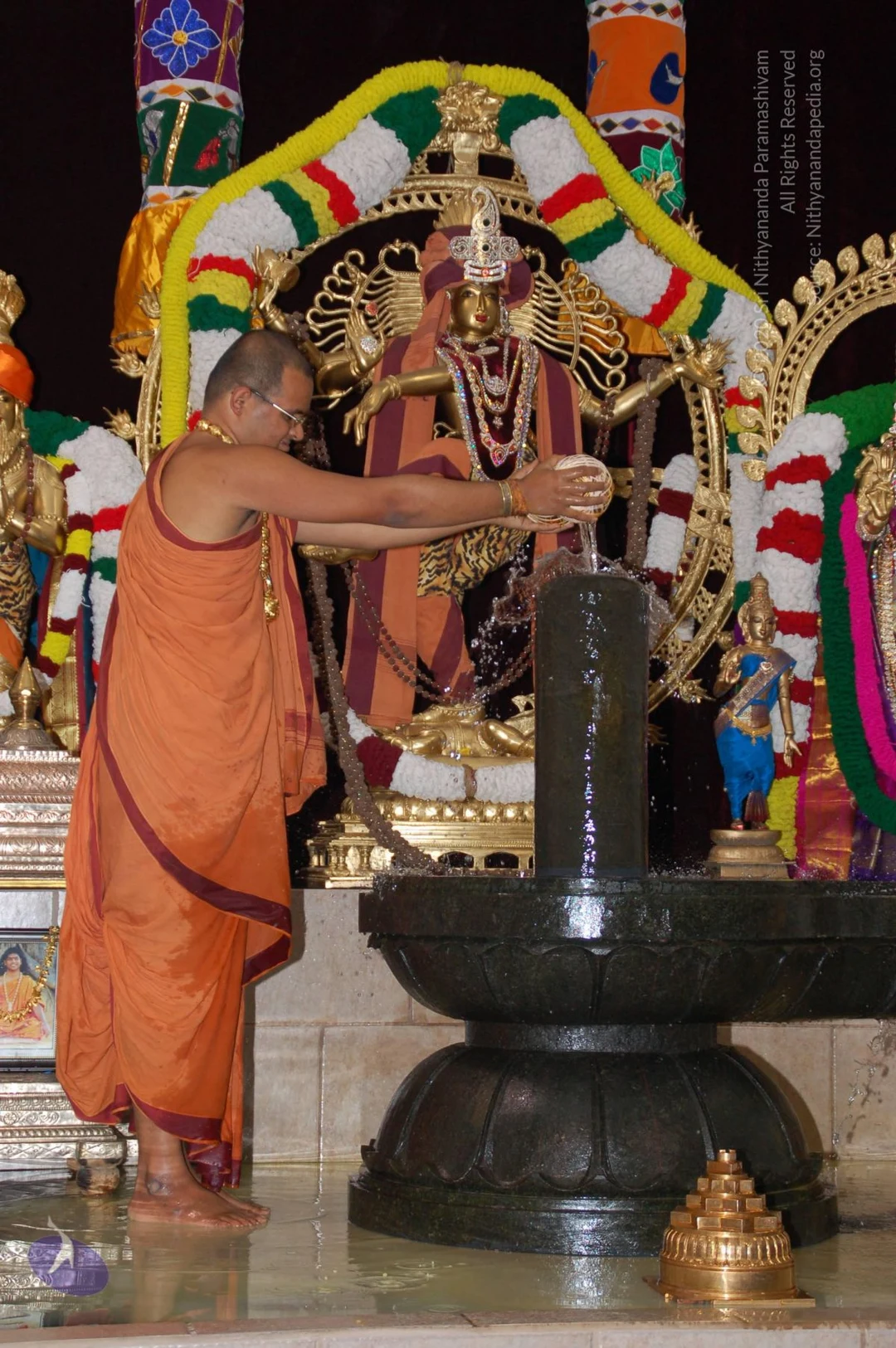
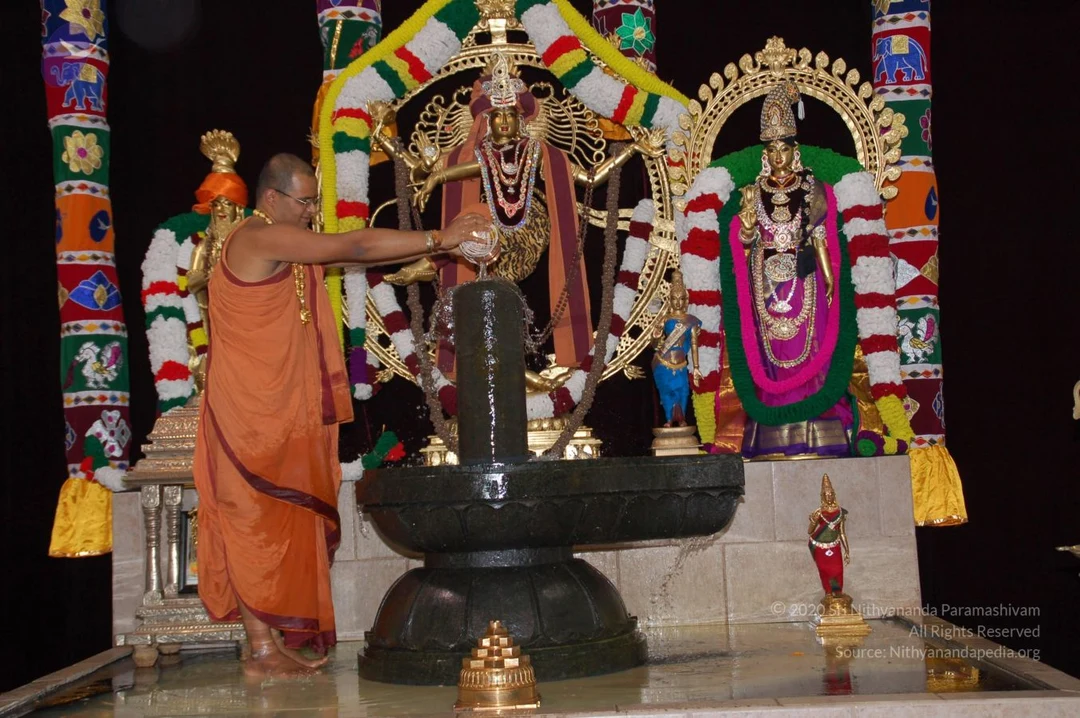
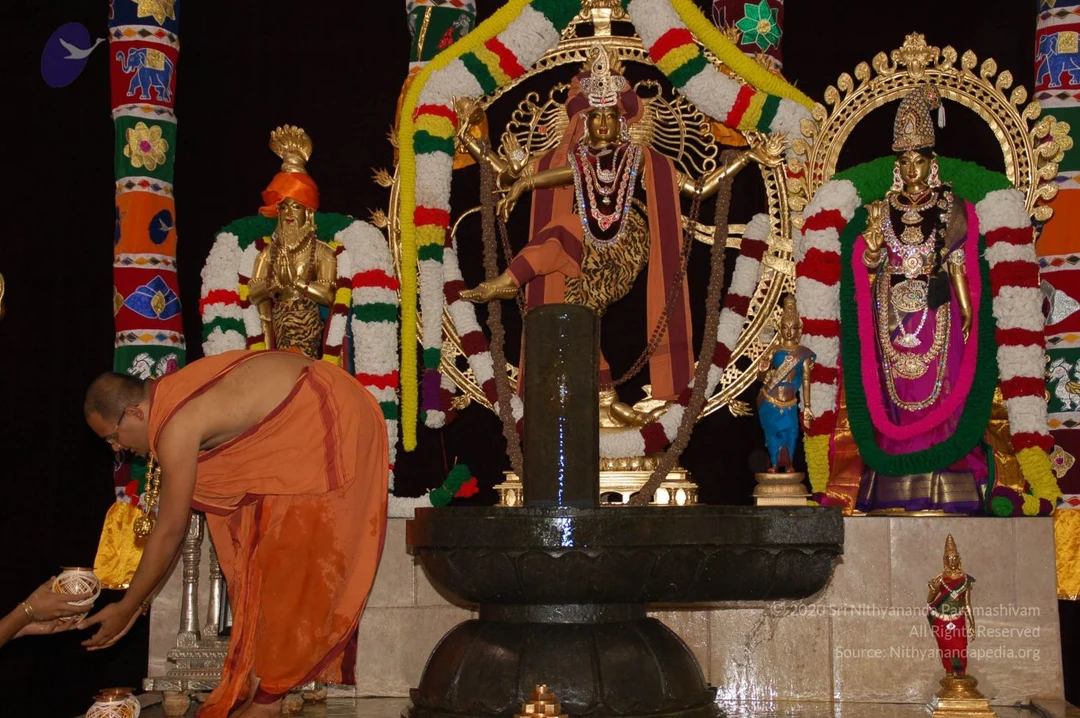
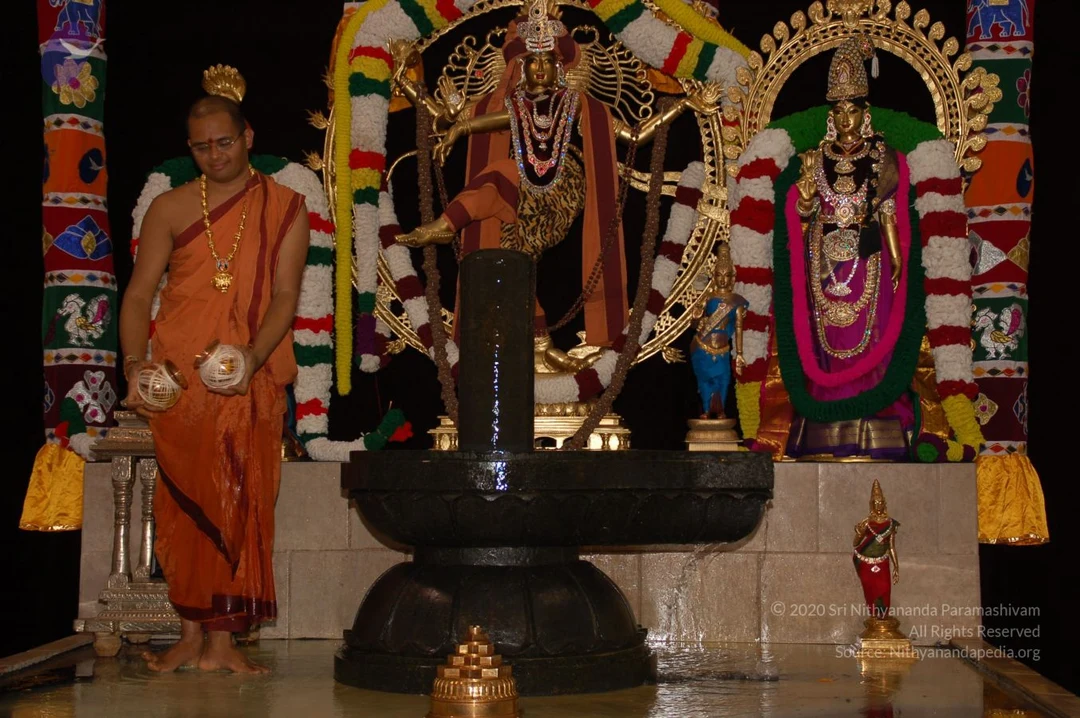
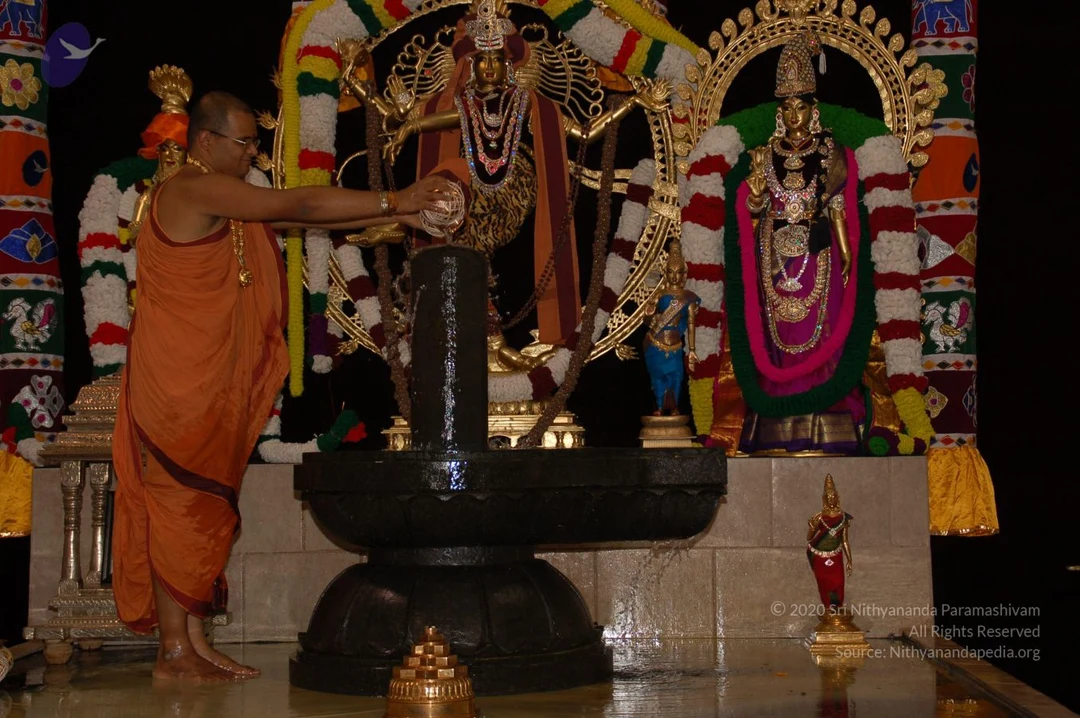
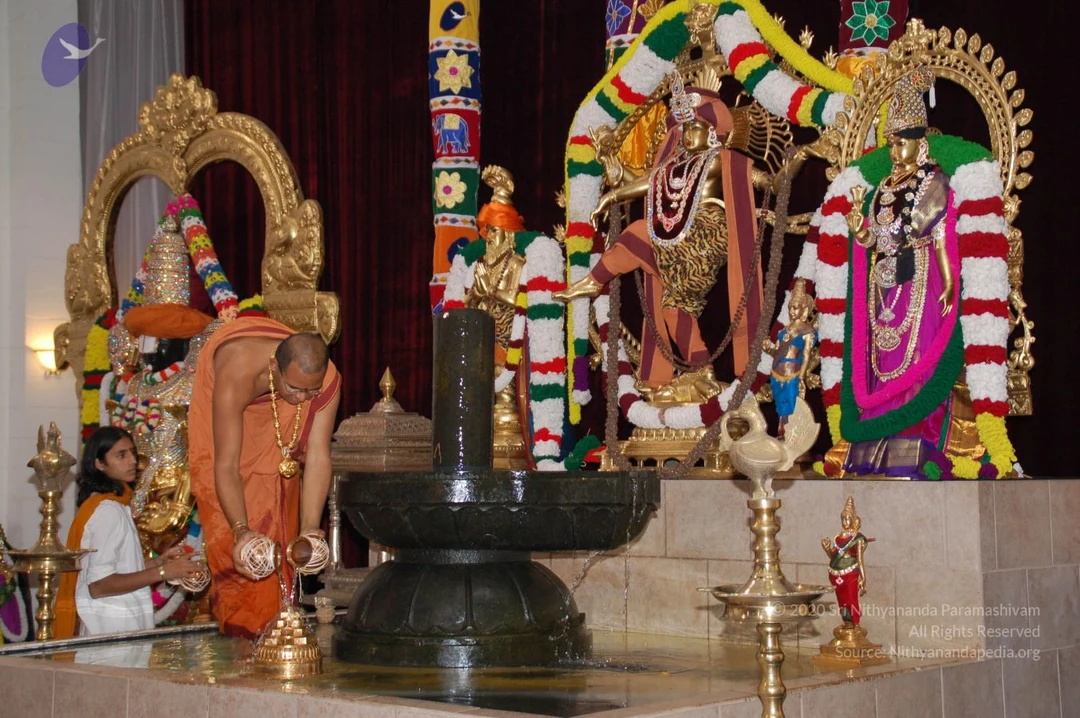
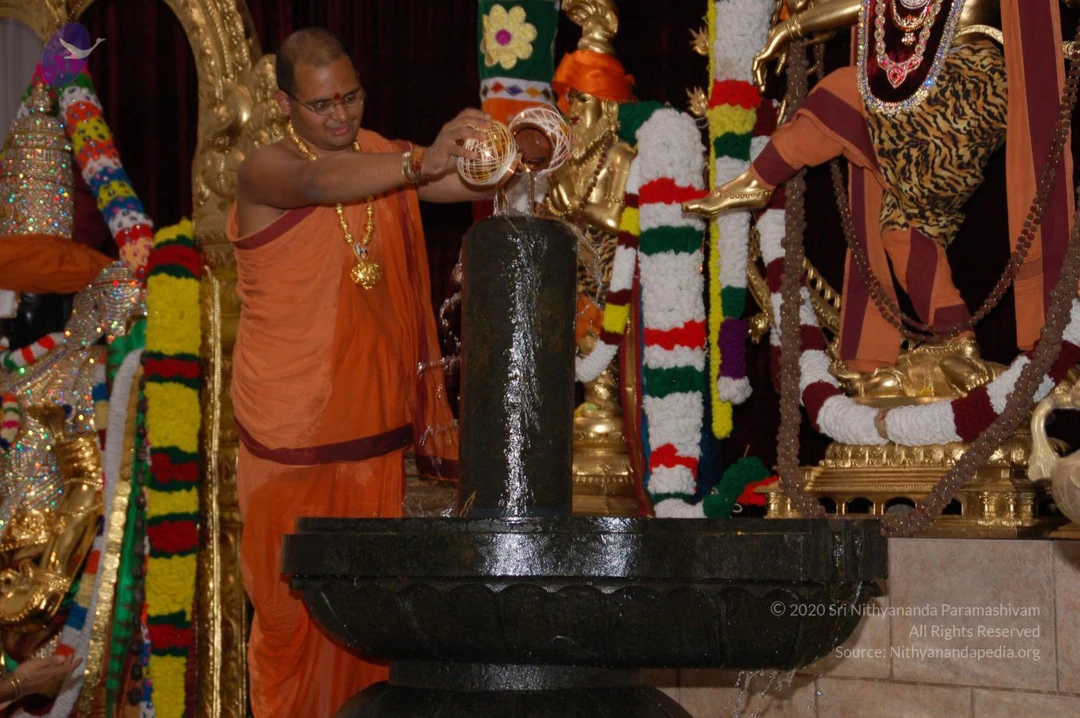
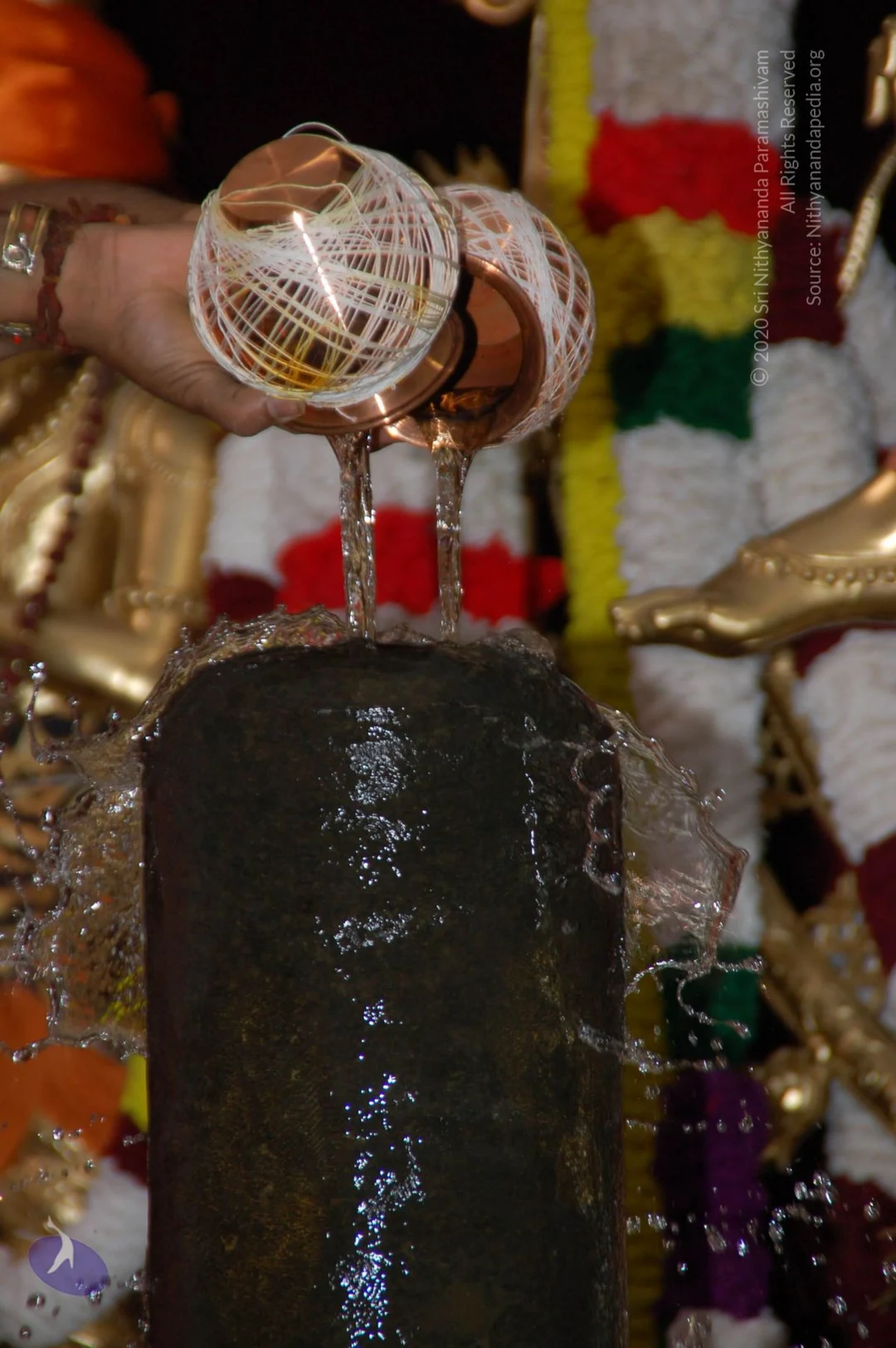
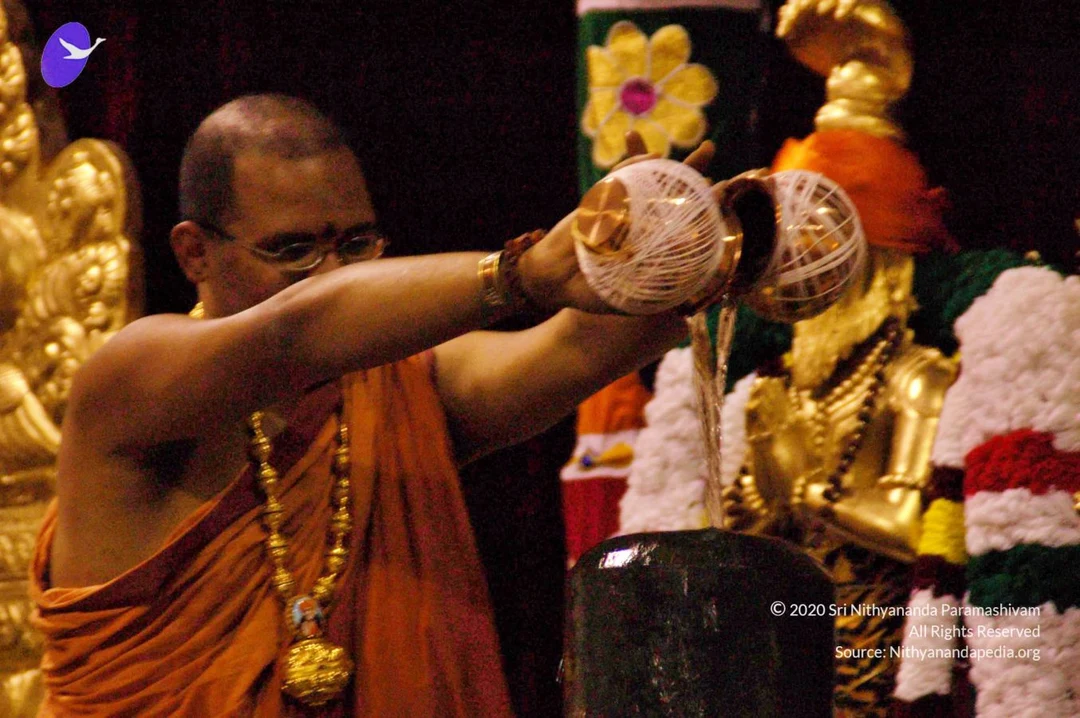
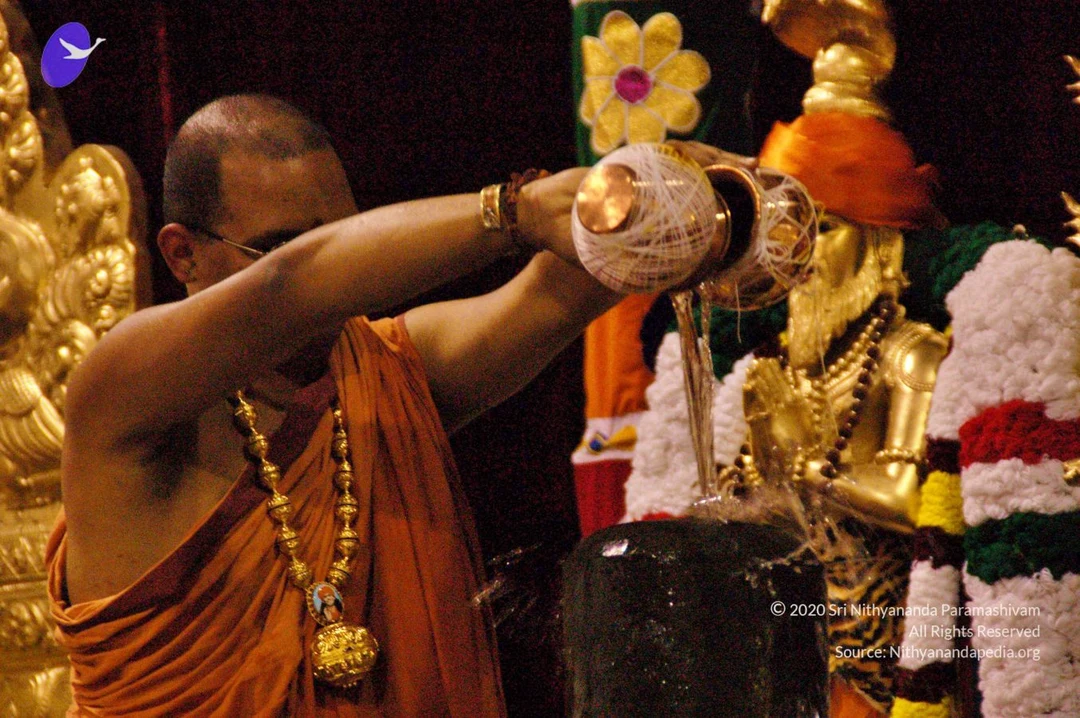
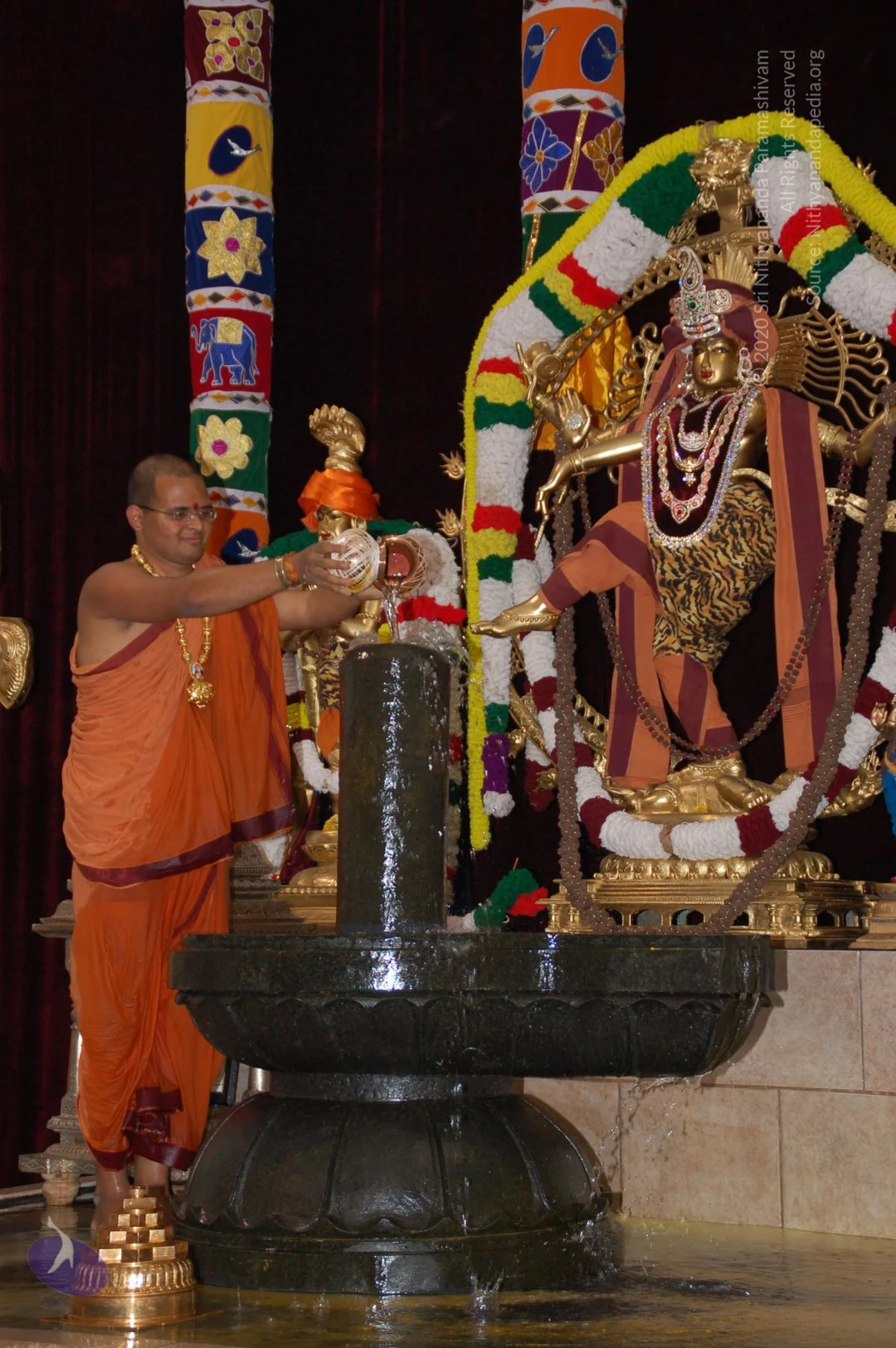
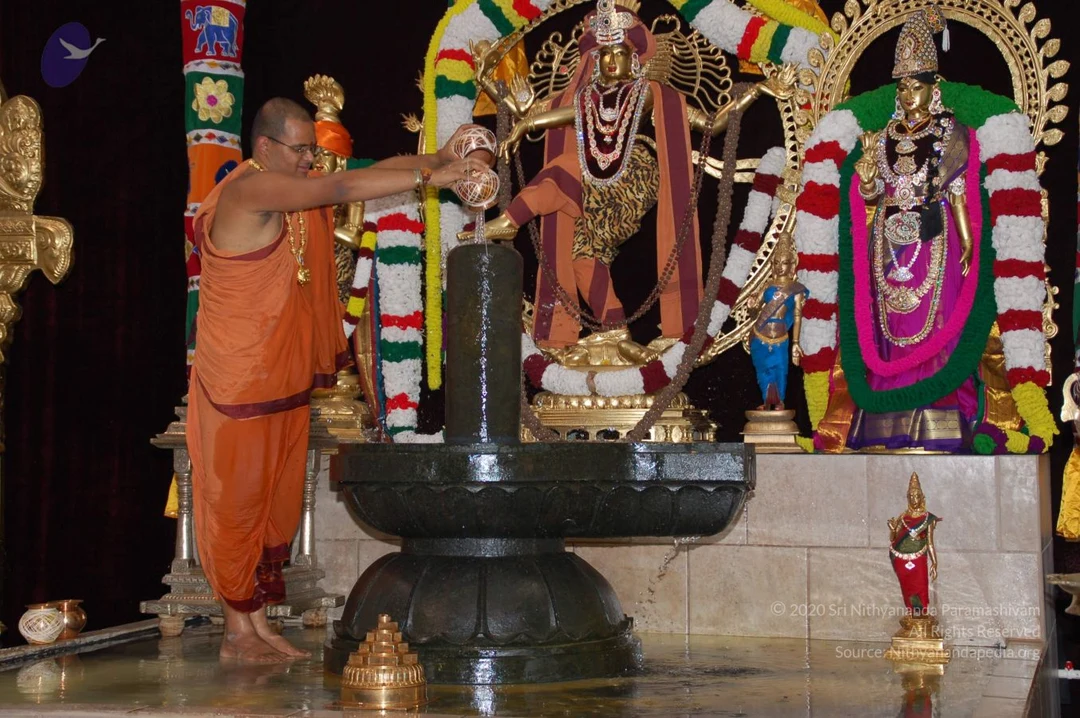
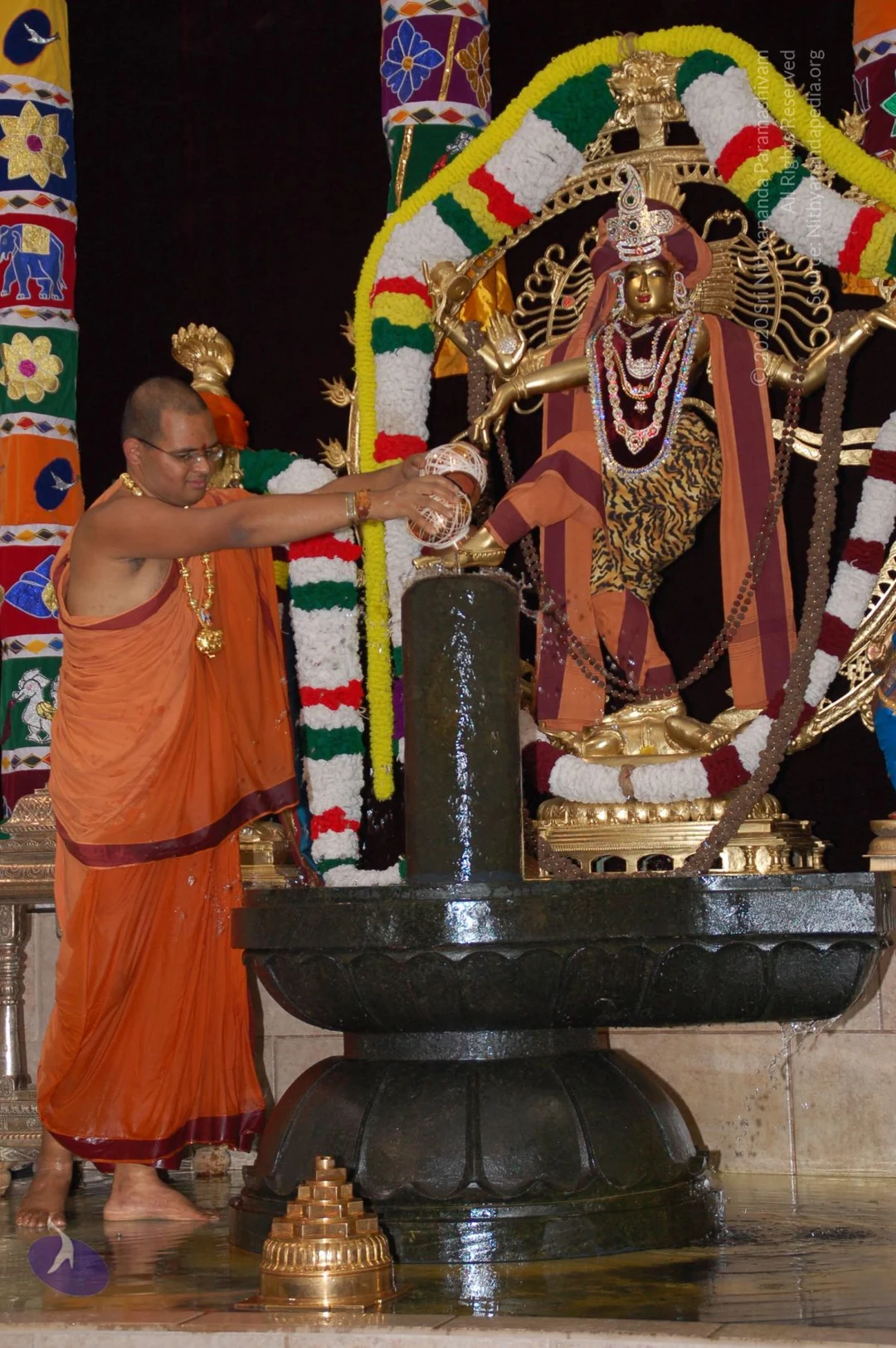
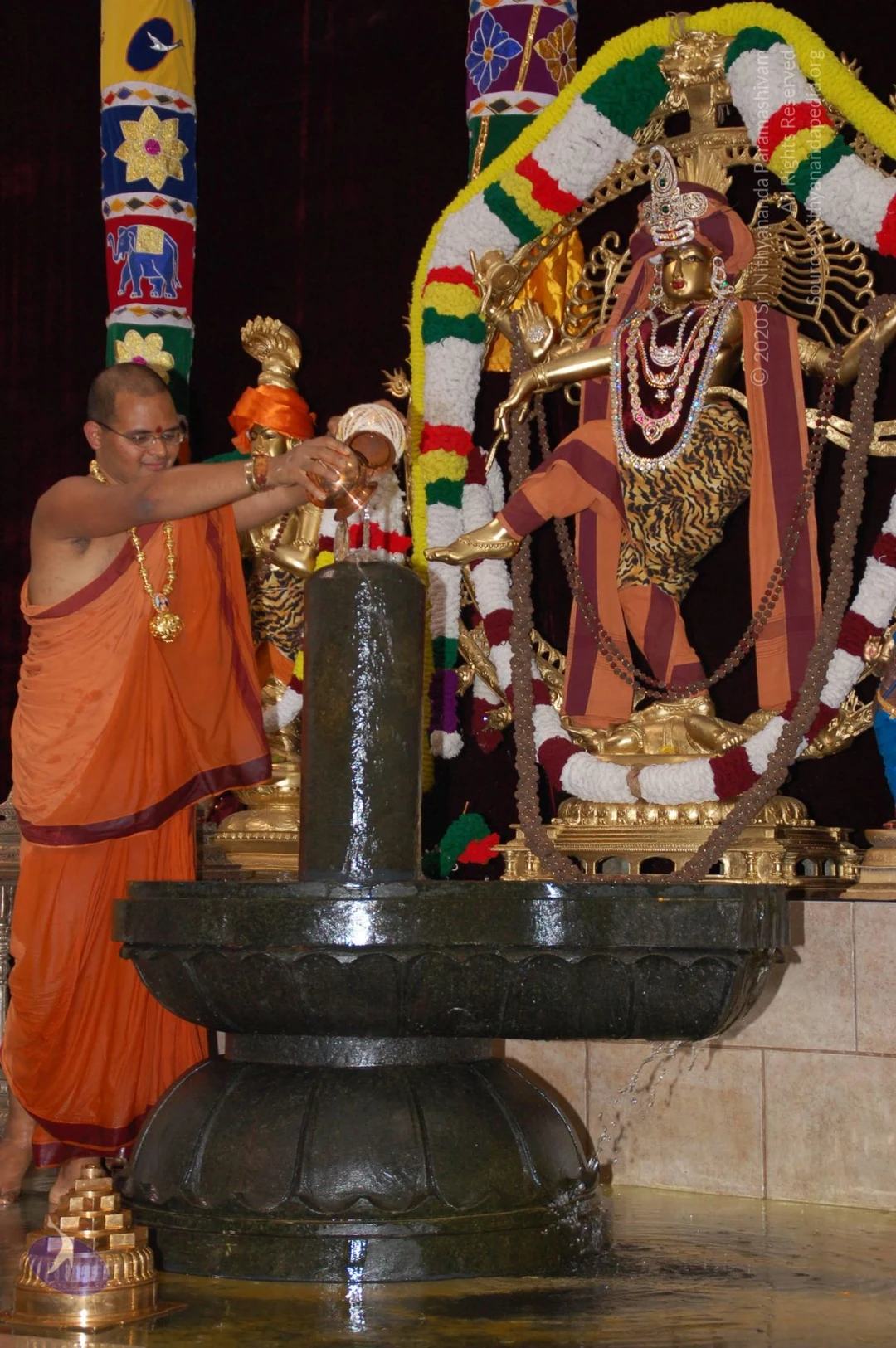
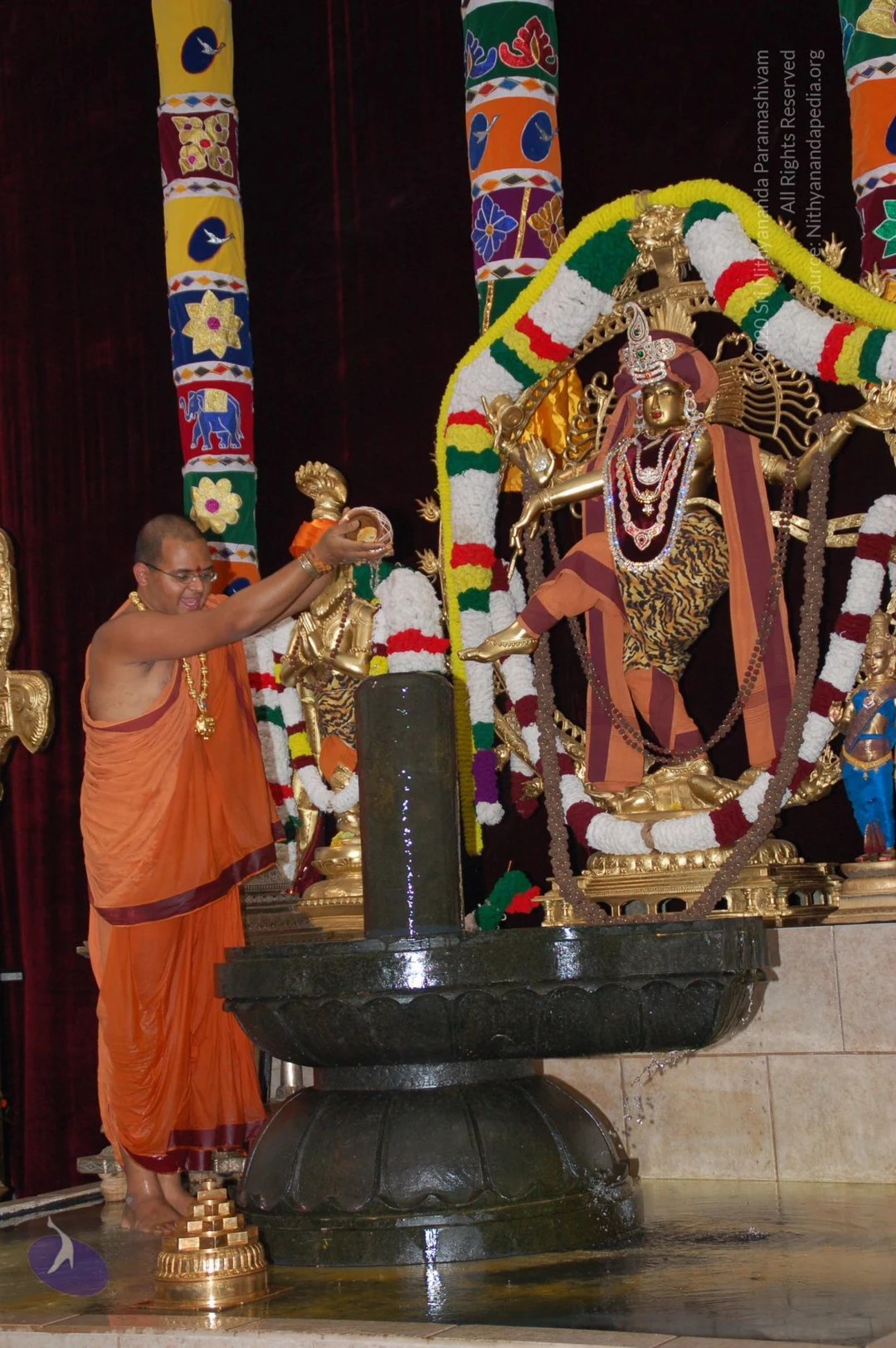
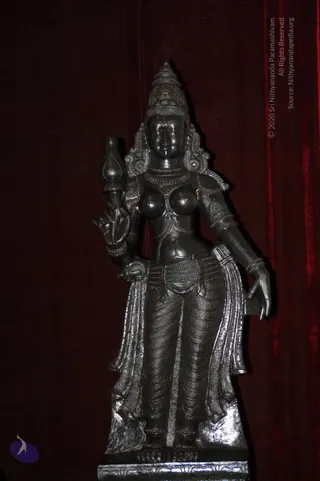
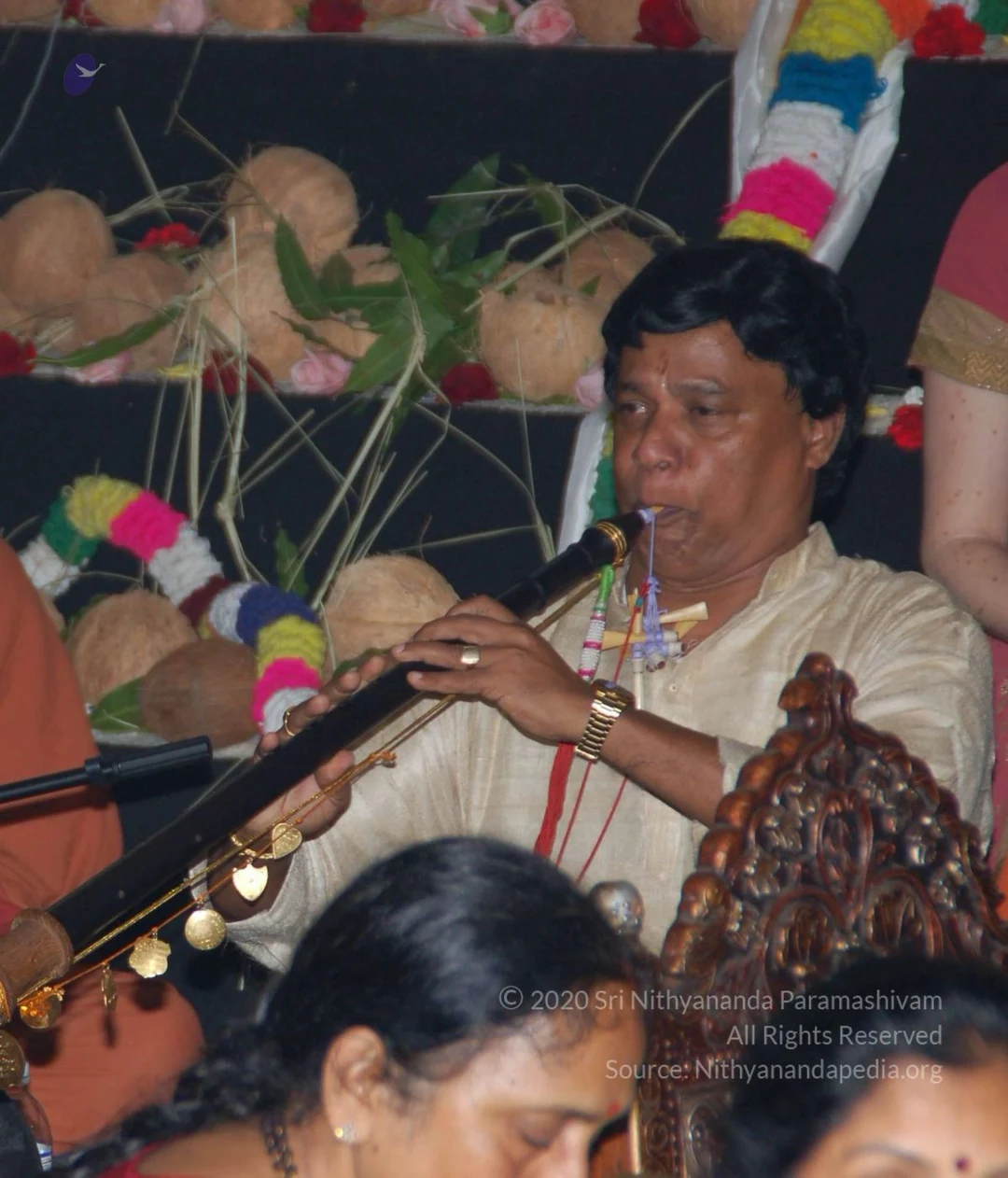
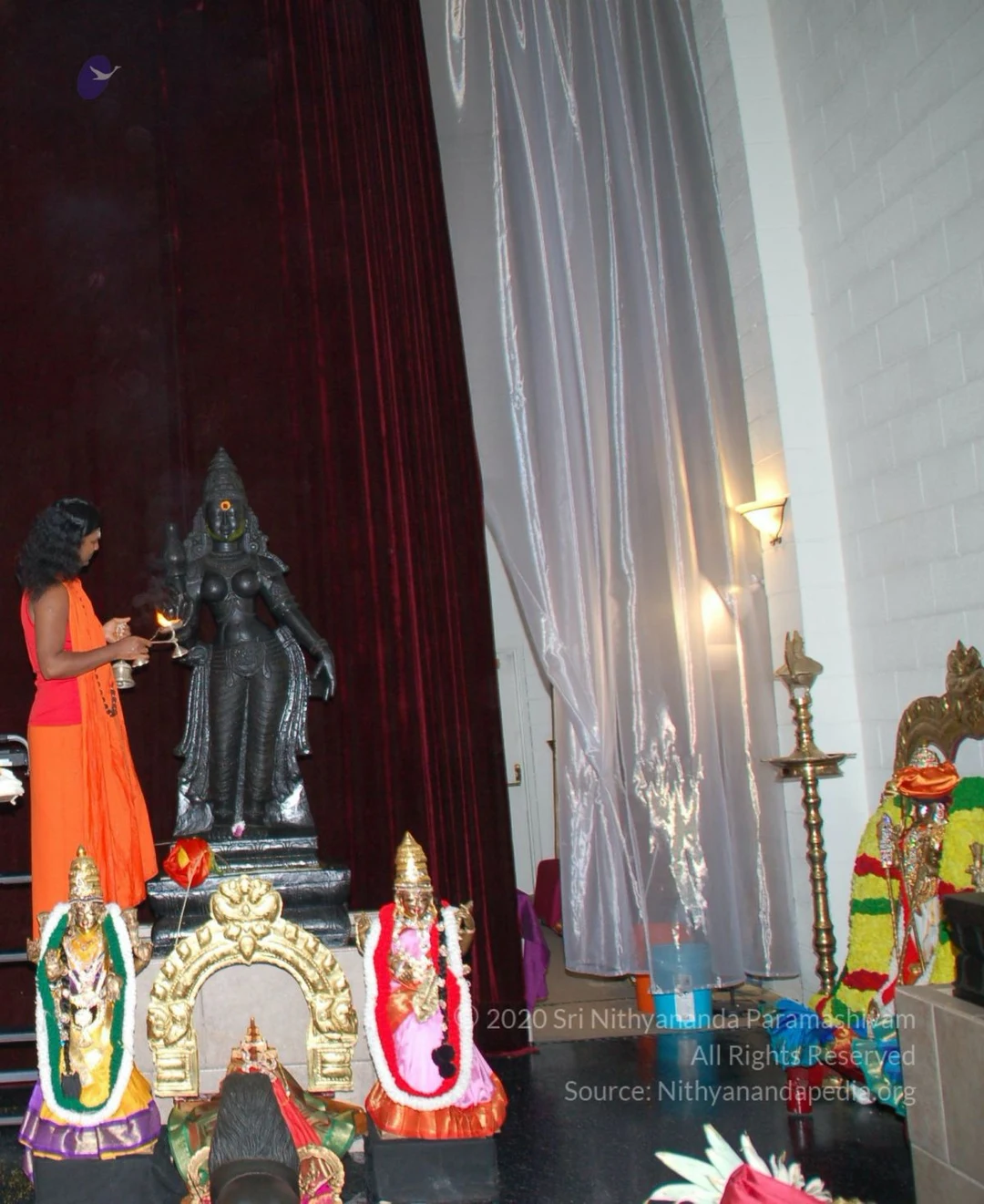
A photograph of a temple shrine with a golden deity murti of Nataraja, dancing on a small dark figure, standing on a black stone pedestal from which water flows. Garlands in red, white, green and yellow hang around the shrine and pillars. A man in a saffron-orange robe with a shaved head leans forward at the lower left, reaching toward a small brass vessel, while another person's hand holds a cup at the edge. To the right stands a golden deity figure adorned with pink and green garlands, and a small golden figurine appears at the bottom right. Brightly coloured decorative pillars with elephant motifs frame the scene.A man in a cream-coloured kurta plays a long dark wooden nadaswaram-style wind instrument with gold fittings and hanging gold ornaments. He wears a gold bangle, a ring and a red thread around his wrist, with a sandal or vibhuti mark on his forehead. Behind him, coconuts, green leaves and a garland of pink, red, yellow and white flowers decorate a display, and a woman in the foreground is partly visible.A dark stone or metal standing murti of a goddess against a deep red velvet curtain. She wears a tall conical crown, a layered necklace, armlets and a jewelled waist belt over a pleated lower garment. Her raised left hand holds a pot-shaped object, and her right hand hangs down with fingers extended. The figure is shown alone with no visible people, and the lighting is dim.

November 15 2007

Original wiki page
Contents

Title:

Be Uninterruptedly Aware & Realize the truth

Description:

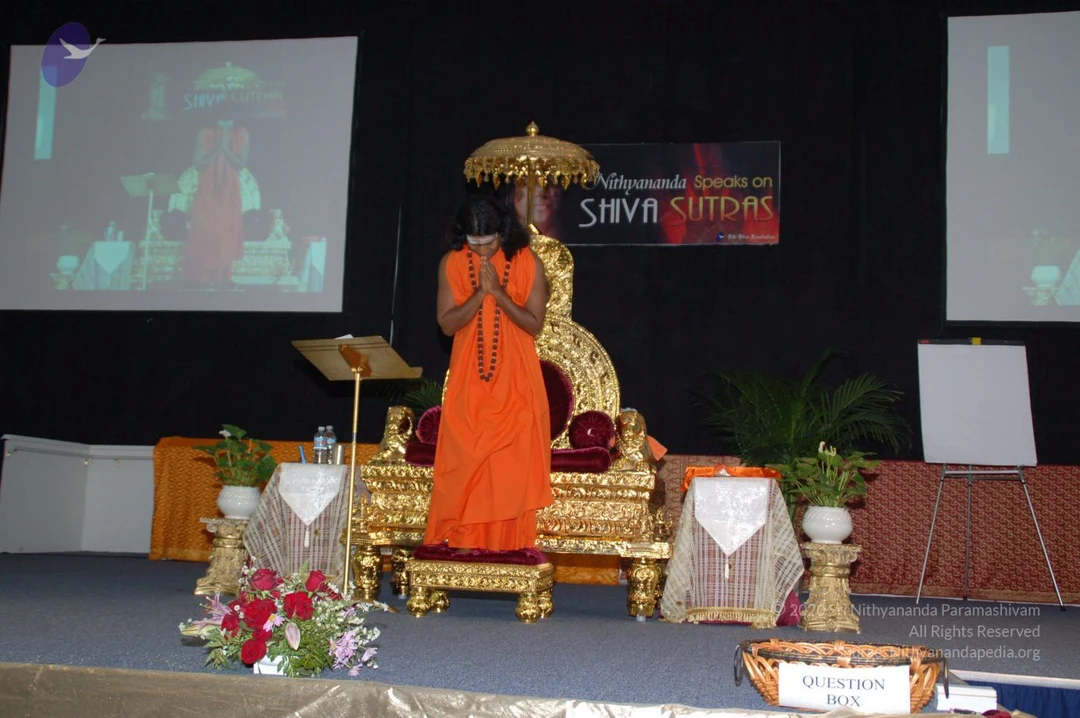
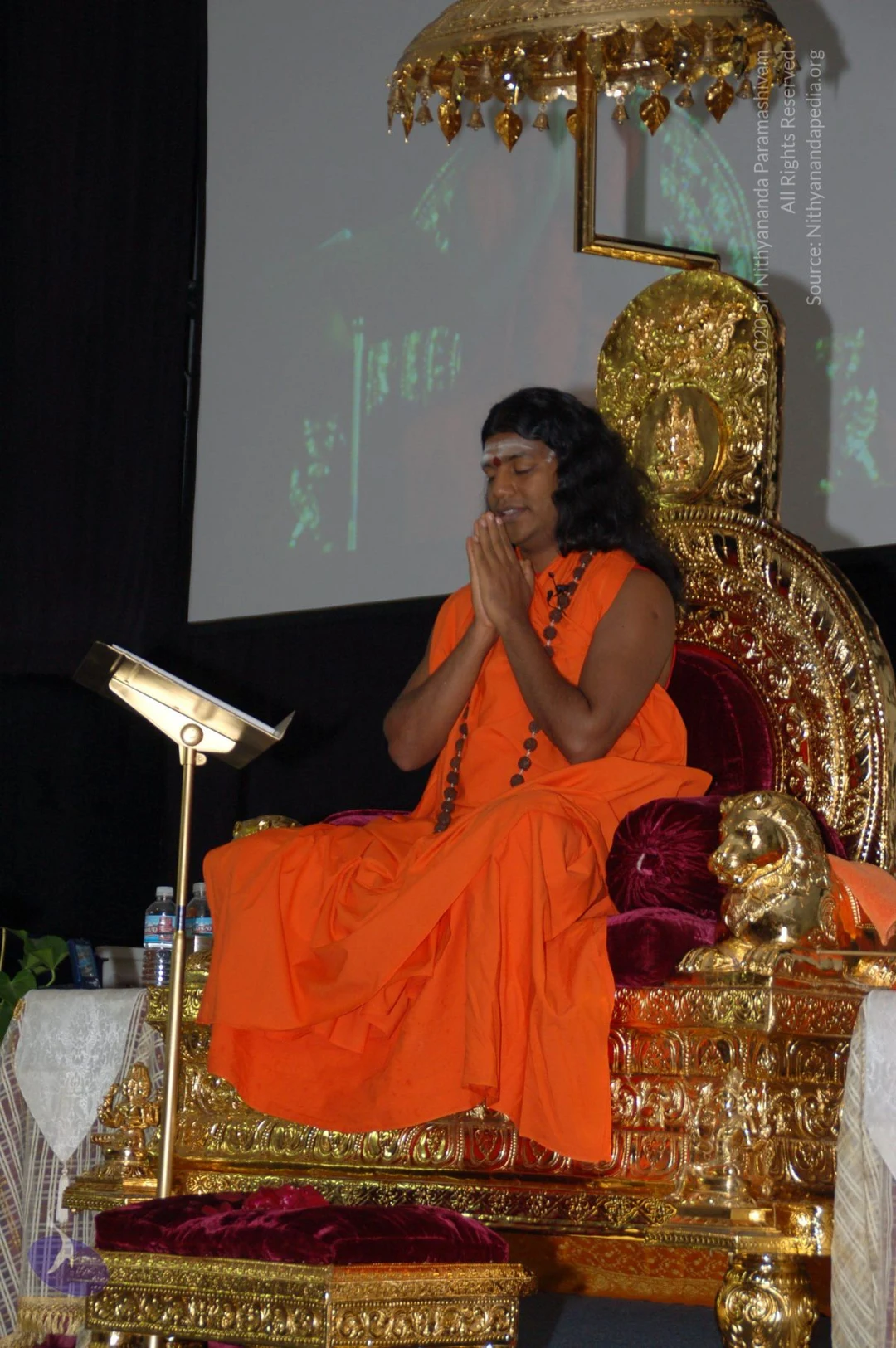
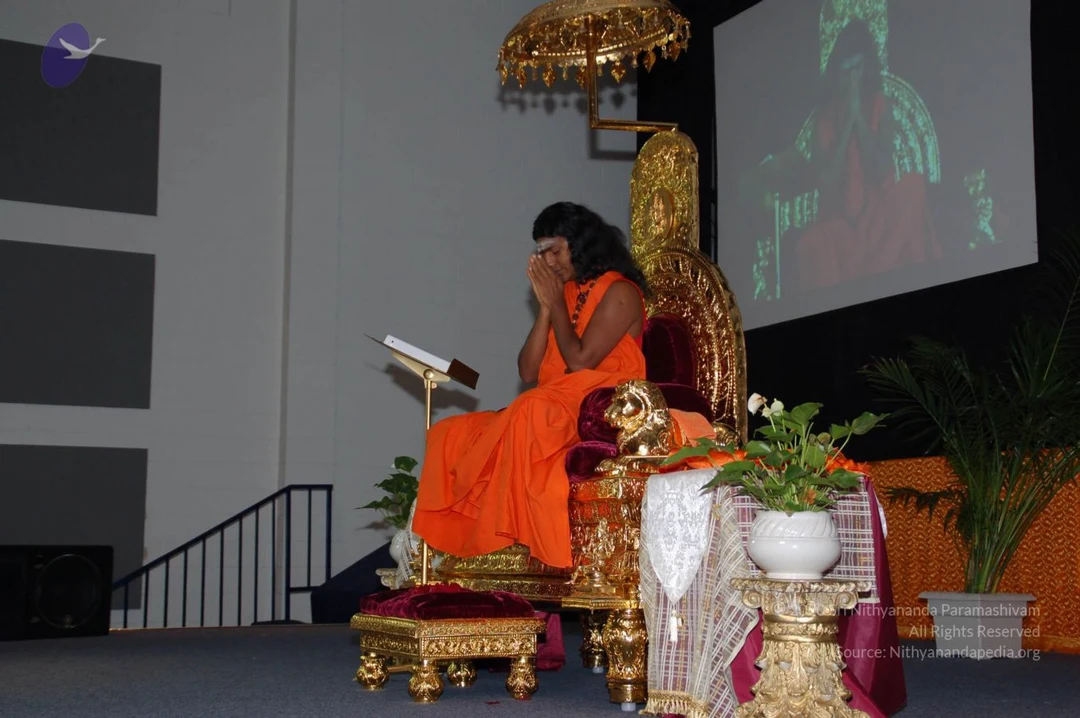
From the works of Living Enlightened Master Paramahamsa Nithyananda. In this clip taken from discourses titled, "Your Senses -- Your Gates to Awareness" and "Alertness -- Your way to your center", In this Shiva Sutra, Mahadeva is giving us example of using various situations in life to jump into enlightenment through intense awareness. In this clip Swamiji describes two sutras of Shiva -- one where He tells us to be intensely aware of our voluntary movements and second to be intensively aware of involuntary movements to experience the ultimate.

Link to Video:

VideoAudio

Title:

Secrets of Spontaneity and Oratory Skills

Description:

From the works of Living Enlightened Master Paramahamsa Nithyananda. In this clip taken from discourses titled, "Your Senses -- Your Gates to Awareness" and "Alertness -- Your way to your center", In this clip Swamiji gives us pearls of wisdom as to how one can be a spontaneous orator. He tells us that one should only talk about what he/she strongly believes and experiences. He also tells us never to convince people on subjects on which you are not convinced. He also tells us that He makes it a point that in His case, only 2% of Master's teachings come from words and verbalization, 98% is delivered through the body language and the confidence and courage expressed by the Master.

Link to Video:

VideoAudio

Title:

Essence of Worship

Description:

From the works of Living Enlightned Master Paramahamsa Nithyananda. In this clip taken from discourses titled, "Your Senses -- Your Gates to Awareness" and "Alertness -- Your way to your center", In this clip Swamiji answers the question from a devotee about idol worship. Through the example of the tradition of a tribal group in the forests of Amazon, Swamiji asks us the question that if these tribals are able to connect with a person through their clay effigy, why cant we connect with the ultimate energy through idol worship? Swamiji goes on to give us beautiful examples of deep connection of people to idol worship. He tells us that all we need is authenticity of our emotions with idol worship or any other spiritual practice.

Link to Video:

VideoAudio

Title:

Internal & External Wandering and True Seeking

Description:

From the works of Living Enlightened Master Paramahamsa Nithyananda. In this clip taken from discourses titled, "Your Senses -- Your Gates to Awareness" and "Alertness -- Your way to your center", Swamiji answers a question about the meaning of Internal Wandering. Initially whatever thoughts related to external objects becomes external wandering and the thoughts related to your identity becomes internal wandering. Internal wandering gets subtler and subtler as your awareness grows. The more subtler you grow, you will catch deeper and deeper layers of internal wandering, to a point where even your own name will look as external wandering! The bottom line is you need to go beyond any wandering, whether it is internal or external, Swamiji also goes on to shed light on the meaning of true seeking. He tells us that it is entering into the deep silence that is within you and making changes in your life from the revelations given to you through experiencing this deep silence.

Link to Video:

VideoAudio

Title:

Technique for Sudden Enlightenment by being Uninterruptedly Aware

Description:

From the works of Living Enlightened Master Paramahamsa Nithyananda. In this clip taken from discourses titled, "Your Senses -- Your Gates to Awareness" and "Alertness -- Your way to your center", In this clip Swamiji gives us the rationale/science behind being uninterruptedly aware. During involuntary situations such as fear, hunger, etc, your whole being is involved and if you flood awareness during these involuntary moments, unclutching can happen. Swamiji provides an in-depth explanation on being aware during conscious actions and during involuntary actions.These techniques are given by Mahadeva for sudden enlightenment.

Link to Video:

VideoAudio

Title:

Add Awareness to Your Inner Programming

Description:

From the works of living enlightened master Paramahamsa Nithyananda. In this clip taken from discourse titled, "The Merging!", Swamiji tells us that we are self centered beings. When we add awareness that we are self-centered, this itself leads us to enlightenement. This sutra, when practiced initially, becomes a life solution. If we continue practicing this technique, this becomes a technique for enlightenment.

Link to Video:

VideoAudio

Photos

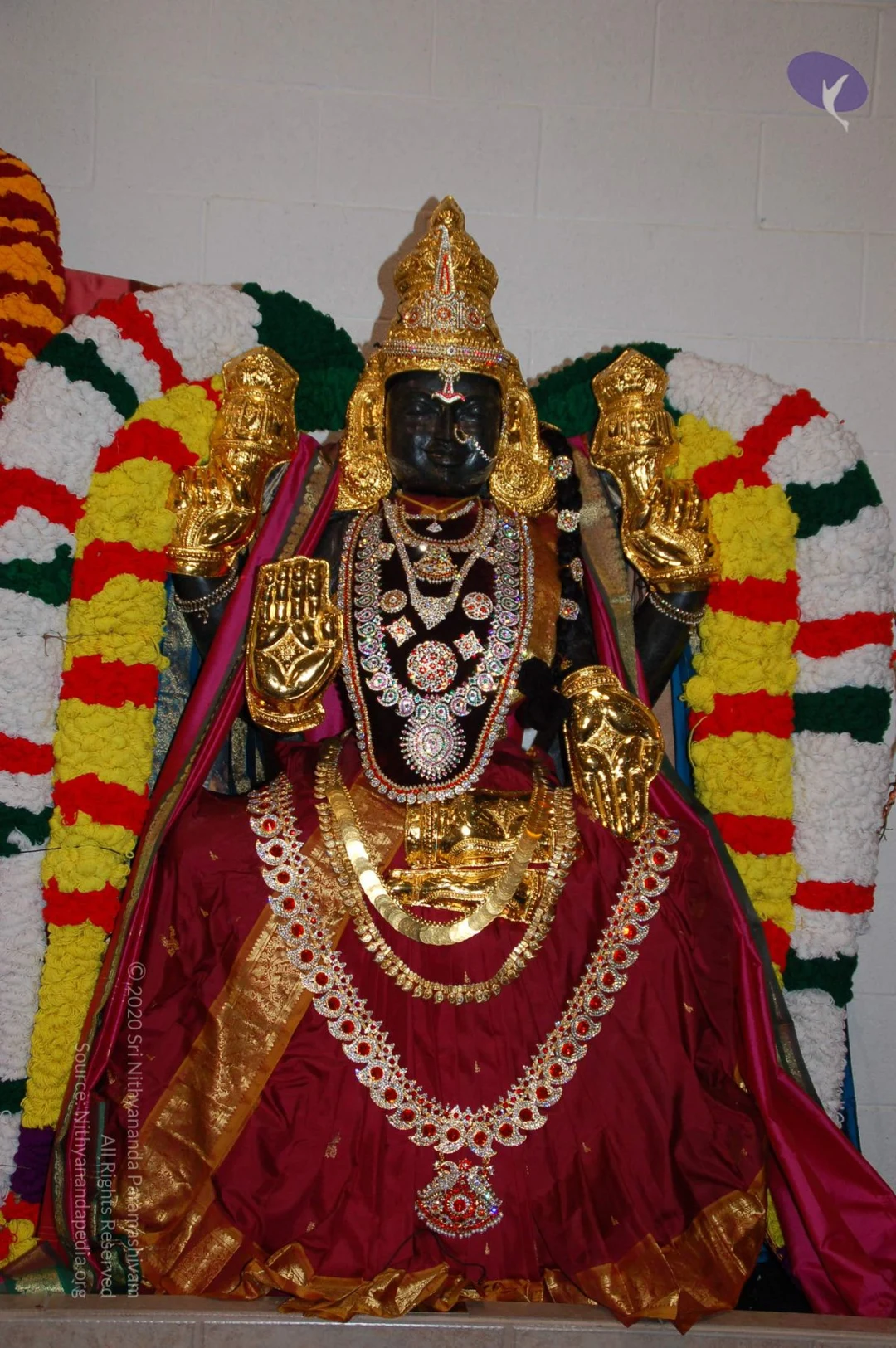
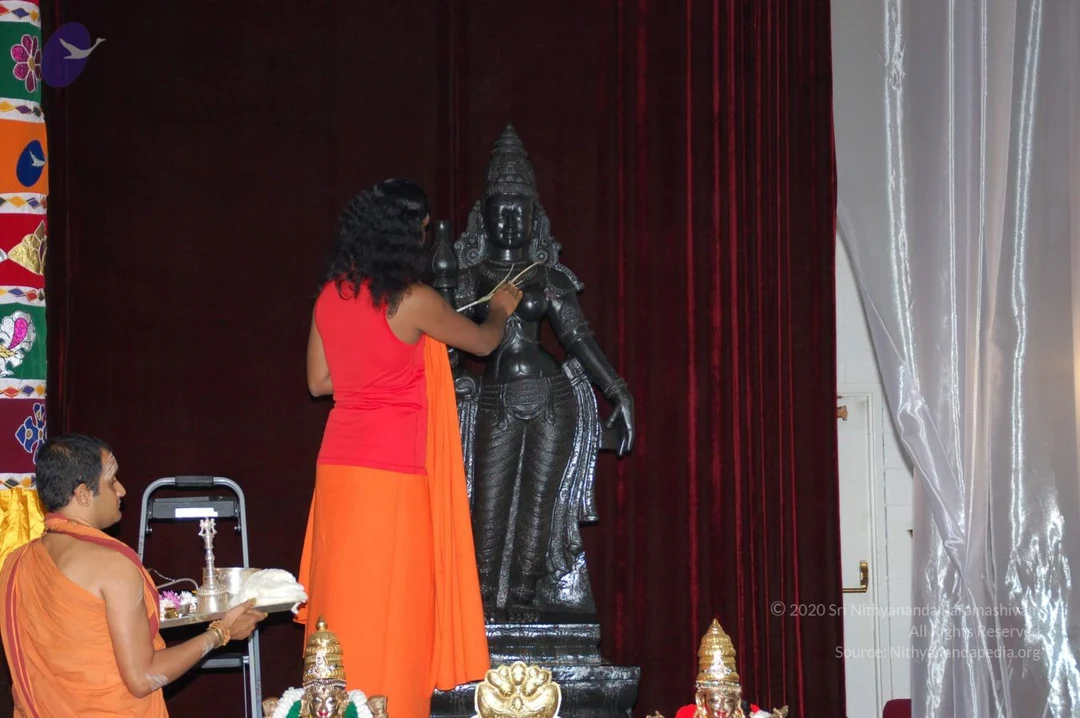
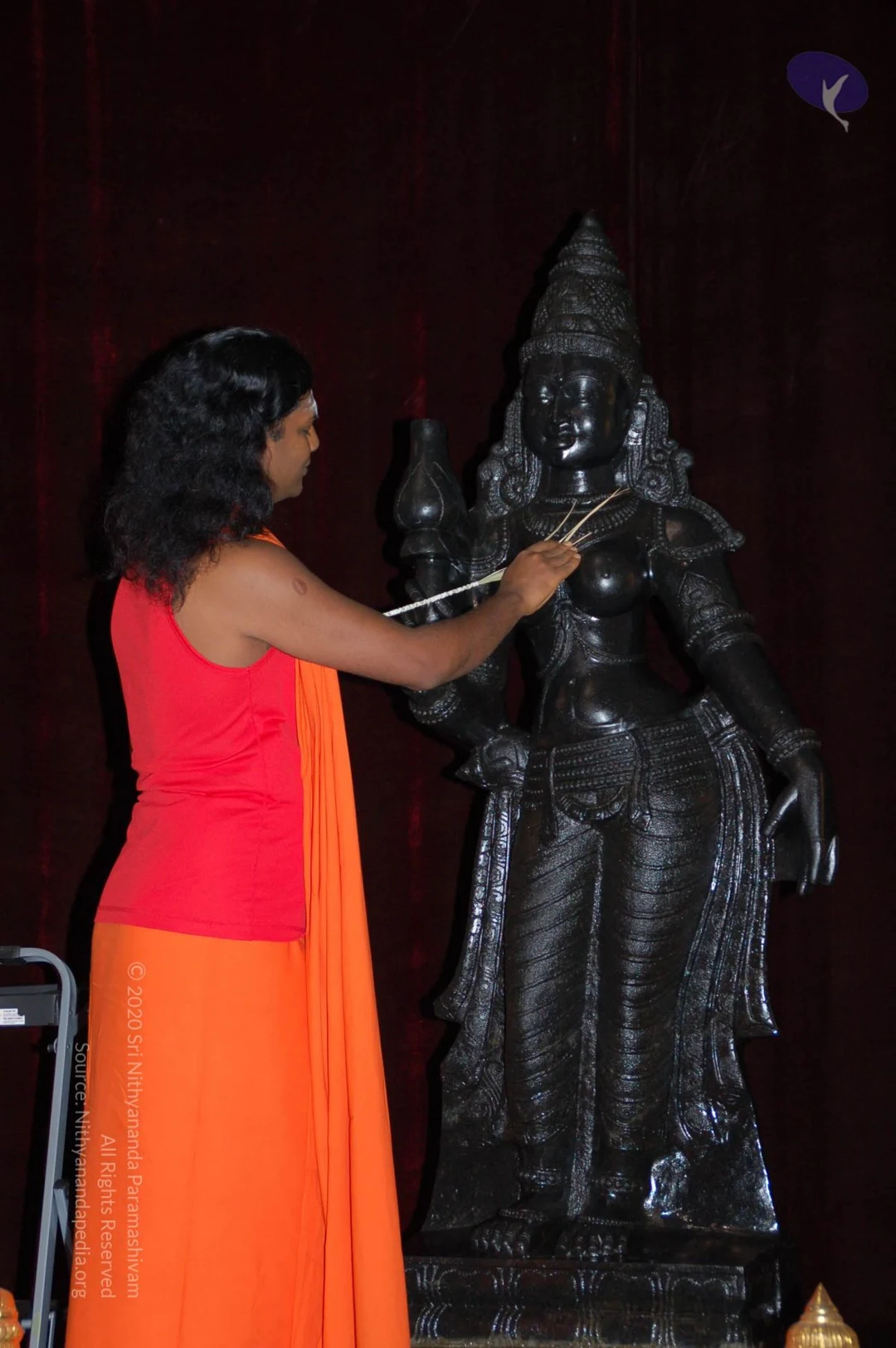
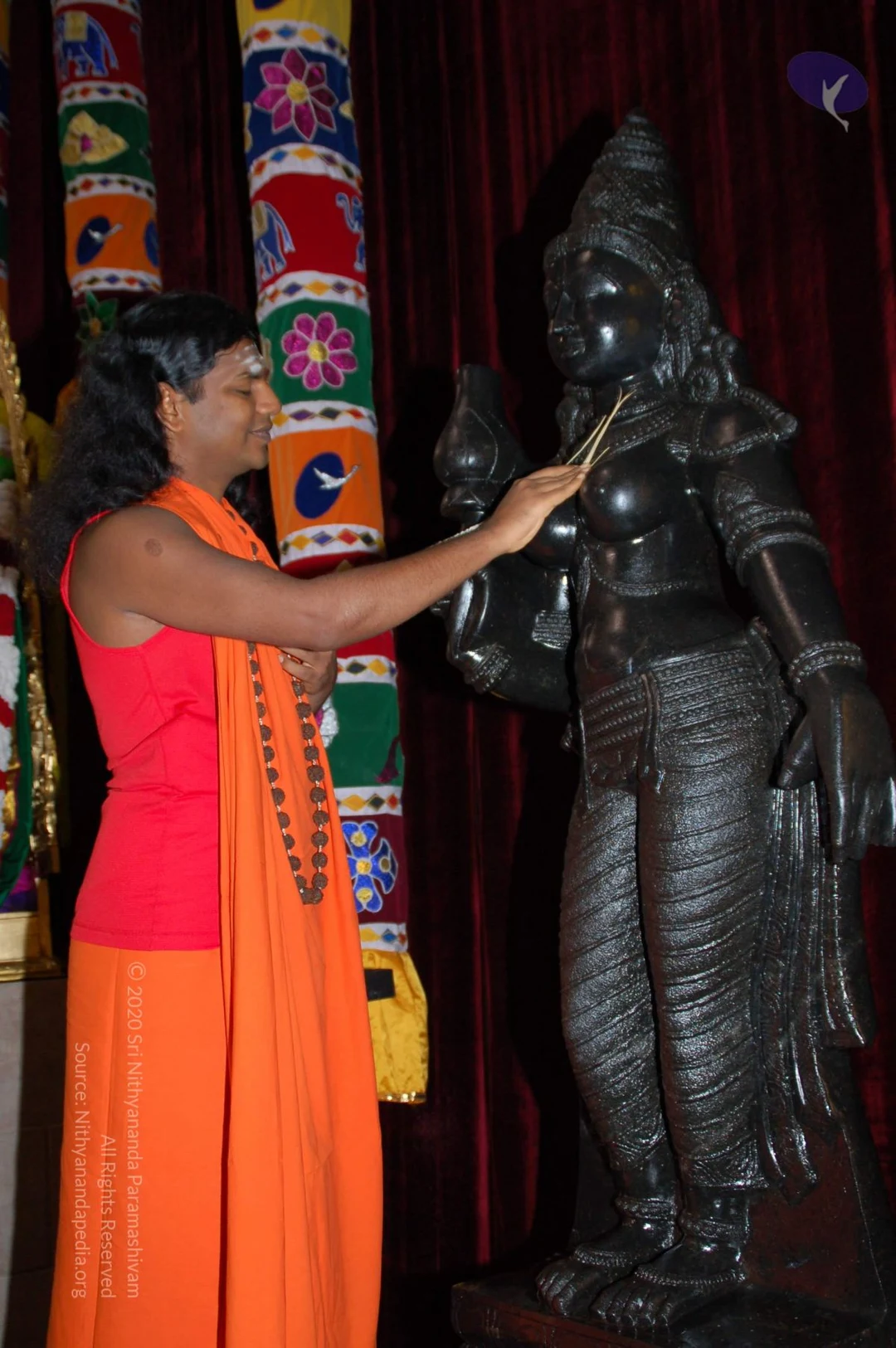
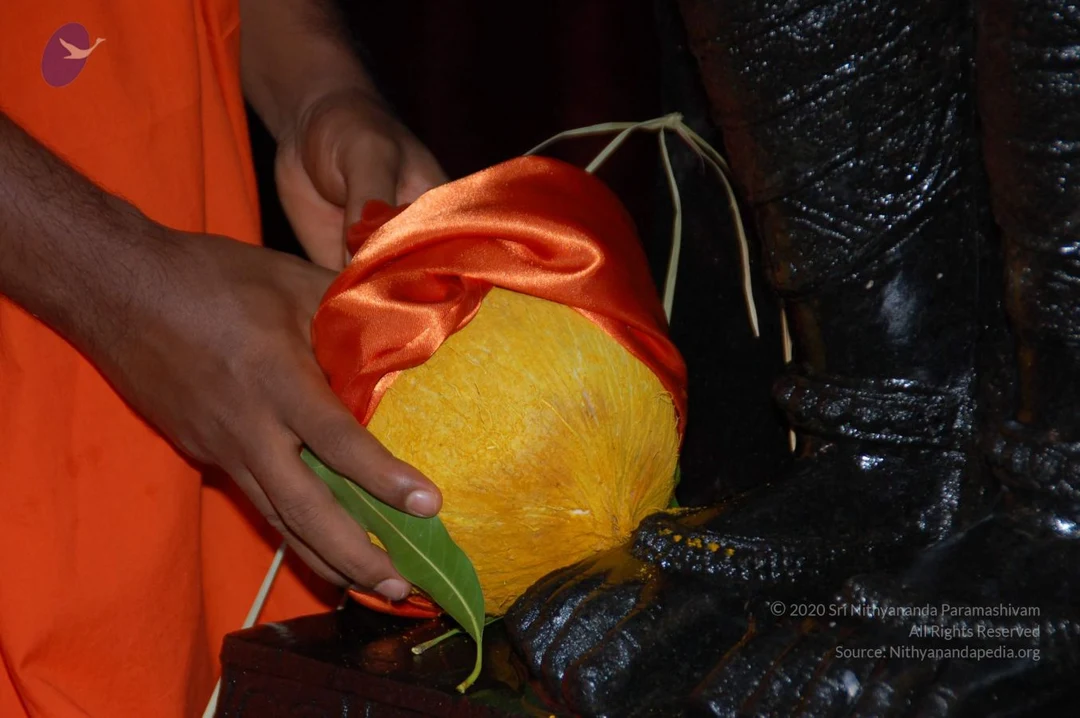
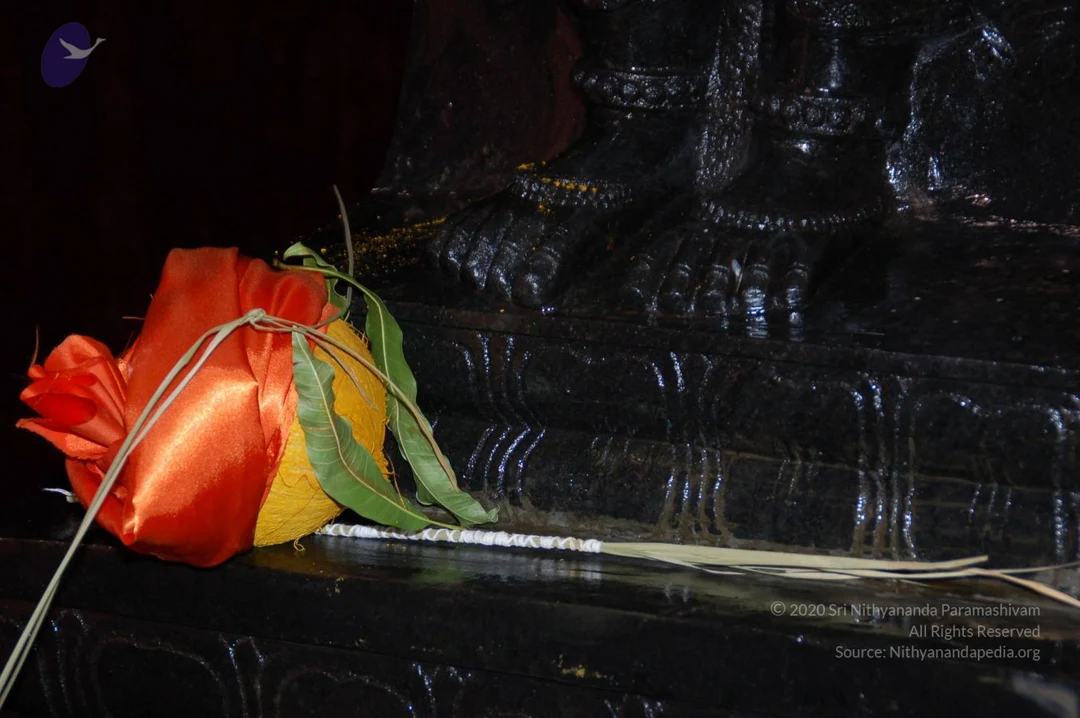
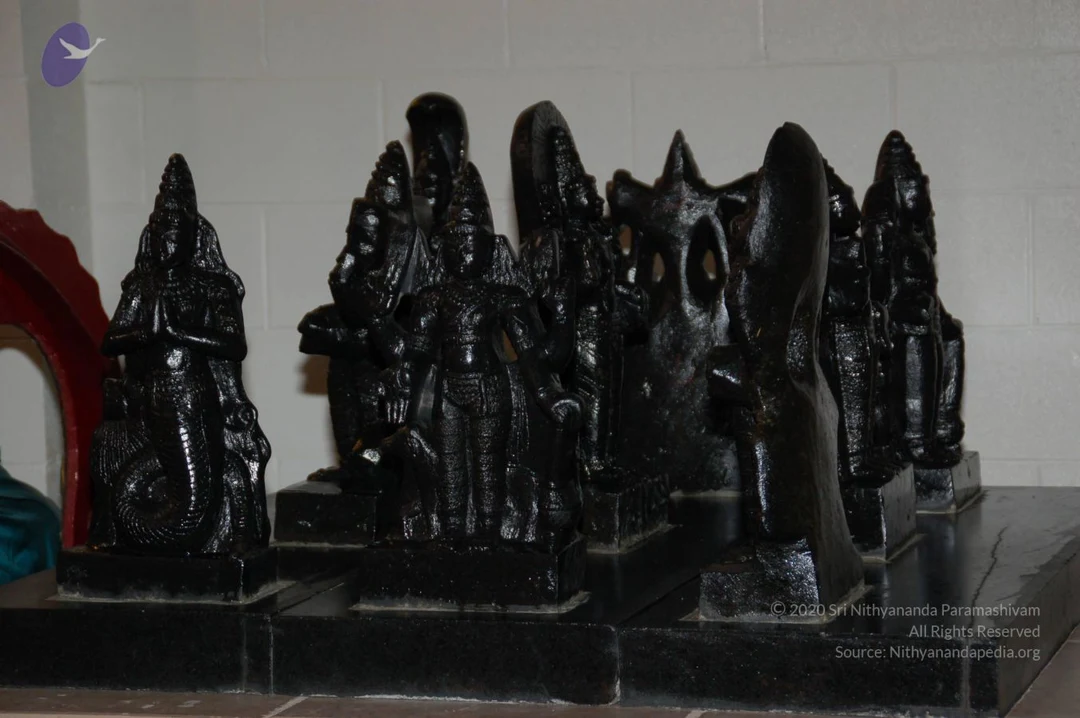
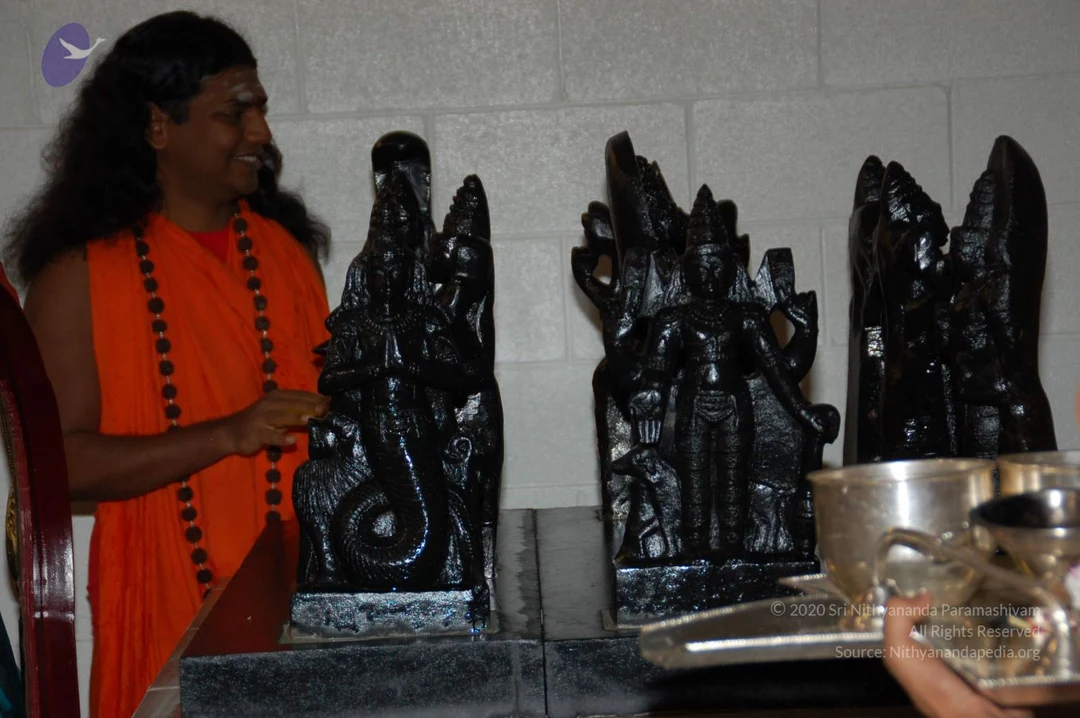
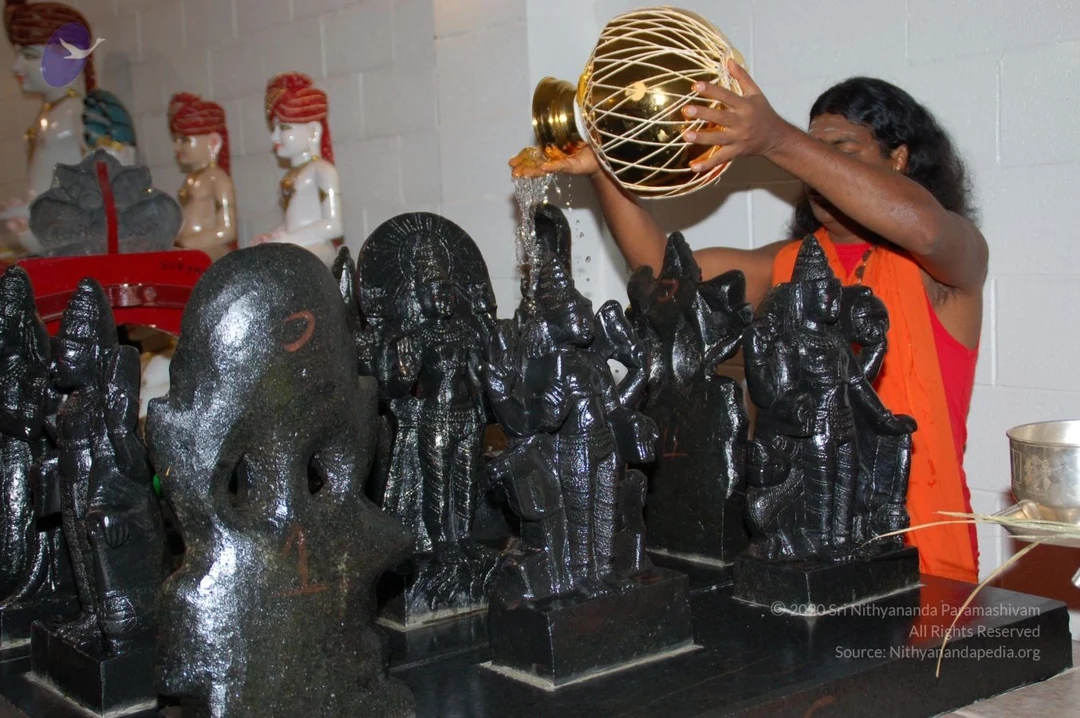
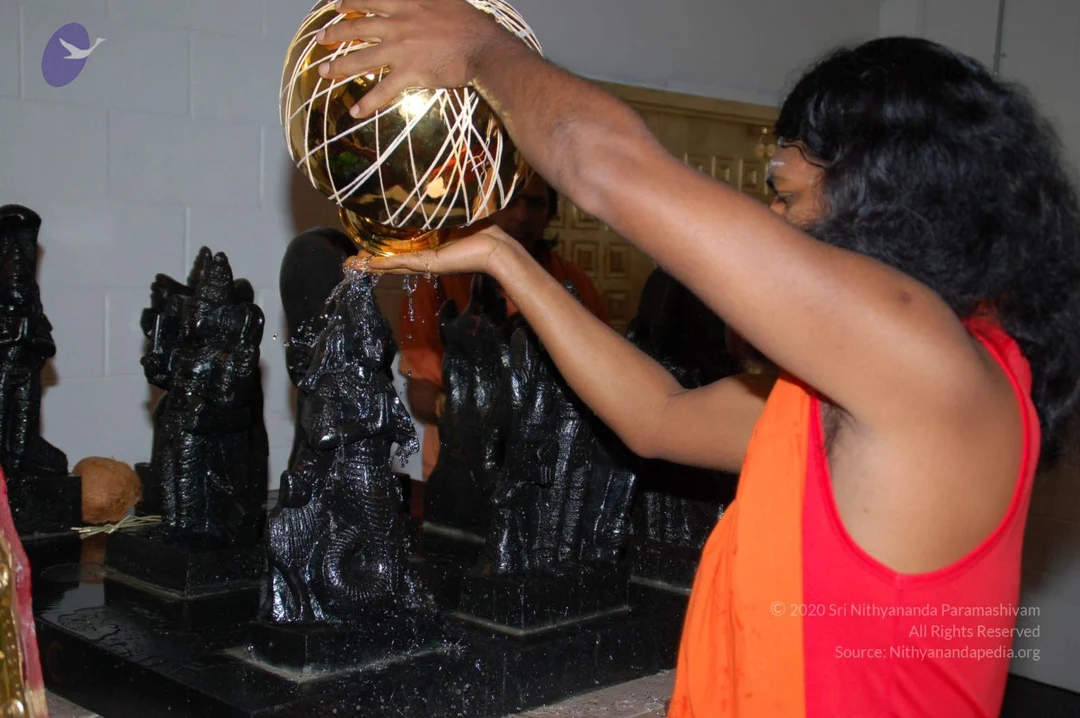
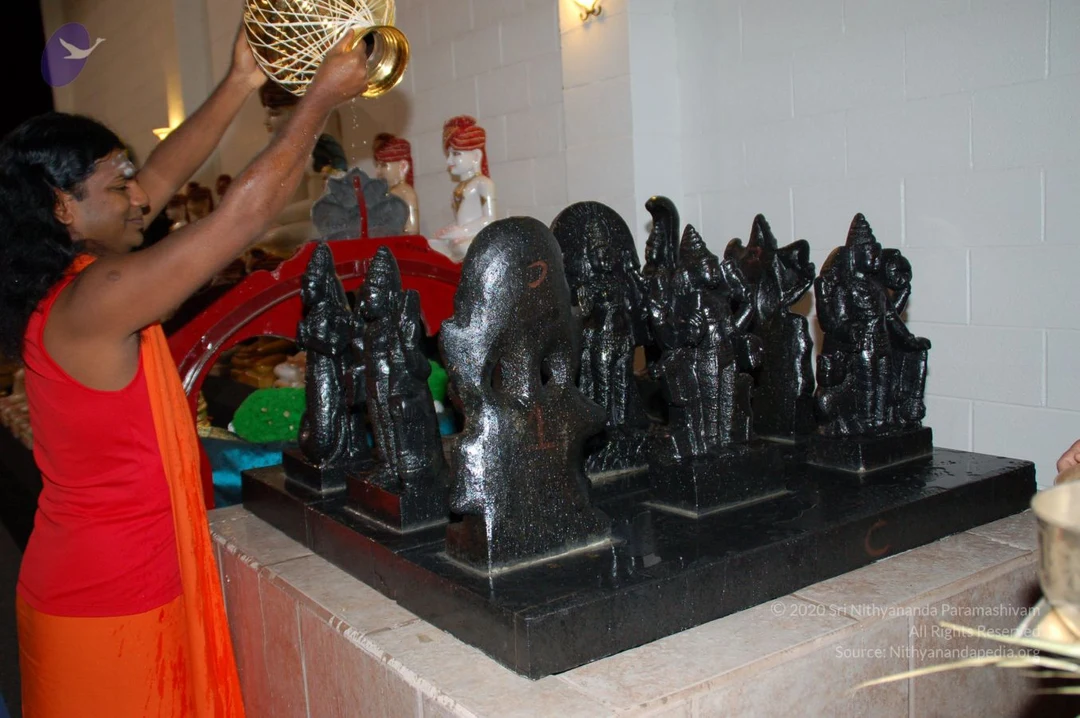
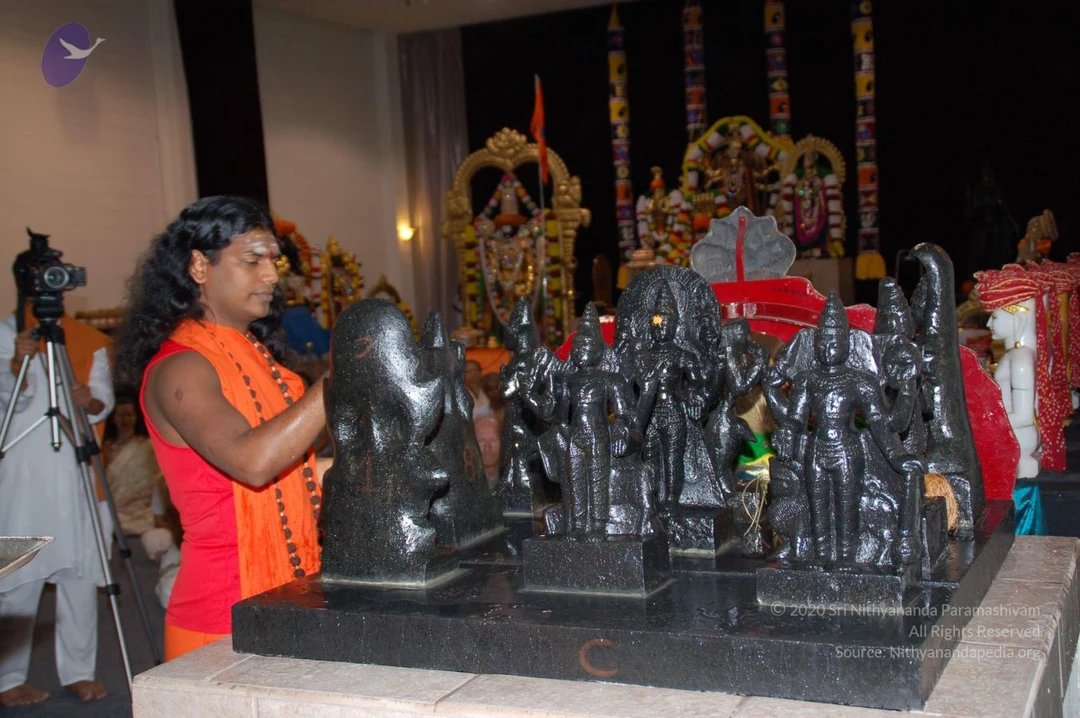
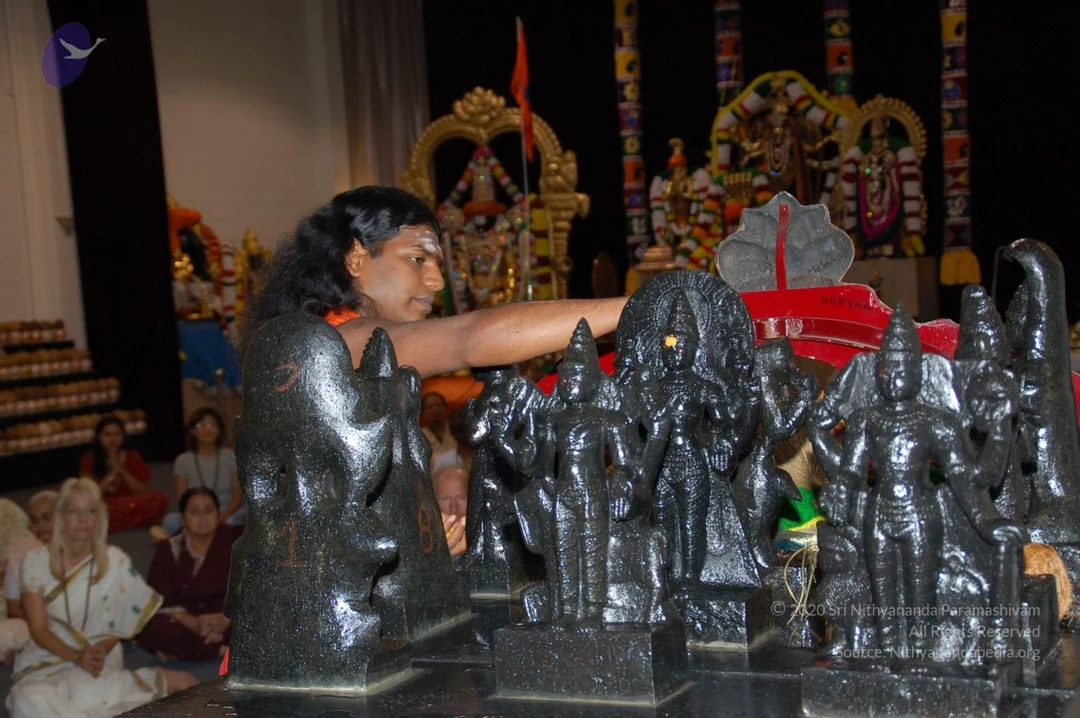
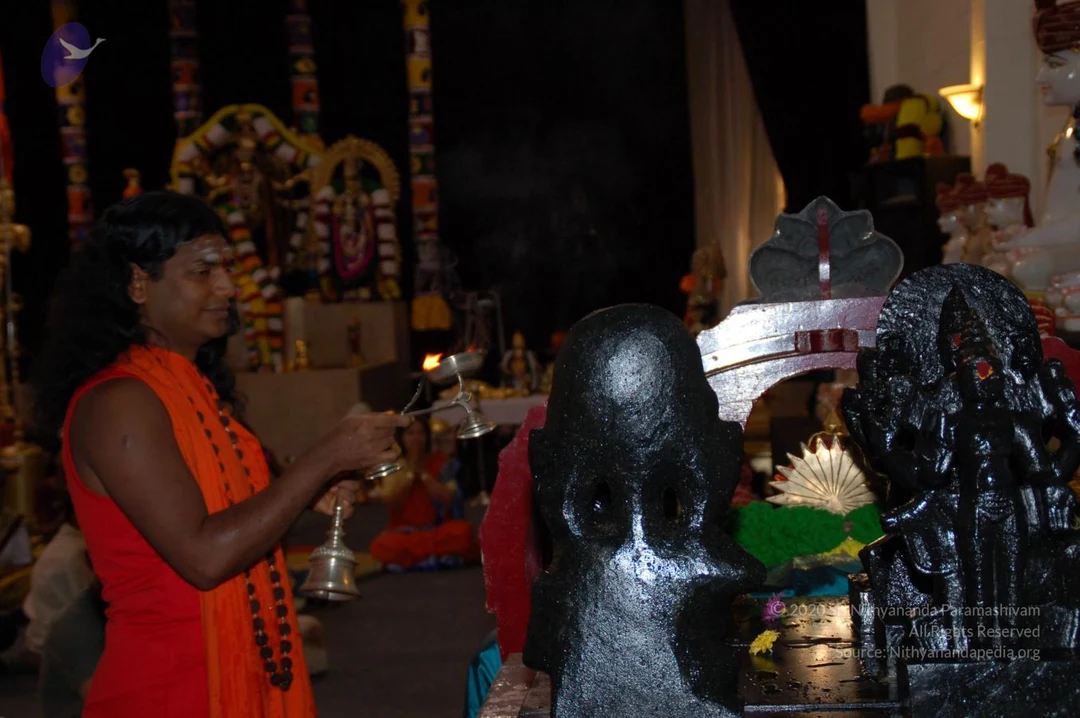
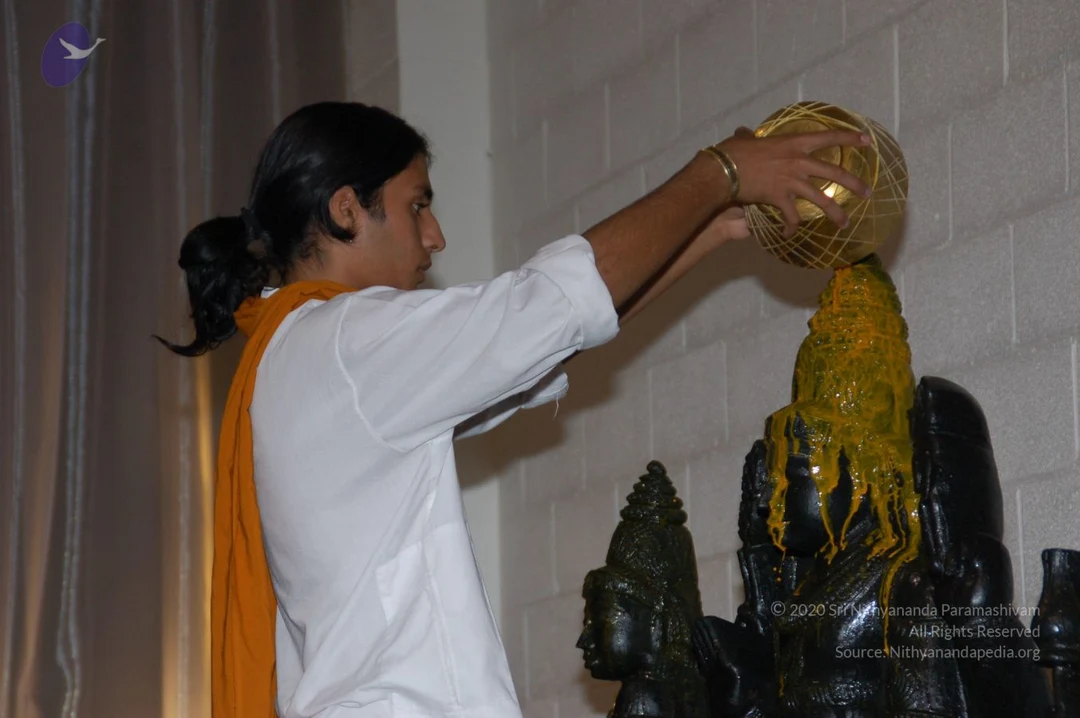
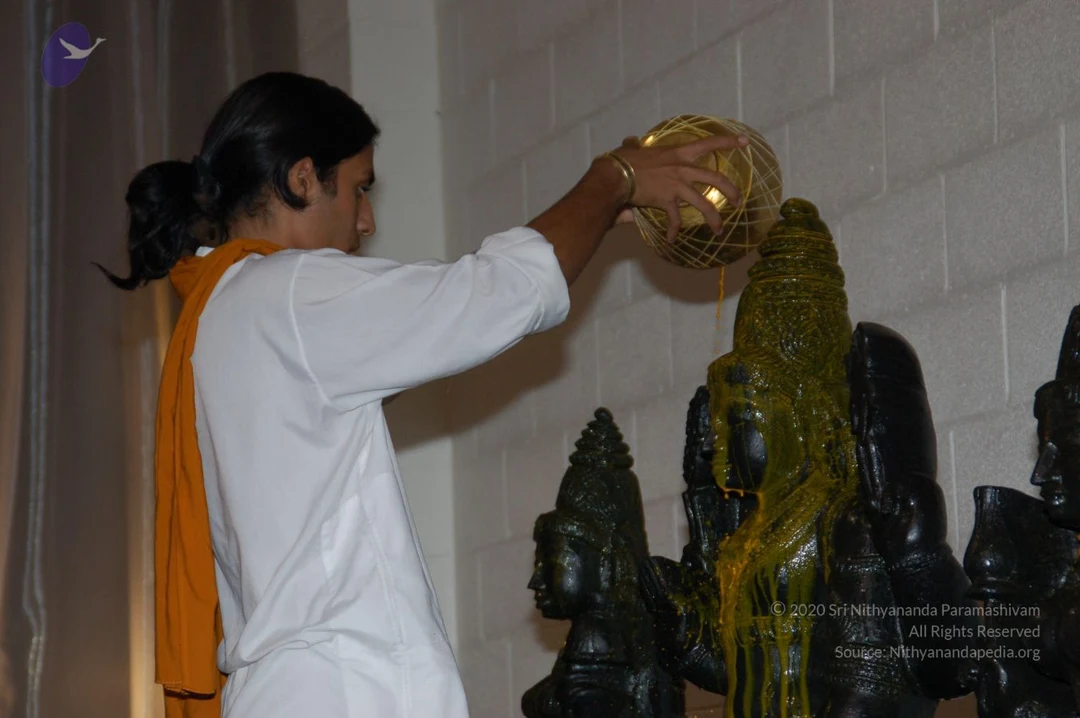
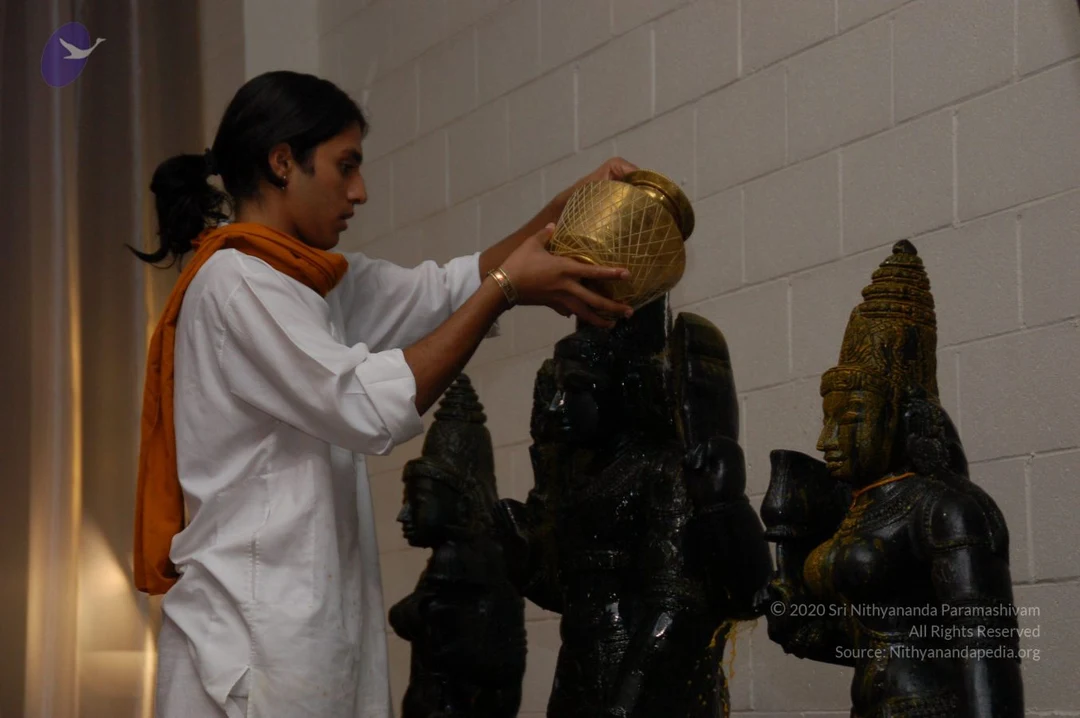
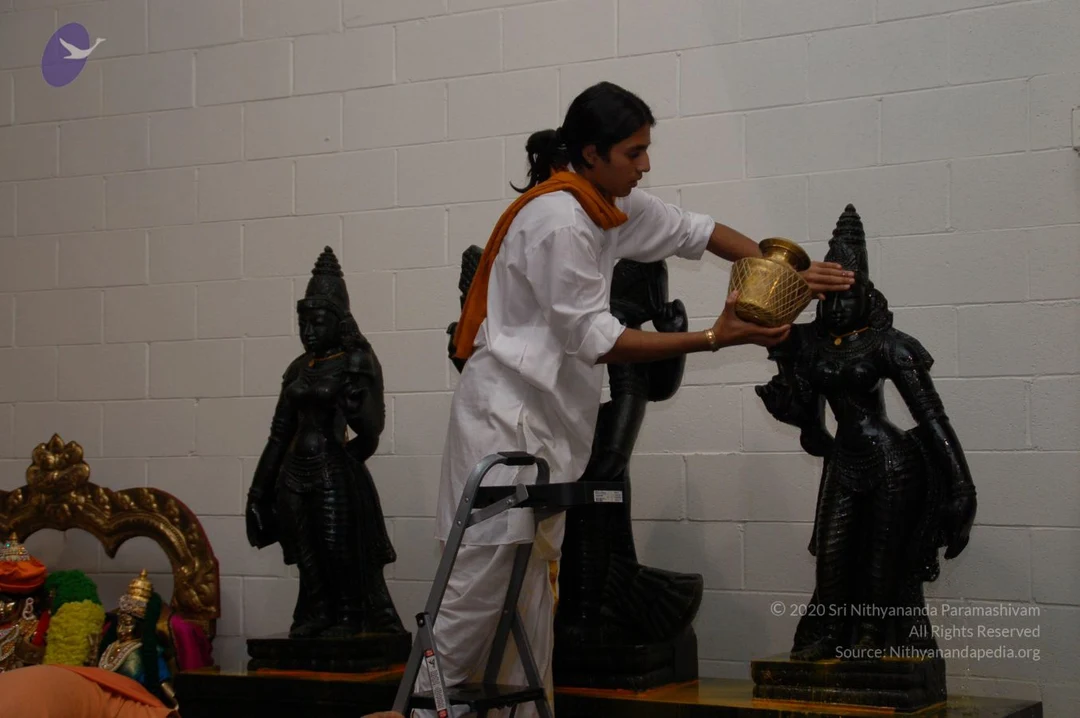
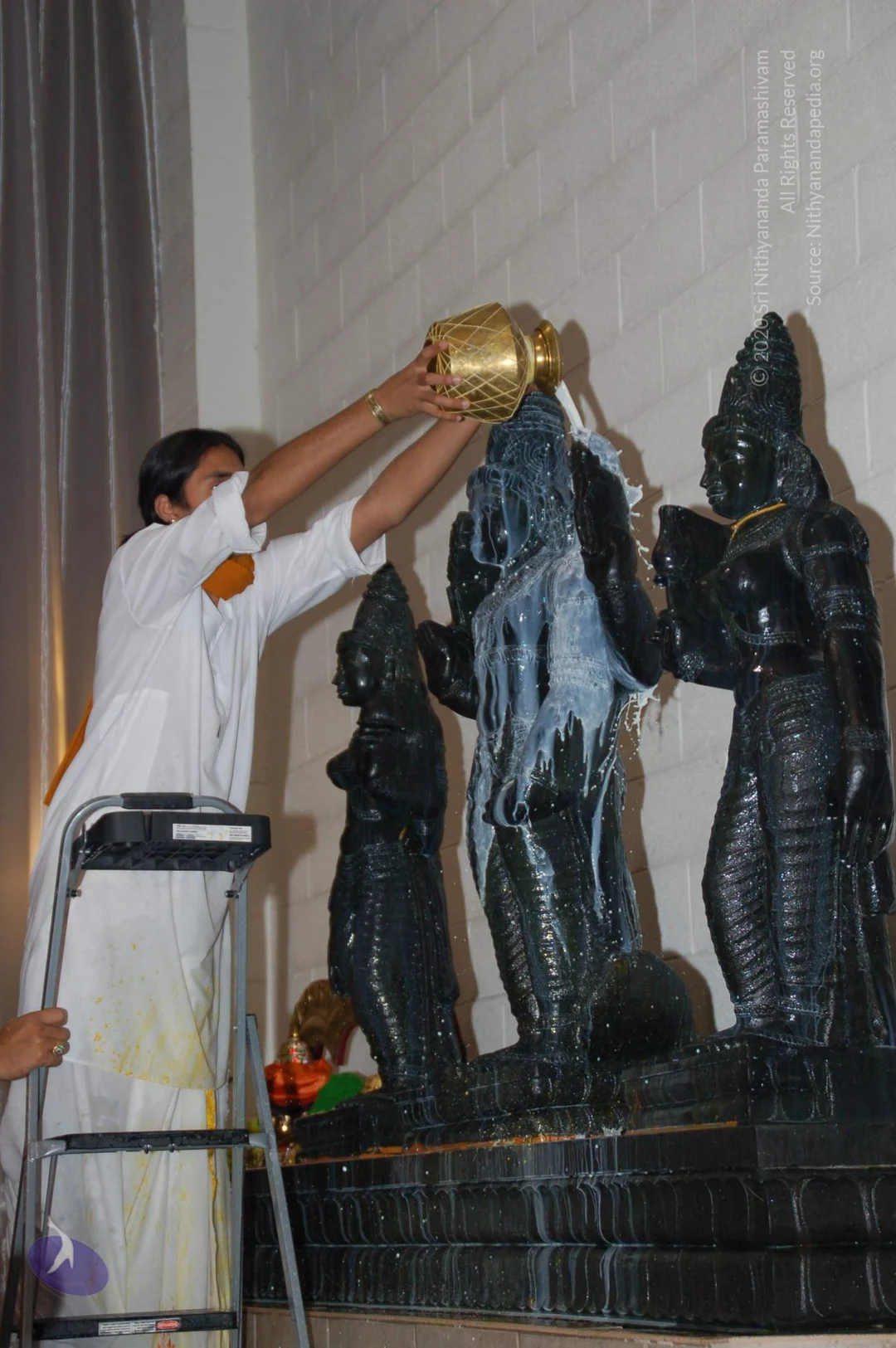
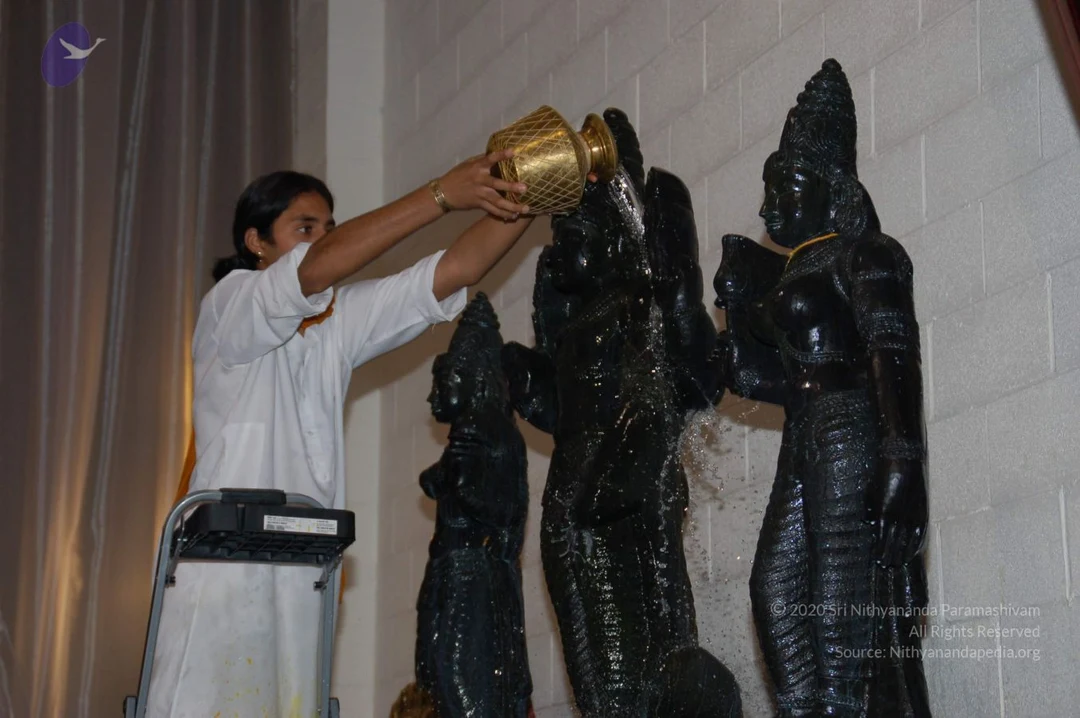
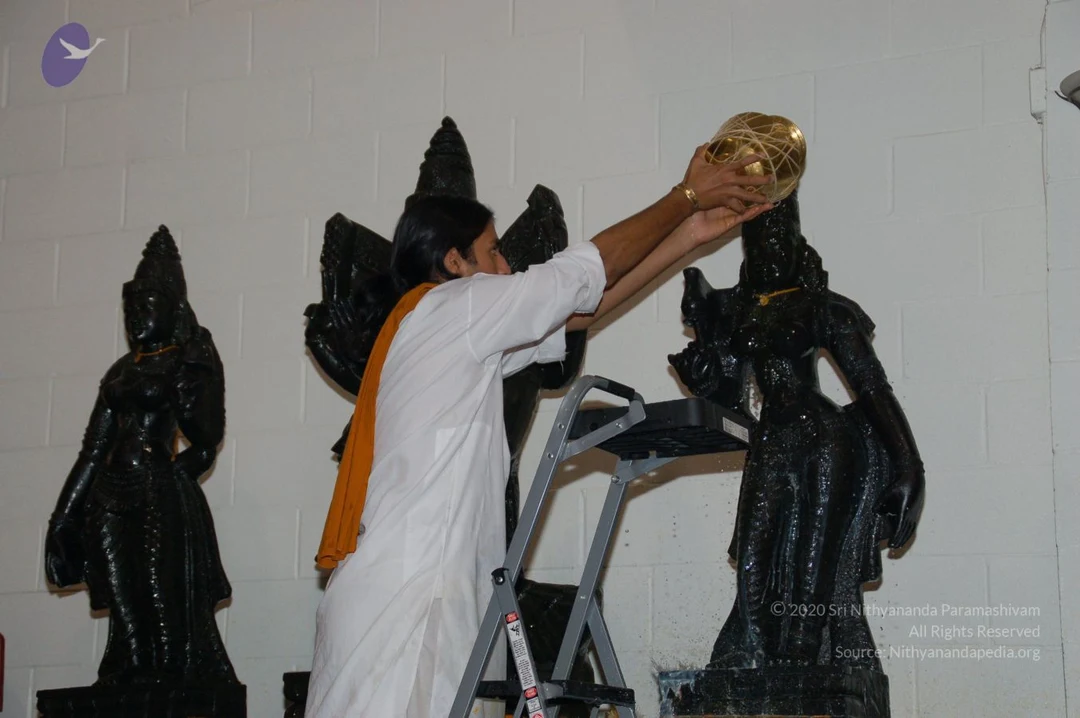
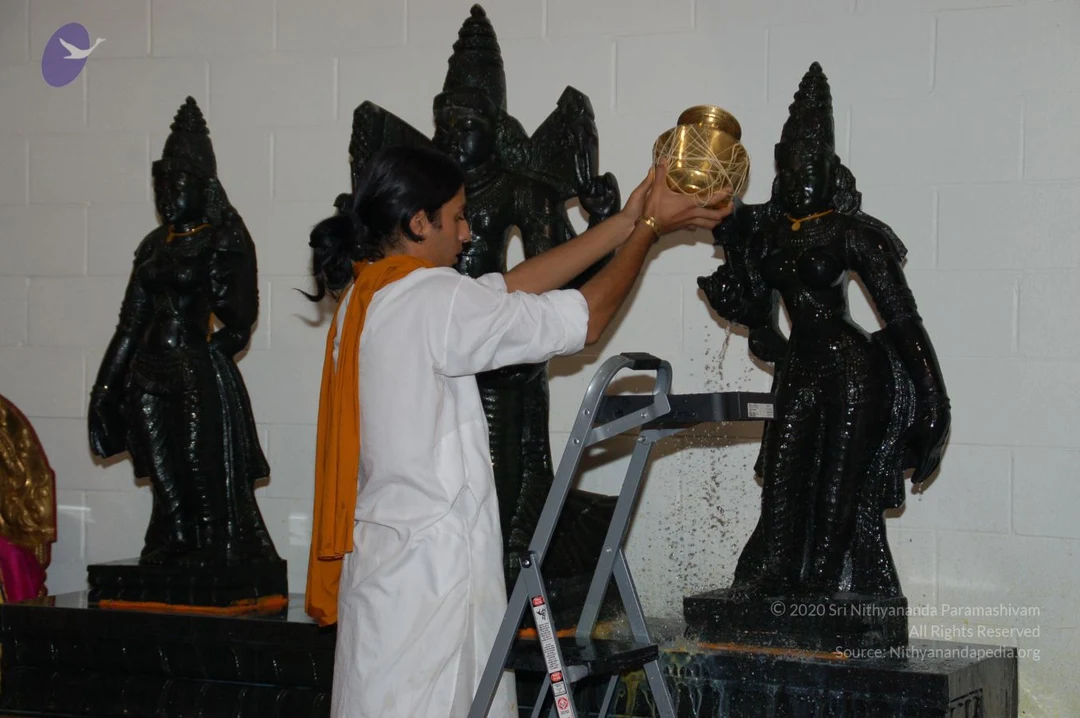
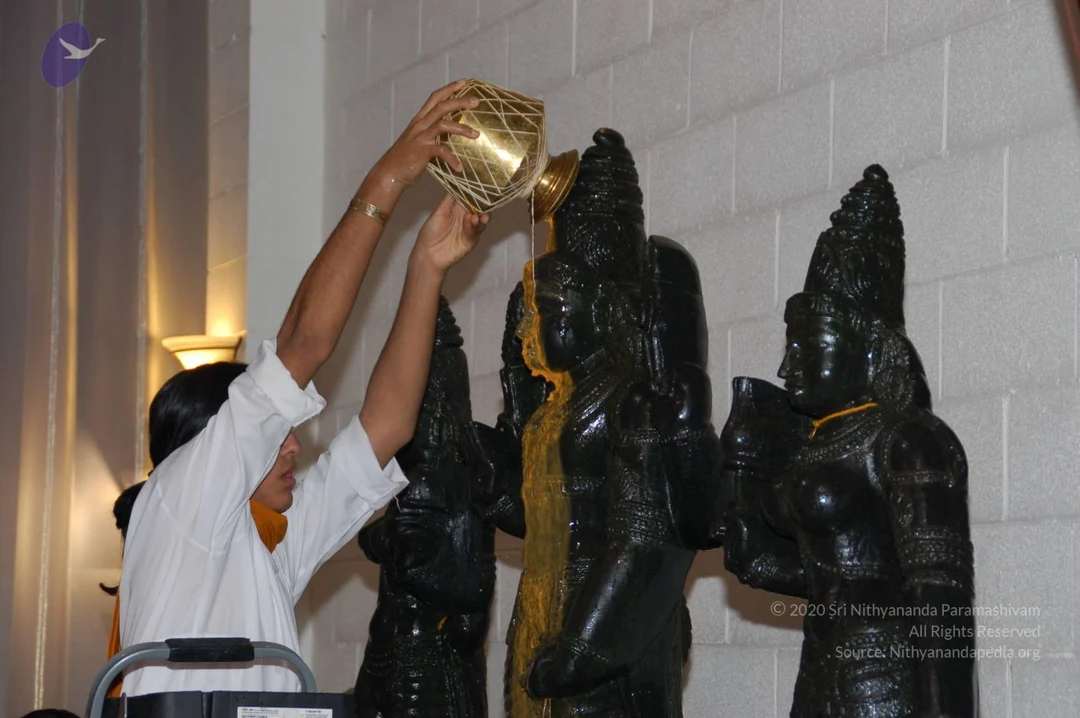
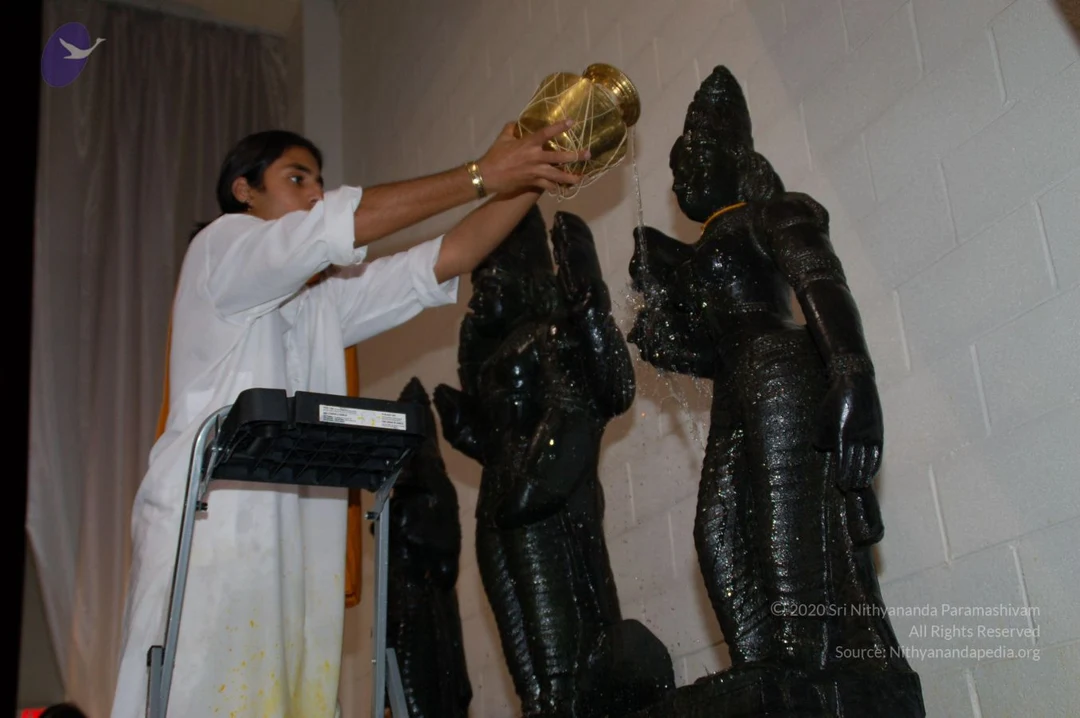
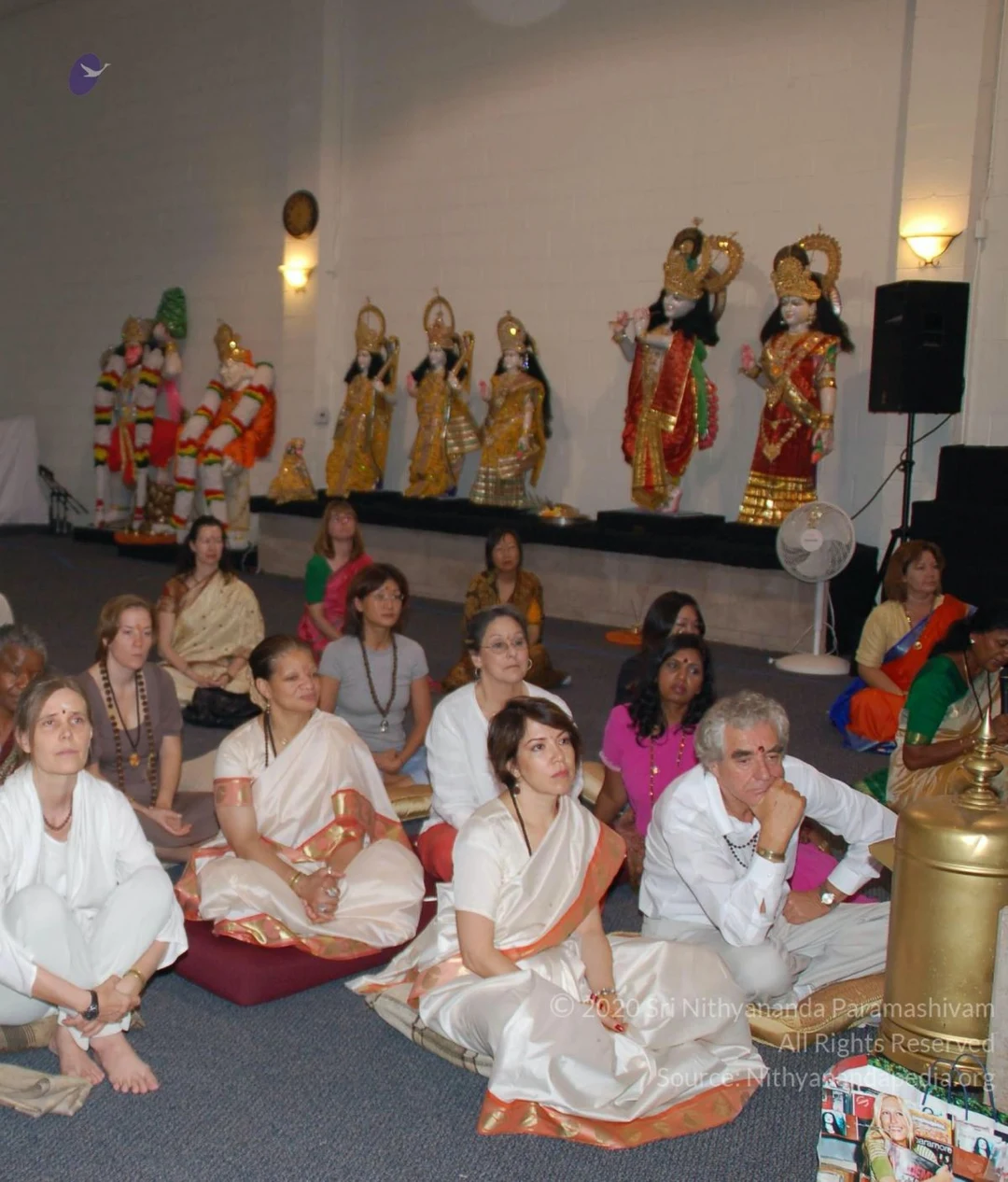
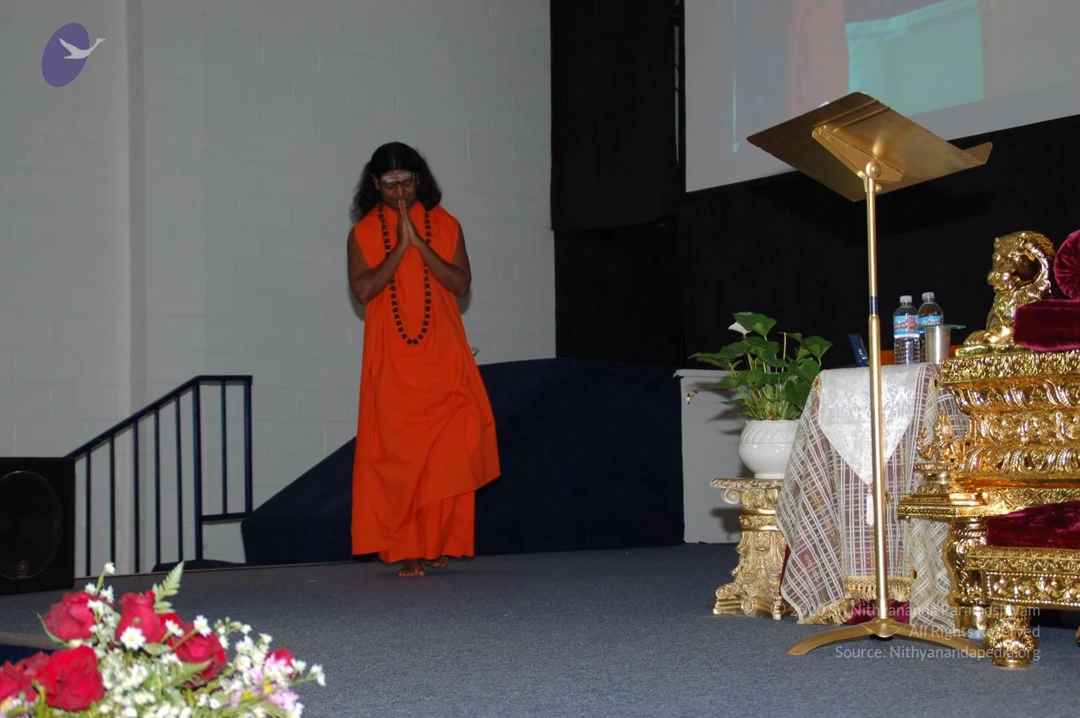
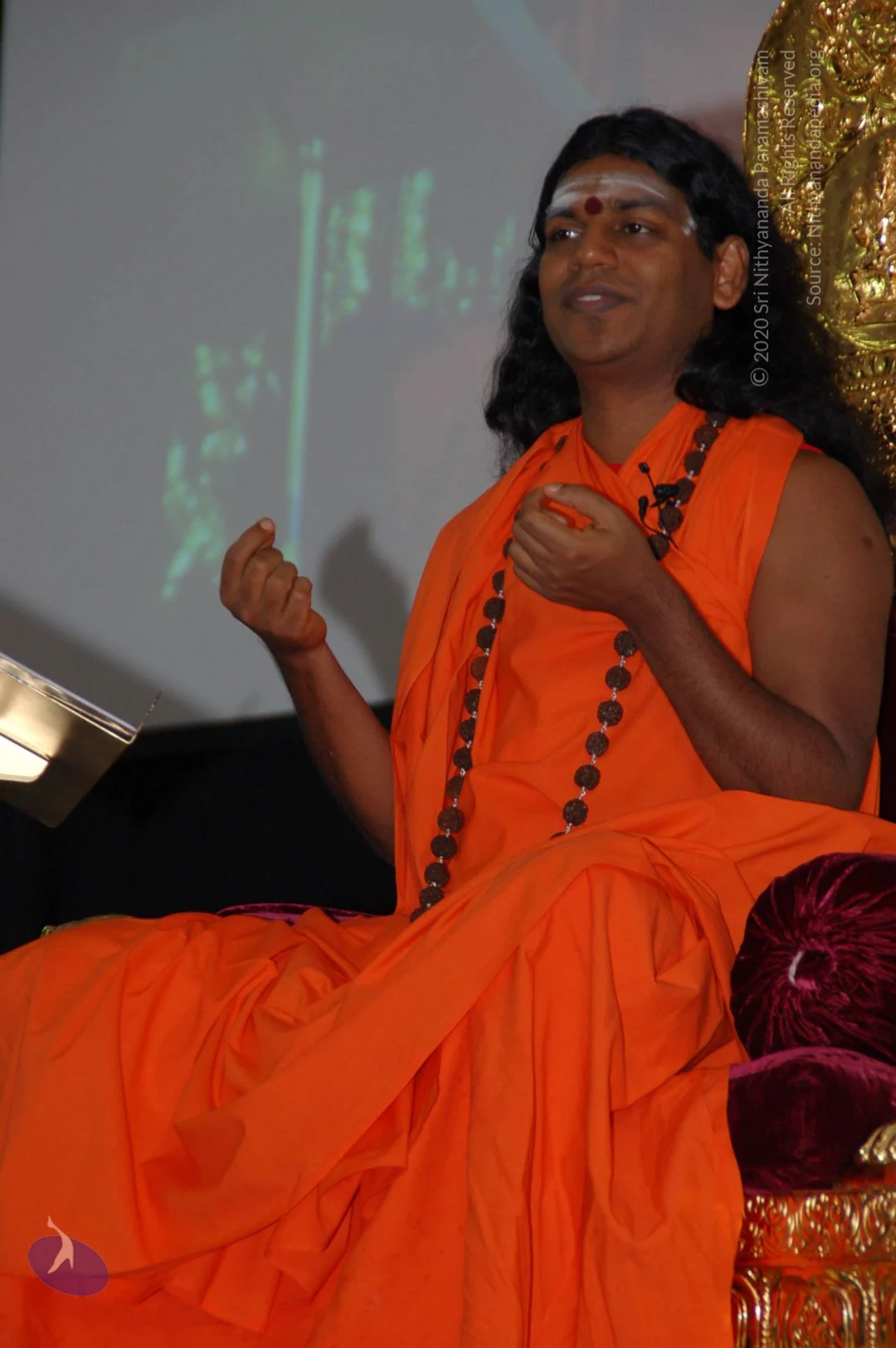
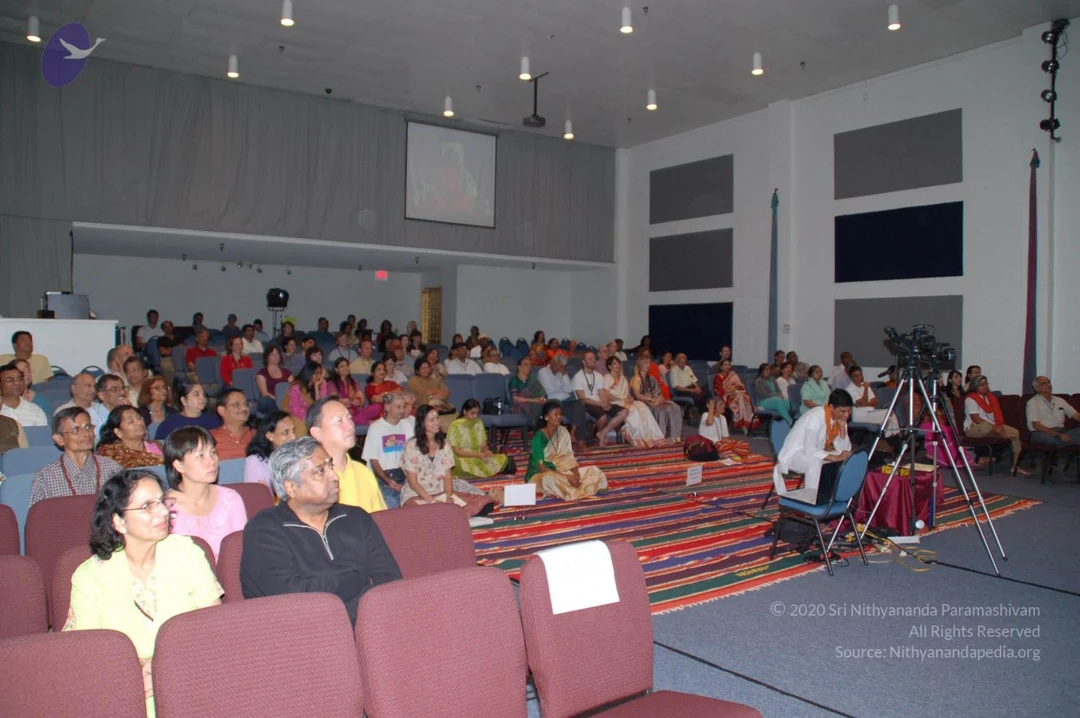
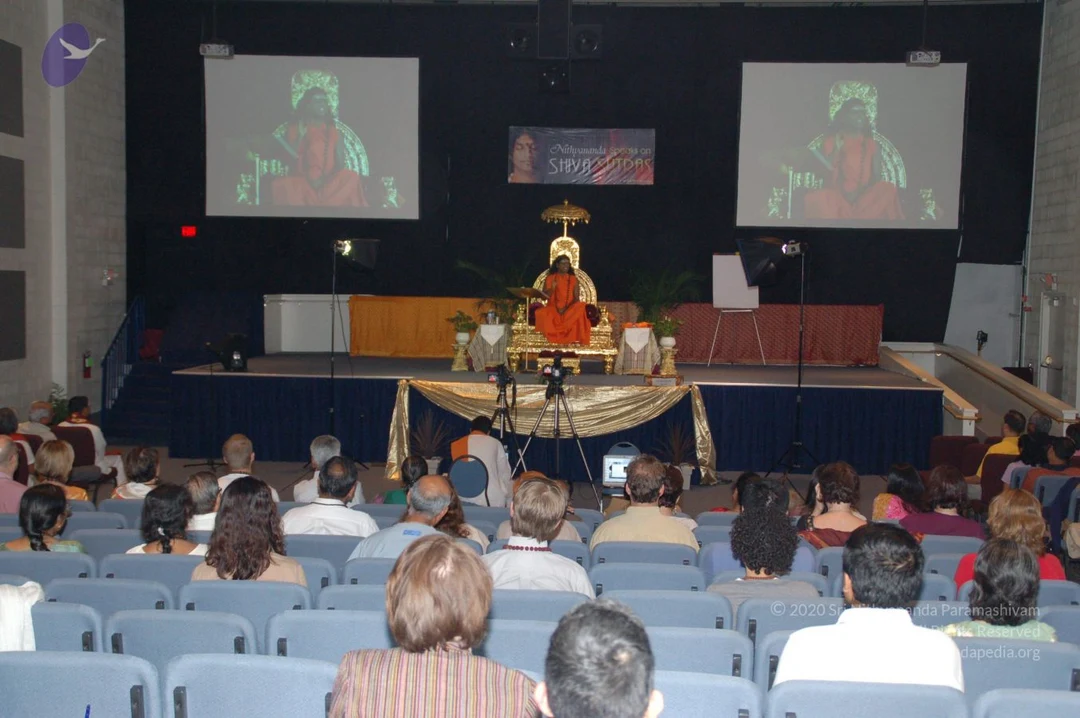
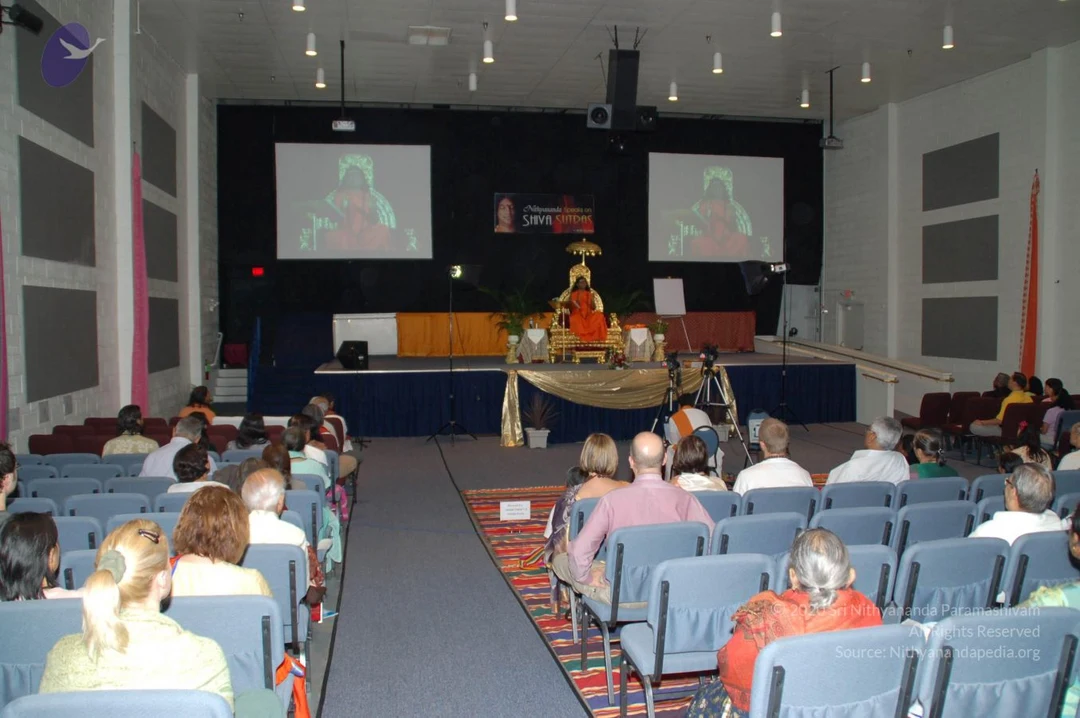
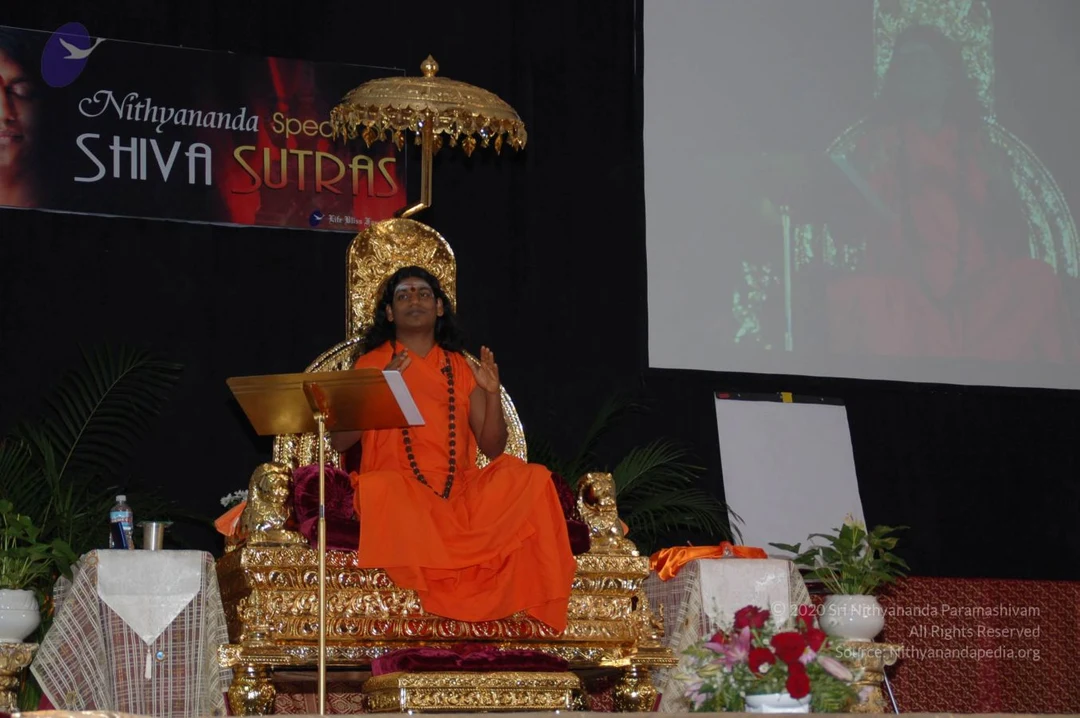
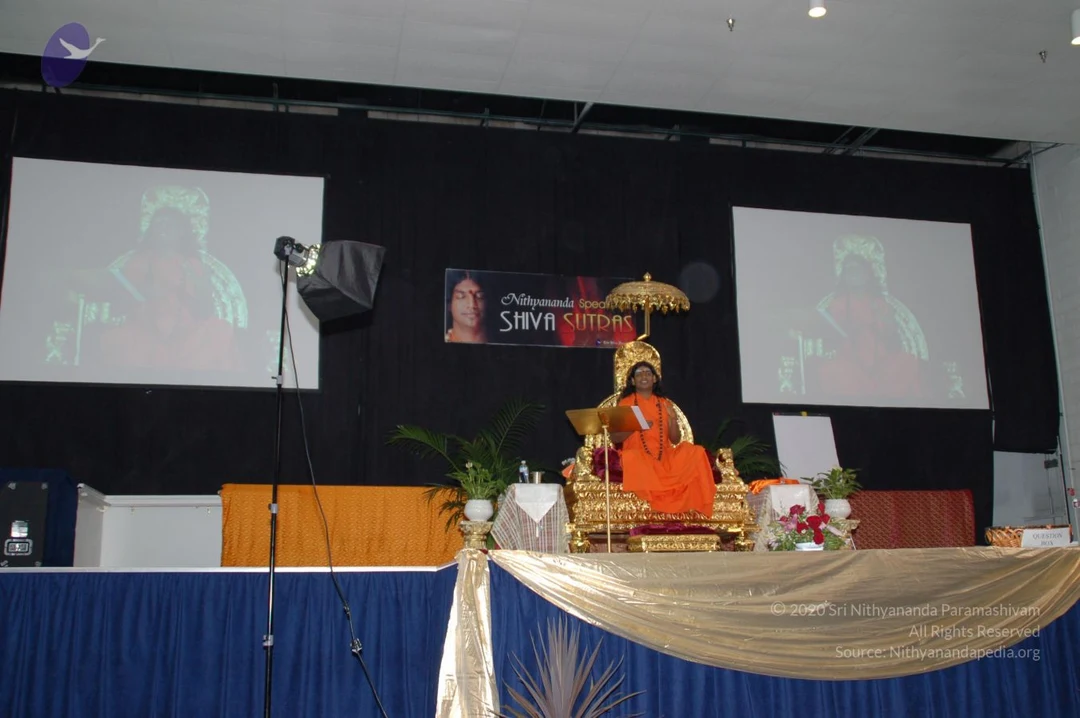
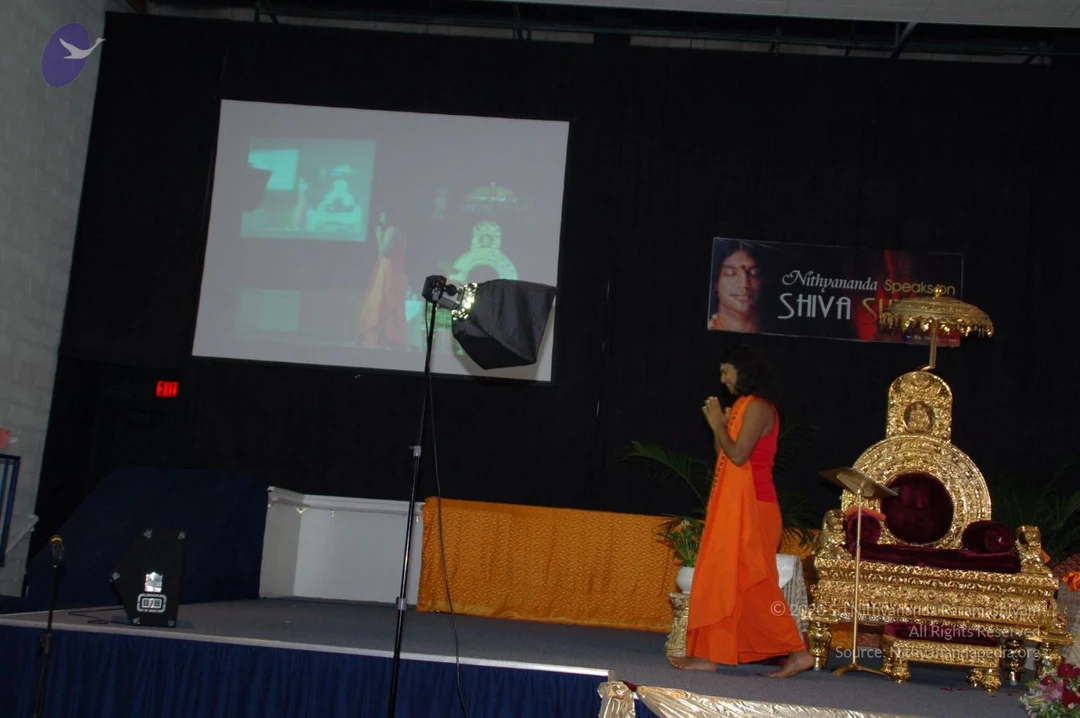
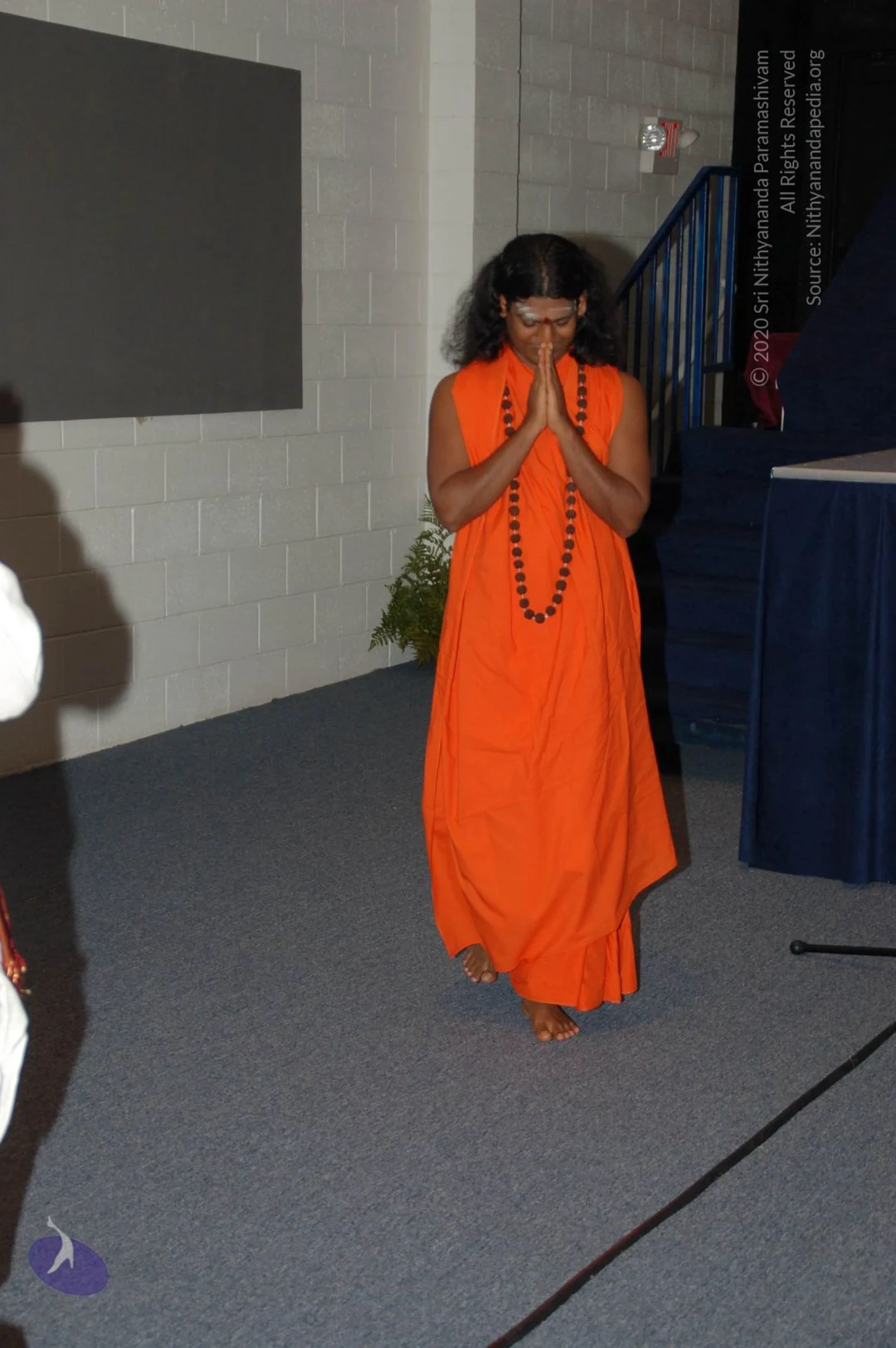
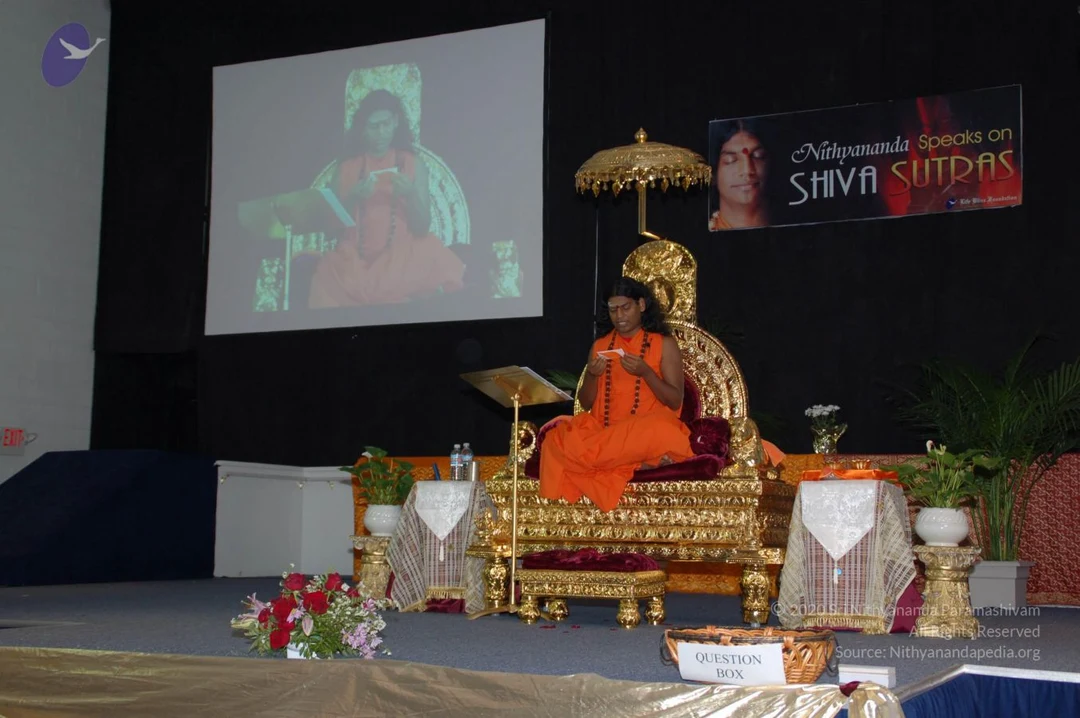
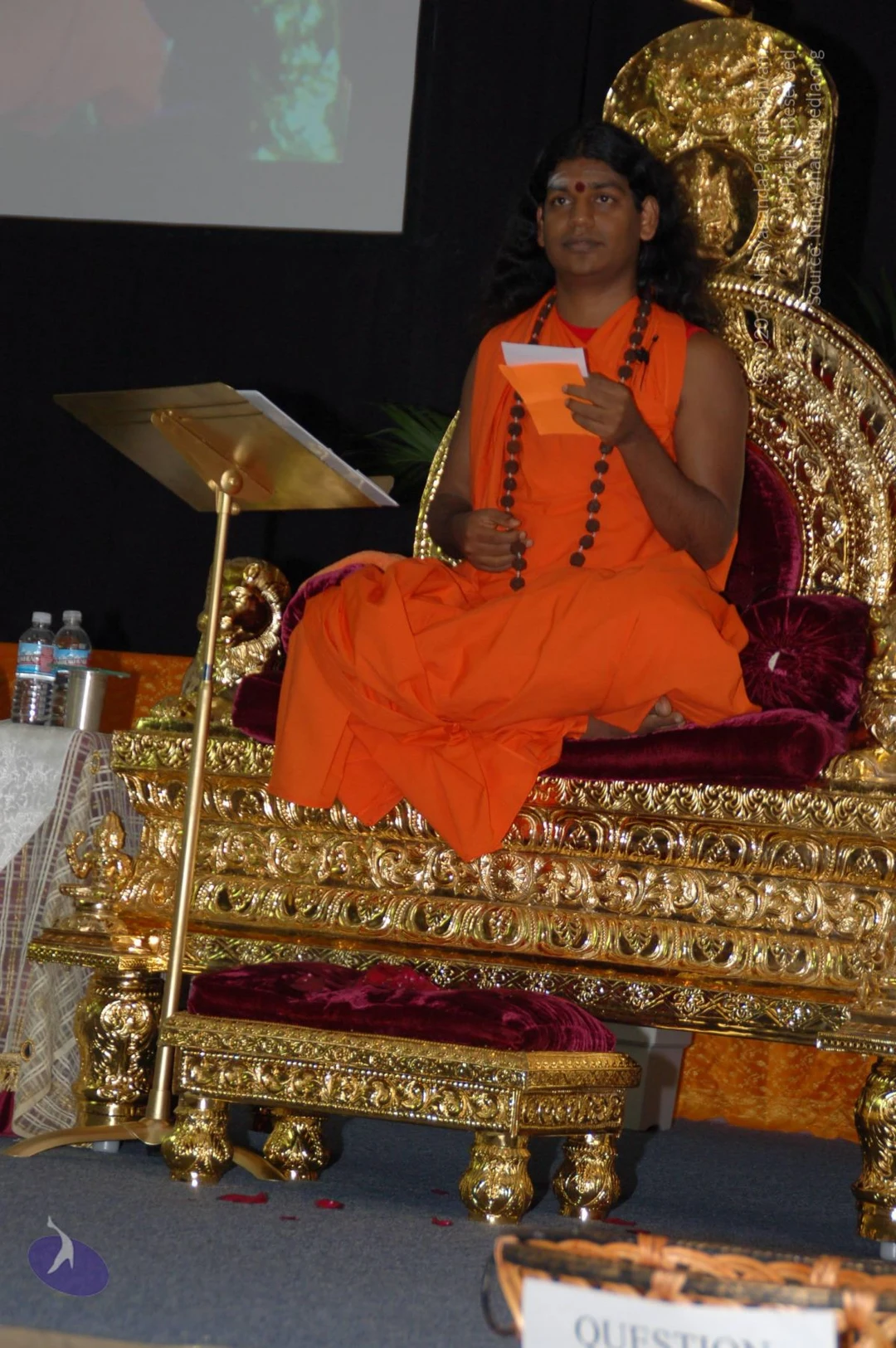
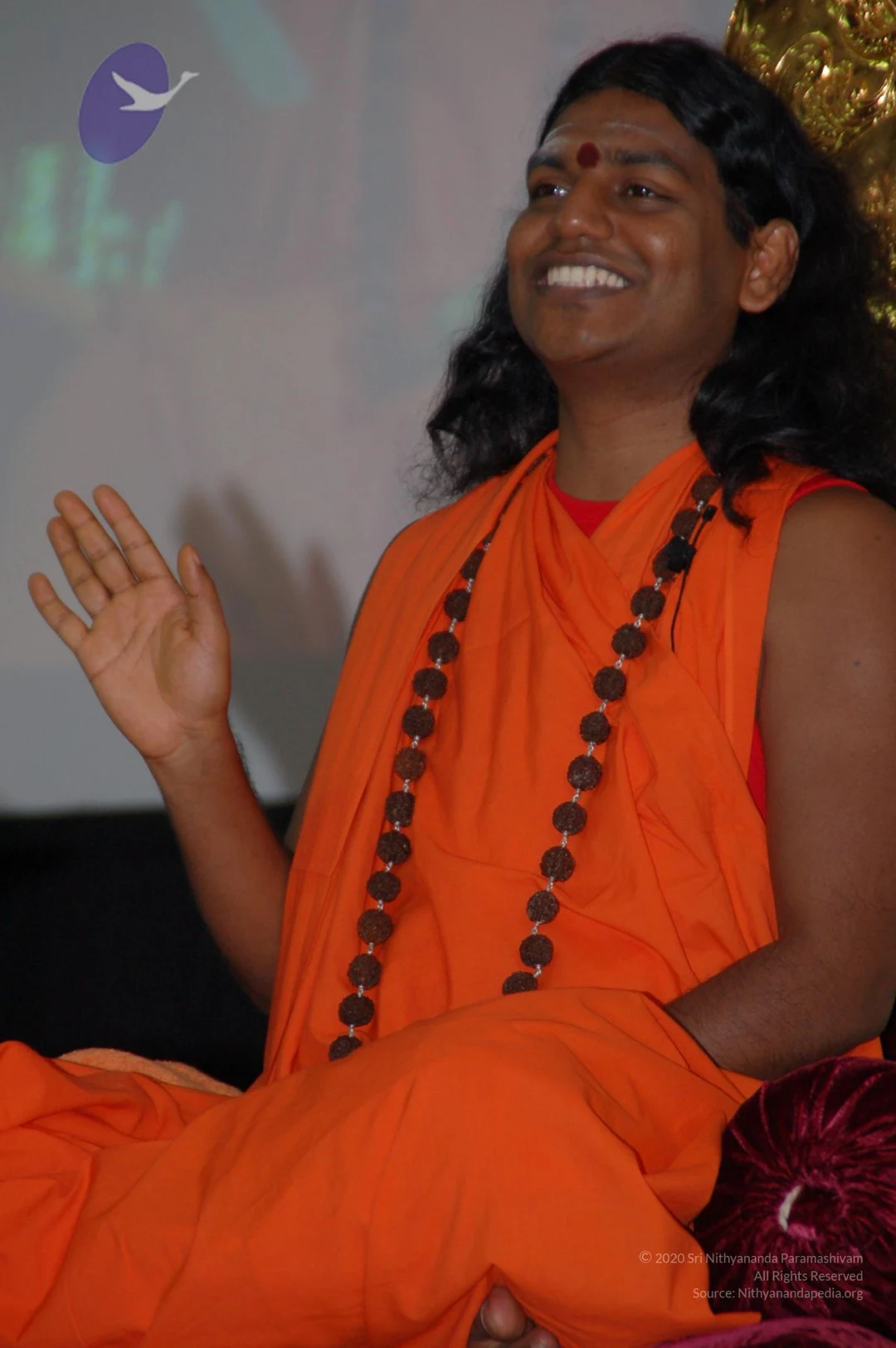
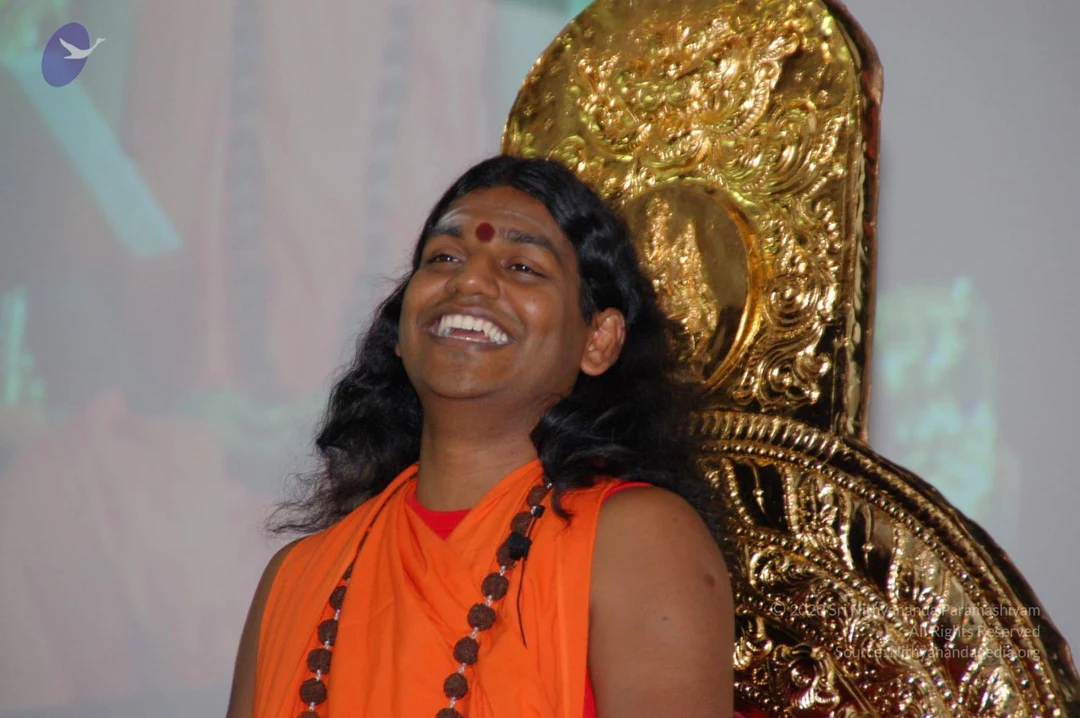
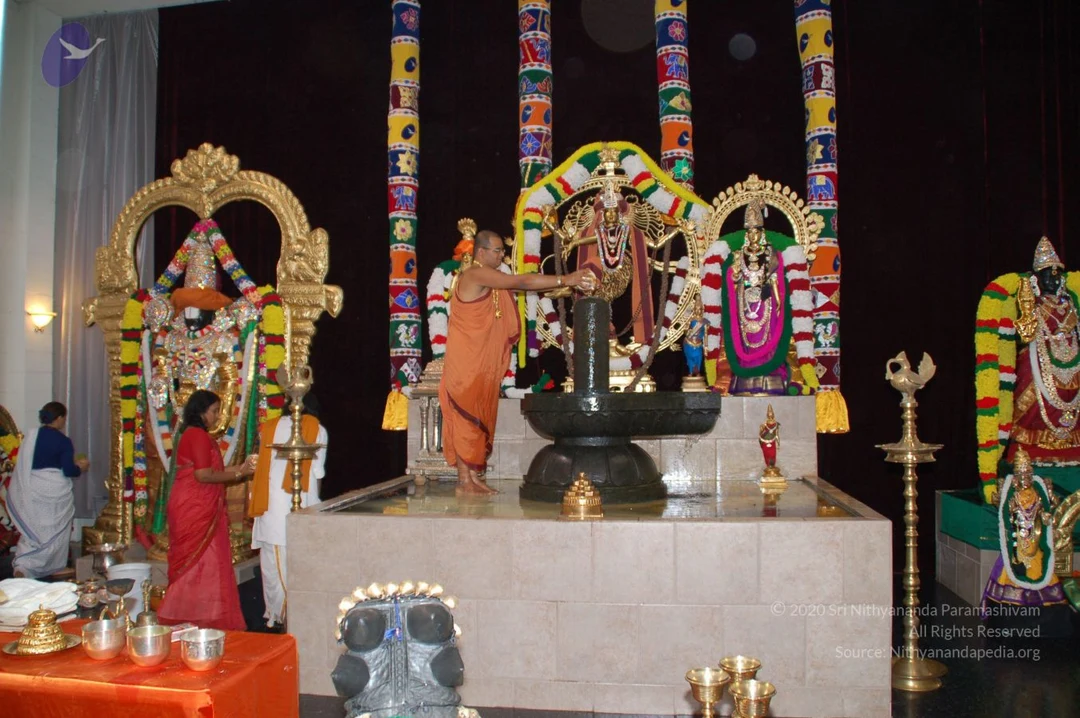
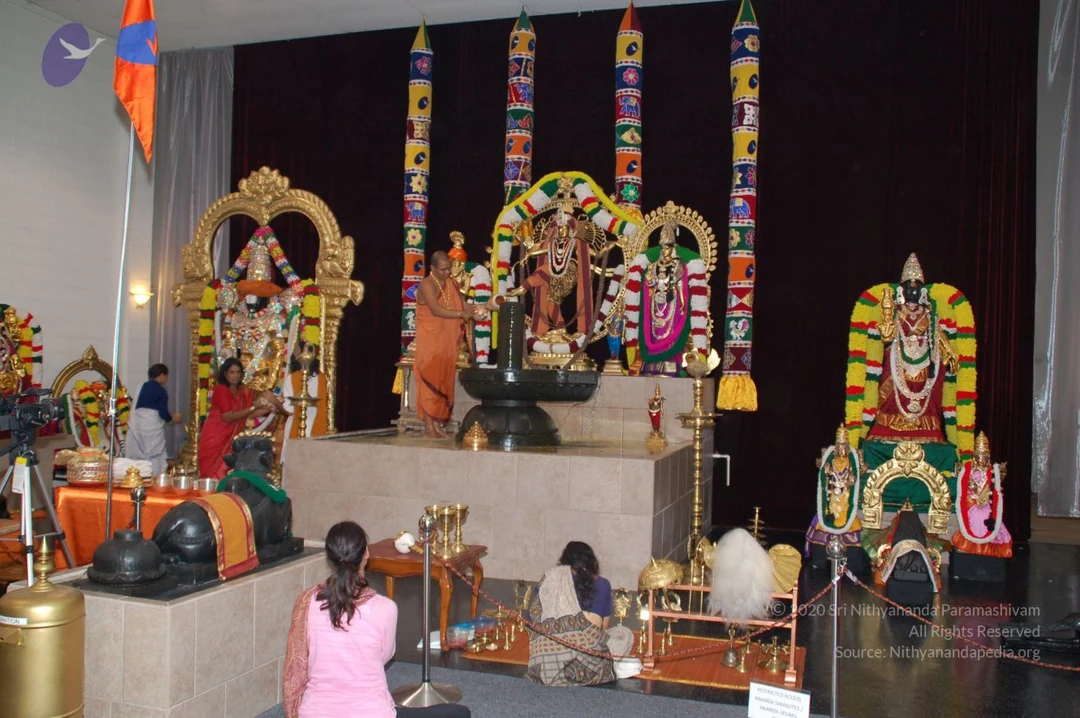
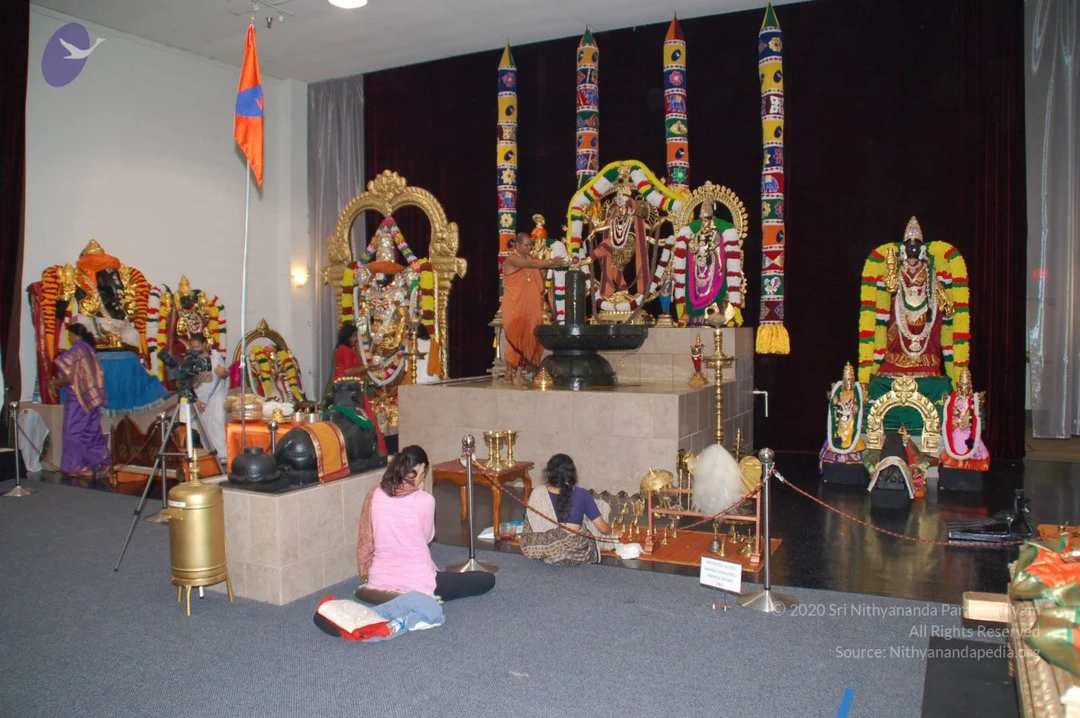
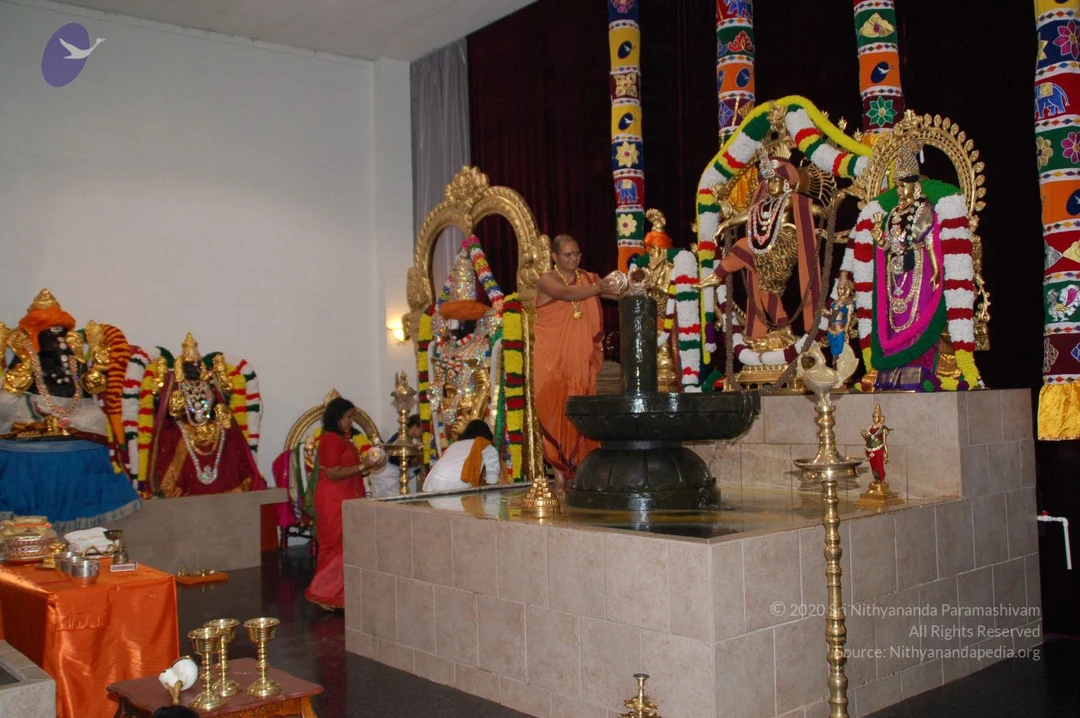
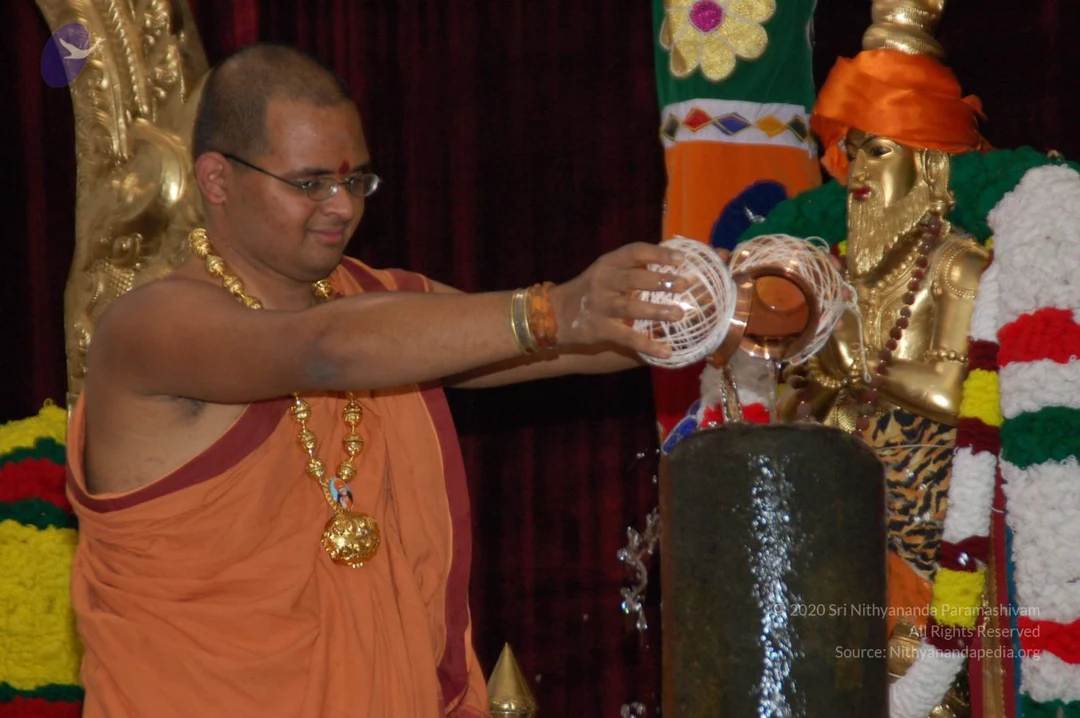
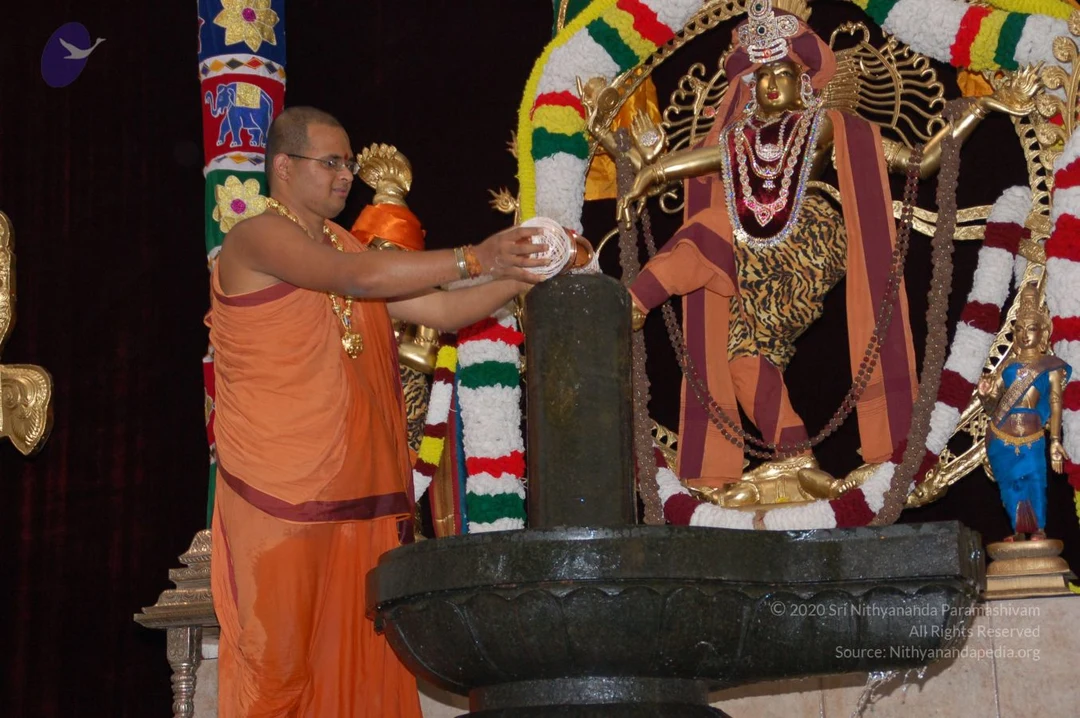
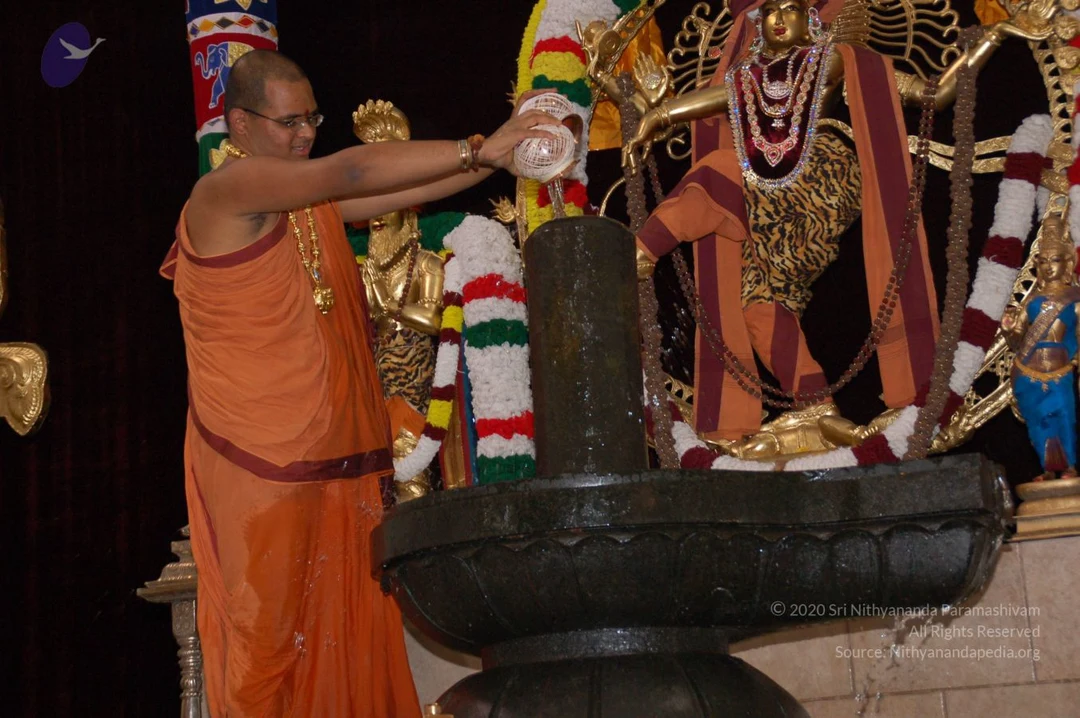
Devi Prana Pratishta and Shiva Sutras at Kailasa In Los Angeles
Photos from this day

View all 290 photos

Devi Prana Pratishta and Shiva Sutras at Kailasa In Los Angeles
160 photosSource gallery
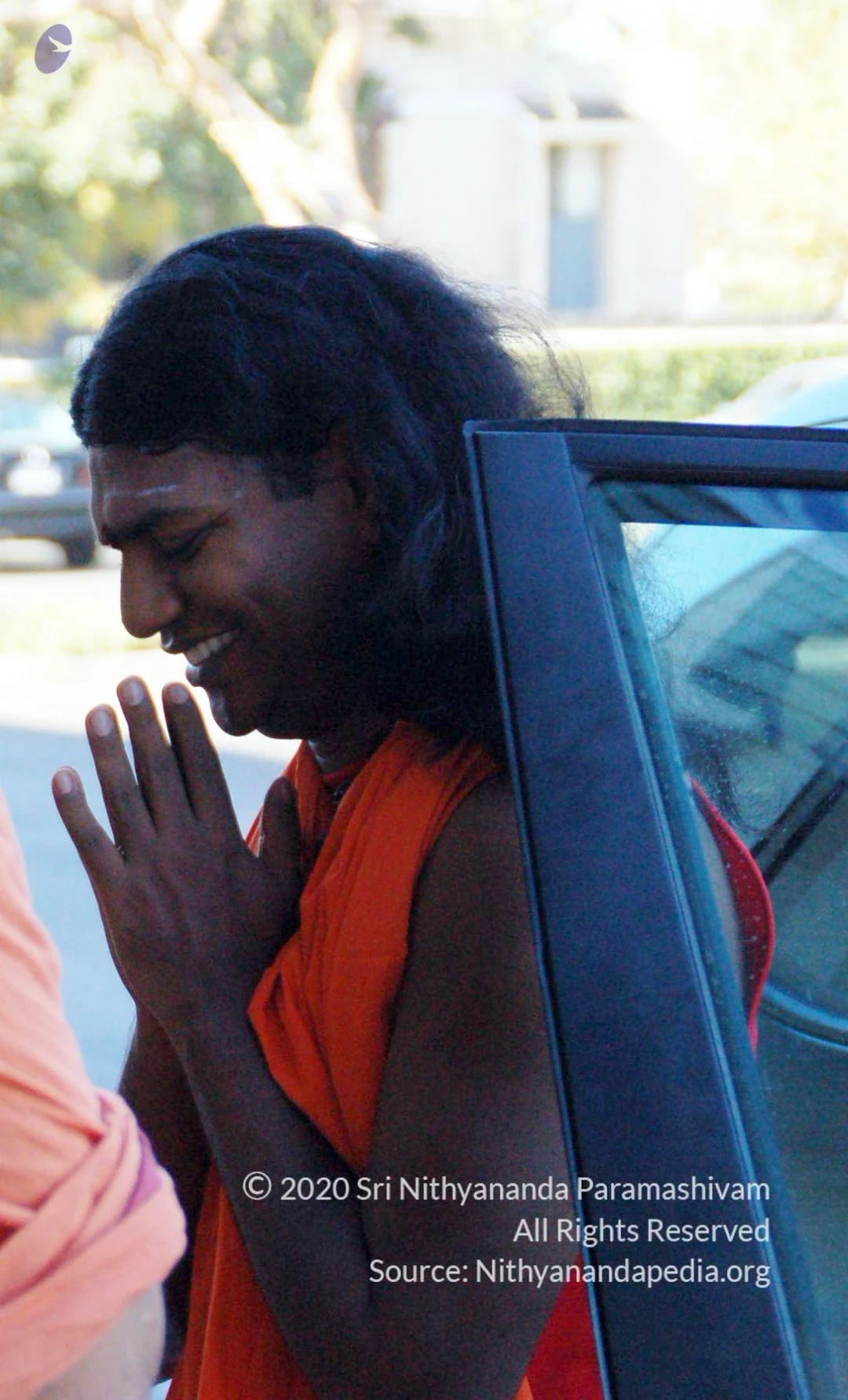
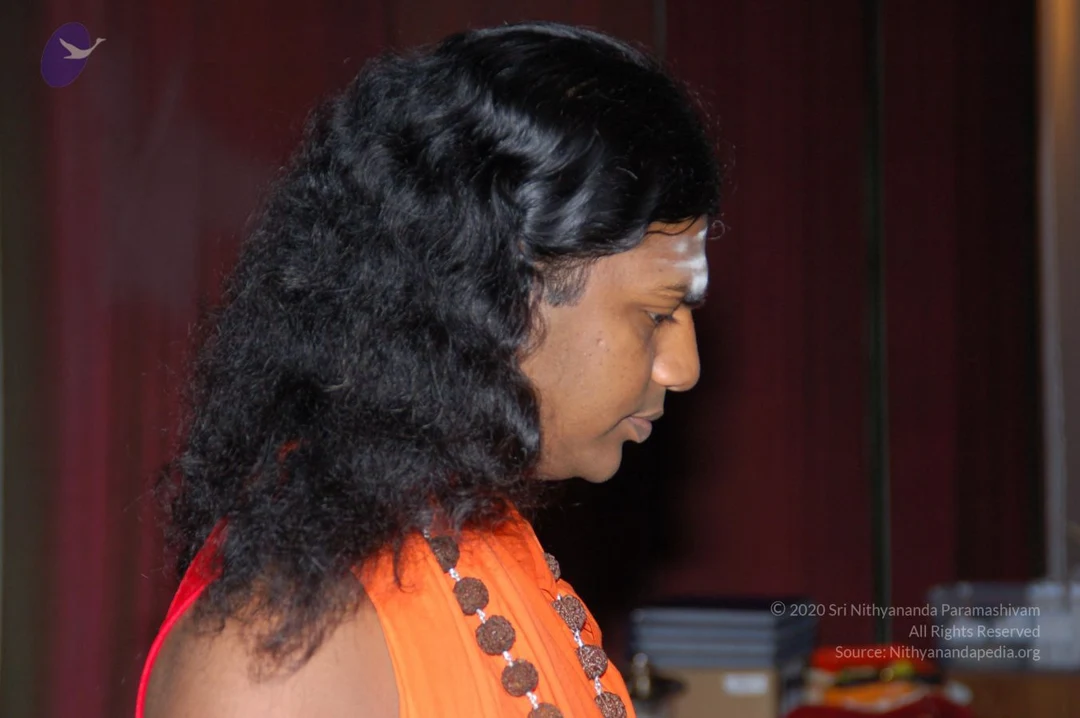
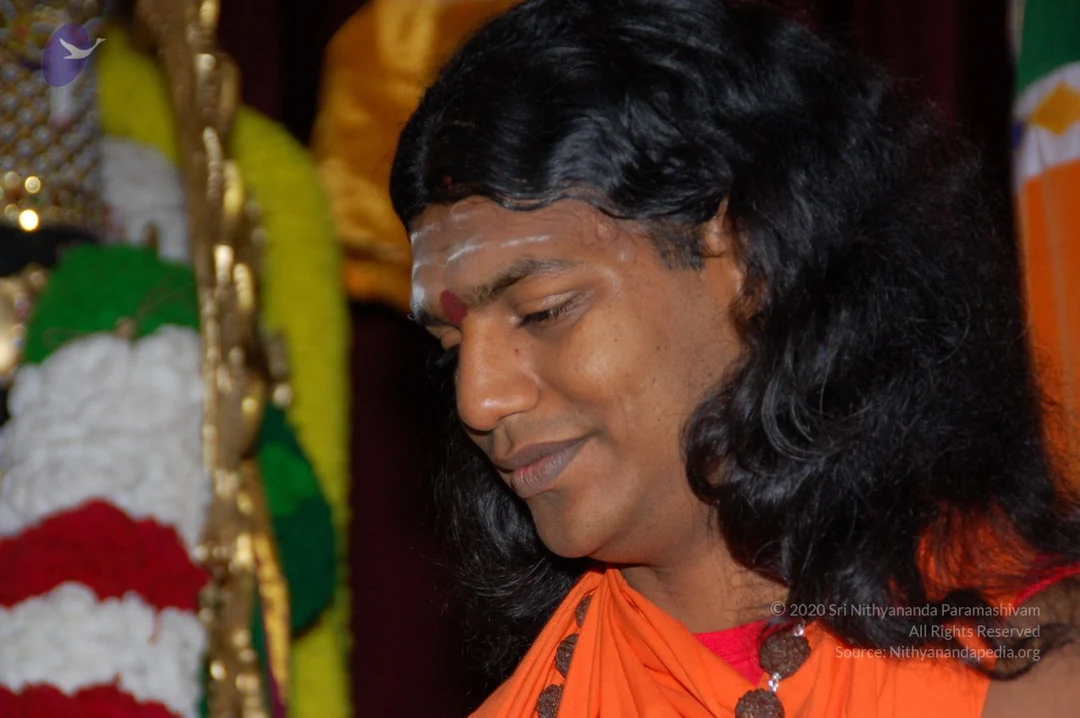
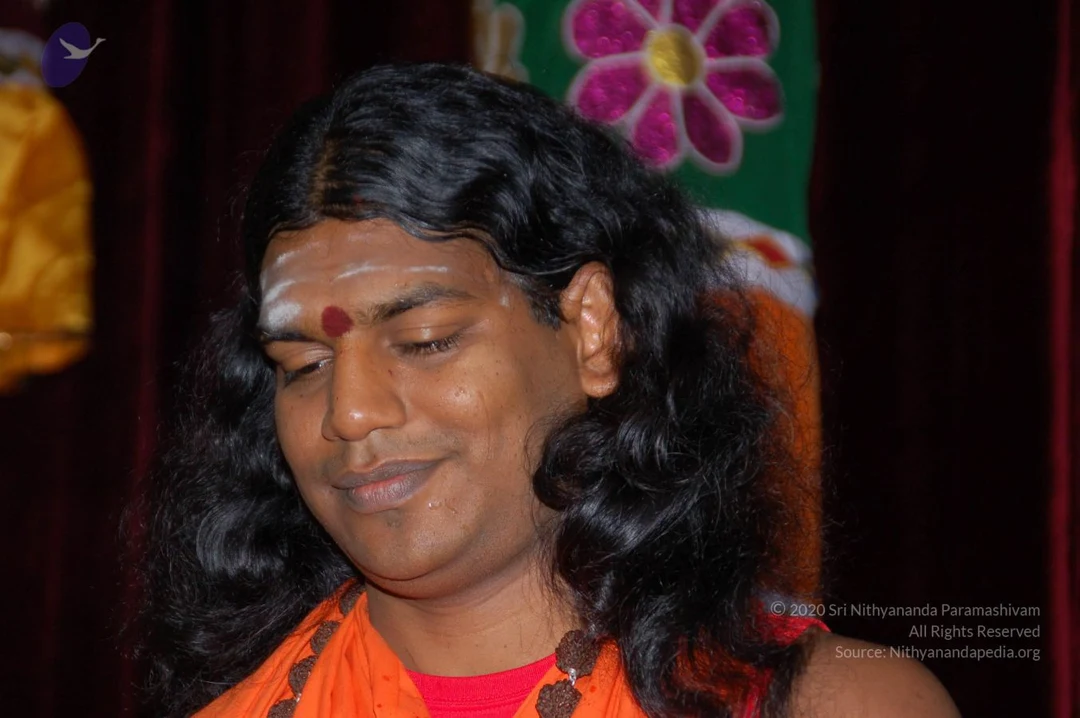
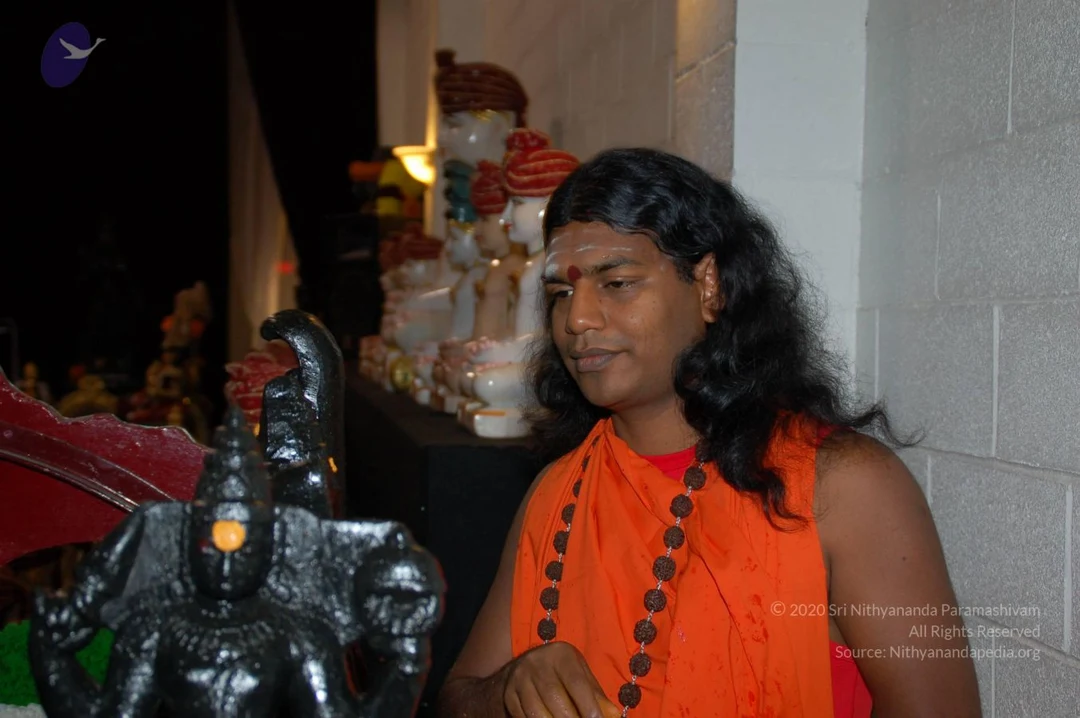
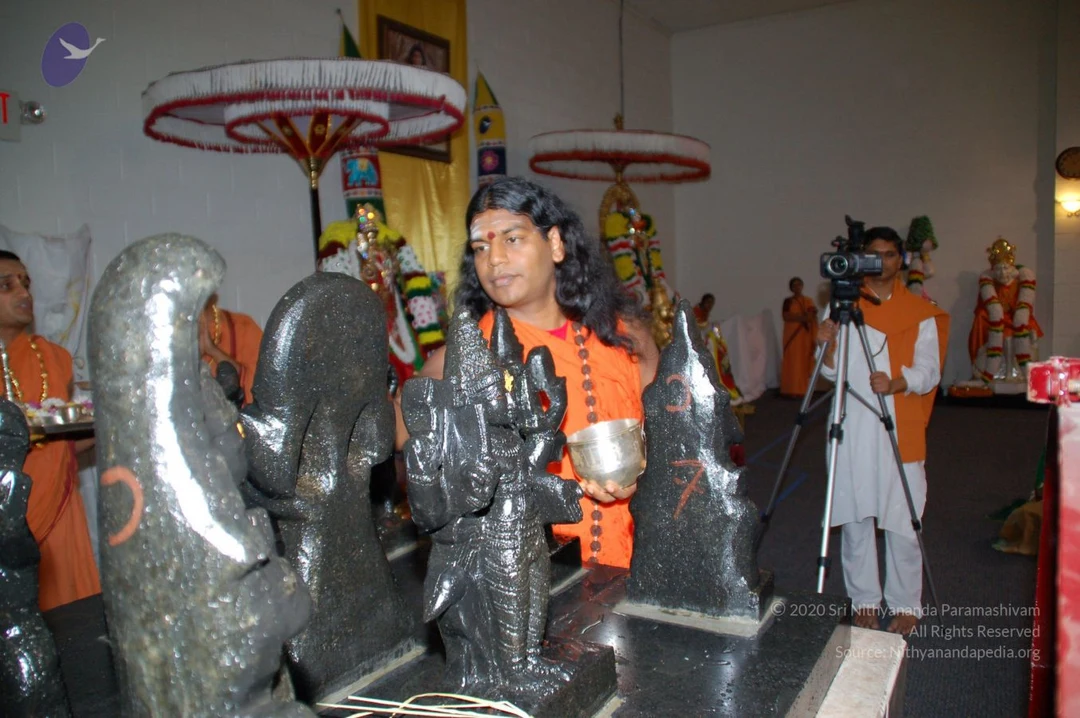
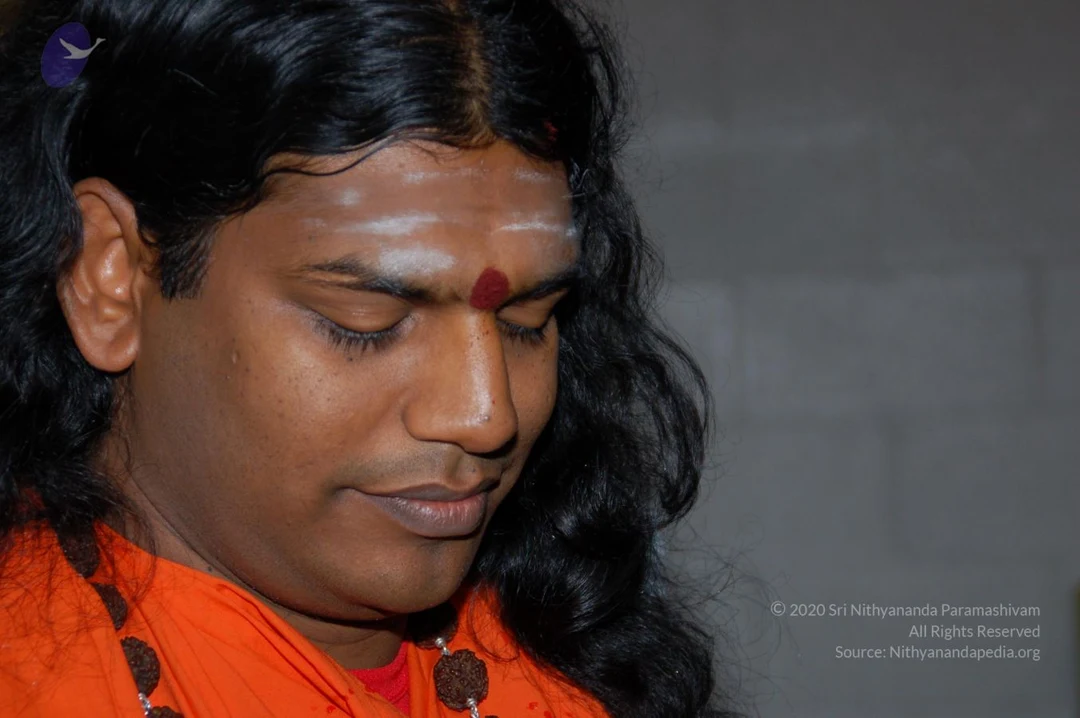
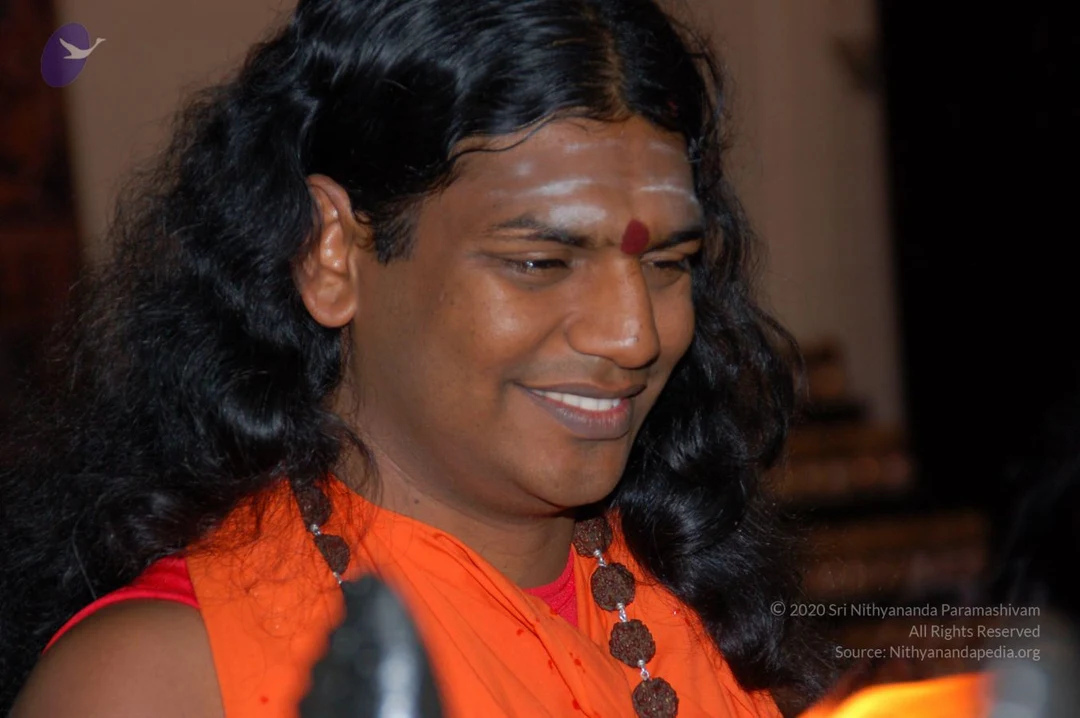
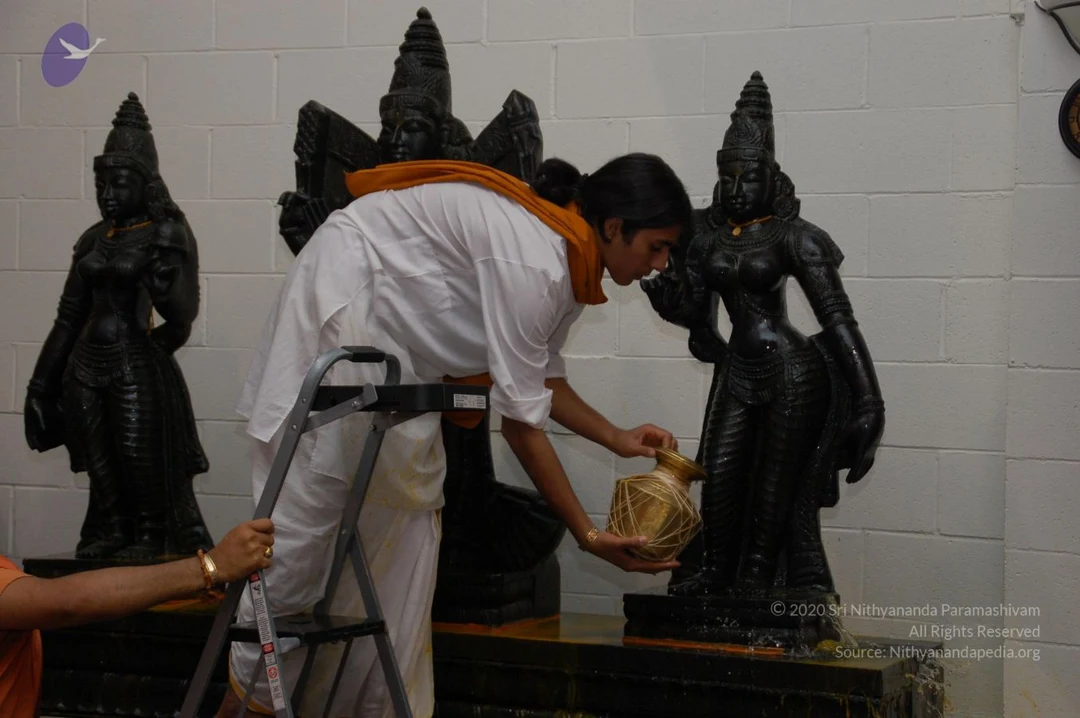
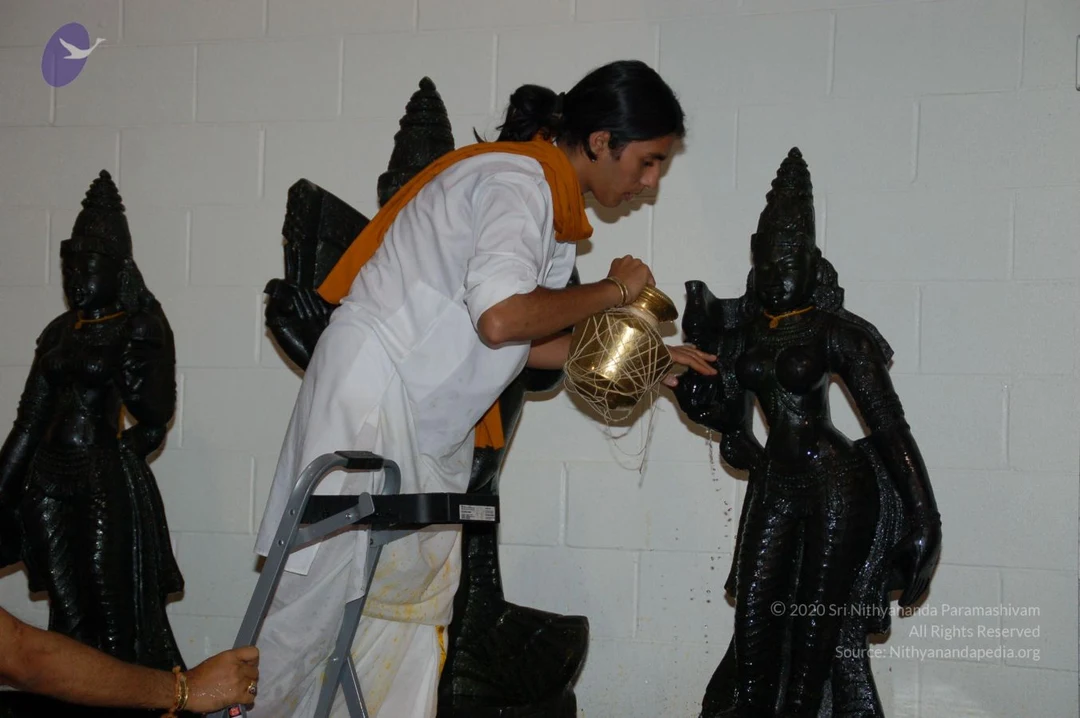
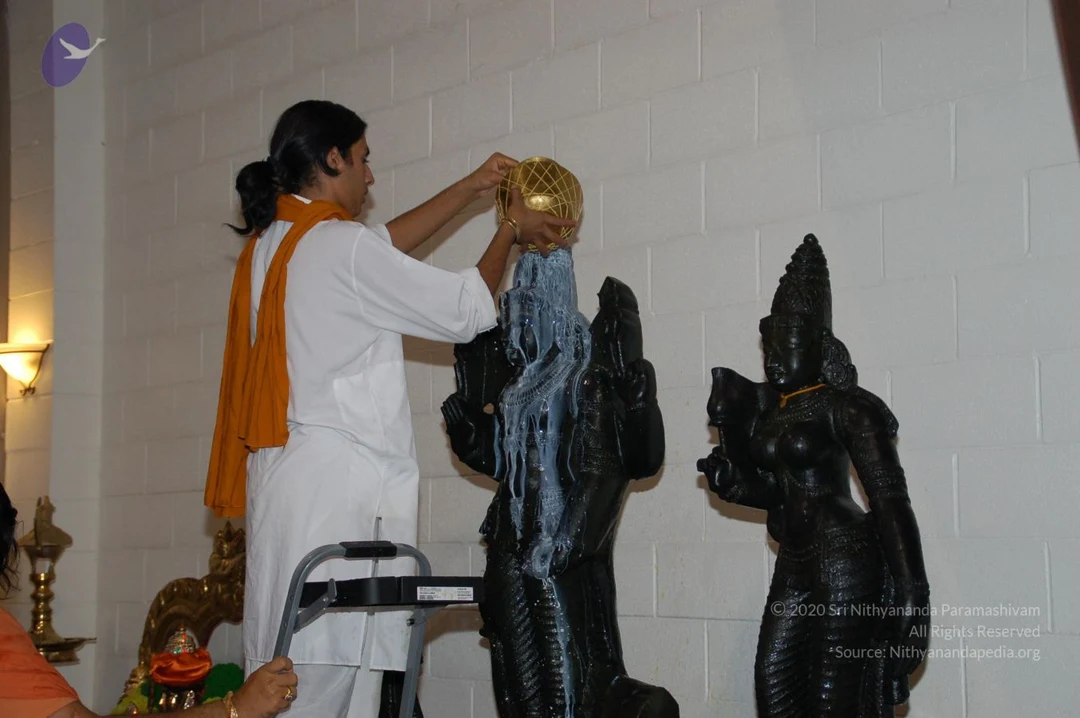
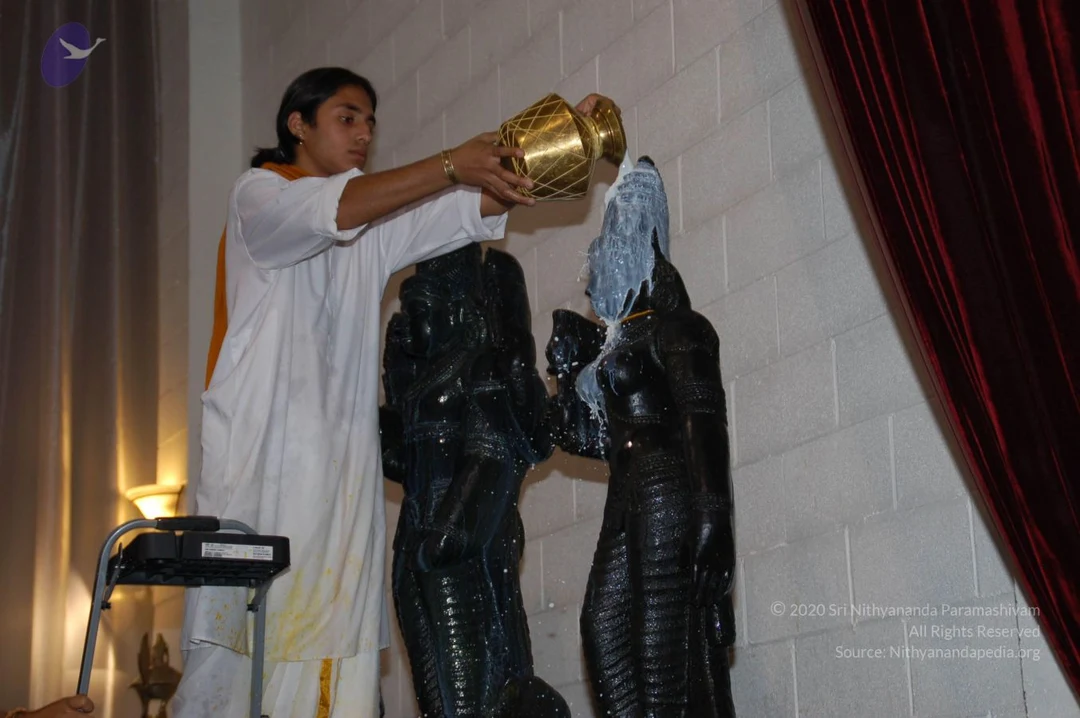
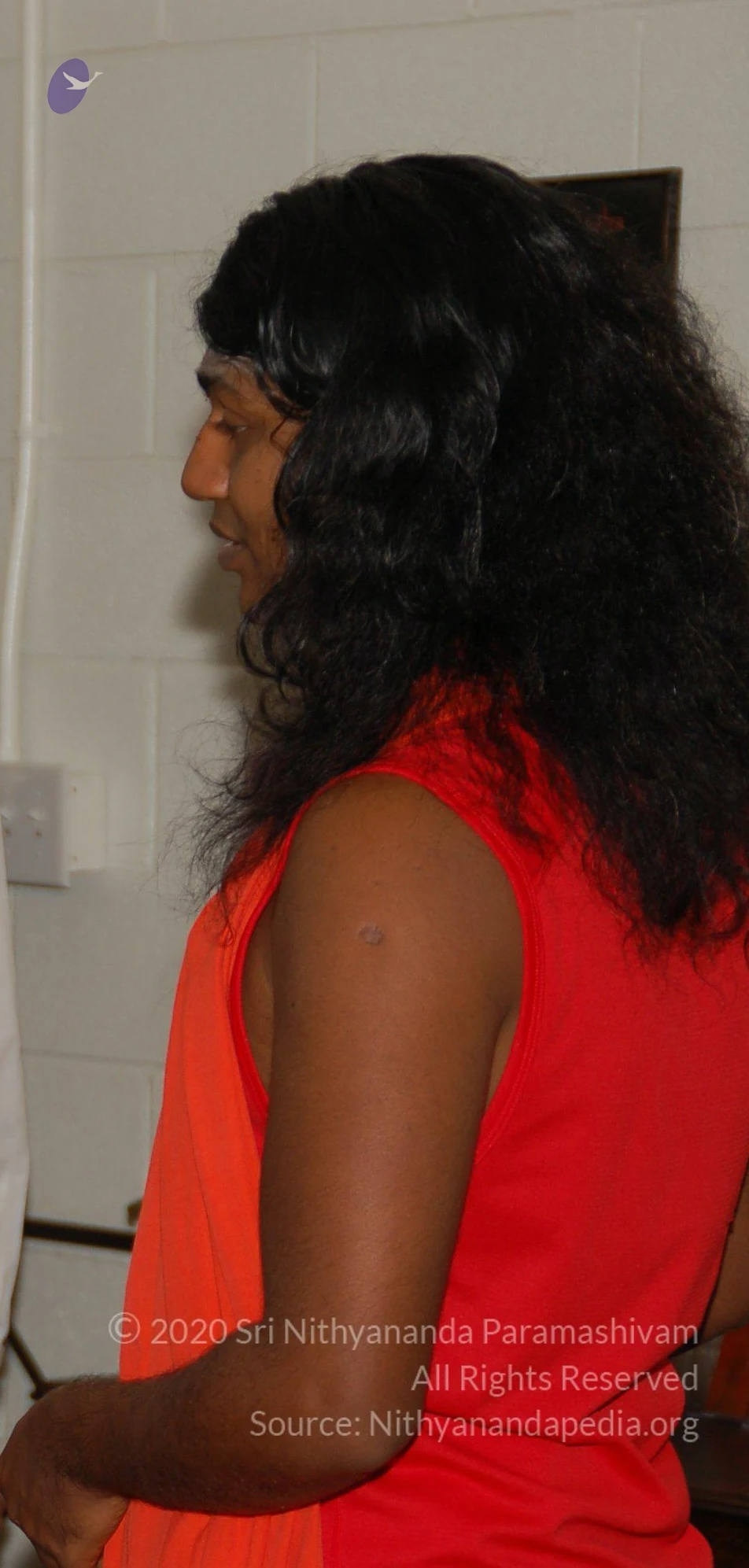
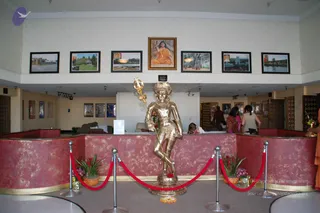
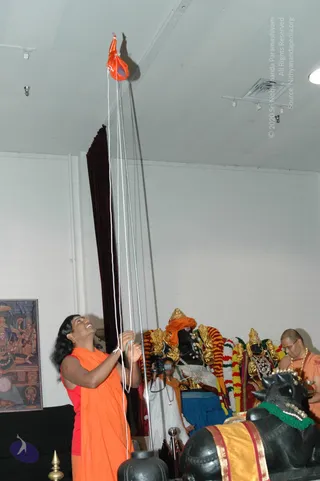
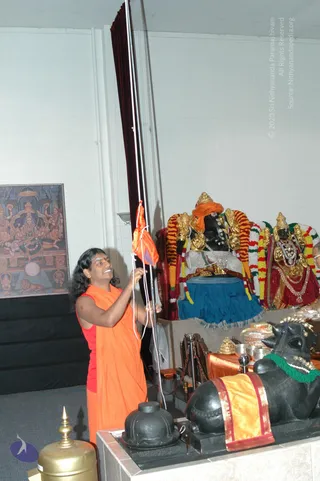
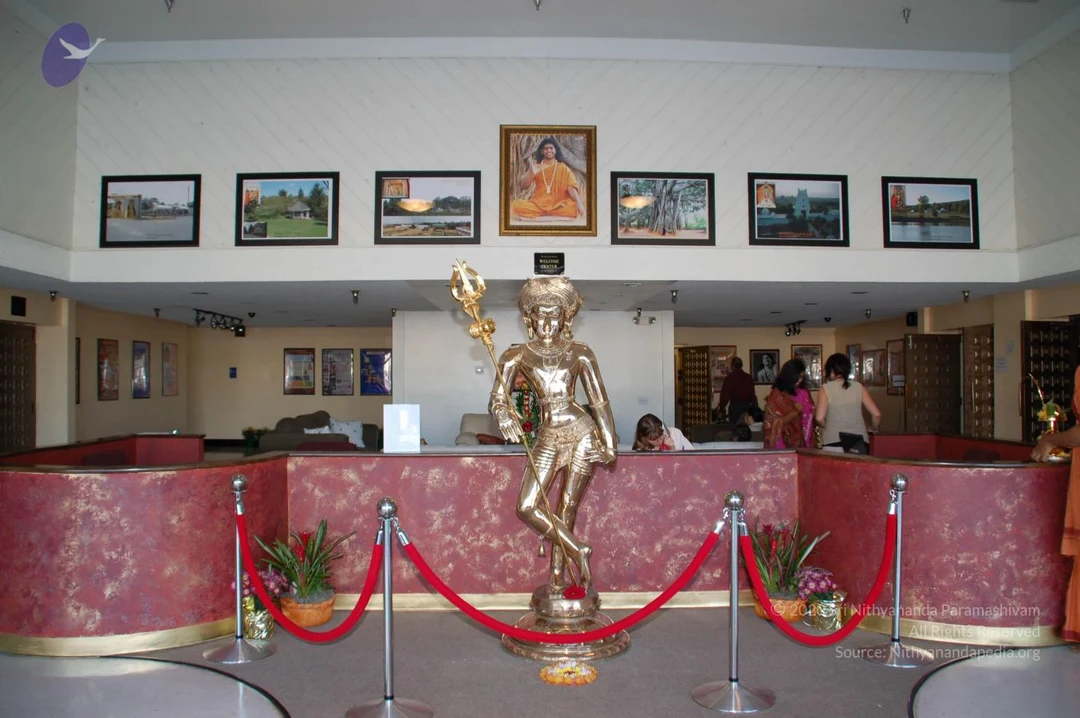
A man in a cream-coloured kurta plays a long dark wooden nadaswaram-style wind instrument with gold fittings and hanging gold ornaments. He wears a gold bangle, a ring and a red thread around his wrist, with a sandal or vibhuti mark on his forehead. Behind him, coconuts, green leaves and a garland of pink, red, yellow and white flowers decorate a display, and a woman in the foreground is partly visible.A photograph of a wood-panelled hall with a tall golden statue of Shiva standing on a round pedestal, holding a trident in his right hand and a small figure in his left, surrounded by red velvet rope on silver posts. Red flower arrangements sit beside the base, with a yellow lamp at the foot. Behind the statue, a framed portrait of a man in saffron robes with long hair and a rudraksha mala hangs above a row of framed landscape photographs on a white upper wall. A woman in a sari and a person in white are visible at the far counter. A portrait labelled 'a person' cannot be confirmed from the printed text alone, so the portrait is described by role only. Three or four people are visible in the background area.A photograph of a smiling man with long dark hair and a white forehead mark stands beside a dark blue car door, pressing his palms together in an anjali greeting. He wears an orange-red sleeveless wrap over bare shoulders. Blurred trees and a light building form the background. A person in pink fabric is partly visible at the left edge. The appearance is consistent with the a person cues of long swept-back hair and orange clothing, but the face is not clear enough to confirm identity. A copyright overlay appears across the lower right.Side profile of a person with long, wavy black hair, facing left with head bowed. A white vertical forehead mark is visible. The person wears an orange sleeveless garment and a necklace of large brown rudraksha beads strung on white cord. The background is a deep maroon curtain, with a blurred white and red object at lower right. A purple bird logo appears at top left.A dark bronze standing deity murti on a plain stone base, set against deep red velvet drapery. The figure has a tall conical crown, a wide necklace, bangles, and a draped skirt with a belt. Its raised right hand holds a trident-like object and a small vessel is held in the left hand. The statue is the only figure; no physical people are visible.A dark stone or metal standing murti of a goddess against a deep red velvet curtain. She wears a tall conical crown, a layered necklace, armlets and a jewelled waist belt over a pleated lower garment. Her raised left hand holds a pot-shaped object, and her right hand hangs down with fingers extended. The figure is shown alone with no visible people, and the lighting is dim.

November 15 To 19 2007 - At Kailasa In LosAngeles
130 photosView all
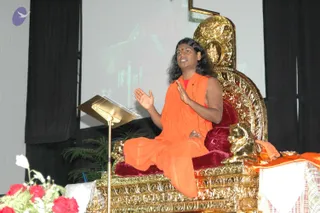
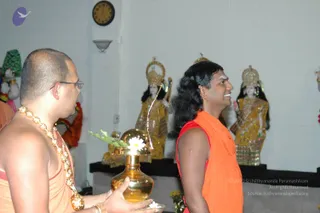
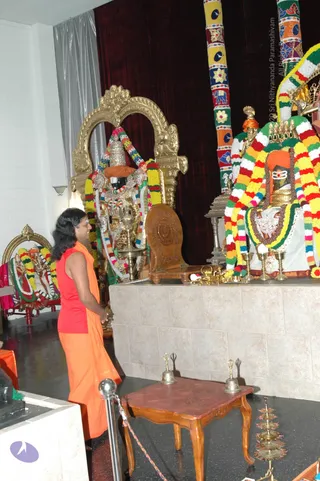
Dusk view of a paved parking area with two parked cars. A dark SUV with its headlights on sits at left, and a dark blue sedan with its tail lights on sits at right. Behind them stand a low white wall with dark hedges, a yellow fire hydrant, a couple of bare-branched trees, and a beige building with lit windows under a fading evening sky. No people are visible.A long-haired man in a sleeveless saffron-orange robe sits cross-legged on an ornate gold throne with red velvet cushions and a golden lion figure at its base. He wears a red bindi and raises both palms in an expressive gesture while speaking. A gold lectern stands at left, red roses lie in the lower left corner, and a projection screen behind him shows a faint image. Swamiji (probable): the long swept-back hair, saffron robe and gold throne are the appearance cues, and he is physically present on the stage.A photograph inside a temple room with white walls and a wall clock. On the left, a shaven-headed priest in saffron-orange robes wears a gold bead necklace and holds a brass kalasha topped with a white flower and green leaves, with a small plate of flowers below. Beside him stands a long-haired man in an orange sleeveless wrap over a red top, with a white line on his forehead, smiling toward the altar. Behind them are decorated deity murtis in gold and yellow dress with crowns, and a black-and-gold stand with flowers. The man's presentation shows swept-back long hair, saffron clothing and forehead marking, but these cues are not distinctive enough to confirm identity, so he is described only by role and appearance.A photograph inside a temple shrine. A person with long dark hair and a vermilion-red and saffron-orange sleeveless garment stands at left, facing right and looking toward the shrine with hands folded. The shrine holds deity murti decorated with multicolored flower garlands in red, yellow, white and green; one figure wears a silver crown and gold ornaments, and another has an orange turban and white tripundra markings. Brass oil lamps, bells on a wooden table, and a tall striped ceremonial pillar stand nearby. A gilded arch frames the altar against a dark red curtain.A photograph of a temple interior with white walls and a white ceiling. In the foreground, a figure in an orange robe with a bare right shoulder pulls white ropes that raise a saffron-orange finial and a dark maroon velvet drape toward the ceiling. Behind him, black deity murti are dressed with orange and gold cloth, gold crowns, gold ornaments and garlands of orange, yellow, red and white flowers. A black nandi bull with a green garland and gold-bordered cloth sits in the lower right. On the right, a bald man in an orange robe with a gold necklace holds a small brass lamp. A person in white with a camera stands at the centre, and a framed painting of deities hangs on the left wall.A man with long dark hair in an orange dhoti-style wrap over a red sleeveless top smiles as he raises a small orange flag on a tall silver pole inside a plain white-walled hall. Two black deity murtis with gold faces and crowns, draped in marigold garlands and orange and red cloths, sit on a blue-draped platform beside a black Nandi bull adorned with a green garland. A gold kalasha stands in the lower left, and a framed painting of a deity assembly hangs on the left wall. Brass vessels and offerings are arranged on a side table.