Skip to content
Sunday

7 October 2007

THE SUPREME PONTIFF OF HINDUISM HDH BHAGAVAN SRI NITHYANANDA PARAMASHIVAM

Dated photos
73
Source pages
1
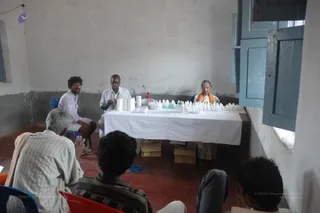
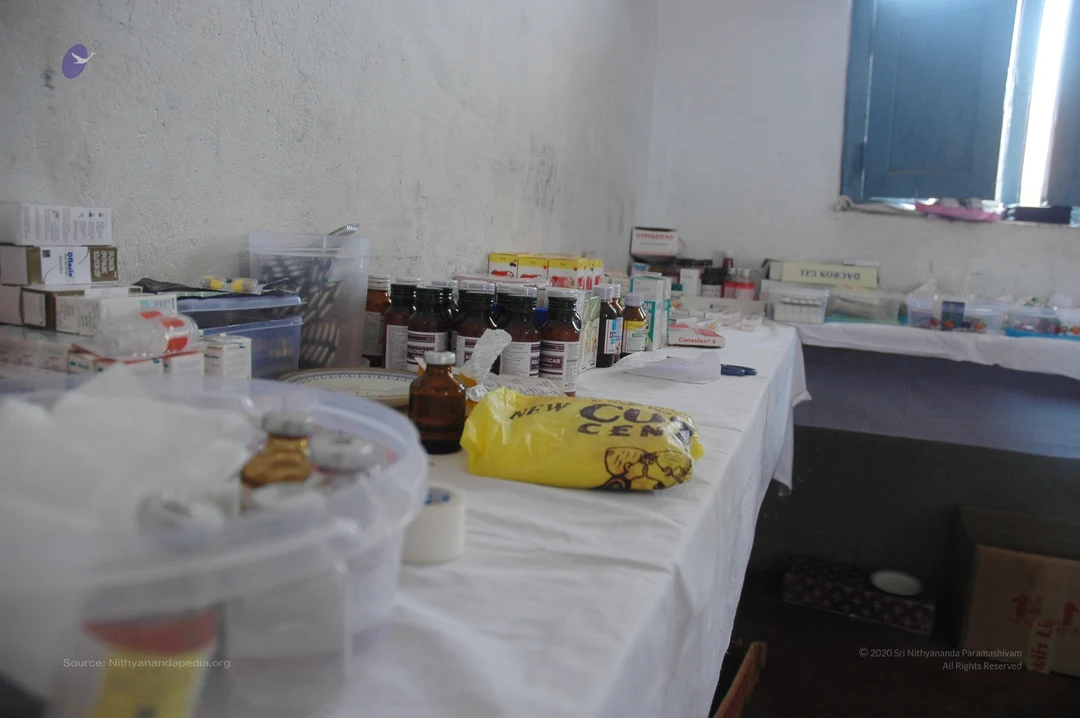
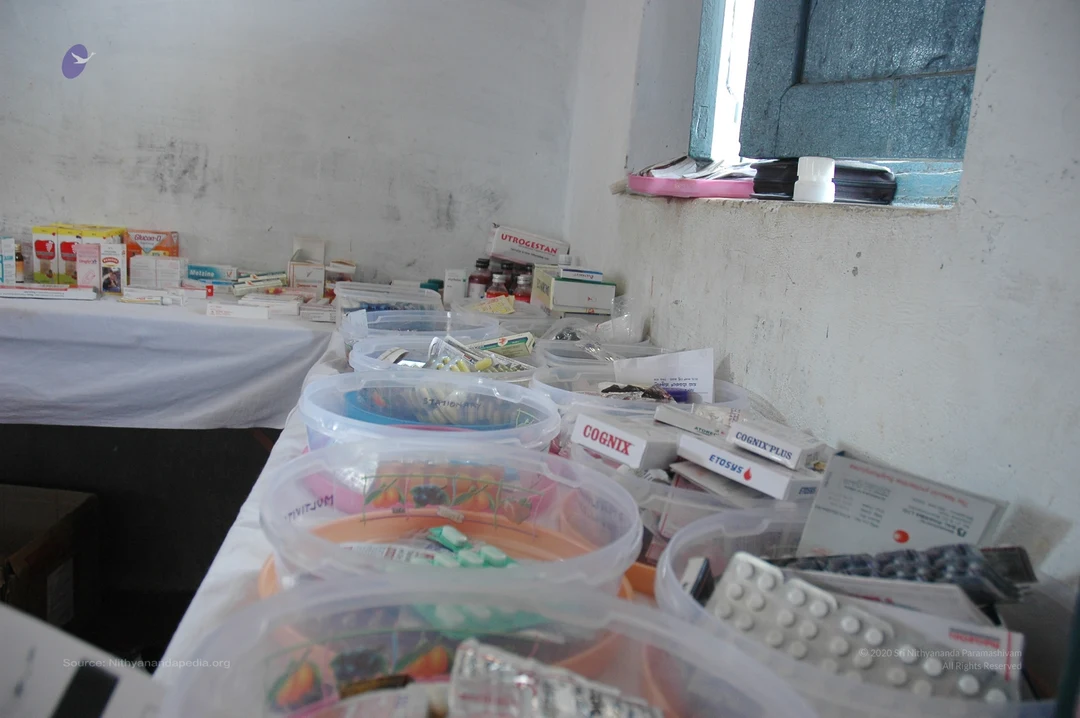
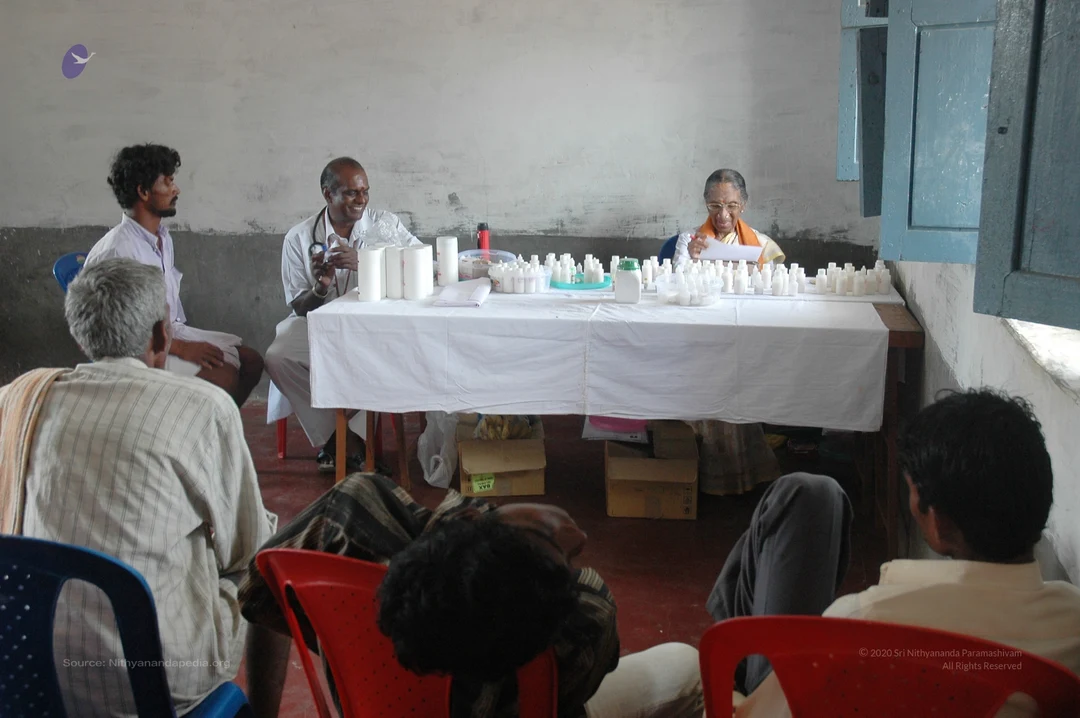
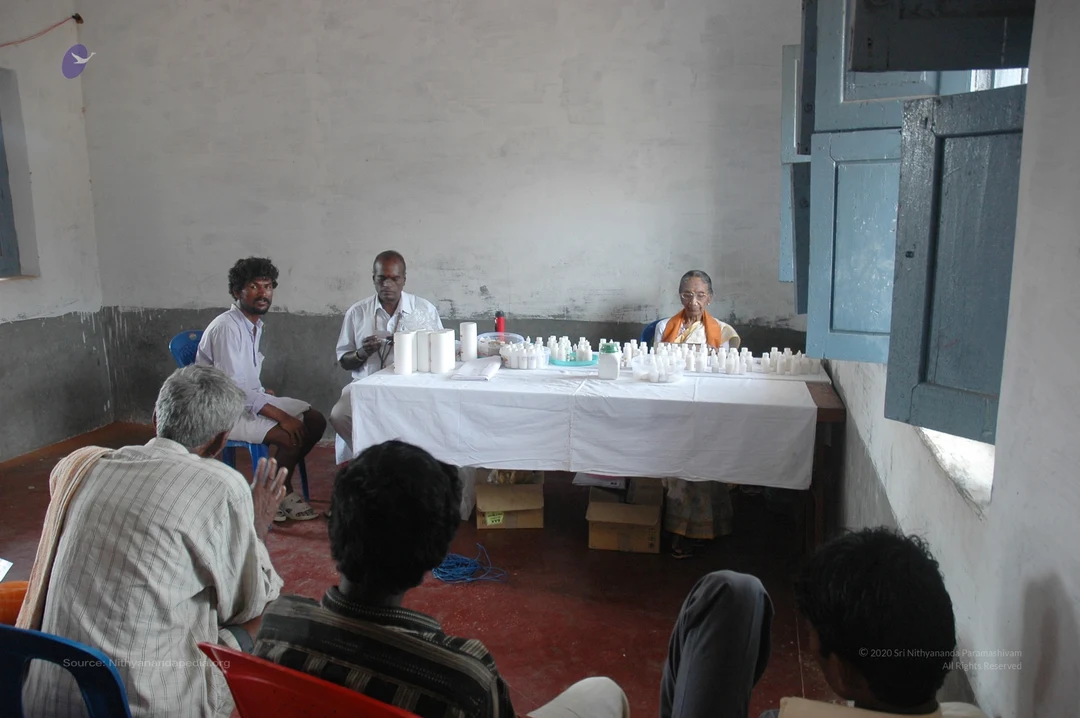
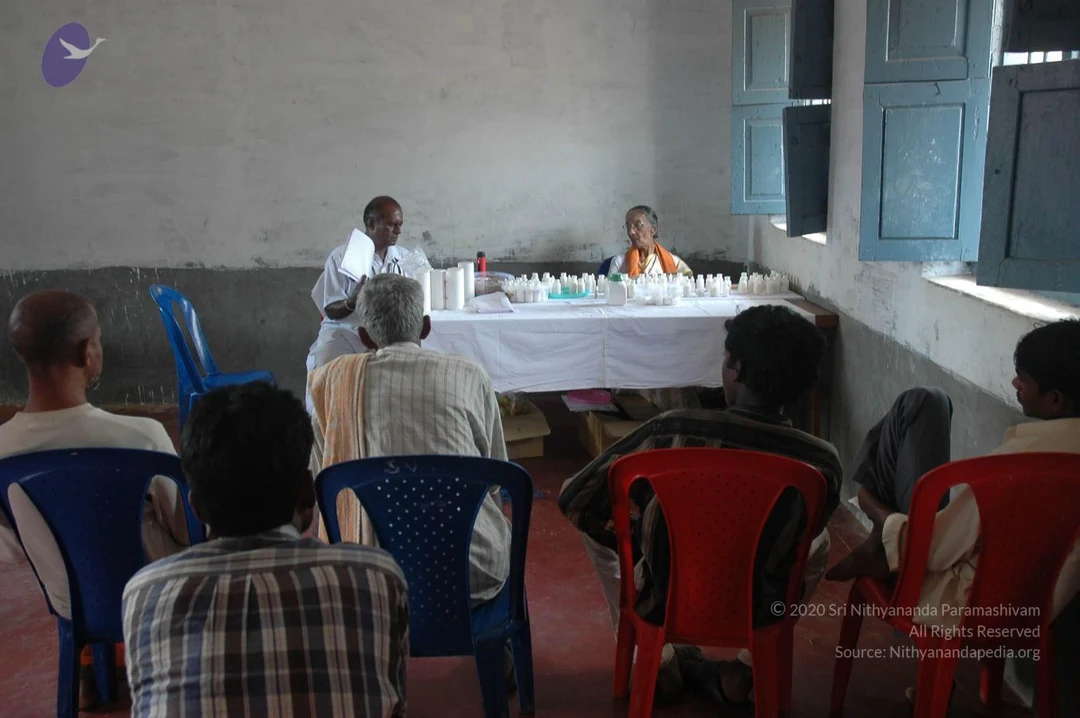
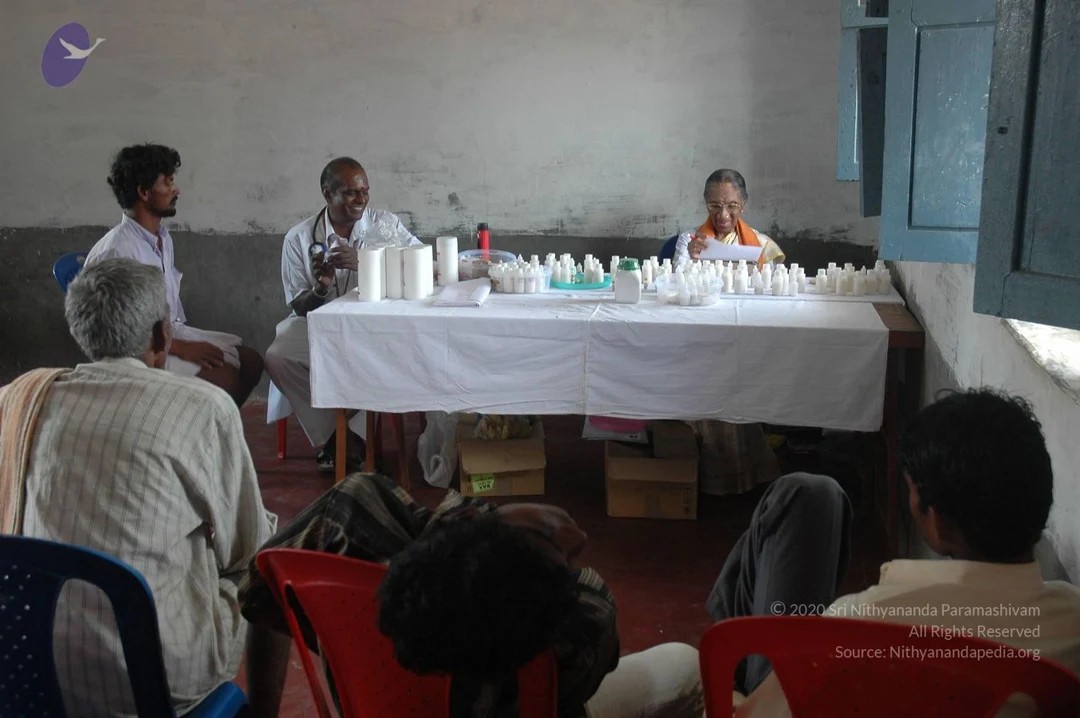
A photograph of a medical camp held in a plain whitewashed room with blue-framed windows and a red floor. Behind a white-draped table covered with rows of small white and green bottles and containers, a man in a white shirt and an older woman in a white sari with an orange shawl sit facing the room. A young man in a light shirt sits to the left of the table. In the foreground, several people seen from behind sit on blue plastic chairs, including a man with grey hair in a light striped shawl and another man in a striped shirt. Cardboard boxes and a blue cable are on the floor. No a person candidate is visible.

October 07 2007

Original wiki page
Contents

Title:

THE SUPREME PONTIFF OF HINDUISM HDH BHAGAVAN SRI NITHYANANDA PARAMASHIVAM

Photos of the Day:

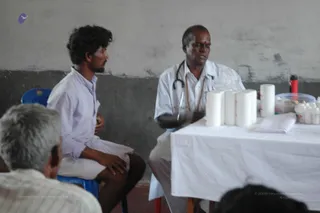
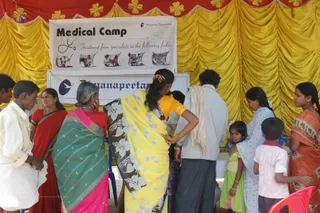
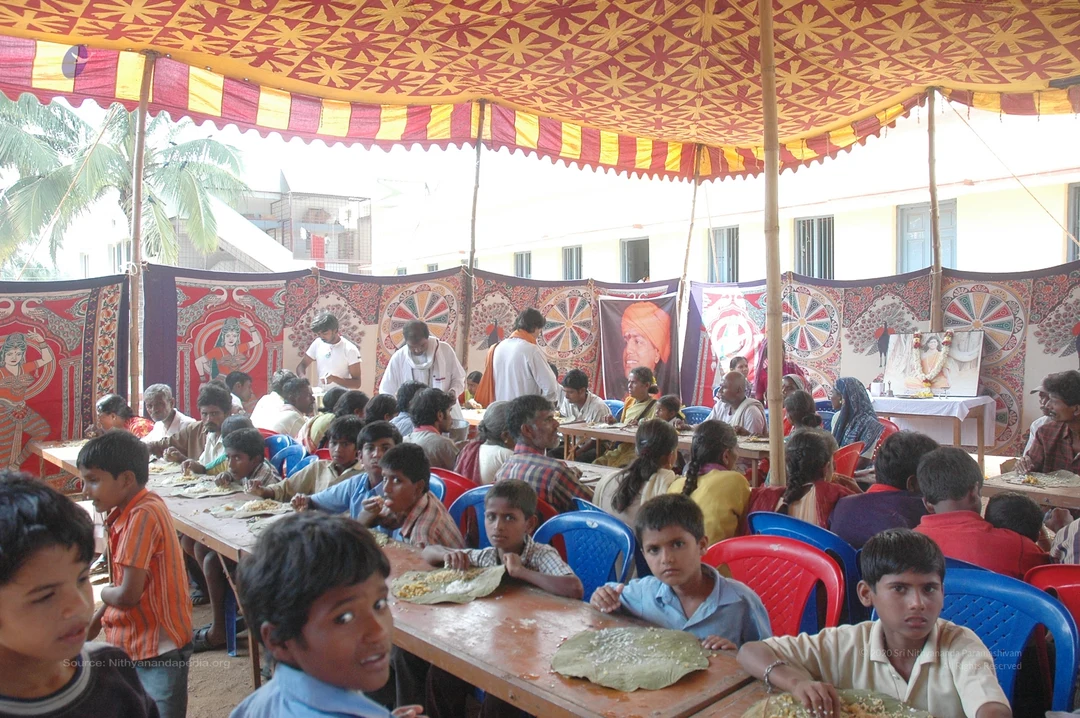
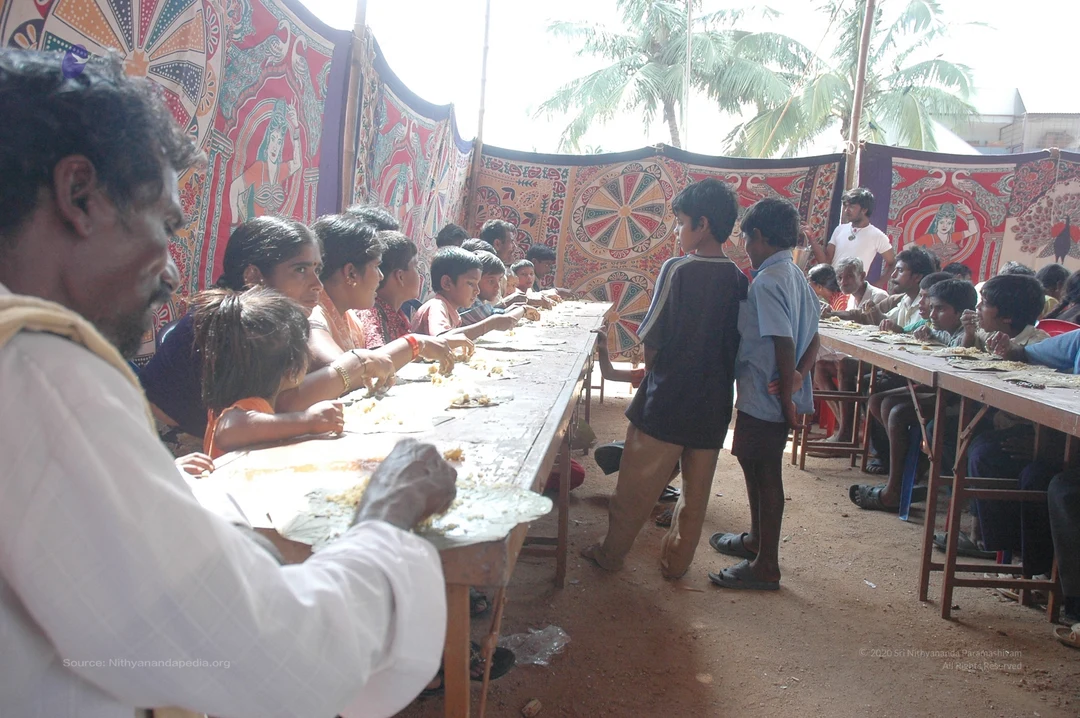
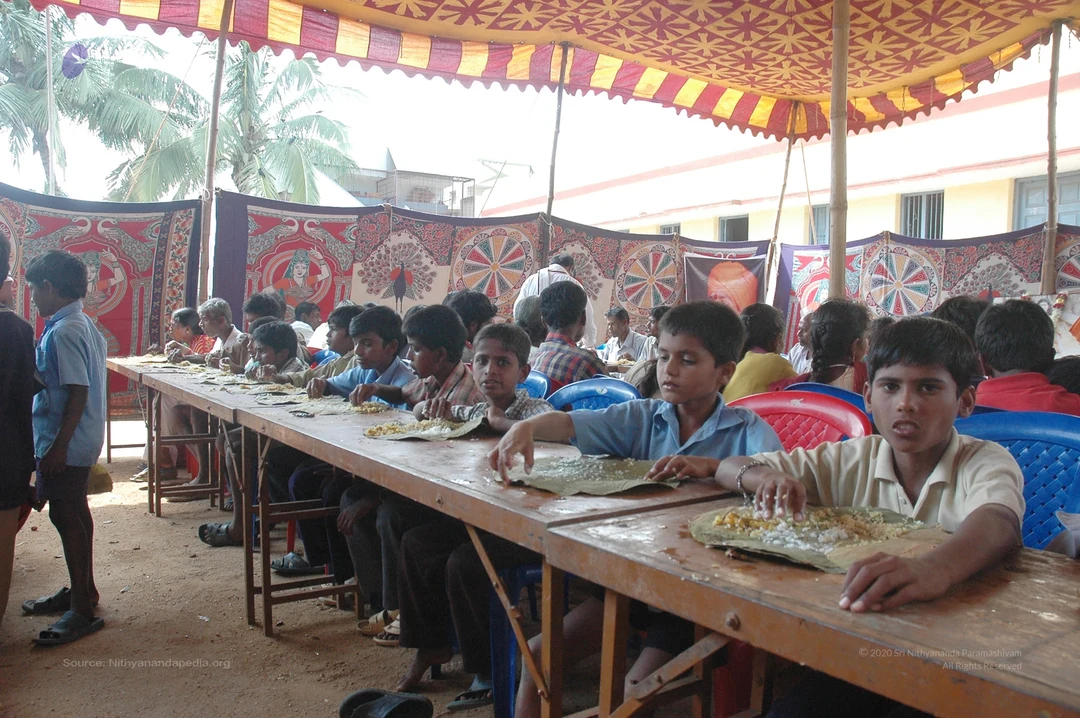
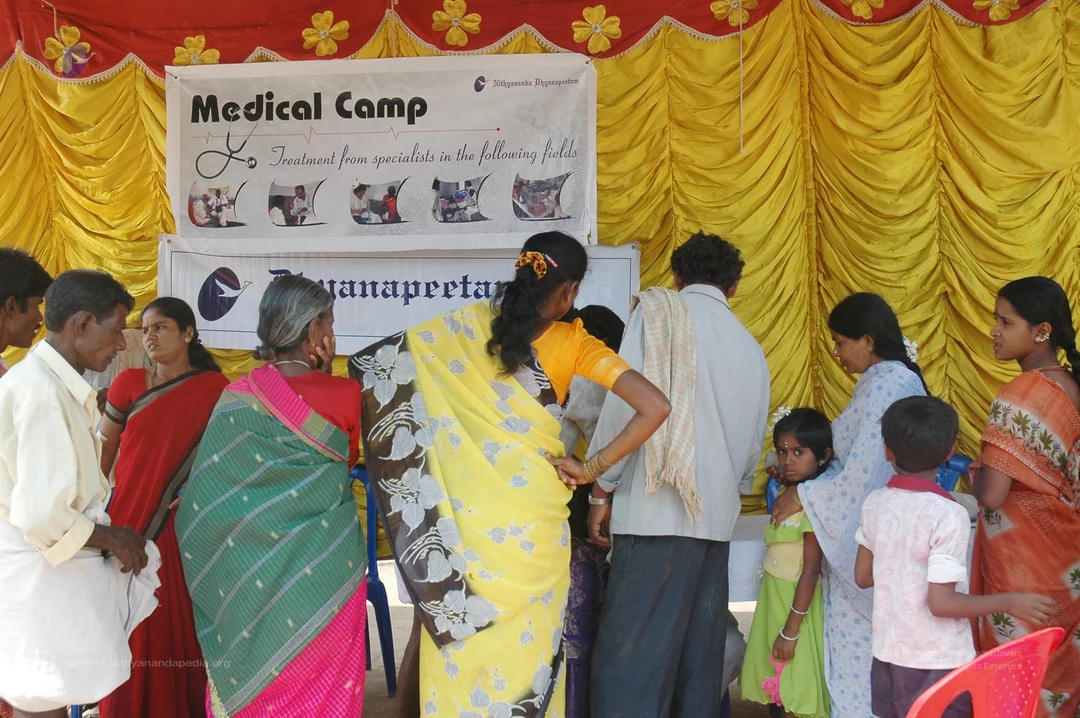
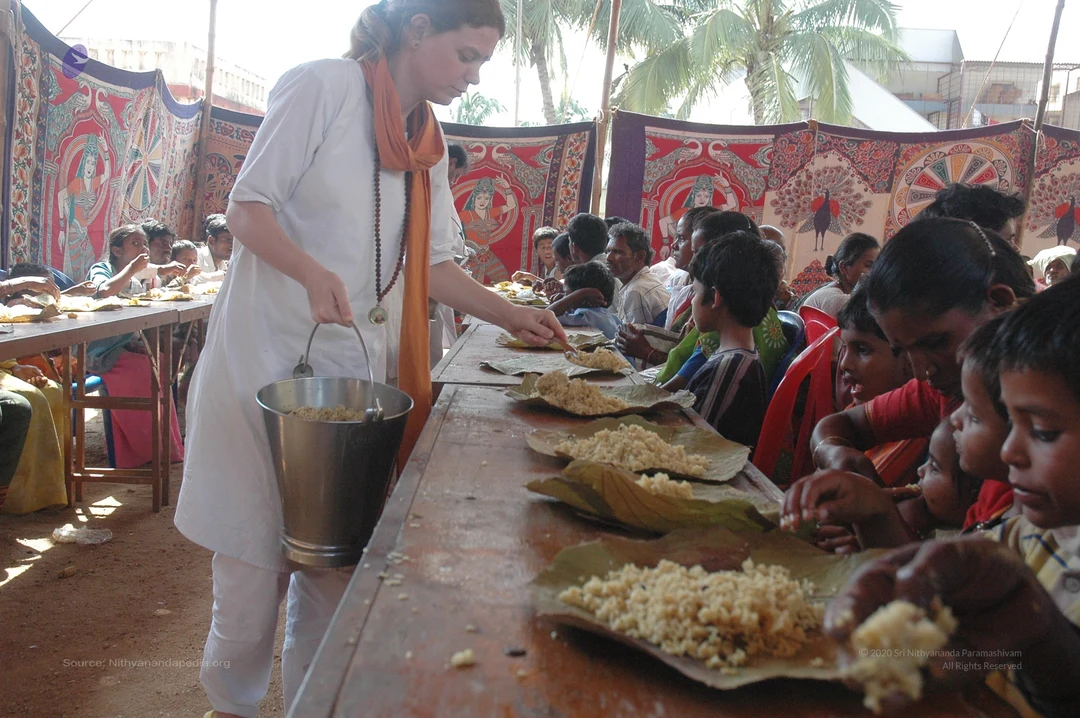
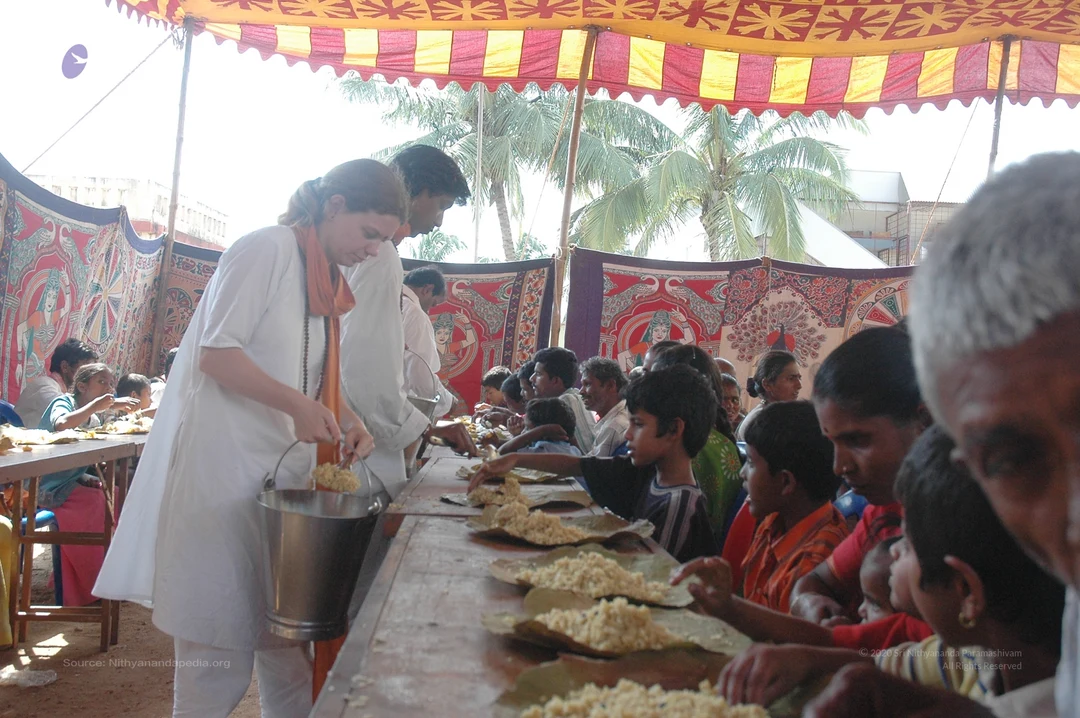
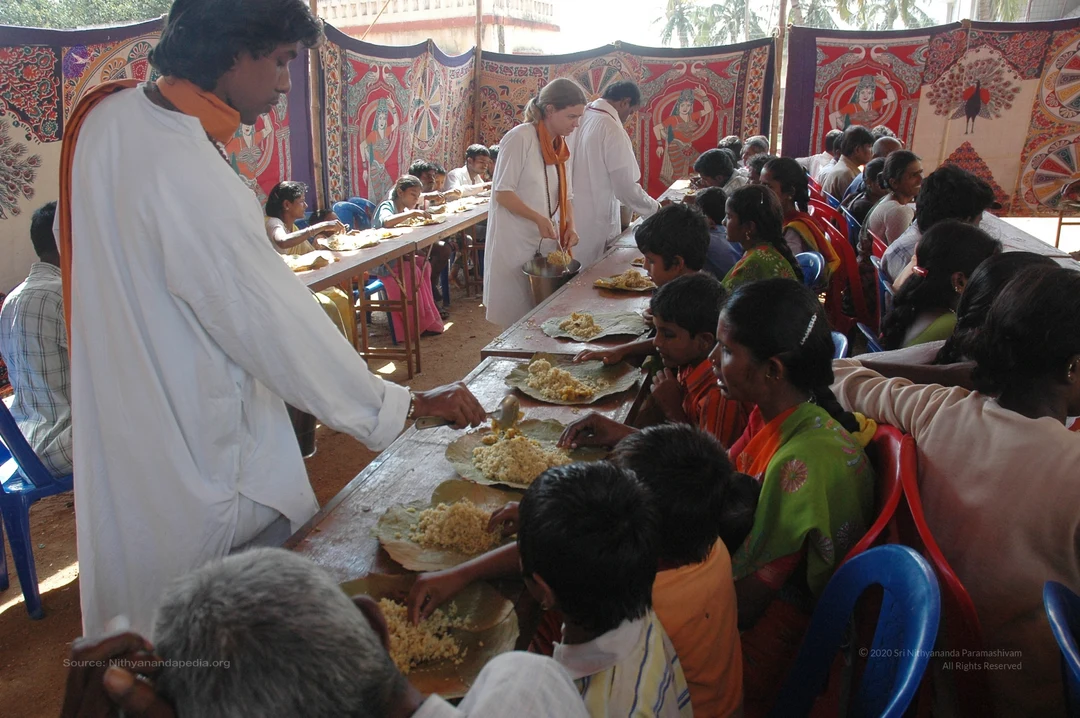
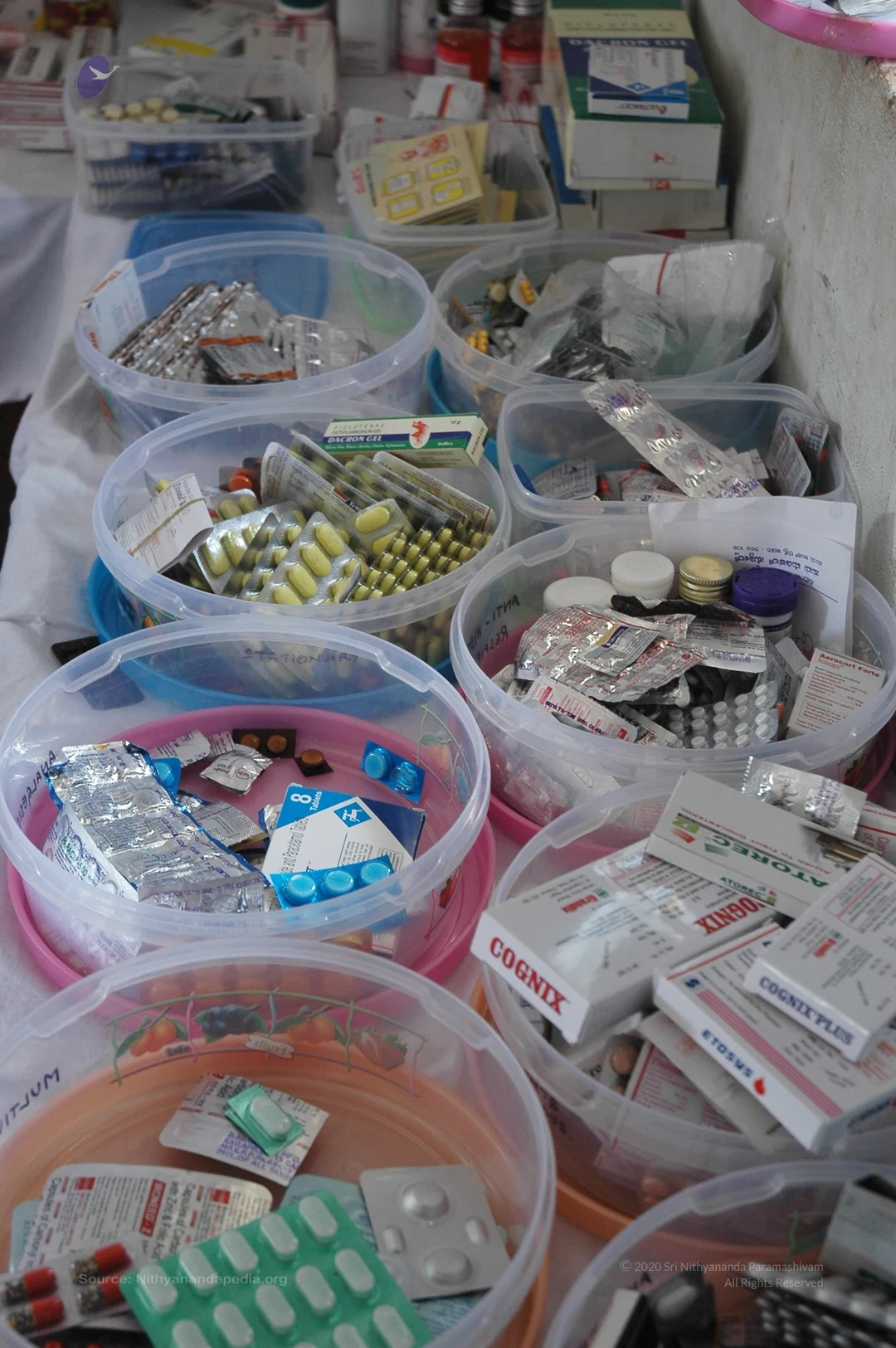
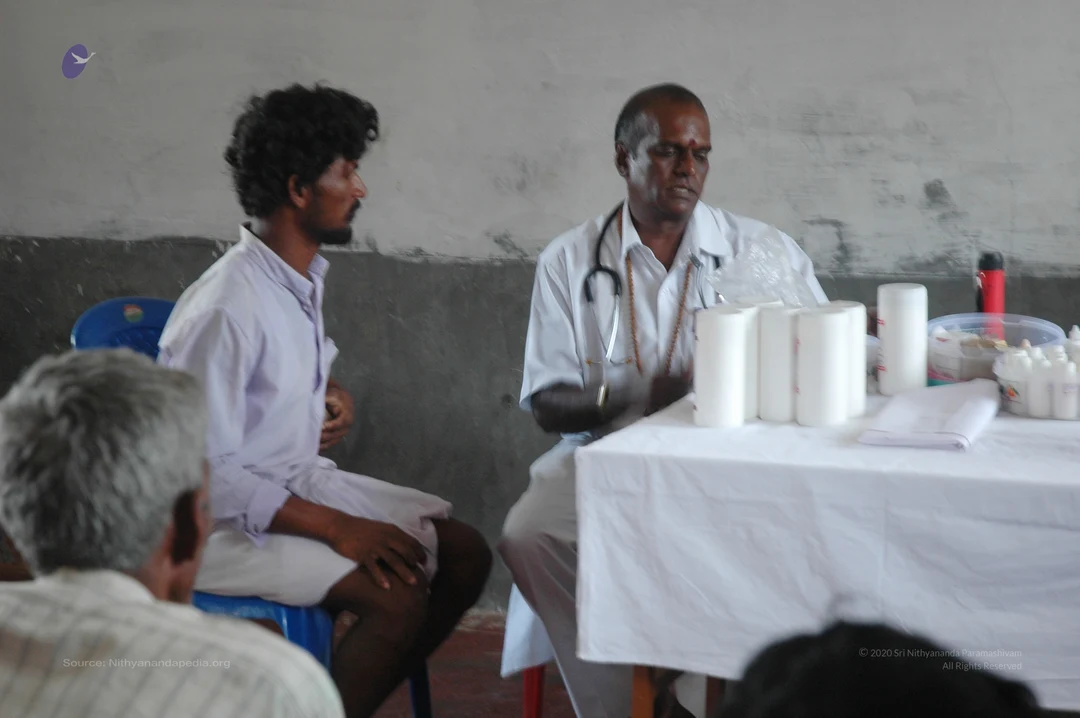
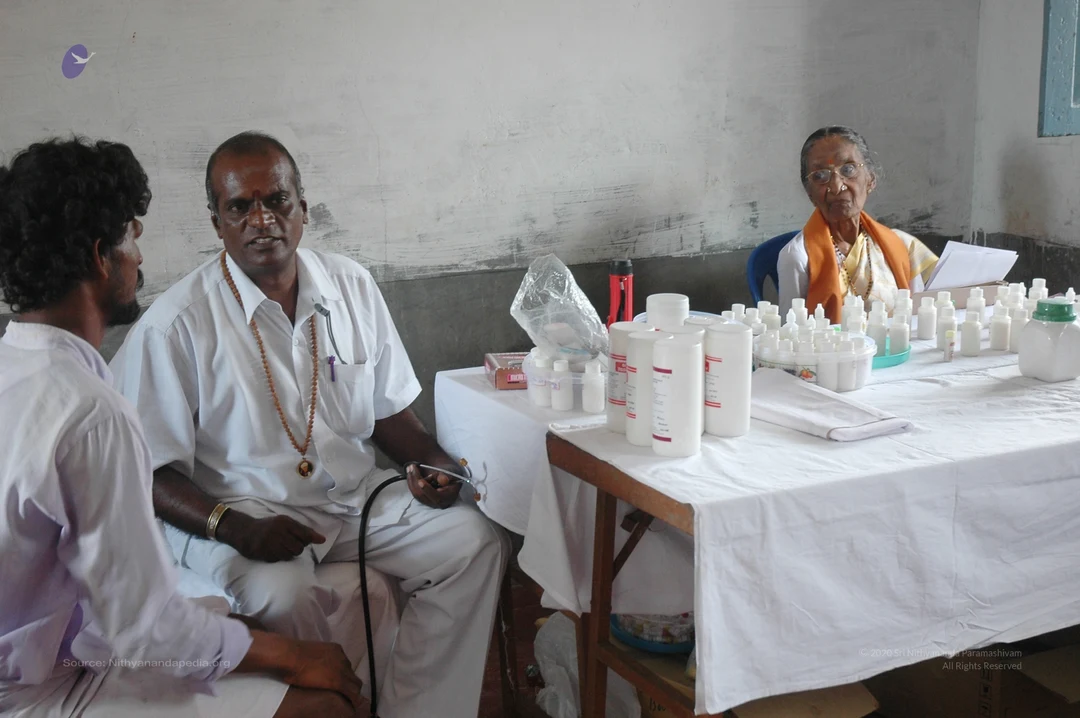
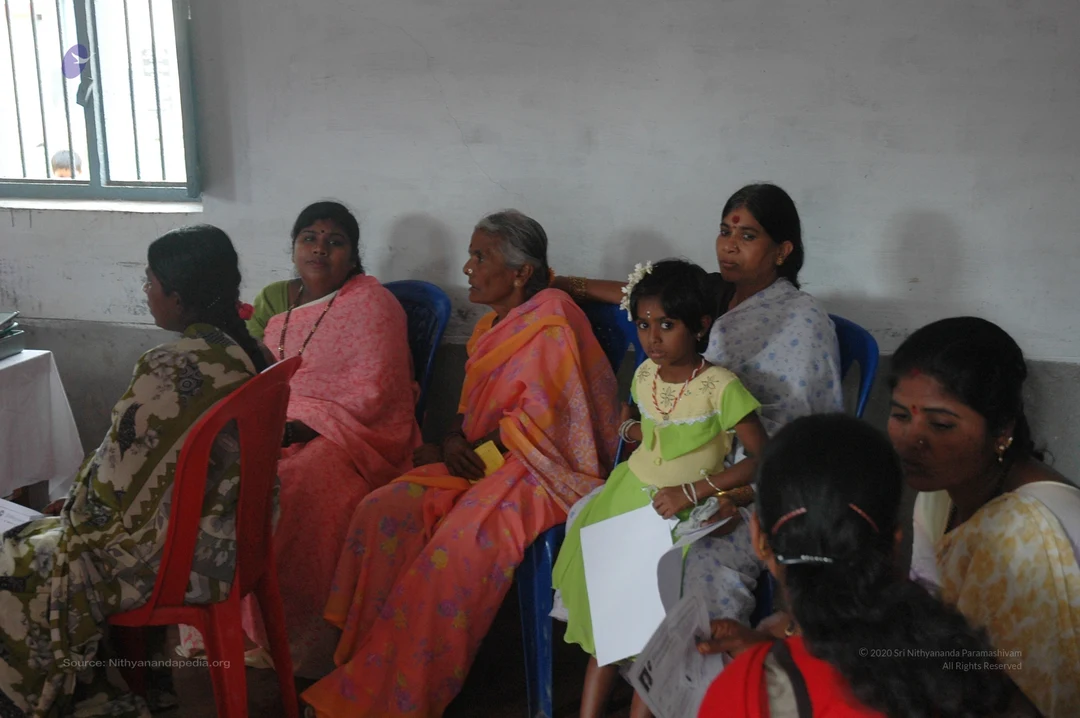
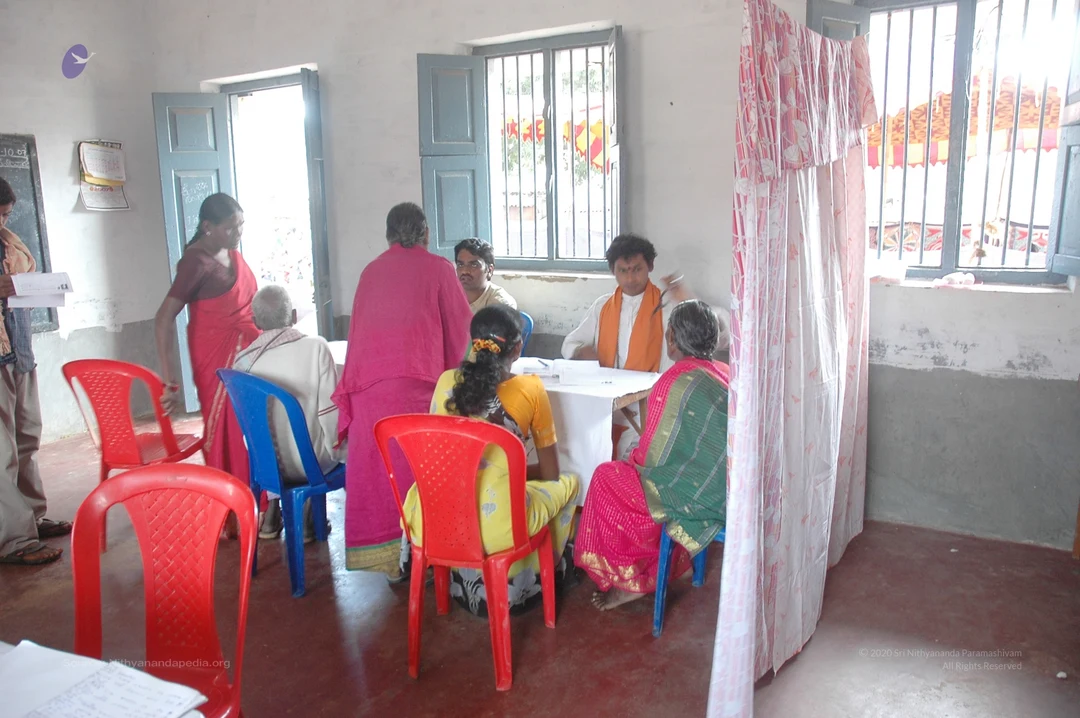
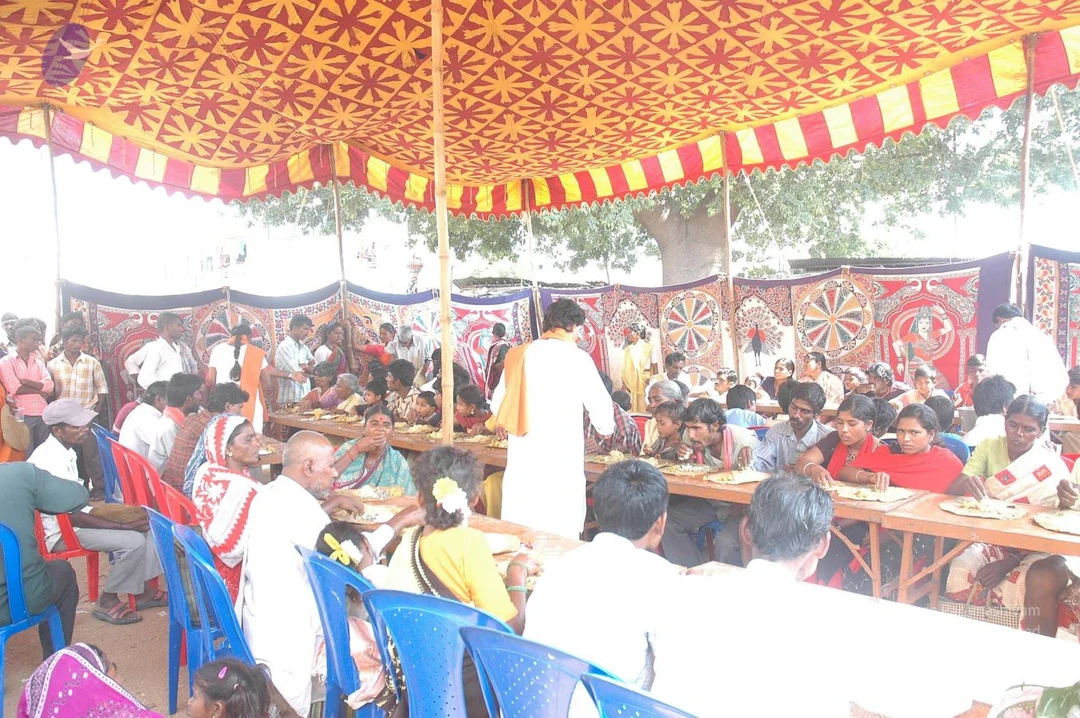
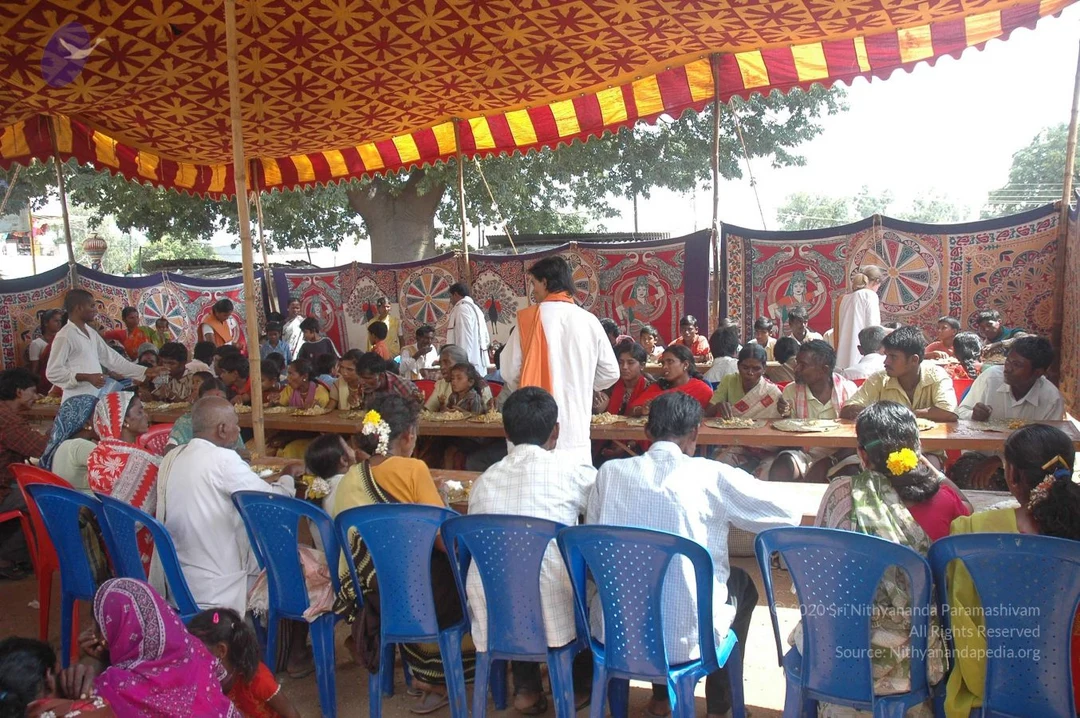
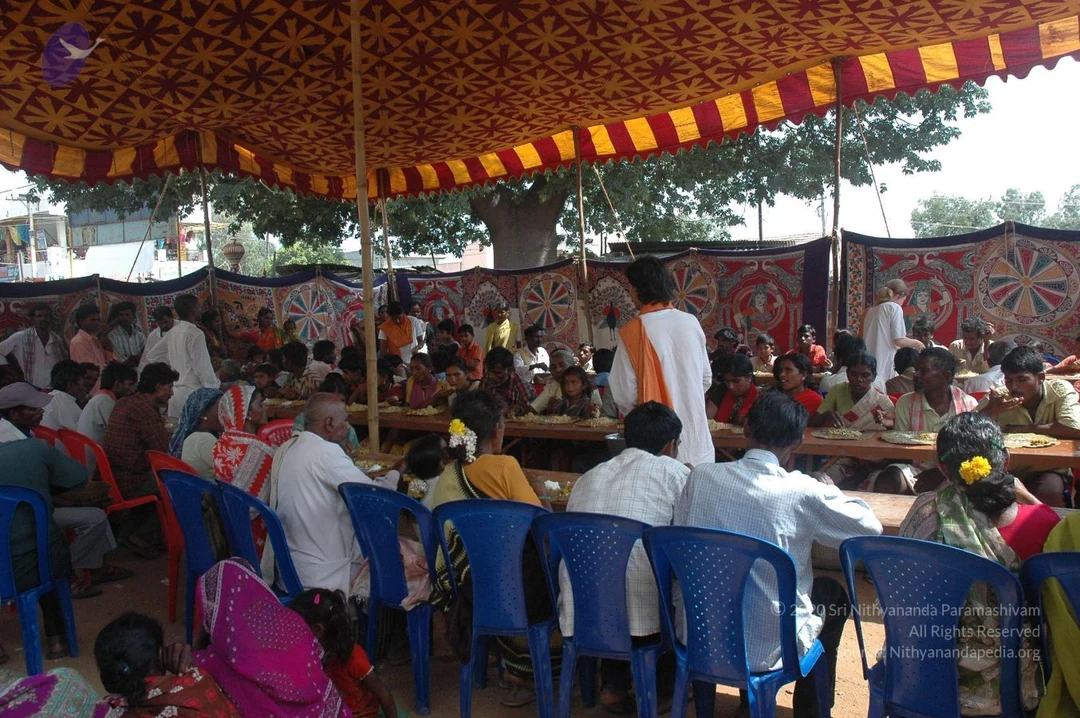
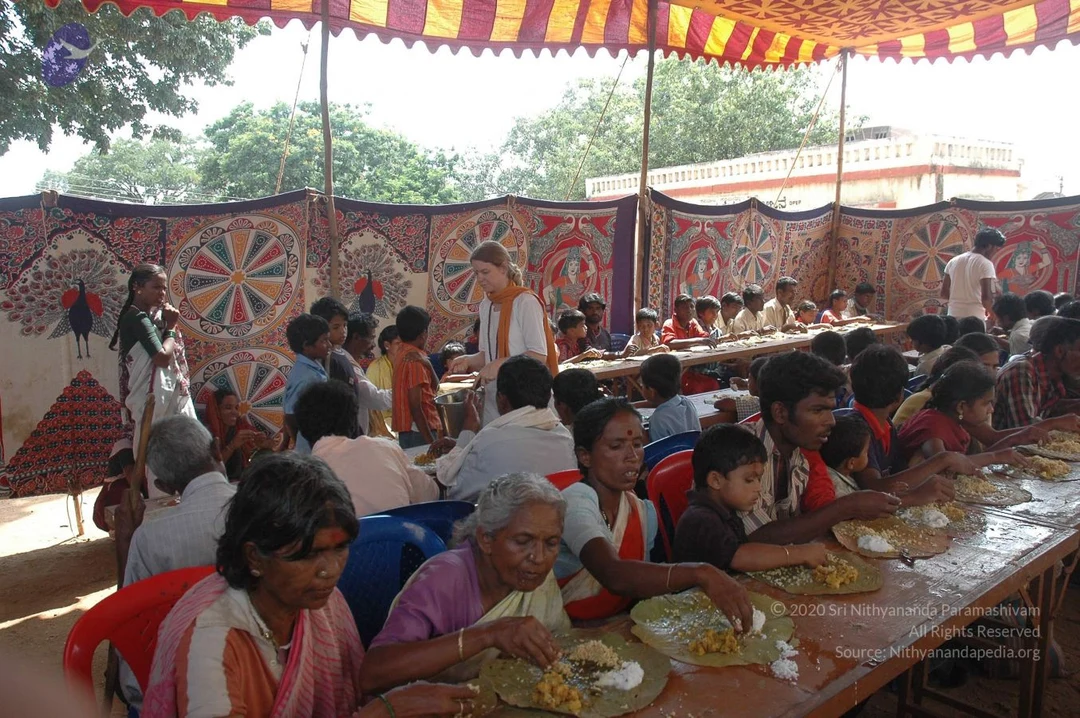
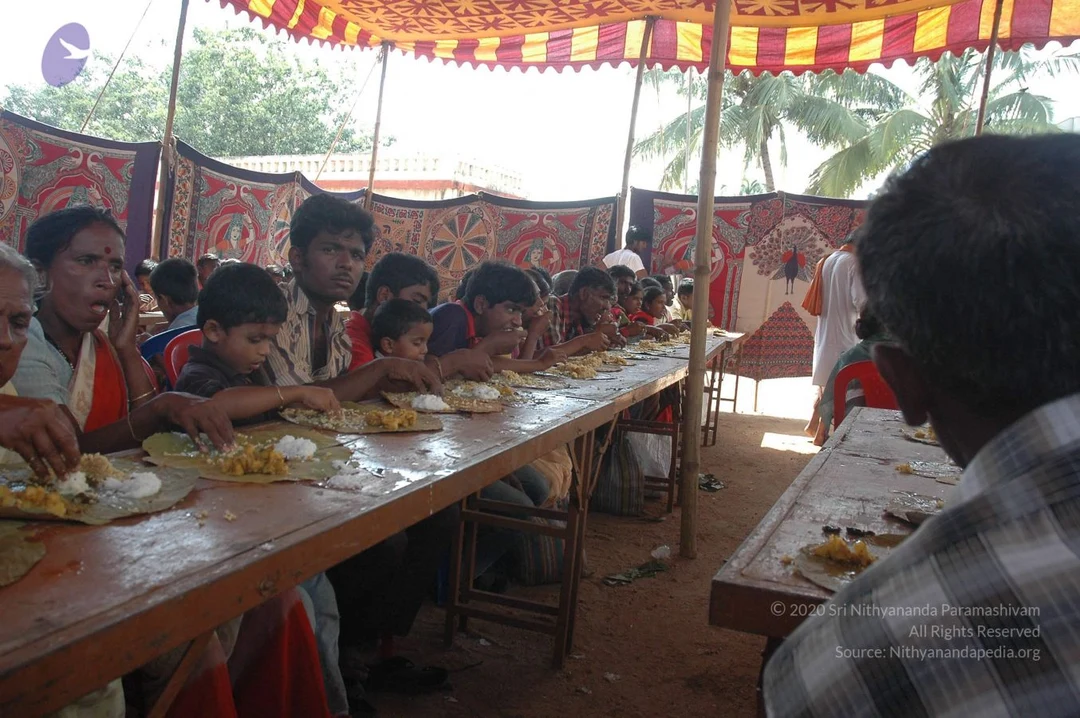
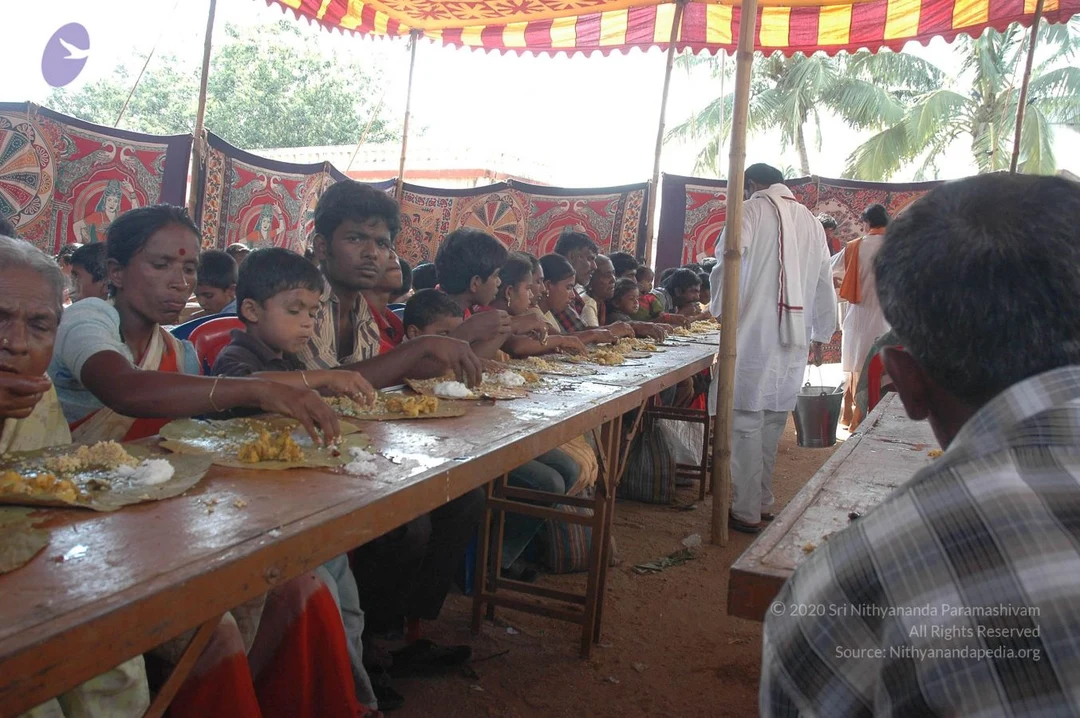
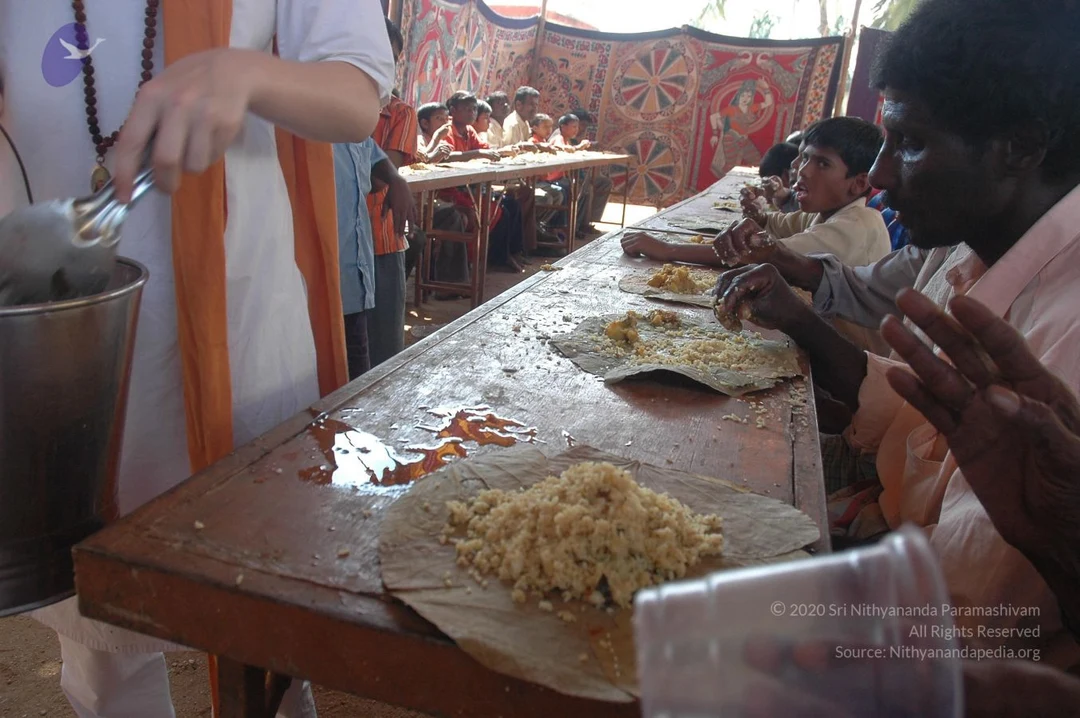
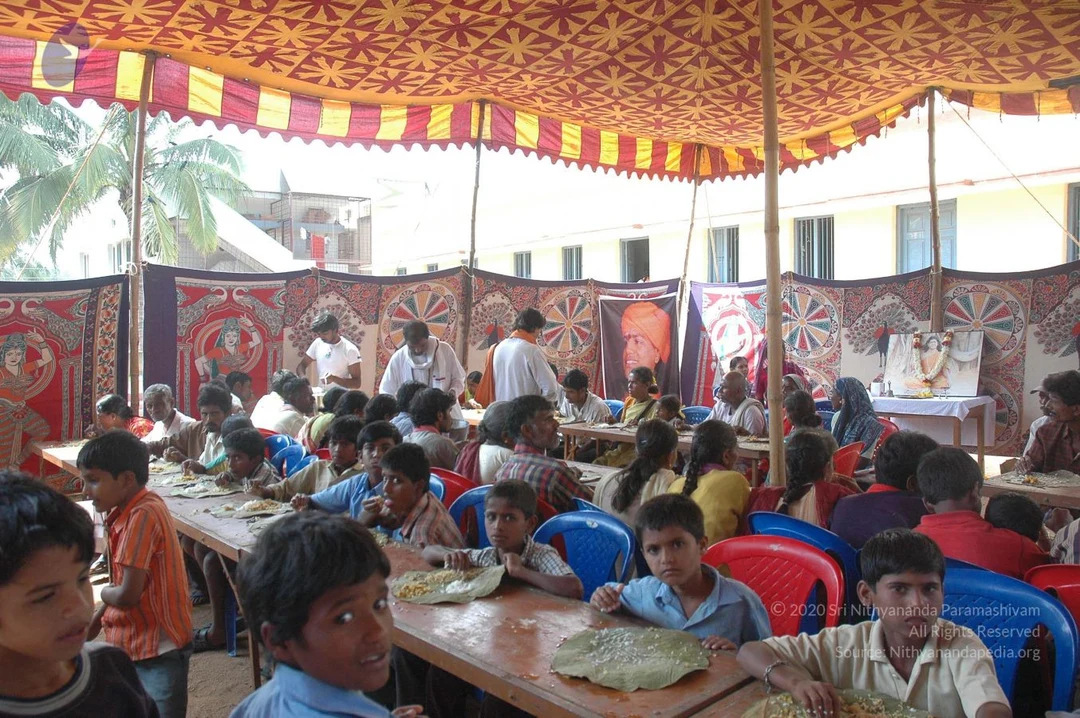
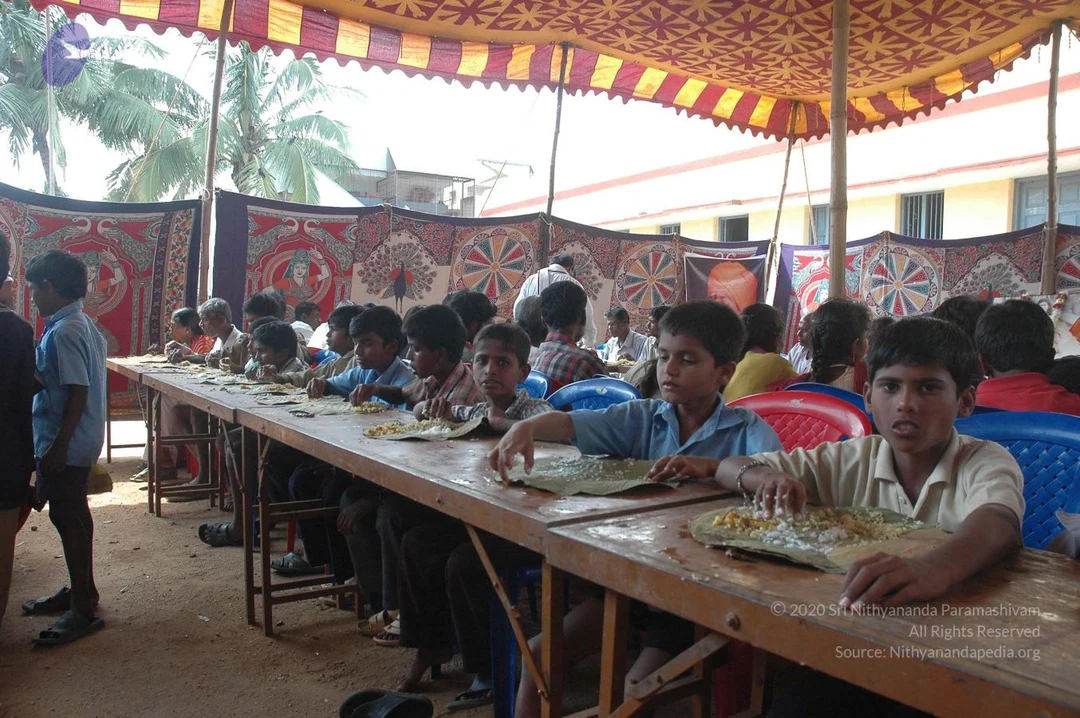
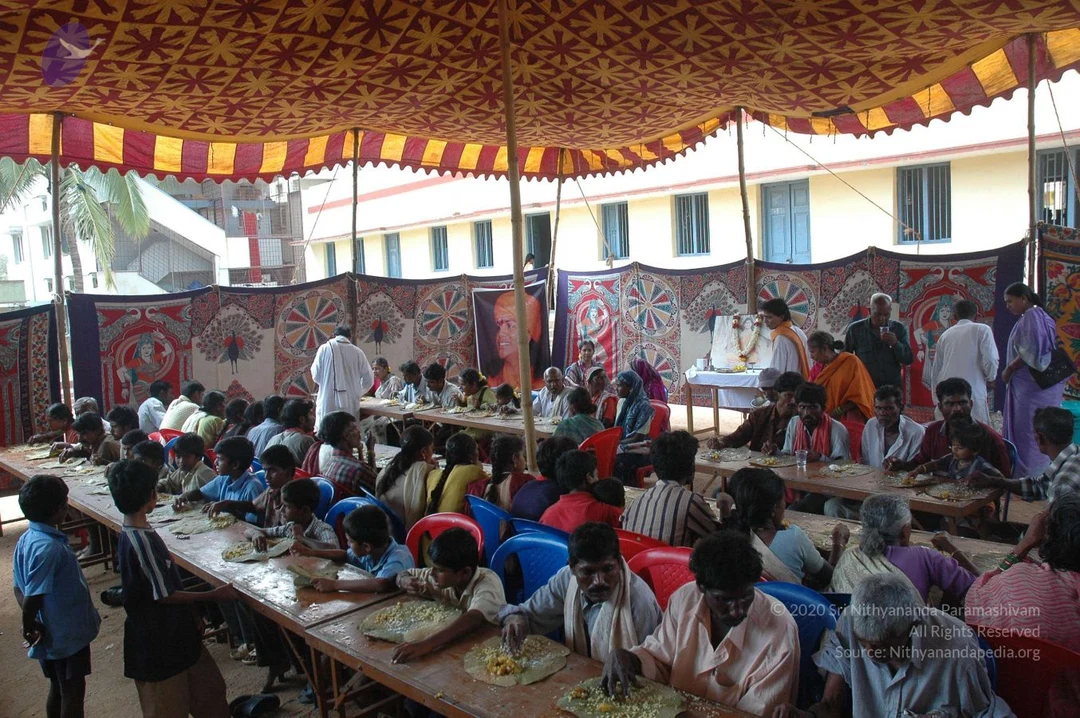
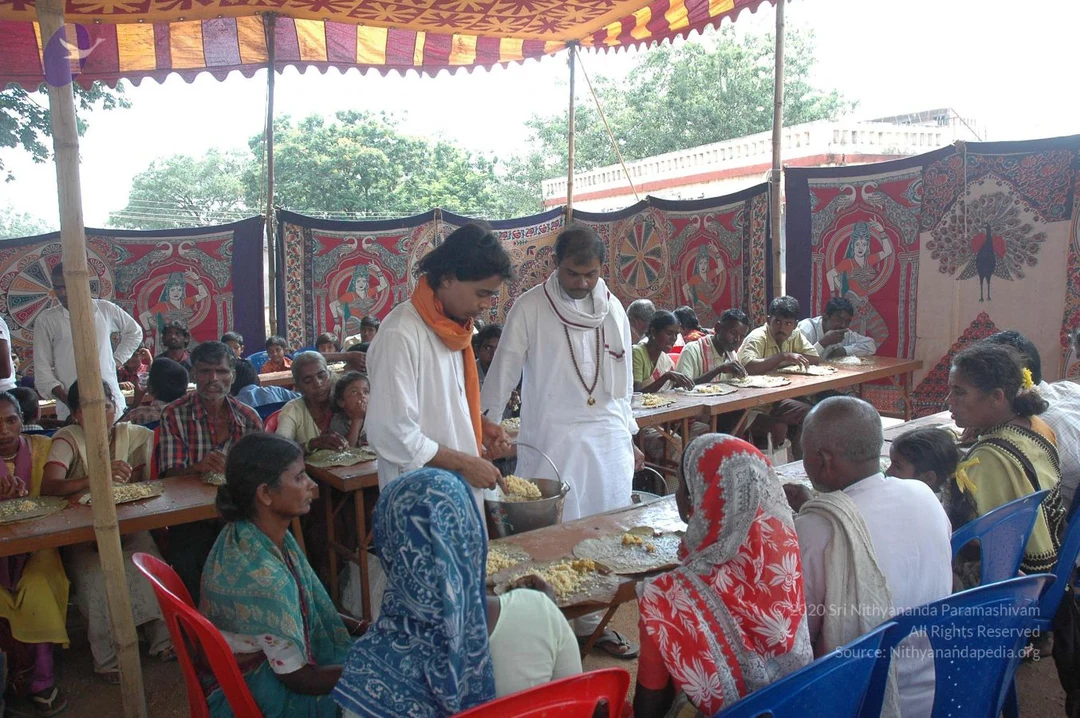
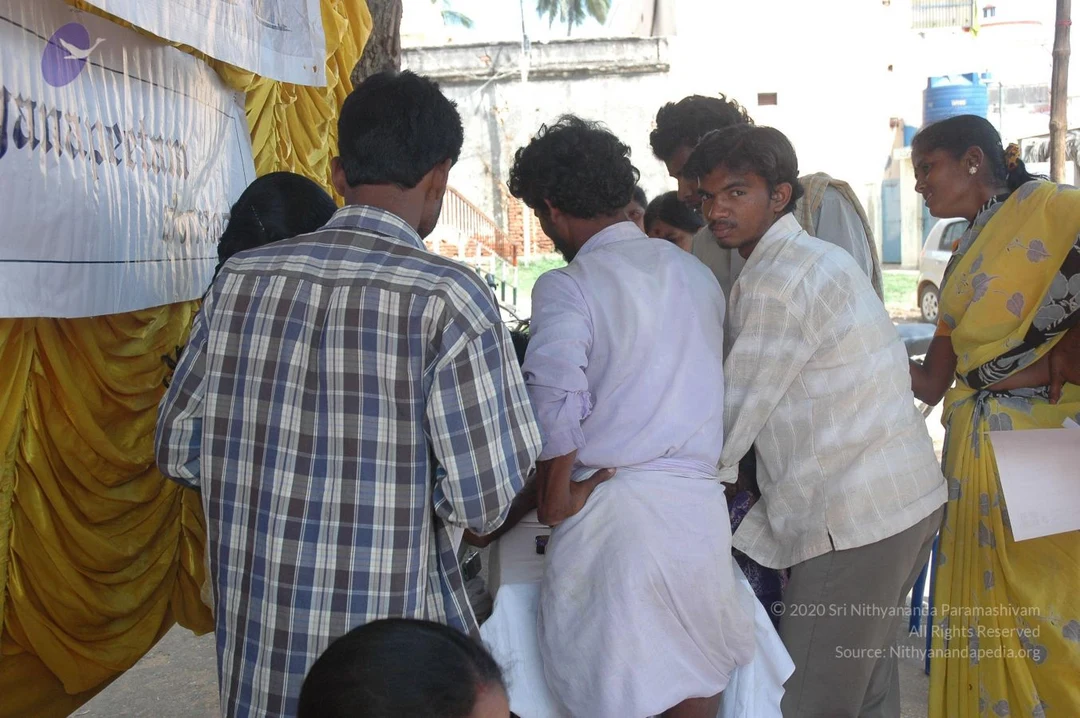
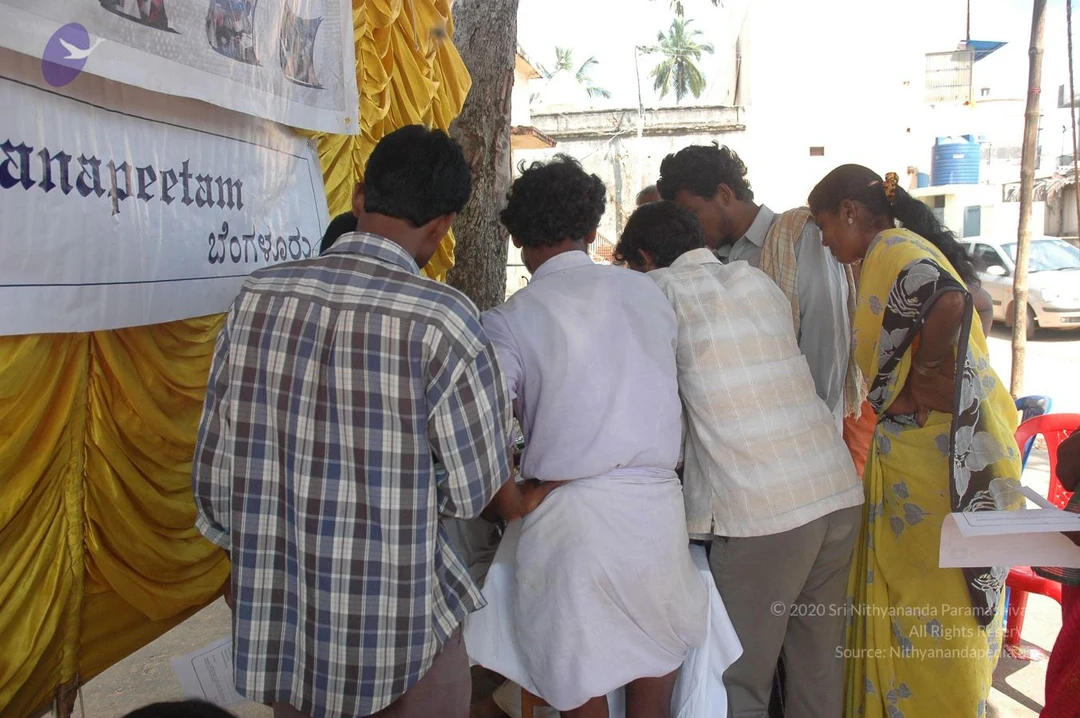
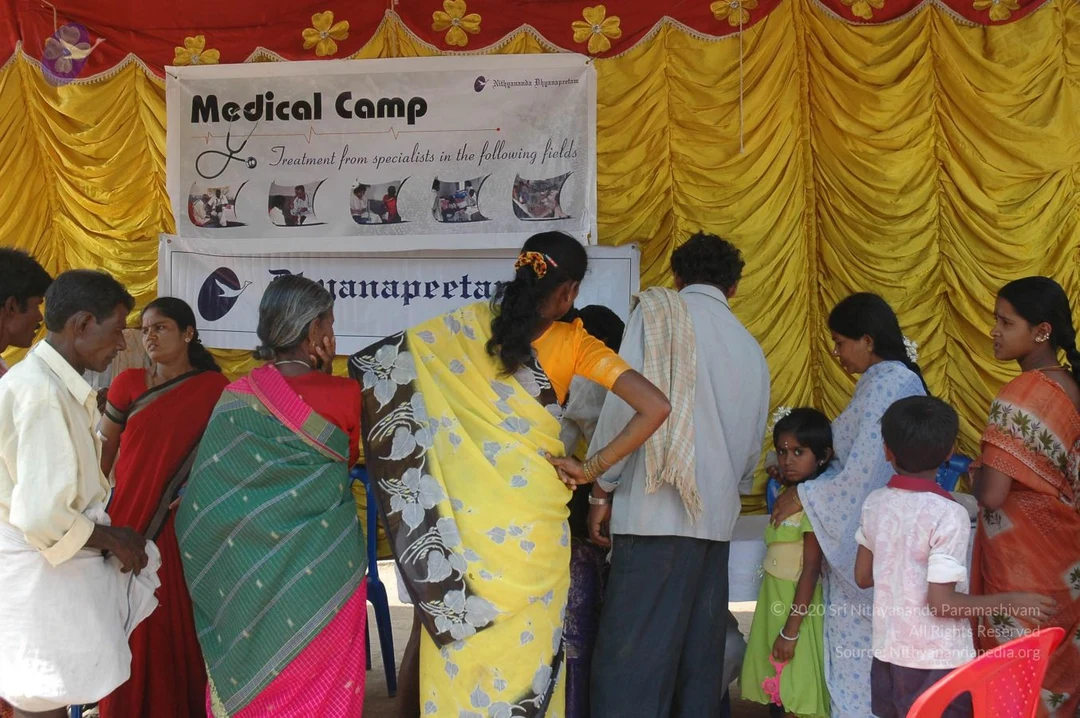
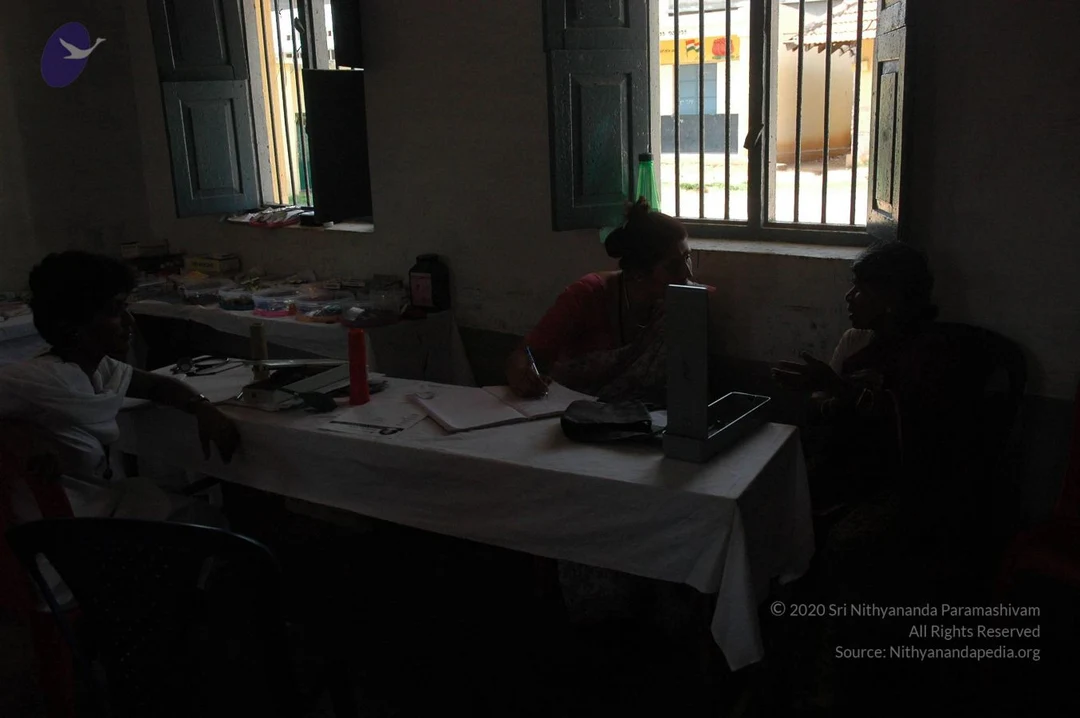
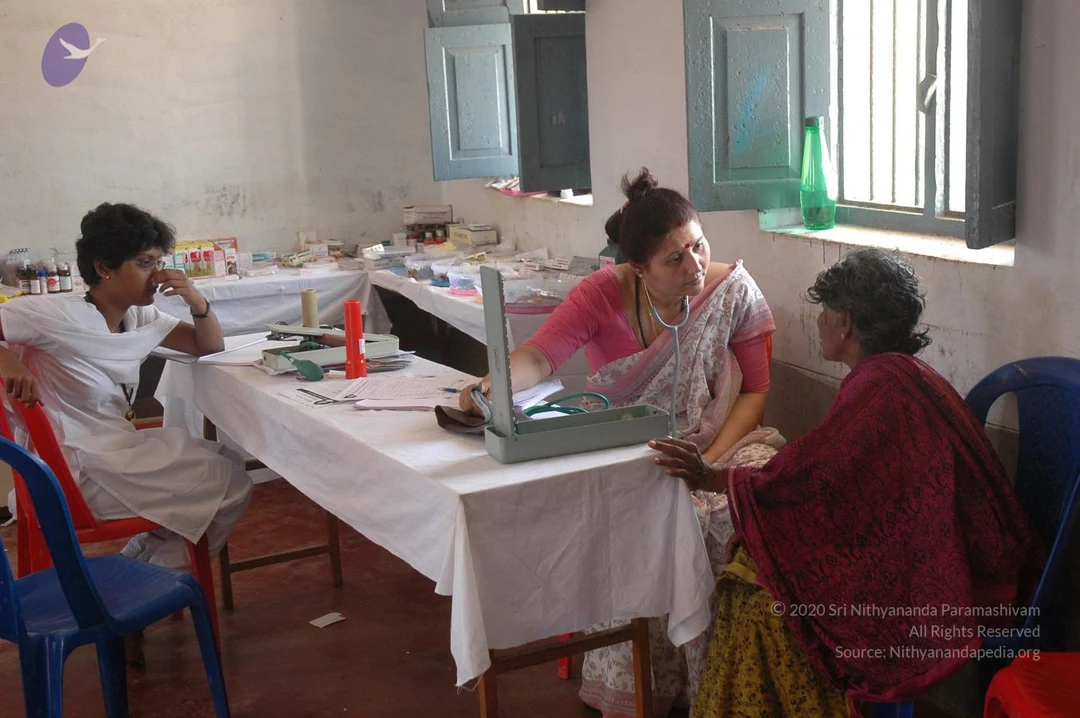
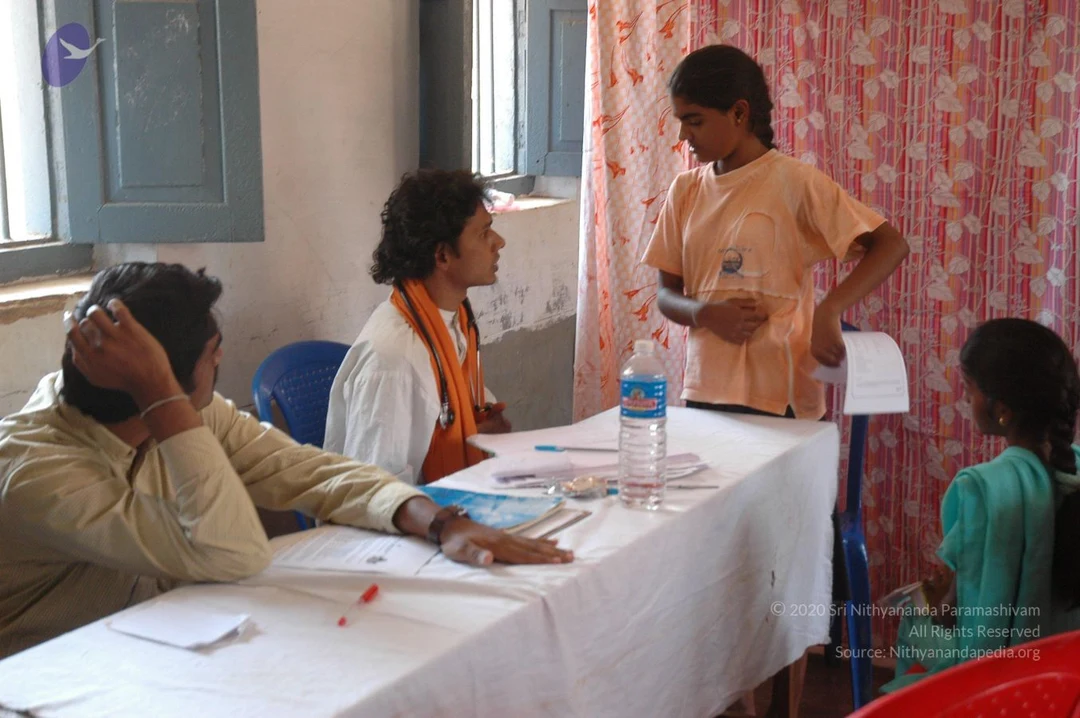
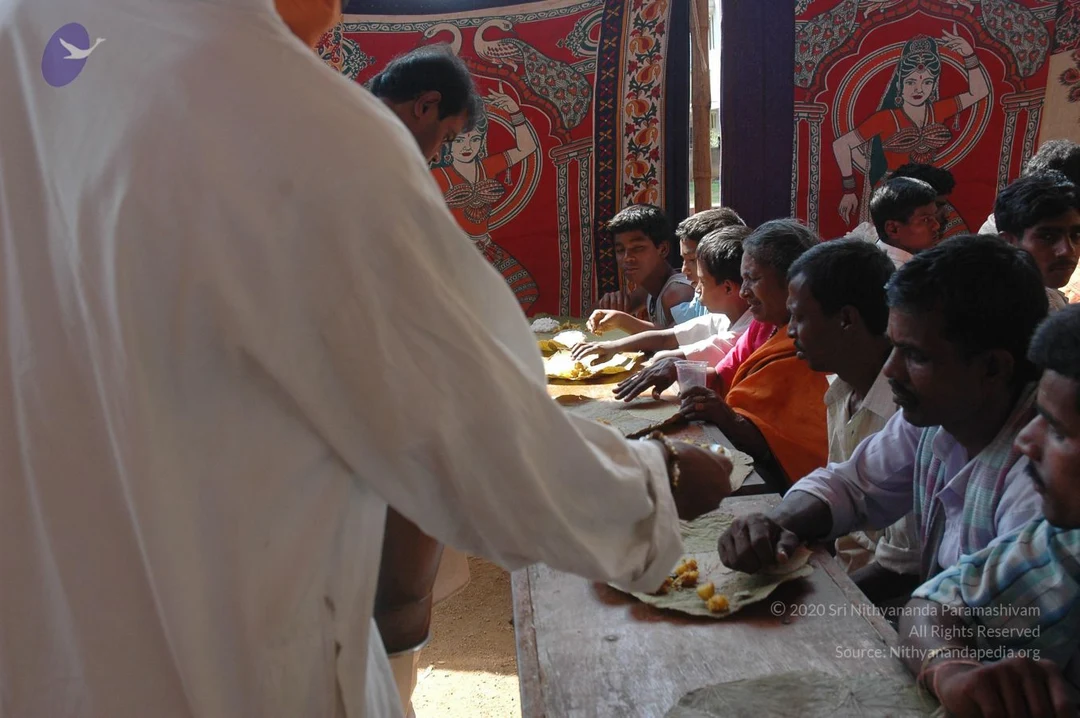
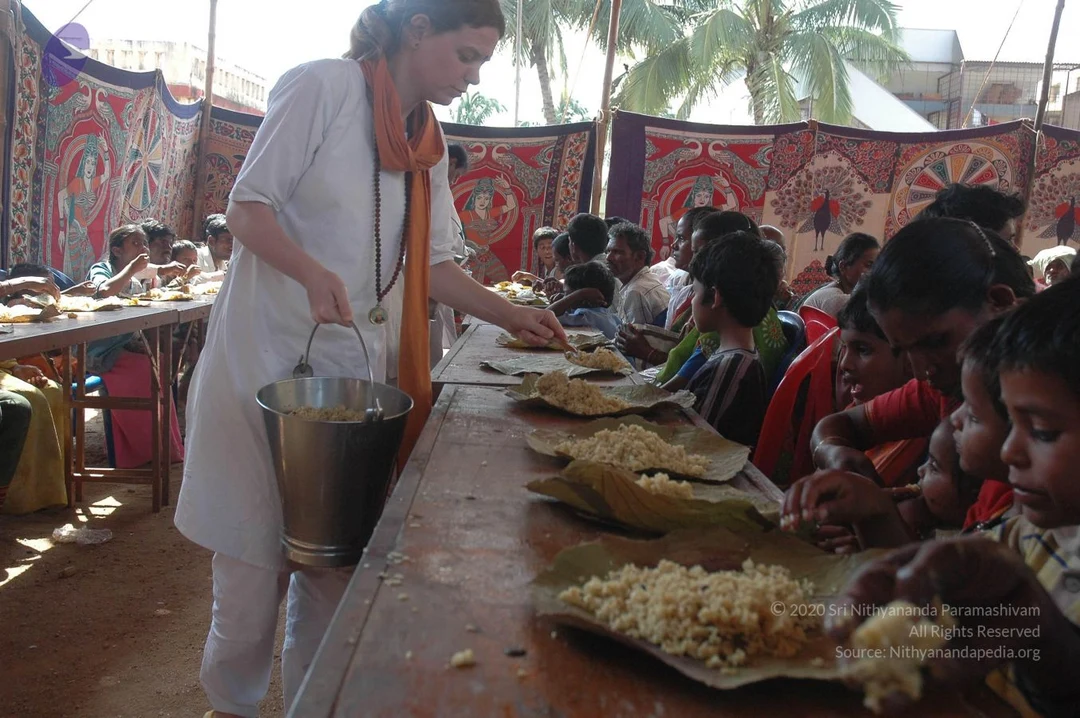
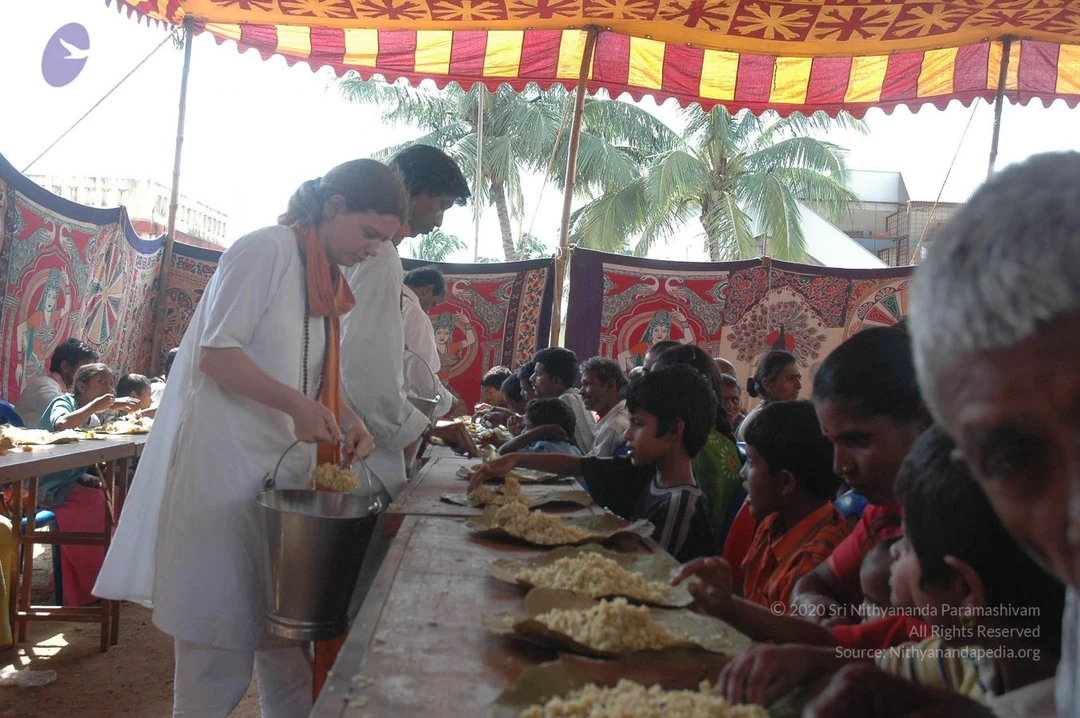
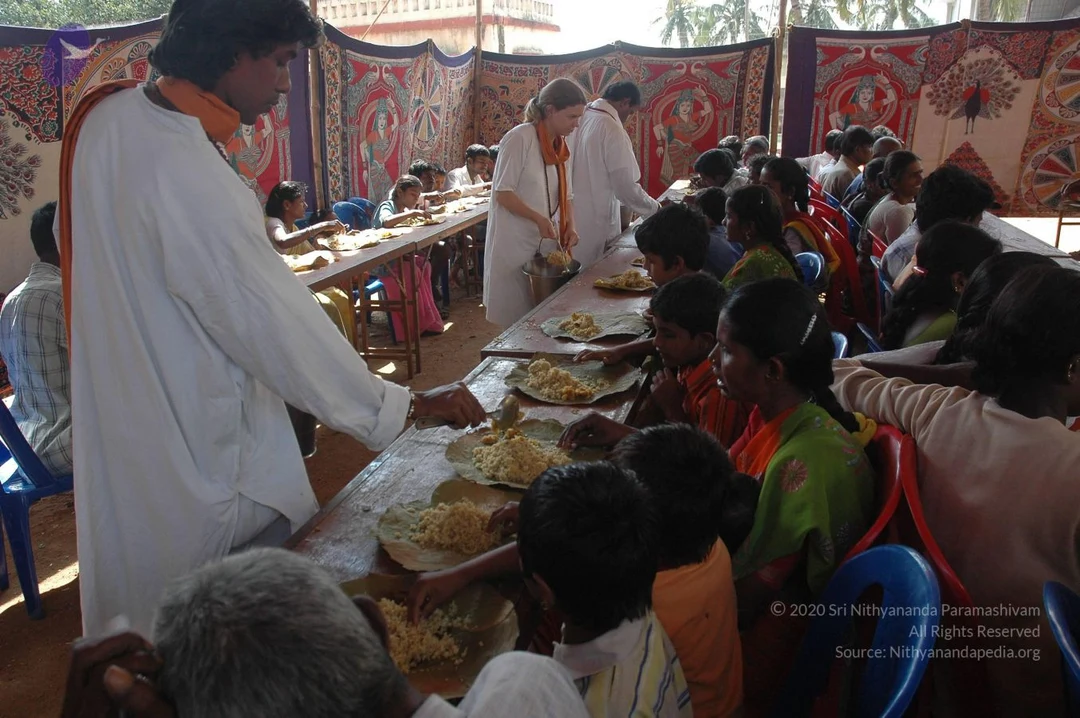
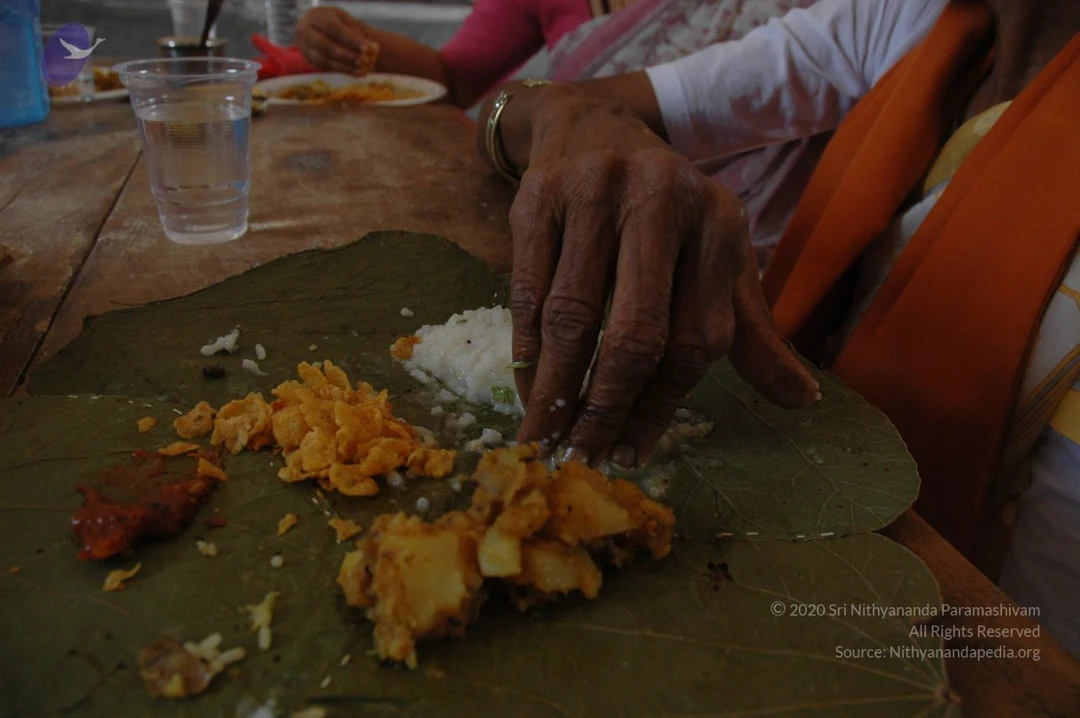
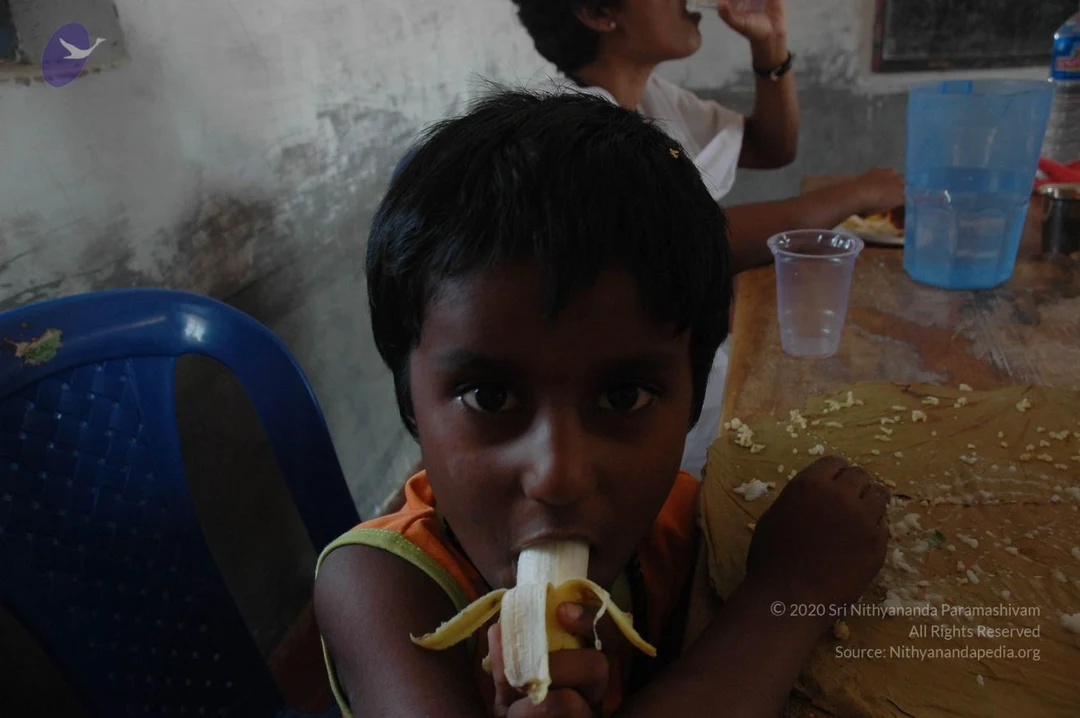
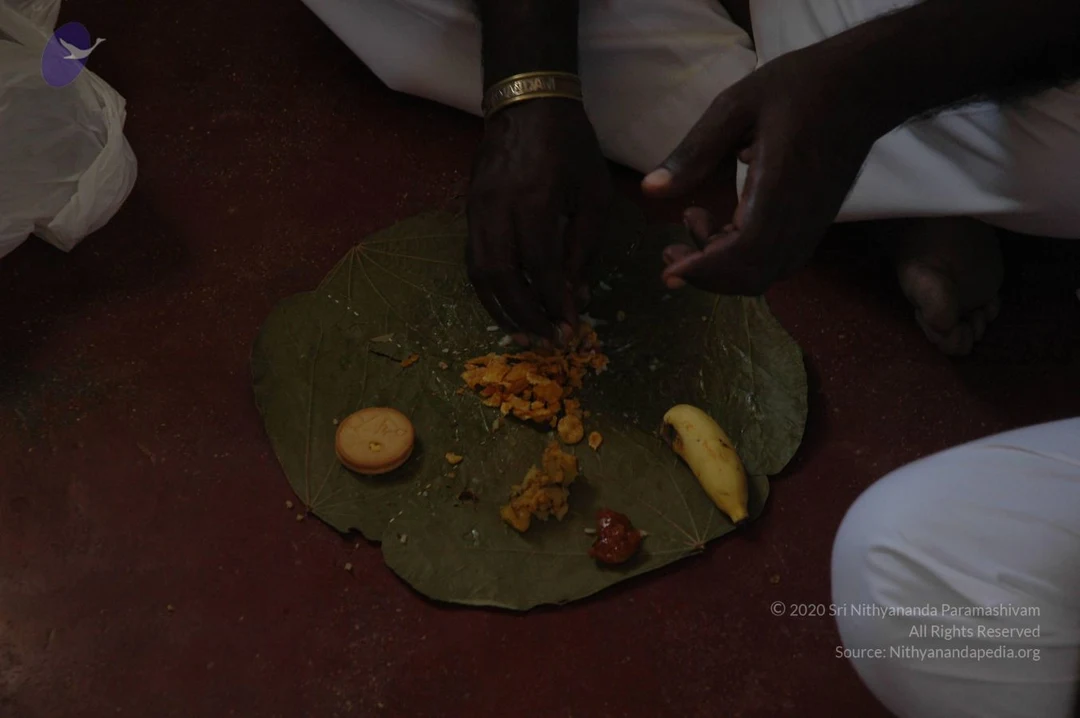
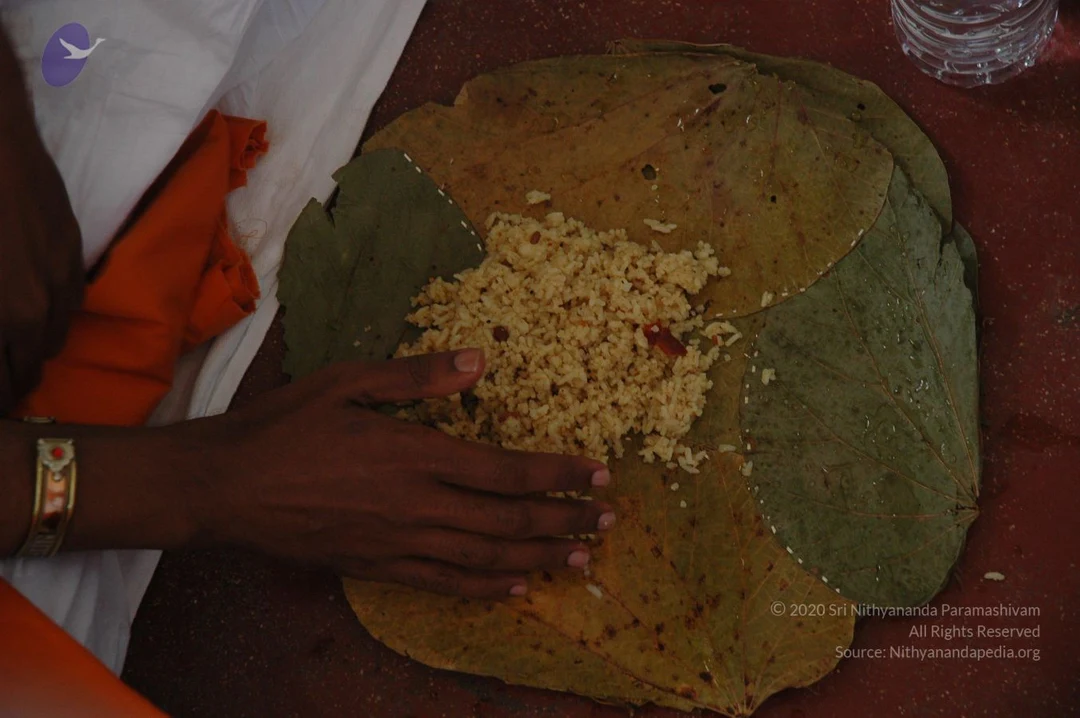
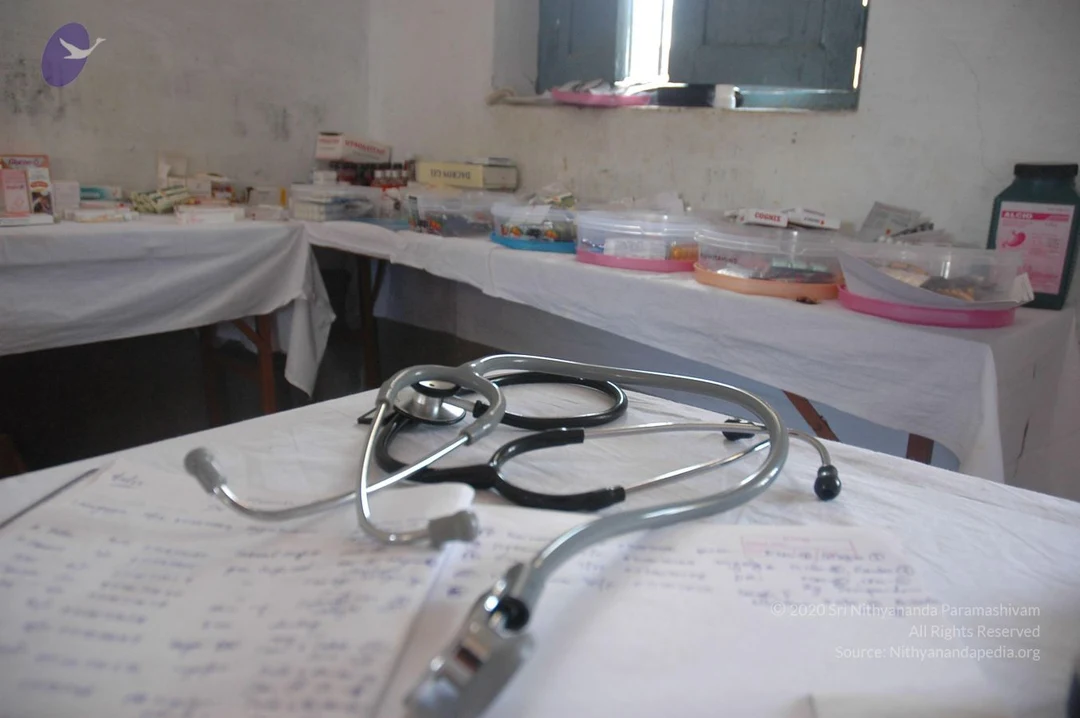
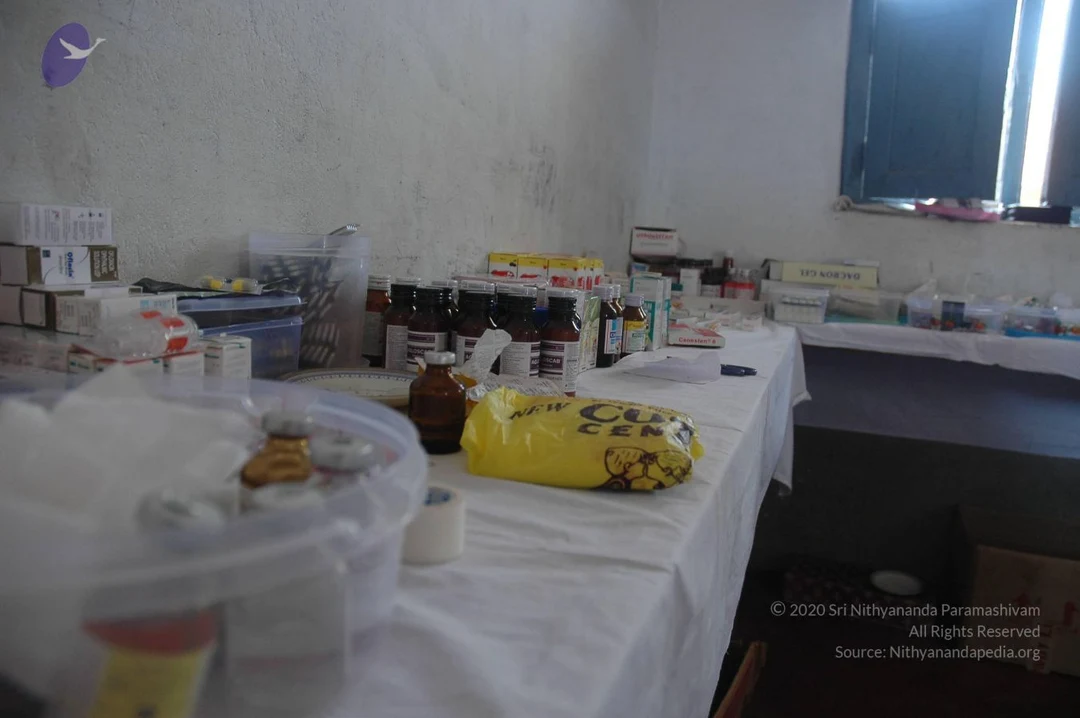
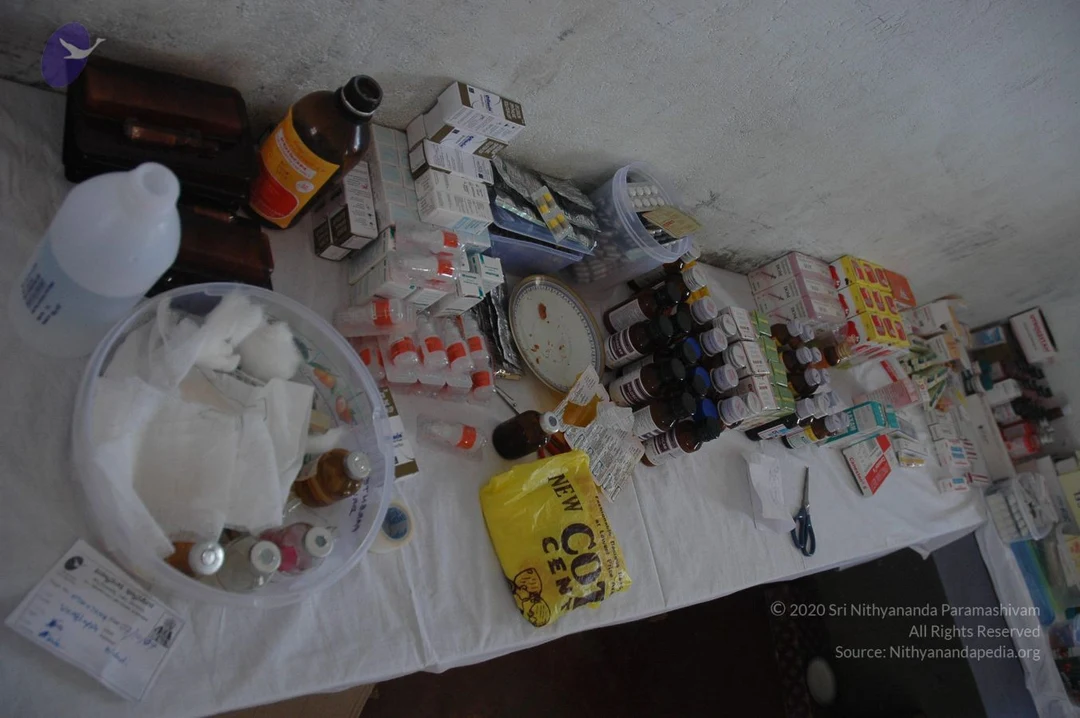
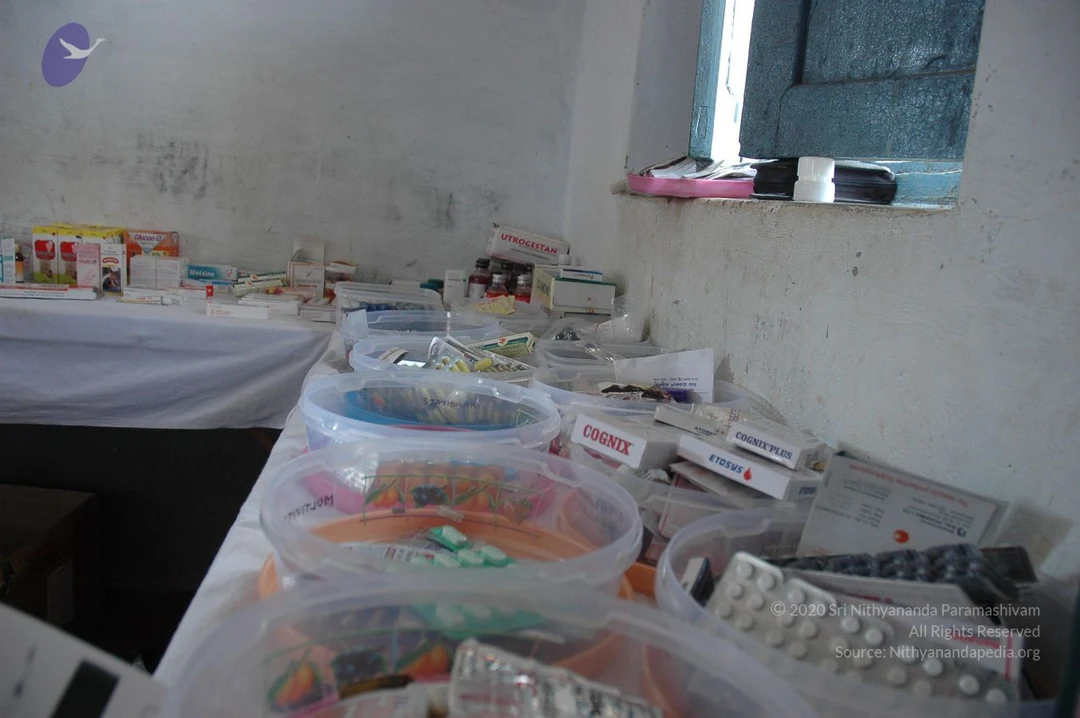
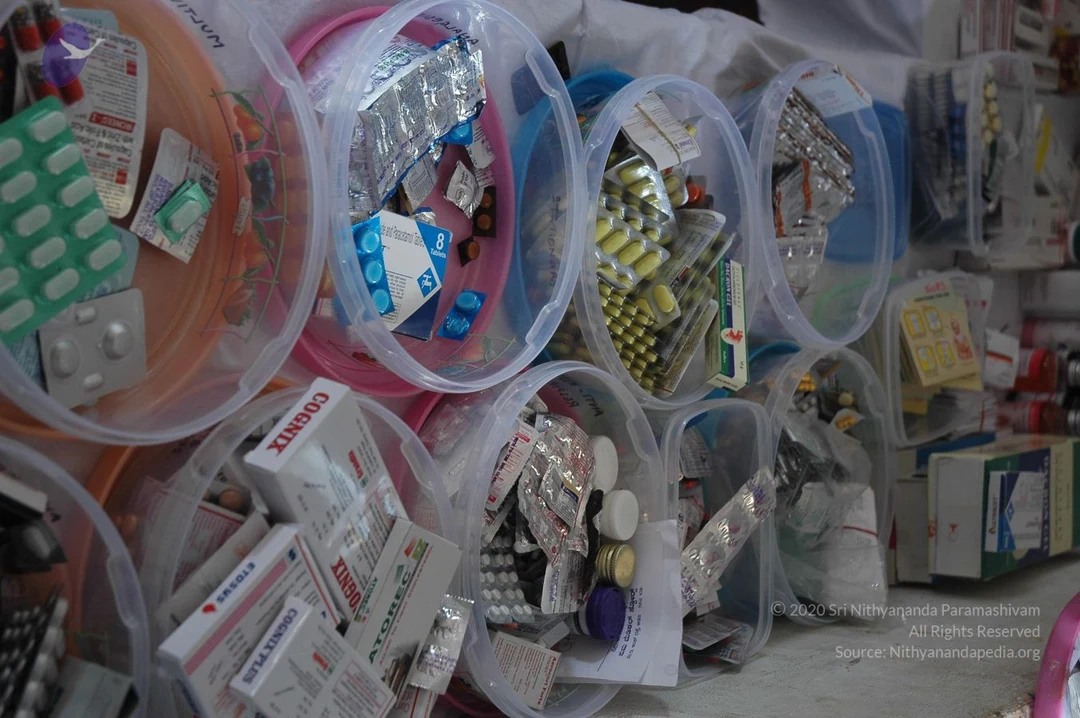
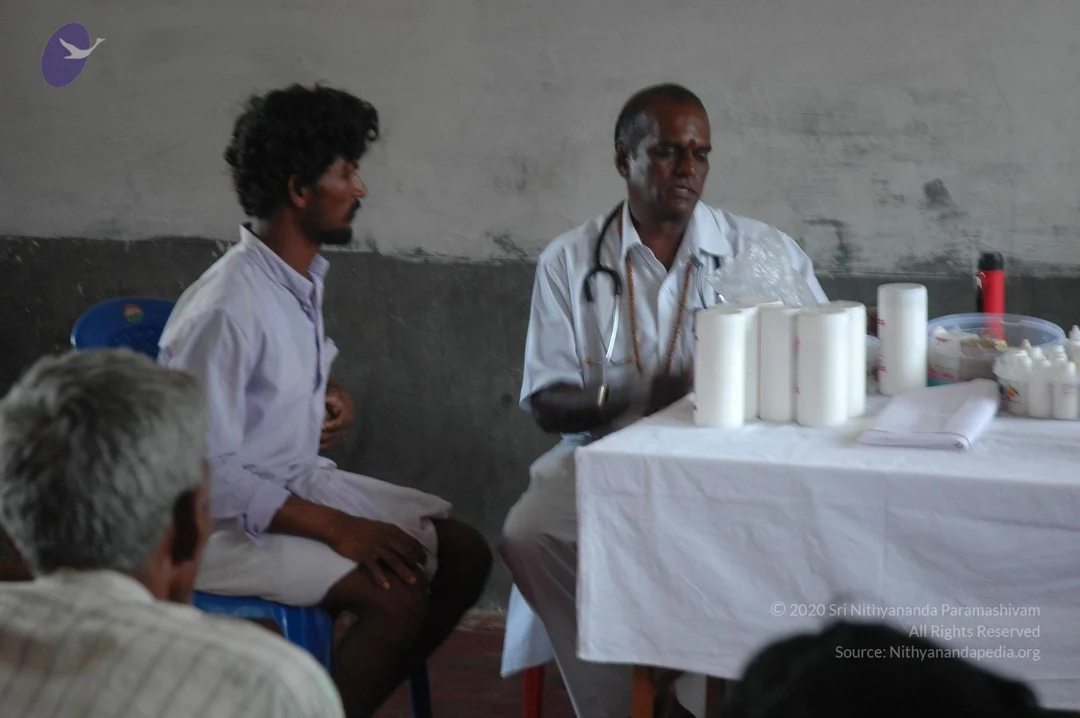
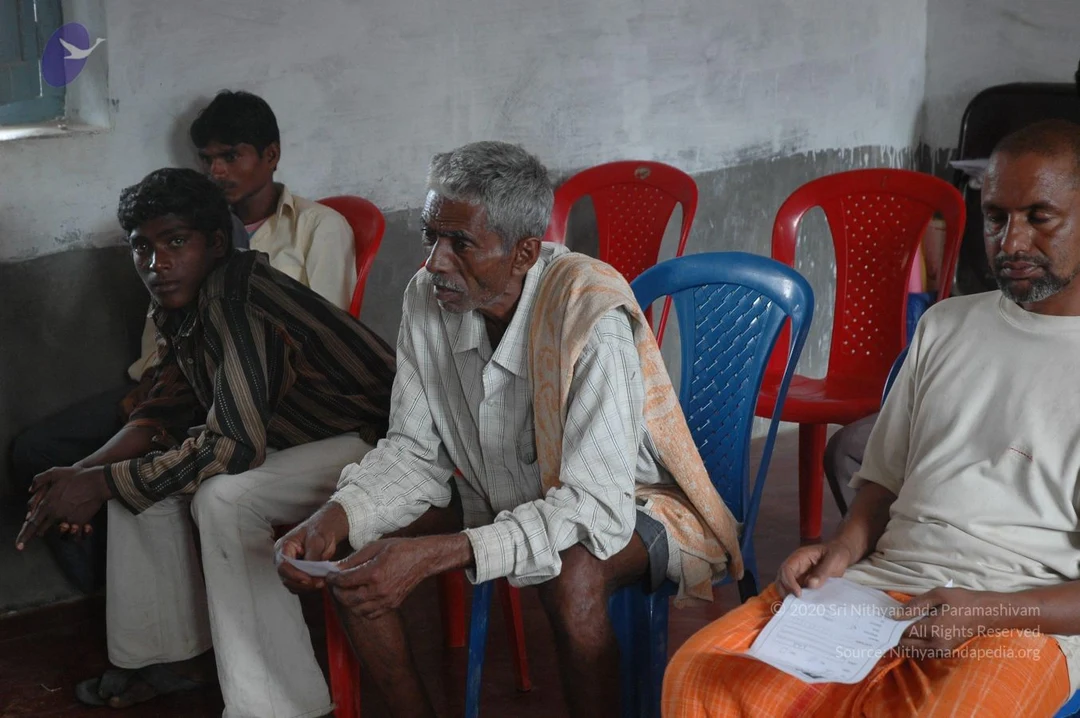
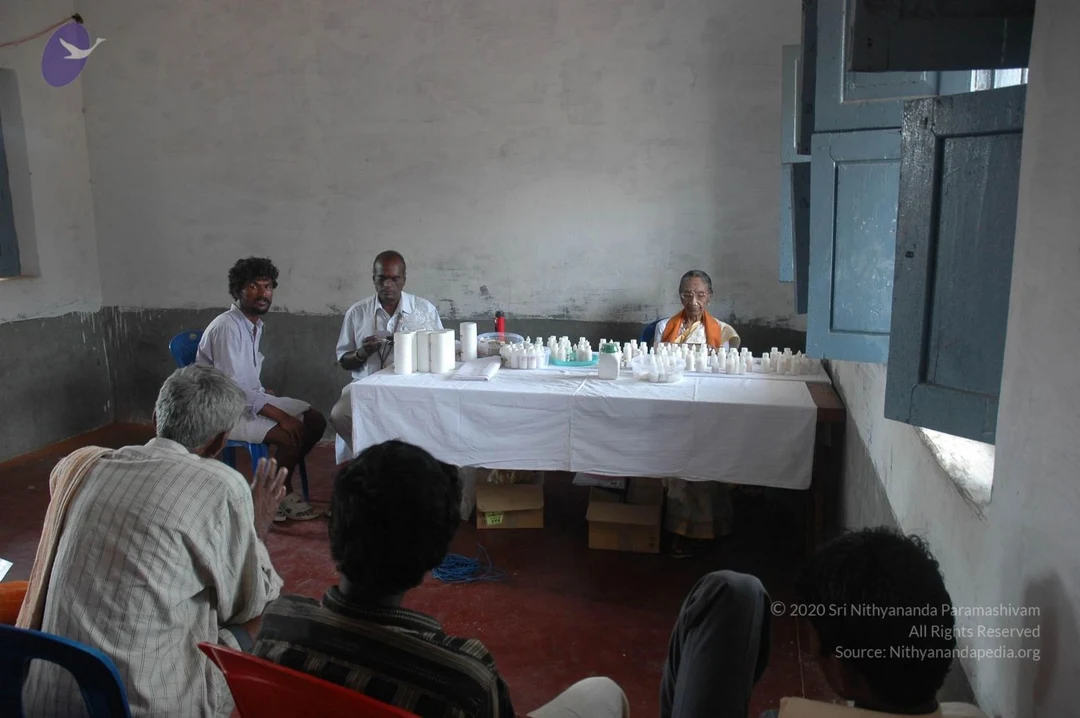
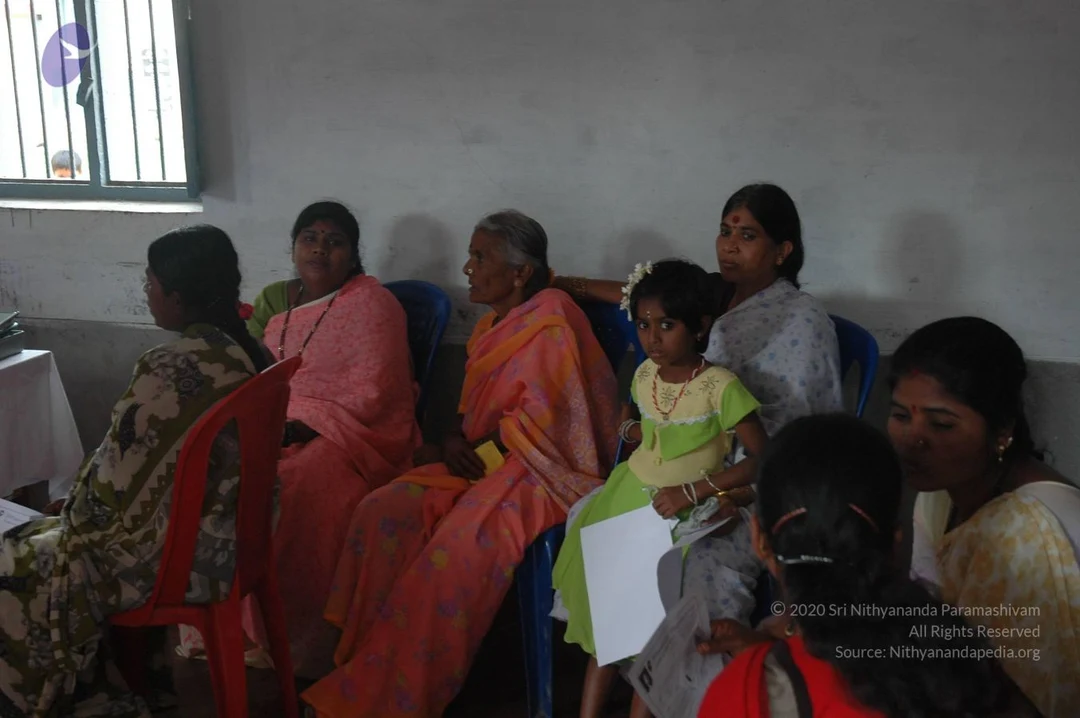
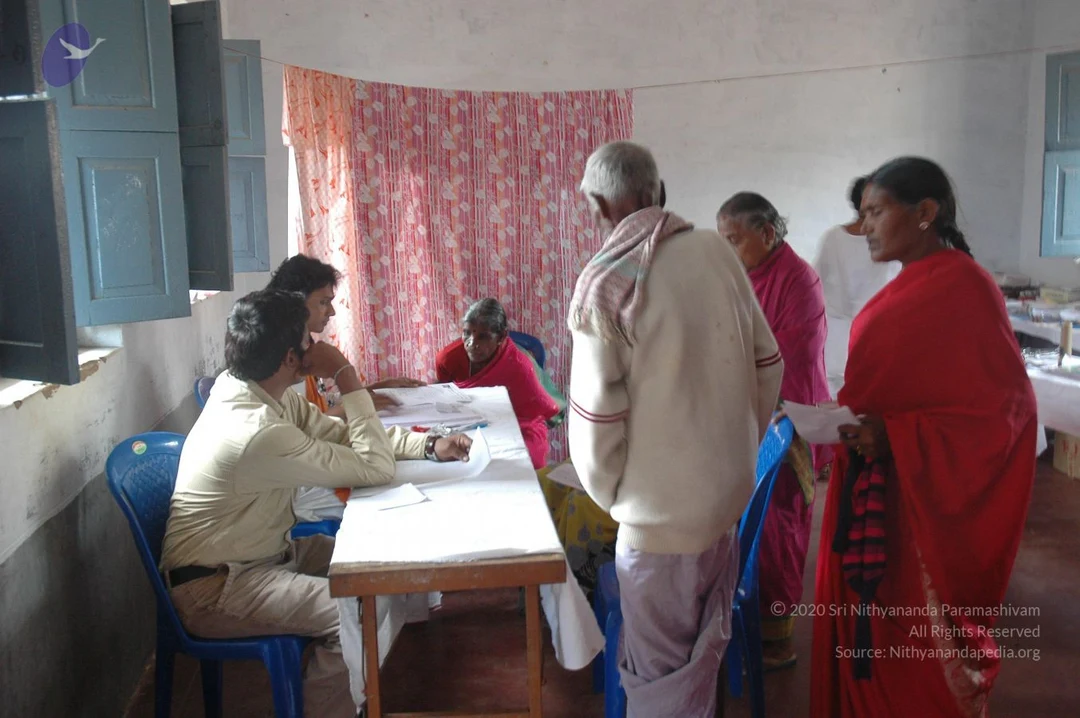
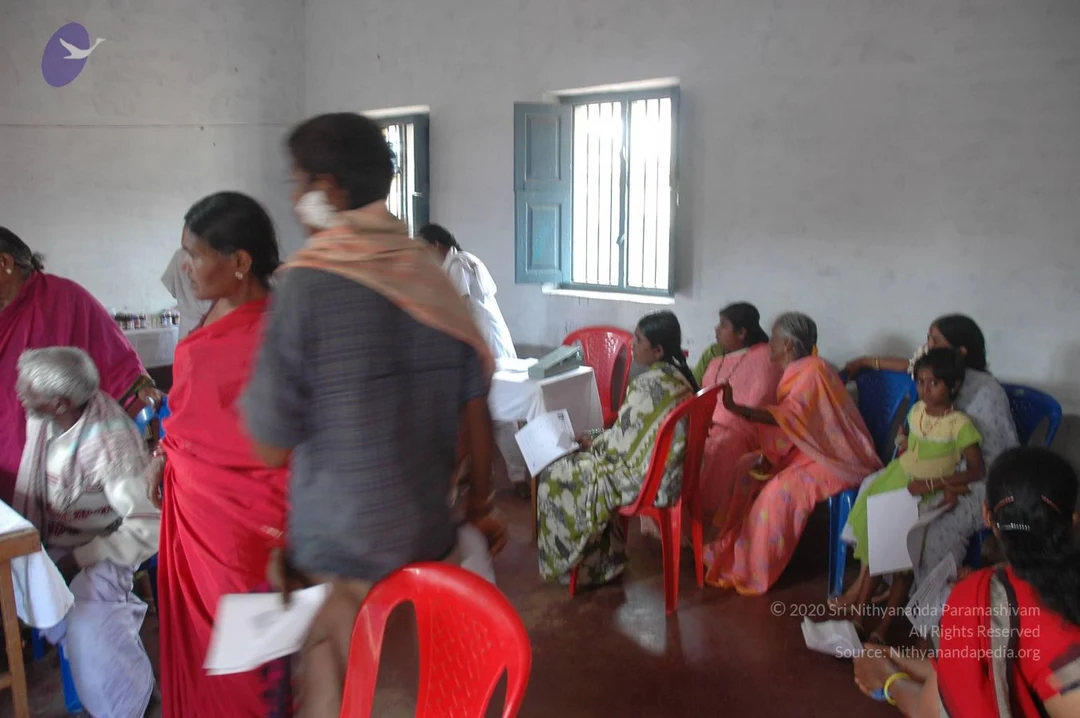
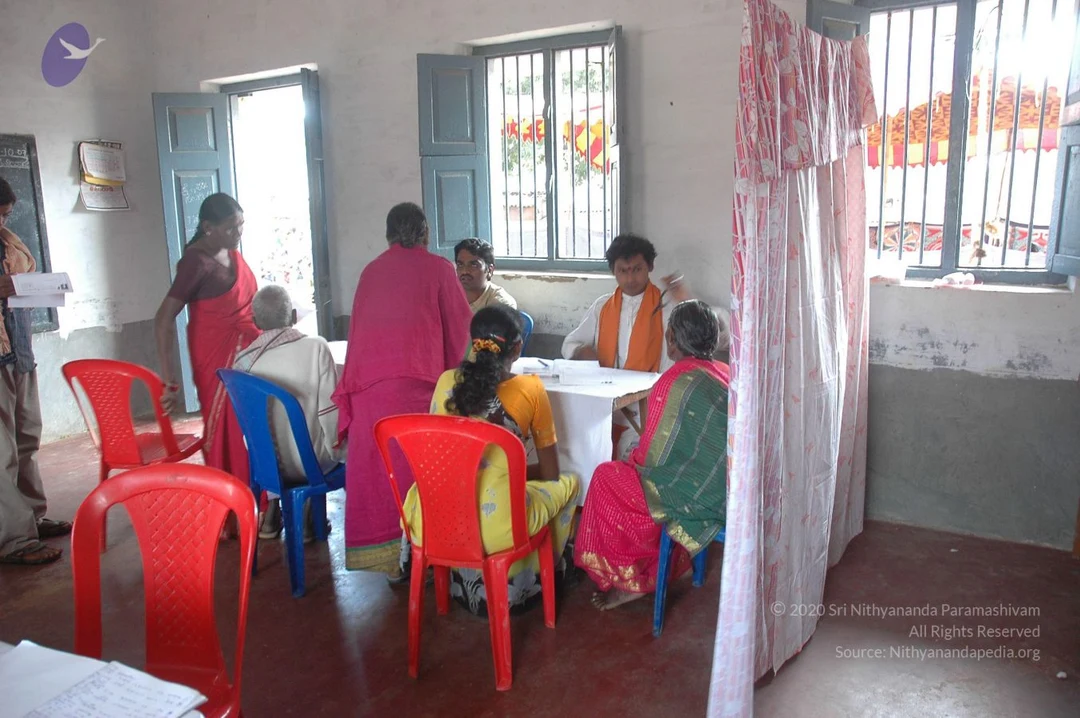
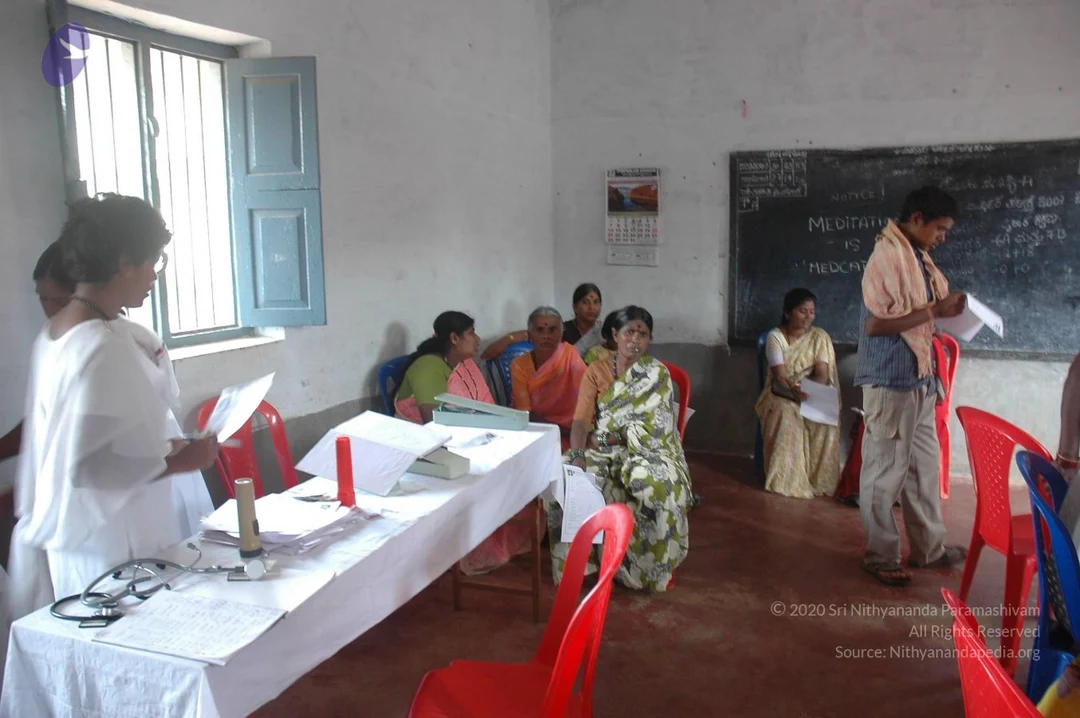
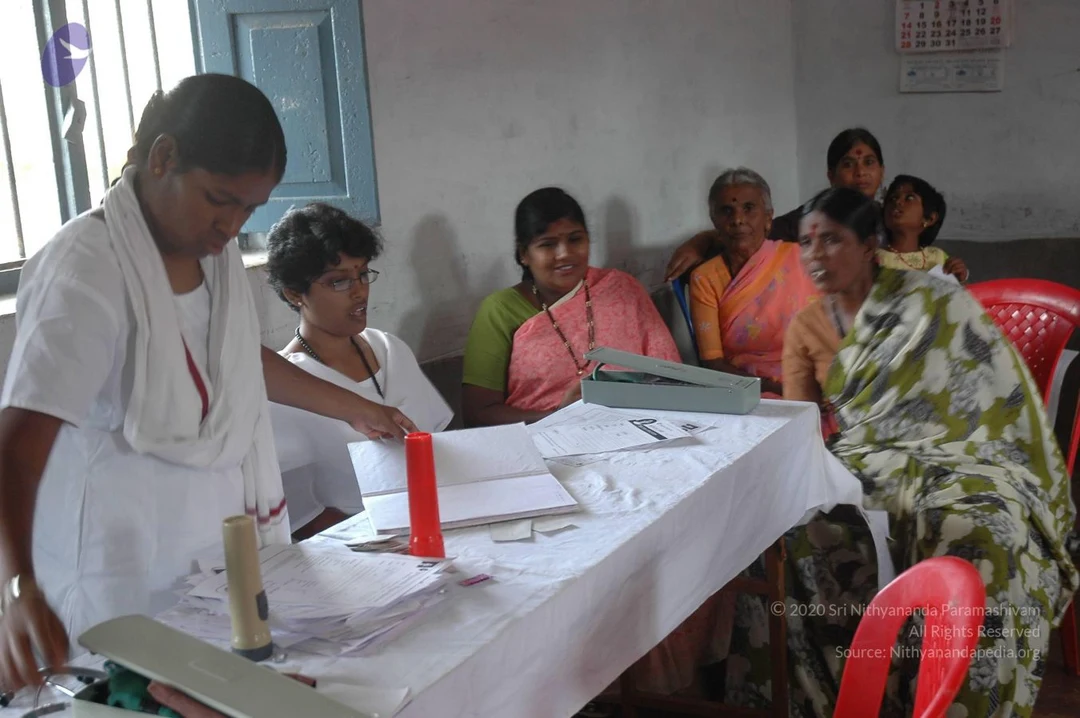
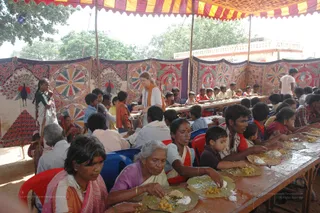
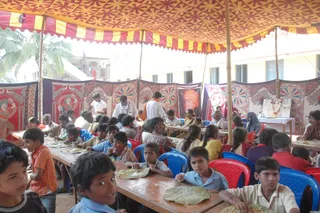
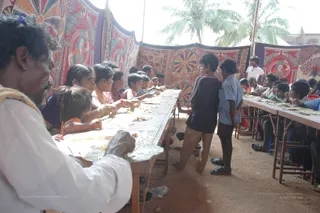
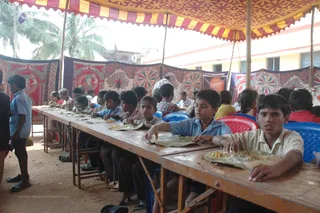
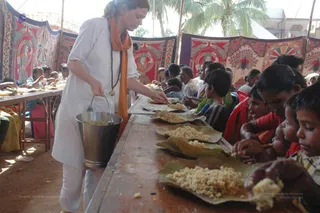
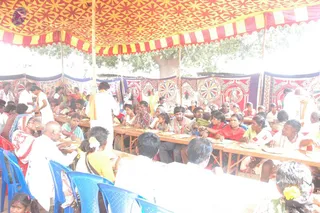
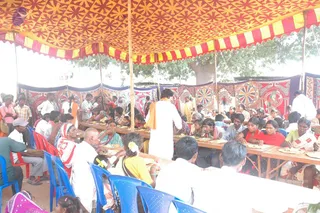
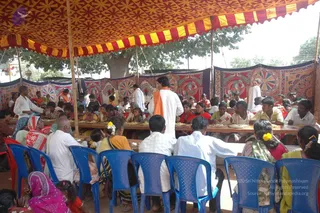
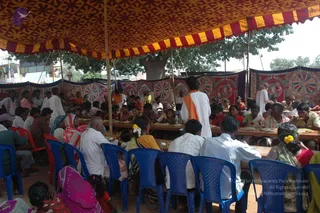
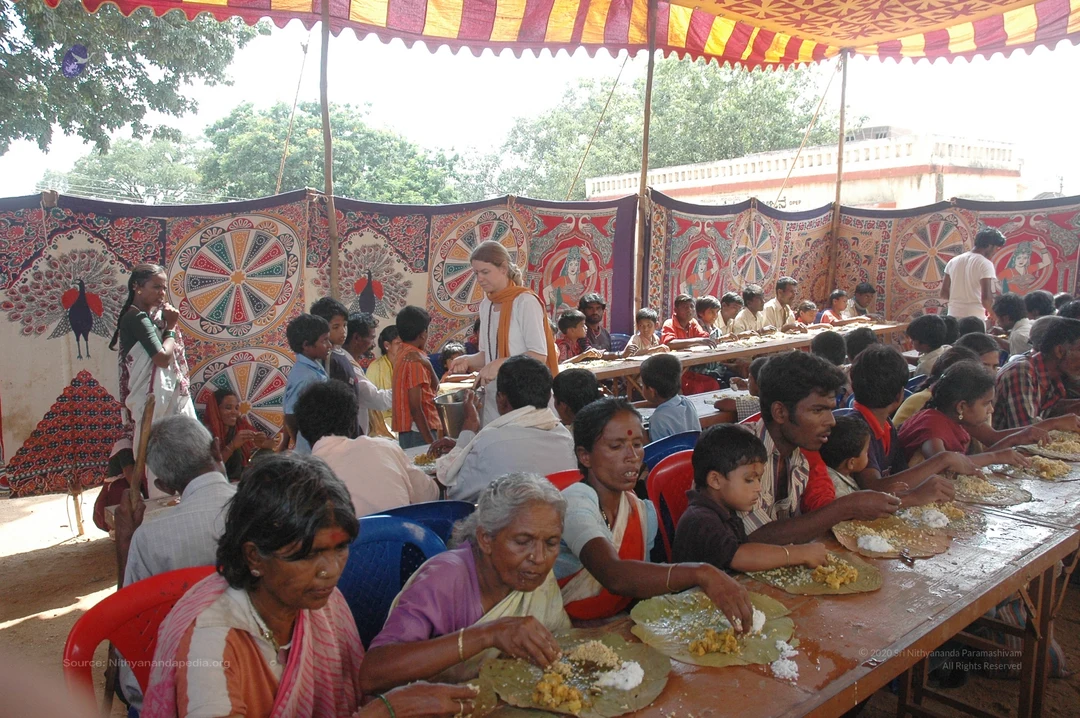
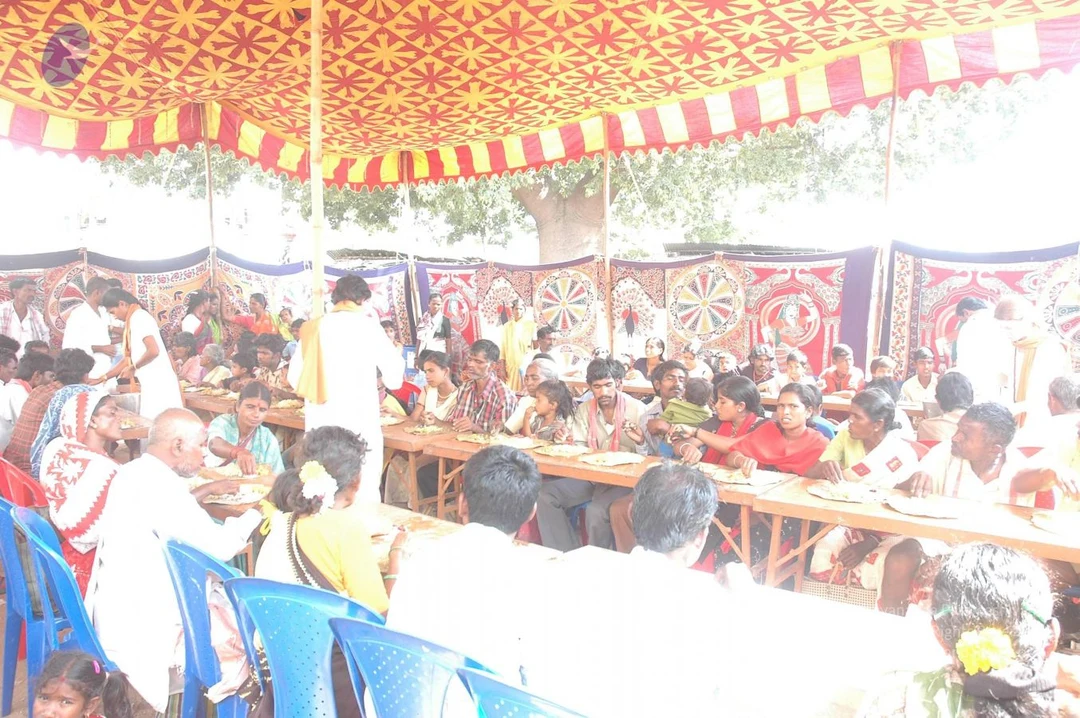
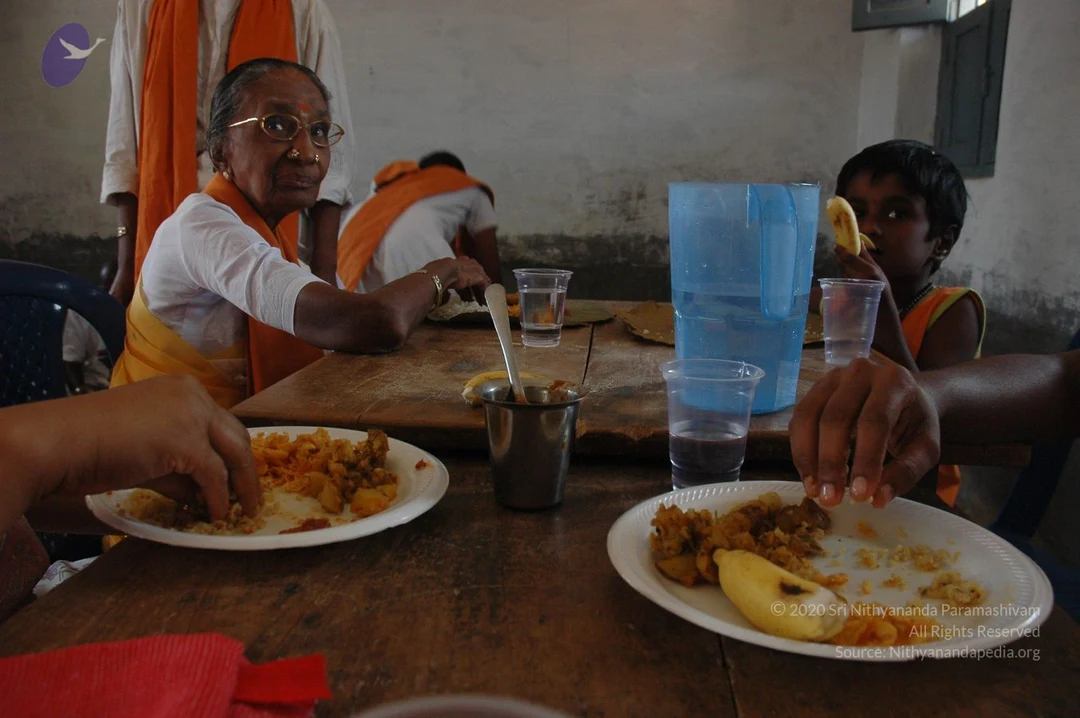
Free Medical Camp was conducted by Nithyananda Dhyanapeetam at Bidadi, Bengaluru. Free food was also served to all people who attended the camp. Following are some pictures taken during the camp:

Medicalcamp
Photos Of The Day:

Medical-Camp
Photos Of The Day:

temple

Photos from this day

View all 73 photos

Medicalcamp

13 photosSource gallery

Medical-Camp
43 photosSource gallery
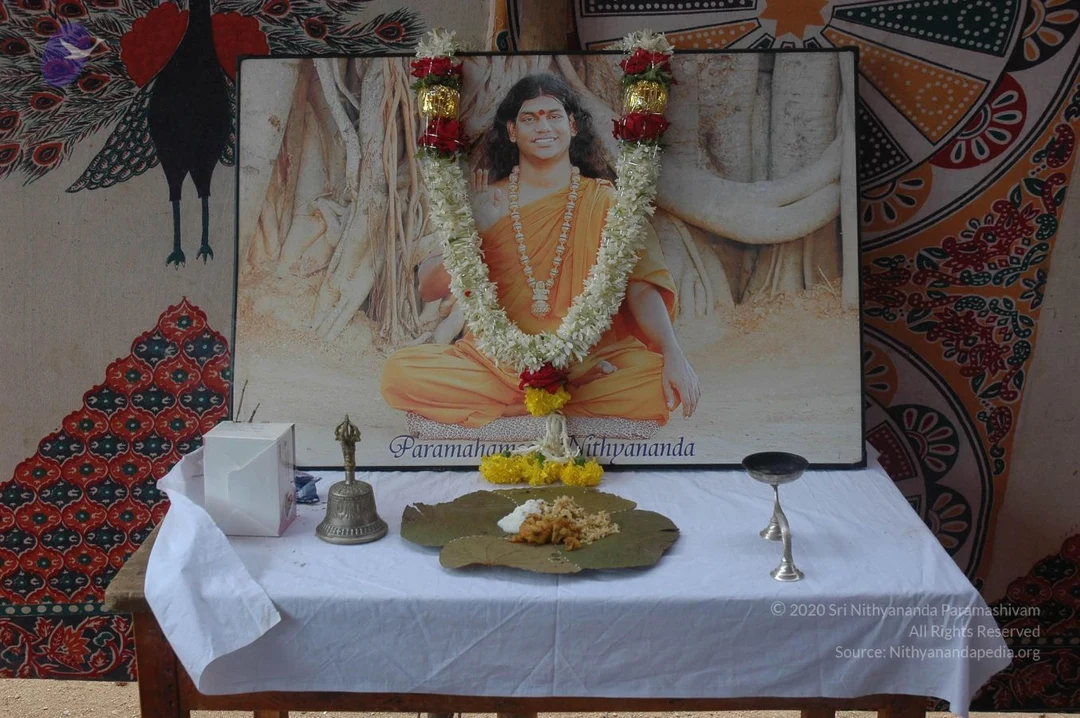
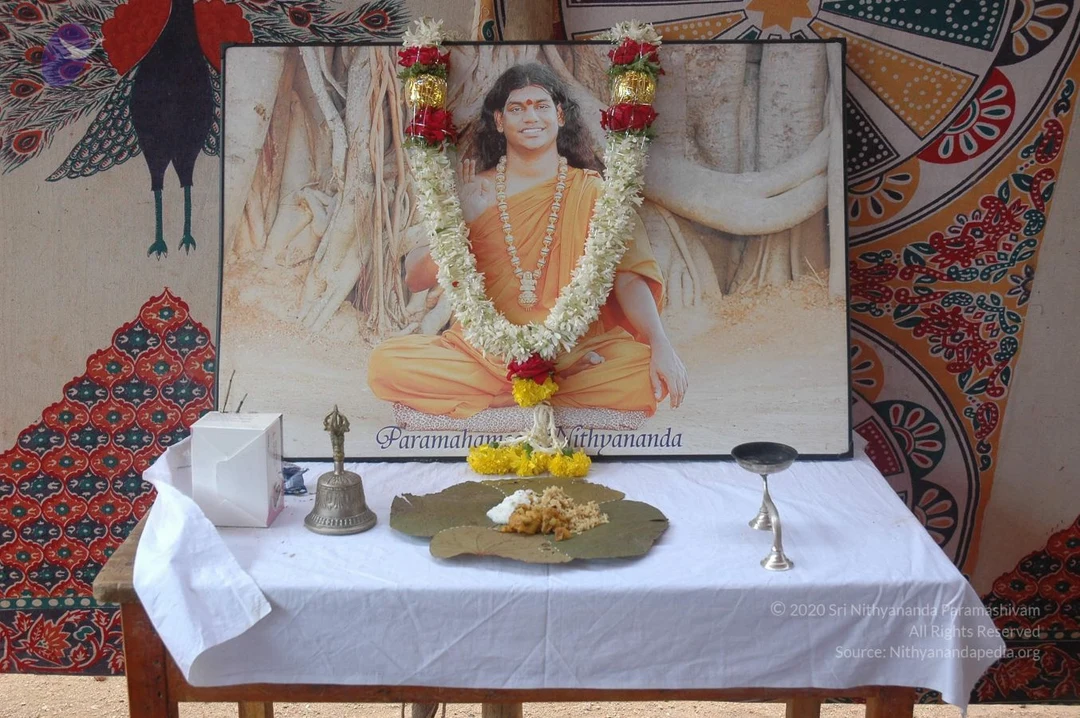
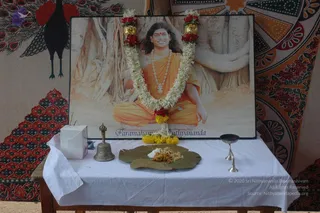
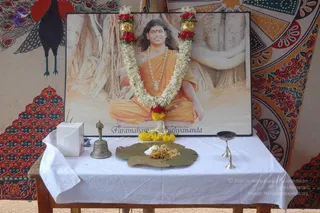
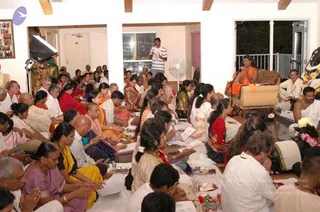
A photograph of a free meal being served under a large red and yellow patterned canopy outdoors, with a tree in the background. Long wooden benches are filled with seated villagers eating from leaf plates, many women in saris and men in shirts and dhotis. Volunteers in white clothes with saffron-coloured shawls walk between the rows carrying food. Along the back are decorated cloth panels in red, white and blue with circular motifs. Blue plastic chairs fill the foreground, and a child with a yellow flower in her hair sits at the right edge. The scene is a community annadan at a medical camp, with no clearly identifiable a person visible.A photograph of a large outdoor free meal served under a yellow and red patterned canopy with striped edges. Long wooden tables and blue and red plastic chairs are filled with seated villagers eating from leaf plates. A man in white shirt and dhoti, with an orange scarf, walks between the tables serving food. Colourful patterned cloth hangings line the back of the tent, with a large tree behind. Many people, including women in saris and children, are visible.Outdoor free meal served under a large red and yellow patterned canopy beside a tree, with long wooden tables and blue plastic chairs. Many seated men, women and children eat from leaf plates. A standing man in white clothes with an orange shawl serves food at the center, and another man in white stands at left. Women wear saris in bright colours and flowers in their hair. Hanging cloth panels with colourful deity and mandala designs line the tent walls. The scene is a free food distribution at a camp.A large outdoor tent with a patterned red, yellow and maroon canopy shelters a crowded free meal service. Many people sit at long wooden tables and on blue and red plastic chairs, eating from leaf plates. A standing man in white clothes with an orange shawl stands at the center, serving or attending the guests. Another man in white clothes stands at the right. Women wear saris and flowers in their hair, including yellow marigold blossoms. Patterned cloth hangings in red and blue line the back of the tent, and a large tree stands beyond it.A framed printed portrait on a table draped with white cloth, set before a colourful painted backdrop with a peacock motif. The portrait shows a seated man in saffron-orange robes with a rudraksha mala and ceremonial necklace, hands resting in his lap, in front of banyan tree roots. The frame is garlanded with white jasmine, red roses and gold-coloured beads. Below it lie yellow marigold petals, a banana-leaf plate with rice and a dab of white paste, a small brass handbell and a silver footed cup. The portrait is labelled "Paramahamsa Nithyananda" in script. Scene is outdoors with no people present.A framed photograph on an altar table shows a seated man in saffron-orange robes, rudraksha mala and a red bindi, cross-legged in front of a large banyan-like tree trunk. The framed print is garlanded with white jasmine and red roses and marigold. Below it, a brass bell, a small silver cup on a stem, and a leaf plate with yellow rice and a white dollop of food sit on a white cloth. Behind the altar are painted peacock and patterned cloth panels. The printed caption on the photo reads Paramahamsa Nithyananda. The portrait is a depiction, so no physical people are present.

temple

17 photosSource gallery
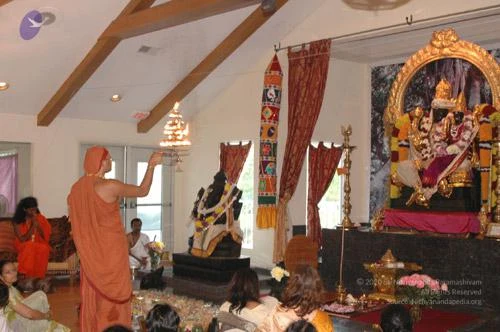
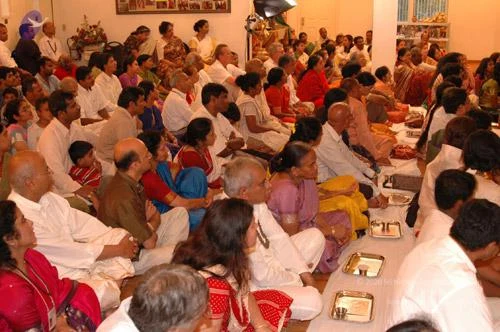
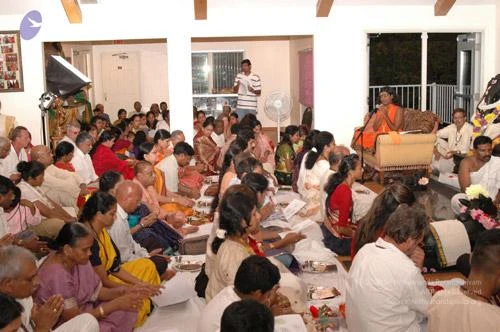
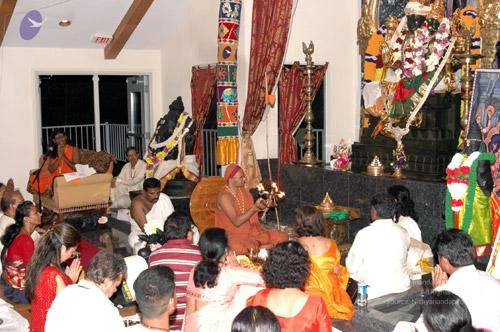
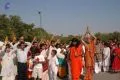
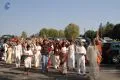
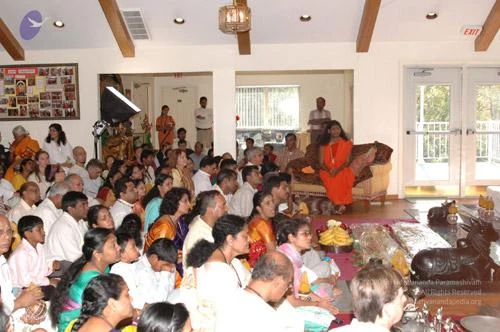
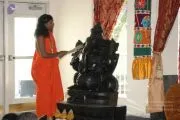
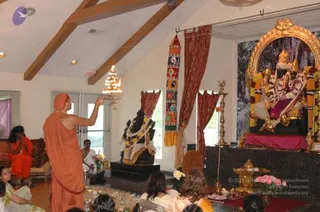
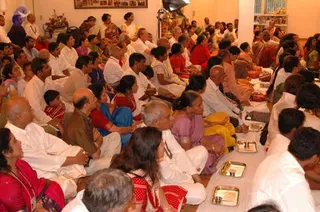
A photograph of a shrine room with a large dark stone Ganesha murti seated at centre, draped with a patterned cloth and flanked by red and gold drapes. A person in a saffron-orange robe with long dark hair stands at the left, one arm raised toward the murti in a ritual gesture. Several seated devotees are visible in the lower foreground, partially cropped at the bottom edge of the frame, and a framed picture hangs on the wall behind.Photo of an indoor hall with a colourful decorated backdrop and a deity murti or altar on a raised platform at the far end. A man in white clothes stands near the right side of the hall, and a few people in bright red and orange clothing are seated or standing on the left near a wall with hanging decorations, with red and white draped cloth overhead. Pictured here is a temple-style interior, with a platform arrangement and what appears to be a shrine or puja setup. Figures are small and distant, and the crowd is sparse.A small photograph of a medical camp setting. A woman in an orange saree stands at left, holding a steel vessel or pot, facing a man in a white shirt who stands beside a wooden display or cabinet with framed items. A few other people are visible in the background of a bright indoor hall. The scene reads as a camp or service counter setting, with the orange clothing of the woman prominent against the white and pale walls.A photograph inside a bright hall with white walls, exposed wooden beams and a chandelier. In the foreground a figure in saffron-orange robes stands with an arm raised, gesturing toward an altar. On the right, an ornate gilded frame surrounds a decorated deity murti with a crown and red-and-gold garments, set on a dark platform with flowers and a brass kalasha-style lamp. Seated devotees sit on the floor in the lower foreground, some in white and saffron clothing. A red and gold hanging banner and a tall wooden stand with a dark statue appear to the left.A crowded indoor gathering of seated devotees on the floor, many in white or pastel kurtas and saris, with some in red and yellow. Rows of people sit cross-legged facing the same direction, and in the foreground brass plates and steel trays are set out in front of them. A man in the upper left wears a purple turban. A framed picture hangs on the wall behind, and studio-style lights are visible at the top. No individual can be clearly identified as a person from appearance.A photograph of a seated congregation in a white-walled hall with wooden ceiling beams. Rows of devotees sit on the floor, many women in saris of red, pink, yellow and purple, and several men in white. A man in white standing near the right wall faces the room. On a raised platform at right, a figure in orange-saffron robes sits on an ornate wooden seat, with a white-clad attendant beside him. Brass plates and food offerings are set before the seated devotees, who appear to be gathered for a meal or ritual service. A standing fan and a camera light stand are visible at the left.