Skip to content
Monday

11 December 2006

Dated photos
301
Source pages
1
Media
1
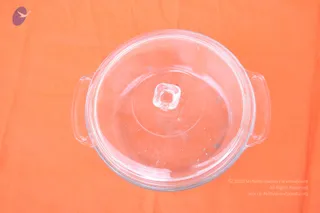
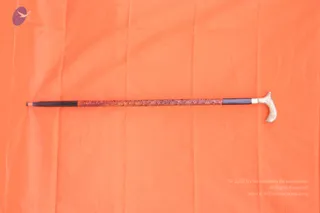
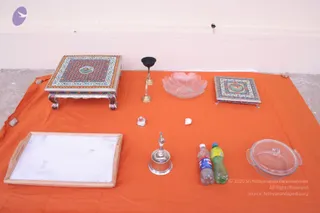
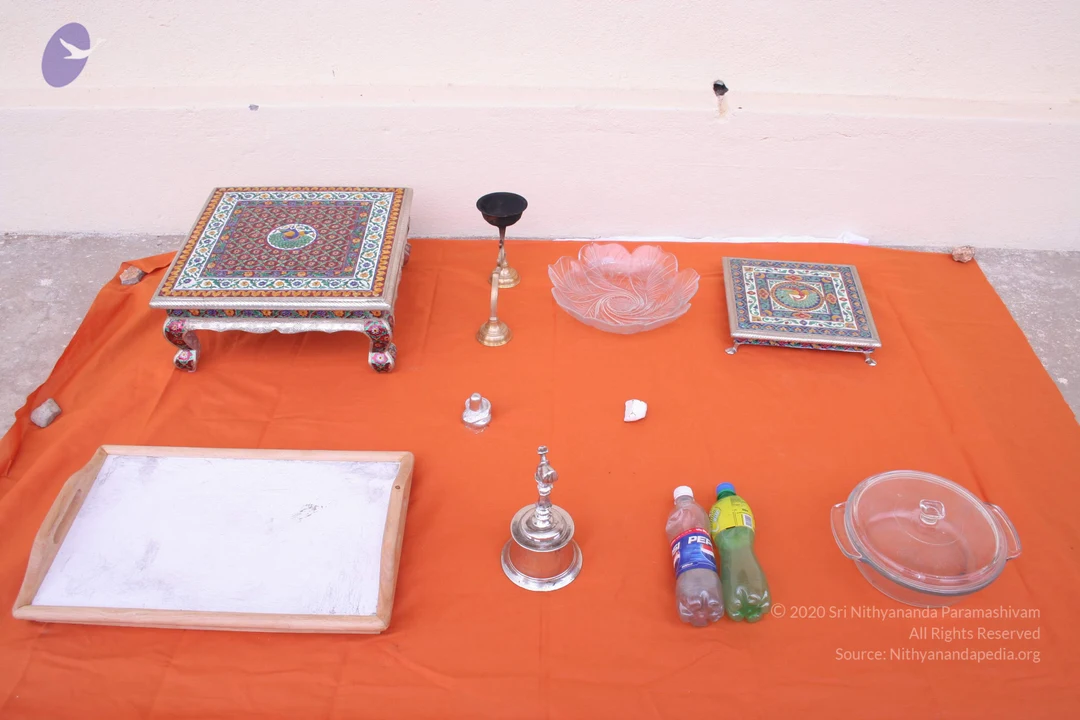
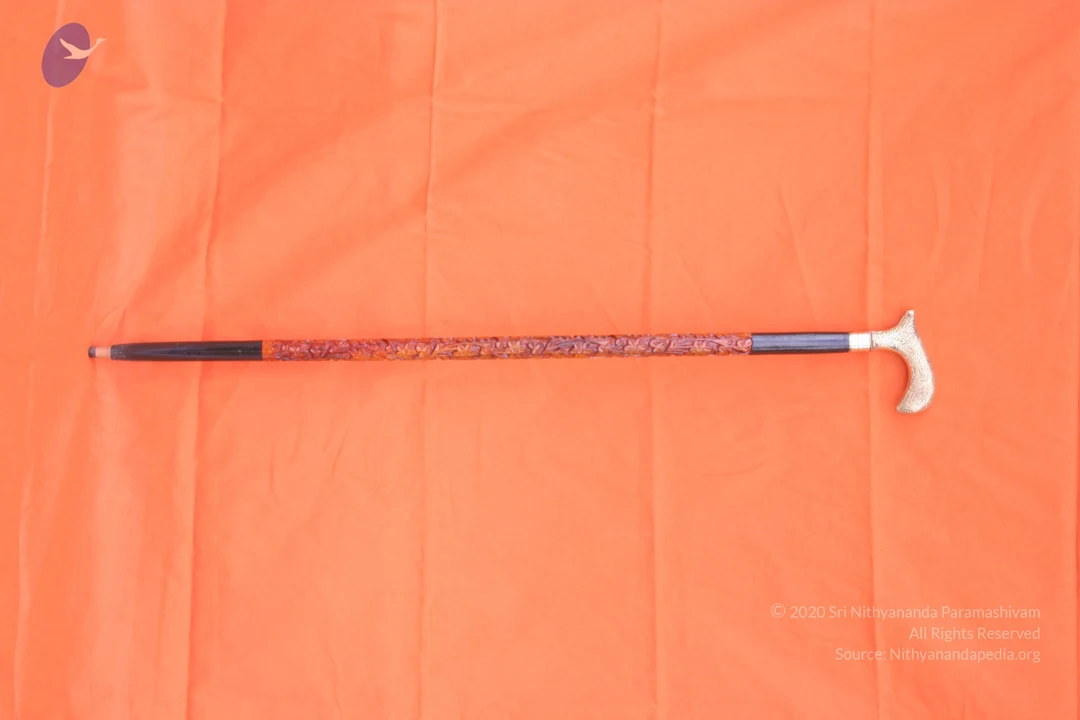
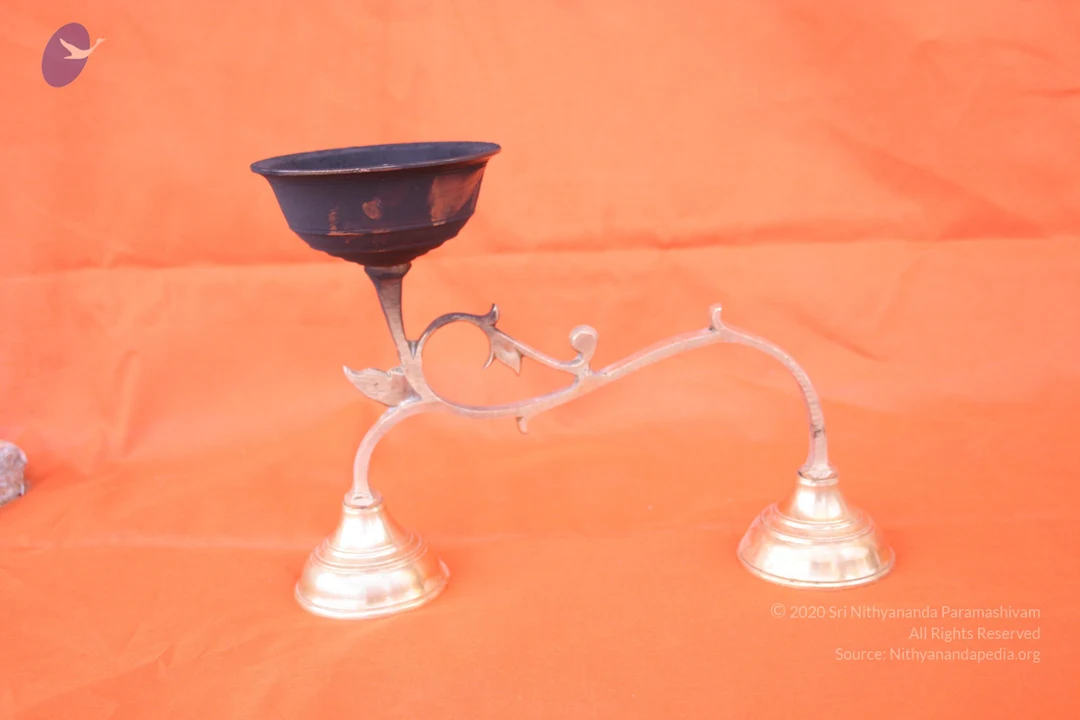
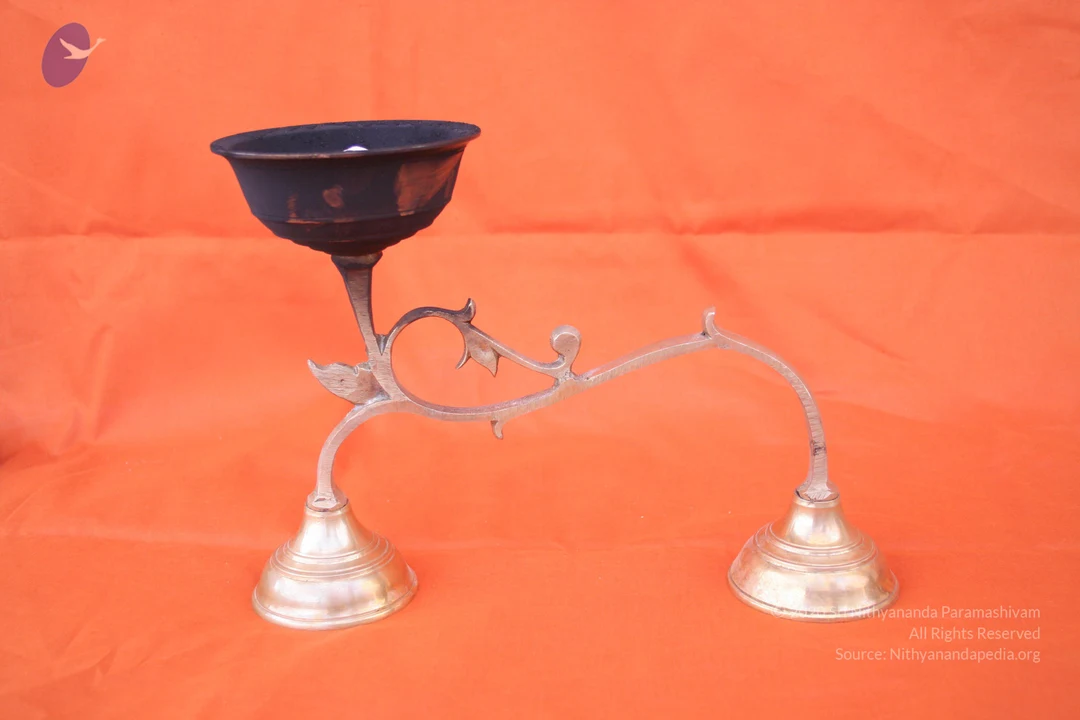
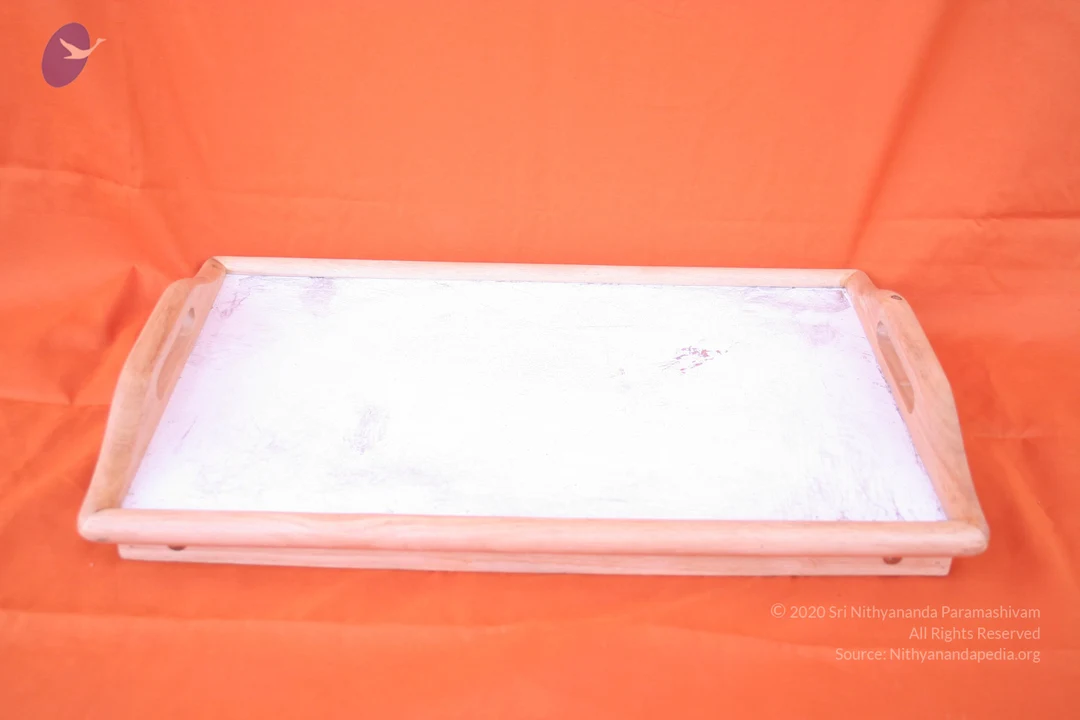
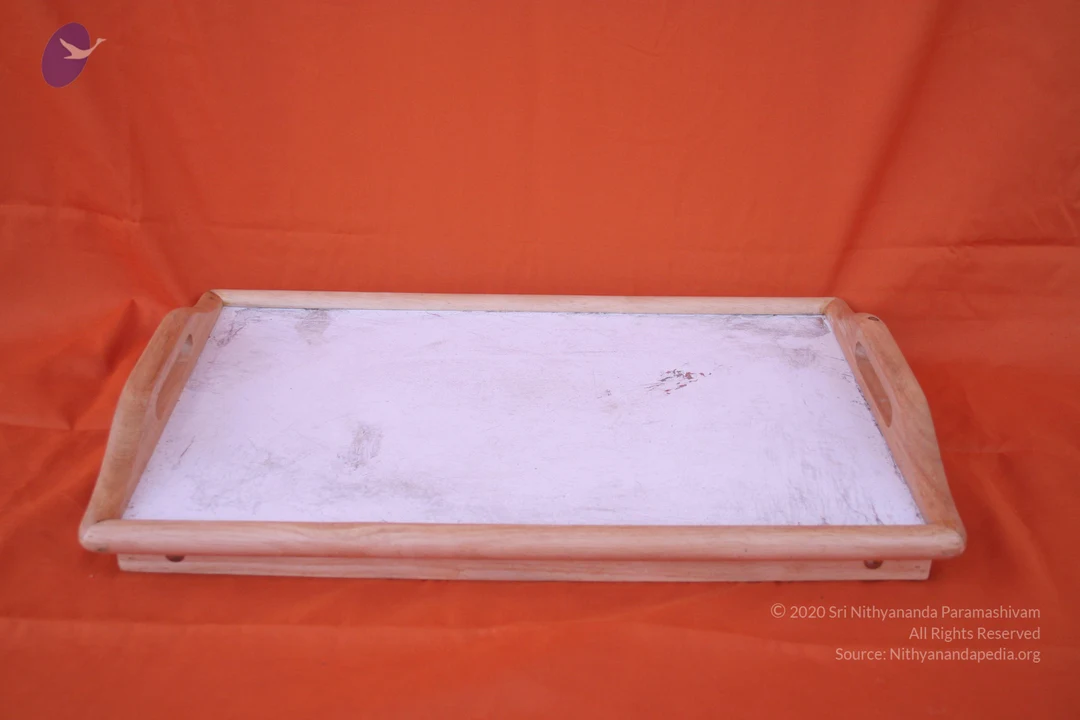
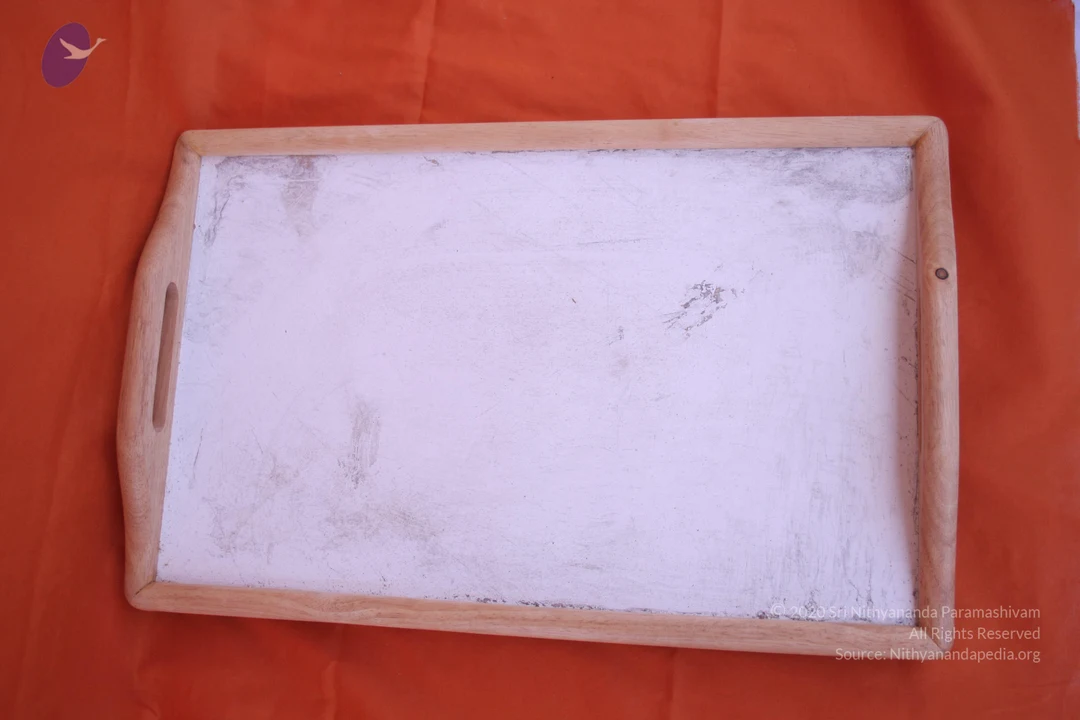
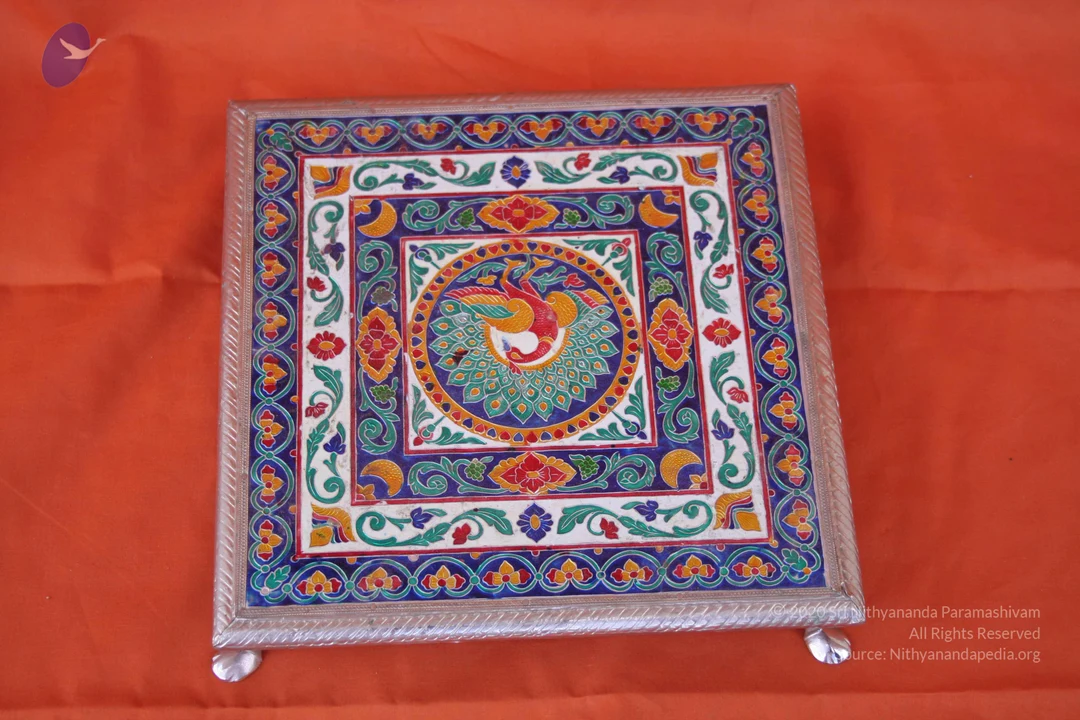
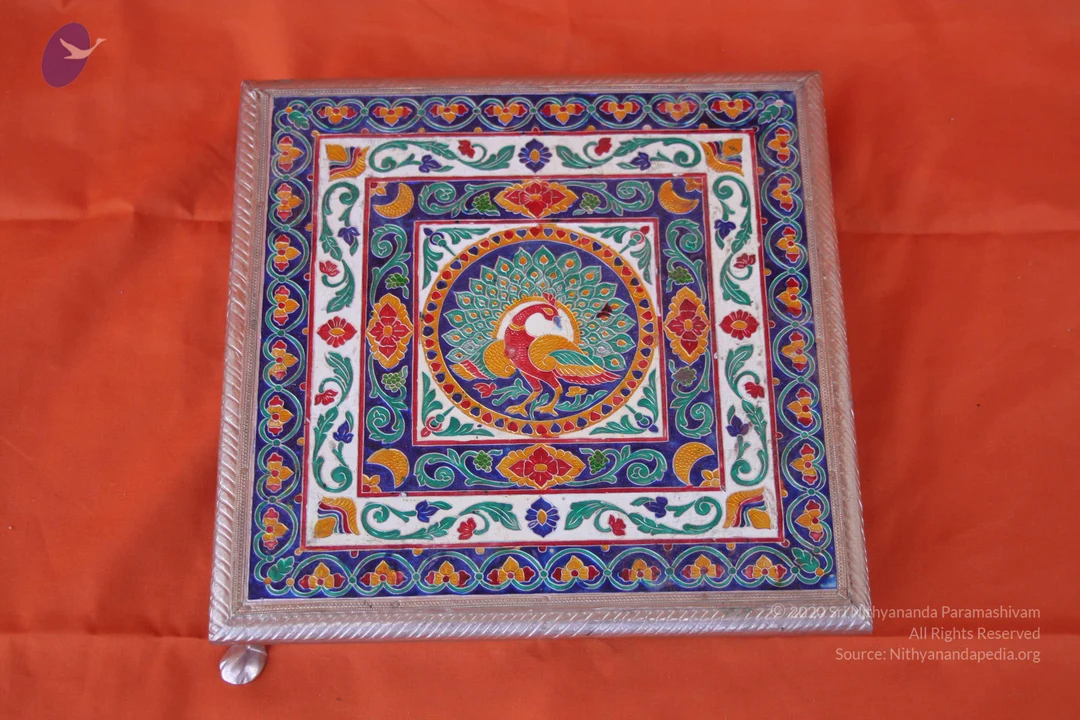
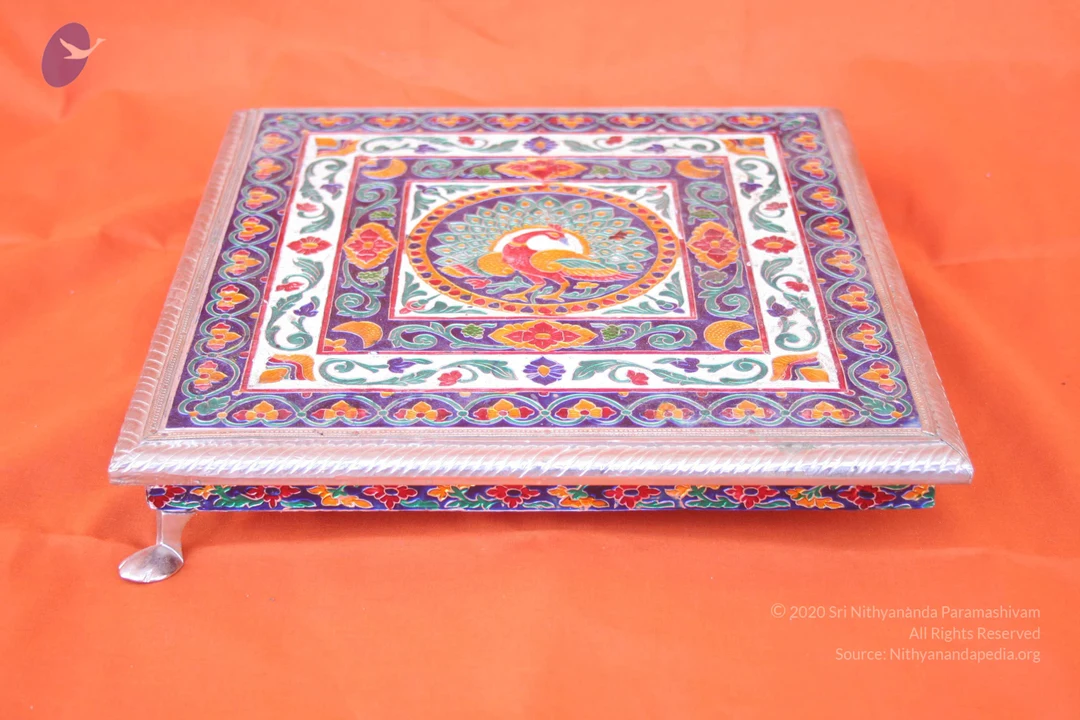
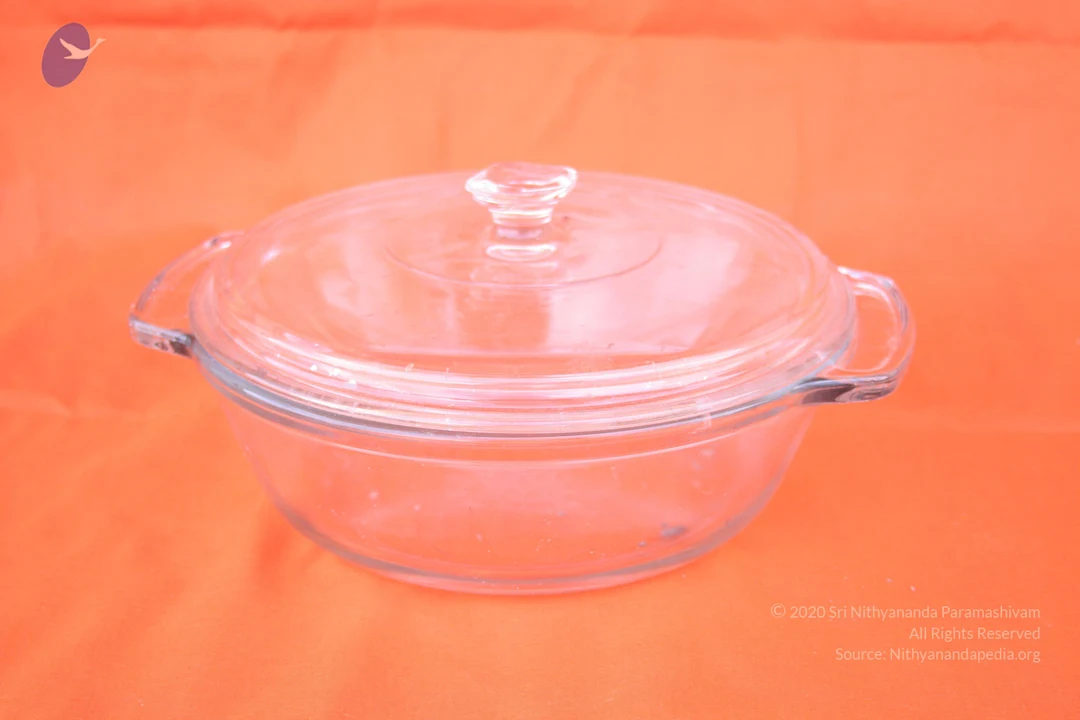
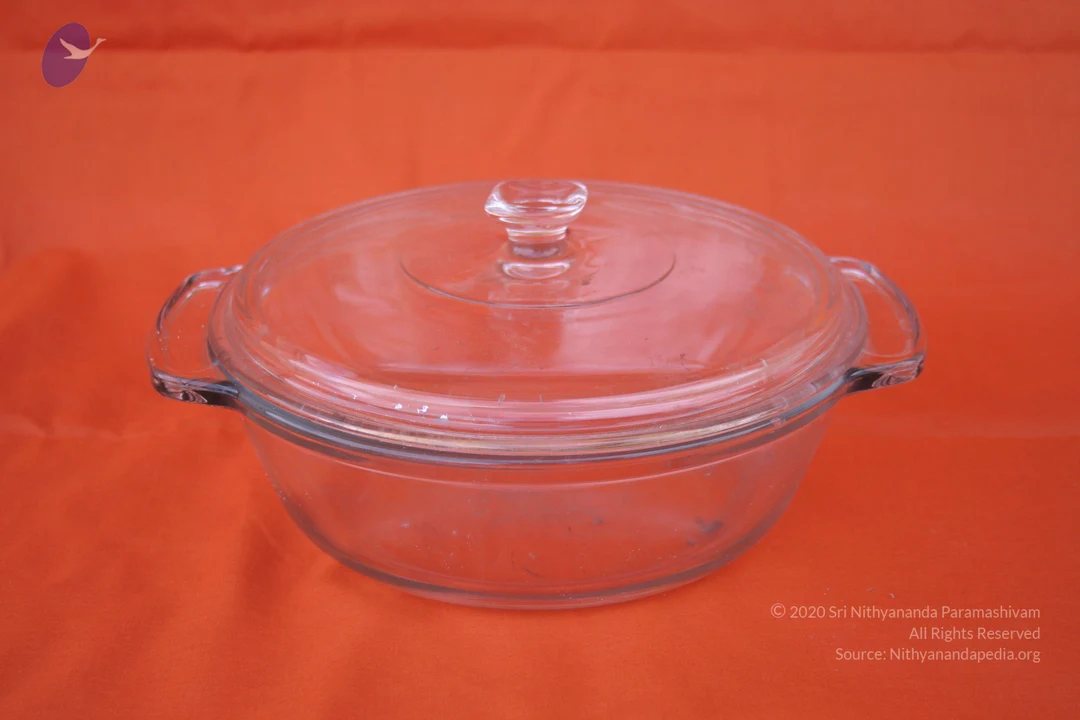
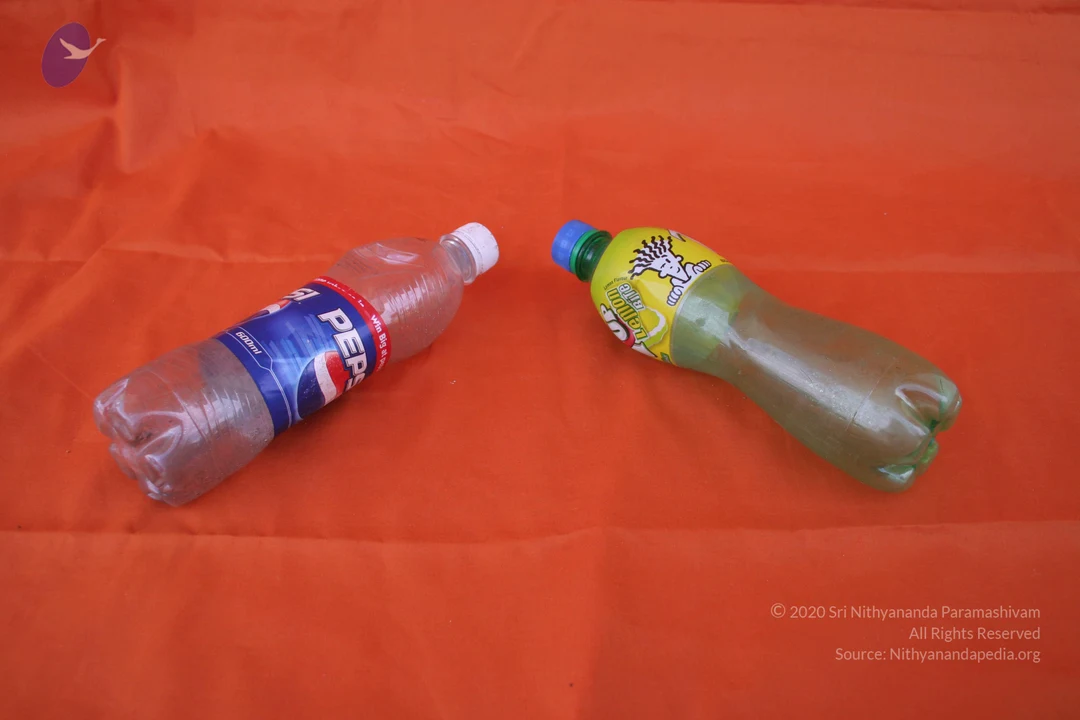
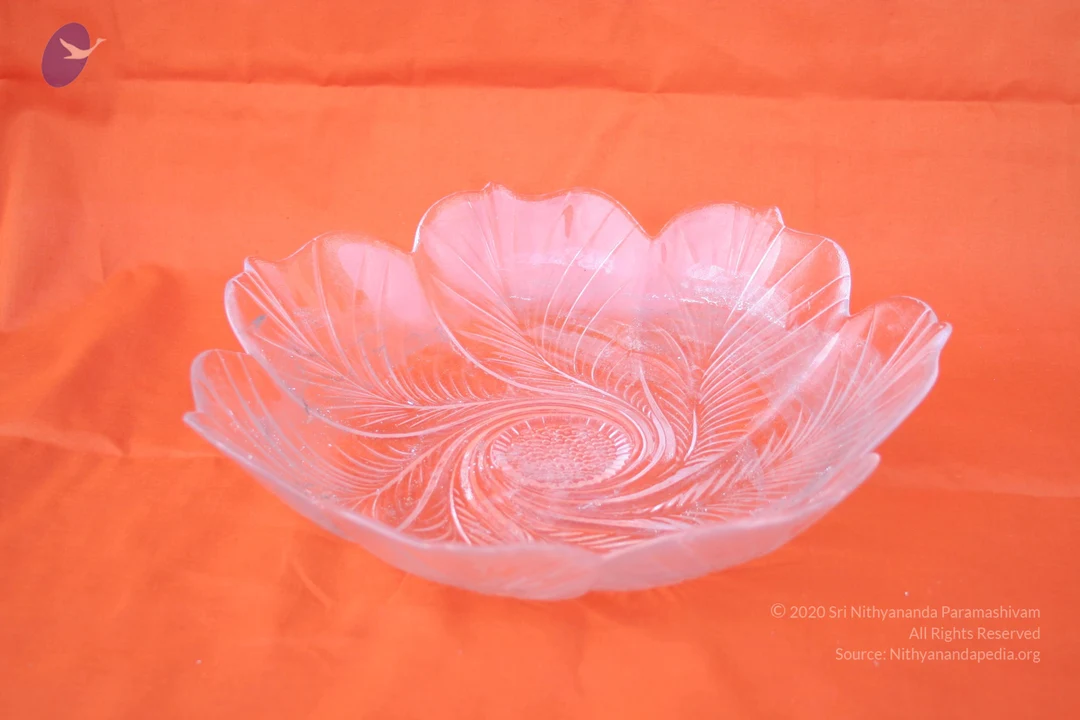
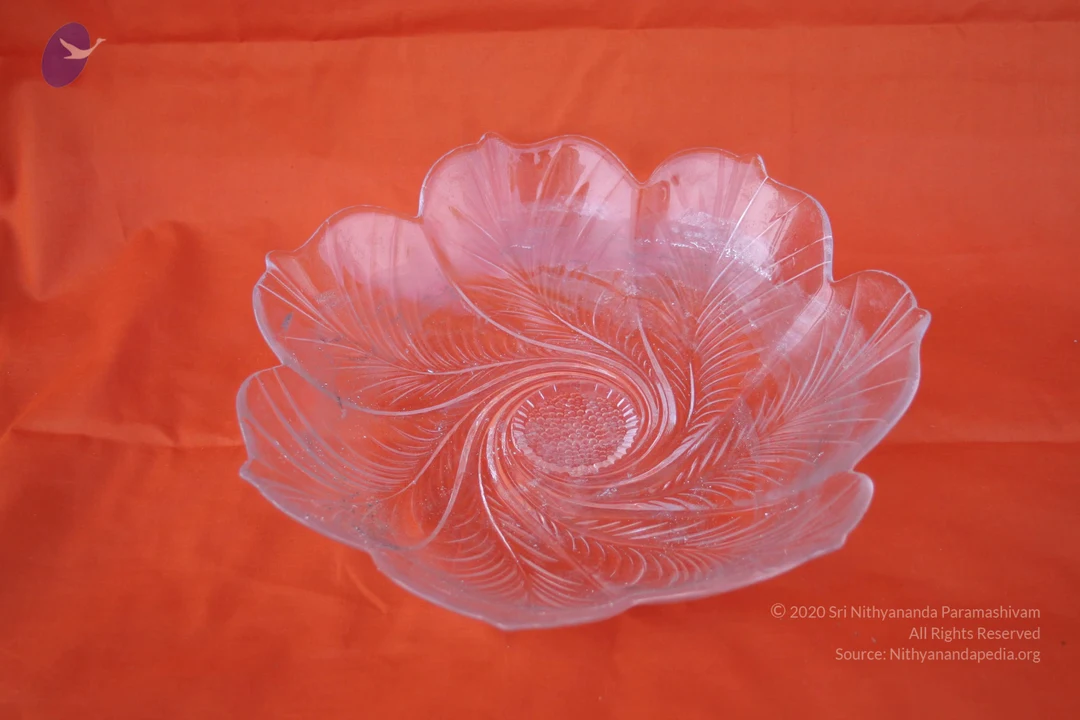
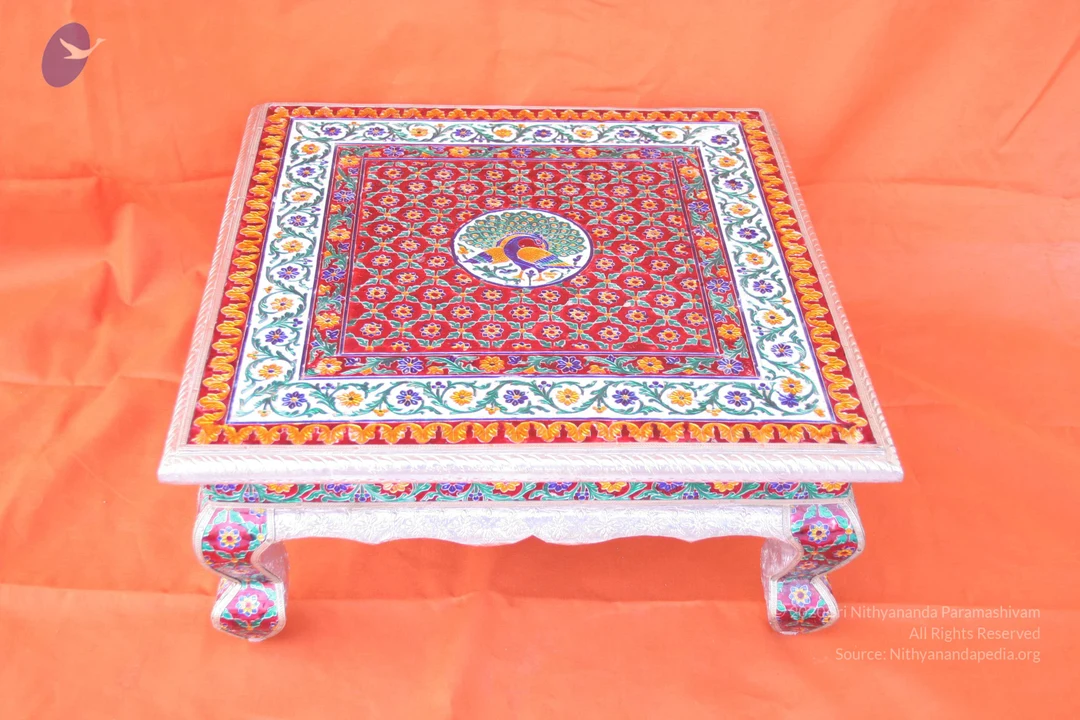
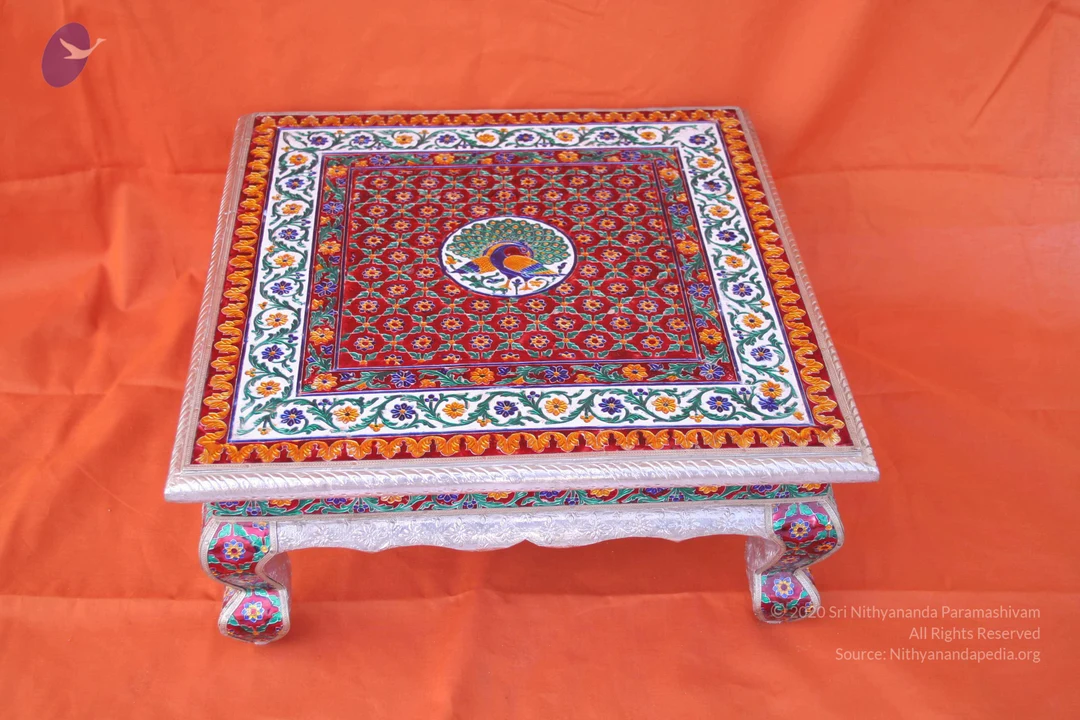
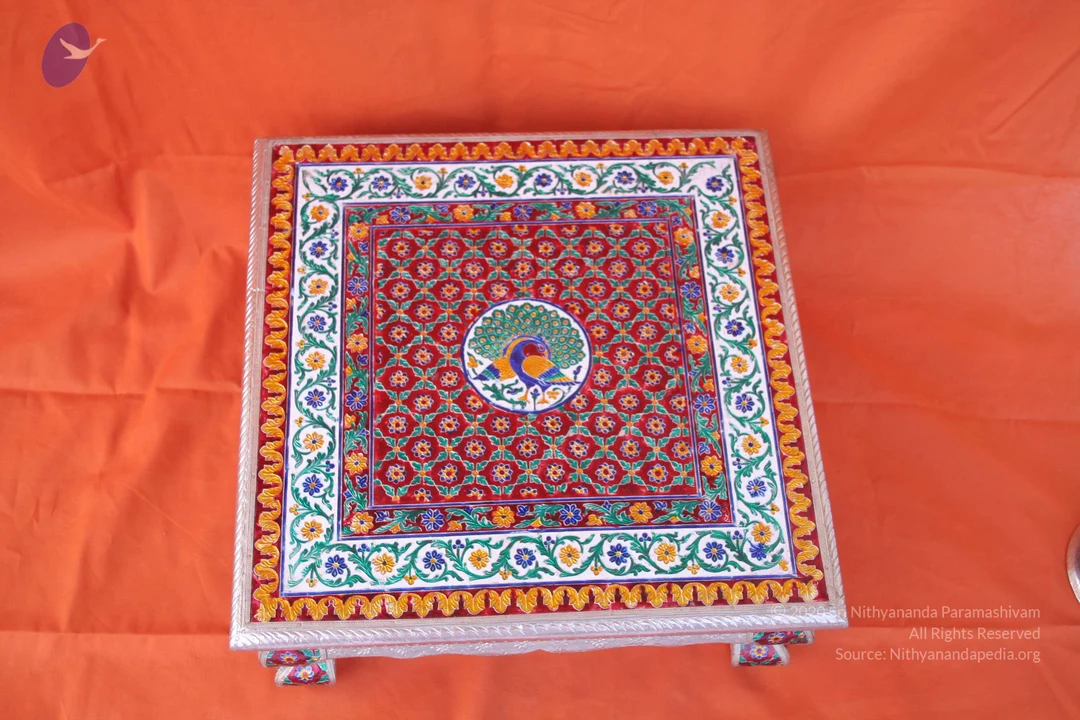
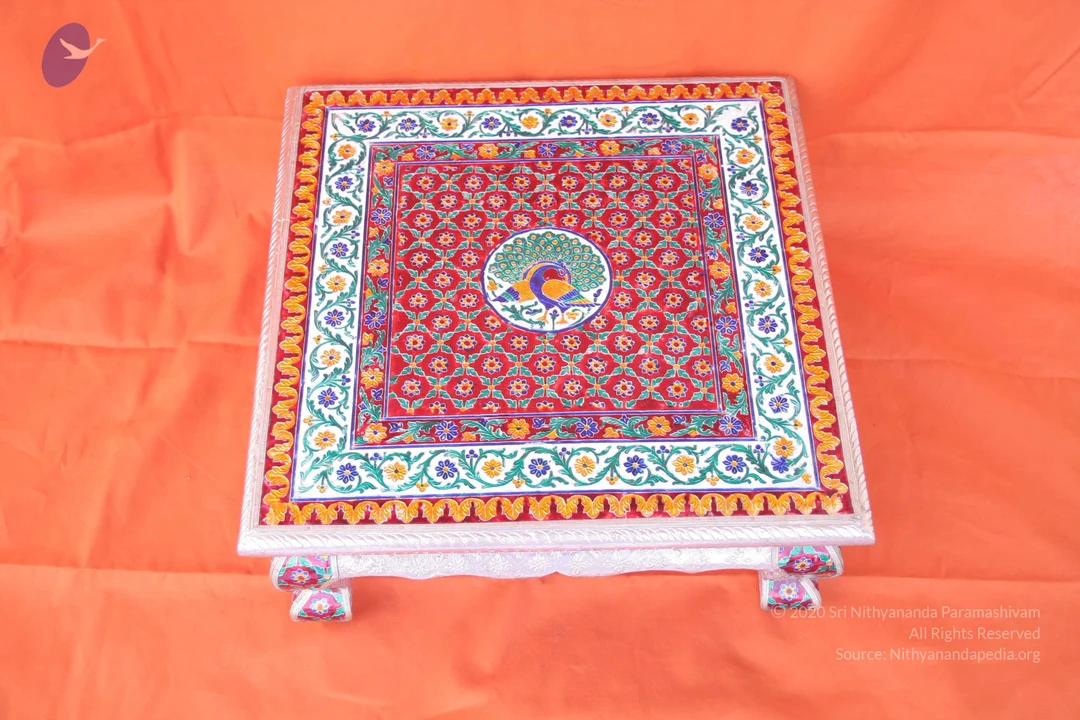
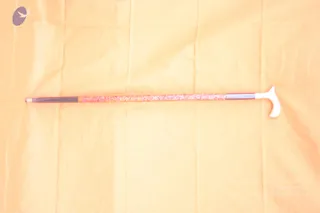
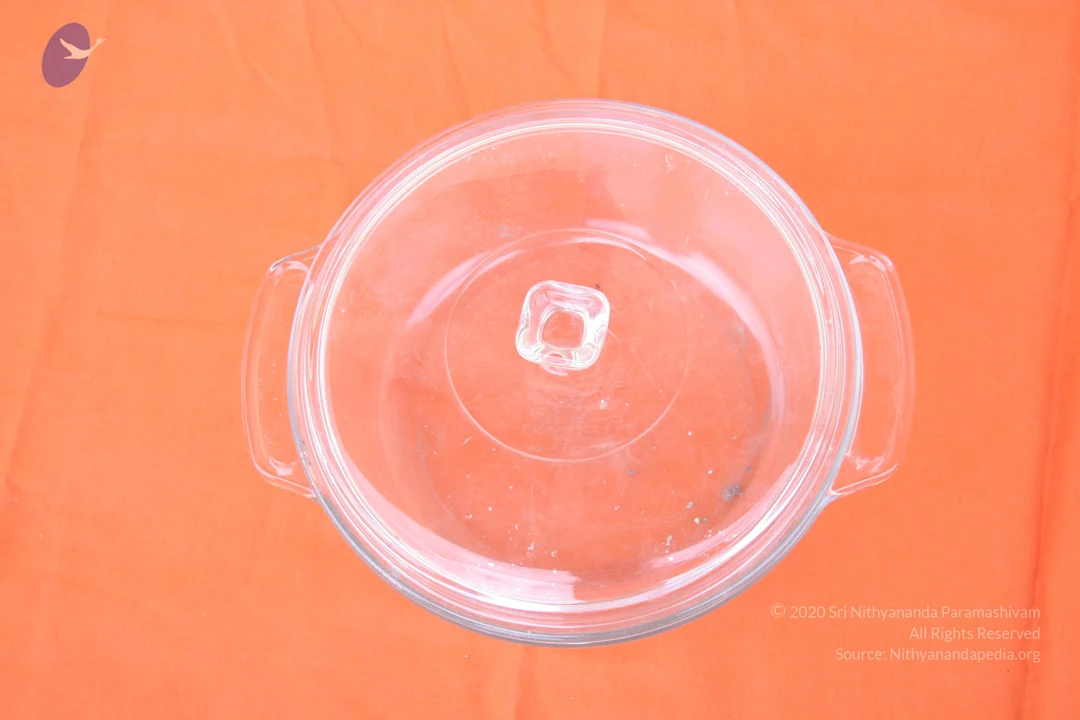
A photograph of an empty clear glass cooking dish with two side handles and a small square knob on its lid, viewed from above against a plain orange cloth backdrop. No people are visible; the object appears to be a glass lidded casserole or pot used as a container.A long carved wooden walking stick lies horizontally across a plain saffron-orange cloth. The shaft is dark at both ends with a carved, patterned middle section, and the curved handle is pale and textured. No people are visible; the object appears to be photographed as an installation-related item.A photograph of an empty ritual setup laid out on an orange cloth against a pale wall. A low ornate wooden stool with mosaic-style inlaid patterns and a silver-edged base sits at left, next to a smaller decorated tray or stand at right. Brass lamp stands, a clear glass bowl with a flower-petal design, a silver handbell with a handle, a wooden tray with a white surface, a glass covered dish and two plastic bottles, one labelled Pepsi, sit on the cloth with small stones. No people are visible.

December 11 2006

Original wiki page
Contents

Link to Audio

Space & Time

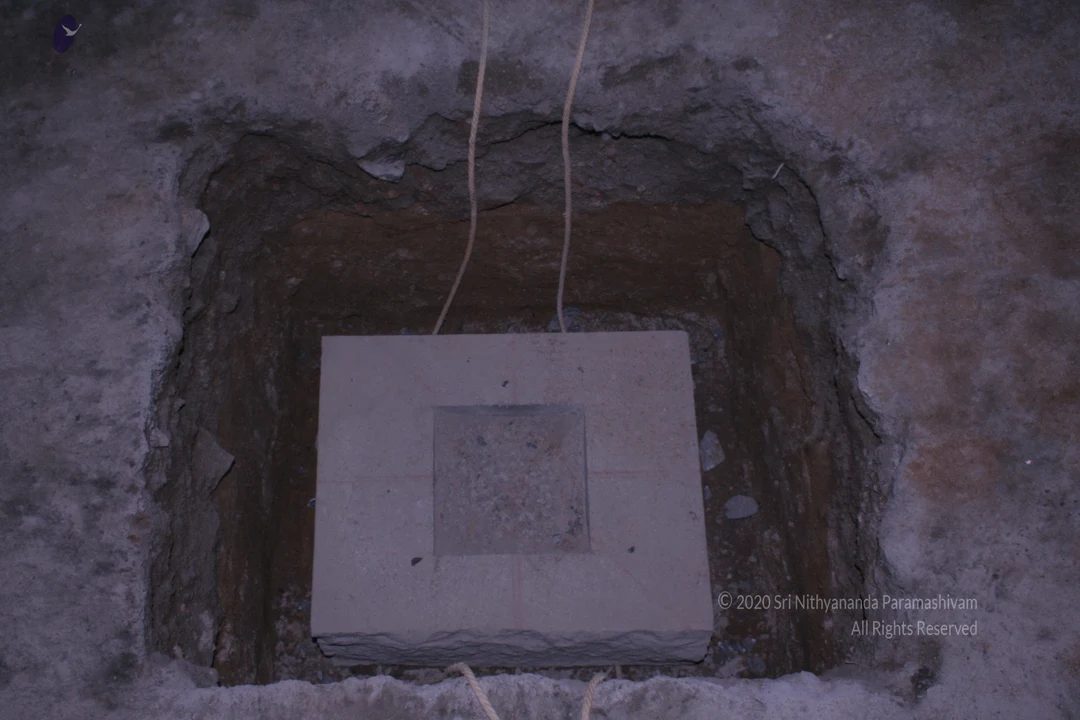
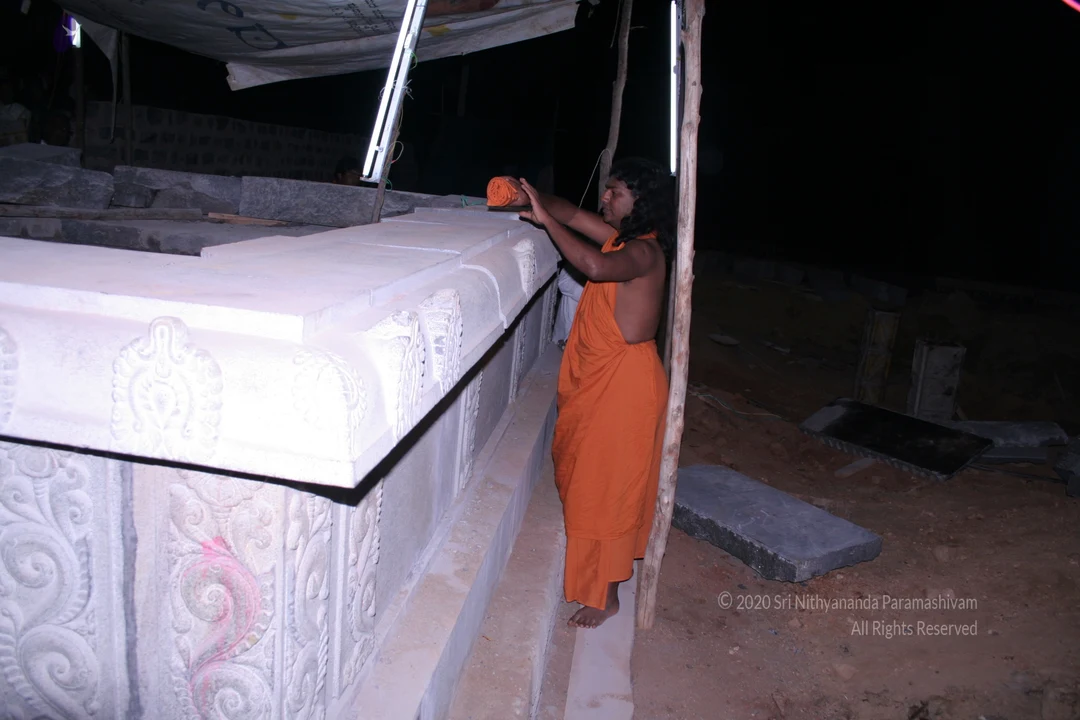
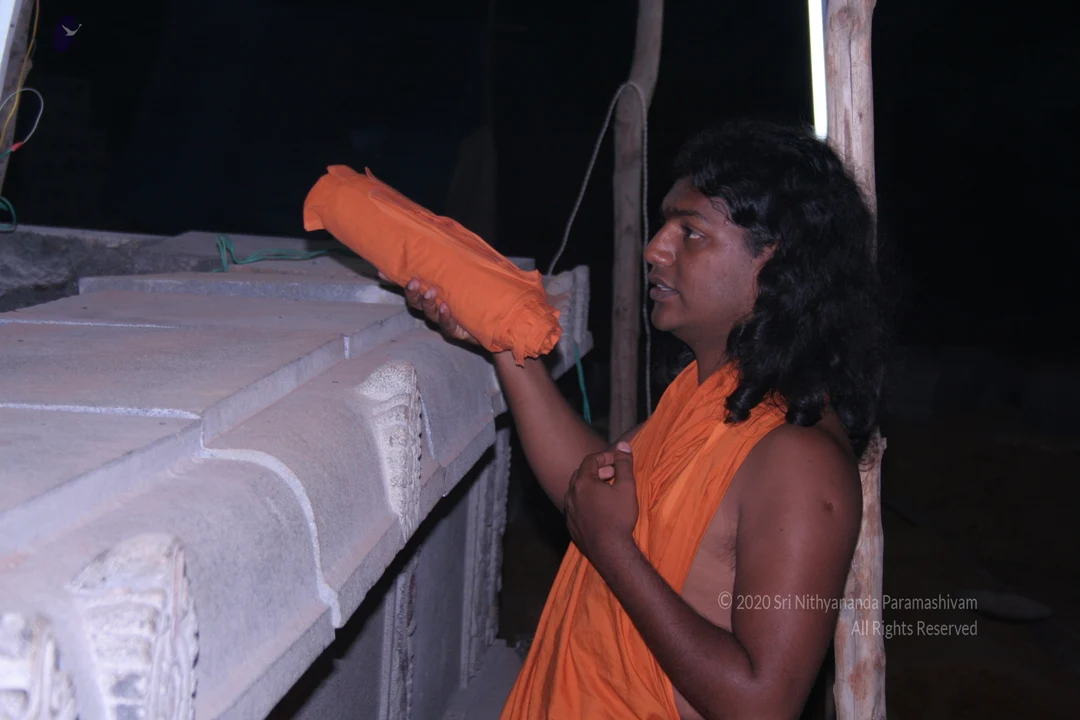
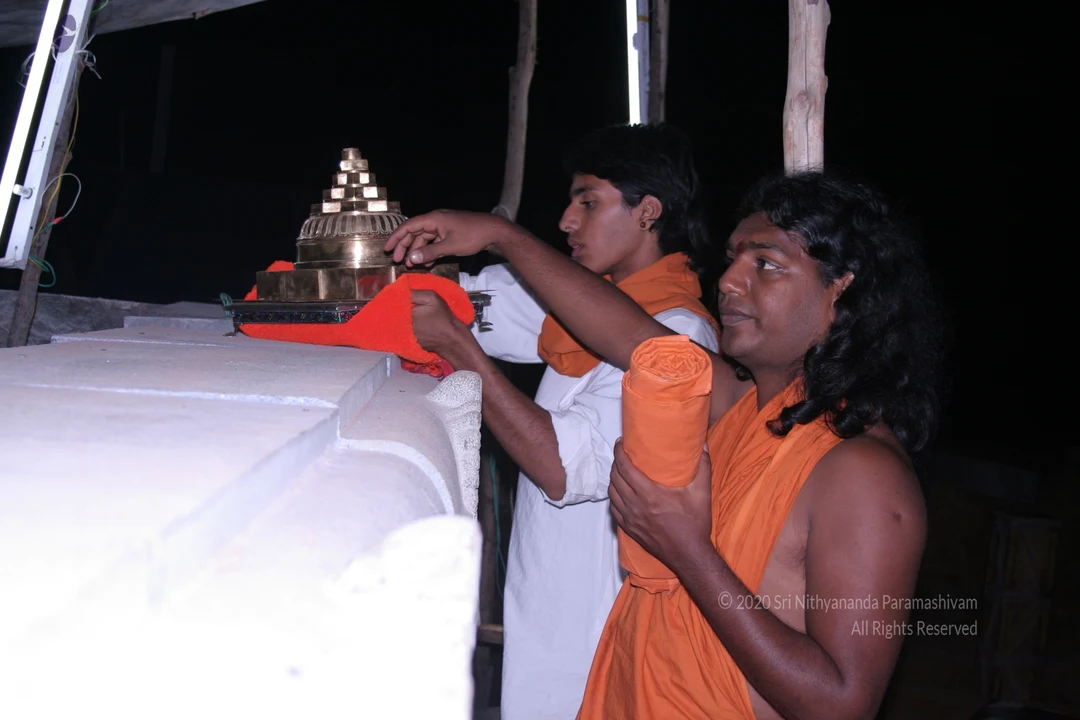
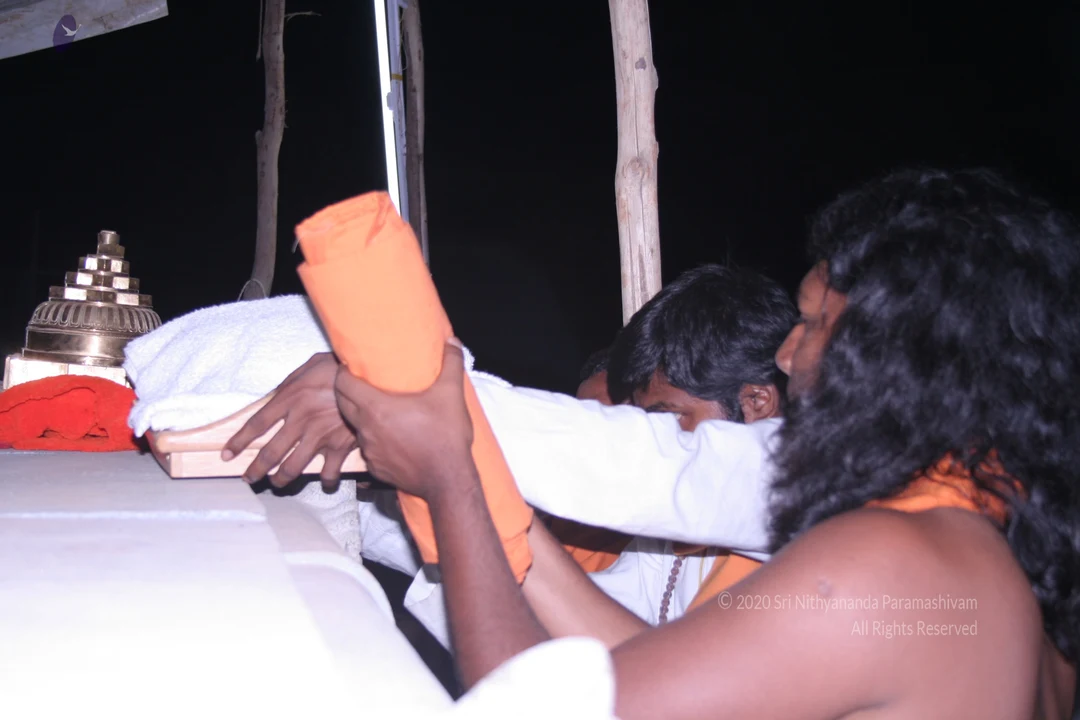
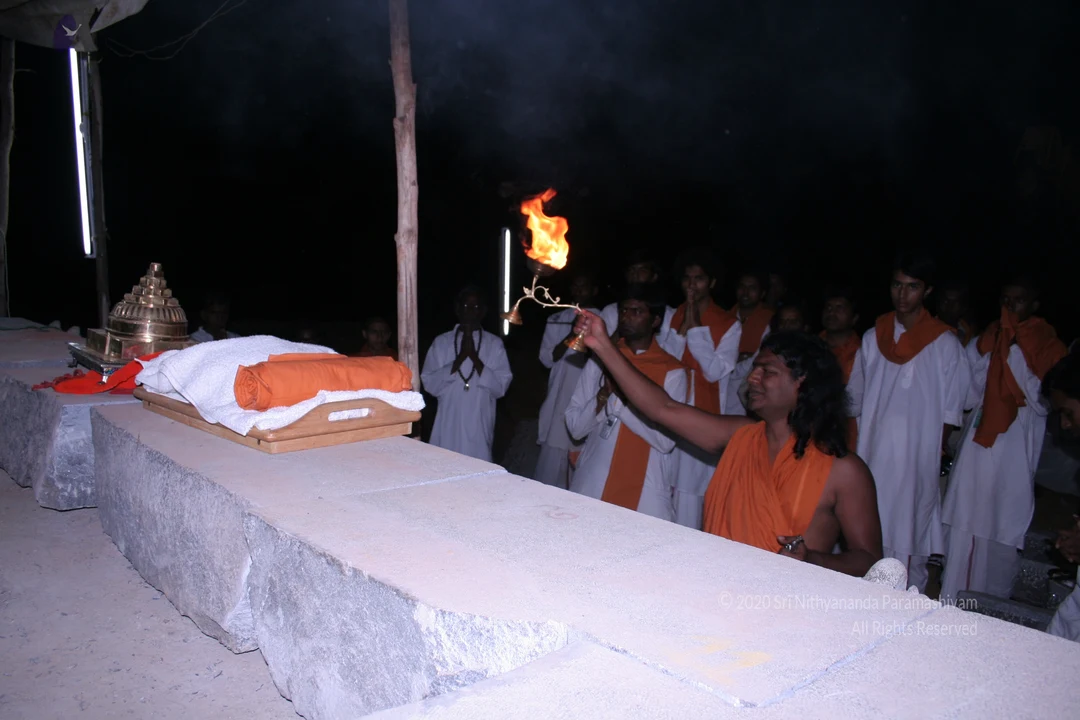
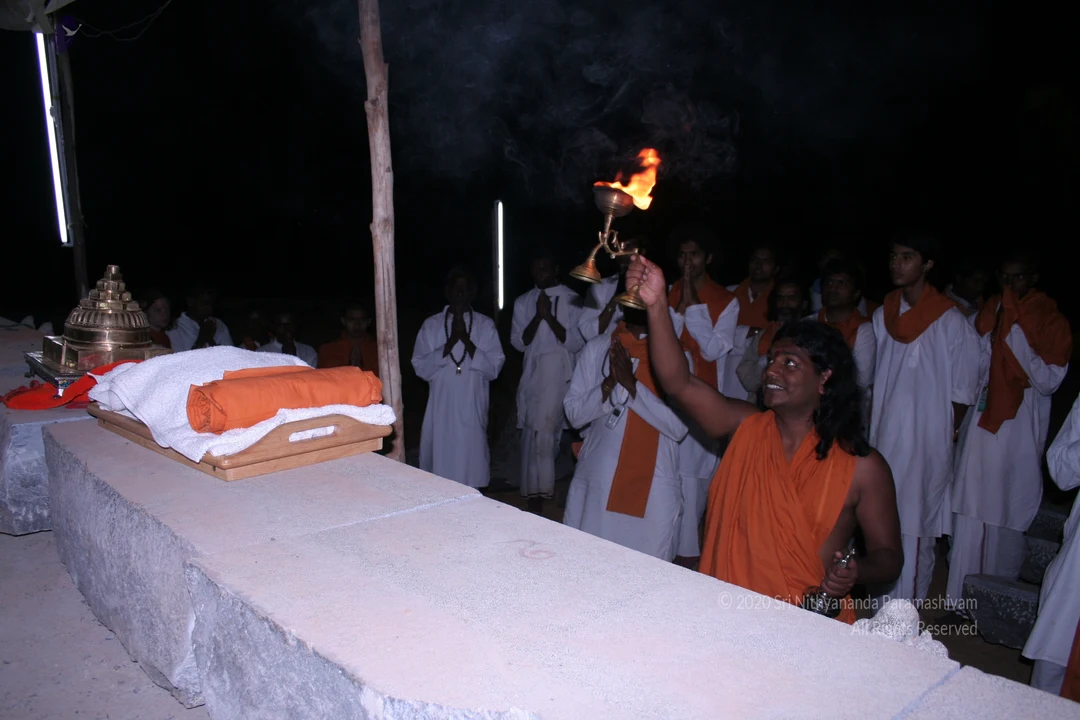
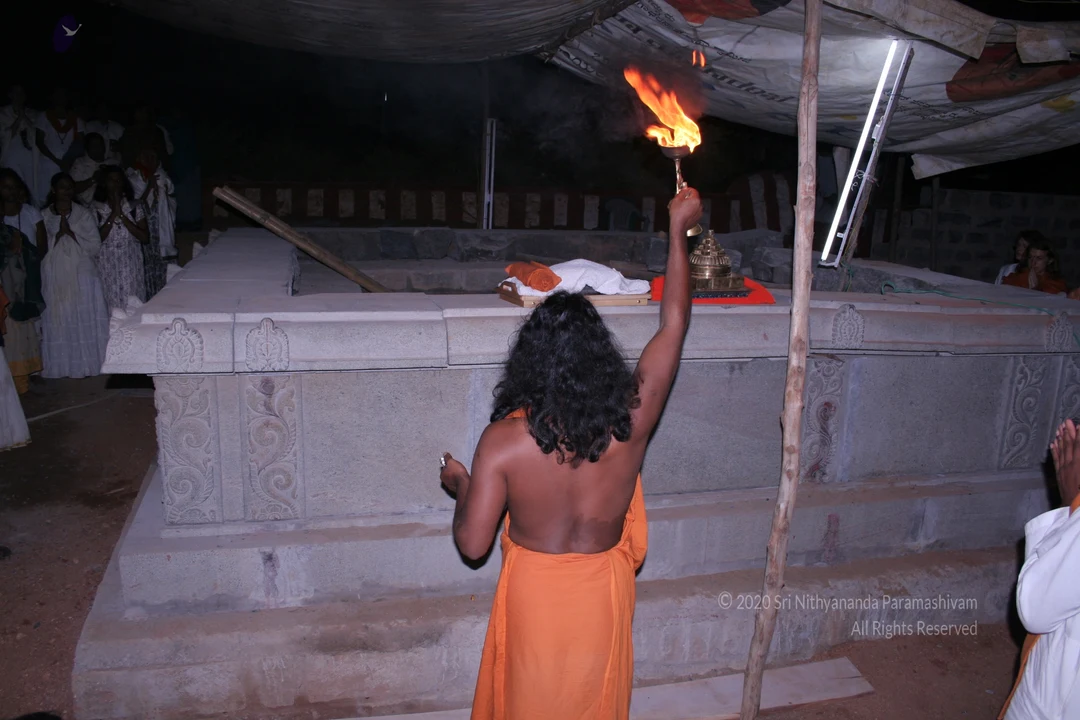
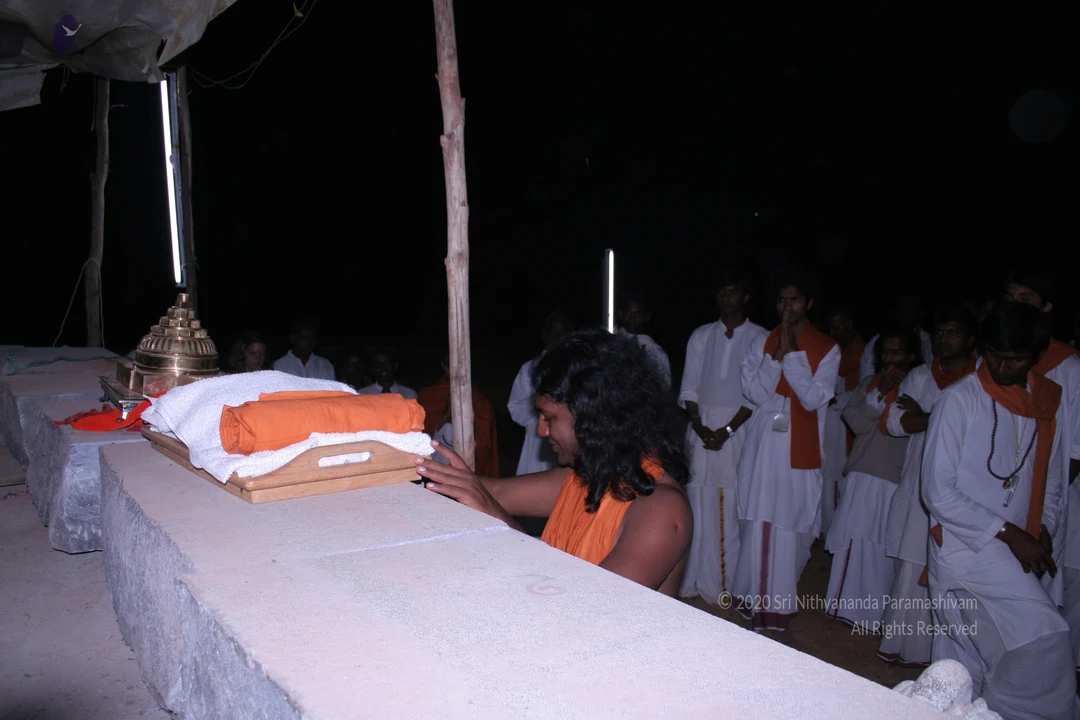
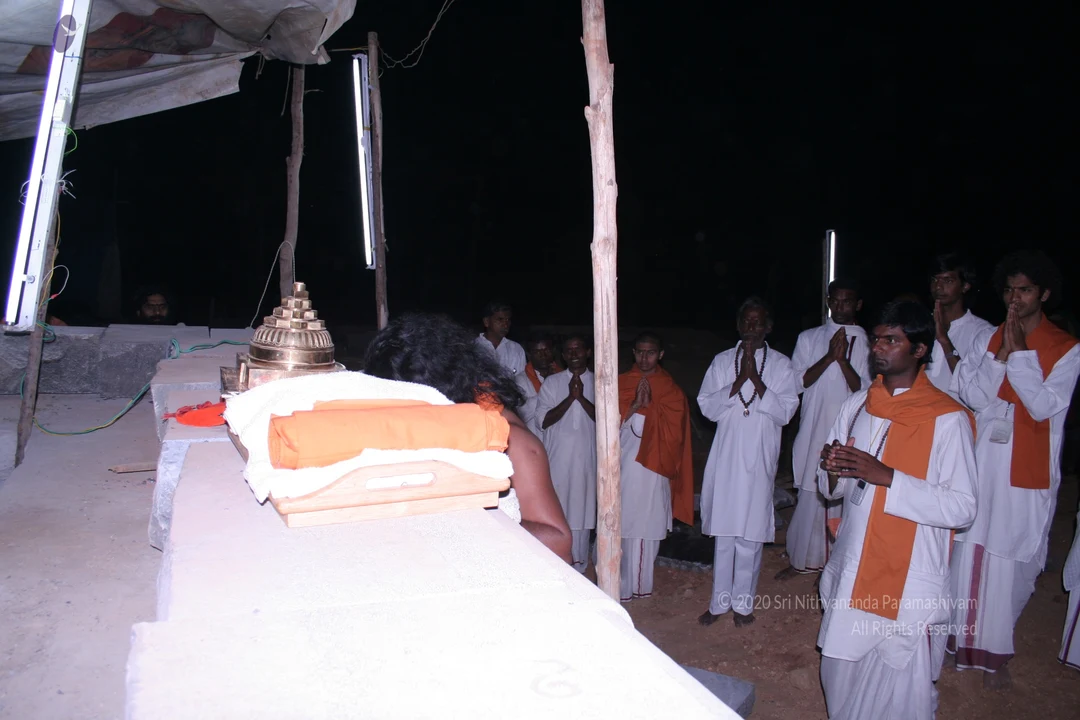
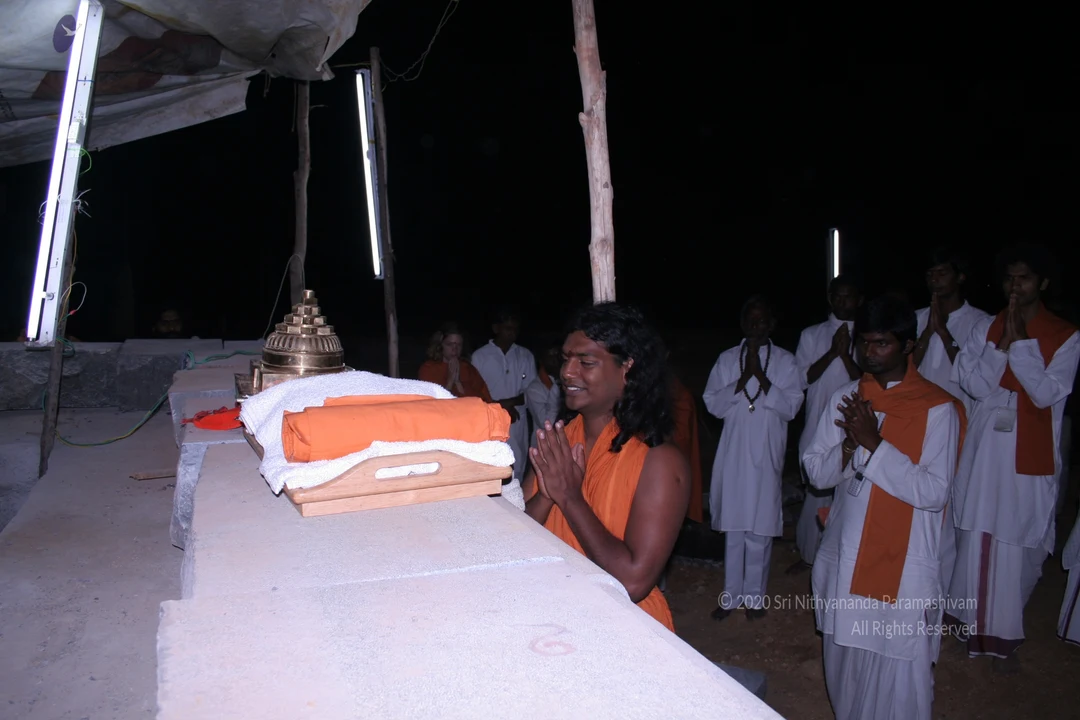
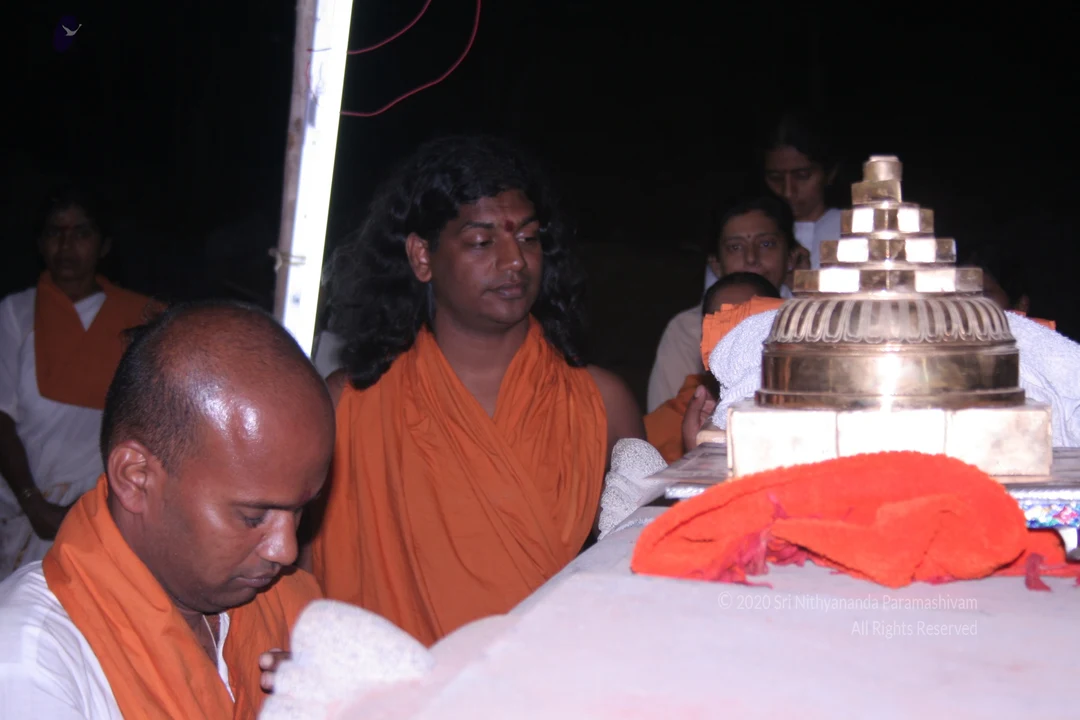
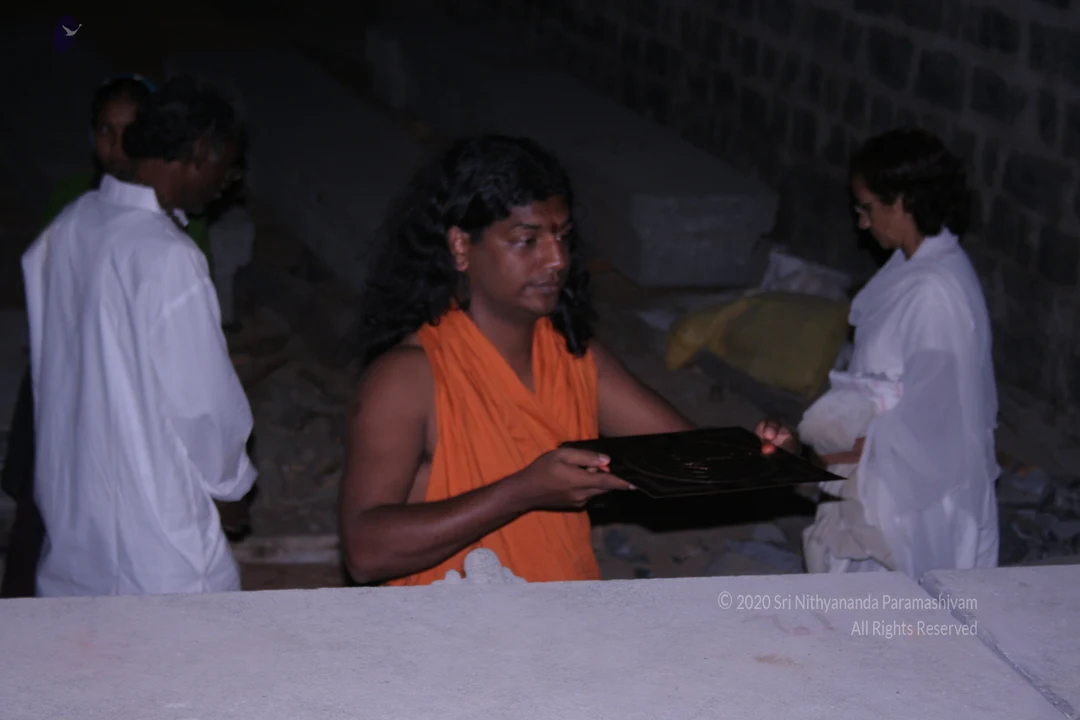
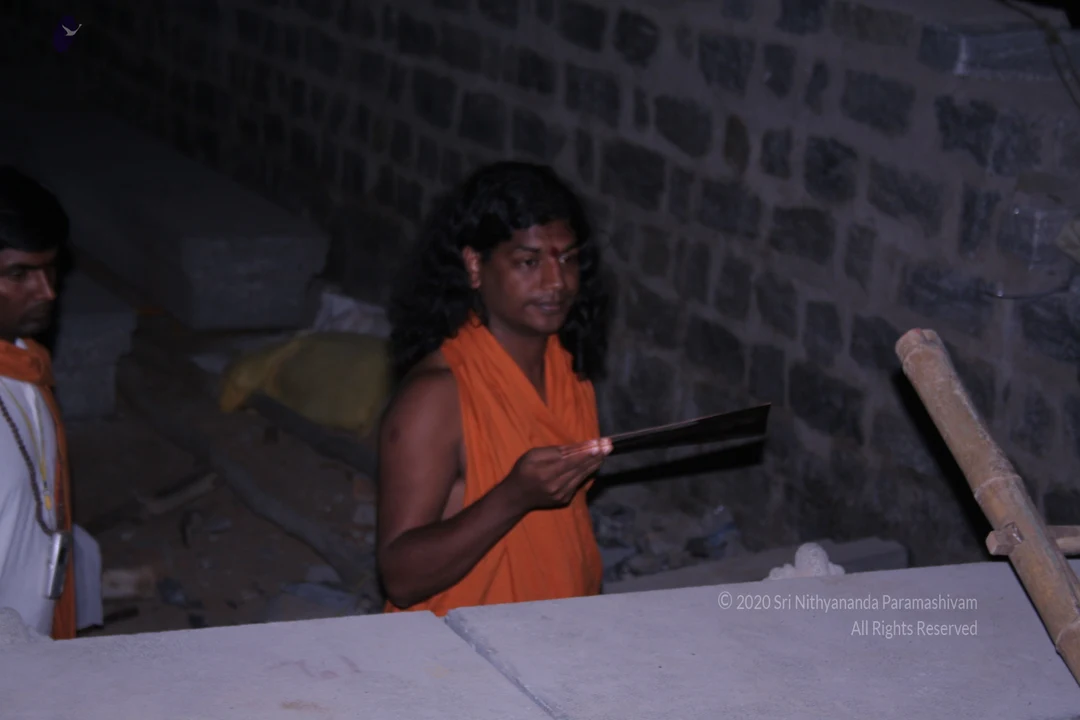
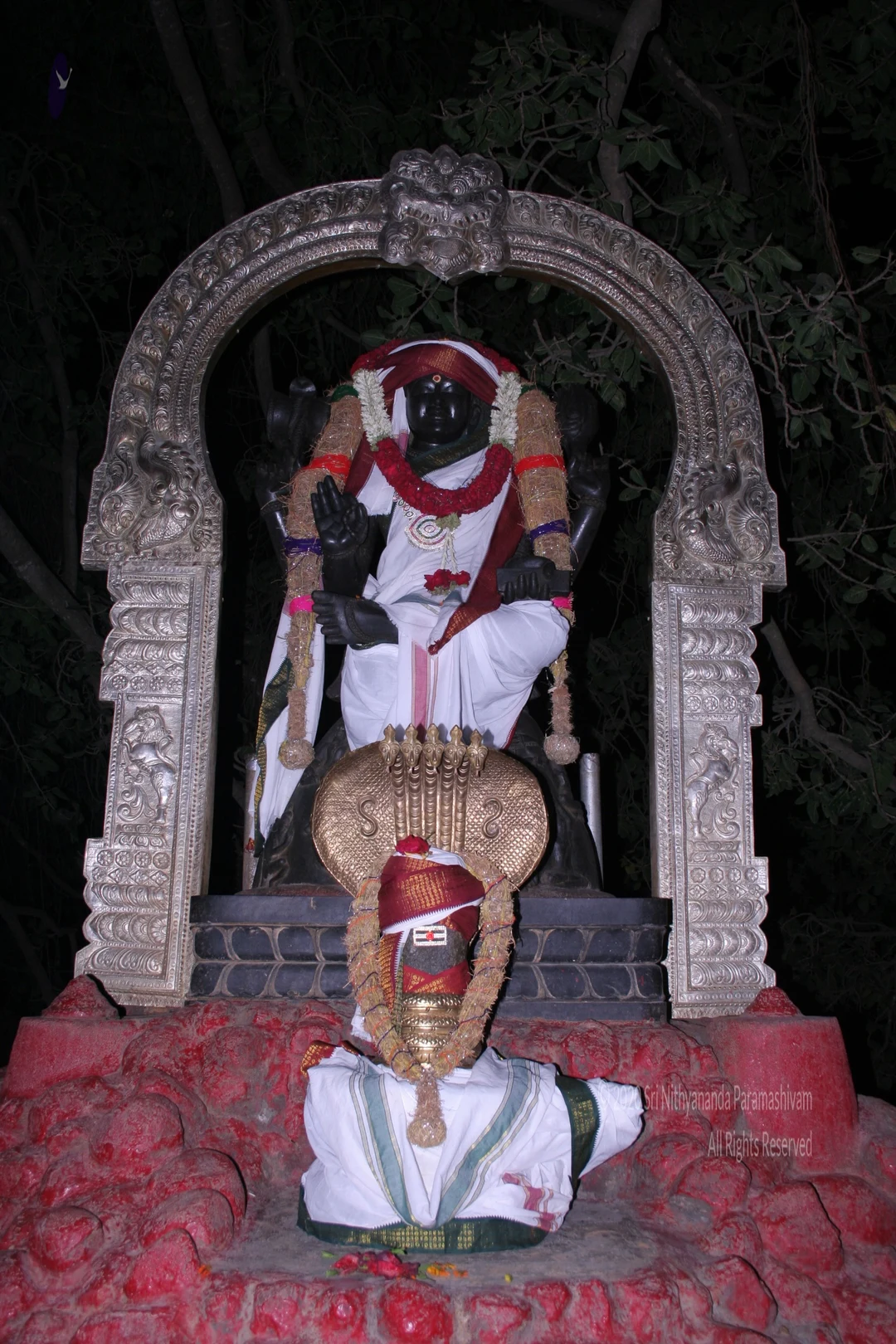
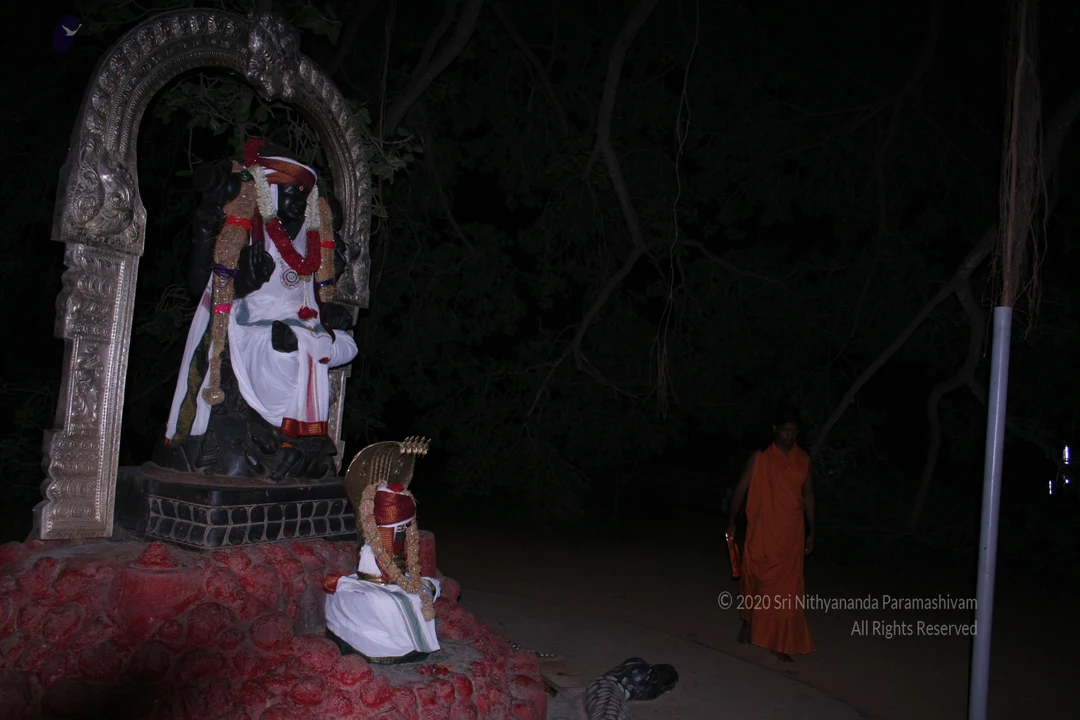
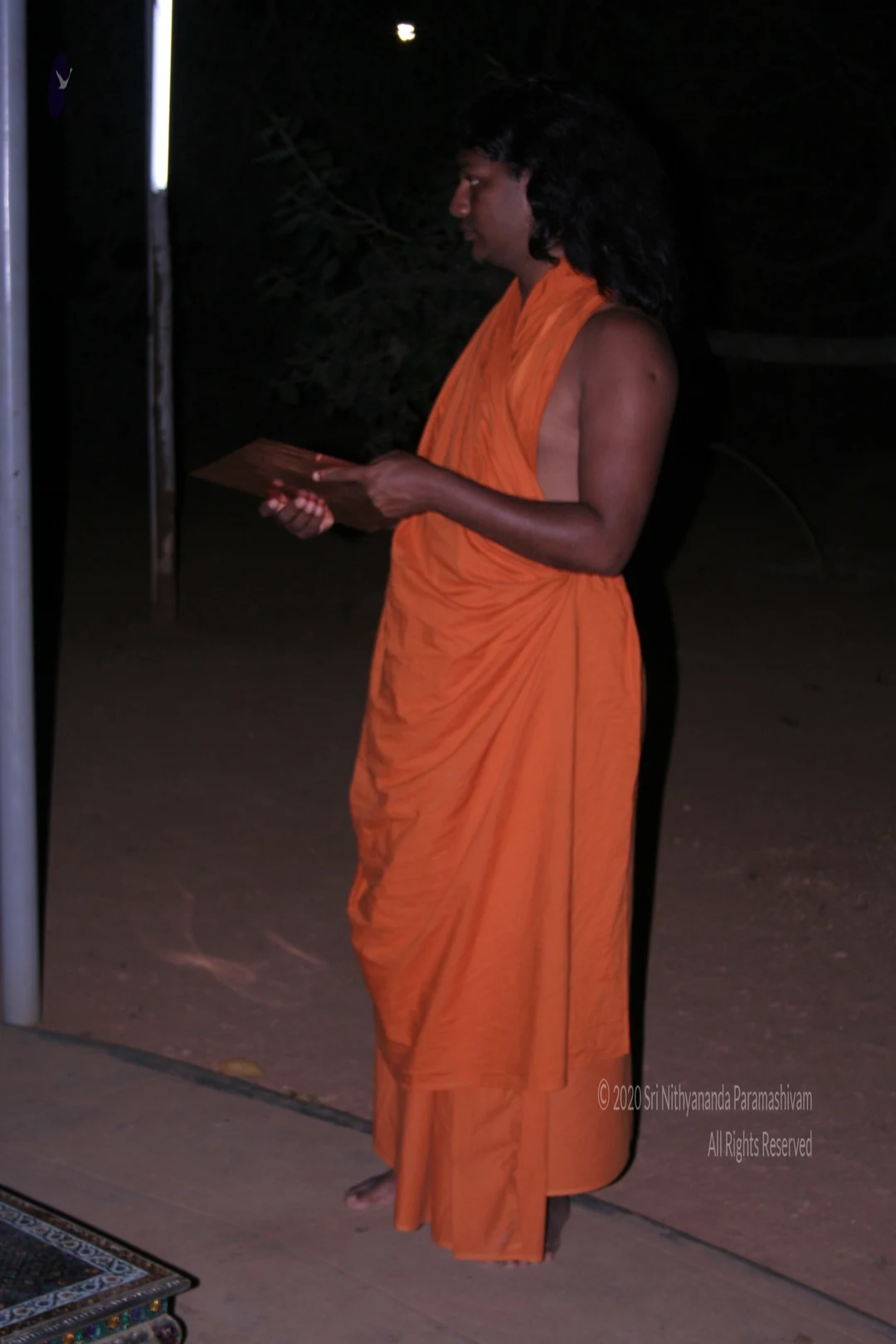
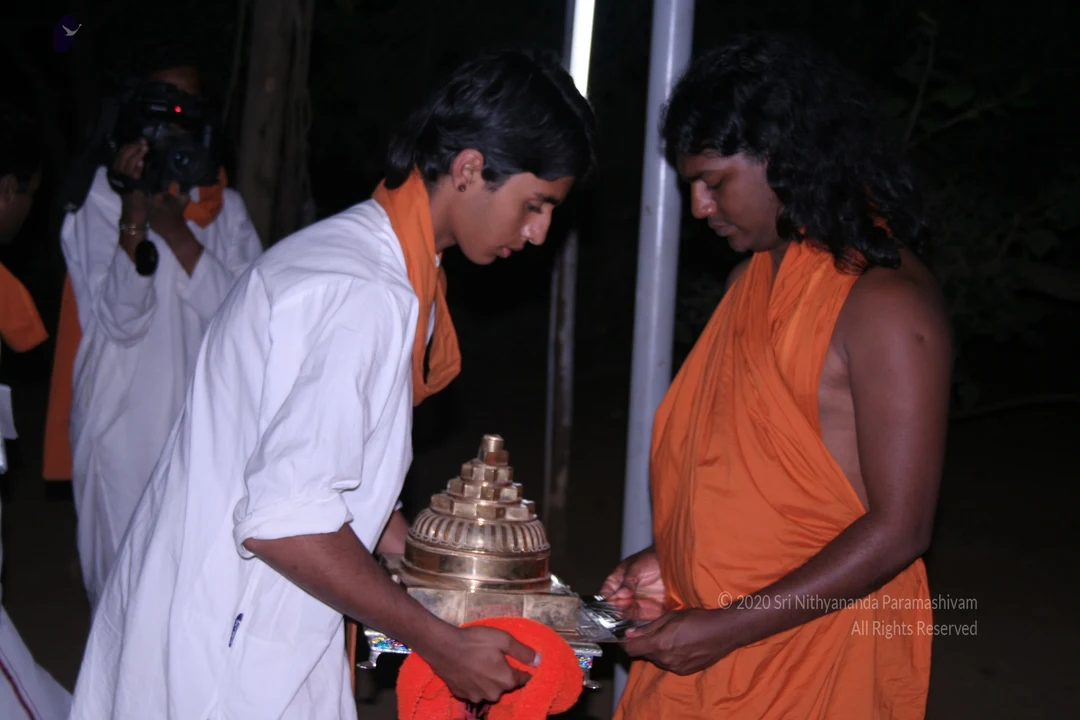
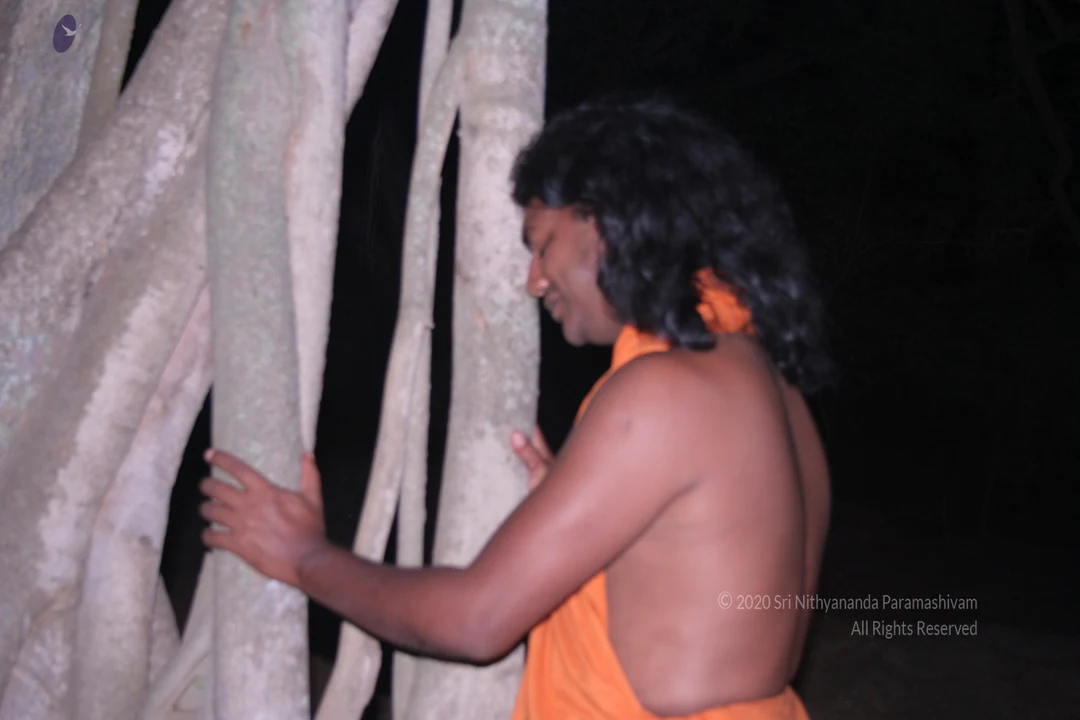
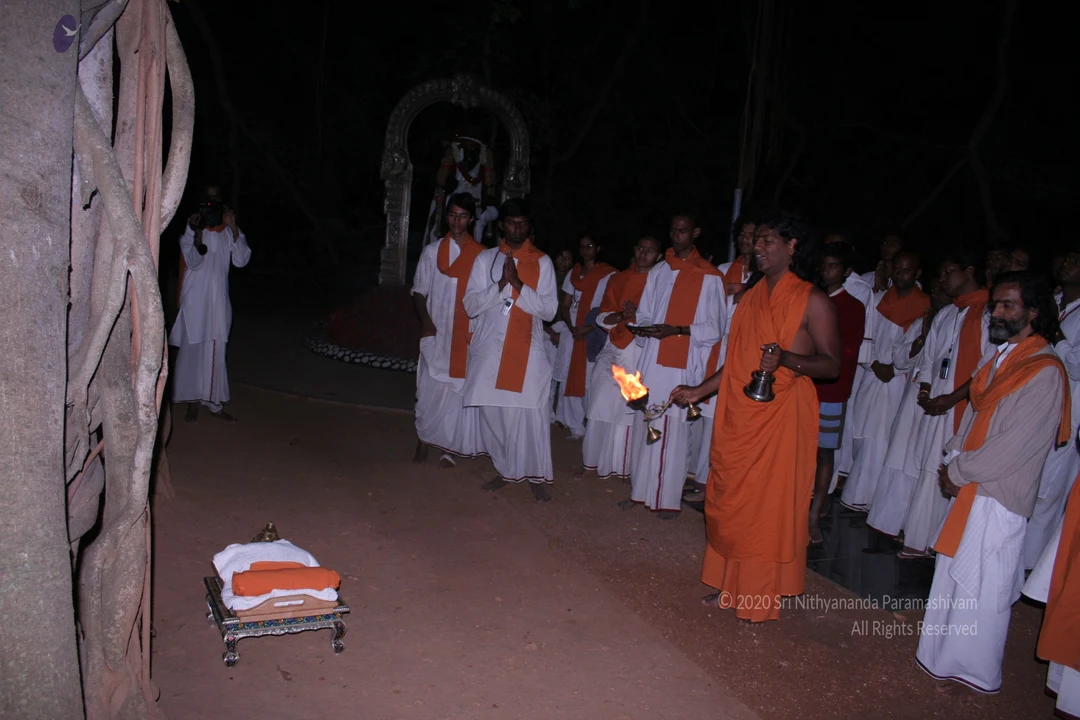
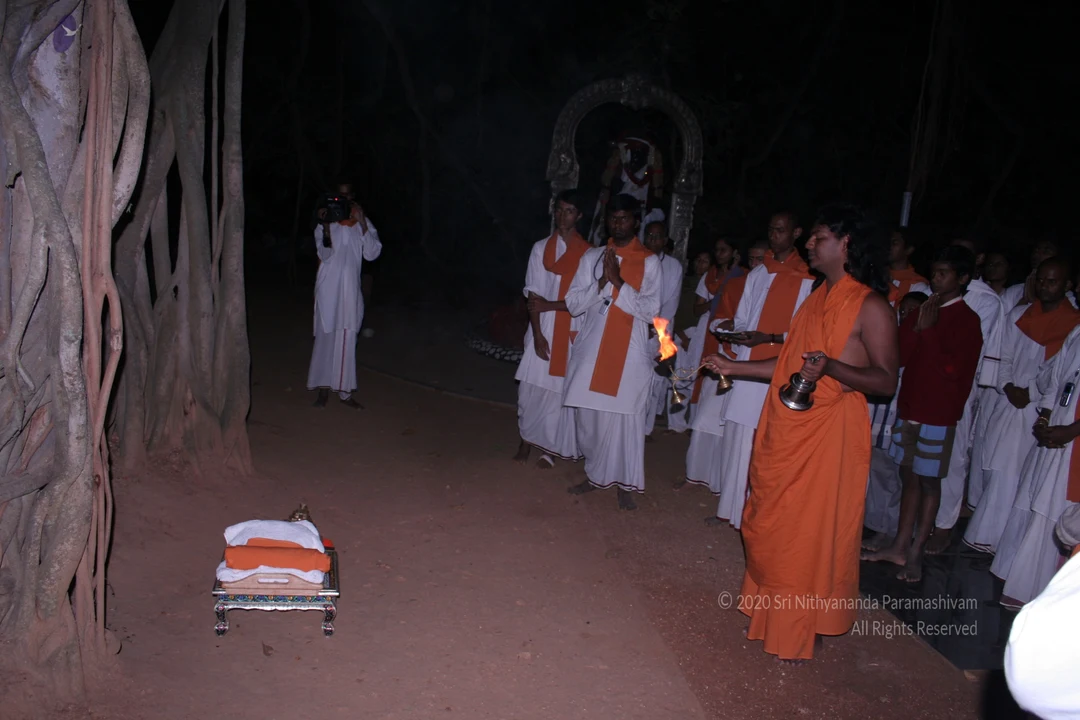
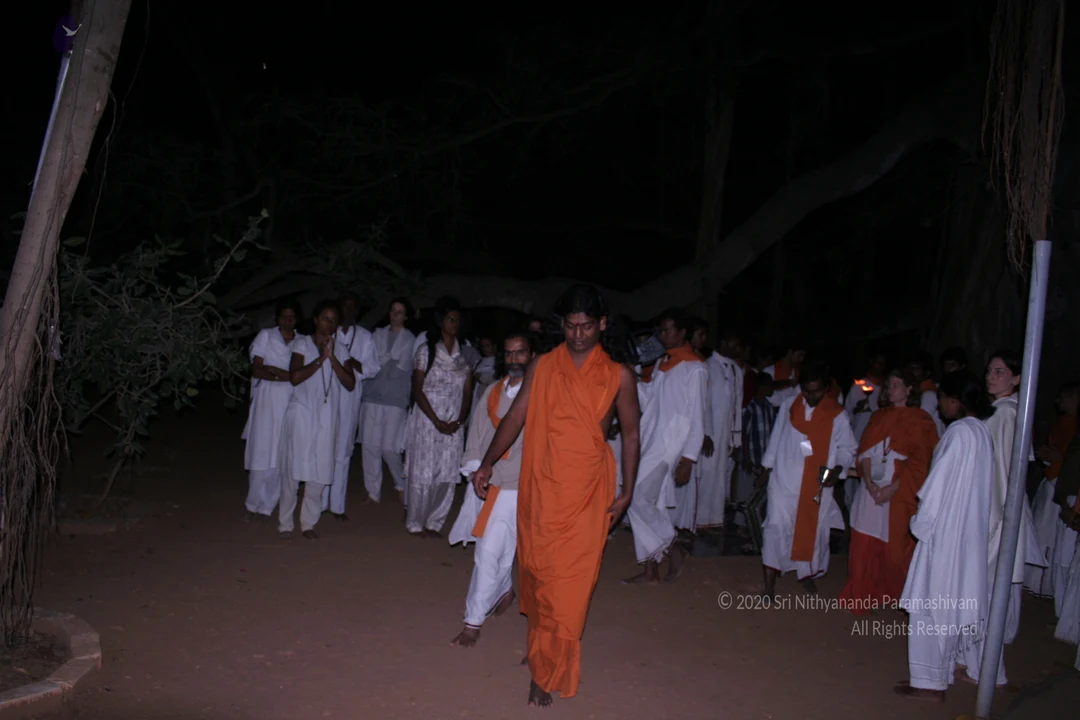
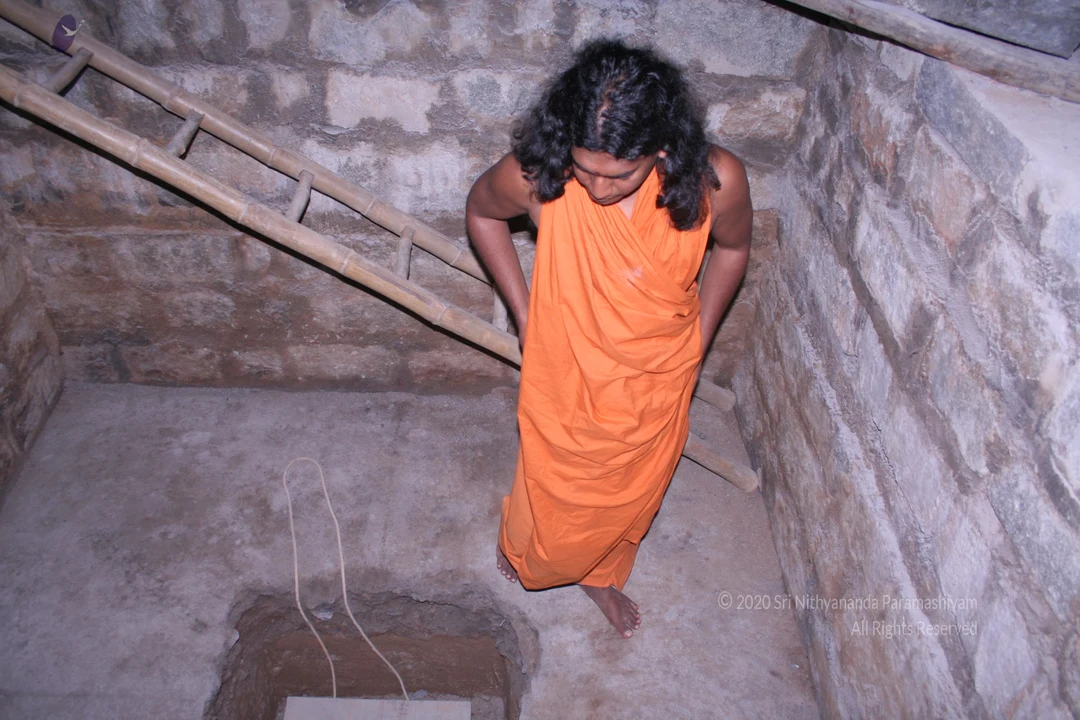
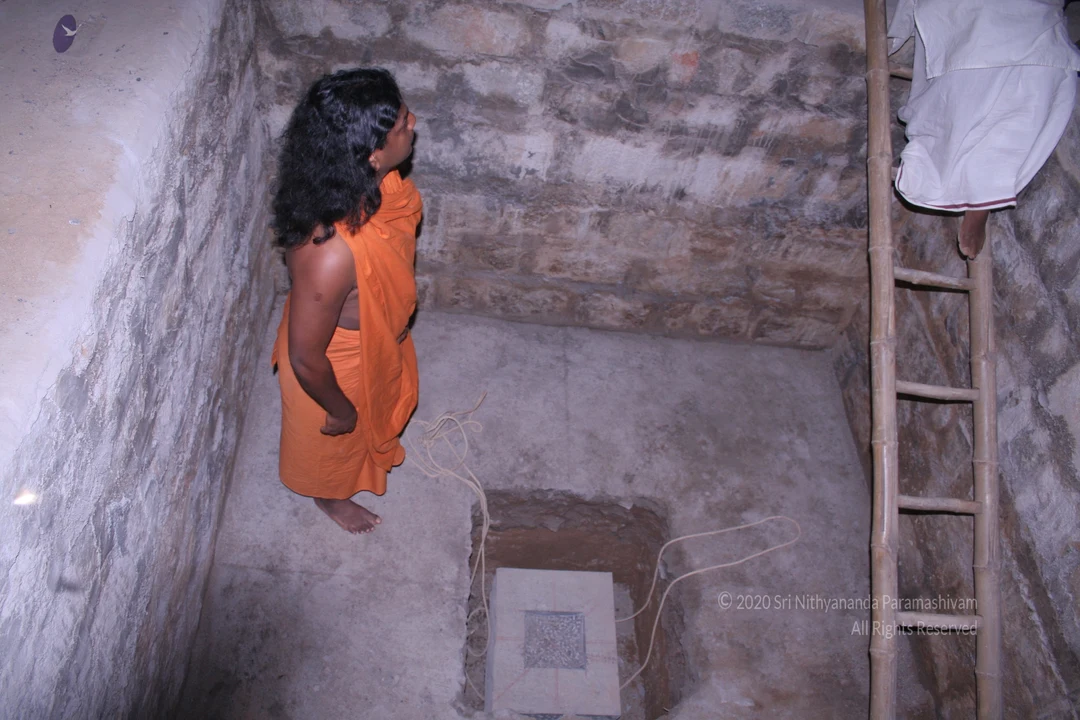
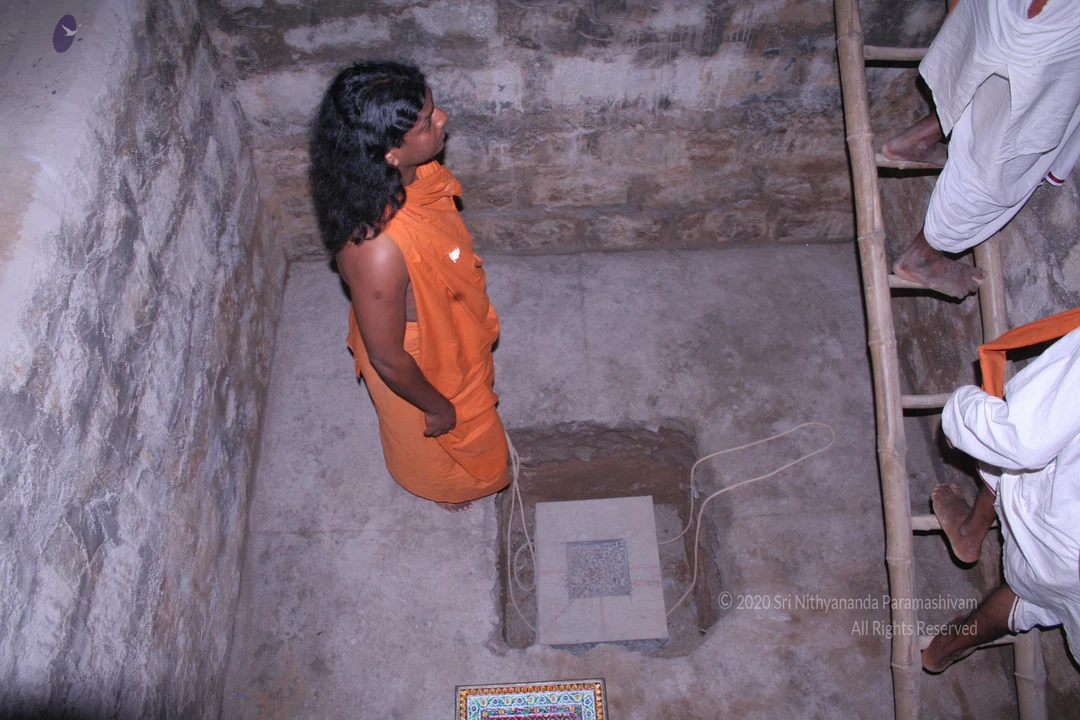
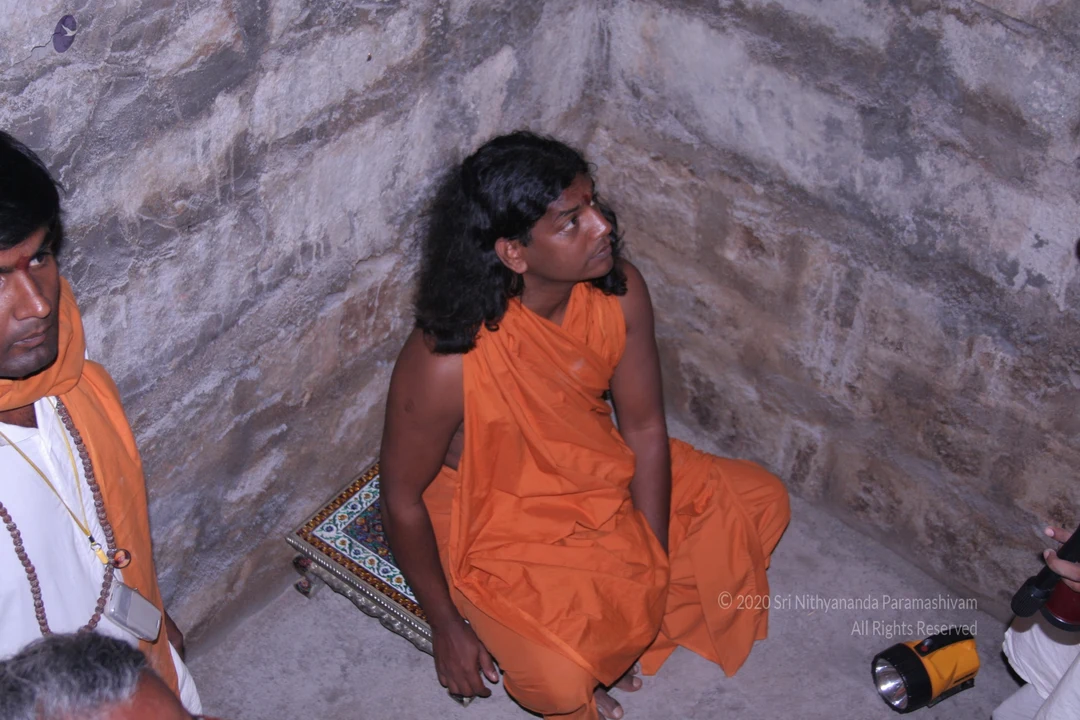
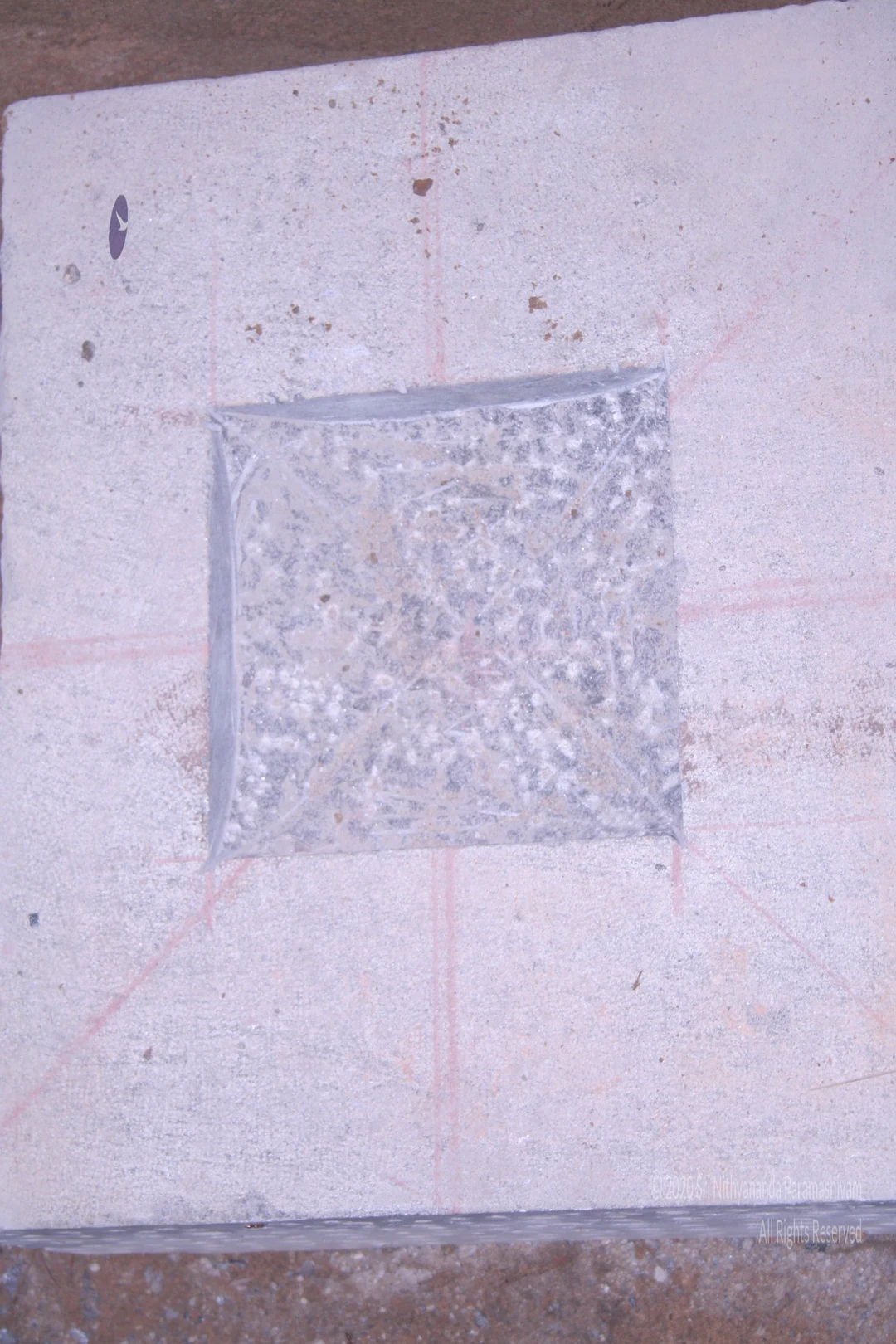
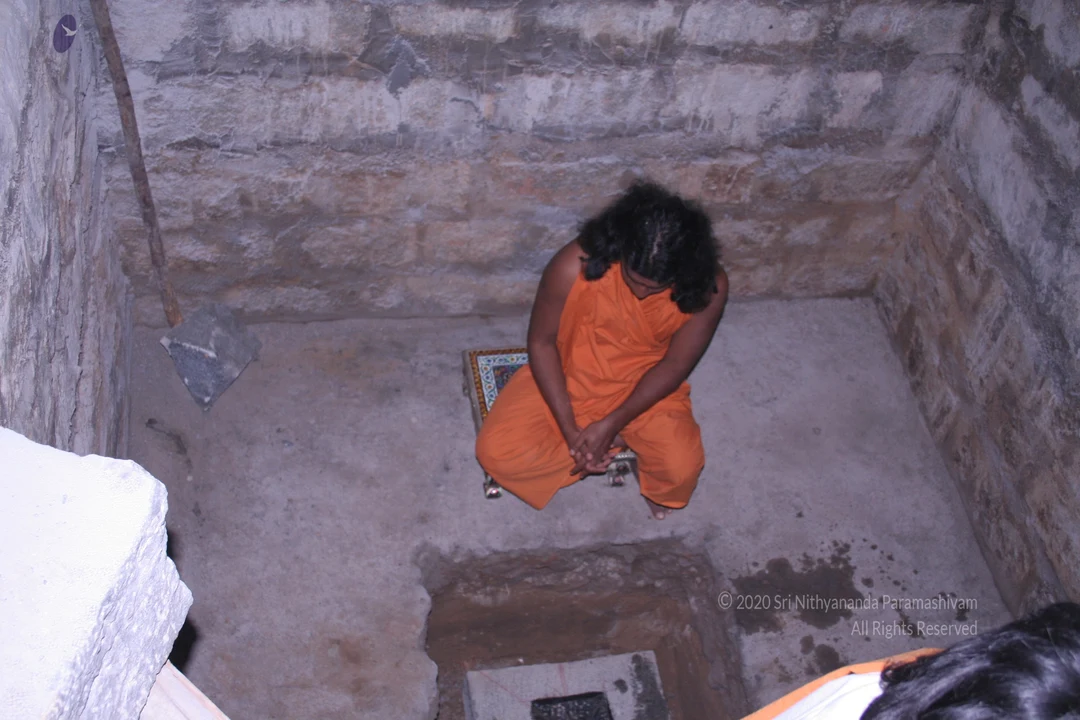
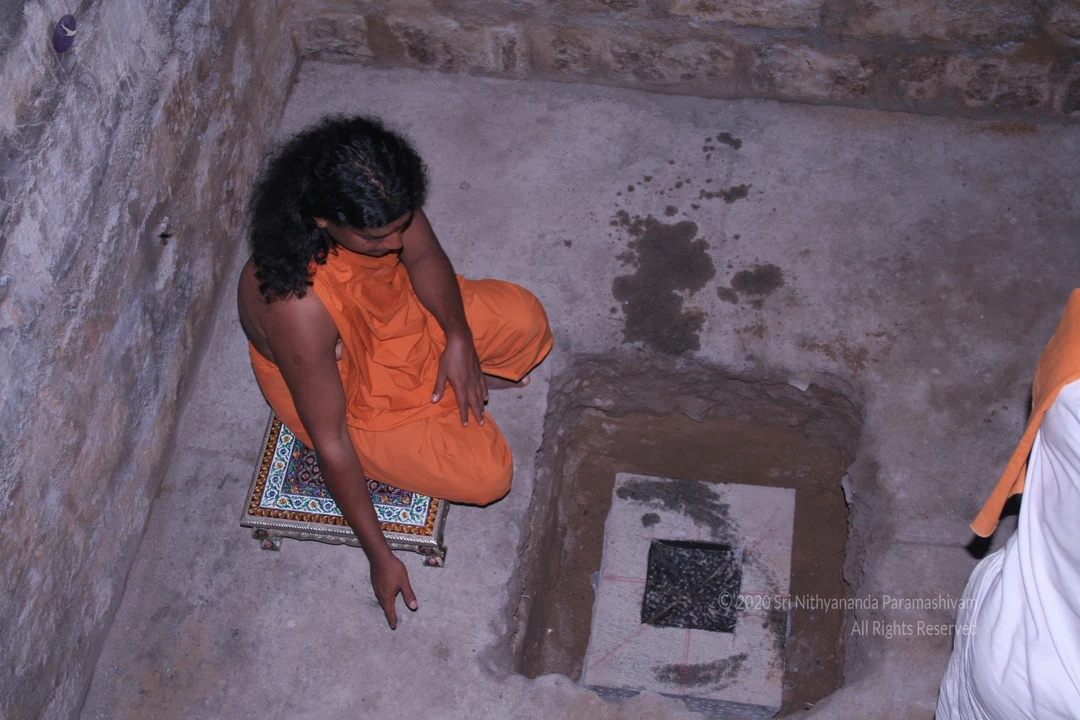
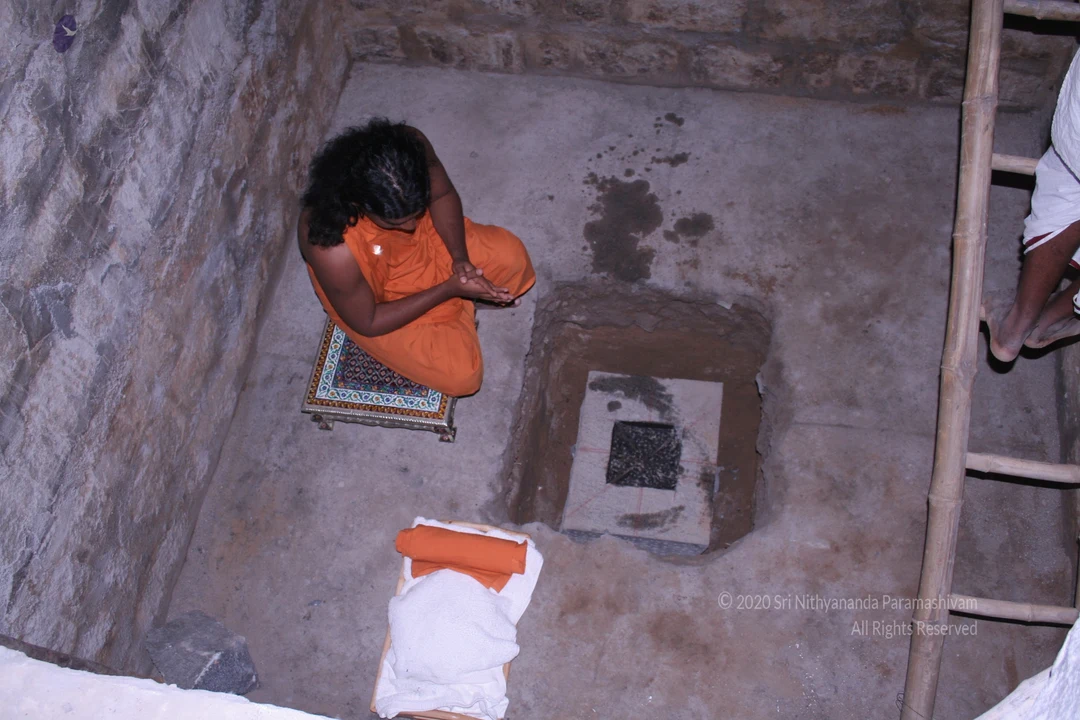
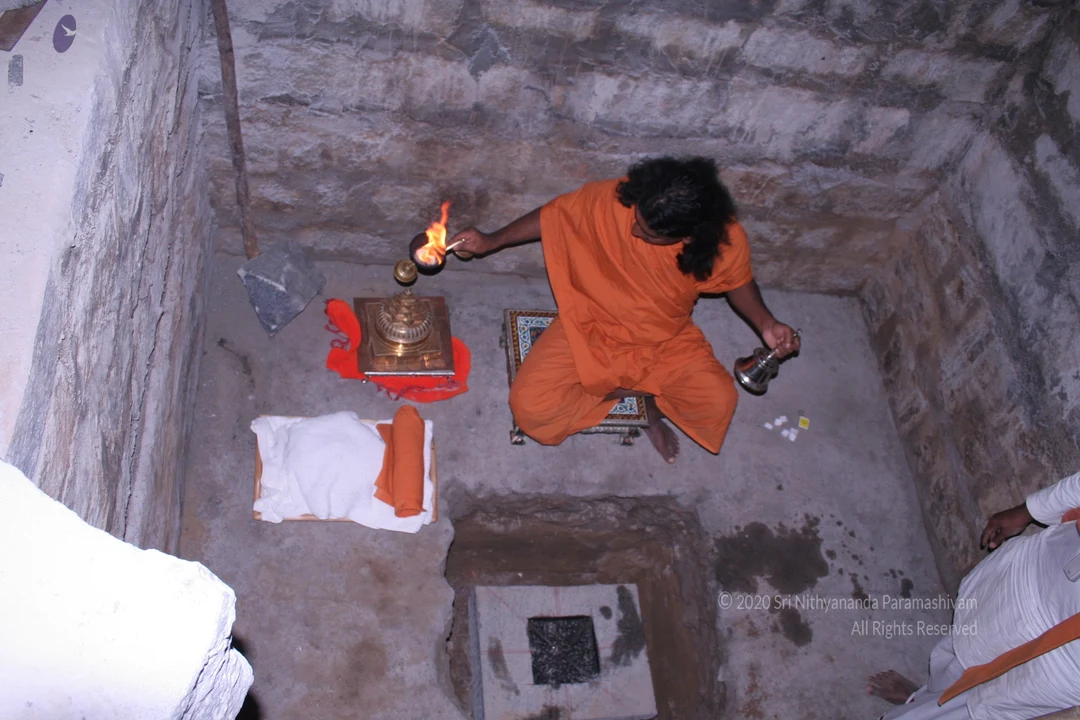
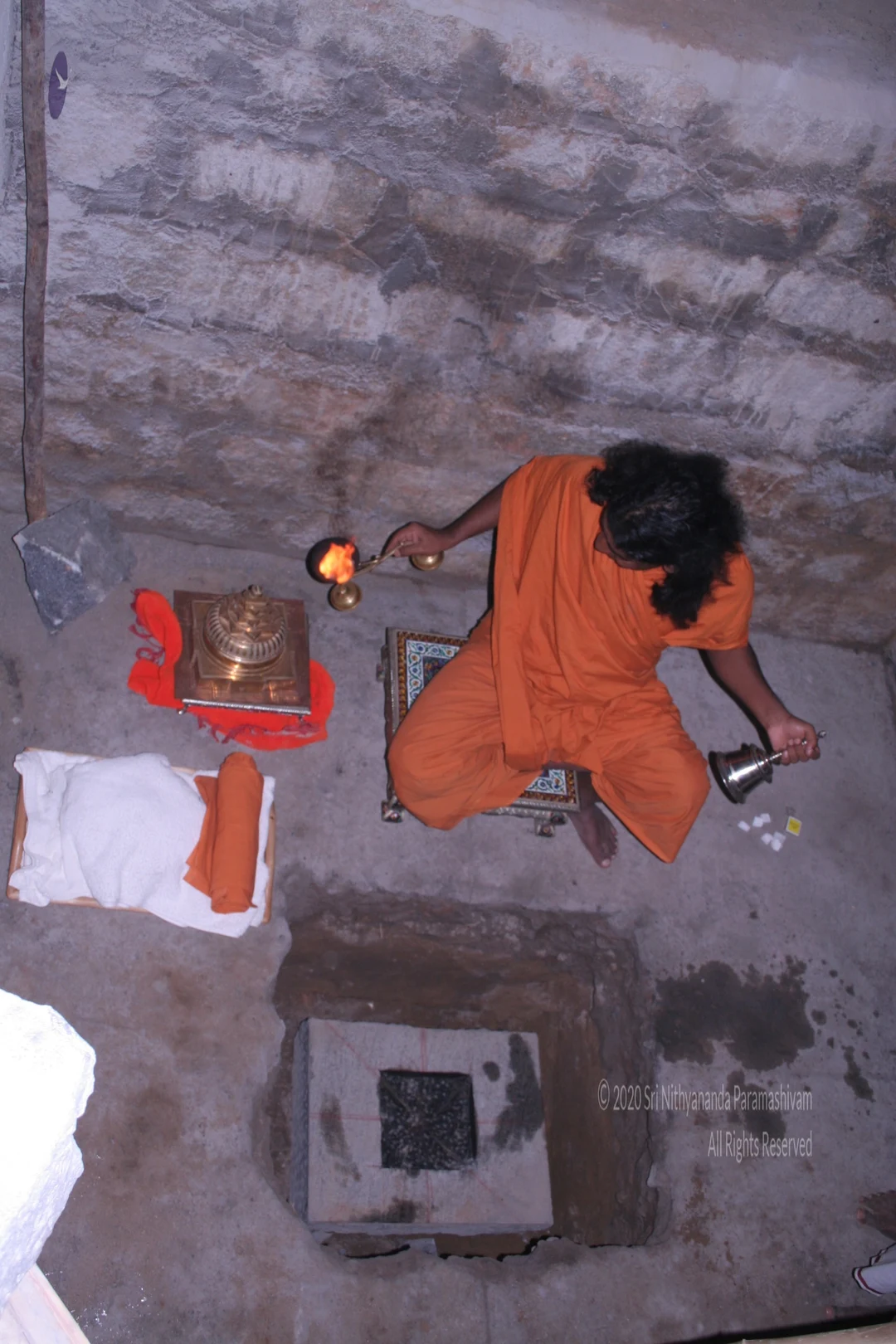
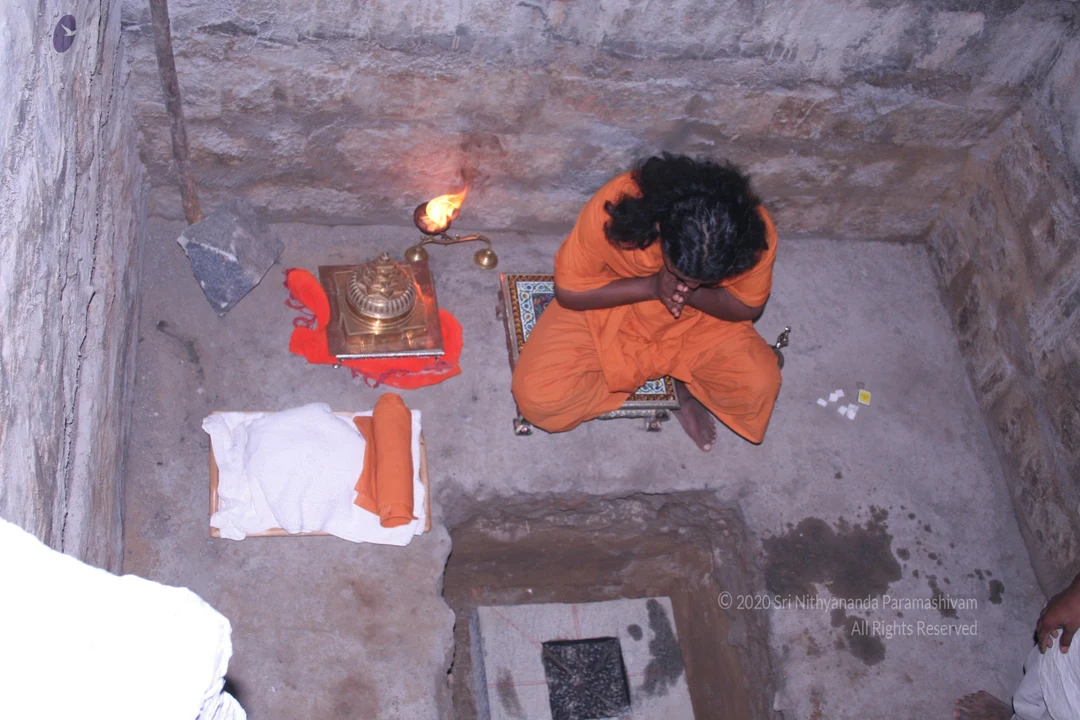
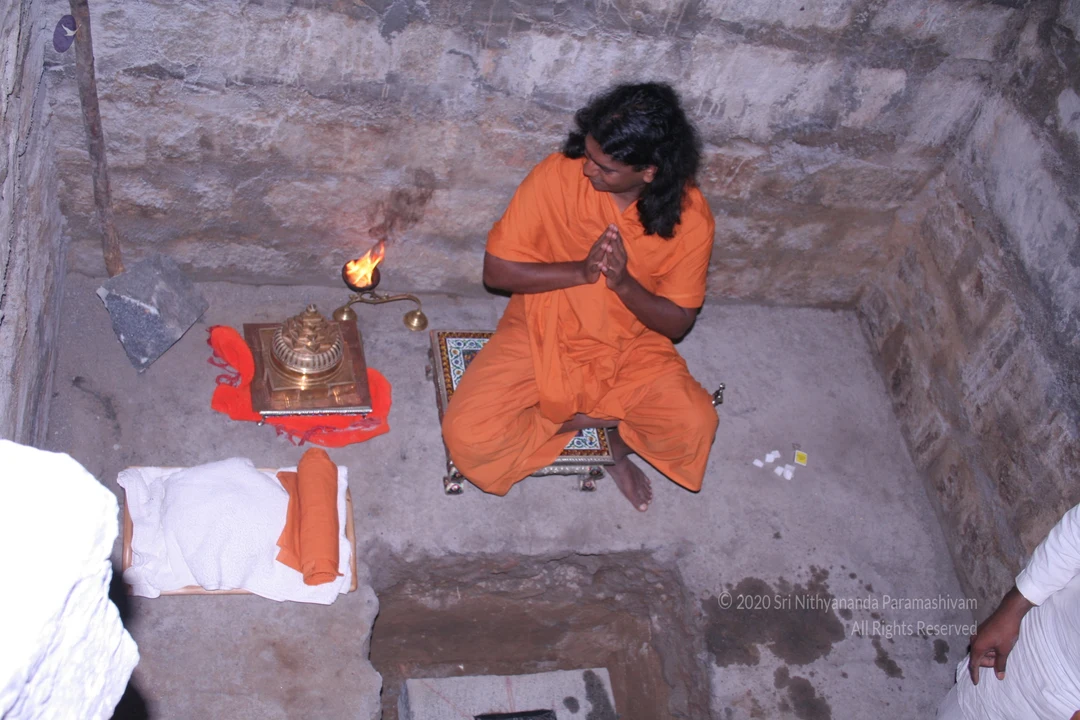
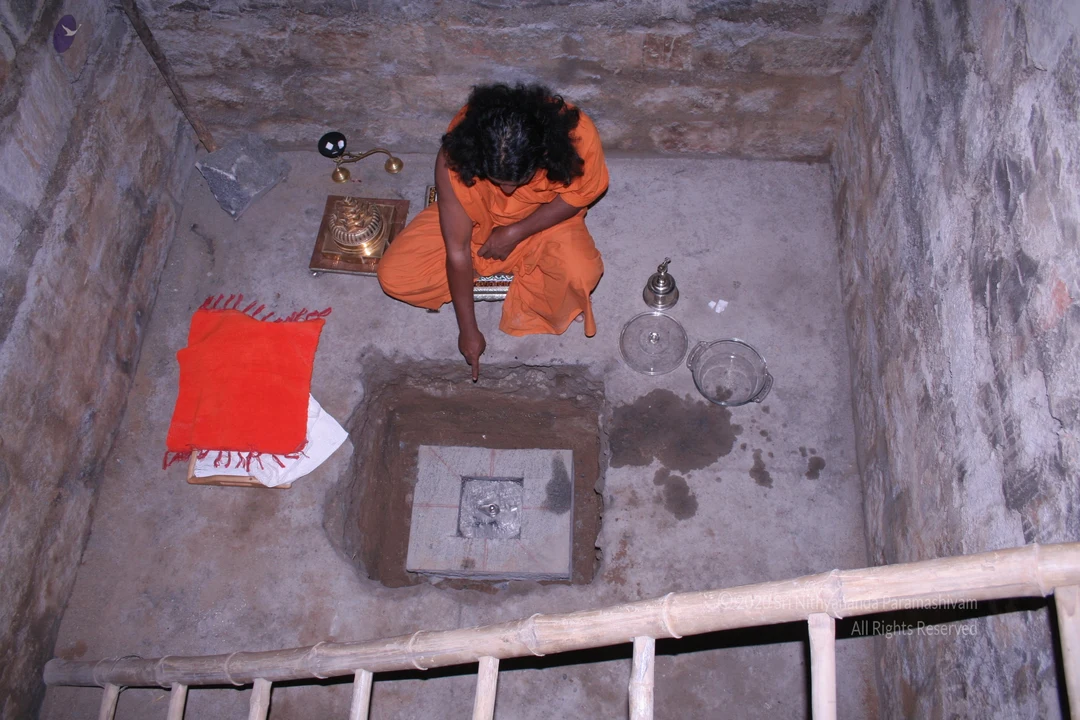
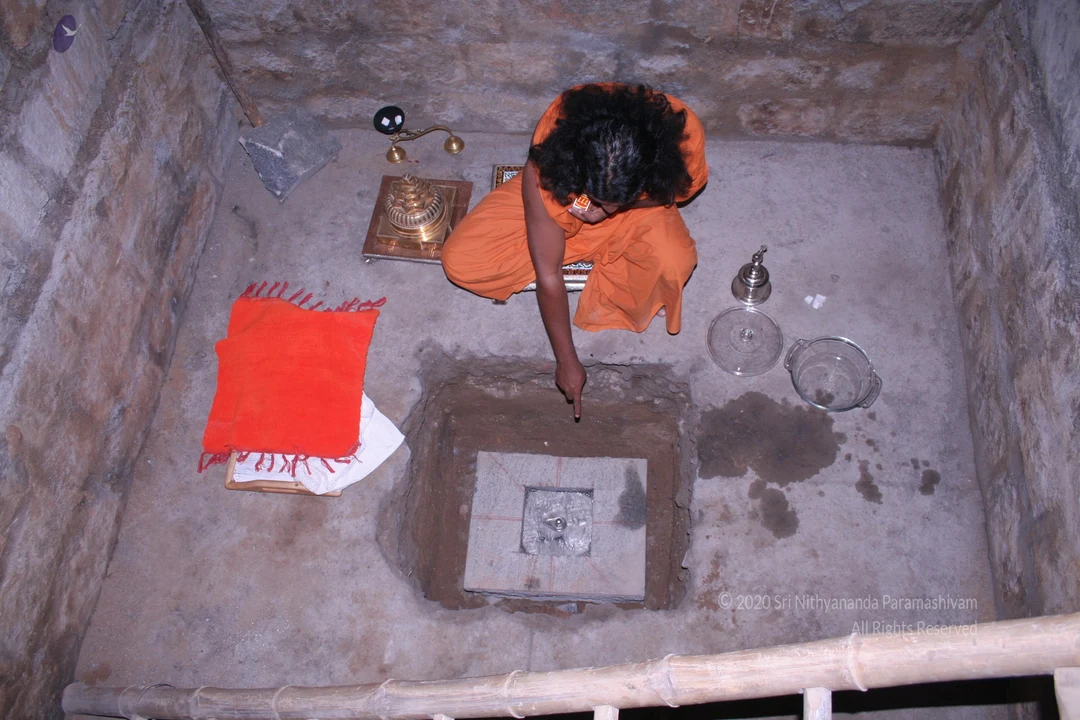
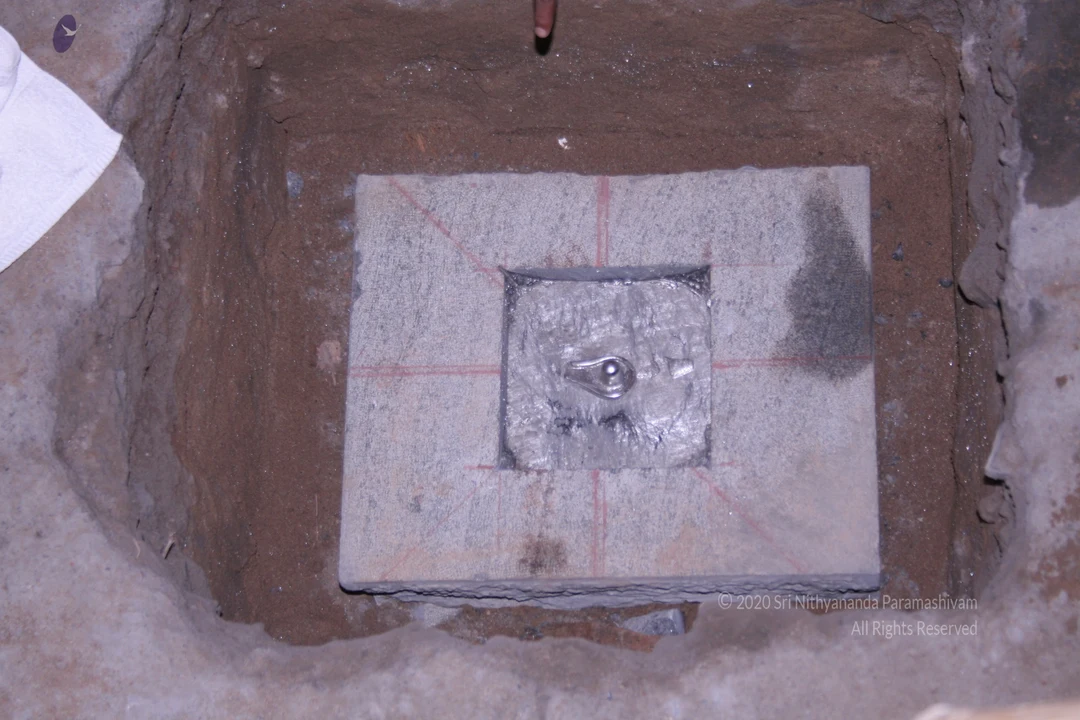
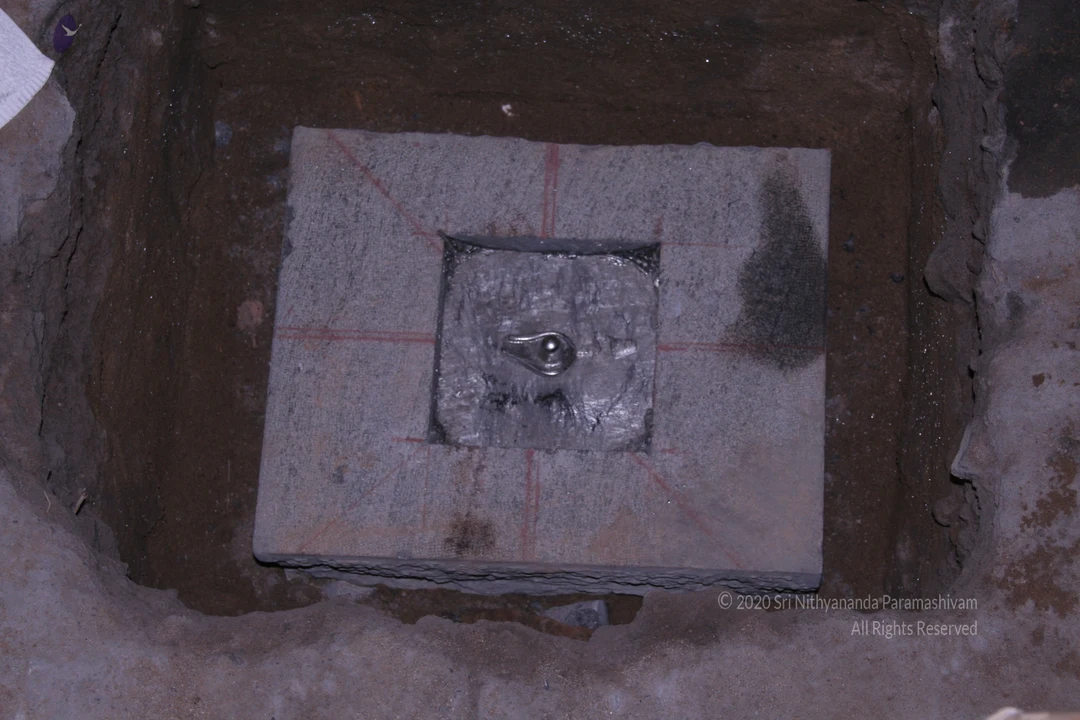
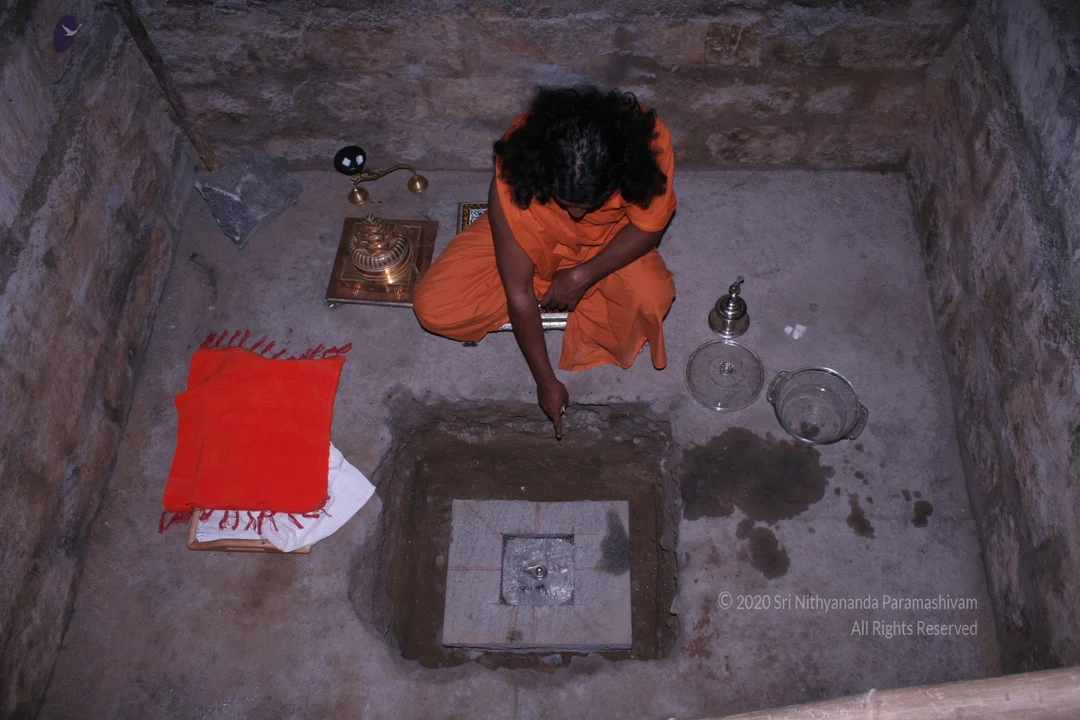
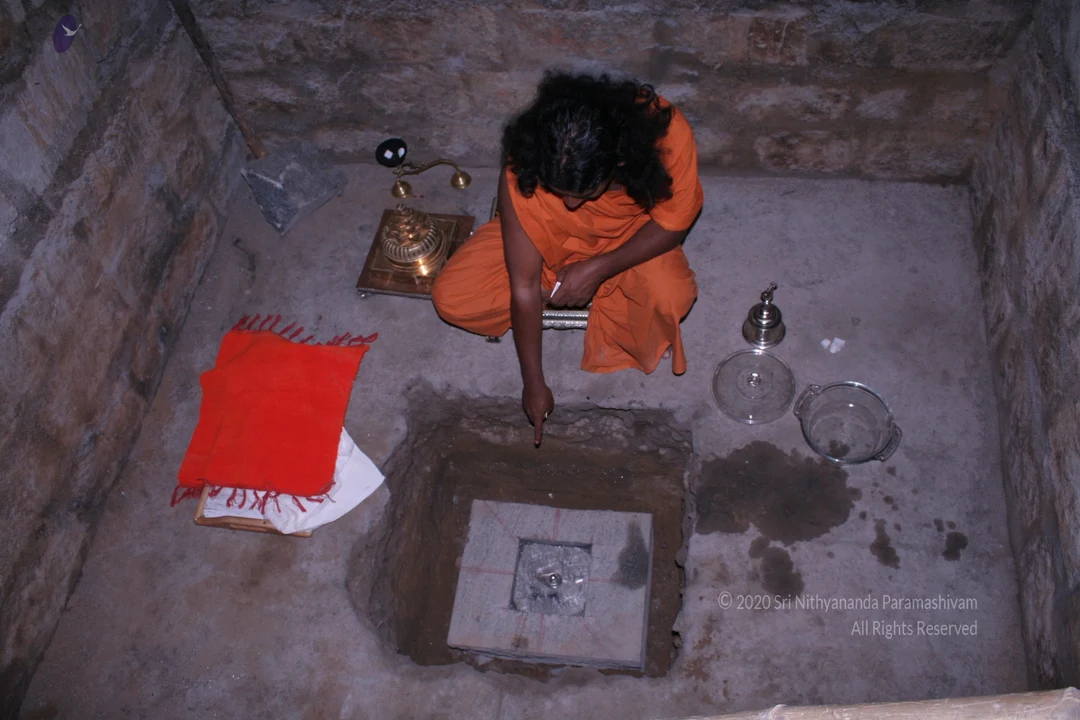
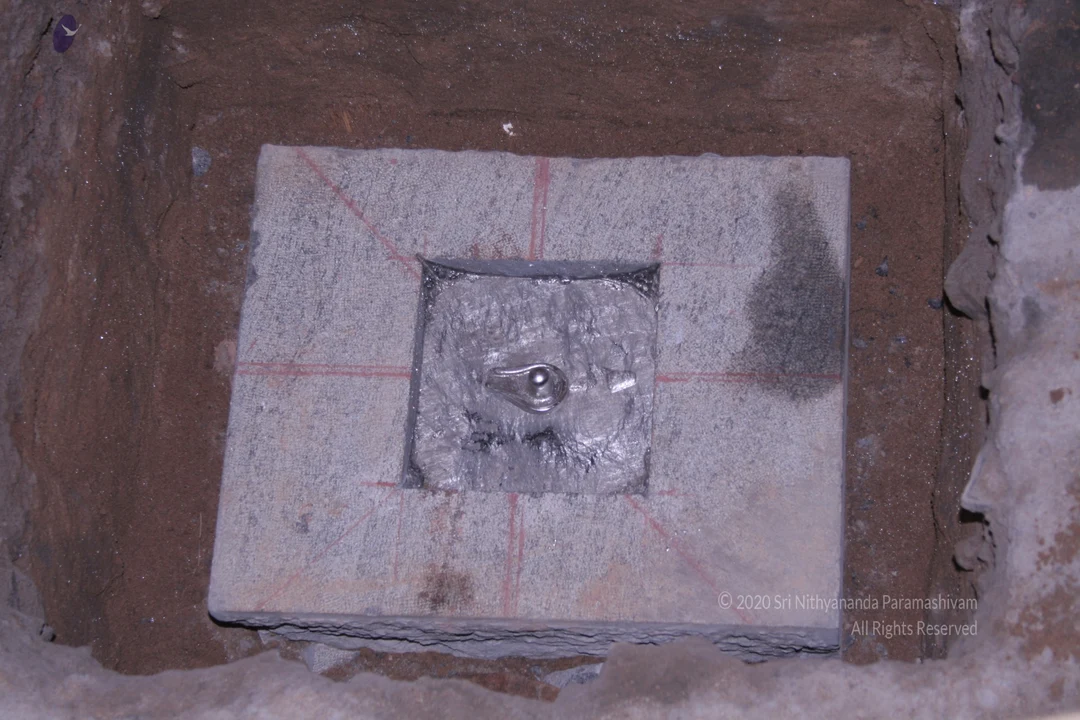
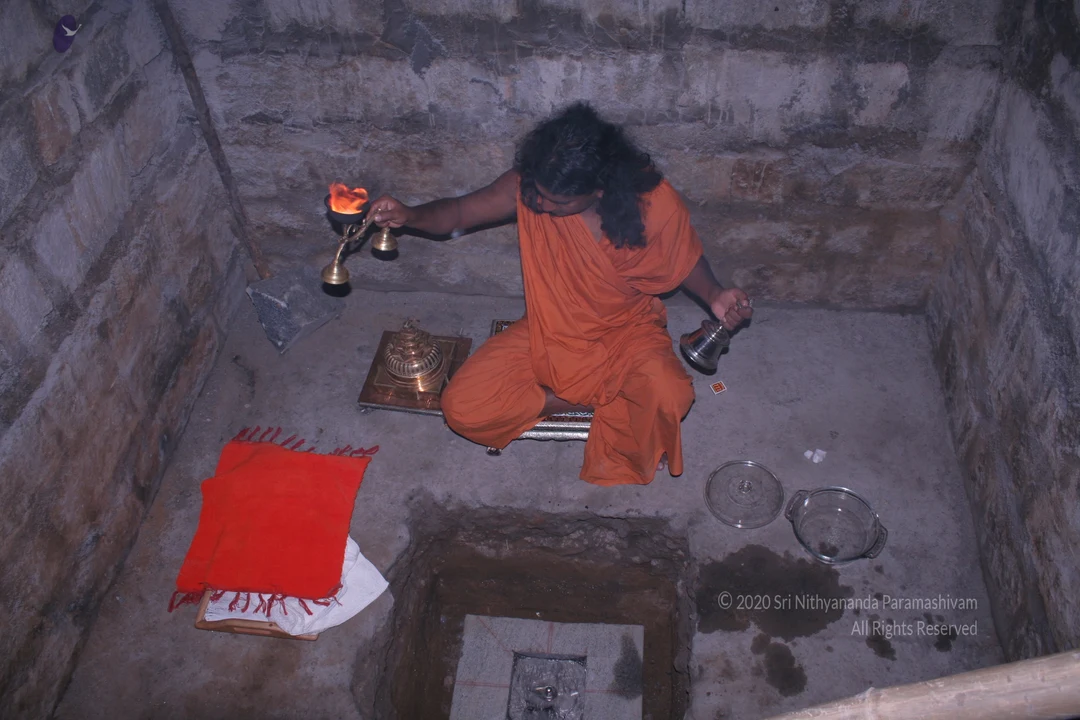
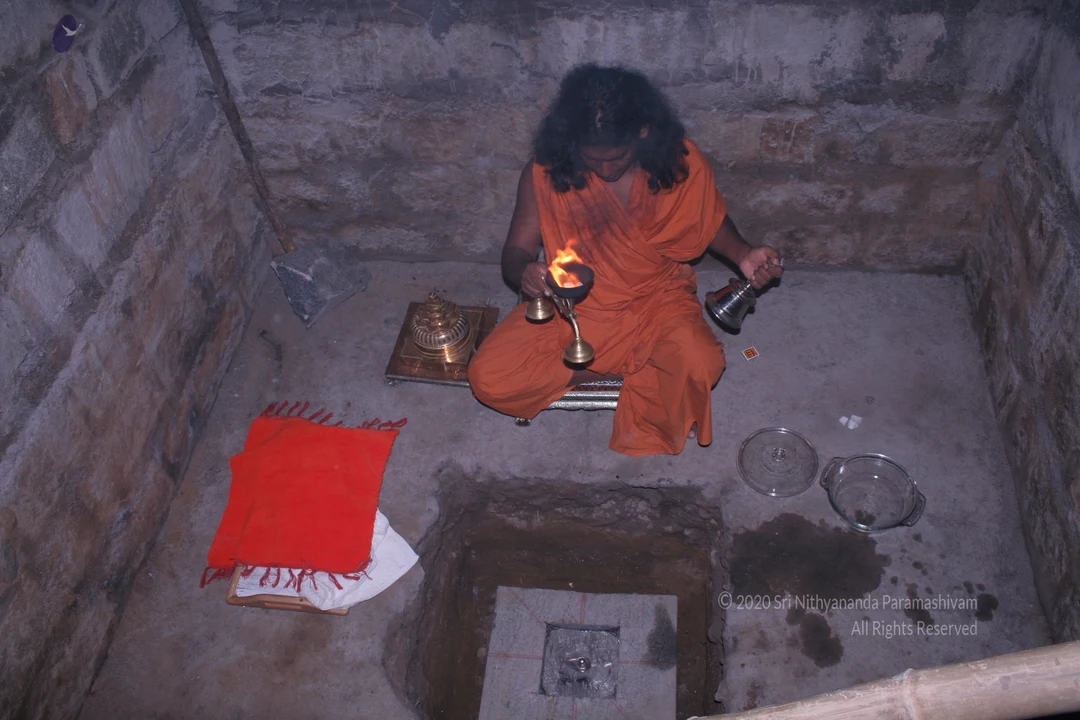
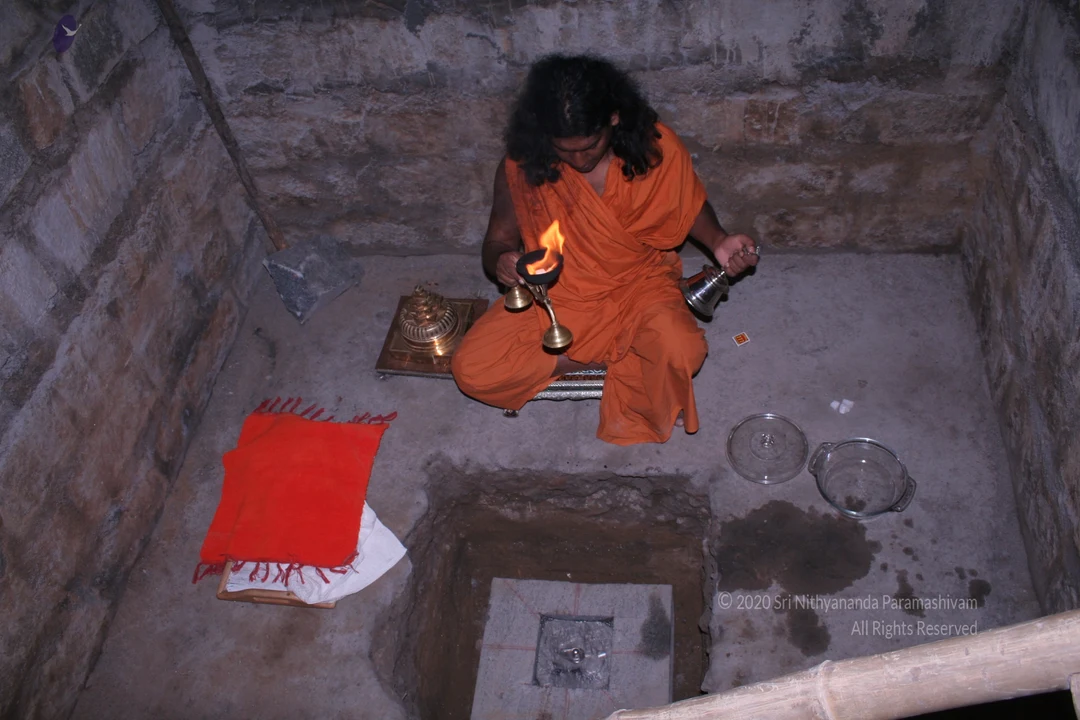
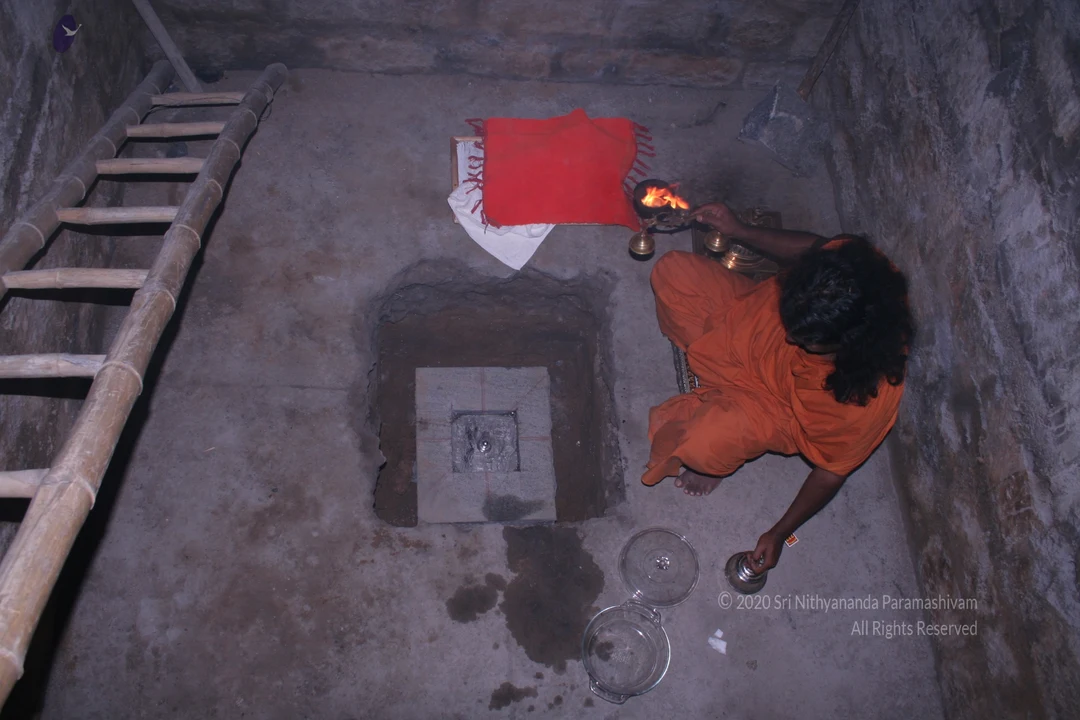
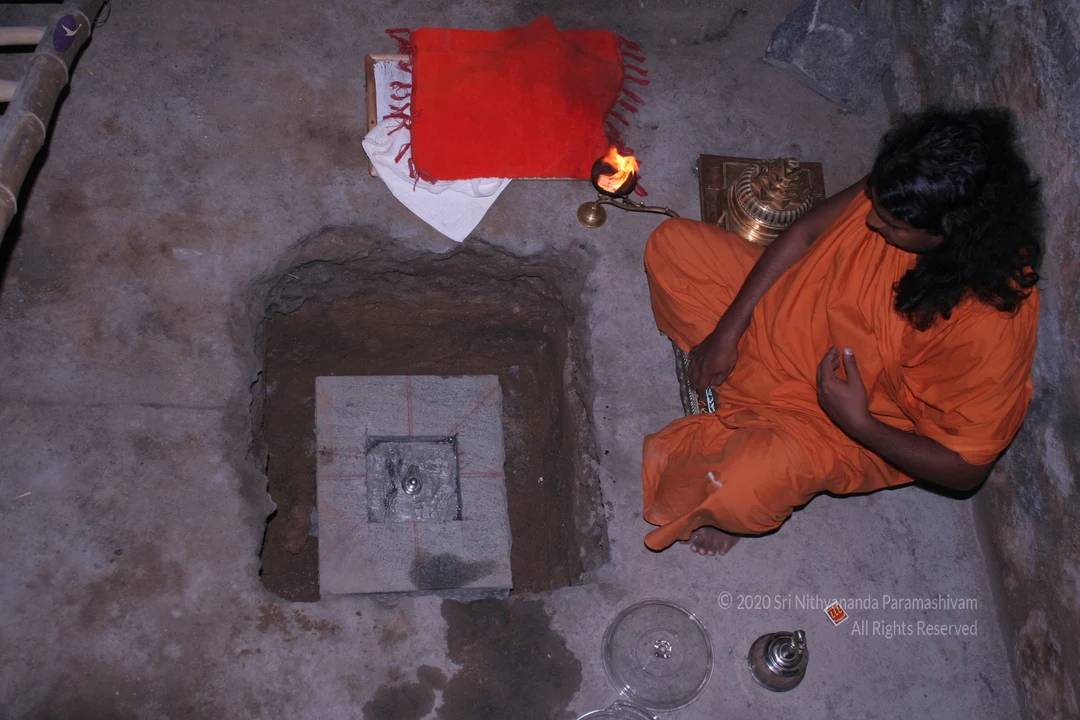
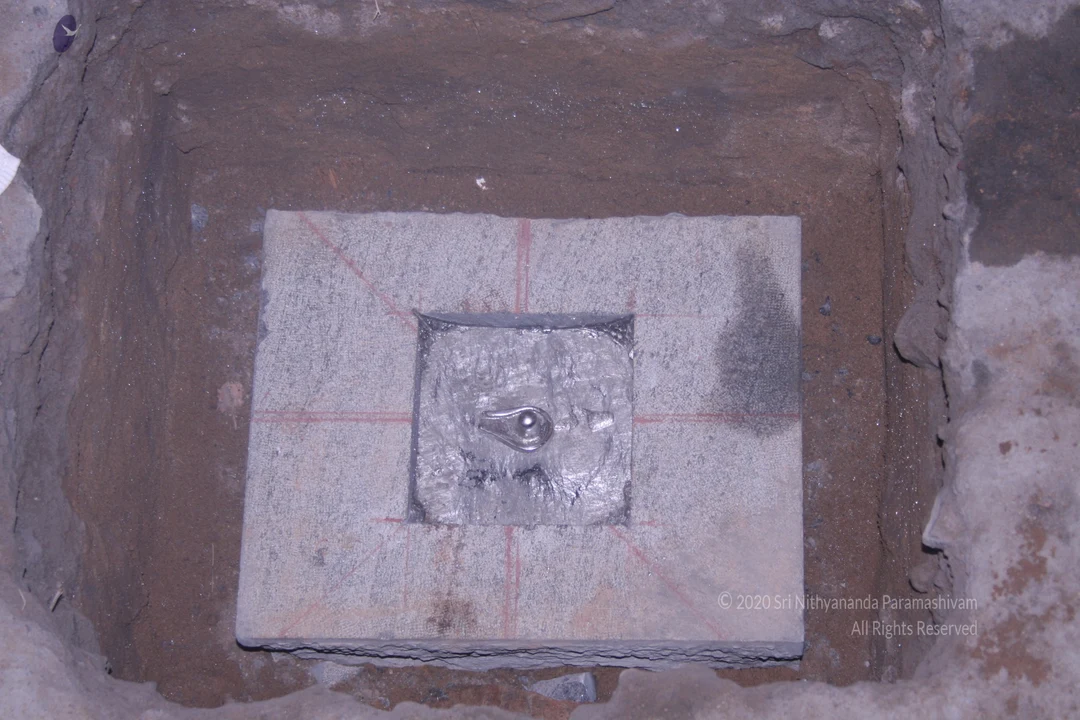
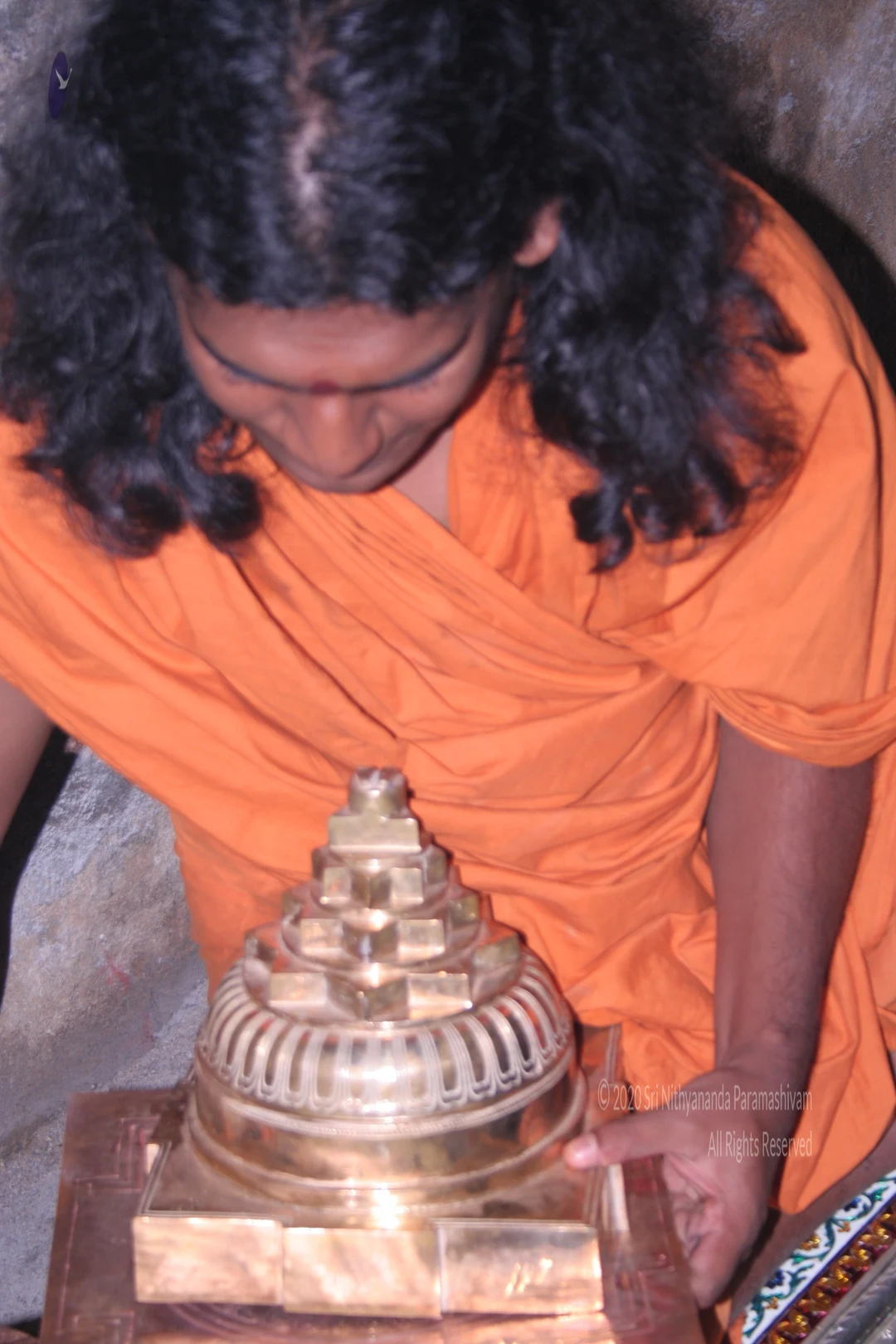
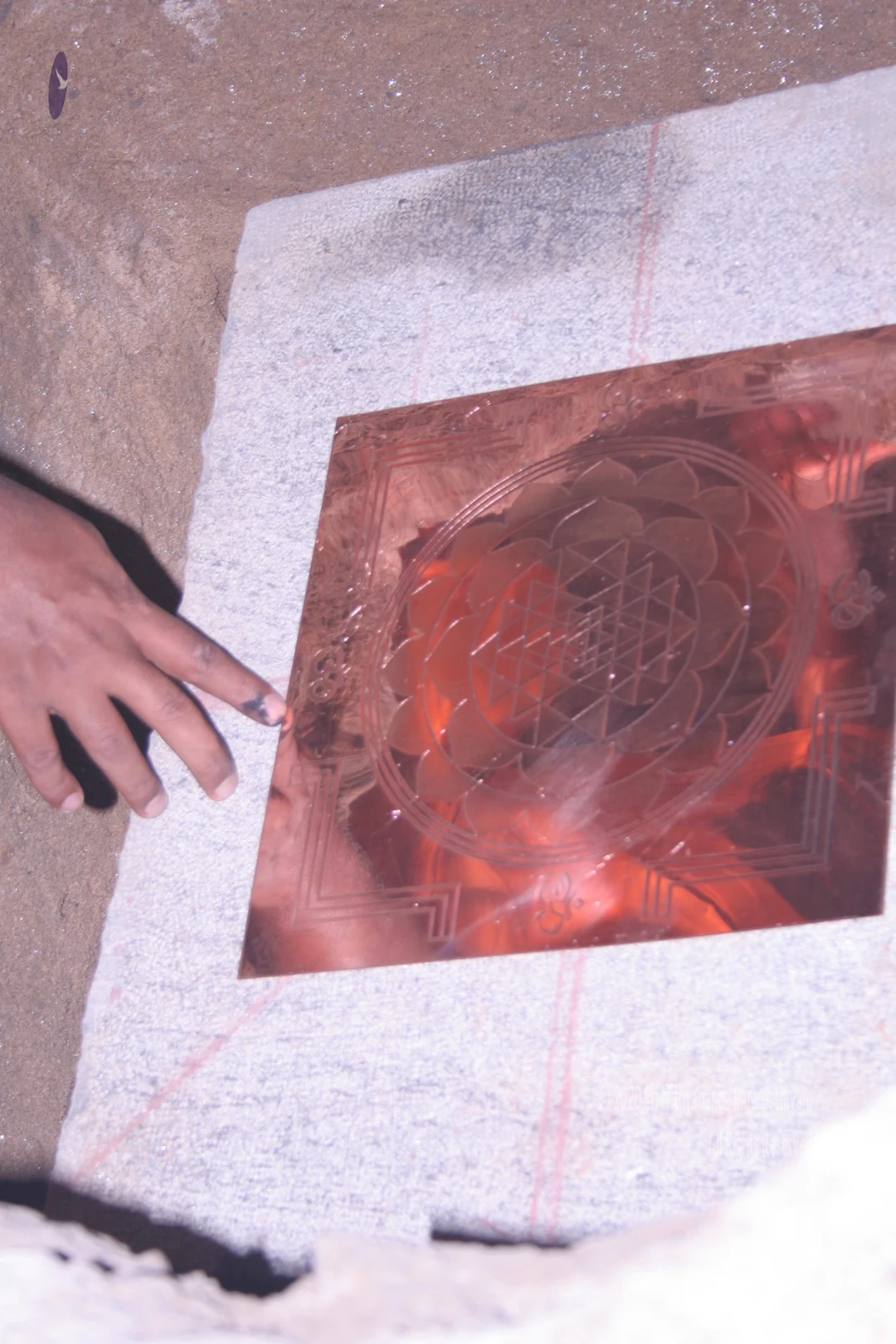
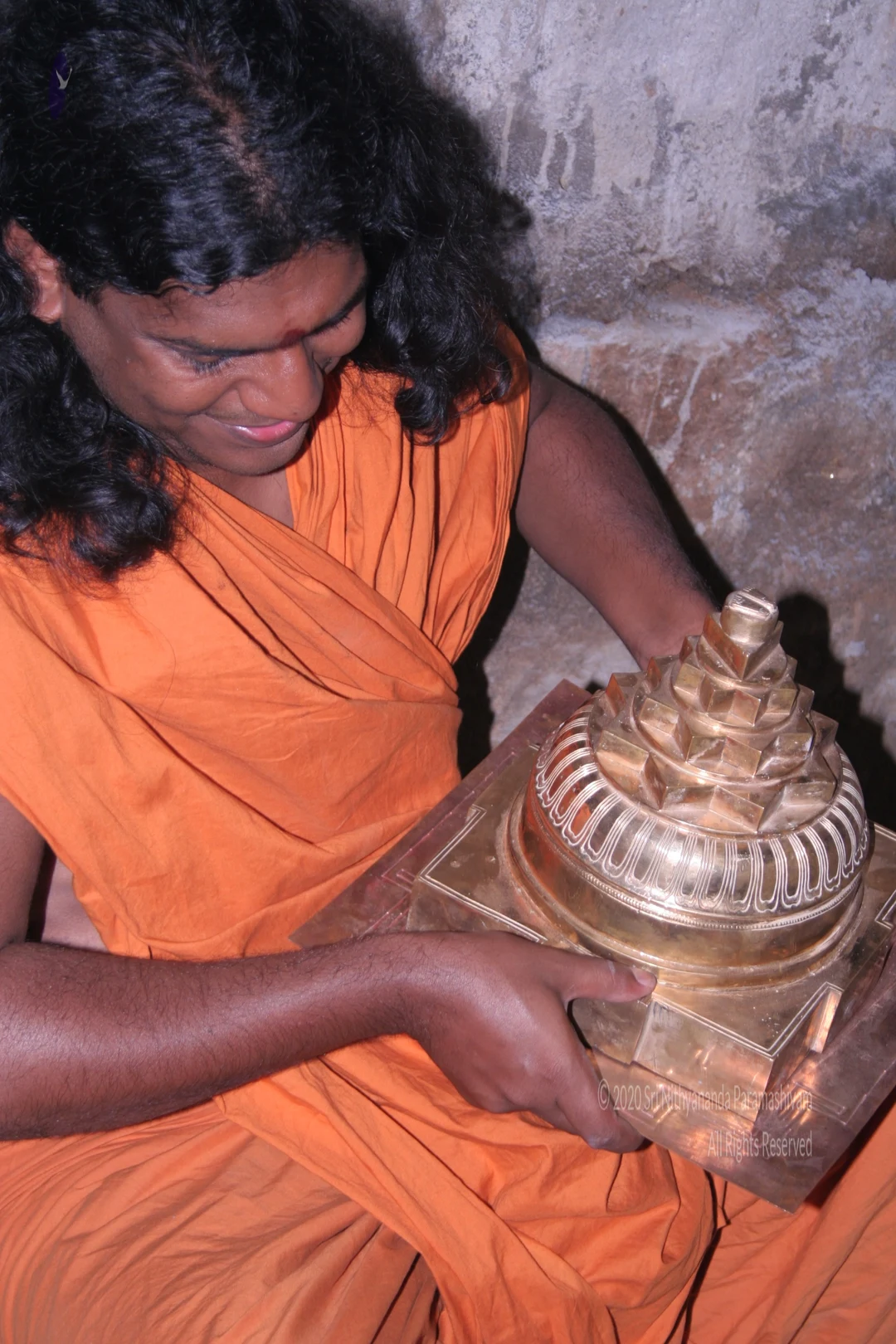
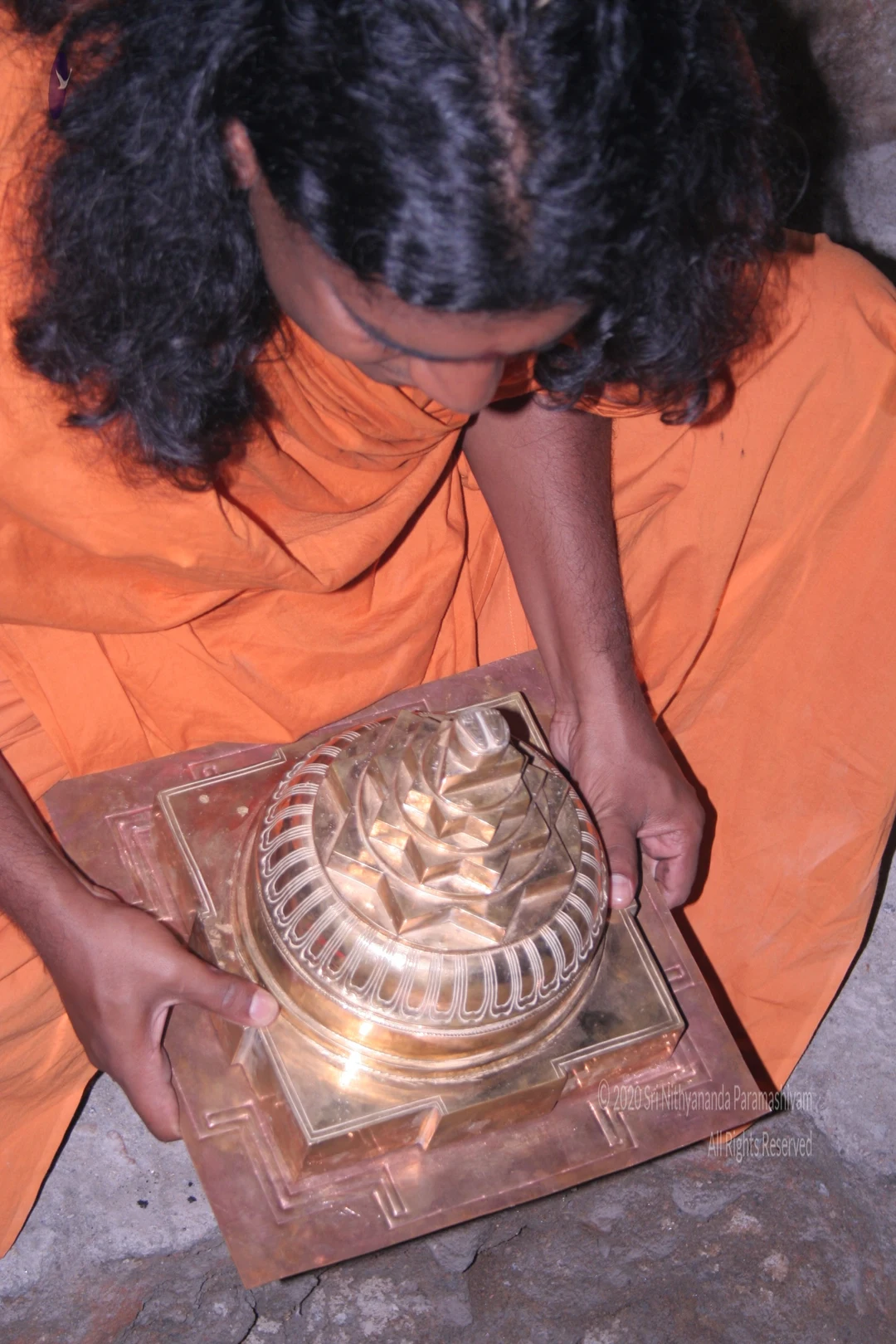
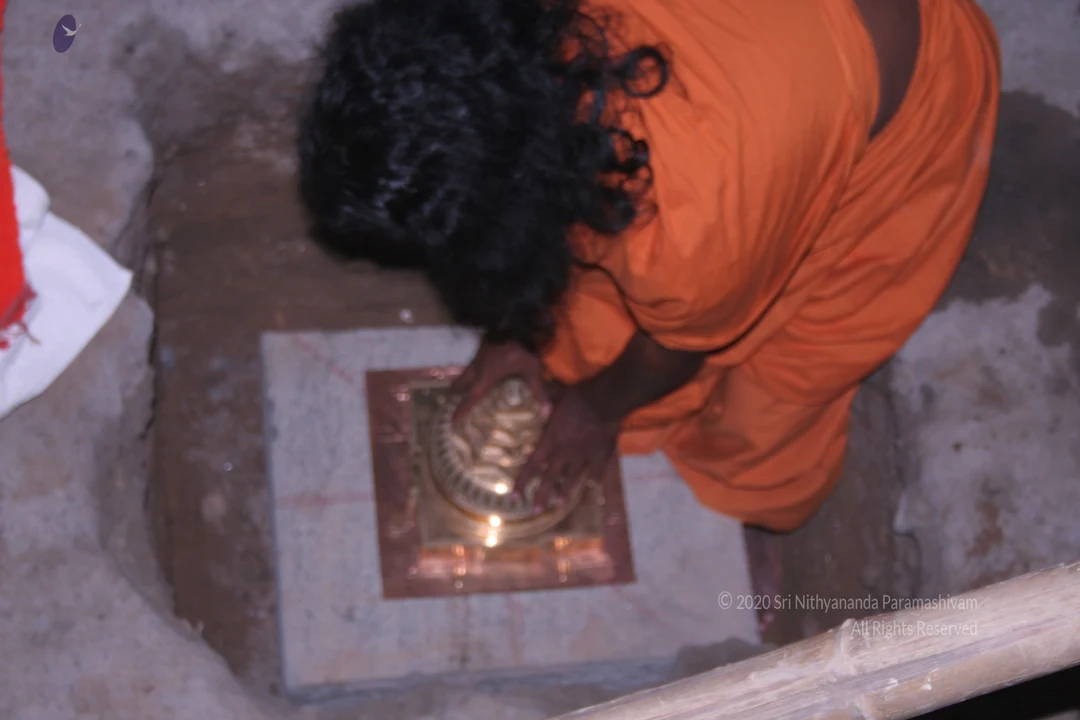
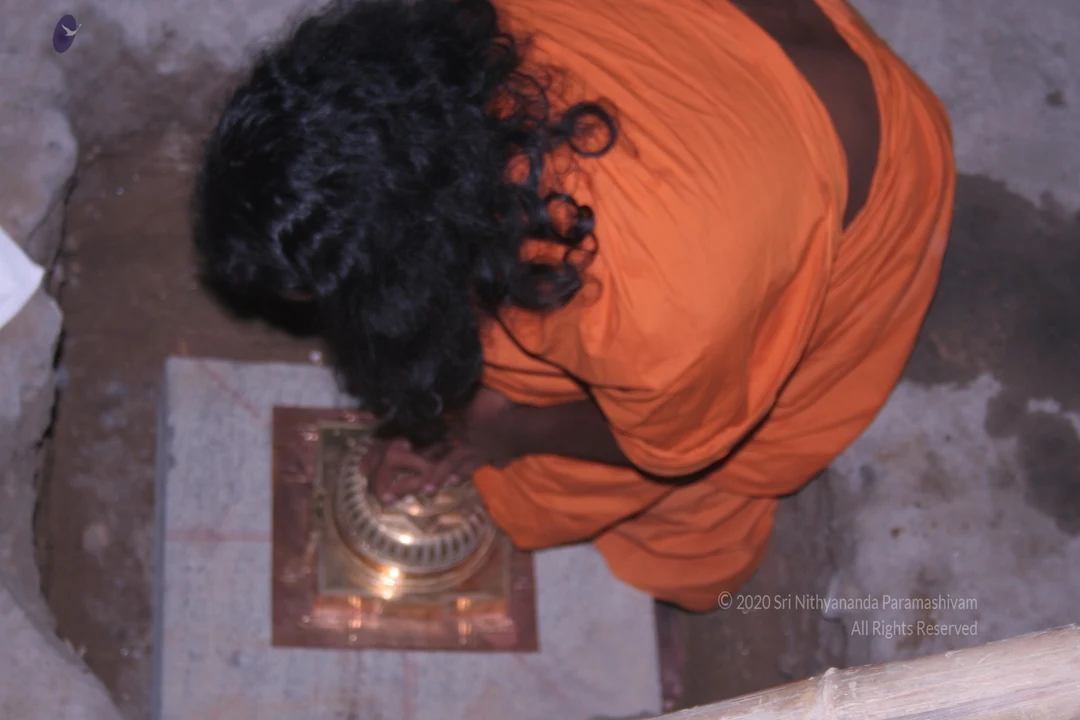
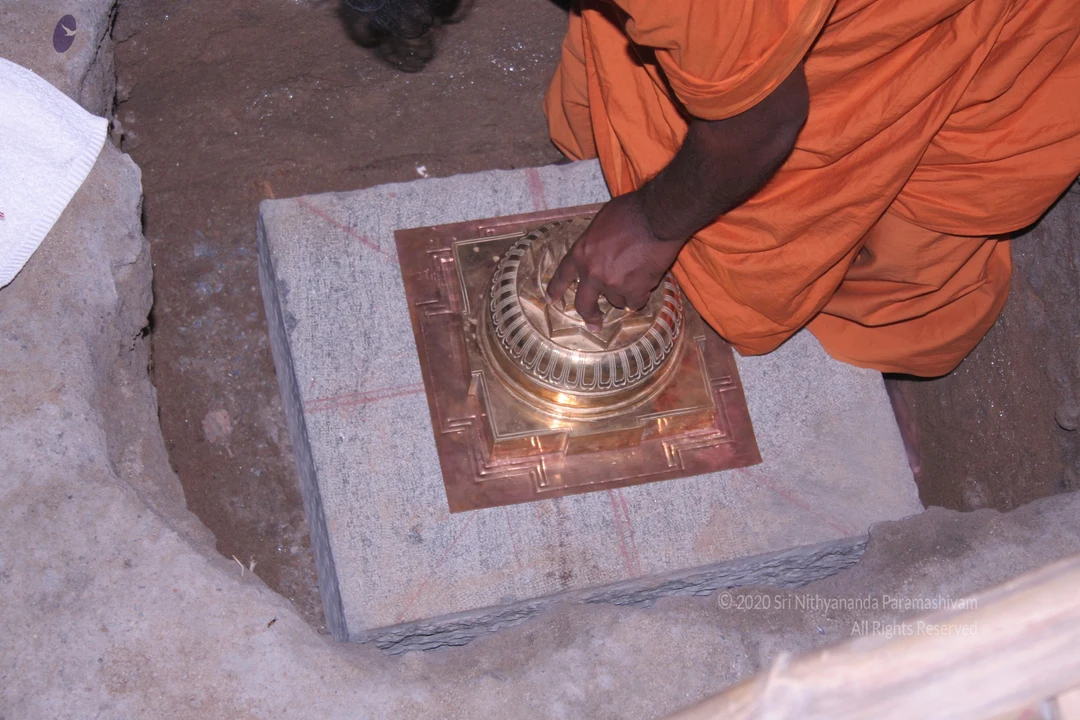
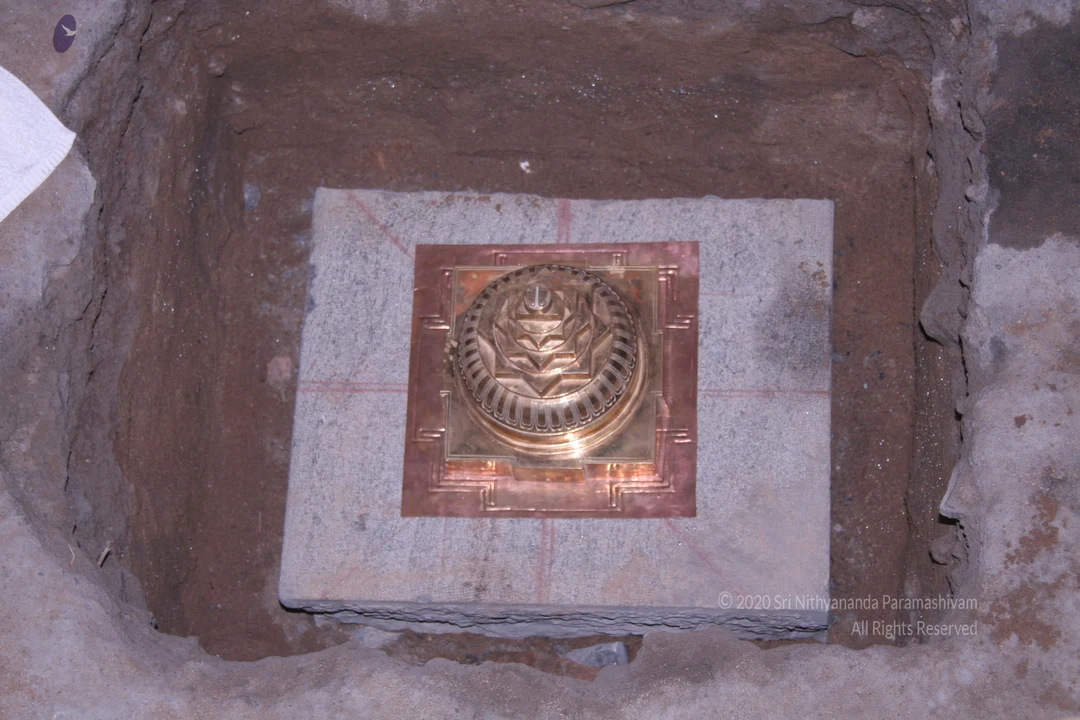
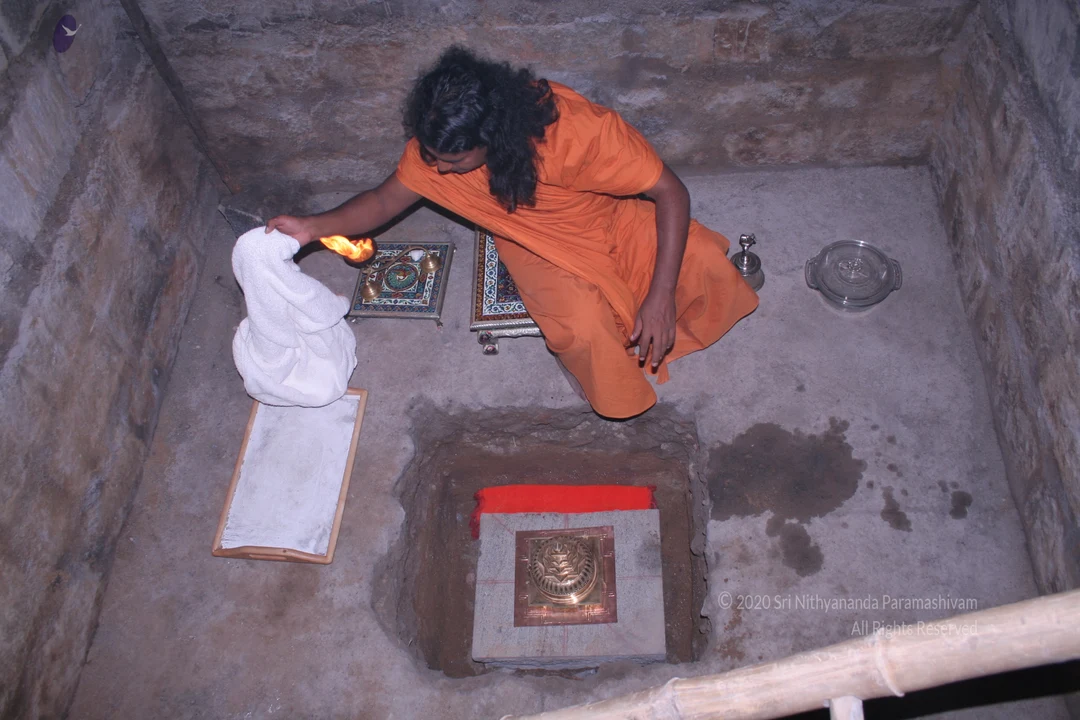
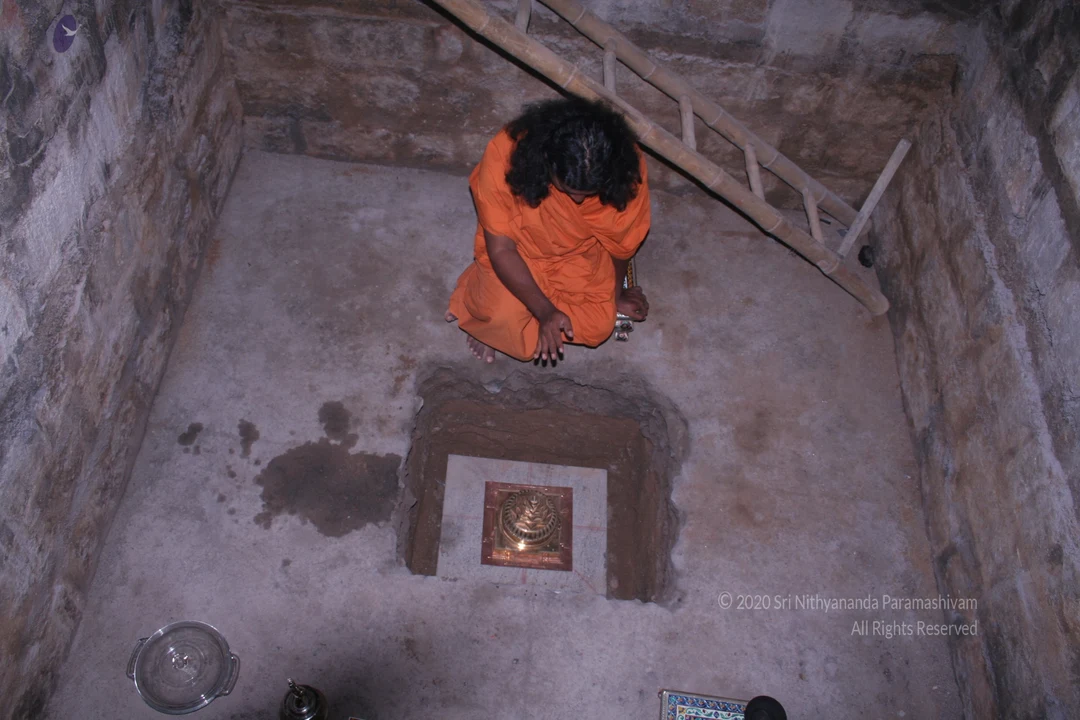
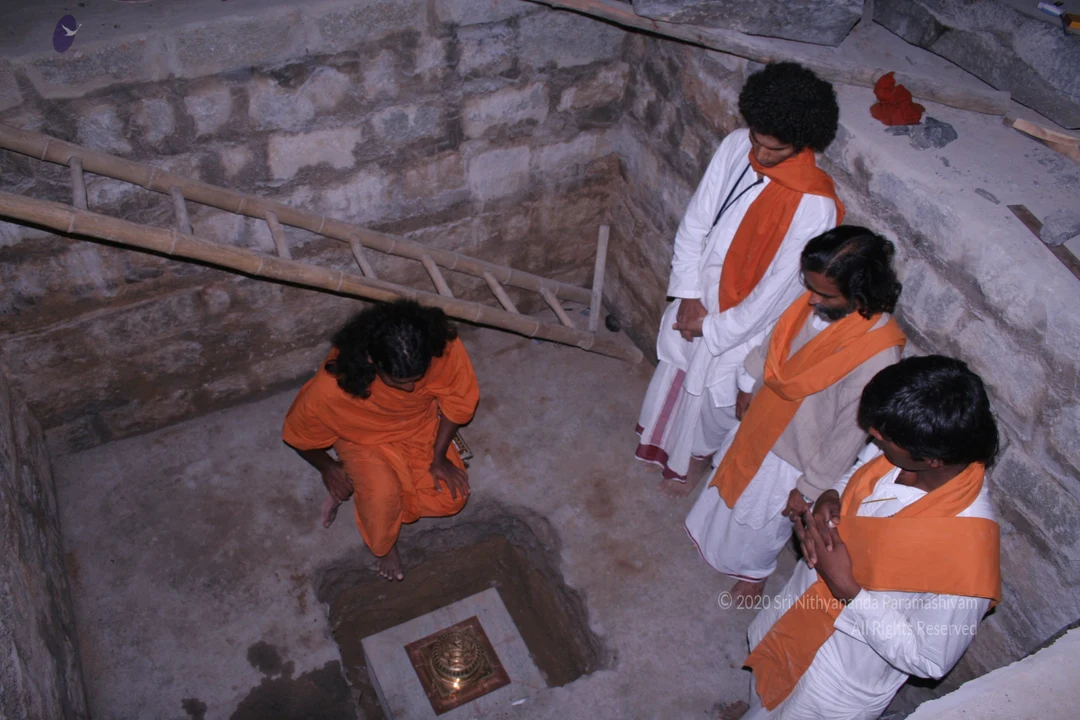
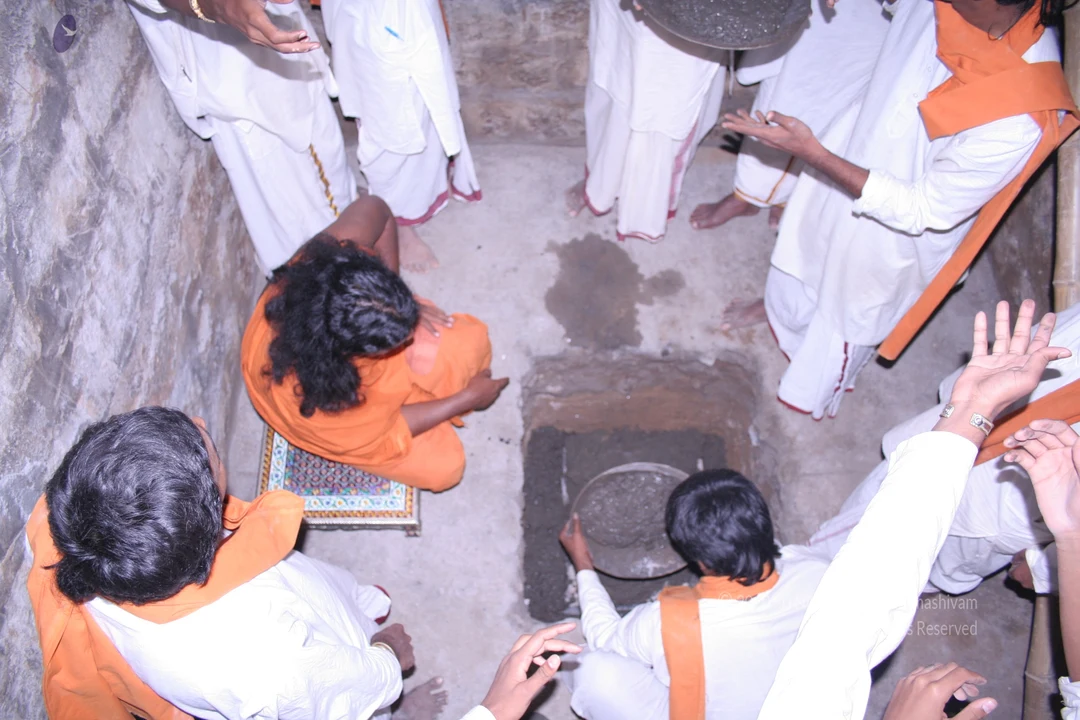
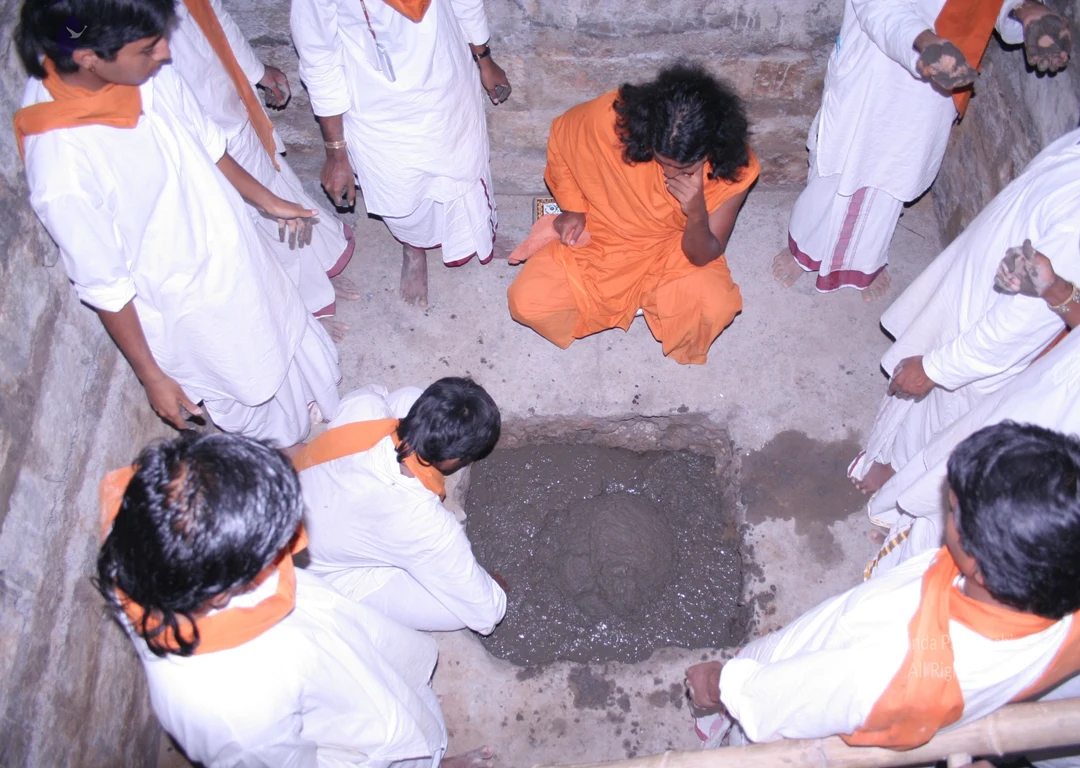
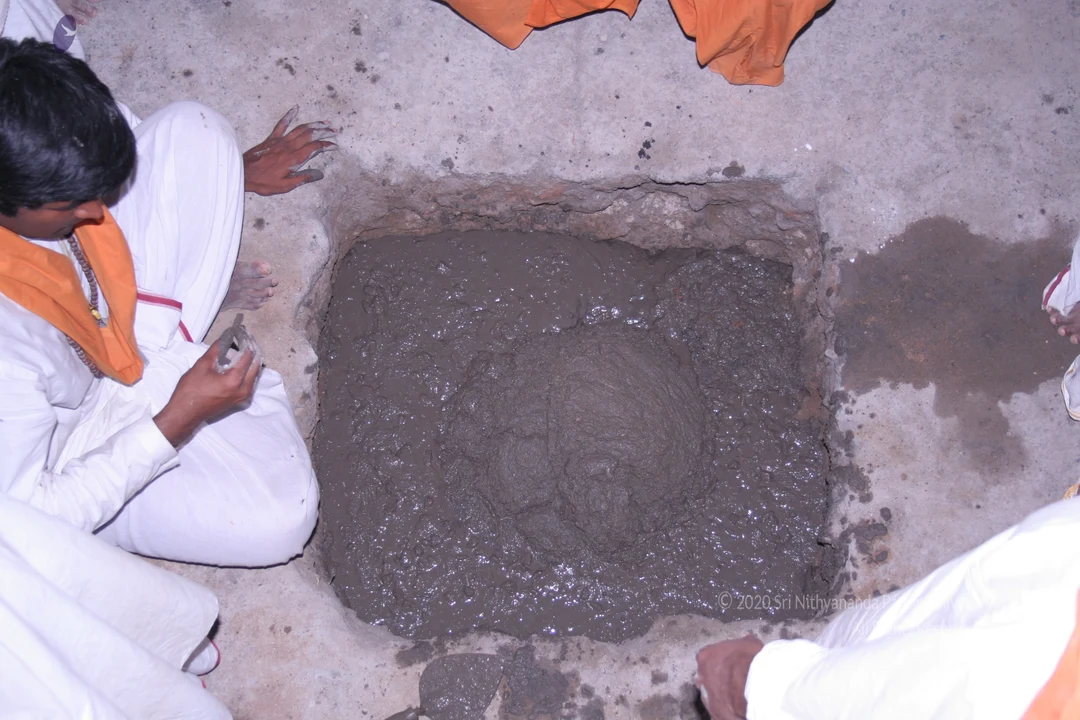
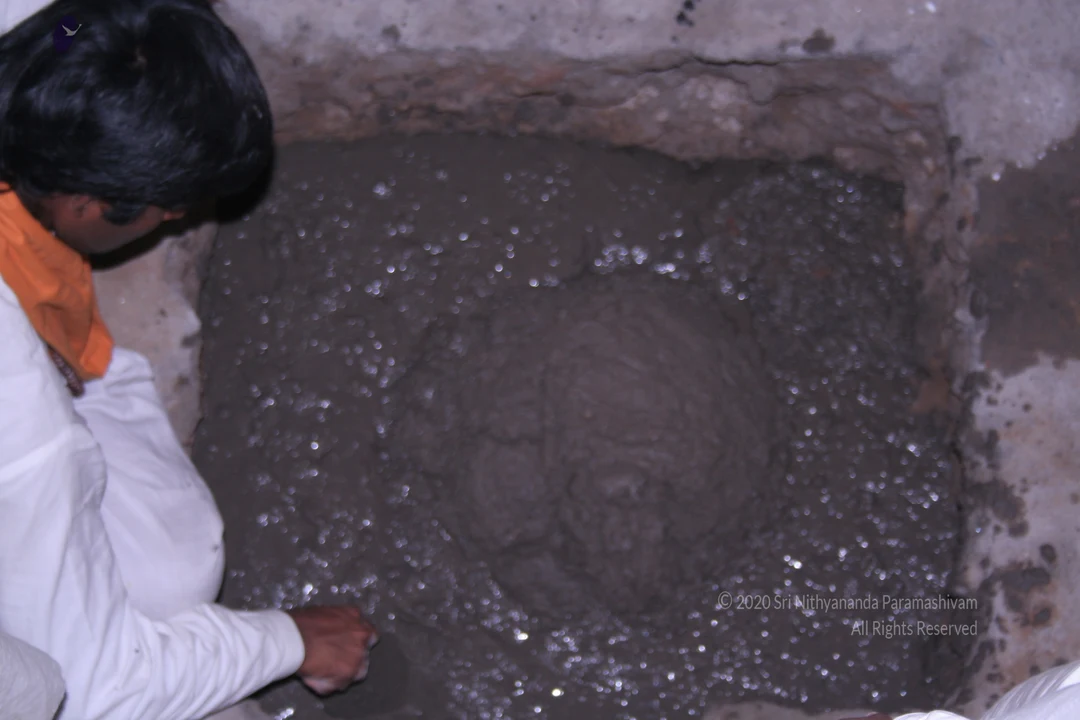
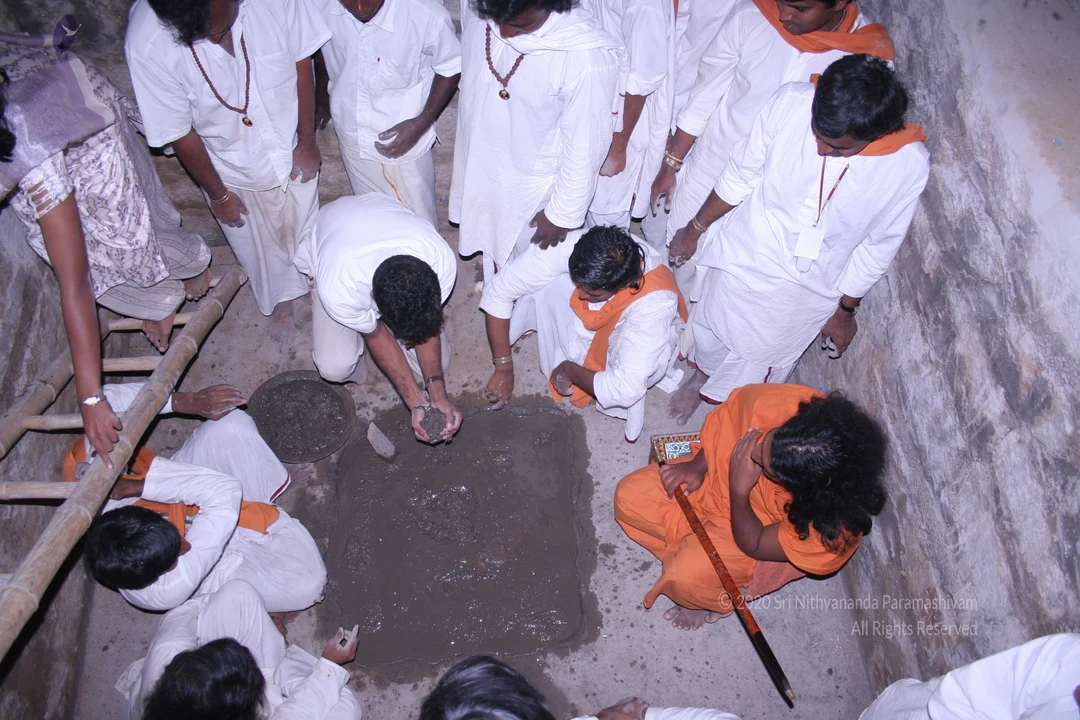
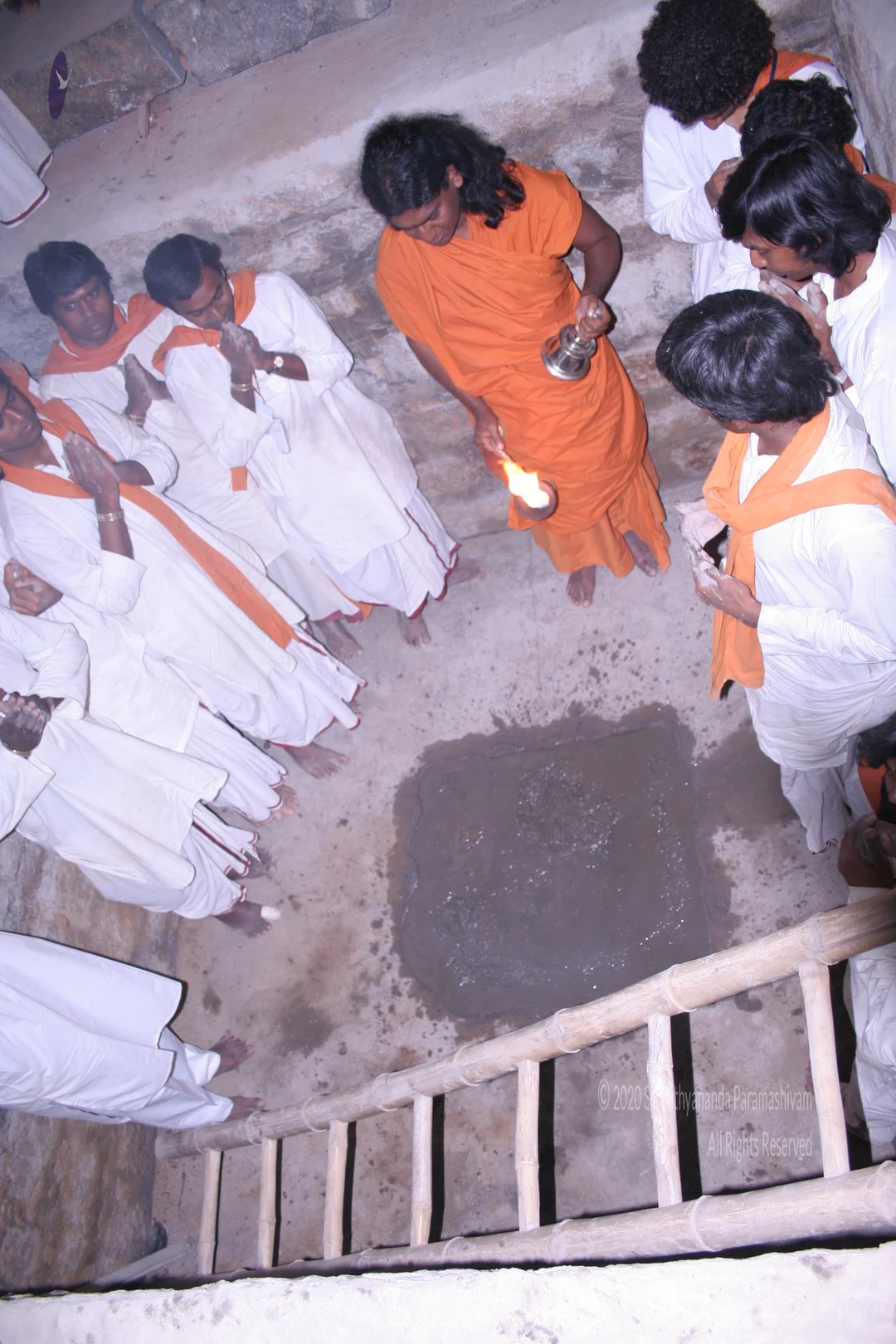
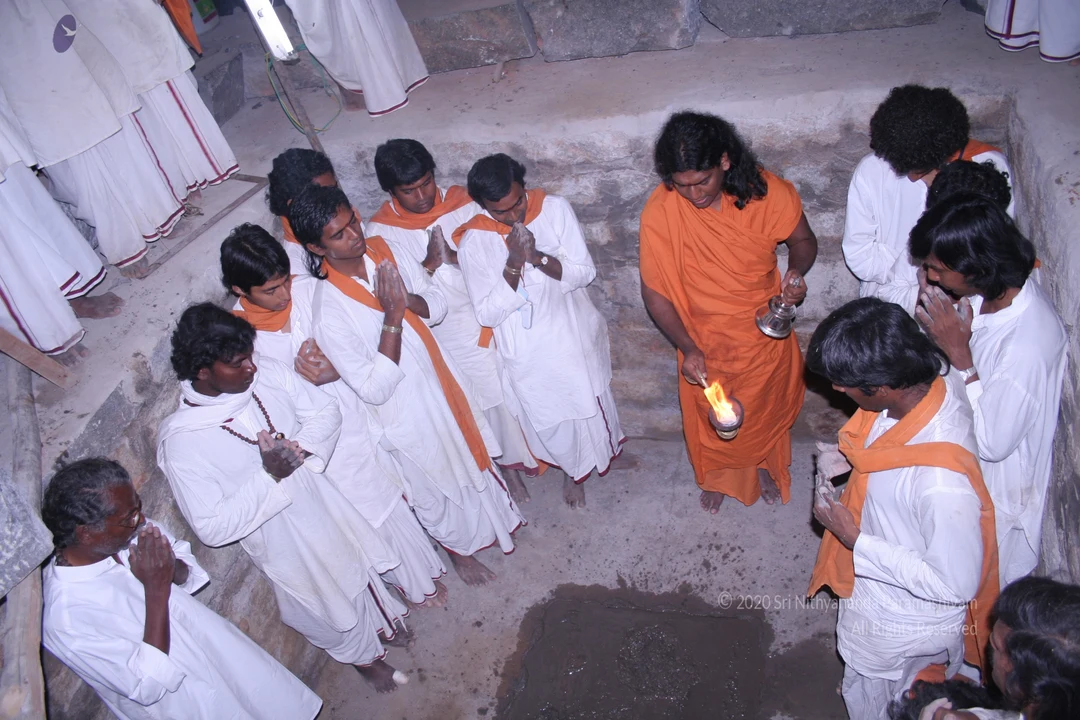
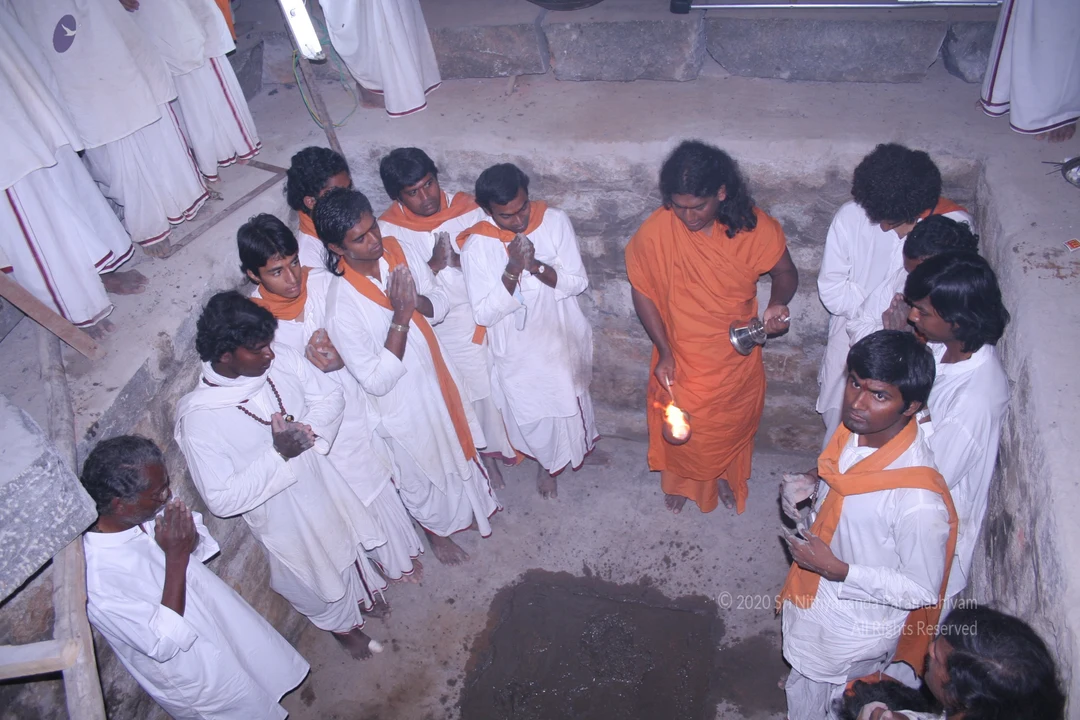
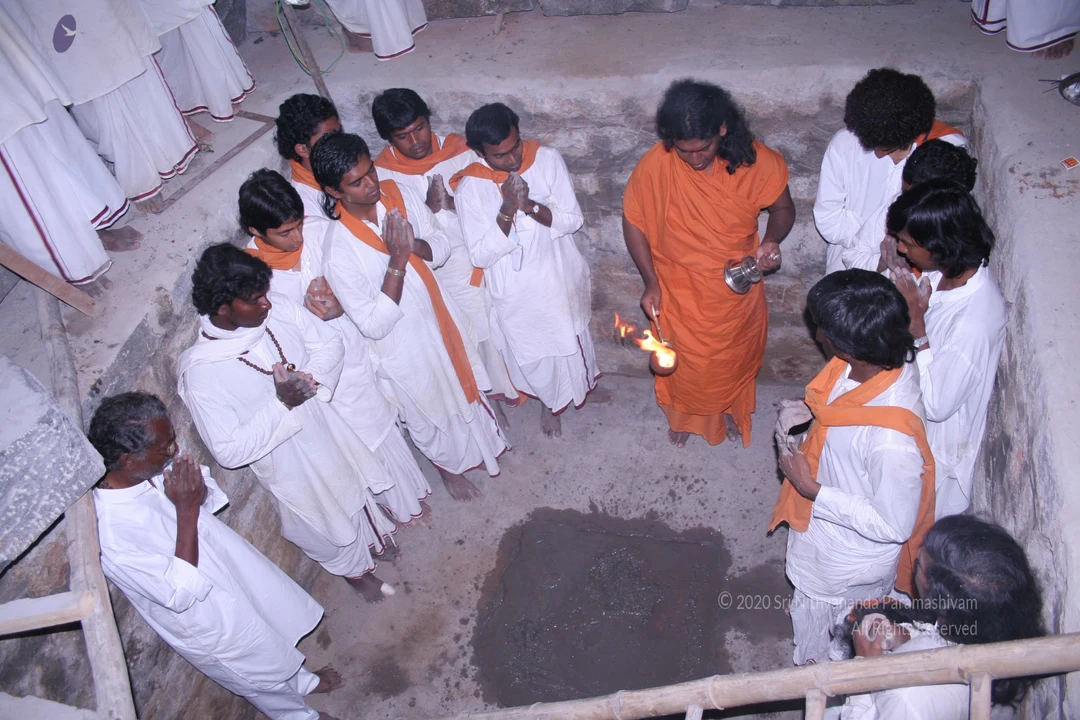
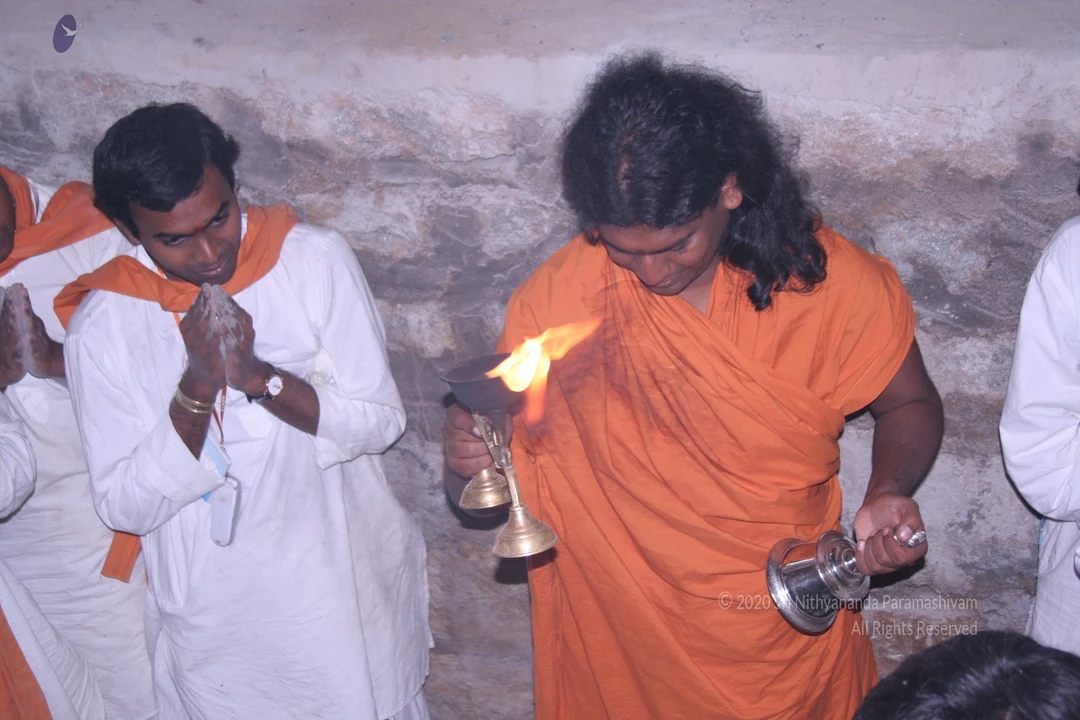
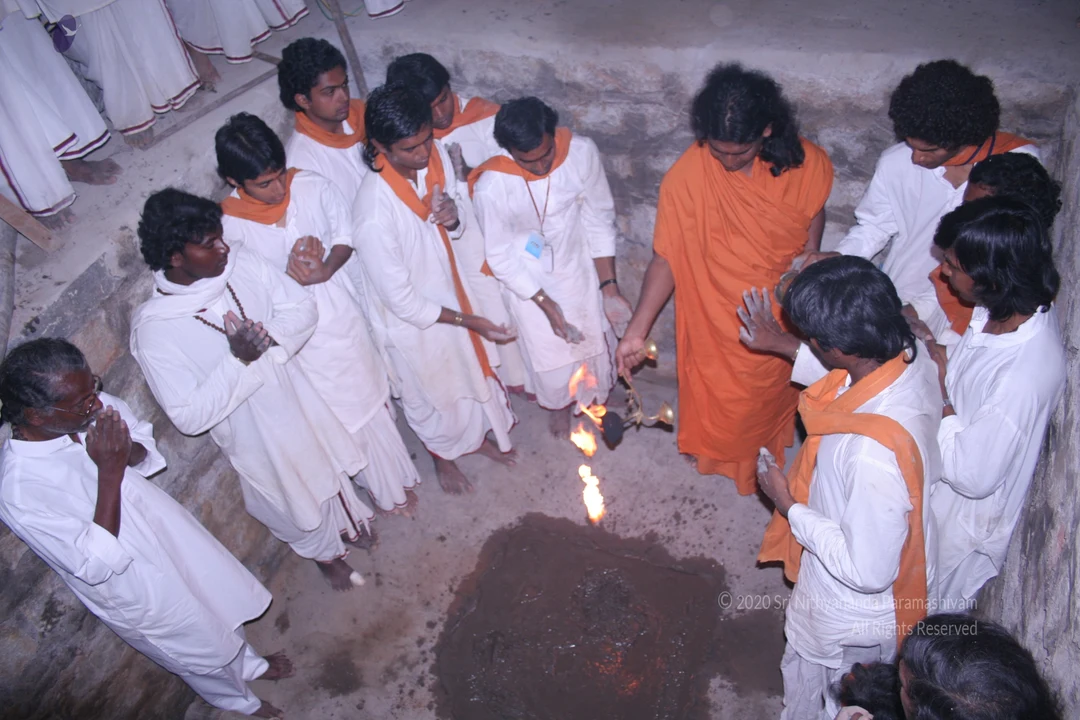
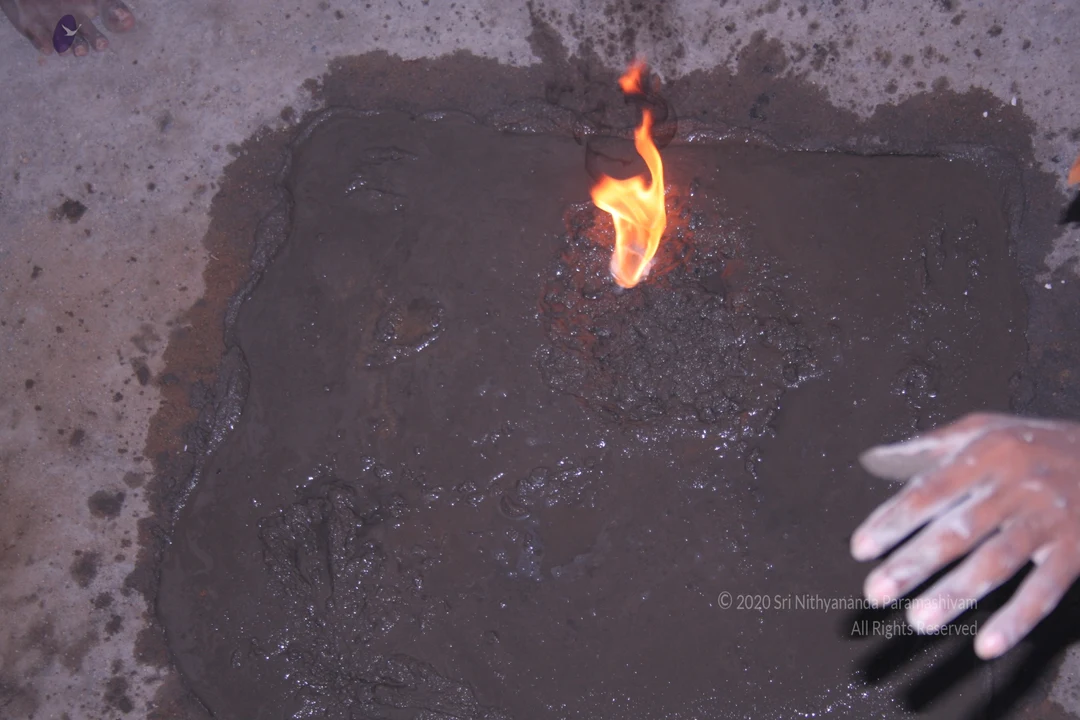
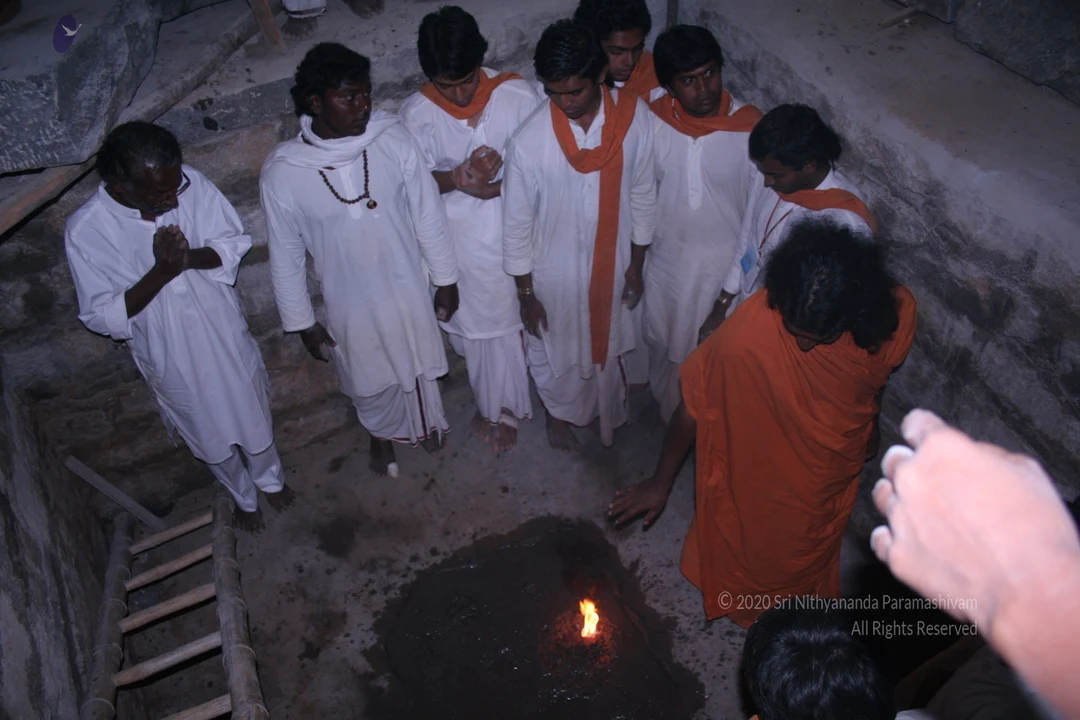
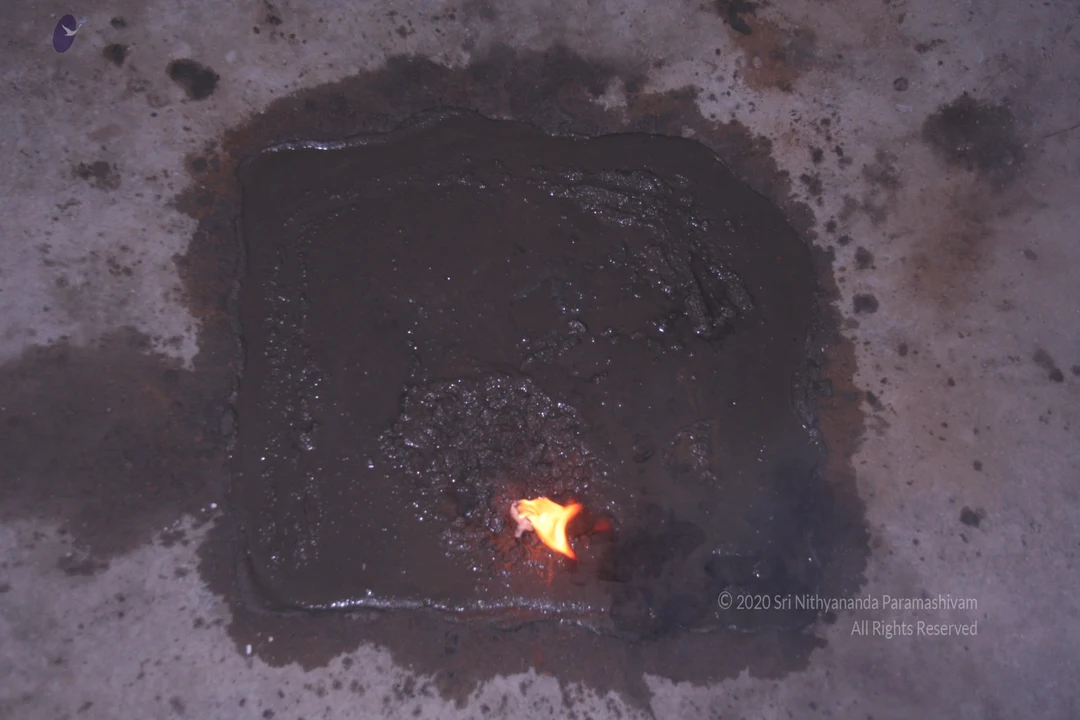
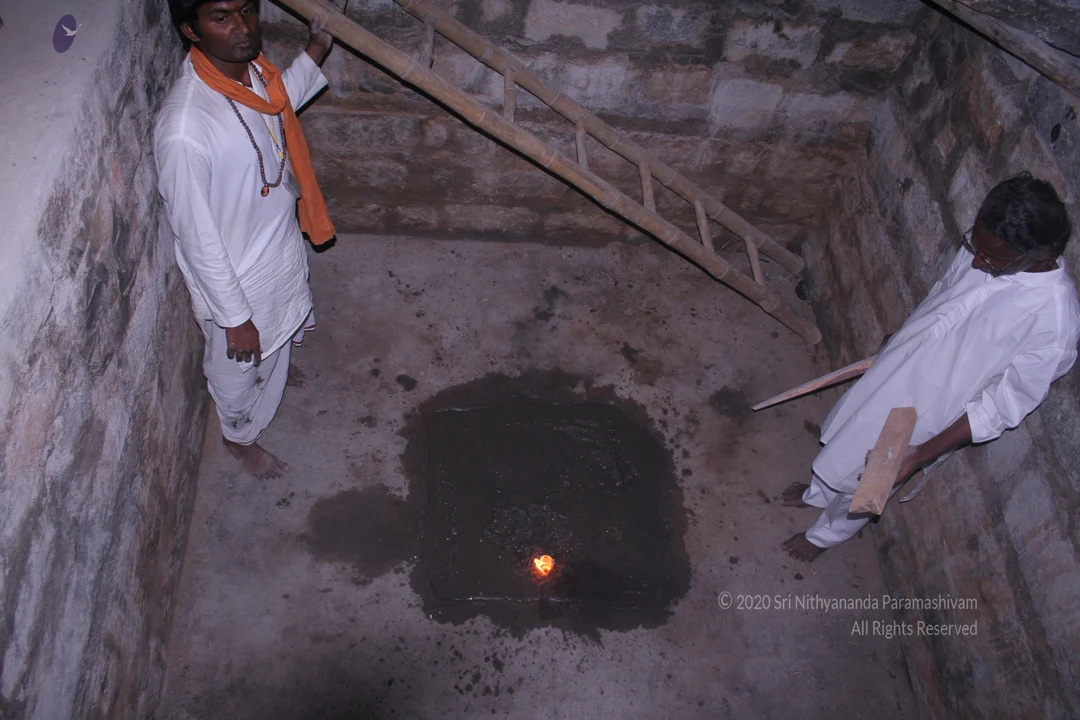
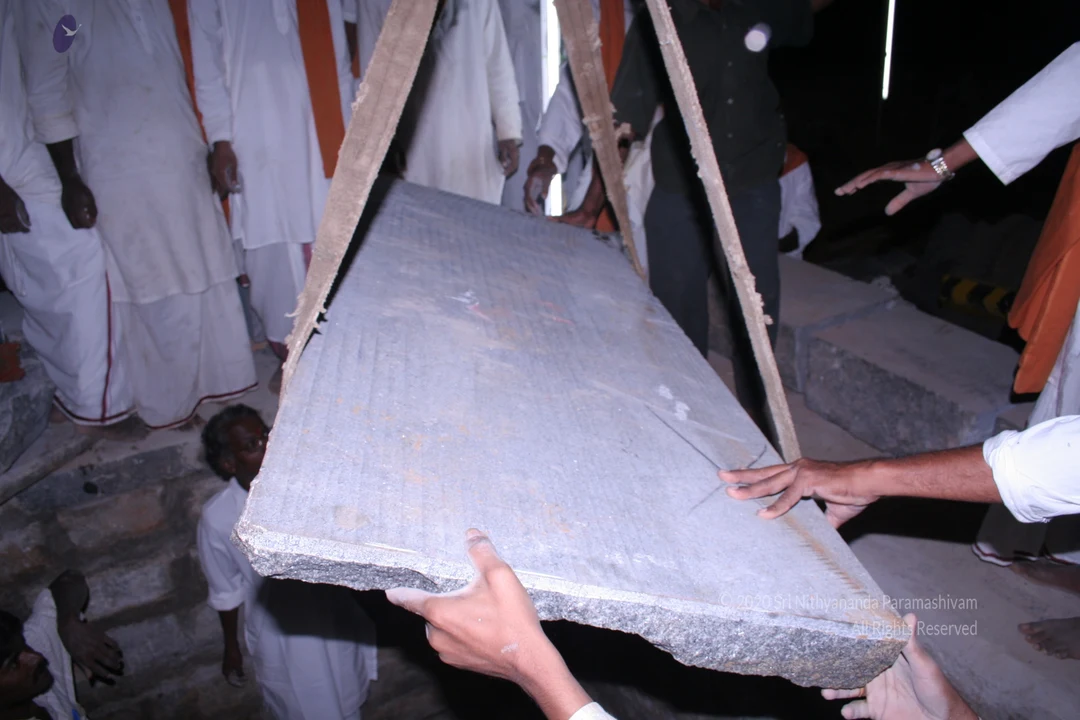
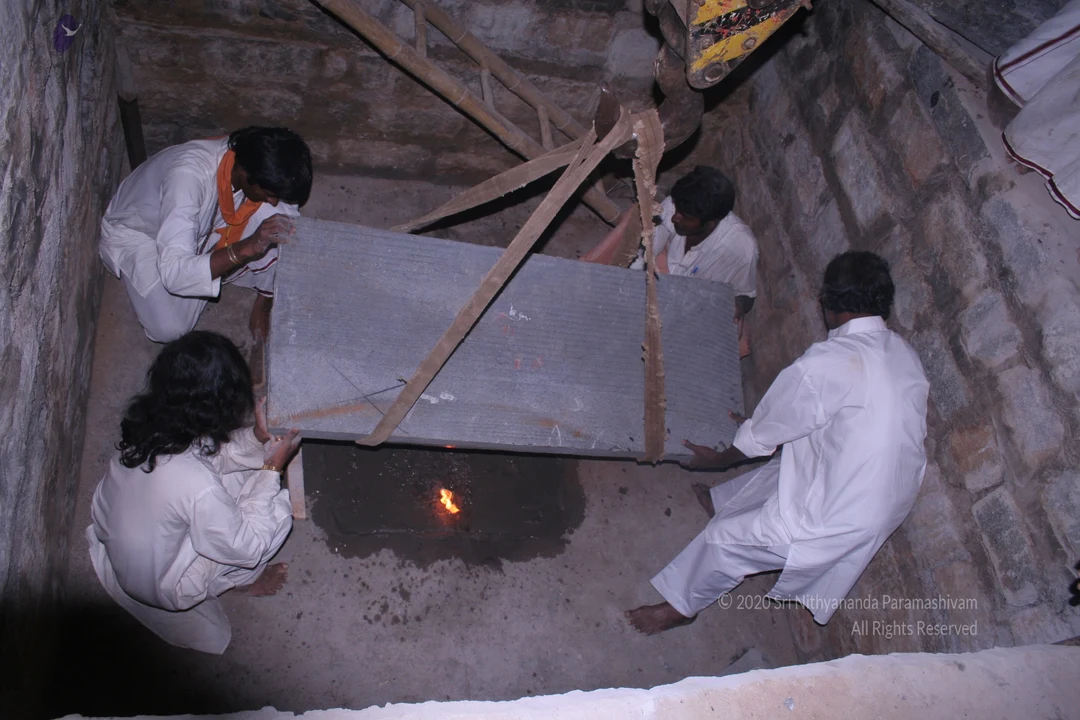
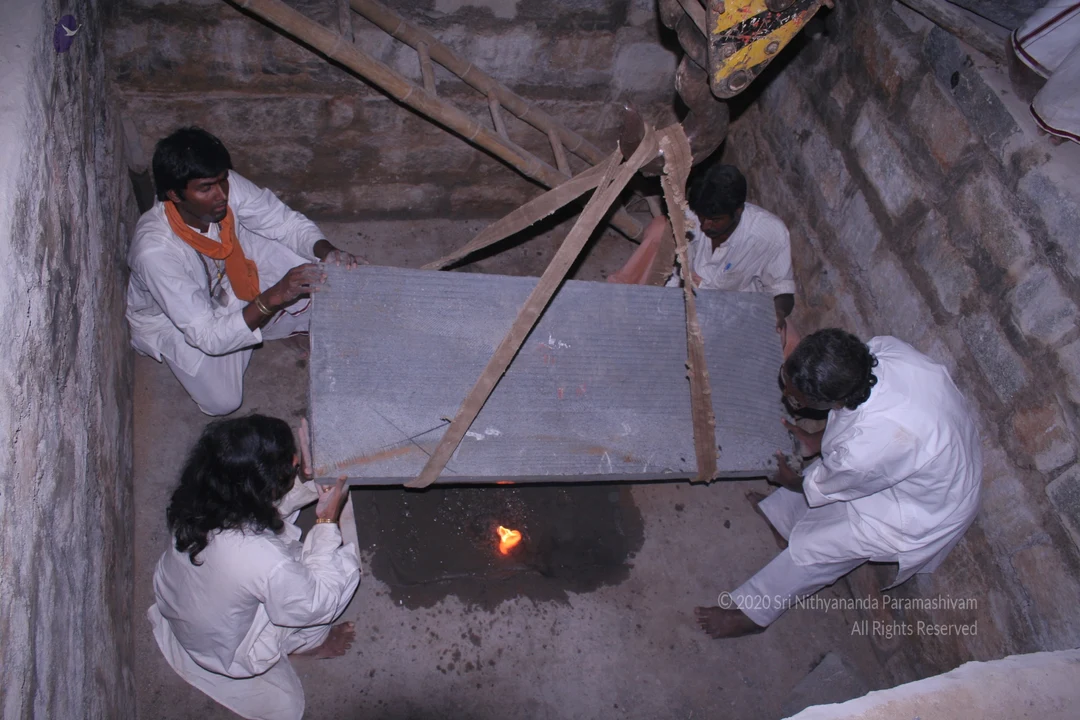
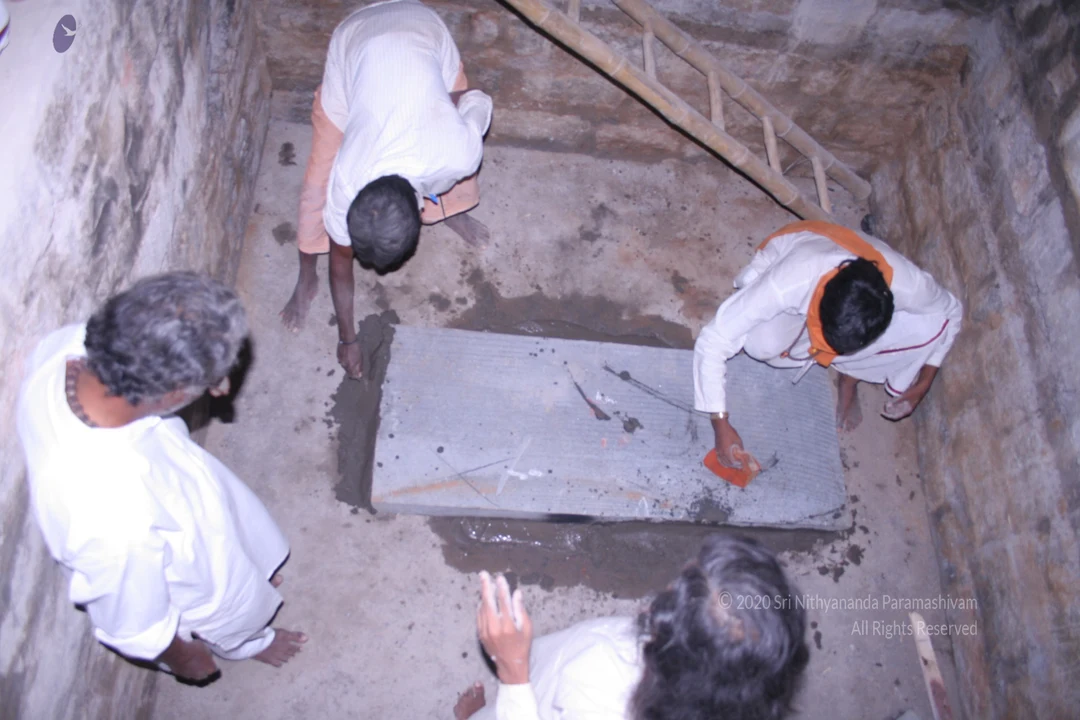
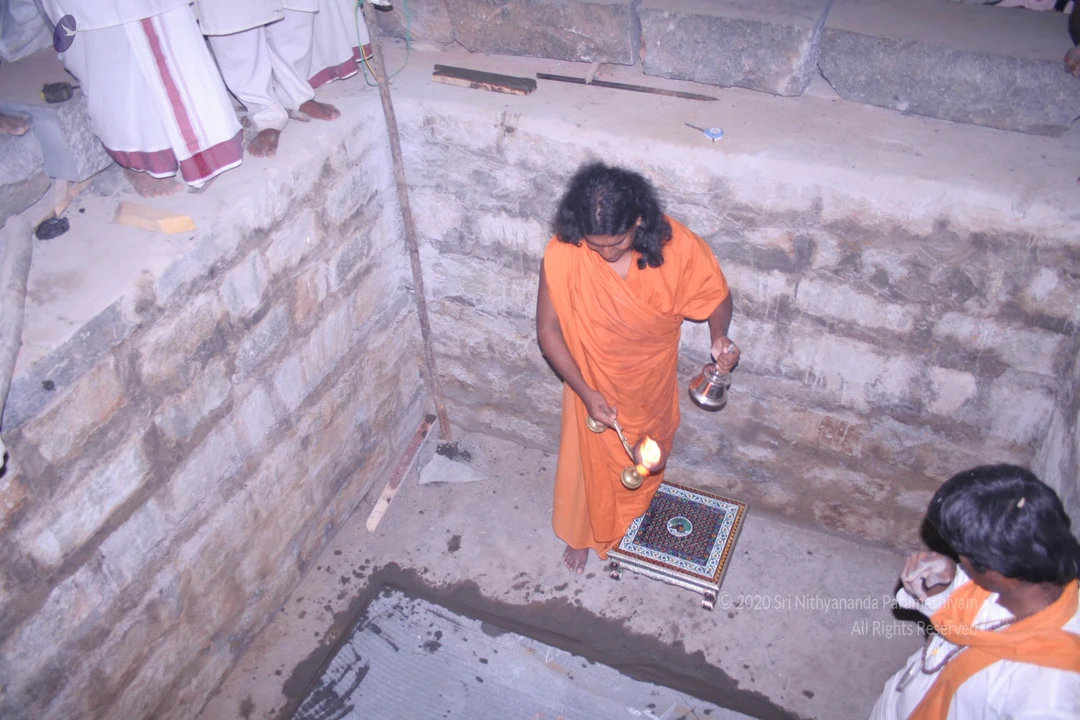
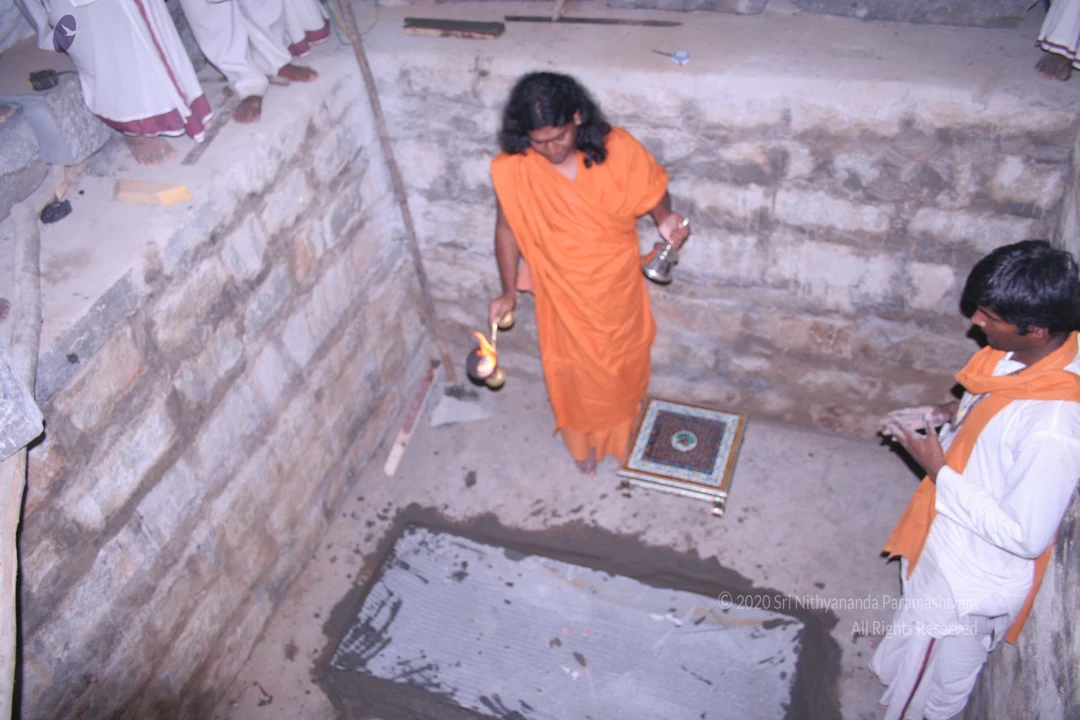
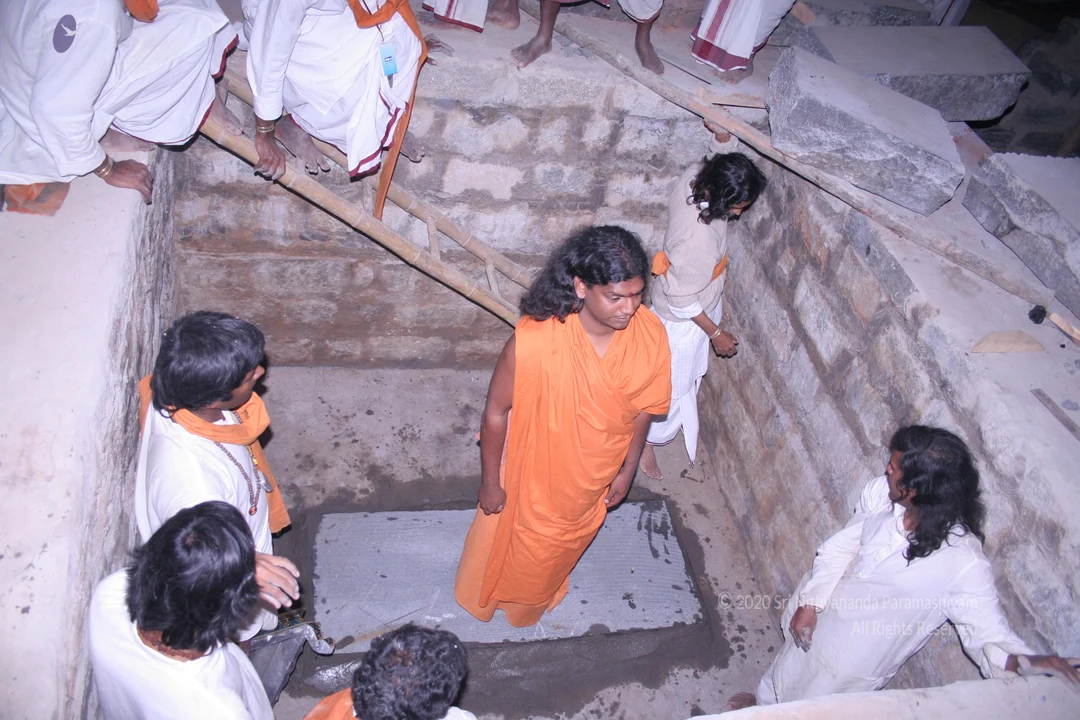
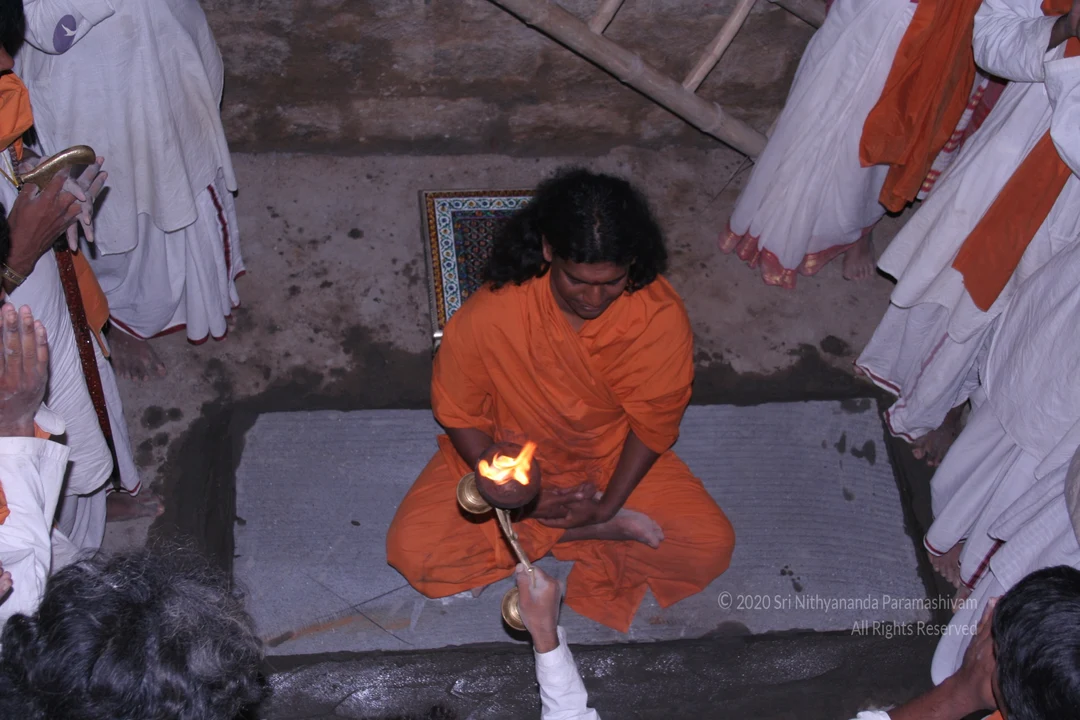
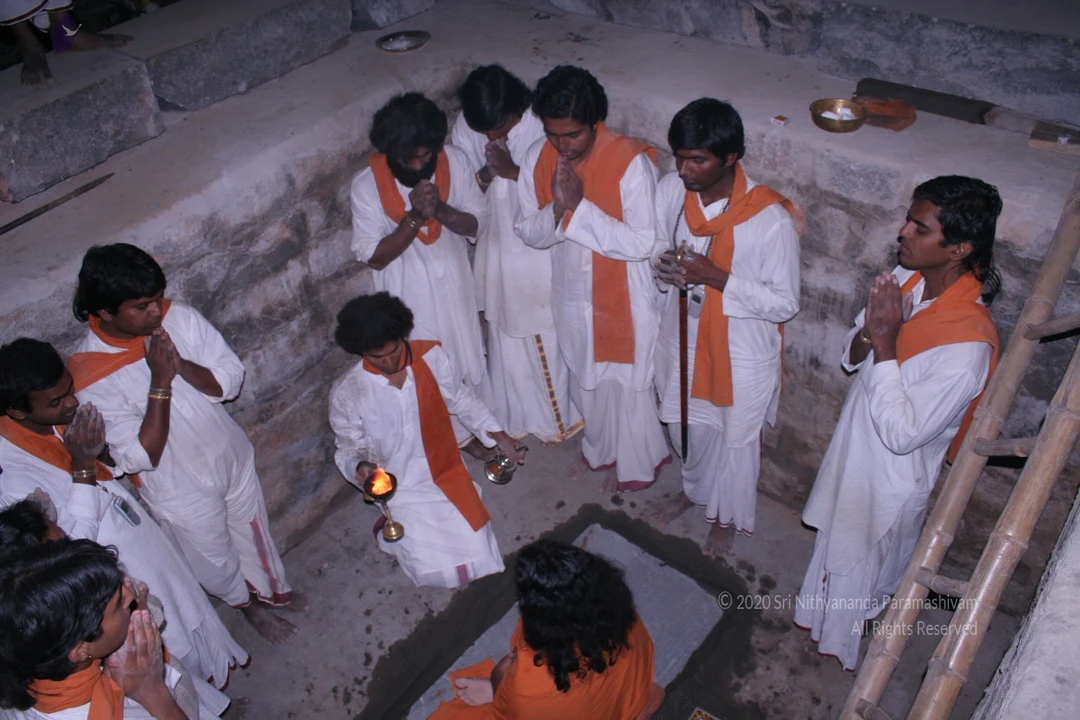
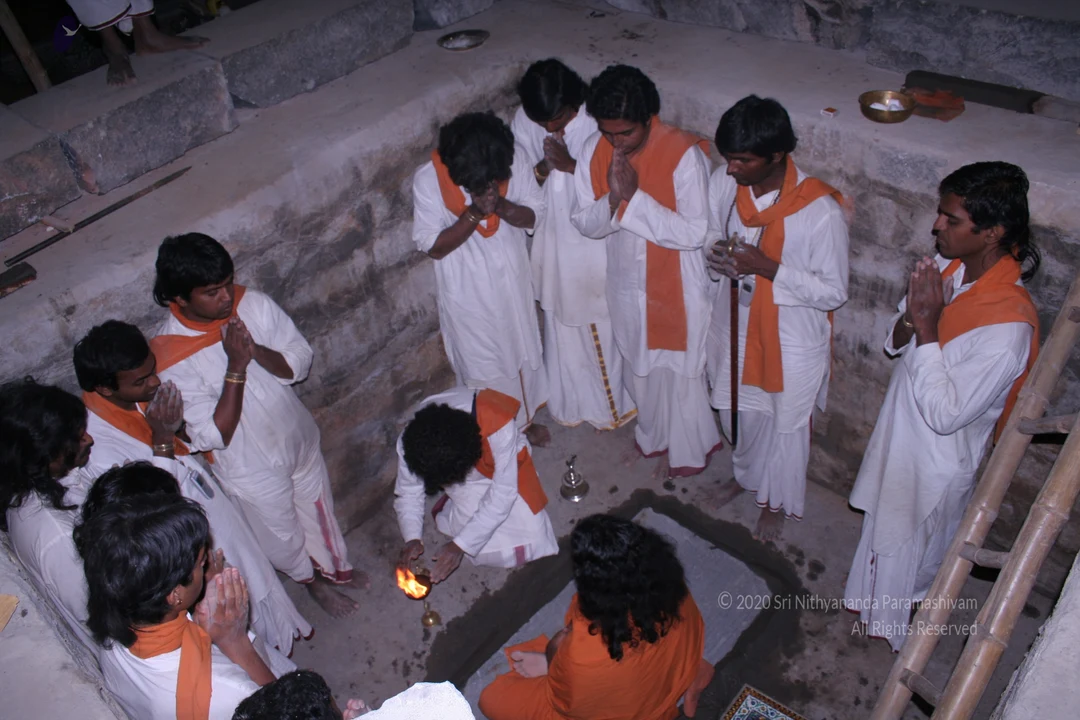
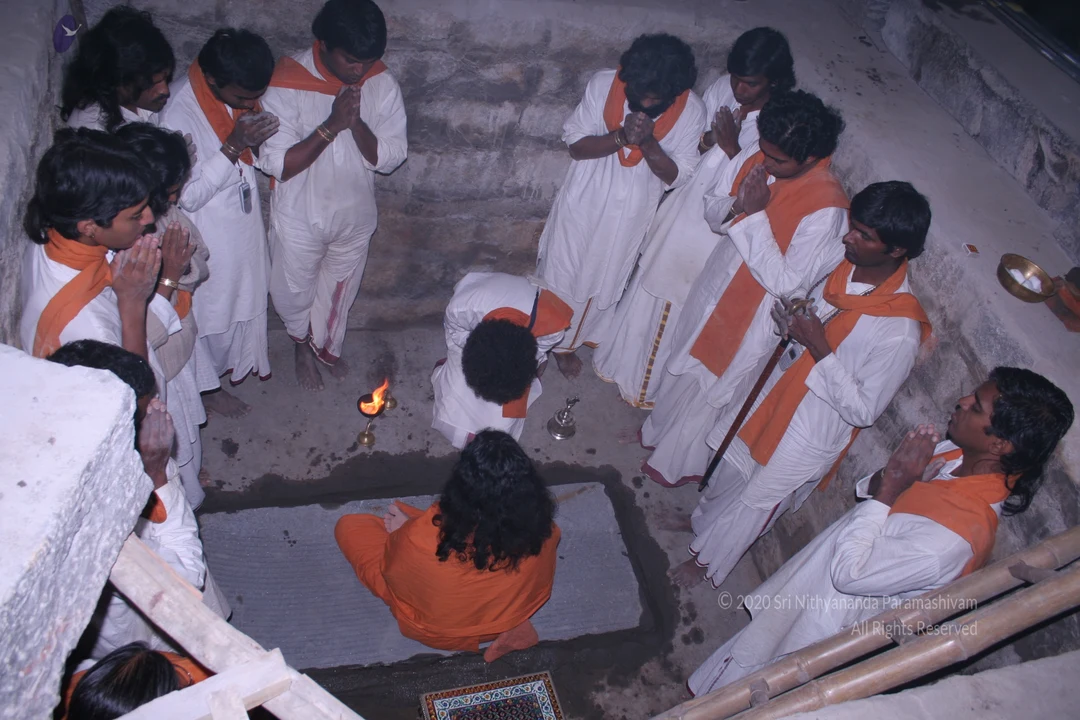
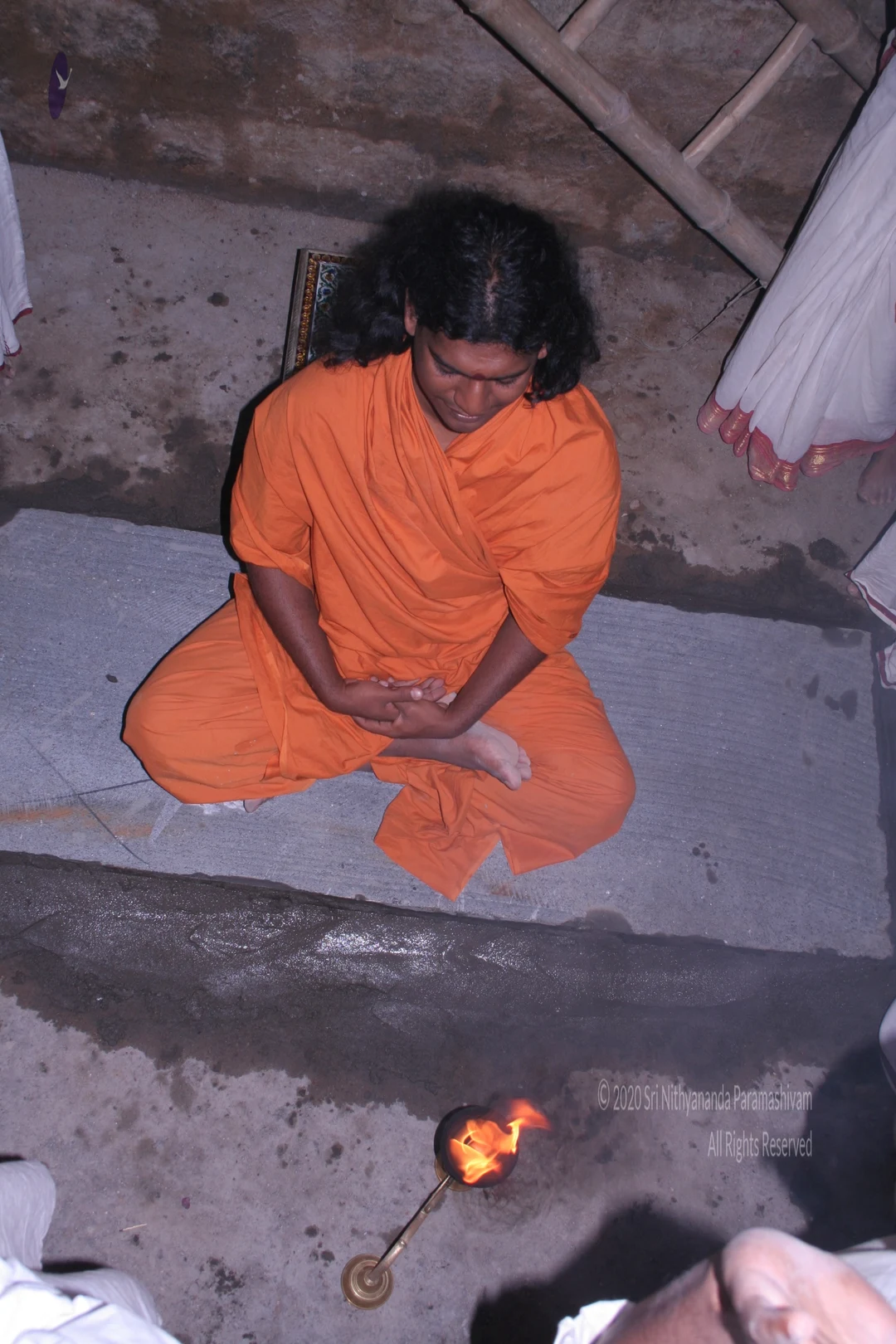
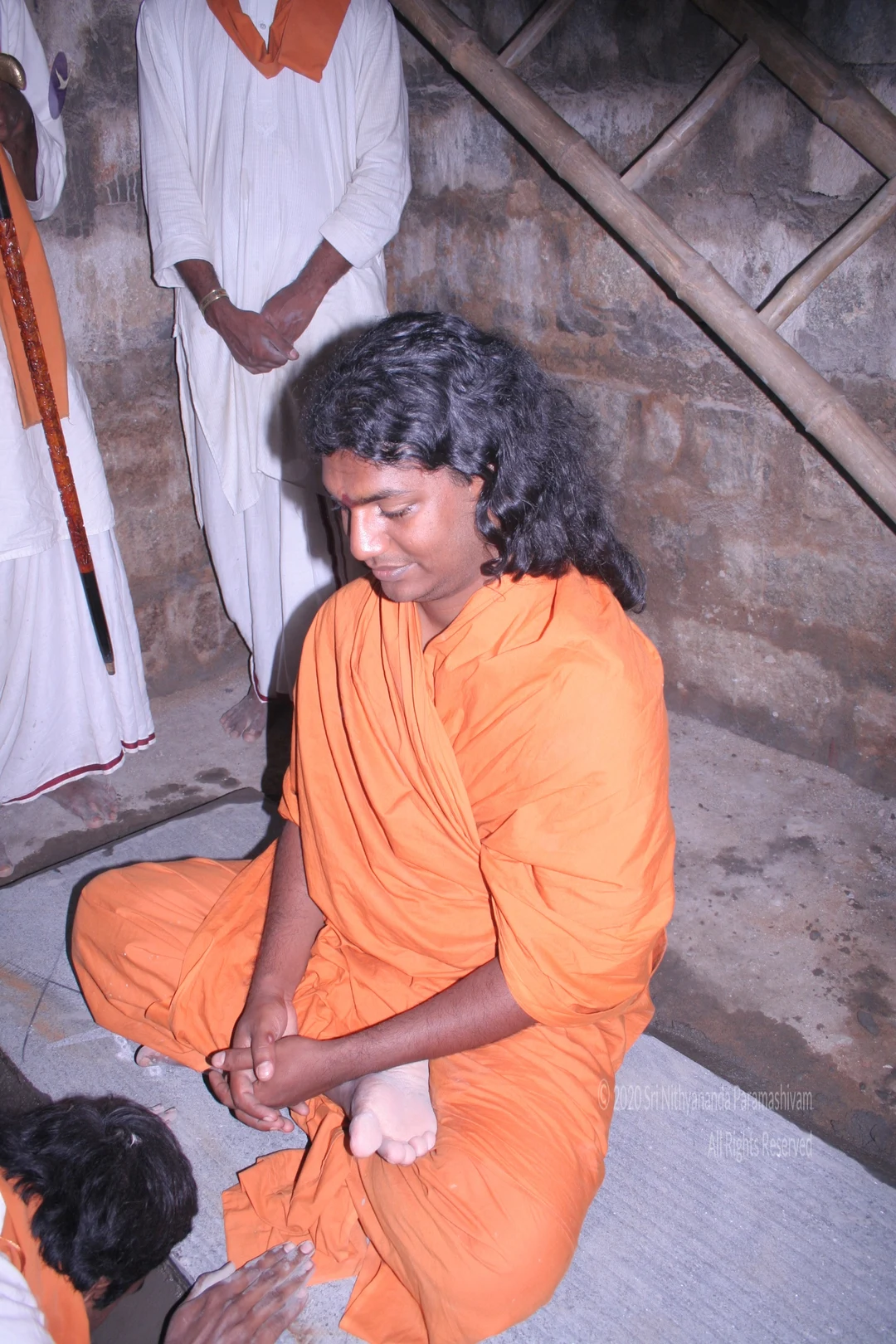
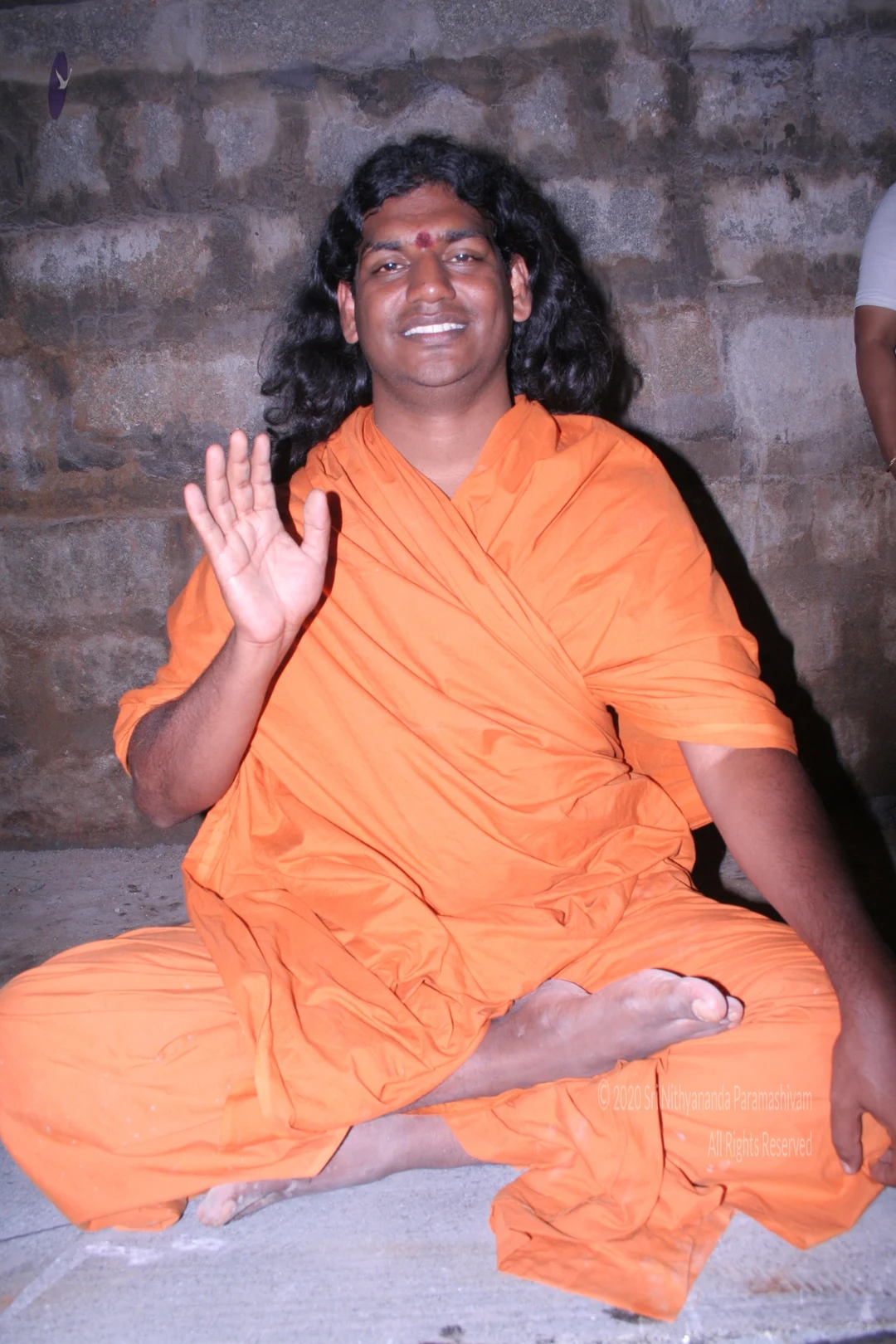
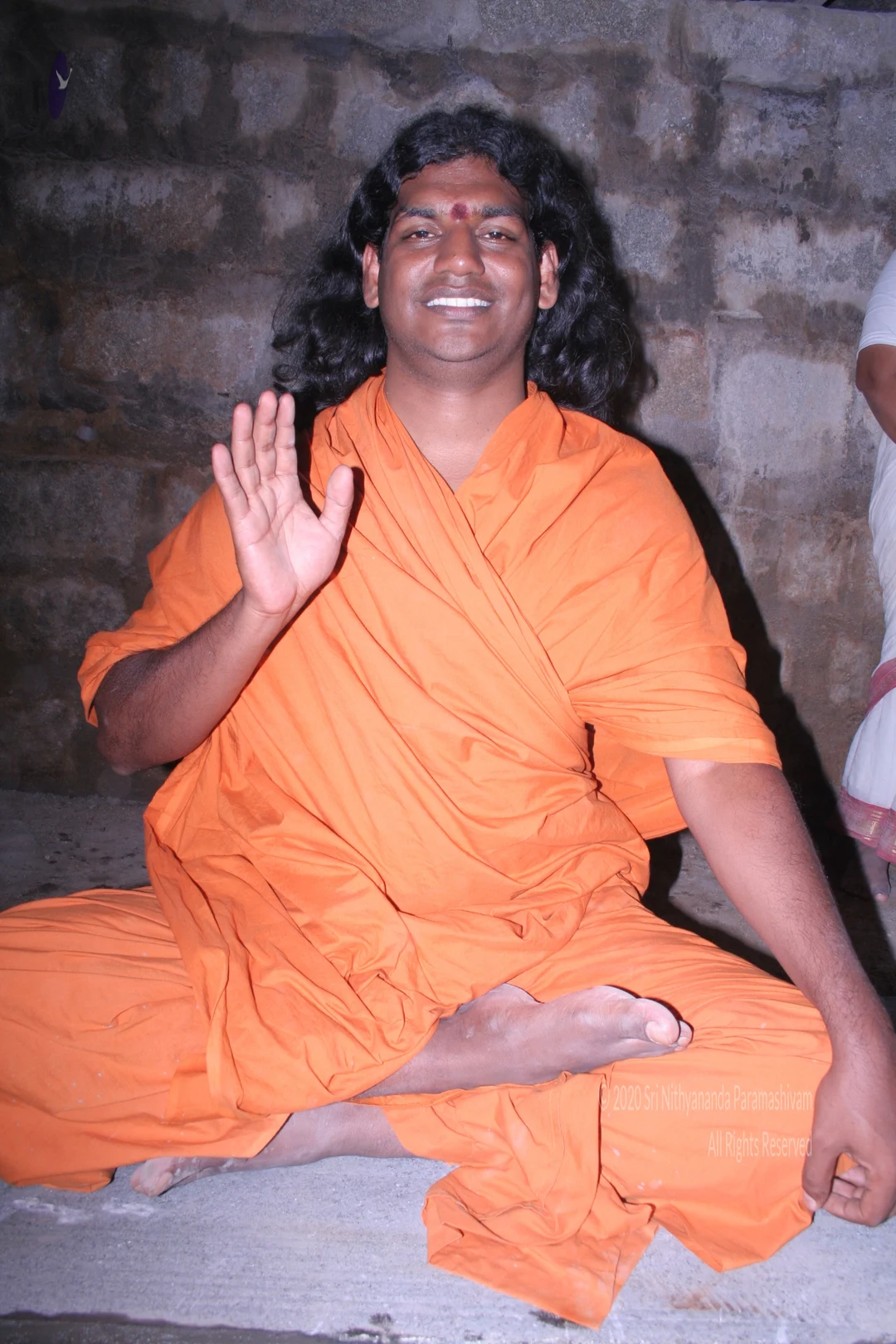
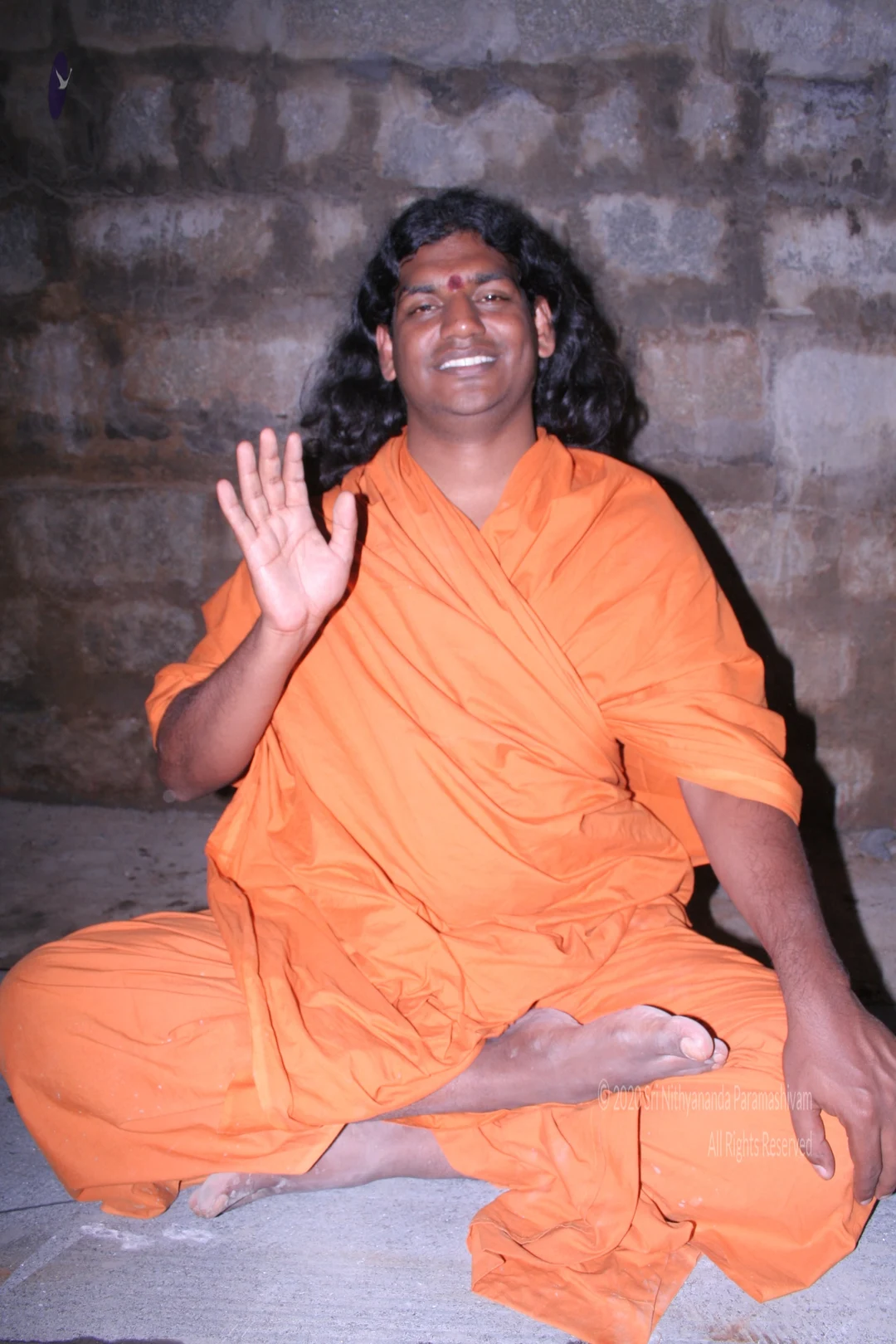
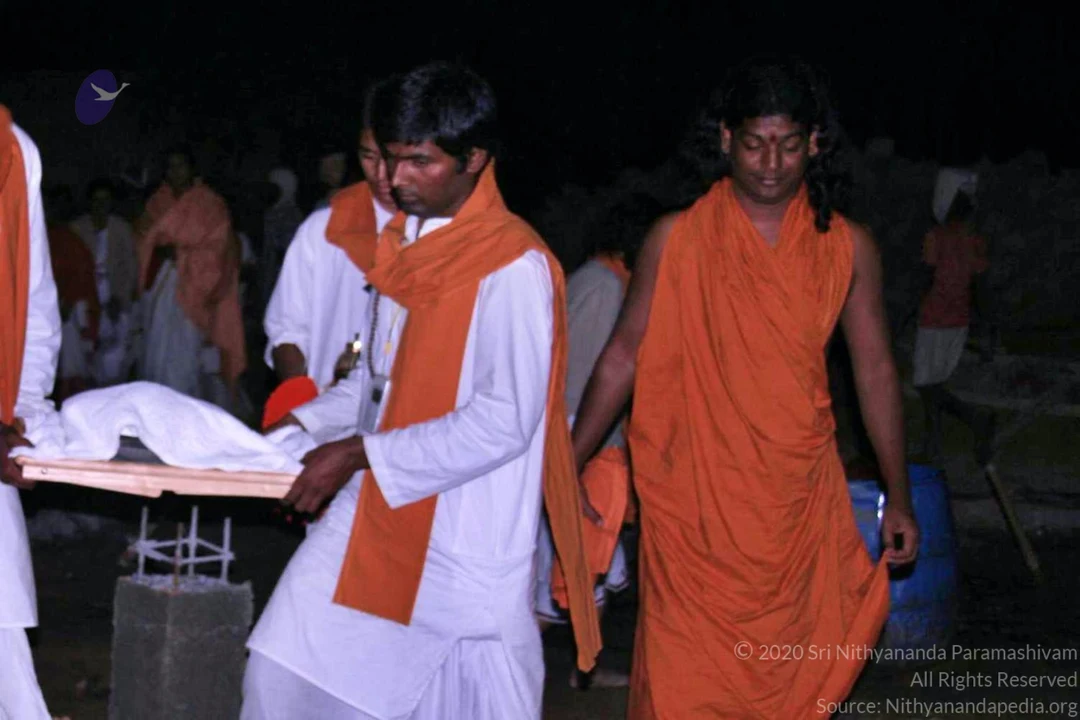
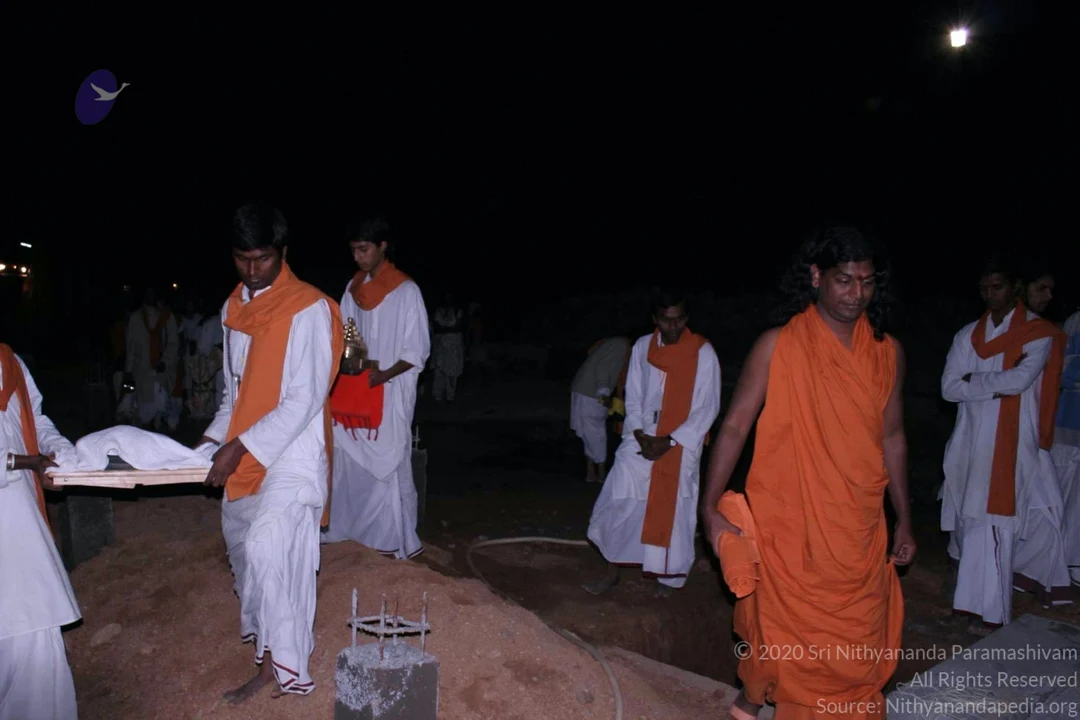
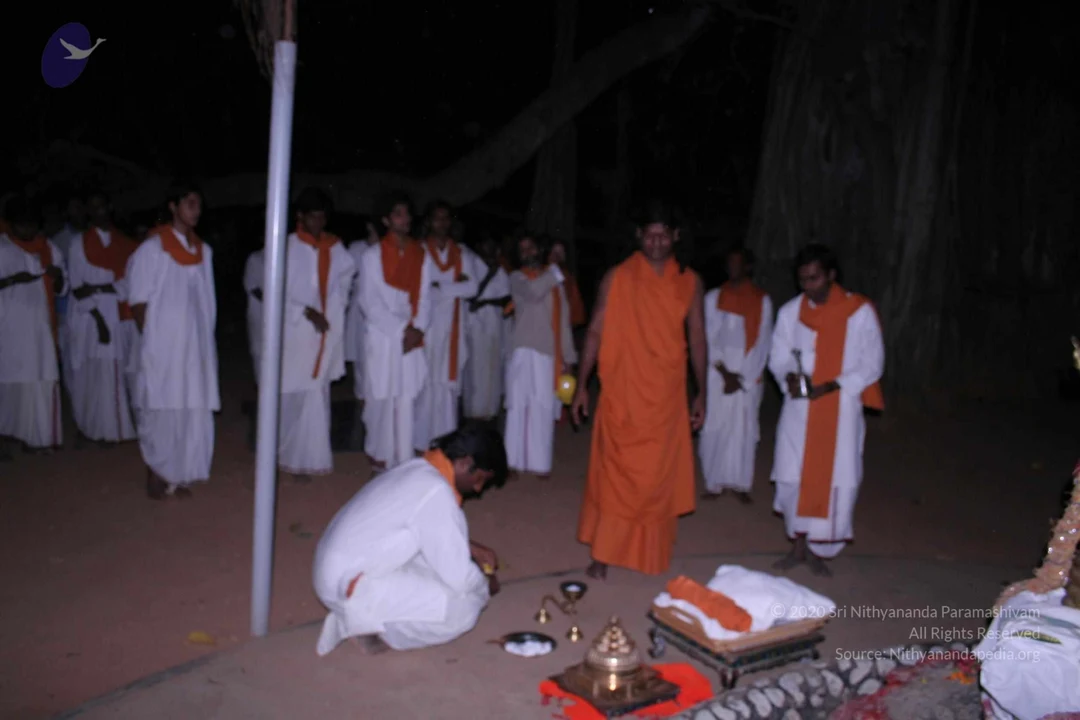
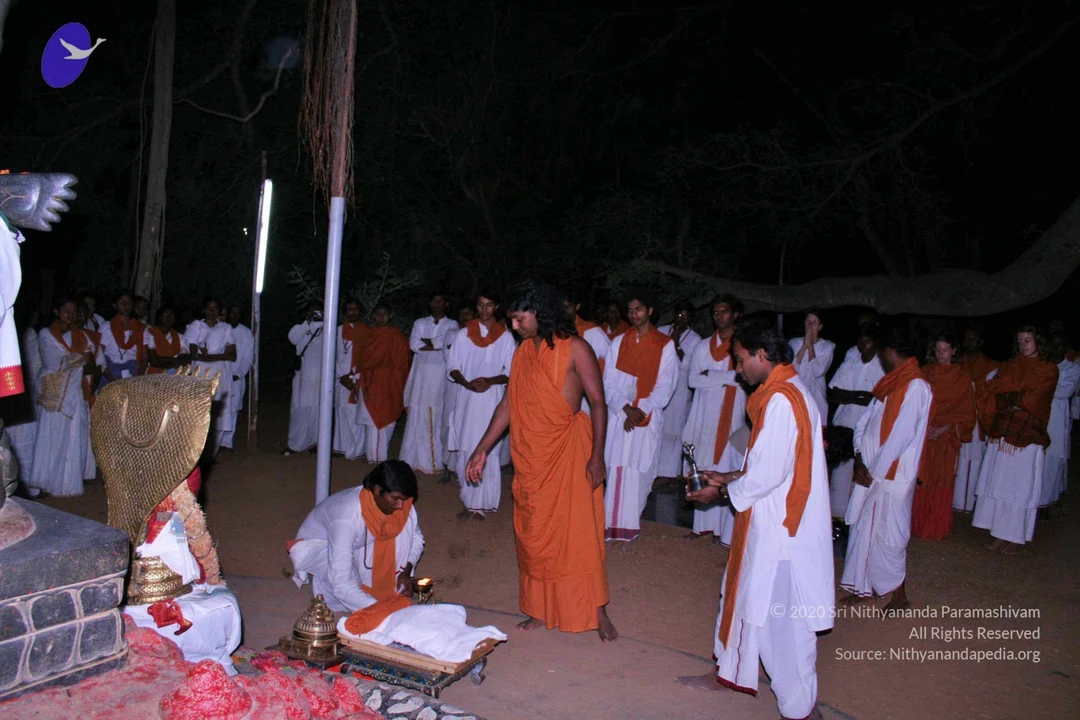
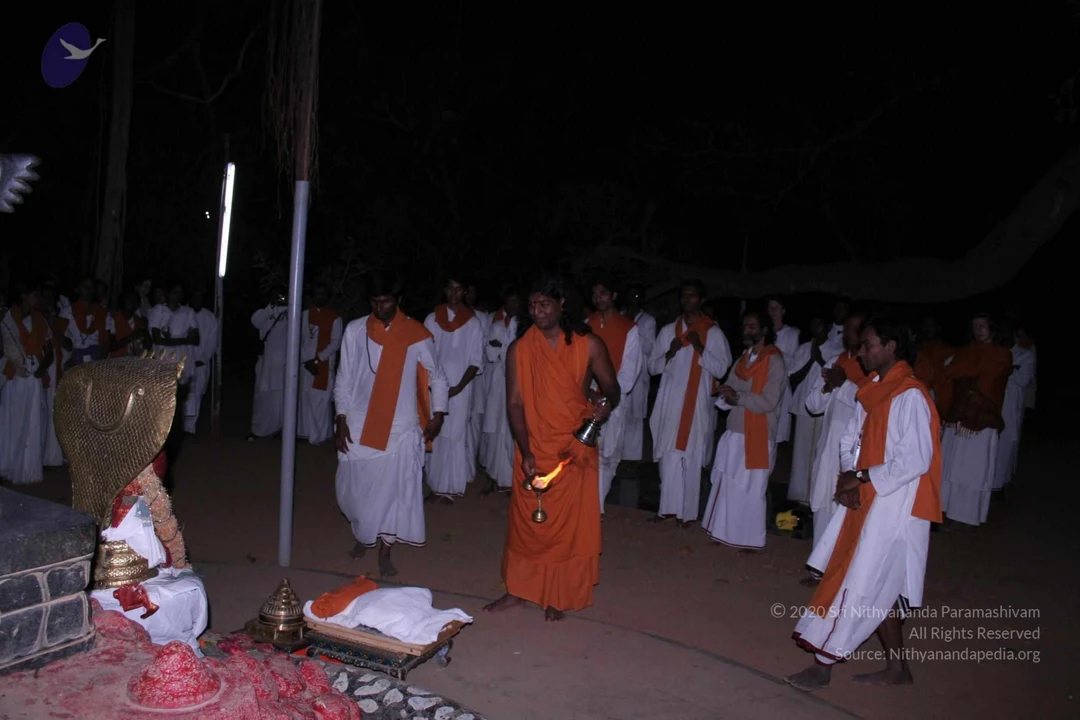
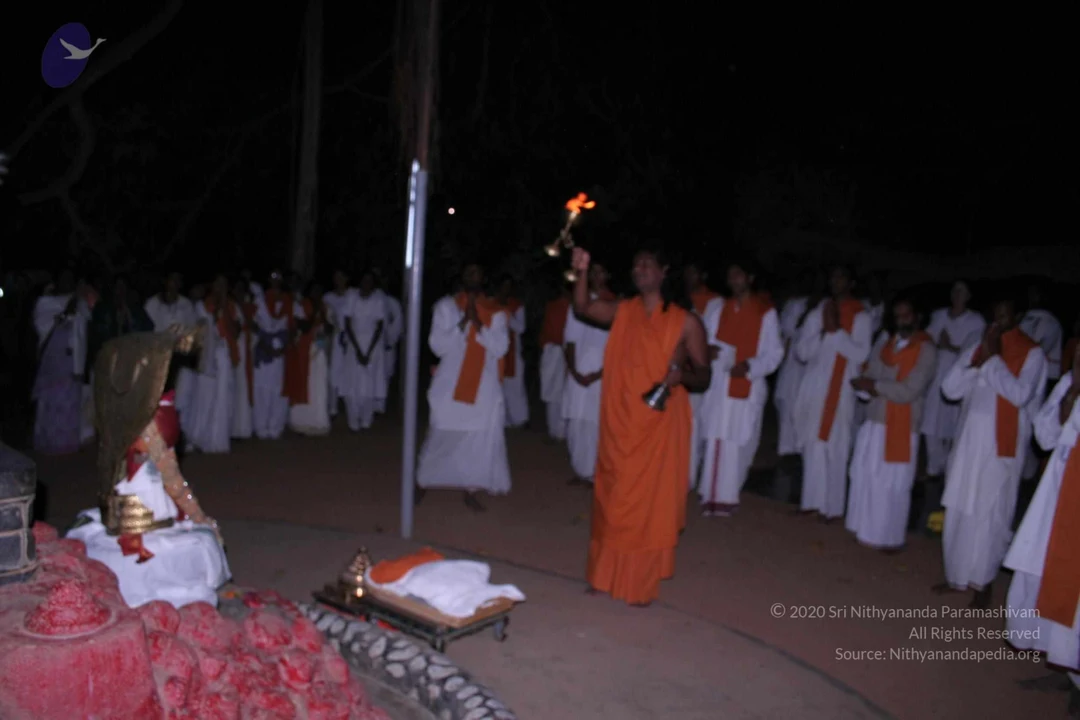
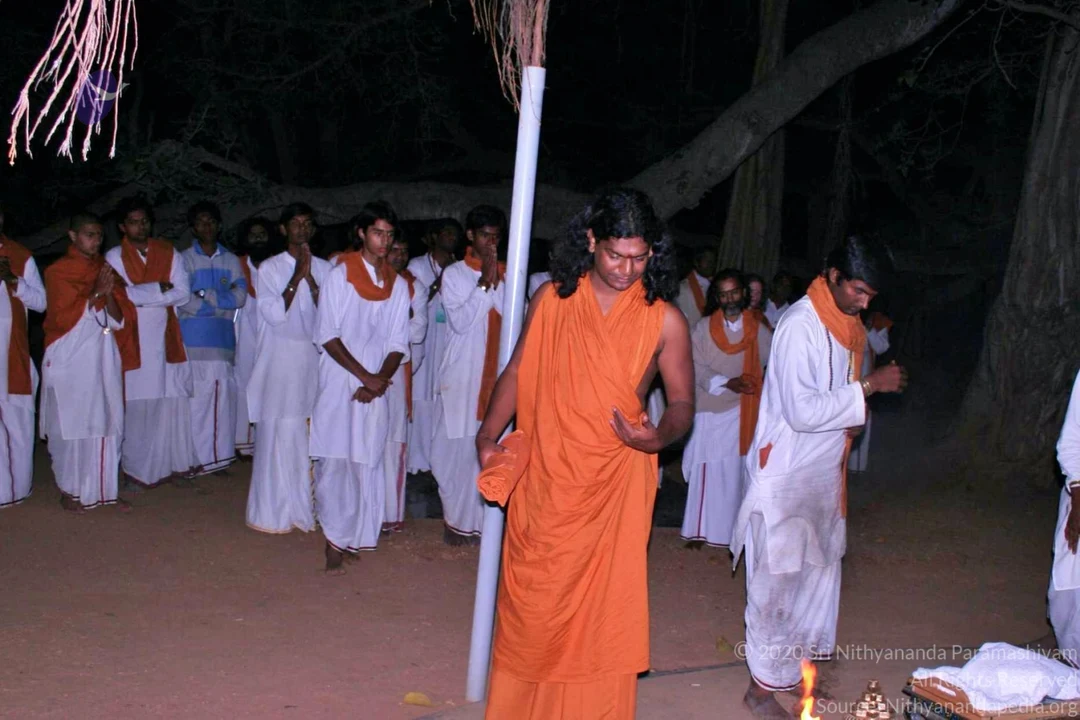
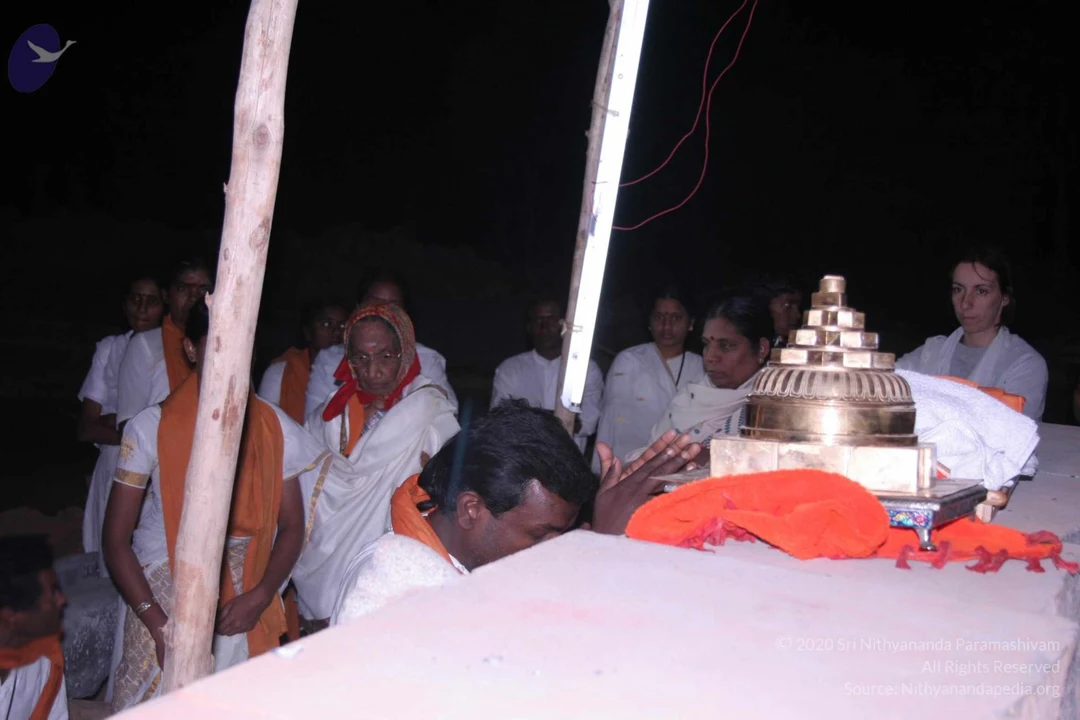
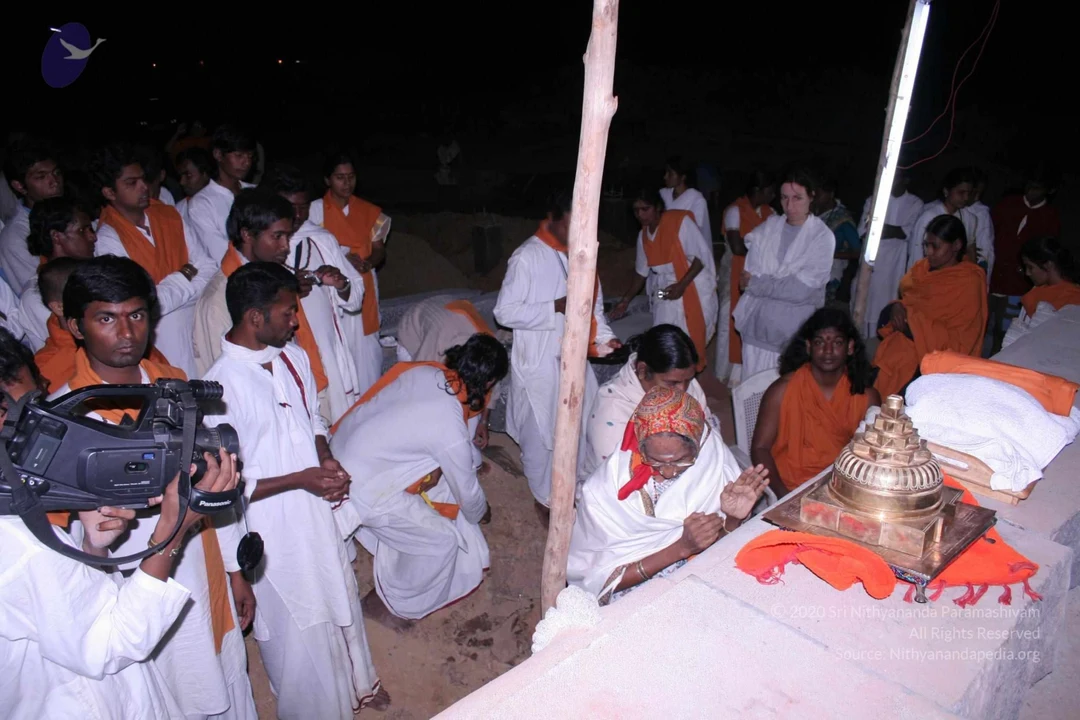
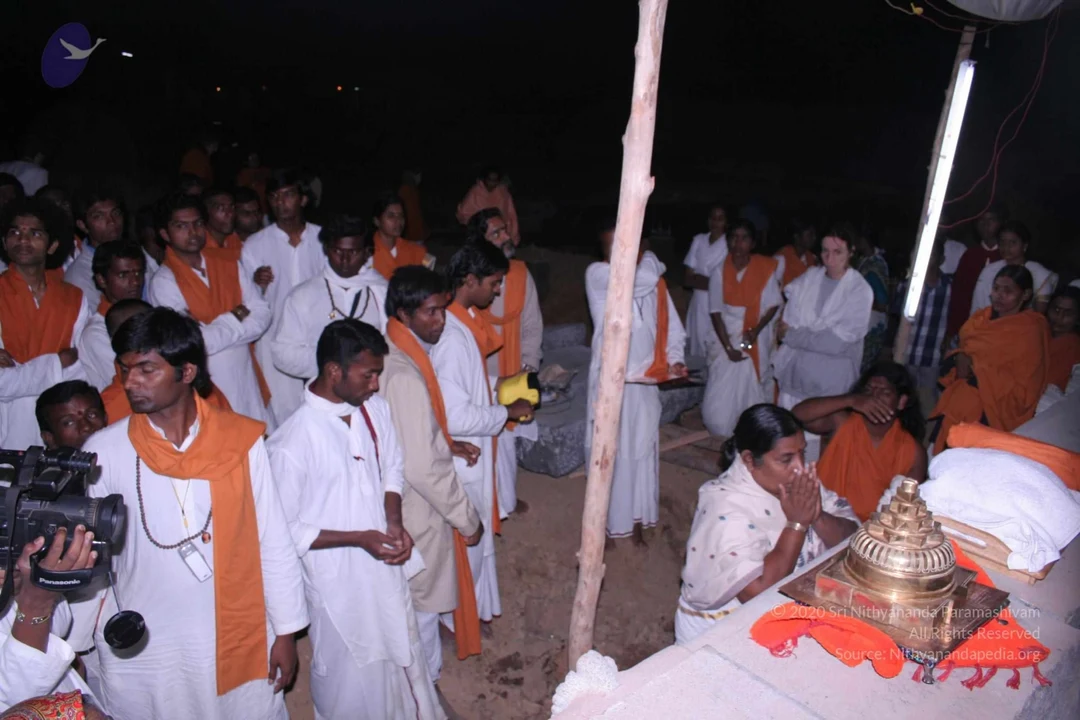
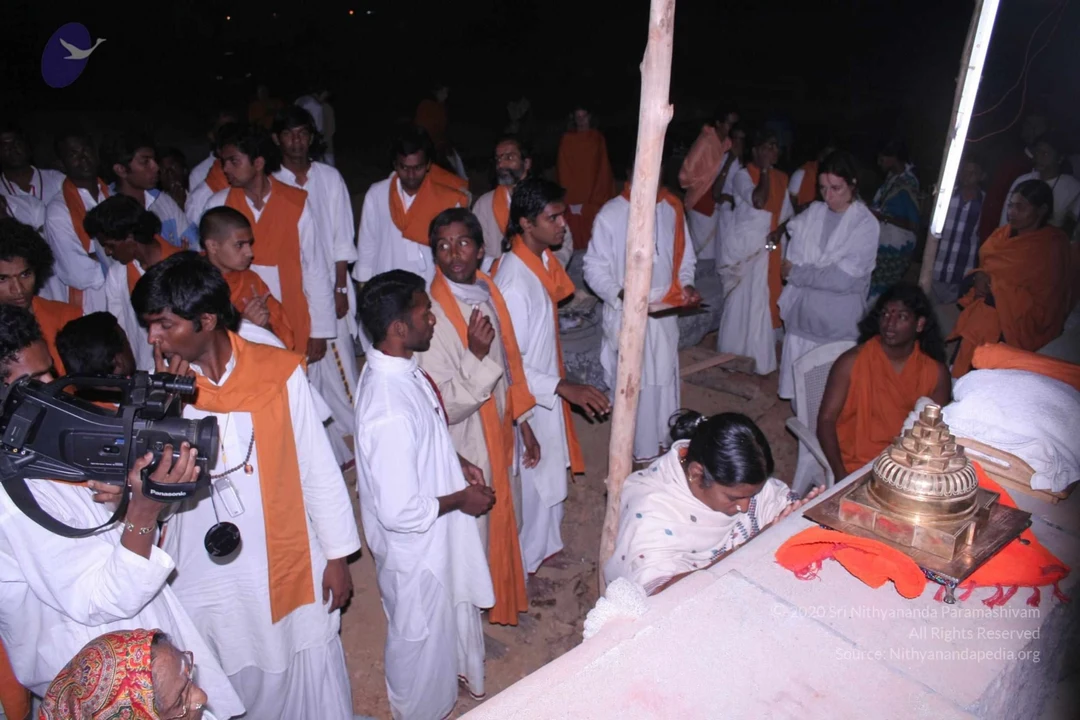
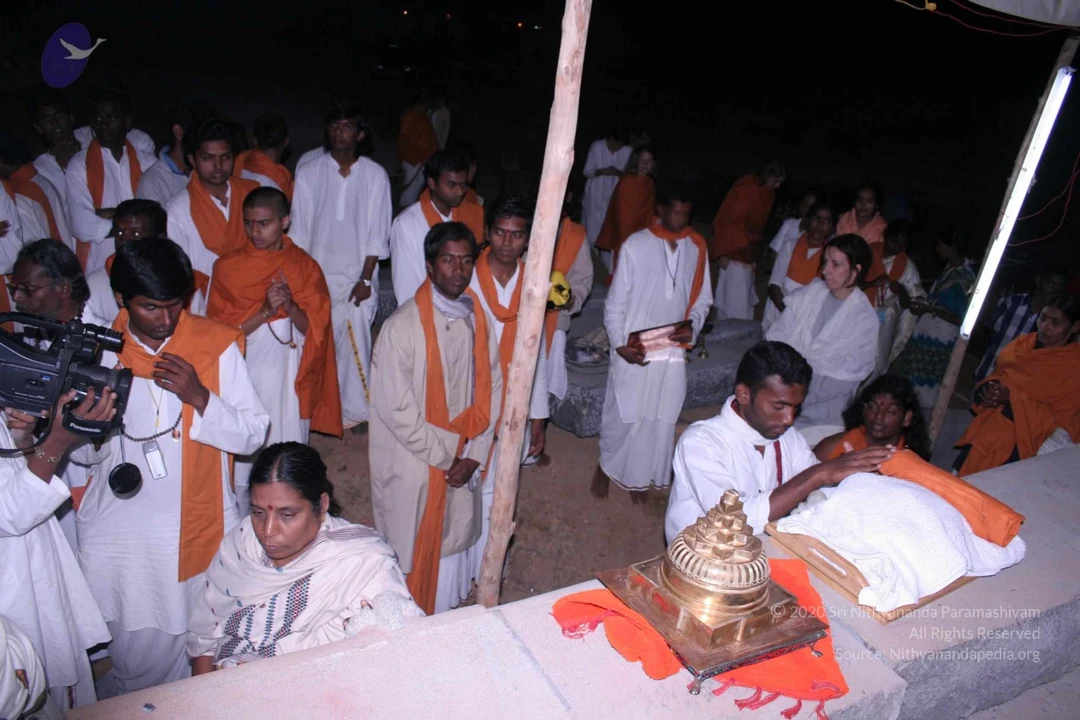
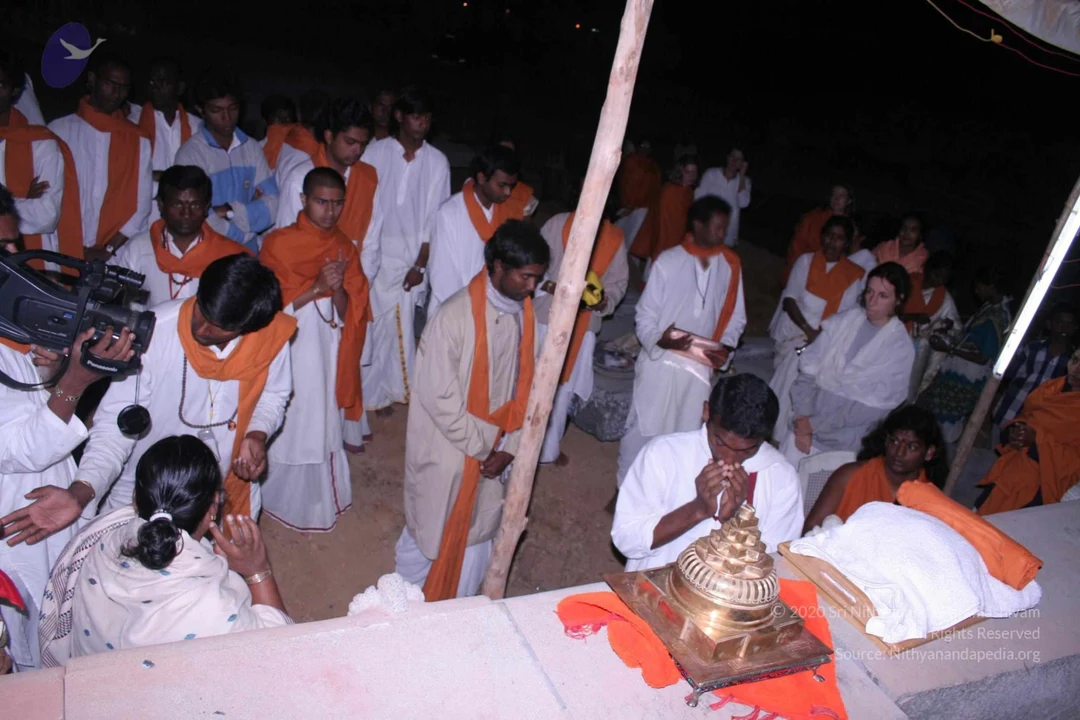
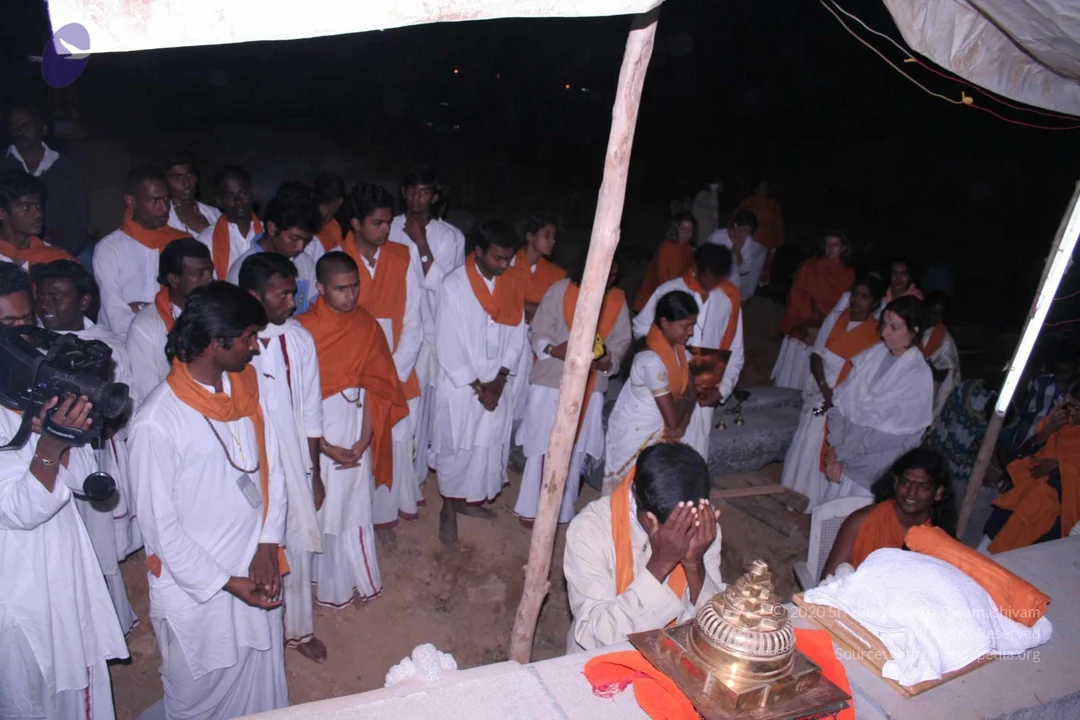
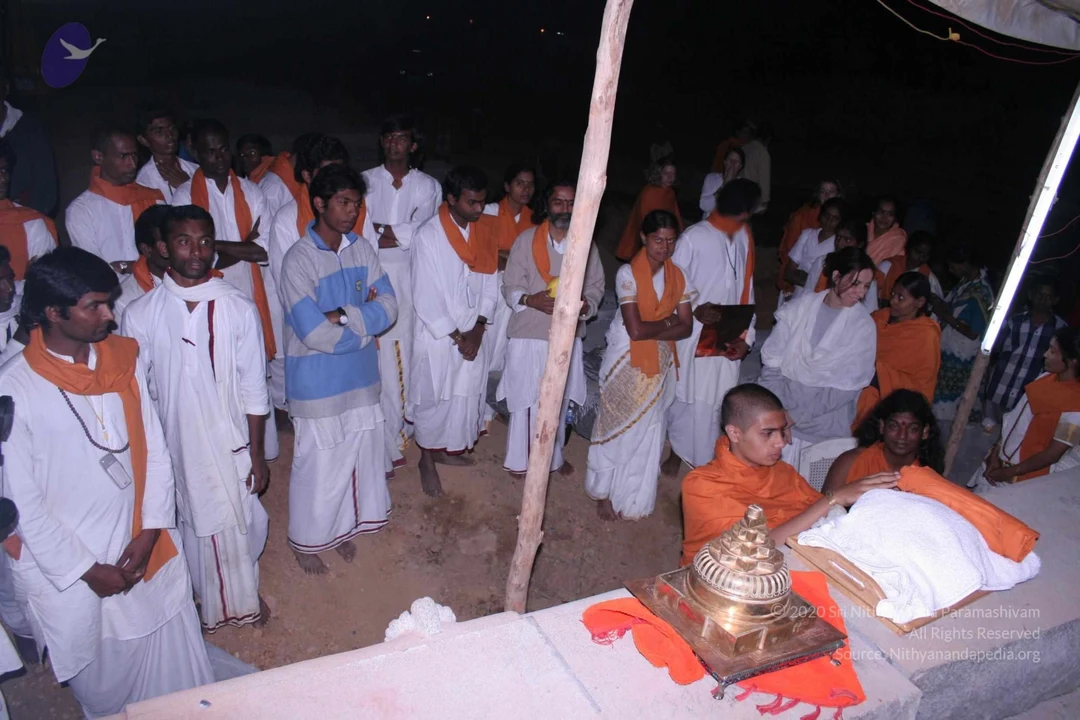
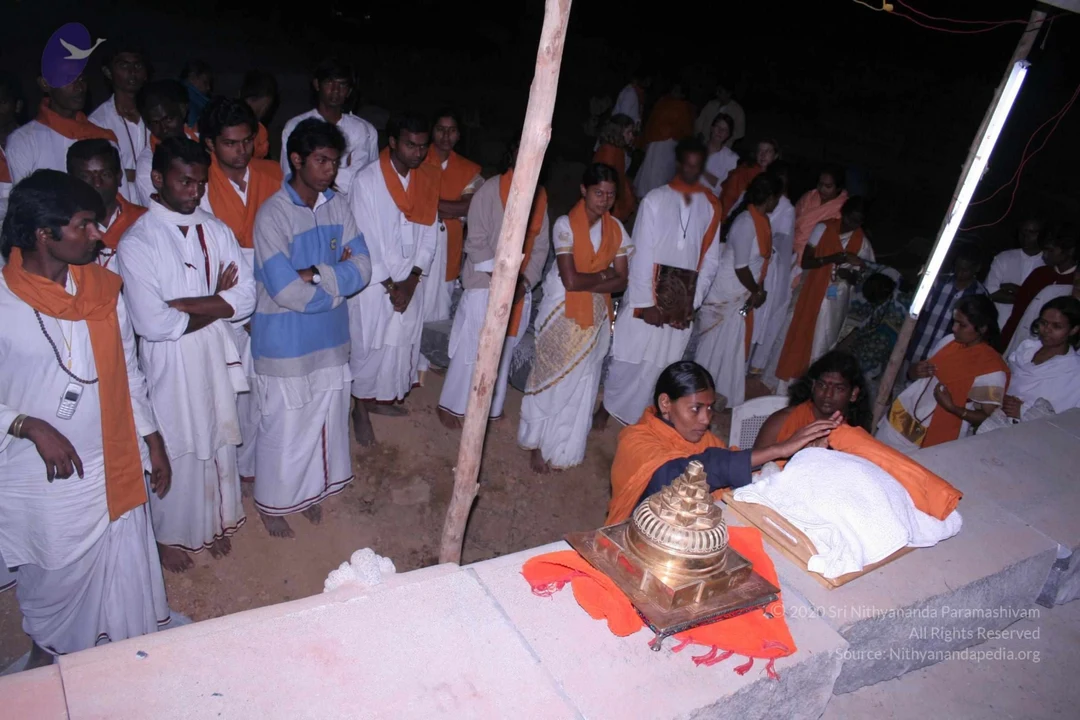
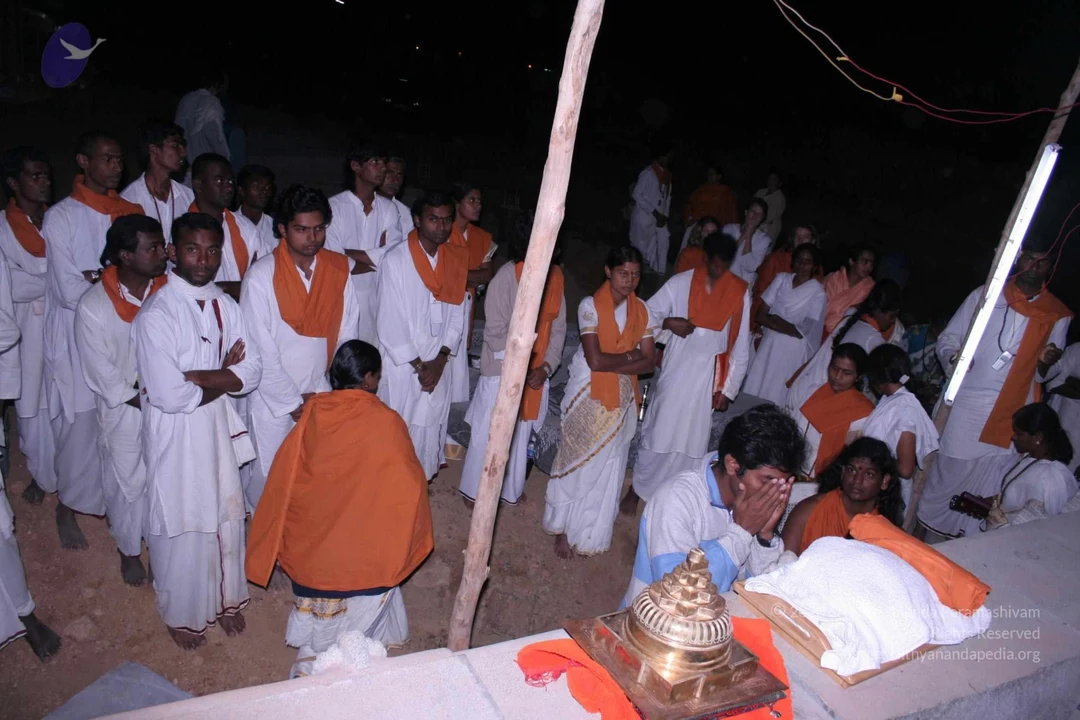
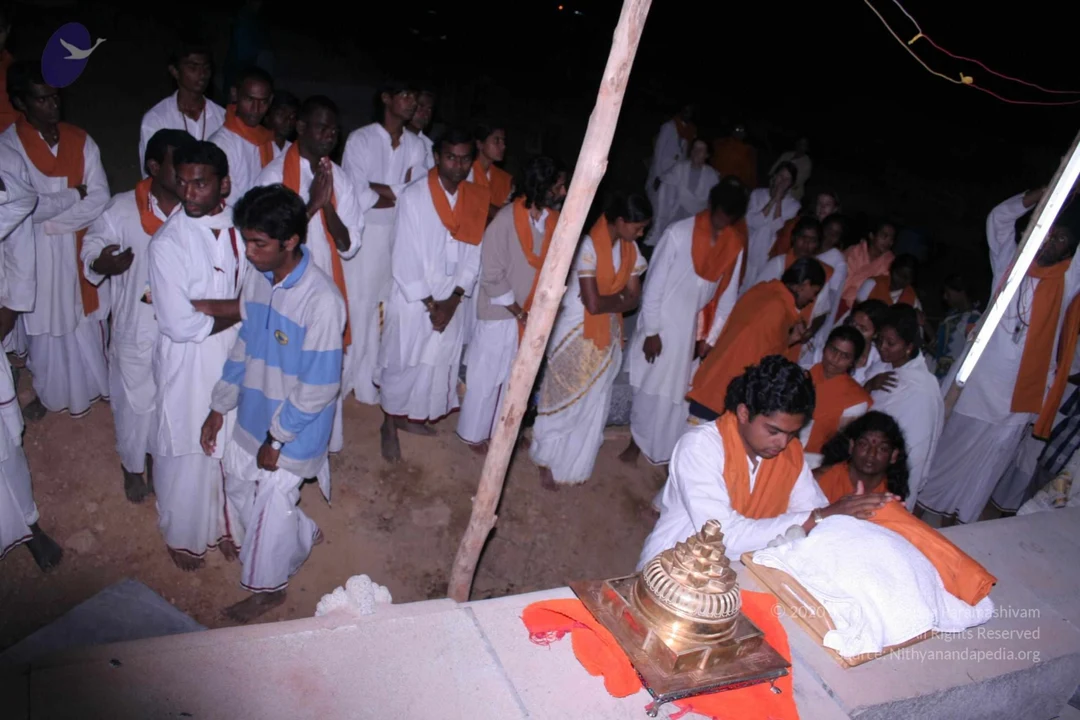
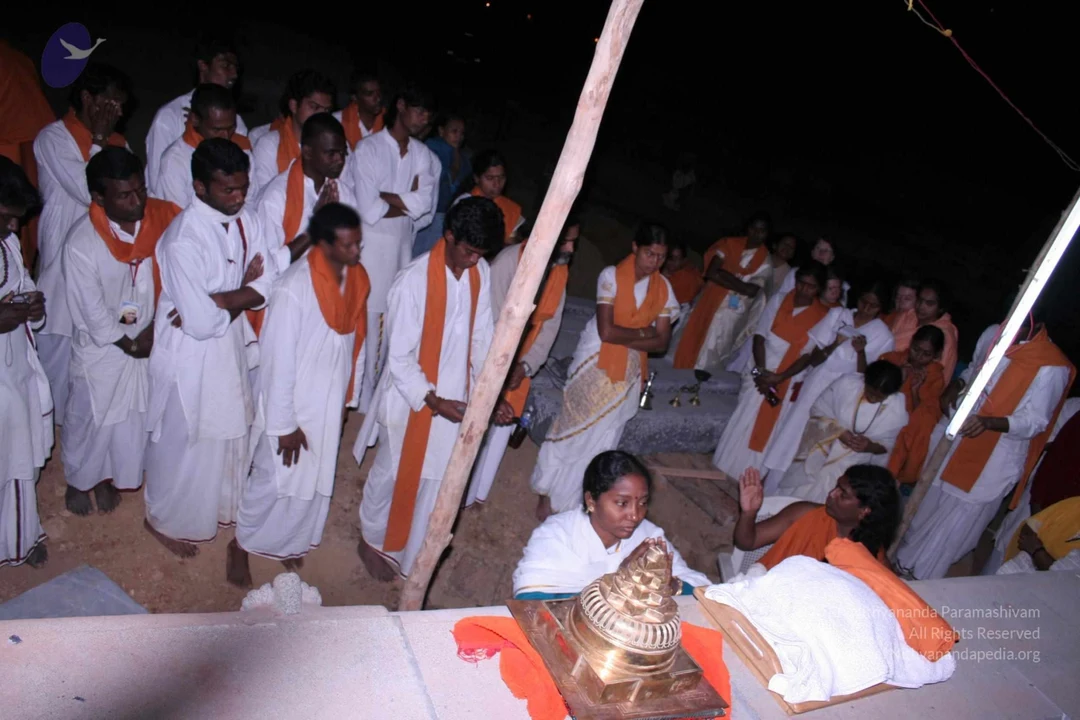
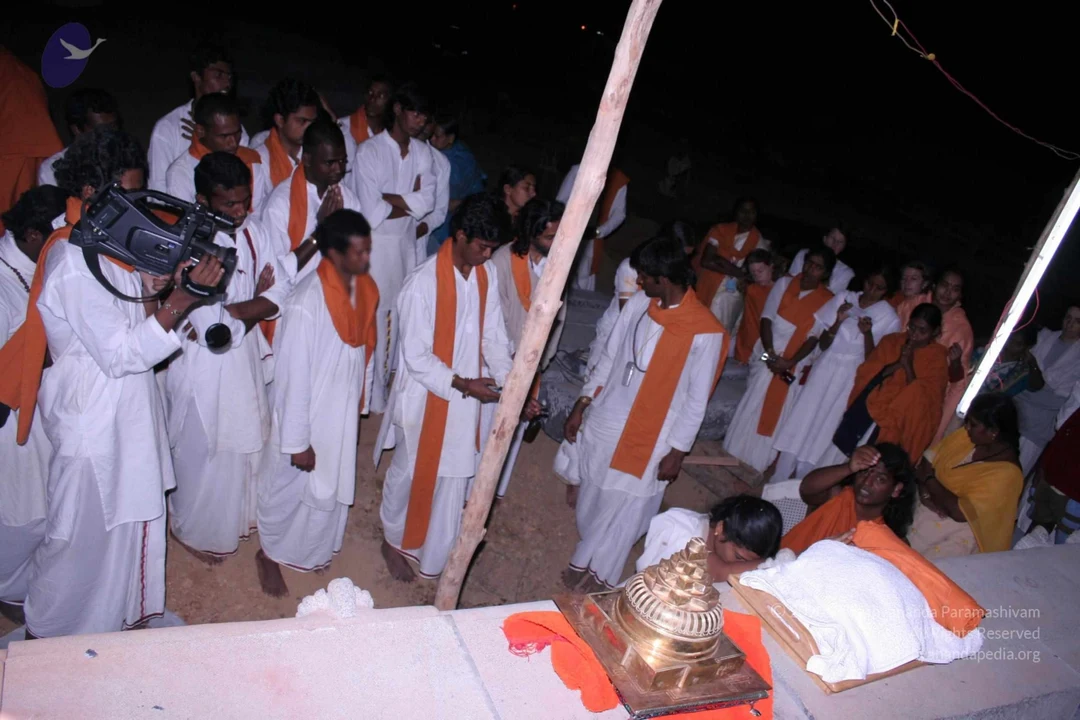
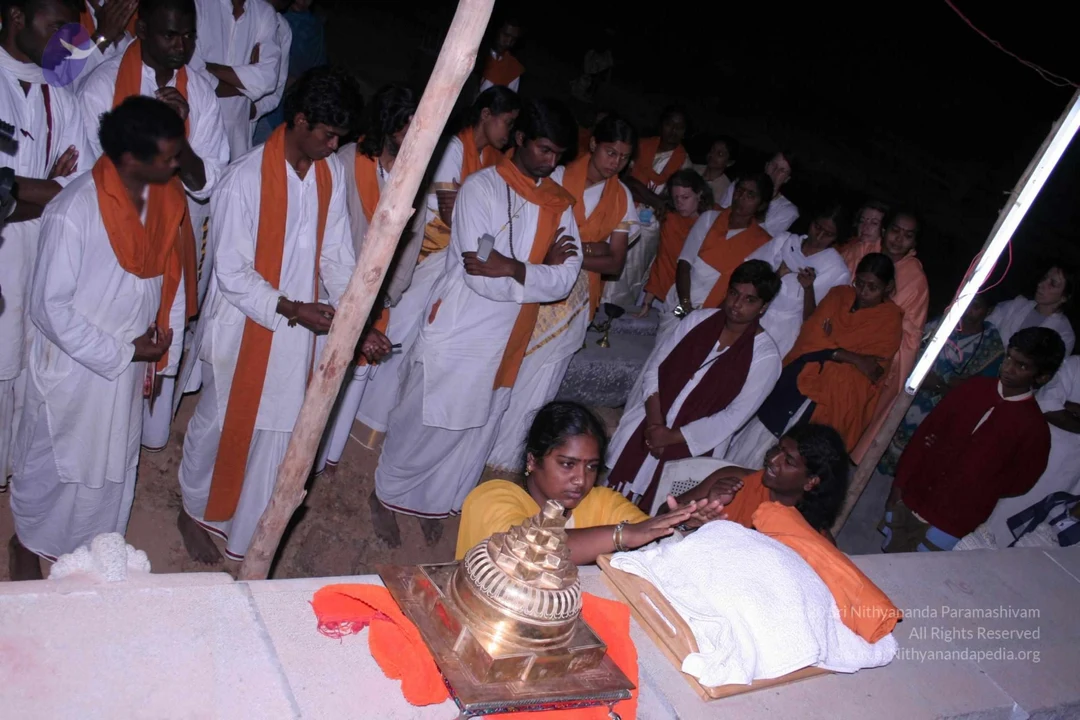
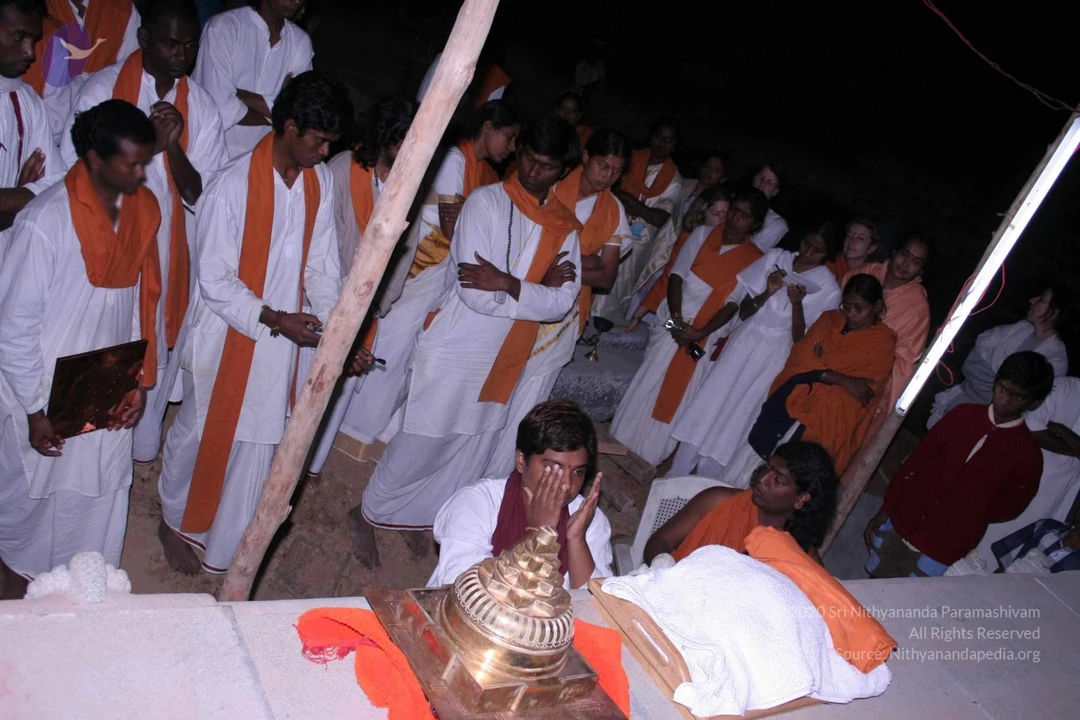
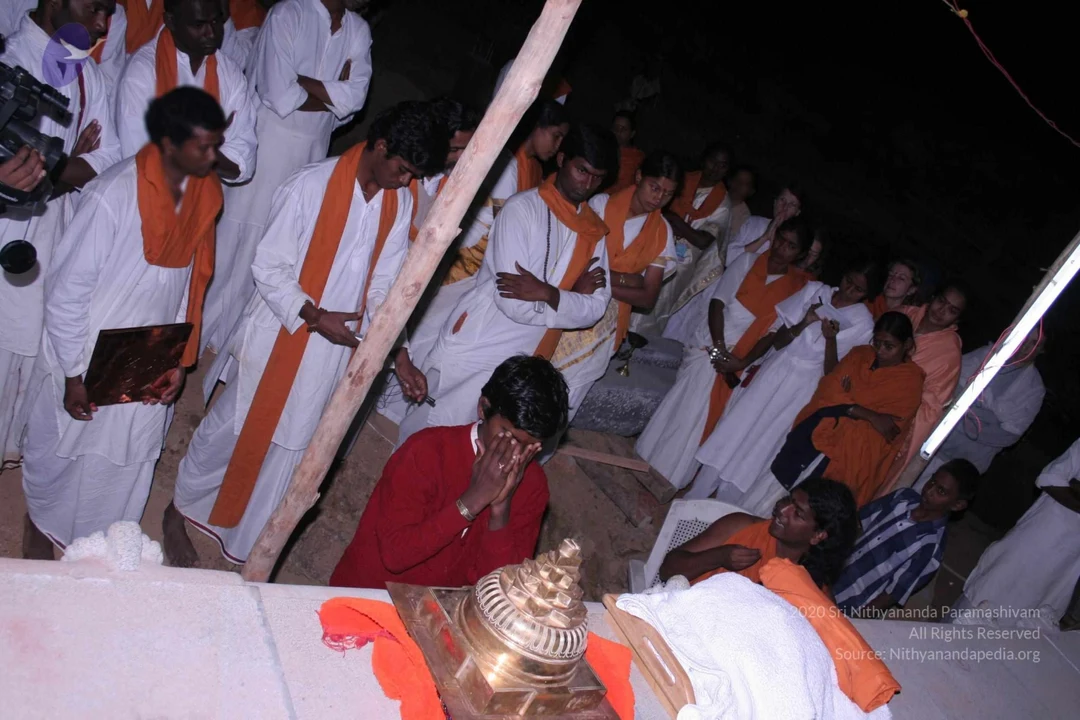
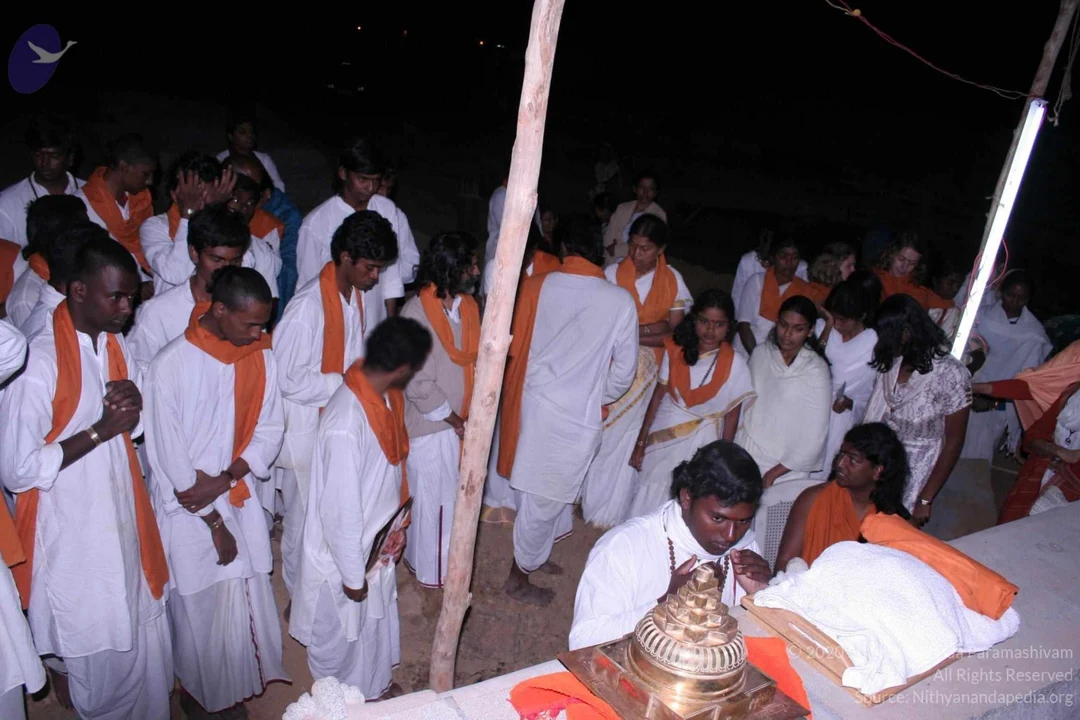
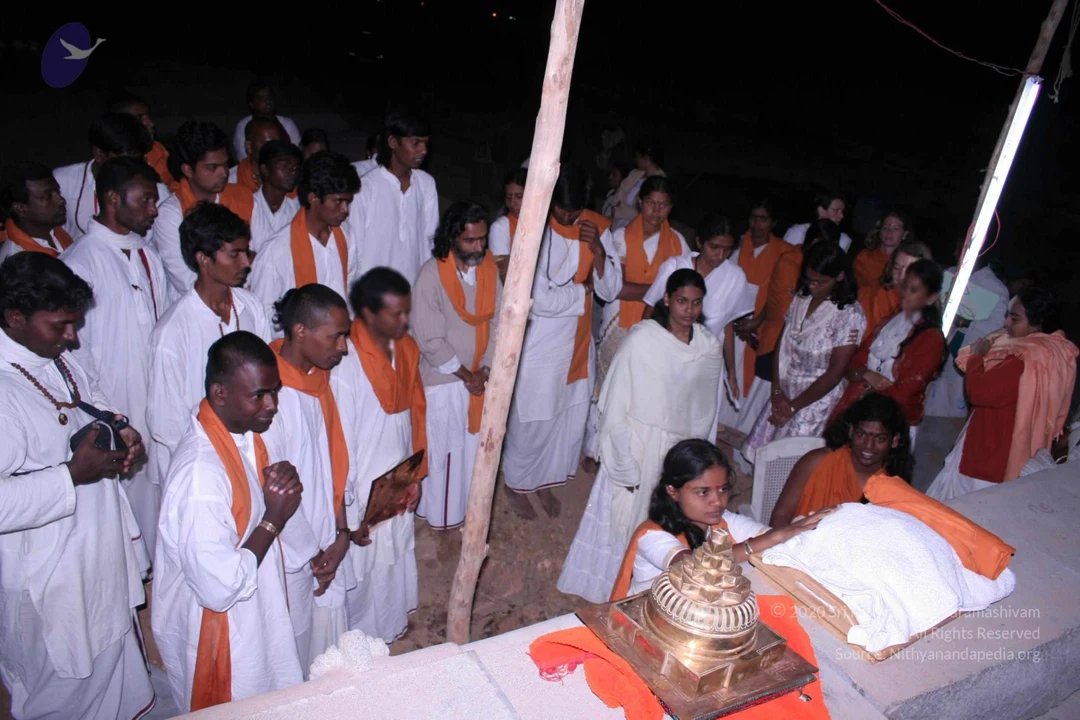
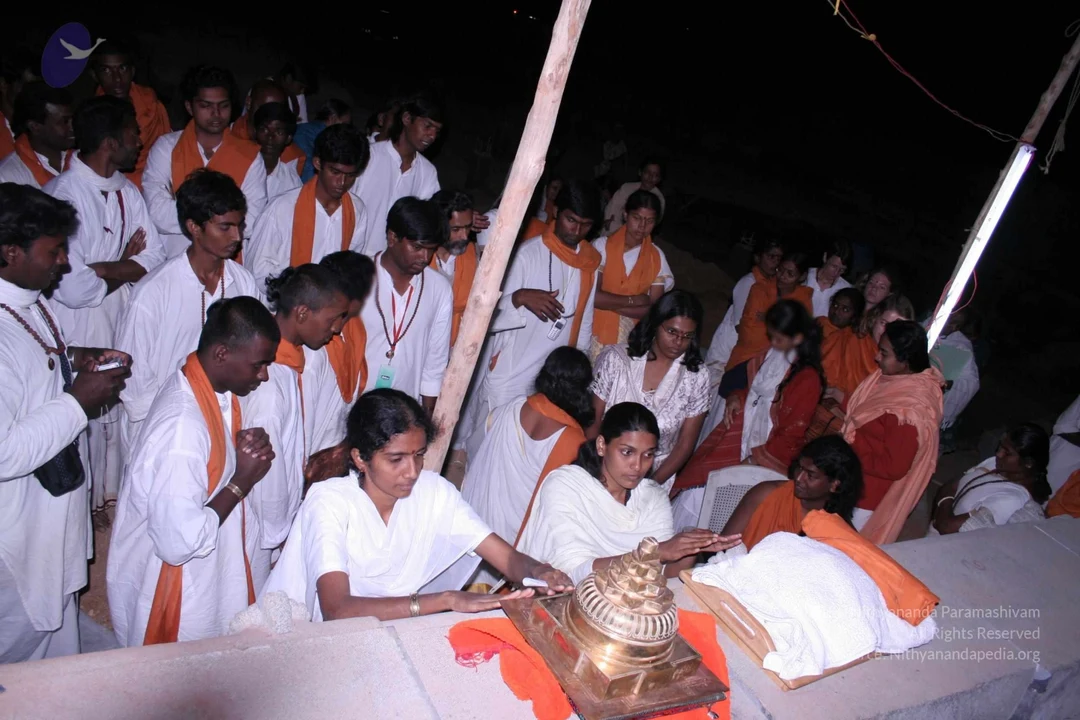
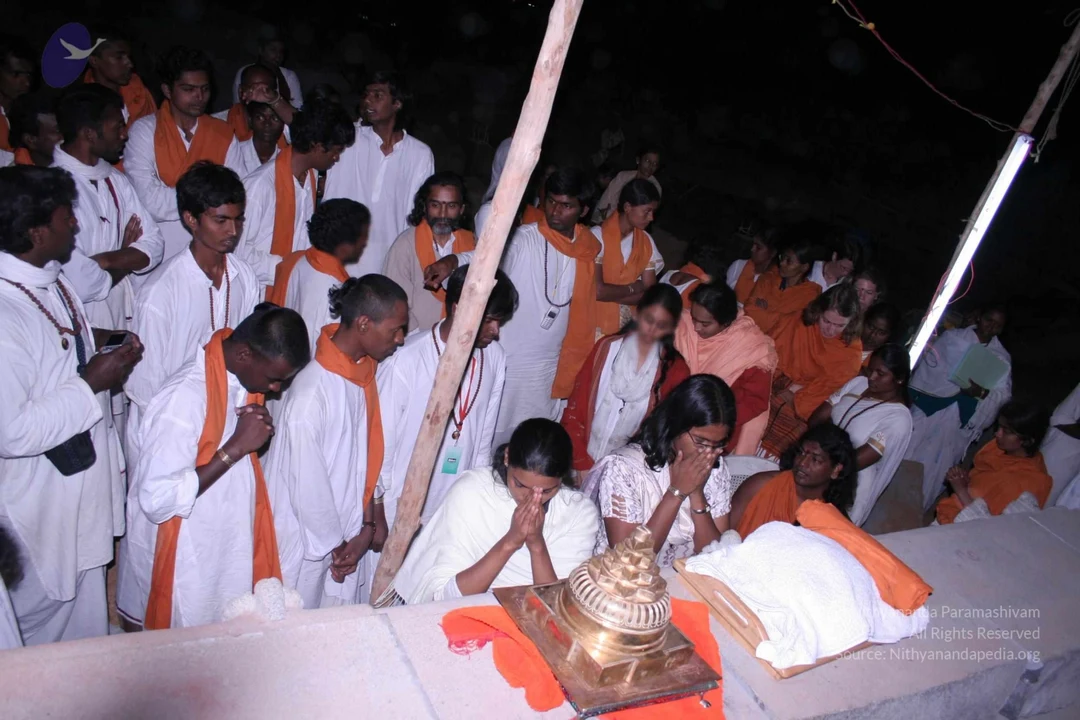
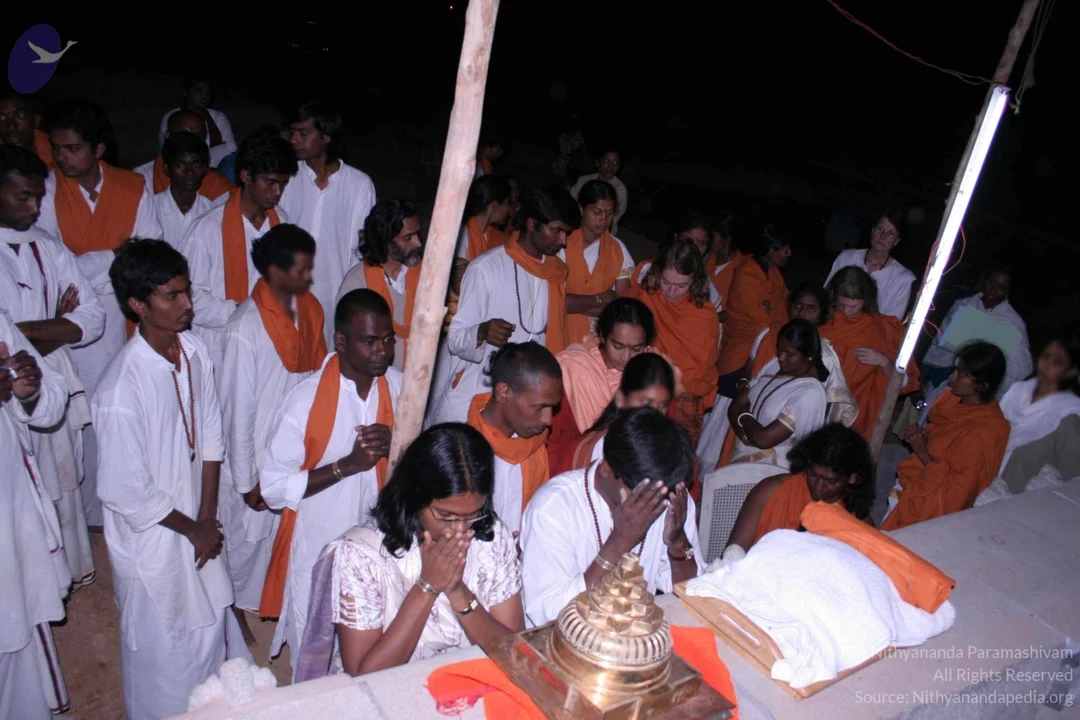
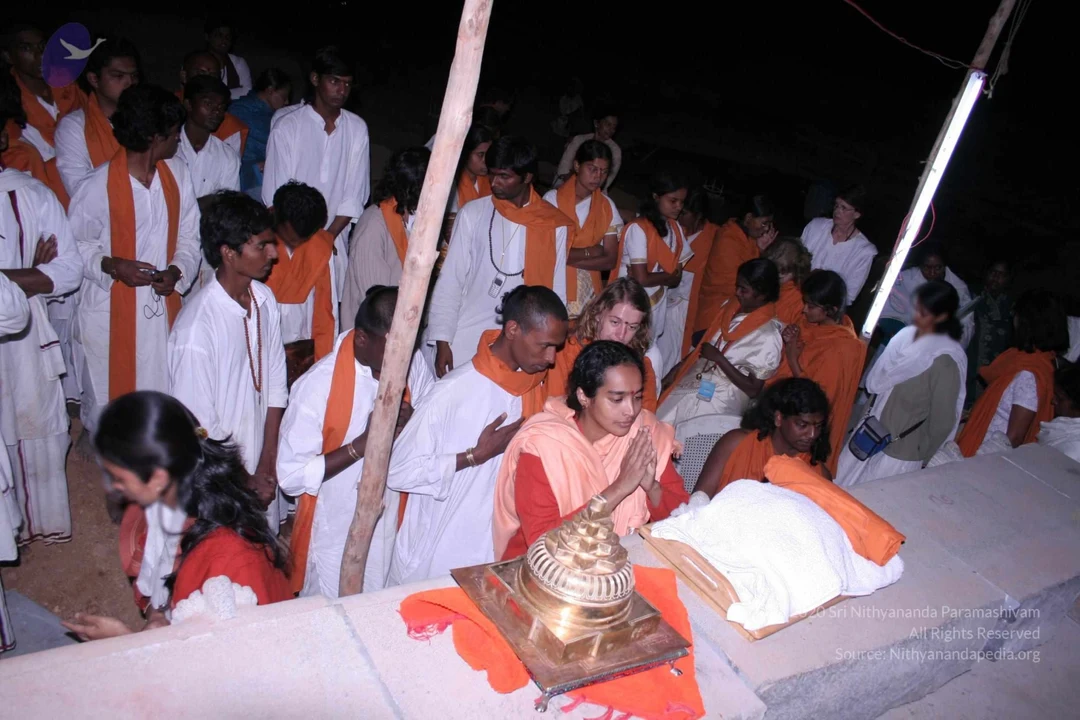
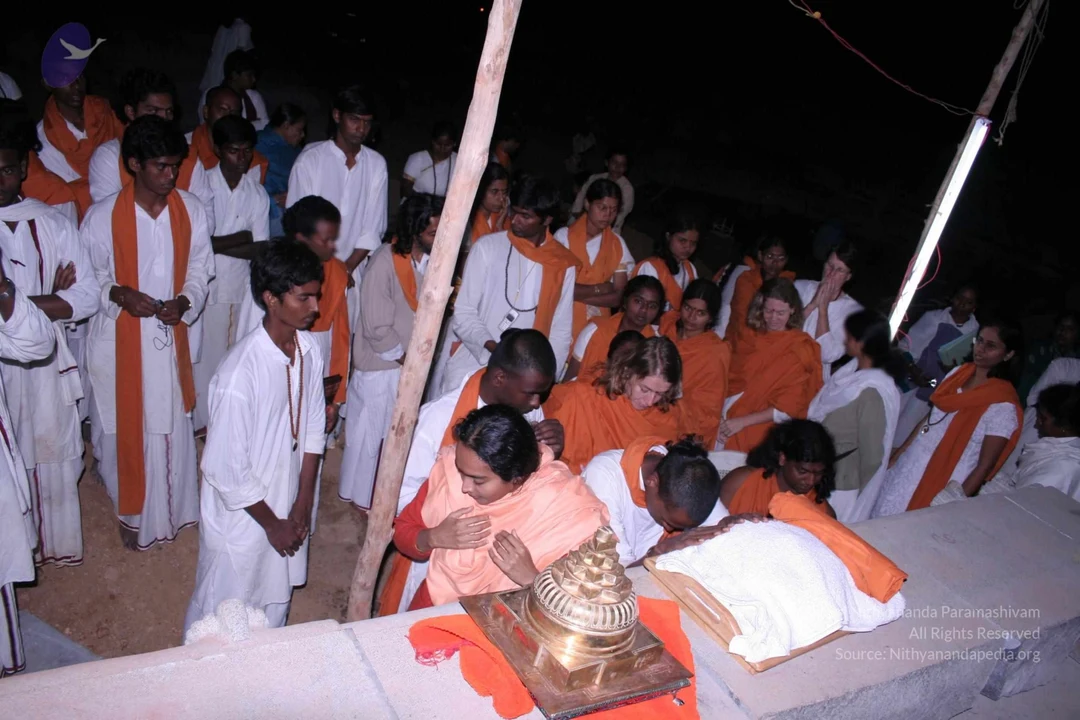
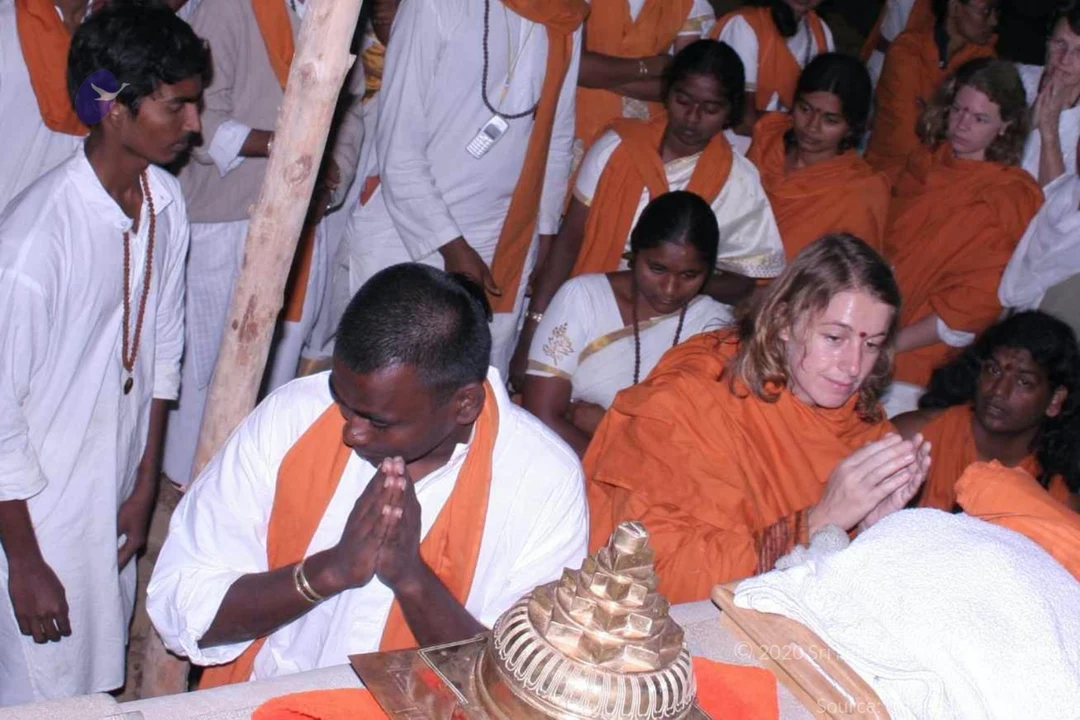
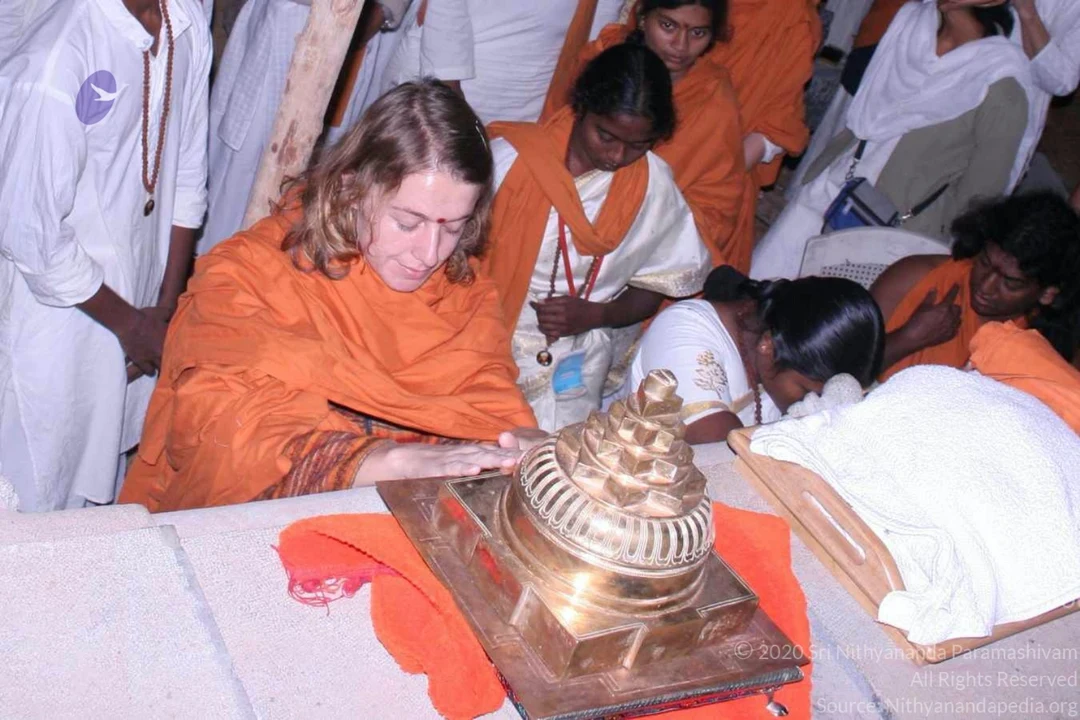
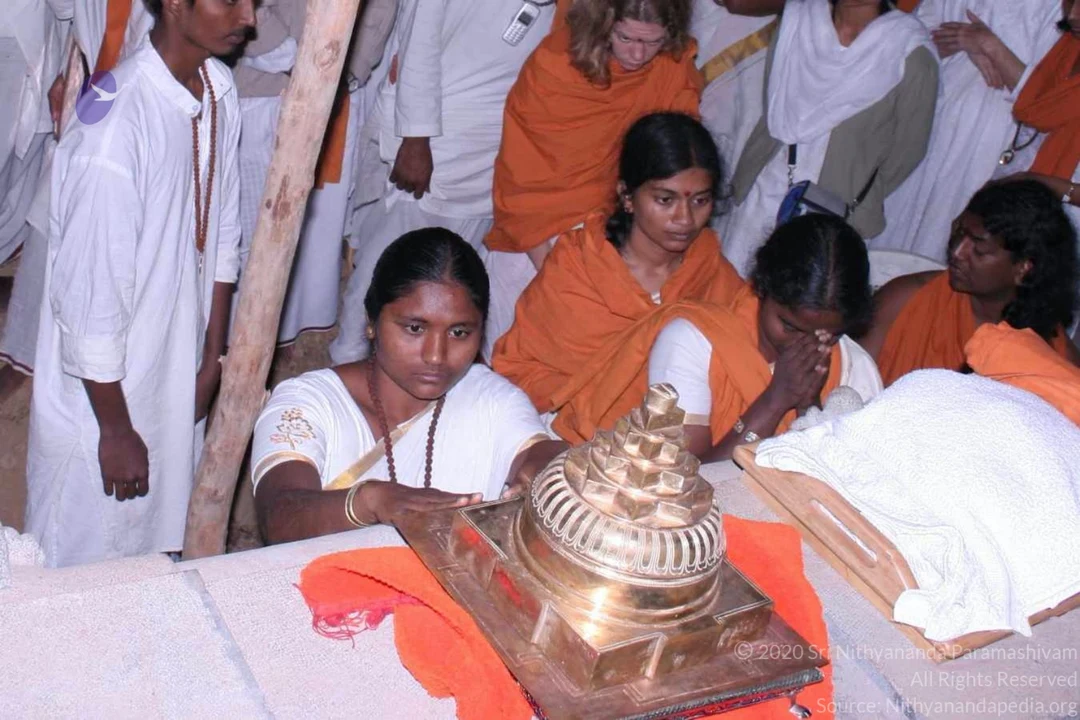
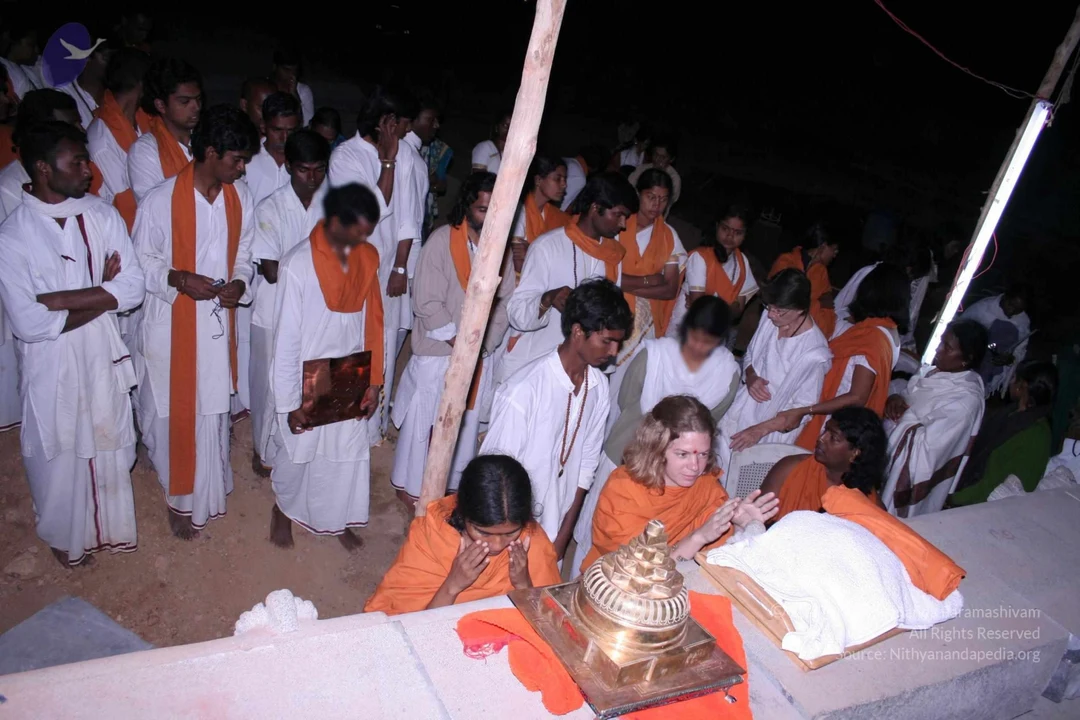
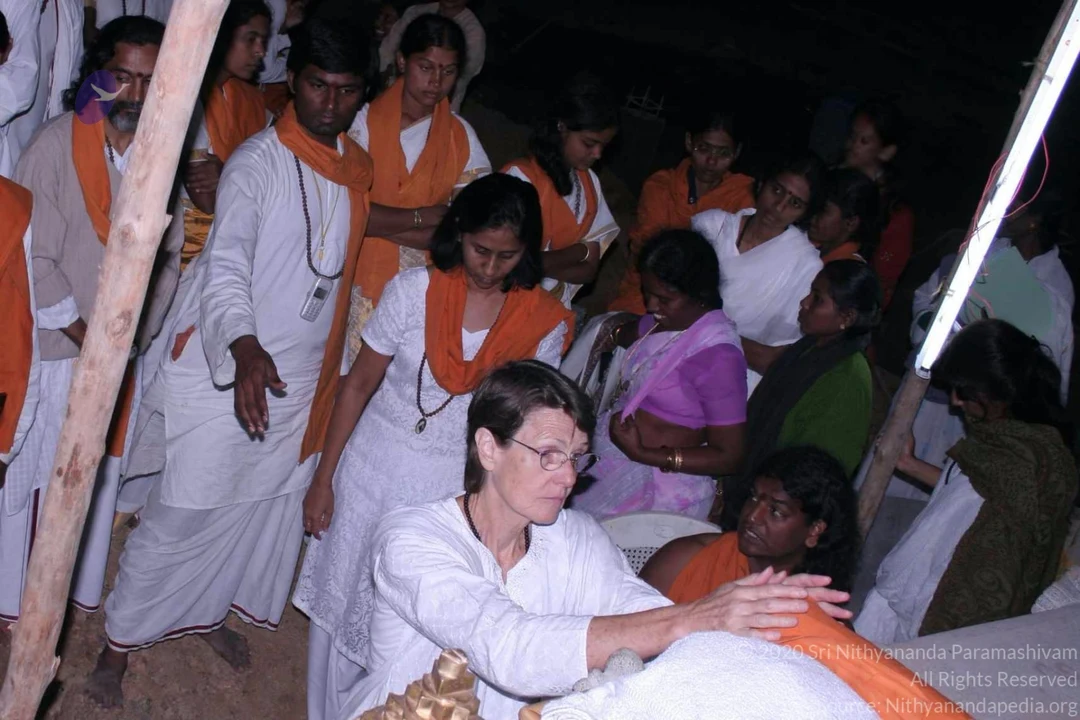
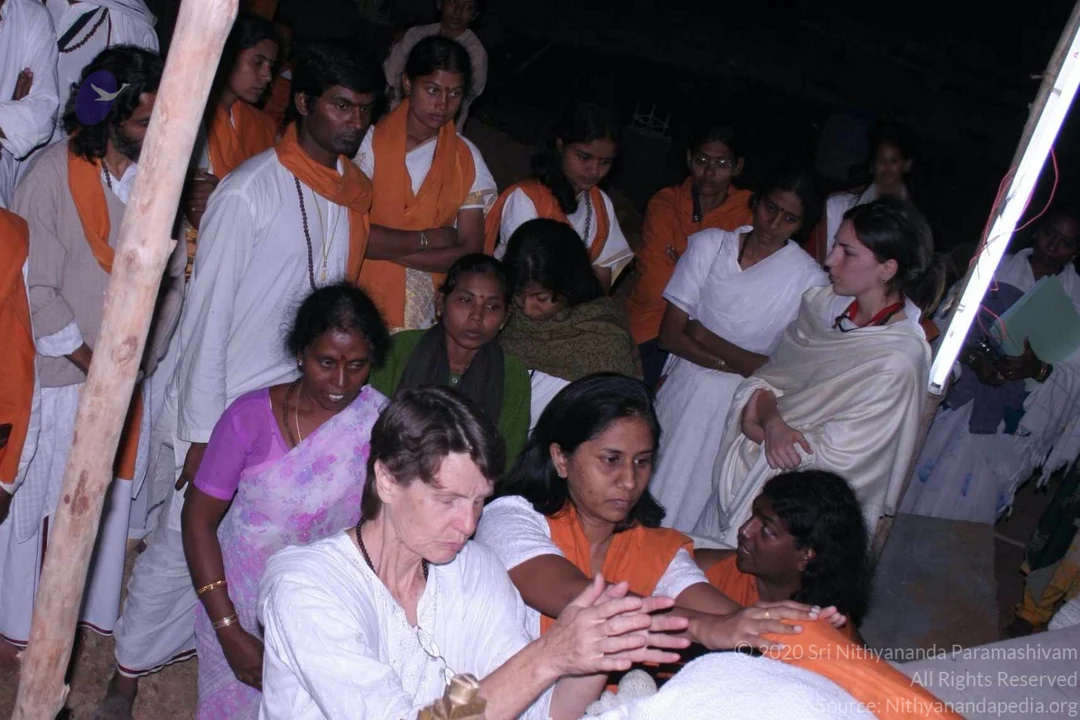
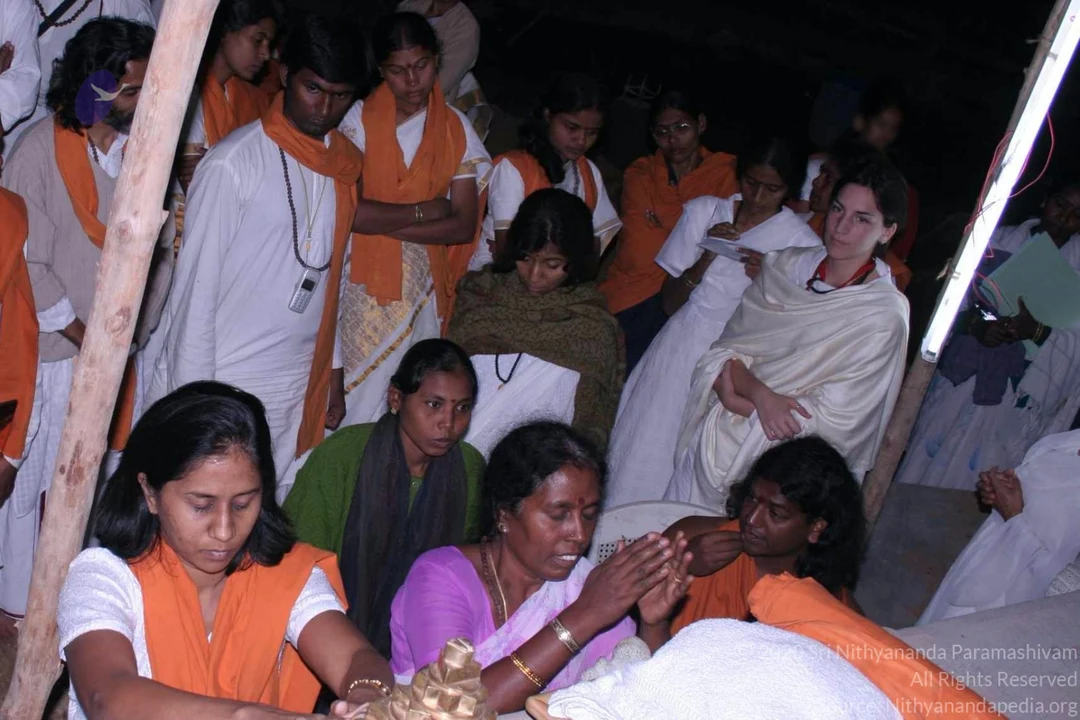
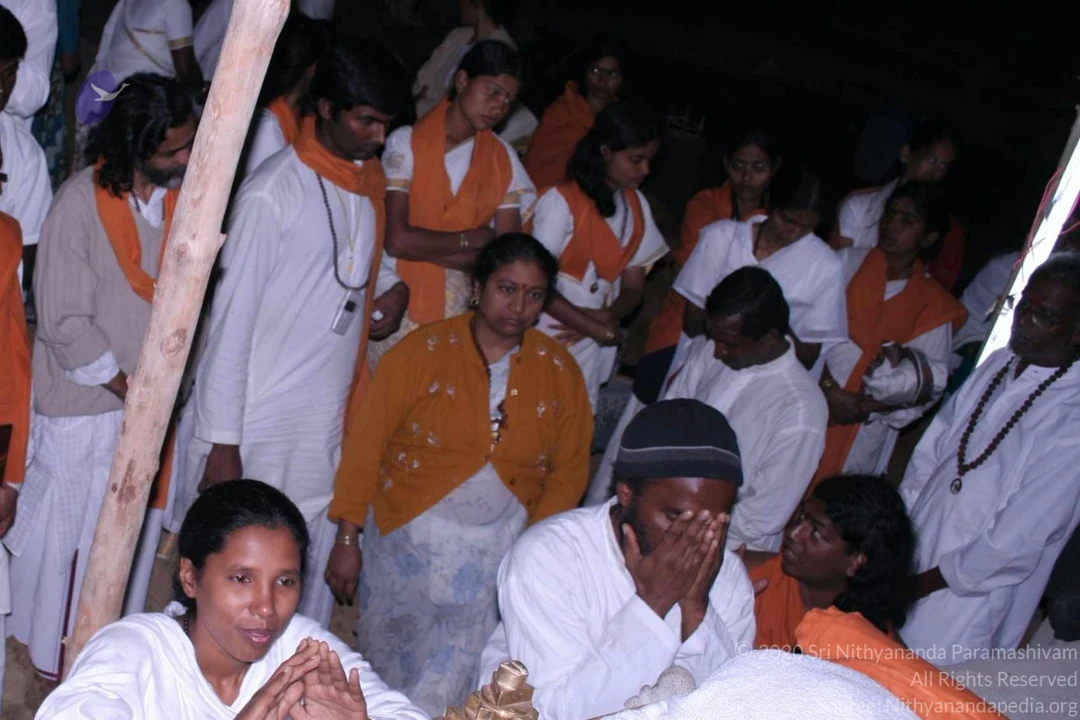
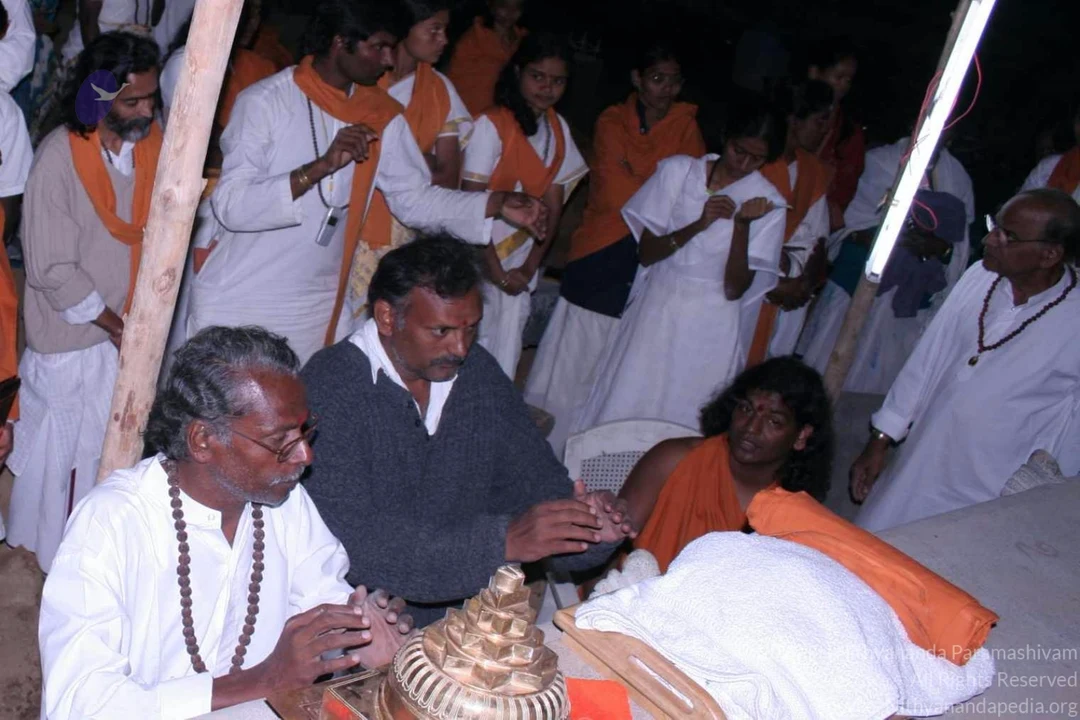
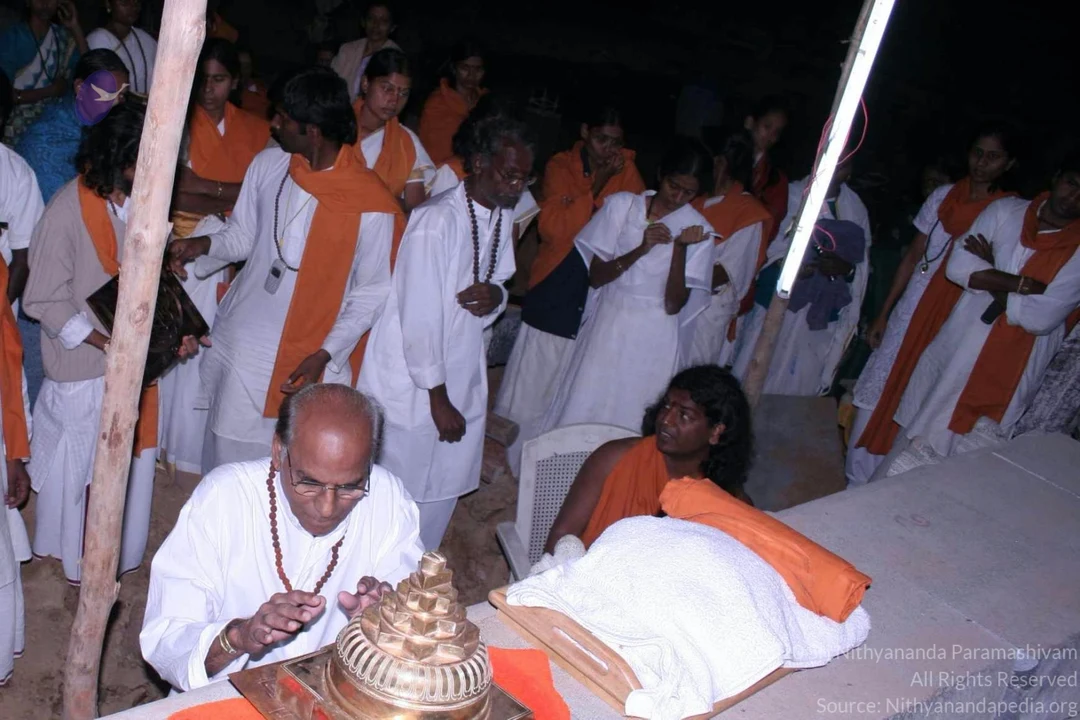
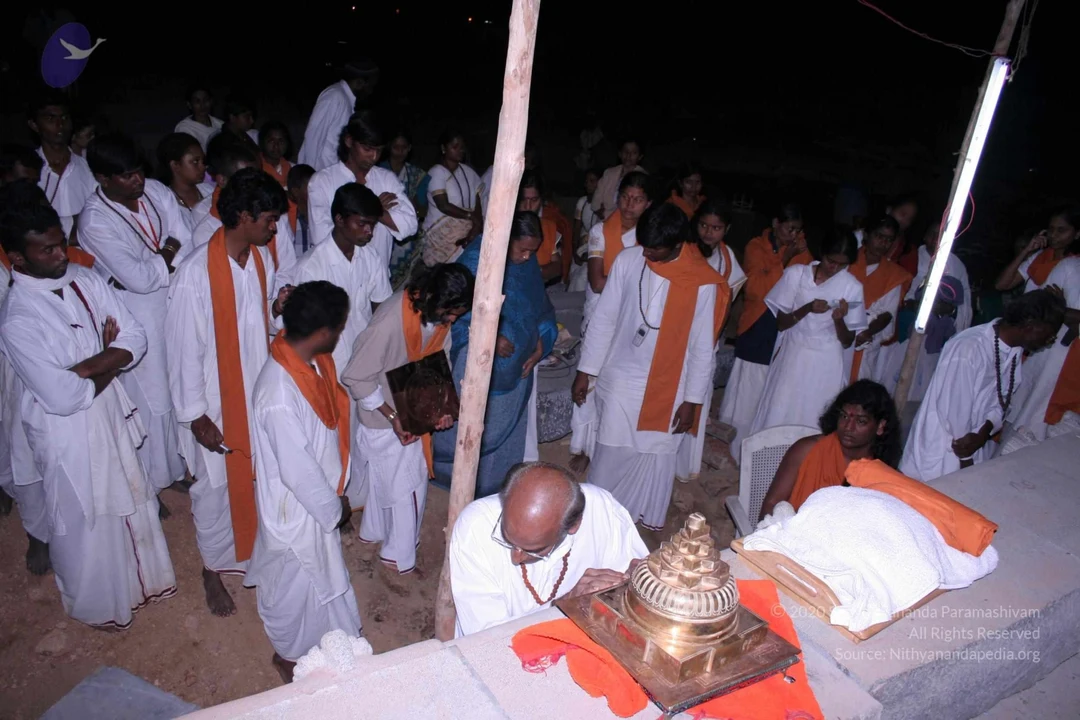
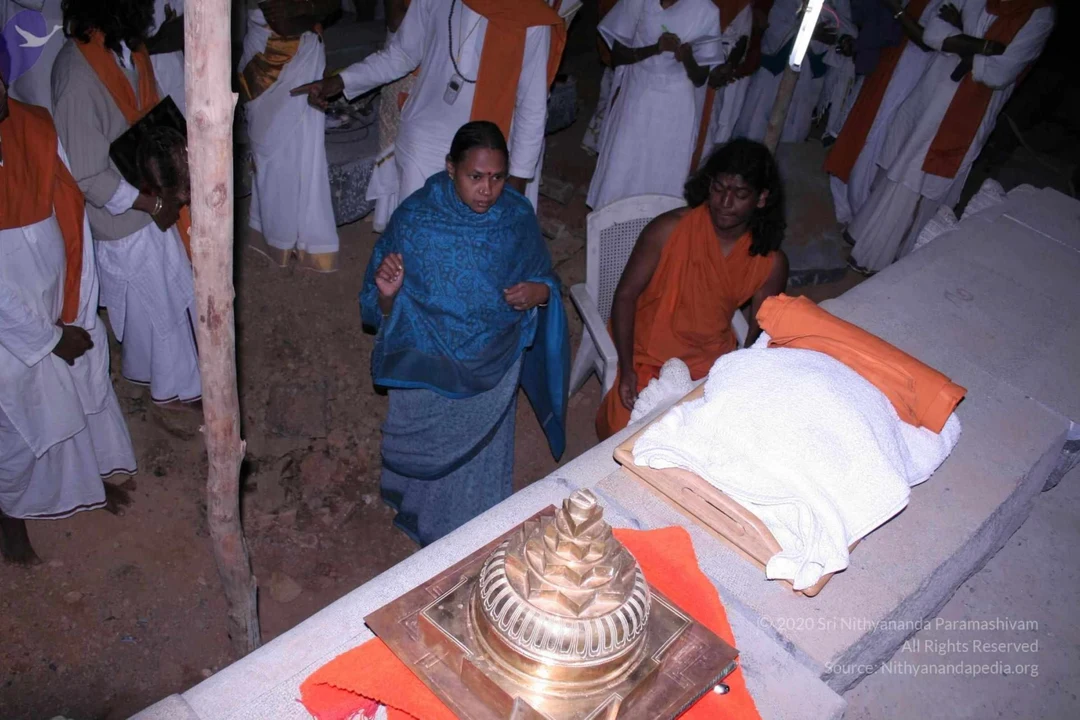
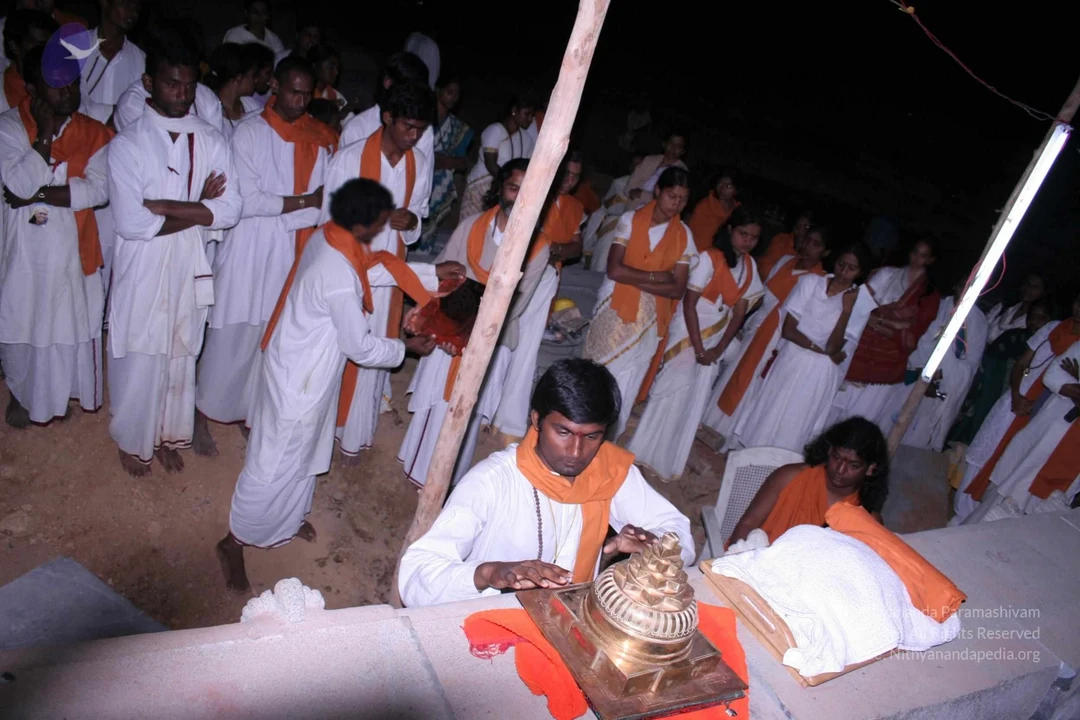
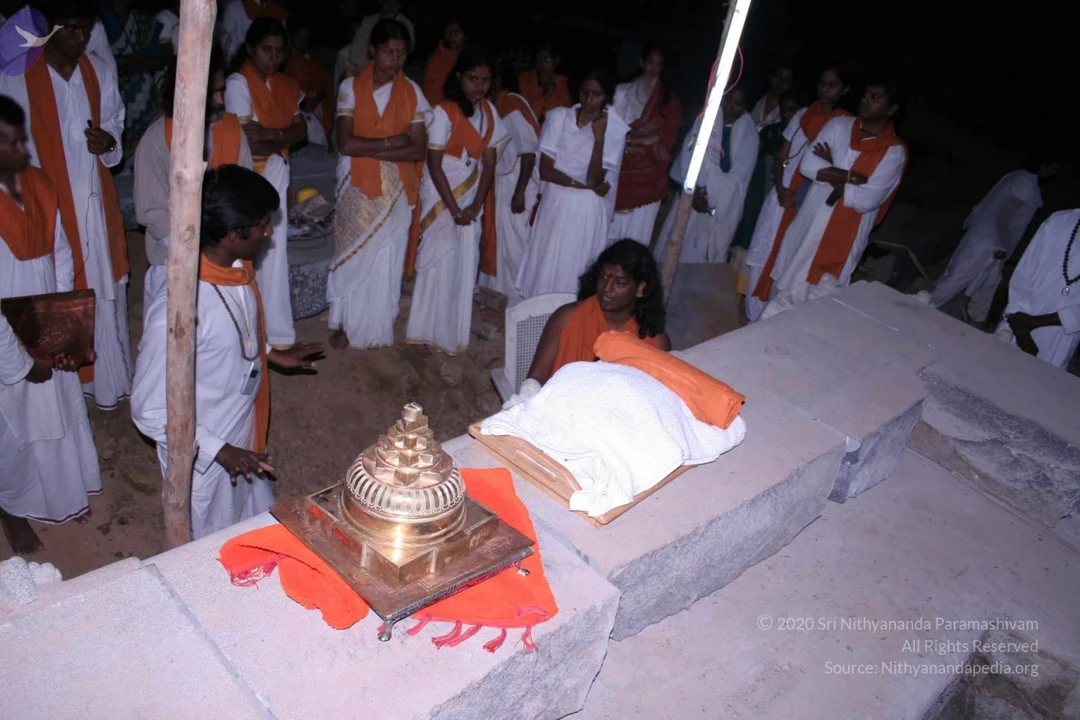
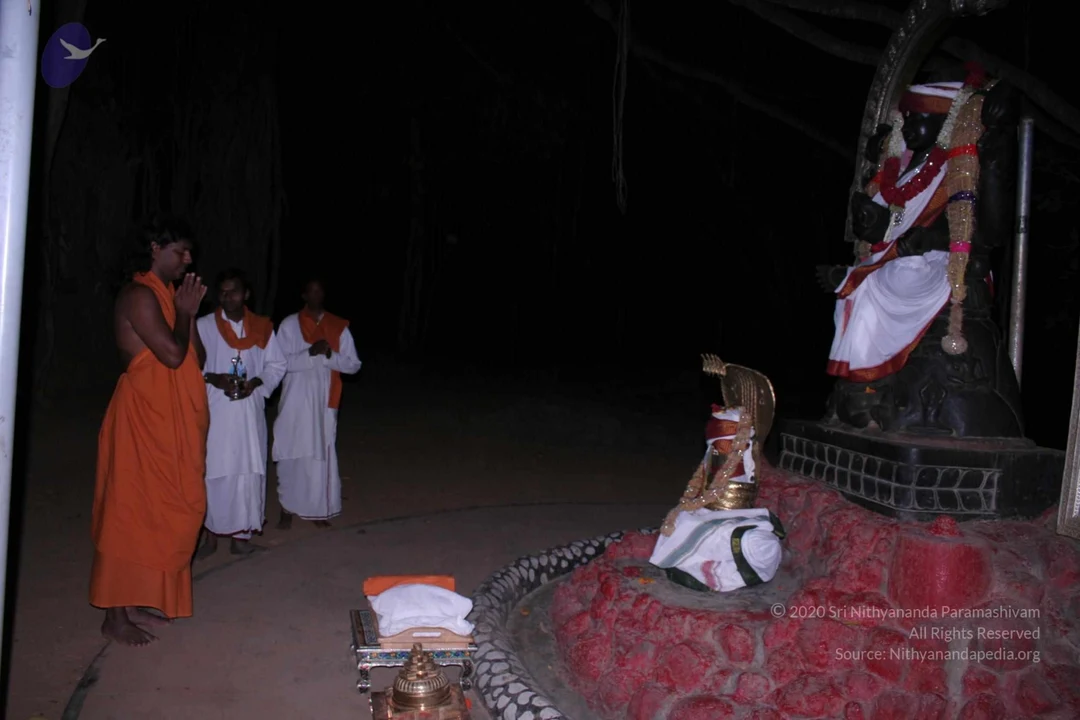
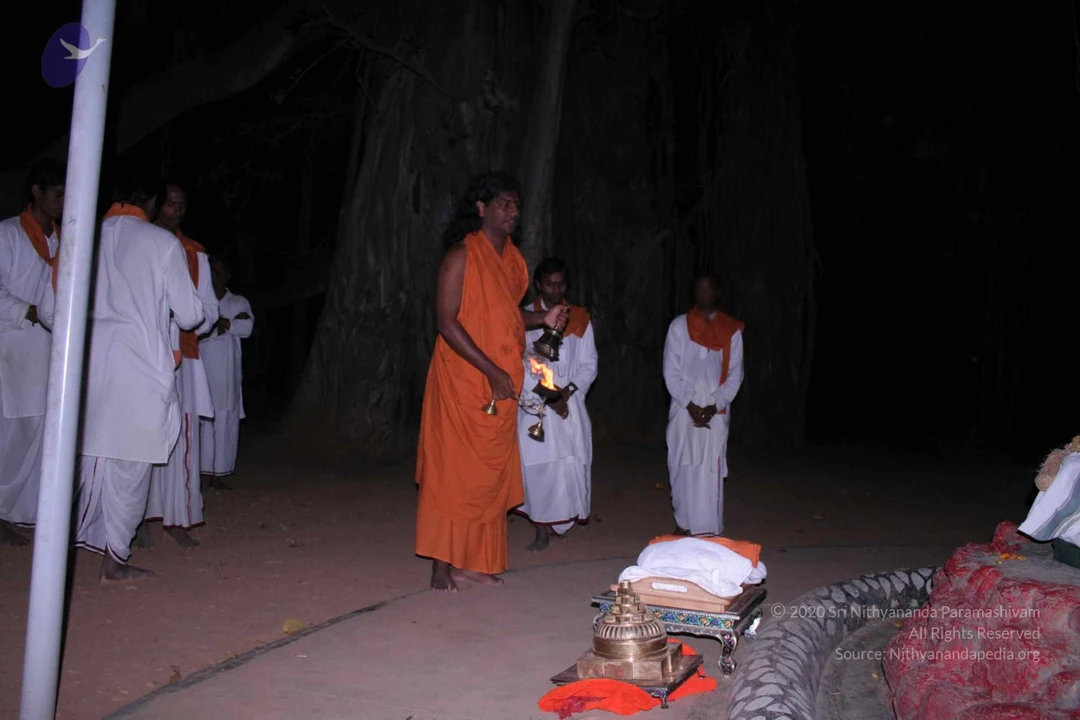
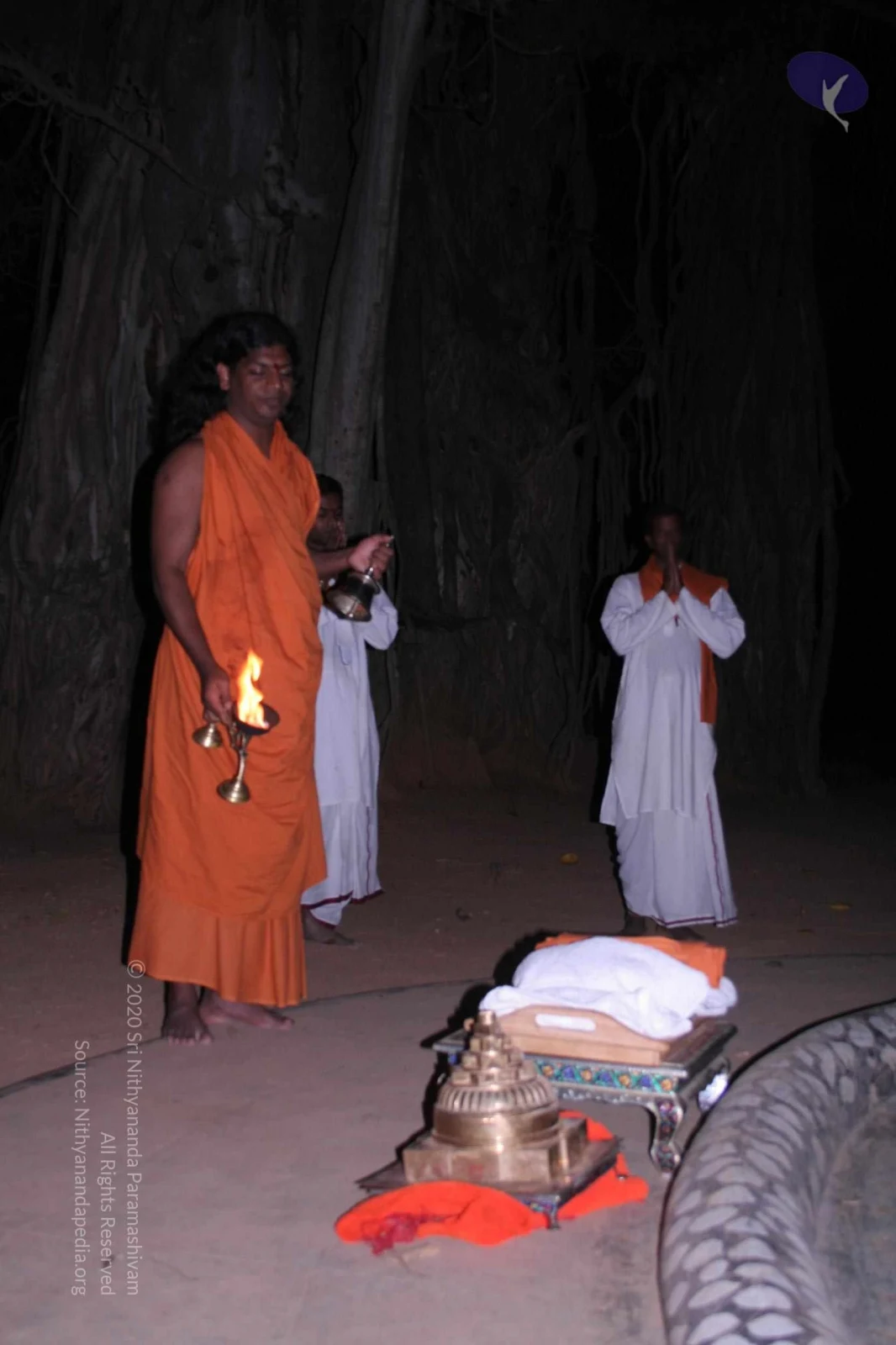
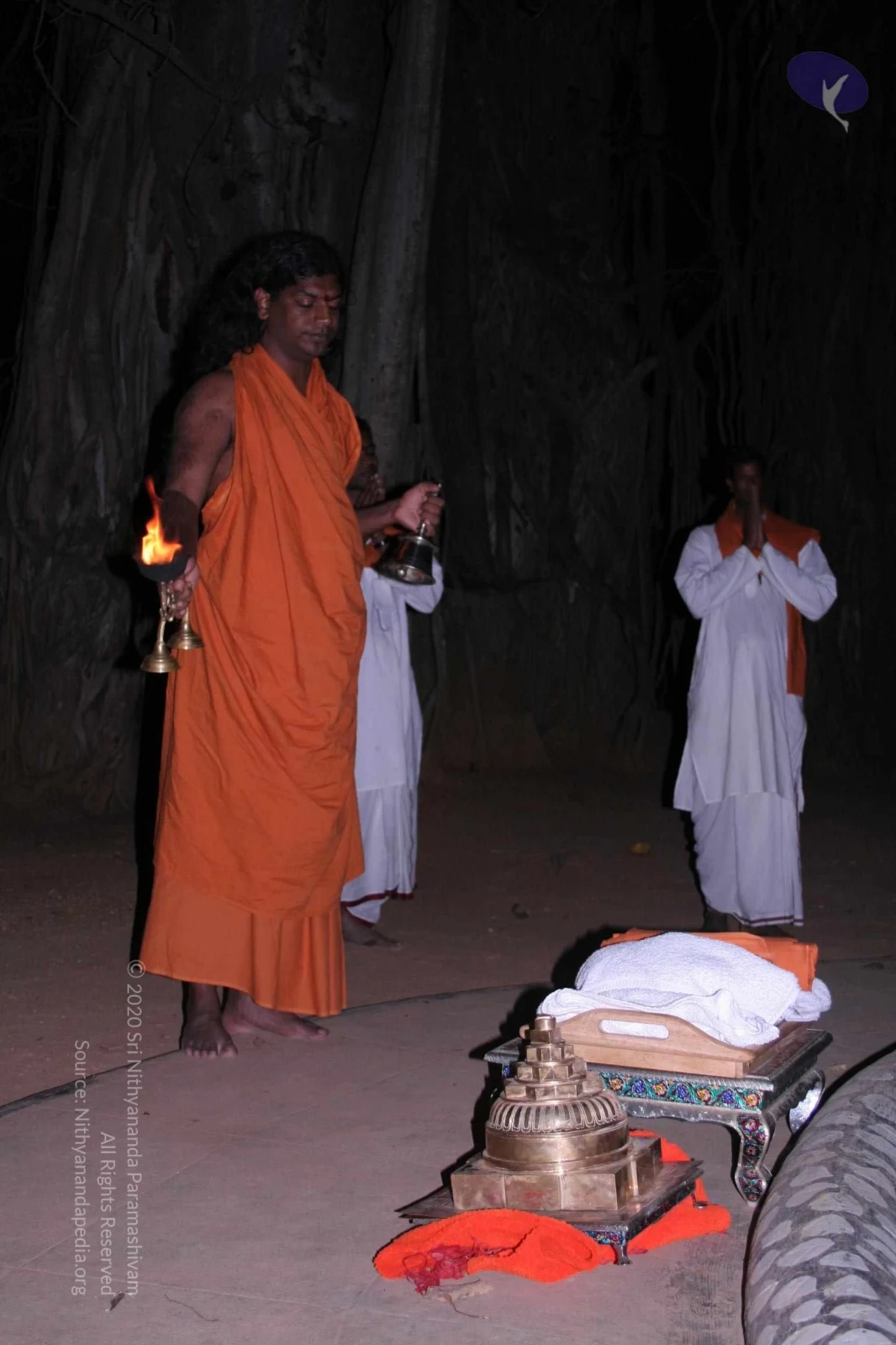
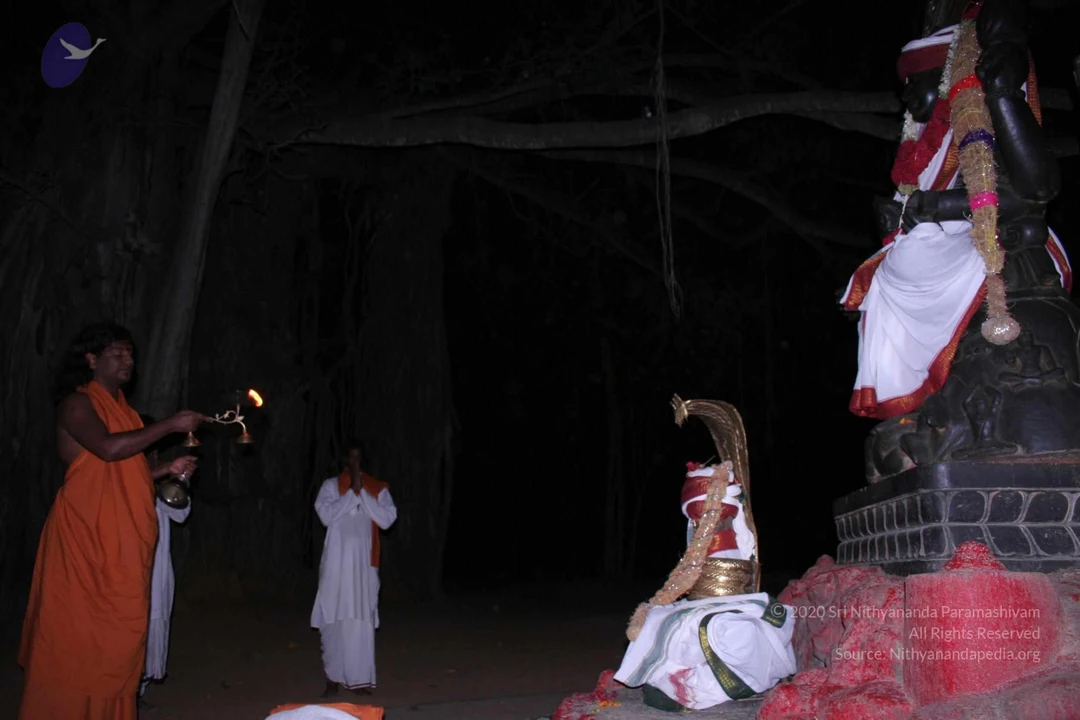
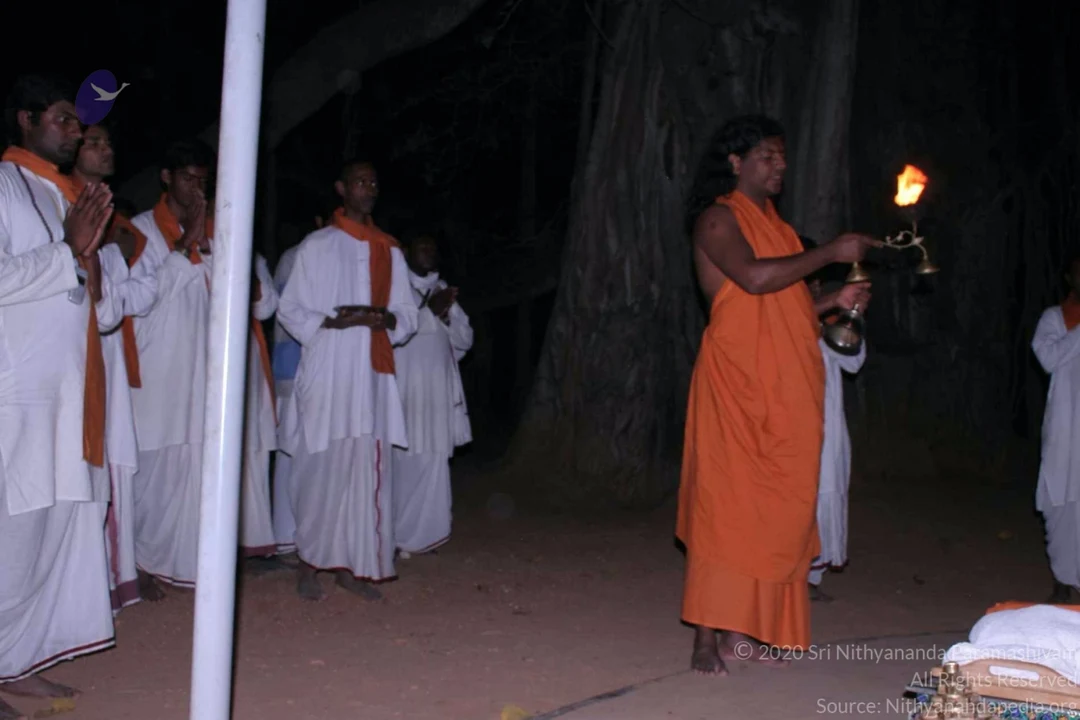
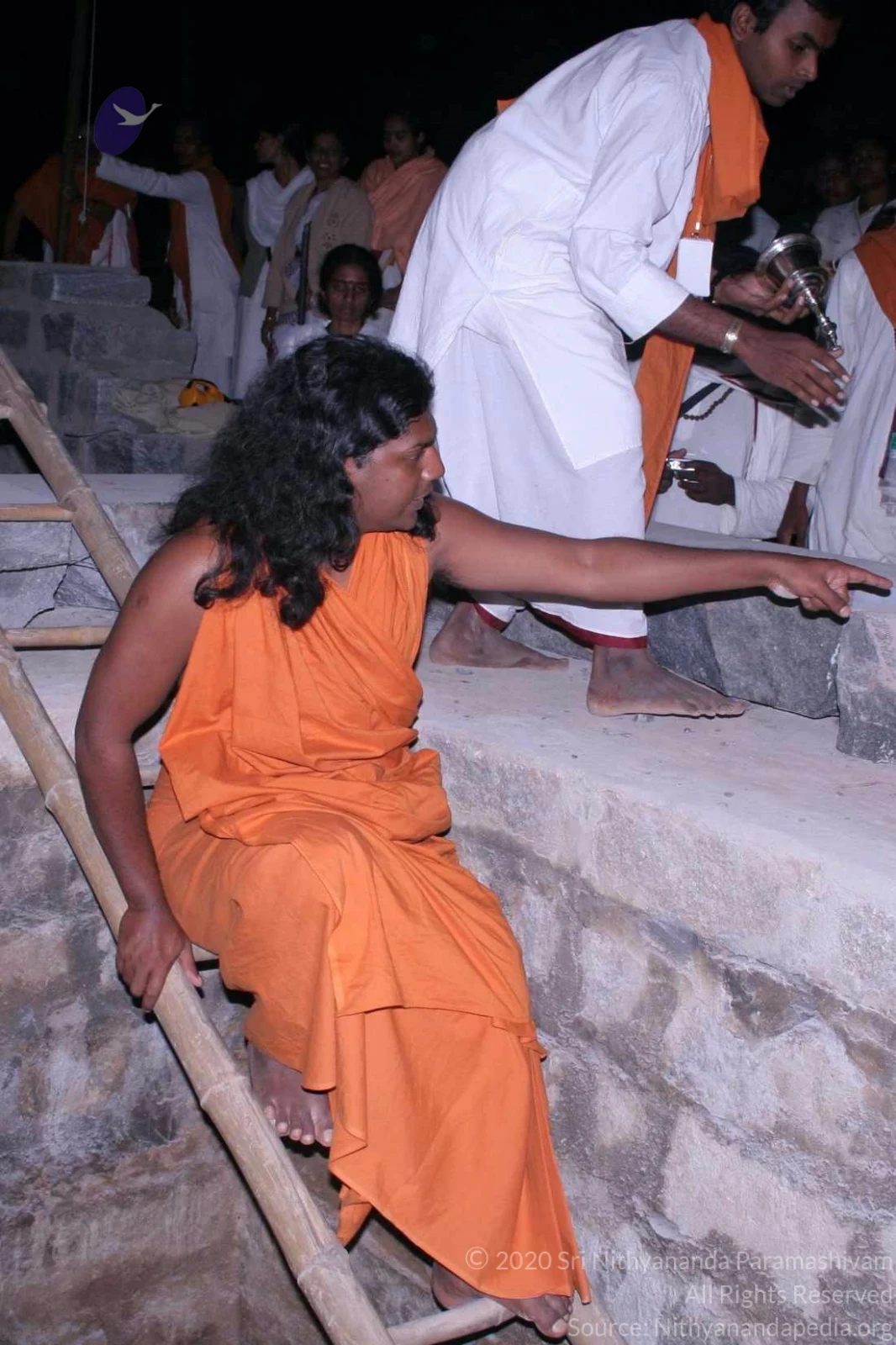
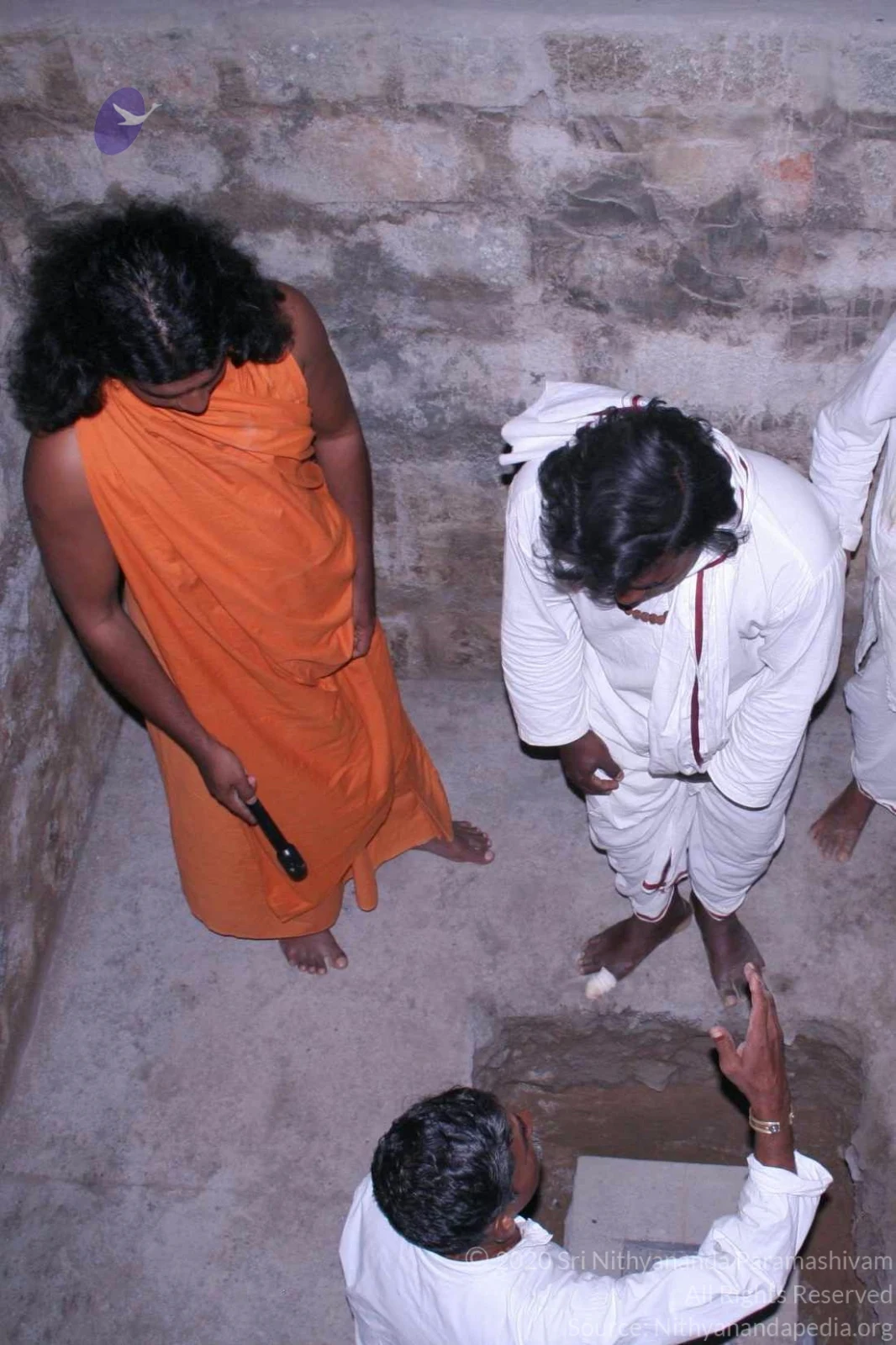
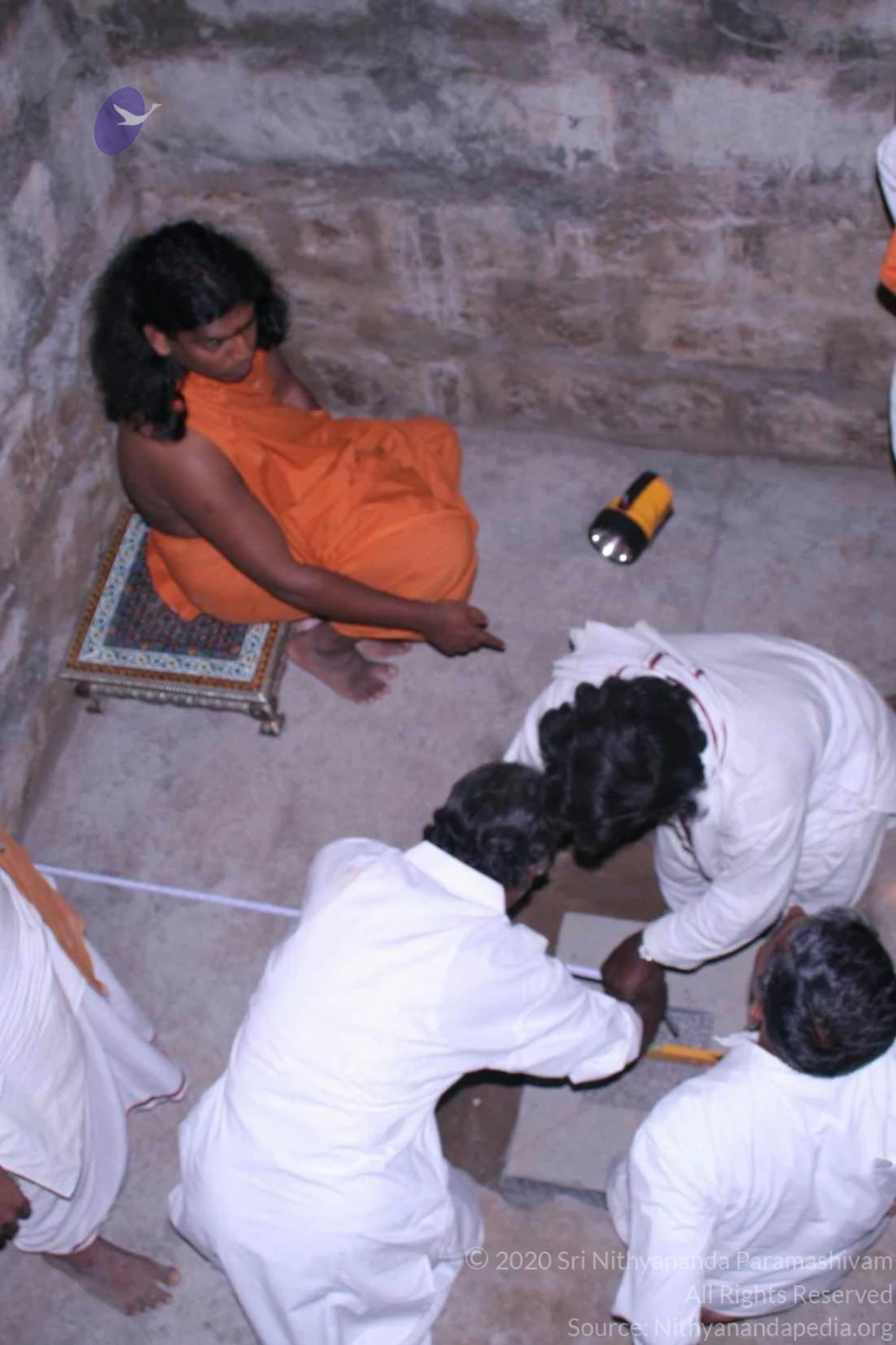
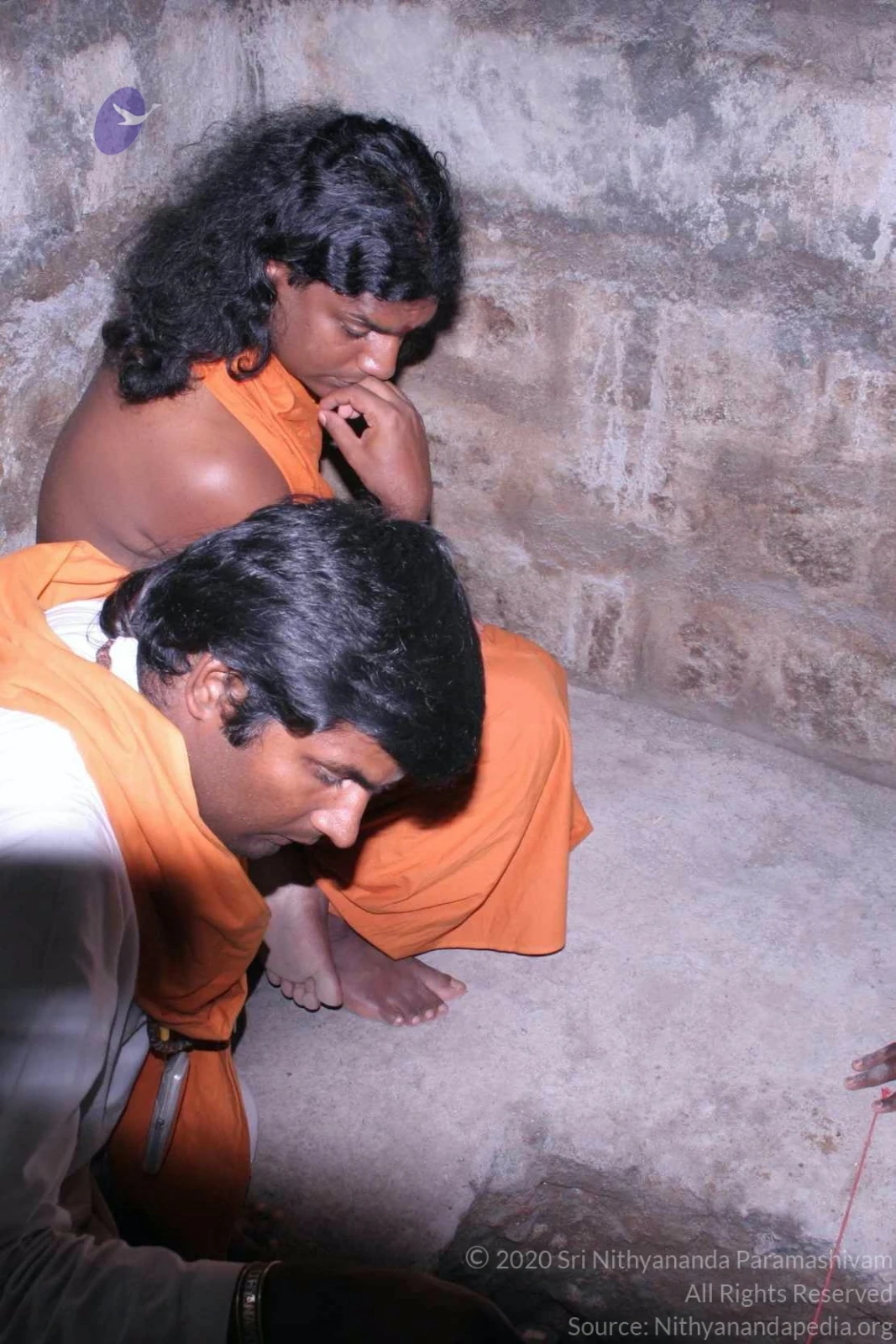
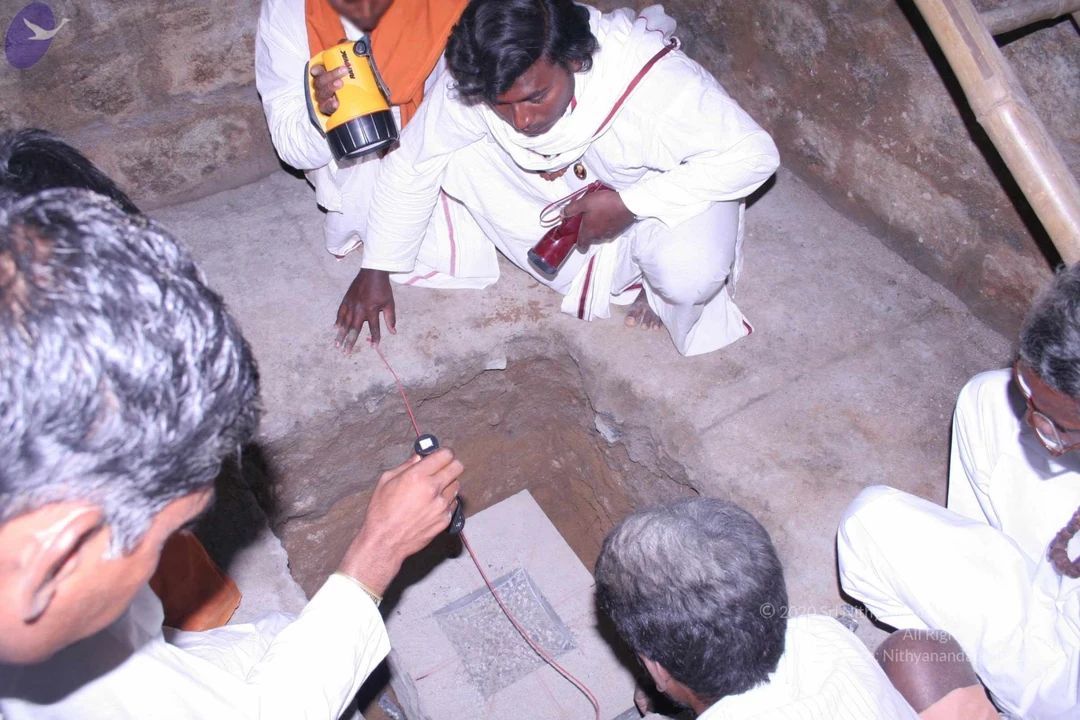
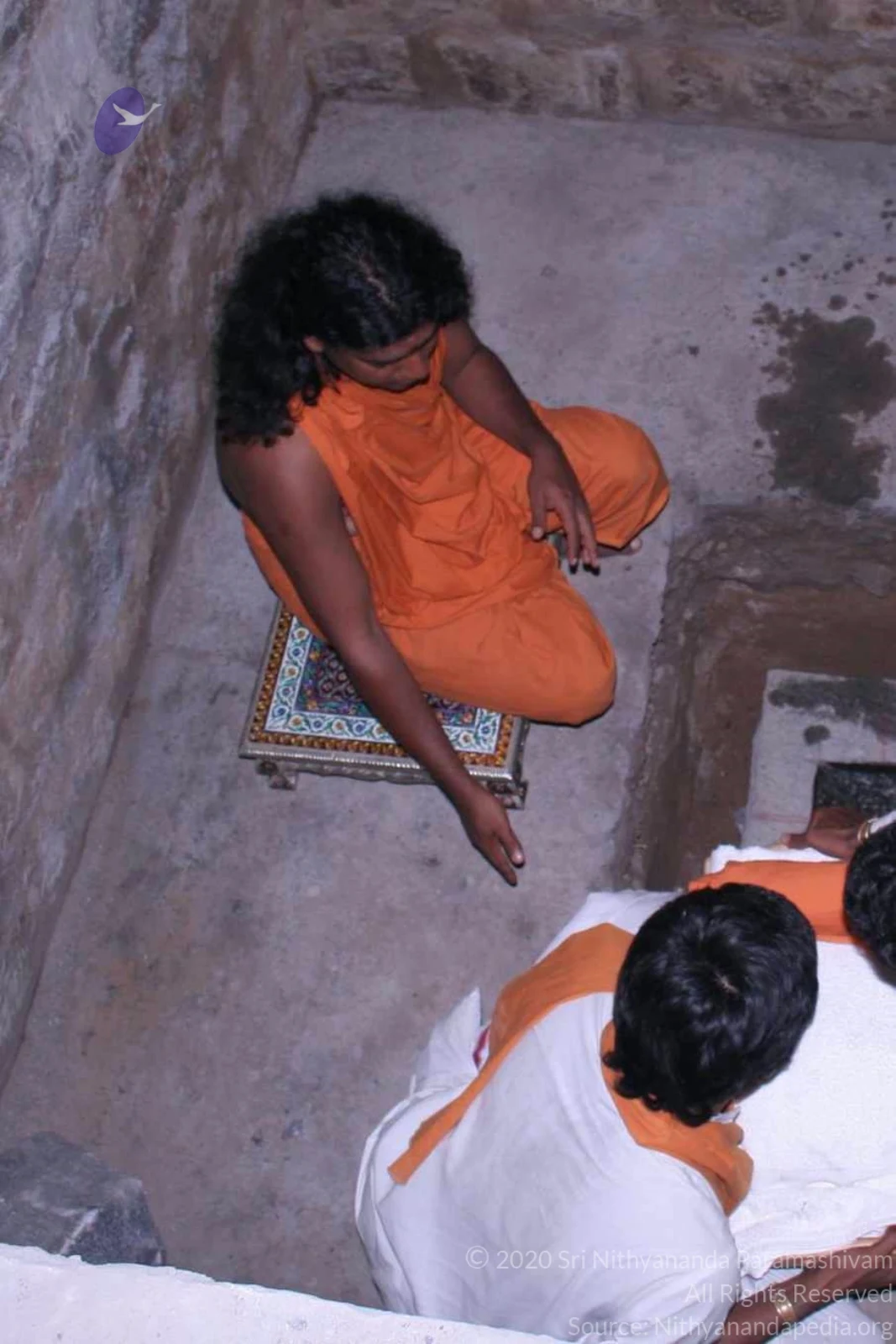
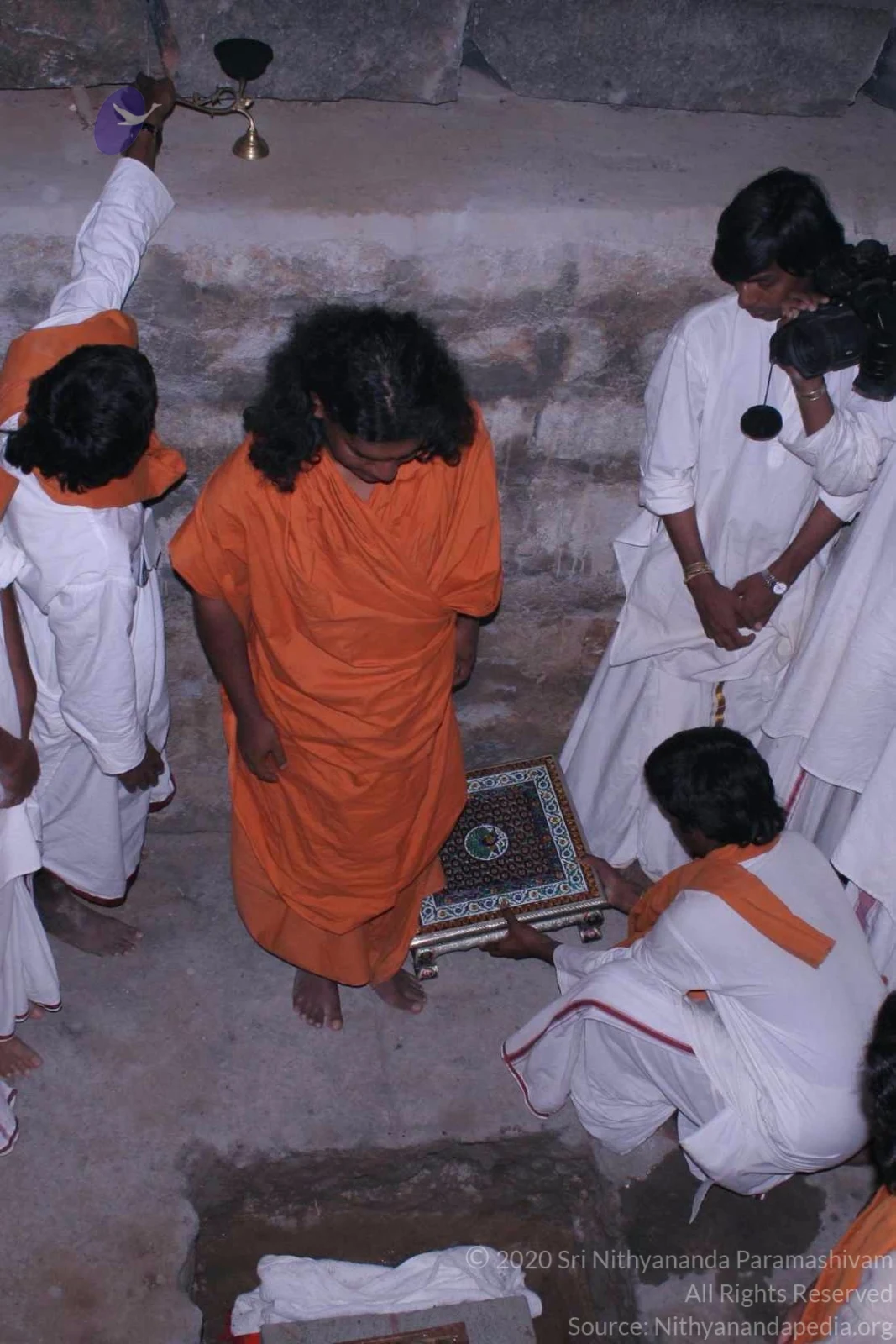
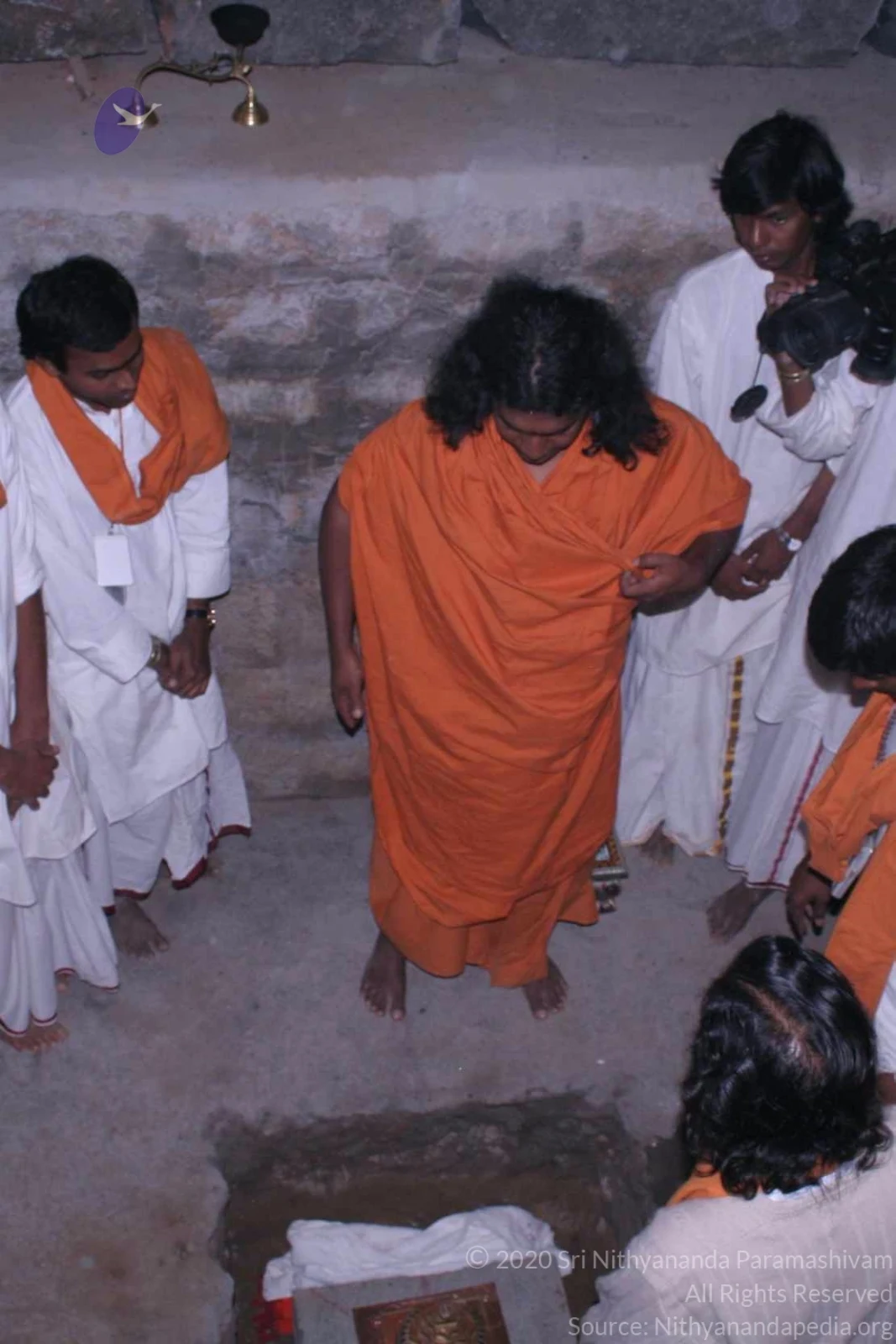
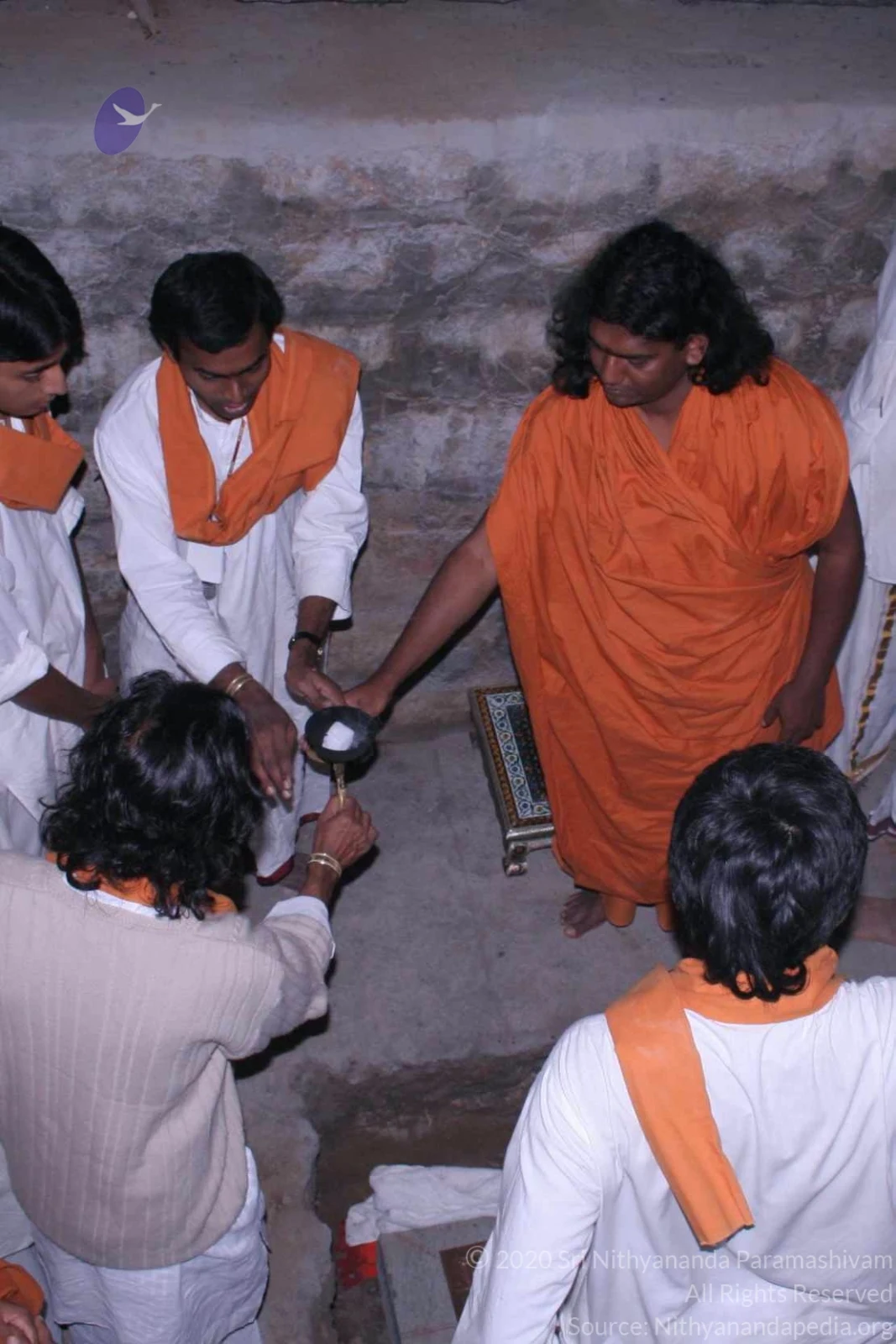
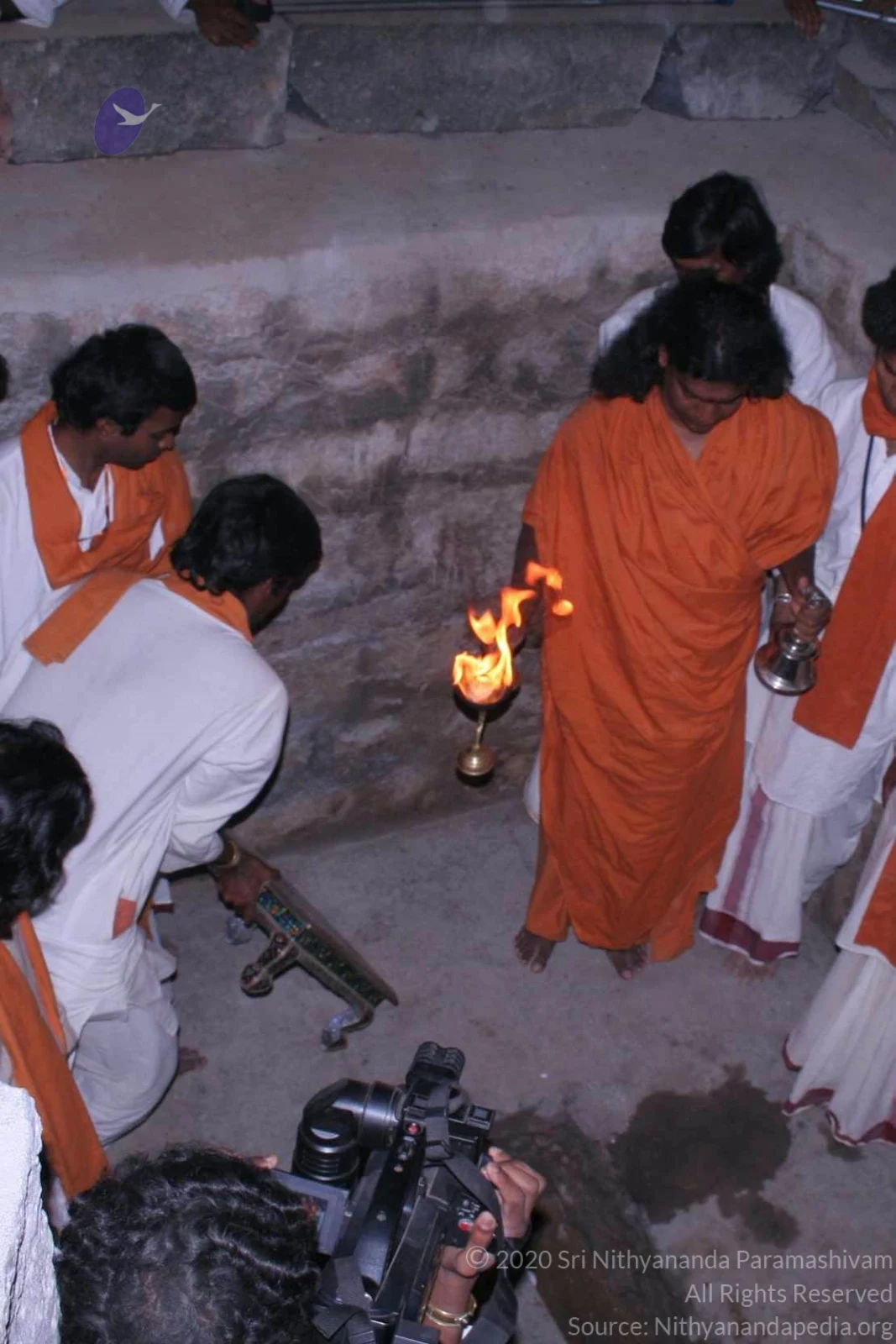
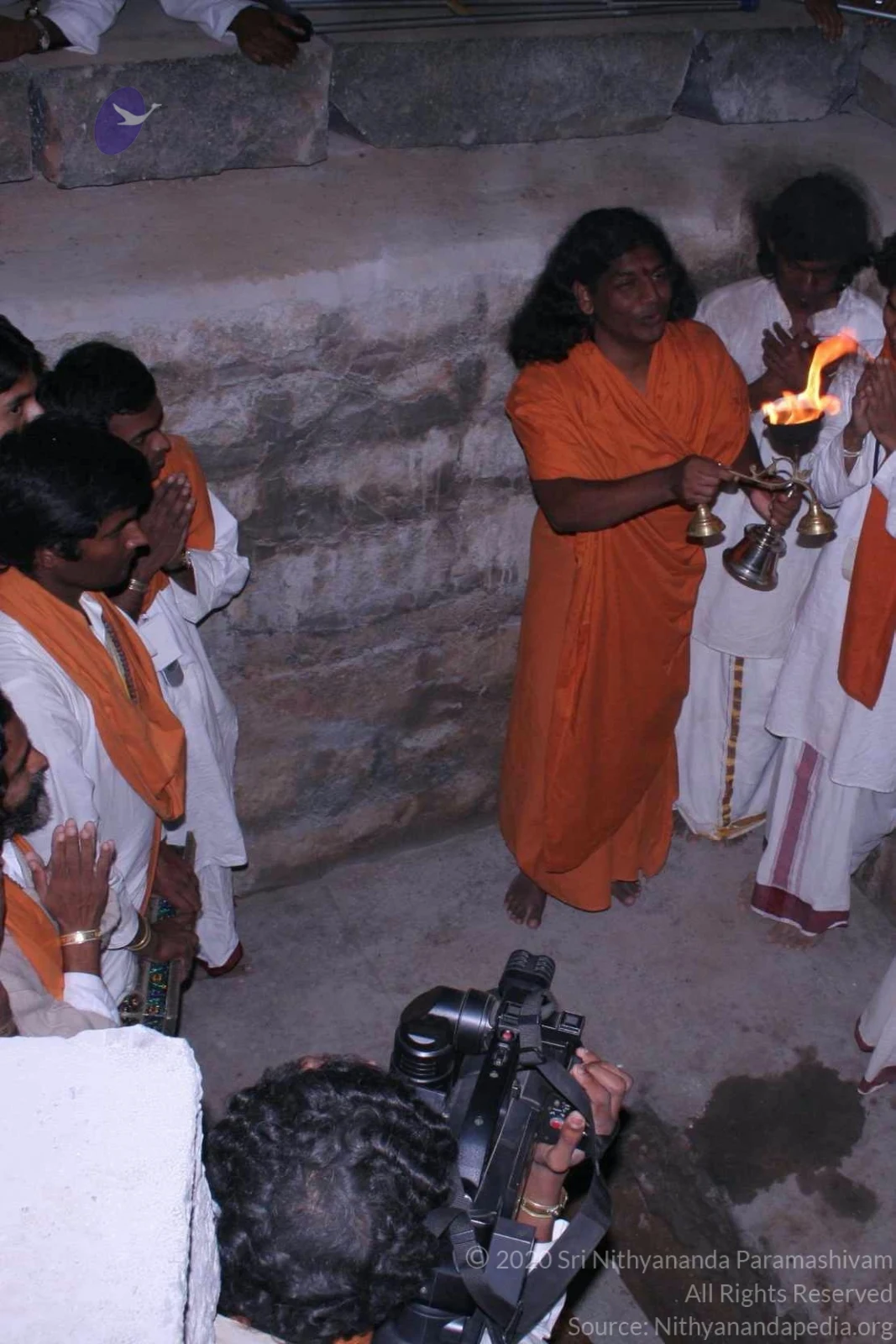
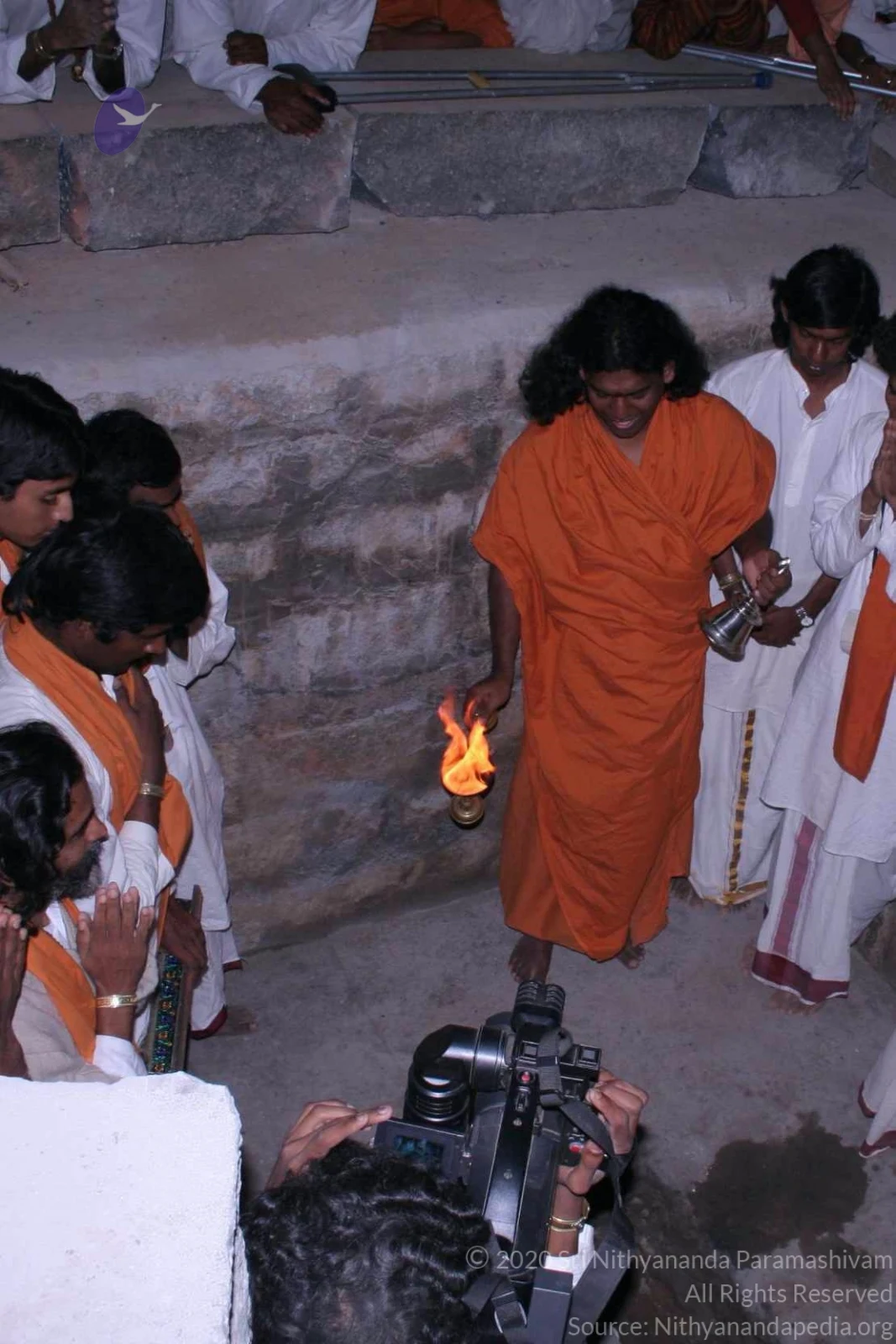
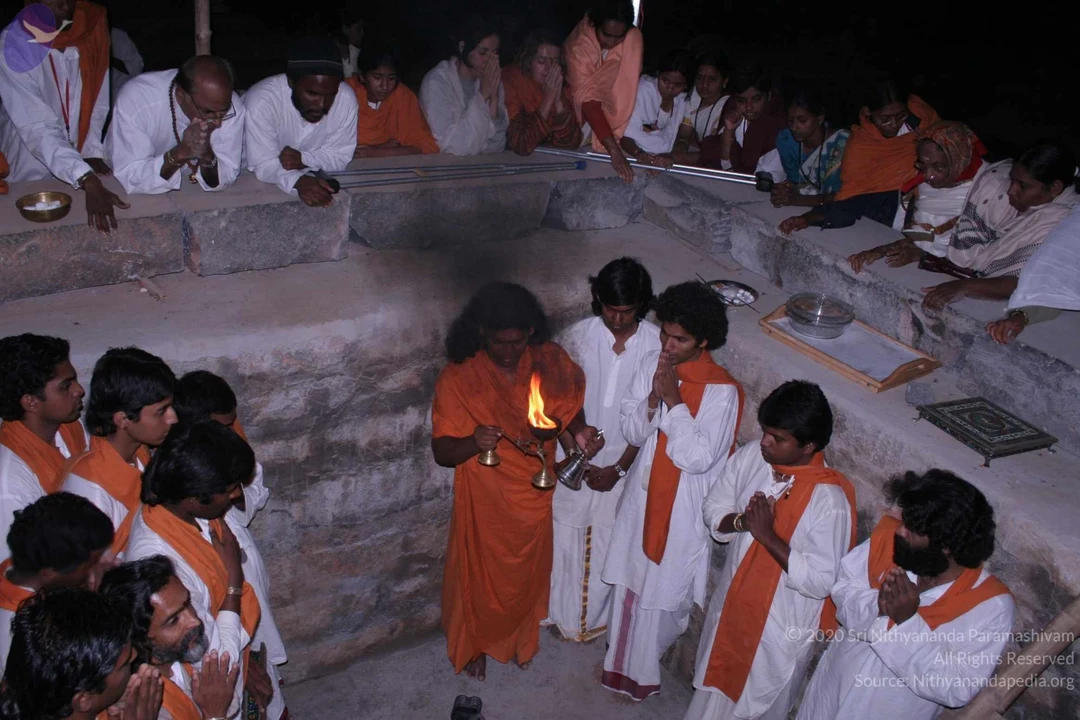
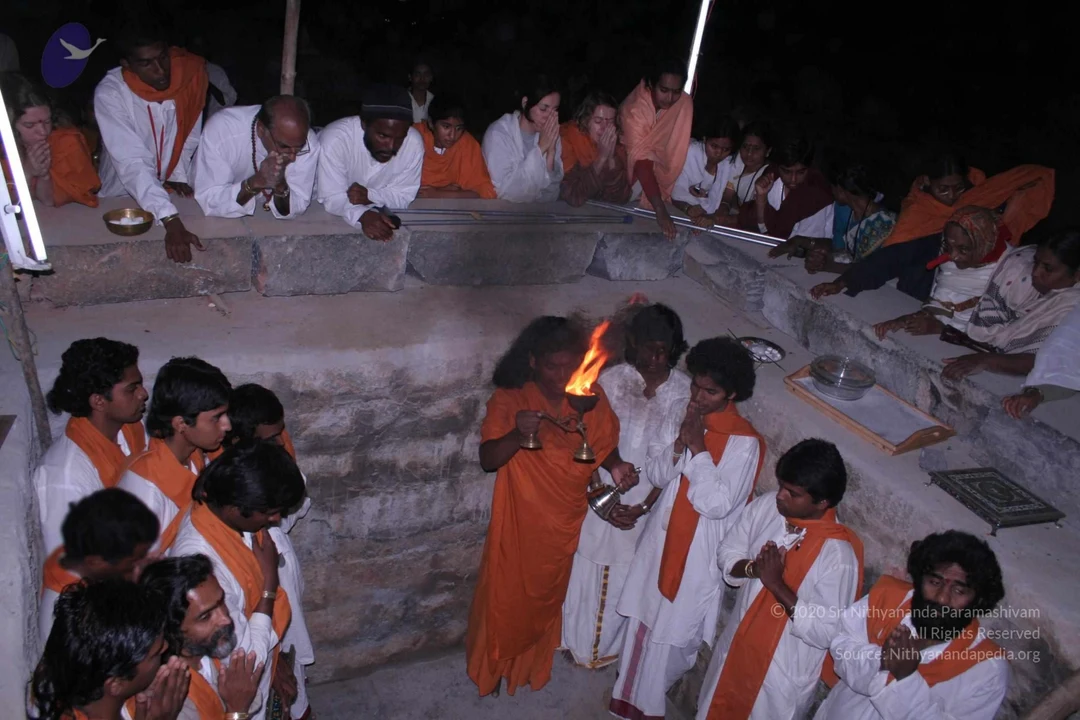
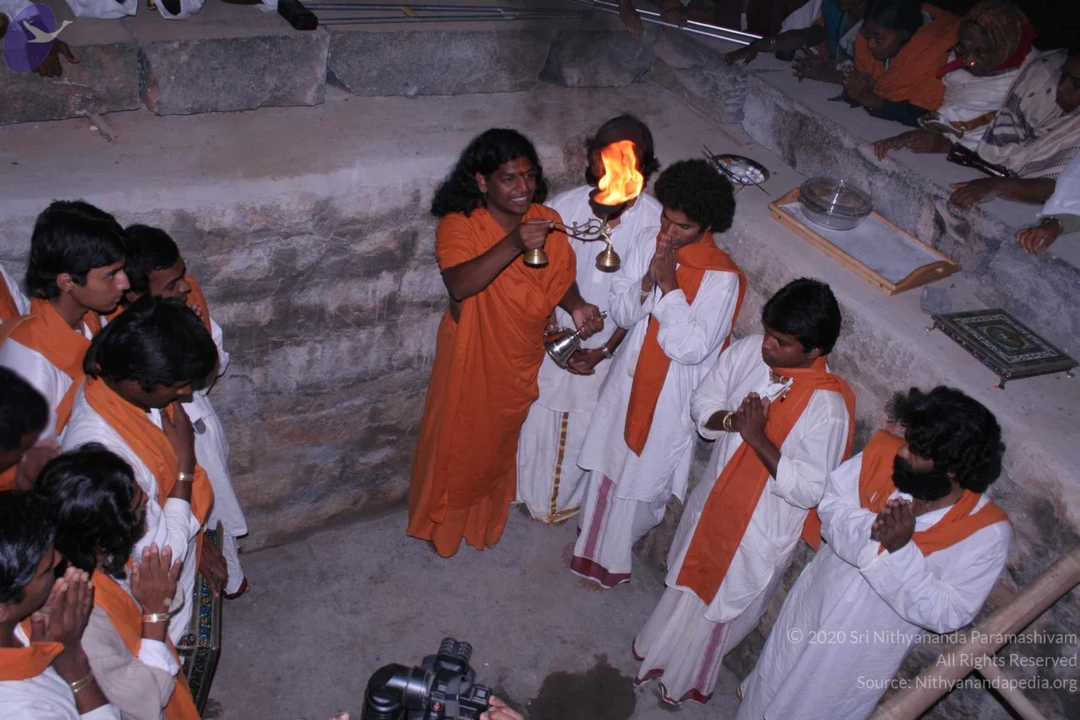
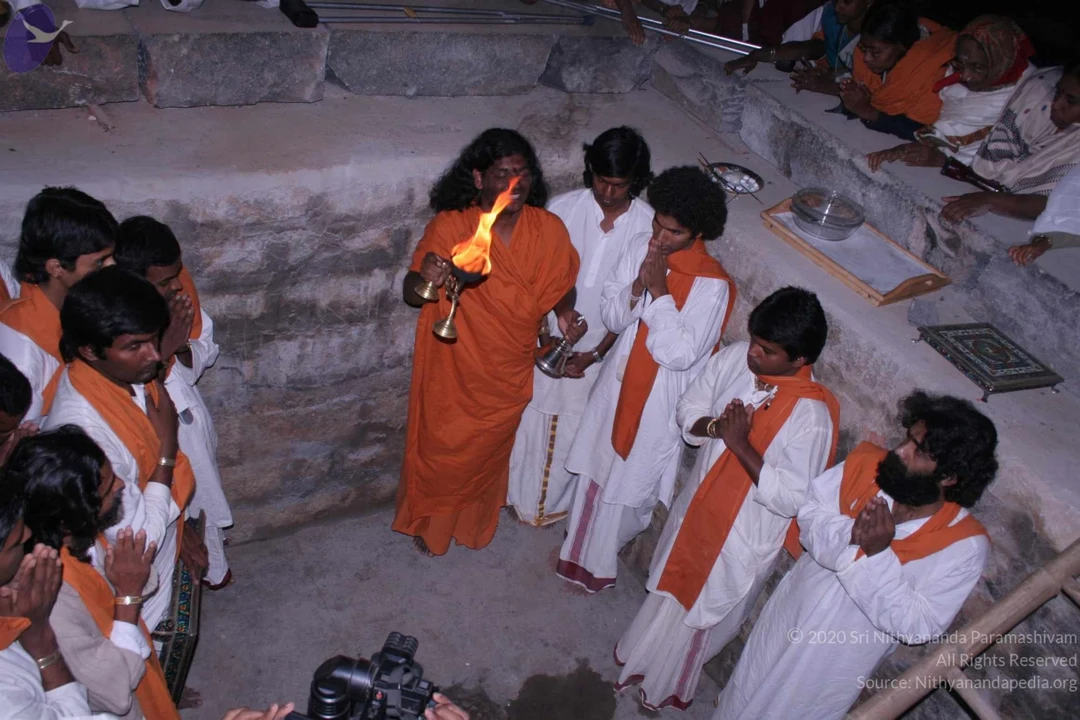
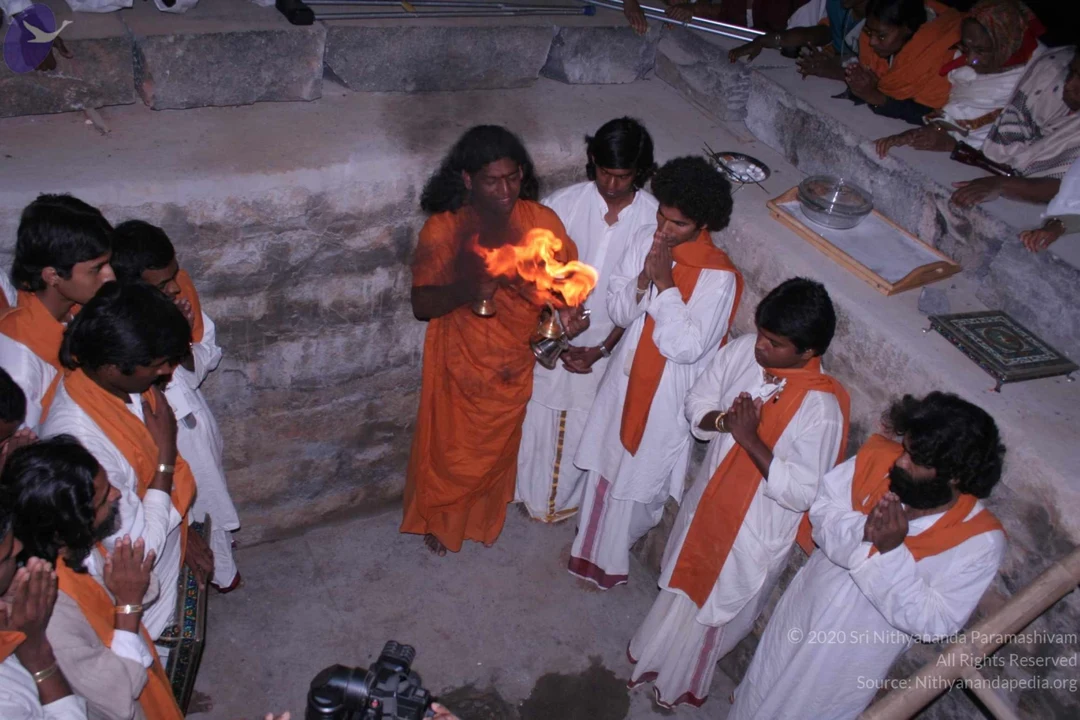
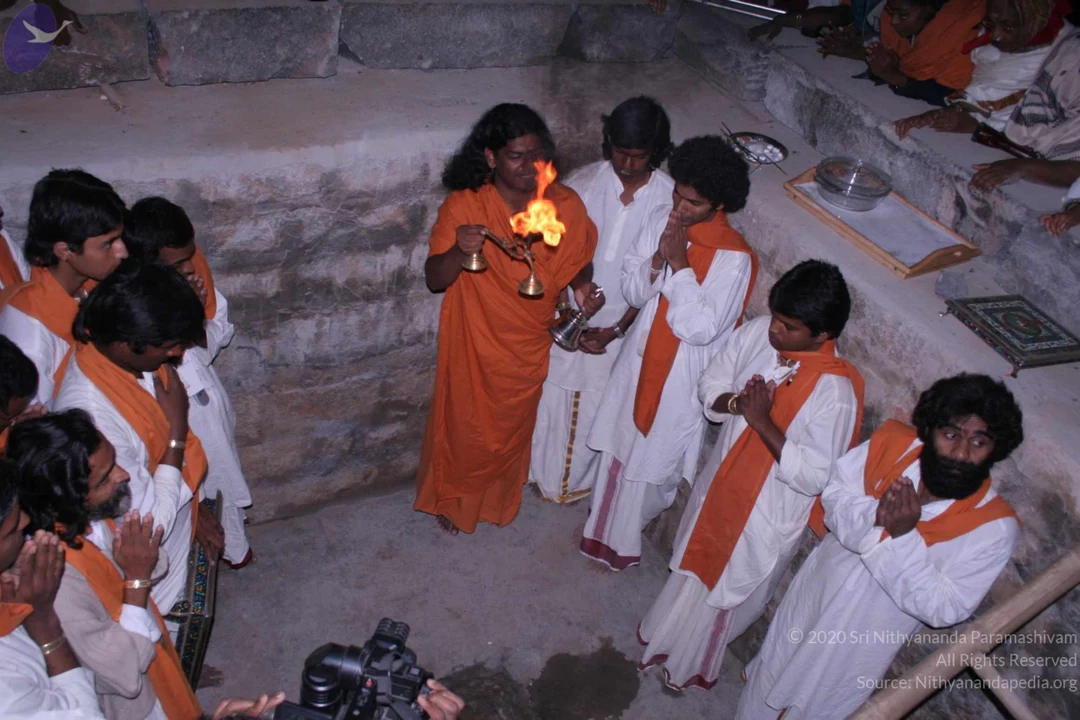
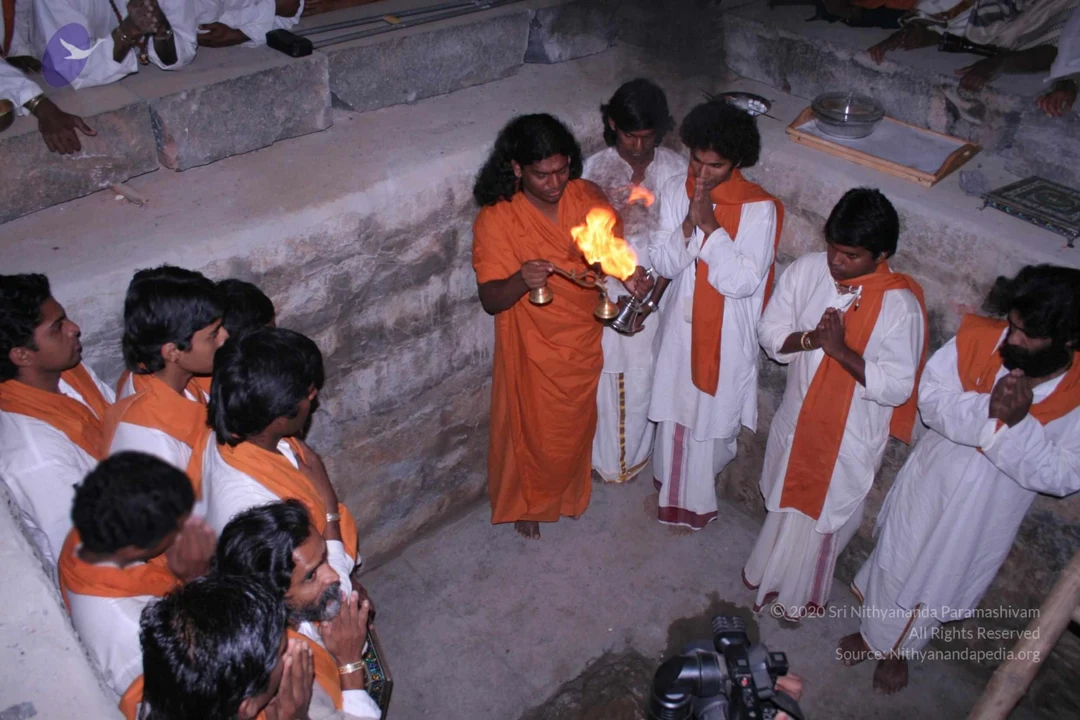
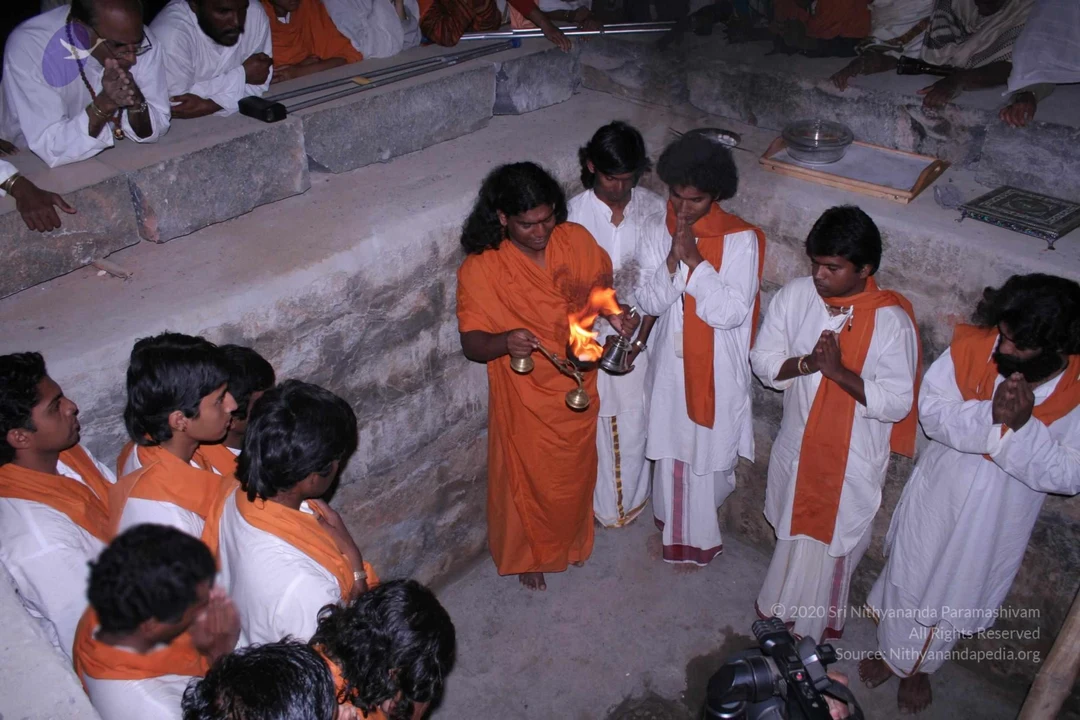
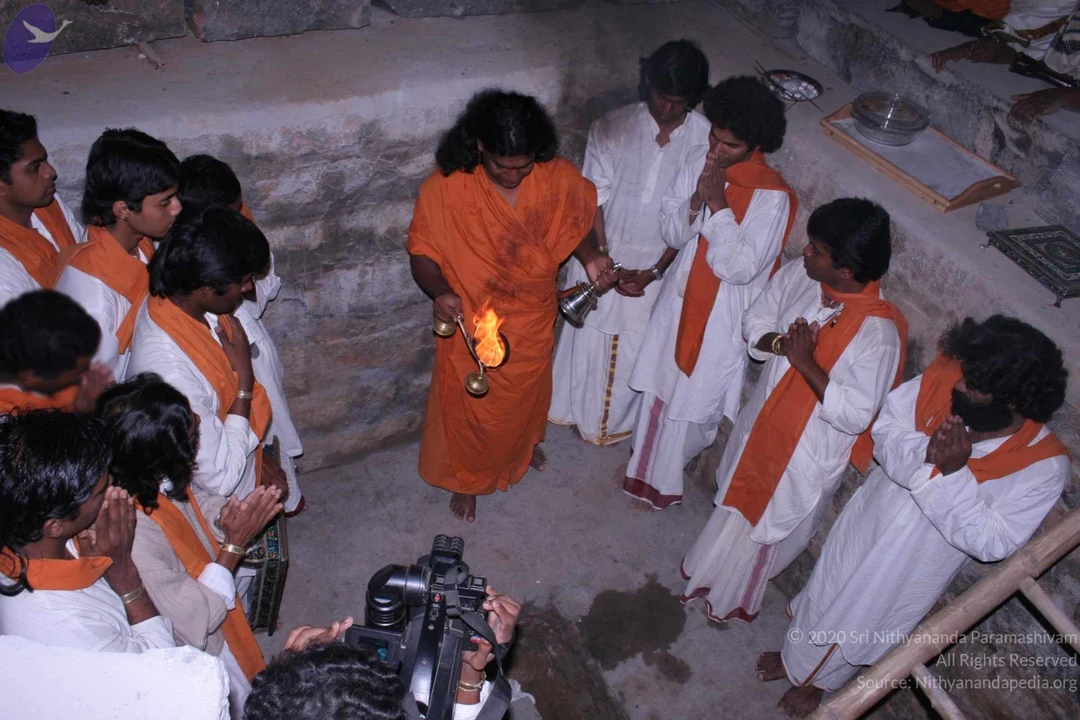
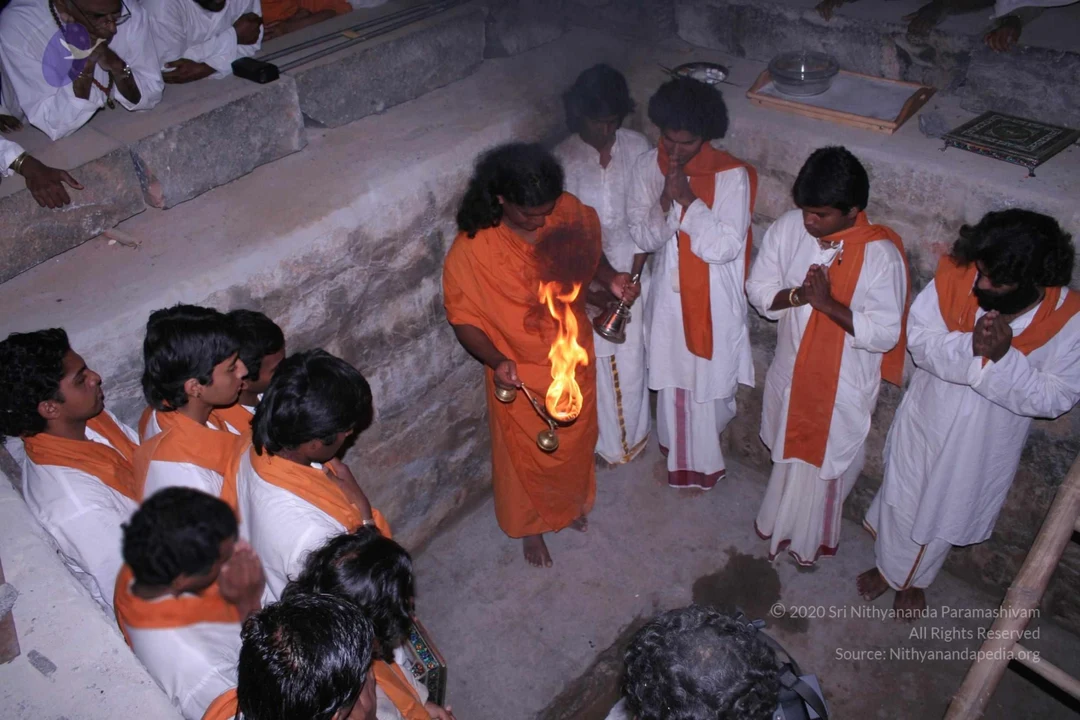
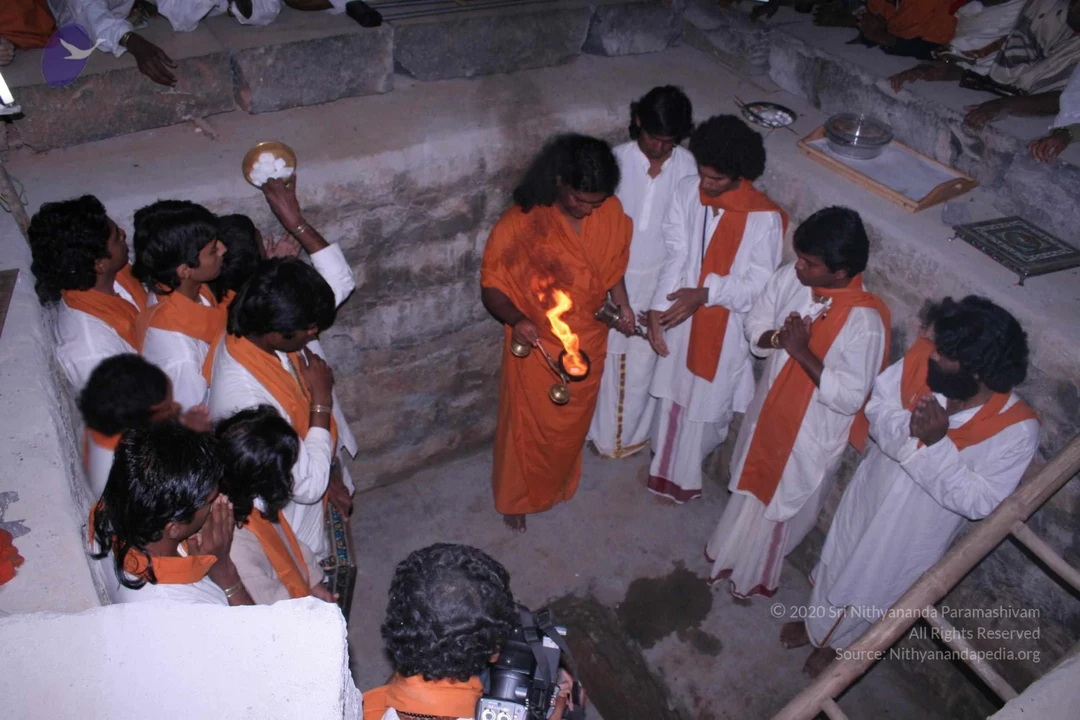
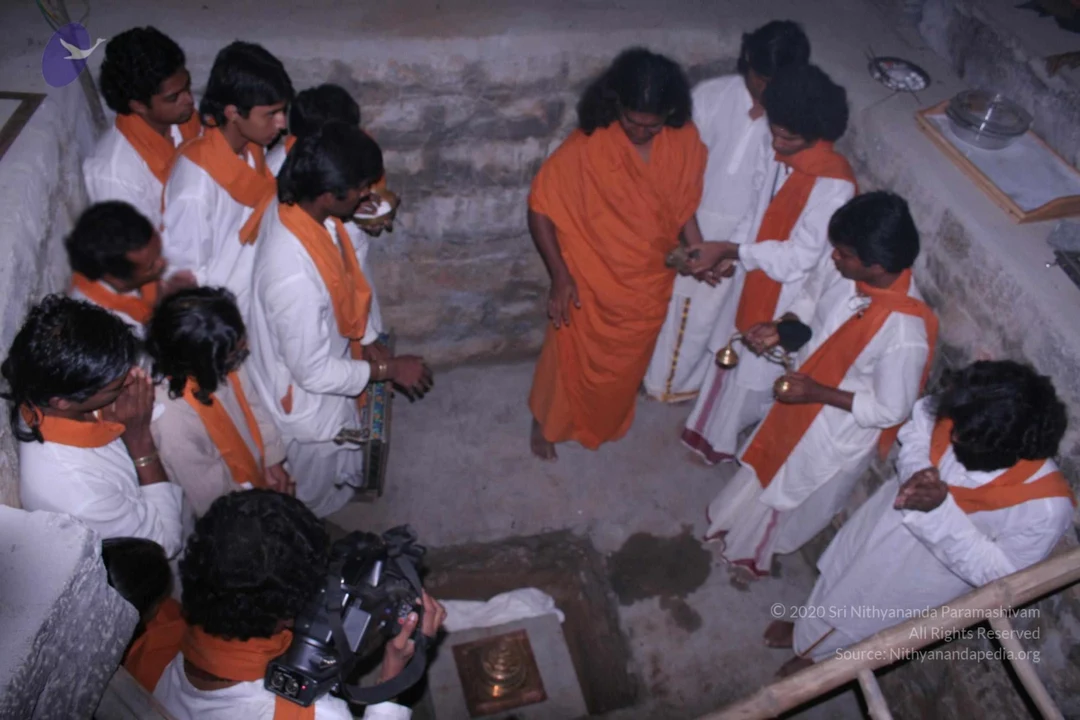
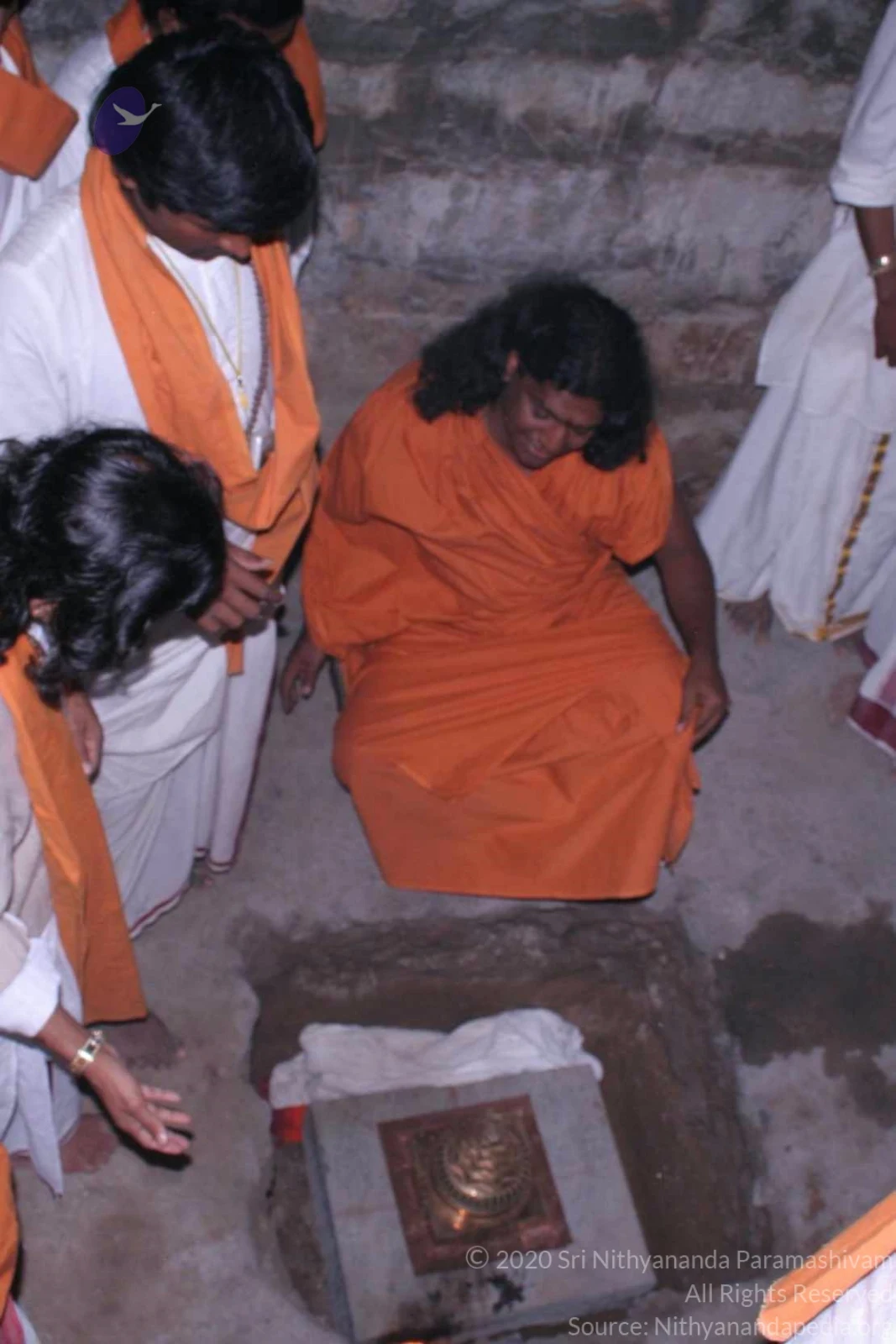
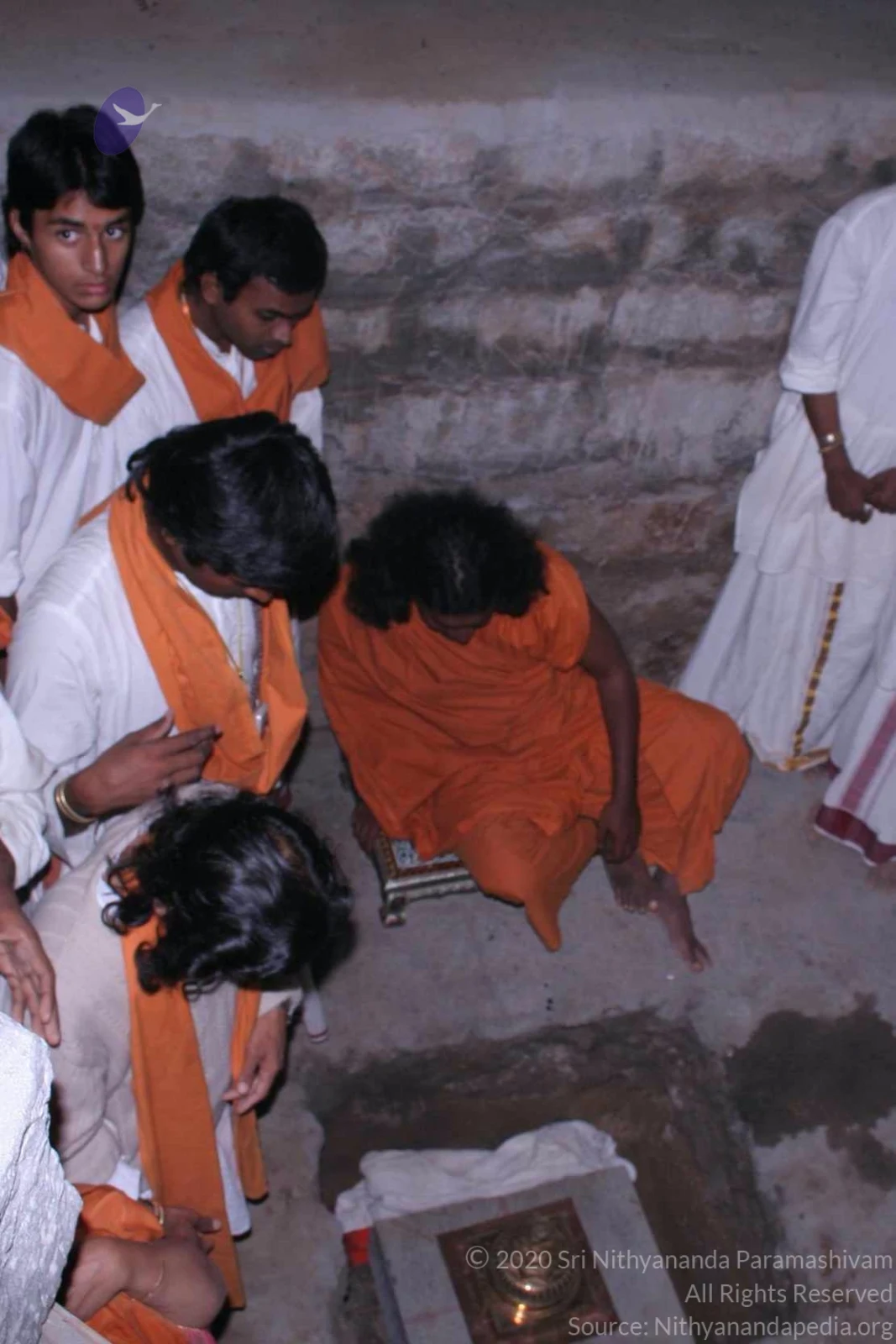
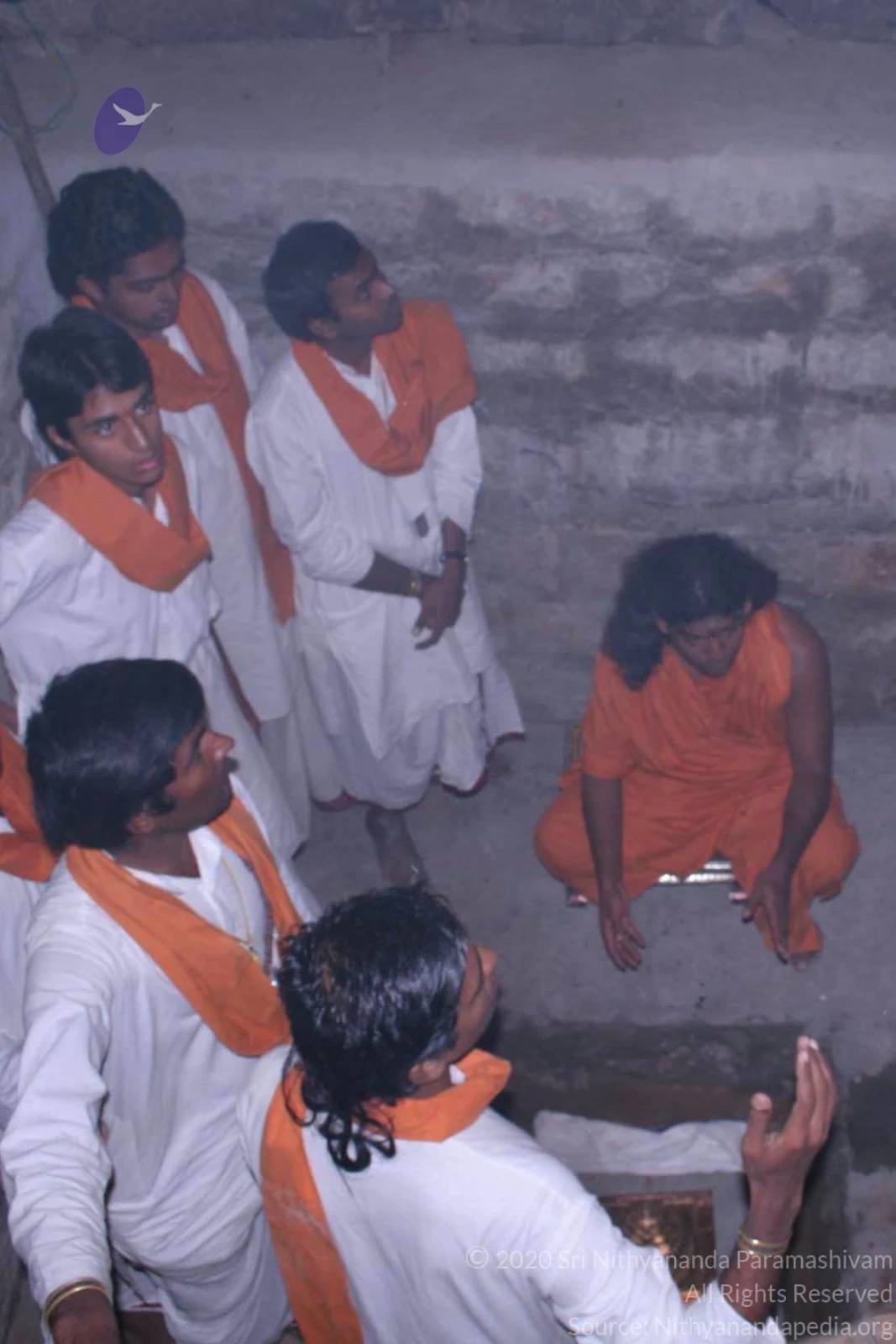
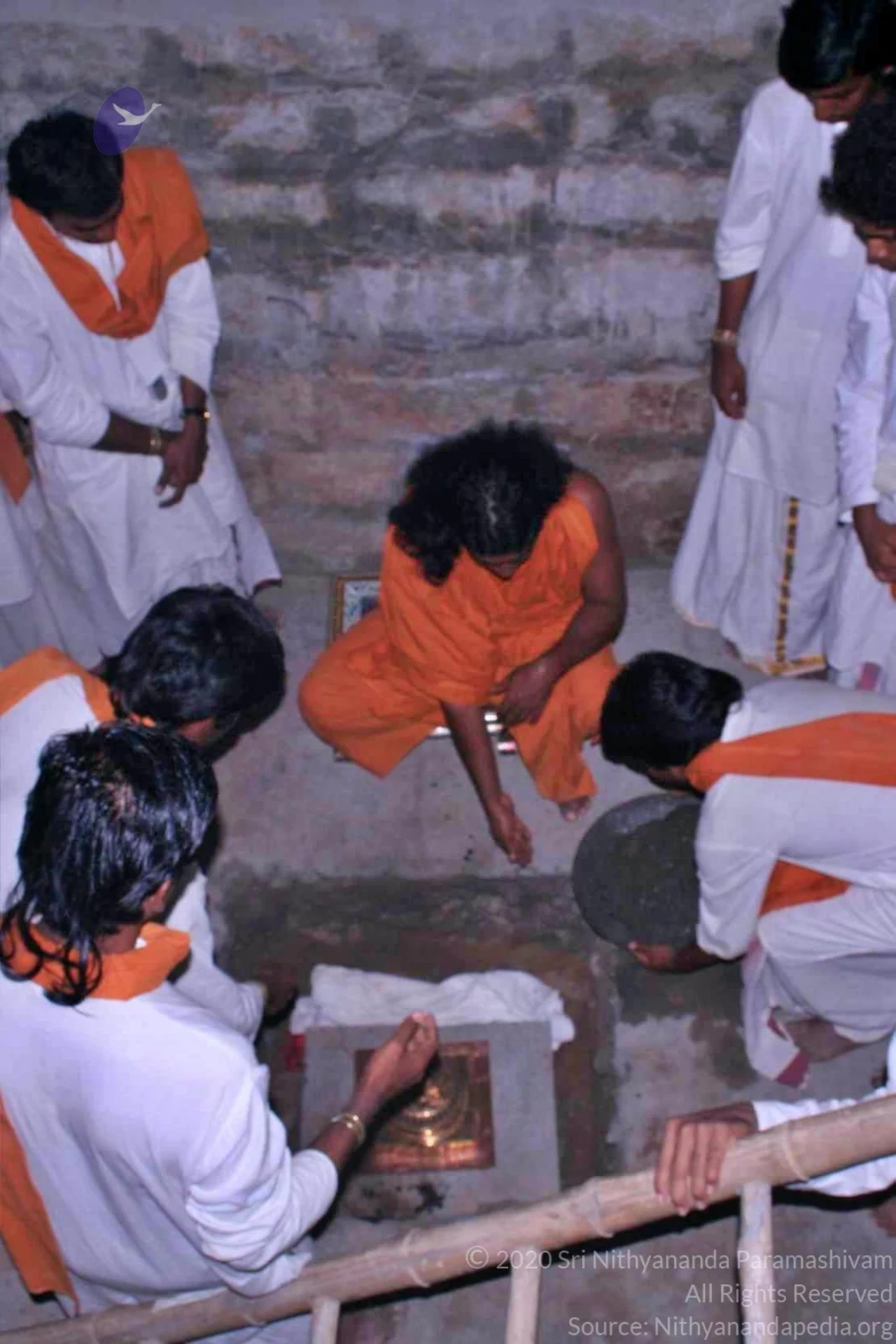
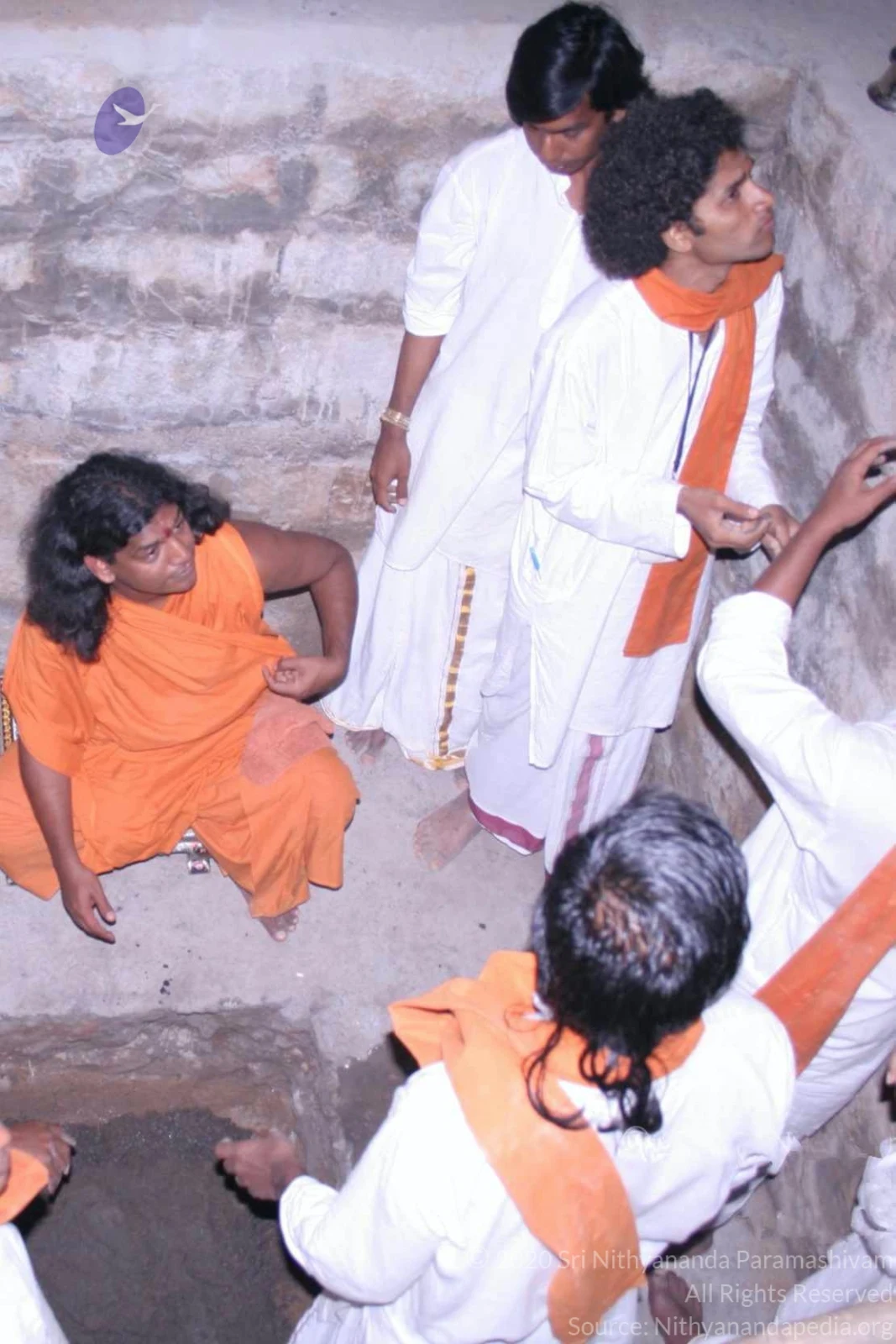
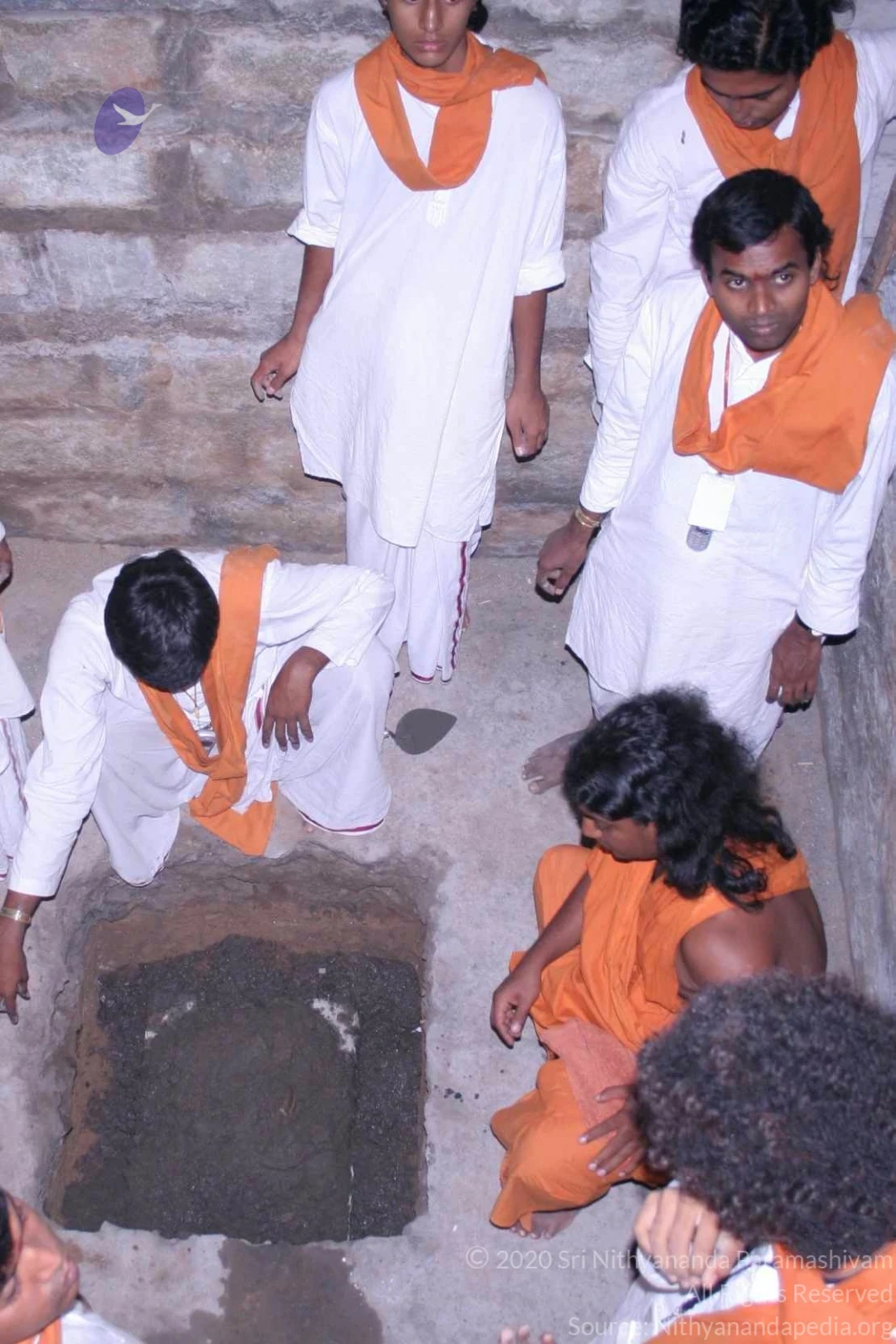
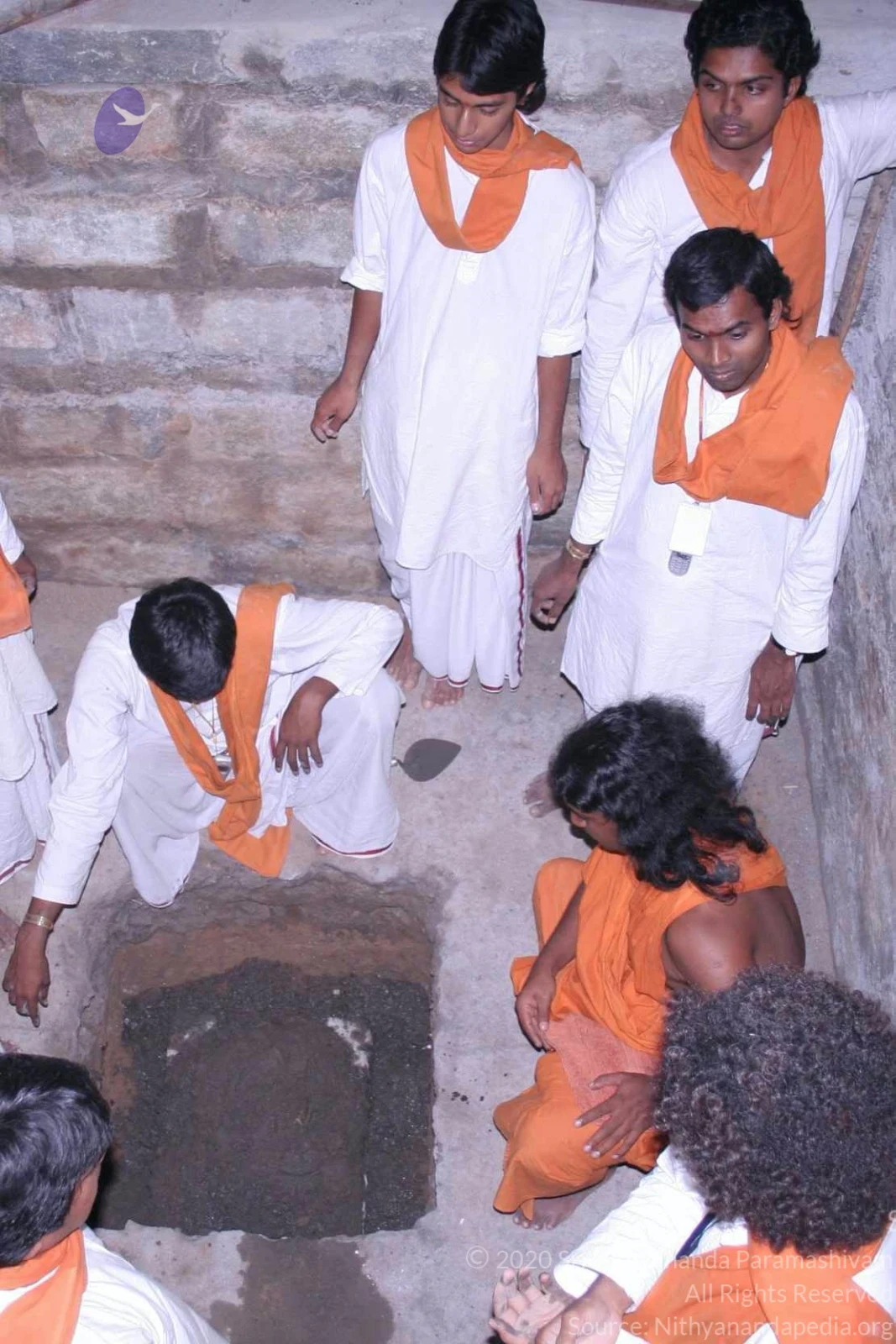
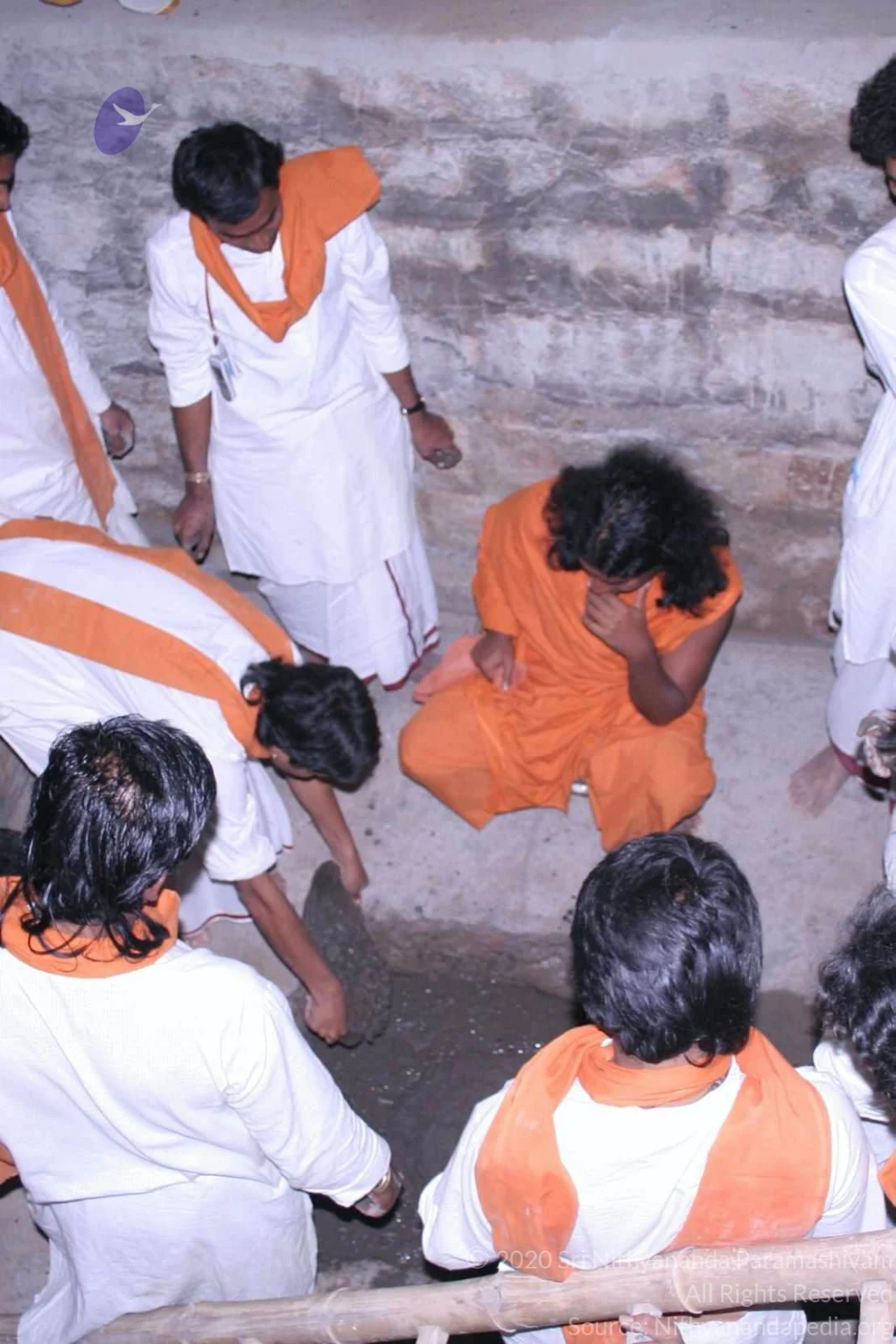
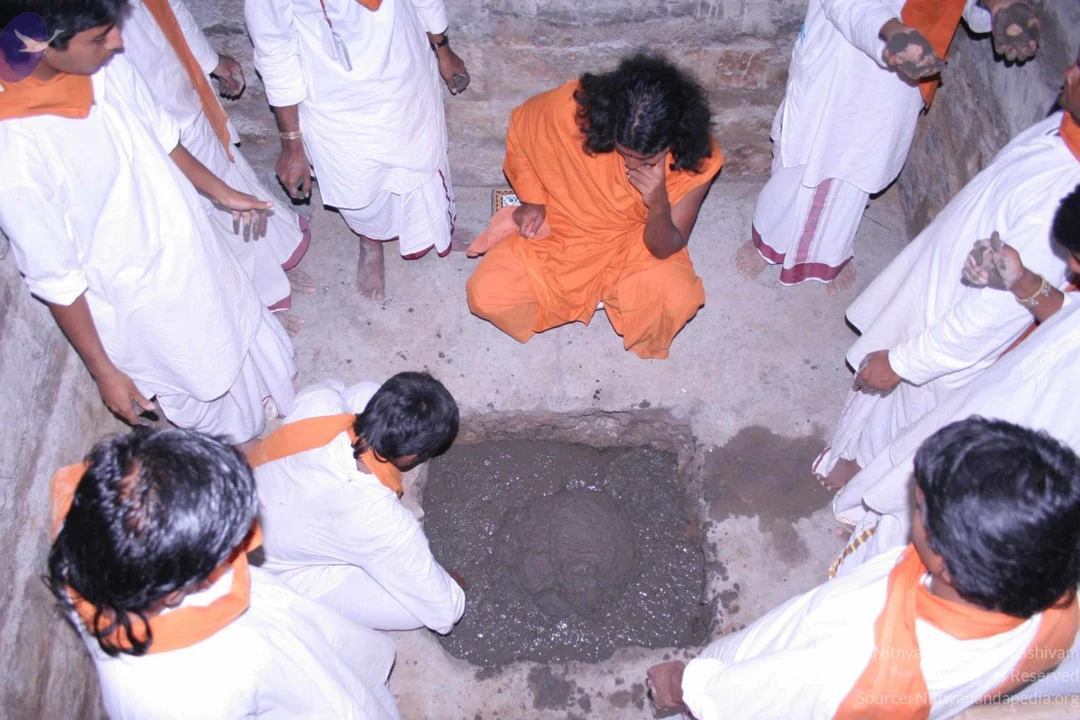
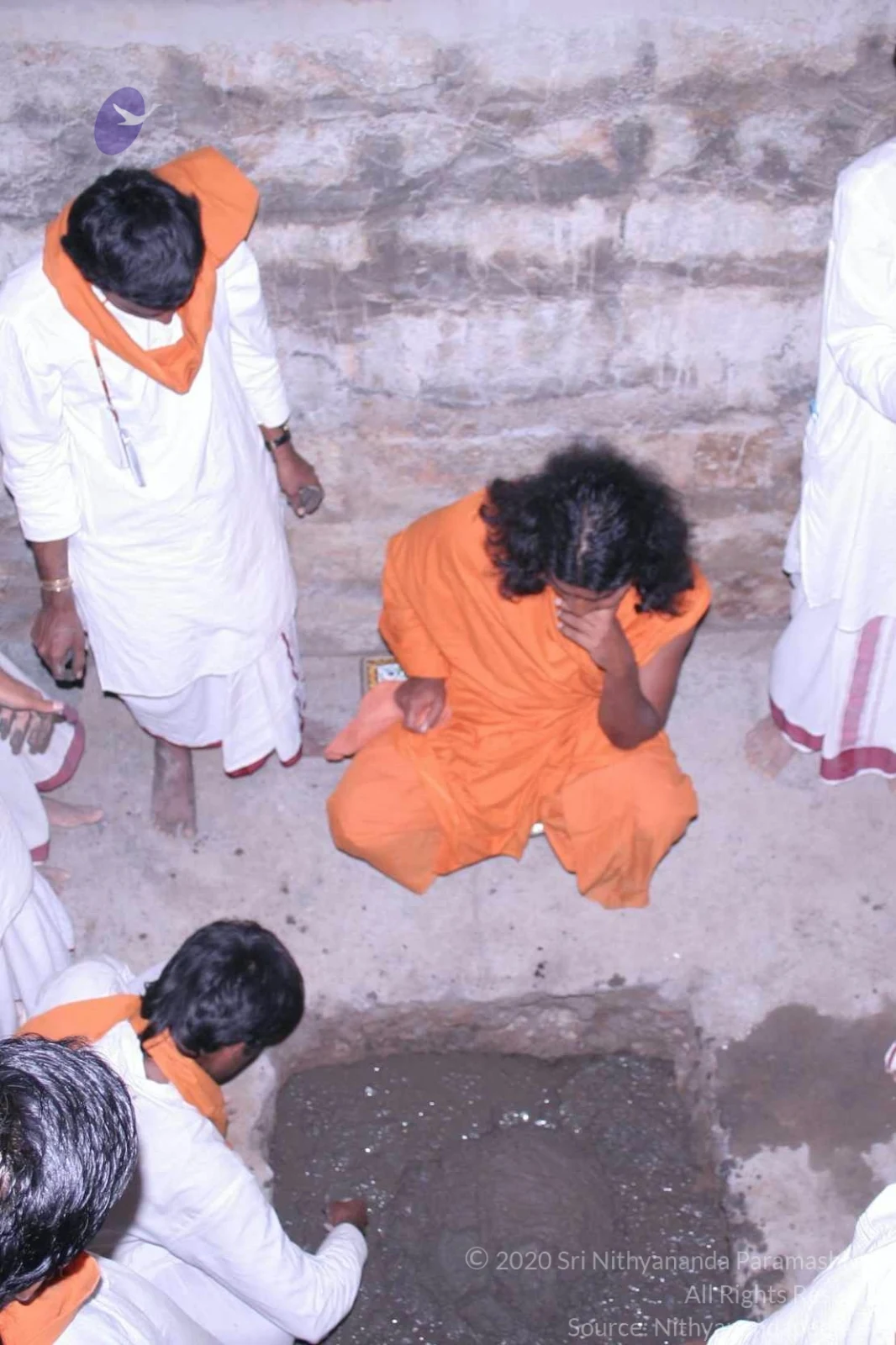
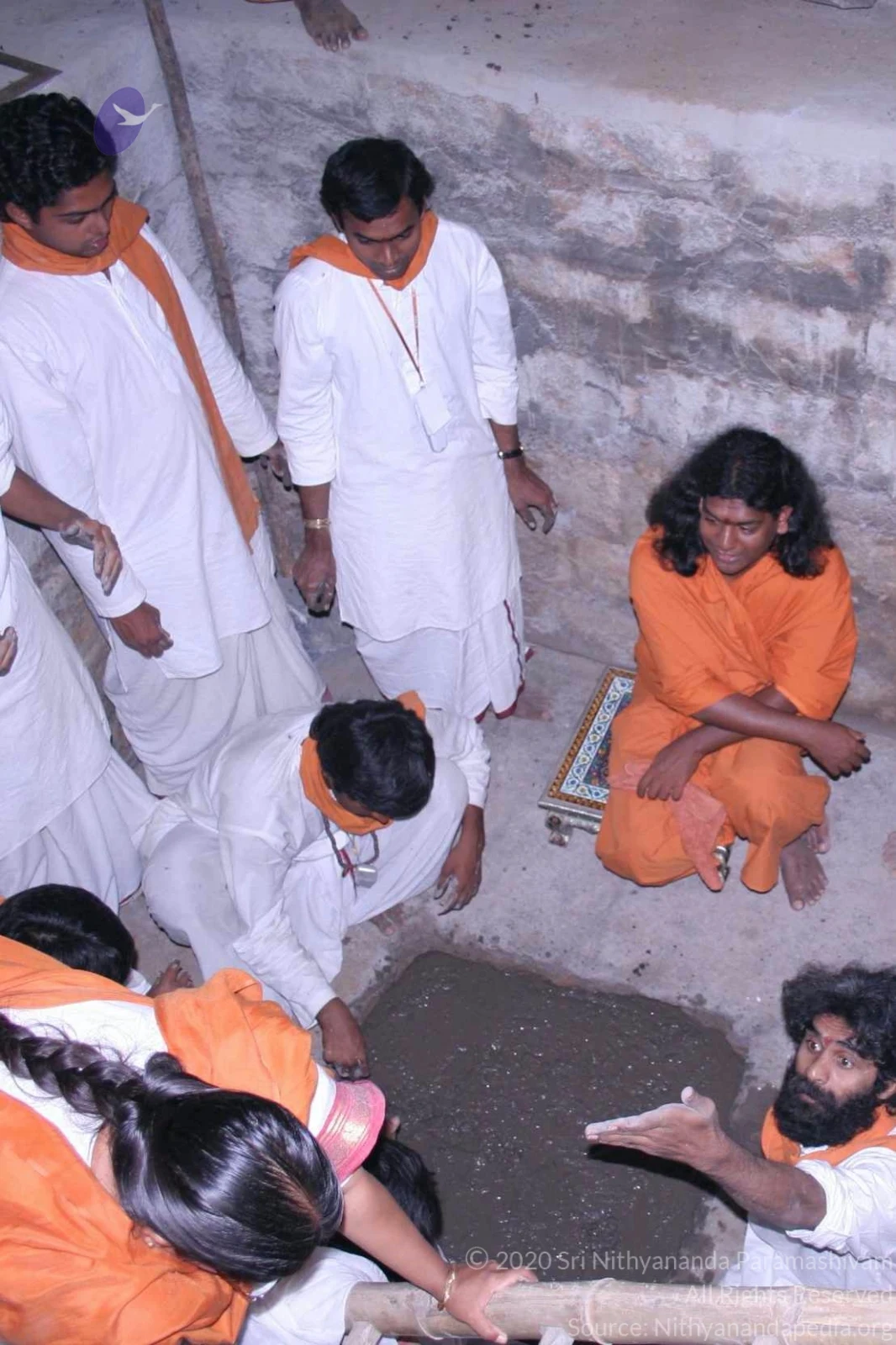
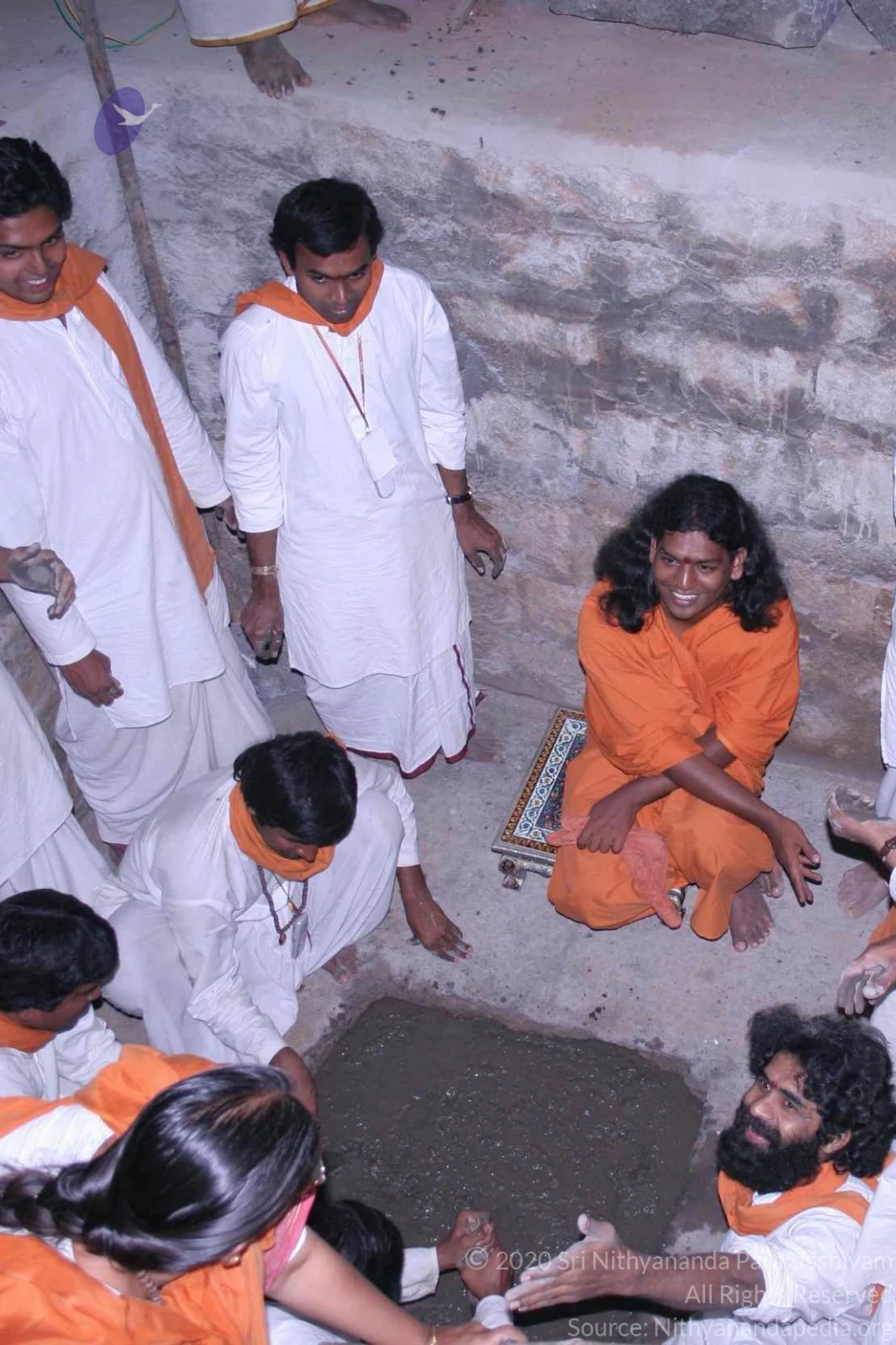
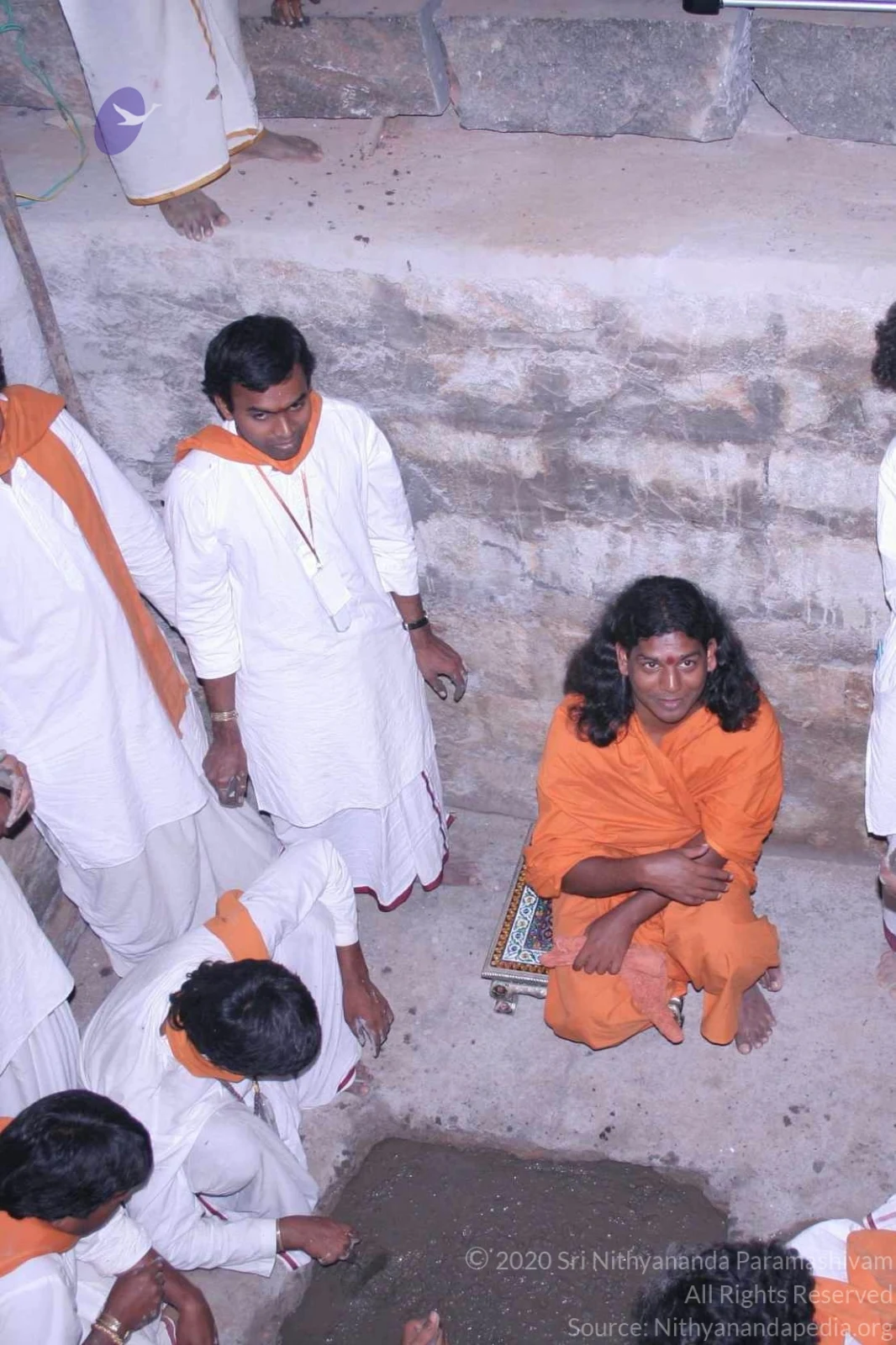
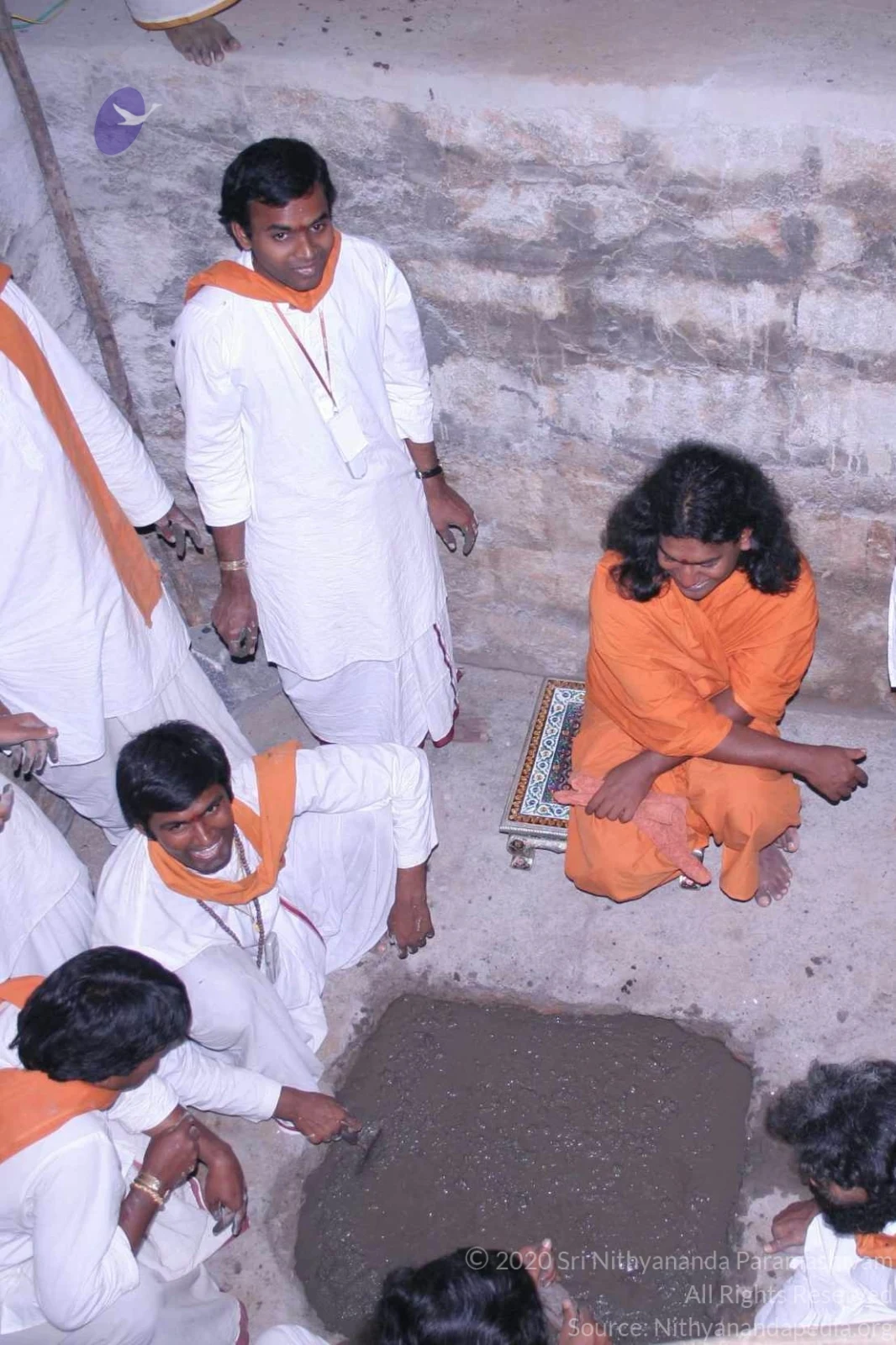
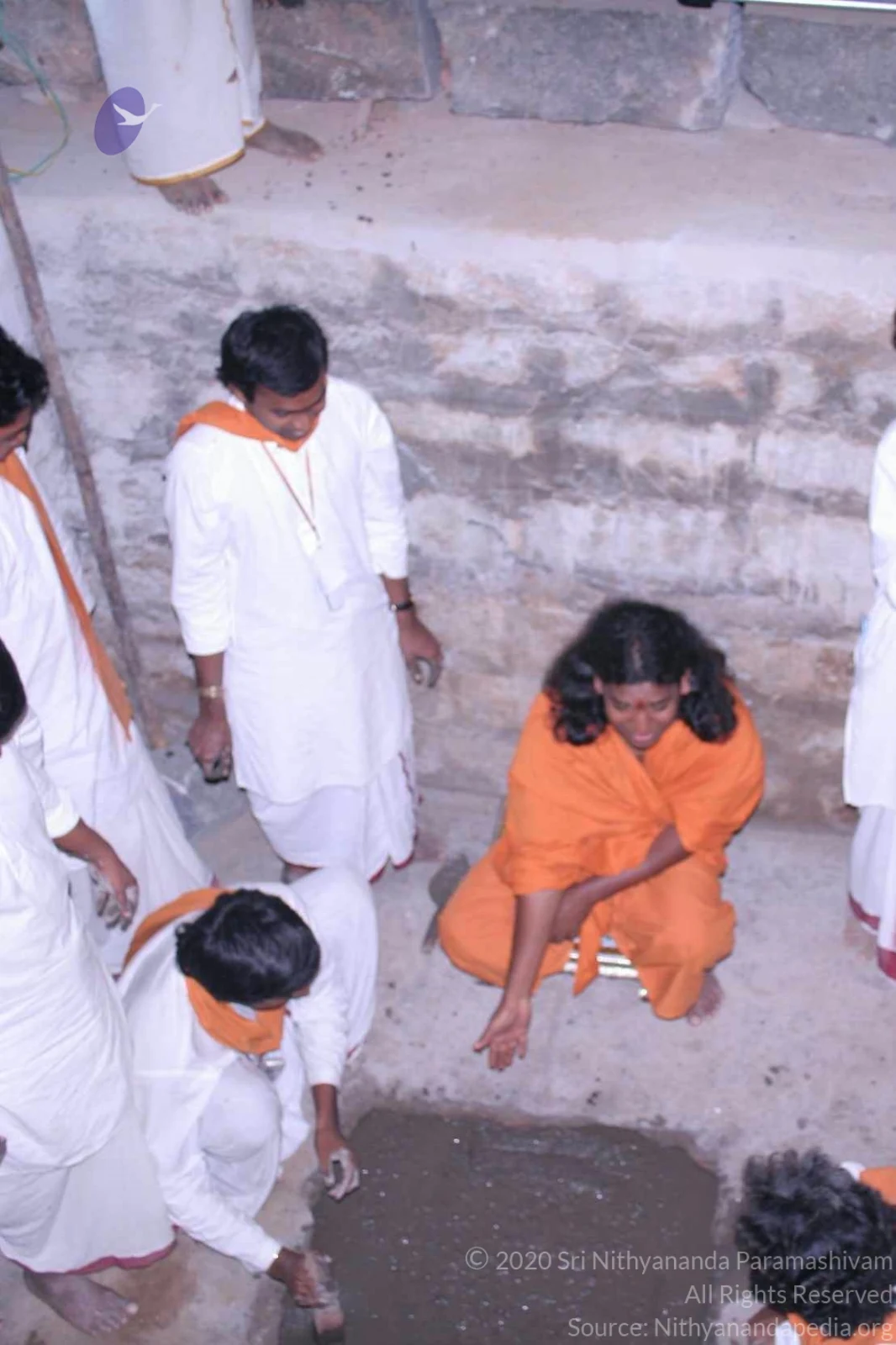
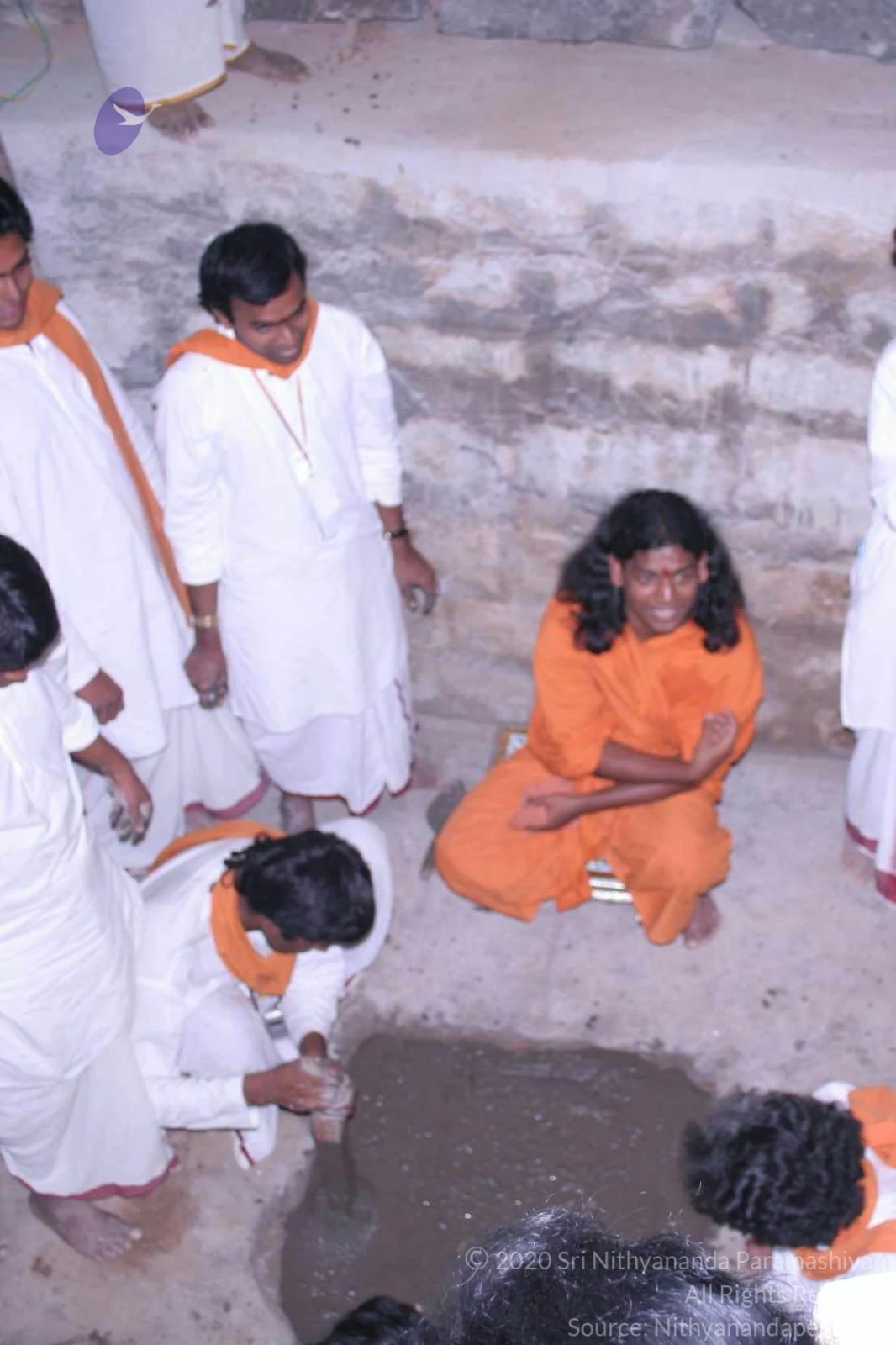
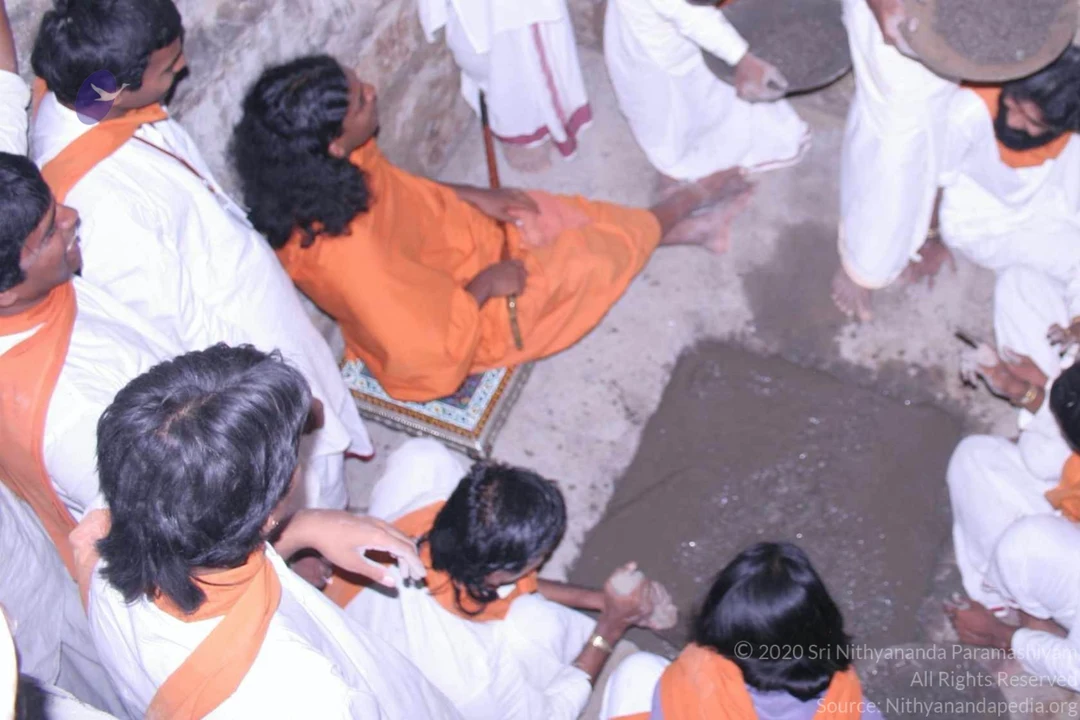
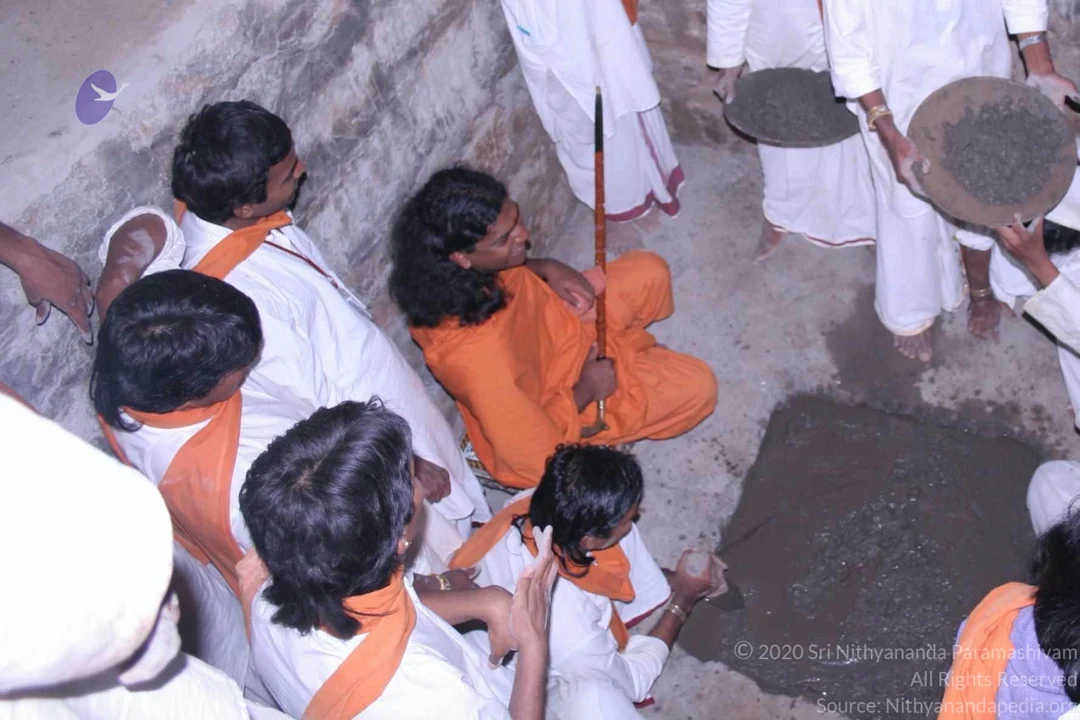
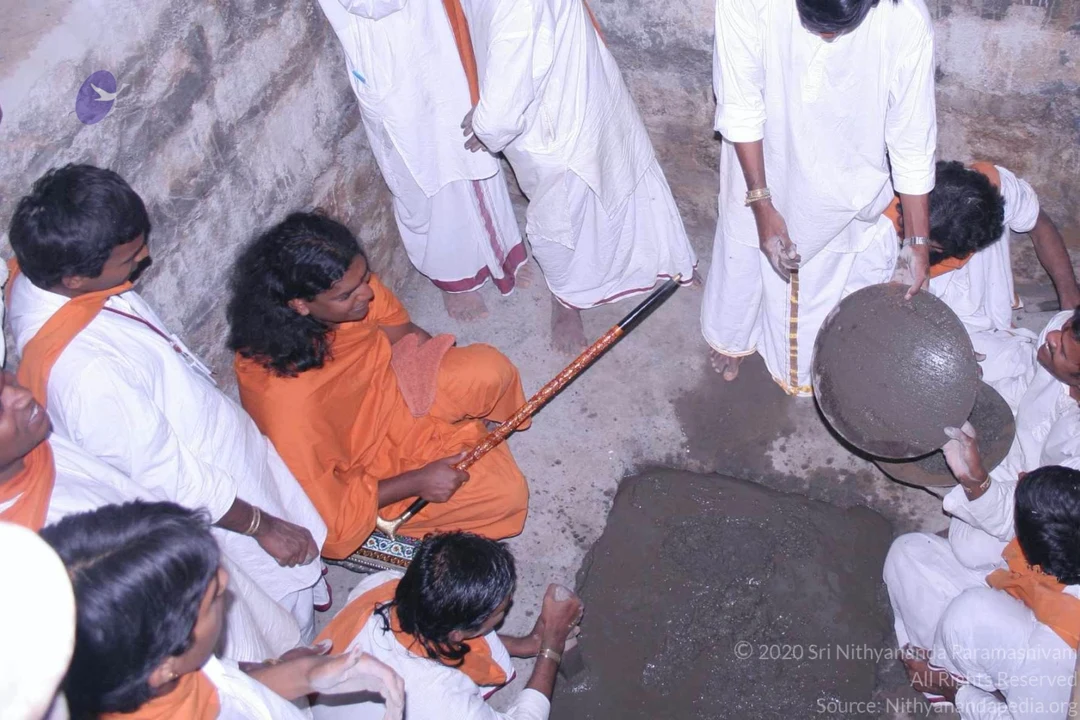
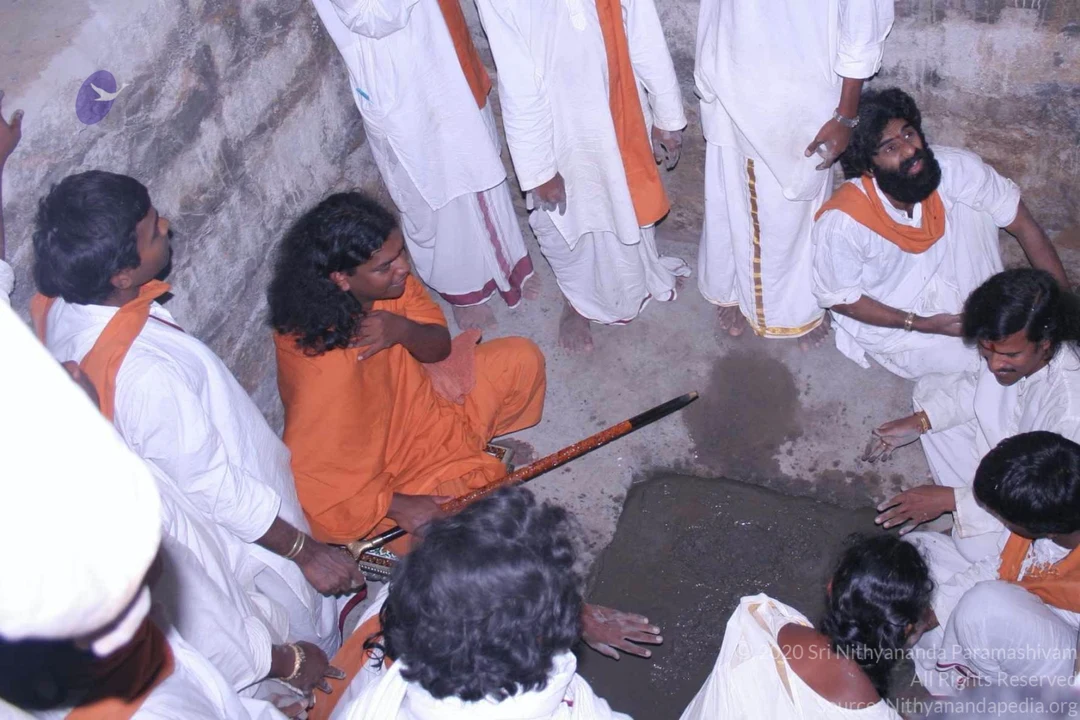
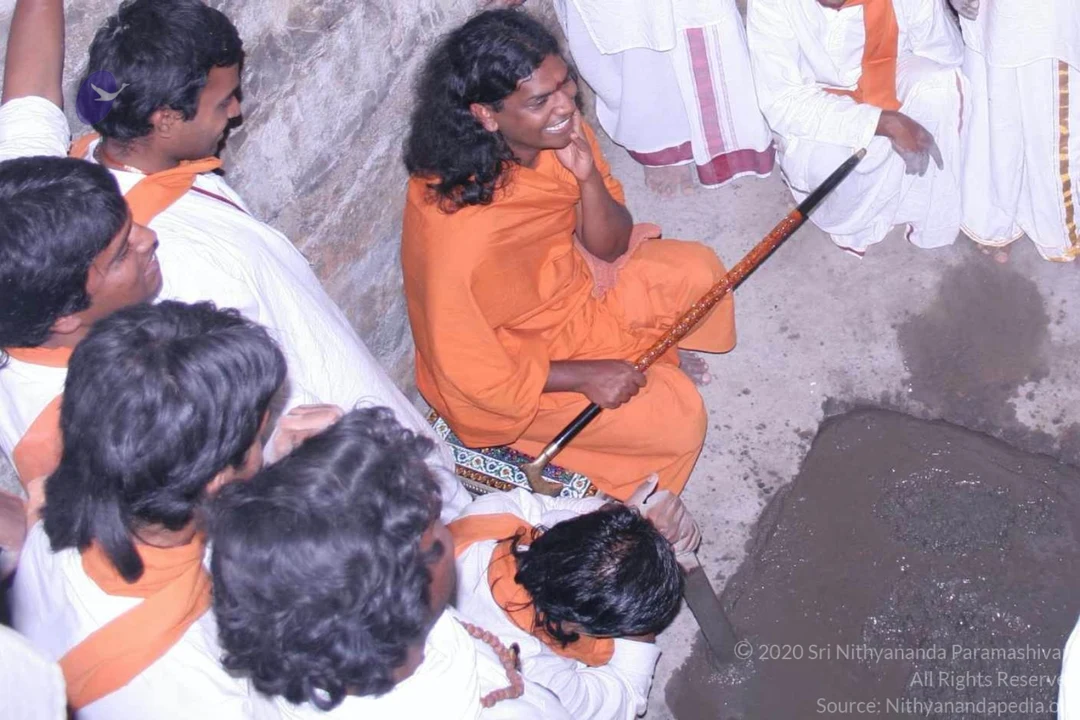
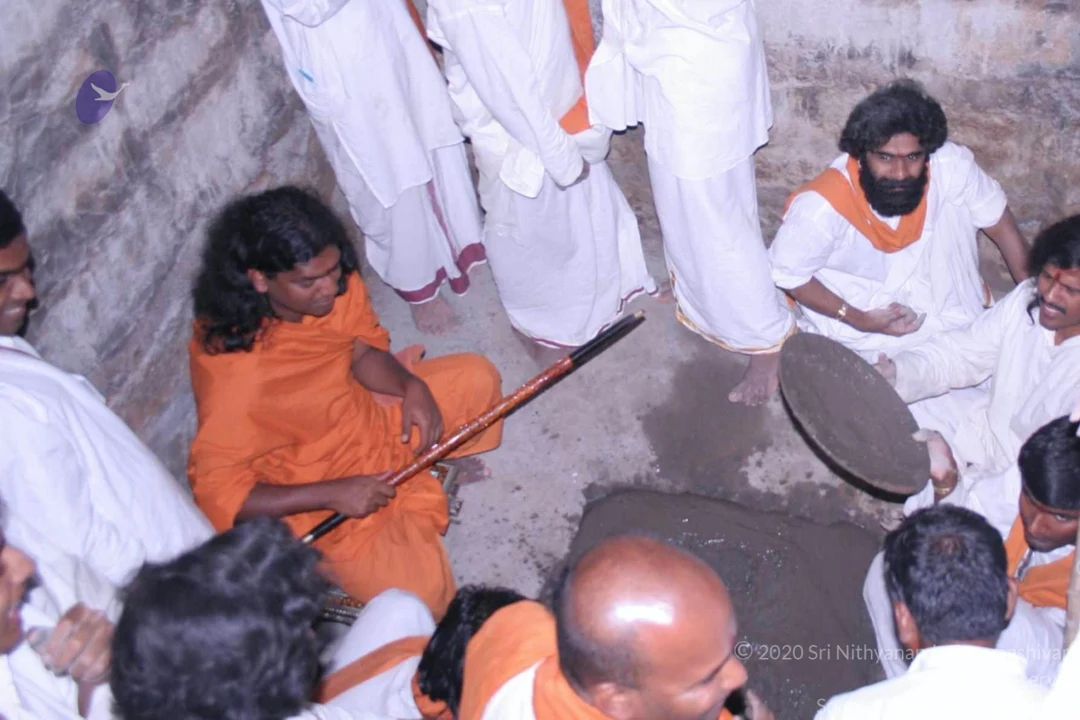
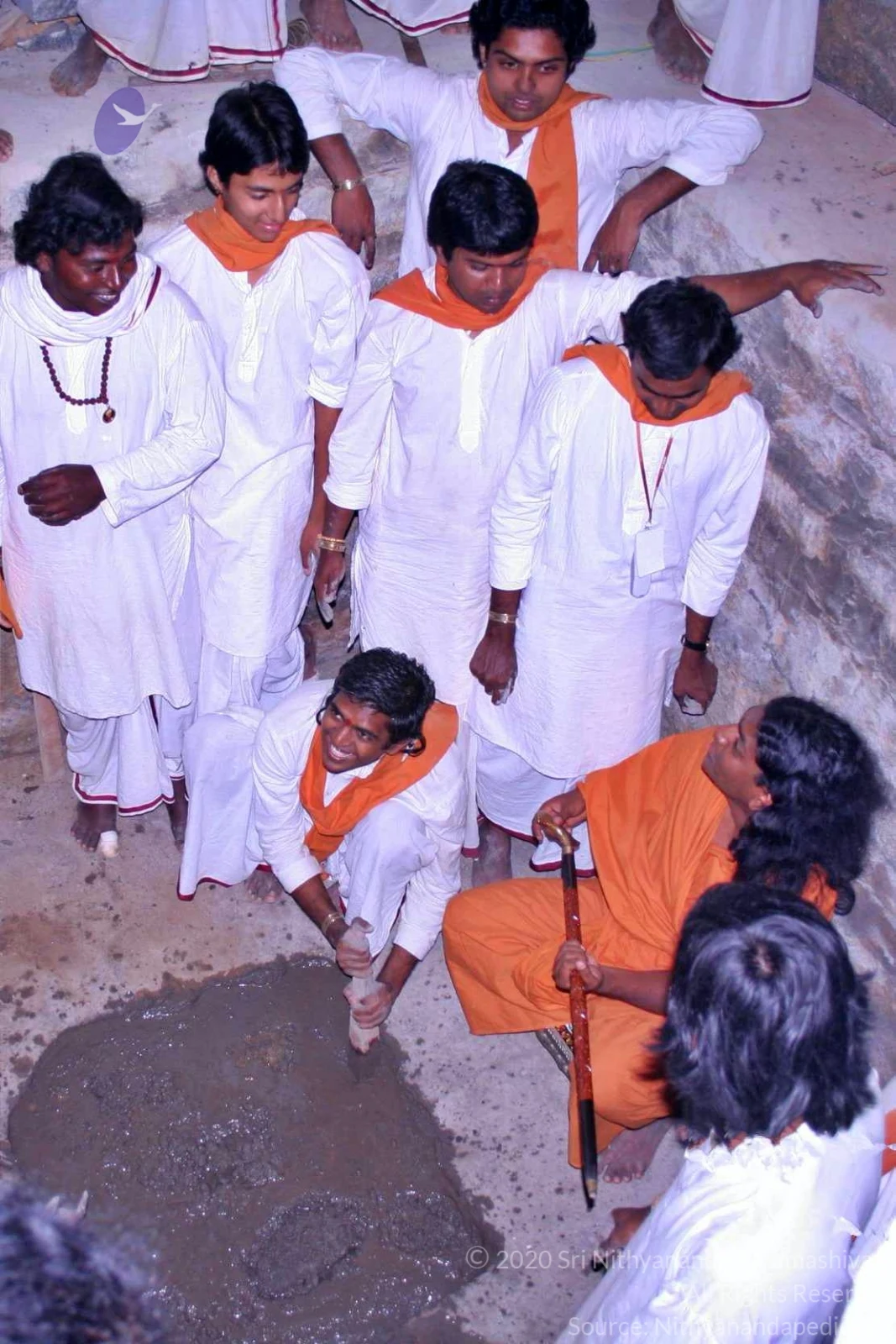
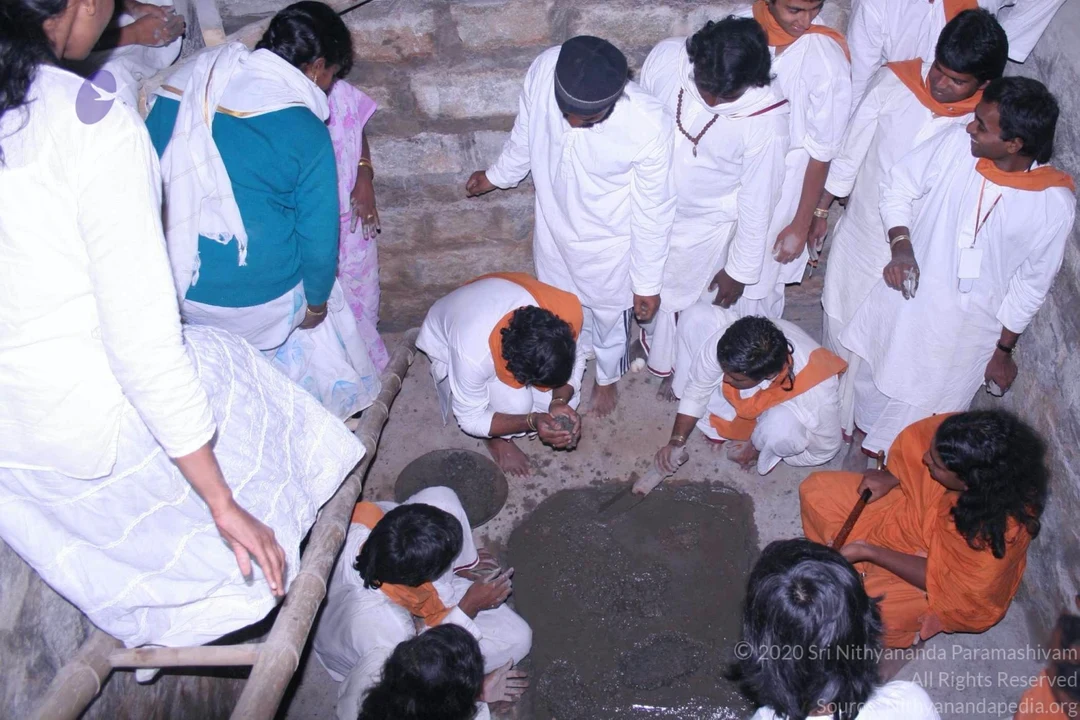
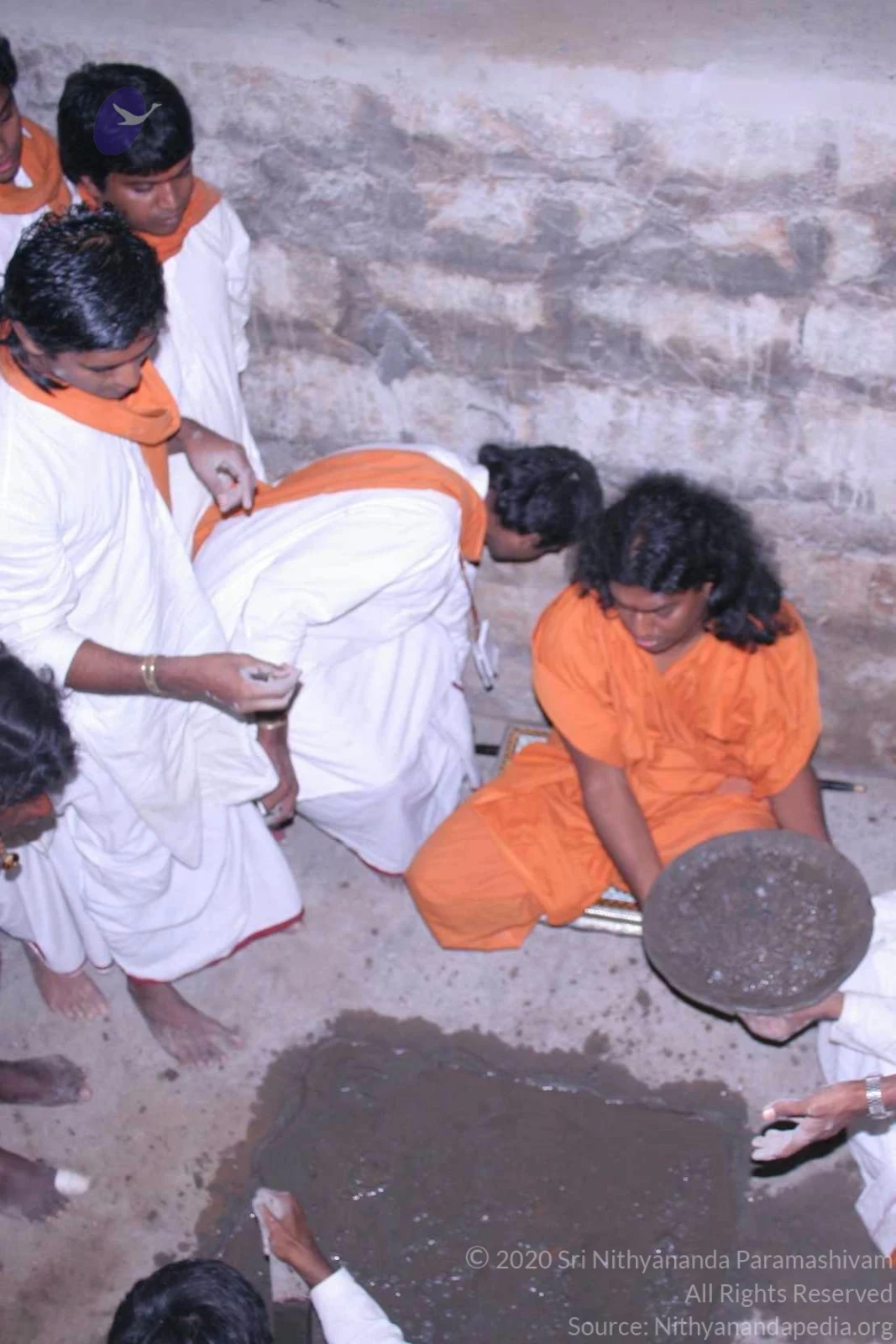
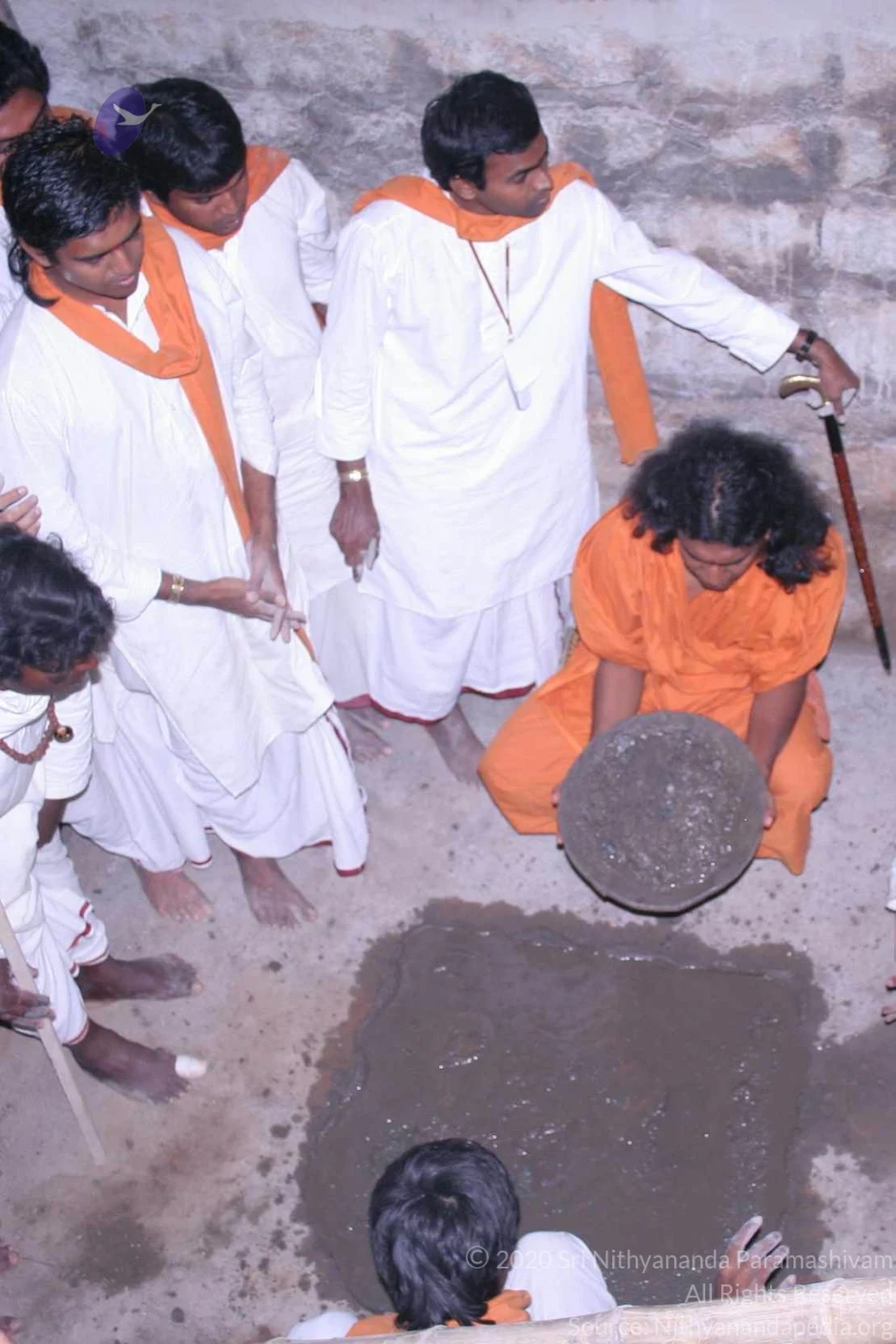
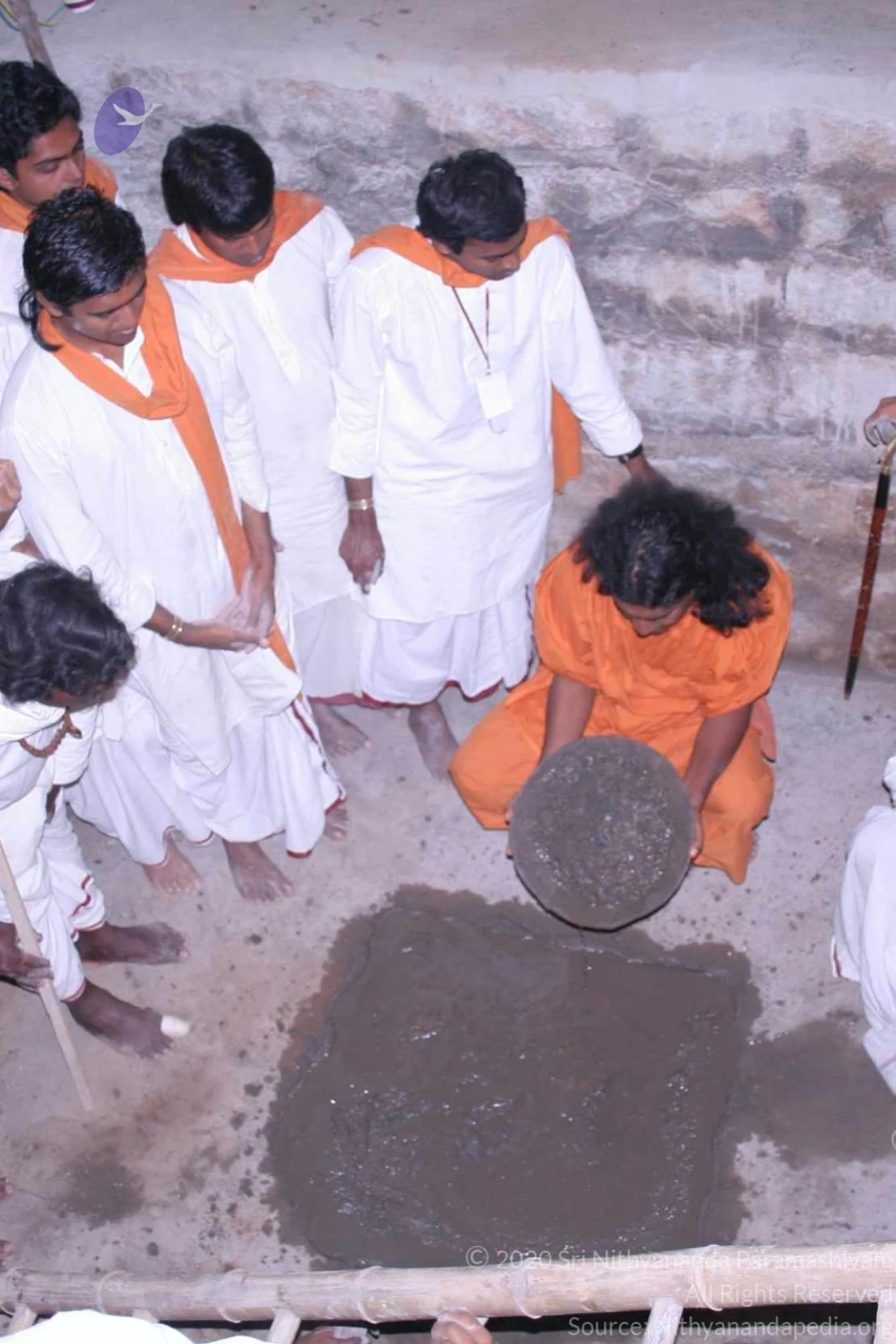
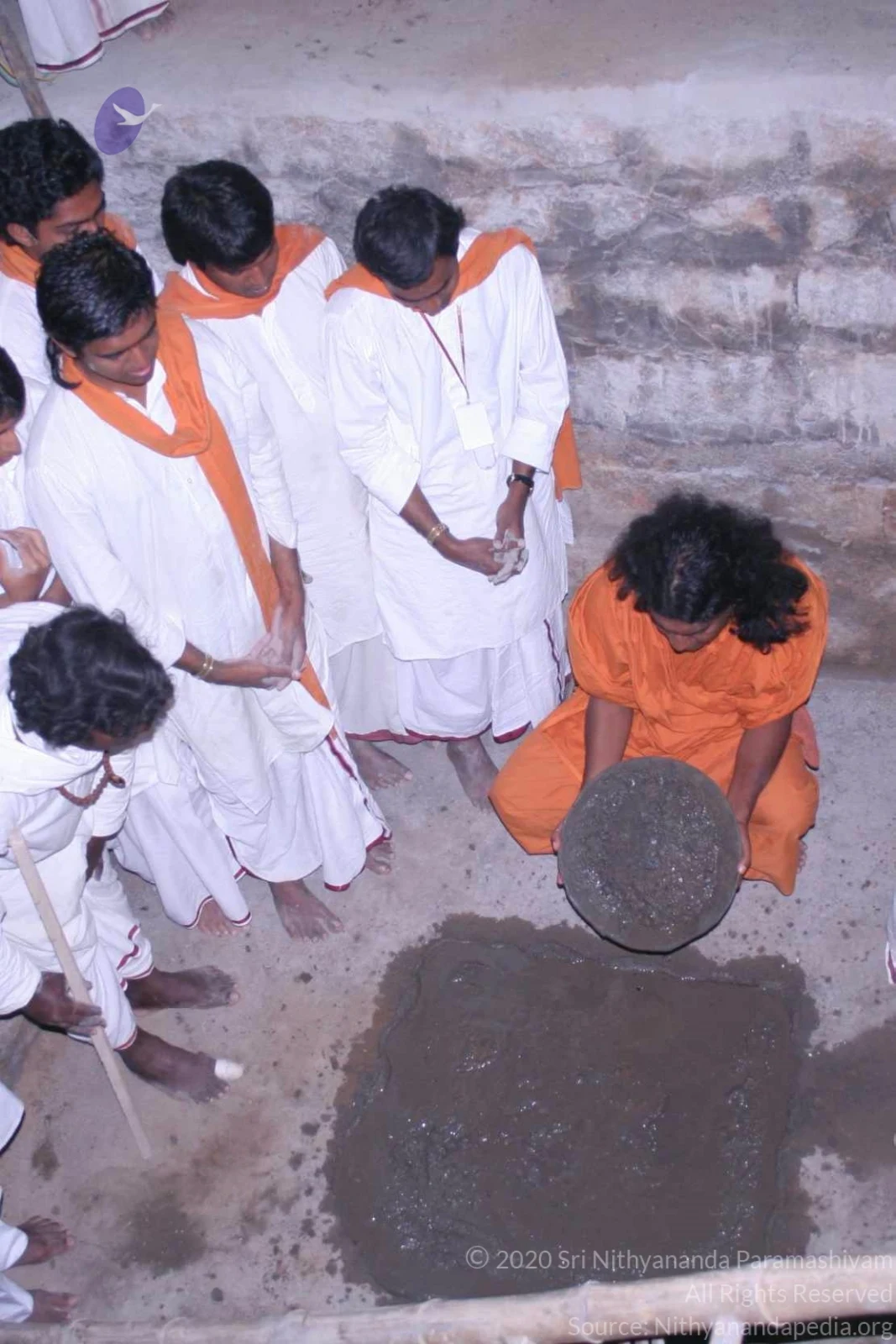
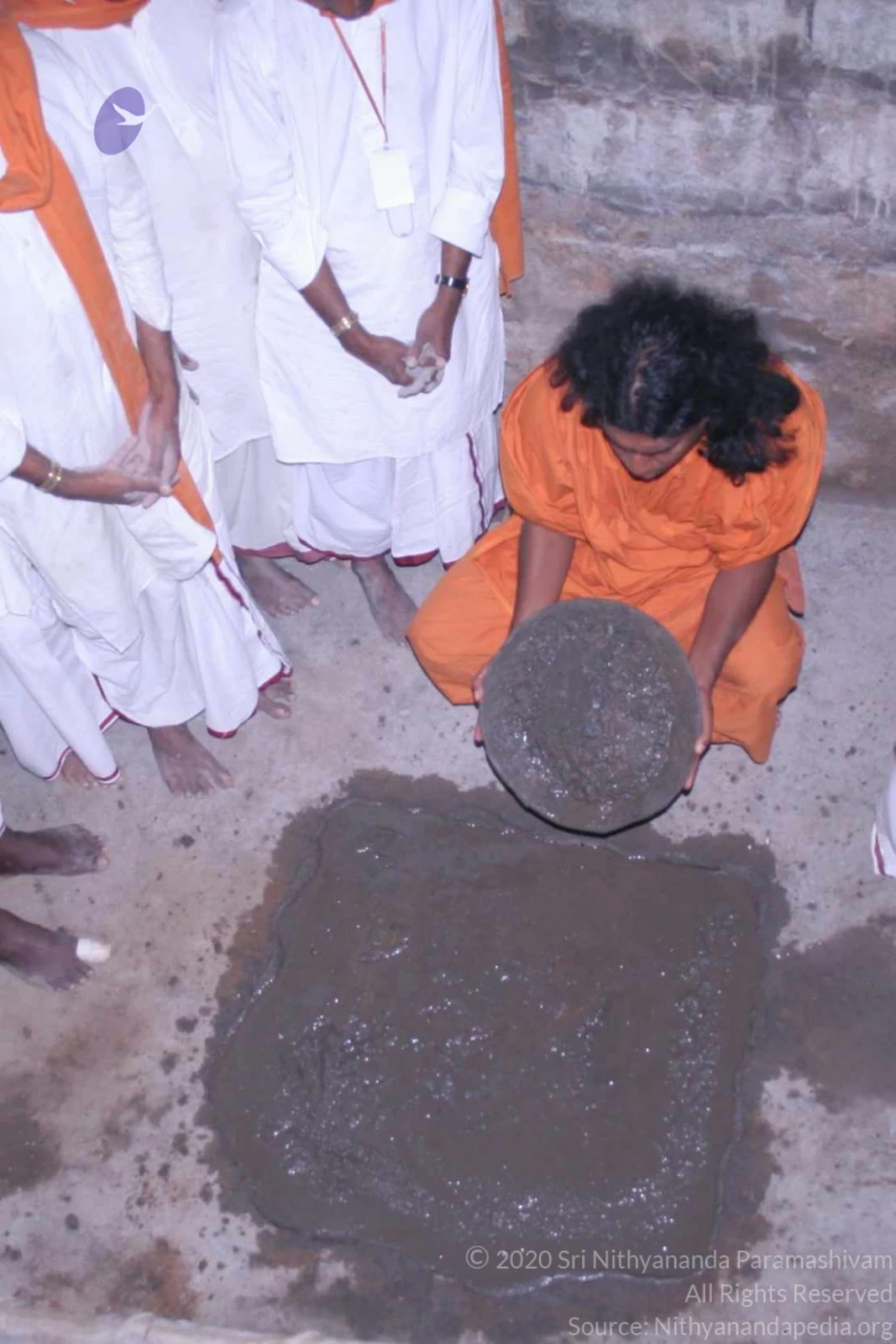
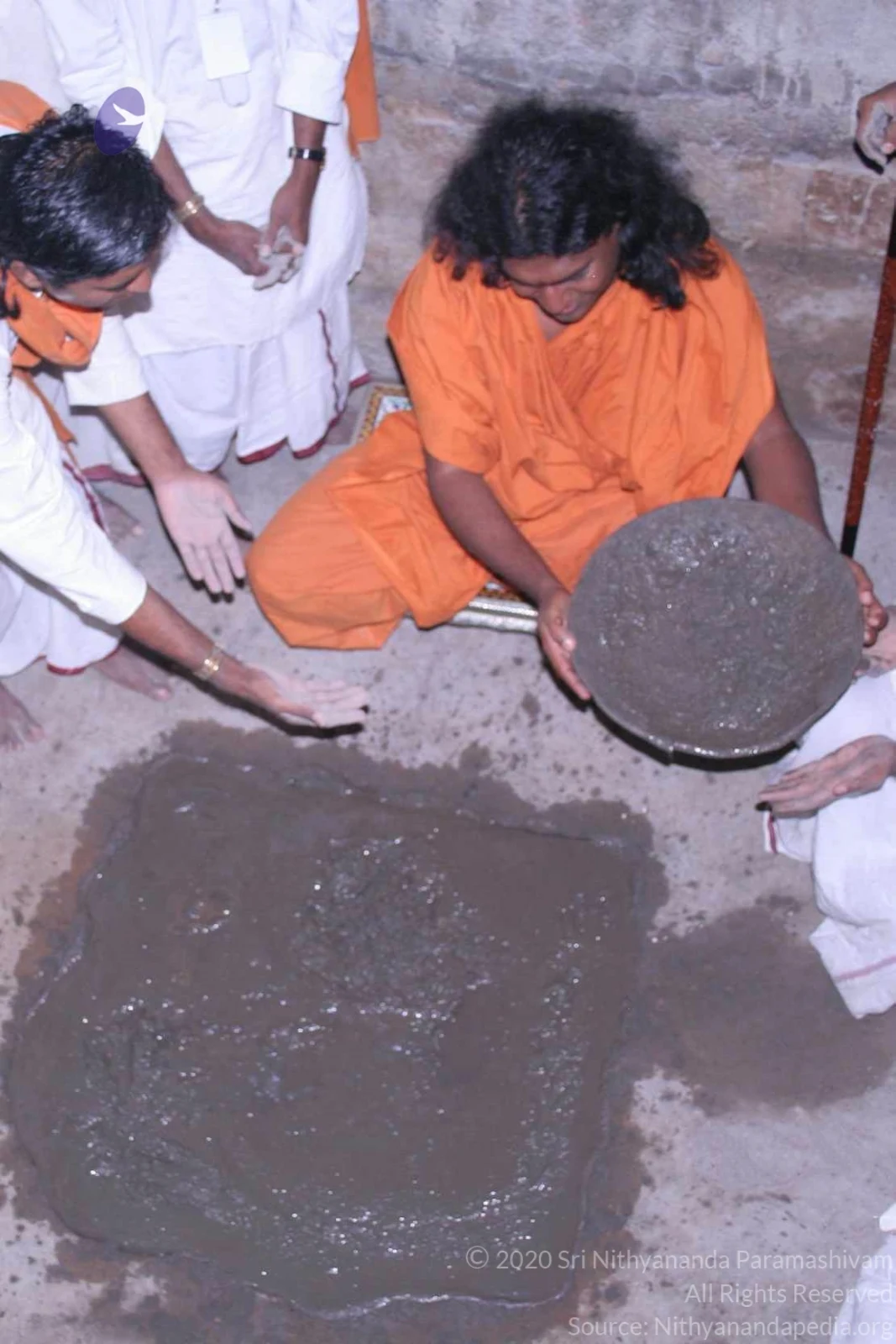
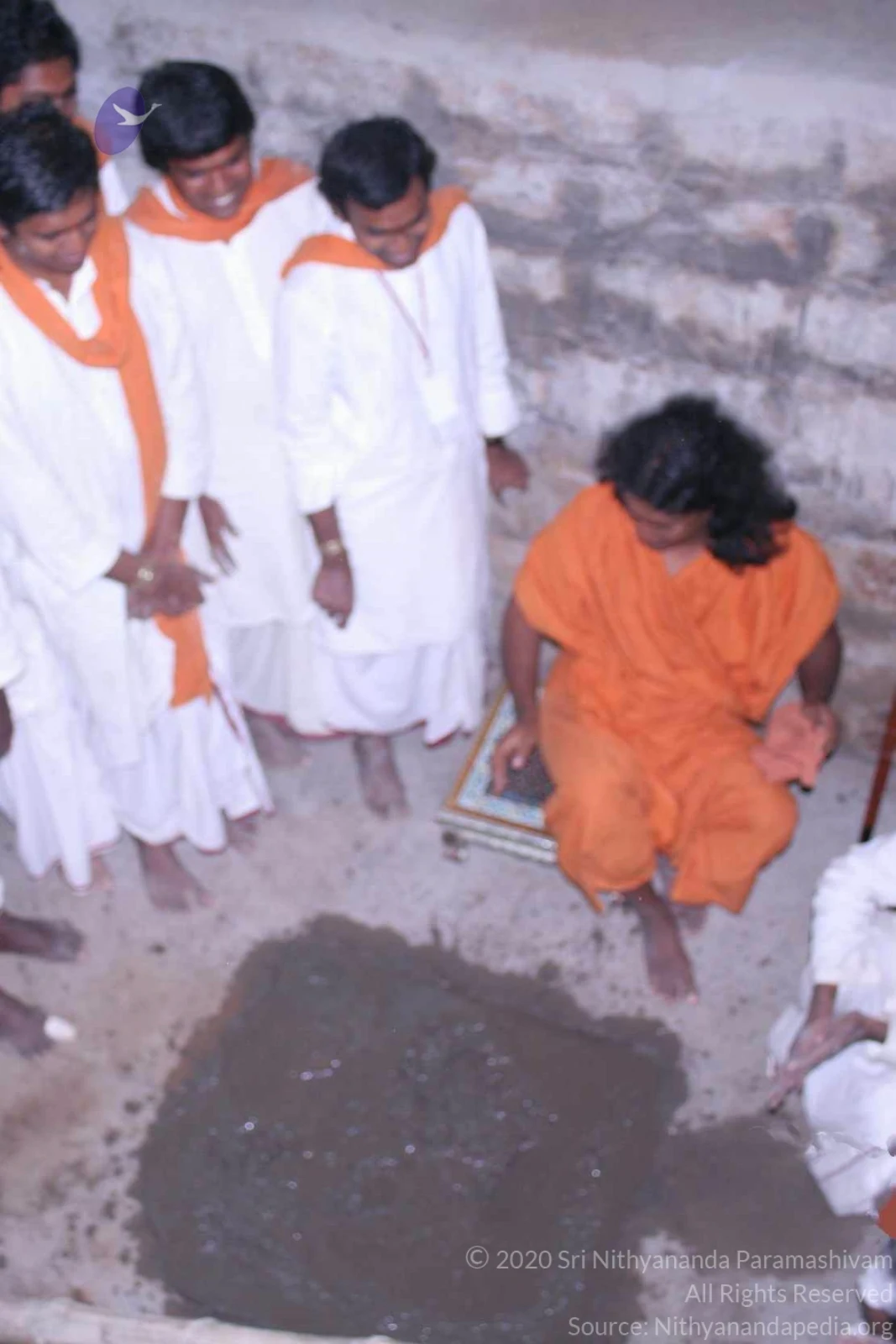
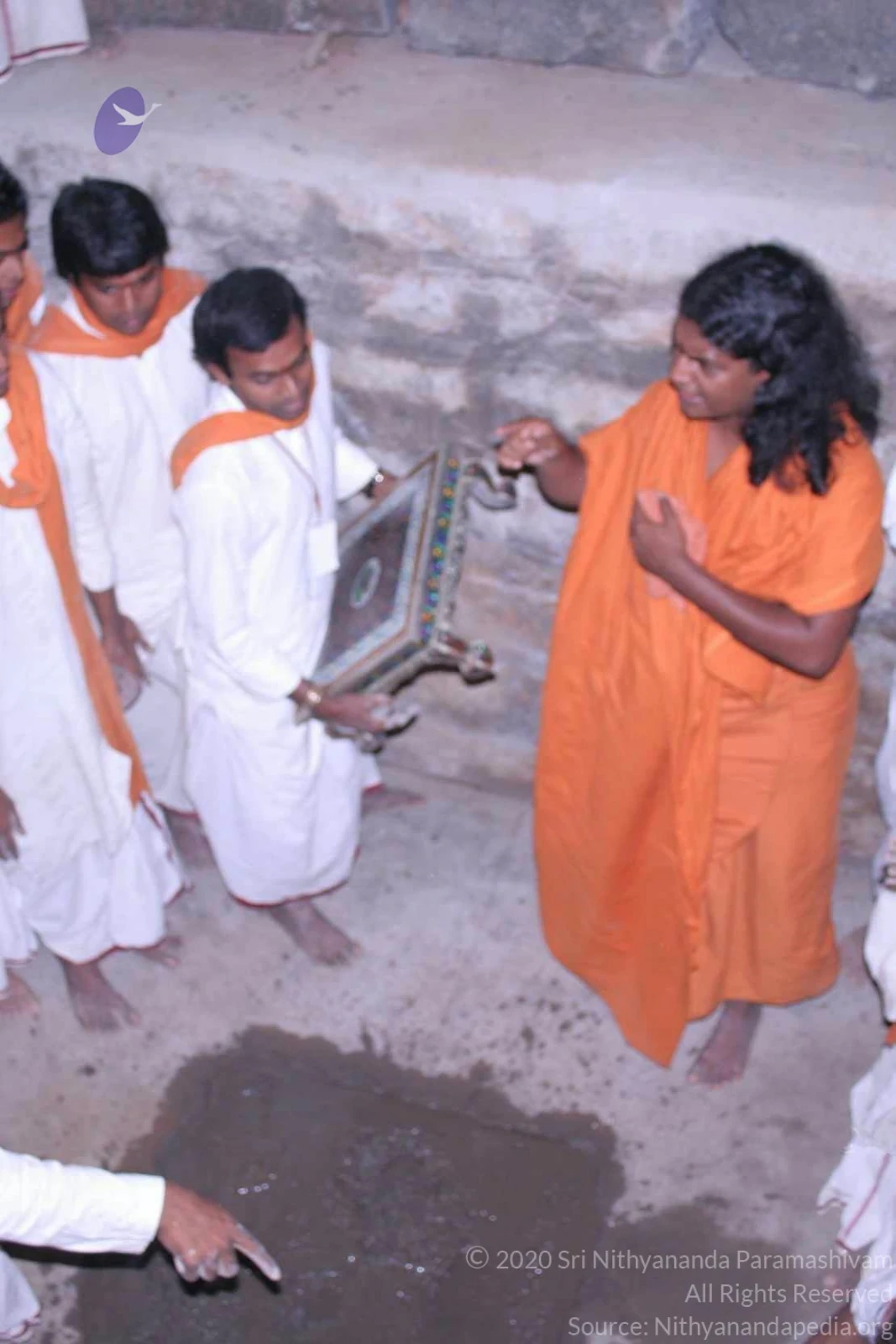
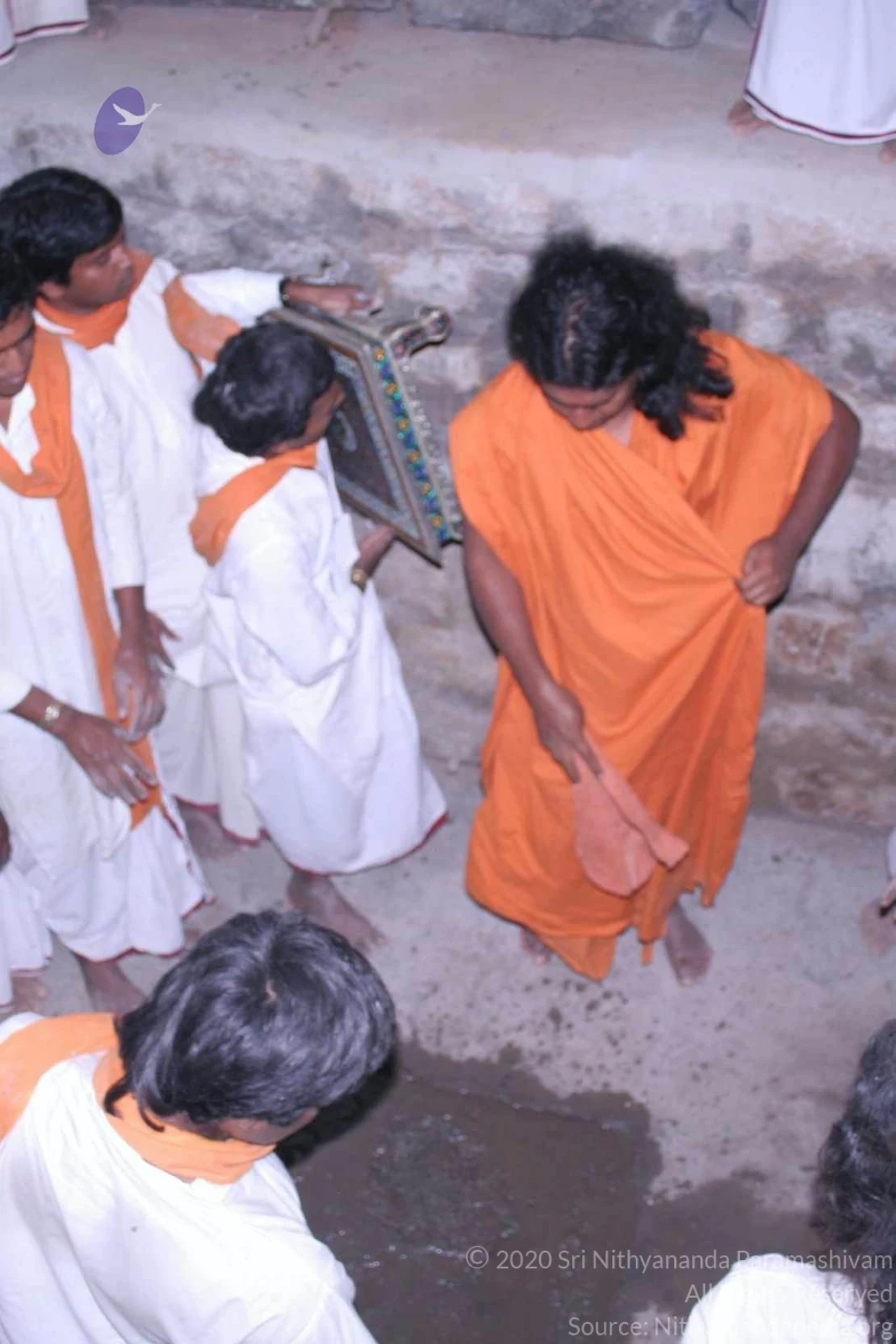
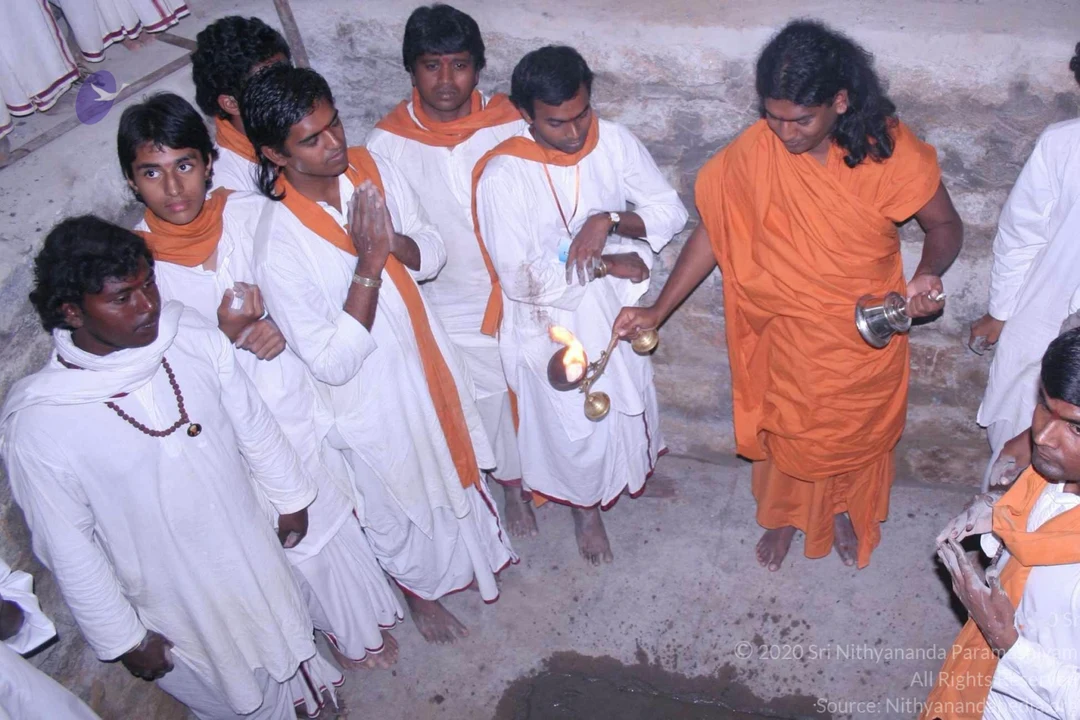
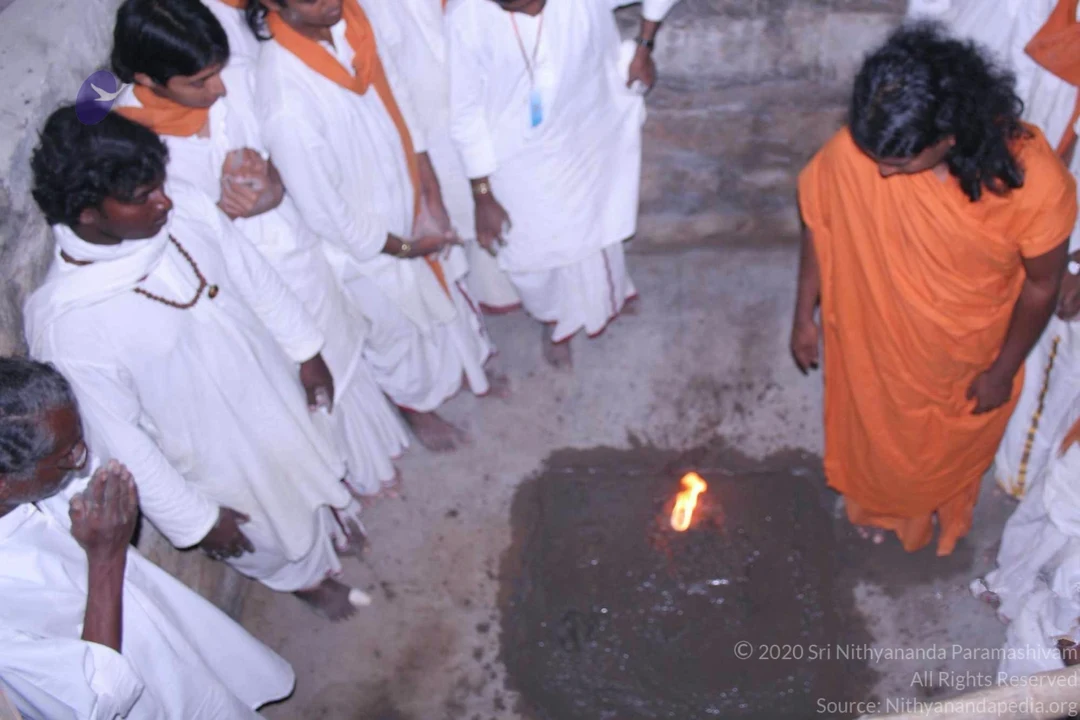
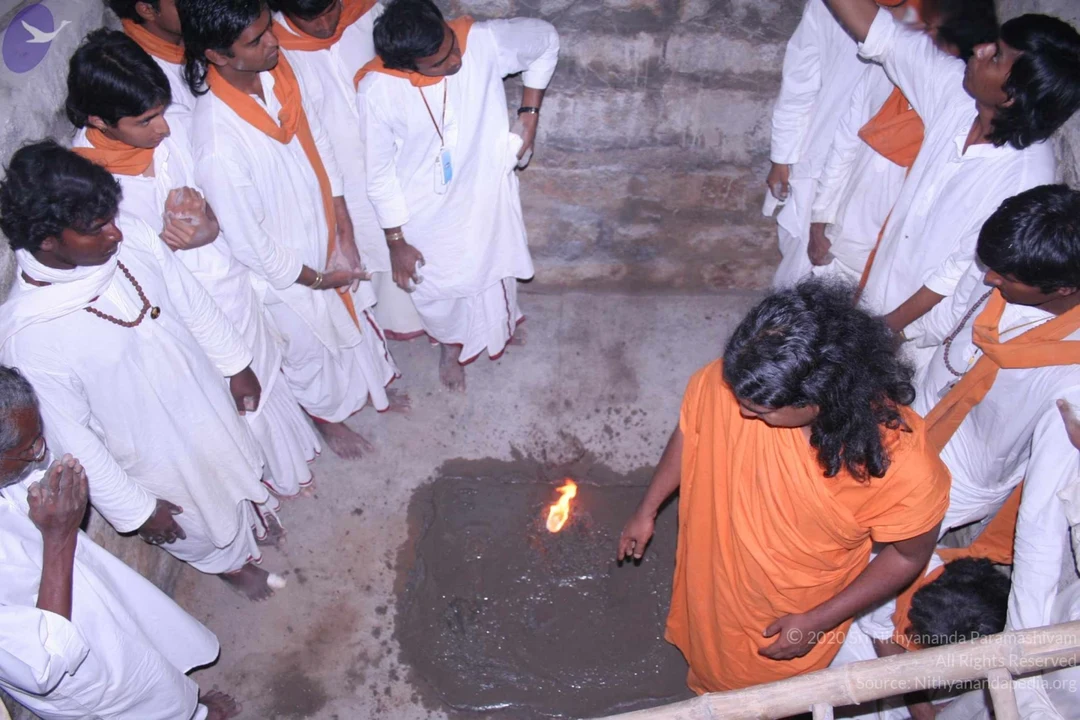
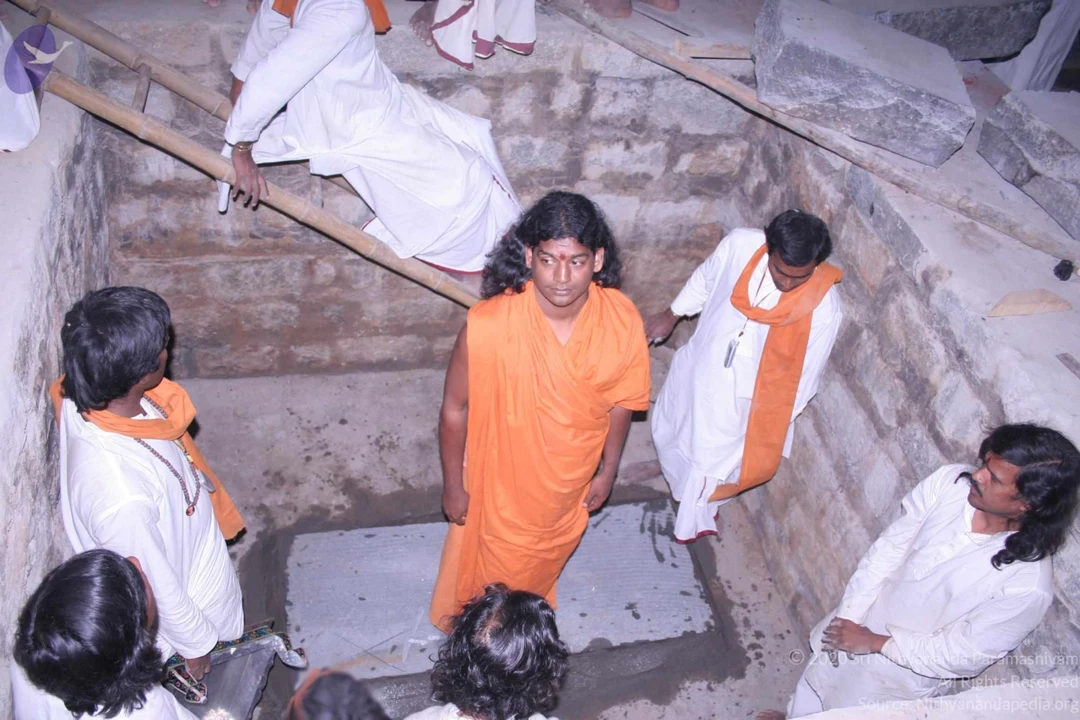
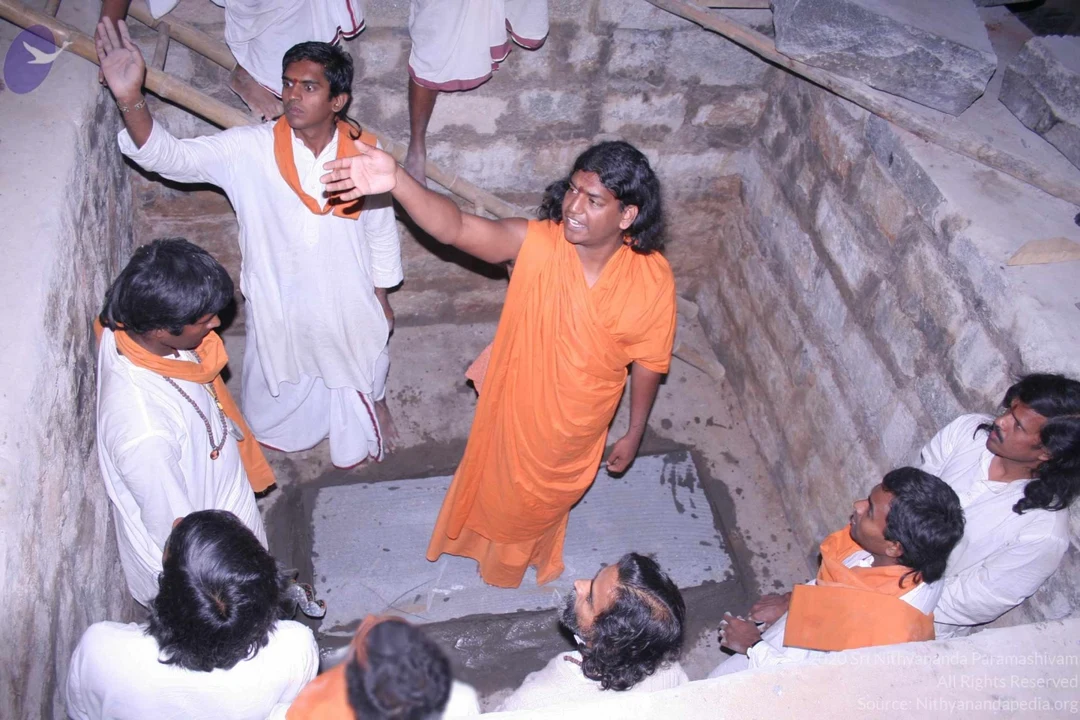
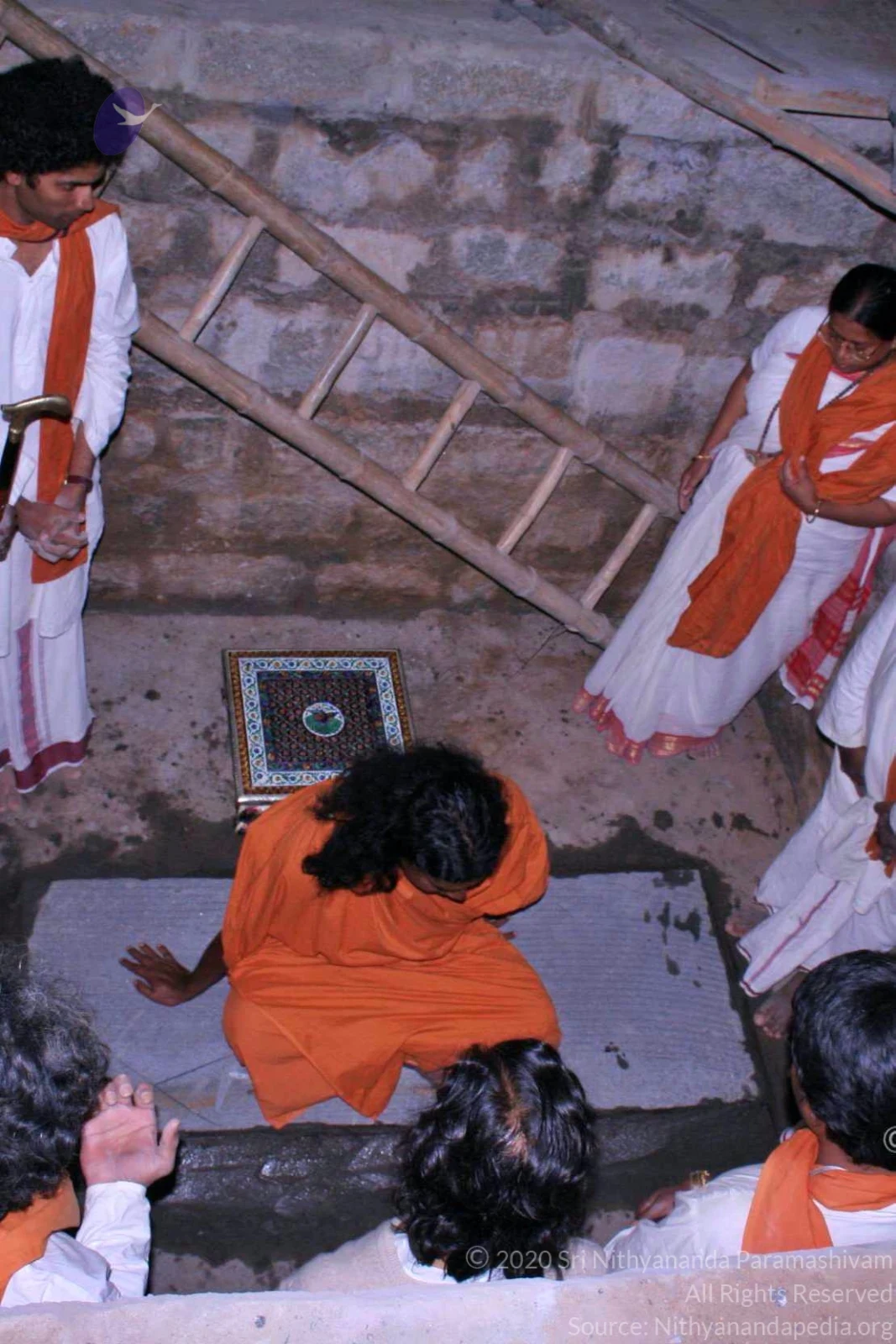
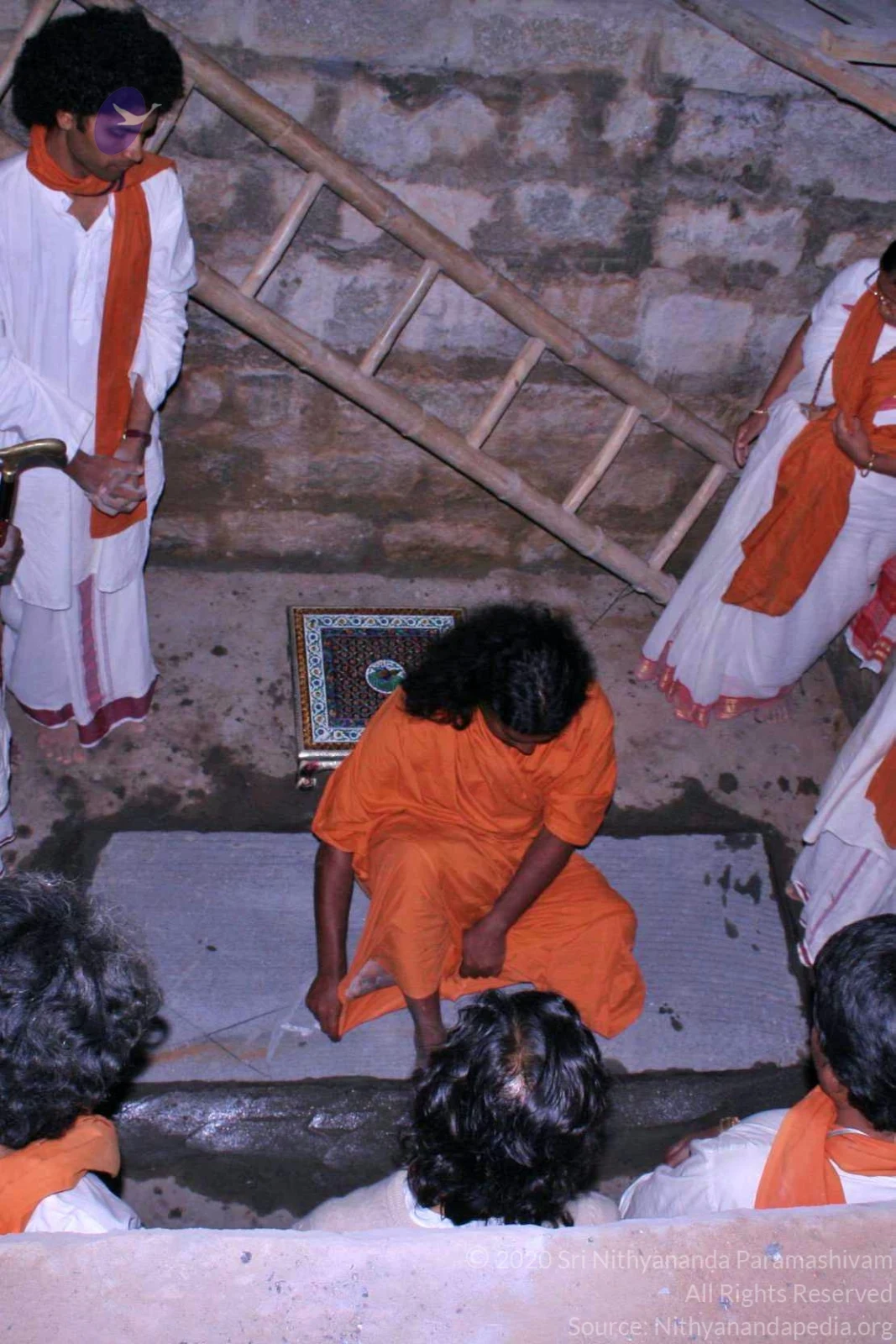
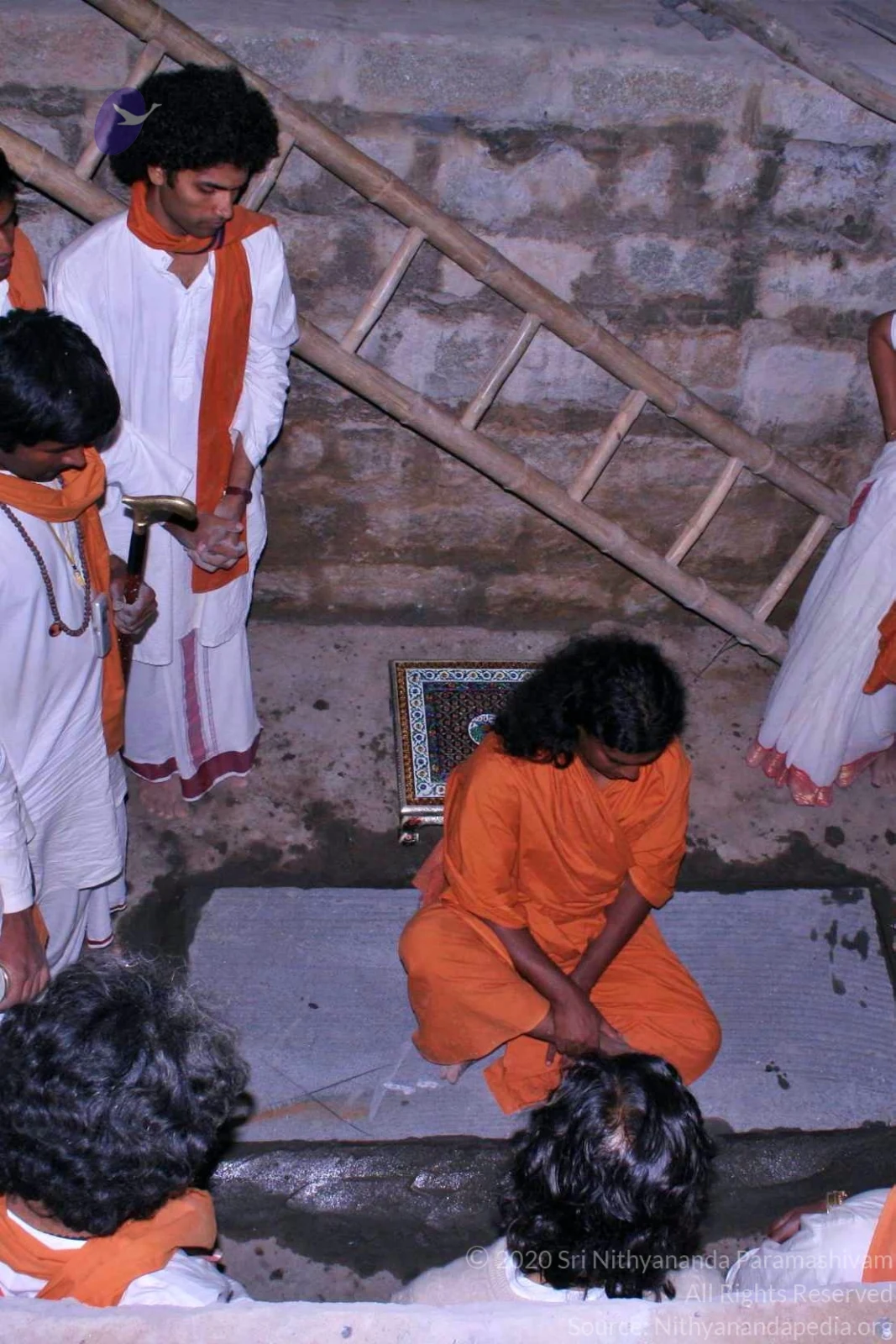
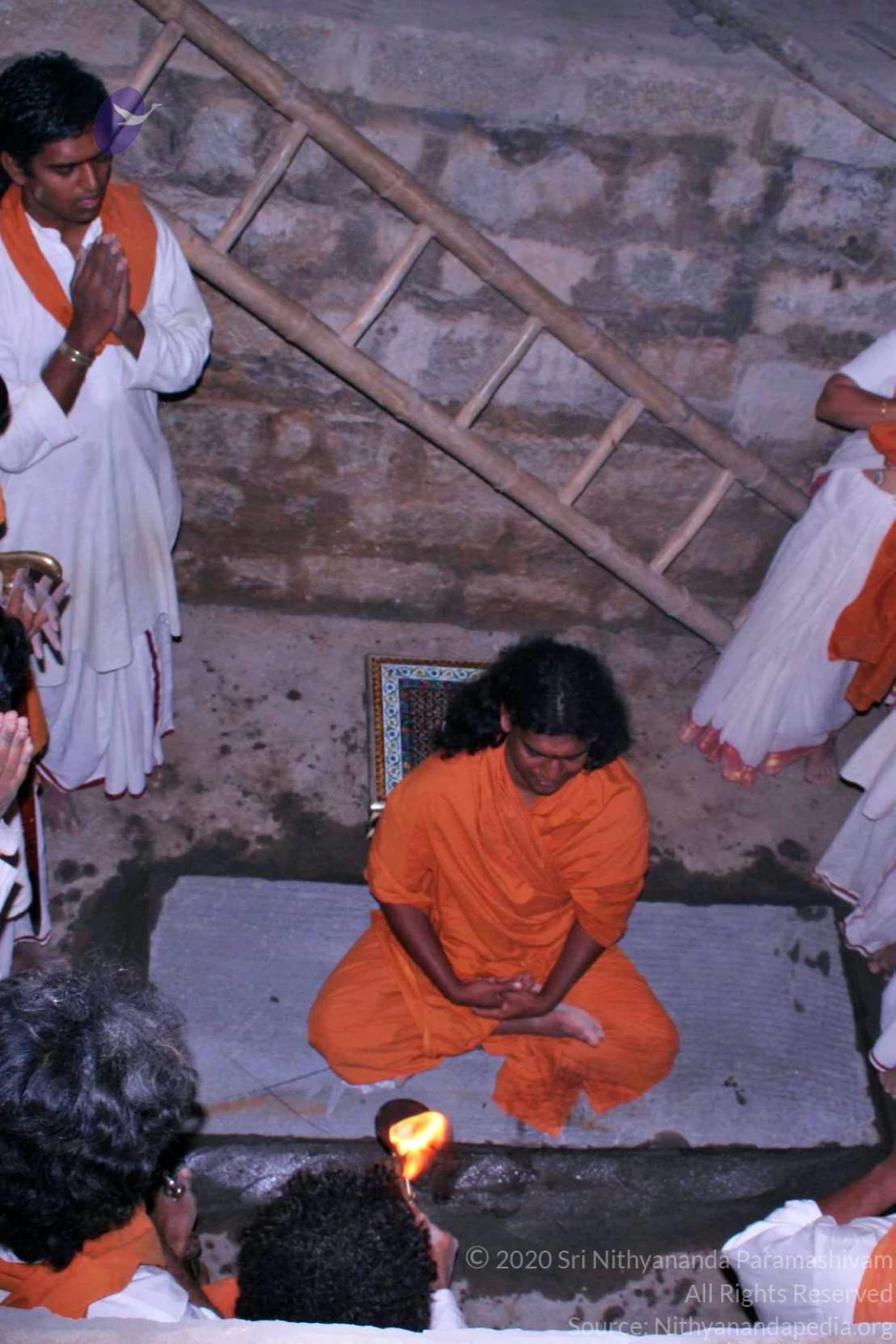
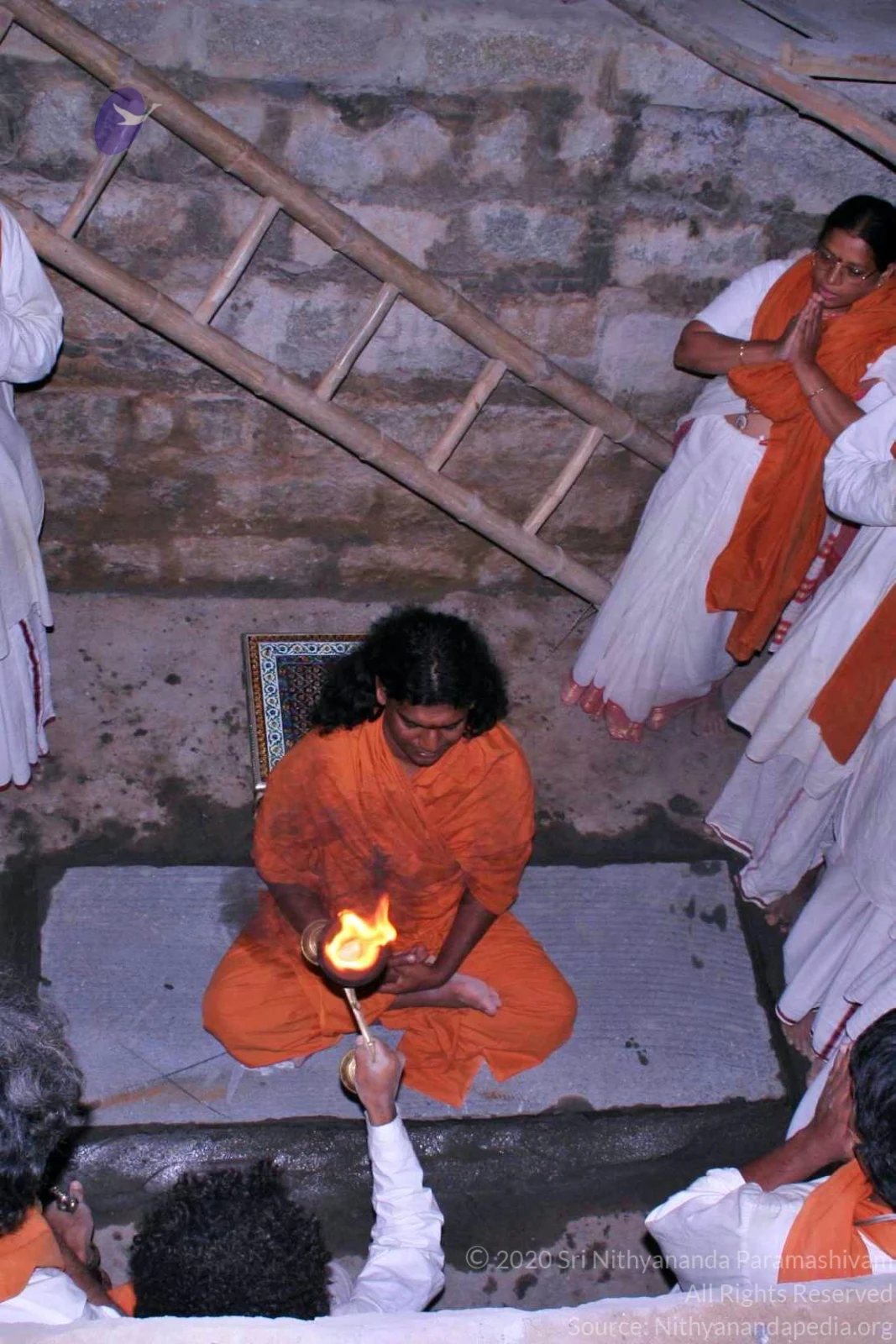
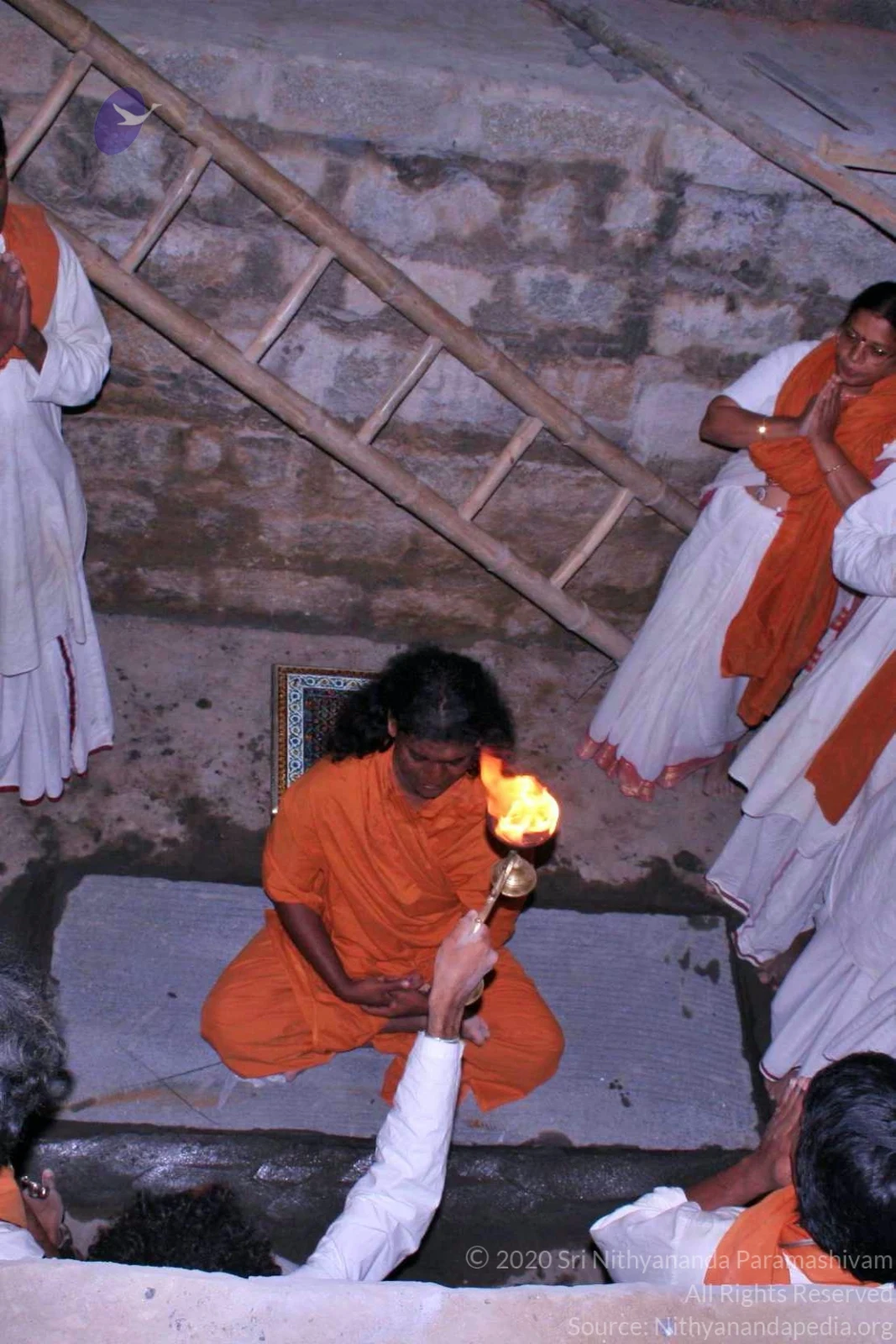
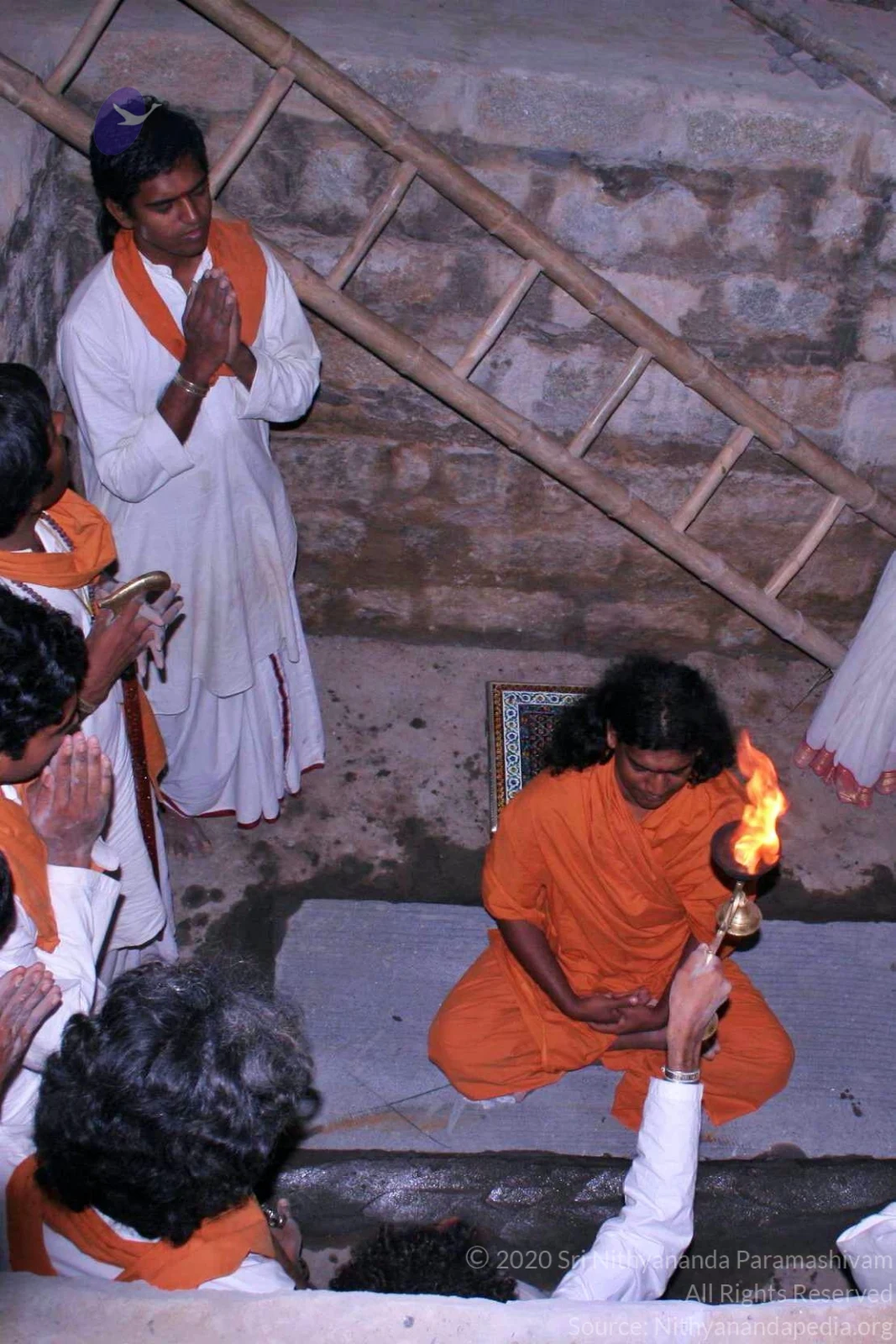
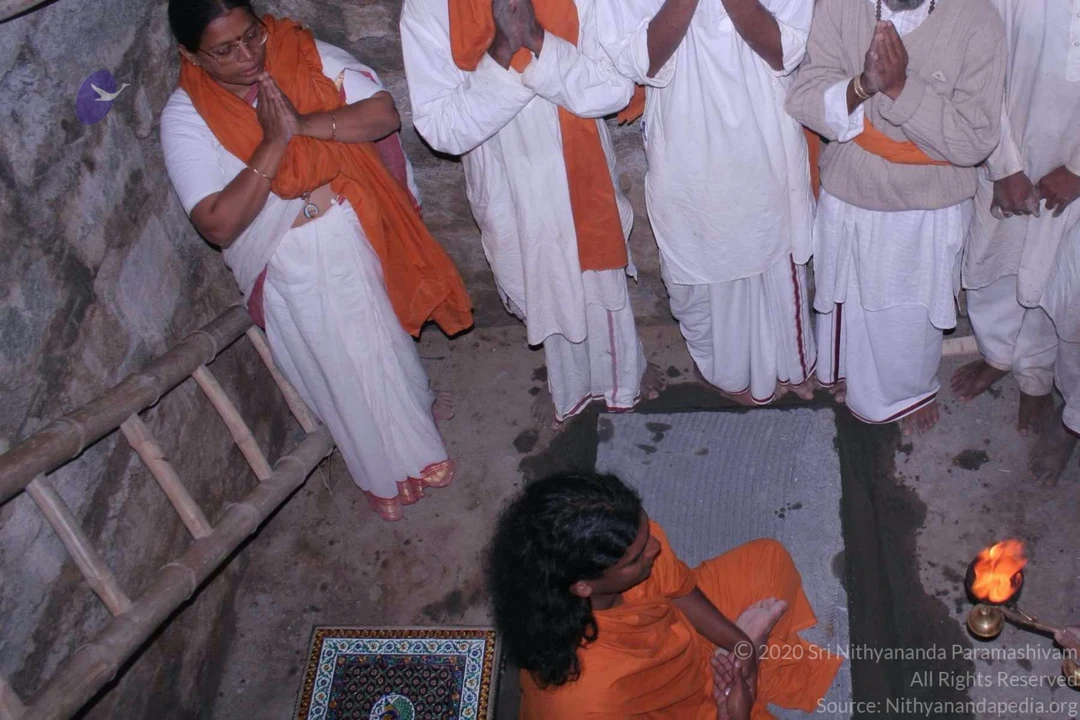
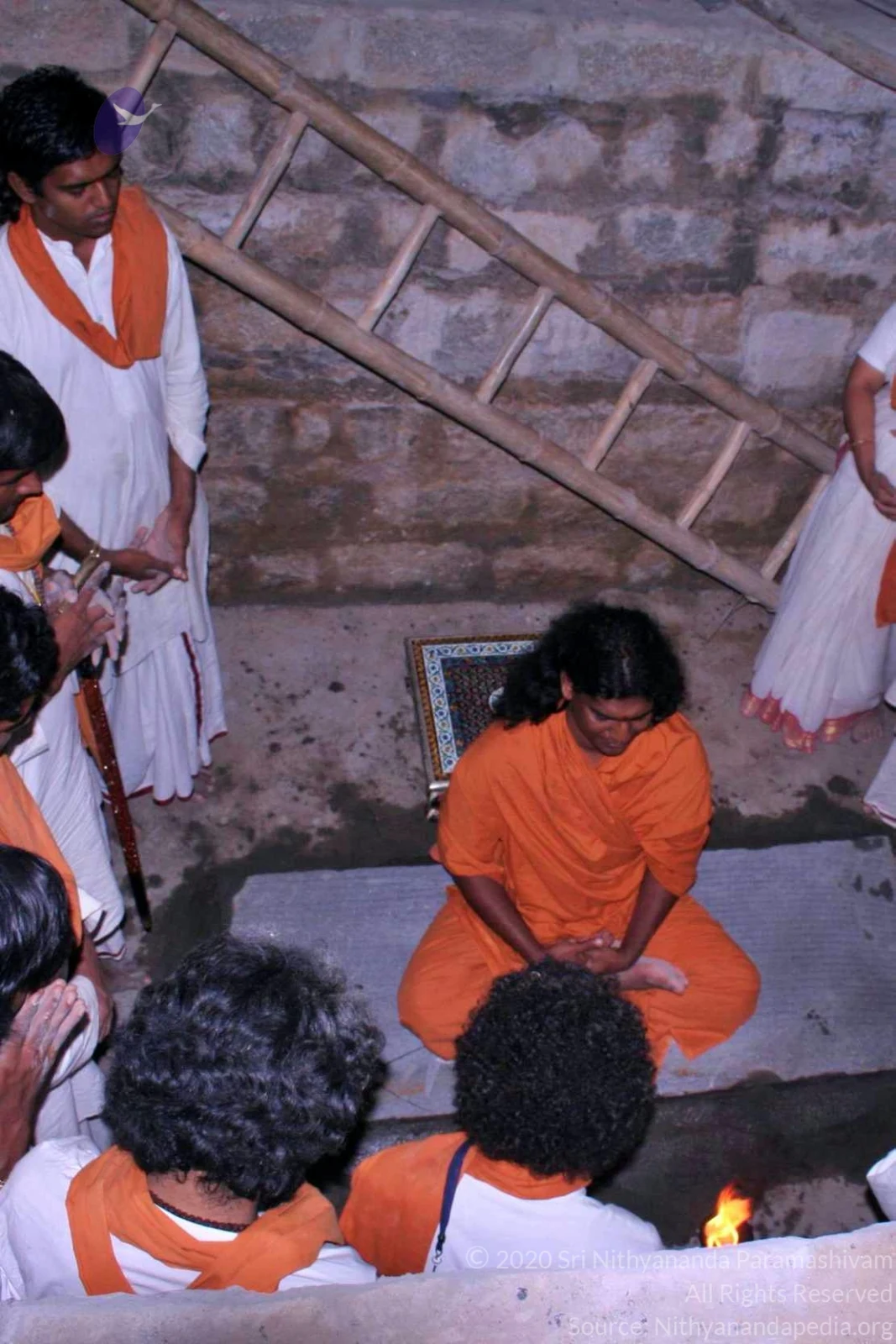
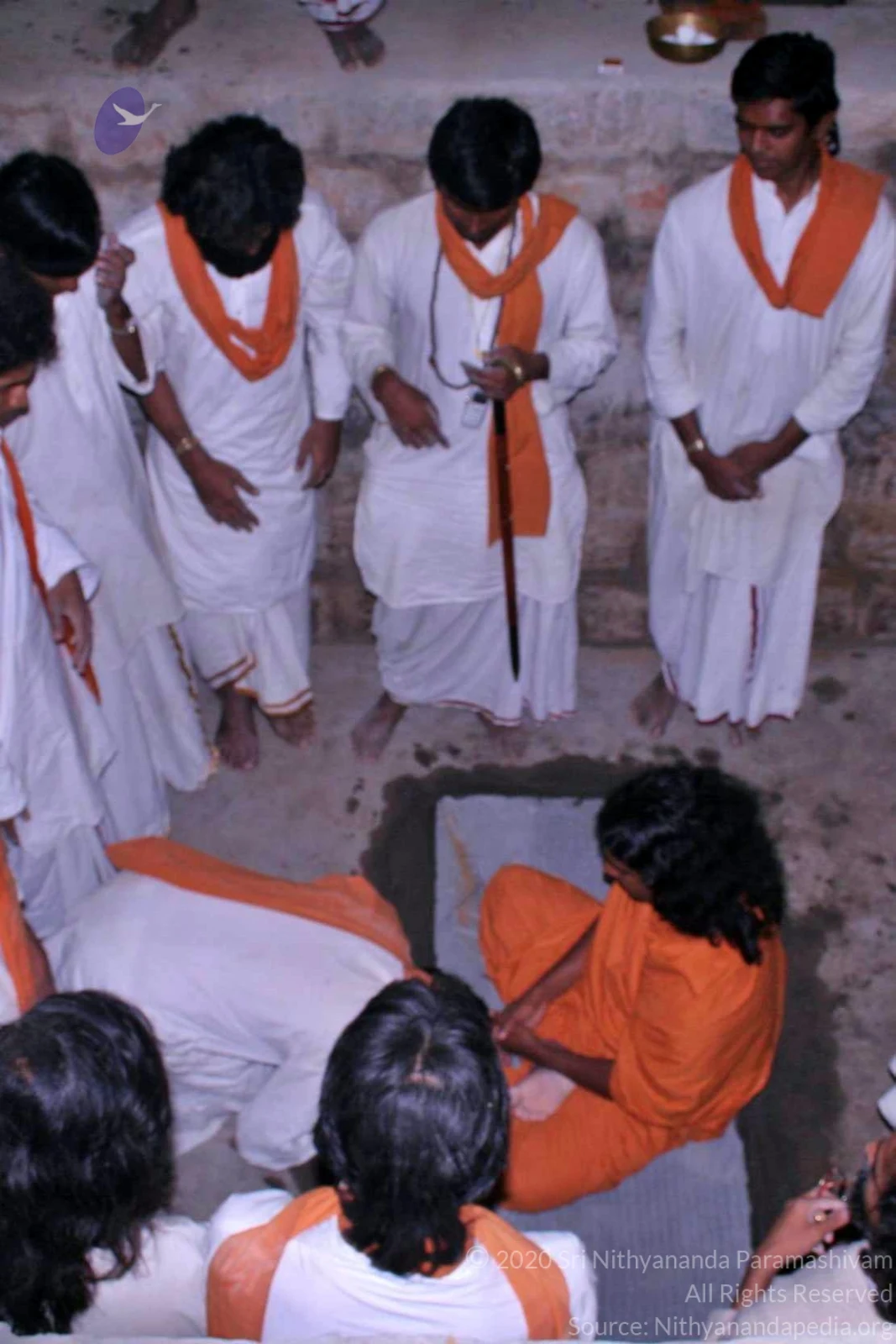
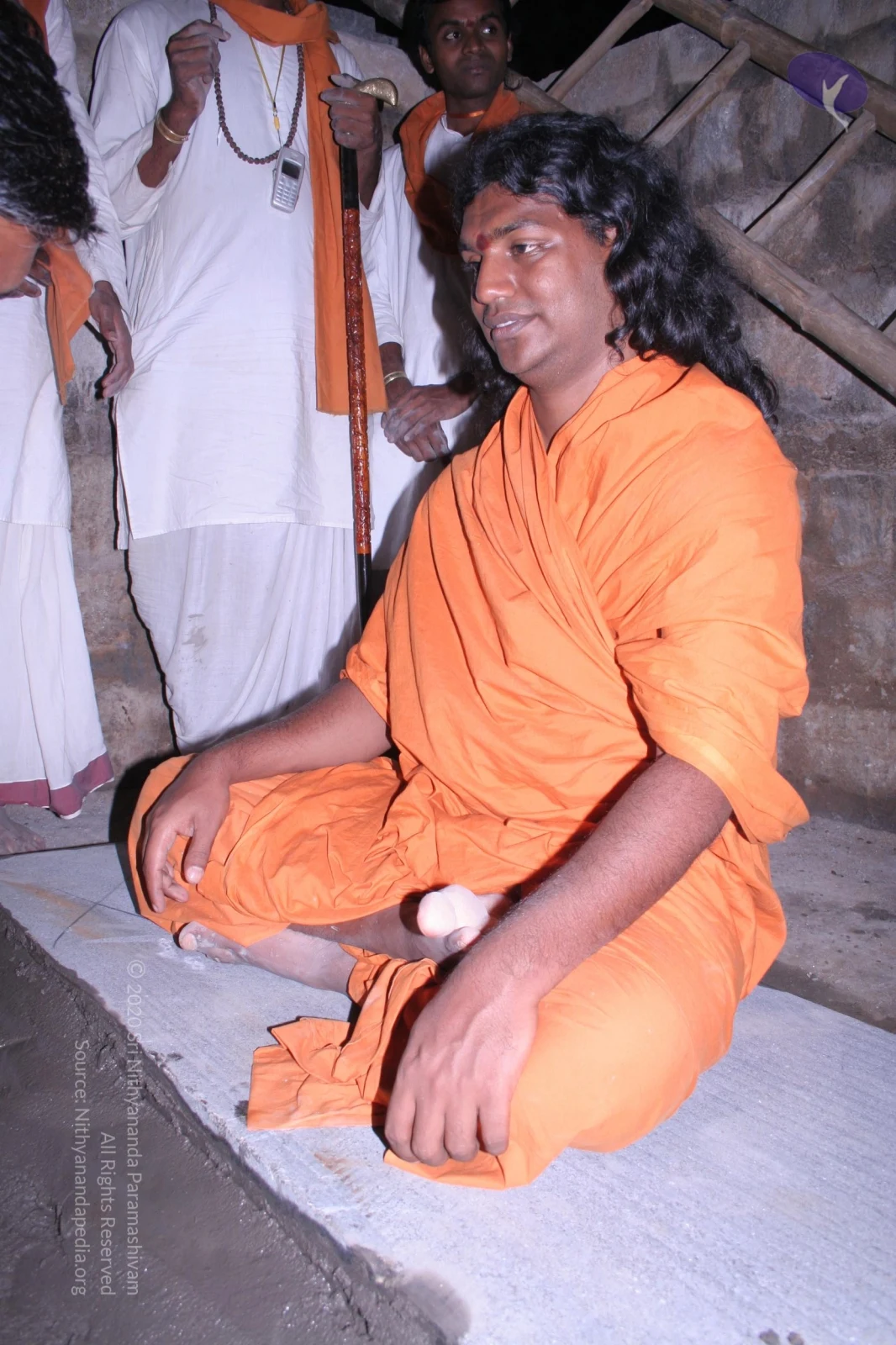
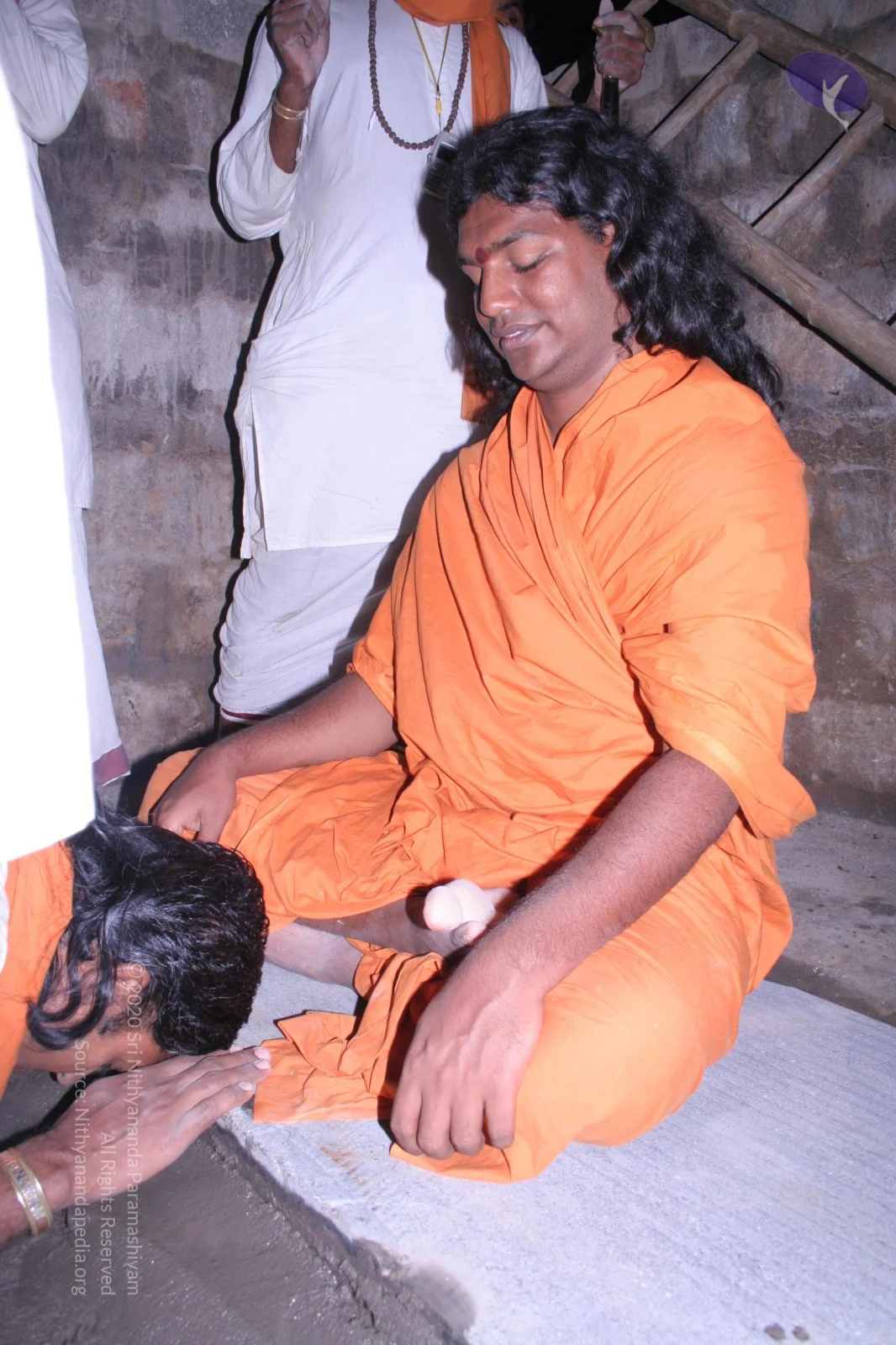
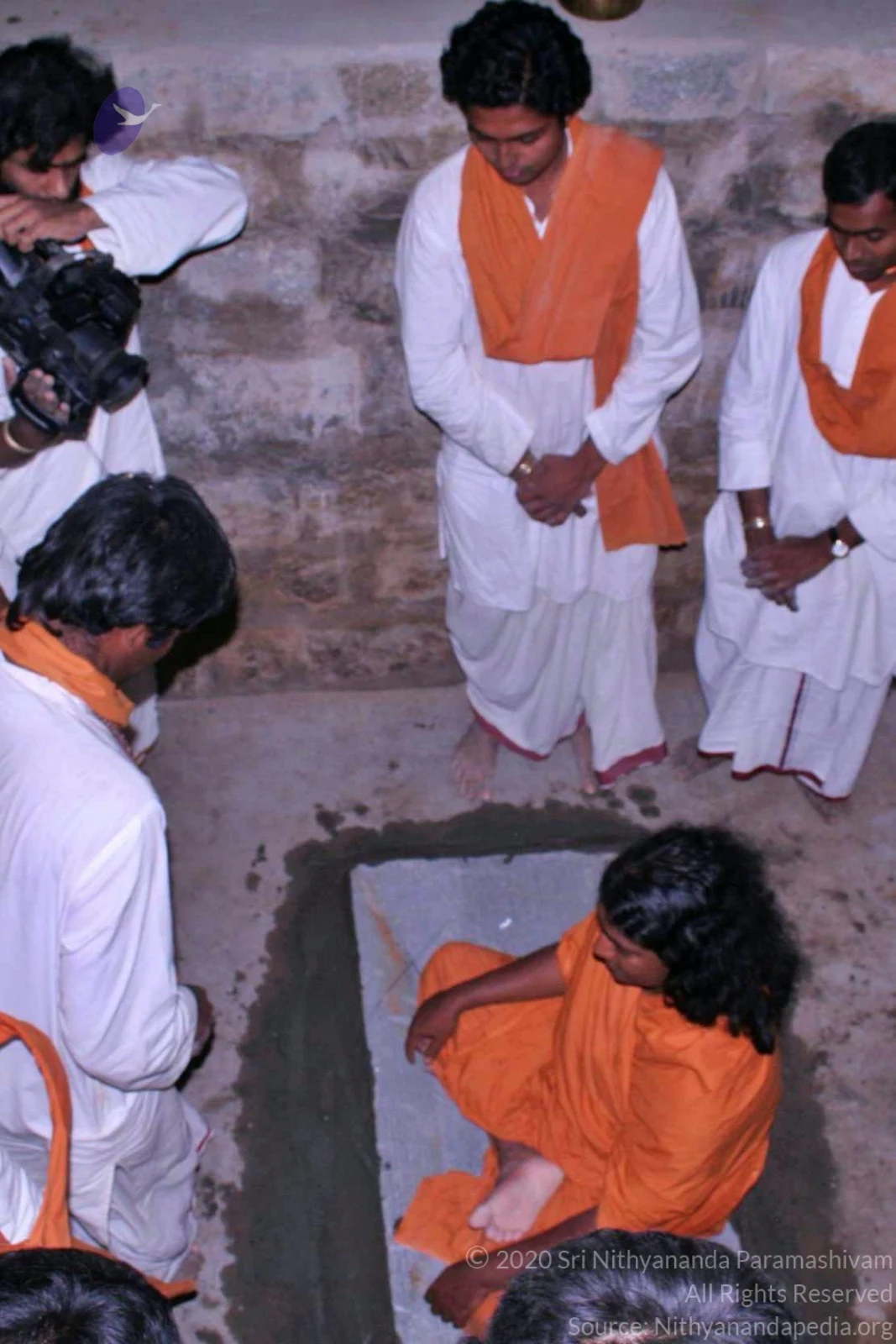
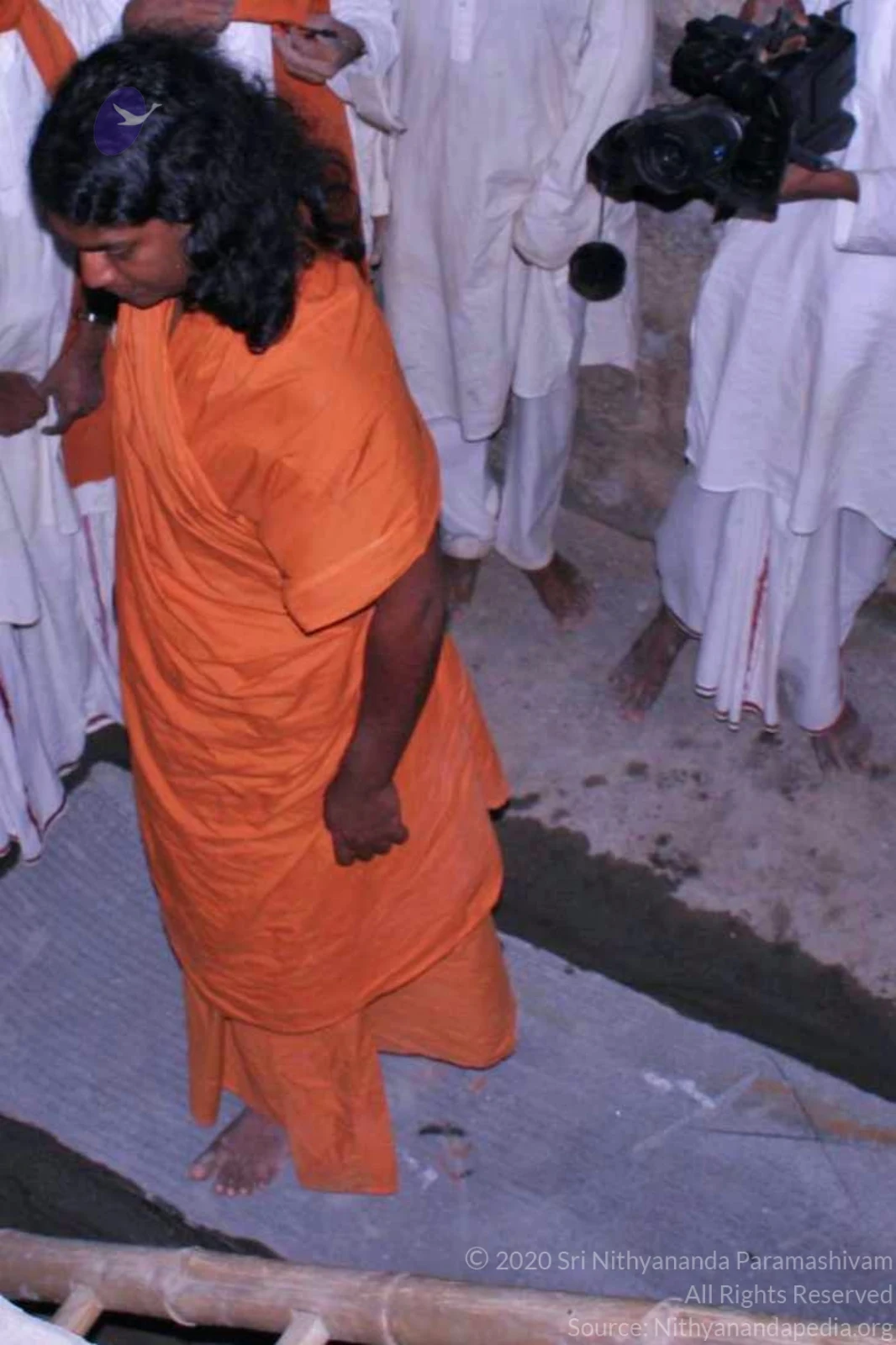
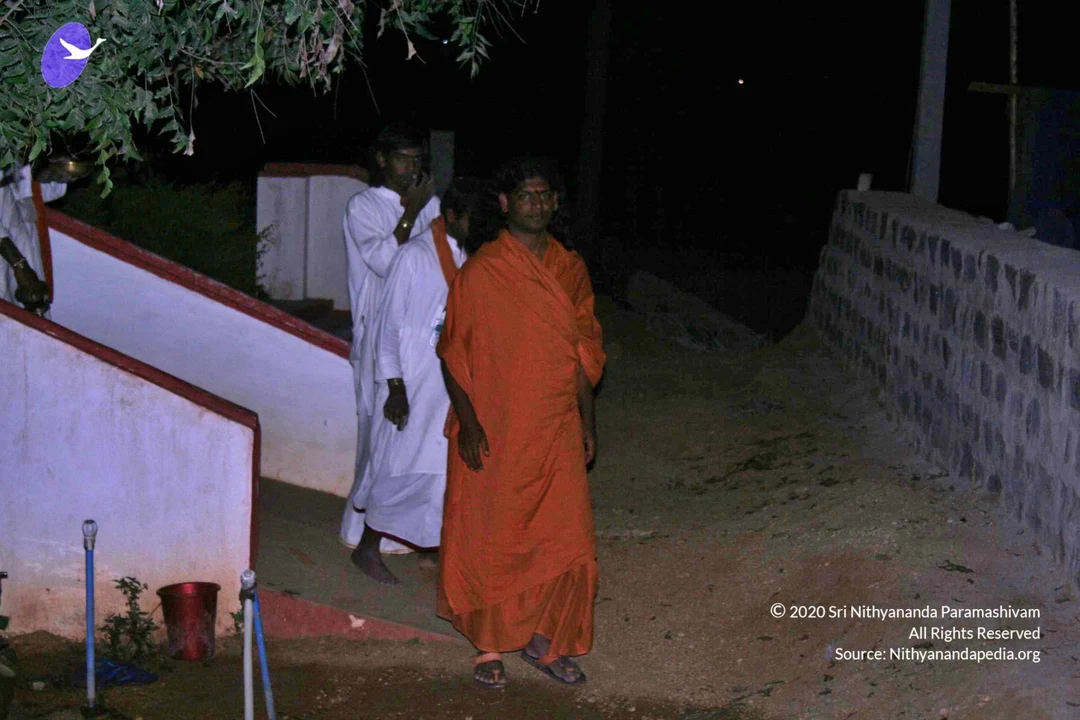
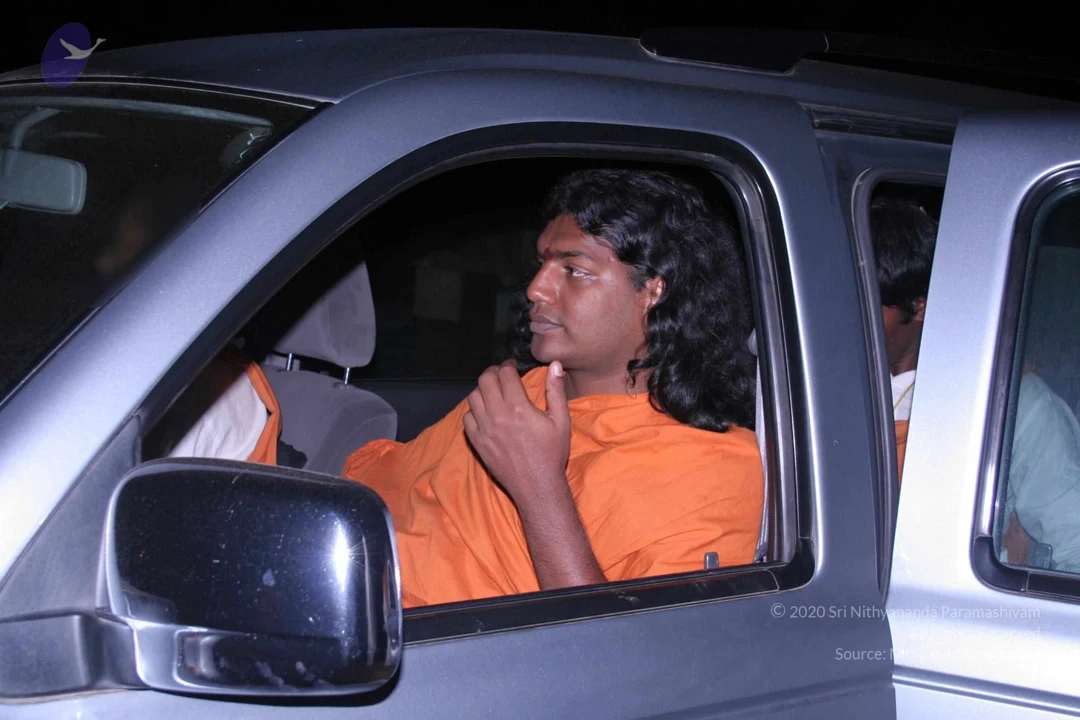
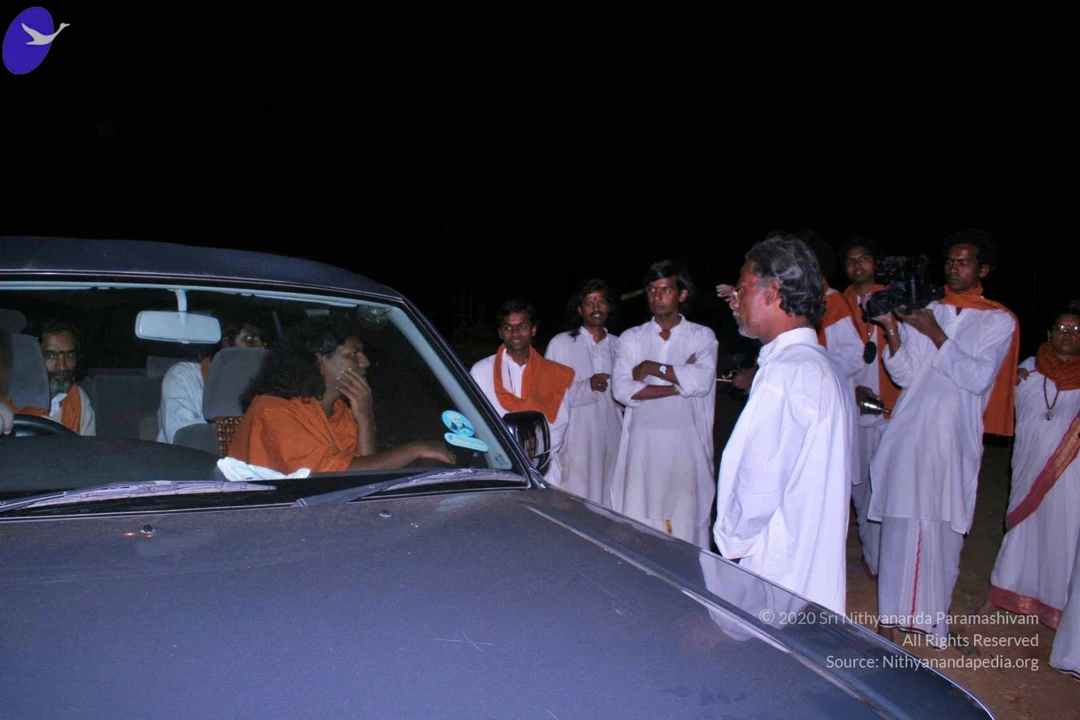
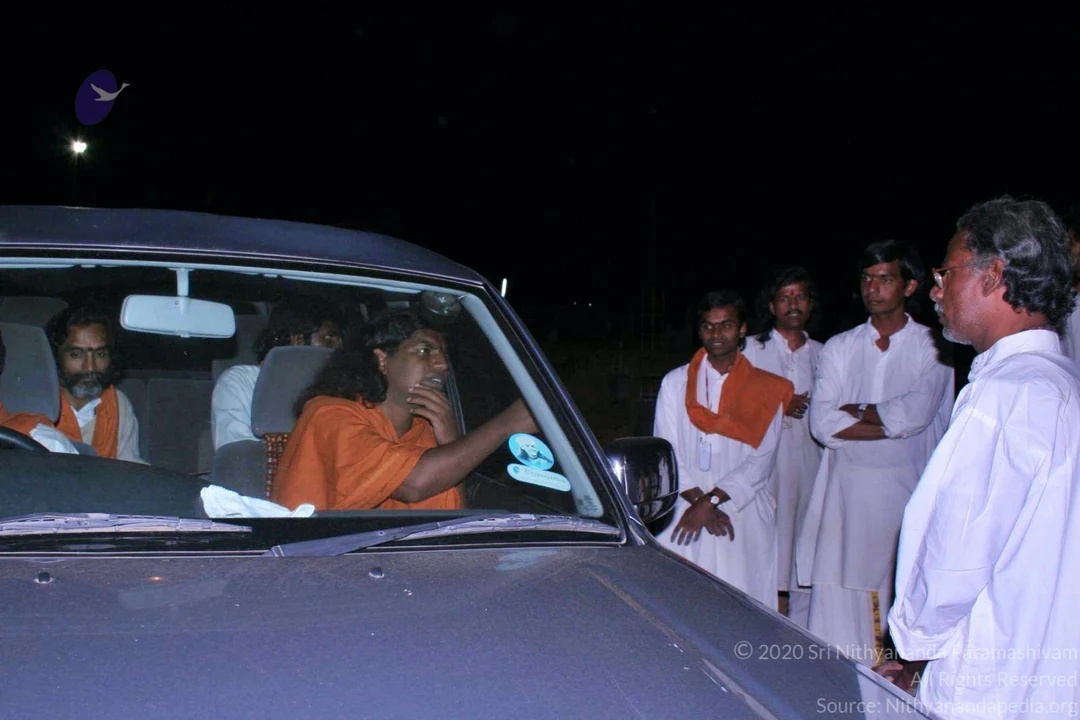
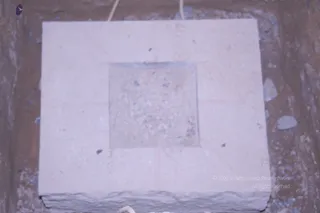
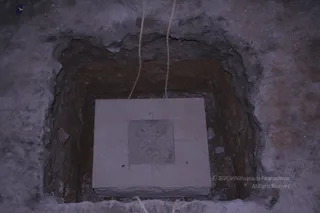
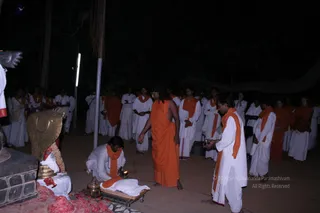
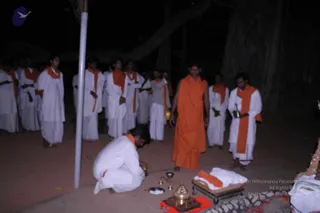
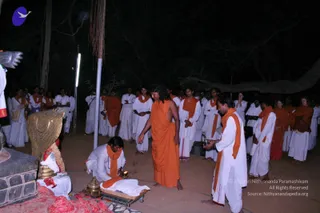
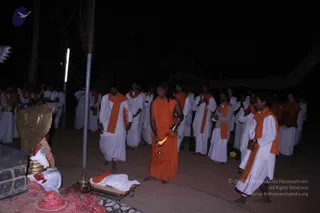
Historic Prana Prathishta - Consecrating the garbha at the sanctum sanctorum in the Temple of Sri Anandeshwar - 11 Dec 2006, Ashram, Bangalore 11 - 12 Dec 2006 marked a historic event in the history of Dhyanapeetam and the world. Swamiji consecrated the garbha (literally means embryo) in the garbha griha – sanctum sanctorum of the upcoming temple of Sri Anandeshwar . After several days of intense energizing, the garbha was consecrated amidst a small and fortunate group of ashramites and devotees, between 11:15pm and 1:30am , running into the wee hours of the morning of the 12 th .

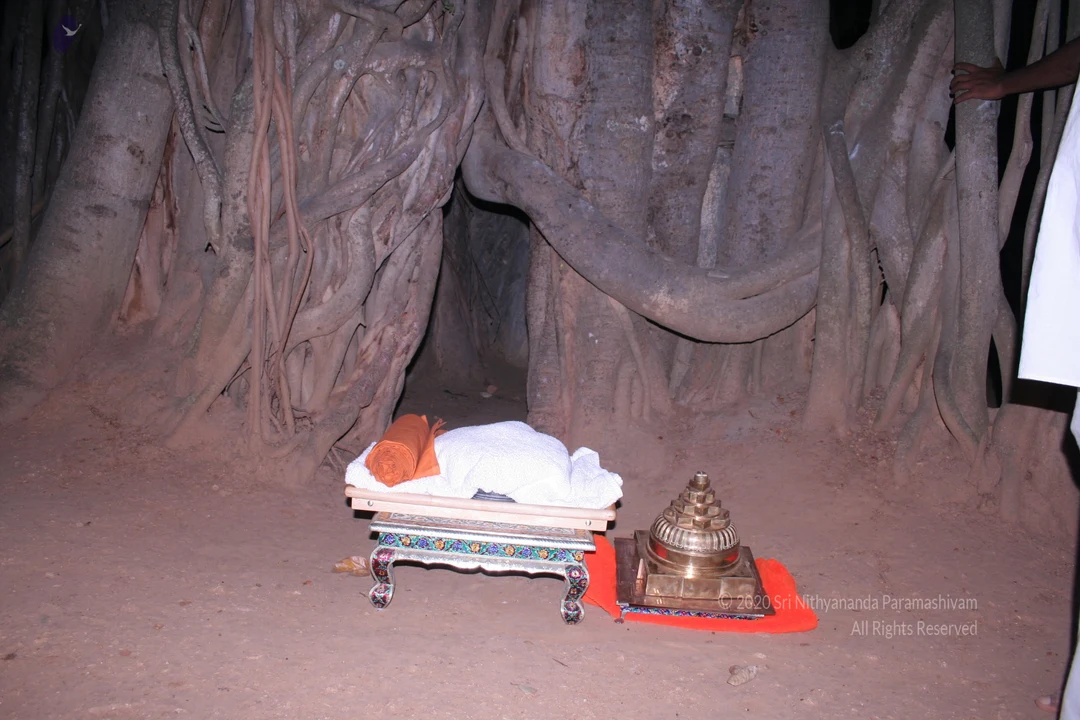
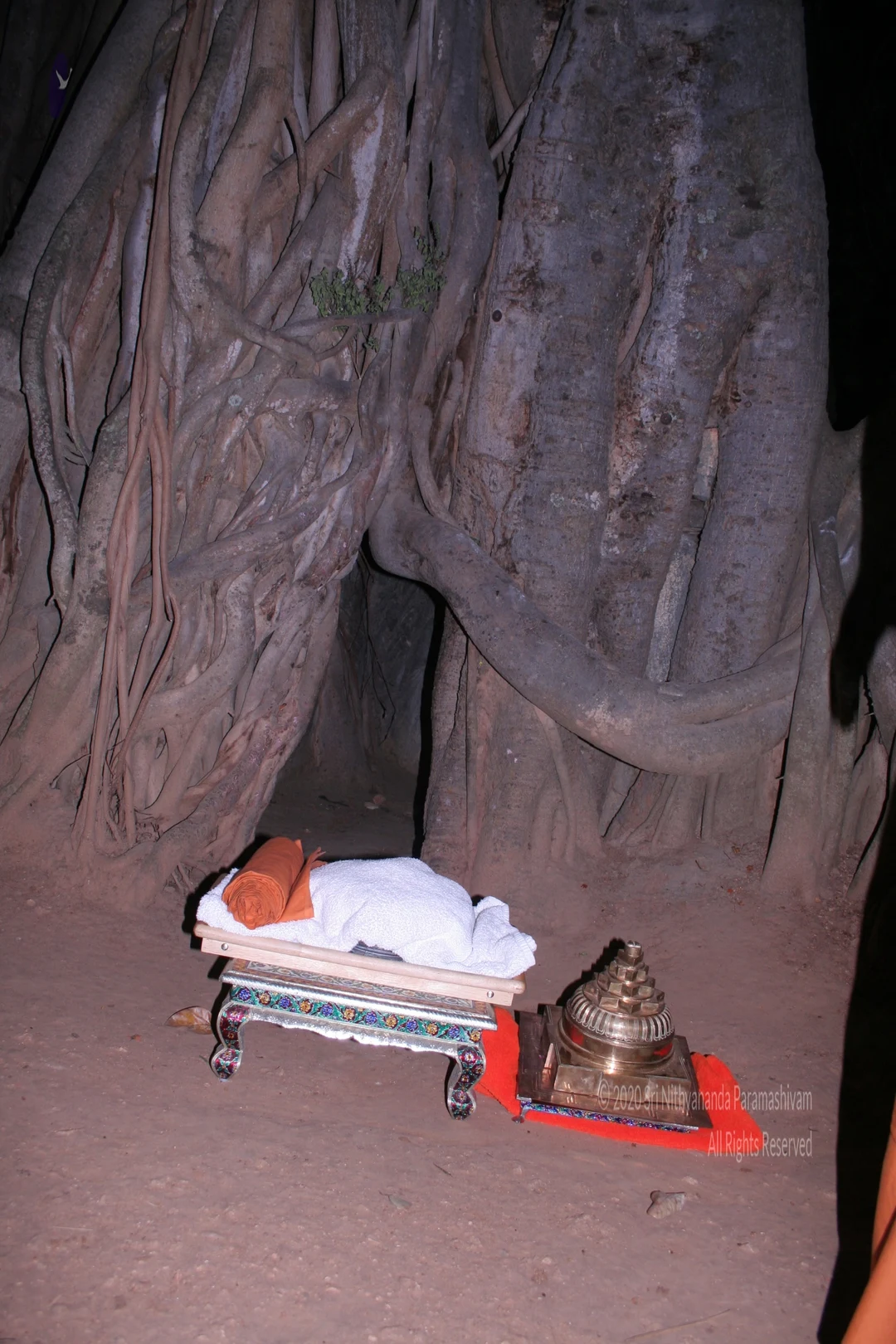
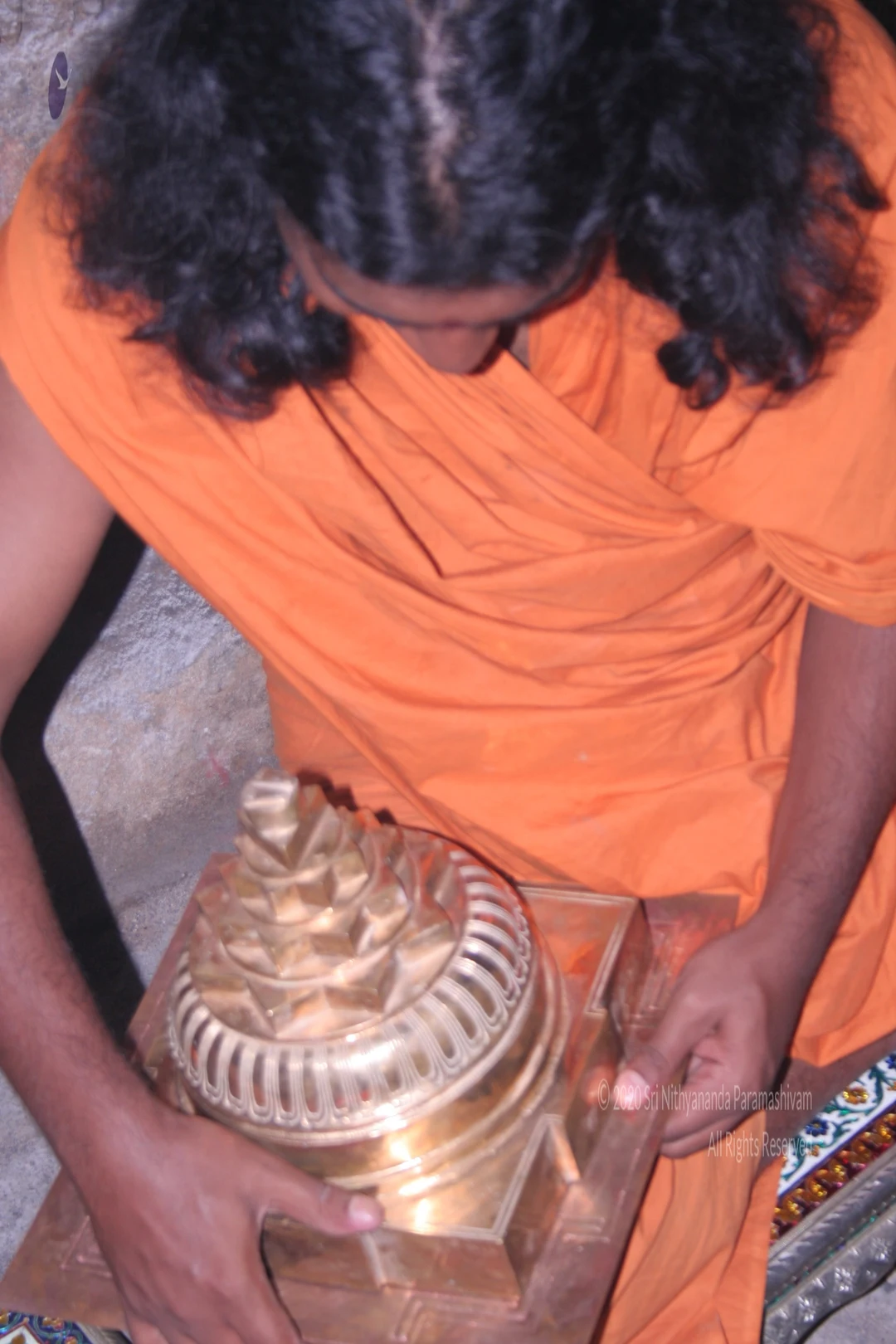
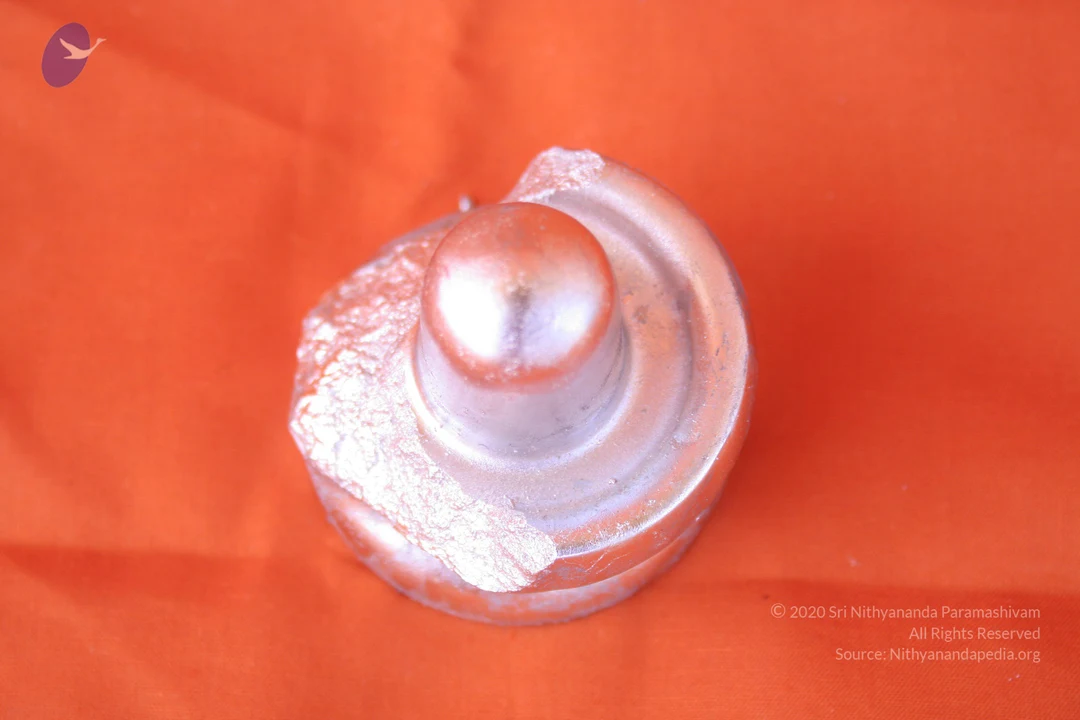
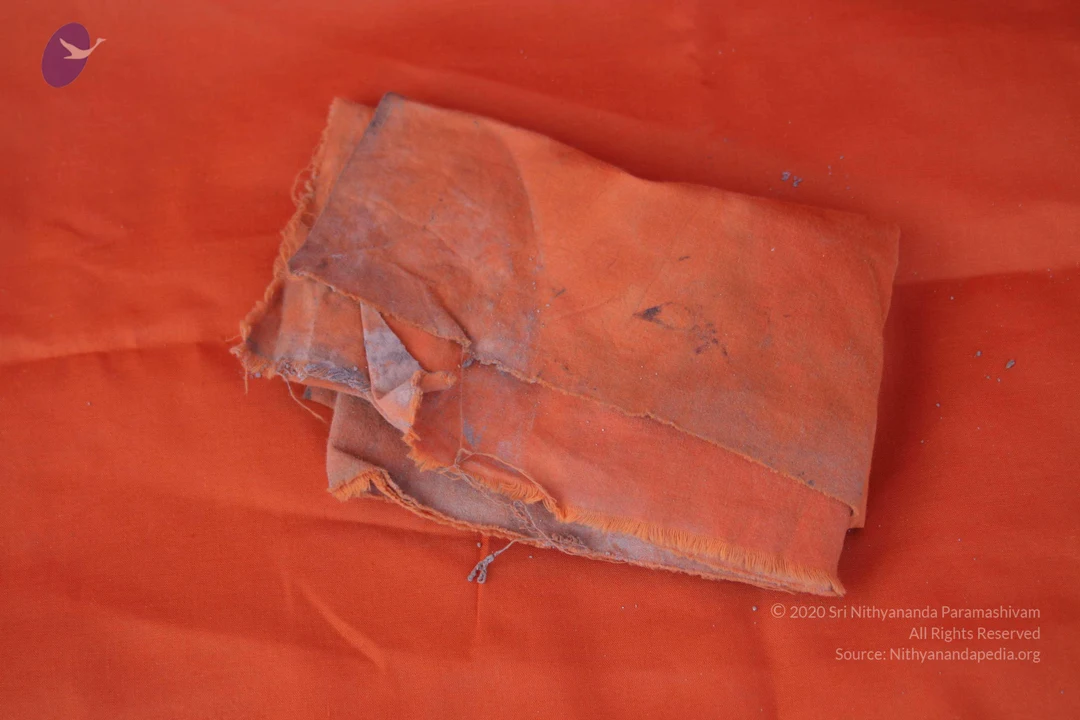
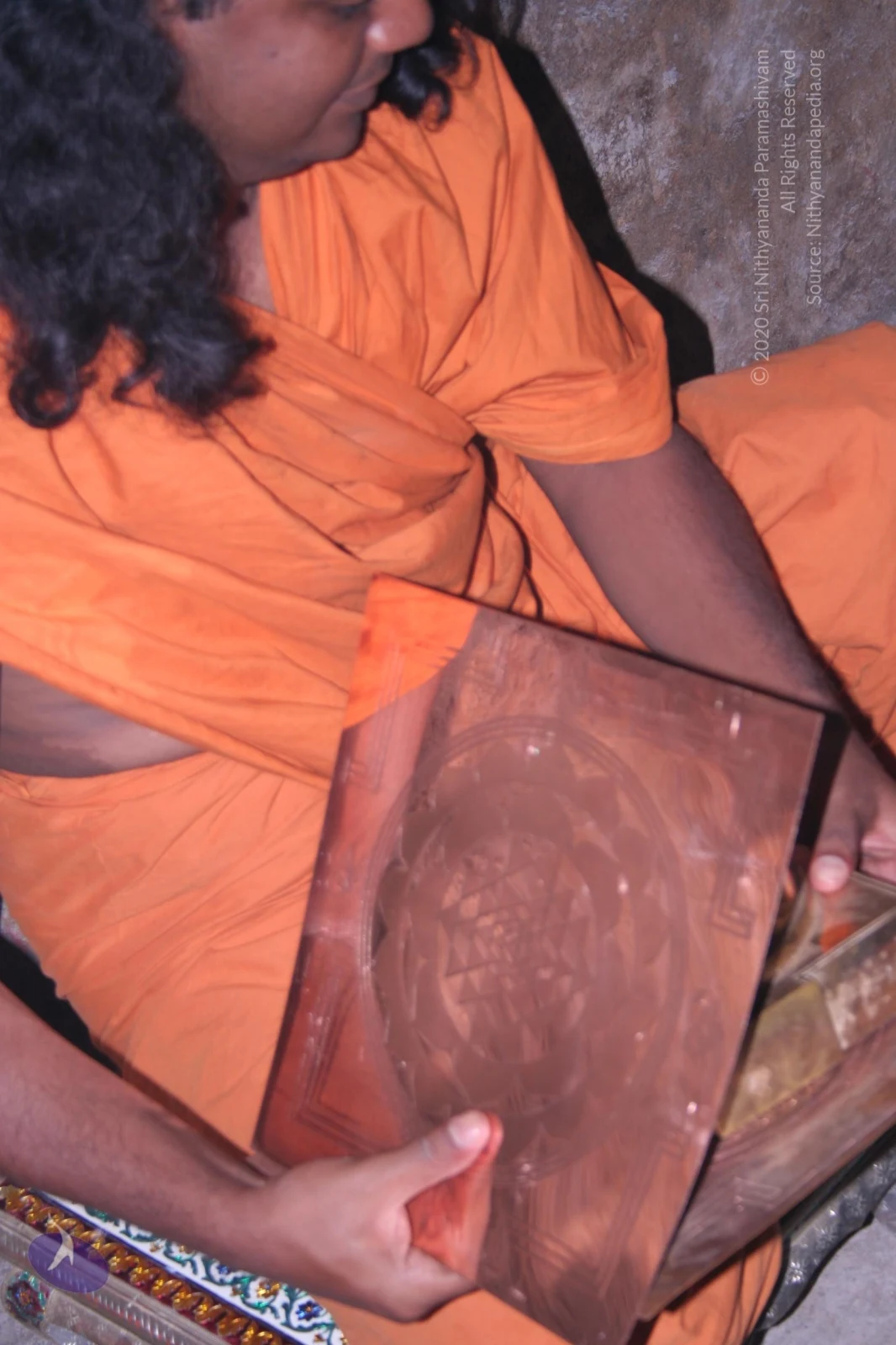
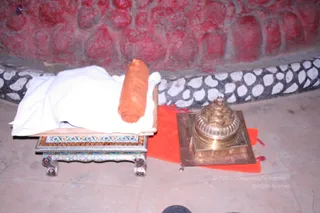
An enlightened Master is Existence in form, the ultimate human form fit to perform a garbha consecration. The garbha that was consecrated, comprised a Shiva Meru (a 3-dimensional structure representing the Cosmos) and a yantra (a 2-dimensional flat representation of the Cosmos) both of which represent the Shiva or masculine manifestation of the Cosmic energy or in other words the body given to the Master by His Father, pieces of clothing belonging to the Master that represent himself, his own biological body given to Him by his Mother, and energized mercury along with it.

Of all metals, liquid mercury is said to have the property of retaining and radiating the Existential energy for many thousands of years, virtually unaffected by chemical reactions.

He explained, ‘For an enlightened Master, the powers or energies of expression are inexhaustible through any means. For example, for an ordinary human being, the grief emotion or joy emotion exhausts when expressed through tears; the pitha (fire element) of the body exhausts through anger; the lust energy exhausts through the sexual act , the power of speech exhausts in his very saliva he moment they are uttered. An enlightened Master's energy of expression, cannot be exhausted through any of these means, because he is Existence, the inexhaustible source of Energy in human form. Purely by virtue of this, Masters can continue to do the things they do normally, even without being manifested in their body. And the garbha energized by them and consecrated, will cause things to function just like they do, radiating inexhaustible energy to nurture every being that seeks it. Only a Master who can function without the help of his body is capable of creating a true garbha , one that will materialize things exactly like the way he does.'

Following is the sequence of proceedings of this profound event:
==Photos Of The Day:==

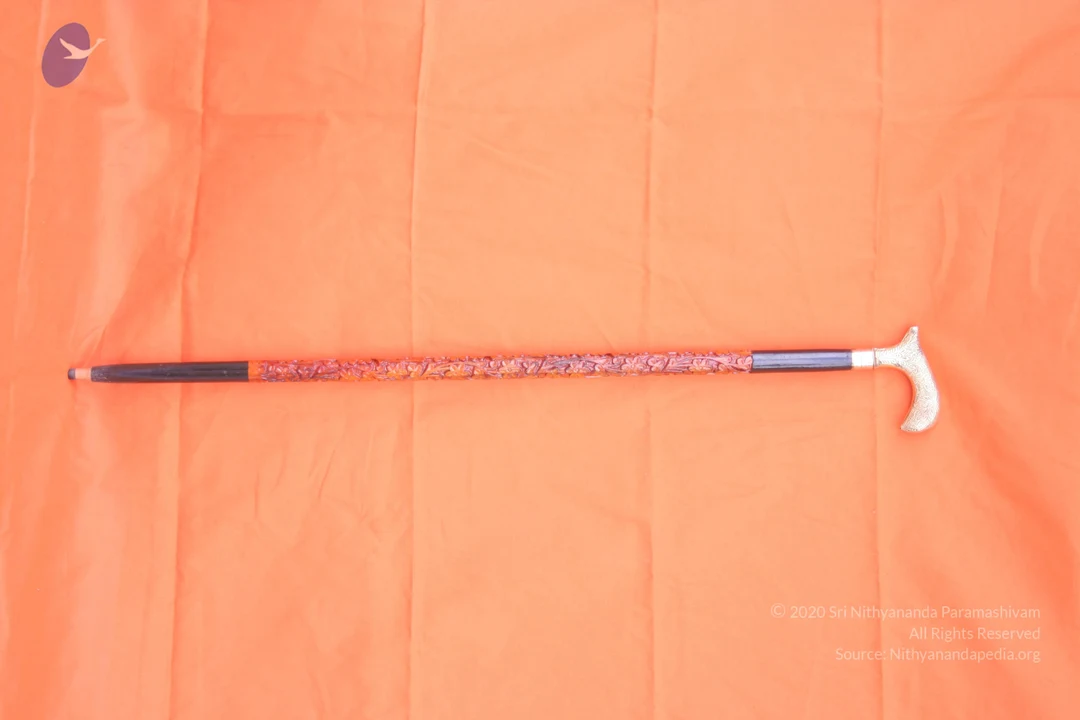
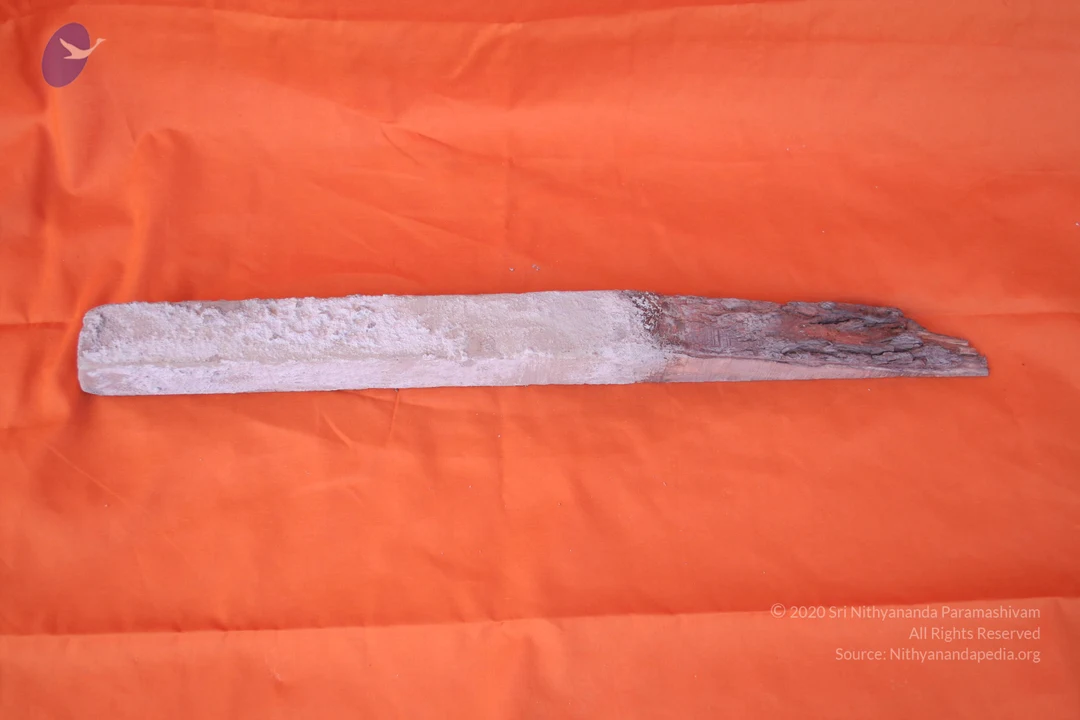
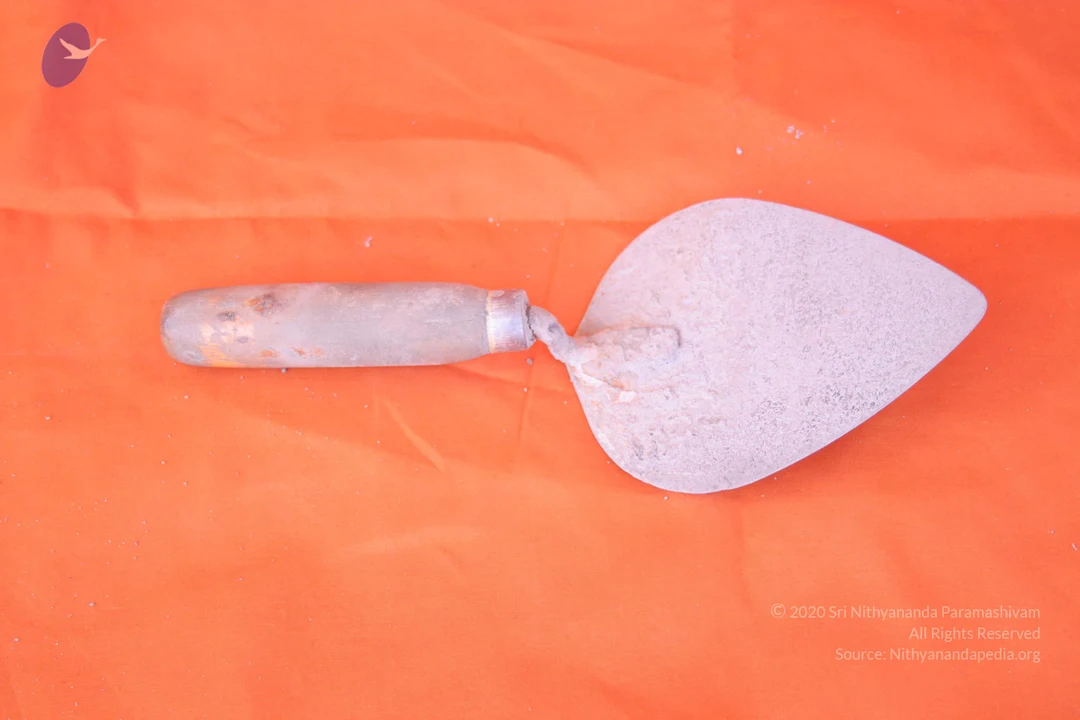
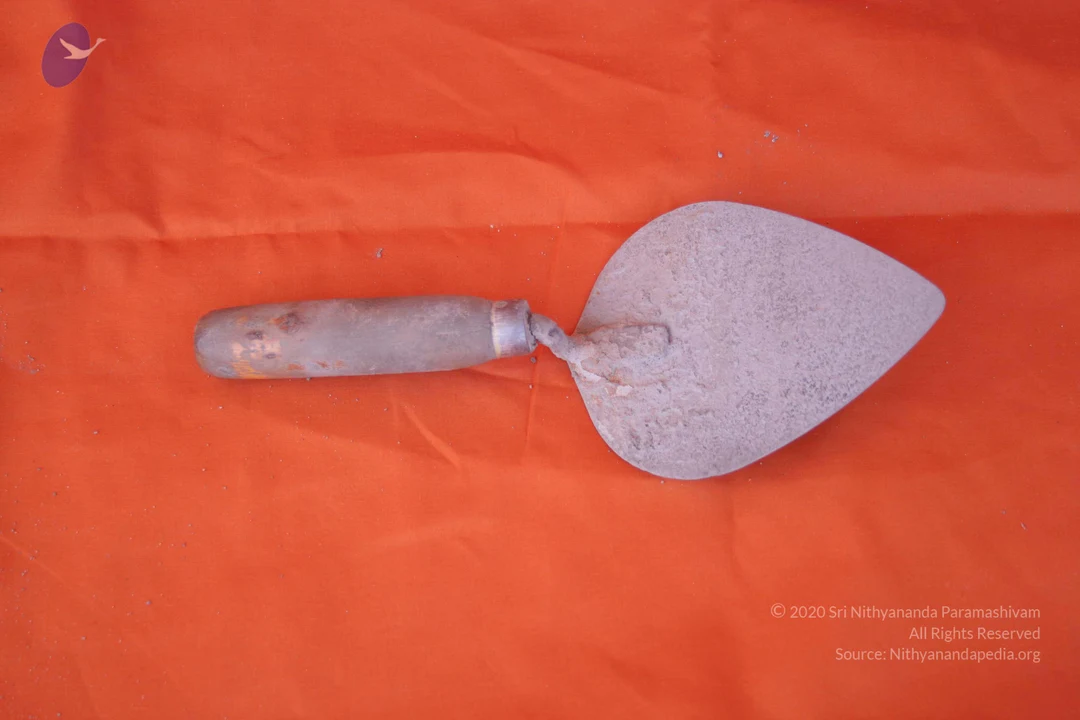
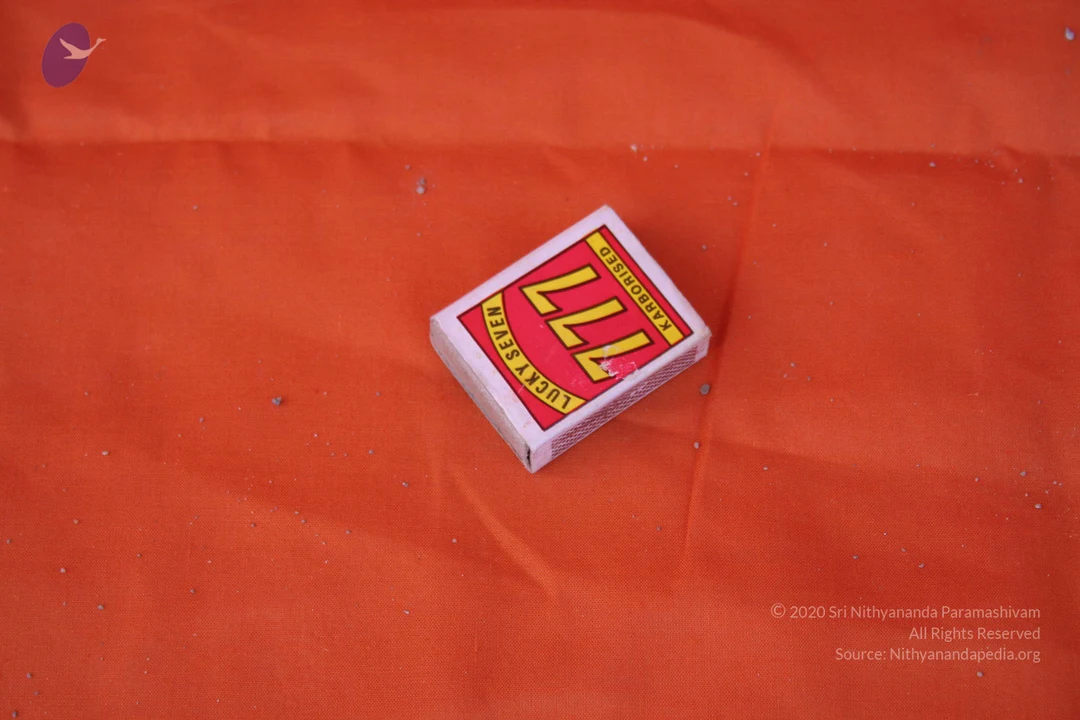
01-MATERIALS-USED-DURING-INSTALLATION-OF-ANANDESHWARA-TEMPLE

Temple-Pranapratishta

Photos from this day

View all 301 photos

Space & Time

111 photosSource gallery
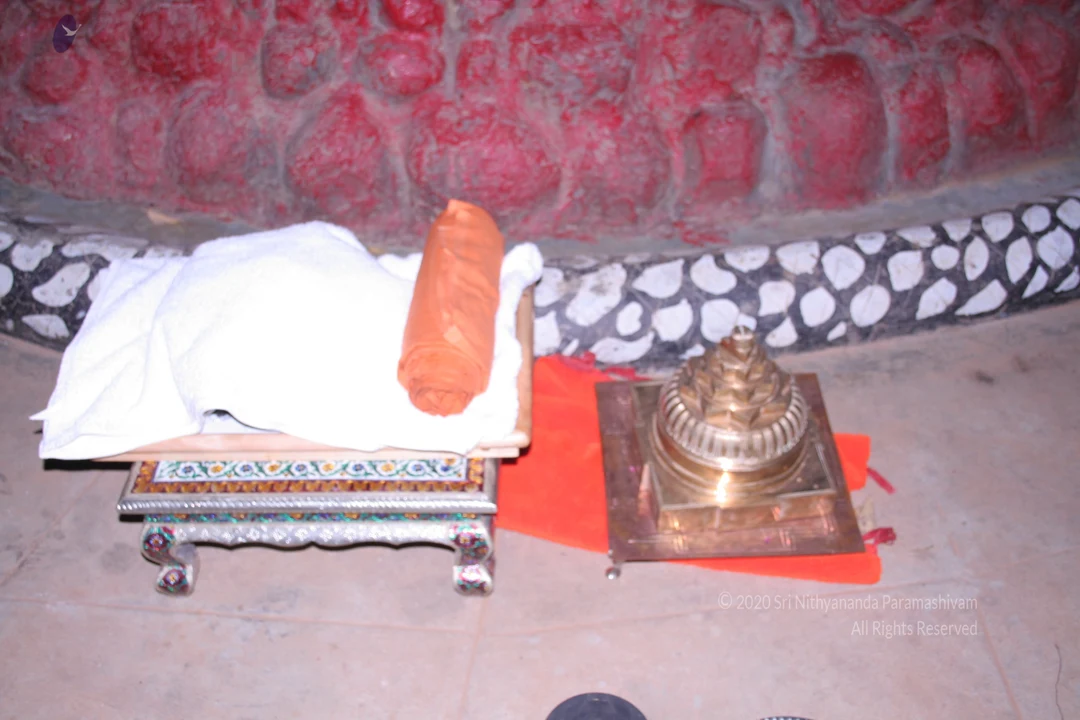
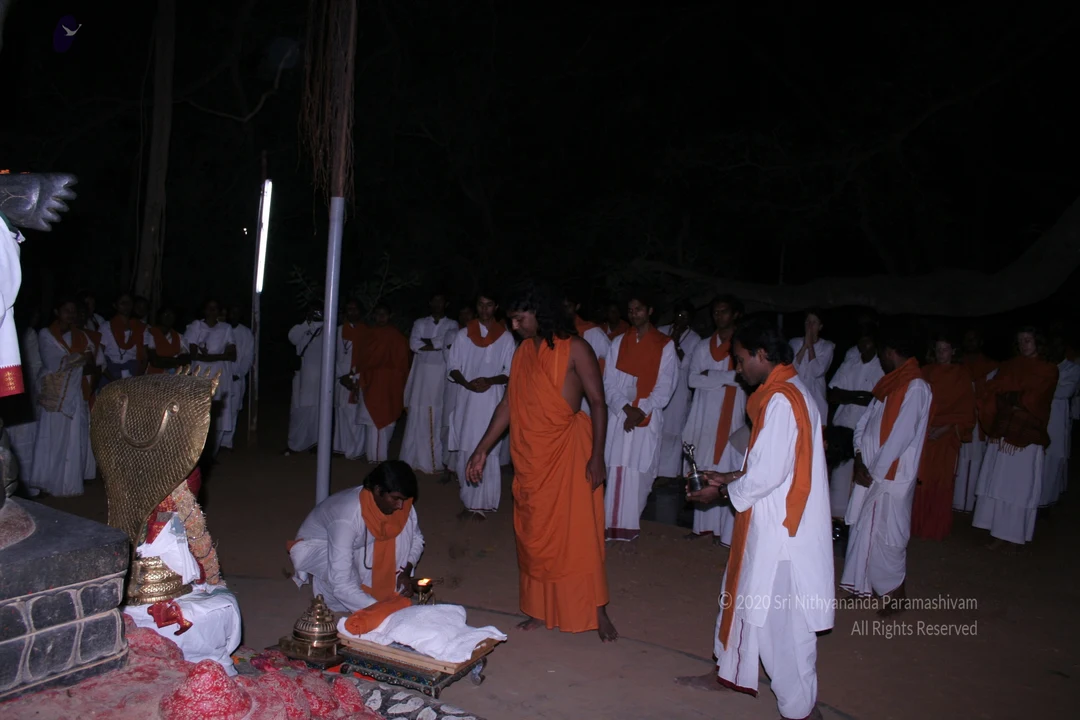
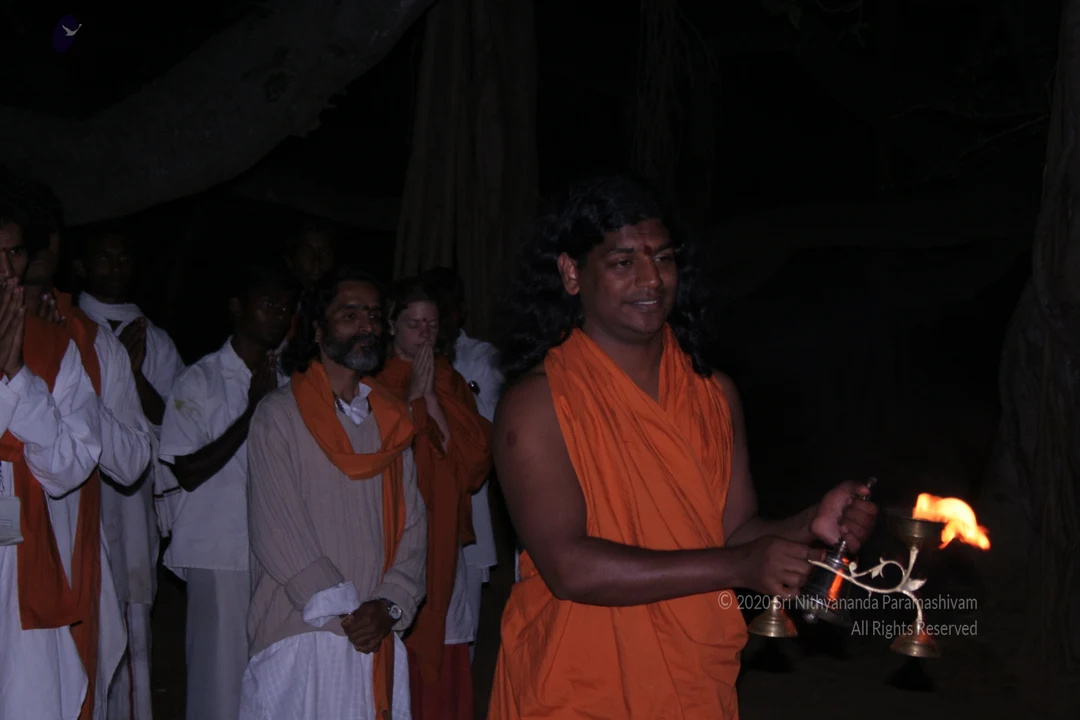
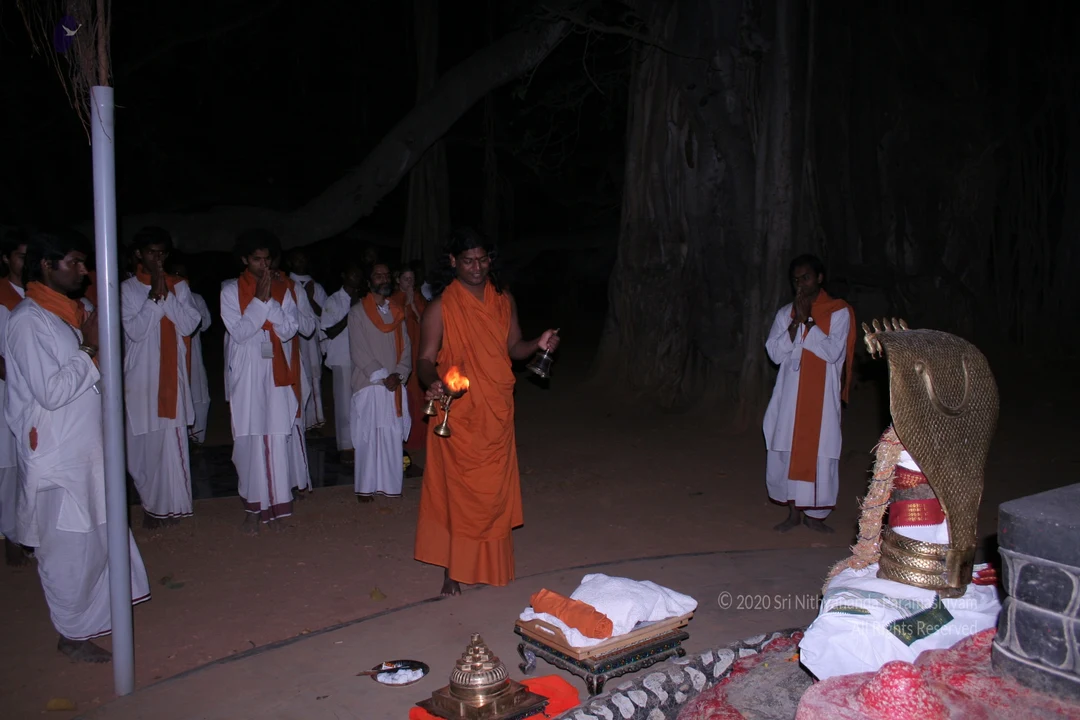
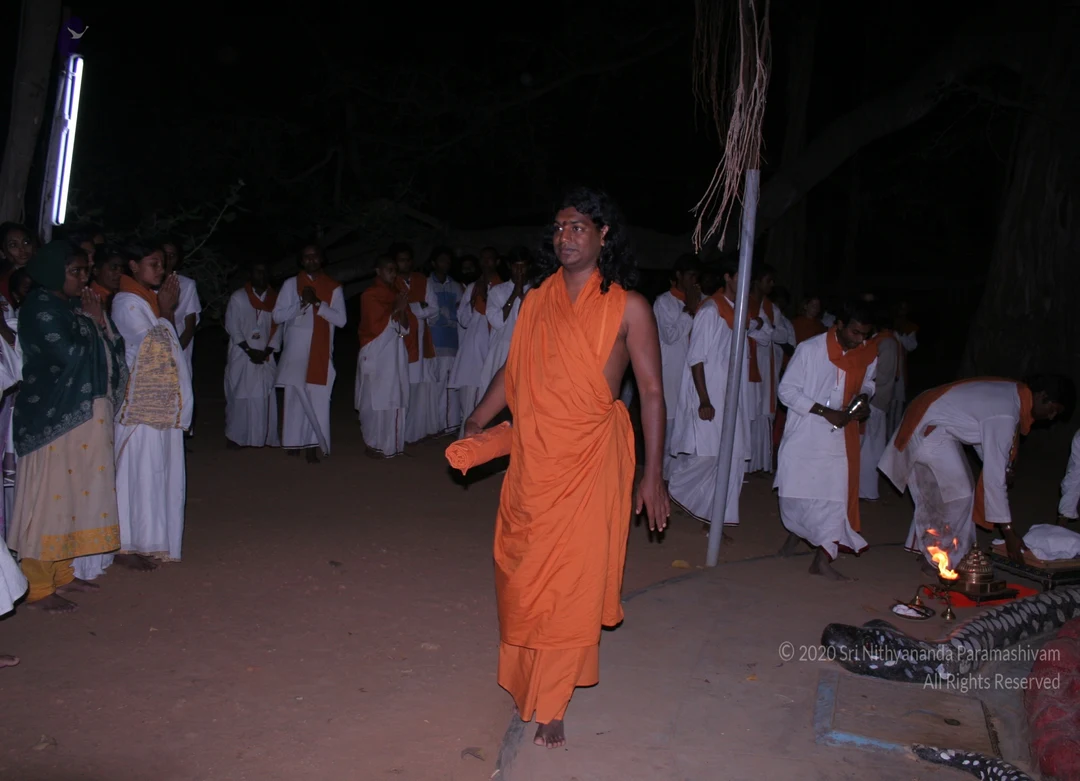
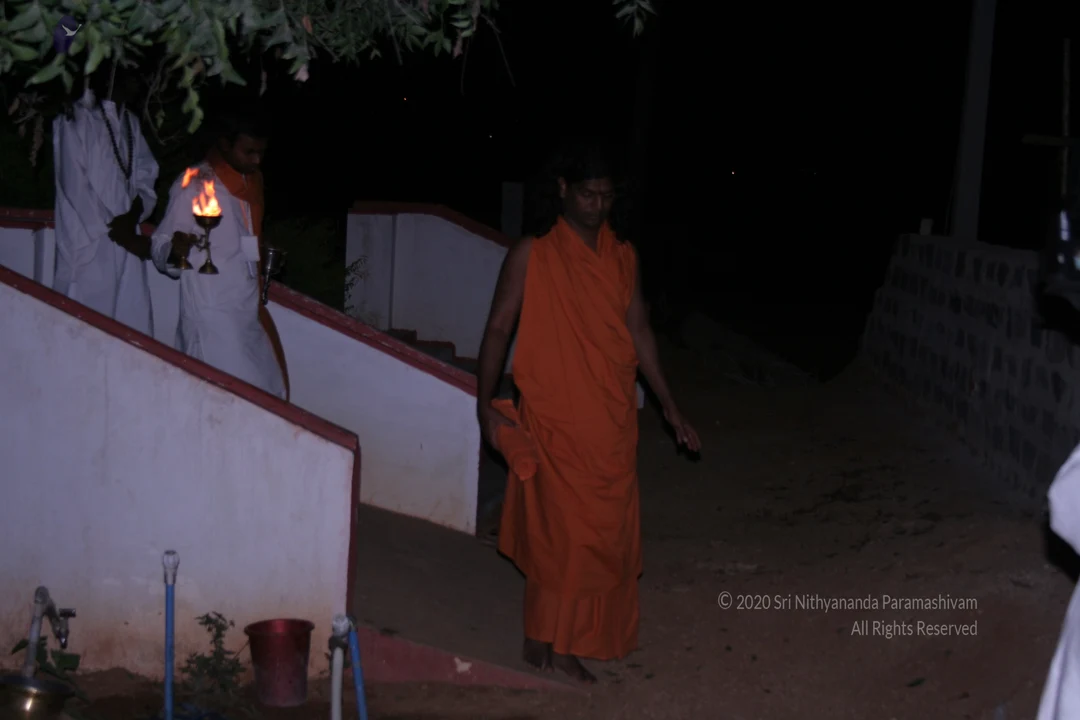
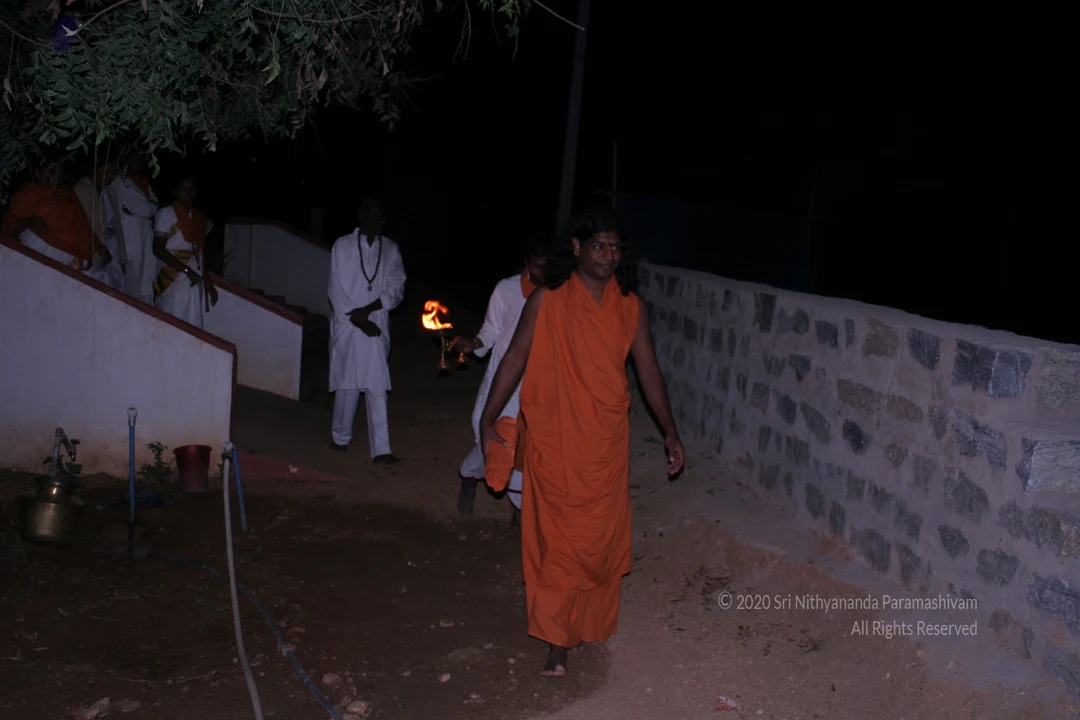
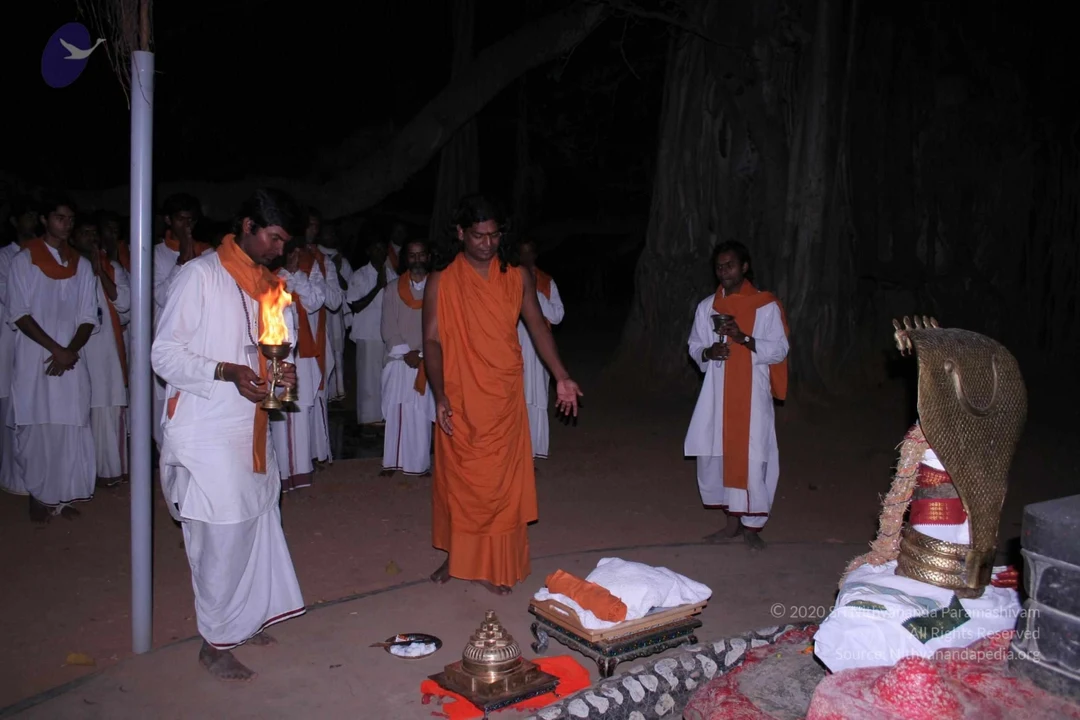
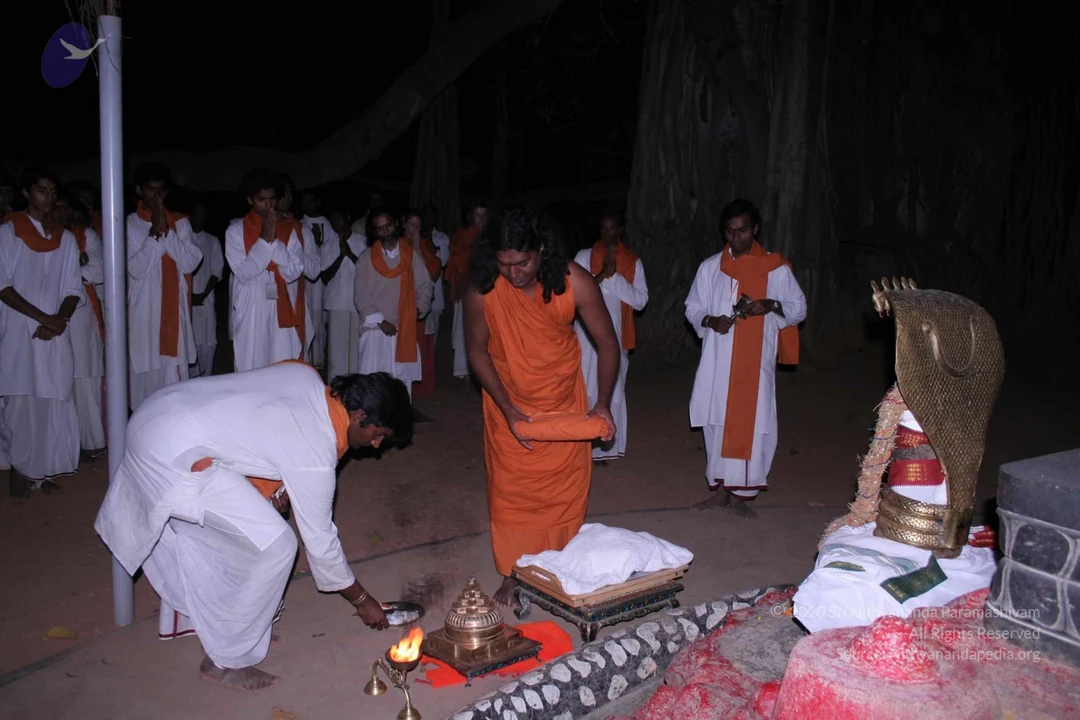
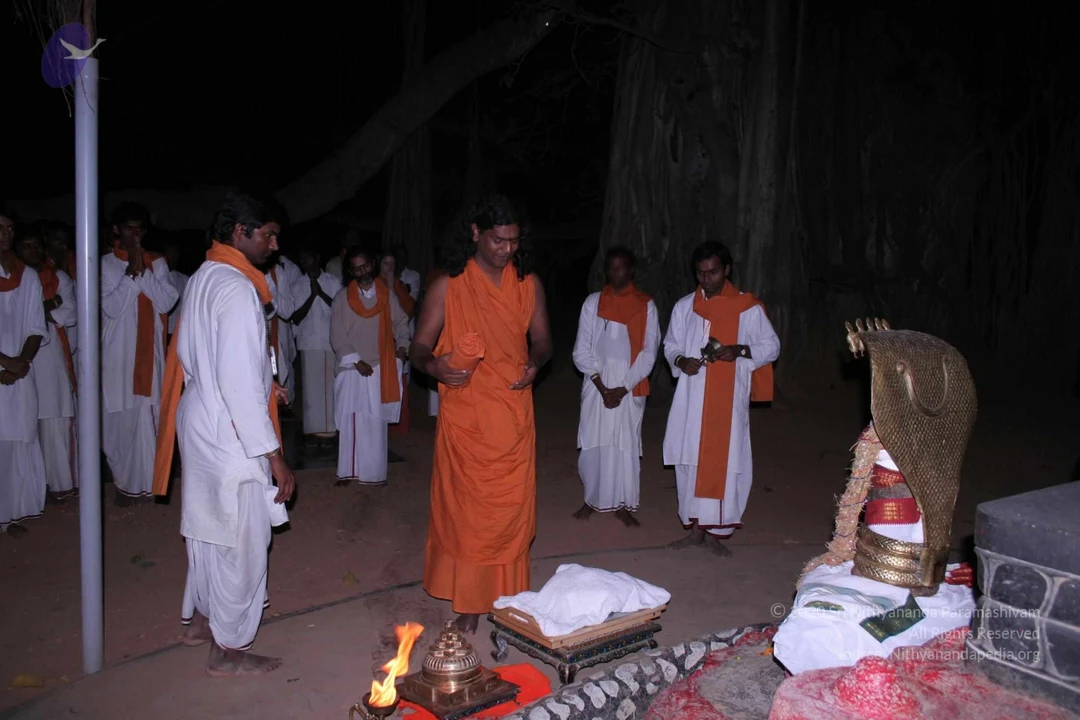
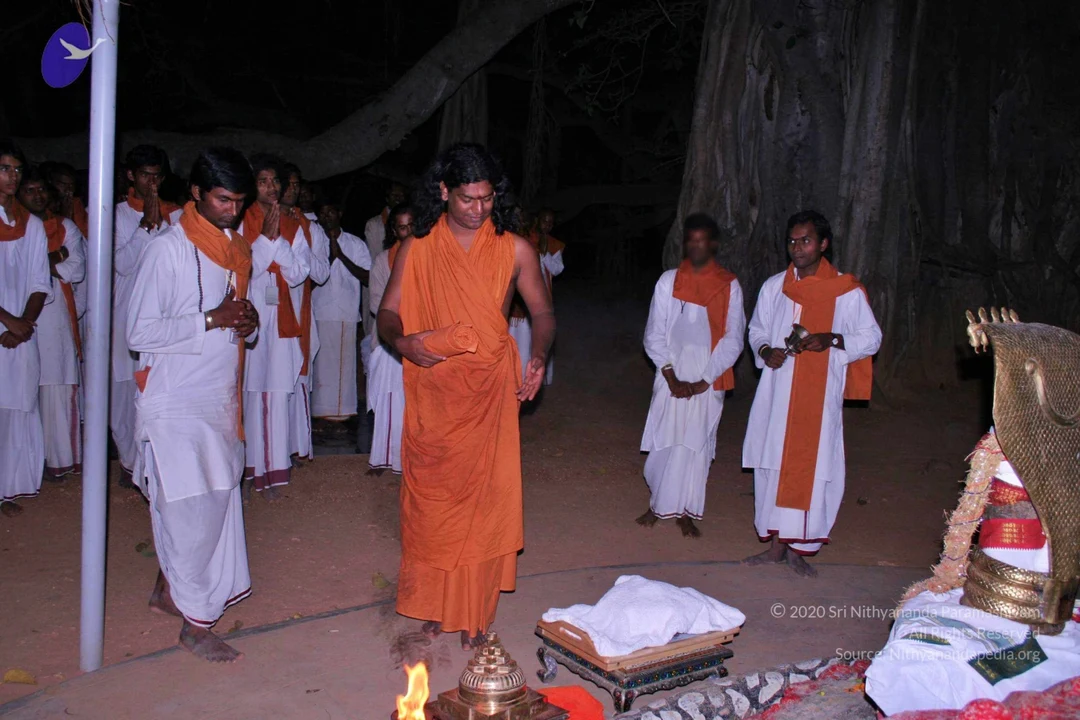
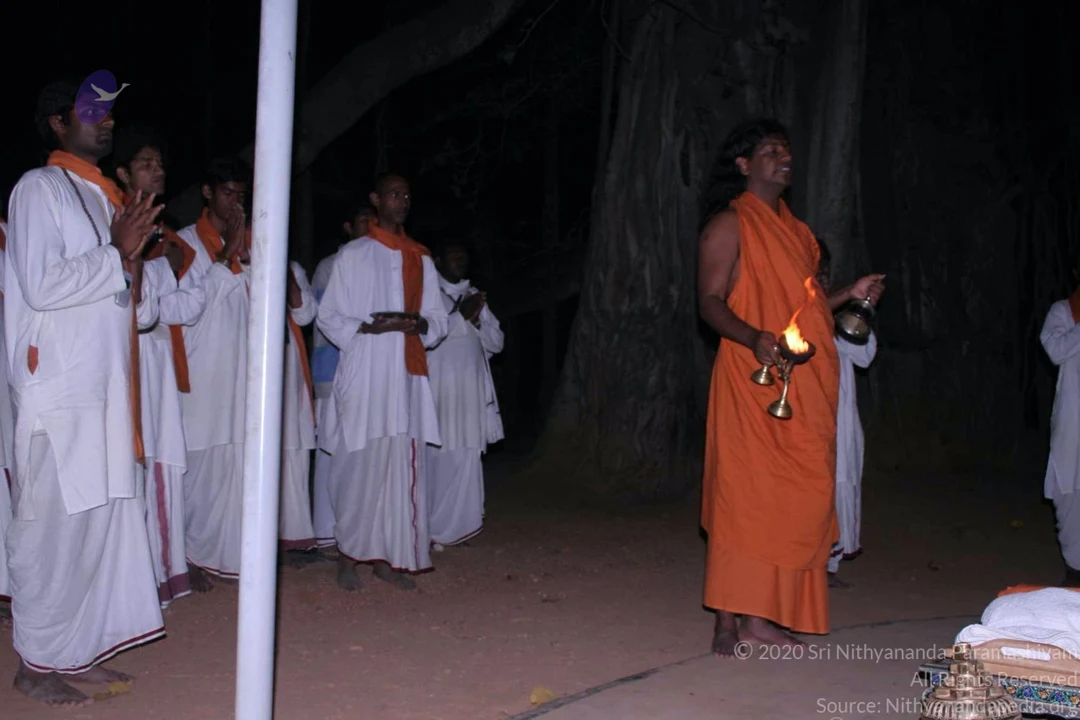
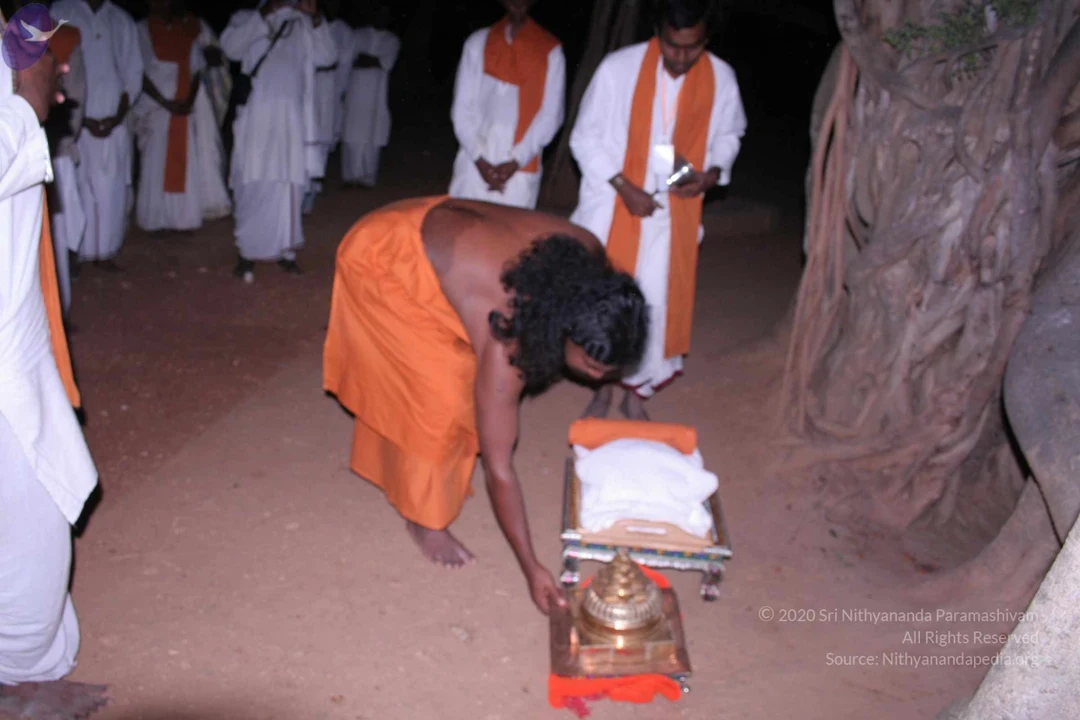
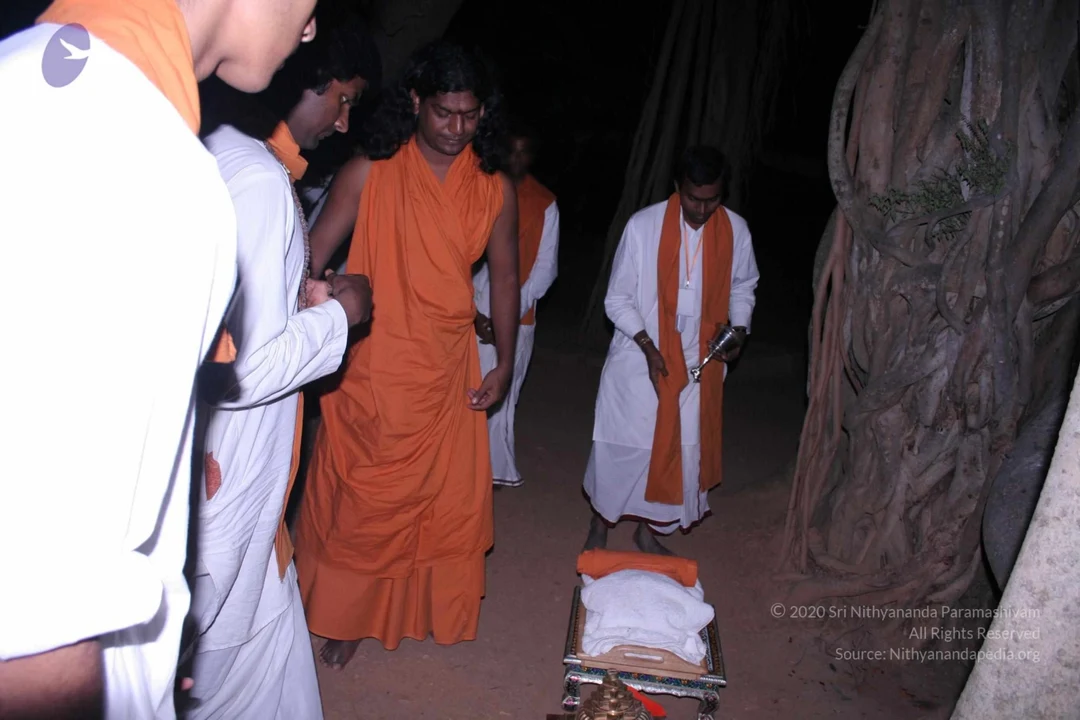
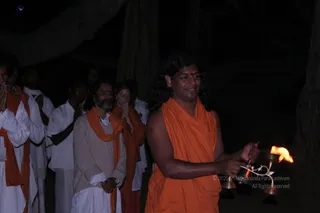
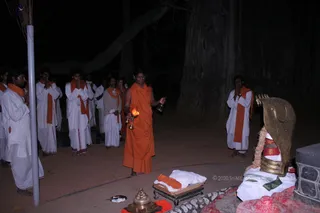
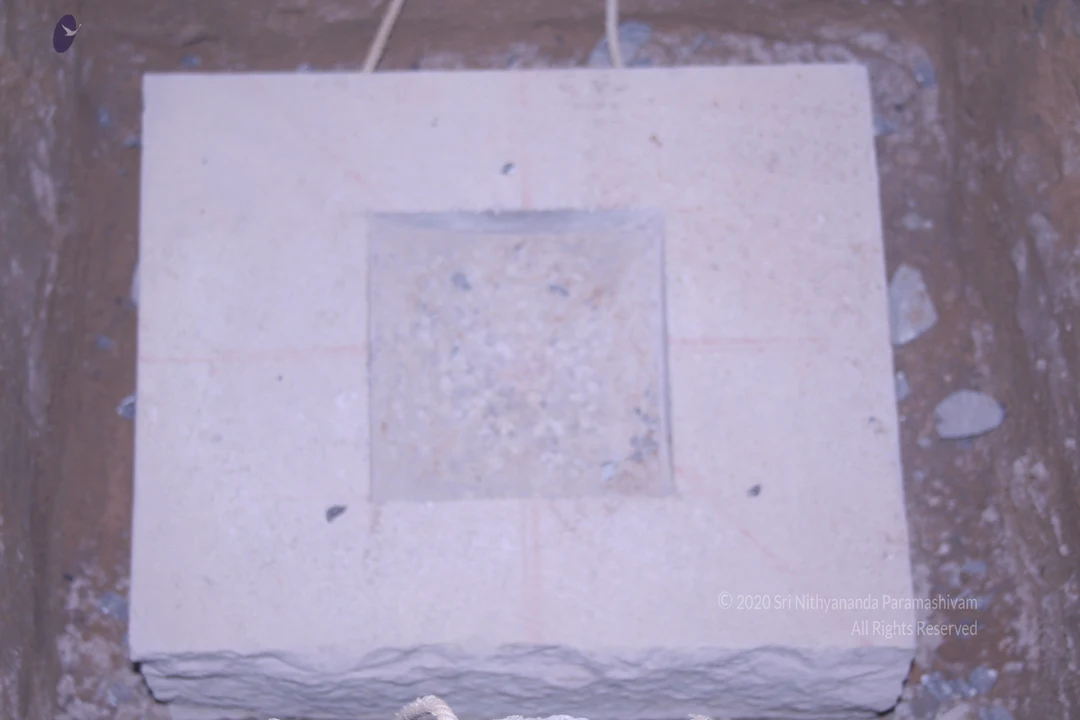
Overhead photograph of a large square pale stone slab set into a rough brown floor, with a recessed square cavity at its centre filled with a granular, speckled material. Thin red guide lines cross the slab, and white cords run in from the top and bottom edges. Small stones lie scattered on the surrounding floor. No people are visible; the scene shows an empty stone garbha site in an unfinished temple sanctum.A dim photograph of a square pit cut into a concrete floor, with a large square stone slab lowered into it on two ropes. The slab has a smaller recessed square panel at its centre, and the pit walls show exposed brown soil. No people are visible. Ropes hang down from the top edge of the frame.Photograph of a ritual setup on a tiled floor in front of a red stone wall with a white and black mosaic base. On the left, a folded white cloth lies on a small ornate wooden stool with painted floral and gold-trim decoration, and an orange-saffron bundle wrapped in cloth rests on top of it. On the right, a brass square base holds a tiered brass Shiva Meru-style structure, placed on a red-orange cloth. No people are visible, and no person is identifiable in the scene.Night-time outdoor ritual at a stone shrine with a large golden cobra hood (naga) at left and red-coloured offerings in the foreground. A man in white dhoti and orange shawl kneels at a low wooden tray draped with white cloth, tending a small oil lamp. Beside him, a bare-chested man in orange dhoti stands barefoot with arms slightly raised, with long dark hair. To the right, a man in white dhoti and orange shawl holds a metal vessel. Behind them a large crowd of devotees in white and orange clothing stands in rows under dark trees, many with hands folded in prayer. Floodlight and a metal pole are visible in the background.Night photograph in a dark outdoor setting beneath large tree branches. In the foreground, a man with long swept-back dark hair and an orange saffron wrap, bare-shouldered, holds a silver-toned lamp with a bright open flame and smiles while carrying it. Behind him, several devotees stand in a line with palms pressed together in namaskar; a bearded man wears an orange shawl over a light striped kurta and white dhoti, and a woman in an orange wrap has her eyes closed in prayer. Others on the left wear white shirts and orange shawls. a person cues: long swept-back hair and saffron wrap, but appearance is uncertain for the lamp-bearer.Night outdoor ritual at a large dark tree trunk. In the centre, a man in a saffron-orange robe holds a lit oil lamp in his right hand and a small brass bell in his left, facing a golden cobra-hood sculpture with a red-and-white dressed base at right. A white cloth with an orange wrap rests on a wooden tray in front of him, beside a brass kalasha-style vessel. Around him, about a dozen men in white dhotis and orange shawls stand with palms joined in prayer, one holding a long pole at left. Based on appearance alone, the central figure in saffron and the lamp-and-bell ritual could be a person, but the cues are not distinctive enough to confirm identity, so the role is given as a priest performing puja.
01-MATERIALS-USED-DURING-INSTALLATION-OF-ANANDESHWARA-TEMPLE
39 photosSource gallery
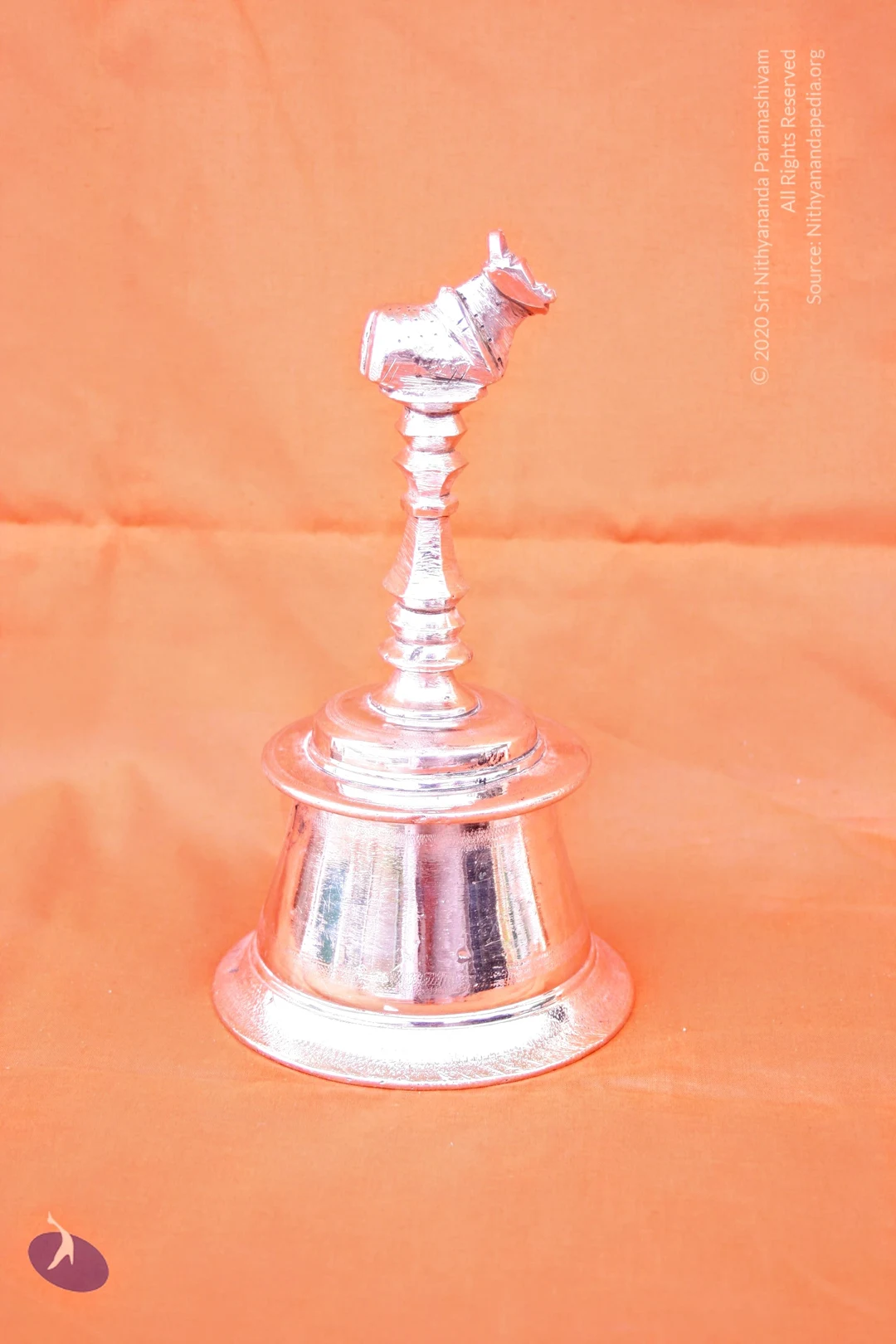
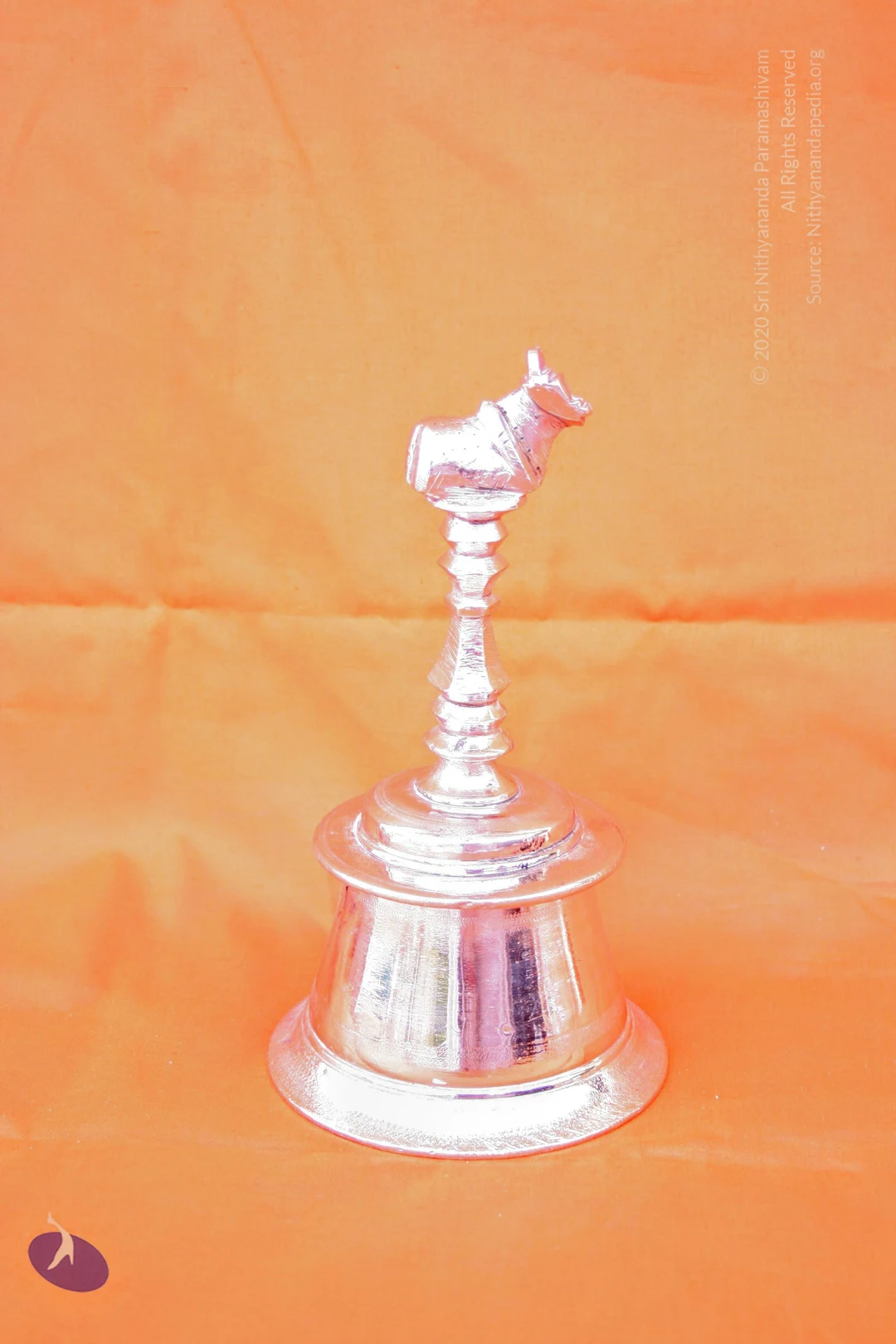
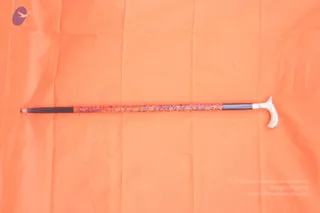
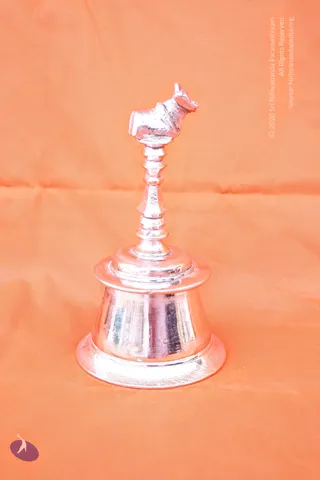
A photograph of an empty clear glass cooking dish with two side handles and a small square knob on its lid, viewed from above against a plain orange cloth backdrop. No people are visible; the object appears to be a glass lidded casserole or pot used as a container.A photograph of an empty ritual setup laid out on an orange cloth against a pale wall. A low ornate wooden stool with mosaic-style inlaid patterns and a silver-edged base sits at left, next to a smaller decorated tray or stand at right. Brass lamp stands, a clear glass bowl with a flower-petal design, a silver handbell with a handle, a wooden tray with a white surface, a glass covered dish and two plastic bottles, one labelled Pepsi, sit on the cloth with small stones. No people are visible.A long carved wooden walking stick lies horizontally across a plain saffron-orange cloth. The shaft is dark at both ends with a carved, patterned middle section, and the curved handle is pale and textured. No people are visible; the object appears to be photographed as an installation-related item.A long walking cane or staff lies horizontally across a plain peach-orange cloth. The shaft is dark with a decorated middle section of pinkish-red and gold patterned inlay, and the handle is a curved white crook at the right end, with a metal ferrule at the left tip. No people are visible.A photograph of a long carved wooden walking stick laid horizontally across a plain orange cloth. The stick has dark plain wooden ends, a central section carved with floral and leaf relief patterns in reddish-brown wood, and a silver-toned curved handle at the right end. No people are visible.A polished silver hand bell with a handle shaped like a recumbent bull (Nandi) on a tapered, ribbed stem, set on an orange cloth backdrop. No people are present. The bell has a wide flared base and a smooth, reflective metal surface.

Temple-Pranapratishta
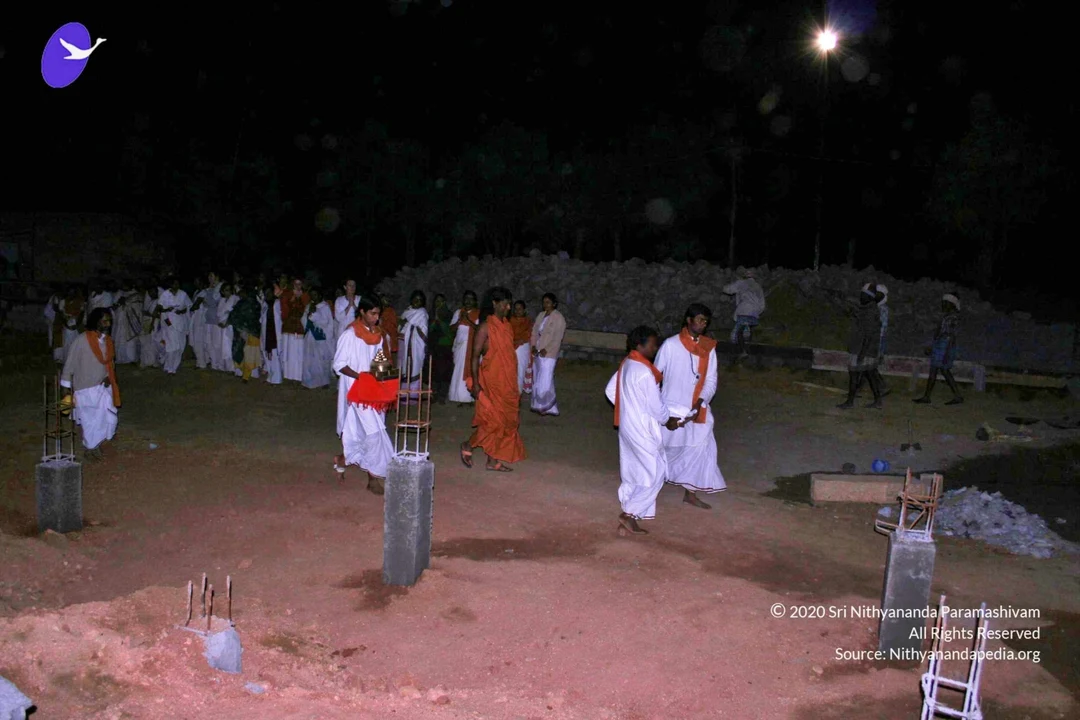
151 photosSource gallery
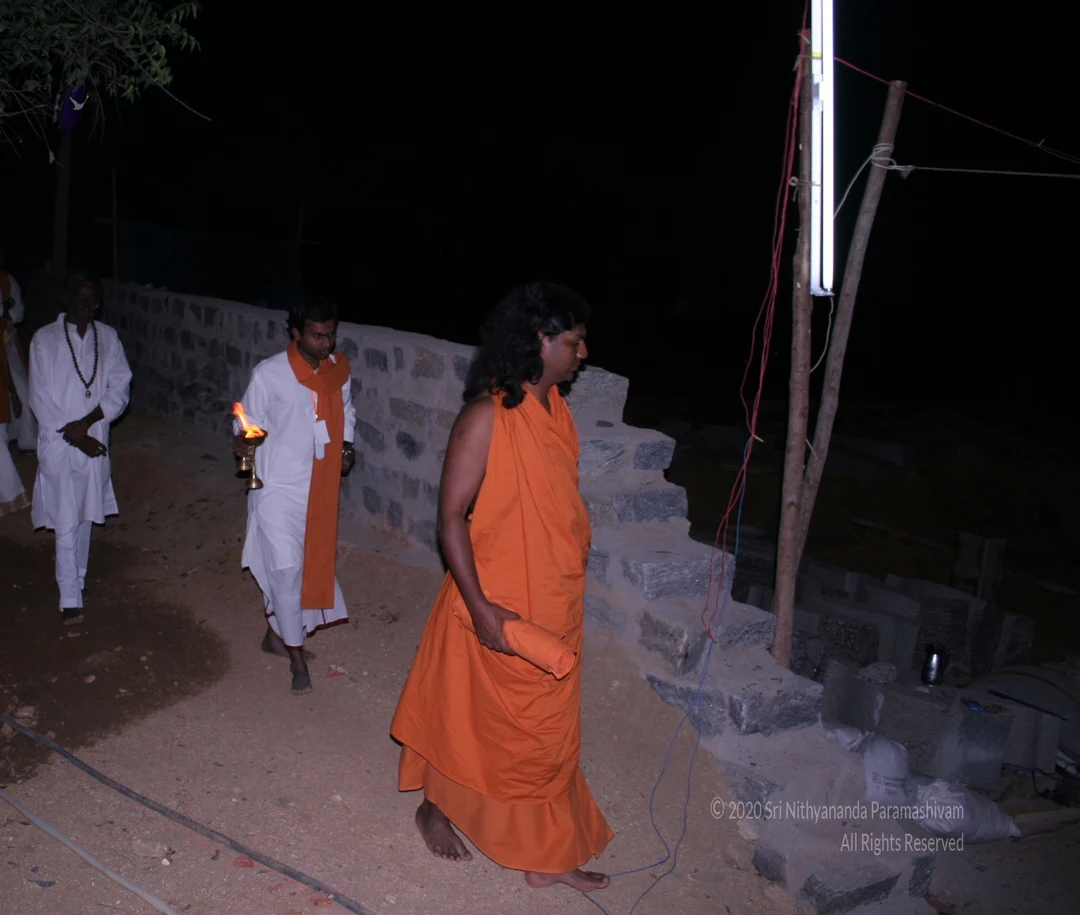
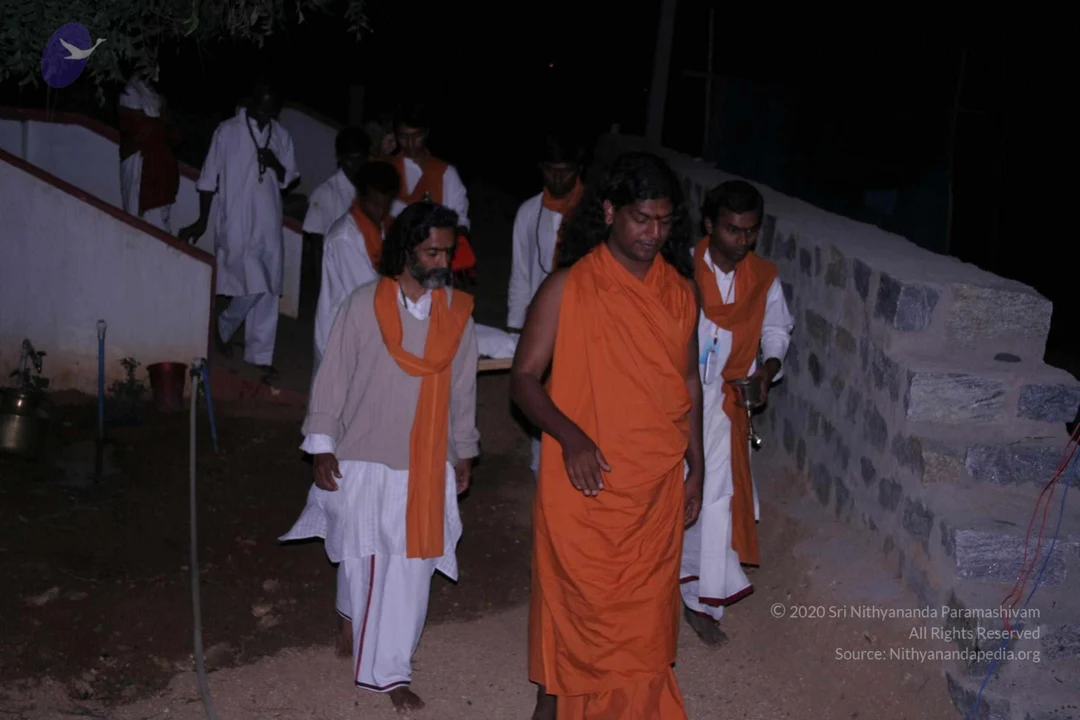
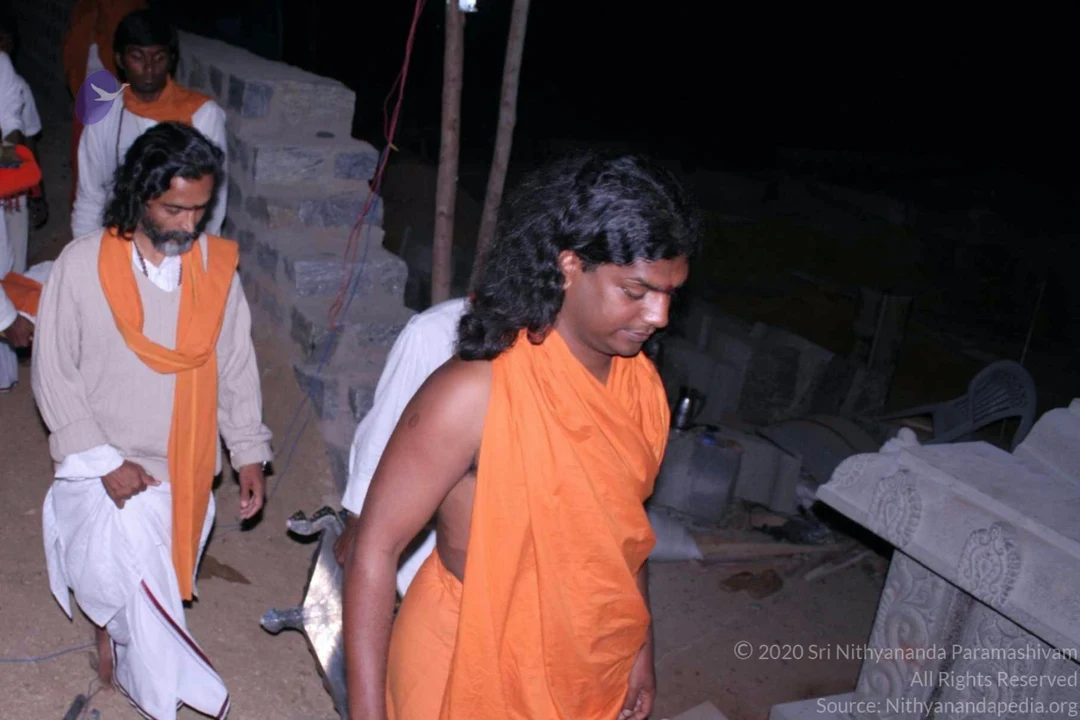
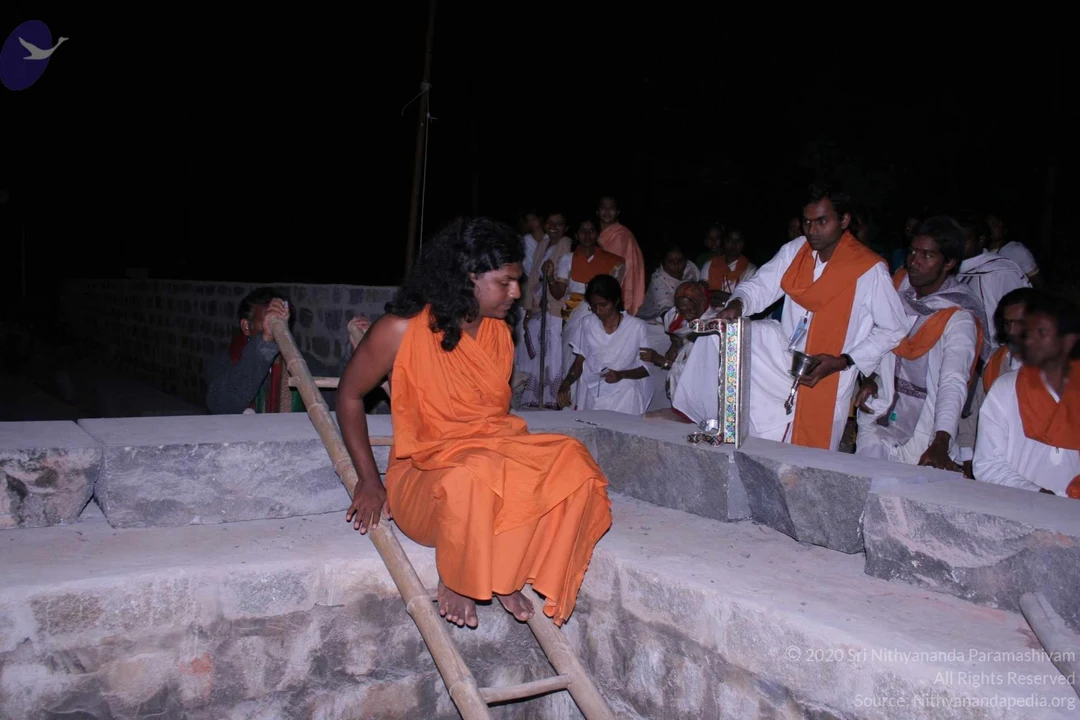
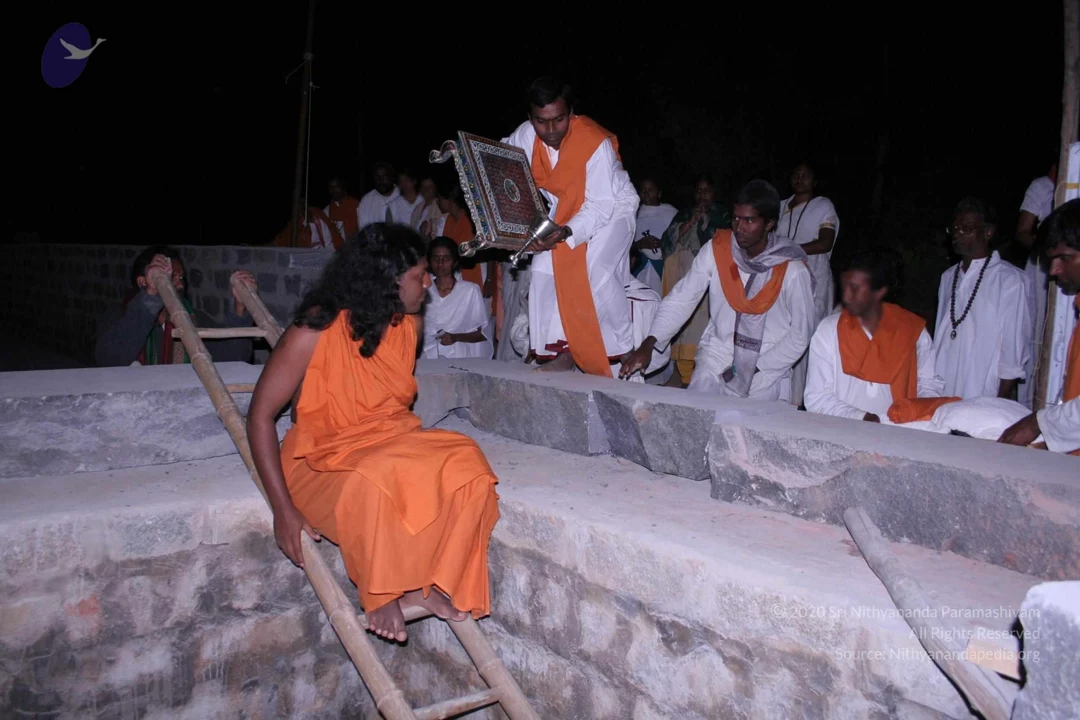
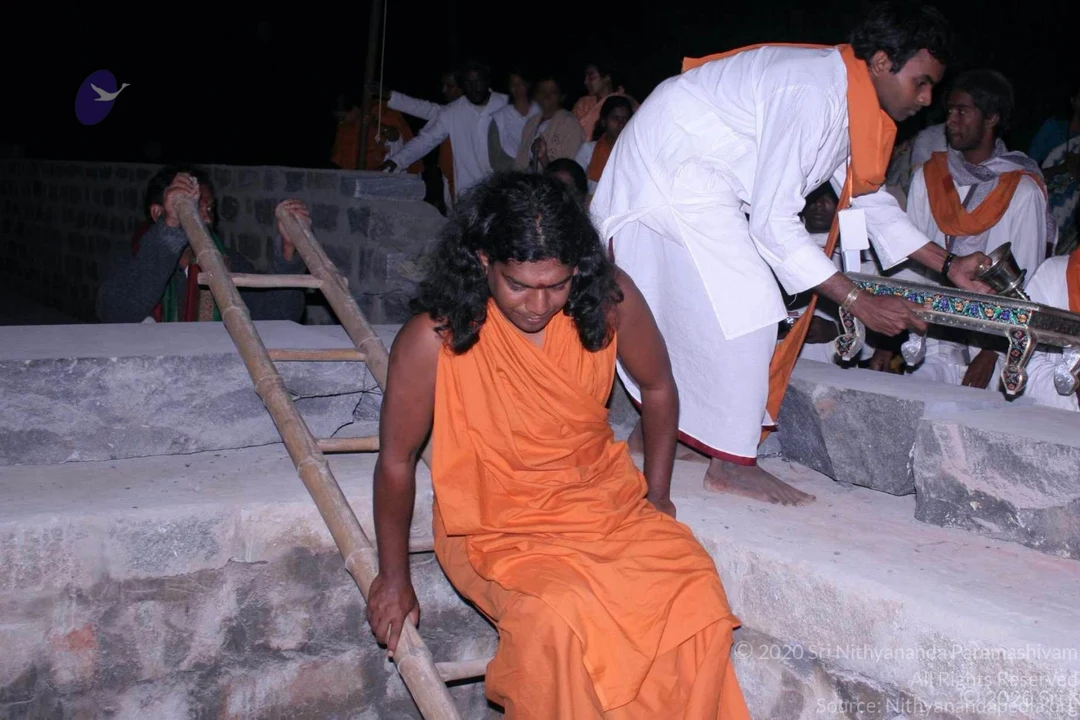
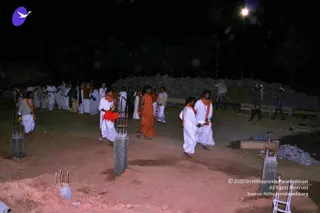
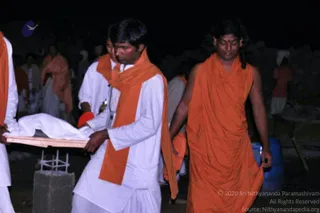
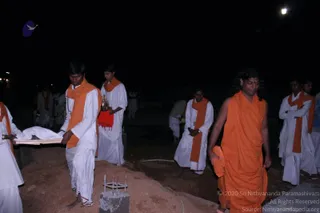
Night procession on bare red earth at a construction site, with concrete pillars and iron rebar stubs in the foreground and a pile of rubble behind. A group of people in white dhotis and white clothing, many with orange-saffron shawls over the shoulder, walks across the ground. A central figure in an orange-saffron robe walks with a brass kalasha or vessel held on a red cloth, and another man in white with an orange shawl carries an item. A larger line of white-clad and saffron-clad participants follows in the background under a single bright light. Dark trees line the far edge of the site.A night photograph of a procession at an outdoor ashram site. In the foreground, a man in white dhoti and kurta with an orange shawl carries a wooden tray draped with white cloth, with a red cloth beside it. Beside him, a man in a flowing orange robe walks with dark hair and a red tilak on his forehead. Behind them, a figure in white and others in orange and white move through the dim scene, with a blue barrel and a concrete block visible at the lower edge.Night-time outdoor photograph at a construction site for a temple consecration. In the foreground, a man in white dhoti with orange shawl carries a flat wooden tray covered with white cloth. Beside him, a man in white with an orange shawl holds a small brass or metal vessel with a red cloth. To the right, a man with long dark swept-back hair wears an orange saffron robe and holds folded orange cloth, appearing to be a sannyasi; the appearance is consistent with the page's a person reference but the face is not clearly confirmed, so it is treated as uncertain. Behind them, several men in white dhotis and orange shawls stand or bend over a pit in the dirt. A small concrete base with metal rods stands in front of the tray. Bright lights are visible in the dark background.A night-time outdoor ritual photograph in a dim open courtyard beneath a large dark tree. A man in white dhoti and orange shawl kneels on the ground at lower left, bending over small brass ritual vessels and a small pile of white material. Behind him, a line of about a dozen men in white dhotis and orange shawls stands in a loose arc, several holding small objects. A standing figure in a flowing orange robe stands at centre, facing toward the kneeling man. At right, a man in white with an orange shawl holds a ritual item. In the foreground a brass kalasha-like vessel with a domed lid sits on a red cloth beside a wooden tray holding an orange cloth and white cloth. A white pole stands at left. The scene suggests a consecration rite, with the kneeling priest attending to offerings.Night-time outdoor ritual photograph beside a stone shrine with a gold cobra hood-shaped sculpture and red-stained offerings at left. A white-clad man kneels at lower left, lighting a small lamp on a white cloth placed on a wooden tray. A barefoot man in orange ochre robes with long dark hair, unadorned shoulders and bare chest stands at centre, head bowed, facing the kneeling priest. At right a man in white dhoti and orange shawl holds a small brass vessel. Behind them a large crowd of people in white and orange-shawled white clothing stands in rows under dark trees, several with hands folded in prayer. A tall pole and bright lamp light the scene.Night-time outdoor ritual photograph. A central figure in an orange saffron robe with bare arms and a shaved-looking, short-haired head holds a lit oil lamp in one hand and a small brass bell in the other, walking forward. Behind him a long line of people in white dhotis and orange shawls, some with bare chests, stands or walks through the dark courtyard under a tree branch and a single tall light pole. On the left, a large golden hooded cobra-shaped kalasha or deity murti sits on a red stone base beside red offerings, and a brass lamp sits on the ground. A white cloth lies on a wooden tray near the bottom centre.